A vintage military foot locker makeover turns a battered old trunk into furniture you will actually use, and the best conversions are the simple ones. Start with a solid trunk that still closes squarely, clean it well, test old paint for lead before you sand anything, then choose a finish that suits the trunk. From there it can become a coffee table, a bench, a side table, an entryway console, a toy chest, a blanket chest or a small bar. Add legs or casters to bring it to a useful height, keep the original latches and handles where you can, and reline the inside so it smells clean and feels finished. The rest of this guide walks through picking, prepping, finishing and twelve room by room ideas, so you can judge whether the trunk in front of you is worth the effort before you spend a weekend on it.
How to Pick a Good Trunk at a Thrift Store
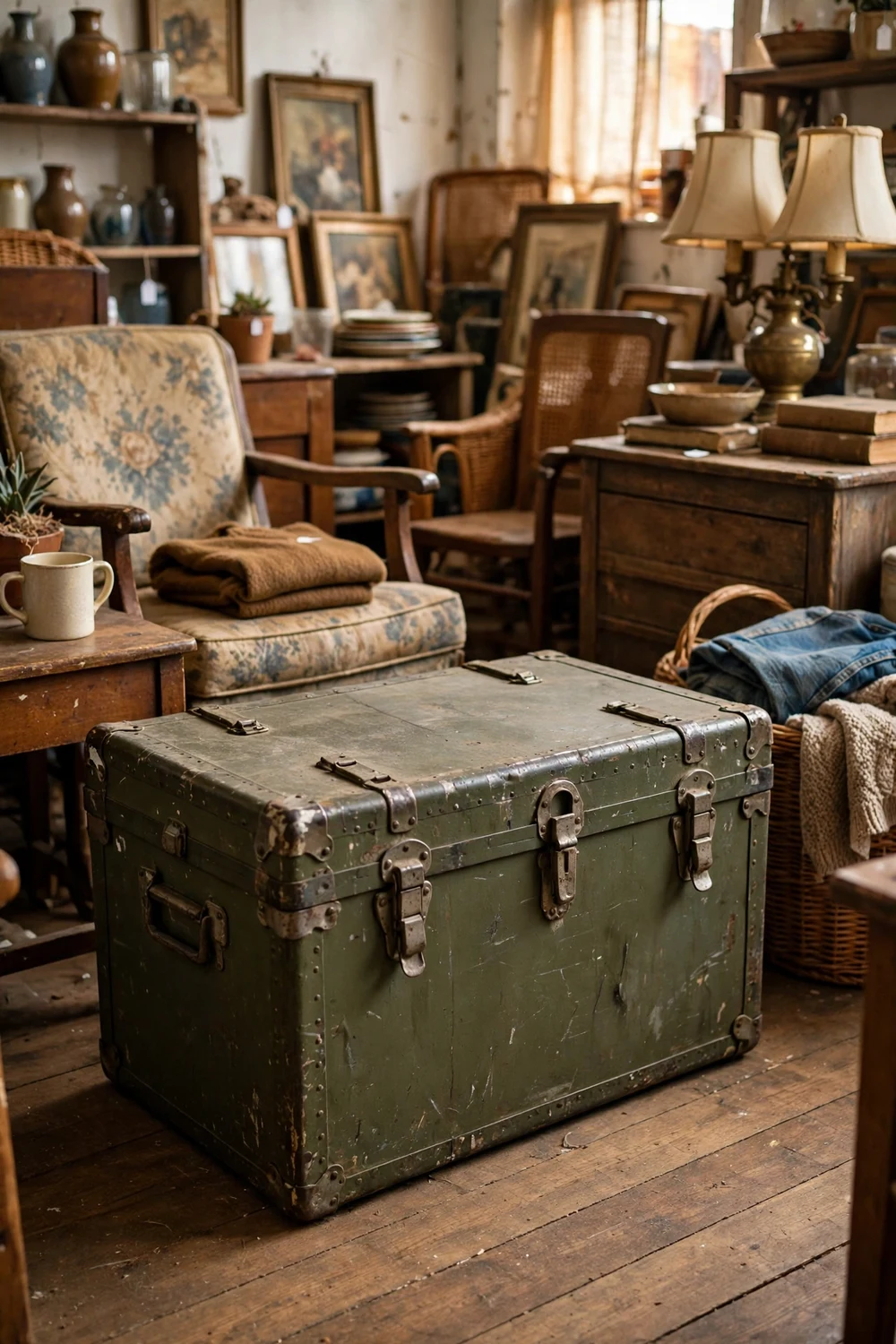
The first decision matters more than the paint colour, because a trunk with a twisted frame will fight you at every step. Lift the lid and look at the corners first. A good candidate sits flat on the floor, closes without a gap on one side, and has a lid that lines up with the base when it shuts. If the lid rocks or one corner sits high, the frame has probably been dropped or stored badly, and straightening it is a much bigger job than a coat of paint. Walk away from that one, even if the price tempts you, because no finish hides a crooked lid.
Check the bottom next, since that is where damp and rust do their worst work. Turn the trunk over if you can, or at least tip it and run your hand along the base. Soft wood, flaking metal or a base that flexes under your thumb means the trunk has spent time in water. A little surface rust on the corners is normal and workable. A base that crumbles is not. Look inside too. Old paper lining often peels, and that is fine, since you will strip and reline it anyway. What you do not want is a strong smell of mould that never lifts, or a floor panel that has swollen and buckled.
Hardware tells you a lot about how the trunk was treated. Original latches, hinges and handles are worth keeping, even when they look rough, because they carry the military character that makes the finished piece interesting. Try each latch and hinge. A stiff hinge can be cleaned and oiled. A hinge that has torn out of the wood needs a repair, and that is doable, but it adds time. If the handles are missing, you can fit replacements, yet the trunk loses a little of its story each time a piece of original hardware goes. My own view is simple. I would rather buy a plain trunk with its original latches intact than a flashier one that has been stripped of every interesting detail.
Cleaning, Safety Checks and Prep Before You Touch a Brush
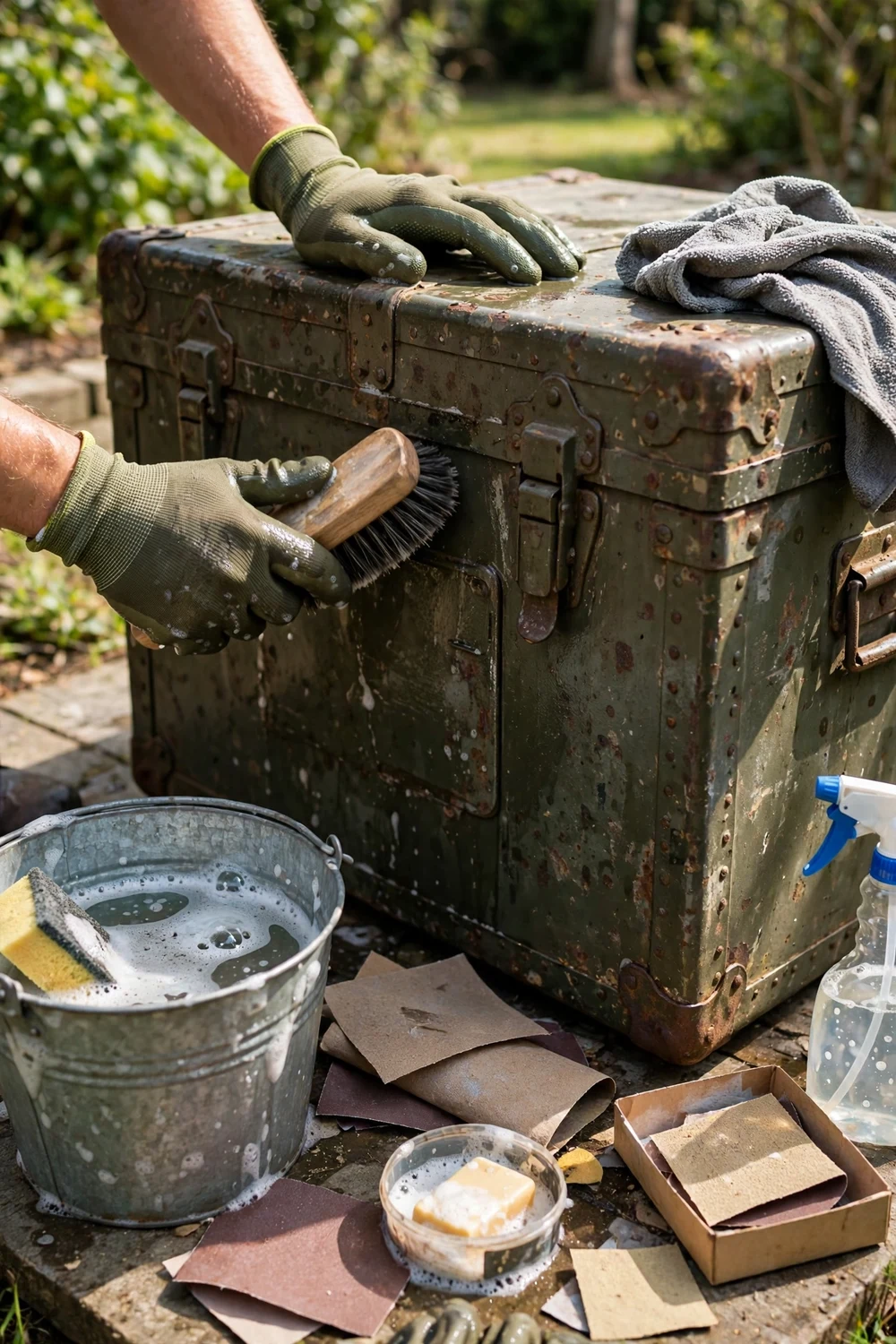
Every old trunk needs a proper clean before anything else happens, and this is the step people rush. Start outside with a stiff brush to knock off dust and loose dirt, then wash the metal and wood with warm water and a mild soap. Work in small areas, rinse often, and dry the trunk straight away so water does not sit in the seams. Inside, vacuum out dust and loose paper, then wipe the surfaces with a damp cloth. Let the trunk dry in fresh air with the lid open for a day if you can. A trunk that still smells musty after a good clean and a day of airing probably needs its lining stripped, which is covered later in this guide.
Safety comes before sanding, and this is not a step to skip. Old paint on a military trunk may contain lead, so test it before you dry sand, scrape or use a heat gun. You can buy a lead test kit from a hardware store, and it takes only a few minutes to use. If the test is positive, do not dry sand the paint. Wet sanding, chemical stripping or sealing the paint in place are safer routes, and if you are unsure, ask a local professional for advice. The same care applies to dust in general. Work outside or in a well ventilated space, wear a mask and gloves, and keep the work area clear of children and pets while you prep.
Once the trunk is clean and you know the paint is safe to work with, deal with rust and dents. Remove rusted hardware and set it aside in a labelled bag so nothing gets lost. Sand surface rust with a wire brush or sandpaper until you reach sound metal, then wipe the dust away. Dents in a metal trunk can be filled with auto body filler, which works well on this kind of surface. Apply it thinly, let it cure fully, then sand it smooth. Wooden trunks need wood filler instead, applied in the same patient way. Small dents and scuffs add character, so you do not need to chase a perfect surface. Fill the damage that catches the eye or snags a cloth, and leave the gentle wear that tells the trunk’s story. Prime bare metal and bare wood before you paint, and take the hardware off first so the finish looks professional.
Choosing a Finish That Keeps the Military Character
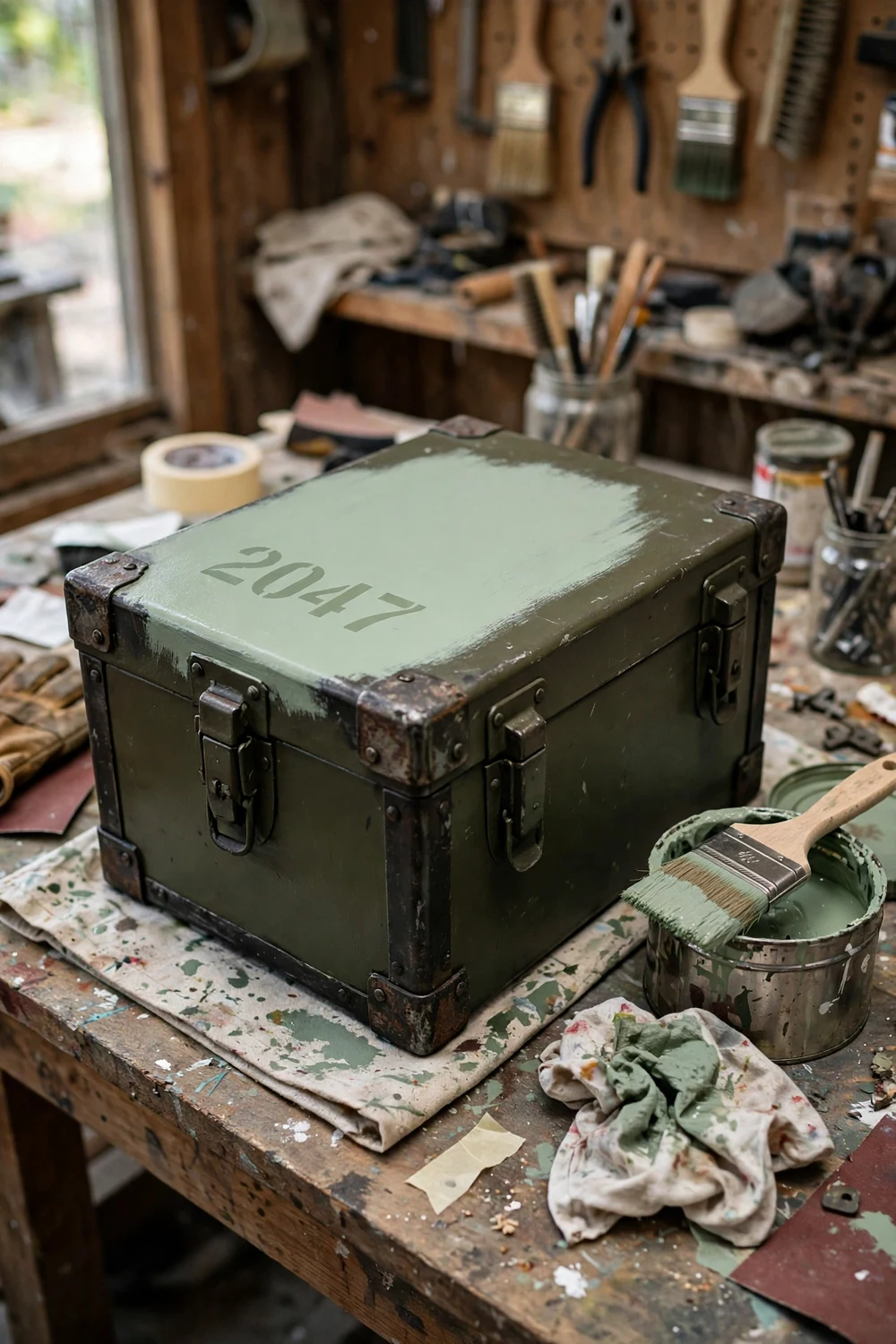
A foot locker looks best when the finish respects what it was. That does not mean you have to keep it olive drab, but it does mean the finish should sit comfortably with the trunk’s shape, its metal corners and its hardware. Chalk paint and wax give a soft vintage finish that suits these trunks well, and the matt surface hides small imperfections that a gloss paint would show up. Apply two thin coats rather than one thick one, let each coat dry properly, and finish with wax buffed in by hand. The result feels like furniture rather than a painted box, which is exactly the point. One stencilled unit number or letter on the lid adds to the military look, so keep it to a single stencil in a single colour. Keep extra decoration minimal, since the same restraint that keeps a DIY gold leaf sculpture from overwhelming a shelf applies here too.
Think about the inside finish at the same time as the outside, because a beautiful trunk with a grubby interior never feels finished. Strip the old paper lining by steaming it or soaking the glue until the paper lifts, then clean the surface underneath and let it dry. Reline with felt for a soft blanket chest, archival paper for a simple clean look, or thin cedar for a fresh smell and a natural finish. Felt suits a toy chest, where small hands will reach in often. Cedar suits a blanket chest, where the smell adds to the pleasure of opening it. Whichever you choose, fit it neatly into the corners and trim it flush, because a tidy lining is the detail that makes the whole piece feel made rather than mended.
One honest warning belongs here. Painting a trunk can lower its value to collectors, so if your trunk has clear unit markings, a rare shape or a maker’s stamp that suggests it is collectable, think before you paint. A light clean and a wax finish may be the better choice for a rare piece, and a collector would thank you for it. For a common trunk with worn paint and no special markings, a good makeover adds far more value as furniture than the trunk had as a battered box. Knowing which kind you hold is part of doing the job well.
Living Room Ideas: Coffee Table, Side Table and Storage Bench
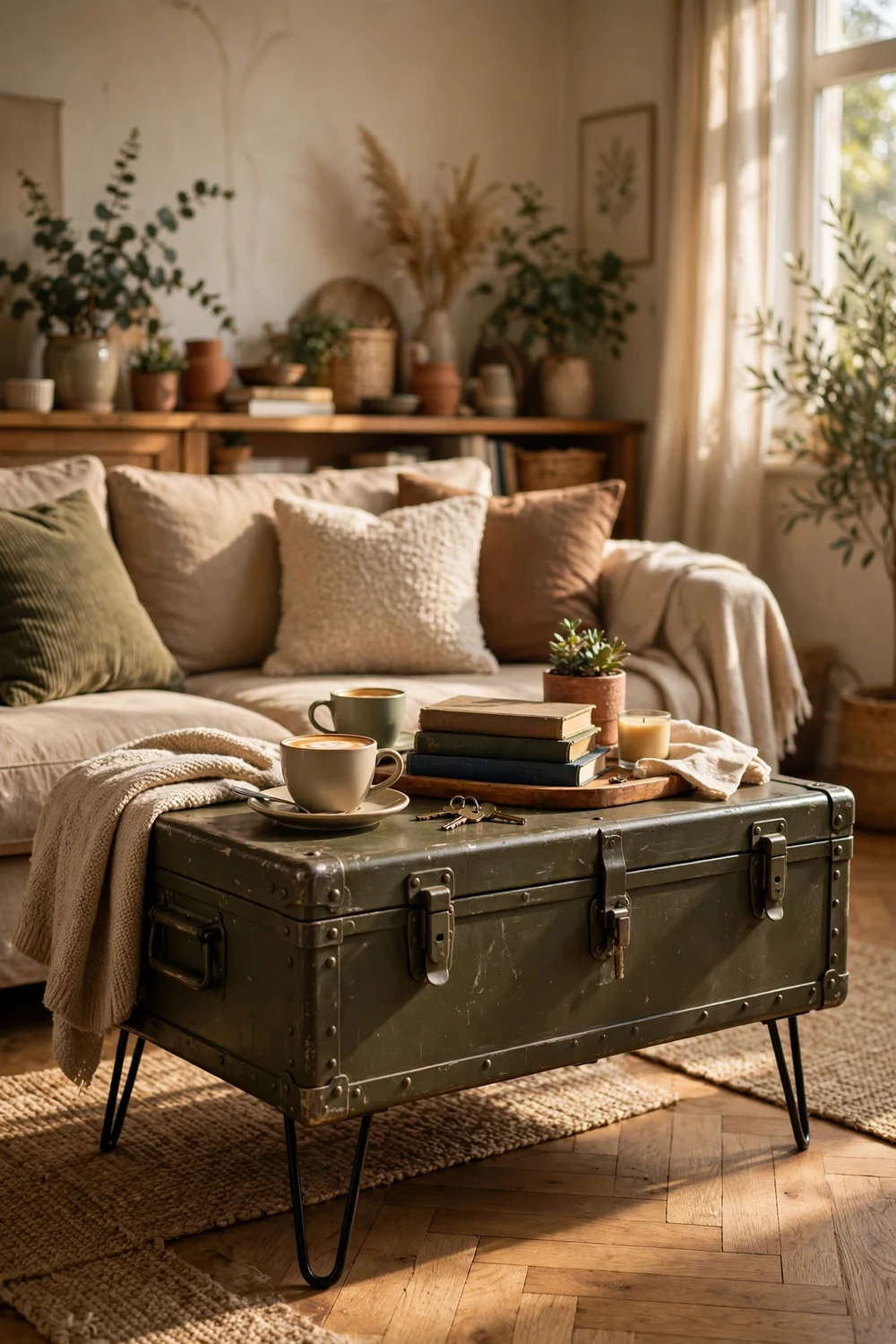
The coffee table is the classic foot locker conversion, and it works because the shape is already right. A standard coffee table height is around 18 inches, so measure your trunk and work out what the legs or base need to add. Hairpin legs suit a lighter, mid century feel and keep the trunk looking slim. A simple wooden base or short turned legs suit a warmer, traditional room. Casters are a good choice if the trunk is heavy, since you can roll it aside to clean behind it, and they add a practical touch that guests notice. Whatever you fit, fix it firmly to the base, because a trunk full of blankets is heavier than it looks.
A bench is the second living room conversion worth considering, especially if your trunk is long and sturdy. Upholster the top with a firm foam pad and a hard wearing fabric, and the trunk becomes extra seating at the end of a bed or against a living room wall. Choose a fabric you can wipe or remove to wash, since a bench gets far more wear than a coffee table. A striped ticking fabric keeps the military feel, while a plain linen softens it. Either way, keep the cushion slim, so the bench still reads as a trunk rather than a sofa in disguise.
A smaller trunk makes a generous side table beside a sofa or an armchair. Set it at a height that lets you reach a drink without stretching, and use the inside for throws, magazines or board games. This is where a trunk earns its place in a small room, because it holds as much as a drawer unit while taking up less visual space. If your living room already leans towards soft textures, a trunk with a painted finish and dark metal corners adds a welcome bit of structure. For ideas on pairing that kind of contrast with soft seating, see these comfortable sofa ideas for a relaxing living room, and keep the palette calm so the trunk stands out for the right reasons.
Bedroom and Entryway Ideas: Blanket Chest, Console and Nightstand
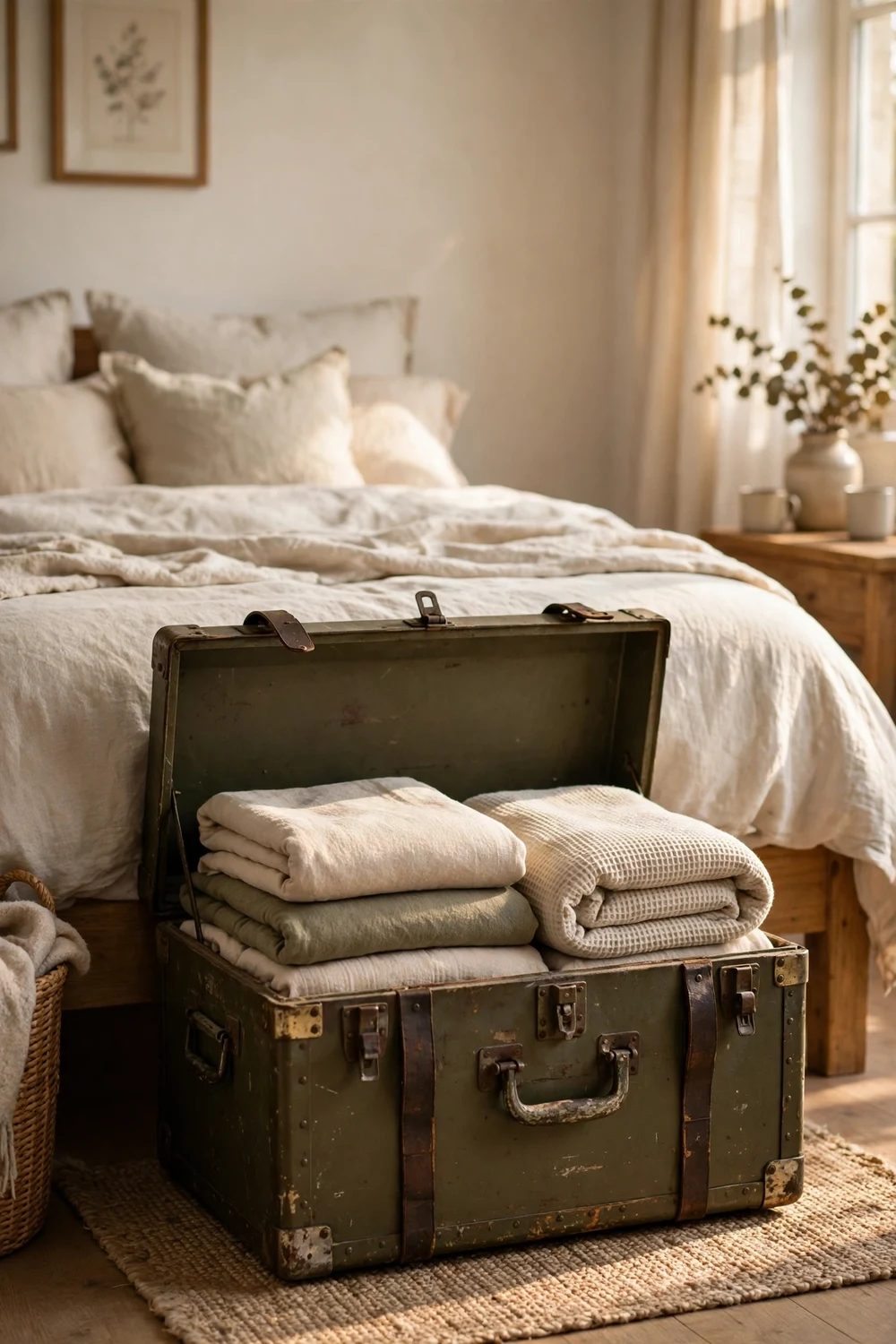
At the foot of a bed, a foot locker is doing the job it was built for, only now it holds bedding instead of kit. This is the easiest conversion of all, since a trunk in good condition needs little more than a clean, a reline and a place to sit. Line it with cedar or felt, fold blankets inside, and add a folded throw on top so the room feels dressed even when the lid is shut. A trunk at the foot of the bed also gives you a place to sit while you put on shoes, which is a small daily pleasure that a plain storage box never offers.
In an entryway, the same trunk becomes a console with a very useful habit. Set it against the wall, add a mirror or a row of hooks above it, and use the inside for scarves, hats and dog leads. The flat top holds keys and post, and the lid opens wide enough to find things without emptying the whole trunk onto the floor. If your entryway is narrow, choose a slimmer trunk and keep the top clear. A trunk that sticks out into the walkway will get knocked daily, and the paint will show it. Measure the walkway first, and leave enough room for a person carrying bags to pass comfortably.
The bedroom is also where the trunk’s military roots can sit most comfortably, because the room already holds soft layers that balance the hard edges. A painted trunk in a muted tone, a folded throw and a simple cushion turn a hard military object into something that belongs in a calm room. For layering ideas that keep the bed looking inviting rather than cluttered, these throw blanket ideas for a cosy look translate well from the living room to the bedroom, and a guest room benefits from the same thinking. If the trunk is going into a spare room, these elegant guest bedroom ideas for adults show how a single strong piece can anchor the whole space.
Playroom, Office and Bar Ideas: Toy Chest, Filing Storage and a Drinks Station
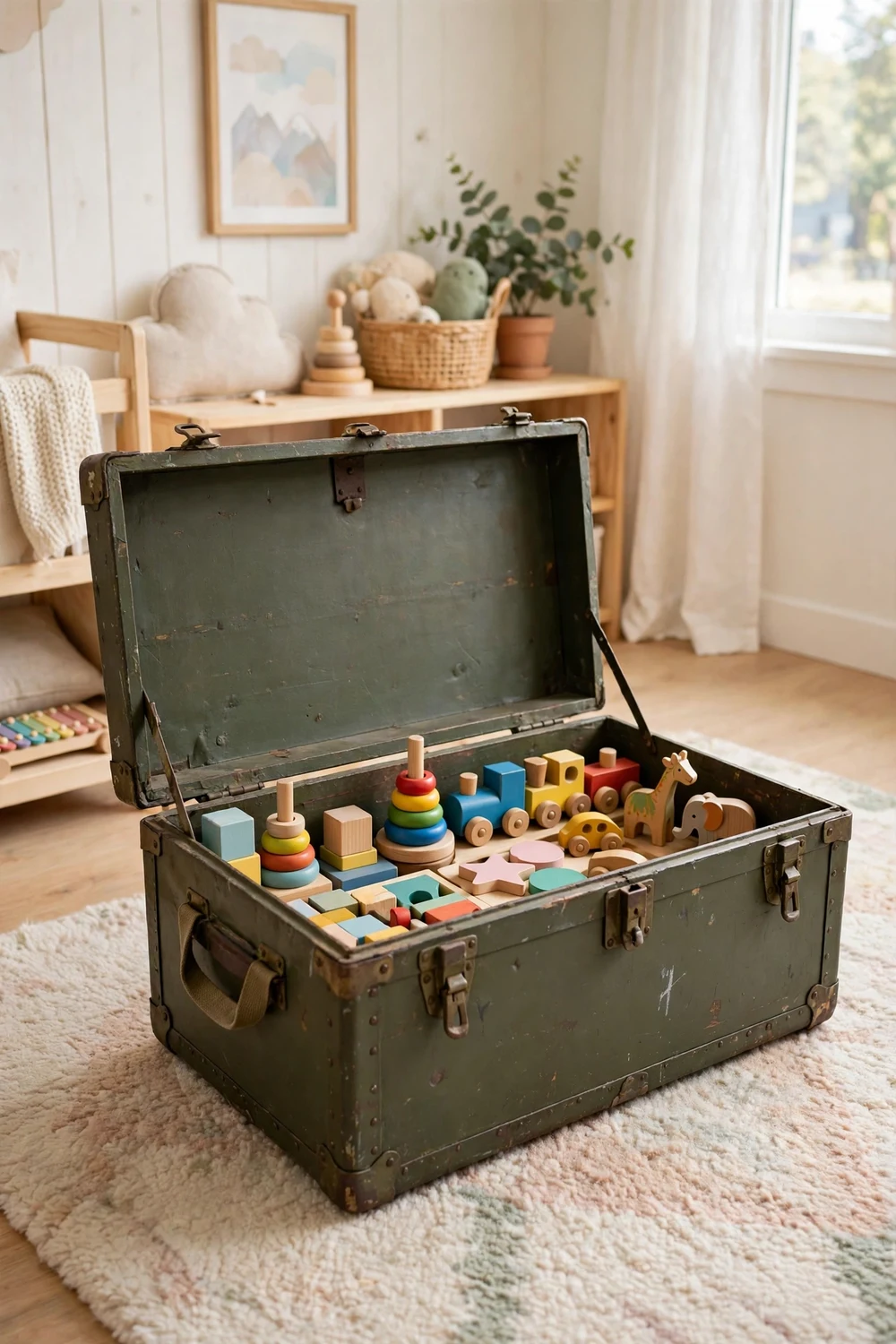
In a playroom, a foot locker makes a toy chest that children can actually use. The lid is wide, the inside is deep, and the trunk is heavy enough not to tip when a child leans on it. That weight is a strength, but it also means you must fit a lid stay or a soft close hinge, so the lid cannot slam on small fingers. Remove any latch that could lock from the inside, and drill discreet air holes if the lid seals tightly. Line the inside with felt so toys do not rattle, and add a simple fabric label on the front so children know what lives inside. A toy chest that is easy to open and easy to tidy is a toy chest that gets used, and that is the whole test.
An office is a less obvious home for a trunk, but it works well for anyone who likes paper files or craft supplies. A trunk under a desk holds box files upright, and a trunk beside a desk holds fabric, yarn or art materials out of sight. Add casters so you can pull it out when you need it and push it back when you do not. Label the inside with a simple card so you can find things without opening every lid in the room. The trunk’s hard shell also protects its contents from dust, which matters if you store paper or fabric for months at a time.
A bar conversion is the most playful of the group, and it suits a trunk with a deep lid and a sound base. Line the inside with a wipeable surface, add a raised shelf for bottles at the back, and keep glasses in a padded tray so they do not knock together. A small trunk works best here, because a full bar trunk gets very heavy very fast. Set it on casters so you can wheel it to the seating area when guests arrive, and back against the wall when the evening ends. Keep the finish simple, since bottles and glasses will mark a delicate paint job, and a satin finish wipes clean far more easily than a chalk finish.
Sizing It Right: Trunk Size Versus Furniture Use
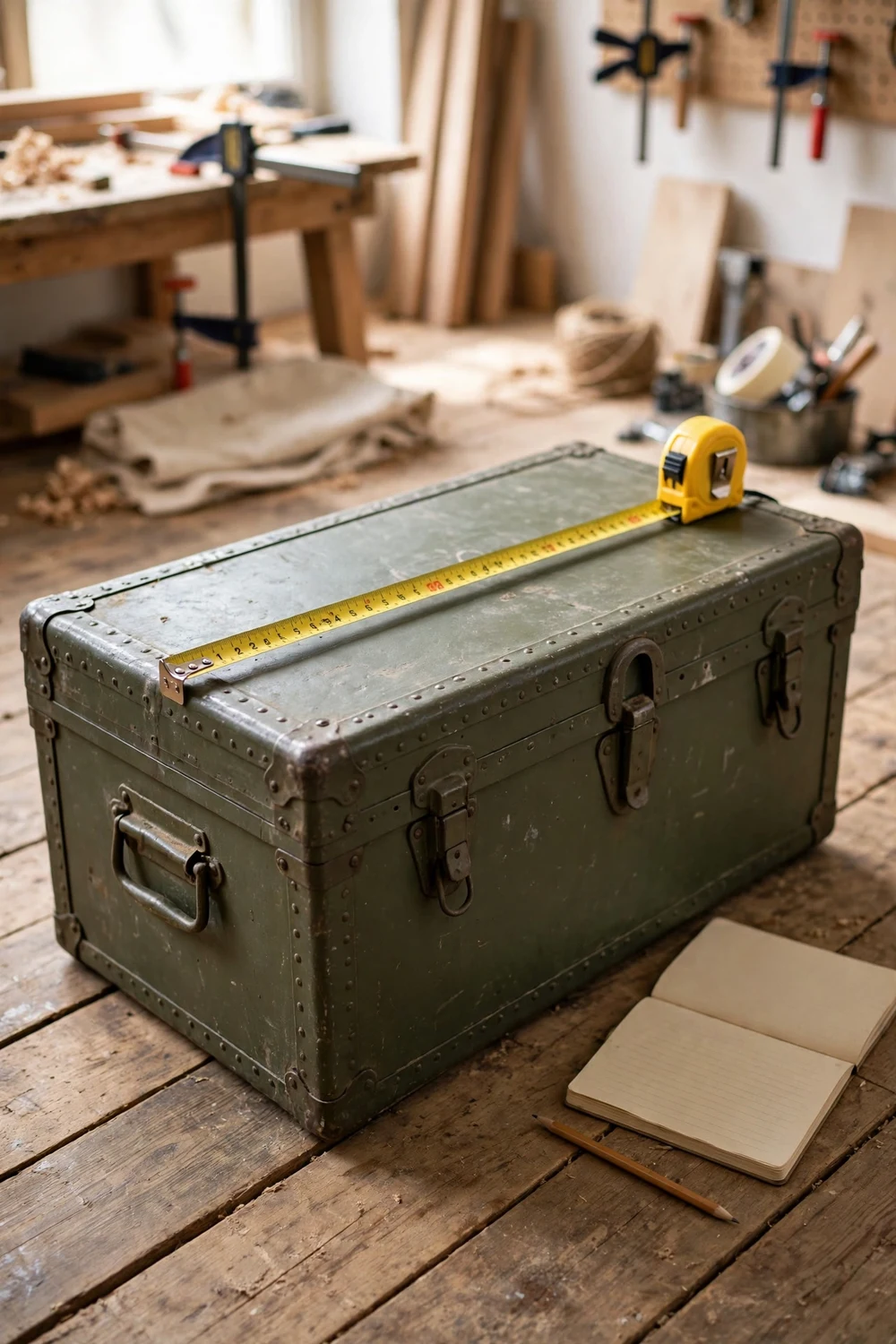
Use this table as a rough guide, not a rule, since every trunk is a slightly different shape. Measure your own trunk, then match it to the use that fits best. The height column assumes you will add legs, casters or a base to reach a comfortable height, so check the finished height before you fix anything in place.
| Trunk size | Best furniture use | Finished height to aim for | Watch out for |
|---|---|---|---|
| Small, under 30 inches long | Side table, nightstand, small bar | About the height of your sofa arm or mattress | Too low without legs, so add a base early |
| Medium, about 30 to 36 inches long | Coffee table, blanket chest, toy chest | Around 18 inches for a coffee table | Heavy when full, so consider casters |
| Large, over 36 inches long | Bench, entryway console, storage chest | Seat height for a bench, lower for a console | Needs a clear wall and floor space around it |
| Deep trunk, tall sides | Blanket storage, toy chest, filing storage | Keep the top clear so the lid opens fully | Deep trunks hide things at the bottom, so add a tray |
| Shallow trunk, low sides | Coffee table, display chest, under bed storage | Low and flat, so it slides under a bed easily | Less storage inside, so use it for flat items |
If your trunk falls between two sizes, choose the use that matches your room rather than the table. A medium trunk can be a bench in a small bedroom and a coffee table in a small living room, and both are good choices. What matters is the finished height and the space around it, not the label on the size. Sit beside it, put a cup on it, open the lid and close it again. If those small actions feel easy, the size is right.
Mistakes That Ruin a Good Trunk
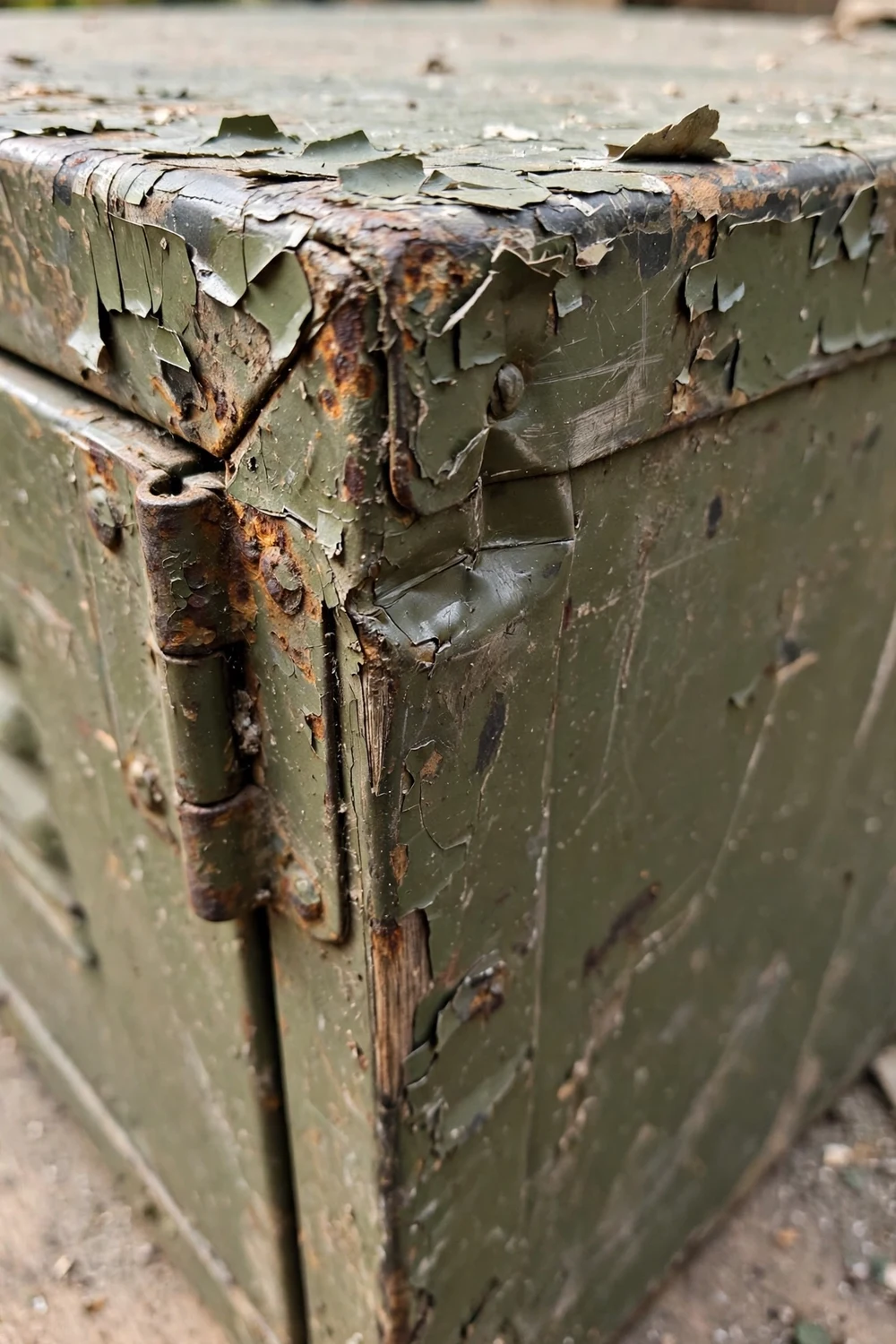
The most common mistake is painting before prepping. Paint over dirt, loose rust or flaking old paint will peel within months, and the trunk will look worse than when you started. The prep in this guide takes a few hours, and it is the difference between a makeover that lasts and one that flakes. Clean, test, sand, fill and prime in that order, and let each step dry before the next. Patience here is not a virtue, it is the whole method. The same patient prep turns a battered scale into a feature piece, as shown in this guide to transforming a thrifted scale with faux rust paint.
The next mistake is ignoring the inside. A trunk that looks beautiful shut and smells musty open will not stay in use for long. Strip the old lining, clean the interior properly, and reline it with something clean and pleasant. This step takes an afternoon, and it changes how the trunk feels every time you open it. A clean interior also protects what you store inside, whether that is blankets, toys or clothes.
The last mistake is choosing the wrong use for the trunk you have. A deep trunk makes a poor coffee table if the lid cannot open without clearing the top, and a small trunk makes a poor bench if no one can sit on it comfortably. Match the conversion to the trunk, not to the photo you saw online. If the trunk in front of you wants to be a blanket chest, let it be a blanket chest. The best makeovers work with the object rather than against it, and the result feels natural because it is.
Metal trunks have one more trap worth naming. The corners and edges often carry the most character, and they are also the first places to show wear. If you paint over them, the paint will chip there first. If you leave them in their original finish, they will keep looking good with a little oil now and then. For pairing metal with warmer materials elsewhere in the room, these chrome and wood accent pieces show how metal and wood can sit together without one overpowering the other. The same balance applies to your trunk, so let the metal corners be a feature rather than a problem to cover up.
Frequently Asked Questions
Can I paint a military foot locker, or will it lose value?
You can paint a common trunk with worn paint and no special markings, and as furniture it will usually be worth more than it was as a battered box. If your trunk has clear unit markings, a rare shape or a maker’s stamp that suggests it is collectable, think first, because painting can lower its value to collectors. When in doubt, clean it, wax it and live with it for a while before you decide.
How do I test for lead paint before I start sanding?
Buy a lead test kit from a hardware store and follow the instructions on the packet. Test a small area of the old paint, and do not dry sand if the test is positive. Wet sanding, chemical stripping or sealing the paint in place are safer options, and a local professional can advise if you are unsure. Always wear a mask and gloves while you prep, and work in a ventilated space.
What height should a foot locker coffee table be?
A standard coffee table height is around 18 inches, so measure your trunk and add legs, a wooden base or casters to reach that height. Sit beside it and put a cup on it before you fix anything permanently. If the trunk is too low, you will notice it every day, and if it is too high, it will crowd the sofa.
How do I get rid of the smell inside an old trunk?
Start with a thorough clean and a day of airing with the lid open. If the smell stays, strip the old paper lining by steaming it or soaking the glue, clean the surface underneath, and reline with felt, archival paper or thin cedar. Cedar leaves a fresh smell, and felt suits a toy chest. A trunk that still smells strongly of mould after cleaning may not be worth saving.
Can I use a foot locker as a bench?
Yes, if the trunk is long, sturdy and sits flat. Upholster the top with a firm foam pad and a hard wearing fabric you can clean, and check the finished seat height before you commit. Keep the cushion slim so the trunk still reads as a trunk, and make sure the lid can still open if you want to use the storage inside.
Your First Weekend With the Trunk
Start on a Saturday morning with the picking and prep, and leave the painting for Sunday. That split gives the trunk time to dry between steps, and it stops you rushing the finish. Saturday is for choosing well, cleaning, testing for lead, dealing with rust and dents, and priming bare metal. Sunday is for paint, wax, stencils and the lining. By Sunday evening you should have a finished trunk and a clear idea of where it will live, even if the legs or casters arrive later in the week.
The best part of this makeover is not the paint or the stencil, it is the moment the trunk stops being a box in the corner and starts being used every day. A trunk that holds blankets, hides toys or carries cups earns its place in a way that a decorative object never does. Choose a good trunk, prep it properly, finish it with restraint, and give it a job that suits its size. The rest will take care of itself, and you will have a piece of furniture with a story that no flat pack can match.