Curtains do more heavy lifting than almost any other decor choice. The right pair can make a small room feel taller, soften harsh light, and turn a plain wall into a focal point. The wrong pair hung too low, too narrow, or too short can shrink a space and cheapen an otherwise polished room.
The good news? Hanging curtains like a professional isn’t about expensive fabric or fancy tools. It comes down to accurate measuring, smart placement, and a few techniques designers rely on every day.
This guide walks you through curtain anatomy, measuring rules, a step-by-step installation, advanced layering tricks, and fixes for the most common problems. By the end, you’ll know exactly how to dress your windows for a high-end look on any budget.
What Are the Different Parts of a Curtain Called?
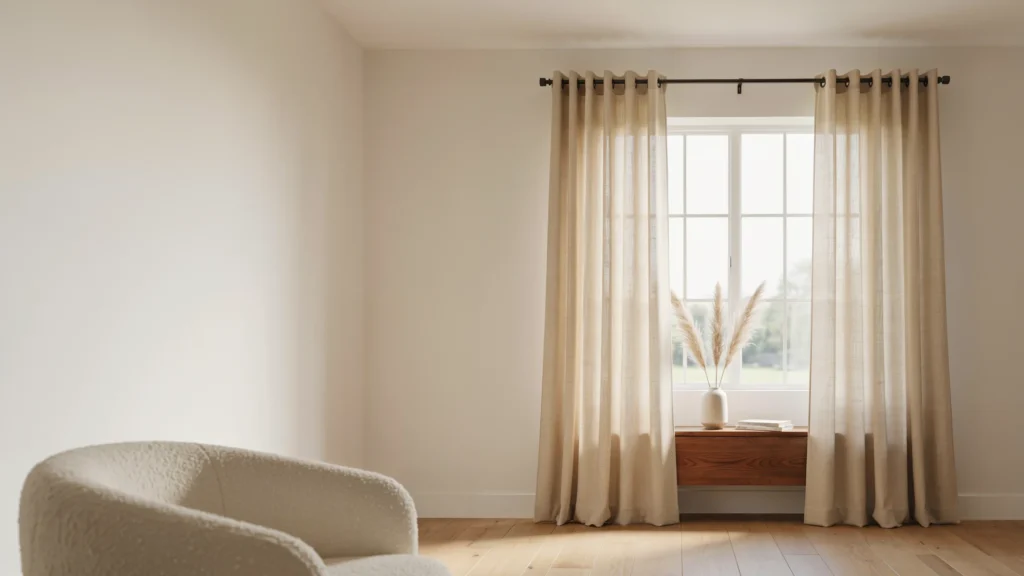
Before you drill a single hole, it helps to know the vocabulary. Understanding curtain anatomy makes shopping and installation far less confusing.
Common Curtain Heading Styles
The heading is the top of the curtain, and it controls how the fabric folds and hangs.
- Pinch pleat: Fabric is gathered into tailored pleats at the top. This style looks formal and structured, making it ideal for living rooms and dining rooms.
- Grommet (eyelet): Metal rings are set into the fabric, and the rod threads straight through. Grommet curtains slide easily and create clean, modern folds.
- Rod pocket: A sewn sleeve runs along the top, and the rod slides inside. This casual style gathers tightly and works well for sheers and lightweight fabrics.
- Tab top: Fabric loops hang the curtain from the rod. It’s a relaxed, informal look common in bedrooms and kitchens.
How Fabric Affects Drape and Light
Fabric weight changes both how curtains fall and how much light they block.
- Sheer fabrics (voile, linen blends) filter light softly while keeping a room bright. They add privacy without darkness.
- Mid-weight fabrics (cotton, polyester blends) balance light control and structure.
- Heavy fabrics (velvet, suede, lined drapes) block light, insulate against drafts, and create dramatic, luxurious folds.
Curtain hardware explained
A complete setup includes more than a rod:
- Rod: The bar that holds the curtain.
- Finials: Decorative end caps that stop curtains from sliding off.
- Rings or clips: Attach the curtain to the rod and help it glide.
- Brackets: Wall-mounted supports that hold the rod in place.
How do you measure for curtains correctly?
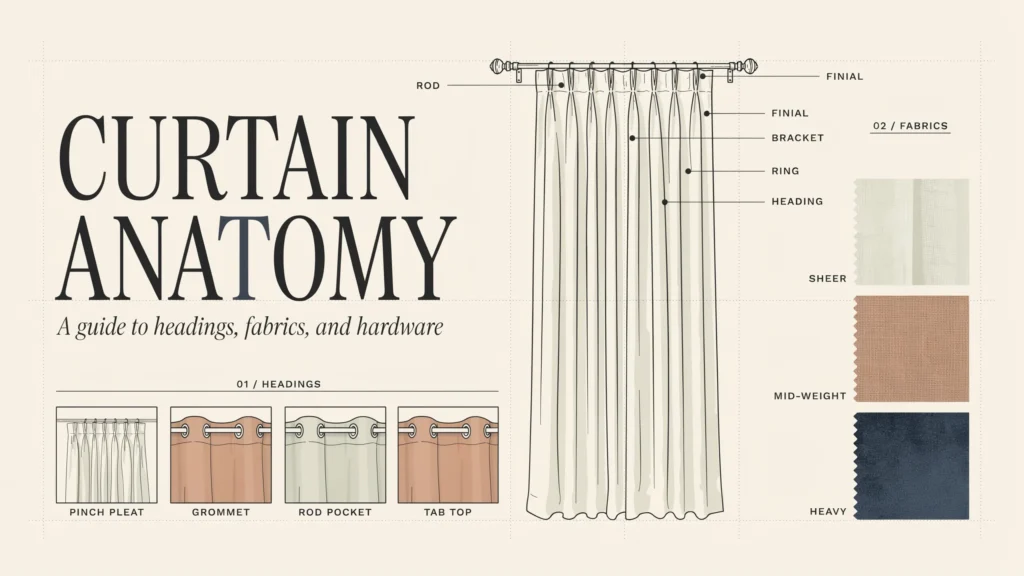
Accurate measurements are the foundation of a professional look. Get these wrong, and no amount of expensive fabric will save the result.
Choosing the right curtain length
Curtain length sets the tone of a room. Here are the four most common options:
- Apron length: Curtains stop just below the window sill or apron. Practical for kitchens and bathrooms, but less formal.
- Kiss the floor: The hem touches the floor. This is the cleanest, most tailored look and the safest choice for most rooms.
- Break (or slight pool): Curtains rest with an extra inch or two on the floor creating a soft bend. It looks relaxed but elegant.
- Puddle: Several extra inches of fabric pool on the floor. This dramatic, romantic style suits formal bedrooms but collects dust faster.
How wide should curtains be?
For curtains to look full instead of flat, your panels should measure two to two-and-a-half times the width of the window. Skimpy panels are the number one giveaway of an amateur job.
You should also extend the rod 8 to 12 inches past each side of the window frame. This lets curtains stack off the glass when open, so they don’t block light, and the window looks wider.
Matching style to your room
Think about both function and feel:
- Formal rooms suit pinch pleats, heavier fabrics, and floor-length panels.
- Casual rooms work with grommet or tab-top styles in lighter fabrics.
- Light control matters too. Choose blackout linings for bedrooms, sheers for bright living spaces, or layer both for flexibility.

How high should you hang curtains?
Height is the single biggest trick designers use to make a room feel grander. As a rule, mount brackets 4 to 6 inches above the window frame. For an even more dramatic effect, hang them closer to the ceiling around two-thirds of the way up the wall above the window.
Hanging high draws the eye upward and makes both the window and the ceiling appear taller. Hanging the rod right on top of the frame, by contrast, makes windows look squat.
Step-by-step guide to hanging curtains like a pro
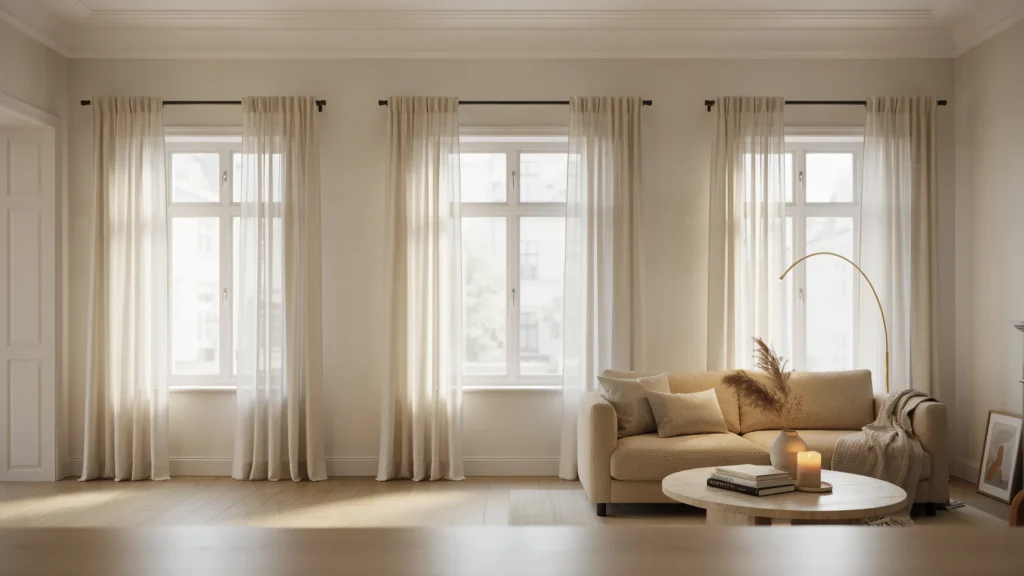
Here’s the full installation process, from tools to final touches.
Gather your tools
Have these ready before you start:
- Tape measure
- Pencil
- Level
- Drill and drill bits
- Screwdriver
- Stud finder
- Wall anchors (for drywall without studs)
- Step ladder
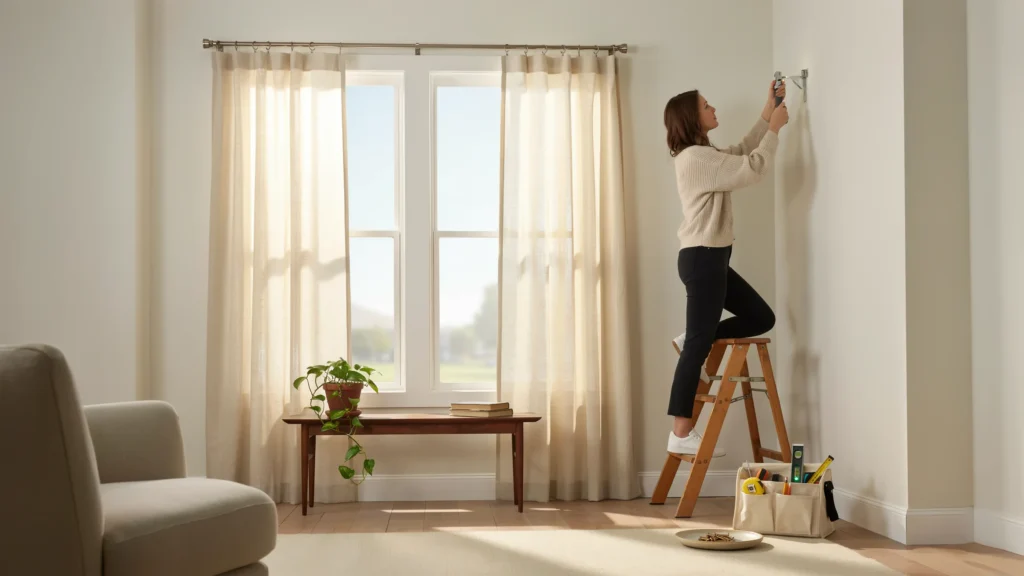
Mark your bracket placement.
- Measure 4 to 6 inches above the window frame and make a light pencil mark for the center bracket height.
- Measure 8 to 12 inches out from each side of the frame to mark the outer bracket positions.
- Use your level to confirm that both outer marks line up perfectly. Even a small tilt will be obvious once the curtains hang.
- Mark the exact screw holes for each bracket.
Drill and secure the brackets
Use your stud finder to locate studs where possible they provide the strongest hold. Where there’s no stud, install wall anchors to support the weight. Drill pilot holes at your marks, then screw the brackets firmly into place. Heavy drapes need extra support, so add a center bracket for rods longer than 60 inches.
Assemble and install the rod.
Slide your rings or attach clips before mounting the rod (you can’t add them once the finials are on for some styles). Thread the curtains if you’re using a rod pocket. Then set the rod onto the brackets and screw the finials onto each end.
Hang and finish
Distribute the fabric evenly across the rod. Step back and check that the panels hang straight. Finally, steam or press the curtains to remove wrinkles and folds from packaging. This last step separates a sloppy install from a polished, designer worthy result.
How do you make curtains look more expensive?
A few advanced techniques can take your windows from nice to high end.
Layering sheers and drapes
Pairing sheer panels with heavier drapes gives you the best of both worlds: soft daylight when you want it, full privacy when you don’t. Use a double rod or a ceiling mounted track to layer two sets cleanly. This trick instantly adds depth and a custom feel.
Building fullness and pleats
Fullness reads as luxury. Beyond using wider panels, you can train pleats by hand: gather the folds evenly, then loosely tie the panels with strips of fabric for a few days. When you untie them, the pleats hold their shape.
Adding tie-backs and holdbacks
Tie-backs (fabric or cord) and holdbacks (mounted hooks) gather curtains to the side. They let in more light and add a tailored, decorative touch especially in formal rooms.
Dressing tricky windows
- Bay windows: Use flexible or angled rods, or three separate rods that follow the bay’s shape.
- Corner windows: Connect two rods at the corner with a connector, or run a continuous bendable track.

How do you fix common curtain problems?
Even careful installs hit a few snags. Here’s how to solve the most frequent ones.
Why is my curtain rod sagging?
Sagging usually means the rod is unsupported in the middle. Add a center support bracket, especially for spans over 60 inches or heavy fabrics. Choosing a thicker rod diameter also helps it resist bending.
How do I fix uneven hems?
Uneven hems often come from crooked rods or brackets. Recheck your level first. If the rod is straight but the hems still look off, the panels may need re-hemming or adjusting on the rings.
Why won’t my curtains close all the way?
This is usually a width problem. Either the panels are too narrow for the window, or the rod doesn’t extend far enough. Make sure your combined panel width is at least double the window width, and check that rings or clips move freely.

How do you clean and care for curtains?
Curtains last longer with the right upkeep.
- Check the label first. Many drapes are dry-clean only, while cottons and synthetics may be machine washable on a gentle cycle.
- Wash sheers carefully. Use cold water and a mild detergent, then hang them back up slightly damp to avoid wrinkles.
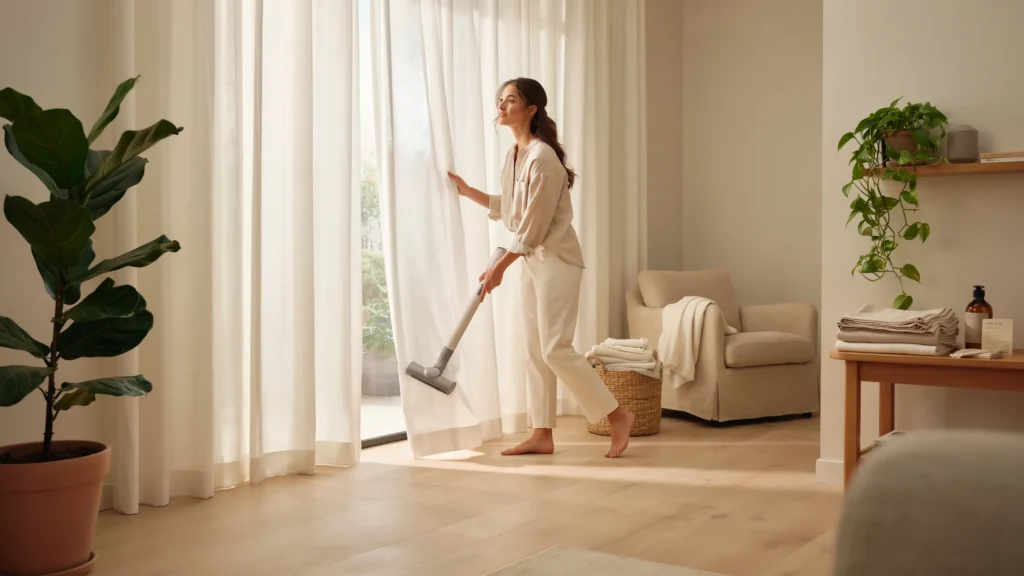
- Vacuum regularly. A brush attachment removes dust between deep cleans.
- Protect from sun damage. Direct sunlight fades fabric over time. Linings, sheers, or UV-protective treatments help shield colors and extend the life of your curtains.
Transform your windows, one panel at a time
Hanging curtains like a pro really comes down to a handful of repeatable rules: hang high and wide, choose a length that suits the room, pick fabric and hardware that match the weight you need, and finish with a good steam. Master those, and even budget curtains can look custom.
Start with one room. Measure carefully, mount your brackets high above the frame, and watch how quickly the whole space feels more finished. Once you see the difference, you’ll want to redo every window in the house.
Tried these tips on your own windows? Share your curtain project and before-and-after photos we’d love to see how you transformed your space.
Frequently asked questions
How high above the window should curtains be hung?
Mount the rod 4 to 6 inches above the frame for most rooms, or closer to ceiling height for a more dramatic, elongated look. The higher the placement, the taller the window and ceiling will appear.
How wide should curtain panels be?
Aim for a combined panel width of two to two-and-a-half times your window’s width. This creates the gathered, full look of a professional install rather than a flat, stretched appearance.
What length should curtains be?
Floor-length is the most versatile and polished option. A slight break — an inch or two of extra fabric pooling at the bottom — adds a relaxed elegance, while puddling suits more formal, dramatic spaces. Apron-length panels work best in kitchens and bathrooms.
Should curtains touch the floor?
In most living rooms and bedrooms, yes — it’s the most polished look. Exceptions are kitchens, bathrooms, and windows above radiators or furniture, where shorter apron-length panels are more practical.
How do I stop my curtain rod from sagging?
Install a center support bracket if your rod spans more than 60 inches or holds heavy fabric, and opt for a thicker-diameter rod to resist bending over time.
Can I hang curtains without drilling into studs?
Yes use quality wall anchors rated for your curtains’ weight when studs aren’t available at your marks. For heavier drapes, try to secure at least one bracket into a stud for added support.