A guest bedroom should feel welcoming without looking overly decorated or too formal. The best spaces combine comfort, practical details, beautiful materials, and a calm atmosphere so adults can settle in and feel at home. Whether you are preparing a room for weekend visitors, family members, or overnight friends, small design choices can make a major difference.
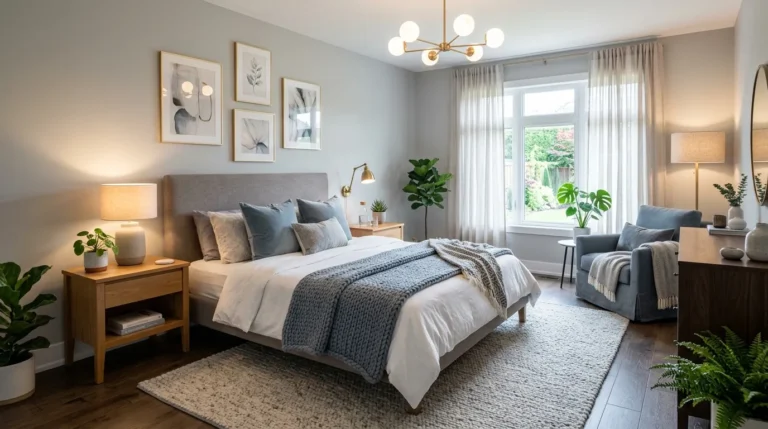
An elegant adult guest bedroom starts with a calm neutral palette, a comfortable bed with layered bedding, and clear space for luggage and clothes. Add layered lighting, a bedside surface on each side, and a few thoughtful details like water, charging and extra blankets, and the room will feel like a hotel without feeling impersonal.
Walk through the room the way a guest will. They arrive with a suitcase, they look for somewhere to put it, they check the bed, they find a plug for their phone, they close the curtains, and they sleep. If any of those steps is awkward, the room feels less elegant, however beautiful it photographs. The 20 ideas below follow that walk, from the first impression to the last detail, so you can build the room in the order a guest actually experiences it.
1. Choose a soft neutral colour palette
Neutral colours are one of the easiest ways to create an elegant adult guest bedroom. Warm white, beige, cream, taupe, soft gray, and greige can make the room feel peaceful without becoming boring. These shades also work well with different furniture styles, allowing you to refresh the room later without repainting everything.
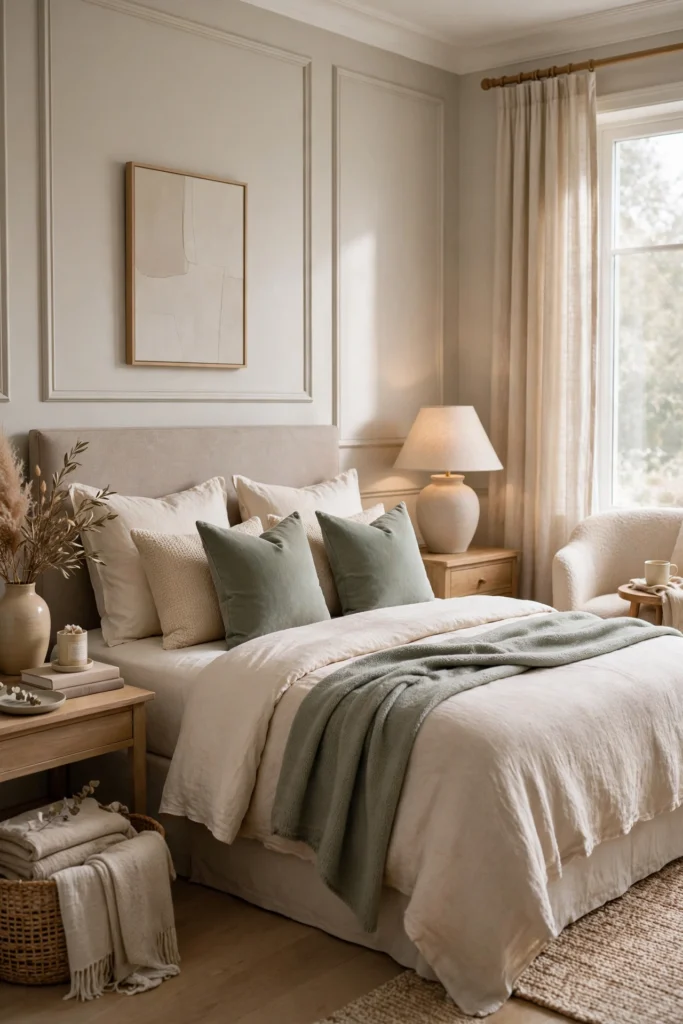
For more personality, introduce one muted accent colour through cushions, artwork, a throw blanket, or an upholstered chair. Sage green, dusty blue, muted terracotta, or warm brown can add depth while keeping the overall atmosphere relaxed. Keep the accent to a few pieces, so the room stays calm rather than busy.
2. Make the bed the main focal point
A beautiful bed naturally becomes the centrepiece of a guest bedroom, so give it the attention it deserves. A tall upholstered headboard can instantly make an ordinary room feel more refined, while a simple wooden headboard creates warmth and character. Keep the bedding layered rather than overly complicated.
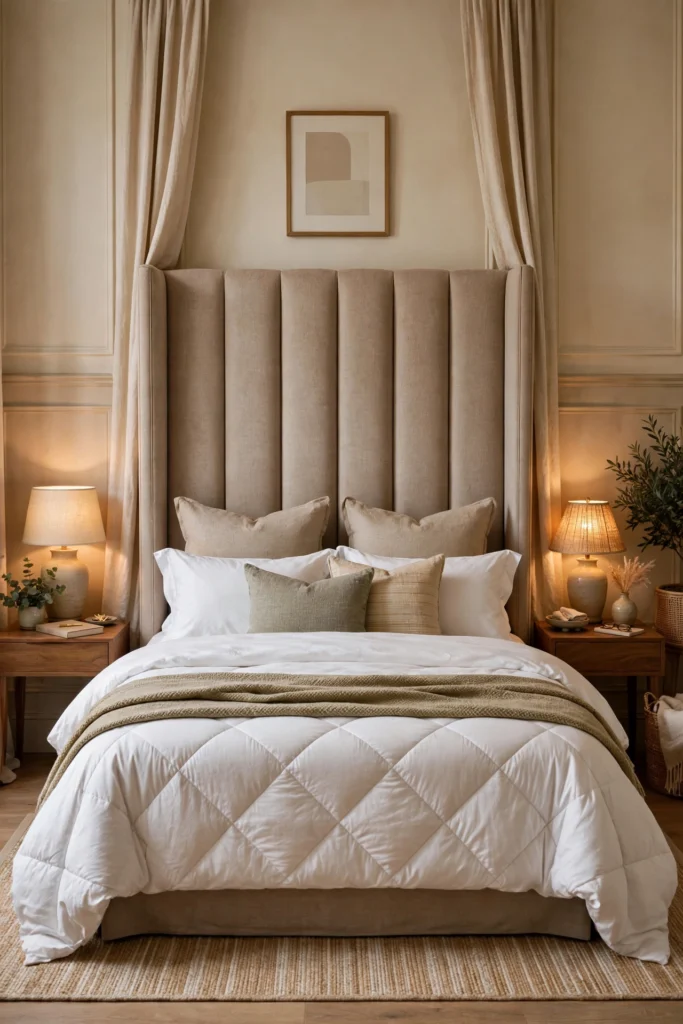
Start with quality looking sheets, add a duvet or comforter, and finish with a folded throw and a few coordinated pillows. This creates the plush appearance associated with boutique hotels while remaining practical for everyday use. A bed that looks inviting from the doorway sets the tone for the whole stay, because it is the first thing a guest really looks at.
3. Add matching bedside tables
Symmetry can make a guest room feel organised and professionally designed. Matching bedside tables on either side of the bed provide balance while giving every guest a convenient surface for personal belongings. Choose tables with at least one drawer or shelf so visitors have somewhere to keep glasses, phones, books, or other small items.
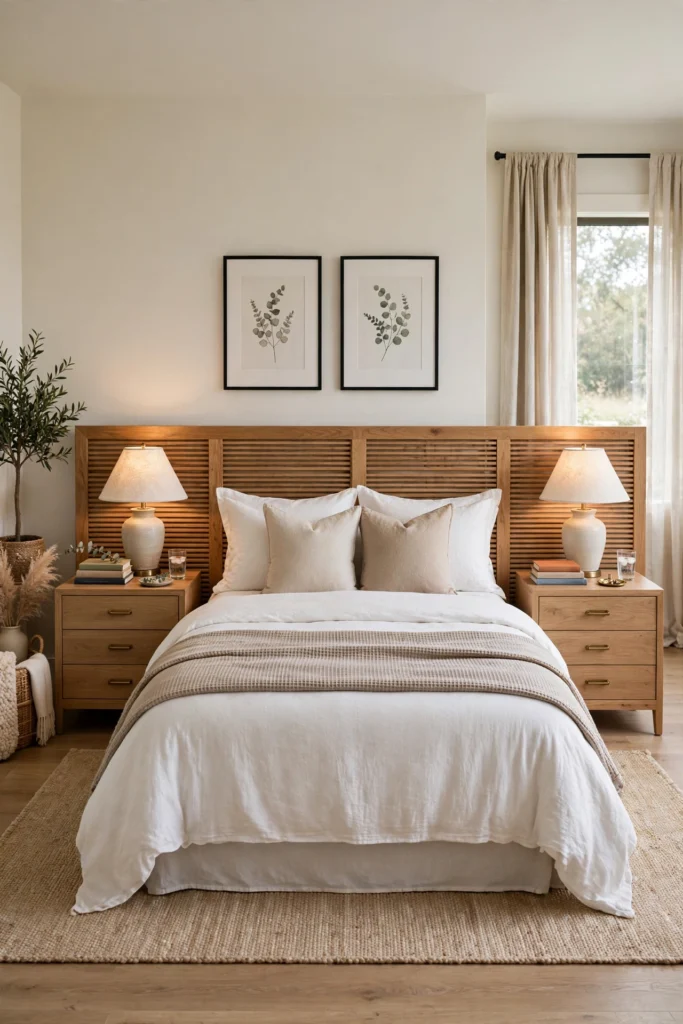
If the room is narrow, floating bedside tables can provide the same function while keeping the floor visually open. That small change matters in a tight room, because a guest who has to squeeze past a table to get into bed will notice it every night. In a very small guest room, the same floating idea helps even more, as our small bedroom layout ideas show: furniture that leaves floor visible makes a room feel larger without changing its size.
4. Use layered bedroom lighting
One ceiling fixture rarely creates the most comfortable guest room atmosphere. Instead, combine several types of lighting so visitors can choose the brightness they need. Bedside lamps or wall sconces are useful for reading, while a central fixture provides general illumination. Accent lighting can highlight artwork or architectural details.
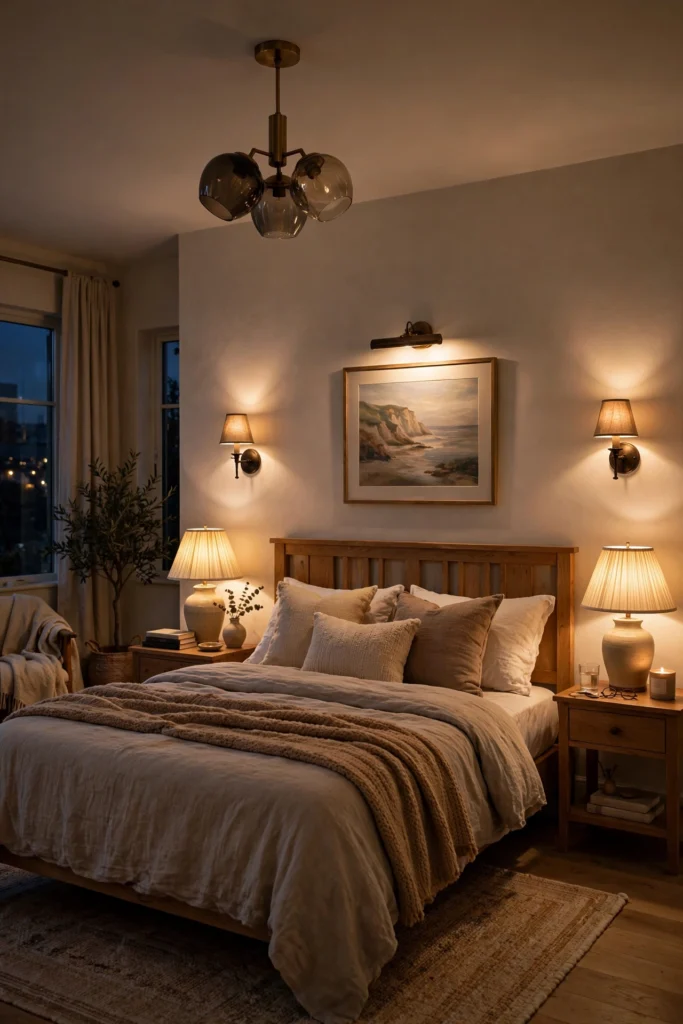
Installing dimmable lights is especially helpful because guests can create a brighter setting during the day and a softer atmosphere at night. Layered lighting is also a recurring feature in luxury guest room design because it combines ambience with practical usability. Check that a guest can turn the bedside light off from bed without getting up and crossing a dark room. That one detail is worth more than a statement chandelier.
5. Install floor to ceiling curtains
Long curtains can make a guest bedroom feel taller and more luxurious. Instead of stopping the curtain rod directly above the window, position it closer to the ceiling and allow the fabric to fall almost to the floor. Linen, cotton, velvet, or linen look fabrics can work beautifully depending on the style of the room.

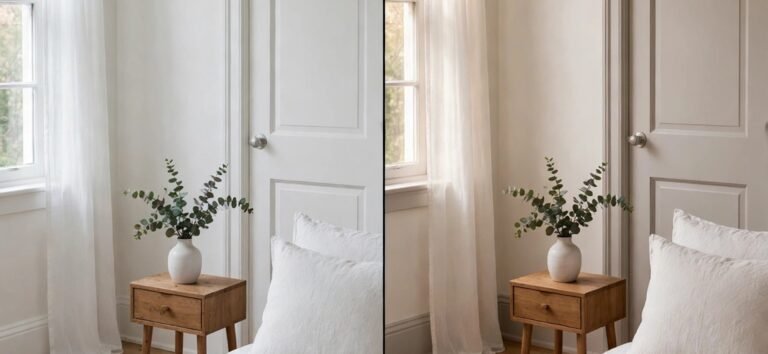
For guests who prefer to sleep late, combine decorative sheers with blackout curtains. This arrangement allows soft daylight during the morning while providing privacy and darkness when needed. Make sure the curtains actually close fully. A pair that stops 15 cm short of the edge lets in a stripe of streetlight all night, and a guest will remember that more than the fabric.
6. Create a comfortable reading corner
If space allows, add a small chair beside a window or in an unused corner. A comfortable reading chair gives guests somewhere to sit besides the bed and makes the room feel more complete. Pair the chair with a small side table and a floor or table lamp. A soft throw can add texture and encourage guests to use the space.

In smaller bedrooms, a compact upholstered chair can provide the same effect without taking up too much floor area. The chair does not need to be large. It needs to be comfortable enough that a guest actually chooses it over sitting on the bed to read or take a call.
7. Add a statement headboard
A statement headboard is an effective way to introduce luxury without filling the entire room with decorative objects. Choose a design that extends wider than the mattress or rises vertically behind the bed. Boucle, linen, velvet, textured fabric, or warm wood can all work depending on the desired mood.

Keep the rest of the furniture relatively simple so the headboard remains the visual anchor rather than competing with several other focal points. If the headboard is tall and upholstered, keep the artwork above it minimal or skip it entirely. The headboard is the art in that case.
8. Bring warm wood into the room
Natural wood prevents a neutral guest bedroom from feeling cold. Wooden bedside tables, a bench, bed frame, floating shelves, or decorative trays can introduce warmth and texture. Light oak works particularly well with Scandinavian or modern interiors, while walnut creates a richer and more traditional appearance.

You do not need matching wood throughout the room. Combining complementary tones can make the design feel collected instead of overly coordinated. One warm wood piece, like a bench at the foot of the bed, is often enough to stop a pale room feeling sterile.
9. Give guests a place for their luggage
A simple luggage bench can make a surprisingly big difference. Guests often need somewhere to open and organise a suitcase, and placing luggage on the floor or bed is inconvenient. A padded bench at the foot of the bed is both decorative and practical.
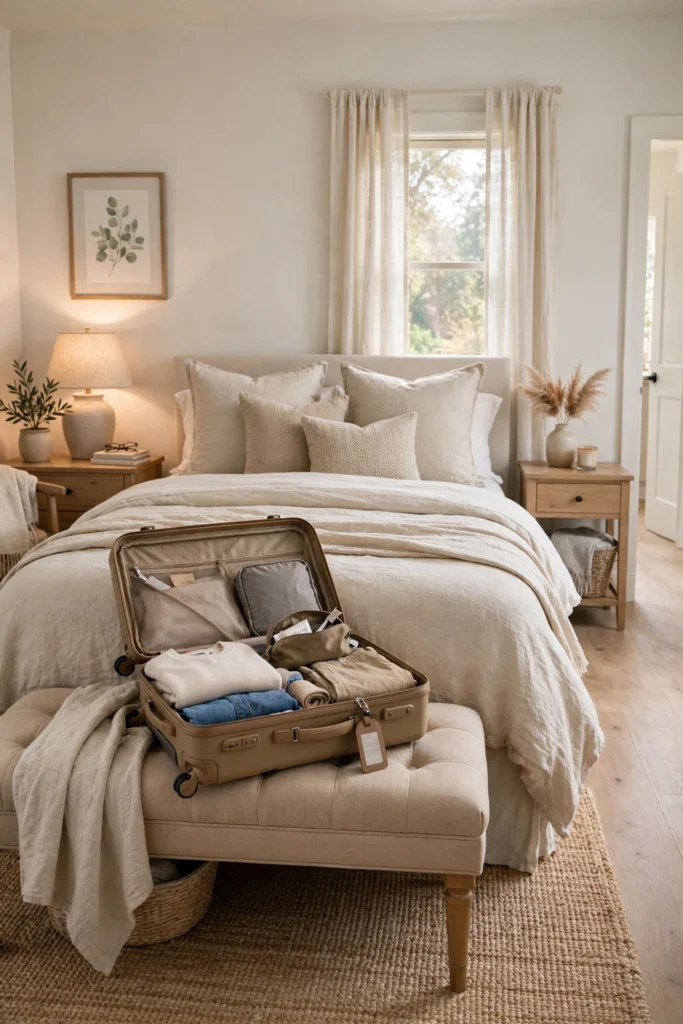
If the bedroom is small, choose a narrow folding luggage rack or a compact storage bench. The important thing is to give visitors a dedicated location for their bags without blocking walking paths. A guest who can unpack properly on arrival settles in faster, and the room stays tidy for the rest of the stay.
10. Include plenty of convenient storage
A guest bedroom should not look like a storage room for the rest of the house. Give visitors enough accessible space to unpack clothing and personal items. A few empty wardrobe shelves, drawers, hooks, or a small dresser can be enough. Floating shelves are useful when floor space is limited, while built in wardrobes can maximise vertical storage.
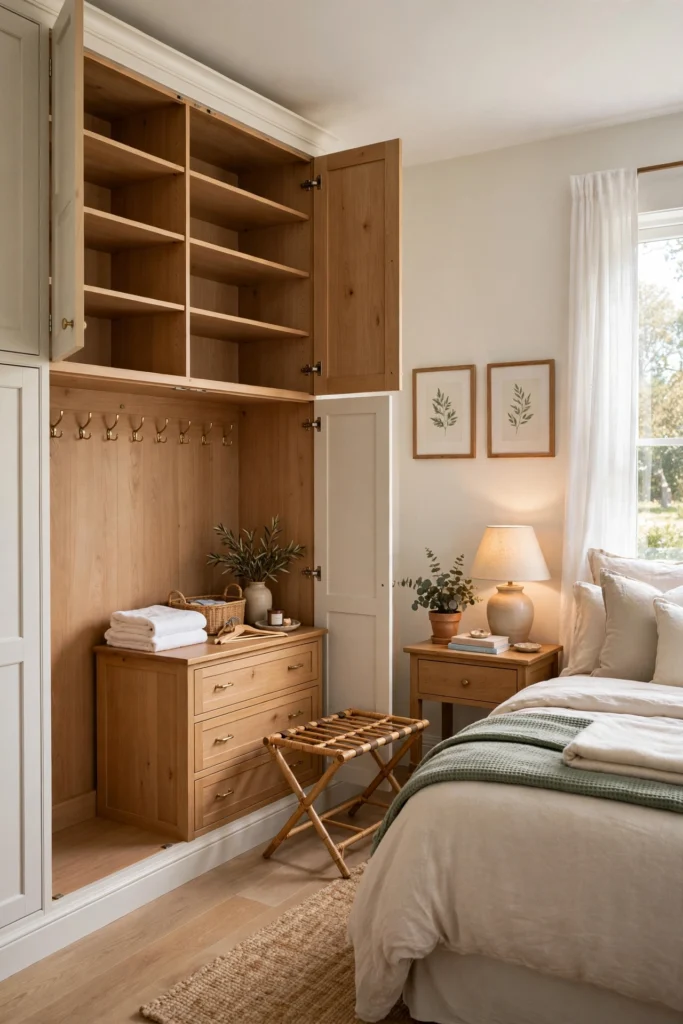
Keep some storage intentionally empty so guests do not feel that they are occupying someone else’s personal space. Clear one drawer, one shelf and a few hangers before guests arrive, and leave them visibly empty. That empty space is a welcome message in itself.
11. Add hotel style bedding
Comfort should always come before decoration in a guest bedroom. Choose bedding that looks inviting and feels pleasant throughout the night. Crisp white or soft neutral sheets provide a timeless foundation, while a textured duvet or blanket adds visual depth. Offer a combination of pillows rather than using several purely decorative cushions.
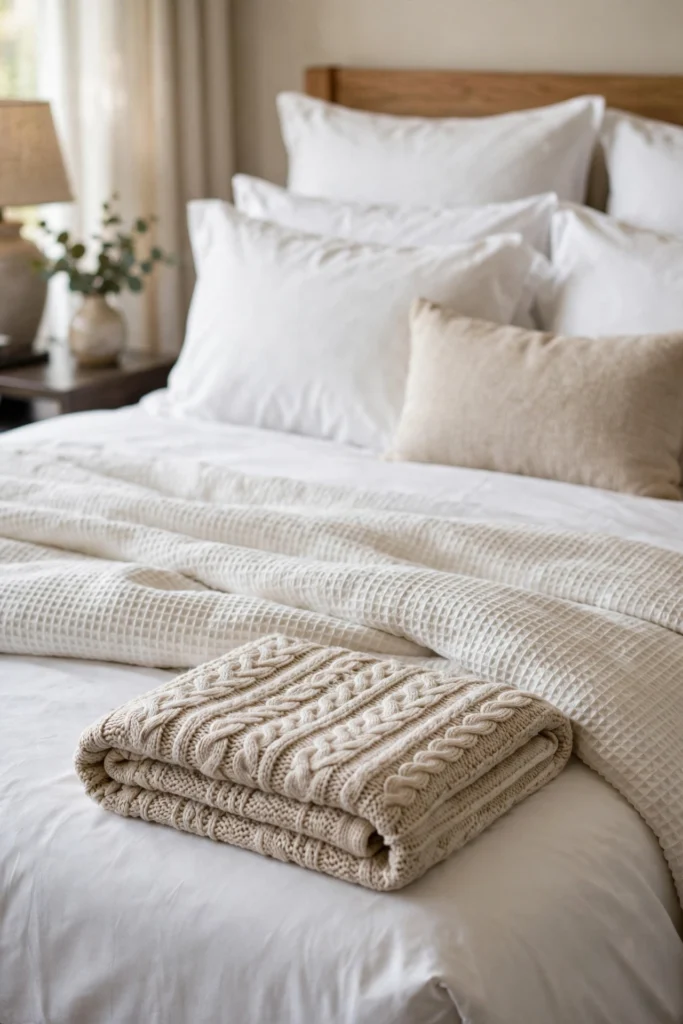
A medium firm pillow paired with softer options allows guests to choose what feels comfortable. Extra blankets can also be folded neatly at the end of the bed for colder nights. Wash the bedding before guests arrive, even if it was washed recently, because fresh bedding is one of the first things a guest notices, consciously or not.
12. Use artwork instead of excessive decor
Artwork can give a guest bedroom personality without creating clutter. A large framed landscape, abstract print, botanical artwork, or subtle photographic piece can work as the room’s main decorative feature. Choose artwork that complements the colour palette instead of matching every accessory exactly.
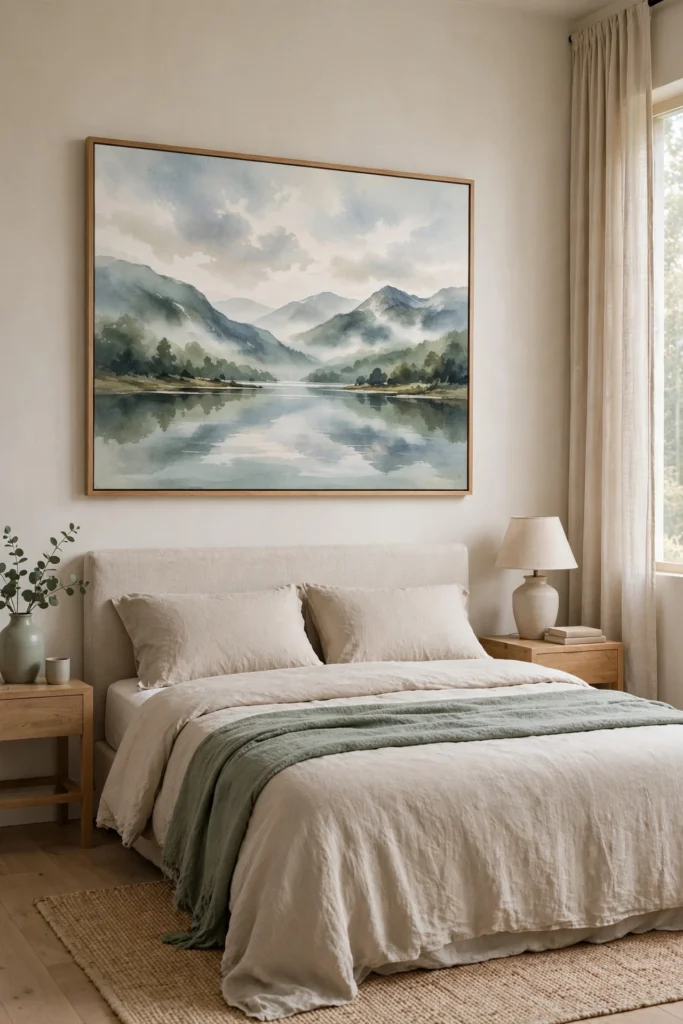
One oversized piece above the bed can often have more impact than a wall filled with small decorations. Keep the subject calm and sophisticated so the room continues to feel restful. Avoid family photos in a guest room, because they can make visitors feel like they are sleeping in someone else’s private bedroom rather than a space prepared for them.
13. Introduce textured fabrics
Texture is an easy way to make a simple colour palette look expensive. Combine smooth cotton bedding with woven cushions, a plush rug, linen curtains, and a soft upholstered headboard. The key is variation without visual chaos. Choose fabrics that belong to the same general colour family but have different finishes.
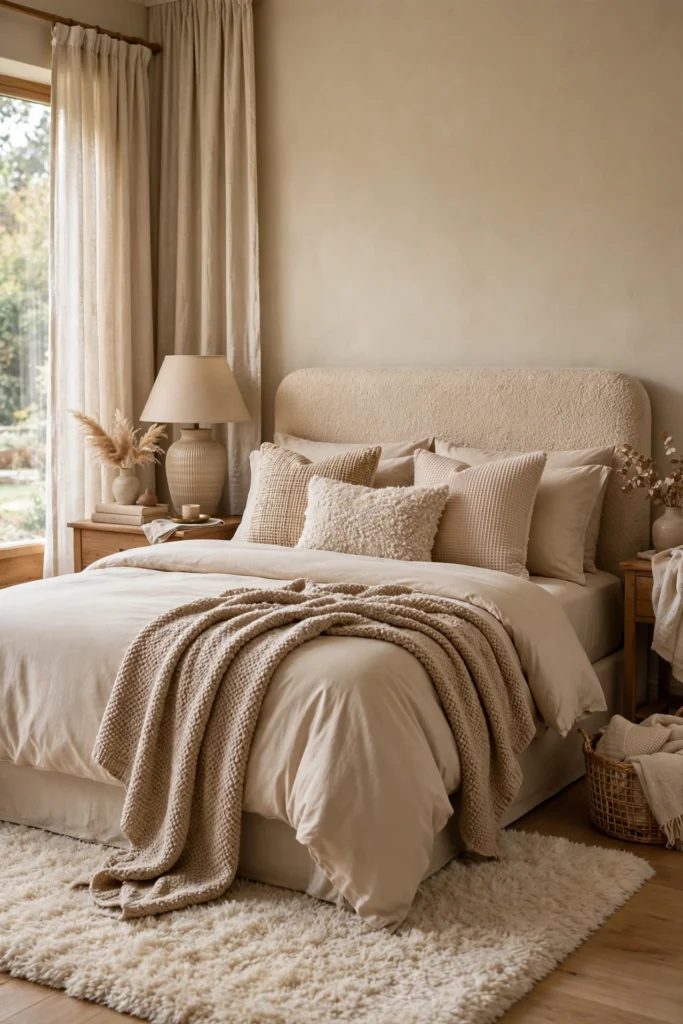
This creates depth that can be seen and felt while keeping the room cohesive. A room with four textures in one colour family feels richer than a room with four colours in one texture, and it is much easier to live with for a guest who has to sleep in it.
14. Add a small desk or work surface
Adult guests may need to answer emails, work remotely, study, or simply organise travel plans. A compact desk gives the room extra functionality without changing its relaxing character. Choose a slim desk with a comfortable chair and position it near natural light when possible.

Wall mounted desks are particularly useful in small rooms because they preserve floor space. Add a small lamp and one or two useful accessories rather than turning the desk into another decorative display. A guest who can work for an hour without clearing the desk first will thank you for that restraint.
15. Create a calm accent wall
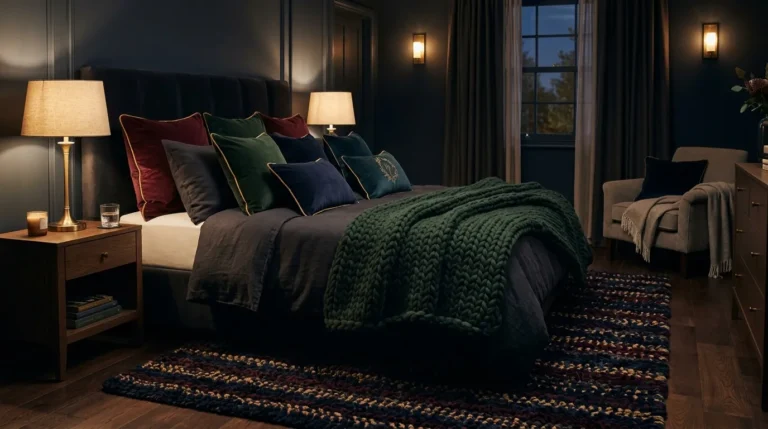
An accent wall can give the bedroom a designer appearance without requiring major renovations. The wall behind the bed is usually the strongest choice because it naturally functions as the room’s focal point. Consider muted sage, dusty blue, warm clay, deep olive, or soft charcoal. If paint feels too basic, textured wallpaper, subtle panelling, limewash inspired finishes, or vertical wood details can add architectural interest.
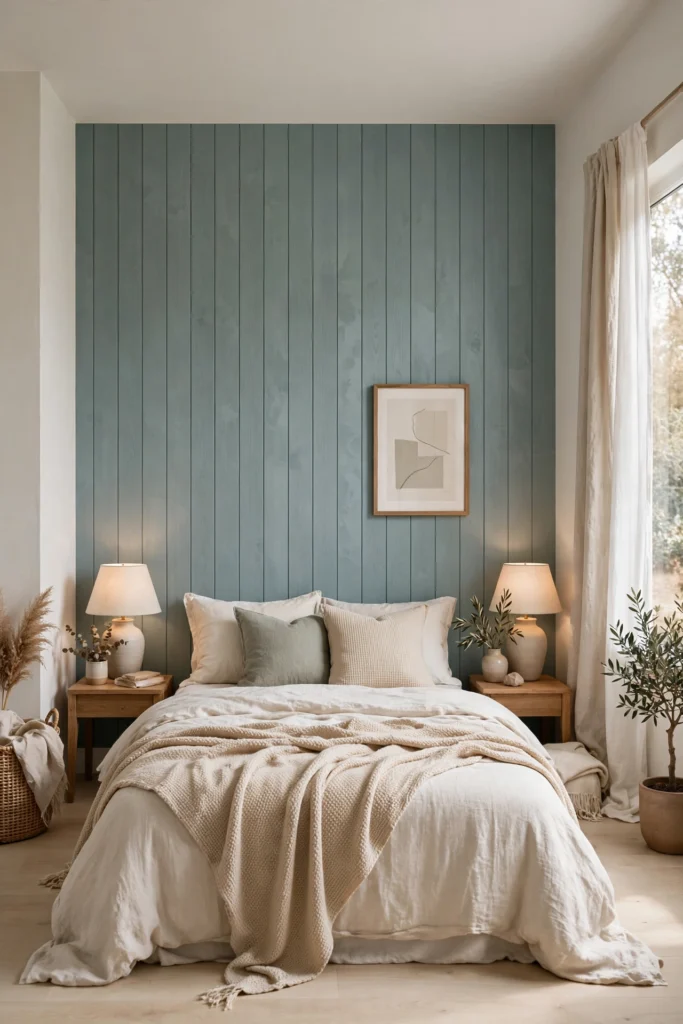
Keep surrounding walls lighter so the room does not feel visually heavy. If you are tempted by a much darker accent, our black bedroom wall ideas show how a dark wall works when the bedding, lighting and trim are chosen around it, and where it starts to overwhelm a small room.
16. Make the room feel personal but neutral
A guest bedroom should have personality, but it should not be so personal that visitors feel like they are sleeping in someone else’s private bedroom. Select decorative details that create character without dominating the space. A small stack of books, a ceramic vase, a plant, tasteful artwork, or a locally inspired accessory can make the room feel thoughtfully prepared.
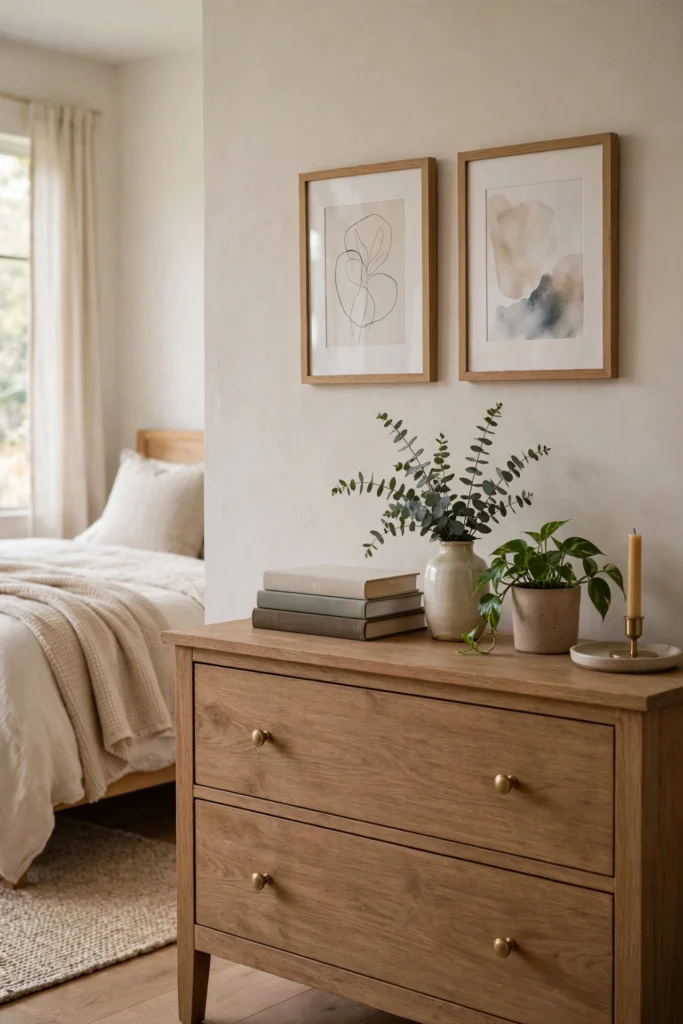
Avoid filling every surface. Leaving some breathing room makes the bedroom appear more polished, and it leaves space for a guest’s own things: a book, a phone, a glass of water. A room that is already full has nowhere for a guest to belong in it.
17. Add a full length mirror
A full length mirror is one of the most useful additions to an adult guest room. Visitors can check an outfit without relying on the bathroom mirror, making the bedroom more convenient. Lean a large framed mirror against the wall for a relaxed look, or mount one vertically beside the wardrobe.

In compact rooms, a mirrored wardrobe door can serve two functions while visually making the space appear larger. Place the mirror where it catches daylight if possible, because a mirror opposite a window doubles the light in the room, a trick that also helps tiny bedrooms feel less cramped, as shown in our tiny bedroom furniture layouts.
18. Use floating furniture in small rooms
Small guest bedrooms can still look elegant when the furniture is properly scaled. Floating bedside tables, wall mounted shelves, and compact desks keep the floor visible and create a sense of openness. Avoid oversized furniture that leaves narrow walking paths.
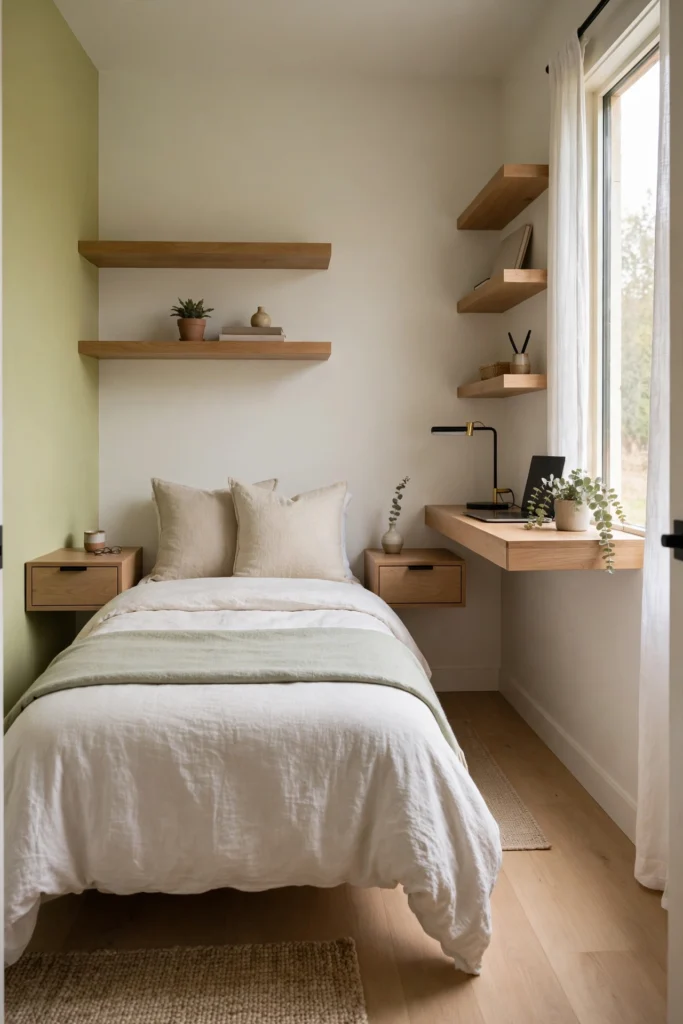
Instead, prioritise pieces that provide multiple functions. A wall mounted nightstand with a drawer, for example, can offer storage without making the room feel crowded. Smart layouts and multifunctional furniture are especially valuable when a guest room needs to serve more than one purpose, for example as an office between visits.
19. Create a simple refreshment station
A small refreshment area can make overnight guests feel especially welcome. If the room has enough space, place a tray with drinking glasses, bottled water, mugs, tea, coffee, or a small electric kettle on a dresser or dedicated shelf. The setup does not need to look like a full hotel minibar.
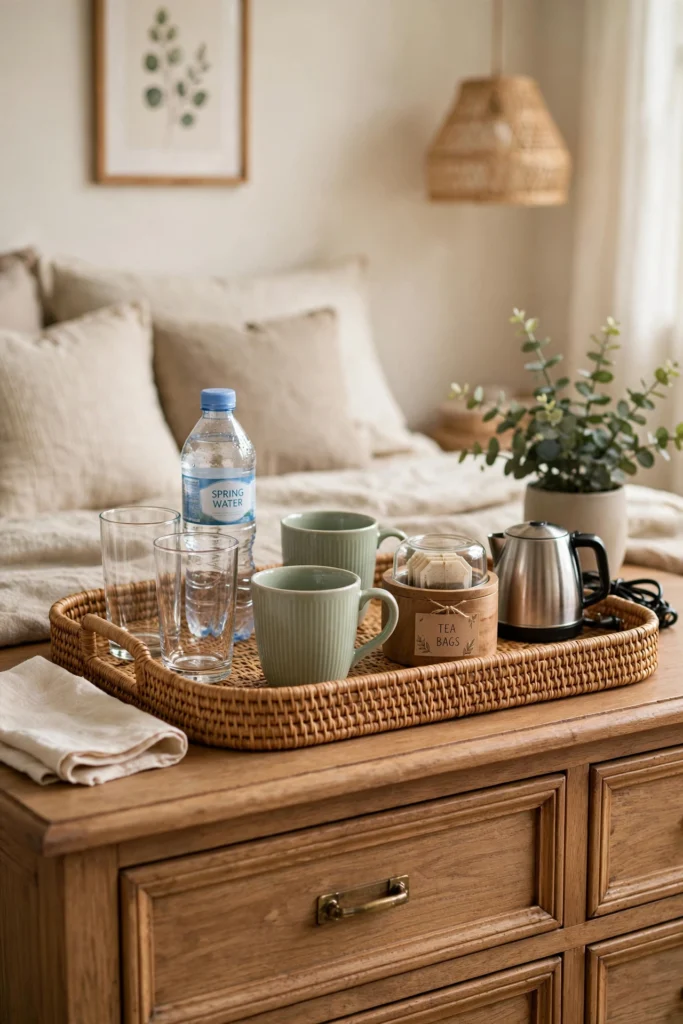
A beautiful tray, matching cups, and a small container for tea bags can create the same thoughtful impression while keeping the design simple and home like. Keep the kettle, if you use one, on a stable surface away from bedding, with a clear place to set a hot mug down.
20. Finish with thoughtful guest details
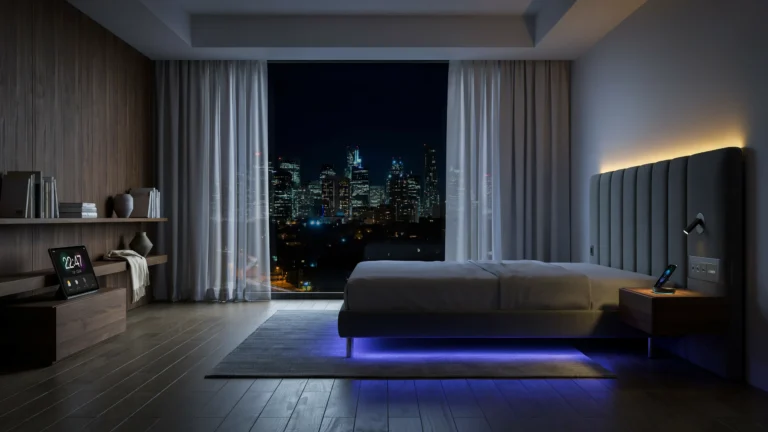
The final layer of an elegant guest bedroom is not necessarily an expensive piece of furniture. It is the collection of small details that make visitors feel considered. Provide accessible charging points, extra blankets, easy to use lighting, a few hangers, bedside water, tissues, and perhaps a small welcome note. Keep these items organised rather than scattered around the room.
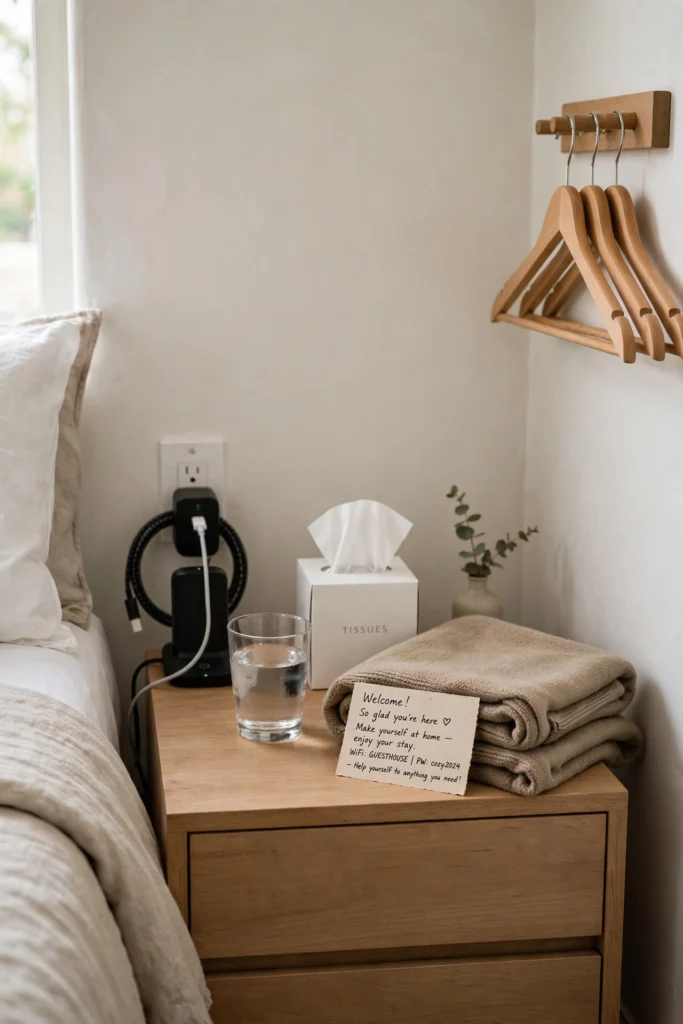
The best guest bedrooms combine beauty with convenience, making visitors feel comfortable without having to ask for basic necessities. A welcome note with the Wi Fi password, the kettle instructions, and a line about when breakfast happens is worth more than another decorative cushion, because it answers the questions every guest is too polite to ask twice.
How to make a guest bedroom look elegant
Elegance comes from consistency rather than filling the room with expensive decorations. Start with a calm colour palette, then select furniture with simple proportions and quality looking finishes. Add texture through bedding, curtains, rugs, and upholstery. Lighting is equally important. A combination of ceiling lighting, bedside lamps, and accent illumination can make inexpensive furniture look more sophisticated. Keep surfaces relatively uncluttered and choose a few meaningful decorative pieces instead of dozens of accessories.
Most importantly, think about how an adult guest will actually use the room. A beautiful bedroom becomes much more successful when visitors can easily find storage, charge their phone, adjust the lighting, close the curtains, and relax comfortably. If you are setting up a room for younger guests as well, our dorm room bedding essentials cover the layering side in detail, because a bed that is easy to sleep in matters more than a bed that photographs well.
How to make a small guest bedroom feel luxurious
Small spaces benefit from restraint. Use furniture that fits the proportions of the room rather than trying to recreate a large hotel suite. Wall mounted nightstands, floating desks, vertical storage, and multifunctional benches can preserve valuable floor space. Light colours can also make a compact room feel more open. Add one strong focal point, such as an upholstered headboard or textured accent wall, rather than competing decorative features. A large mirror and carefully positioned lighting can further enhance the feeling of space. The goal is not to hide the room’s size. Instead, make every available area useful while maintaining clear pathways and visual breathing room.
What should every adult guest bedroom have?
A comfortable bed is the first priority, followed by suitable bedding and pillows. Guests should also have convenient lighting, a bedside surface, accessible charging, storage for clothing, a place for luggage, and privacy through suitable window treatments. Depending on available space, a chair, mirror, desk, refreshment tray, or small reading area can add extra comfort. These features do not all need to be expensive. Thoughtful placement and ease of use often matter more than the price of individual items.
Common guest bedroom decorating mistakes to avoid
One common mistake is prioritising appearance while forgetting comfort. A beautiful bed with poor pillows, harsh lighting, or insufficient storage will not create a positive guest experience. Another problem is overcrowding the room with furniture and accessories. Guests need space to move around, unpack, and place their belongings. Avoid inconsistent finishes, excessive patterns, uncomfortable seating, and decorative objects that make useful surfaces difficult to use. Finally, do not make the bedroom so personalised that visitors feel as though they are occupying someone else’s private space. A balanced combination of personality and neutrality works best for adult guests.
Questions hosts ask about guest bedrooms
What colours are best for an elegant guest bedroom?
Warm neutrals such as cream, beige, taupe, greige, and soft gray are excellent choices. Muted accents in sage, dusty blue, or warm brown add depth without breaking the calm mood.
What size bed works best for a guest room?
A queen bed suits couples in a dedicated room, while a full bed or a twin XL works better in a small room or for single guests. Choose the largest bed that still leaves clear walking space on at least one side and room for luggage.
How can I make a guest room feel like a hotel?
Layer the bedding, add bedside lighting you can control from bed, provide water, charging and extra blankets, and keep surfaces clear. Those practical details create a hotel feeling more reliably than decorative extras.
Should a guest bedroom have a desk?
It helps if adult guests work remotely or travel with a laptop, but it is not essential in a very small room. A slim wall mounted desk or a clear dresser top can serve the same purpose without taking floor space.
Before the next guest arrives
Walk the room once, as a guest, before you call it done. Put a suitcase on the bench, plug in a phone, close the curtains, and lie on the bed. If anything in that walk feels awkward, fix that thing first, even if it is not the prettiest change on the list. Elegance in a guest room is not a style you apply at the end. It is the feeling a guest gets when everything they need is already where they expect it to be, and nothing in the room asks them to work around it.