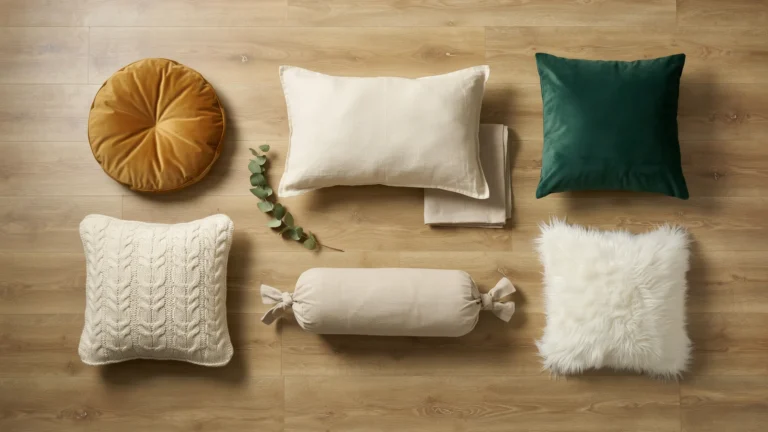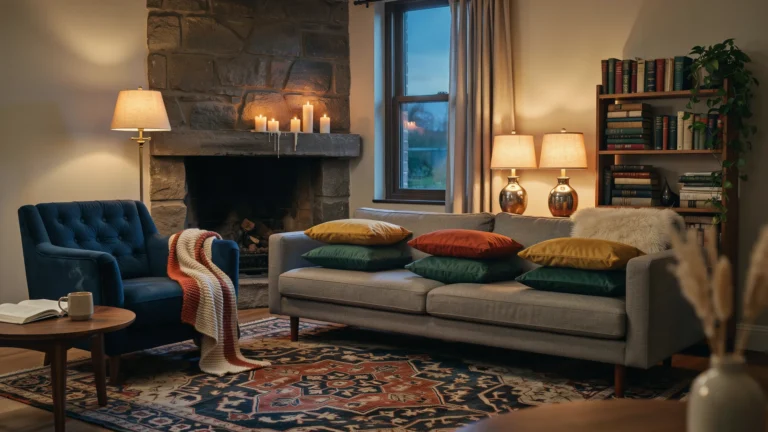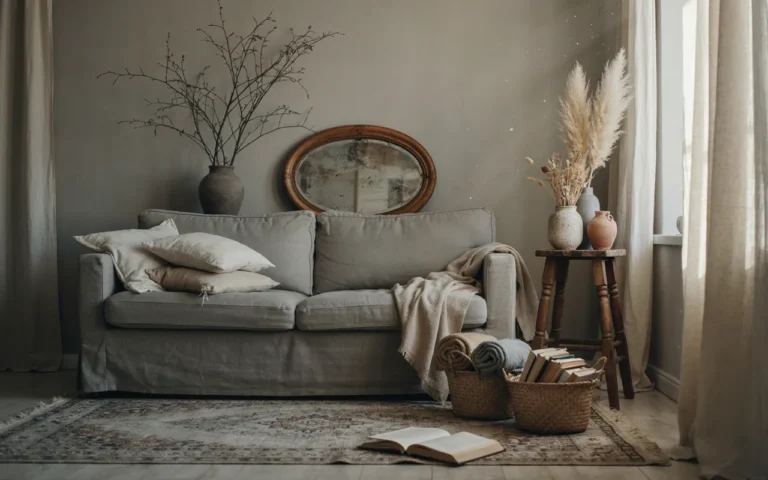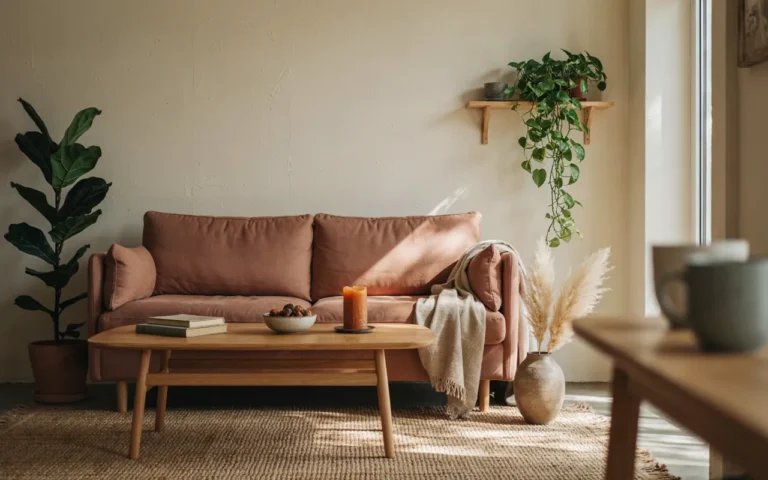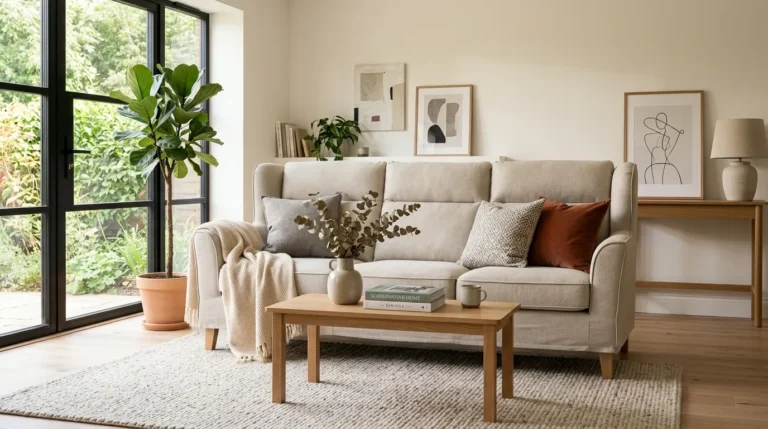
Start with one throw, one sofa corner, and one simple fold. A standard 50 by 60 inch throw suits most two and three seat sofas, a folded arm drape suits a tidy room, and a loose corner drape suits a room that gets used every day. Pick the colour by your sofa, not by a trend photo, and keep the throw where you can actually reach it.
A throw blanket is the smallest change that can make a living room feel finished. It softens a hard sofa edge, adds a patch of colour where the room feels flat, and gives you something warm to pull over your knees on a cold evening. The trouble starts when a throw is bought for a photo and never used, or draped in a way that slides off every time someone sits down.
This guide works the other way round. It starts with how a throw sits on a real sofa, then moves to size, fabric and colour, and only then to the 25 looks. Every idea below keeps its original photo, in the original order, so you can see exactly how each style behaves on furniture rather than in a shop display.
Five drapes that work on almost any sofa
Most throw photos look different because the fold is different, not because the blanket is special. Learn these five placements and you can restyle the same throw in under a minute. Try each one on your own sofa before you decide which one suits your room, because arm height, seat depth and cushion firmness change how a fold holds.
The casual corner drape
Fold the throw loosely in half lengthwise, lay it over one back corner, and let part of it fall over the arm and part onto the seat. Do not smooth every crease. The point is a soft, lived in corner that invites someone to sit there, not a flat panel that looks afraid to be touched.
This drape works best with cotton, linen and light knits, which fall naturally and do not slide as much as silky fabrics. Keep the tail off the floor if you have pets, and pull the seat section forward a little so it does not bunch behind a sitter’s back.

The folded armrest style
Fold the throw into thirds lengthwise, then in half widthwise, and lay the neat bundle over one arm. Let the fringe or hem hang down the outside of the arm, but stop short of the sofa base. This is the tidiest placement in the guide, and it suits a formal room or a sofa that faces the front door.
Chunky knits hold this fold well because the yarn has grip. Smooth fleece and velvet tend to slip, so tuck the inner end under the seat cushion by a few inches if your throw keeps sliding. The arm drape also keeps the blanket within reach, which matters more than it sounds on a cold night.
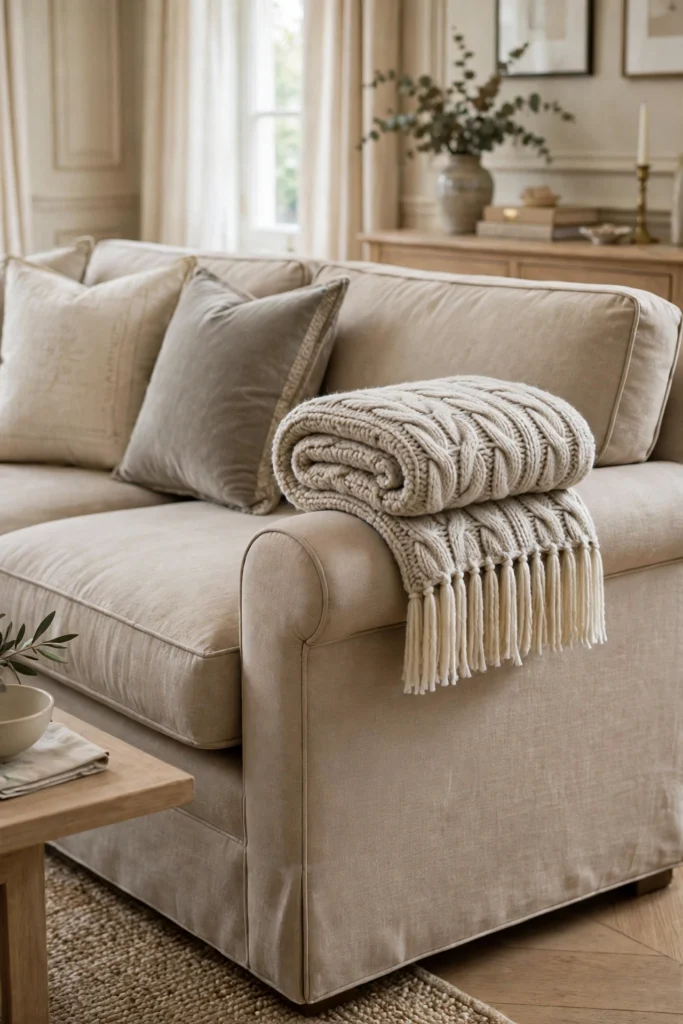
The seat corner cascade
Here the throw starts at the back corner and flows down over the seat cushion, with the end hanging just over the front edge. It covers more of the sofa than an arm drape, so it works well when one cushion looks worn or when the sofa colour feels too plain.
Use a throw long enough to reach the front edge without pulling tight. A standard 50 by 60 inch throw usually manages this on a sofa with a seat depth up to about 22 inches. On a deeper seat, choose an oversized throw or accept a shorter cascade that stops on the seat rather than hanging over it.
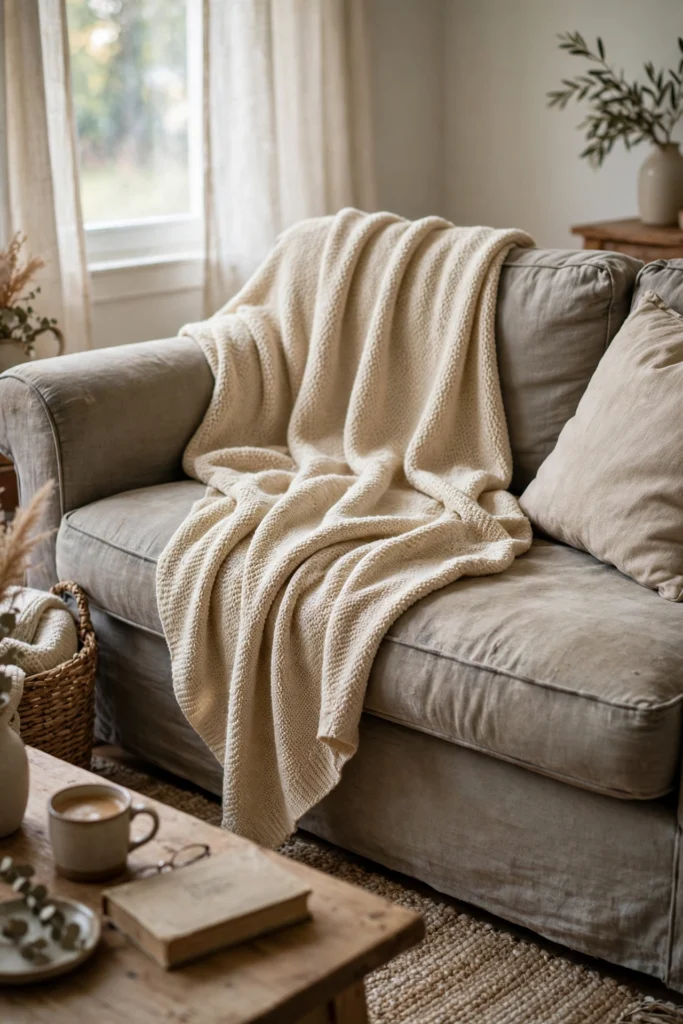
The full length sofa drape
Open the throw fully and run it along the back of the sofa, letting it fall over the back cushions and onto the seat. This is a bold placement, best for a plain sofa that needs one strong block of colour or texture. It also protects the back cushions in a house where the sofa gets heavy daily use.
One throw rarely covers a whole three seat sofa well, so do not force it. A single oversized throw suits a loveseat, while a long sofa looks better with the drape kept to one half or two thirds of its length. Leave at least one cushion clear so the sofa still reads as seating, not as a bed.

Layered blanket and pillow styling
Place the throw first, then build pillows in front of it, leaving a band of blanket visible above or beside the pillows. This layering is what makes a sofa look styled in photos, but it only works if the throw stays visible. If every inch is hidden behind cushions, you have just added weight for no visual gain.
Keep one colour or texture repeated between throw and pillows, such as a cream throw with a cream cushion cover, or a rust throw with one rust cushion. The rest of the pillows can contrast. If the wall above the sofa still looks bare once the cushions are placed, above couch wall decor sized to the sofa will do more for the room than adding another throw.

Choose the right size before you choose a colour
Size is where most throw purchases go wrong. A throw that is too small looks like a scarf on a sofa, and a throw that is too large turns into a heap that no one folds back neatly. Measure your sofa first, then match the throw to the seat you actually sit on, not to the whole sofa length.
The standard throw size, about 50 by 60 inches, covers one adult from shoulders to knees when seated, and it drapes well over one arm or one corner. Smaller throws around 40 by 50 inches suit an accent chair or a child’s seat. Oversized throws around 60 by 80 inches suit a sectional, a deep sofa, or two people sharing one end of the sofa.
| Seating | Throw size that usually works | Best placement |
|---|---|---|
| Accent chair | 40 by 50 inches | Over one arm, tail on the seat |
| Loveseat | 50 by 60 inches | Corner drape or full length drape |
| Standard two or three seat sofa | 50 by 60 inches | Corner drape, arm fold, or half sofa drape |
| Deep sofa, seat over 22 inches | 60 by 80 inches | Seat cascade or full drape on one section |
| Sectional or chaise | 60 by 80 inches, or two standard throws | One throw per end, not one stretched across |
Seat depth matters as much as sofa length. On a shallow seat, a standard throw reaches the front edge easily. On a deep seat, the same throw can disappear behind your knees, so a longer throw or a cascade that stops on the seat works better. If you are choosing between two sizes, pick the larger one for a sectional and the standard one for a tidy two seat sofa.
Comfort starts before the throw, too. A throw cannot fix a sofa that is hard to sit on for long, and a soft seat makes even a simple cotton throw feel better. If your sofa itself needs attention, comfortable sofas with the right seat depth and cushion fill are worth reading before you spend more on textiles.

Pick a colour by what your sofa already does
Colour rules for throws are simpler than paint charts make them look. First, decide whether the throw should blend in or stand out. A room that already has pattern, strong art or a busy rug needs a quiet throw. A room that is mostly neutral has room for one strong colour.
Undertones matter more than colour names. A cool grey sofa with blue undertones looks best with a cool grey, white or navy throw, while a warm beige sofa suits cream, rust and olive. Mixing a cold blue grey throw with a yellow beige sofa is the most common reason a neutral room looks muddy, even when each piece looks fine on its own.
A useful test is to hold the throw against the sofa in daylight, not under shop lights, and step back to the doorway. If your eye goes straight to the throw and stays there, it is acting as an accent, which is fine if that is the plan. If the throw and sofa fight for attention, choose a quieter shade or a softer texture in the same colour family.
25 throw blanket living room ideas
Each idea below is a complete look, not just a colour swatch. Read the placement note with the photo, because the same throw can look formal, relaxed or cluttered depending on how it is folded and what sits next to it.
1. Neutral beige layered throw
A beige throw is the safest starting point for a living room that already has wood, leather or warm white walls. Layer it over a cream or oatmeal sofa in a loose corner drape, and let the texture do the work instead of the colour. A woven cotton or light knit in beige reads as warm without shouting, and it pairs with almost any cushion colour you add later.
Keep the rest of the sofa quiet when you use beige on beige. One darker cushion, in rust or olive, stops the corner from looking washed out. Avoid stacking three beige textiles in the same tone, because the sofa, throw and rug can merge into one flat block.

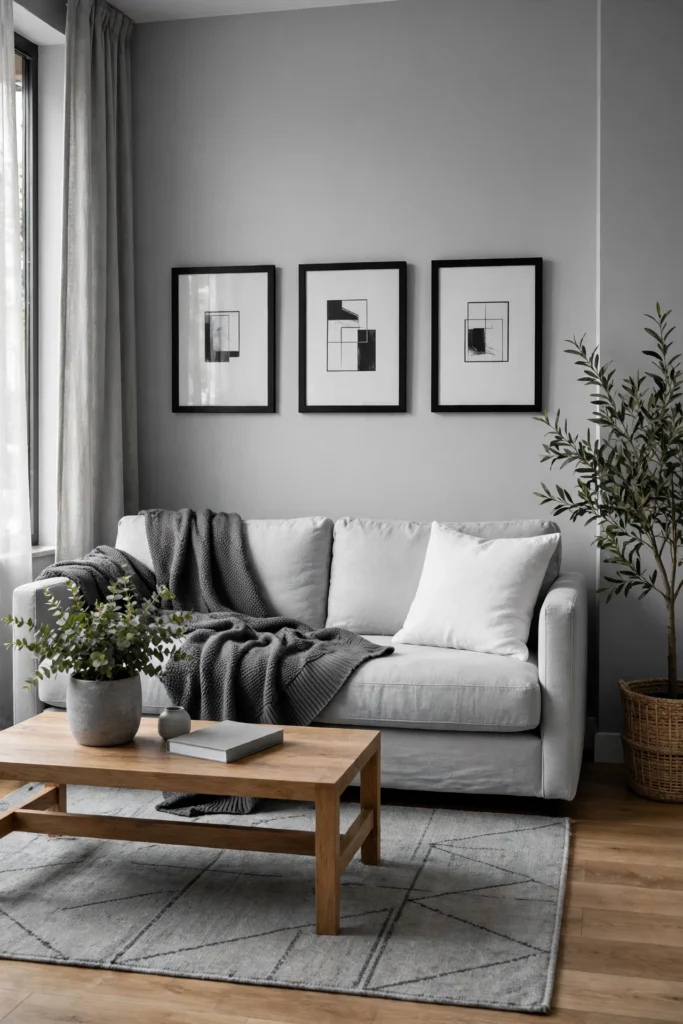
2. Monochrome grey aesthetic
Grey on grey works when the shades and textures are clearly different. Try a mid grey throw on a light grey sofa, or a charcoal throw on a pale grey sofa, and add a white cushion to break the run of grey. The contrast should come from light and dark, not from a new colour.
This look suits a modern room with black frames, a simple rug and little pattern. If your grey room already feels cold, warm it with wood, a cream cushion or a plant nearby rather than swapping the whole throw. A soft grey boho room shows how texture can warm grey without changing the palette, as in these grey boho living room ideas that stay cosy, never cold.
3. Bold terracotta accent
Terracotta is a strong accent that still feels natural, because it sits close to clay, brick and autumn leaves. Use it as the single warm note in a neutral room, draped over one corner or folded over an arm, and keep other warm colours to a minimum. One terracotta throw plus one matching cushion is enough.
This colour suits a cream, beige or light grey sofa far better than a red or orange sofa, where it can blend into the upholstery and lose its impact. If your room gets little daylight, terracotta still holds its warmth, but keep the throw to one end of the sofa so the room does not feel heavy.
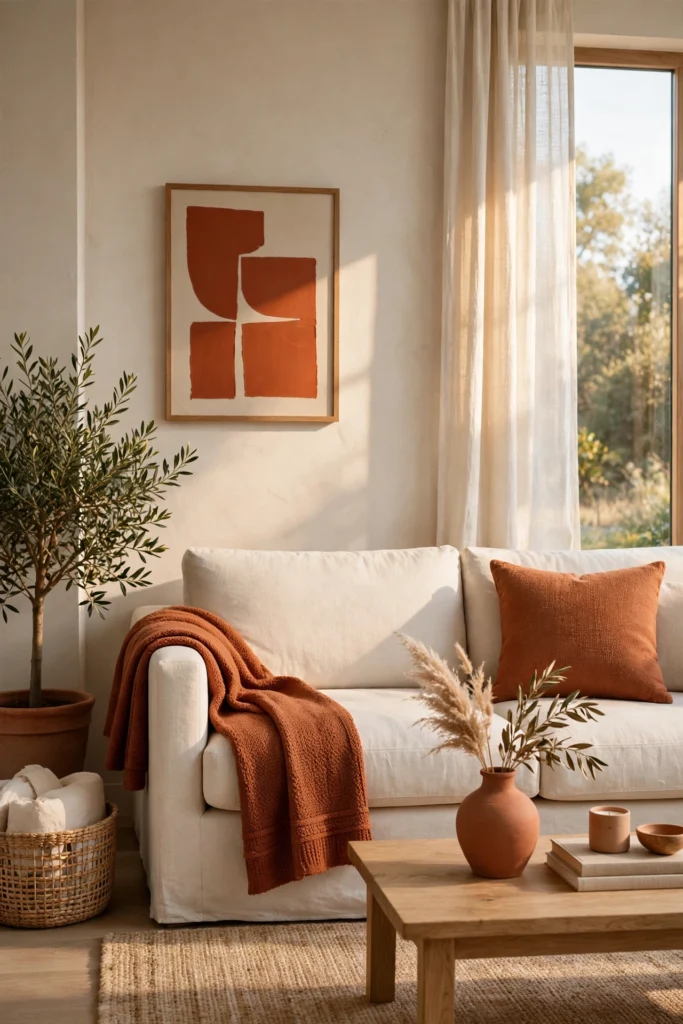
4. Textured bouclé throw
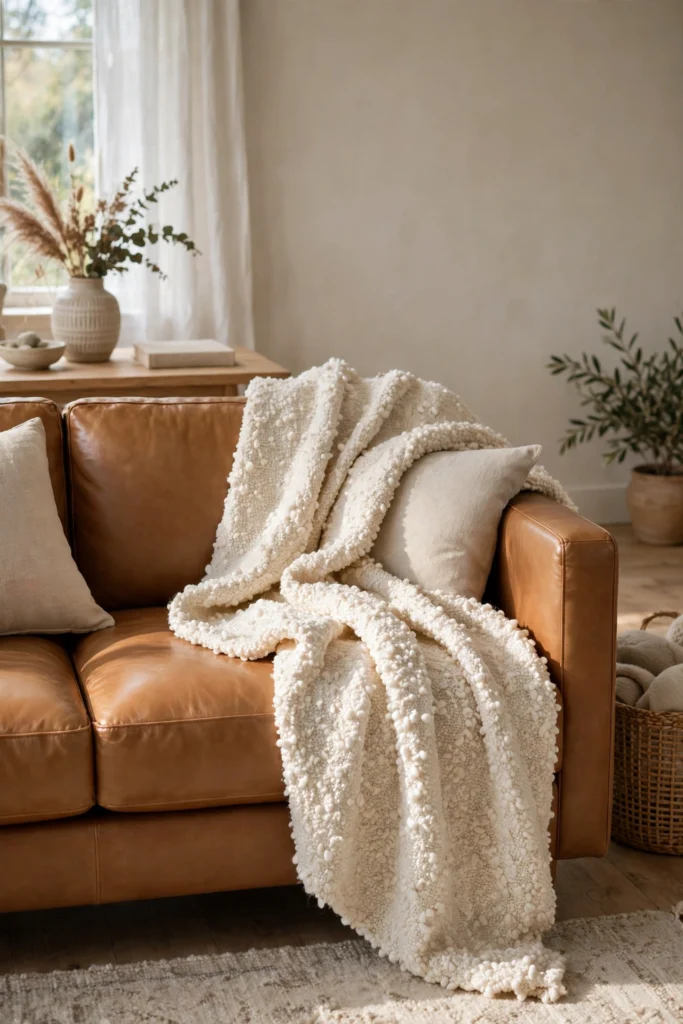
Bouclé has a nubby, looped surface that catches light and adds depth even in a pale colour. It is a good choice when your sofa fabric is smooth, such as leather or tight weave cotton, because the contrast in texture stops the seating from looking flat. Drape it loosely rather than folding it flat, so the loops stay visible.
Bouclé sheds a little at first and needs gentle handling, so keep it away from rough Velcro, sharp pet claws and frequent machine washing at high heat. Shake it outside, spot clean small marks, and follow the care label before any full wash. The texture is the feature here, so do not iron it flat.
5. Chunky knit corner drape
A chunky knit throw adds instant weight and warmth to a corner seat. Fold it in half lengthwise and drape it over the corner, letting the thick stitches hang over the arm. The knit holds its shape better than a flat weave, so this drape stays put longer on a firm sofa.
Chunky knits are warm, so they suit a reading corner or a room that feels drafty more than a small, warm flat. They also take up more storage space when folded, so plan a basket or a shelf spot for the months when it is not in daily use. Avoid pulling a chunky knit tight across a seat, because stretched stitches lose their shape over time.

6. Two tone layered look
Layering two throws sounds fussy, but it works when one throw is plain and the other carries the pattern or the stronger colour. Lay the plainer throw down first, across the back or over the arm, then add the second throw folded more narrowly on top of it. The top layer should be shorter or narrower, so both layers stay visible.
Keep the two throws in the same colour family or share one colour between them, such as cream and rust, or grey and charcoal. Two unrelated strong colours on one sofa usually look like laundry rather than styling. This layered approach also lets you swap just the top throw when you want a small change without buying a whole new set.
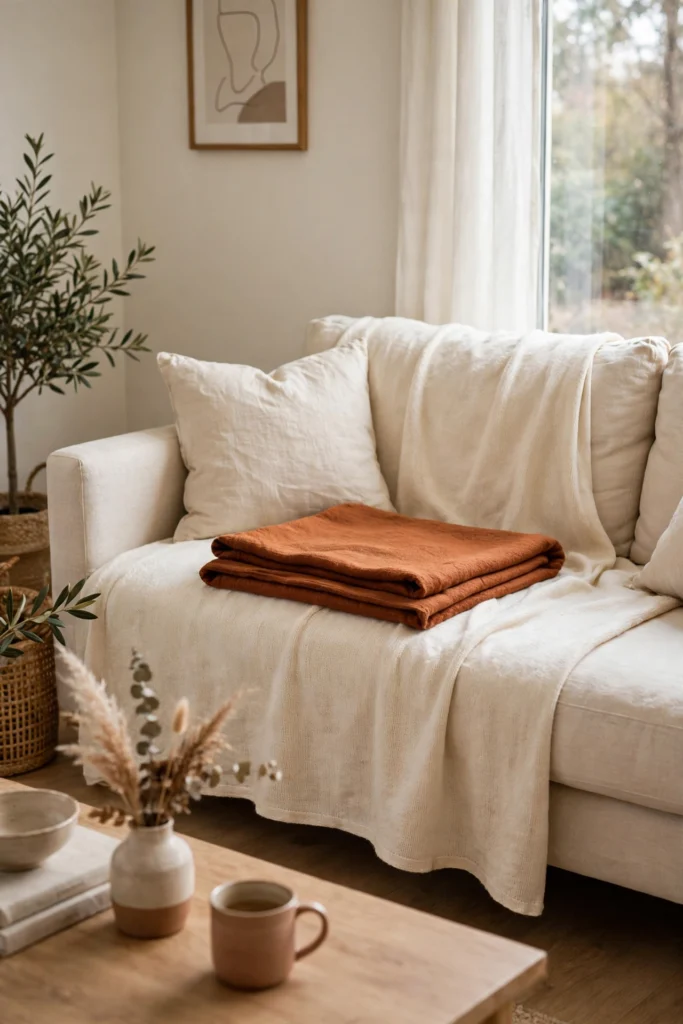
7. Minimalist Scandinavian style
Scandinavian styling uses a throw as a quiet layer, not as decoration for its own sake. Choose a light wool, cotton or linen throw in white, cream or pale grey, fold it neatly over an arm or across the back, and leave plenty of empty sofa visible around it. The room should still look calm when you take the throw away.
Light wood, white walls and a simple rug support this look, while too many cushions undo it. If you like the style but your room feels bare, add one plant or one wooden tray rather than a second throw. The aim is a room that feels easy to sit in, not a display that no one wants to disturb.

8. Emerald green statement throw
Emerald is a deep, confident colour that works as a statement on a neutral sofa. Use it in one place only, such as a corner drape or a folded arm bundle, and let the rest of the sofa stay neutral. Emerald pairs well with brass, dark wood and cream, and it holds up in a room with green plants nearby because the tones echo each other without matching exactly.
Dark green shows lint and pet hair more than a mid tone does, so keep a lint roller nearby if you have pets. In a small or dark room, use emerald as a folded arm throw rather than a full sofa drape, so the colour adds depth without closing the room in.

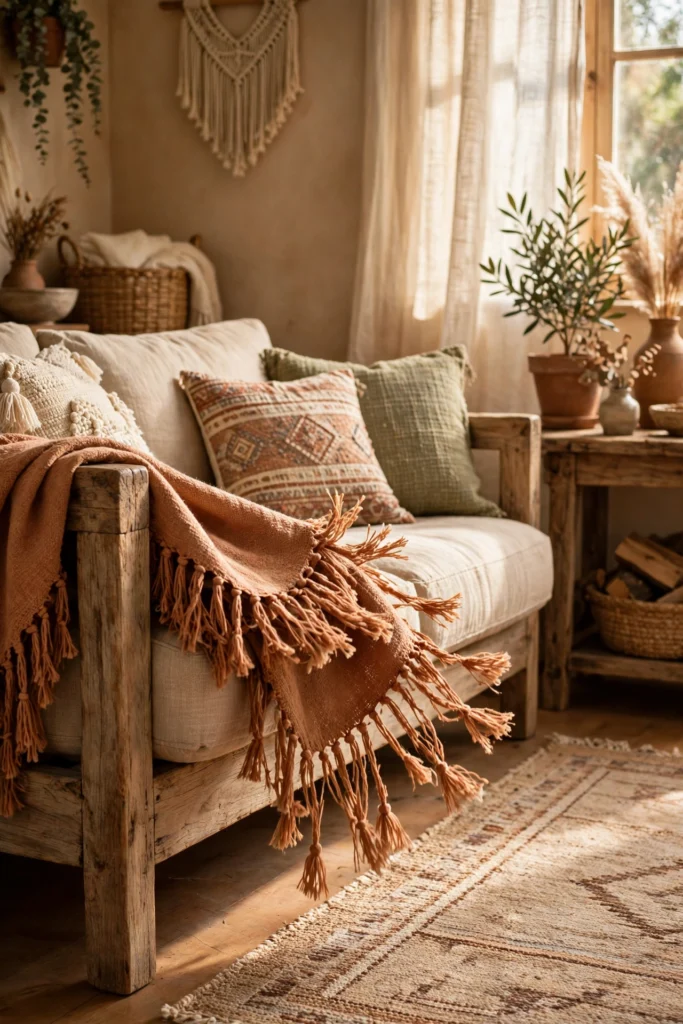
9. Fringe detail throw
Fringe adds movement at the edge of a throw, which is why it photographs so well. Let the fringe hang free over the arm or seat edge, and do not tuck it under cushions where it bunches and tangles. A fringe throw suits a relaxed, boho or rustic room, and it softens a sofa with straight, hard lines.
Fringe needs a little care. Check for loose threads before washing, wash on a gentle cycle inside a laundry bag if the label allows machine washing, and untangle the fringe while it is still slightly damp. Avoid hanging a fringe throw where it drags on the floor, because foot traffic frays the ends fast.
10. Faux fur modern accent
Faux fur brings a soft, high pile texture that makes a modern sofa feel more inviting. Use it sparingly, folded over one arm or laid across one seat, rather than covering the whole sofa. One faux fur throw is a feature. Two can make the room feel like a dressing room.
Faux fur looks best against smooth surfaces, such as leather, velvet or a plain cotton sofa, where the pile stands out. It can shed when new, so shake it outside before first use and avoid dark faux fur on a pale sofa if shedding will show. Most faux fur throws prefer a cool, gentle wash and air drying, so check the label rather than assuming a hot cycle is safe.
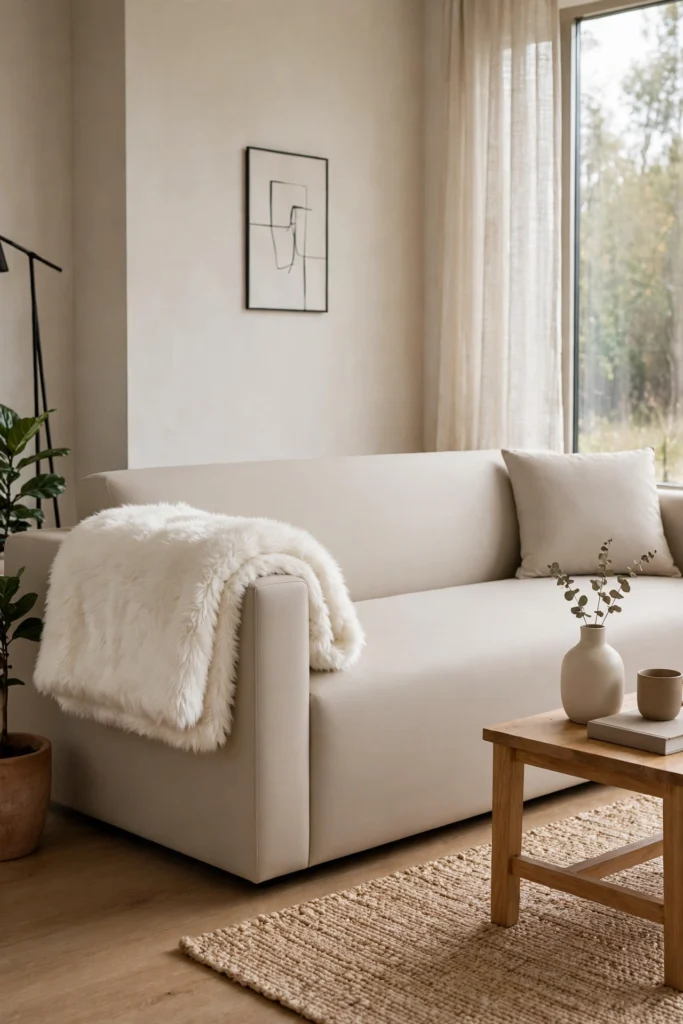
11. Herringbone pattern throw
Herringbone is a woven zigzag pattern that adds structure without a loud print. It suits a room that already has solid colours, because the pattern gives the eye something to follow while the colour stays calm. A grey, beige or navy herringbone throw works on a plain sofa and pairs with plain cushions.
Keep other patterns small when you use herringbone. A striped cushion or a small geometric print can work, but a large floral next to herringbone usually competes. Fold the throw so a good stretch of the pattern is visible, rather than bunching it into a ball where the weave disappears.

12. Draped armchair style
An armchair needs a smaller throw and a simpler drape than a sofa. Fold a standard throw in half lengthwise, drape it over one arm, and let the tail rest on the seat. The throw should look like it belongs to that chair, not like a sofa throw borrowed for a photo.
On a reading chair, place the throw on the arm nearest the side table or lamp, so it is easy to reach without standing up. A mini throw around 40 by 50 inches often suits an armchair better than a full standard throw, which can overwhelm a small chair and trail on the floor.

13. Ottoman throw styling
An ottoman gives you a second place to style a throw, and it is useful when the sofa already has cushions and a throw of its own. Fold the throw into a neat rectangle and lay it flat across the ottoman, with one corner turned back to show the texture. This turns the ottoman into a soft tray surface rather than just a footrest.
Keep the ottoman throw light, because a heavy knit slides off a smooth ottoman top every time feet go up. If the ottoman is used daily as a footrest, choose a washable cotton throw and accept that it will need refolding. A decorative throw that no one can touch belongs on a shelf, not on furniture that gets used.

14. Rust and cream combo
Rust and cream is a warm pairing that works in most seasons because cream keeps rust from feeling heavy. Use cream as the larger base, such as a cream sofa or a cream throw, and rust as the accent throw or cushion. The contrast is clear but gentle, which suits a room with wood floors and warm white walls.
If your sofa is already rust or burnt orange, flip the pairing and use cream as the throw. The rule stays the same: one warm accent, one pale base, and no third strong colour competing on the same sofa. A small wooden tray or a terracotta pot nearby can echo the rust without adding another textile.

15. Geometric pattern throw
A geometric throw adds shape to a room with plain furniture. Diamonds, triangles or bold stripes work best when the pattern scale suits the sofa size. A large scale pattern suits a large sofa, while a small scale pattern suits a loveseat or chair, where a big print can look out of proportion.
Pick one colour from the geometric pattern and repeat it in a cushion, so the throw looks connected to the room. The other colours in the pattern can stay in the throw alone. Avoid pairing a geometric throw with a patterned rug in a different scale, because two competing geometries make the floor and sofa fight each other.
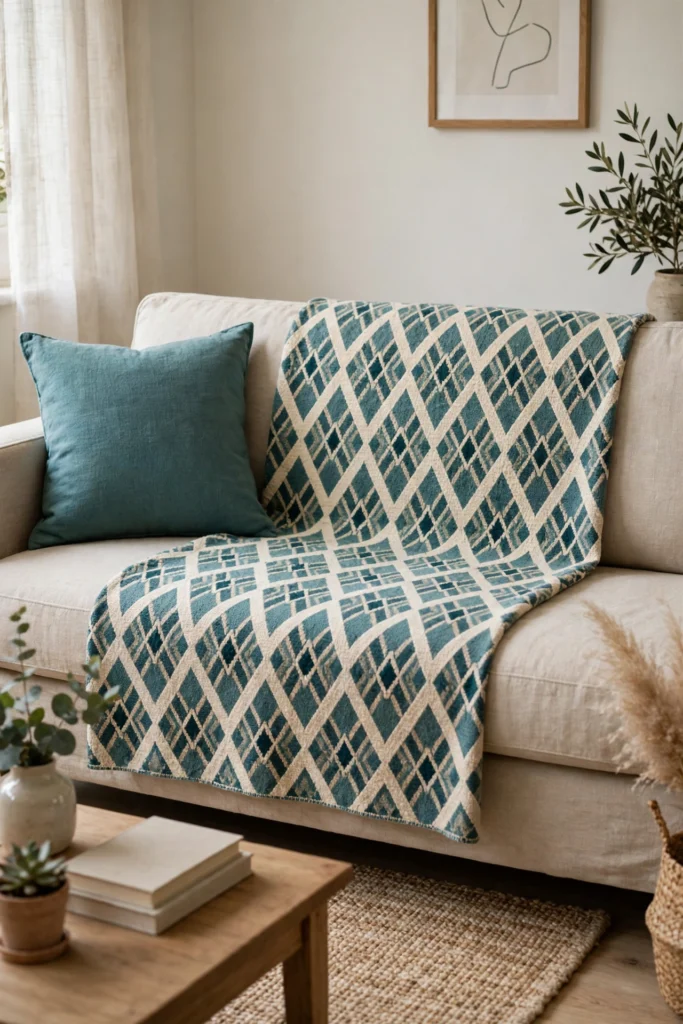
16. Layered pillow and throw set
A matched pillow and throw set is the easiest way to get a finished look, but it can also look like a shop bundle if every piece matches exactly. Use the set as a starting point, then swap one pillow for a plain cushion in a colour from the room, such as the rug or the art. The set then looks chosen, not just bought.
Place the throw first, then the largest pillows at the outer ends, smaller pillows toward the middle, and the throw tail peeking out beside them. If the set includes a very small decorative pillow, keep it at the front where it will not get lost behind larger cushions. Remove one pillow if the sofa looks crowded, because a set that stops you sitting comfortably has failed its main job.
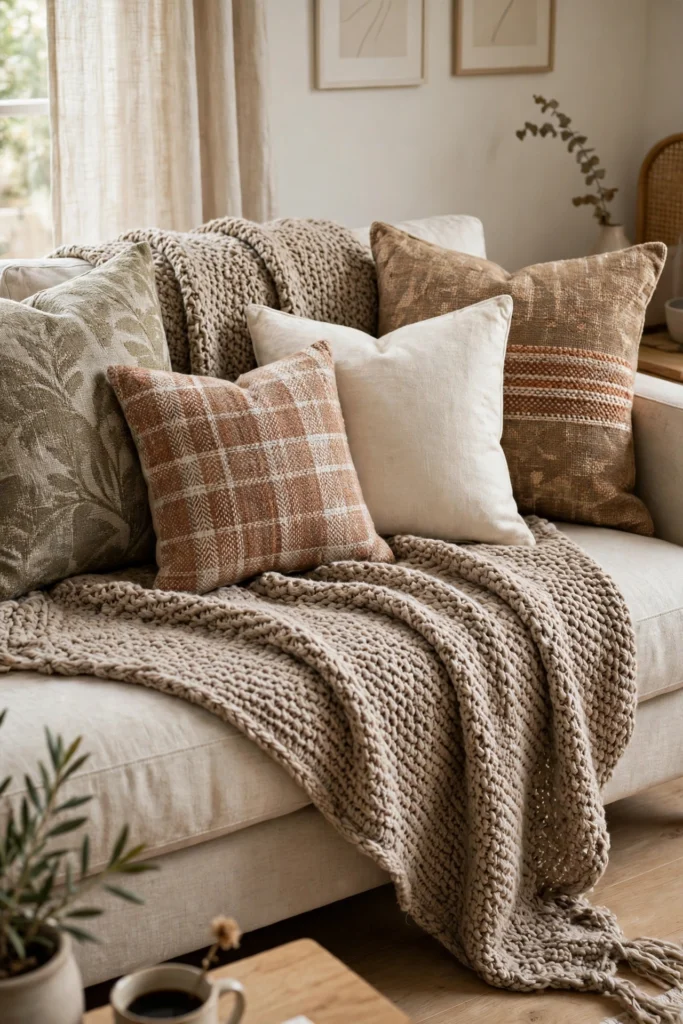
17. Velvet jewel tone throw
Velvet has a soft pile that changes shade as light moves across it, which gives jewel tones such as sapphire, ruby and emerald extra depth. A velvet throw suits a sofa in a room with good light, where the pile can catch the light, and it pairs well with brass, dark wood and plain linen cushions.
Velvet shows pressure marks where cushions sit on it, so do not leave a velvet throw folded under heavy cushions for long stretches. Shake it out, brush it lightly in one direction, and keep it away from rough surfaces that can crush the pile. Velvet also slides, so a folded arm placement with a tuck under the seat cushion holds better than a loose drape.

18. Cable knit classic throw
Cable knit is a timeless pattern of twisted ropes of yarn, and it reads as classic rather than trendy. It works in a traditional room, a farmhouse room, and a plain modern room, because the pattern is texture rather than colour. A cream or grey cable knit throw is one of the most flexible throws you can own.
Cable knit throws are often warm and fairly heavy, so they suit a main sofa in a cool room more than a small chair in a warm flat. They also snag more easily than a flat weave, so keep them away from Velcro, jewellery with sharp edges, and pet claws when possible. A snag can often be eased back into place with a blunt needle, but prevention is easier than repair.

19. Draped window reading nook
A reading nook needs a throw that stays where the reader sits, not one that looks good only from across the room. Drape the throw over the chair back or arm nearest the window, with the tail on the seat, so it is ready the moment someone sits down with a book. A soft cotton or light wool throw works well here, because it is warm without being so heavy that it slips off a small chair.
Keep the nook simple: a chair, a light source, a small table, and one throw. A second throw or a pile of cushions in a nook usually ends up on the floor. If the nook is also a spare sleeping spot, a guest ready room shows the same logic on a larger scale, as in these elegant guest bedroom ideas for adults, where comfort comes from a few well placed layers rather than a heap of textiles.

20. Black and white modern contrast
Black and white is a high contrast pairing that needs a calm room around it. Use a black and white throw on a plain sofa, with plain cushions, and let the pattern be the only strong graphic in that corner. A black throw on a white sofa, or a white throw on a charcoal sofa, gives the same contrast in a simpler form.
This look suits a modern room, but it can feel stark if the whole room is black and white with no wood or plant to soften it. A wooden coffee table, a plant, or a cream rug nearby keeps the contrast from feeling cold. In a room with a dark feature wall, the same contrast logic applies to the wall behind the sofa, as in these black TV wall ideas with lighting that keeps a dark wall cinematic rather than flat.
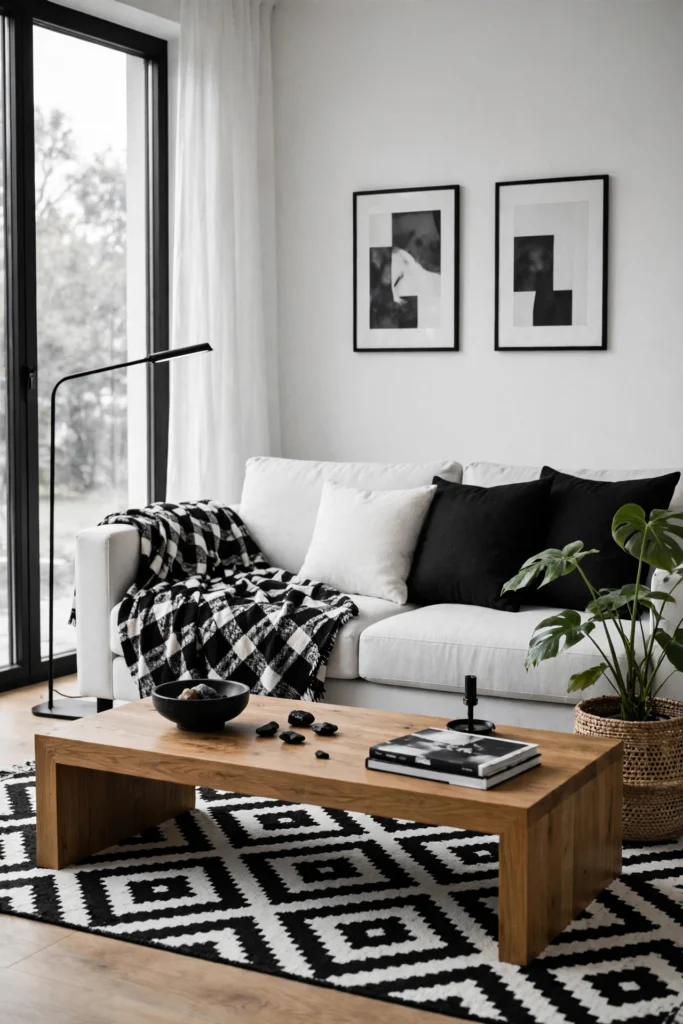
21. Layered textures on a daybed
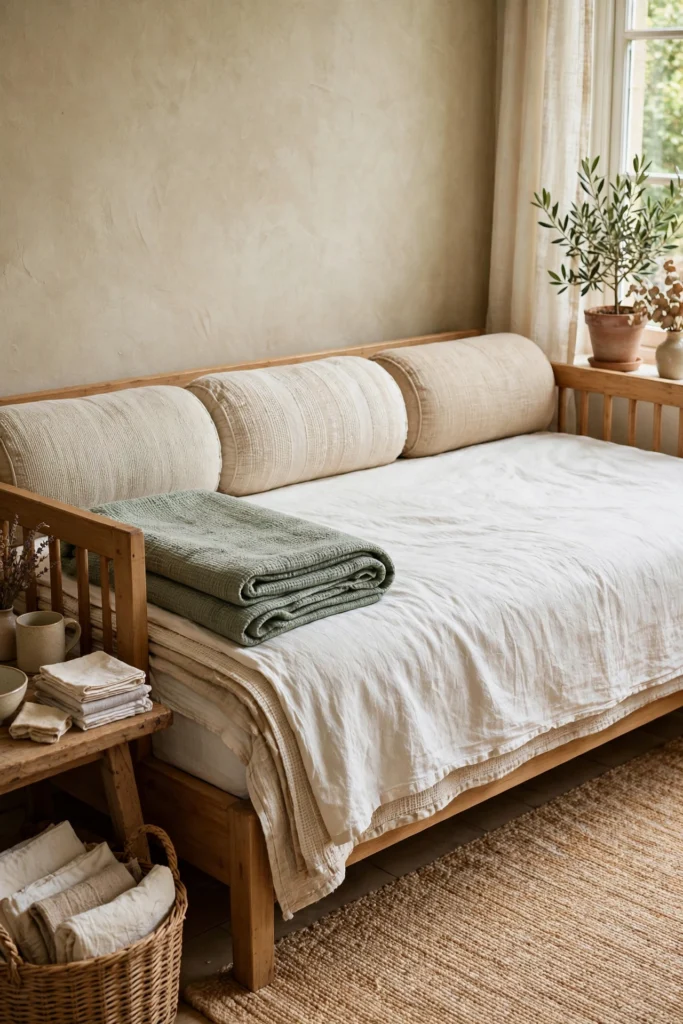
A daybed is part sofa, part bed, so it needs more layering than a normal sofa. Start with a flat cover or a plain throw across the base, add a second throw folded at one end for sleeping, and finish with bolsters or long cushions along the back. The layers should look like bedding that can be used, not like a pile of spare blankets.
Keep the daybed throws washable, because a daybed gets sat on, slept on, and leaned against far more than a formal sofa. Cotton and cotton blends wash well and dry faster than heavy wool, which matters when the daybed is also a guest bed. Fold the sleeping throw neatly at the foot during the day so the daybed still reads as seating.
22. Minimal Japandi throw style
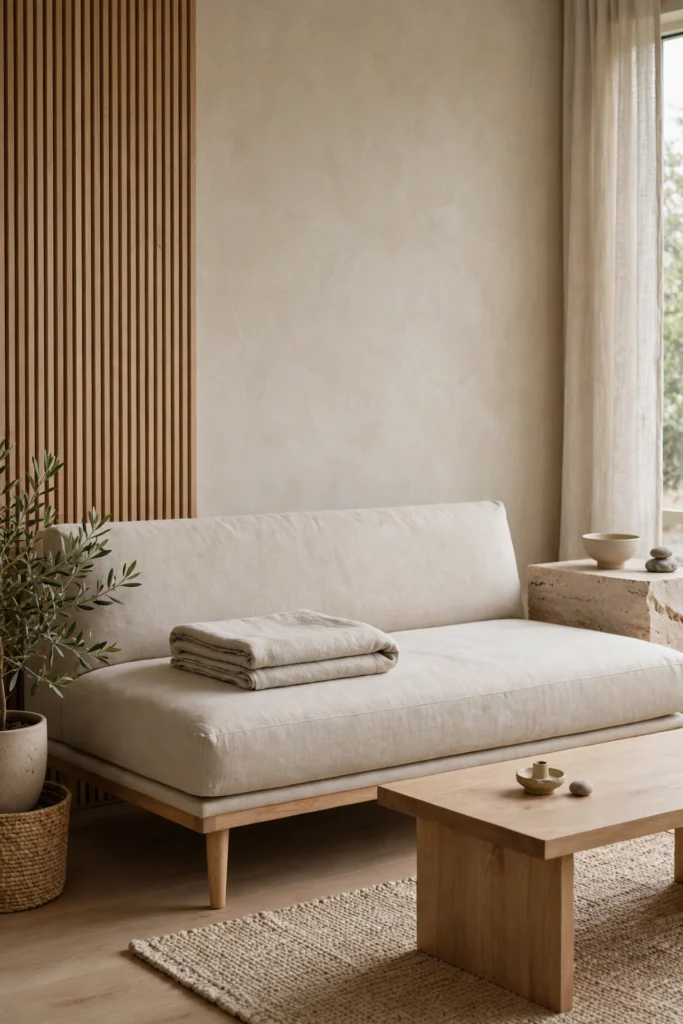
Japandi styling blends Japanese calm with Scandinavian warmth, and the throw reflects that mix. Choose a natural fibre throw in a muted tone, such as oatmeal, stone or soft grey, fold it neatly, and place it with clear space around it. The throw should feel like part of the room’s quiet, not like an extra decoration.
Texture matters more than colour here. Linen, light wool and cotton slub all suit Japandi, while shiny or heavily patterned throws break the calm. Keep cushions to a minimum, use wood and stone nearby, and let one well folded throw do the work that three patterned cushions would do in a busier room.
23. Oversized throw statement
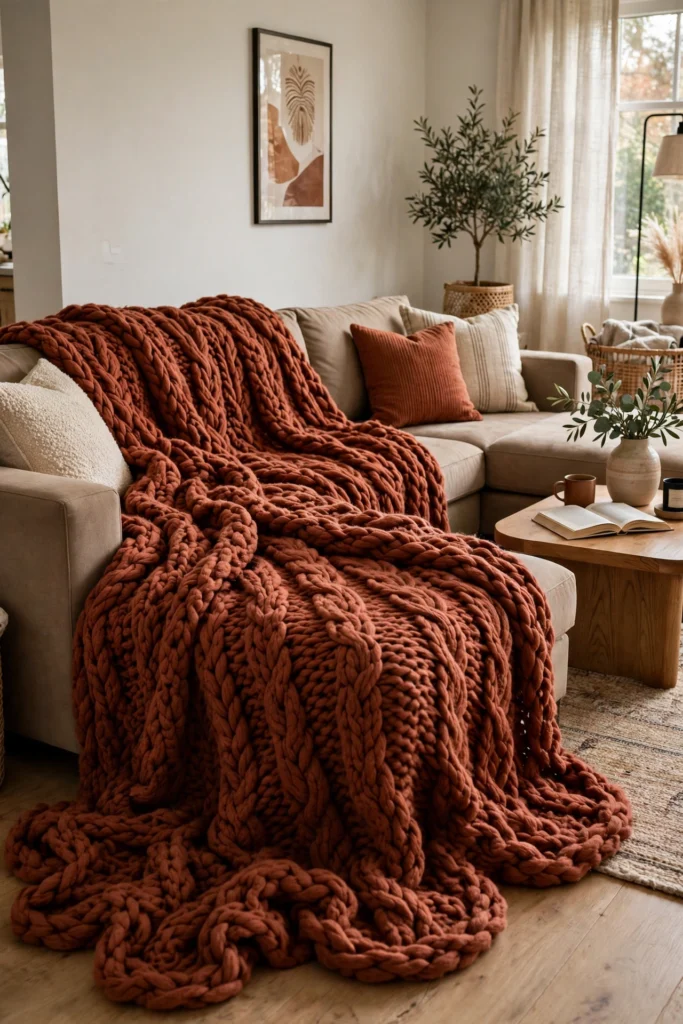
An oversized throw makes a statement because of its size alone. Drape it over a whole sofa section or let it puddle slightly at one corner, and it becomes the main textile in the room. This works best on a large sofa or sectional, where the throw has room to spread without covering every cushion.
On a small sofa, an oversized throw usually looks like too much fabric and gets in the way of sitting. If you love the look but your sofa is small, use the oversized throw folded in half lengthwise, so it reads as a thick, generous layer rather than a loose heap. Store it folded, not balled up, so it does not crease into a permanent lump.
24. Pastel modern throw
Pastels such as blush, sage, pale blue and butter yellow add gentle colour without the weight of a deep tone. They suit a light room with white or pale grey furniture, and they work well in a room that gets good daylight, where the soft colour stays visible rather than washing out.
Pastels show stains more than mid tones, so choose a washable fabric if the sofa gets daily use, pets, or children. A pastel throw also pairs well with white cushions and light wood, but it can look washed out against a dark sofa, where a mid tone or a deeper pastel with more pigment holds up better.

25. Layered rug and throw match
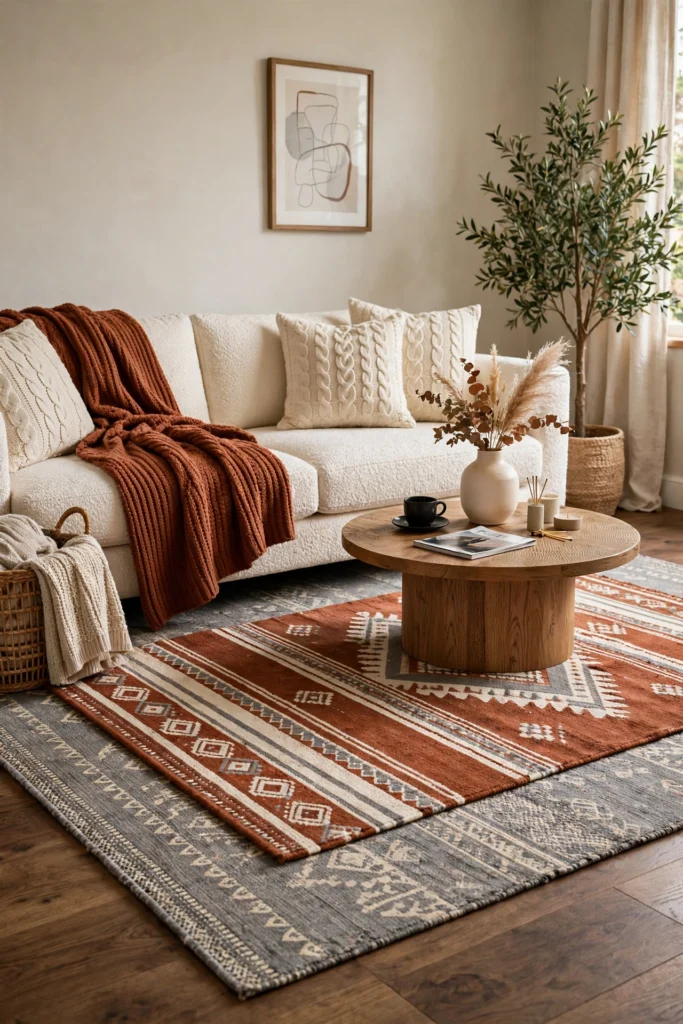
Matching a throw to the rug ties the seating area together, because the eye links the colour on the floor with the colour on the sofa. Pick one colour from the rug, not the whole rug pattern, and repeat it in the throw. A rug with rust, cream and grey, for example, works with a rust throw and cream cushions, without needing a rug patterned throw.
Keep the textures different, even when the colours match. A flat weave rug pairs well with a knit or bouclé throw, while a plush rug pairs well with a flat cotton throw. If rug and throw are both thick and textured in the same colour, the seating area can feel heavy. Leave a clear gap of floor or a plain cushion between them if the match starts to feel too exact.
How to layer throws with pillows without making a pile
Layering fails when every layer is the same size, colour and texture. Start with the throw as the largest layer, add two or three cushions in decreasing size, and finish with one small accent cushion if the sofa still looks bare. Each layer should be visible, and each should have a reason to be there.
A simple order that works on most sofas is: throw draped over one corner or arm, large plain cushions at the outer ends, a patterned or textured cushion in the middle, and the throw tail left visible beside the cushions. Step back to the doorway and check the whole sofa. If you cannot see the throw, move a cushion. If you cannot see the sofa, remove a cushion.
Colour helps here too. Use the throw colour in at least one cushion, and keep the other cushions in neutrals from the room. Three strong colours on one sofa, plus a patterned throw, is usually one colour too many. When in doubt, take one pillow away and live with the simpler arrangement for a few days before adding anything back.

Fabric and washing, in plain terms
Fabric decides how warm a throw feels, how it drapes, and how much work it needs. Cotton is breathable, light and usually machine washable, which makes it a good everyday throw. Linen drapes beautifully and feels cool, but it wrinkles, so it suits a relaxed room more than a formal one.
Wool is warm and naturally holds its shape, but many wool throws need a gentle cycle or hand washing, and heat can shrink them. Fleece and sherpa are warm, soft and easy to wash, but they can pill over time and build up static. Faux fur is soft and warm, but it needs a cool, gentle wash and air drying to keep its pile. Acrylic knits look like wool and wash more easily, but they breathe less, so they can feel warm in a heated room.
| Fabric | Warmth and drape | Washing guide |
|---|---|---|
| Cotton | Light to medium, drapes well | Usually machine washable on a gentle cycle, line dry or low tumble dry |
| Linen | Light, fluid drape, wrinkles easily | Gentle machine wash or hand wash, air dry, accept some creasing |
| Wool and wool blends | Warm, holds a fold well | Check the label first, many need gentle or hand washing and flat drying |
| Fleece and sherpa | Warm and soft, light to carry | Usually machine washable, cool wash, avoid high heat to limit pilling |
| Faux fur | Warm, high pile, soft to touch | Cool gentle wash, air dry, brush lightly once dry |
| Velvet | Medium warmth, smooth pile that shifts in light | Follow the label closely, many need gentle handling and no high heat |
Whatever the fabric, wash a living room throw when it looks or smells used, not on a fixed schedule that ignores real life. A throw used every evening needs washing more often than a decorative throw on a formal sofa. Always read the care label before the first wash, wash a new throw alone the first time in case of dye transfer, and dry it flat or on a line when the label suggests it, because tumble heat is the most common cause of shrinkage and pilling.
Mistakes that make a throw look like clutter
The most common mistake is using too many throws at once. One throw per seating area is usually enough. Two throws on one sofa can work if one is plain and one is folded narrowly, but three throws on a two seat sofa almost always look like storage, not styling.
Another mistake is letting the throw trail on the floor. A tail that pools on the floor collects dust and pet hair, gets stepped on, and makes the room look untidy even when the sofa itself is neat. Keep the tail on the seat or hanging just over the arm, and refold it when it slips.
Matching everything exactly is a quieter mistake. A throw, cushions, rug and curtains all in the same print or the same shade can make a room feel like a set. Break the match with one plain cushion or a different texture, and the room will look lived in rather than bought as a bundle.
Finally, do not hide the throw you actually use. If the good throw lives in a cupboard while a stiff decorative throw sits on the sofa, swap them. A throw that gets used, washed and refolded will always look more at home than a throw that only looks good in a photo.
Questions people ask before buying a throw
What size throw blanket should I buy for a standard sofa?
A 50 by 60 inch throw suits most standard two and three seat sofas for one person, whether you drape it over an arm or a corner. Choose a 60 by 80 inch throw for a deep sofa, a sectional, or two people sharing one end, and a smaller 40 by 50 inch throw for an accent chair.
How do you drape a throw on a sofa so it does not slide off?
Fold the throw into thirds lengthwise, drape it over an arm or a back corner, and tuck the inner end under a seat cushion by a few inches. Chunky knits and cotton hold a fold better than velvet and silky fabrics, which need that tuck or a narrower fold to stay put.
Should a throw blanket match the sofa or the cushions?
It should relate to one of them, not match both exactly. Repeat one colour or texture from the cushions in the throw, or pick a throw colour that contrasts gently with the sofa. Matching throw, cushions and sofa in the same shade usually looks flat.
How many throw blankets should a living room have?
One throw per seating area is enough for most rooms, plus one spare in storage for washing days. A sectional can carry two throws, one at each end, but one sofa with three throws on it usually looks cluttered rather than cosy.
Can you wash a chunky knit or faux fur throw at home?
Many can be washed at home, but the care label is the final word. Chunky knits often need a gentle cycle and flat drying to keep their shape, while faux fur usually needs a cool gentle wash and air drying. When the label says dry clean only, follow it, because heat and agitation are hard to undo.
What colour throw works on a grey sofa?
On a light grey sofa, try white, charcoal, navy or terracotta for contrast, and on a dark grey sofa, try cream, mustard or emerald for warmth. Match the undertone first: a cool grey sofa suits cool colours, while a warm grey sofa suits warm colours such as cream and rust.
Fold it once, live with it for a week, then decide
The best throw arrangement is the one you stop noticing because it works. Pick one drape from the start of this guide, put the throw where you sit most, and leave it there for a week. Notice whether it slides, whether you reach for it, and whether the room still feels calm when you walk in.
If it slides, fold it narrower or tuck it under a cushion. If it never gets used, move it to the chair or corner where you actually sit. If the colour feels wrong after a few days, swap just the throw, not the whole sofa arrangement, because a single textile change is cheap and easy to reverse.
Start with the throw you already own before buying a new one. Refold it, move it to a different corner, and pair it with one cushion in a colour already in the room. You may find the sofa already looks finished, and the next throw you buy can be chosen for warmth and washing ease rather than for a photo.