A closet cleanout checklist works best when every piece gets one clear verdict: keep, toss or donate. Start by emptying one category at a time, ask four honest questions about each item, and send the donation bag out of the house the same day so the decisions stick.
Most closets take one focused session of about four hours to clear properly, and the fastest way to declutter a closet is to decide by category instead of pulling everything out at once. This guide gives you the questions, the timing and the put-back plan, so you finish with a wardrobe you actually wear and a closet that stays tidy.
Before You Touch a Hanger: Build Your Cleanout Station

Every cleanout that falls apart does so in the first ten minutes. Someone starts pulling clothes off the rail with no bags ready, no place to put the piles and no plan for the things leaving the house. Within half an hour the bed is buried, the floor is covered, and the whole job feels bigger than it is. A little setup stops that. Give yourself fifteen minutes before you touch a single hanger, and the rest of the session runs itself.
Start with the bags. You need four: keep, donate, toss and repair. Sturdy paper bags or boxes work better than thin bin liners because they stand open on their own and you can see what is inside them. Label each one with a marker so nobody in the house mistakes the donate bag for rubbish. Put the keep bag near the closet, the donate bag by the bedroom door and the toss bag in the hall, because the donate and toss piles should leave the room as soon as they fill up. If you plan to sell anything, add a fifth bag for selling, but keep it small. A small sell bag forces you to choose only the pieces with real resale value.
Next, clear a staging surface. The bed is the obvious choice, but only if you strip it first and put clean sheets aside. A made bed with a flat top gives you room to lay out one category at a time. If the bed is not free, a clean patch of floor with a sheet laid over it does the same job. What matters is that the surface starts empty, so every pile you build there is a decision you have already made, not clutter you have moved from one place to another.
Set the mood on purpose. Put on a playlist you like, open a window for fresh air and set a timer for the first block of work. A timer matters more than motivation. Motivation fades after the first drawer; a timer keeps you moving through the slow middle stretch. Tell the household what you are doing and ask for an uninterrupted couple of hours. A cleanout is not a job to squeeze between other chores. It deserves its own slot in the day.
The Four Questions That Decide Every Piece

The hardest part of any cleanout is not the folding or the carrying. It is the moment you hold up a piece of clothing and cannot decide. The four questions below exist to end that pause. Ask them in order, answer each one honestly, and the verdict usually makes itself. If a piece passes all four, it stays. If it fails two or more, it goes. One failure is a warning; two is a decision.
Question one is about fit, and it means fit today. Not the size you wore two years ago, not the size you hope to wear by summer, but the body you dressed this morning. Hold the piece up, try it on if you are unsure, and check the shoulders, the waist and the length. A shirt that pulls across the chest, trousers that need a belt to stay up, a dress you keep tugging down: these are clothes fighting you, and you do not need a daily argument with your wardrobe.
Question two is about wear. Have you worn this in the last year? A full year covers every season, so it is a fair test for everyday clothes. Seasonal pieces and occasion wear get a softer version of the same question: have you worn it at its last two proper chances? A heavy coat gets judged across two winters, not one summer. A formal dress gets judged across the last two events where it could have been worn.
Question three is the buy-it-again test, and it is the most honest question of the four. Picture the piece on a shop rail today, at full price, in your current size. Would you pick it up, carry it to the till and pay for it? If the answer is no, you are keeping it out of guilt, habit or the memory of what it cost. The money is already spent either way. Keeping an unworn shirt does not refund it; it only charges you rail space and a little guilt every time you see it.
Question four is about company. Does this piece work with at least three other things you are keeping? A top that only matches one specific skirt, which itself only matches one pair of shoes, is not a wardrobe piece. It is a hostage situation. Versatile clothes earn their place by pairing easily: the shirt that works with jeans, with tailored trousers and under a jacket. The orphan pieces, the ones that need their own supporting cast, are usually the ones that sit unworn while you tell yourself they are useful. If you love an orphan piece enough to build outfits around it, keep it and name the three pairings out loud. If you cannot name them, you have your answer.
Keep, Toss or Donate: The Decision Table
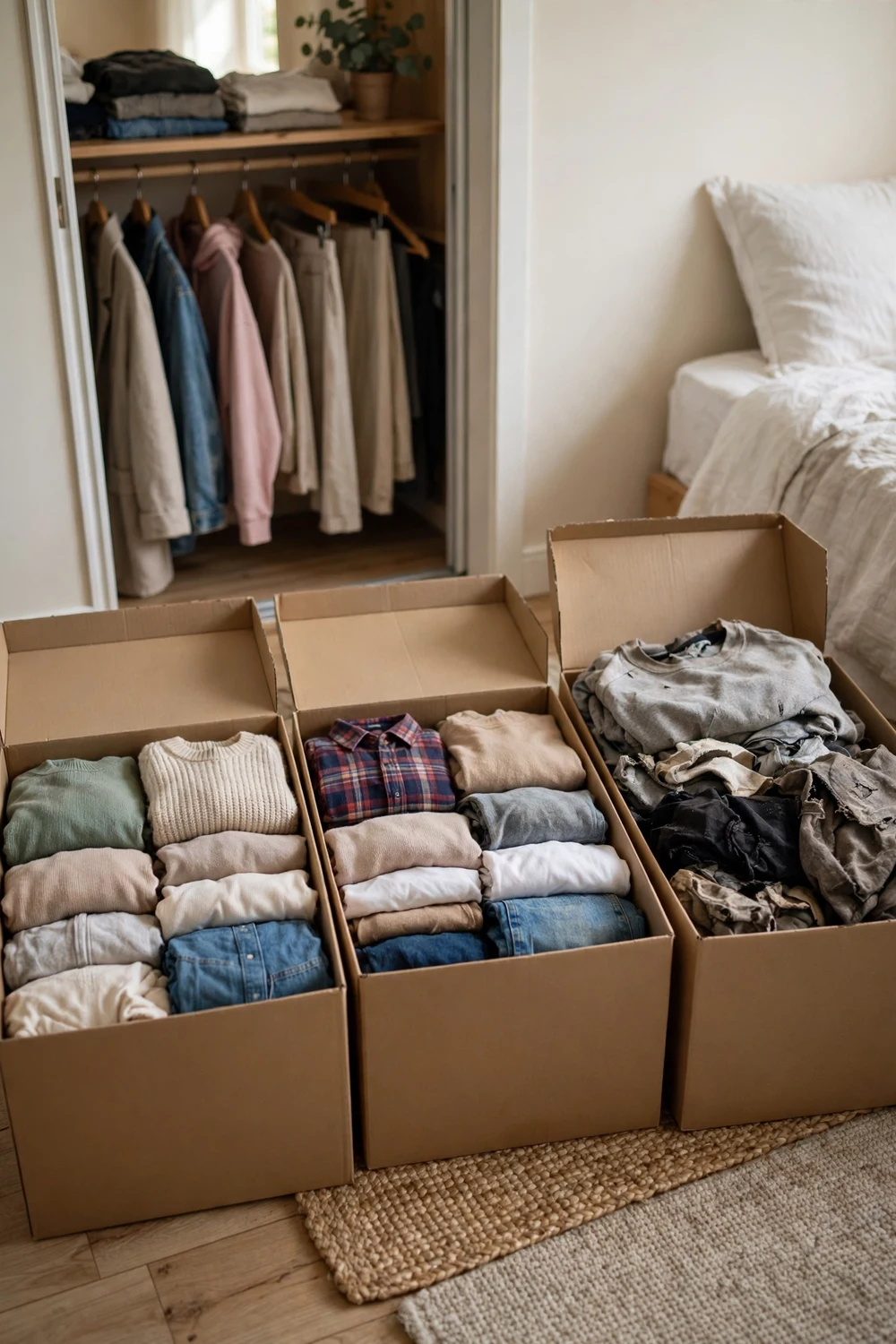
Once you know the four questions, you need somewhere for the answers to land. The keep toss donate system is simple on paper and surprisingly hard in practice, because each destination has its own rules and its own temptations. The table below is the cheat sheet to keep beside you while you sort. When a piece confuses you, find its row and follow it. The point of a table is that you stop reinventing the decision for every shirt.
| What you see | Where it goes | What happens next |
|---|---|---|
| Fits today, worn in the last year, pairs with three or more kept pieces | Keep | Back in the closet, at eye level if you reach for it often |
| Good condition and clean, but the wrong fit, style or size for you now | Donate | Bag it, tie it shut and take it out of the house the same day |
| Stained, torn, stretched out, missing pieces or worn through | Toss or recycle | Textile recycling if your area takes it, rubbish if it does not |
| Needs a small fix and you will genuinely do it this week | Repair | One small bag by the door, fixed within seven days or donated |
| Seasonal, special occasion or sentimental, but not daily wear | Store away | Labelled box on a high shelf or under the bed, reviewed each season |
| Good brand, current style, excellent condition, easy to photograph | Sell | Listed within one week, or moved to the donate bag when the week ends |
The toss row has a rule of its own: be honest about what recycling means where you live. Many areas now take worn out textiles for recycling, and that is the right destination for threadbare sheets of fabric that no one can wear. Underwear with holes, single socks, stained basics and stretched out gym tops belong here, not in a charity bag. Putting unwearable clothes into a donation bag does not help anyone; it just moves the sorting job onto a volunteer. Keep a separate bag for textiles so the genuinely worn out pieces never mix with the good donations.
Storage is the fifth destination, and it needs a firm boundary. Seasonal clothes, a formal outfit you truly wear, and a small number of sentimental pieces are the only things that belong in storage. Everything else that leaves the daily closet should leave the house. Before you seal a storage box, ask the same four questions with a seasonal twist: will I wear this at its next proper chance? Label the box with its contents and the season it belongs to, and put it somewhere you can reach without a ladder and a torch. A box you cannot reach is a box you will never open, and unopened boxes are how forgotten clothes turn into permanent clutter.
Work by Category, Not by Rail

Here is the mistake that turns a cleanout into a marathon: pulling everything out of the closet at once. The bed disappears under a mountain, you cannot find the floor, and three hours later you are sitting in the middle of it all wondering where to start. Work by category instead. Take out all the tops, judge the tops, put the keepers back. Then the trousers. Then the dresses. Then the rest. Each category is a small, finishable job, and finishing small jobs keeps your energy up.
Start with the easiest category, not the hardest. Tops are usually the best opener because there are plenty of them, the decisions are quick, and the wins pile up fast. Seeing a neat stack of keepers after twenty minutes does more for your motivation than any pep talk.
Within each category, lay everything out where you can see it all at once. Duplicates jump out immediately when the pieces are side by side: five black T-shirts, four nearly identical white shirts, three grey jumpers that differ only in the shade of grey. You do not need five black T-shirts. Pick the best one, or the best two if you genuinely wear them both, and let the rest go. The same goes for multiples of any basic. A wardrobe is not a stockroom. It is a set of tools for getting dressed, and you only need as many of each tool as you actually use.
Category order matters for another reason: it protects your decisions from fatigue. Decision fatigue is real, and it arrives around the two hour mark. By then, everything starts looking like a keeper, because saying yes is easier than saying no. Working by category means the later categories are smaller and simpler, so the tired version of you faces easier choices. If you know your energy dips in the afternoon, schedule the hard categories for the morning and leave the easy ones, like gym wear and loungewear, for the end.
When a category is done, put its keepers back before you start the next one. This is the rule that keeps the session from collapsing into a pile. Hanging the keepers back, grouped by type and then by colour, gives you a visible result after every round. It also stops the categories from mixing on the bed, which is how cleanouts turn into a second mess. If you run out of hangers halfway through, that is useful information: it tells you the closet was holding more than its rails could carry, and it is one more reason the cleanout was overdue.
Shoes, Bags and Accessories Get Their Own Round
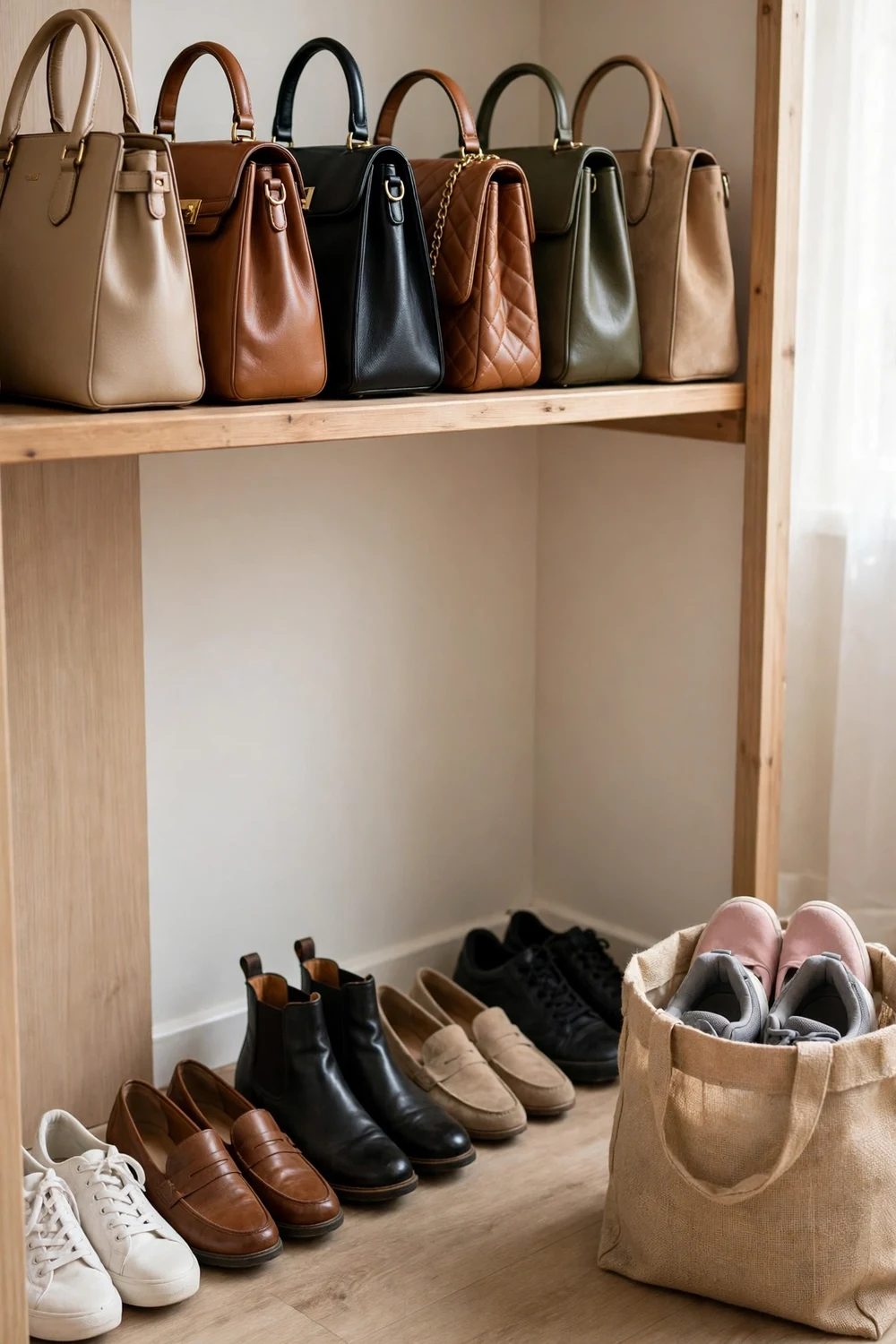
Clothes get all the attention in a cleanout, and shoes quietly take over the floor. They deserve their own round, with their own questions, because shoes fail in different ways. A shoe that pinches, a pair with worn down heels, a boot that has not been worn since the winter before last: these are not wardrobe pieces, they are floor decoration. Give this round thirty minutes and a clear patch of floor, and judge every pair the same way you judged the clothes.
Start by pairing everything up. Unpaired shoes are the first thing to fix, and the count of singles hiding in a closet surprises most people. Then check each pair for three things: comfort, condition and use. Comfort means you can walk in them for a normal day without thinking about your feet. Condition means the soles, the heels and the uppers are sound, with no cracks, peeling or stains you cannot clean. Use means you have worn them in the last year, or at their last two proper chances for seasonal pairs like snow boots or sandals. A pair that fails comfort is a donation at best, and usually a toss, because uncomfortable shoes never become comfortable with time.
There is a practical point about what does not belong in a bedroom closet at all. Heavy coats that live better by the front door, gym kit that belongs near the laundry, and out of season shoes that belong in storage: these are all taking up prime space for things you never reach for in the morning. If you are unsure what else is hiding in there, our guide to 12 things to keep out of your bedroom closet lists the usual suspects and where each one belongs instead. Moving those items out is often the fastest win in the whole cleanout, because it frees a shelf or a rail section without a single hard decision.
The Timed Plan: Your Closet Cleanout in One Session
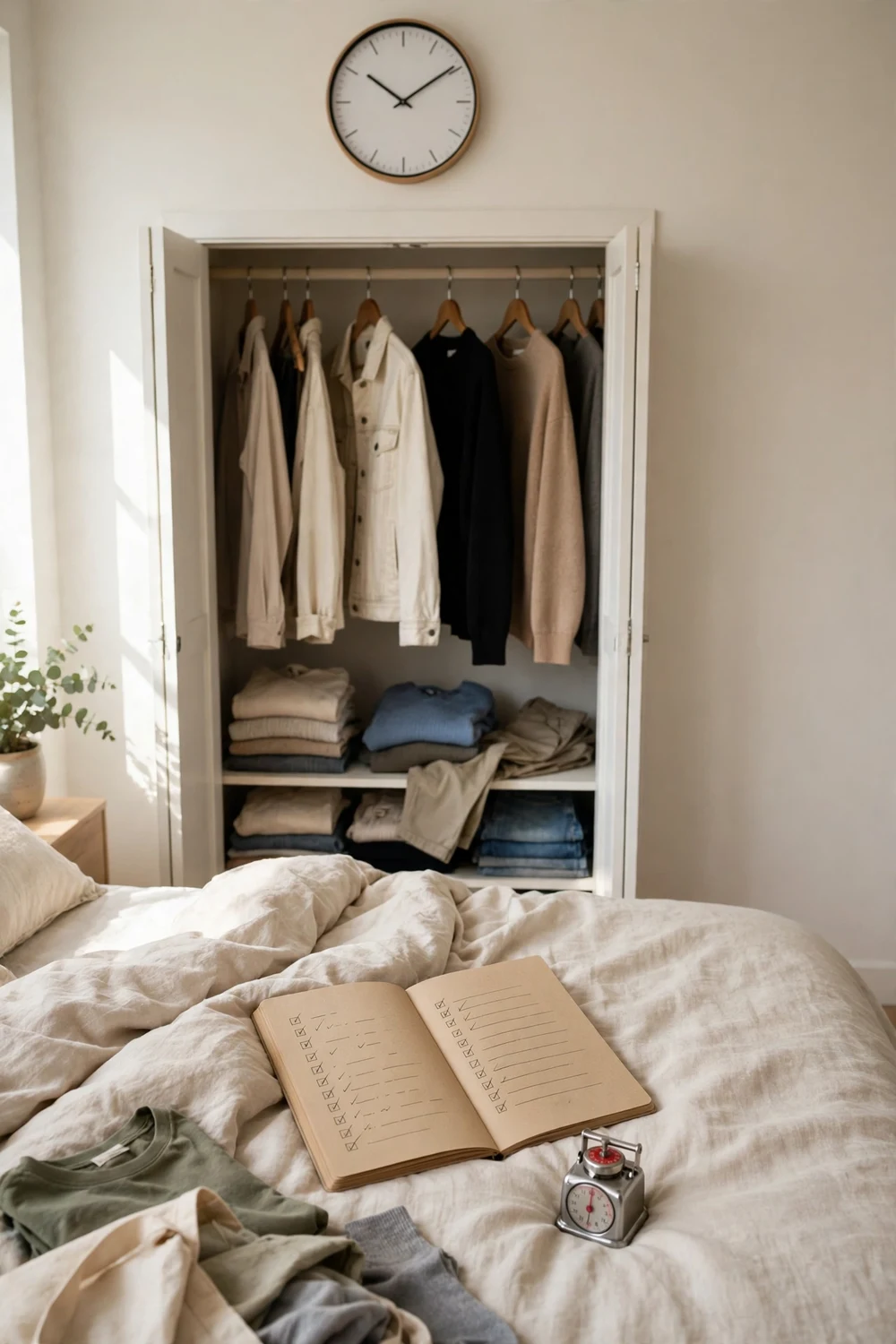
A cleanout without a clock drifts. A cleanout with a clock finishes. The plan below fits a typical wardrobe into one focused session of about four hours, with breaks built in so you do not run out of steam halfway. If your closet is small, you will finish early and that is a bonus. If it is large, split the plan across two days at the break marked below, but do not split it across a week. A week of half sorted piles is worse than no cleanout at all.
| Time block | What to do | How long |
|---|---|---|
| Set up | Bags, staging surface, mirror, timer and notepad ready | 15 minutes |
| Round one | Tops: empty, judge, put keepers back | 45 minutes |
| Round two | Trousers, skirts and dresses | 40 minutes |
| Break | Tea, fresh air, donations from round one out of the house | 15 minutes |
| Round three | Jumpers, outerwear and occasion wear | 40 minutes |
| Round four | Shoes, bags and accessories | 30 minutes |
| Finish | Clean the empty shelves, put back, bags out, floor clear | 30 minutes |
For a small closet, shrink the plan rather than skipping steps. A reach-in closet or a single rail in a small bedroom often clears in two hours, because there are fewer categories and fewer duplicates to sort. The same table still works: set up, tops, bottoms, shoes, finish. The difference is that each round is shorter, and the break becomes a five minute stretch instead of fifteen. Small spaces reward the same discipline, and they punish skipped steps just as quickly, because there is nowhere for a half sorted pile to hide.
One thing the plan does not include is shopping. Do not buy storage boxes, matching hangers or drawer dividers before the cleanout. Buy them after, when you know what actually needs storing and how much space the keepers take up. Most people find they need far less than they expected, and the money saved is better spent on the two or three missing pieces their wardrobe genuinely needs. If you do want ideas for what works once the space is clear, our roundup of home organisation products that actually work tests them against real use instead of pretty photographs, so you buy the one that helps and skip the rest.
Put It Back So Mornings Feel Easy
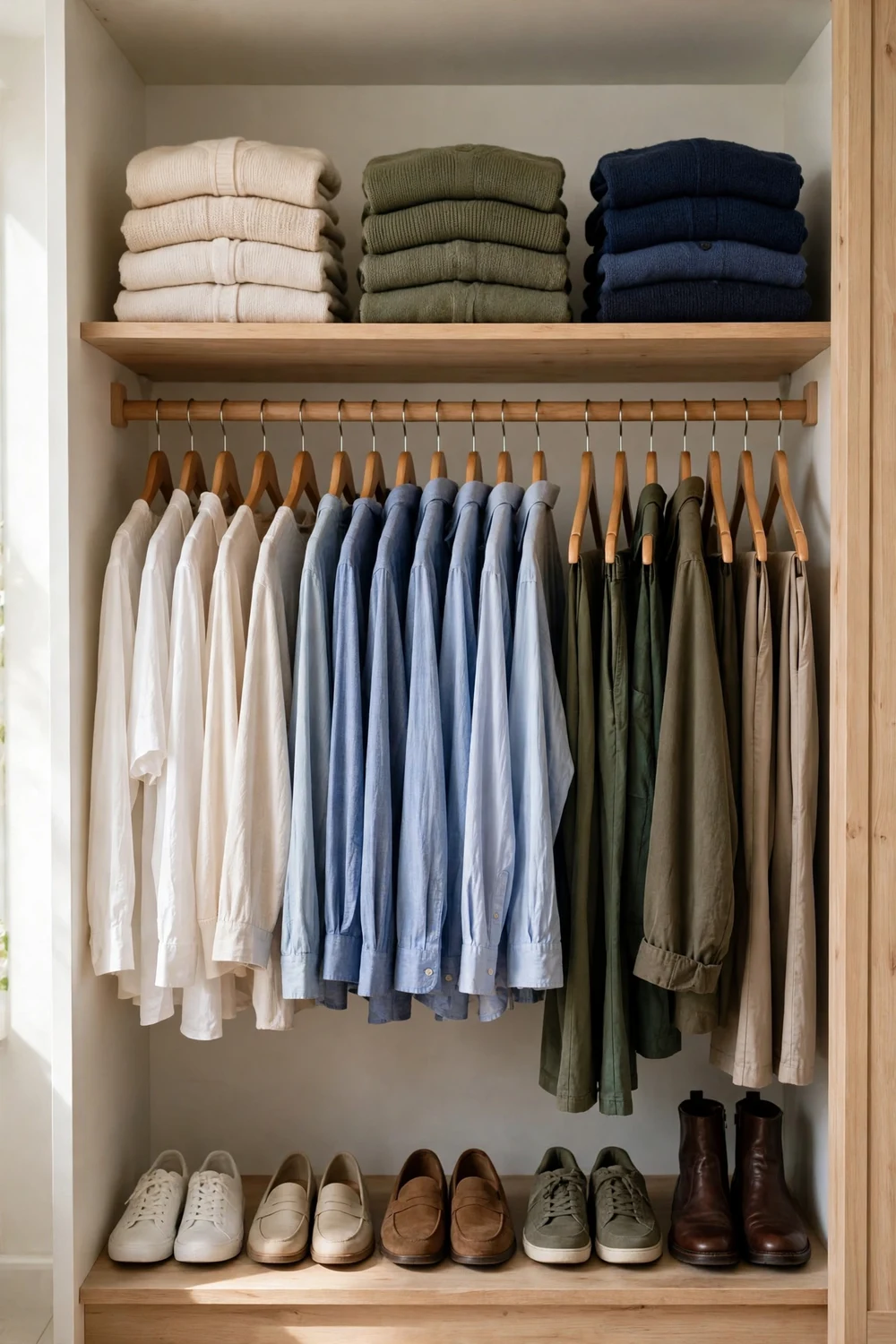
The put-back is where a cleanout becomes a system instead of a one day tidy. A closet that is organised around how you get dressed stays organised. A closet that is organised to look pretty in a photograph falls apart within a week, because it was arranged for the camera instead of for a Tuesday morning. Put the keepers back in the order you reach for them, and the system maintains itself.
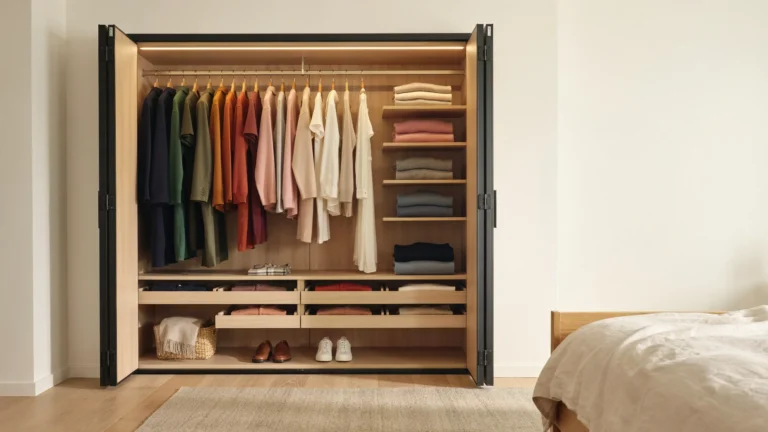
Start with the rail. Hang by category first, then by colour inside each category: all the shirts together, running from light to dark, then the trousers, then the dresses. This sounds fussy, but it is the arrangement that lets you find a piece in seconds without reading every label. Keep the pieces you wear most at eye level and within easy reach. Occasion wear and the things you reach for once a month go to the ends of the rail or up high, where they are out of the way but still visible. If a piece is hard to reach, you will stop wearing it, so do not bury your favourites behind the formal wear.
Fold what should be folded. Knitwear, heavy jumpers and T-shirts keep their shape far better folded on a shelf than stretched on a hanger. Fold each piece the same way, in a stack no more than six high, so you can lift the top ones without the pile collapsing.
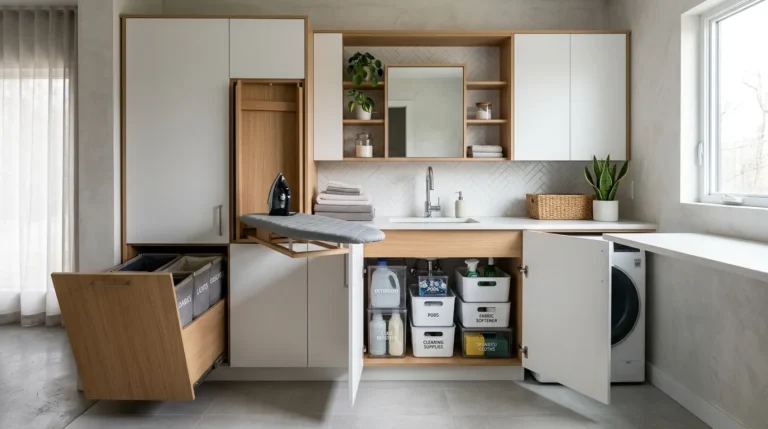
Match your hangers where you can, but do not make it a project. A single type of slim hanger across the rail makes the closet look calmer and frees a surprising amount of space, because bulky mixed hangers eat inches on every side. If your budget is tight, switch the hangers in stages, a pack at a time, starting with the everyday rail. The same staged approach works for the rest of the house. The way we organised the laundry in our guide to small laundry room storage started with one shelf and grew from there, and the same slow, steady method suits a closet far better than a single expensive shopping trip.
The Maybe Box, Sentimental Pieces and Staying Tidy
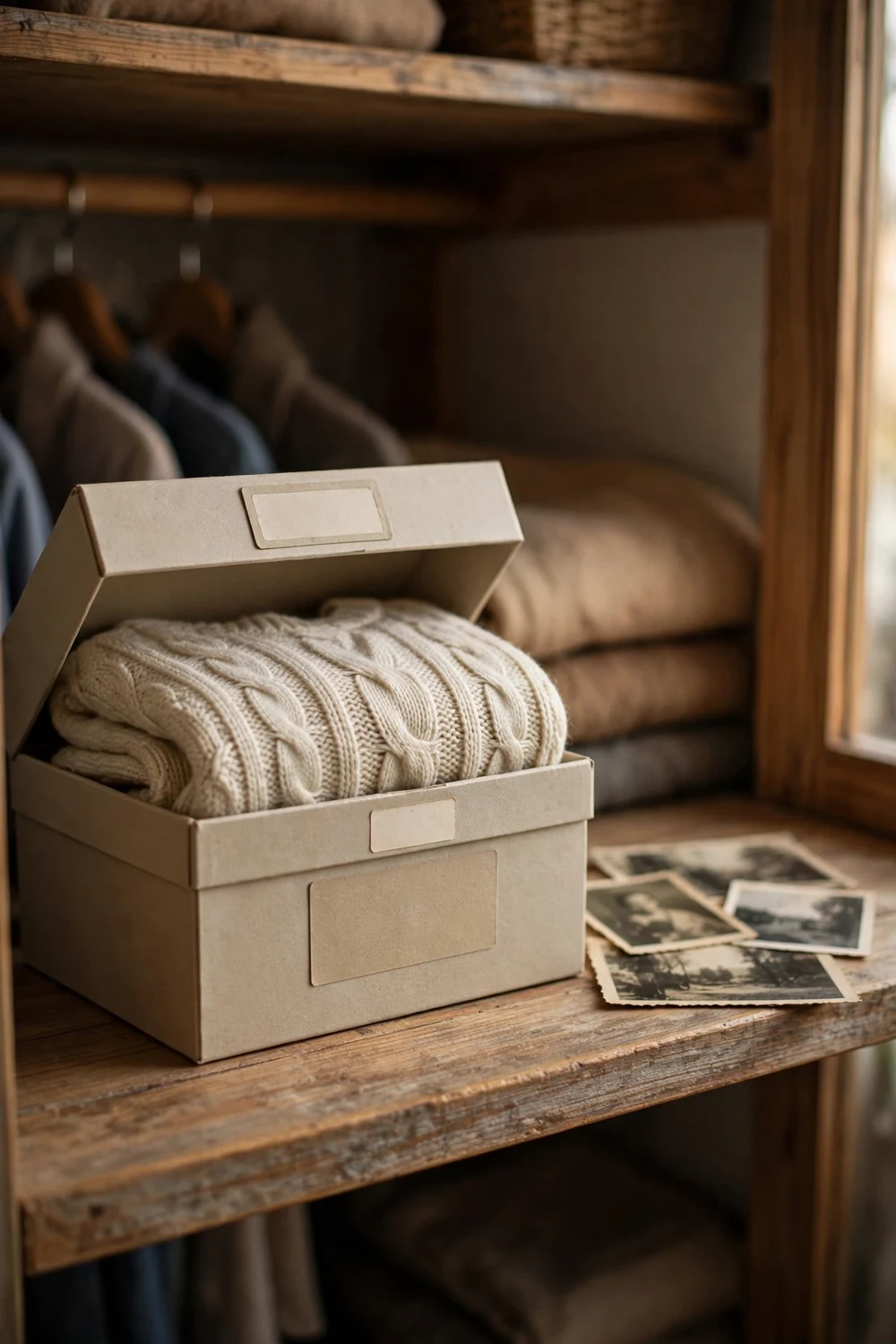
Two kinds of clothes resist every system: the ones you cannot quite decide on, and the ones tied to a memory. Both need a plan, because without one they either stay on the rail forever or get thrown away in a rush you regret. The maybe box and the memory box are those plans, and they work because they have limits built into them. A box without a limit is just a second closet.
The maybe box is for the pieces that failed one question but not two, the ones where your gut says keep and your head says go. Put them in a box, write the date on the lid in large letters, and store the box out of sight for three months. Set a reminder on your phone for that date. When the date comes, open the box. Anything you took out and wore during those three months stays. Anything still sitting in the box goes straight to donate, without a second round of questions.
Sentimental pieces need a different box. The concert T-shirt, the jumper your grandmother knitted, the baby clothes you cannot bear to pass on: these are not wardrobe, they are memories, and they deserve to be treated as such. Choose one memory box, a real physical limit, and keep only what fits inside it. Photograph the rest before you let it go. If a sentimental piece is genuinely beautiful and you want to see it every day, frame it, wear it on special occasions, or find it a new job in the house. Old clothes make surprisingly good cushions, and our throw pillow ideas from old clothes turn worn favourites into something you actually use instead of something you store.
Seasonal rotation is the last habit, and it is worth doing properly twice a year. When the seasons change, swap the off-season clothes into labelled storage and bring the current season forward. Use the swap as a mini cleanout: anything you did not wear during its season gets judged again, and anything that no longer fits goes straight to donate. A seasonal wardrobe rotation keeps the daily closet focused on the weather outside, and it means you never have to dig past heavy coats to find a summer dress. If you like systems that stick, the same zone thinking works across the house. The step by step method in our guide to how we organised our kitchen uses the same idea, one zone at a time, and it is worth borrowing for any room that keeps slipping back into clutter.
Closet Cleanout Checklist FAQs
How long does a closet cleanout take?
A typical wardrobe takes about four hours in one focused session, including set up and the put-back. A small closet often clears in two hours. The biggest factor is how fast you make decisions, so the four questions and the timed plan in this guide matter more than the size of the closet.
How do I declutter a closet fast?
Work by category, not by pulling everything out at once, and ask the same four questions about every piece: does it fit today, have I worn it in the last year, would I buy it again, and does it work with three other kept pieces. Decide each item in seconds and put it straight into its bag.
How do I decide what clothes to keep?
Keep the pieces that fit your body today, that you have worn in the last year, that you would buy again at full price, and that pair with at least three other things you are keeping. A piece that passes all four questions earns its place. A piece that fails two or more should go.
What should I do with clothes I want to donate?
Check that each piece is clean, wearable and complete, with no stains, holes or broken fastenings. Bag the donations, tie the bags shut and take them out of the house the same day, to a charity shop, a donation bin or a collection point.
How often should I clean out my closet?
Do a full cleanout once or twice a year, and use the seasonal rotation as a mini cleanout each time the weather changes. Between those, a five minute weekly reset and a donation basket in the closet keep the space tidy.
What do I do with sentimental clothes I cannot throw away?
Keep one memory box and only what fits inside it. Photograph the rest before letting it go, so the memory stays without the shelf space. A piece you truly love can be worn on special occasions, framed, or turned into something useful for the home. Sentimental clothes are memories, not wardrobe, and they deserve a place that honours them instead of a rail where they gather dust.
Your Closet, One Session From Now
A closet cleanout is not really about clothes. It is about the ten minutes every morning when you stand in front of the rail and decide how the day starts. A wardrobe full of pieces you love, that fit, and that work together makes that decision easy. A wardrobe full of maybes and guilt makes it hard before the day has even begun. This closet cleanout checklist gives you the questions, the timing and the put-back plan, but the real work is the hour you spend with the four questions and an honest eye.
Start with one category tonight if a full session feels too big. Tops only, forty-five minutes, timer on. Bag the donations before you go to bed, and wake up to a rail that already feels lighter. Then do the next category tomorrow. Small starts count, as long as the bags leave the house and the decisions stick.