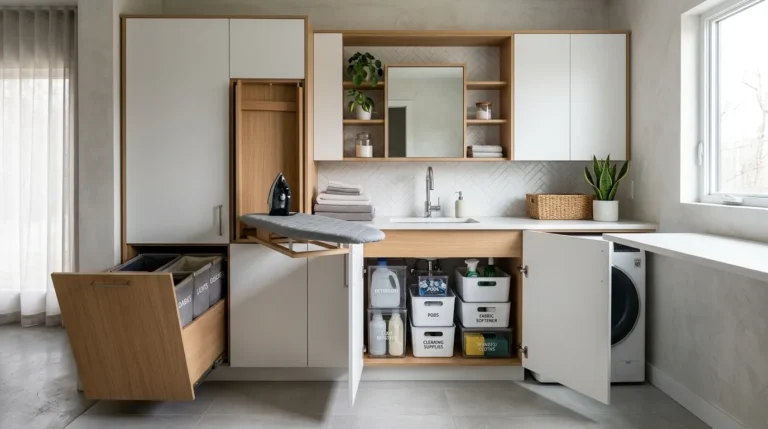
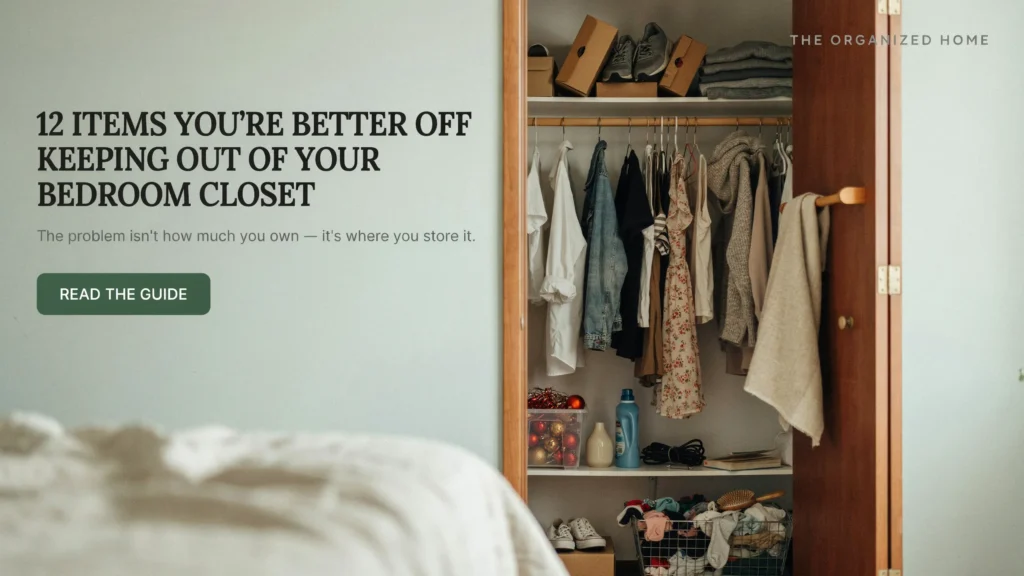
Does your closet feel full no matter how many times you clean it out? The problem often isn’t how much you own it’s what you’re storing in the wrong place. Bedroom closets get treated like catch-all storage for almost anything that doesn’t have an obvious home, but several common categories of items actually belong somewhere else entirely, whether for practical reasons like moisture and pests, or simply because they take up prime space that your daily-use clothing needs.
In this guide, 12 Items You’re Better Off Keeping Out of Your Bedroom Closet are broken down one by one, along with the reasoning behind each one and a better alternative location. This isn’t about owning less it’s about storing smarter, so the closet you use every single day actually works for you instead of against you.
Why Closet Placement Matters More Than You Think
Before getting into the list, it helps to understand the three main reasons certain items don’t belong in a bedroom closet, since almost every item below falls into one of these categories.
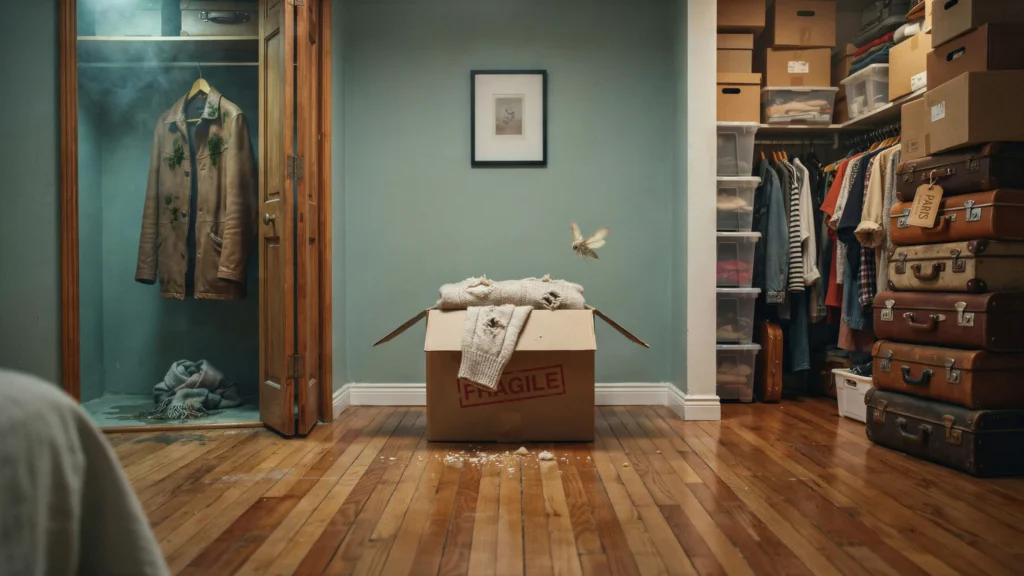
Moisture and Humidity Risk Closets, especially those without ventilation, trap humidity more than open rooms. Items sensitive to moisture, like leather, paper, or certain fabrics, can develop mold, mildew, or warping over time if stored in an enclosed closet long-term.
Pest Attraction Certain materials, particularly natural fibers, food residue, and cardboard, attract moths, silverfish, and other pests that can then spread to your actual clothing, causing far more damage than the original item.
Prime Space Being Wasted on Rarely-Used Items Your bedroom closet is one of the most accessible storage spaces in your home, which means it should be reserved for things you use often. Storing infrequently used items here pushes your daily clothing into overflow, making the whole space feel smaller and more cluttered than it actually is.
12 Items You’re Better Off Keeping Out of Your Bedroom Closet
1. Off-Season Bedding and Extra Linens
Heavy winter comforters, spare duvet sets, and extra sheet sets take up an enormous amount of shelf space relative to how often you use them. Because bedding is bulky and only needed seasonally or occasionally, it’s better stored in an under-bed storage bin, a linen closet, or a vacuum-sealed bag in a hall closet, freeing up your bedroom closet’s shelves for clothing you reach for weekly. A common mistake is stacking bedding loose on a shelf, where it slowly compresses and loses loft a breathable cotton storage bag protects the fill far better than a shelf alone.
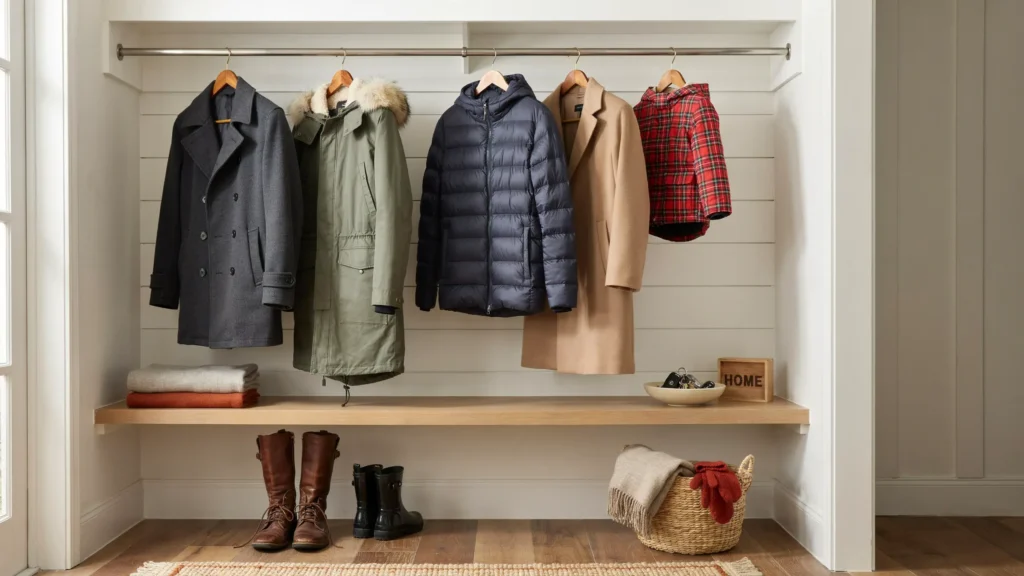
2. Out-of-Season Coats and Heavy Outerwear
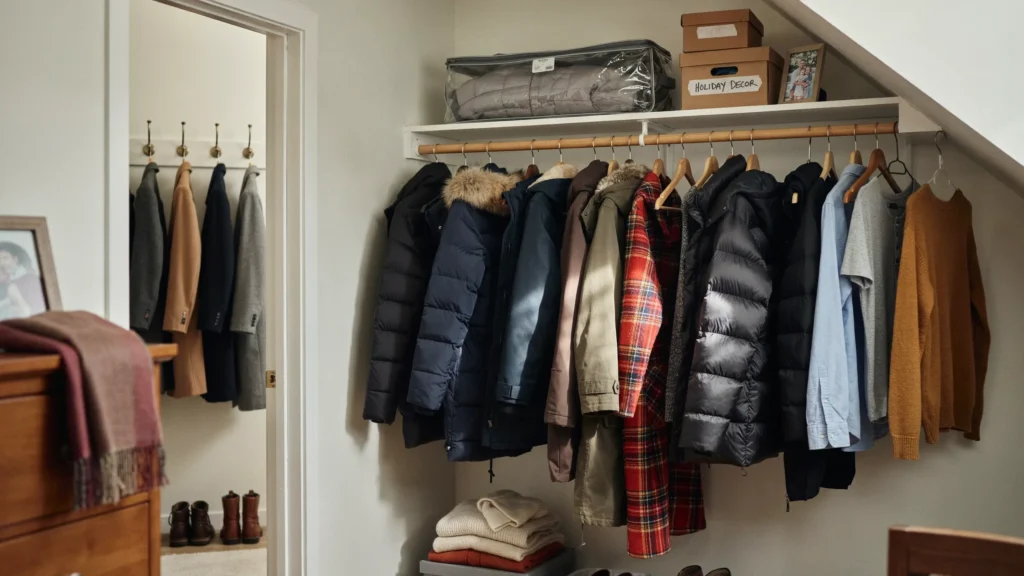
Bulky winter coats, ski jackets, and heavy outerwear eat up hanging space that your regular rotation of clothing needs year-round. A dedicated entryway coat closet, or a vacuum-sealed garment bag stored in an attic or spare closet, keeps these items accessible during the right season without permanently crowding your bedroom closet’s rod space.
3. Important Documents and Paperwork
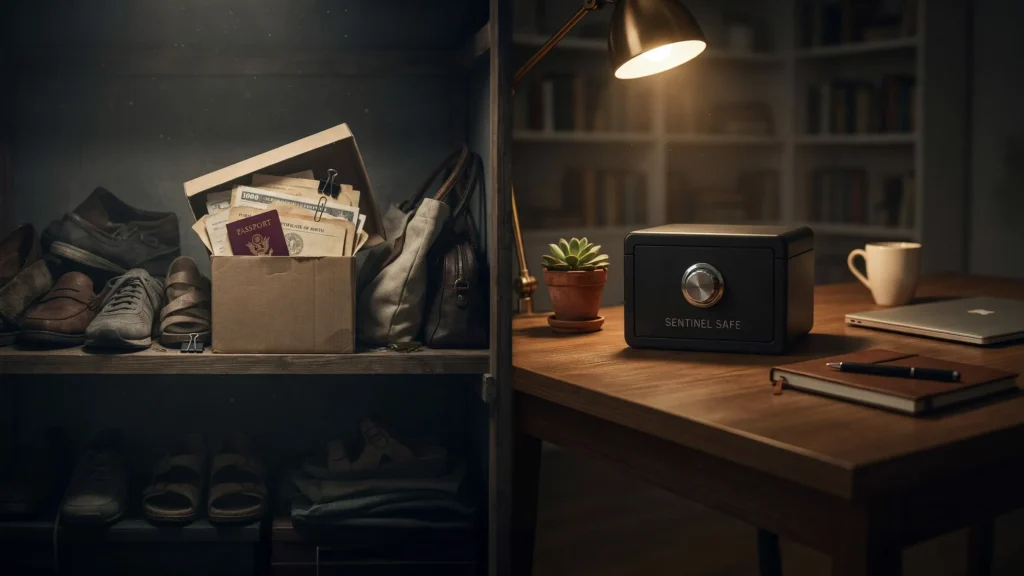
Passports, birth certificates, tax records, and other important paperwork are commonly stuffed into a closet shelf or shoebox for lack of a better spot, but a closet is actually one of the worst places for paper storage due to humidity and the risk of it going unnoticed during a move or emergency. A fireproof lockbox or a dedicated filing area in a home office is a far safer, more organized alternative, and it also means these documents can be grabbed quickly in an actual emergency rather than searched for under piles of shoes and bags.
4. Sentimental Keepsakes and Photo Boxes
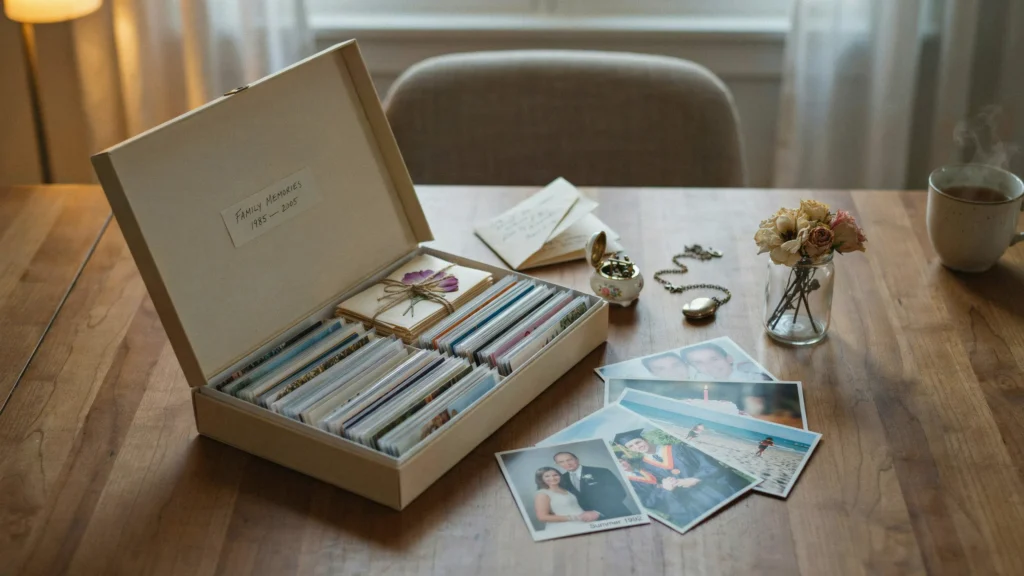
Old photographs, greeting cards, and sentimental keepsakes are especially vulnerable to humidity damage, fading, and pest activity when stored in a closet long-term, particularly on a high shelf where airflow is minimal. These items are better kept in an acid-free archival box stored in a climate-controlled area, such as a bedroom dresser drawer or a labeled bin in a temperature-stable closet elsewhere in the home. If you have digital scanning capability, creating backup copies before storage adds an extra layer of protection against irreversible loss.
5. Cleaning Supplies and Chemicals
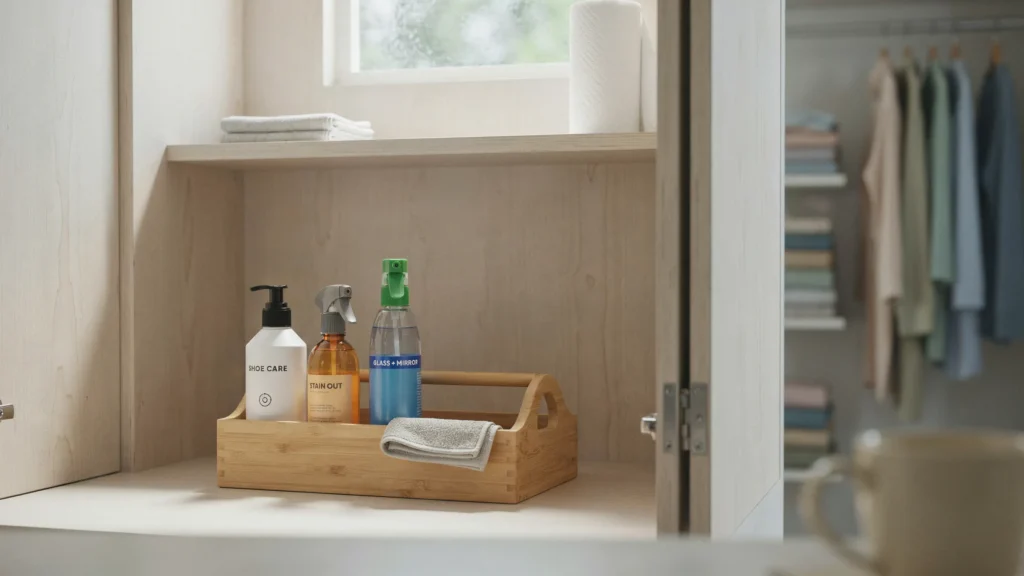
It’s common to tuck a bottle of shoe cleaner or a small stain remover onto a closet shelf, but cleaning chemicals release fumes over time that can affect fabric, especially in an enclosed space with limited airflow. A designated cleaning caddy under a bathroom or kitchen sink keeps these products both more effective and safer for your clothing.
6. Bulk Toiletries and Backup Beauty Products
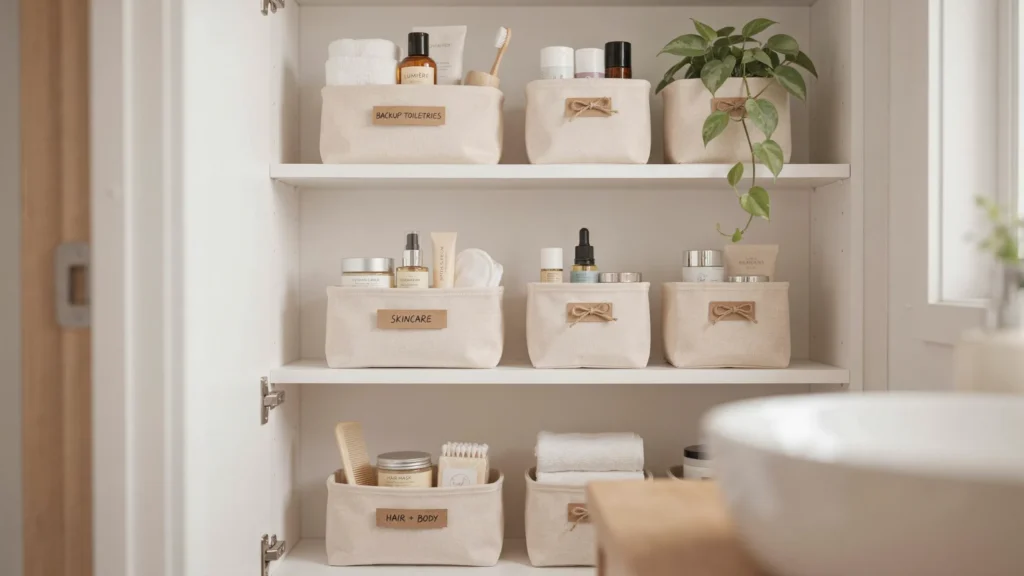
Backstock shampoo, lotion, and beauty products often end up on a closet shelf simply because there’s no other obvious spot, but many of these products can leak or degrade over time if exposed to temperature swings, and they take up space better used for clothing storage. A bathroom cabinet or a labeled bin in a linen closet is a more practical, climate-appropriate home for backup toiletries, and keeping them near where they’re actually used also makes it far easier to notice when it’s time to restock.
7. Old Electronics and Cables
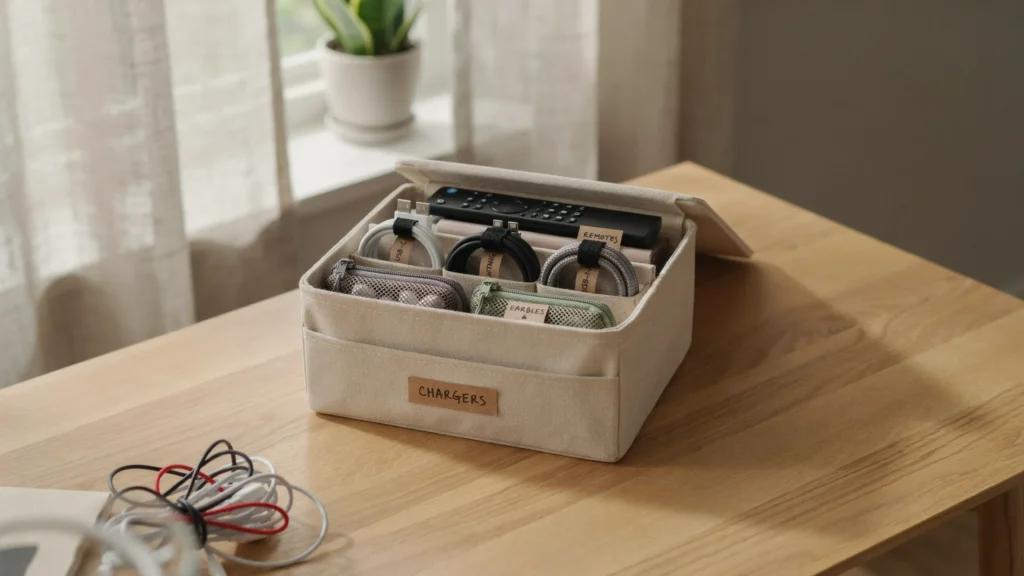
Outdated phone chargers, old remote controls, and tangled cable boxes often accumulate in a closet corner because nobody wants to deal with sorting them, but this creates visual clutter and makes it harder to find the current cables you actually need. A labeled cable organizer bin in a home office or garage is a far more functional home for this category, and setting a habit of sorting through it once a year prevents it from quietly growing into a permanent junk drawer.
8. Sports and Fitness Equipment
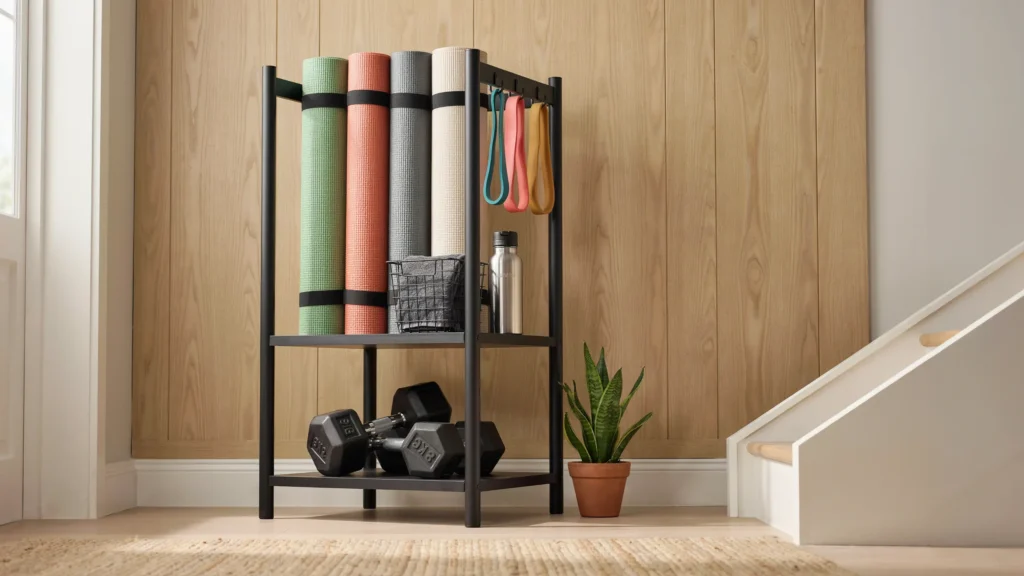
Yoga mats, resistance bands, dumbbells, and other fitness gear are frequently shoved into a bedroom closet corner, but this bulky equipment takes up disproportionate floor space and rarely fits neatly among hanging clothes. A dedicated corner in a home gym space, a hallway closet, or an under-stairs storage area works far better for equipment of this size and shape, and an open vertical rack keeps items visible enough that you’re actually more likely to use them regularly.
8.5. Signs an Item Has Overstayed Its Welcome in Your Closet
If you find yourself moving the same box or bag aside every time you reach for clothing, that is usually a clear sign the item belongs somewhere else. Other signals include items you haven’t touched in over a year, anything that has started to smell musty from lack of airflow, and categories, like documents or electronics, that genuinely have nothing to do with clothing storage in the first place. Treating these signs as a prompt to relocate rather than reorganize in place tends to produce a far more lasting result.
9. Luggage and Travel Bags
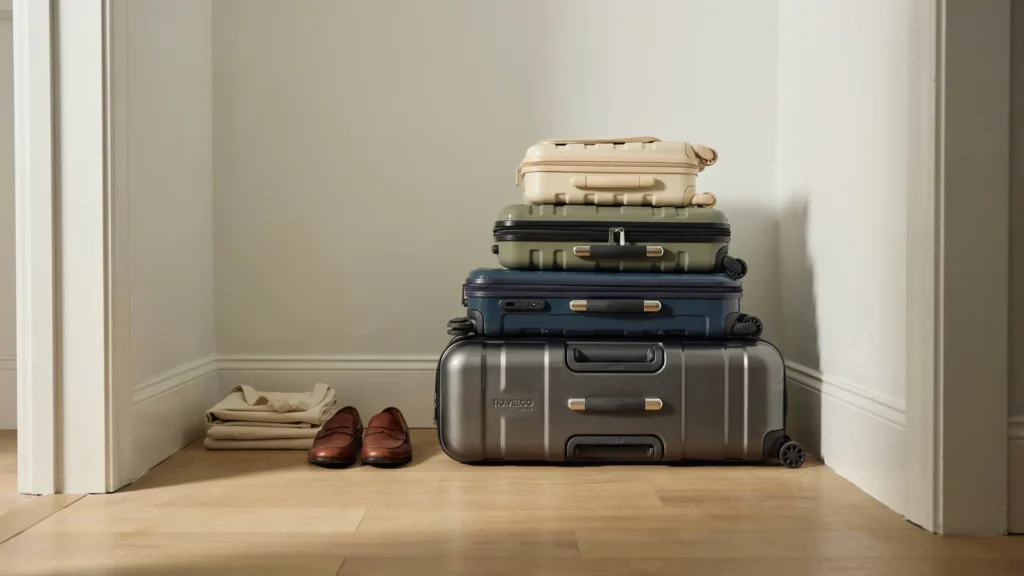
Suitcases are bulky, used infrequently, and tend to take up an entire lower shelf or floor section of a closet that could otherwise hold shoes or bins. Storing luggage in a garage, an attic, or nested inside one another in a hallway closet frees up significant floor space in your bedroom closet for things you use on a daily basis, and nesting smaller bags inside larger ones can cut the footprint by more than half.
10. Craft Supplies and Hobby Materials
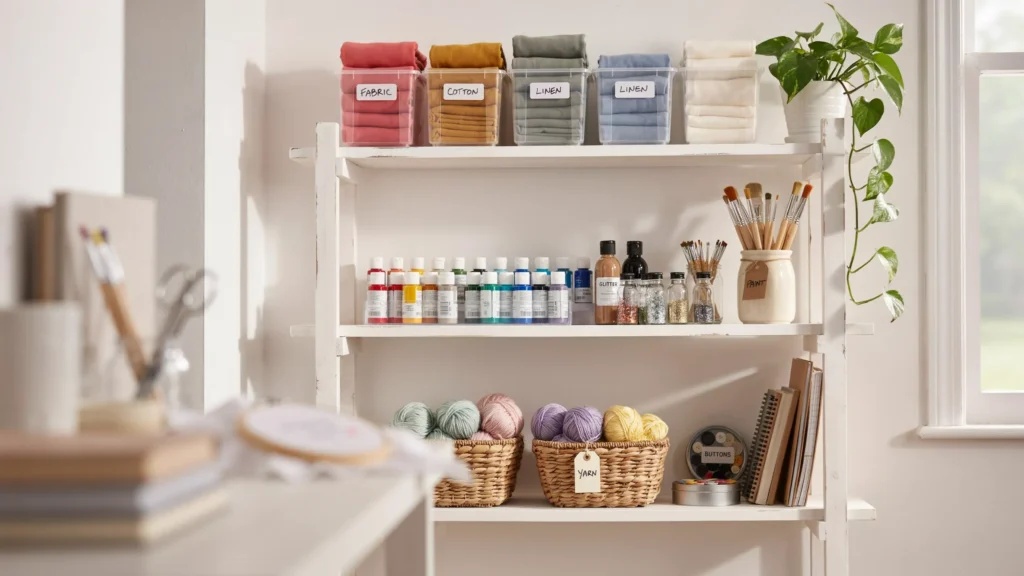
Fabric scraps, paint supplies, and other craft materials often migrate into a bedroom closet simply because there’s no dedicated hobby space, but these supplies are usually better organized in clear labeled bins in a craft room, office, or garage shelving unit where they can be sorted by project rather than buried behind clothing.
11. Books You’ve Already Read
A stack of finished books often ends up on a closet shelf as a temporary holding spot before donation, but this “temporary” storage frequently becomes permanent clutter. A designated bookshelf, a donation box kept in an entryway, or a little free library drop-off keeps these books moving instead of taking up closet real estate indefinitely.

12. Expired or Rarely Worn “Someday” Clothing
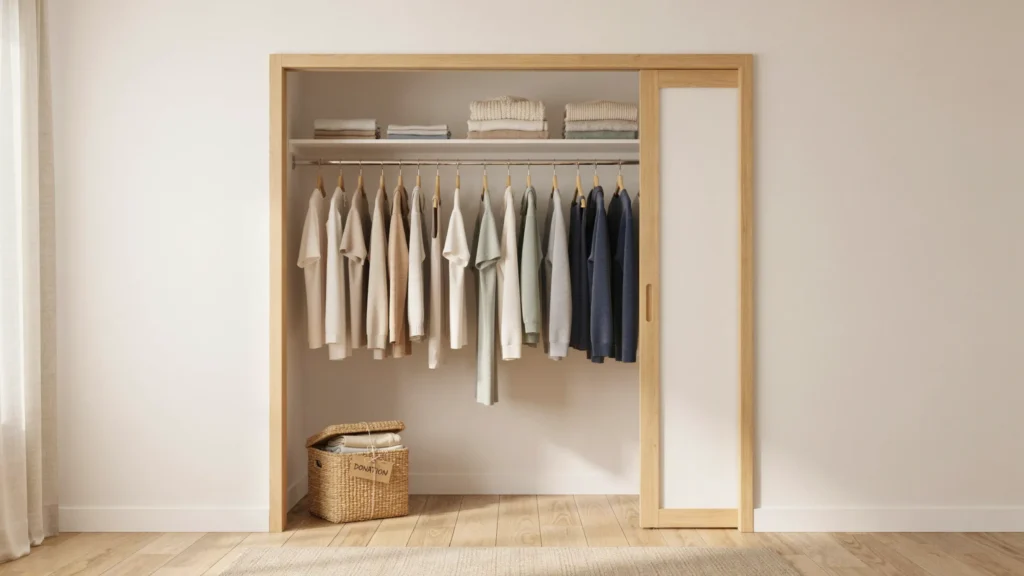
Clothing you’re keeping “just in case,” including pieces that no longer fit or haven’t been worn in over a year, quietly consumes the majority of closet hanging space in most homes. Moving these pieces to a labeled storage bin for a defined trial period, or donating them outright, immediately frees up your most valuable hanging space for clothing you actually wear on a regular basis. A simple trick many organizers use is turning all hangers backward at the start of the season anything still facing backward after six months is a strong candidate for donation.
Where to Store These Items Instead
Once you’ve identified what doesn’t belong in your bedroom closet, the next step is having a designated alternative location for each category, since items without an assigned home tend to drift right back into the closet within a few weeks. Under-bed storage bins work well for off-season bedding and out-of-season clothing you still want nearby. A linen or hallway closet is ideal for backup toiletries, luggage, and bulk supplies. A home office or filing area should house documents and archival keepsakes, while a garage, attic, or basement shelving unit is the appropriate home for bulky equipment, craft supplies, and electronics. The goal isn’t to eliminate storage for these items entirely, it’s to relocate them to a space that matches how often you actually use them.
Labeling matters just as much as the location itself. A clear bin label, whether handwritten or printed, means every household member knows where an item belongs and is far more likely to return it there instead of defaulting to the nearest closet shelf. For categories like documents or keepsakes, consider adding a short inventory list taped inside the lid, so you don’t need to open every bin just to find one item. Over time, this system turns your entire home into a set of purpose-built storage zones rather than a single overworked closet trying to hold everything at once.
Common Closet Organization Mistakes
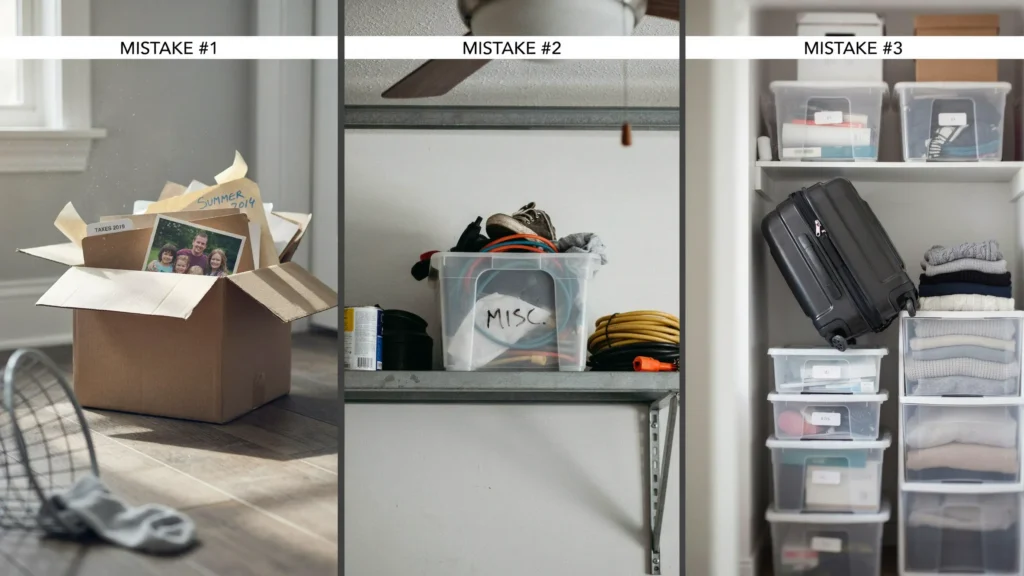
Treating the closet as a catch-all space. If an item doesn’t belong to a clothing or accessory category, it usually doesn’t belong on a closet shelf, regardless of how convenient it feels in the moment. This habit tends to build up gradually, one “just for now” item at a time, until an entire shelf has quietly become a junk drawer.
Storing paper and photos without protection. Even when paperwork or photos are kept in a closet out of necessity, storing them in an open box rather than a sealed, moisture-resistant container leaves them vulnerable to long-term damage.
Ignoring vertical space for the wrong items. High shelves are often used for bulky, rarely accessed items like luggage, when they’re actually better suited for lightweight, seasonal items that are easy to lift down occasionally.
Skipping labels on relocated bins. When items are moved out of the closet to a garage or hallway storage space, unlabeled bins often get forgotten entirely. A simple label ensures the new storage system actually gets used.
Not setting a “someday” deadline. Clothing or items kept “just in case” without a defined timeline tend to stay indefinitely. Setting a six-month or one-year trial period forces a real decision instead of endless deferral.
Frequently Asked Questions
What items should never be stored in a closet? Cleaning chemicals, important original documents without protective storage, and anything highly sensitive to humidity, like certain leather goods or unprotected photographs, are the items most likely to be damaged or pose a risk if stored long-term in a standard closet.
Why shouldn’t I store bedding in my bedroom closet? Bedding is bulky and typically only needed for one season or occasion at a time, so it takes up disproportionate space relative to how often it’s used. Storing it under the bed or in a linen closet frees up your bedroom closet for daily-use clothing.
Is it bad to store luggage in a bedroom closet? It isn’t harmful to the luggage itself, but suitcases are large, infrequently used, and typically take up an entire shelf or floor section that could otherwise hold shoes, bins, or additional hanging space, which is why a garage or hallway closet is usually a better fit.
Where should I store important documents if not in a closet? A fireproof, waterproof lockbox kept in a home office, desk drawer, or a small dedicated filing area is a safer and more organized option than a closet shelf, both for protection from damage and for easy access during an emergency.
How do I stop my closet from becoming a catch-all storage space? Assign every category of non-clothing item, from documents to electronics to craft supplies, a specific alternative storage location outside the closet. When items have a designated home elsewhere, they’re far less likely to drift back into the closet by default.
Should I store out-of-season clothing somewhere else too? Yes, rotating out-of-season clothing into under-bed storage bins, vacuum-sealed bags, or a spare closet keeps your main closet focused on what you’re currently wearing, which makes the space feel significantly larger and easier to navigate.
How do I know if an item really doesn’t belong in my closet? A good test is to ask whether the item is clothing, an accessory, or something you use while getting dressed. If it’s a document, tool, hobby supply, or piece of equipment unrelated to your wardrobe, it almost always has a more appropriate home elsewhere in the house.
Is it okay to keep shoes in a bedroom closet? Yes, shoes are one of the categories that genuinely belong in a bedroom closet, since they’re used daily and are typically compact enough not to compete significantly with clothing storage, especially when kept on a shoe rack or shelf rather than loose on the floor.
What’s the best way to start decluttering a closet full of mixed items? Pull everything out onto the bed and sort it into three piles: clothing and accessories that stay, items that belong in a different room, and items to donate or discard. Working through the full pile at once, rather than shelf by shelf, makes it far easier to see patterns and avoid simply shuffling clutter around.