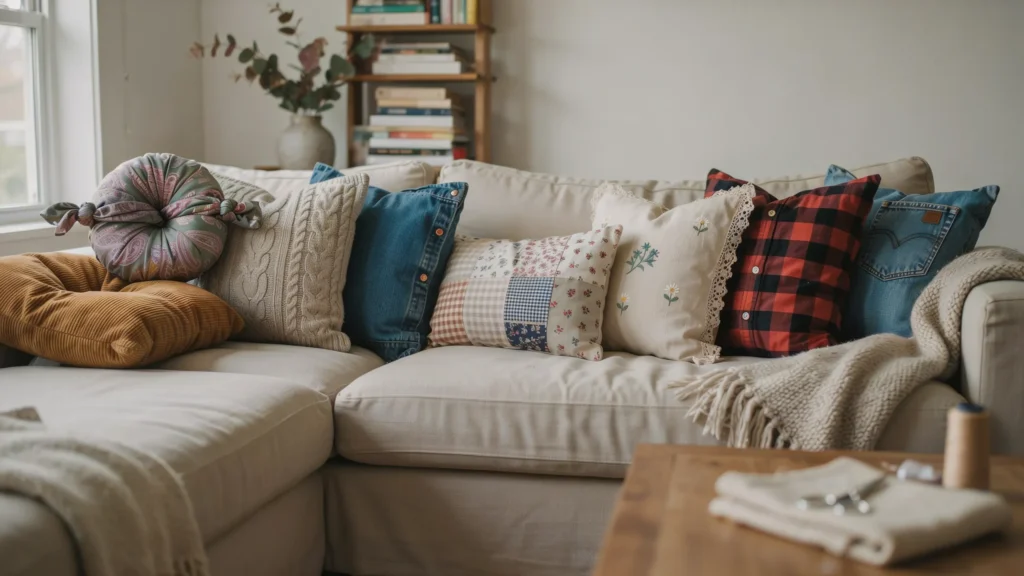
You can turn vintage sweaters, old jeans, scarves, curtains, and even pet beds into stylish throw pillows. The best materials are durable, soft, and easy to sew. Repurposing these items saves money, reduces textile waste, and gives your home unique, sentimental decor that you can’t buy in stores.
10 Genius Items to Repurpose Into Throw Pillows will inspire you to give everyday household items a creative second life while adding personality to your home. Try these 10 genius items to repurpose into throw pillows and enjoy the satisfying feeling of completing a DIY project made from something you almost threw away. That worn-out sweater you couldn’t part with or the jeans that no longer fit can become beautiful, one-of-a-kind throw pillows that add warmth, character, and a personal touch to your living space.
Throw pillows are one of the easiest entry points into DIYhome decor. They’re small, forgiving, and don’t require expert sewing skills. A wonky stitch here or there won’t ruin the whole project it’ll add character. Plus, you only need a modest amount of fabric, which makes pillows the perfect way to use up materials you already own.
In this guide, you’ll discover 10 genius items hiding in your closets and cupboards that can become beautiful throw pillows. You’ll learn why each material works, how to transform it, and design ideas to make each piece feel intentional. Along the way, you’ll also pick up the basics of what makes a great pillow in the first place.
By the end, you’ll never look at an old tablecloth or scarf the same way again.
Why Is Repurposing Fabric Into Throw Pillows Worth It?
Upcycling old textiles isn’t just a fun weekend hobby it’s a small act with real impact. The average American throws away about 81 pounds of clothing per year, according to the Environmental Protection Agency. Much of that ends up in landfills, where synthetic fibers can take decades to break down. Turning a single item into a pillow keeps it out of the trash and out of the production cycle for something new.
There’s a financial upside, too. A quality throw pillow from a home decor store can cost anywhere from $25 to $80. When you sew your own from materials you already own, your only real expense is the fill and even that can be repurposed, as you’ll see later.
Then there’s the sentimental side. A pillow made from a baby blanket or a grandparent’s old scarf carries memories that no store-bought cushion ever could. You get decor with a story.
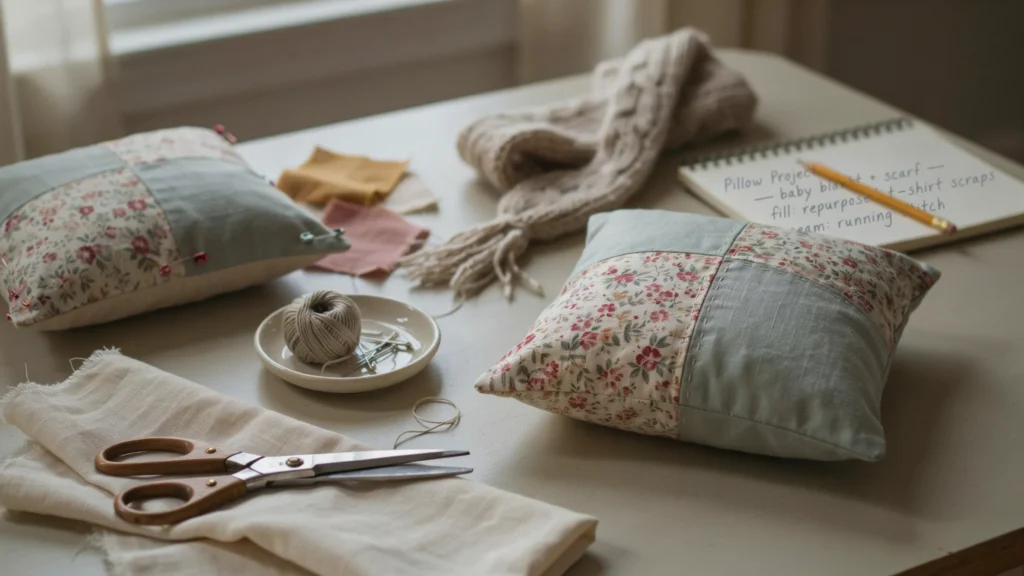
What Makes a Good Throw Pillow?
Before you start cutting up fabric, it helps to understand the three things that separate a great pillow from a saggy, scratchy disappointment: size, fabric, and fill.
Size. The most popular throw pillow sizes are 18×18 inches and 20×20 inches. Smaller 16-inch pillows work well for accent pieces, while large 24-inch “Euro” pillows suit beds and big sectionals. Pick a size based on where your pillow will live.
Fabric. The best pillow fabrics are durable enough to handle daily use but soft enough to lean against. Mid-weight materials like denim, linen, cotton, and wool knit hit the sweet spot. Very delicate fabrics like silk can still work, but they often need a sturdy lining behind them.
Fill. Polyester fiberfill is affordable and washable, making it the most common choice. Down and feather inserts feel more luxurious but cost more. Foam works for structured pillows. Whatever you choose, slightly overfill your pillow it’ll soften over time, and a plump pillow always looks more inviting than a flat one.
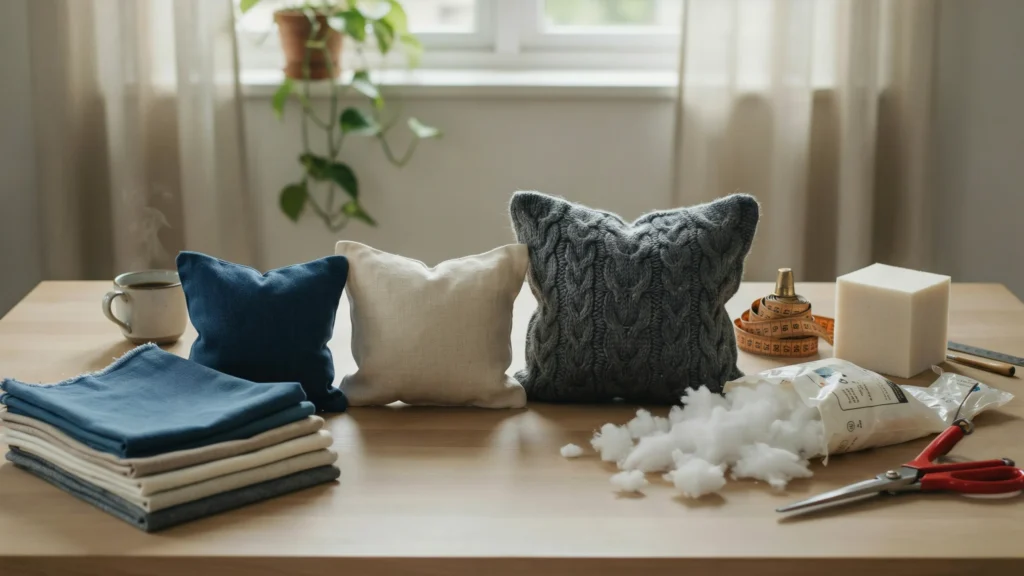
The “Genius” Factor: What Makes These Items Perfect for Repurposing?
Not every fabric is pillow material. The genius of the items below is that they’re already suited to the job often without you realizing it.
A good repurposing candidate checks a few boxes. It’s durable enough to survive being squished, sat on, and washed. It has an appealing texture that invites touch. Ideally, it already has finished edges or seams you can work with, which saves you time and effort.
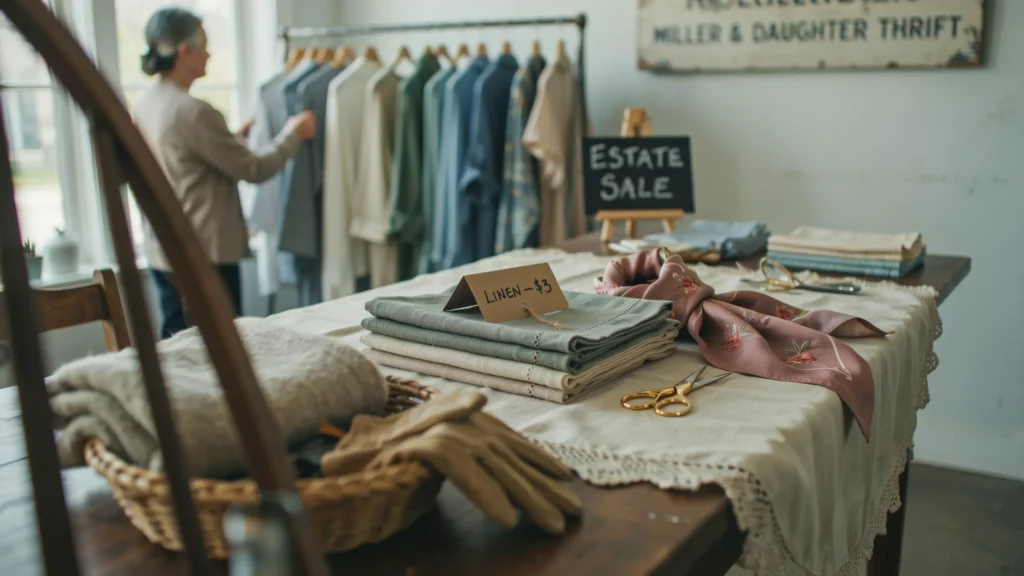
The hunt for these materials is half the fun. Look beyond your own closet. Thrift stores, estate sales, and flea markets overflow with vintage linens, scarves, and tablecloths at bargain prices. Ask older relatives if they have textiles tucked away in storage. Even your local fabric store’s remnant bin can hide treasures for a few dollars.
10 Genius Items to Repurpose Into Throw Pillows
Here are the 10 best items to transform, along with why they work and how to do it.
1. Vintage Sweaters — How to Turn a Sweater Into a Pillow
Why it works: Sweaters are soft, cozy, and full of texture. Their existing knit gives pillows instant warmth, and the bottom hem often provides a ready-made finished edge. Cable knits and chunky weaves look especially luxurious as cushions.
DIY steps and tips: Turn the sweater inside out and lay it flat. Cut a square through both layers, using the existing hem as one edge to save sewing. Stitch around the open sides, leaving a gap, then turn it right-side out and stuff. Hand-stitch the gap closed. Tip: Knits stretch, so sew slowly and consider a stabilizing zigzag stitch.
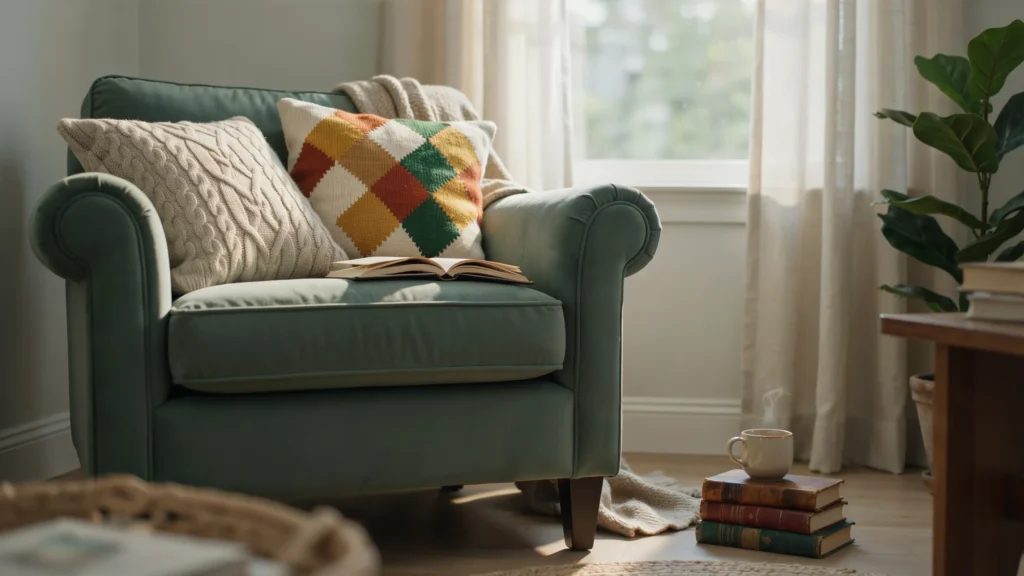
Design ideas: A cream cable-knit pillow brings hygge charm to a reading nook. An intarsia sweater with a bold pattern makes a playful statement piece.
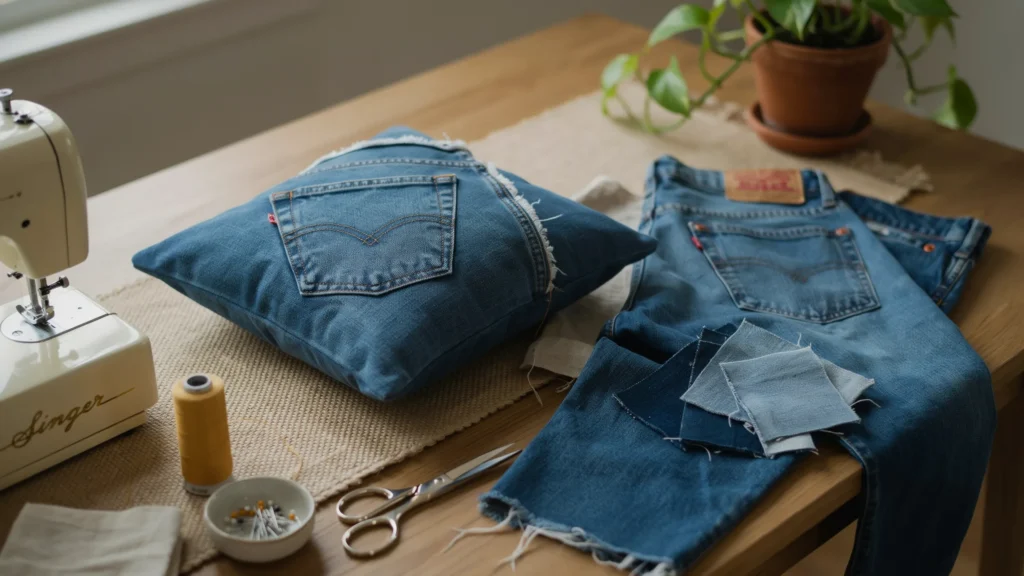
2. Old Jeans — DIY Denim Throw Pillow
Why it works: Denim is one of the toughest fabrics around, which makes it ideal for pillows that take a beating. Its iconic texture pairs well with almost any decor, and the built-in pockets and seams add visual interest.
DIY steps and tips: Cut large panels from the legs for a smooth pillow, or sew together smaller pieces for a patchwork look. Keep a back pocket on the front for a fun, functional detail perfect for stashing a TV remote. Reinforce your seams, since denim frays.
Design ideas: Go rustic with raw, frayed edges, or modern with clean patchwork in different denim washes. Mix in a contrasting fabric like linen for a relaxed, mixed-media feel.
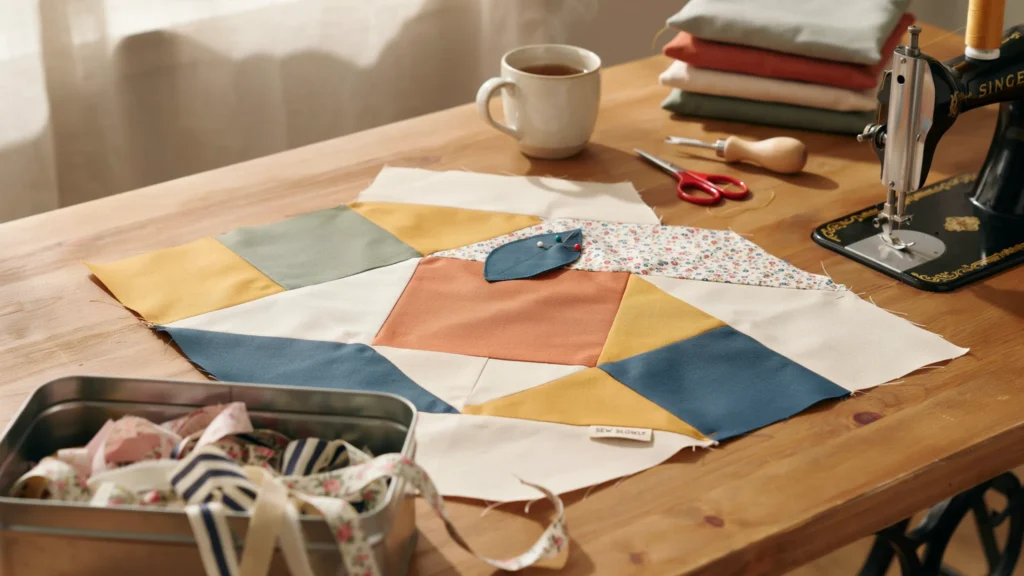
3. Fabric Scraps — Patchwork Pillow Ideas
Why it works: If you sew, you almost certainly have a bin of leftover fabric. These scraps carry unique patterns and sentimental ties to past projects, and using them up is the height of sustainable crafting.
DIY steps and tips: Piece smaller scraps together with a simple quilting technique to form a single pillow panel. For an artful touch, try applique sewing a cut-out shape onto a base fabric. Press your seams flat as you go for a professional finish.
Design ideas: Arrange scraps into a geometric grid for a modern look, or go free-form with an abstract, color-blocked design.
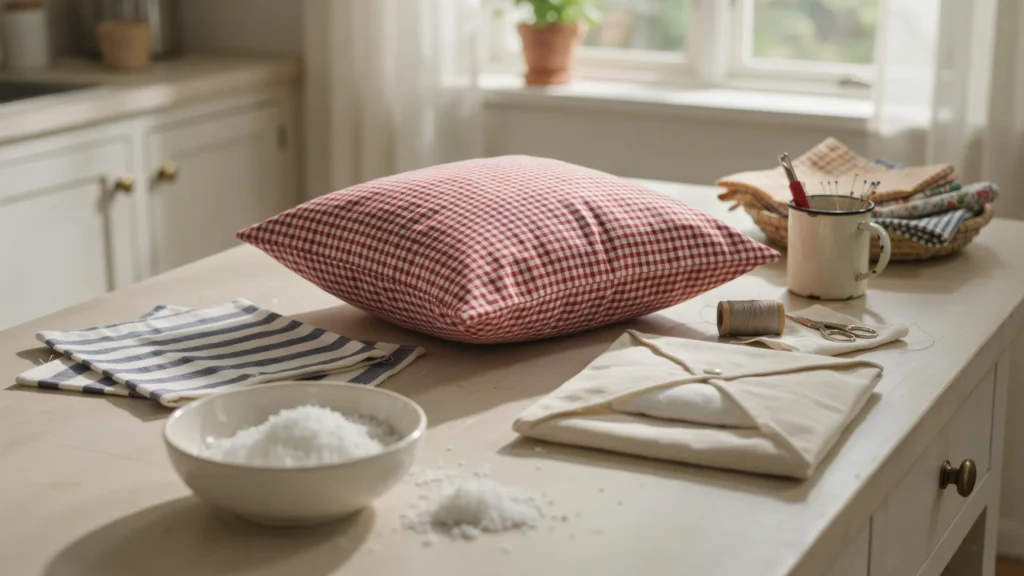
4. Tea Towels or Napkins — No-Sew Pillow Option
Why it works: Tea towels and cloth napkins come pre-hemmed, which removes a whole step from the process. They’re made from absorbent, washable cotton or linen and often feature charming prints you won’t find on pillow fabric.
DIY steps and tips: Two matching napkins make an easy pillow sew three sides together, insert the fill, and close the fourth. For a single tea towel, fold it and use a simple envelope closure on the back, which requires no zipper at all.
Design ideas: A gingham or striped tea towel reads farmhouse. A crisp white linen napkin suits minimalist spaces. Swap in seasonal prints for an easy holiday refresh.
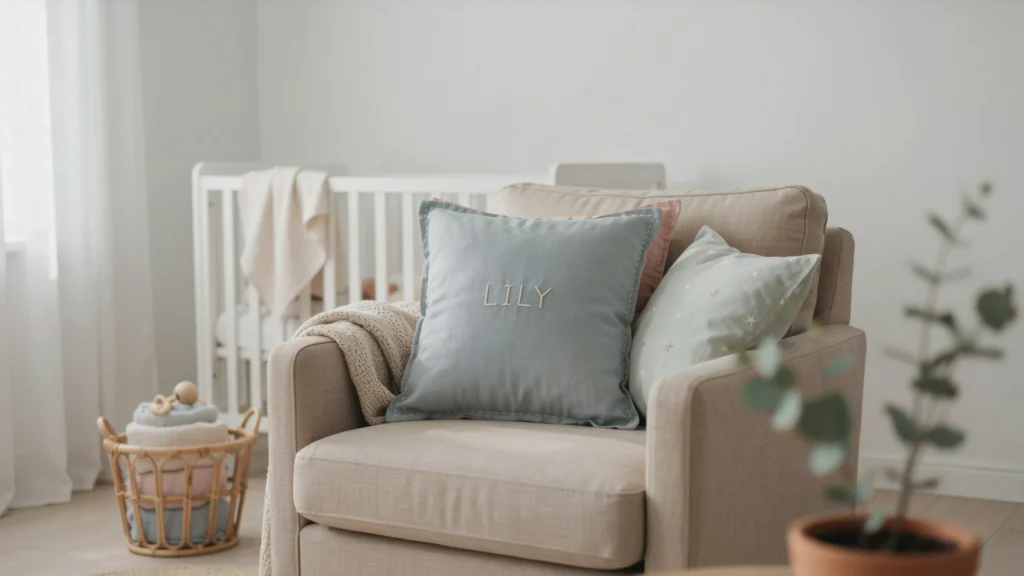
5. Baby Blankets or Quilts — Keepsake Pillow Ideas
Why it works: Few things carry more emotion than a child’s first blanket. The fabrics are designed to be ultra-soft and gentle, and preserving them as a pillow lets you keep the memory close instead of boxed away.
DIY steps and tips: If the blanket has a special embroidered name, monogram, or print, center that section as the front panel. Back it with a coordinating soft fabric. Use a gentle wash before sewing if the blanket has been in storage.
Design ideas: A pastel pillow makes lovely nursery decor for a younger sibling. A keepsake pillow with a preserved name patch becomes a heartfelt gift for grandparents.
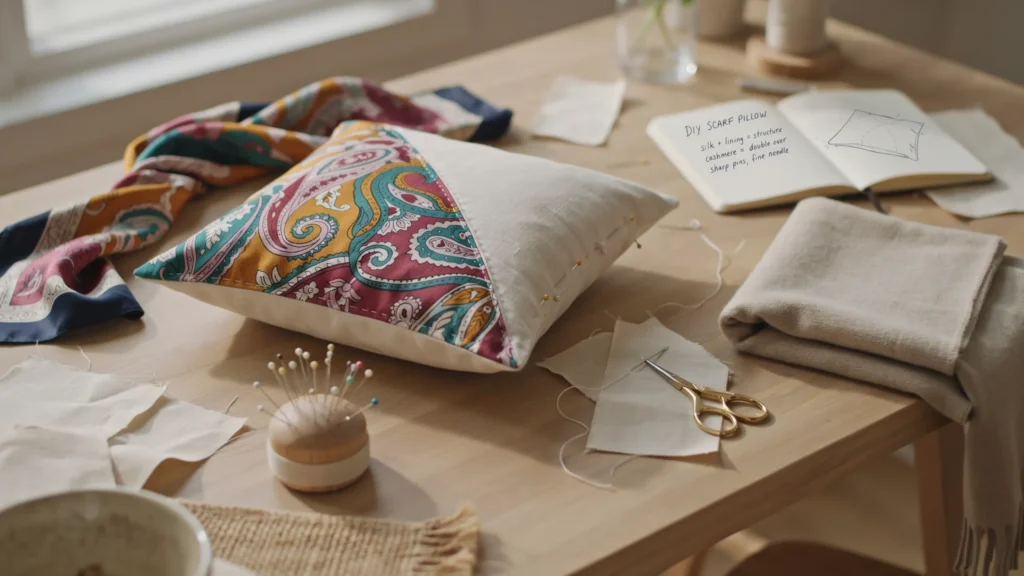
6. Old Scarves — Silk & Cashmere Pillow Covers
Why it works: Scarves are often made from luxurious materials like silk and cashmere that you’d rarely buy by the yard. Their vibrant patterns and prints add instant personality to a room.
DIY steps and tips: Delicate scarves need gentle handling use sharp pins and a fine needle to avoid snags. Because silk is thin, sew the scarf onto a sturdier lining fabric so the finished pillow holds its shape. A cashmere scarf can often be doubled over and stitched on three sides.
Design ideas: A printed silk scarf creates a bohemian, eclectic vibe. A solid cashmere scarf makes an understated, elegant accent in muted tones.
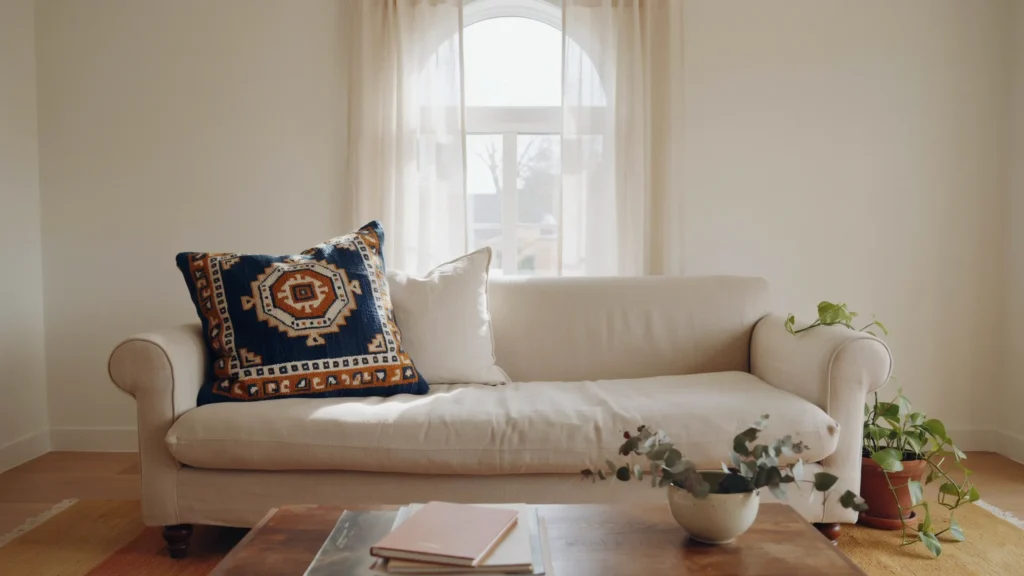
7. Tapestries — Statement Throw Pillows
Why it works: Tapestries and fabric art pieces tell a story through their designs. Because they’re often large, a single piece can yield several pillows, each showcasing a different part of the artwork.
DIY steps and tips: Plan your cuts carefully to frame the most striking design elements a central motif, a border, or a bold color block. Tapestries can be thick, so use a heavy-duty needle and a sturdy backing fabric.
Design ideas: A single tapestry pillow makes a dramatic statement on a neutral sofa. Globally inspired prints bring warmth and worldly character to a space.
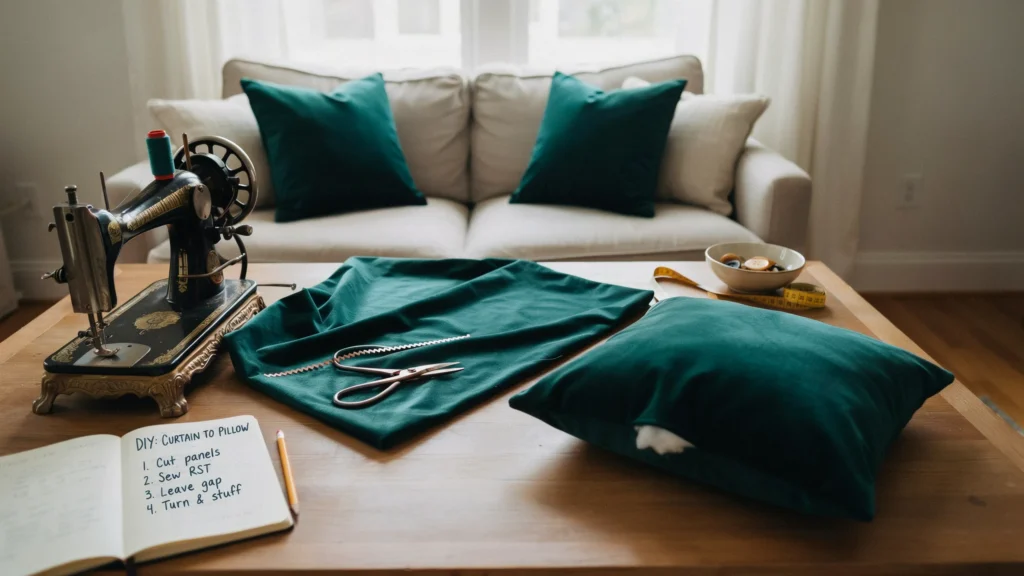
8. Old Curtains — Repurposed Drapery Pillows
Why it works: Curtains offer a generous amount of fabric so that a single panel can make multiple pillows. They come in countless textures and patterns, and many are already lined giving your pillow extra body and a built-in backing.
DIY steps and tips: Heavier drapery fabric is easier to sew than slippery, thin materials, making this a beginner-friendly option. Cut your panels, then sew right sides together, leaving a gap to turn and stuff. Use the existing lining to your advantage.
Design ideas: Velvet curtains create sophisticated, plush pillows. Patterned drapes can look theatrical, while textured weaves add subtle depth to a neutral room.
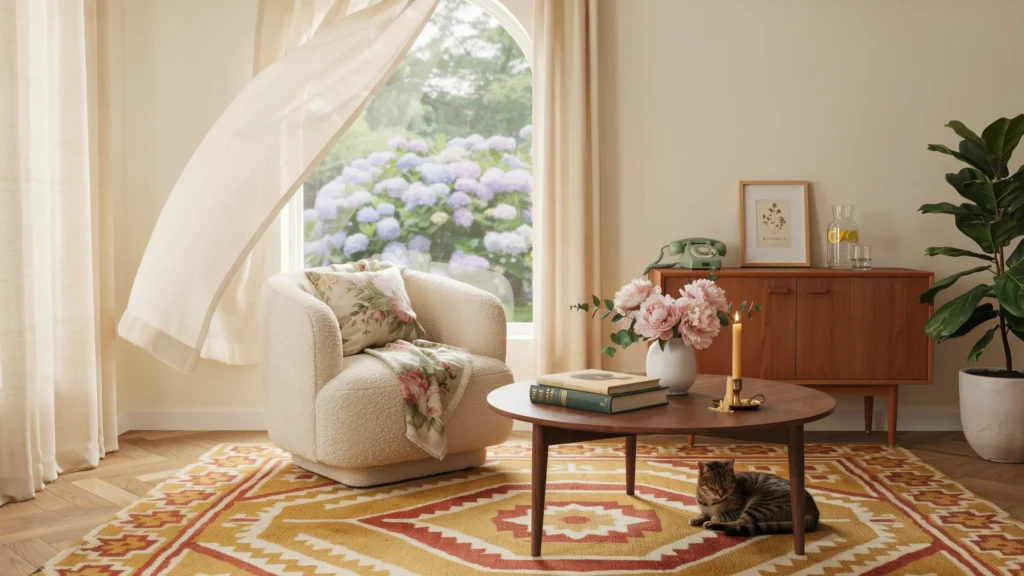
9. Vintage Tablecloths — Embroidered Pillow Ideas
Why it works: Vintage tablecloths often feature unique prints and high-quality linen or cotton that’s hard to find today. Many include hand-embroidered details that turn an ordinary pillow into a one-of-a-kind piece.
DIY steps and tips: When a tablecloth has embroidery or lace, position those details front and center. Linen presses beautifully, so iron your fabric before and after sewing for crisp edges. Patch around stains by cutting your panels from the cleanest sections.
Design ideas: Floral prints suit a shabby-chic or garden-party look. Retro patterns from the 1950s and 60s bring playful nostalgia to a modern room.
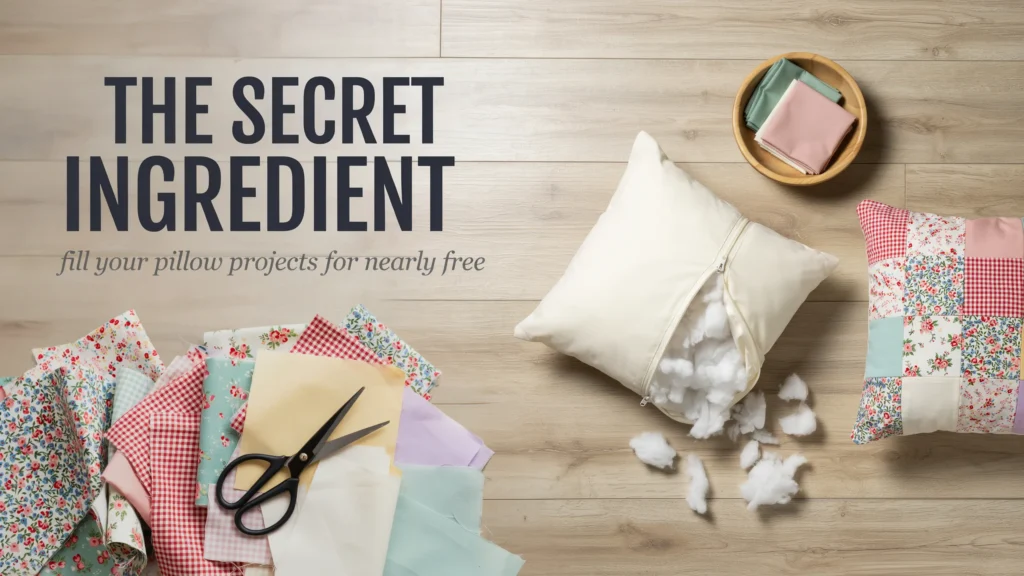
10. Pet Beds — Free Pillow Stuffing Hack
Why it works: Here’s the clever twist an old or unused pet bed is often packed with perfectly good polyester stuffing. Instead of buying a new pillow insert, you can harvest the fill inside, saving money and reducing waste.
DIY steps and tips: Open a seam on the pet bed and remove the stuffing. Fluff it up by hand to break apart any clumps. Use this fill to stuff any of the pillow covers from the items above. If the pet bed’s outer fabric is clean and appealing, you can repurpose that too.
Design ideas: This one’s less about looks and more about function it’s the secret ingredient that makes all your other pillow projects nearly free to fill.
Start Small, Stitch Smart
You don’t need a fancy sewing machine or years of experience to make a throw pillow you’ll be proud of. Pick one item from this list maybe that sweater you’ve been holding onto and give it a try. The forgiving nature of pillows makes them the perfect first project, and the satisfaction of finishing one tends to spark a whole new habit.
As you build confidence, mix materials, experiment with patterns, and let your home tell its story through the textiles you choose to save. Every repurposed pillow is one less item in a landfill and one more conversation starter on your couch.
Ready to begin? Gather a few candidates from around your home, choose your fill, and set aside an afternoon. Your next favorite pillow is probably already in your closet.
Frequently Asked Questions
Do I need a sewing machine to make throw pillows?
No. While a sewing machine speeds things up, you can hand-stitch a throw pillow with a needle and thread. For no-sew options, use fabric glue or an envelope-style closure that folds and tucks. Beginners often start with hand-sewing on a small accent pillow before moving to a machine.
What is the cheapest way to fill a homemade pillow?
The cheapest fill is often free harvest polyester stuffing from an old pet bed, decorative pillow, or stuffed toy you no longer use. If you’d rather buy new, a bag of polyester fiberfill typically costs between $5 and $15 and can fill one or two standard pillows.
Which fabrics should I avoid for throw pillows?
Avoid very thin, stretchy, or slippery fabrics on their own, as they’re hard to sew and won’t hold their shape. Materials like loose-knit jersey or sheer silk need a sturdy lining behind them. Heavily worn fabric with thin, weak spots will also tear quickly, so check for durability first.
How long does it take to make a throw pillow from repurposed materials?
A simple pillow using pre-hemmed materials like tea towels can take as little as 30 minutes. More involved projects patchwork, quilting, or working with delicate scarves may take two to three hours. Beginners should budget a relaxed afternoon for their first attempt.
Can I wash pillows made from repurposed fabric?
It depends on the material. Cotton, linen, and denim covers are usually machine washable on a gentle cycle. Wool, silk, and cashmere should be hand-washed or dry-cleaned. To make washing easier, add a removable cover with a zipper or envelope closure rather than sewing the fill in permanently.