10 One Day Home Organization Projects Ranked by Impact
Yes, you can organize your home in one day, as long as you pick the right projects. These ten one day home organization projects are ranked by impact, so the spaces you touch every day come first and the nice to have jobs come last. Each one lists a realistic time, the supplies you need, and the exact first step, so you can start without standing in the middle of a room wondering what to do first.
Start with the pantry and the junk drawer, because both are fast and both change how your mornings feel. Work through the list in order if you have a full day, or pick any two or three projects if you only have an afternoon. Either way, finish each project before you start the next one. That one rule is what keeps a day of organizing from turning into a bigger mess than the one you started with.
Before You Start: Your One Day Organization Plan
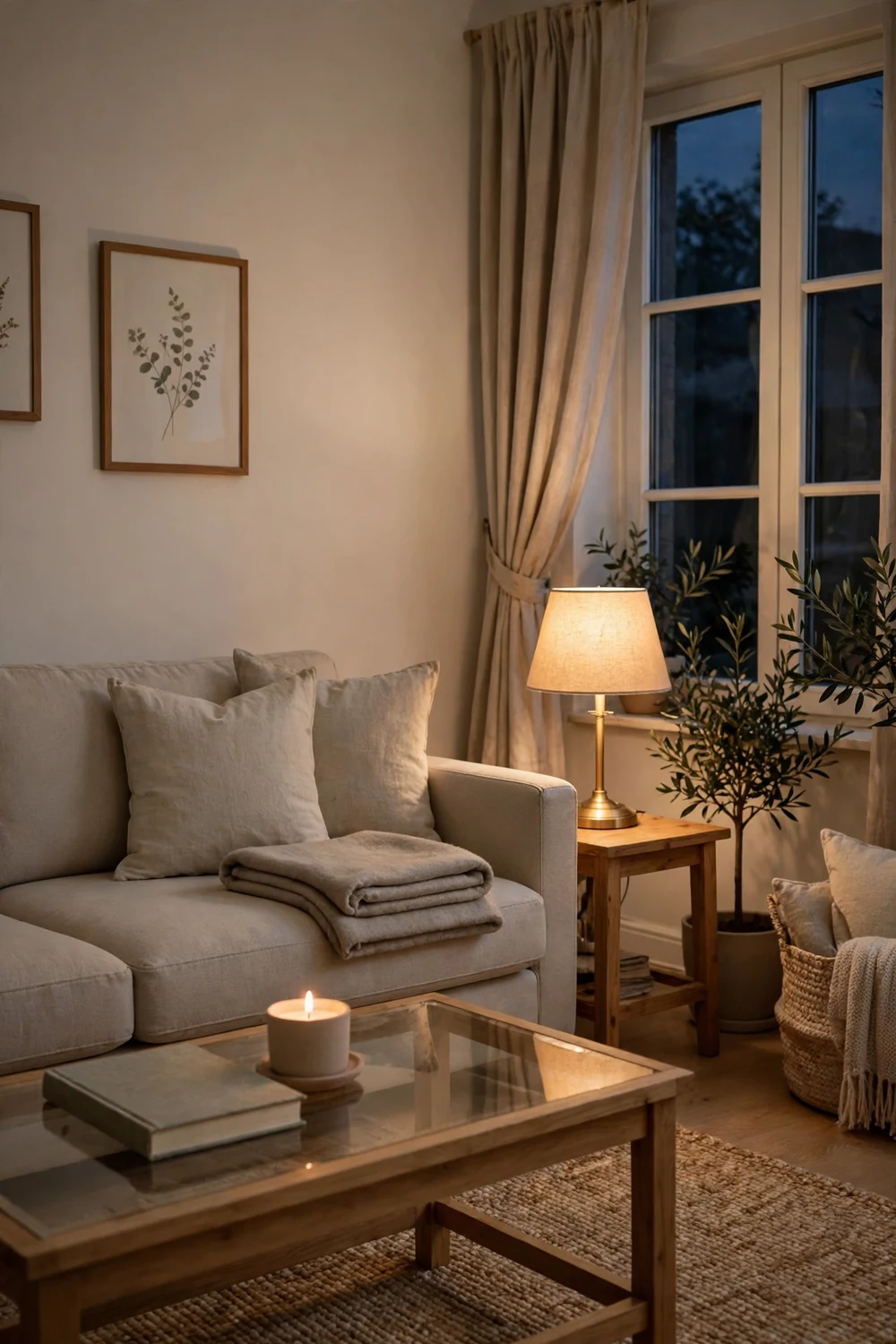
A day of organizing works when the plan is simple, so keep this one short. You need three bags or boxes, a timer, and a pen. Label the bags keep somewhere else, donate, and trash. The fourth pile is the one people forget, and it is the pile that saves the most time. Anything that belongs in another room goes in a laundry basket by the door, and you carry it out only when the project is finished. If you run around the house putting things away mid-project, you lose your place and the room stays half done.
Set a timer for every project. The time estimates in this post are honest, and they assume you are working alone at a normal pace, not rushing. When the timer goes off, stop, even if the space is not perfect. A finished project beats a perfect one you abandon at noon. Take a ten minute break between projects and look at what you finished before you start the next one.
Do not buy storage bins before you start. This is the mistake that costs the most money and fixes the least. Sort first, see what is left, measure the shelf, and then buy only what the space actually needs. Most homes already have spare baskets and jars that work fine for a first pass. If you want help choosing bins later, read our roundup of the best home organization products that actually work after you finish sorting, not before.
Here is the whole day at a glance. The pantry sits at the top because you open it several times a day, and the digital declutter sits at the bottom because nobody trips over it. Pick your starting point and work down the list.
| Project | Time needed | Impact |
|---|---|---|
| 1. Pantry reset | 60 to 90 minutes | High, used every day |
| 2. Junk drawer | 20 minutes | High, instant relief |
| 3. Closet reset | 90 minutes to 2 hours | High, easier mornings |
| 4. Entryway drop zone | 45 minutes | High, first thing you see |
| 5. Kitchen counters and cabinets | 90 minutes | High, cooking gets easier |
| 6. Bathroom cabinet | 30 minutes | Medium, calmer routine |
| 7. Laundry room | 60 minutes | Medium, less hunting |
| 8. Linen closet | 30 minutes | Medium, no more avalanches |
| 9. Paper pile and command center | 60 minutes | Medium, fewer lost bills |
| 10. Digital declutter | 45 minutes | Low, but freeing |
Projects 1 and 2: Reset the Pantry, Then Clear the Junk Drawer
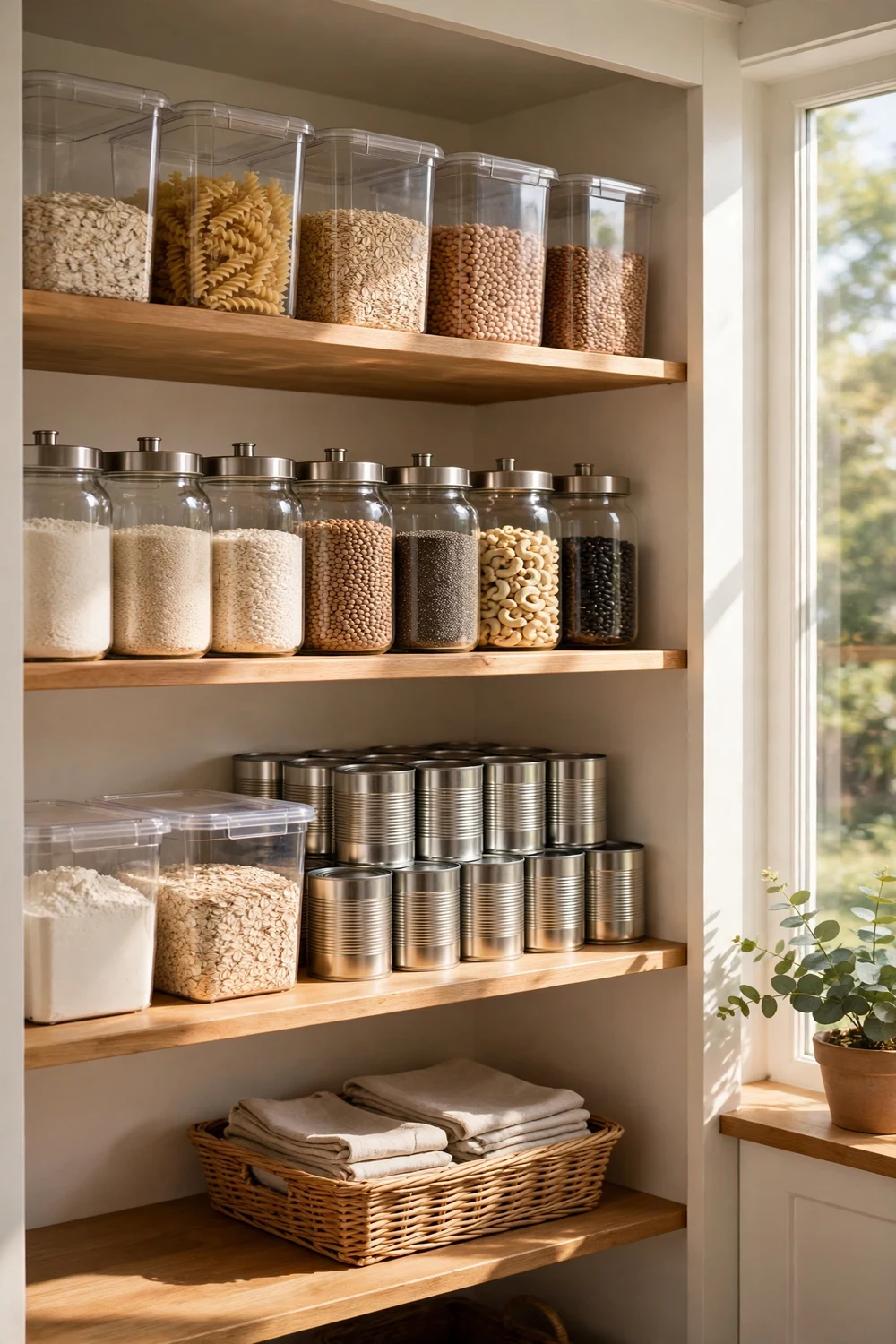
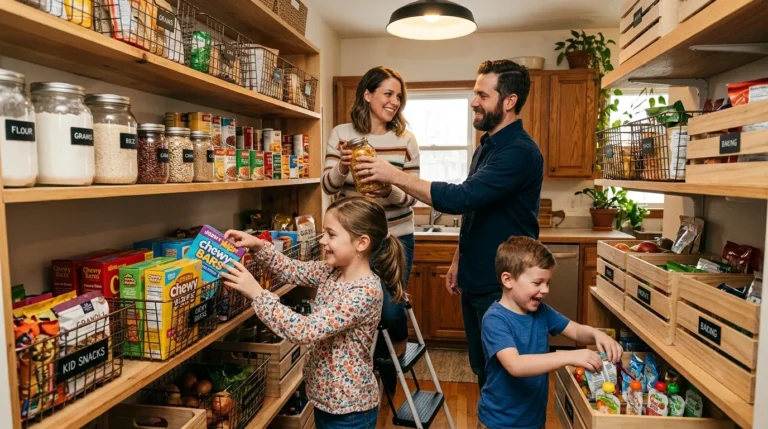
The pantry is the best first project because the win is visible within twenty minutes and you use the space every single day. Pull everything off one shelf at a time, not the whole pantry at once. Wipe the shelf, check the dates, and group what stays into simple families: breakfast, baking, cans, snacks, and sauces. Expired food goes straight in the trash, and unopened food your household will not eat goes in the donate box for a local food bank if it is still in date and sealed.
Decant only the things you reach for constantly, like flour, rice, oats, and cereal. Clear jars help because you can see when something runs low, but you do not need a matching set. Put the heaviest items on the lowest shelf, daily items at eye level, and the things you use once a month up high. Keep a small basket for the odds and ends that never fit a category, like sauce packets and spare batteries, so they stop drifting across the shelf. For a fuller low cost approach to this exact job, our frugal pantry organization plan for beginners walks through the same reset without spending much at all.
Time this project at sixty to ninety minutes for a standard pantry, and stop when the shelves are grouped and labeled, even if the bins do not match. The goal is finding things fast, not a photo shoot. Labeling matters more than matching containers. A strip of masking tape and a pen beats a pretty label maker you never use, because you will actually do it. Write what is inside and the date you opened it for anything that goes stale, like baking powder and nuts.
What to avoid: do not pull every shelf out at once, because a full pantry spread across the kitchen floor turns a one hour project into a four hour one. Do not buy bins first. And do not keep food out of guilt. A half used bag of something nobody liked will not get eaten next year. Let it go.
Then move straight to the junk drawer, which takes twenty minutes and feels like a reward after the pantry. Dump it out completely, wipe the drawer, and sort into four piles: tools and batteries, tape and fasteners, things that belong elsewhere, and trash. Anything you have not used in a year goes. The mystery keys, the dried out pens, the three phone chargers for phones you no longer own, all of it goes. Put back only what you reach for weekly, and use a cut down cereal box as a divider if you own no drawer inserts. The first step is simple: take everything out. Once the drawer is empty, the decisions get easy.
Project 3: Give Your Closet a Real Reset
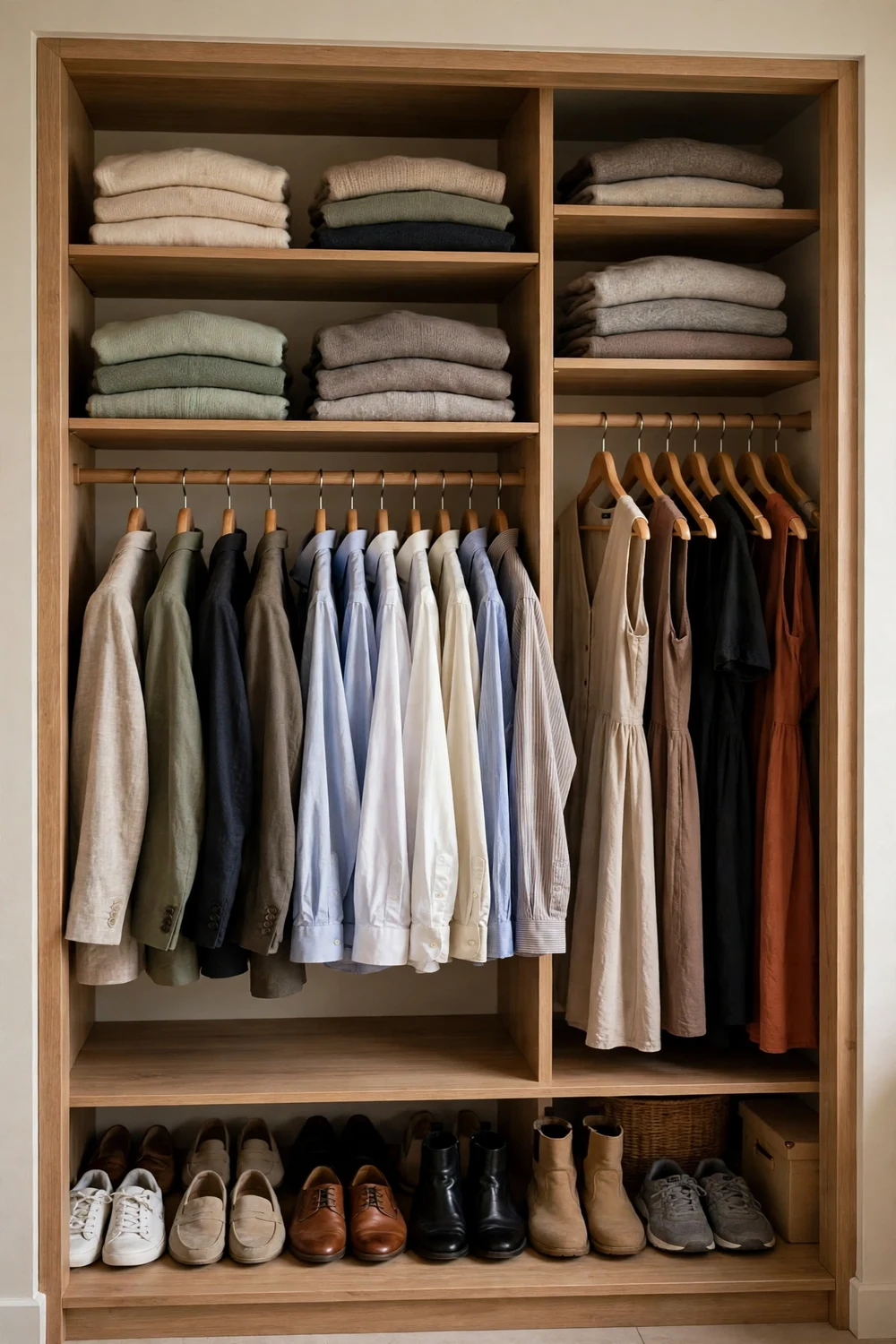
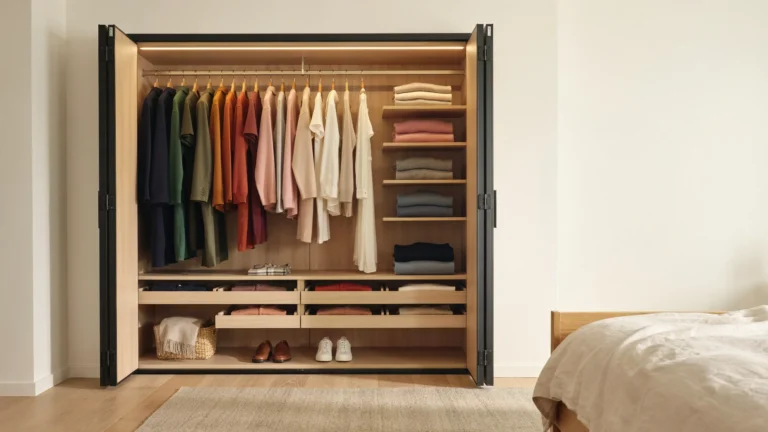
The closet is the project people put off longest, and it is the one that changes mornings the most. Give it ninety minutes to two hours and work in this order: hangers first, then folded shelves, then shoes, then the floor. Start by taking every hanger off the rod and putting it back only when the item on it earns its place. Ask three questions about each piece. Does it fit today? Have I worn it in the last year? Would I buy it again tomorrow? One no is enough to move it to the donate bag. Two nos means it should already be in the bag.
Group what stays by type, not by color. All shirts together, all trousers together, all dresses together. Within each group, hang the most worn pieces at the easiest reach, which is usually the middle of the rod at eye level. Heavy coats and occasion wear go to the ends. Use matching hangers if you have them, because mixed hangers tangle and waste space. Thin velvet hangers save rod space and stop slippery blouses sliding onto the floor.
Folded shelves need the same honesty. Stack knitwear in piles no higher than six inches, because taller piles topple every time you pull the bottom jumper out. Roll t-shirts if your shelves are shallow. Keep one shelf empty on purpose. It is the breathing room that keeps the rest tidy, and it gives the next thing you buy a home without starting a new pile on the floor.
Shoes are where most closets quietly fail. Line up one pair per person per purpose: everyday trainers, work shoes, smart shoes, and one pair of boots in season. Anything with a broken sole, a missing insole, or a pair that hurts after an hour goes. Store out of season shoes in a labeled box on the top shelf, not on the floor. If you want a second opinion on what deserves closet space at all, our list of things to keep out of your bedroom closet is a useful check before you put everything back.
What to avoid: do not try on everything. Trying on turns a ninety minute project into a three hour fashion show, and you will keep things because they looked good once, not because you wear them. Try on only the pieces you cannot decide about. Do not keep clothes for a smaller size or an event with no date. Your closet should serve the life you have now.
Projects 4 and 5: Clear the Kitchen Counters and the Bathroom Cabinet
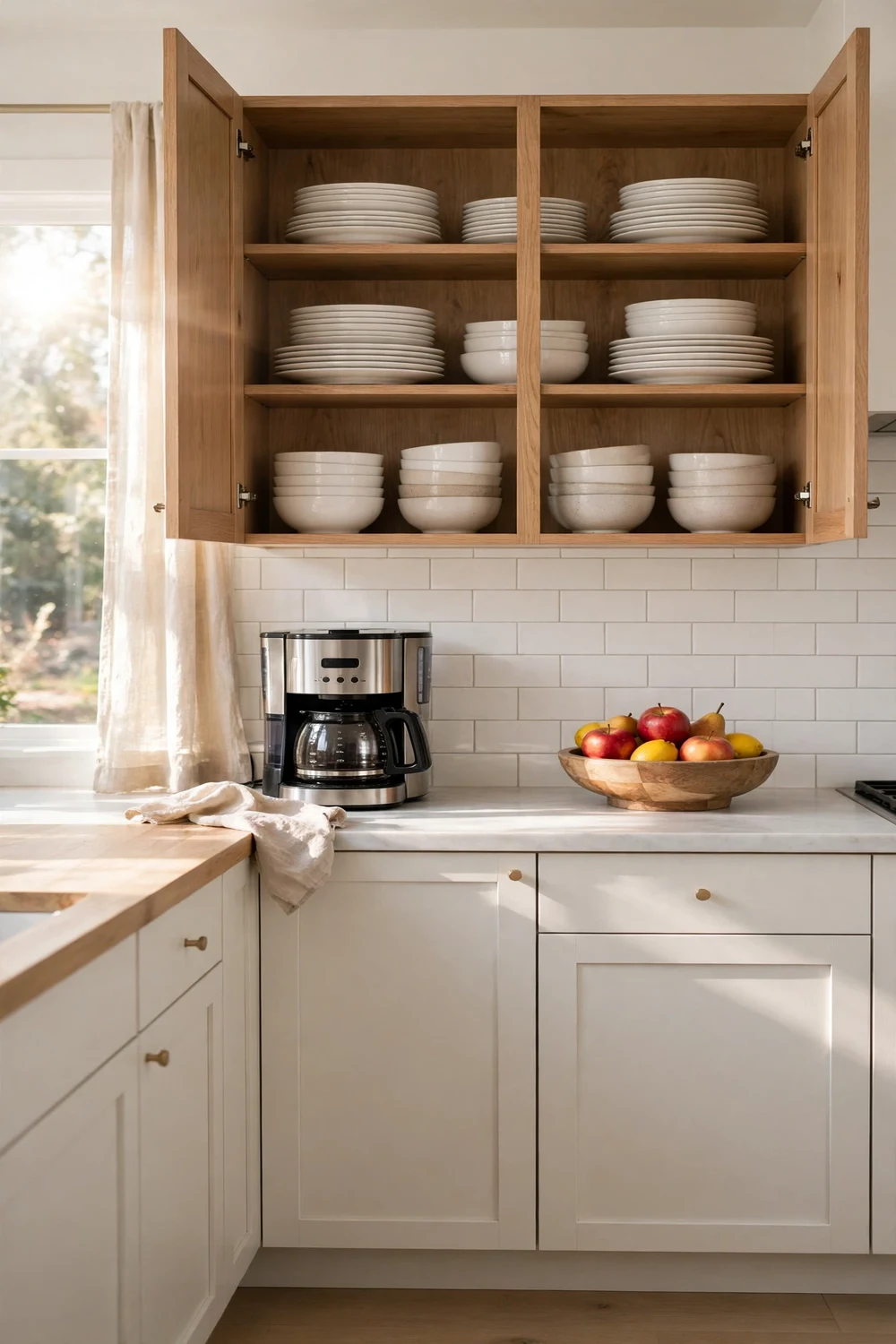
Kitchen counters are the most used surface in the house, and they collect clutter faster than any other spot. Give this project ninety minutes and start with the rule that only daily use items earn counter space. That usually means the coffee maker, the kettle, a knife block, and one cutting board. Everything else goes into a cabinet, a drawer, or the donate box. Small appliances you use once a month belong on a shelf you can reach without a step stool.
Work cabinet by cabinet, starting with the one nearest the stove. Pull everything out, wipe the shelf, and put back only what you use. Duplicate utensils are the usual surprise: most kitchens have four spatulas and a drawer of gadgets bought for one recipe. Keep the best one of each and let the rest go. Group by job: baking together, everyday plates and bowls together, and serving pieces together. Keep daily items between waist and shoulder height, and move the once a year pieces to the top shelf. Our full step by step kitchen organization guide covers the same zone method in more detail if you want to take the whole kitchen further on another day.
The bathroom cabinet is the second half of this section and it takes thirty minutes, so do it while the kitchen dries or right after. Empty the cabinet and the vanity drawer, wipe both, and check every date. Sunscreen from two summers ago, half used tubes of cream, and samples you will never open all go in the trash. Keep daily items together in one basket or tray: cleanser, moisturizer, toothbrush, and whatever you reach for before work. Everything else goes to the back or a higher shelf. If you share the bathroom with children, their things need their own small basket at their height, and our kids bathroom organization guide shows a zone system that works at seven in the morning.
What to avoid in both rooms: do not decant cleaning products into unmarked bottles, and do not store medicines above the stove or in a steamy bathroom. Keep medicines in a cool, dry spot with the labels facing out, and take expired ones to a pharmacy take back point.
When both spaces are done, wipe the counters and the sink, and leave one clear stretch of counter completely empty. That empty stretch is the test. If it stays empty for a week, the system is working. If it fills up again in two days, the things landing there need a real home, and that tells you what to fix next.
Projects 6 and 7: Tame the Laundry Room and the Linen Closet
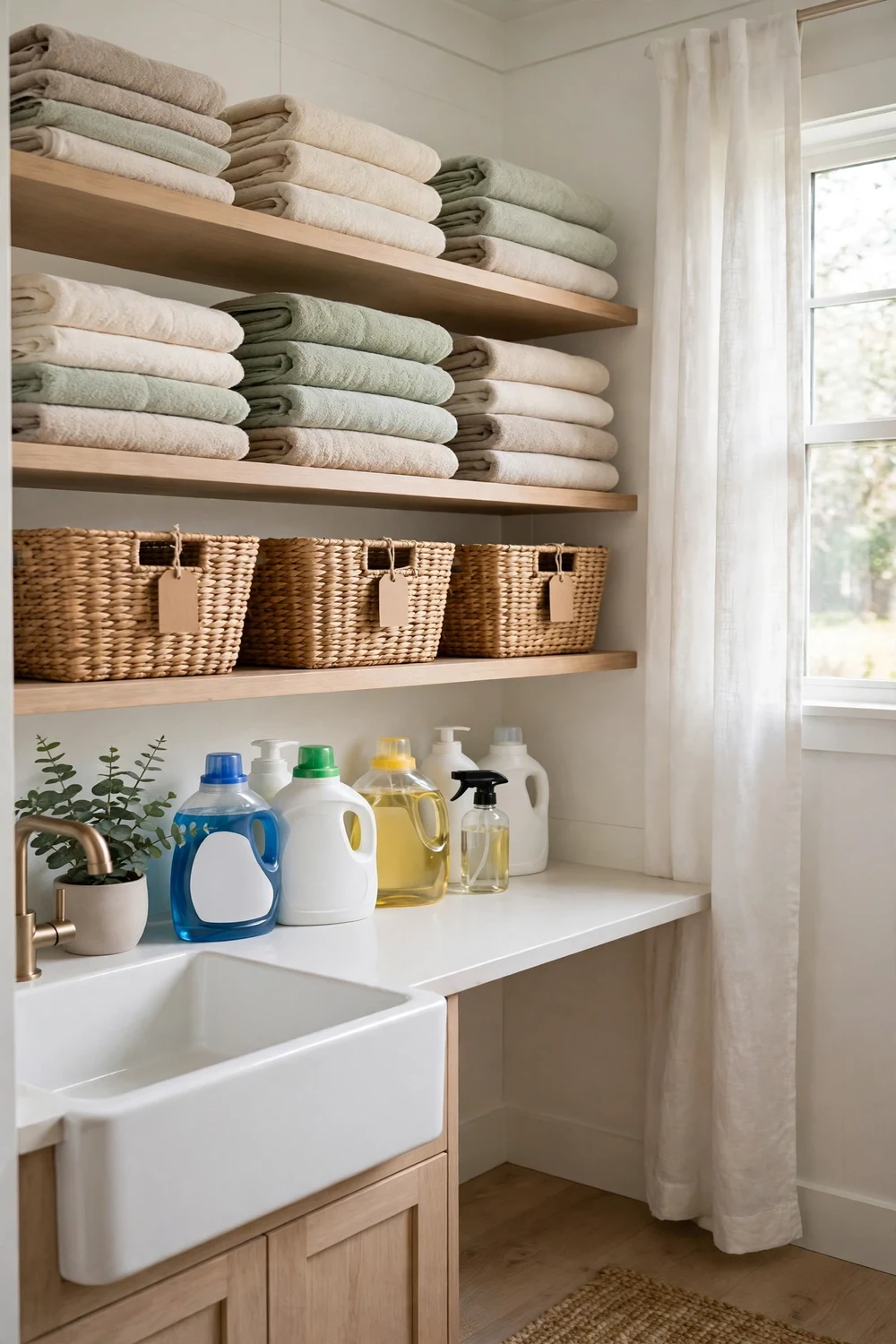
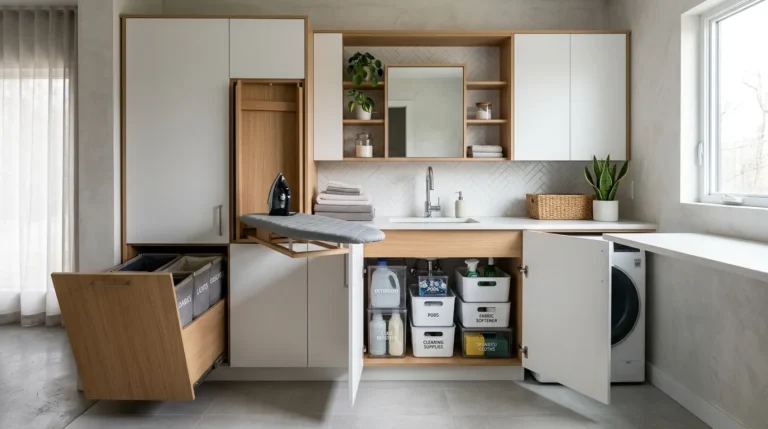
The laundry room is a small space with a big job, and it usually suffers from the same problem everywhere: too many half empty bottles and no clear place to fold. Give it sixty minutes. Start on top of the machines, because that is where clutter lands. Clear the surface, wipe it, and put back only what belongs to laundry day: detergent, stain remover, and a small basket for pocket finds. Everything else goes back to its proper room.
Sort the bottles next. Keep one detergent, one stain treatment, and one softener if you use it. The half used bottle of a brand you did not like can be finished up or passed on, but it does not need to live on the shelf for another year. Group what stays by job and keep daily bottles at arm height. A clear surface at waist height, even a board laid across the machines, turns laundry from a pile on the bed into a ten minute job.
Add one hook for things that need to air dry, and a small basket labeled lost socks. Giving it a home stops single socks from appearing on every surface in the house. Check the basket once a month and toss the pairs that never match. If your laundry room is truly tiny, our guide to small laundry room storage ideas has fourteen ways to fit more into a tight space without a remodel.
The linen closet takes thirty minutes and it is the most satisfying project on this list, because the result is immediate. Pull everything out, shelf by shelf, and sort into sets: a fitted sheet, a flat sheet, and two pillowcases kept together inside one of their own pillowcases. Keep two sets per bed, plus one spare for guests. Anything torn, stained, or missing its partner goes to the rag bag or the trash.
Fold towels the same size every time so the stacks stay straight, with bath towels at the bottom and hand towels on top. Store daily items at eye level and spare blankets up high. Leave a little space at the front of each shelf so you can pull a set out without the whole stack sliding forward.
Projects 8 and 9: Fix the Entryway and Build a Paper Command Center
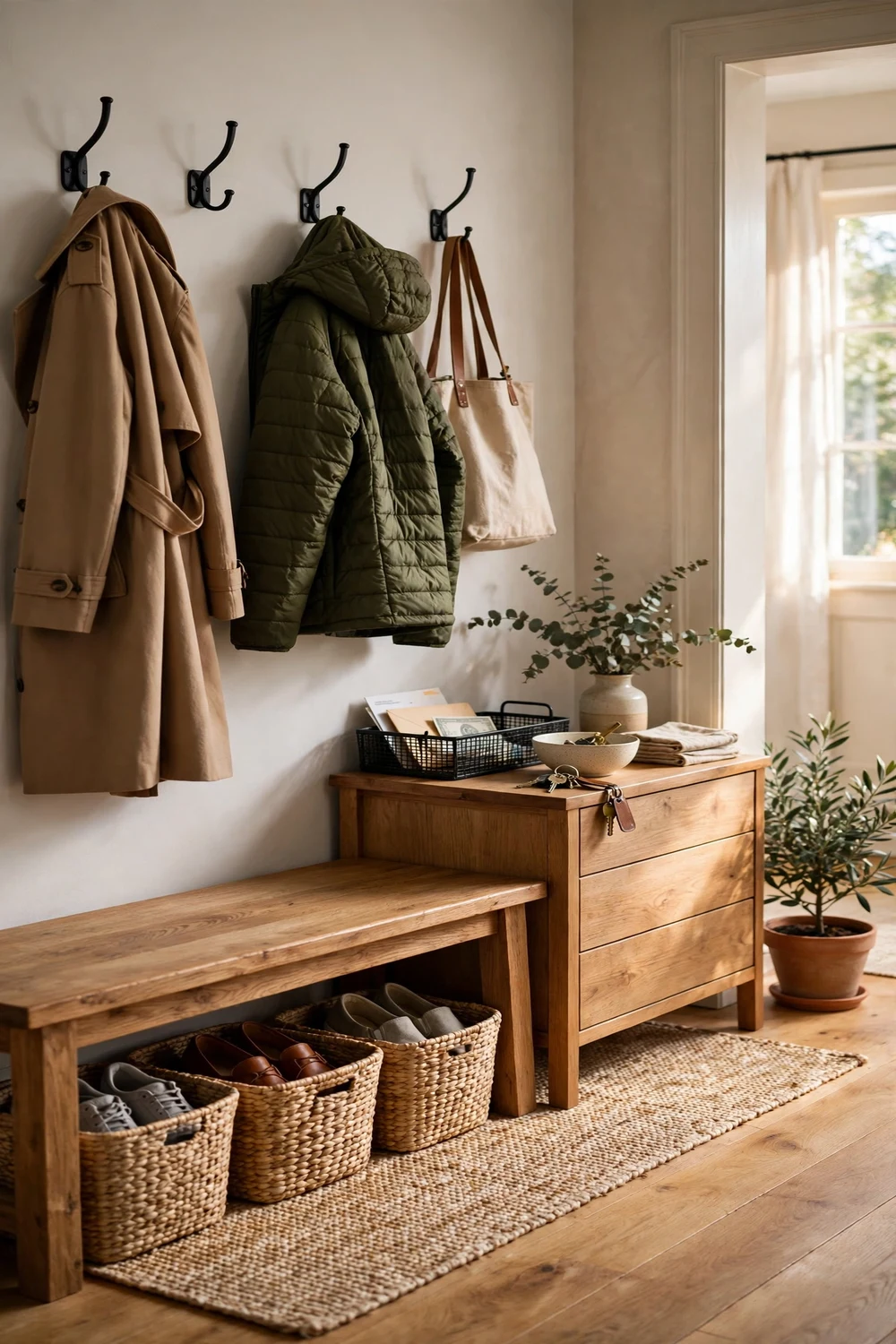
The entryway is the first thing you see when you come home and the last thing you see when you leave, so it deserves forty five minutes even though it is small. Start by taking everything out of the space: shoes, coats, bags, and mail. Sort fast. Coats you wear this week stay on hooks, and coats for another season go to the closet. Shoes follow the same rule, one everyday pair per person by the door, and the rest live in the bedroom closet.
Give every person one hook and one basket. That is the whole system. A hook for the coat and the bag, a basket underneath for the shoes. Children get lower hooks they can actually reach, because a hook at adult height means their coats end up on the floor every single day. Add a small bowl or tray for keys, sunglasses, and the things you grab on the way out. A wall mounted tray or a basket on a shelf does the same job if there is no console table.
Mail is the entryway problem nobody plans for. Put a tray or wall pocket where the mail lands and sort it the same day. Junk goes straight into recycling, bills go into the tray, and anything else gets dealt with on the spot. A pile that sits for a week becomes a project. A tray emptied daily is just a habit.
The command center takes the other half of this hour and it can live on the entryway wall, the side of the fridge, or inside a kitchen cabinet door. It needs four things: a calendar everyone can see, a place for school notes and invitations, a pen that stays there, and a small tray for papers that need action this week. Keep it to one small area.
Sort the existing paper pile in three passes: trash the obvious junk first, file the keepers in labeled folders second, and act on the small pile that is left third. Set a timer for twenty minutes per pass. The pile did not grow in a day, but an hour of honest sorting usually clears most of it.
Project 10: Clear the Desk and Declutter Your Digital Life
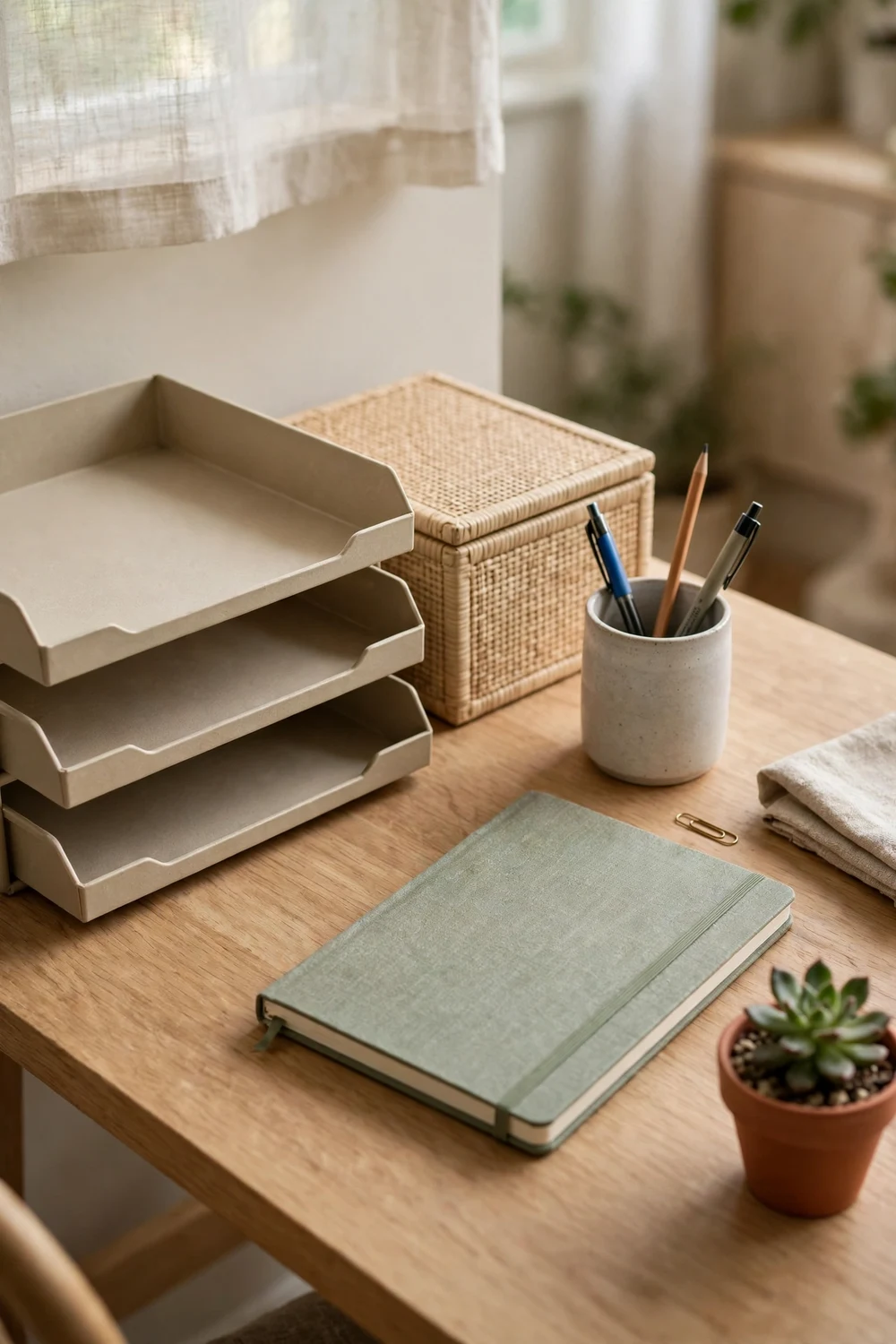
The last project is the digital declutter, paired with a desk reset, because the two feed each other. A messy desk and a phone full of ten thousand photos create the same feeling, even though one is physical and one is not. Give this forty five minutes and start with the desk, because a clear surface makes the screen work feel easier.
Clear the desk completely. Wipe it, then put back only what you use every day: the laptop, one pen cup, a notebook, and a small lamp or plant if you like one. Everything else goes in a drawer, on a shelf, or out of the room. Bundle the cables with a twist tie and route them behind the desk. Keep one charging cable out.
Then open your phone and delete in this order: duplicate photos and accidental screenshots first, then apps you have not opened in three months, then old downloads. Photos take the longest, so set a timer for fifteen minutes and stop when it rings. Deleting the duplicates and a handful of unused apps is a real result, and it makes the phone easier to use straight away.
Do the same on the computer in the last fifteen minutes. Clear the desktop to five files or fewer, empty the downloads folder into folders called keep, file, and delete, and unsubscribe from five email lists you never open. The goal is not inbox zero. The goal is an inbox where the unread messages are the ones that matter.
When the desk is clear and the phone is lighter, close the laptop and look at the room. This is the project nobody sees, and it still counts, because you stop losing time searching for things on the desk and on the screen.
Get It Out of the House Tonight, Then Keep It That Way
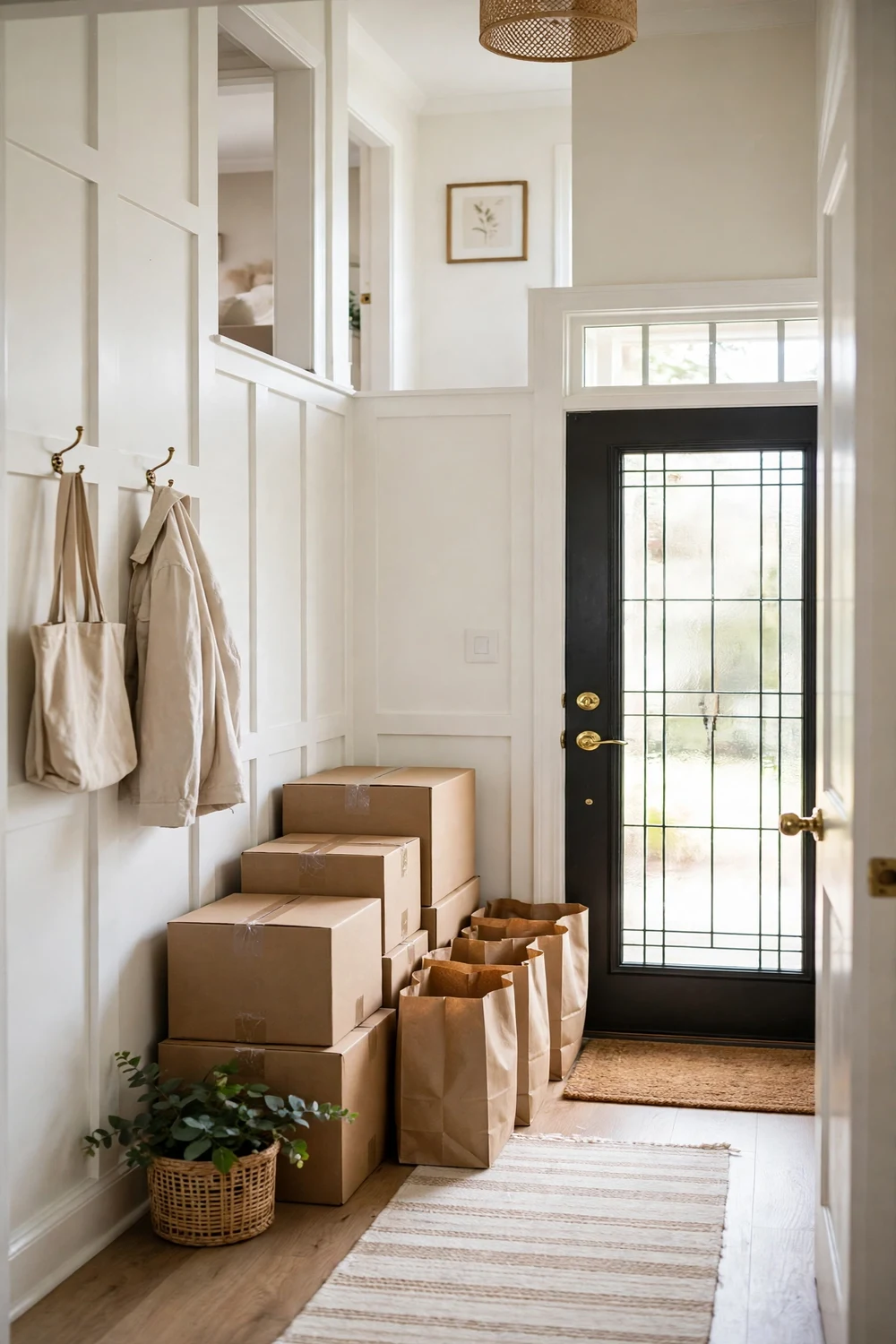
Organizing only sticks if the stuff actually leaves. Bag every donation as soon as each project ends, tape the box shut, and write the contents on the outside in one line. Load the bags into the car the same evening and drop them off the next morning. If the charity shop is closed, leave the bags in the boot of the car, not in the hallway, because bags in the hallway get opened, picked through, and slowly unpacked again. That is the fastest way to undo a whole day of work.
Sell only the things worth real money, and give yourself a two week deadline. List them tonight, and if something does not sell in two weeks, donate it. A box of maybe sell items sitting in the garage for six months is clutter with a price tag. Trash goes out the same night, even if it means an extra trip to the bin.
Keeping the house organized after today rests on three small habits, and none of them takes more than ten minutes. First, the one in one out rule: when something new comes in, something old goes out the same day. Second, a ten minute evening reset. Set a timer after dinner, put away what drifted out during the day, and wipe the kitchen counters. Ten minutes is short enough to do every night, and it stops small messes from becoming a weekend project.
Third, a monthly fifteen minute check on the spaces you fixed today. Open the pantry and toss anything expired, check the closet for things you stopped wearing, and empty the entryway tray. You are not reorganizing from scratch. You are just topping up a system that already works.
Questions People Ask About One Day Home Organization Projects
Can you really organize your home in one day?
You can organize the spaces that matter most in one day, but not every cupboard in the house. Pick the rooms you use daily and finish each project before starting the next. A full day usually covers the pantry, the closet, the kitchen counters, and the entryway, and that is enough to change how the house feels.
Where should I start organizing my home?
Start with the space that bothers you every day. For most people that is the pantry or the kitchen counters, because they use them several times a day. A quick win early builds momentum for the harder projects. Avoid starting with the garage or the attic, which eat a whole day and leave the rooms you live in untouched.
How long does each organization project take?
Small spaces like the junk drawer and the linen closet take twenty to thirty minutes. Medium spaces like the pantry, the laundry room, and the entryway take forty five to ninety minutes. The closet is the longest at ninety minutes to two hours. The table at the top of this post lists every project with its time.
What supplies do I need to organize my home in one day?
Three bags labeled keep somewhere else, donate, and trash, plus a laundry basket for items that belong in other rooms, a timer, a pen, and masking tape for labels. Cleaning cloths help, because you should wipe every shelf before you put things back. Do not buy storage bins until you have sorted, measured, and know exactly what you need.
How do I keep my home organized after a big declutter?
Use the one in one out rule, a ten minute evening reset, and a fifteen minute monthly check. The evening reset matters most: ten minutes after dinner, put away what drifted out and clear the kitchen counters. Small daily habits cost far less effort than another full day of organizing.
Should I buy storage bins before I start organizing?
No. Sort first, then measure the shelf, then buy only what the space needs. Buying bins before sorting is the most common mistake, and it usually ends with bins that do not fit and clutter that stays. Most homes already have spare baskets and jars that work well for a first pass.
Pick One Project and Start Before Lunch
You do not need a perfect plan, a full weekend, or a shopping trip to make your home feel calmer. You need one project, one timer, and the next hour. Start with the pantry if you want the biggest daily payoff, or start with the junk drawer if you want a fast win that proves the day can work. Either way, finish what you start before you move on, tape the donation bags shut, and load them into the car tonight.
Tomorrow morning will feel different. The coffee will be easier to make, the closet will give you an outfit without a hunt, and the hallway will be clear. That is the real reward of these one day home organization projects. Not a perfect house, but a house that works with you instead of against you.