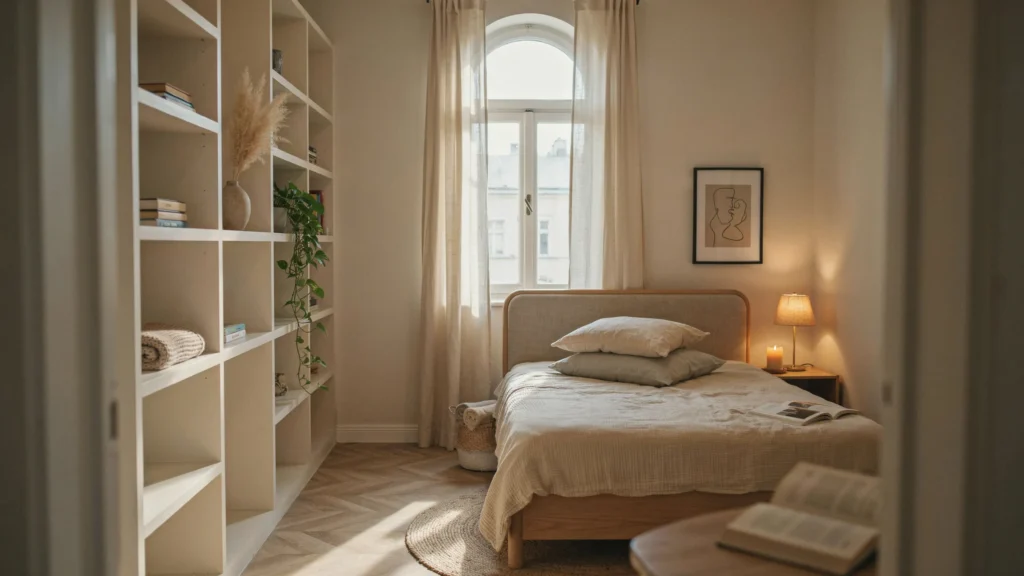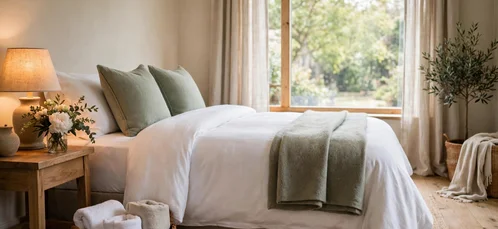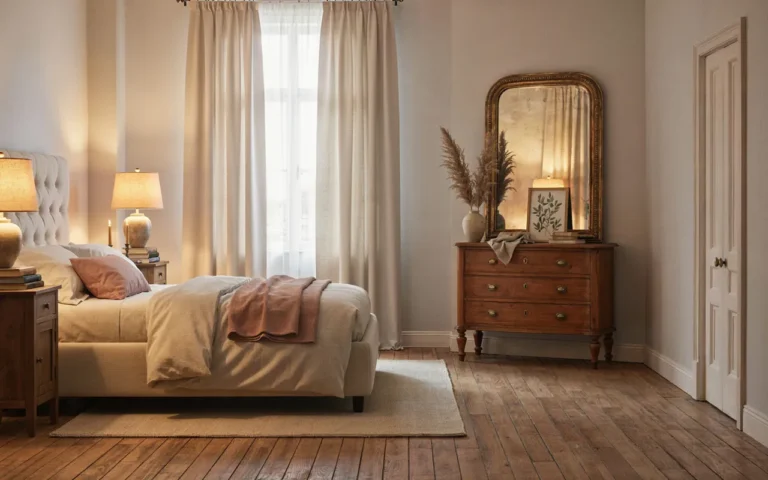
Yes, a small bedroom can feel spacious and calm, but only if you sort the layout before you buy anything else. If I had to pick one change first, it would be the bed position, because nothing else matters until the bed sits right. Choose the smallest bed that still lets you sleep well, leave a clear path around it, and give everything a proper home, on the wall, under the bed or behind a door.
Colour, light and simple curtains do the rest, and together with a clear layout they are the small bedroom design ideas that cost the least and change the most. Pale walls, one large mirror placed with care, and window coverings that sit high and wide will open the room up far more than new furniture ever will.
Small bedrooms are frustrating in very specific ways. You bump into furniture. The wardrobe door hits a chair. There is nowhere to put a book at night, so it ends up on the floor. None of that means the room is hopeless. It means the planning came after the shopping, not before it.
This guide answers the questions people actually ask about small bedroom design ideas, in the order you need them: layout, nightstands, bed choices, windows, storage, colour and light, decluttering, personal touches and simple upgrades. Take what fits your room. A small room needs the handful of ideas that solve your particular squeeze, not every idea here.
Small Bedroom Design Ideas Start With the Layout, Not the Shopping
Measure first, wall to wall, and note where the door swings, where the windows sit and where the plug sockets are. A bed that looks fine online can block a socket or trap a door.
Sketch three layouts: bed centred on the longest wall, bed pushed into a corner, and bed opposite the door. Then walk through your morning routine in each one. The best layout is the one that keeps the middle of the room open, even if it breaks the old rule about symmetry.
As a guide, aim for at least 60 cm of clear walking space beside the bed on the side you get in and out of, and about the same at the foot if you pass there to reach a wardrobe.
In a very tight room, 45 to 50 cm on one side can work, but anything narrower feels like a corridor. A full or double bed with room to move around it will feel bigger than a queen bed you have to climb over.
| Room size | Bed placement that usually works | What to skip |
|---|---|---|
| About 3 m by 3 m or smaller | Bed in a corner or against one wall, headboard on the longest wall | Two wide nightstands, a bulky dresser and a chair that blocks the door swing |
| About 3 m by 3.6 m | Bed centred on the main wall, with slim nightstands or one nightstand and a small desk | A footboard that eats walking space, and a second wardrobe when storage already exists |
| A long, narrow room | Bed across the short wall at one end, storage along the long wall, desk near the window | Furniture on both long walls, which turns the middle into a narrow passage |
| A room with a slope or alcove | Bed tucked under the low side or into the alcove, tall storage on the full height wall | Tall wardrobes under the slope, where the top half cannot be used |
If you want more layout options for very tight rooms, these smart furniture layouts for tiny bedrooms show how a few inches here and there change how a room feels to walk through. Try the layout on paper first, then move the bed once.
Should you use just one nightstand instead of two?
Two matching nightstands look balanced, but balance is not worth a bruised hip. If your room only fits one comfortably, use one, on the side you reach most easily, usually nearest the door or the clear walkway. One good nightstand holding a lamp, a book, water and a phone charger does the job. The second side can stay empty, or hold something far slimmer, such as a wall shelf or a narrow desk.
A slim desk works well here, as a workspace by day and a lamp surface at night. Keep it clear, though, or it quickly looks messy again.
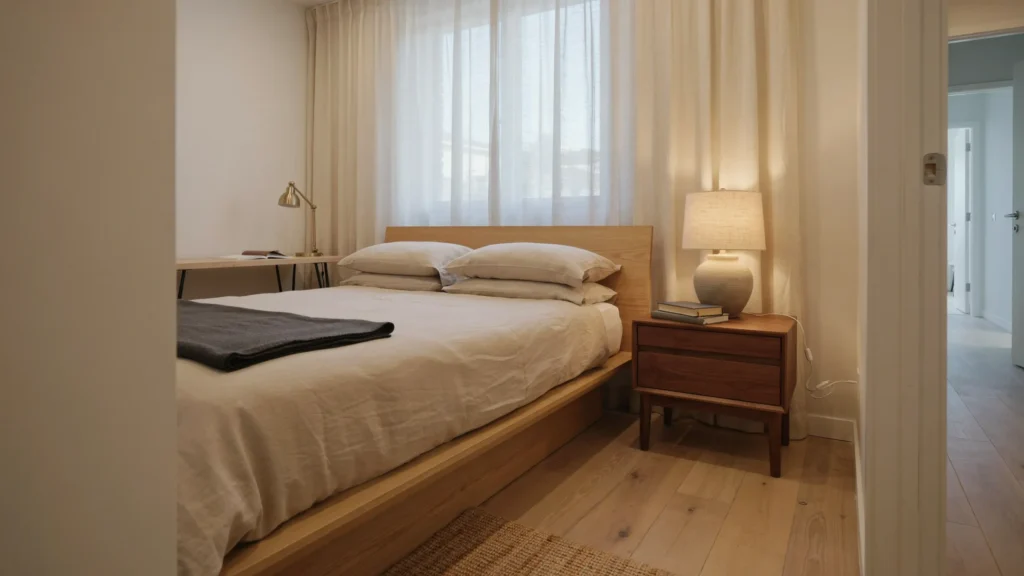
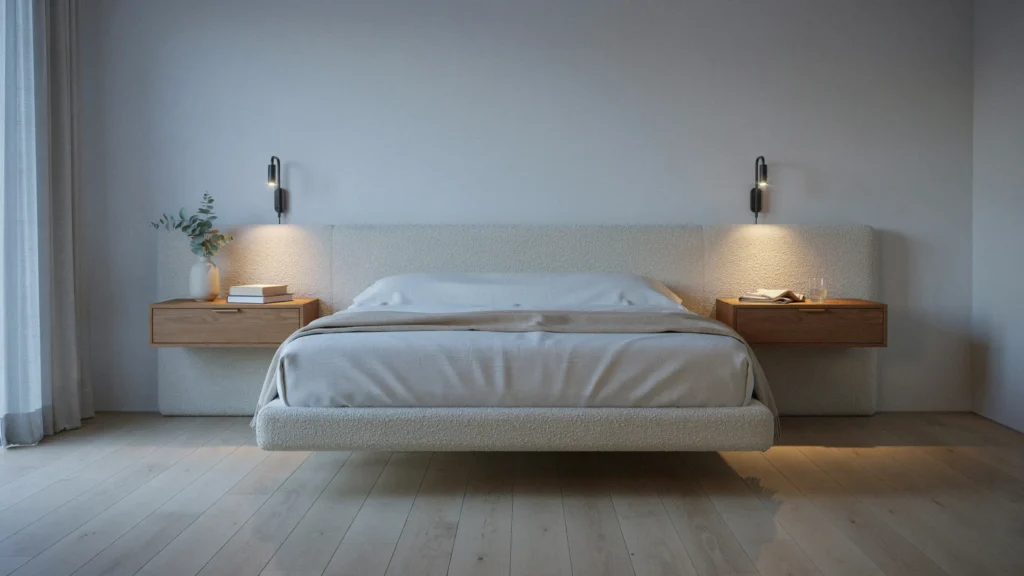
Can floating nightstands make a small bedroom feel bigger?
They can, for a simple reason. When you can see floor underneath furniture, your eye reads the room as larger. A floating nightstand fixed to the wall gives you a surface and a drawer without legs touching the ground. Pair it with a wall light instead of a table lamp, and you free the whole surface.
Fix the shelf where you can reach it from bed, usually about level with the mattress top plus 10 to 15 cm, and keep the depth shallow, around 25 to 30 cm. Any deeper and it juts into your walking space.
Is a loft bed a good option for a small bedroom?
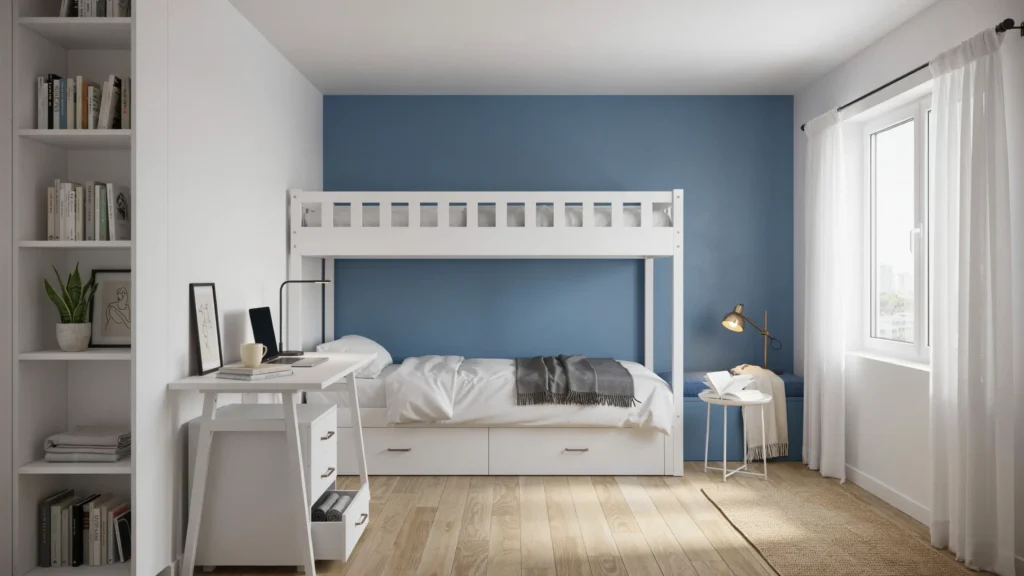
A loft bed can be a brilliant answer, but only when the ceiling allows it. You need enough height above the mattress to sit up without ducking, typically at least 75 to 90 cm clear from mattress top to ceiling, plus room to get in and out safely.
In a room with a ceiling of about 2.4 m, the space underneath suits a desk or drawers, but the sleeping area can feel close to the ceiling. Measure twice before you commit.
Loft beds suit teenagers, students and guest rooms best, where the space underneath works hard by day. They suit restless sleepers less well, since the ladder trip in the dark gets old fast. If you go for one, fix it firmly to the wall, add a guard rail, and keep a small light within reach.
How do window treatments affect how big a small bedroom feels?
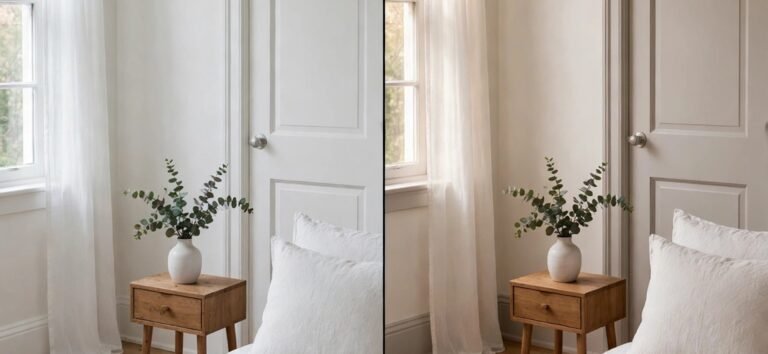
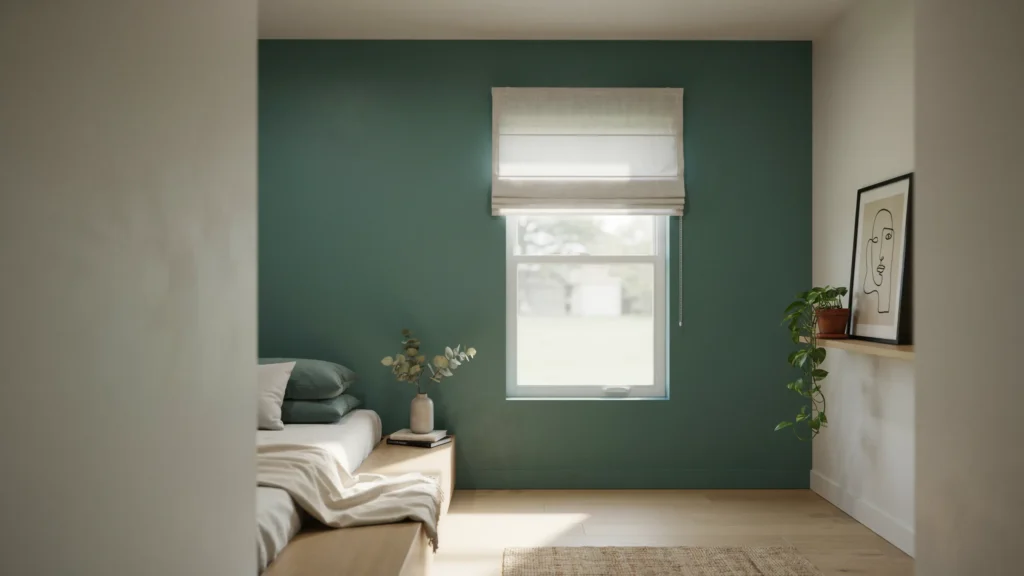
Windows are the best asset a small bedroom has, and the wrong curtains can hide them. Heavy drapes pulled back eat wall space and darken the window edges, making the room feel narrower. Hang the rod 10 to 15 cm above the frame, and extend it 15 to 20 cm beyond each side, so open curtains sit against the wall, not over the glass.
Choose a light fabric that filters daylight, unless you need blackout, in which case a roller blind behind a light curtain gives you both. Roman shades mounted above the casing also work well, drawing the eye upward. Keep the sill clear, so light falls into the room. This complete guide to hanging curtains like a pro walks through rod height, length and pleat choices in detail, and it is worth reading before you drill any holes.
Should you simplify your bedding?
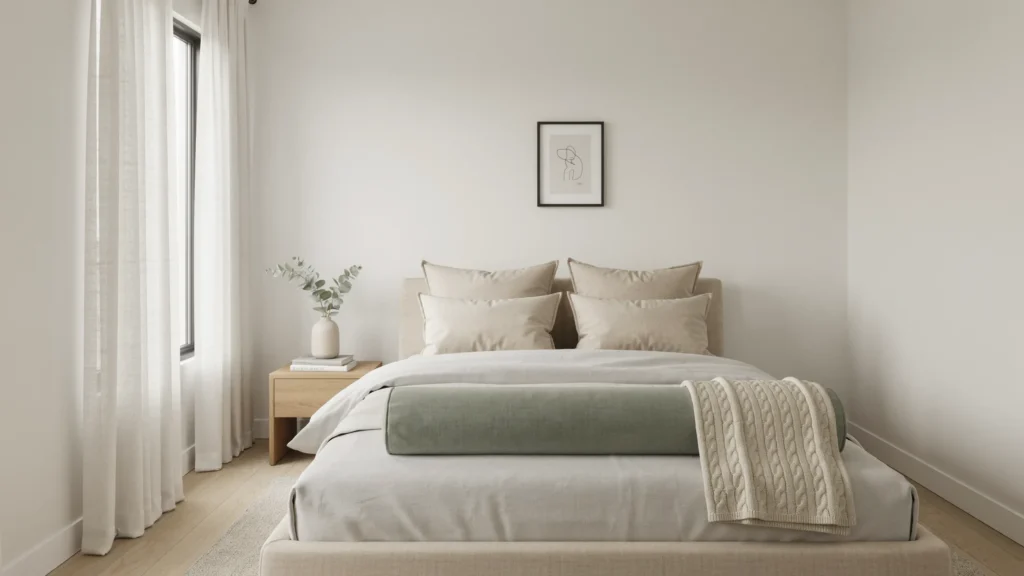
Yes, and this is one of the easiest wins in a small room. A bed piled with cushions looks inviting in a photo, but in a small bedroom it eats visual space and creates a nightly chore. Every cushion has to go somewhere when you get into bed, and that somewhere is usually the floor or a chair that then cannot be used.
Keep it simple. A good duvet, the pillows you actually sleep on, and one extra layer for cold nights is plenty. A single bolster, or a folded throw across the foot of the bed, adds warmth without taking over. Choose bedding close to your wall colour, so the bed reads as part of the room, not a large block in the middle of it.
How do you choose the right bed for a small room?
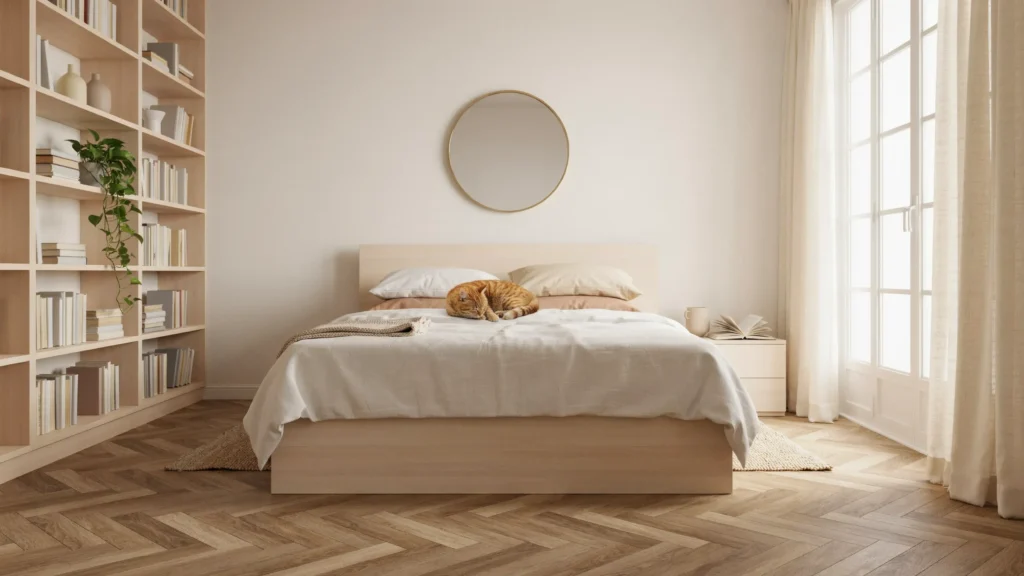
The bed takes up more floor than anything else, so its size and style set the tone for the whole room. A low platform bed with clean lines keeps the visual weight down, while a tall sleigh bed or thick footboard adds bulk where you can least afford it.
For most small bedrooms, a full or double bed is the sweet spot, leaving room for a walkway and storage. A queen works only when clear space remains on at least one side and at the foot. Measure the frame, not just the mattress, adding 10 to 15 cm for bedding that hangs over the sides.
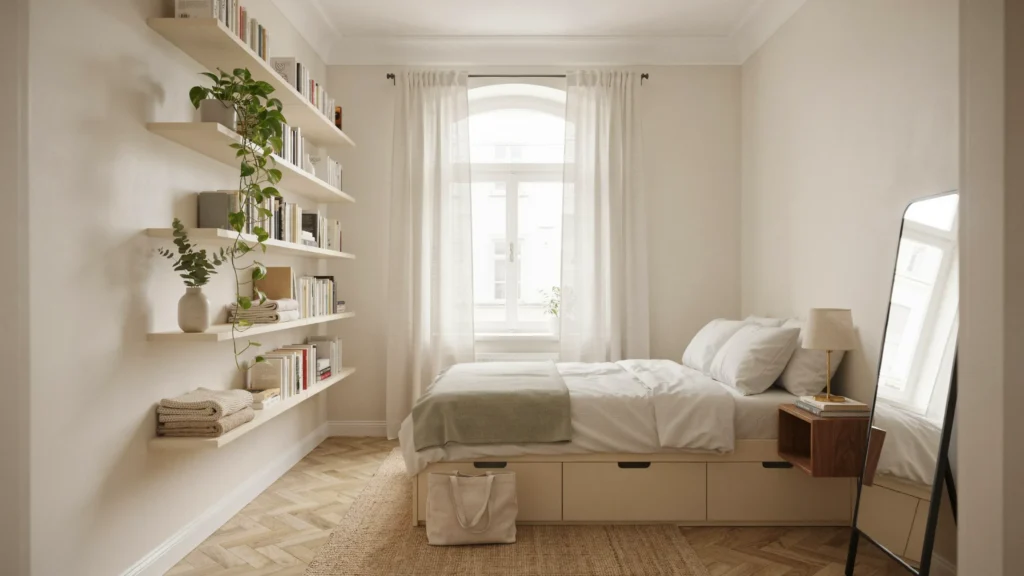
Multi-purpose furniture earns its place when one piece quietly does two jobs. A bed with drawers underneath can replace a small dresser, and a storage ottoman at the foot holds extra blankets and gives you somewhere to sit.
Built in wardrobes suit awkward rooms, because a unit fitted into an alcove or under a slope uses space a standard wardrobe would waste. Built ins cost more, so they make most sense if you plan to stay put. For a rented room, tall freestanding shelving and a slim wardrobe are the safer bet.
Where should storage go when floor space is short?
When the floor is full, look up and behind doors. Tall, narrow shelving reaching close to the ceiling draws the eye upward and stores a surprising amount. Keep everyday items at arm height, less used things up high, and heavy items low. Under the bed, shallow rolling bins fit off season clothes, spare bedding and bags. Label them, or you will forget what is in each one.
Do not forget the space above a door frame. A single shelf there holds books or spare blankets in a neat box. Keep it tidy, and leave breathing room on open shelves. Closed boxes on open shelves give you the best of both: storage, and a rest for the eye. For more ideas, these small bedroom design ideas include storage setups that work in rented rooms as well as owned homes.
How do colour and light make a small bedroom look bigger?
Light colours help because pale walls reflect more light, and soft edges between wall and ceiling make the height harder to judge, so the room feels taller. Paint walls and ceiling in the same pale shade, and the line where they meet softens. Warm off white, pale grey, soft sage and light beige all work, as long as the main surfaces stay light.
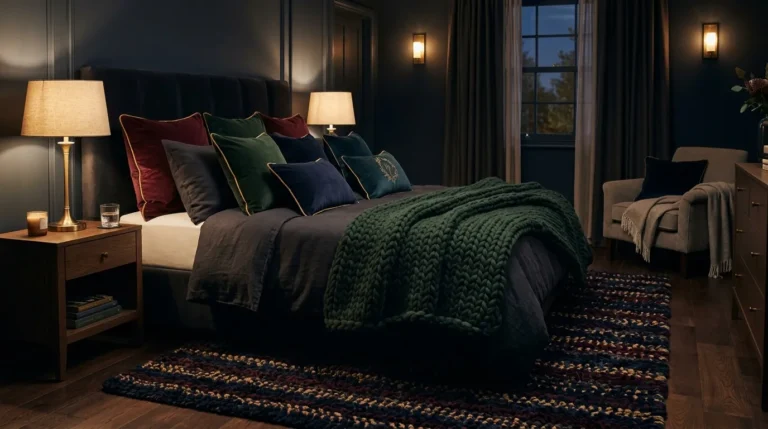
If you love deep colour, use it on one wall, ideally behind the bed, and keep the others pale. A dark accent wall with a good sized window can feel cosy, not closed in. Test a large sample in different light before committing.
For lighting, use three smaller sources instead of one bright ceiling light, which leaves corners dark: a dimmable ceiling light, a bedside reading light, and a small light in the darkest corner. Wall sconces beside the bed free the nightstand completely.
How do mirrors create the illusion of more space?
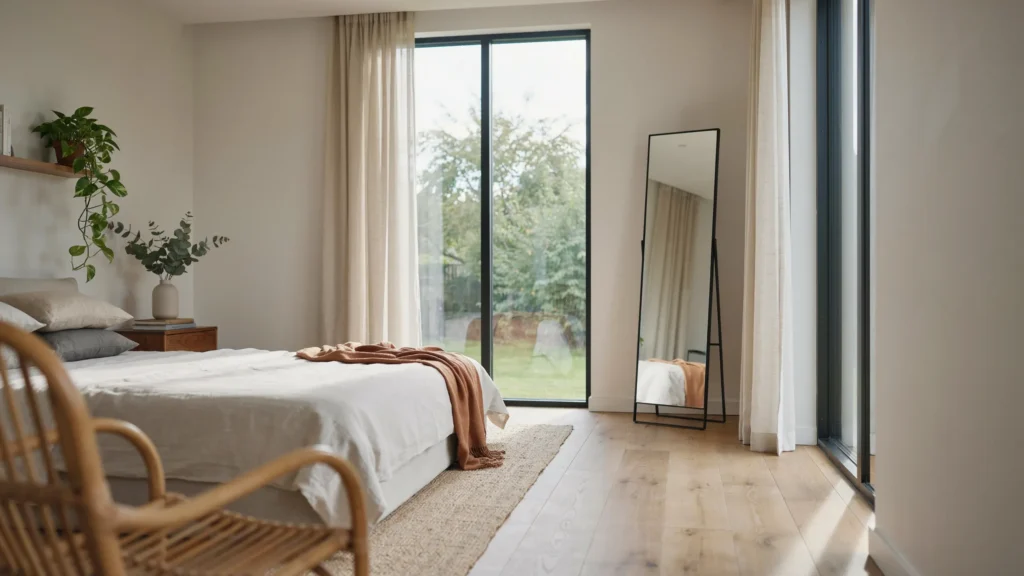
A mirror works best when it reflects something pleasant. Placed opposite or beside a window, it bounces daylight across the room and doubles the view. Facing a blank wall or laundry, it just doubles what you least want to see, so placement matters more than size.
Mirrored wardrobe doors do the same job without taking floor space. For guest rooms, these elegant guest bedroom ideas for adults show how mirrors, light colours and simple bedding work together without making the room feel bare.
What decluttering habits keep a small bedroom feeling larger?
No layout trick survives clutter. A small room shows mess faster, because there is nowhere for it to hide. Start with one honest clear out, drawer by drawer. Ask of each item: do I use it, do I love it, and does it have a home here? If not, it does not need to live in your bedroom.
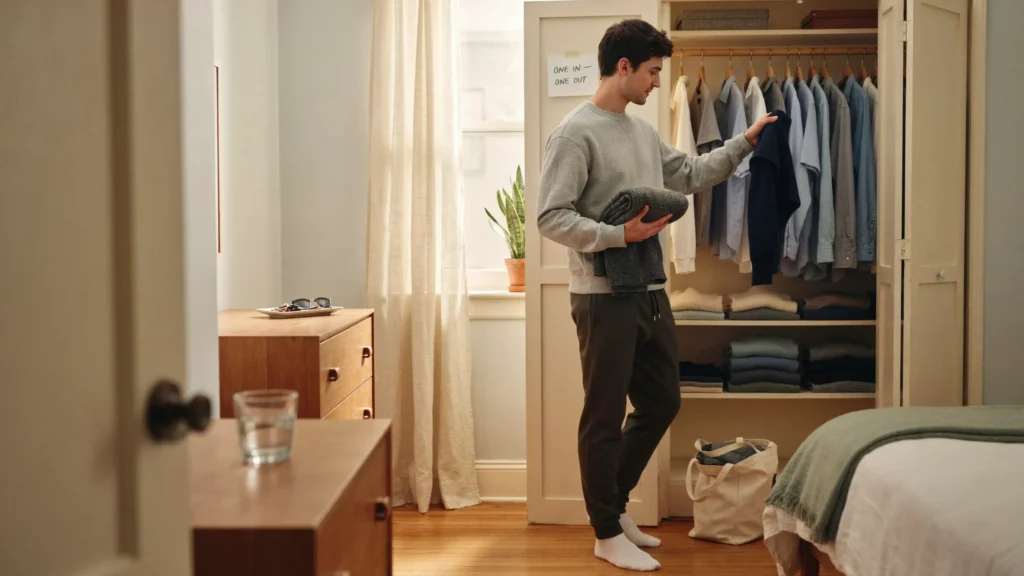
After the clear out, the one in, one out rule keeps the room steady. When something new comes in, something old leaves. Keep a small donation bag in the wardrobe, and drop things in as you notice them. Five minutes a week beats a whole weekend of sorting twice a year.
Keep dresser tops mostly clear, too: a lamp, a book you are reading, and one thing you love. If your closet is the problem area, this list of items you are better off keeping out of your bedroom closet is a useful check before you reorganise it.
Why is the flow of the room so important?
Flow is simply walking through the room without hitting your shins. Leave a clear path from door to bed, and from bed to closet. If furniture blocks that path, move it or remove it. Pushing a bed against the wall opens the centre, even though you then get in from one side only. That trade off is often worth it.
How do you add personal touches without causing clutter?
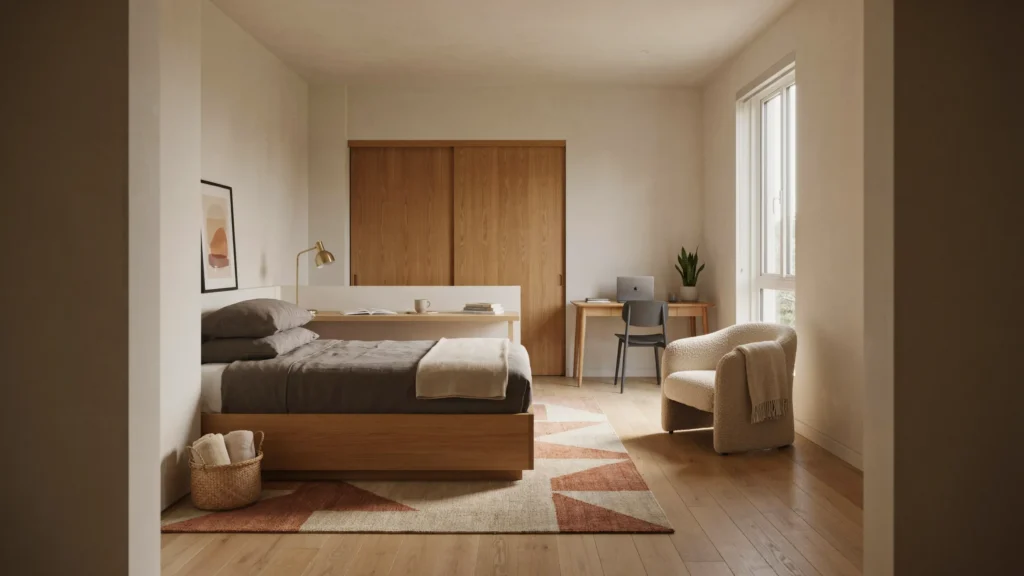
A small bedroom should still feel like yours. Choose fewer, larger pieces that mean something, rather than lots of small things competing for attention. One framed photo, a ceramic vase, or a textile from a trip says more than a shelf crowded with ornaments. Pick pieces that also do a job: a box for jewellery, a basket for throws, a tray for keys.
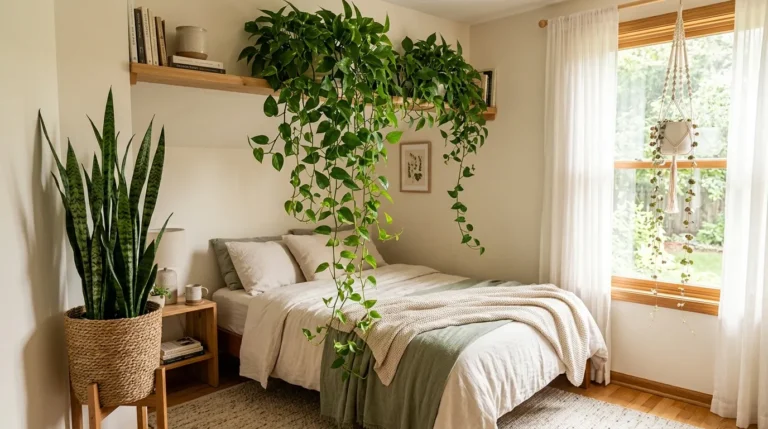
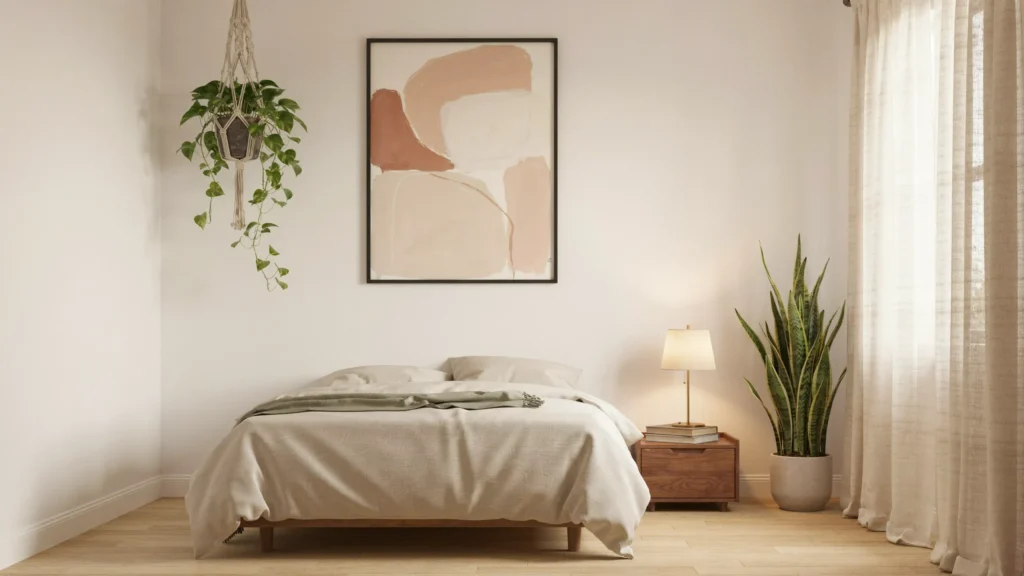
Art works the same way. One larger piece above the bed anchors the room. A wall of many tiny frames often reads as busy. If you love a gallery wall, keep frames one colour and gaps even. Plants help, too, if chosen well: a tall snake plant in a dead corner, or a trailing pothos on a high shelf. Keep it to one or two plants, in matching pots.
What simple DIY upgrades make the biggest difference?
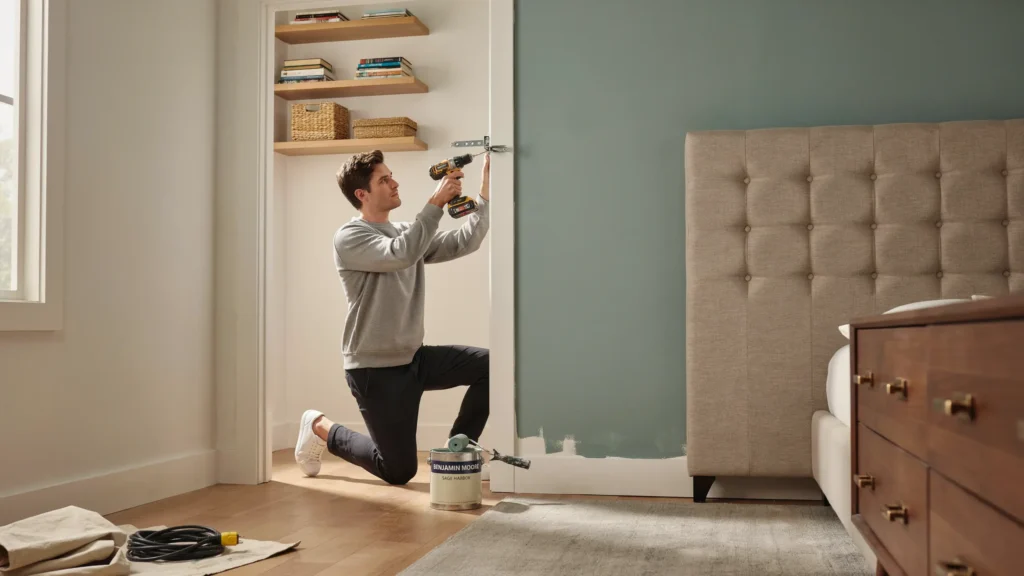
You do not need a large budget to change how a small bedroom feels. Start with details you touch daily. New drawer pulls in a finish matching your lights make a dresser feel new. Painting the wall behind the bed in a soft, deeper tone creates a focal point for the cost of one tin of paint.
Floating shelves are the next project worth doing: above the bed for books and one or two calm objects, or above a door frame for rarely used items. Measure carefully, use fixings suited to your wall, and check with a spirit level before drilling. A wall fixed upholstered headboard also saves the inches a thick freestanding one would take.
What can you learn from small rooms that work?
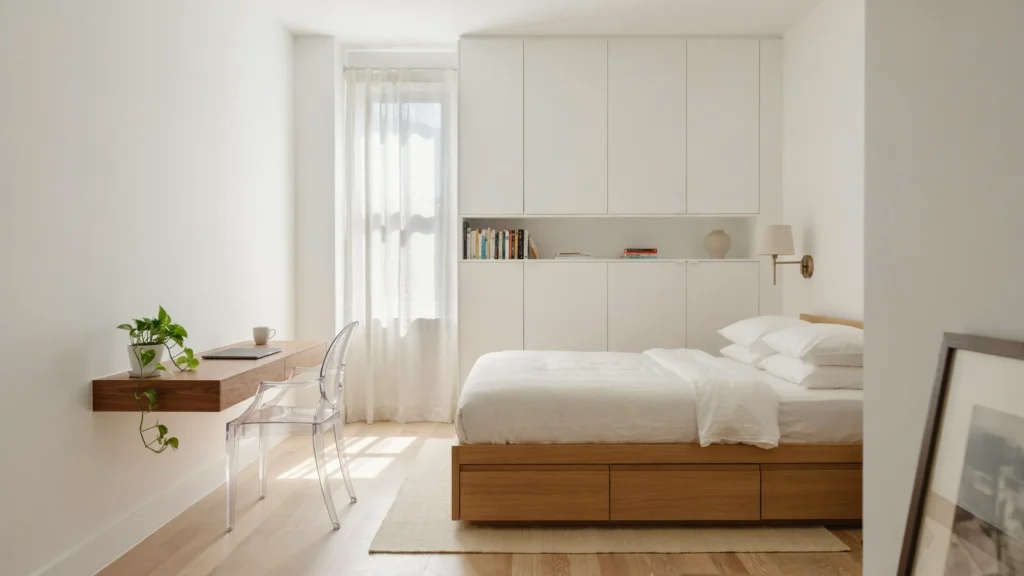
When you look at photos of small bedrooms you admire, look past the styling. Ask what the designer did structurally: bed in a corner to open the middle, wall lights instead of table lamps, one wall left almost bare. Those choices travel from room to room. Copy the thinking, not the shopping list.
Frequently asked questions
What is the best bed size for a small bedroom?
A full or double bed suits most small bedrooms, because it leaves room for a walkway and basic storage. Choose a queen only if you can still leave clear walking space on at least one side and at the foot, and if wardrobe doors and drawers still open fully.
Can I use dark paint colours in a small bedroom?
Yes, if you use them with care. A deep colour on the wall behind the bed, with pale walls elsewhere and a good sized window, can feel cosy and intentional. Test a large sample first, and check it in morning, evening and lamplight before you paint the whole room.
How do I fit a desk into a small bedroom?
Replace one nightstand with a compact writing desk, about 80 to 100 cm wide and 45 to 50 cm deep, and use it as a bedside surface at night. A wall mounted drop leaf desk is another option, because it folds flat when you finish work. Keep only a lamp, a laptop and one notebook on it.
How much walking space should I leave around the bed?
Aim for about 60 cm on the side you get in and out of, and a similar gap at the foot if you pass there to reach storage. In a very tight room, 45 to 50 cm on one side can work, but narrower gaps make daily routines awkward.
What is the easiest way to make a small bedroom look bigger without renovating?
Start with three changes: paint walls and ceiling in one pale shade, hang curtains high and wide so the full window shows, and add one large mirror that reflects the window. Then clear flat surfaces and move storage onto walls and under the bed.
Should I choose a loft bed for a small bedroom?
Only if your ceiling allows you to sit up comfortably on the mattress, with at least 75 to 90 cm of clear space above it, and you are comfortable using a ladder daily. For anyone who gets up often at night, a low platform bed with storage drawers is usually the calmer choice.
A practical way to finish your room
Work in this order, and stop when the room feels right. First, settle the layout, with a clear path and a fitting bed size. Next, fix storage, so everything has a home. Then sort colour, light and curtains. Finally, add a few personal touches and one small DIY upgrade.
A small bedroom does not need to do everything. It needs to help you sleep well, get dressed without a struggle, and feel calm when you walk in at the end of the day. Get those three things right, and the room will feel spacious in the way that matters, not just in photos, but every morning when you use it.