The one toy rule that keeps our family home sane is a simple toy rotation system: only a small set of toys stays out at any time, the rest wait in labelled storage, and a few toys swap places every fortnight. It is one clear limit, not a big decluttering project, and it works because a child can actually see what they own.
Most families do not need fewer toys overall. They need fewer toys in view. When eight to twelve toys sit on a low shelf instead of fifty scattered across the floor, children play longer with each one, tidy up takes minutes instead of half an hour, and the living room feels like a room again. This post shows you how to set the rule up in one weekend, what number suits each age, and how to keep it going without nagging.
What the One Toy Rule Actually Is
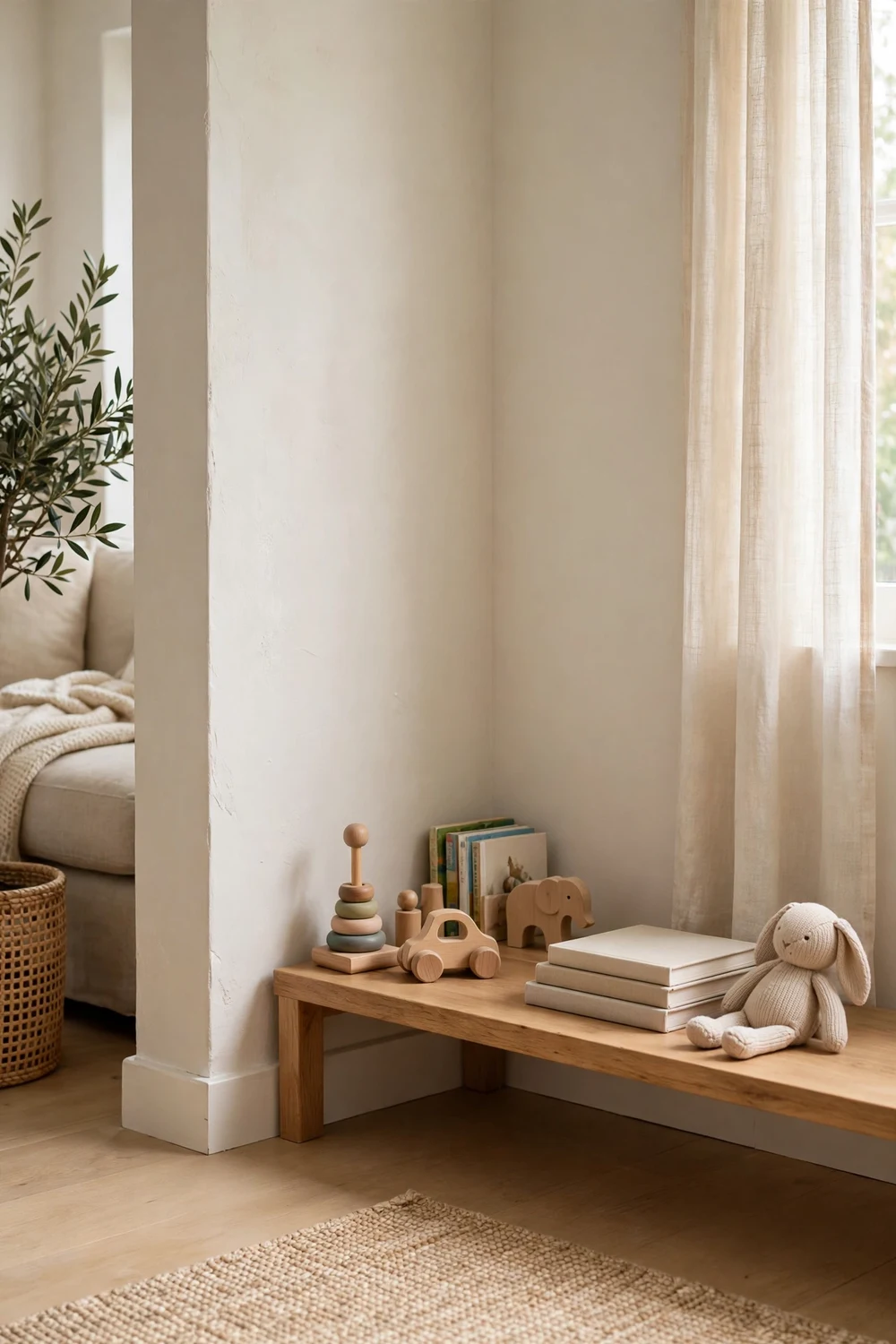
Here is the rule in one sentence. Only the toys that fit on the shelf stay out, and when a new toy arrives, one toy leaves. That is the whole system, and its strength is that a child can understand it without a lecture. The shelf is the limit. If a toy does not fit, it goes into rotation storage or out of the house. No counting arguments, no daily negotiations, just a shelf that everyone can see.
A toy rotation system turns that accident into a habit. You choose a small set of toys to keep out, you store the rest in closed boxes out of sight, and every week or two you swap a few. The toys in storage feel brand new when they come back. Nothing is thrown away in a panic, nothing is bought to fix the mess, and the child gets a fresh set of choices on a regular rhythm. It is a household system, not a shopping list, and it costs nothing to start.
Before we go further, it helps to know that the room itself can support the rule. A low shelf at your child’s height, a couple of baskets that slide underneath, and a clear floor for building all make the system easier than any storage product ever will. If you are planning the room around the rule, these toddler room ideas for boys and girls show how a small room can hold a play zone without letting it swallow the whole space.
Why Fewer Toys Mean Deeper Play
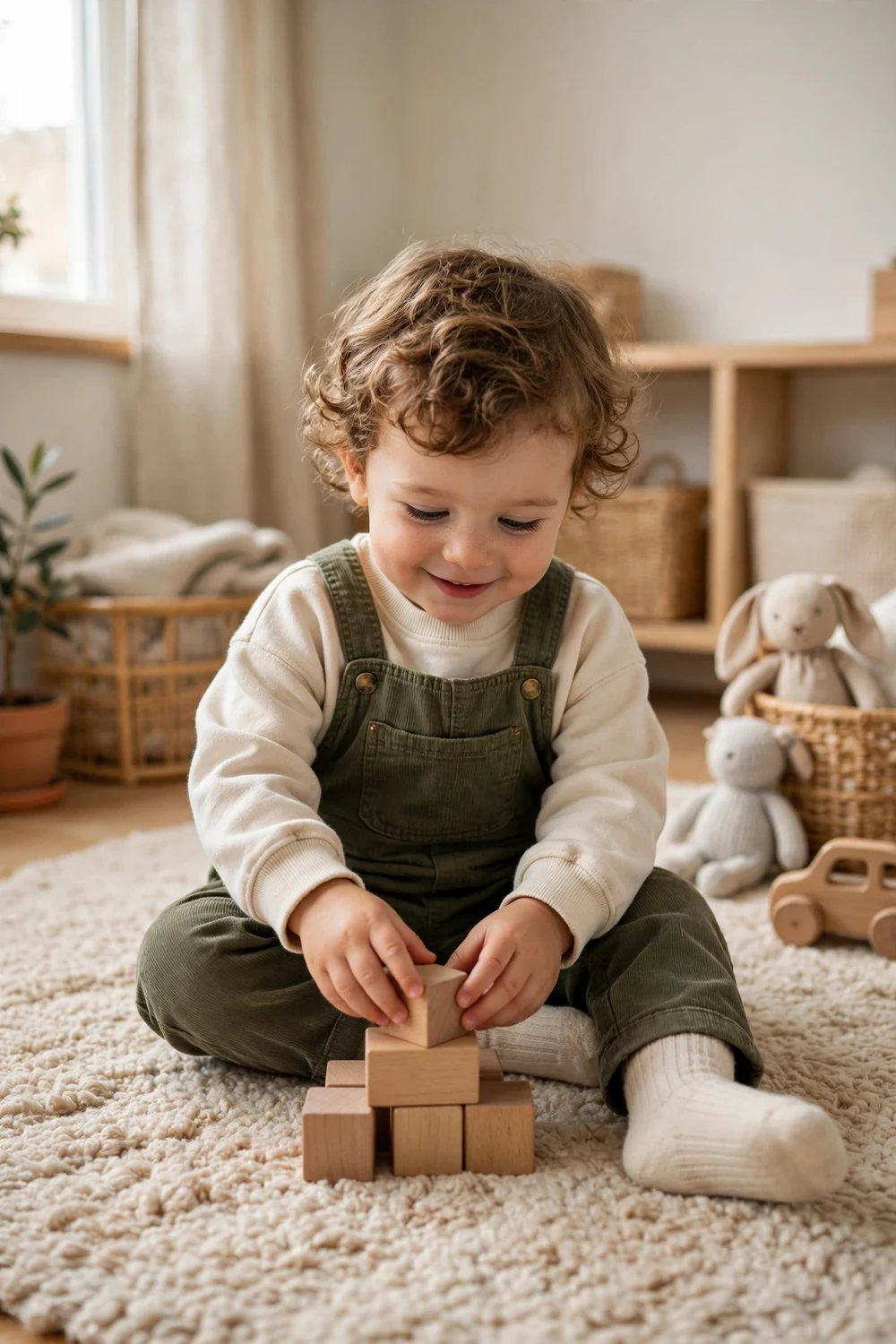
It feels wrong at first. Surely more choice means more fun. But watch a child in front of a mountain of toys and you will see the opposite. They pick something up, put it down, pick up something else, and drift. Nothing holds their attention because everything is shouting for it. Cut the choice down to a handful and the same child settles. They build the tower higher, they give the dolls names, they find a new way to use the blocks. Less to choose from means more attention for each thing.
There is research behind this, and it takes the guilt out of putting toys away. In a 2018 study published in Infant Behavior and Development, researchers at the University of Toledo watched 36 toddlers aged 18 to 30 months play in two rooms, one with four toys and one with sixteen. With four toys, the children played with each toy for longer and found more ways to use it. With sixteen, they flitted between toys. One small study does not prove everything, but the pattern matches what most parents see at home.
There is a second benefit that nobody talks about until they feel it. A child who can see all their toys can also put them all away. Tidying fifty scattered toys is a job no small child will finish. Tidying eight toys back onto one shelf is a job they can do in five minutes, and finishing it gives them a small sense of pride. That is how the rule teaches responsibility without a single lecture about being grateful. The shelf is small, the task is small, and the child can succeed at it.
My honest opinion after living with this system for over a year: the hardest part is not the sorting or the swapping. It is trusting that your child will be fine with less in front of them. They will. In fact, they will play better, argue less about tidying, and ask for the stored toys by name when they remember them, which tells you the rotation is doing its job. If your little one is still in the baby stage, the same less is more thinking applies to their whole room, as this guide to minimalist baby essentials explains beautifully.
The Weekend Sort: Setting Your Toy Limit
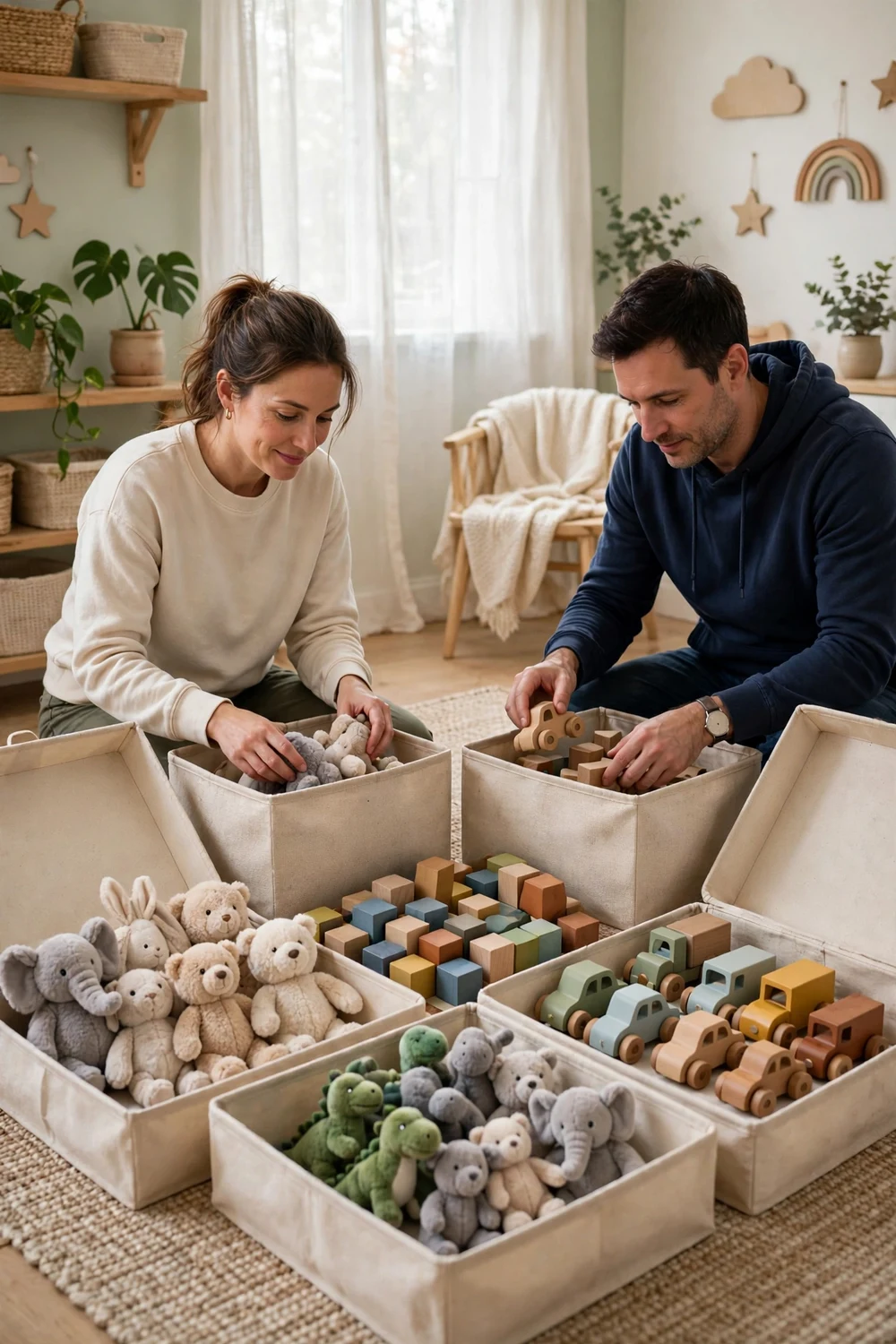
Start on a Saturday morning, when you have a couple of hours and nobody is in a rush. You need the floor, three boxes, and a bin bag. The boxes are labelled Keep Out, Rotation Storage, and Pass On. Everything your child owns comes out of its usual hiding places and goes onto the floor in one big pile. Yes, all of it. The pile looks worse before it looks better, and that is the point. You cannot set a limit until you can see what you actually own.
First, pull out anything broken, missing pieces, or unsafe. A puzzle with half its pieces gone is not a puzzle, it is clutter with a story attached. Broken toys go straight into the bin bag without a committee meeting. Then pull out anything your child has clearly outgrown. A baby rattle in a four year old’s room is taking up space that a puzzle could use. These go into the Pass On box, and the box goes out of the house within a few days, before anyone changes their mind.
Now sort what is left into play types, not into piles by colour or by room. Most toys fall into six kinds of play: building, pretend play, puzzles and thinking games, art and making, active play, and books. Put one pile for each. This is the step most toy decluttering guides skip, and it is the step that makes the whole system work, because a good rotation set has one or two toys from each kind, not five dolls and nothing to build with. If one pile towers over the rest, that is useful information. It tells you where the duplicates live.
Within each pile, keep the toys your child actually plays with and the ones with lasting play value. A set of blocks can be a castle, a road, and a shop in one afternoon, while a toy that sings one song has a single trick. Keep the open ended toys and the favourites, even if they look worn. Let go of duplicates and keep the best one of each kind.
When the sorting is done, fill the shelf. Start with the favourites and one toy from each play type, until you reach the number for your child’s age in the table below. Everything else goes into Rotation Storage boxes, one box per play type if you can manage it, with a simple label on the outside. The Pass On box leaves the house. Then stop. Do not buy storage first and sort second. The sorting decides what storage you need, and most families find they need far less than they expected.
How Many Toys Should a Child Have at Each Age
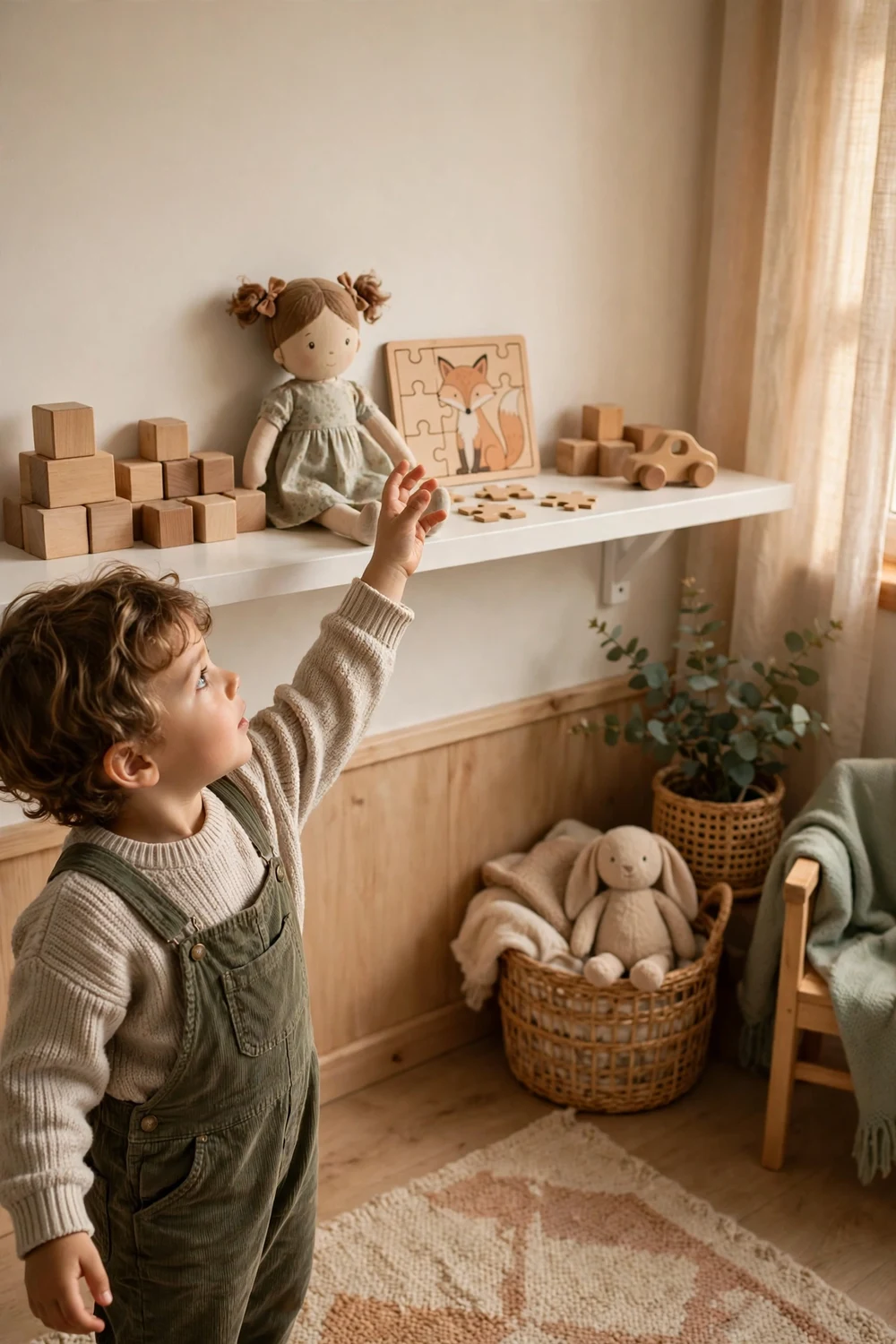
Parents always ask for a number, and for once a number helps. The table below gives a starting point for how many toys should be out at one time at each age. Count a set as one toy. A basket of blocks is one toy. A train track with its trains is one toy. A box of forty loose animals is not one toy, it is a mess waiting to happen, so split it and put out eight animals at a time. Books do not count toward the total, and neither do the two or three anchor toys that never rotate: the comfort toy, the favourite doll, the truck they ask for by name.
| Age | Toys out at once | Swap every | What to keep out |
|---|---|---|---|
| 12 to 18 months | 5 to 6 | 5 to 7 days | Stacking rings, shape sorter, push toy, board books, one music toy |
| 18 to 30 months | 6 to 8 | 1 week | Blocks, simple puzzles, toy animals, ride on toy, chunky crayons |
| 2 to 3 years | 8 to 10 | 1 to 2 weeks | Building sets, dress up, play kitchen pieces, puzzles, art supplies |
| 3 to 5 years | 10 to 12 | 2 weeks | Construction sets, board games, craft box, dolls and figures, books |
| 5 to 7 years | 10 to 12 | 2 to 3 weeks | Building kits, art materials, games, sports toys, reading corner books |
Small homes need the same thinking in a smaller footprint. A child in a flat does not need a playroom, they need a shelf and a basket. The limit is the same, the furniture is just smaller. A low bookshelf in the living room corner, a basket under the sofa, and one rotation box on top of the wardrobe can hold a full toy rotation system in a one bedroom flat. If you are working with a tight space, the room planning in these kids bedroom ideas for girls and these kids bedroom ideas for boys shows how a small room can still give a child a proper place to play.
Storage That Makes the Toy Rotation System Stick
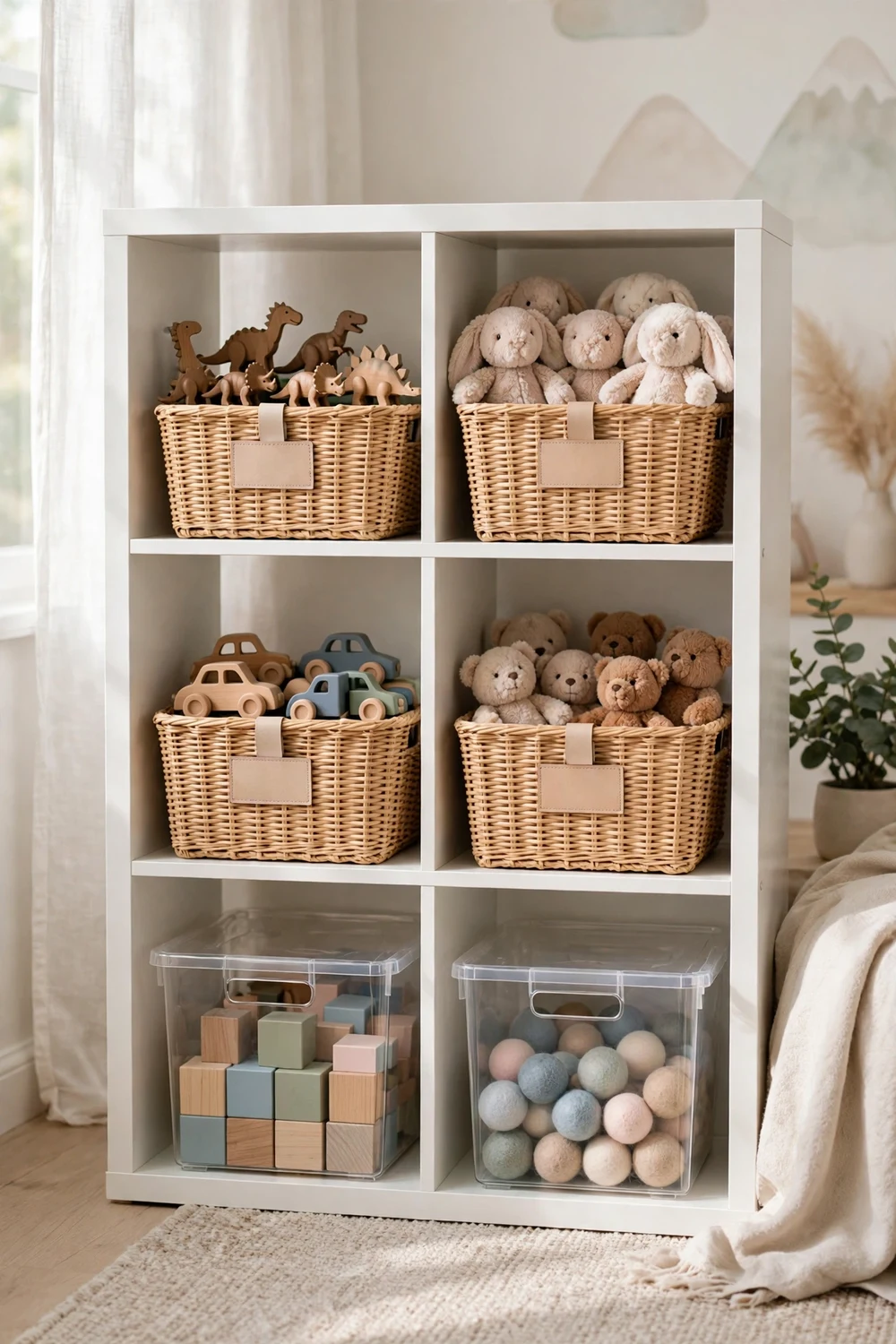
A toy rotation system lives or dies on its storage. The shelf is where the active toys live, and it should be low, open, and easy for your child to reach without help. A child who cannot reach a toy will not play with it, and a child who cannot put a toy back will not tidy up. The classic cube shelf works well because each cube holds one basket, and each basket holds one kind of toy. Four to six cubes is plenty for most families. More cubes than that just invites more toys back out.
Baskets beat deep toy chests every time. A toy chest is a black hole: everything goes in, nothing comes out except the thing on top, and the bottom layer is forgotten within a week. A shallow basket, on the other hand, shows its contents at a glance. A child can see the cars, take one out, and put it back in the same place. Woven baskets look warm and suit most rooms, while clear bins suit small parts like building bricks and craft supplies, because you can see what is inside without opening the lid. Use both: baskets for soft toys and big items, clear bins for small parts.
Labels are the part adults skip and children love. A picture label works before a child can read, and a picture plus a word works even better because it quietly builds early reading. A photo of the blocks on the block basket, a drawing of a car on the car basket, a simple word underneath. You can print photos at home, or let your child draw the labels themselves, which makes them far more likely to use them. Keep labels at your child’s eye level, not at yours. The system is for them, not for a photograph.
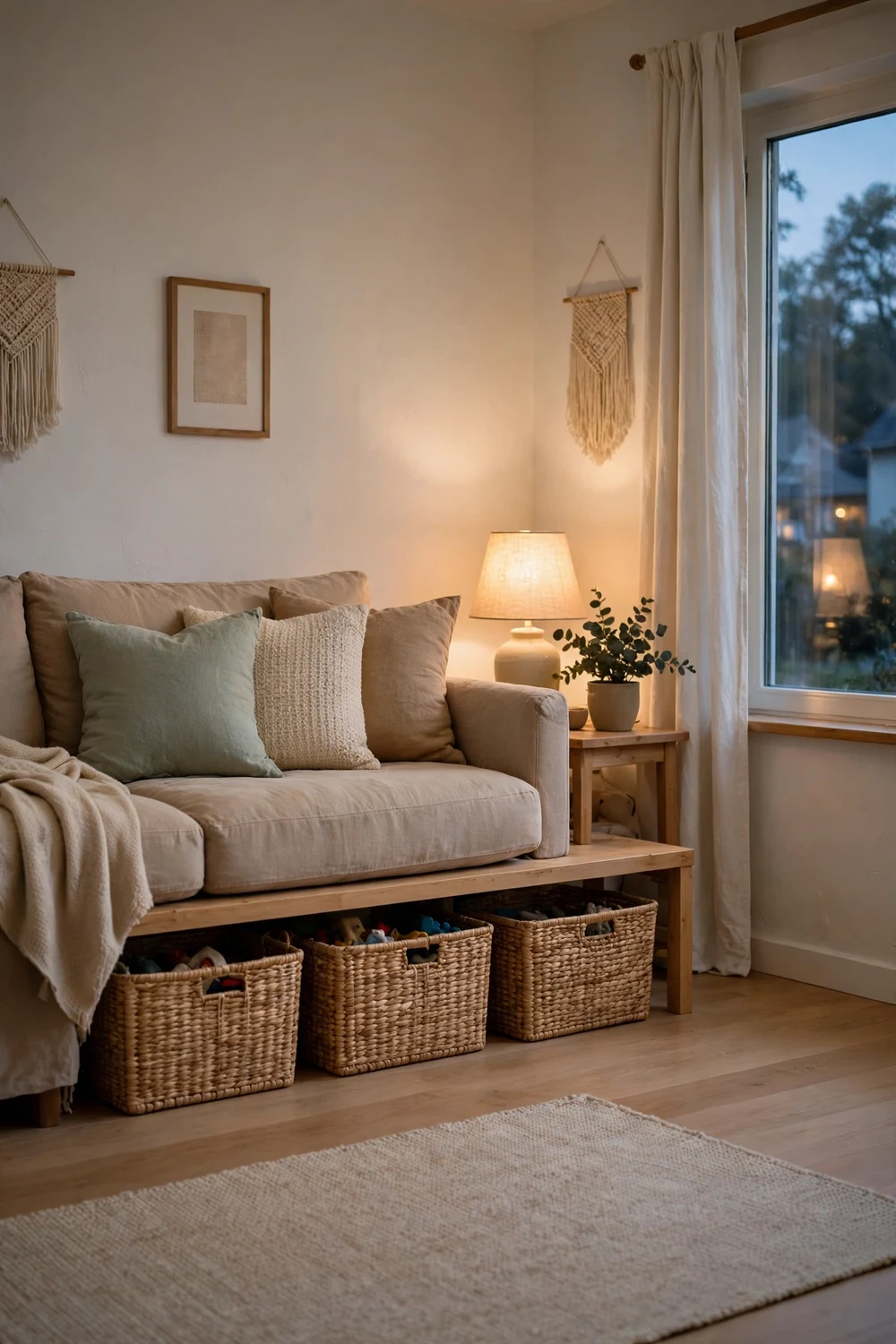
Rotation storage needs a different home from the active shelf. It should be out of sight and slightly out of reach: the top of a wardrobe, a cupboard in the hall, a labelled box under the bed. Out of sight matters because a child who can see the stored toys will ask for them constantly, and then the rotation is driven by pestering instead of by a plan. Closed boxes with lids work best here, one box per play type, with the label facing out so you can find the right box in seconds on swap day.
Zones help more than most parents expect. Instead of grouping toys by type alone, think about where each kind of play happens: building on the rug, art at the table, pretend play in the corner. When each zone has its own basket, a child learns that toys have homes, and tidying means returning things to their place. Our guide to the best home organization products that actually work explains how to test storage before you buy it.
The Rotation Schedule: A Fortnight That Runs Itself
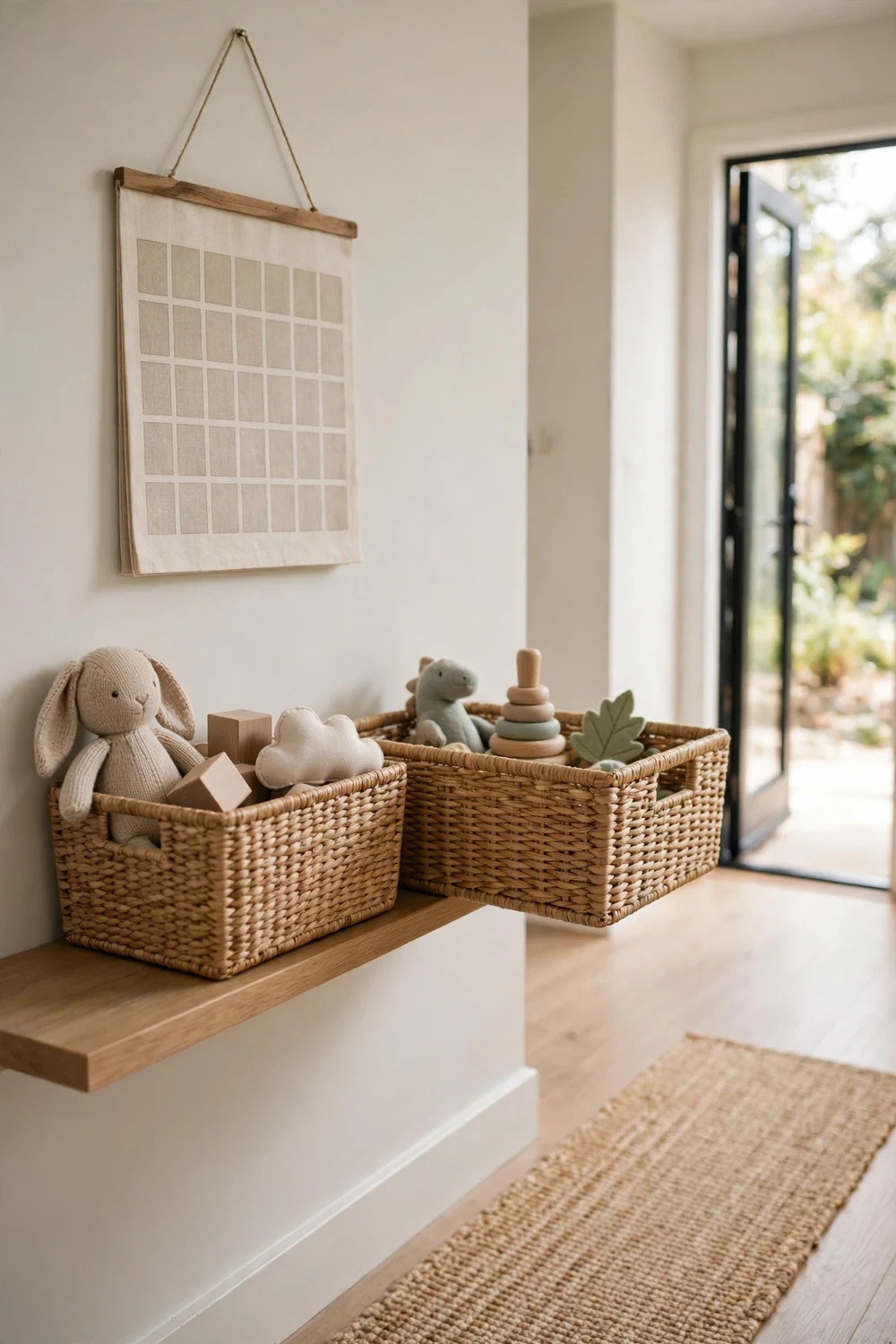
The swap is the heartbeat of the toy rotation system, and it should be small, regular, and boring. Once a fortnight, on the same day each time, swap three or four toys. Not all of them. Swapping everything at once feels like a reset, and children hate resets. Swapping a few keeps one or two favourites in place, brings back one or two old friends from storage, and puts one or two tired toys away for a rest. The room feels fresh without feeling strange.
Pick a day and stick to it. Sunday evening works well for many families, because the swap sets up the week ahead. Friday afternoon works too, because the fresh toys arrive just in time for the weekend. Put it on the family calendar or set a phone reminder, because the system fails quietly when the swap is forgotten. A missed fortnight is not a disaster, but three missed fortnights means the stored toys are forgotten and the shelf has gone stale. Regularity matters more than perfection.
The swap itself takes ten minutes. Bring one rotation box down from storage, look at the shelf, and ask three questions. Which toys has my child not touched this fortnight? Which stored toys would they love to see again? Which play type is missing from the shelf right now? Move the untouched toys into the box, move the returning toys onto the shelf, and put the box away. That is the whole job. Do it after bedtime if your child finds change hard, or do it together if your child loves choosing, which many older children do.
A simple rhythm that works for most families looks like this:
| When | What to do | How long it takes |
|---|---|---|
| Every evening | Five minute tidy, toys back on the shelf | 5 minutes |
| Every fortnight | Swap 3 to 4 toys, one box down and one box up | 10 minutes |
| Every season | Full sort, check sizes and interests, pass on outgrown toys | 1 hour |
| Before birthdays | One in one out clear out, make space for gifts | 30 minutes |
| Before Christmas | Bigger clear out, donation box ready for the holidays | 1 hour |
One In, One Out: Birthdays, Gifts and Grandparents
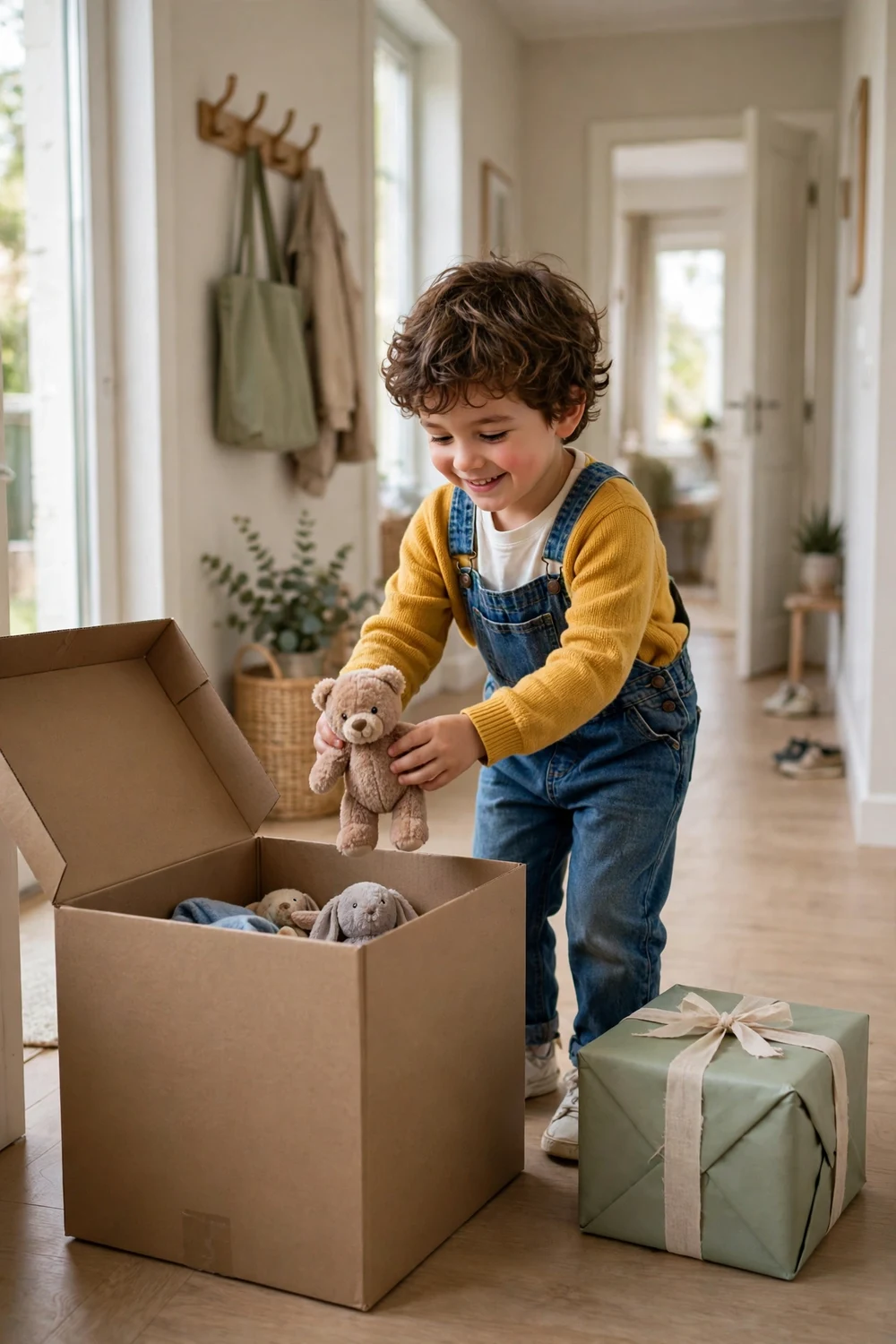
Every toy system has one enemy, and it is not the child. It is the steady stream of new toys arriving from birthdays, holidays, grandparents, and well meaning friends. A rotation system without a rule for new arrivals will slowly fill up, because toys only ever come in. The one in, one out toy rule fixes that. When a new toy arrives, one toy leaves. It goes to another child, to a charity shop, or into the donation box. The total stays steady, the shelf stays within its limit, and your child learns that new things have a cost, even a small one.
Make the rule visible and kind. A donation box that lives in the child’s room, always open and always ready, turns giving away into a normal habit instead of a yearly drama. When a toy is outgrown, it goes in the box. When the box is full, it goes to its new home. Children who choose the outgoing toy themselves feel proud, not punished, especially when they know another child will play with it. Frame it as passing a toy on, not getting rid of it. The words you choose matter more than you think.
Birthdays and Christmas need a plan, not a panic. A month before a big gift occasion, do a clear out together. Go through the shelf, pick the toys that have not been played with, and make space for what is coming. Then tell the gift givers what your child actually wants. A short wish list, shared with grandparents and relatives, stops the pile of random toys that nobody asked for. Most relatives are relieved to be told. They want to give something your child will love, and a list helps them do that.
Grandparents deserve a gentle conversation, not a lecture. They grew up in a time when a pile of presents was love made visible, and they buy toys because they want to delight their grandchild. Thank them, enjoy the gift with your child, and then quietly apply the one in, one out toy rule after they leave. If a grandparent buys the same kind of toy every visit, a kind word about what your child is really into right now usually redirects them. Never make a child feel guilty about a gift. The rule applies to the total, not to any single present.
What to Avoid When You Start a Toy Rotation System
Most toy rotation systems fail for the same few reasons, and all of them are easy to avoid once you know them. The first mistake is rotating everything at once. A full shelf swap feels efficient, but to a child it feels like their room has been raided. Keep the favourites in place, swap a few at a time, and let the room change gradually. The system should feel like a fresh breeze, not a house move.
The second mistake is rotating out a comfort toy. The teddy that goes to bed every night, the blanket, the doll that has been everywhere with your child: these are not toys, they are anchors. They never go into storage. Neither does a toy your child is deep into right now. If they are building a whole world with the farm set this week, leave the farm set out. Rotation serves the child, not the schedule. The calendar is a guide, not a boss.
The third mistake is hiding the storage so well that you forget it. Rotation boxes in the loft, behind the suitcases, under a pile of winter coats: out of sight is good, out of mind is not. Keep the boxes somewhere you can reach in two minutes, and keep a list of what is in each one. If the swap takes more than ten minutes, you will stop doing it. Make it easy on yourself, because you are the one who has to keep this going.
The fourth mistake is turning tidy up time into a battle. If tidying takes twenty minutes and ends in tears, the shelf is too full, not the child too lazy. Reduce the number of toys out, make the baskets easier to reach, and shorten the tidy to five minutes with a song or a timer. Children tidy happily when the job is small. The same zone thinking keeps any room organised, as our guide to how to organize your kitchen step by step shows.
The last mistake is giving up after one bad week. A holiday, an illness, a visit from relatives, and suddenly the system is in pieces and the floor is covered again. That is normal. A system that cannot survive a bad week is not a system, it is a performance. When life gets messy, just do a ten minute reset: everything back in its basket, one quick swap, and you are running again. The toy rotation system is forgiving. It does not punish you for missing a fortnight. It just waits for you to pick it up again.
Frequently Asked Questions
How many toys should a child have out at once?
As a starting point, five to six toys for a baby of 12 to 18 months, six to eight for a toddler of 18 to 30 months, eight to ten for a child of two to three, and ten to twelve for a child of three to seven. Count a set as one toy, keep books and comfort toys outside the count, and adjust after a week of watching how your child plays.
How often should I rotate toys?
Every one to two weeks works for most families, swapping three or four toys at a time rather than the whole shelf. Babies need a faster rhythm of about five to seven days, while school age children are happy with a swap every two to three weeks. If your child plays with the same two toys daily and ignores the rest, bring the next swap forward.
What is the one in, one out toy rule?
It means that whenever a new toy enters the house, one existing toy leaves, either donated, passed on to another child, or recycled if broken. The rule keeps the total number of toys steady, protects the shelf limit, and teaches children to choose what they truly value. It works best when the outgoing toy is chosen by the child.
Does toy rotation really help children play better?
Research points that way. A 2018 study from the University of Toledo found that toddlers given four toys played with each one longer and in more varied ways than toddlers given sixteen. Parents who try rotation usually report the same thing at home: longer play, fewer arguments about tidying, and old toys feeling new again when they return from storage.
What should I do with the toys in rotation storage?
Keep them in closed, labelled boxes in a cupboard, on top of a wardrobe, or under a bed, out of sight and slightly out of reach. Label each box by play type and keep a short list of what is inside. Bring one box down on swap day, exchange a few toys, and put the box straight back.
What if my child cries when a toy goes into storage?
Explain that the toy is going on holiday and will come back, which is true, and let them choose which toy goes. Never rotate out a comfort toy or a toy they are deeply involved with right now. If a toy is missed badly, bring it back at the next swap. The system is meant to serve your child, not to upset them, and a flexible rule lasts far longer than a rigid one.
A Calmer Home Starts With One Small Shelf
You do not need a playroom, a new storage system, or a single new toy to start. You need one free Saturday morning, three boxes, and the willingness to put most of the toys away. The toy rotation system does the rest, quietly, one fortnight at a time. The shelf stays small, the play stays deep, and the living room floor stays clear enough to walk across in bare feet.
Start this weekend. Sort the pile, fill the shelf, label the boxes, and put the swap on the calendar. In a month, watch what changes: longer play, quicker tidies, fewer requests for new toys, and a calmer evening for everyone. That is what one small rule can do. It will not fix everything in a family home, but it will fix the toy avalanche, and that is a very good place to begin.