Wallpaper Dupes: Where to Splurge and Where to Save (A Room by Room Guide)
Wallpaper dupes are affordable papers that copy the look of expensive designer wallpaper, and yes, they can look genuinely good. The trick is not the paper alone. It is where you put it. Spend on the real thing in small rooms people see up close, like a powder room or a dining wall, and save with a dupe or peel and stick wallpaper on big walls, in rentals, and in rooms that change fast, like a nursery. Measure carefully, check the pattern repeat before you order, and pick paste wallpaper for rooms that need to last and peel and stick wallpaper for rooms that need to change.
If you only remember one rule, make it this one. A dupe fails when it is asked to do a job it was never built for, not because it was cheap. Put the right paper in the right room and nobody will ask what it cost.
I fell for a wallpaper once before I ever touched a roll of it: a hand painted looking botanical print, soft green leaves on a cream ground, already imagined behind our sofa before I saw the price. The price brought me back to earth fast. That is how most people meet wallpaper dupes. Not through a bargain hunt, but through a pattern they love and a budget that says no.
There is nothing wrong with that starting point. Some of the best rooms I have seen mix one expensive paper with several smart saves. The problem only starts when people buy the cheapest roll they can find, hang it in the hardest room in the house, and then blame the dupe. This guide works the other way round. We decide where the money belongs first, then match the paper to the room.
What a Wallpaper Dupe Really Is, and What It Is Not
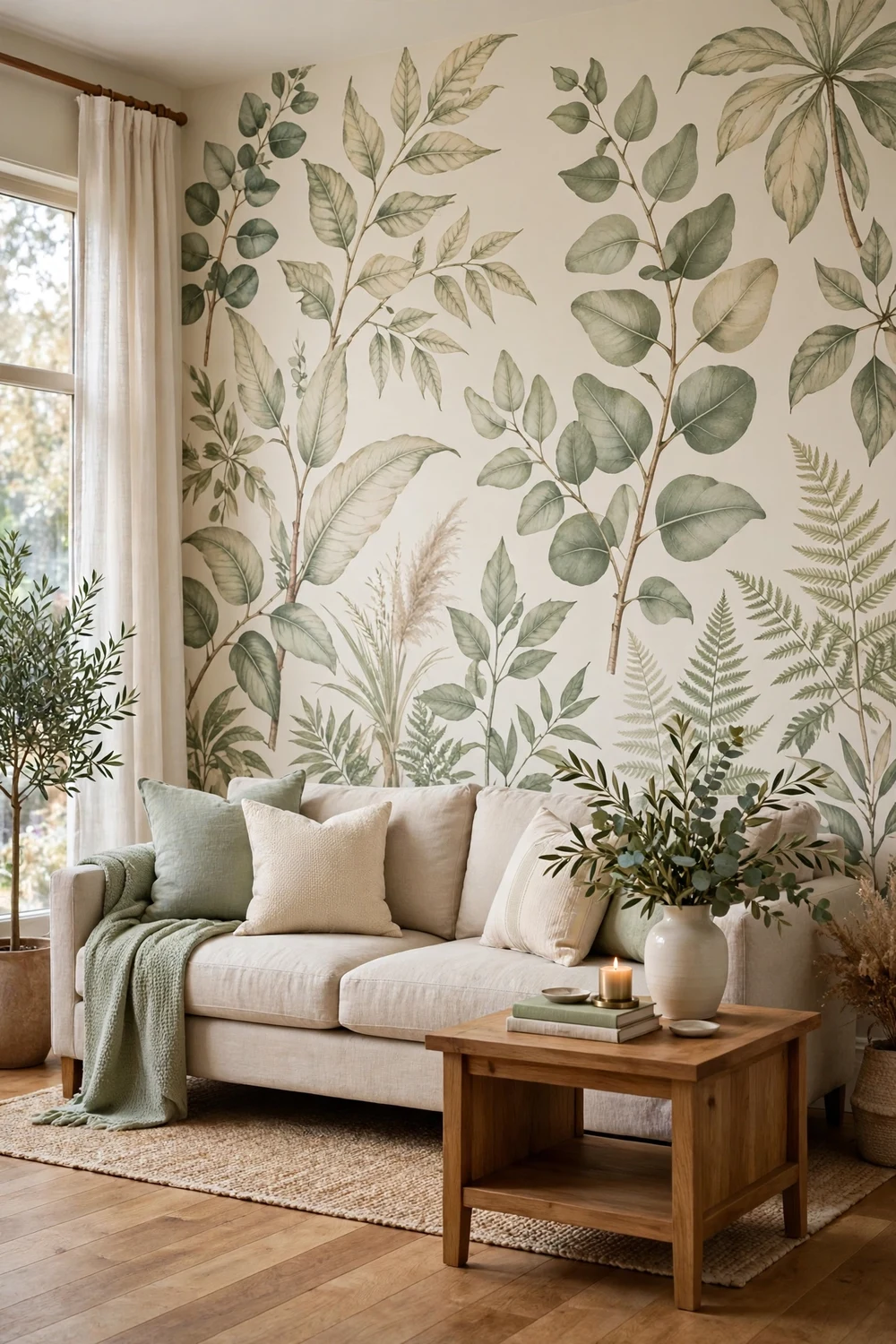
A wallpaper dupe is a lower priced paper that gives you the look of a well known designer pattern without the designer price. It might copy the same kind of leaves, the same scale of flowers, or the same woven texture. It does not copy the exact artwork. What you are buying is the feeling of the pattern, not the label.
That distinction matters. A dupe is not a fake. Nobody is trying to pass off a printed vinyl as hand painted silk. A dupe is a trade. You give up something, usually depth of colour, texture, or the way the paper handles light, and in return you get a wall that looks close to the original for a fraction of the cost.
What actually changes between the expensive paper and the dupe? First, the surface. Designer papers often use layered printing, real fibres like grasscloth or silk, or a matte finish that drinks in light. A printed dupe is usually flat. It can still be beautiful, but it will not change as the light moves across it. Second, the pattern repeat. Expensive papers often have a large repeat, so the design flows without obvious breaks. Cheaper papers often shrink the repeat, so the same leaf appears more often and your eye starts to notice the rhythm. Third, colour. A good dupe gets the colours close. A poor one gets them loud, or slightly off, in daylight.
A dupe works best where people see the wall from a normal distance, in soft light, with a large scale pattern doing the work. My own rule is simple. If I can stand two metres from the wall and the paper still makes me happy, it is good enough for that room. That one test has saved me more money than any sale ever has. And if you are weighing wallpaper against a cheaper room refresh, our guide to big impact ways to redecorate a room inexpensively ranks the changes that show most for the least spend.
How to Spot a Good Dupe Before You Buy It
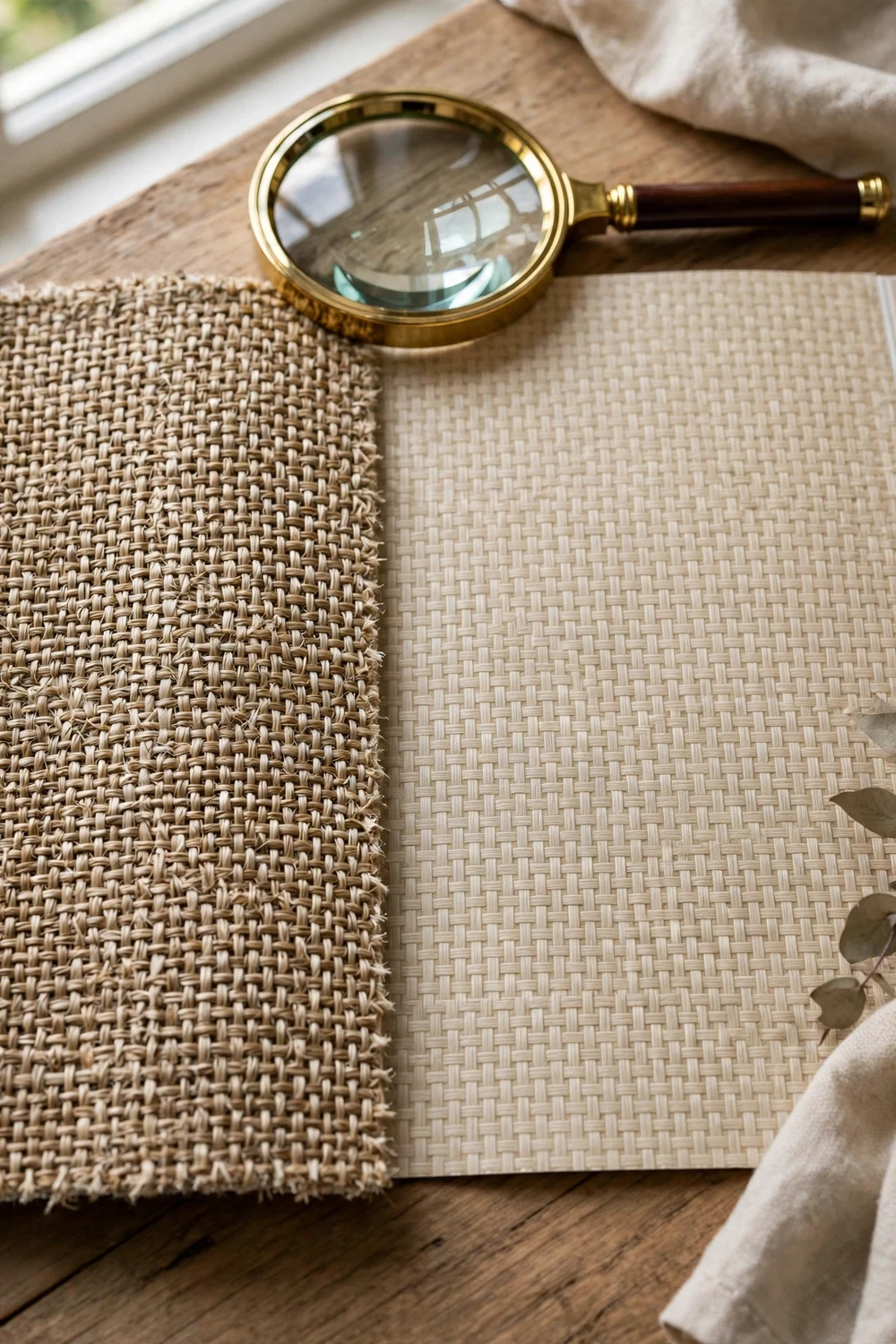
The best time to judge a wallpaper dupe is before it arrives in a roll. Order samples first, always, and order them from every paper you are considering, including the expensive original if you can. Tape the samples to the wall you plan to paper, then live with them for a few days. Look at them in morning light and in lamplight. Step back to the doorway. The paper that still looks good when you are not trying to like it is the one to buy.
Start with the print. Hold the sample at arm’s length and ask whether the pattern reads clearly or turns to mush. A good dupe keeps its shapes clean at a distance. A weak one blurs, and the blur gets worse once it covers a whole wall. Then look at the colours. Compare the sample against the fabric or paint already in the room. If the green in the paper fights with the green in your sofa, it will fight harder at full size.
Next, feel the paper. A decent dupe has some body to it. A very thin paper feels flimsy and shows every bump in the wall underneath, and most walls are not as smooth as they look. This is also where grasscloth dupes get found out. Real grasscloth has visible fibres that catch the light. A printed copy can look convincing in a photo and flat in person, because the texture is only ink.
Finally, read what other buyers say about the colour in real rooms, not in the product photo. Product photos are lit to flatter. Buyers photograph in ordinary light, and that is the light you live in. If several reviews say the paper runs darker or greener than the photo, believe them. Never order a full room of paper from a photo alone. The sample costs little and answers every question in this section in about ten seconds.
Peel and Stick Wallpaper vs Paste Wallpaper: The Real Difference
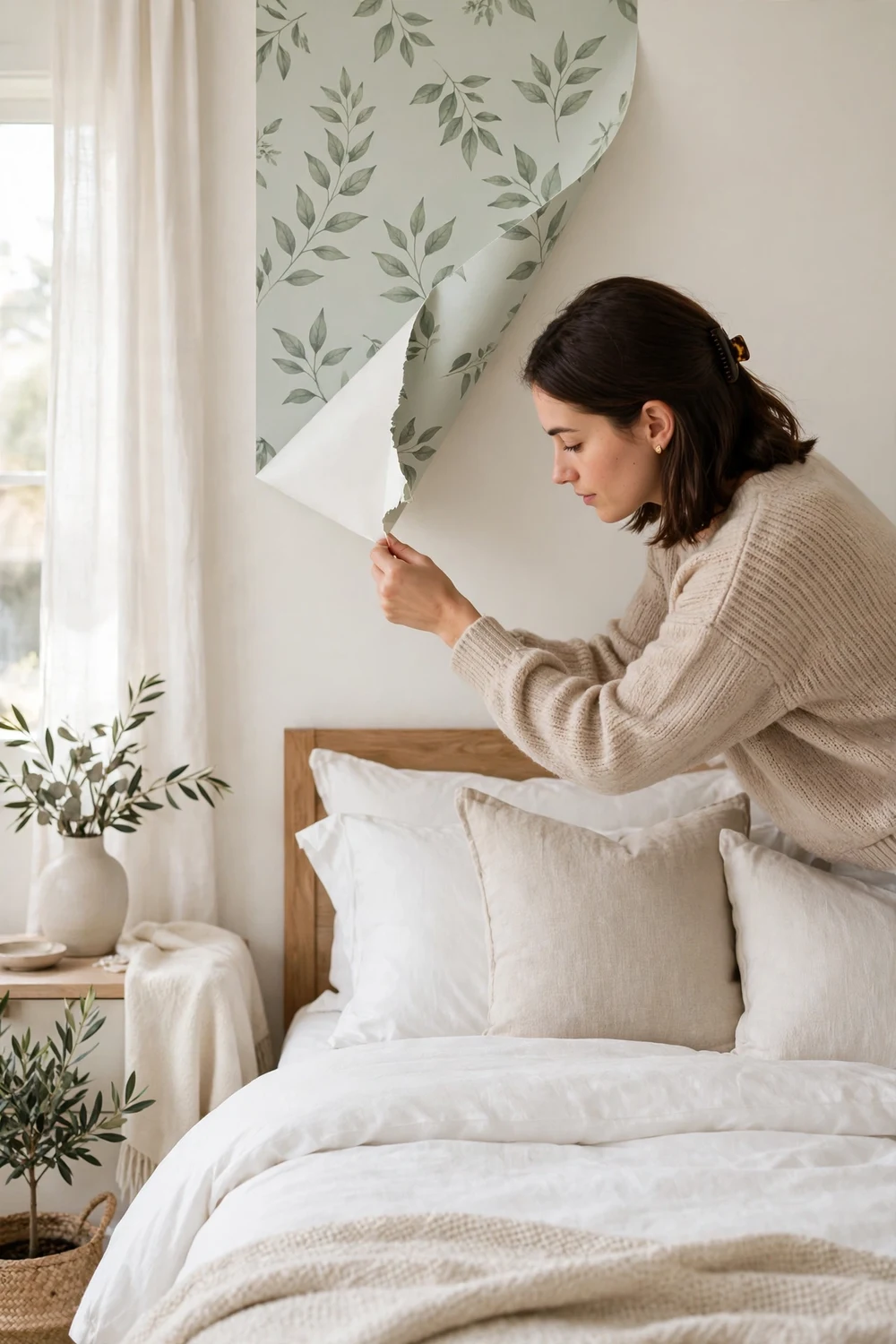
Ask most people which wallpaper to buy and they will answer with a format, peel and stick or paste, as if that is the whole decision. It is not. The right question is how long the paper needs to stay up, what wall it is going on, and who is hanging it.
Peel and stick wallpaper is a printed vinyl with its own adhesive. You peel the backing and press the sheet onto the wall, smoothing as you go. It repositions while you work, which is a gift for a first timer, and it peels off cleanly when you are done. That makes it the natural choice for renters, for a child’s room, and for anyone testing a bold pattern. If you rent, read our renter friendly apartment upgrades first.
But peel and stick has limits. It needs a smooth, sound, painted wall. Textured plaster defeats it, because the adhesive only touches the high points and the rest lifts. Fresh paint defeats it too, so wait at least four weeks after painting, or the paper can pull the paint off when you remove it. Steam loosens the edges, and the thin vinyl shows every wall flaw underneath.
Paste wallpaper, the traditional kind, works differently. Paste goes on the wall for non woven paper, or on the back of the paper for older types, and the strip is hung wet. It slides into place, bonds across its whole back, and dries into a firm, flat finish. It lasts longer, handles humidity better when the paper is rated for it, and looks more like real wallpaper, because it is. The price is commitment, and removing it takes work.
Here is how the two compare on the things that actually decide a project.
| What matters | Peel and stick wallpaper | Paste wallpaper |
|---|---|---|
| Best for | Rentals, accent walls, nurseries, quick refreshes | Forever homes, full rooms, busy hallways |
| Wall needed | Smooth, cured, satin or semi gloss paint | Sound, dry, primed wall |
| Humidity | Fine in dry rooms; avoid steamy bathrooms | Handles humidity well when installed correctly |
| Removal | Peels off cleanly if the paint under it is sound | Strips off in sheets for non woven |
There is a third option between the two, and it is the one I reach for most often at home. Non woven paste the wall paper is a traditional paper with a modern backing. You paste the wall, hang the dry strip, and when you want it gone, it strips off dry in whole sheets. It gives you the finish of paste paper with removal almost as easy as peel and stick.
Measuring and Pattern Repeat: The Maths That Saves You Money
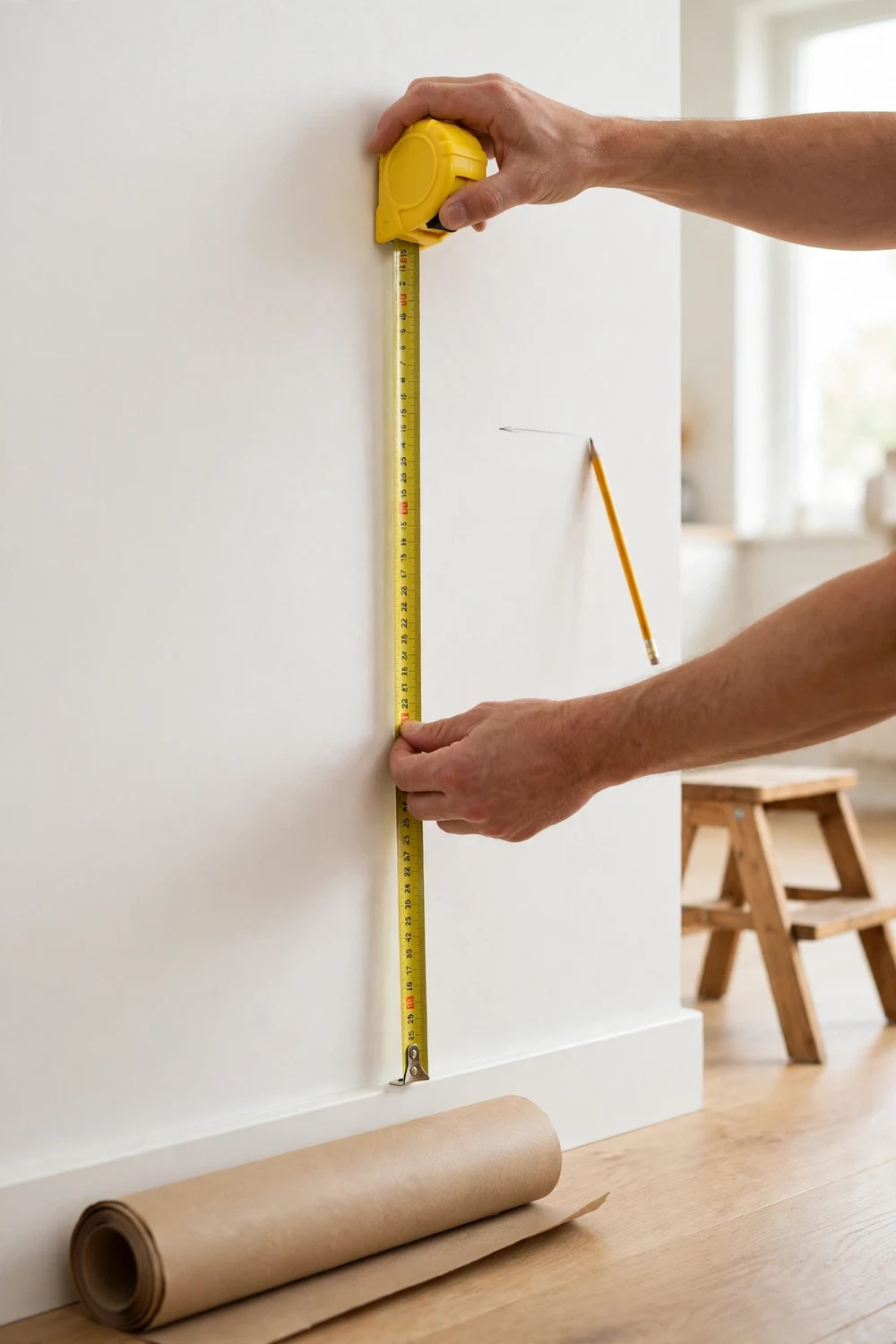
Most wallpaper budgets fail at the measuring stage, not at the shop. People guess the wall, order what feels right, and then run out with one strip left to hang. Measuring takes twenty minutes, and it is the part that saves the most money.
Measure every wall you plan to paper, width first, then height, in centimetres, and write the numbers down. Do not subtract windows and doors yet. That sounds wasteful, but the paper you would save around a window is mostly eaten by pattern matching anyway. Measure the height at the tallest point, and add ten centimetres for trimming.
Now work out how many drops you need. A drop is one vertical strip from ceiling to floor. Divide the total width of your walls by the width of one roll, usually 53 centimetres, and round up. A wall 360 centimetres wide needs seven drops.
The pattern repeat is the vertical distance before the design starts over. If the repeat is 30 centimetres, every drop may need up to 30 centimetres of extra paper so the pattern lines up. If the repeat is 64 centimetres, that waste rises to 64 centimetres per drop. On a room with ten drops, a large repeat can eat two extra rolls, which is why a cheap dupe with a huge repeat is not always cheap.
To work out rolls, take your wall height, add ten centimetres for trimming, then add the full pattern repeat. That is the length of paper each drop needs. Divide the length of one roll, usually 10 metres, by that number, and round down to get drops per roll. Then divide your total drops by that number and round up. Add one extra roll, because dye lots change between batches.
A real example makes it clear. A wall 360 centimetres wide and 270 centimetres high, papered with a 53 centimetre wide roll and a 64 centimetre repeat, needs seven drops. Each drop needs 270 plus 10 plus 64, which is 344 centimetres. A 10 metre roll gives two drops, so four rolls cover the wall, plus one spare makes five.
A few habits save trouble later. Mark the centre of your main wall and hang outwards from there, so the pattern sits balanced and the cut off strips land in the corners. Keep the roll labels, and ask the seller to check the batch numbers before they ship, because the batch number is the only thing that guarantees a colour match.
Wallpaper Dupes, Room by Room: Where to Splurge and Where to Save
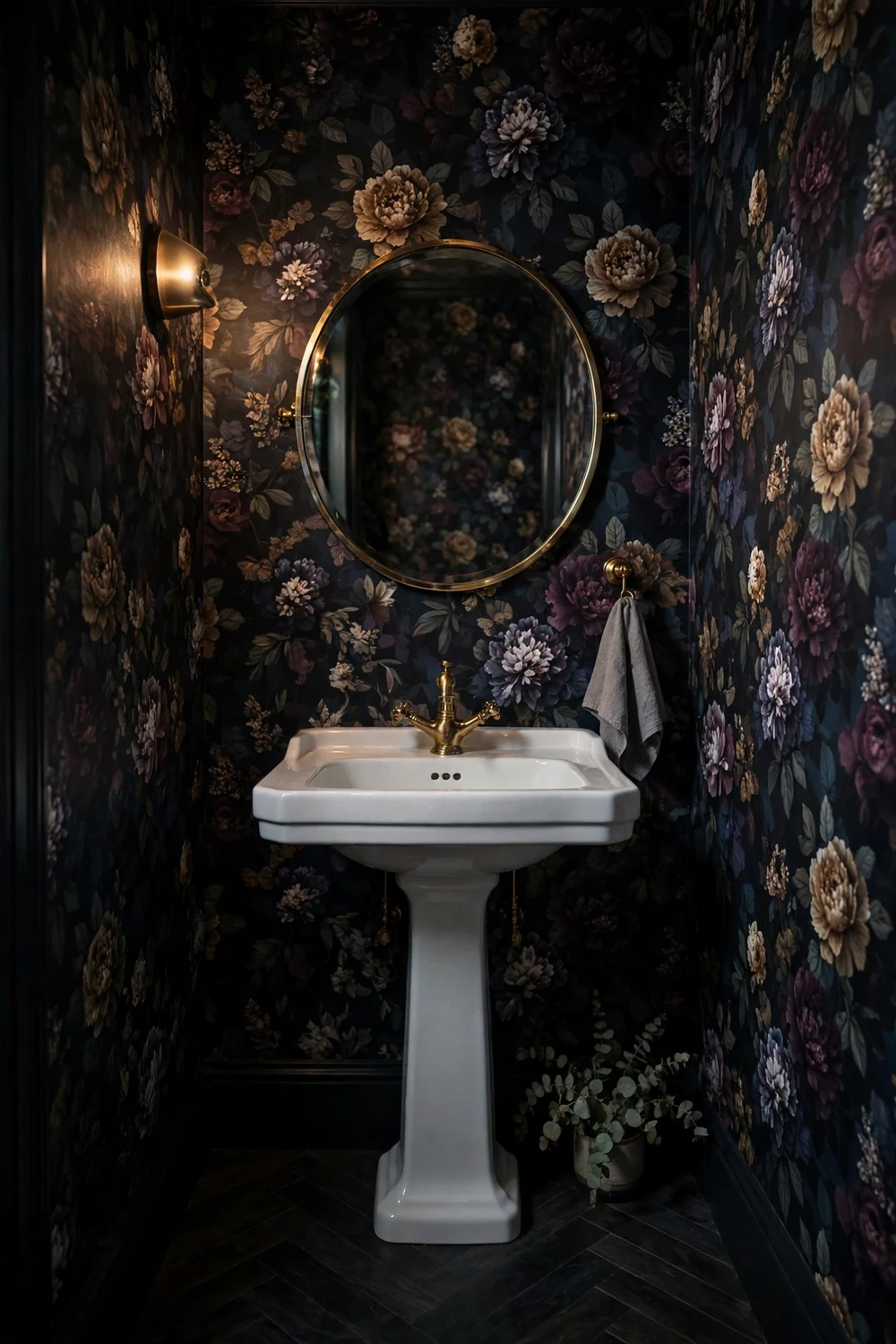
This is the heart of the whole guide, and it is the part most wallpaper posts skip. They tell you which paper to buy. They rarely tell you which room deserves it. The room decides.
| Room | Splurge or save | Why |
|---|---|---|
| Powder room | Splurge | Tiny walls, huge impact, seen up close; one or two rolls |
| Living room feature wall | Save with a good dupe | Seen from a distance; a large print carries the look |
| Main bedroom | Save, or mid price | Soft light flatters a dupe |
| Dining room | Splurge on one wall | People sit and stare at one wall for an hour; it earns the money |
| Nursery or kids room | Save with peel and stick | Tastes change fast; removal matters more than texture |
| Hallway and stairs | Splurge on durability | Daily scuffs; cheap paper shows wear first here |
| Full bathroom | Splurge, and only if rated for damp | Steam is the enemy; a cheap paper fails here fastest |
| Entryway | Save with a dupe | First impression, but people pass through in seconds |
The powder room is the best splurge in the house, and it is not close. The walls are small, so the real paper costs less than you fear, often one or two rolls. The light is warm and close, so texture and depth show.
The dining room works the same way, but only on one wall. People sit at a table and look at the same wall for an hour, so that wall earns the money. Our black accent wall ideas show how a single bold wall changes a whole room.
The living room is the best place to save. The feature wall behind the sofa is seen from across the room, usually in soft evening light, and a large scale dupe reads beautifully at that distance. If the television sits on that wall, our black TV wall ideas with lighting are worth a look first.
Hallways are the room where saving backfires most often. Hands brush the walls, bags swing against them, and children run their fingers along them on the way past. A thin dupe scuffs and shows every mark, so buy the durable version.
Bathrooms split in two. A powder room with no shower is a wallpaper dream. A full bathroom with daily steam is a test. If you paper one, use a paper rated for damp rooms and keep it off the wall the shower hits.
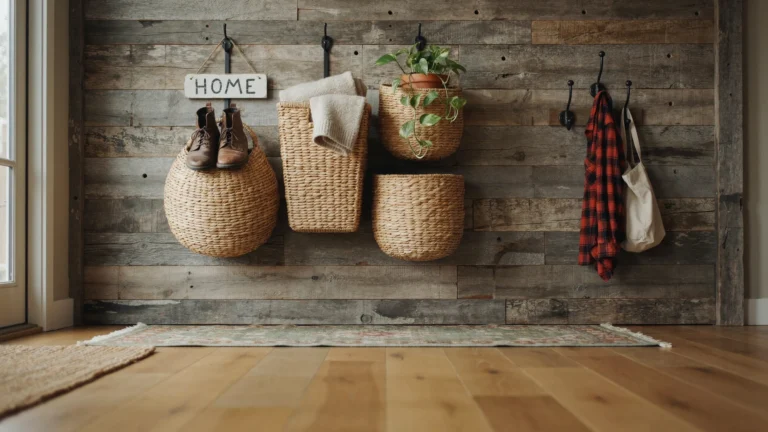
The entryway is a save. It is the first thing people see, so it should look deliberate, but nobody stands there studying the walls. Our mudroom wall decor ideas show how a papered wall and a few practical pieces work together. The ceiling is the most forgiving surface in the house, and even a simple print looks grand overhead.
Nurseries and Kids Rooms: Where Wallpaper Dupes Shine Brightest
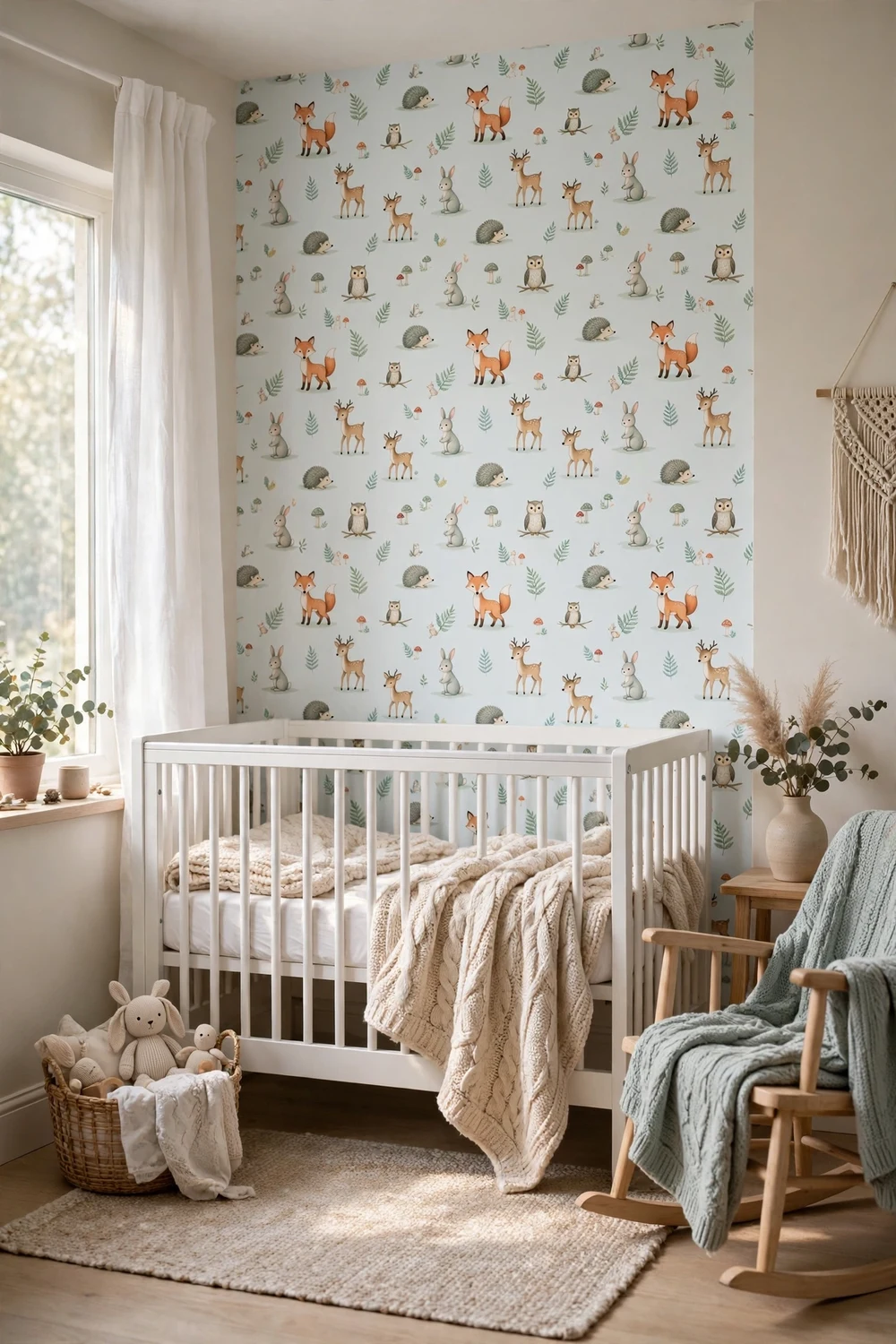
If there is one room where a wallpaper dupe is not a compromise at all, it is the nursery. Children grow, tastes change, and the woodland animals a baby loves become the pattern a five year old finds babyish. Peel and stick wallpaper was almost made for this room. It goes up in an afternoon, it comes down cleanly, and the money you save can go on a good chair for night feeds.
Choose the pattern with the next two years in mind, not the next ten. A pale print with small animals or gentle leaves works for a baby and still suits a toddler. Keep the paper to one wall, usually the wall behind the crib, and paint the rest in a soft colour pulled from the paper.
Safety comes before style in a nursery. Use a paper with low chemical smell and let the room air out for a day or two after hanging. Keep the paper away from the crib rails where a standing toddler can reach it and peel at it.
For older children, let them choose within limits you set. Offer two or three patterns you would be happy to live with, and let them pick. A child who chose their own wall will look after it better. When they outgrow it, peel and stick comes down without a fight. If you want more ideas, our nursery wallpaper designs cover seventeen looks that grow with your baby.
One last note on kids rooms. Avoid very thin peel and stick paper on a wall a child can reach. Little fingers will find a loose corner, and a loose corner becomes a peeled strip by bedtime. A slightly thicker paper with a stronger adhesive holds its edges better, and it is worth the small extra cost.
Hanging Day: The Mistakes That Give a Dupe Away
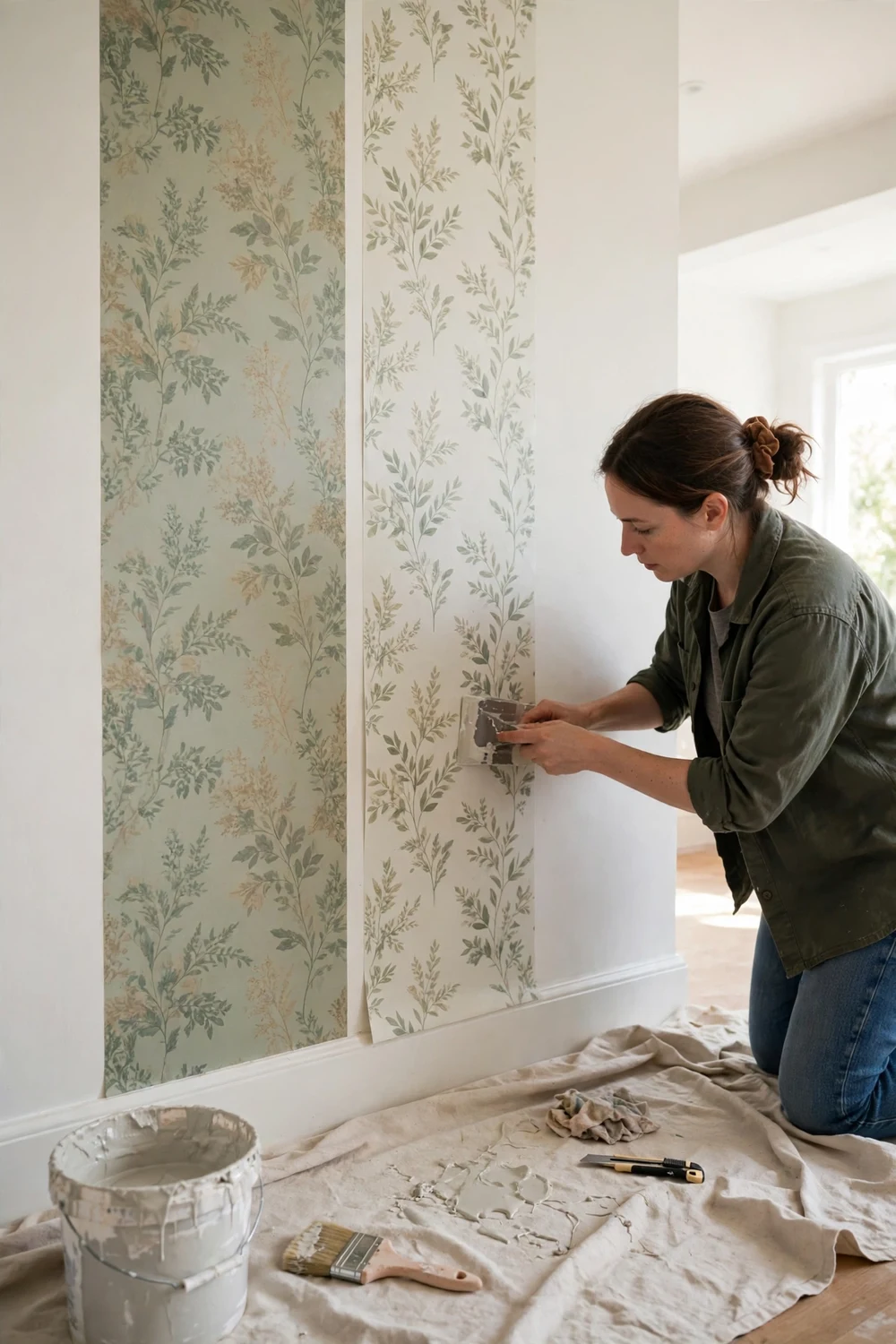
A good dupe hung badly looks worse than a plain painted wall. A plain paper hung well looks like a decision. The difference is rarely talent. It is preparation, and the few small habits that separate a smooth wall from a wall full of bubbles, lifted seams, and crooked drops.
Start with the wall itself. Wash it, fill any holes, sand the filler smooth, and prime it. Priming is the step most people skip, and it is the step that matters most. Primer seals the wall so the paste dries evenly and the paper grips the same way.
Work with a plumb line, not your eye. Walls lean. Ceilings slope. Your eye adjusts to both and tells you the strip is straight when it is not. Hang your first drop against a pencil line drawn with a spirit level, not against the corner of the room.
Book the paper if it needs it. Booking means folding a pasted strip paste to paste and letting it rest for the time the maker states, usually around five to ten minutes. This lets the paper expand evenly before it goes on the wall. Non woven paste the wall papers usually skip booking, but always check the label rather than assuming.
Smooth from the centre outwards, not from one edge. Use a smoother or a clean dry cloth, and push air towards the edges in slow strokes. Rushing this step traps air, and trapped air becomes a bubble that is much harder to fix once the paste dries. Trim with a sharp blade and change it often. A blunt blade tears the paper instead of cutting it.
Watch the seams as you go. A seam that opens as it dries usually means the paper expanded after hanging, the wall was not primed, or the room was too warm and the paste dried too fast. Keep the room cool and the windows closed while you work, and step back often. Hang two drops, then stand at the doorway and look.
The Framed Panel Trick: Expensive Paper on a Small Budget
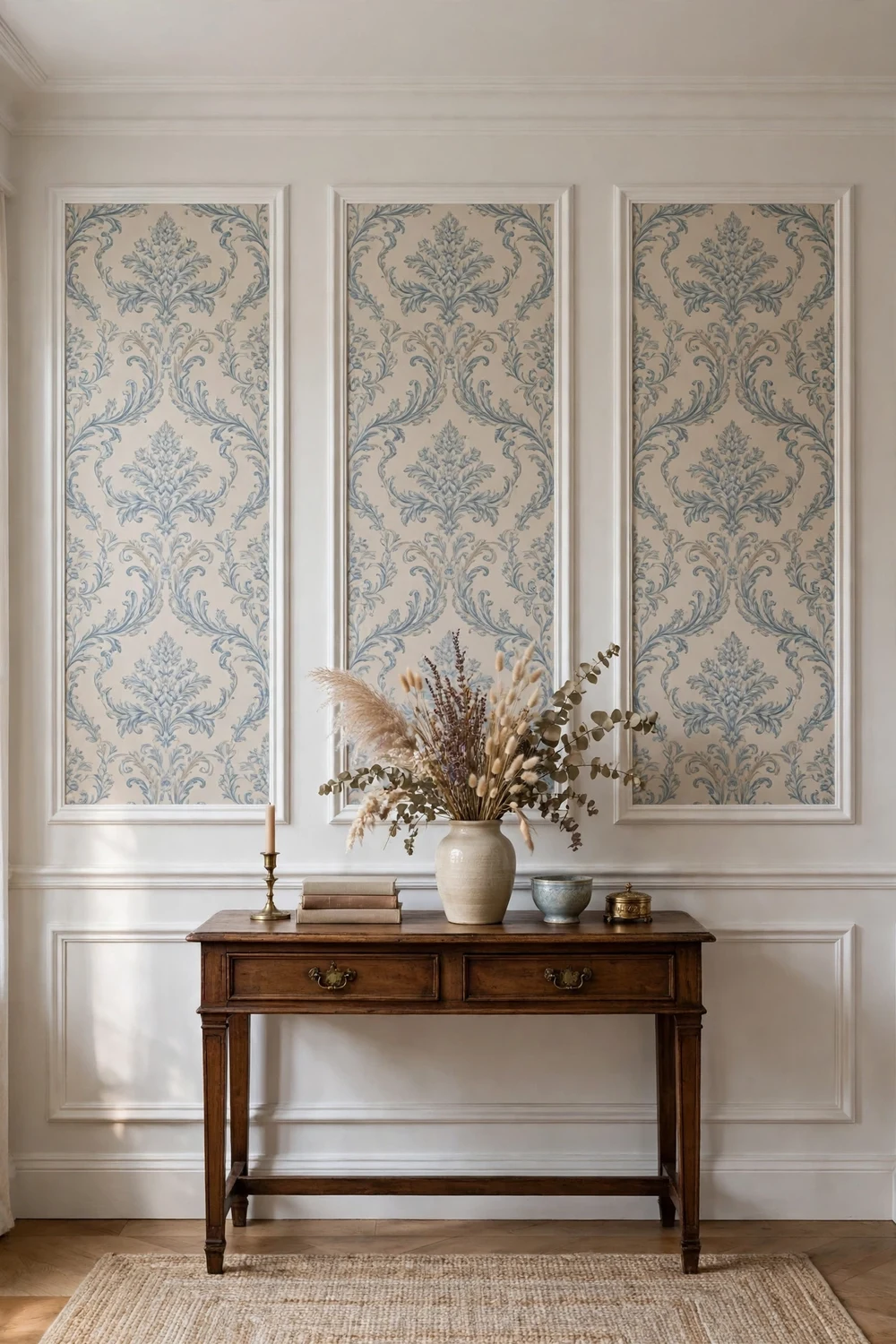
Here is the best trick in this whole guide, and it solves the problem for anyone who loves a paper they cannot afford to put on a wall. Buy one roll, or even a few sample lengths, and frame it. A panel of beautiful paper inside picture frame molding looks deliberate and expensive, for a fraction of a full wall.
Picture frame molding is thin strips of wood trim fixed to the wall in rectangles, painted the same colour as the wall, with the paper pasted inside the frame. The molding gives the panel a finished edge and hides the cut edge of the paper, which is the part that usually gives a small piece away.
Measure the panels before you buy the paper. A standard roll is 53 centimetres wide, so a panel 50 centimetres wide uses one drop with almost no waste. Three panels at 50 centimetres wide need three drops, and one roll gives you two or three drops depending on the pattern repeat. Work out the numbers first. A single roll may do the whole project.
There are other ways to use a small amount of expensive paper well. Line the back of a bookcase with it, so the pattern shows between the books. Paper the inside of a closet or a pantry, where the surprise matters more than the size. Or frame a large offcut and hang it like art.
This trick also works in reverse. If you already own a dupe you like, framing a panel of it lifts it. The molding adds structure, the paint line adds intention, and the small scale of the panel hides the flatness that a full wall of the same paper might show. If you want a step by step plan for the molding itself, our guide to wallpaper inside picture frame molding walks through measuring, cutting and hanging it over a weekend.
Frequently Asked Questions About Wallpaper Dupes
Are wallpaper dupes easy to spot?
Usually not, once they are on the wall. A good dupe in a large scale print, seen from a normal distance, reads as the real thing. Dupes get found out up close, or when the pattern depends on fine detail the dupe cannot copy.
Is peel and stick wallpaper as good as paste wallpaper?
It is as good for the jobs it suits, and not for the jobs it does not. Peel and stick wins for rentals, quick changes, and accent walls, because it is easy to hang and easy to remove. Paste wallpaper wins for permanence, humid rooms, and a flatter, more traditional finish.
How much wallpaper do I need for one wall?
Measure the wall width and height, divide the width by the roll width to get the drops, and add the pattern repeat plus ten centimetres for trimming to each drop height. Divide the roll length by that drop length to get drops per roll, then add one spare roll from the same batch.
Can I use peel and stick wallpaper in a bathroom?
Only in a powder room with no shower, or in a full bathroom if the paper is rated for damp rooms and the room has strong ventilation. Steam loosens the adhesive over time. Keep the paper away from the wall the shower hits.
Will peel and stick wallpaper damage my walls when I remove it?
It should not, if the paint under it is sound and fully cured. The risk comes from cheap flat paint, fresh paint, or paint over unprimed plaster, which can peel off with the paper. Wait at least four weeks after painting, and test a small hidden patch for a week first.
What is the best room to try wallpaper for the first time?
A powder room or a single bedroom feature wall. Both are small, so the cost stays low and the job finishes in a day. A powder room also forgives a bold choice, because you spend minutes in it, not hours. If you are nervous, start with a framed panel.
Your First Wall, Your First Decision
You do not need the most expensive paper to have a beautiful wall. You need the right paper in the right room, measured properly, hung with care, and chosen because you love looking at it, not because someone told you it was the best. A dupe in a bedroom you wake up happy in beats a designer paper in a room you never sit in, every single time.
Start small. Order samples of three papers you love, including one you think you cannot afford. Tape them to the wall and live with them for a few days. The one you keep looking at is the one. Then measure twice, check the pattern repeat, buy one spare roll from the same batch, and hang it on a quiet morning. Now go and pick your paper.