Your mudroom walls do a lot more work than people realise. Beyond holding up hooks and a bench, they set the entire mood of the room the moment you step through the door. A blank, builder grade wall makes even a well organised mudroom feel like an afterthought, while a thoughtfully decorated one turns a purely functional space into a genuine extension of your home’s style.
The best mudroom wall starts with hooks at two heights, a mirror or light colour to open a small entry, and one durable wall finish that can take daily scuffs. Add a bench level storage row and a small command centre for keys and notes, and the wall will stay tidy without a daily clear out.
The good news is that mudroom wall decor does not have to be complicated or expensive. A few smart choices in hooks, colour, texture, and storage can completely transform the space. Whether you are working with a tiny drop zone or a full sized entry with built ins, walk the wall in the order you use it: you arrive, you hang a coat, you drop a bag, you check yourself, you leave. The 15 ideas below follow that walk, so each one lands where a person actually needs it.
Hook heights: the measurement that makes the wall work
Before any decoration, get the heights right. Adult coats need hooks at about 165 to 175 cm, where a coat hangs clear of a bench below. Children’s coats need a second row at about 110 to 120 cm, so kids can hang up their own jackets without help and without climbing. Bags need a hook that can take weight without pulling out of plasterboard, so fix heavy use hooks into studs or use fixings rated for the load.
| What hangs there | Height that usually works | What to watch |
|---|---|---|
| Adult coats and bags | About 165 to 175 cm | Leave clearance above a bench so coats do not bunch |
| Children’s coats | About 110 to 120 cm | Keep the row reachable without a step |
| Keys, dog leads, small bags | About 140 to 150 cm, near the door | Keep this row separate from heavy coats |
| Hats and scarves | Top of a peg rail, or a basket on a shelf | Small items need a basket, not just a hook |
With those heights set, the decoration choices below stop being guesswork. Every idea has a place on the wall, and the wall has a job at every height.
1. Install a row of statement hooks
Hooks are the backbone of any mudroom wall, but they do not have to be an afterthought. Instead of a plain plastic strip, choose hooks with personality: matte black iron, brass knobs, or even repurposed vintage doorknobs mounted in a row. Staggering hooks at two different heights is a smart trick: higher ones for adult coats and bags, lower ones so kids can hang up their own jackets without help.

A well chosen set of hooks does double duty, keeping outerwear off the floor while acting as a piece of wall art in its own right. Keep one hook per person plus one spare, rather than filling every centimetre. A hook row that is full on day one has nowhere to go when a guest arrives with a coat.
2. Create a personal gallery wall
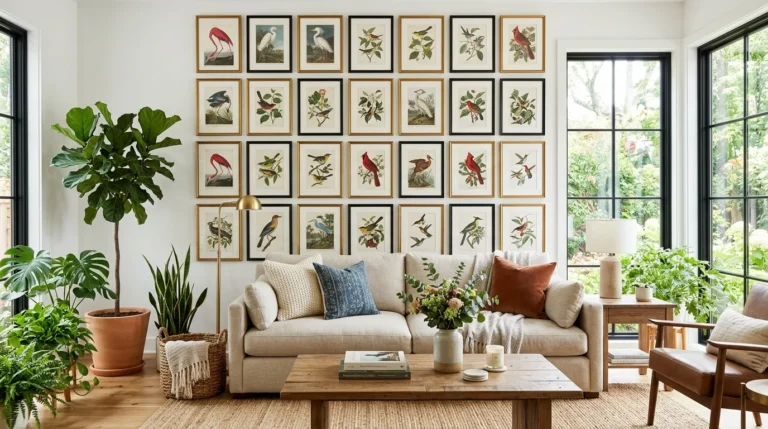
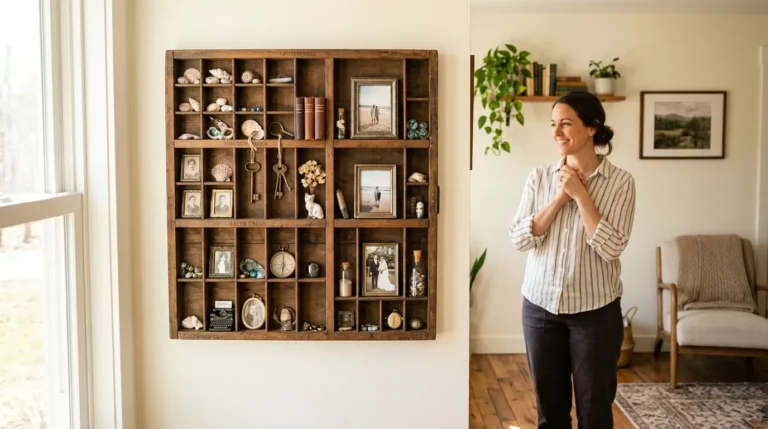
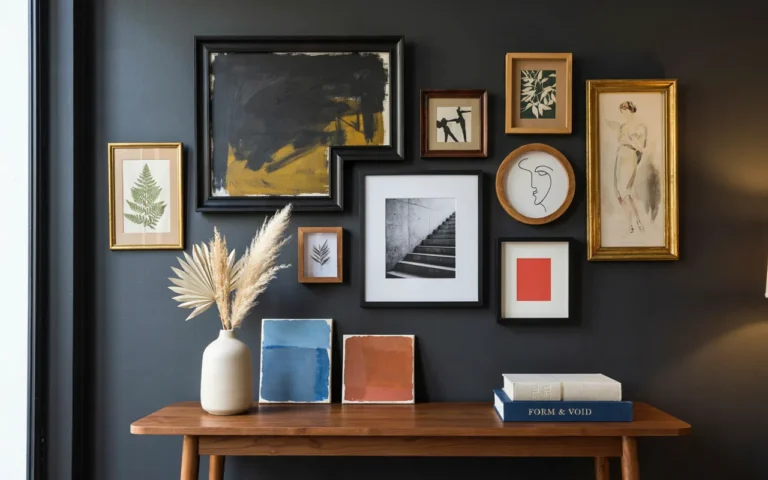
A gallery wall turns a mudroom from a purely utilitarian space into one that feels like home. Mix framed family photos, kids’ artwork, travel snapshots, and a few graphic prints for variety in size, texture, and colour. Start with one anchor piece and build outward, leaving even spacing between frames for a polished look.
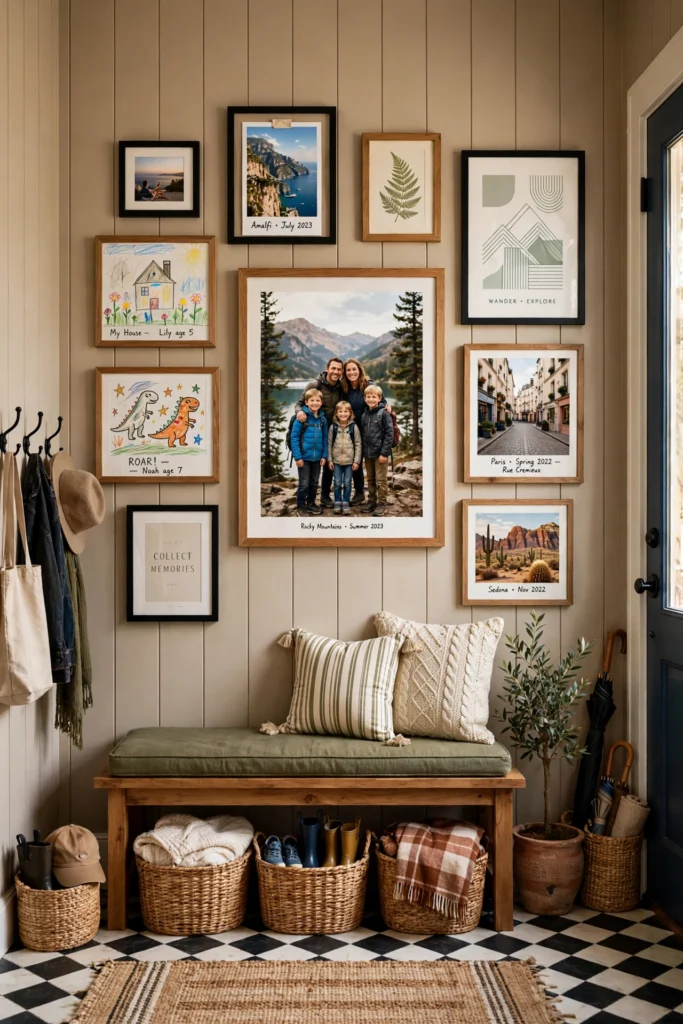
This is one of the easiest mudroom wall decor ideas to update over time, since you can simply swap in new photos or seasonal pieces without touching the layout. Hang the gallery above bench height, not at coat height, or frames will get knocked every time a bag swings past. A gallery that lives above the coats stays clean and stays straight.
3. Add wallpaper for instant character
Wallpaper is one of the fastest ways to give a mudroom a completely new personality. Because it is a smaller space, you can afford to go bolder than you might in a living room: think botanical prints, bold stripes, or a playful geometric pattern. Peel and stick options are especially popular for mudrooms since they are renter friendly and easy to swap out if your taste changes.
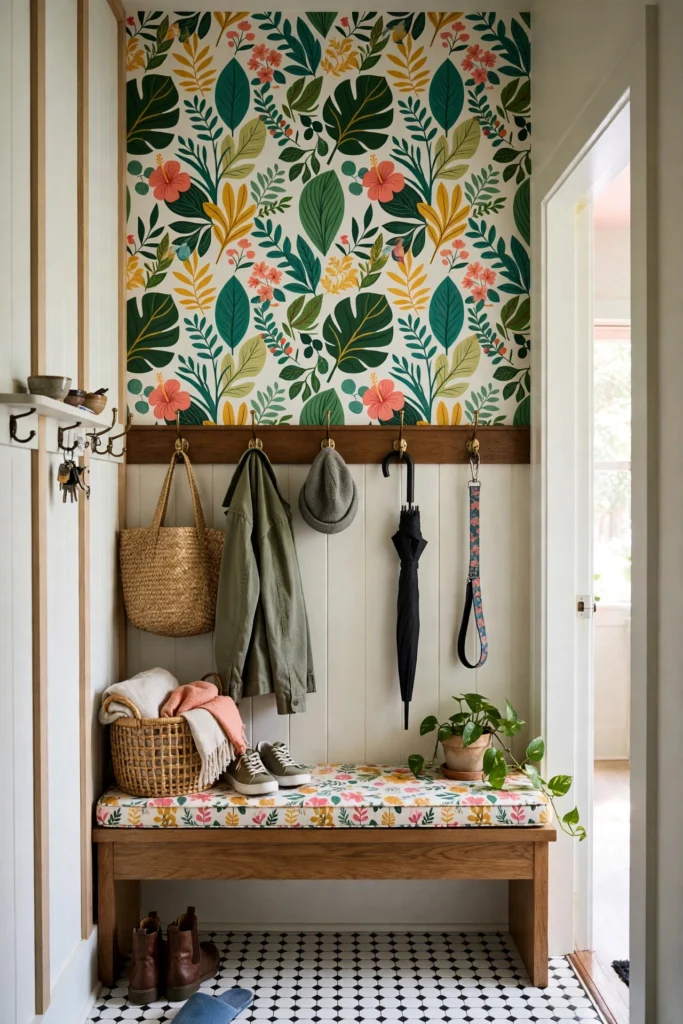
Just make sure to choose a washable or vinyl coated wallpaper near coat hooks and benches, where damp jackets and muddy hands are a daily reality. A paper that cannot be wiped will look tired within a season, however beautiful it looked on day one. For a renter friendly version of the same idea, our renter friendly apartment upgrades cover peel and stick finishes that come off cleanly when you move.
4. Use shiplap or beadboard panelling
Shiplap and beadboard panelling bring texture and a classic farmhouse charm to mudroom walls, and they happen to be incredibly practical too. Painted in a crisp white or a bold hue, panelling adds visual interest while standing up to the daily wear of boots, bags, and bikes brushing against it. It also gives you a durable backdrop for hooks, shelves, and cubbies to be mounted directly into.

For a modern twist, try vertical panelling instead of the traditional horizontal look to draw the eye upward in a smaller mudroom. Vertical lines make a low ceiling feel taller, while horizontal lines make a narrow room feel wider. Choose the direction that fixes your room’s actual problem, not the one you saw most recently.
5. Hang a mirror to expand the space
A mirror on a mudroom wall is not just practical for a last minute outfit check. It is also one of the simplest ways to make a small entryway feel larger and brighter. Position it across from a window or doorway so it reflects natural light back into the room. Choose a mirror with an interesting frame, like a rounded silhouette or a distressed wood finish, to add a decorative moment rather than a purely functional one.

Even a small mirror can make a big visual difference in a tight mudroom, as long as it reflects something worth doubling: light, a plant, or a clean wall. A mirror that reflects a pile of coats doubles the clutter, so hang it on the wall opposite the hook row if you can, not directly above it.
6. Add floating shelves for display and storage
Floating shelves give you the flexibility to display decor and store everyday items without eating into your mudroom’s floor space. Use them to hold labelled baskets, a stack of folded towels, or a few decorative accents like a small plant or ceramic bowl. Because they are mounted directly to the wall, floating shelves work especially well in narrow mudrooms where a full cabinet just will not fit.
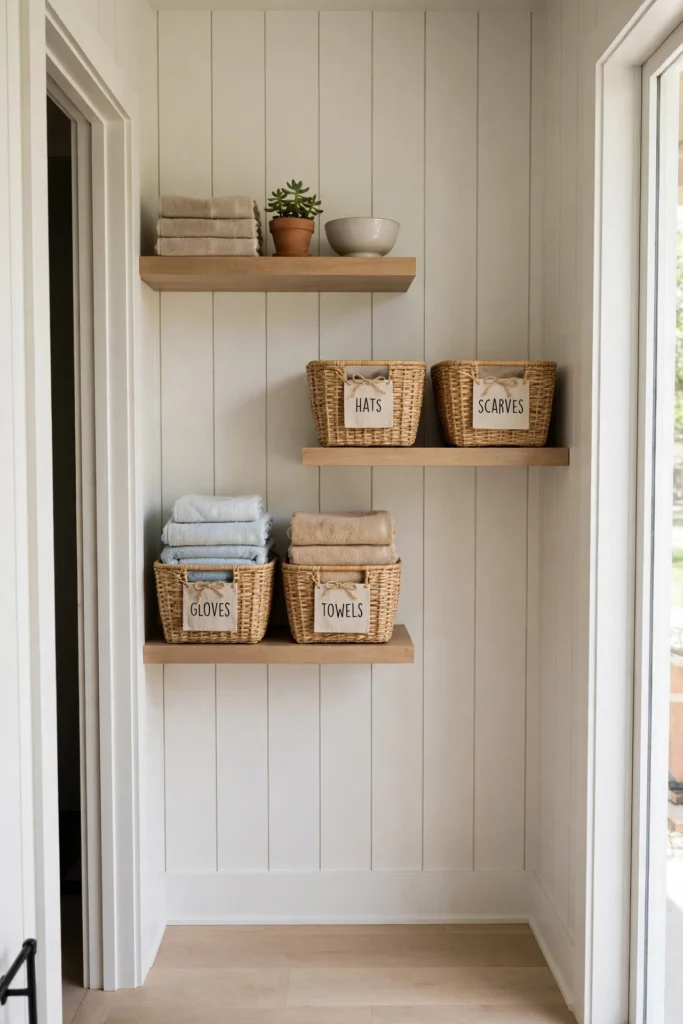
Stagger a few shelves at different heights for visual interest, or keep them lined up for a clean, streamlined look. Keep the lowest shelf above head height for anyone sitting on the bench below, and keep heavy baskets low, not high. A shelf that requires a step stool for everyday items will stop being used within a week.
7. Install a chalkboard or memo board
A chalkboard or corkboard on the mudroom wall turns the space into a genuine command centre for the whole family. Use it for grocery lists, reminders, or a quick note before everyone heads out the door. For a more polished look, frame the chalkboard in reclaimed wood or matching millwork so it feels intentional rather than like an office supply.
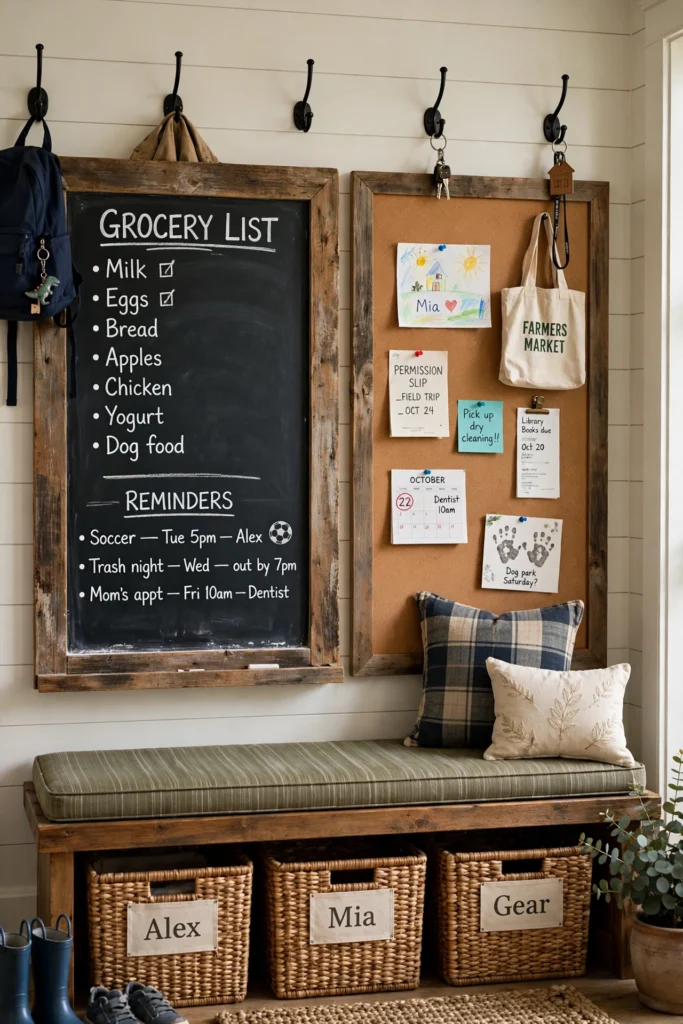
This is one of the most functional mudroom wall decor ideas out there, especially for busy households juggling school schedules and daily errands. Put the board at adult eye level near the door, not hidden behind coats, and keep chalk or pins in a small pot fixed to the frame. A board with no chalk is just a black rectangle.
8. Try board and batten detailing
Board and batten adds architectural texture to an otherwise flat mudroom wall, giving it a custom, high end look without a full renovation. Vertical battens installed partway up the wall create a classic panelled effect that pairs beautifully with a bench or built in cubbies below.

Paint the battens a moody, saturated colour like navy or hunter green for extra drama, or keep them white for a timeless, classic feel. It is a relatively simple weekend project that makes a mudroom feel far more finished, and it protects the lower wall from scuffs far better than paint alone. Finish the top edge with a small ledge, and that ledge becomes a shelf for keys and post without any extra furniture.
9. Go bold with an accent colour
Because mudrooms are transitional spaces rather than rooms you linger in, they are the perfect place to experiment with a bold paint colour you might hesitate to use elsewhere. Deep hunter green, moody navy, or a cheerful mustard yellow can instantly energise the space and make it feel intentional rather than an afterthought.

If a full colour drench feels like too much, try painting just the lower half of the wall in a bold shade paired with white trim above for a layered, dimensional look. That split also has a practical benefit: the bold lower half hides scuffs better than white, and the white upper half keeps the room feeling bright. If your entry is really a tiny hall rather than a separate room, our small entryway ideas show how the same bold lower wall works in a space with no foyer at all.
10. Display a vintage or custom sign
A vintage inspired sign or custom family name plaque adds warmth and personality to a mudroom wall without requiring much effort. Choose something simple and understated rather than an oversized, overly wordy piece, which can quickly feel dated. A small reclaimed wood sign with a house number, a welcome message, or a meaningful quote strikes the right balance between charm and sophistication, giving the space a lived in, collected feel.
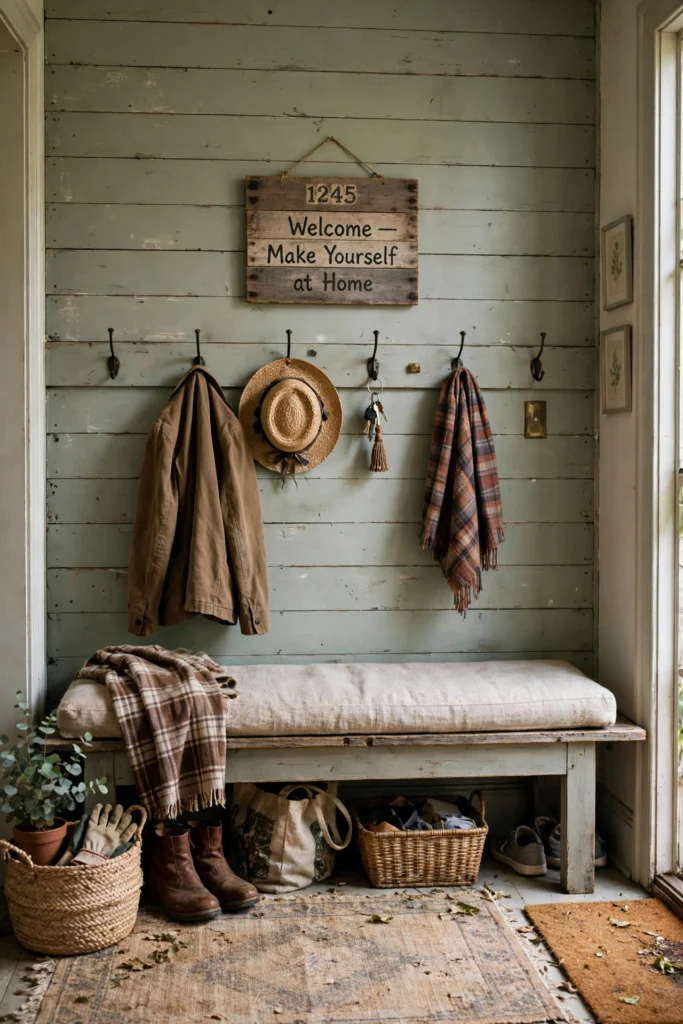
One sign is enough. Two signs compete, and three turn a wall into a gift shop. Hang the sign where it is read on the way in, not where it is hidden behind an open door, and keep the rest of that wall section clear so the sign can breathe.
11. Mount wall baskets for storage with style
Woven wall baskets are a beautiful way to add texture while creating extra storage for gloves, scarves, or dog leads. Group a cluster of baskets in varying sizes for a layered, textural look, or line up matching ones for a cleaner, more organised appearance. Because they are mounted on the wall rather than sitting on a shelf, they free up valuable floor and counter space, which is especially useful in a smaller mudroom.
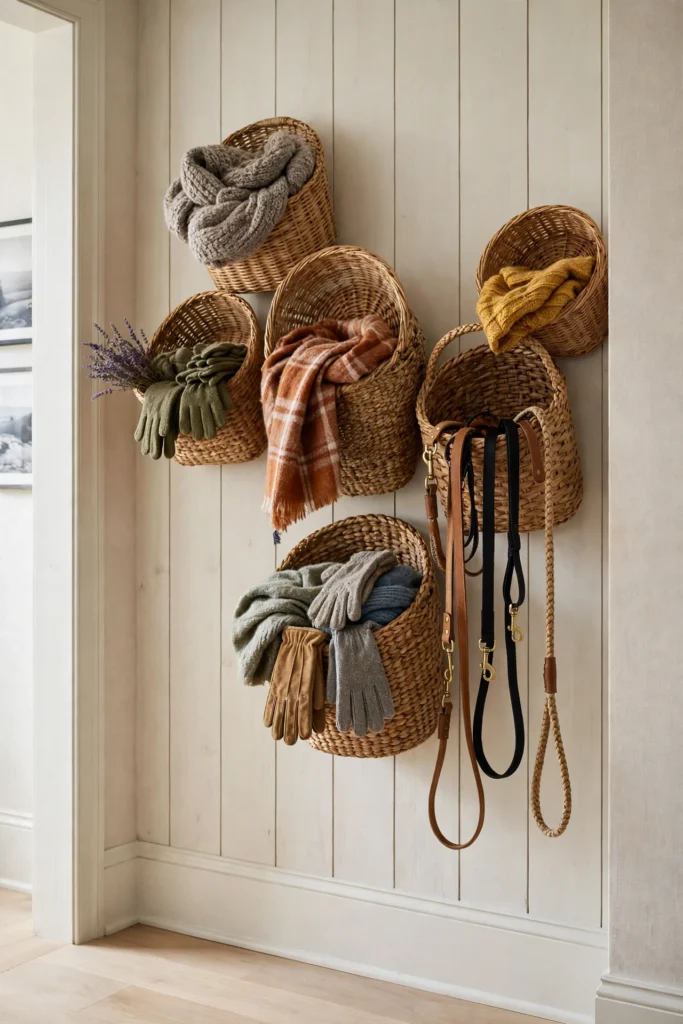
Give each basket a job and a label, even a small one. Gloves in one, dog leads in another, hats in a third. Unlabelled baskets become a single mixed basket within a month, because nobody remembers which one was meant for what. A basket for each person, at that person’s hook height, works even better in a family entry.
12. Use picture ledges for flexible display
Picture ledges offer more flexibility than traditional framed art, since you can easily lean, layer, and rearrange pieces whenever the mood strikes. Use them to display a rotating mix of family photos, postcards, or seasonal artwork without committing to a permanent gallery wall layout.

This is a great option for renters or anyone who likes to refresh their decor often, since picture ledges require just a few small holes rather than a wall full of nail marks. Keep the ledge above coat height, and lean rather than hang the heaviest frames, so a knocked frame slides rather than falls.
13. Add wainscoting for timeless charm
Wainscoting brings a classic, polished look to mudroom walls while also protecting them from scuffs and scrapes caused by backpacks, umbrellas, and daily foot traffic. Traditional raised panel wainscoting suits a more formal entryway, while simple flat panel styles feel more casual and modern.
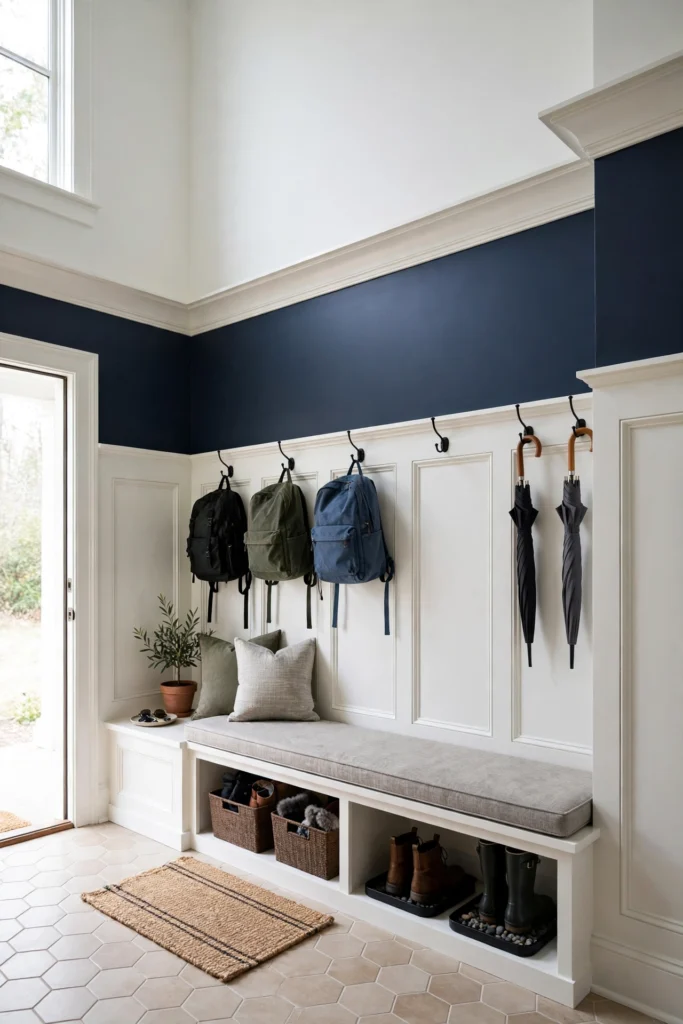
Pairing wainscoting with a contrasting paint colour above adds depth and makes the ceiling feel higher, a helpful trick in smaller mudrooms with limited natural light. Wainscoting is also the most forgiving wall finish for a mudroom, because a scuff on a painted panel can be touched up in minutes, while a scuff on wallpaper cannot.
14. Hang a wall mounted coat rack with character
If a full wall of individual hooks feels too busy for your space, a single statement coat rack can be just as functional while taking up far less visual real estate. Look for a rack with an interesting silhouette, like a sculptural metal design or a reclaimed wood beam with a few sturdy pegs.

This works especially well in smaller mudrooms or apartment entryways where every inch of wall space counts, giving you storage and style in one compact piece. A single rack also makes the entry feel calmer, because the eye reads one object instead of a row of separate hooks, bags and coats. If your entry doubles as a laundry drop zone, the same one rack logic helps there too, as our small laundry room storage ideas show: one clear system per wall beats three half systems.
15. Layer in textural wall art
Finally, do not underestimate the impact of textural wall art in a mudroom: think woven wall hangings, dried floral arrangements, or a simple wood sculpture. These pieces add warmth and organic texture without requiring any additional storage function, giving the wall a softer, more intentional feel.
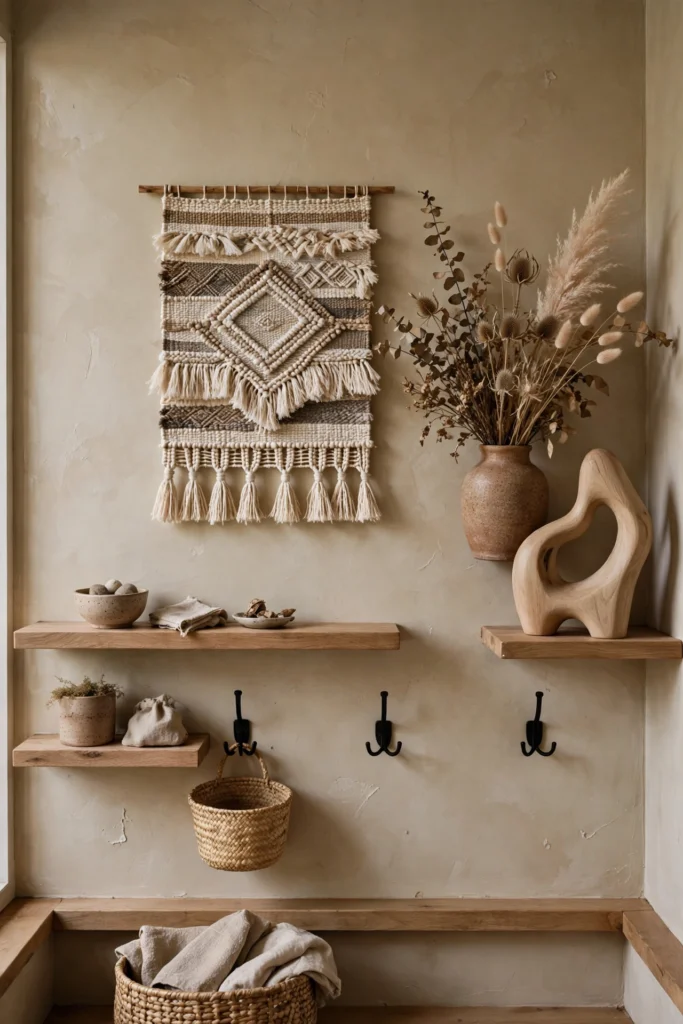
Layering in one or two textural pieces alongside your hooks and shelves keeps the mudroom from feeling purely utilitarian and makes it a space you are genuinely happy to walk through every day. Keep textural art away from the wettest spot, near the door where rain drips, and put it on the drier wall instead, where it will last and stay clean.
Plan the wall by the size of your entry
A tiny drop zone and a full mudroom do not need the same wall, even if they use the same ideas. In a tiny drop zone, pick three things and stop: a hook row, a mirror or a light colour, and one basket for small items. Everything else will crowd the wall and make the entry feel smaller, not smarter. A single picture ledge above the hooks can carry the personal touch without adding furniture.
In a medium entry with a bench, add the next layer: panelling or wainscoting on the lower wall, a shelf above the hooks for baskets, and a command board near the door. That combination survives daily use because the durable lower wall takes the scuffs, the shelf takes the overflow, and the board takes the paper that otherwise ends up on the bench.
| Entry size | Wall priorities, in order | What to skip for now |
|---|---|---|
| Tiny drop zone | Hooks, mirror, one basket | Gallery wall, full panelling, multiple shelves |
| Bench entry | Hooks, durable lower wall, shelf, command board | Large gallery, heavy built ins |
| Full mudroom | Hooks, panelling, shelves, baskets, gallery, command centre | Nothing essential, but keep one wall section clear |
In a full mudroom, you can use the whole set, but keep one section of wall deliberately clear. That clear section is where a guest coat, a sports bag, or a delivery box can go without unbalancing the whole wall. A mudroom that is full on a quiet day has no slack for a busy day, and busy days are when you need it most.
Questions families ask about mudroom walls
What is the easiest way to decorate a mudroom wall on a budget?
Adding a few statement hooks, a small gallery of framed photos, or a coat of bold paint are all inexpensive ways to transform a mudroom wall without a big renovation.
Is wallpaper practical for a mudroom?
Yes, as long as you choose a washable or vinyl coated wallpaper, especially near coat hooks and benches where moisture and daily wear are common.
How can I make a small mudroom wall feel bigger?
A well placed mirror, light paint colours, and floating shelves instead of bulky furniture can all help a small mudroom wall feel more open and spacious.
Should mudroom wall decor be different from the rest of the house?
It can be. Since mudrooms are transitional spaces, they are a great place to experiment with bolder colours, patterns, or wallpaper you might not use elsewhere in the home.
What wall materials hold up best in a mudroom?
Durable options like shiplap, beadboard, wainscoting, and washable paint finishes stand up well to daily traffic, moisture, and scuffs from bags and shoes.
How do I keep a mudroom wall organised and not cluttered?
Mix functional elements like hooks and floating shelves with a few decorative pieces, and use labelled baskets or bins to keep smaller items contained and out of sight.
A wall that greets you properly
A mudroom wall earns its keep when it does three things at once: it holds what you arrive with, it survives the daily scuffs, and it looks like part of the home rather than a corridor. Start with the hooks at the right heights, add one durable finish, and put a mirror where it catches light. Then add the personal pieces, one at a time, until the wall feels like yours. If you are planning a wider entry refresh, our studio apartment layout ideas and apartment design ideas use the same walk through principle: design for the first five steps a person takes in a room, and the rest of the room usually follows.