Yes, you can redecorate a room on a budget and make it look genuinely different, not just a little tidier. The trick is order. Start with the free changes, then spend on paint and light, and only then buy textiles and small details. That sequence is what this guide follows, with 14 changes ranked by how much they change the room for the money they cost.
A cheap room makeover works best when you pick one clear direction before you spend anything. Choose two or three colours you actually like, decide what the room is for, and then work through the list in order. This plan works at about $100, $300 or $500, because the free steps do most of the work.
Before you buy a single thing, walk into the room and look at it the way a guest would. What do you notice first: the colour of the walls, the light, the clutter, or the sofa pushed flat against the wall? The 14 changes below run in impact order, so do the free ones first, even if you have money to spend, because a clean, well arranged room makes every dollar after that work harder.
How to Redecorate a Room on a Budget for Free
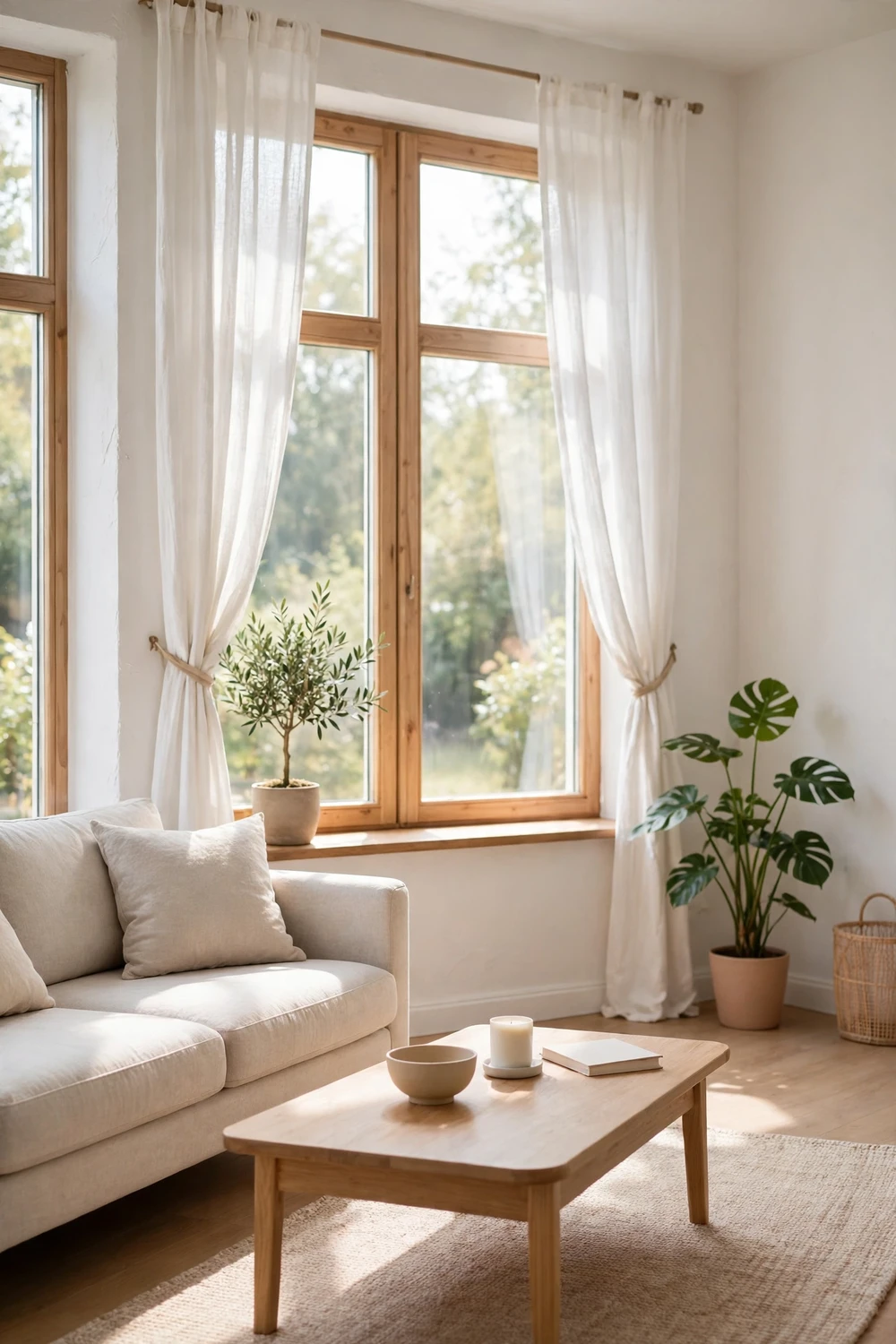
The best budget room refresh costs nothing at all. It is the part most people skip, because it feels like housework rather than decorating, but it changes a room more than any single purchase. An edited, clean room shows off its furniture, light and colours, while a cluttered room hides all of them, no matter how much you spend.
1. Declutter and deep clean
Take everything off the surfaces first, then put back only what earns its place. A side table with three things on it looks styled, while the same table with twelve things on it looks like storage. Be honest about what you actually use and love, and move the rest to another room, a box, or out of the house. You are giving the room space to breathe.
Then clean like you mean it. Wash the windows inside and out, because dirty glass cuts the light in half, and dust the fittings, skirting boards and floor properly. A room that smells fresh and lets the light in feels redecorated before you have spent a cent.
2. Take one thing out of the room
Almost every room has one piece too many. It might be an extra chair nobody sits in, a small table that blocks the walkway, or a shelf that holds things you stopped noticing years ago. Remove one piece and live with the gap for a day. Most of the time the room feels bigger and calmer, and you will not miss what you took out.
Editing is a design skill, not a loss. Shops look good partly because they show so little, and when you remove one piece the pieces that stay get more attention. If the gap feels empty after a day, bring the piece back, but try the empty version first. A free room restyle starts with subtraction, and it is the cheapest change on this whole list.
Rearrange the Furniture, Then Shop Your Own Home
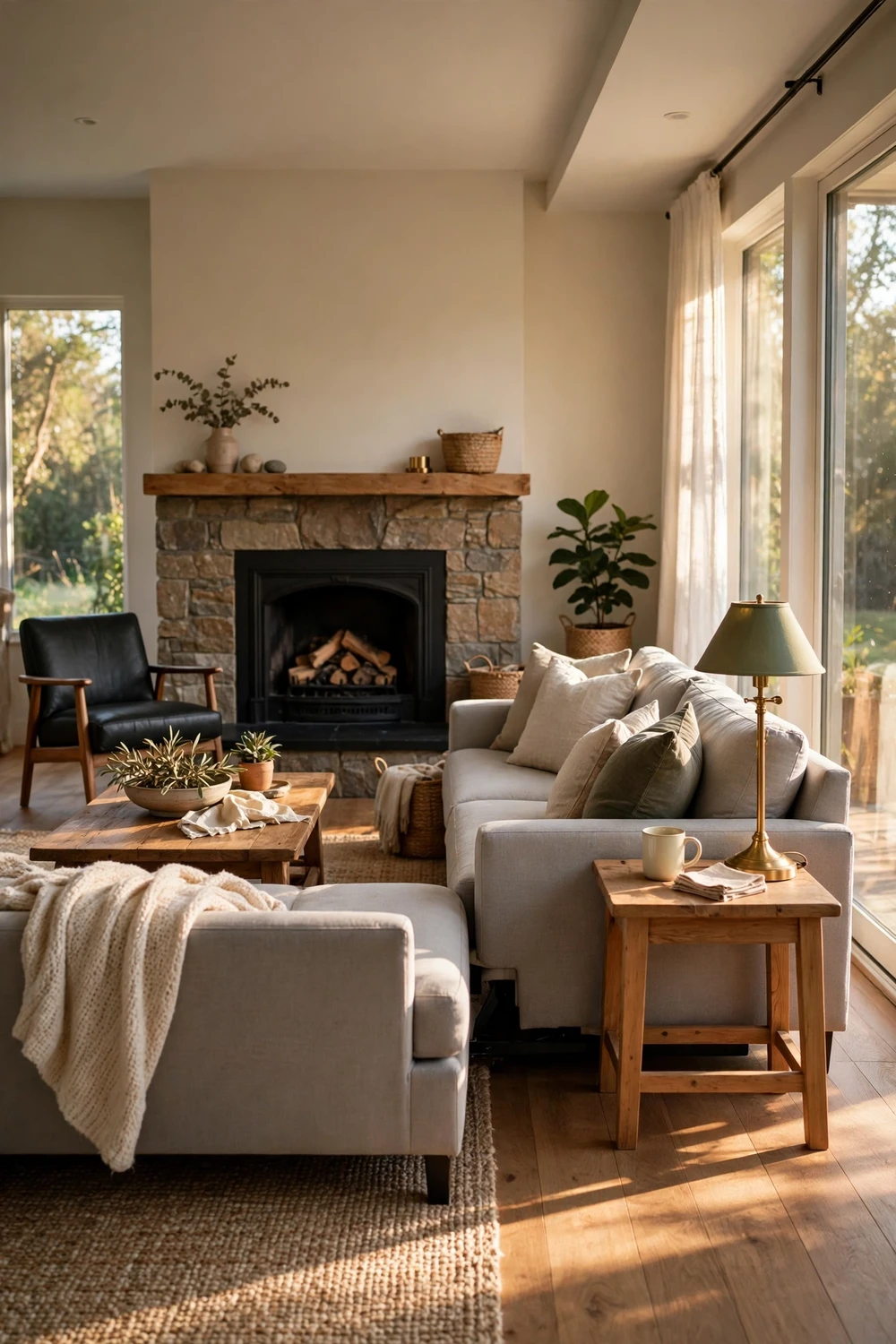
Once the room is clean and edited, move the furniture. This is the second free step, and it is the one that surprises people most. The same sofa, rug and lamp can look like a new room in different places, because layout decides how a room feels to walk through and where your eye goes first.
3. Rearrange the furniture around a focal point
Pick one focal point and arrange around it: the fireplace, the television or the best window in a living room, the bed and the wall behind it in a bedroom. Pull the main seating a few inches away from the wall, even in a small room. Furniture pressed flat against every wall makes a room feel like a waiting area, while a small gap behind a sofa creates depth and makes the layout feel considered.
Try the bed or sofa on a different wall if the room allows it, and sit in each seat to check the view and the light. A chair facing a window gets used more than one facing a blank wall. Move things, live with the layout for an evening, then adjust. Rearranging costs nothing, and it is the fastest way to find out what your room actually wants.
4. Shop your own home before you shop a store
Before you buy anything, walk through the rest of your house with fresh eyes. The lamp in the spare room, the art in the hallway, the rug under the dining table and the throw on the guest bed are all candidates. Swap a lamp from the bedroom into the living room, move art to a wall where it finally fits, or trade a rug between two rooms. A piece that has gone stale in one place often looks new in another, because the light and colours around it are different.
Raid your own cupboards too. A tray from the kitchen can organise a coffee table, a basket can hide remotes and chargers, and a stack of books can lift a lamp to a better height. Moving things between rooms stops you buying a duplicate of something you already own, and if you shop later you will know exactly what you still need.
Paint Is the Highest Impact per Dollar
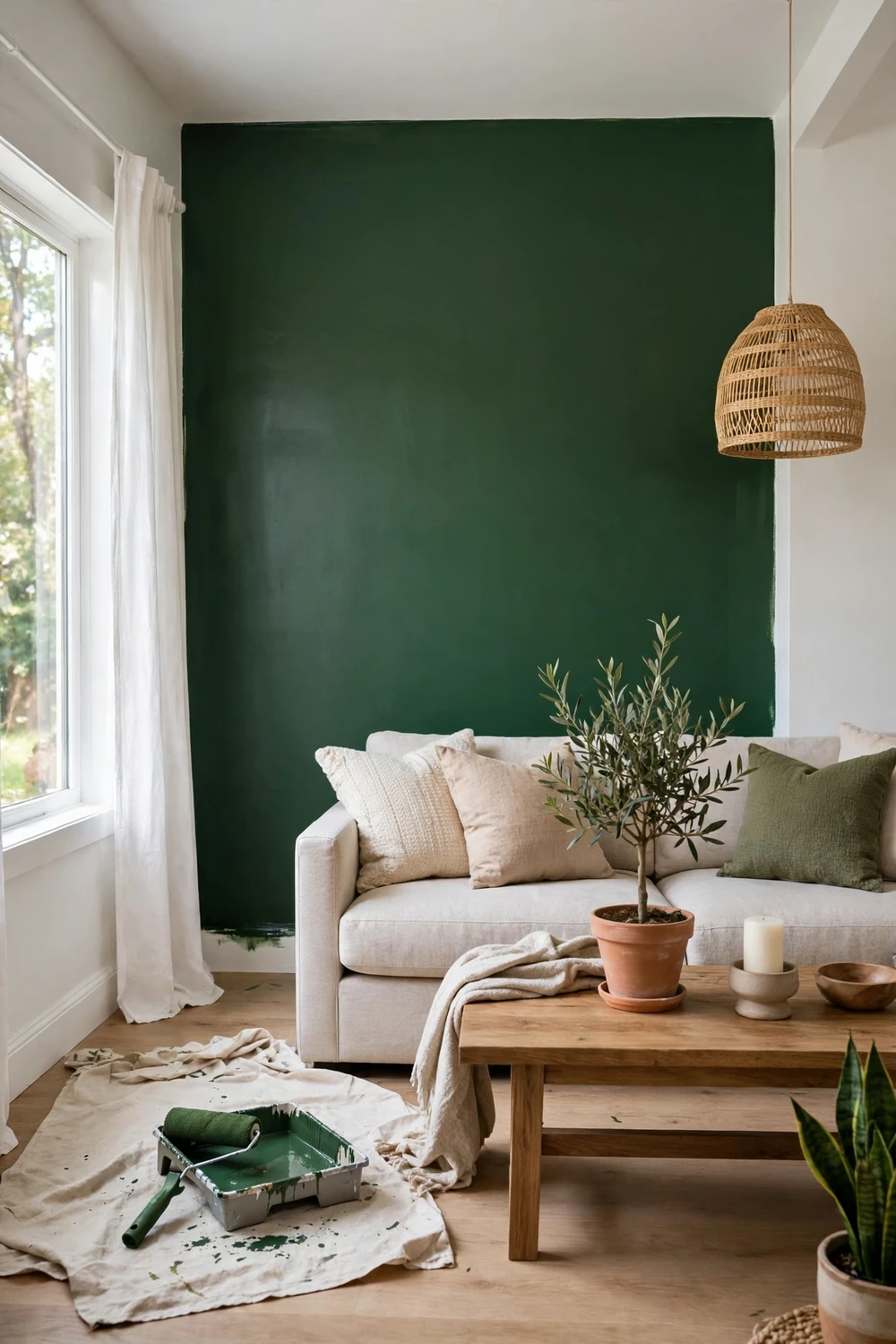
If you spend money on only one thing, spend it on paint. Nothing else changes a room so completely for so little: a tin of paint costs far less than a new sofa, yet it changes every wall you can see. My own view is simple. I would rather paint one wall well and buy one good lamp than fill a room with ten small new things that add nothing. Paint is the change you notice from the doorway, and it sets the tone for everything else.
5. Paint a feature wall, or the whole room
A feature wall is the cheapest way to test a bold colour without committing the whole room. Choose the wall you see first when you walk in, usually behind the sofa or the bed, and paint it a colour with some depth. Deep green, warm navy, terracotta and charcoal all work well as single walls, because they give the room a backbone while the other walls stay light. Paint the whole room if the existing colour is tired or wrong for the light, but a single wall is enough when the room already has good bones.
Always test before you commit. Paint large swatches on two different walls and look at them in morning, evening and lamplight, because colours shift a lot through the day and a shade that looks calm at noon can look cold at night. For more on choosing colours that work together, see this guide to how to use colour in interior design. There are also plenty of renter friendly upgrades that change a room without touching the walls at all.
6. Paint a piece of furniture or a door
Paint is not only for walls. An old dresser, a tired side table, a bookshelf or an interior door can get a second life with a coat of paint, and the change is often bigger than the effort. A dark dresser painted soft cream or sage can lift a whole bedroom, and a door painted a deep colour adds character to a plain hallway for very little paint.
Preparation matters more than the painting itself. Clean the piece, sand it lightly so the paint grips, and prime dark wood or glossy surfaces. Two thin coats beat one thick coat, which drips and dries unevenly, and new handles at the same time make it look like a new piece altogether. It is a good weekend job, and one of the few changes here that adds value to something you already own.
Layer the Light Before You Buy Anything Else
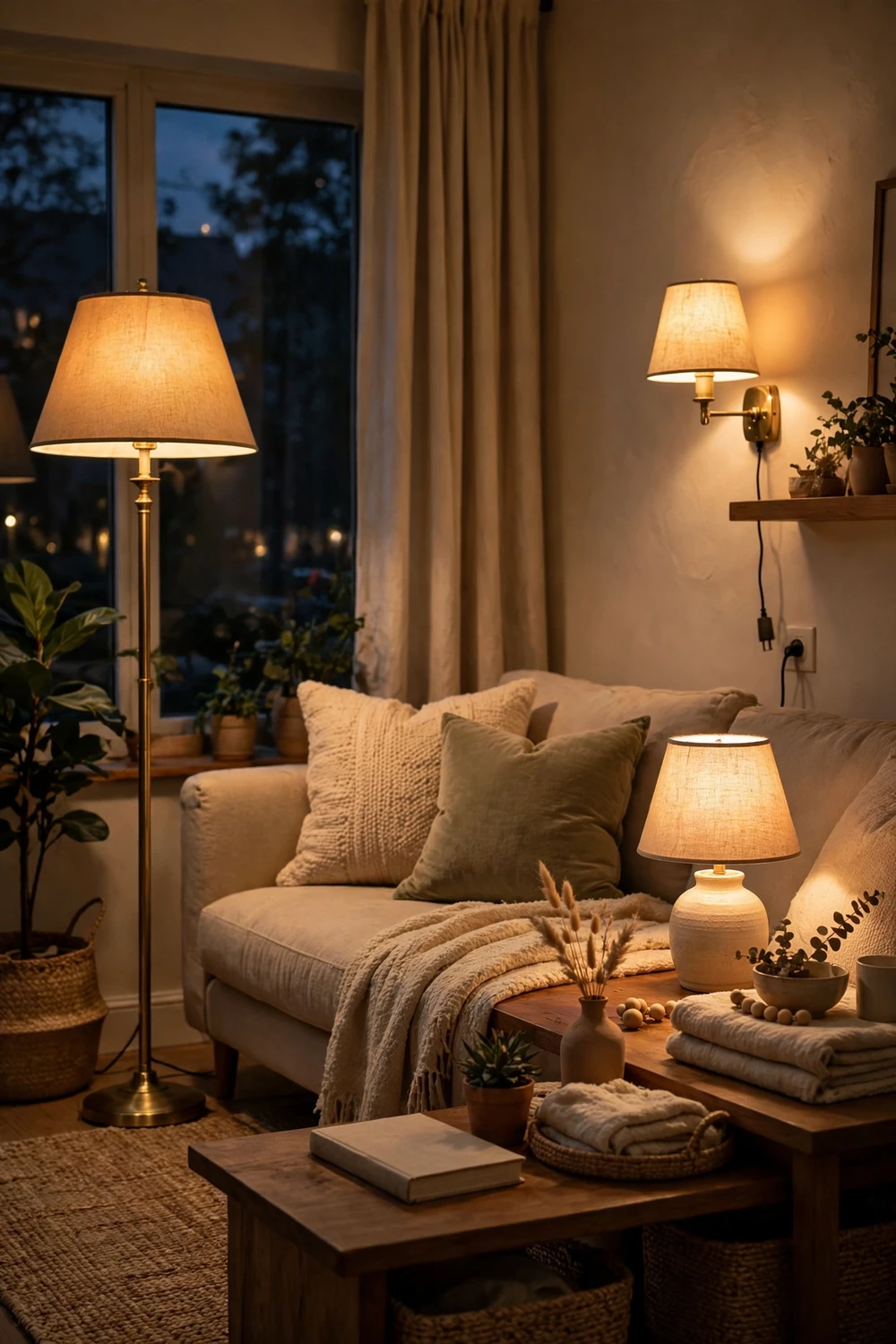
Most rooms have one light, in the middle of the ceiling, and it does all the work badly. It throws shadows, flattens colours and makes the room feel harsh at night. A room with three gentle light sources at different heights feels warm and finished, while one bright ceiling light feels like an office. Lighting is the change guests notice without knowing why, and it costs far less than new furniture.
7. Add a second and third light source
Think in three layers. Ambient light is the general glow, usually from the ceiling. Task light is for reading or working, usually from a table or floor lamp beside a chair. Accent light draws attention to something, like a picture light or a plug-in wall light beside a bed. Most rooms only have the first layer, so adding the other two makes the biggest difference.
A floor lamp in a dark corner, a table lamp on a sideboard, or plug-in sconces flanking a bed can change how a room feels after dark. Plug-in lights need no electrician and no holes beyond a hook or two. Place lamps at different heights so light comes from more than one direction, and keep one near where you sit in the evening. A lamp you can switch on without getting up gets used every night, and that is what makes a room feel like home.
8. Switch to warm bulbs and change the shades
Check the bulbs you already have. Cool white bulbs can make a cosy room feel cold and clinical, especially in a living room or bedroom. Warm white bulbs, usually around 2700K, give a softer glow that suits evening light. The number is printed on the bulb or the box, so it is easy to check. Swap the bulbs in your main fittings first, then match the lamps so the whole room glows the same colour.
Shades matter as much as bulbs. A dated or yellowed shade dulls the light and dates the whole fitting, while a clean linen shade softens it. A drum shade on a table lamp or a simple fabric shade on a pendant can refresh a fitting for very little money. Keep shades in proportion to the lamp base, because one too small looks pinched and one too large looks top heavy. Light is one of the cheapest ways to redecorate a room on a budget, and it is the one most people underestimate.
Textiles That Change How the Room Feels
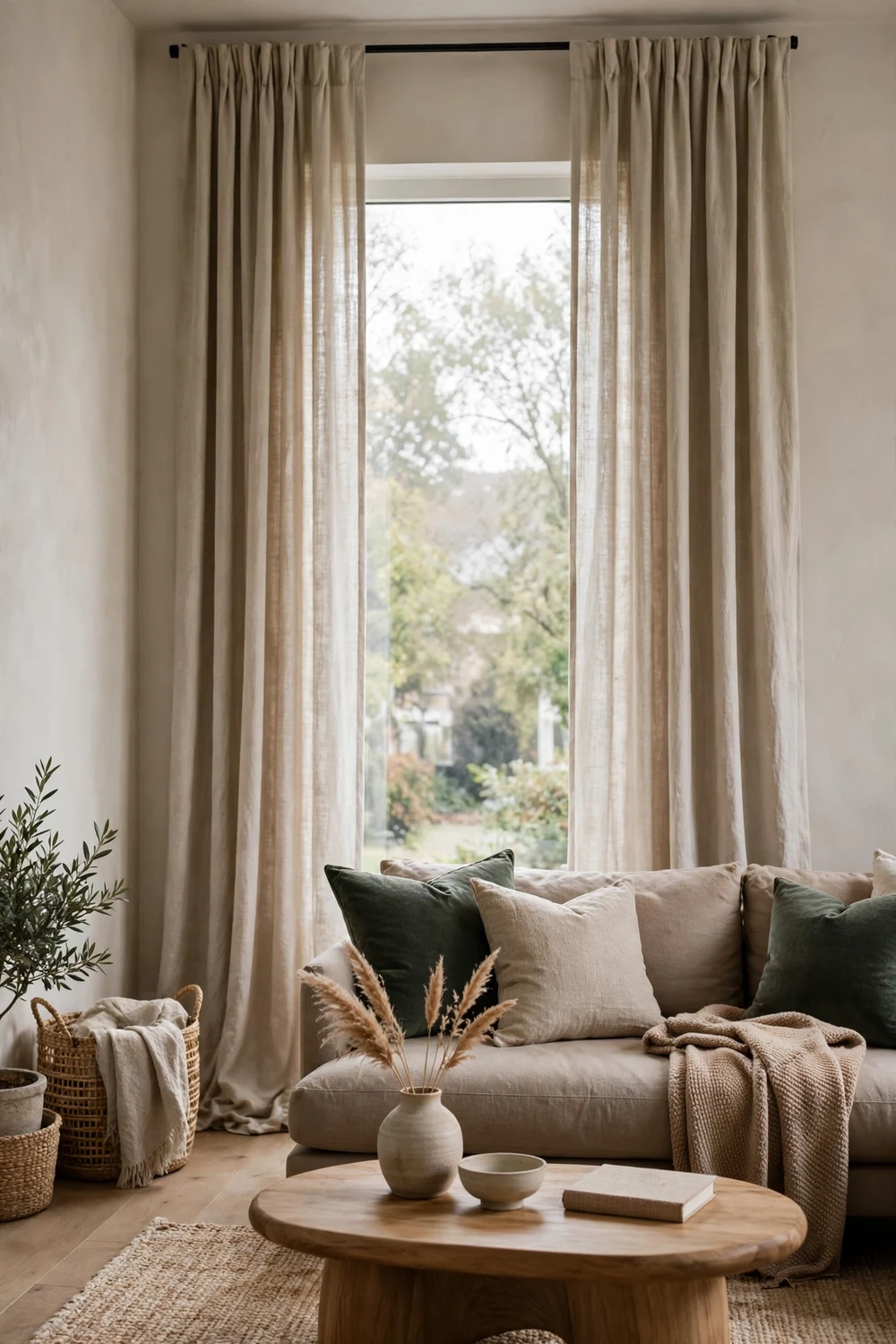
Textiles are the soft layer of a room, and they change how it feels to sit in it. Curtains, cushions and throws add colour, pattern and warmth without any building work, and they are easy to change again later. They are also where small budgets go furthest, because covers cost far less than new cushions.
9. Hang curtains high and wide
Curtains hung the wrong way can make a room feel smaller than it is. A short rod and curtains that stop at the sill chop the wall in half and hide the window. Hang the rod close to the ceiling, at least 10 to 15 centimetres above the frame, and extend it 15 to 20 centimetres past the frame on each side. Let the curtains fall to the floor, so the wall looks taller and the window looks bigger.
Choose a fabric that suits the room. Linen suits relaxed living rooms and bedrooms, while a heavier cotton or velvet suits a room that needs warmth and privacy. A plain colour that matches your palette is safer than a bold pattern if the room already has patterned cushions or a busy rug. If you want the full measuring guide, this walkthrough on how to hang curtains like a pro covers height, width and length room by room. Curtains improve a room in daylight and at night, because they soften hard edges and frame the view.
10. Swap pillow covers, not pillows, and add a throw
New cushions are expensive, but covers are not. Keep the inserts you already have and buy covers in your chosen palette, in a mix of textures rather than loud patterns. A velvet cover, a linen cover and one patterned cover sit well together, while four different patterns usually fight each other. Two or three cushions on a small sofa are enough.
Add a throw over one arm of the sofa or folded across the foot of the bed. It adds colour and texture, and it gets used on cold evenings, which is the point. A chunky knit against smooth linen looks more expensive than a matching set. If you want help choosing combinations, this guide to mixing and matching throw pillows explains size, colour and pattern in plain terms. Covers and throws are the quickest textile change you can make, and you can do both in an afternoon.
Ground the Room With a Rug and Some Green
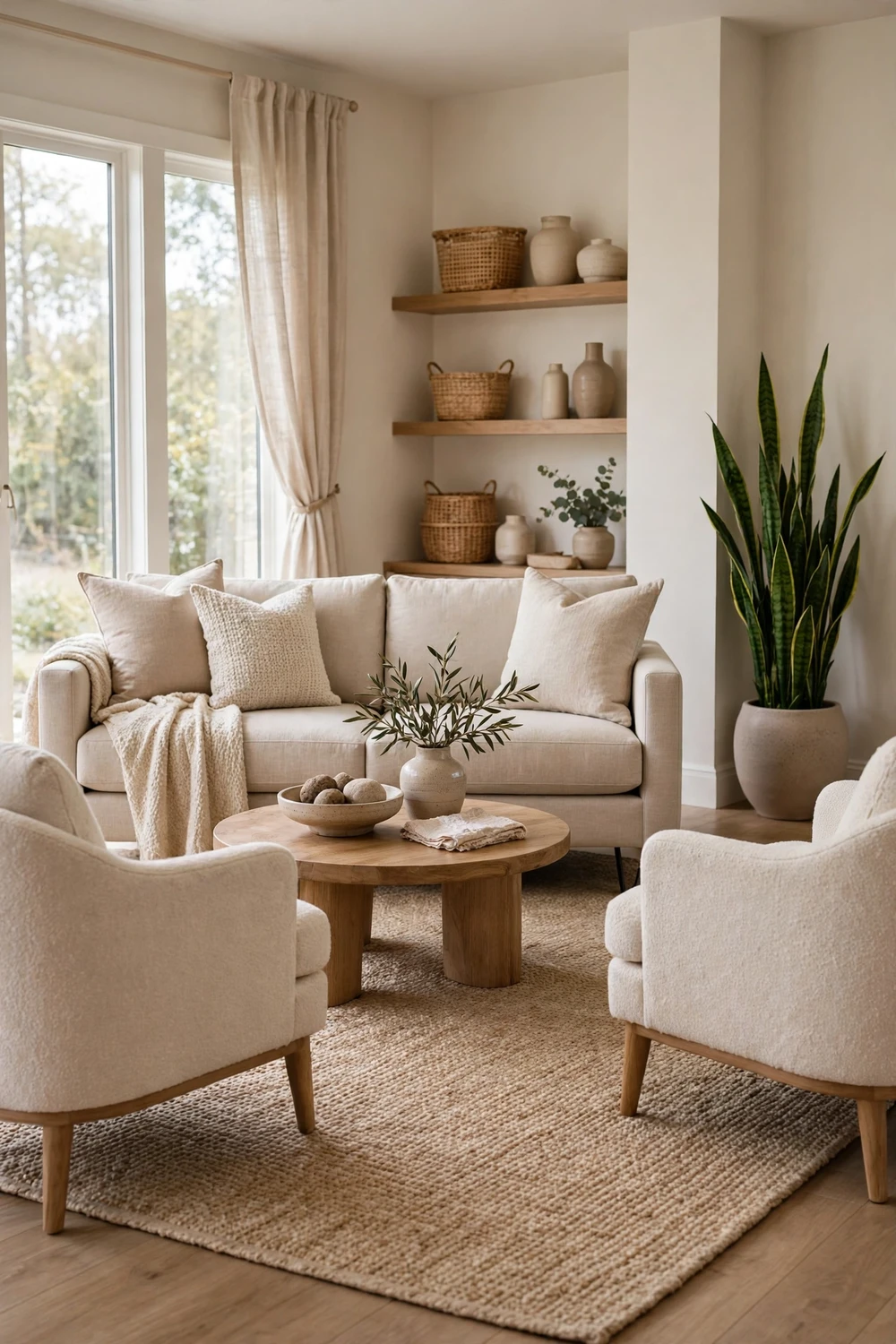
A room without a rug can feel like furniture floating on a bare floor. A rug pulls the pieces together, defines the seating area, and adds warmth underfoot. Plants do a similar job at a different height, filling empty corners and softening hard lines.
11. Choose a rug that grounds the room
The most common rug mistake is buying one too small. A rug that only fits under the coffee table makes the seating area look scattered, while one large enough for the front legs of the sofa and chairs to sit on pulls the whole group together. In a living room that usually means at least 160 by 230 centimetres for a two seat sofa, and larger for a three seat sofa.
A plain rug in a warm neutral lets patterned cushions and art do the talking, while a patterned rug can carry a plain room on its own. If you are choosing between two sizes, the larger one is usually right, as long as it leaves a border of floor showing around the edges. For a full room by room size guide, see how to choose the perfect rug for your home. A rug is one of the bigger spends on this list, so measure twice before you order.
12. Add plants, and style them properly
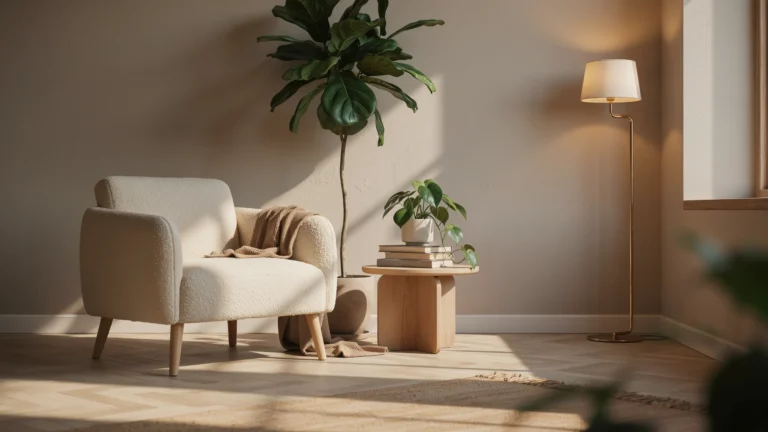
One healthy plant in the right pot does more than five small plants scattered on windowsills. Choose a plant that suits your light, not just the one you like the look of: a snake plant or pothos copes well in low light, while a fiddle leaf fig wants a bright spot and regular attention. Put it where it gets noticed, like a floor plant in an empty corner, and give it a pot that matches the room.
Pots are part of the decoration, so skip the plastic nursery pot if you can. A ceramic, terracotta or woven basket pot makes the plant look intentional rather than temporary. Group plants in odd numbers and vary the heights so the group looks natural. If real plants keep dying in your home, one or two good quality artificial plants are better than a row of dead ones, but keep them dusted and out of direct sun so they do not fade.
Small Hardware Swaps That Look Expensive
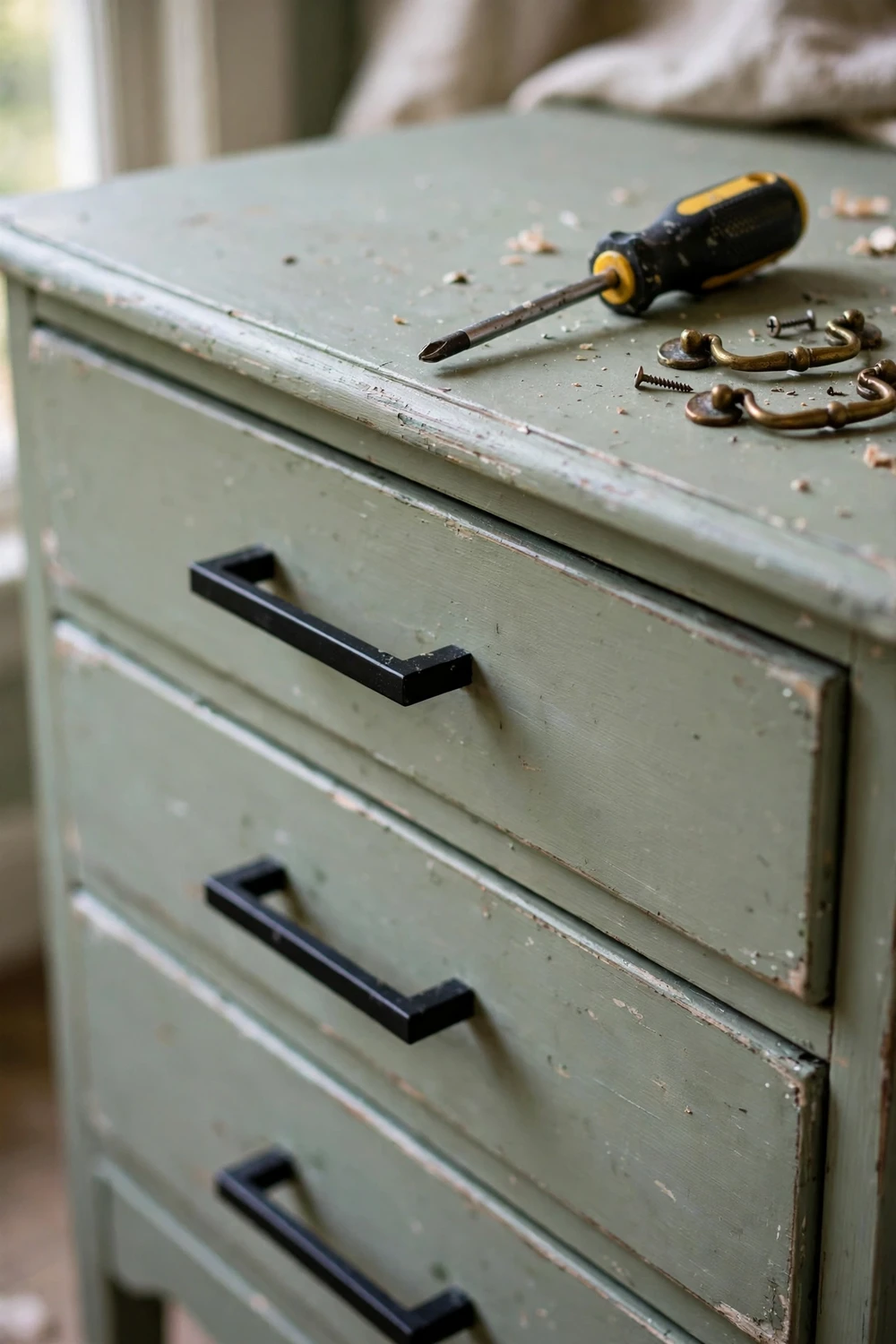
Hardware is the jewellery of a room. Handles, knobs and pulls are small, but you touch them every day, and old or mismatched ones date a piece of furniture fast. Swapping them takes under an hour and needs no special skill beyond a screwdriver.
13. Change the pulls, knobs and handles
Start with the piece you use most, usually a dresser, a bedside table, or kitchen cupboards. Remove one handle and measure the distance between the screw holes before you buy replacements, because that measurement decides what fits. Handles that match the style of the room, like matte black for a modern room or aged brass for a warmer one, will look like they were always there.
Keep the finish consistent across the room. Mixed metals can work, but only when it looks deliberate, so one metal per room is a safer rule. Save the old handles in a bag in case you need them later, especially if you rent. While you have the screwdriver out, tighten loose hinges and straighten doors that have dropped. Solid doors and new handles make a piece feel new, and the whole job typically costs less than a single cushion.
Style the Surfaces Last
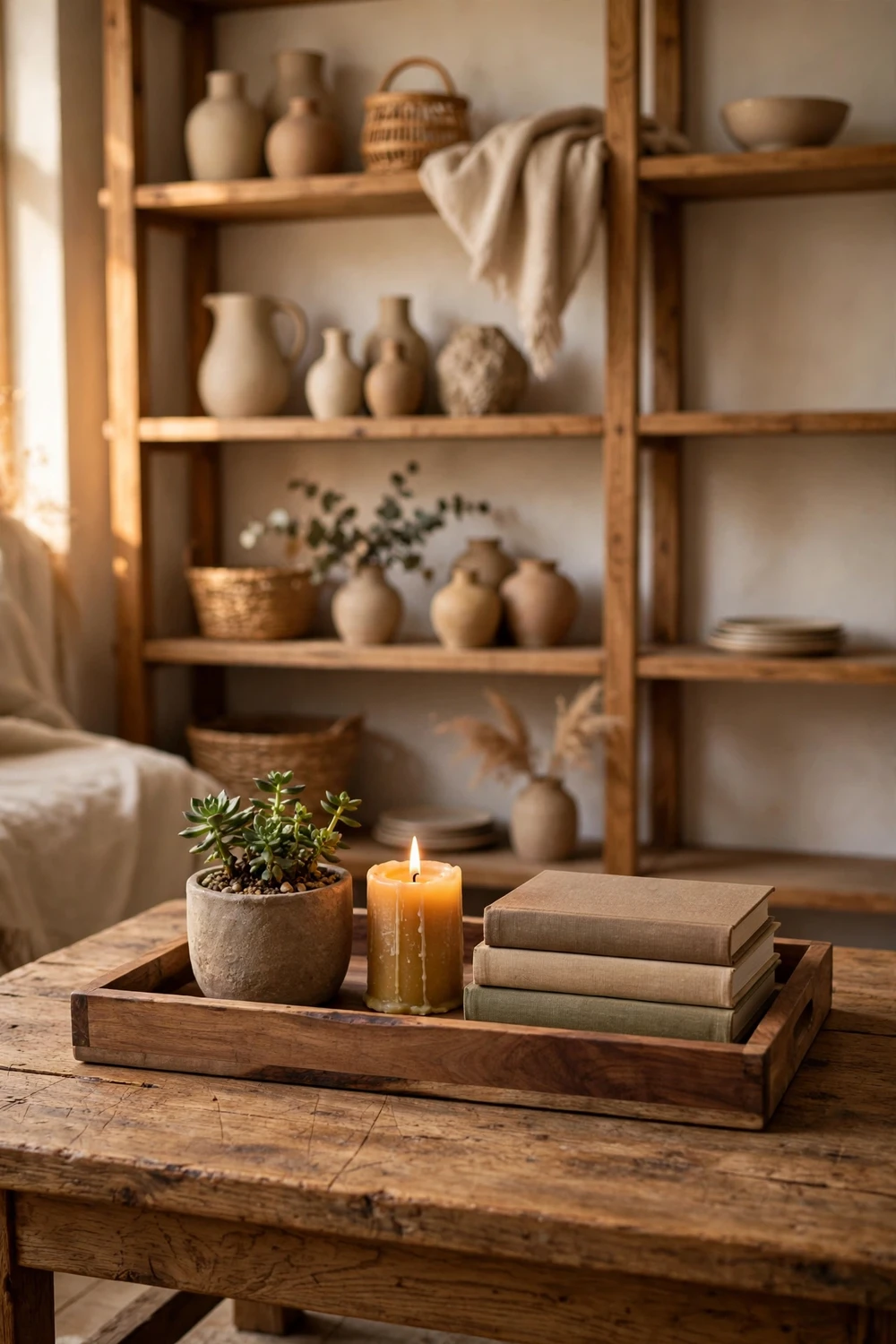
Styling comes last for a reason. If you style surfaces before the room is clean, painted and lit, you are decorating around problems. Once the big changes are done, the surfaces are the finishing layer, and they are where your personality shows. This is also the step where thrift store decor earns its place, because a secondhand tray or vase can look like a designer find when it is styled well.
14. Style shelves, trays and tabletops in small groups
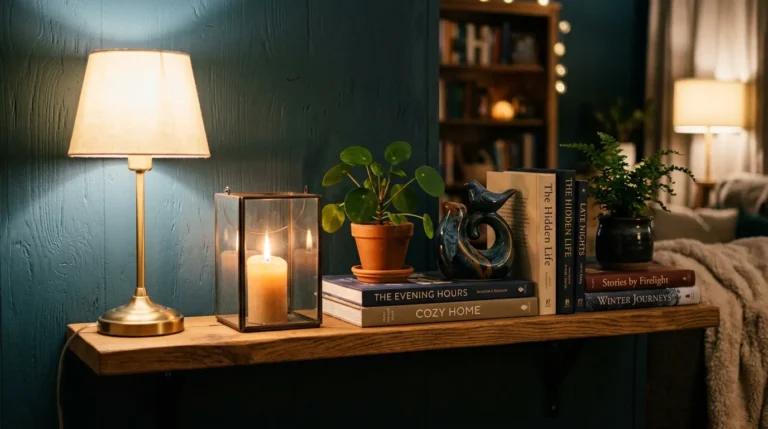
Style in groups of three, with different heights. A tall vase, a medium stack of books and a small candle make a group that your eye reads as one arrangement. Leave empty space around each group, because a shelf with breathing room looks styled while one packed edge to edge looks like storage. Books work as decoration and as risers that lift a small object to a better height.
A tray is the easiest styling tool you own. Put one on a coffee table or an ottoman, group remotes, a candle and a small plant inside it, and the table instantly looks organised. A candle in a nice holder adds warmth in the evening, and a thrifted holder can look far more expensive than it was. For proof, see these luxury DIY candles from thrift store finds, which turn secondhand glass into pieces that look boutique made. Keep surfaces honest, though: if an object has no use and no meaning to you, it is clutter, however pretty it is.
What Each Change Costs, and How Much It Changes the Room
Use this table to plan your spend. Costs are typical ranges, not fixed prices, and they assume you do the work yourself.
| Change | Typical cost | Impact |
|---|---|---|
| Declutter, clean and edit | Free | High |
| Rearrange furniture and shop your own home | Free | High |
| Paint a wall or the whole room | Typically $30 to $120 | High |
| Paint furniture or a door | Typically $15 to $50 | Medium to high |
| Layer the lighting and warm the bulbs | Typically $25 to $100 | High |
| Curtains, pillow covers and a throw | Typically $40 to $150 | High |
| Rug and plants | Typically $60 to $200 | High |
| Hardware and surface styling | Typically $20 to $80 | Medium |
The pattern is clear. The two free changes sit at the top of the impact list, and paint and lighting give the most change per dollar. If your budget is tight, spend on one high impact change and do it properly, rather than buying a little of everything.
A One Weekend Plan That Follows This Order
You do not need a month to redecorate a room on a budget. One focused weekend is enough if you follow these cheap room makeover ideas and resist the urge to shop first: the messy jobs happen first and the pretty jobs happen last.
On Saturday morning, do the free work. Declutter and deep clean, take one piece out, rearrange the furniture and swap pieces between rooms. By lunchtime the room will already look different, and you will know what it still needs. Spend Saturday afternoon on paint, which needs drying time. Test swatches first, paint the feature wall or the piece you chose, and leave it to dry overnight.
On Sunday morning, fix the light: swap the bulbs, change the shades, and set up the extra lamp. Then hang the curtains, change the pillow covers, lay the rug and place the plants. Sunday afternoon is for hardware and styling. Fit the new handles, group the objects on your shelves and trays, light a candle and sit in the room for a while.
Questions People Ask About a Cheap Room Makeover
What is the cheapest way to redecorate a room?
The cheapest way is free, and it is also the most effective: declutter, deep clean, remove one piece of furniture and rearrange what stays. Those steps change how a room looks, feels and works, and they cost nothing. After that, paint is the cheapest change you can buy.
How much should I budget to redecorate a room?
At about $100 you can paint, change bulbs and shades, and buy pillow covers and a throw, which is enough for a visible refresh. At about $300 you can add curtains and a lamp, and at about $500 a rug and plants too. The free steps matter at every budget, so do them first whatever you plan to spend.
What should I change first when I redecorate a room on a budget?
Change the layout and the light before you buy decoration. A clean, well arranged room with good lighting makes everything else look better, while new cushions in a dark, cluttered room change almost nothing. Paint comes next, then textiles, then details. The order matters more than the amount you spend.
Can I redecorate a room I rent?
Yes, and most of this list is renter friendly. Decluttering, rearranging, swapping pieces between rooms, changing bulbs and shades, curtains, pillow covers, rugs and plants all leave no trace. Paint and hardware need permission, so check your agreement and keep the original handles so you can restore the room.
How do I make a cheap makeover look expensive?
Pick one palette and stick to it, buy fewer and better things, and leave empty space. A room with two colours, one good lamp and a few well placed objects looks more expensive than a room full of cheap new things in five colours. Good lighting, a rug that fits and curtains hung high all make a room look considered, and those are the details people read as expensive.
Start This Weekend With the Free Hour
You do not need a big budget or a perfect plan to start. You need one free hour and a willingness to take things out before you bring things in. Clean the room, move the furniture, and see what you already own with fresh eyes. Then choose one change to spend on, paint or light, and do it properly. The rest can wait until next weekend.
A room that works for your life is worth more than one that photographs well for a day. Make it comfortable to sit in, easy to walk through and pleasant in the evening, and the style will follow. Start with the free hour, and let the room tell you what it needs next.