Good above couch wall decor comes down to two numbers before anything else. Your art or arrangement should span about two thirds of your sofa width, and it should hang about 6 to 8 inches above the back of the sofa.
Get them wrong and even a beautiful piece looks lost or crowded. The 14 ideas below all follow those rules, with exact sizes and hanging heights for each one.
Start With the Tape Measure, Not the Shopping Cart
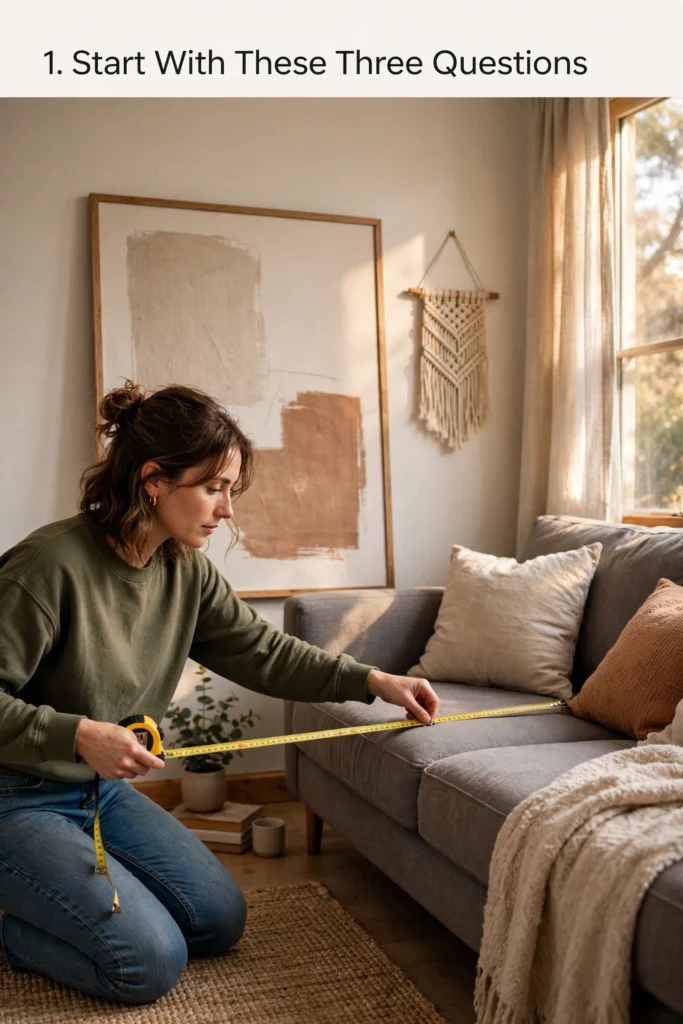
Stand in front of your sofa with a tape measure before you fall in love with a print. Measure the full width of the sofa, arm to arm, and write the number down. Then measure from the top of the sofa back to the ceiling, because that tells you how much vertical room you actually have to work with.
Next, hold a piece of paper or a towel up on the wall at the size you are considering. Step back to the far side of the room and look. A frame that looked generous in a shop often shrinks once it is on a big living room wall, and a piece that looked bold at home can suddenly feel heavy once it is hung. If you are choosing between two sizes, the larger one is usually the right call, as long as it stays inside the two thirds guideline.
| Sofa width | Target decor width (about two thirds) | Bottom edge height above sofa back | What works best |
|---|---|---|---|
| 60 inches (loveseat) | 36 to 42 inches | 6 to 8 inches | One medium canvas, a pair of prints, or a small gallery of 4 to 6 frames |
| 72 inches (small three seater) | 46 to 50 inches | 6 to 8 inches | One large canvas, a triptych, or a wide mirror |
| 84 inches (standard three seater) | 54 to 58 inches | 6 to 8 inches | One oversized canvas, a long ledge with layered art, or a gallery wall |
| 96 inches (large sofa or sectional run) | 62 to 66 inches | 6 to 8 inches | A wide gallery, a long shelf arrangement, or a panelled feature wall |
| 108 inches or more | 70 to 74 inches | 6 to 8 inches | A multi piece arrangement, a set of panels, or art plus shelves together |
One note on the hanging height. The 6 to 8 inch gap is measured from the top of the sofa back to the bottom of the frame, not to the centre of the picture. People sit against that back cushion, so art hung much higher floats away from the sofa and stops feeling connected to it. Art hung lower risks getting knocked when someone leans back.
1. Start With These Three Questions
Before you buy anything, answer three questions in this order: how wide is the wall space, how does light fall on it, and what job should the piece do? Width decides size, light decides colour and finish, and the job decides the type. A piece meant to calm a busy room calls for soft colour and simple shapes. A piece meant to wake up a plain room can be bold, dark, or full of pattern.
Light matters more than most people expect. A north facing wall gets cooler, softer light, so warm tones and cream mats tend to look better there. A sunny wall can handle cooler colours and stronger contrast, but watch for glare on glass. If afternoon sun hits the wall directly, choose canvas, textile, or matte framed prints instead of glass covered art, or hang the piece slightly off the sunniest patch. A good wall does not need one expensive piece. It needs the right size, hung at the right height, in colours that already live in your room.
2. Classic Art and Framed Pieces
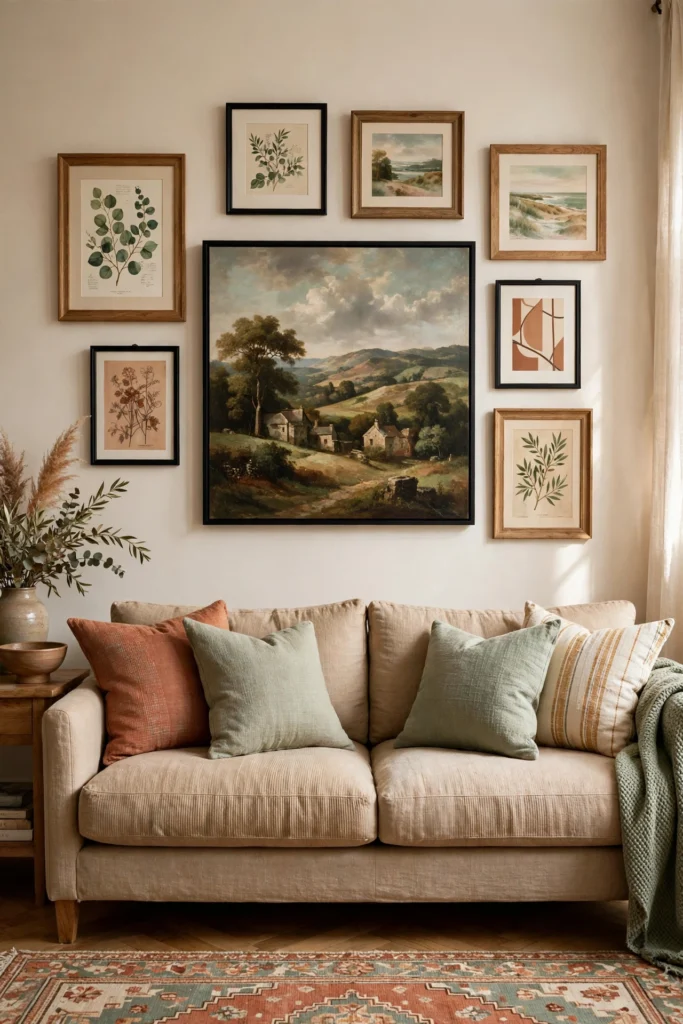
One large framed piece is still the easiest way to get this wall right. For a standard 84 inch sofa, look for a canvas or framed print around 54 to 58 inches wide and 30 to 40 inches tall. Hang it so the bottom edge sits 6 to 8 inches above the sofa back, and centre it on the sofa, not on the wall.
Pick up one colour already in the room for the frame or the mat. It could be the rust in a cushion, the green in a plant pot, or the wood tone of a coffee table. That single echo is what ties the art to the furniture instead of leaving it floating. Avoid crowding a large piece with small extras. If the canvas is doing its job, it needs breathing room of at least 4 to 6 inches on each side. Small side frames only help when the main piece is too narrow on its own, and then the whole group still needs to add up to about two thirds of the sofa width.
3. Mirrors That Do Double Duty
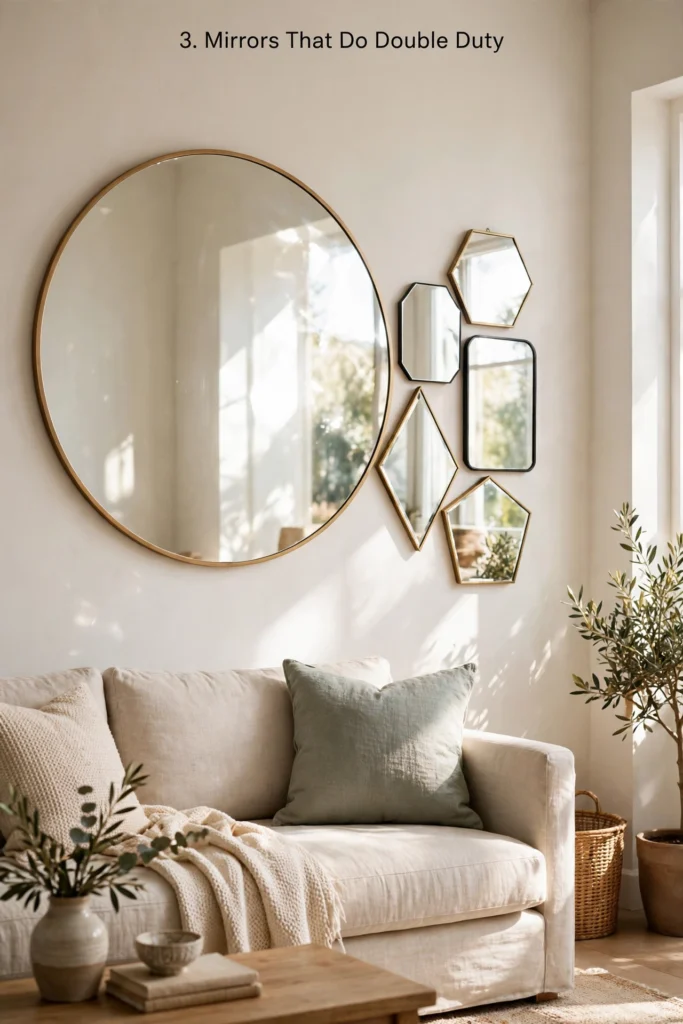
A mirror above the sofa bounces light around the room and makes a small living room feel wider, but it only works if it reflects something worth looking at. Before you hang it, stand where the mirror will go and check what it will face: a window, a plant, or a pretty stretch of wall is good. A television, a cluttered shelf, or a blank ceiling is not.
Size follows the same rule as art. A round mirror of 30 to 36 inches suits a loveseat, while a three seater needs something 40 inches or wider, or a wide arched or rectangular mirror of 48 to 54 inches. Hang it with the same 6 to 8 inch gap above the sofa back. For safety, use proper wall anchors rated for the mirror weight, and check that the bottom edge is out of head height for anyone standing up from the sofa. Mirrors pull the same trick in a hallway, and the sizing logic in these mudroom wall decor ideas shows how a reflective piece can carry a narrow wall without cluttering it.
4. Textiles, Weaves and Handcrafted Pieces
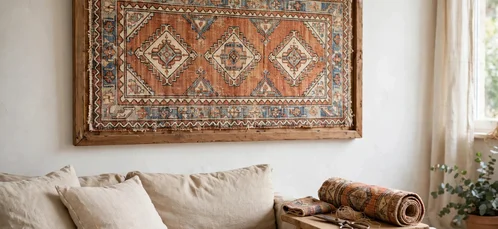
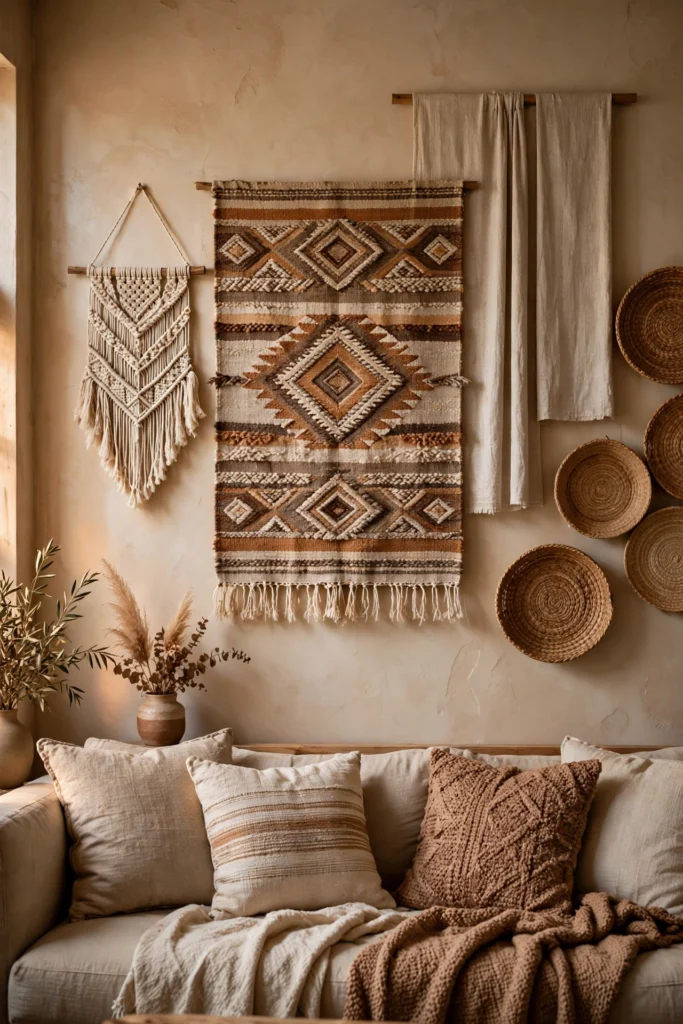
Woven wall hangings, macrame, and textile art soften a room in a way glass and metal cannot. They suit living rooms that already have a lot of hard surfaces, like leather sofas, stone floors, or glass tables. A macrame piece of about 36 to 48 inches wide works over a loveseat or small sofa, and a wider woven panel of 50 to 60 inches suits a three seater.
Keep textiles out of direct sun and away from radiators, since strong sun fades natural fibres over time. One textile piece on its own often looks better than two competing ones, so if you love pattern, let the weave be the pattern and keep the cushions quieter. A handcrafted piece also hides small wall marks well, which makes it a practical choice for rented homes where you want one strong focal point with few fixings.
5. Shelving and Functional Display
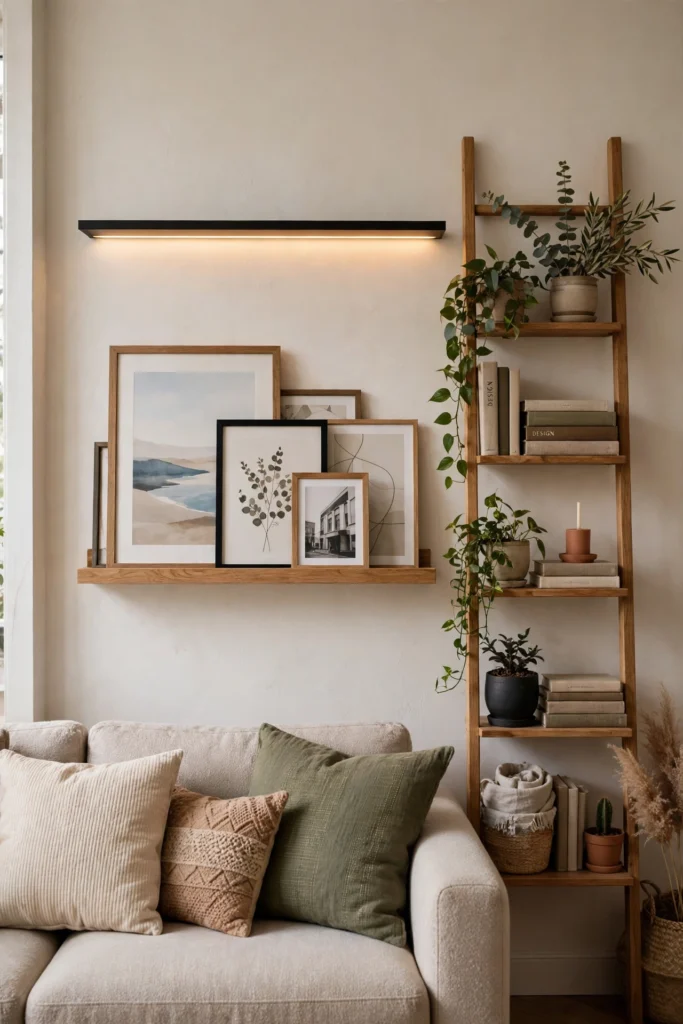
A picture ledge or a pair of floating shelves turns the wall above the sofa into a display you can change with the seasons. Fix the lowest shelf about 10 to 12 inches above the sofa back, a little higher than framed art, so nobody knocks the objects when they sit down.
Layer the shelf like this: one large framed print at the back, one medium piece in front of it at an angle, and one small object, such as a vase or a candle, at one end. Leave empty space. A shelf packed edge to edge reads as storage, not decor. For more on arranging a shelf so it looks styled rather than stacked, these tips on mastering shelf decor cover spacing, layering, and how many objects a shelf can hold before it looks busy.
6. Nature Inspired Ideas
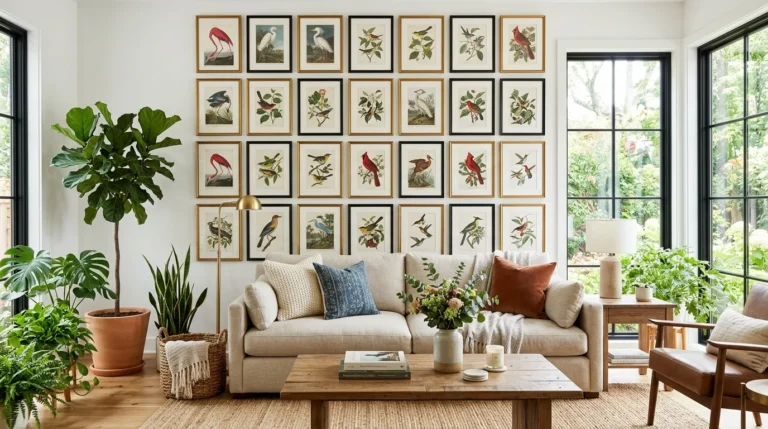
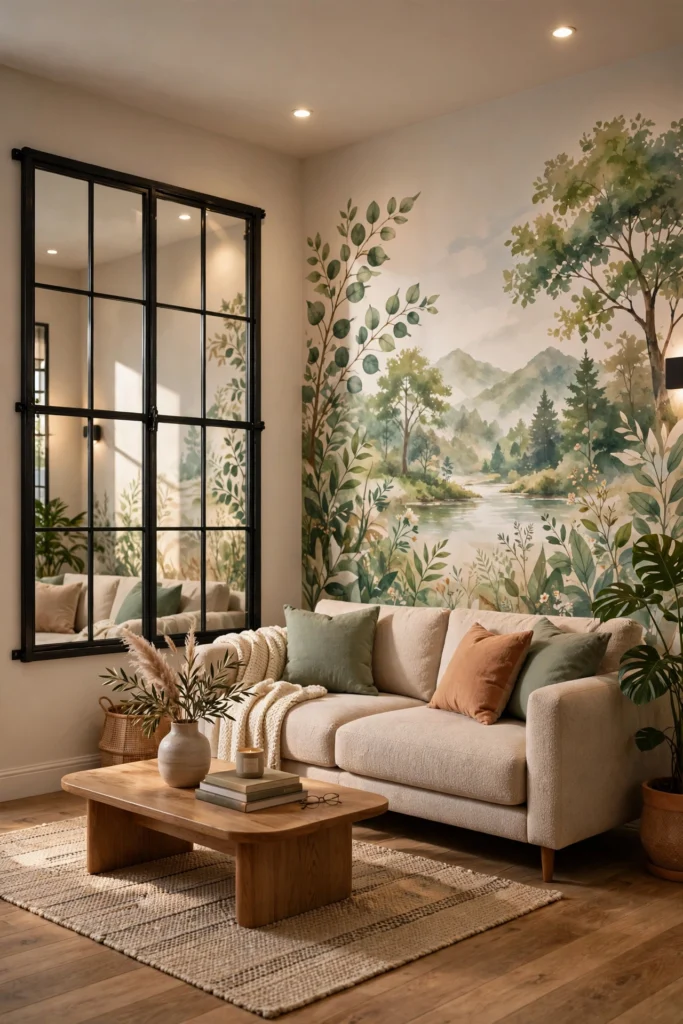
Botanical prints, pressed leaves, and landscape art bring a calm, outdoors feel to a living room, and they work best in groups of three or five. A set of three botanical prints, each about 16 by 20 inches with 2 to 3 inches between frames, makes a row of roughly 54 inches, which fits a standard sofa well.
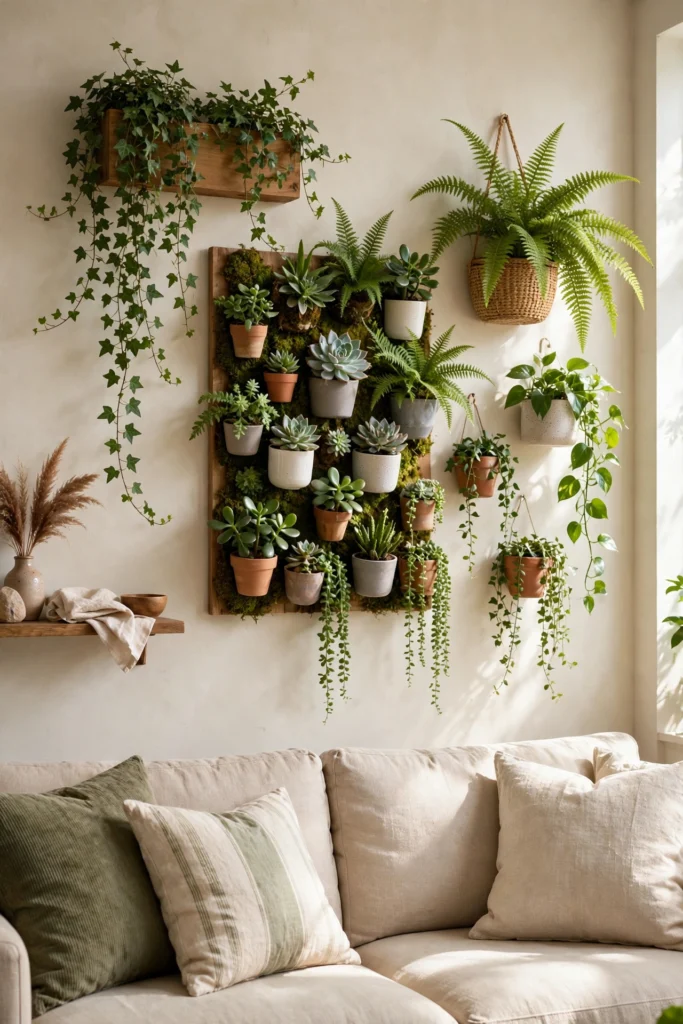
Real greenery can join in, but keep it off the wall directly above the sofa if it needs watering. If you choose landscape photography, go large: one wide landscape print of 48 to 60 inches wide suits a three seater far better than a small scenic print that disappears from across the room. Avoid mixing too many plant types in one arrangement. Three of one style, ferns or grasses or single stems, looks calmer than a mixed collection.
7. Wood, Panels and Architectural Touches
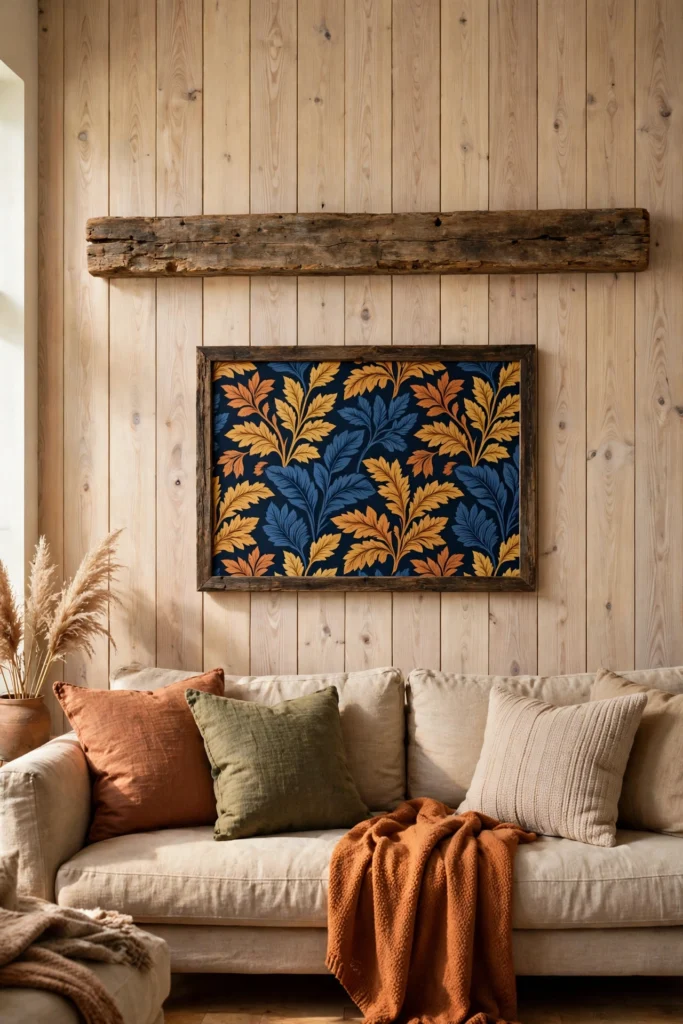
Wood slat panels, board and batten, or a simple picture frame moulding grid change the wall itself instead of hanging something on it. A slat panel about two thirds of the sofa width and 36 to 48 inches tall, centred above the sofa, adds warmth and texture without a single nail for art. Paint it the same colour as the wall for a subtle effect, or a shade darker for a clear feature. Leave the bottom of the panel about 4 to 6 inches above the sofa back so the two do not visually merge.
Picture frame moulding works the same way: a set of two or three rectangles, each about 24 to 30 inches wide with 4 to 6 inches between them, gives a tailored look that suits traditional and transitional rooms. If your sofa wall also holds a television on another wall, a wood panel above the sofa keeps the room balanced, and the contrast ideas in these black TV wall ideas show how a dark or textured feature wall can anchor a room without overwhelming it.
8. Bold and Playful Statements
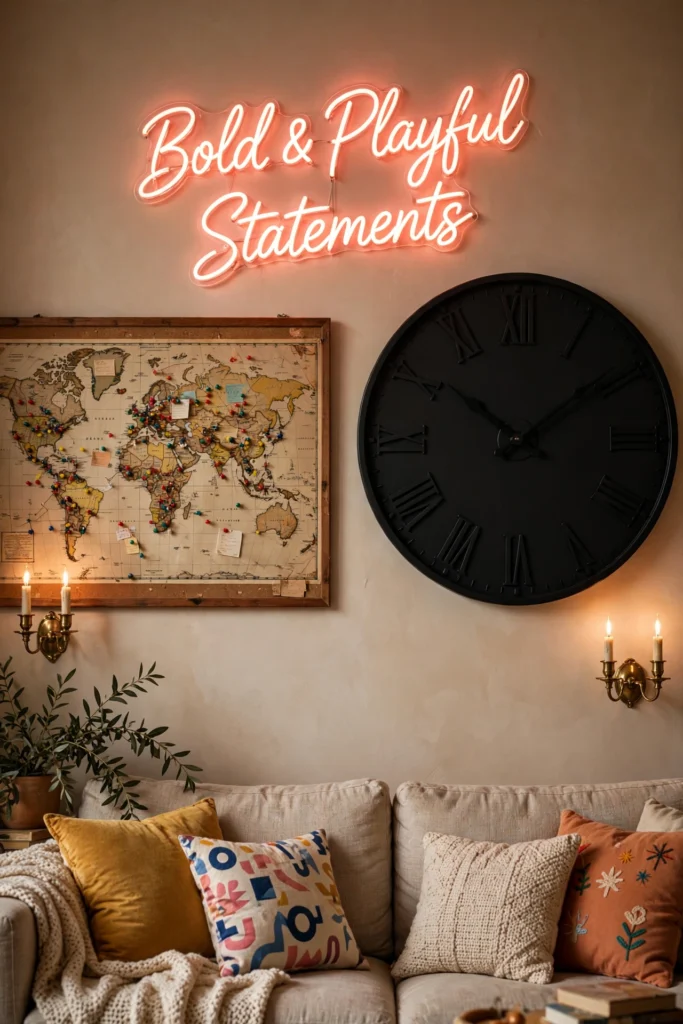
A bold piece works when the rest of the room stays calm. One oversized abstract canvas, a neon sign, or a bright graphic print can carry the whole wall, but it needs the same sizing discipline as a quiet piece: about two thirds of the sofa width, 6 to 8 inches above the back. For a standard sofa, that means a canvas of roughly 54 by 36 inches. Anything much smaller will look like an afterthought, however bright the colour.
Repeat one colour from the bold piece somewhere else in the room, in a cushion, a throw, or a vase, so the statement feels connected instead of random. Limit yourself to one loud element on that wall. A neon sign plus a gallery wall plus a shelf is three statements fighting for attention, and the eye does not know where to rest.
9. Personal and Sentimental Touches
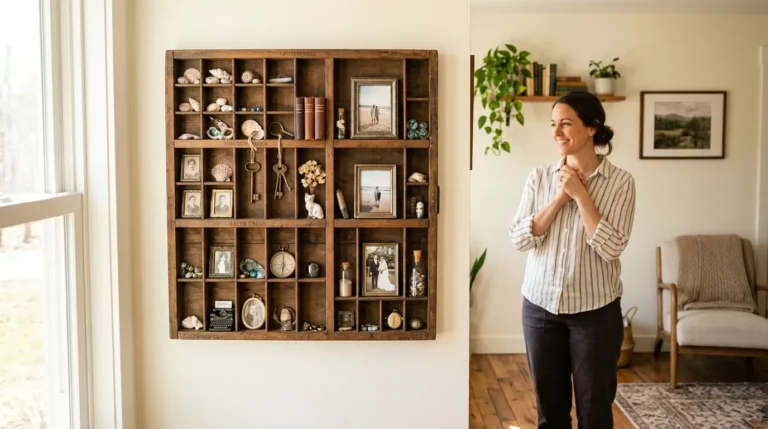
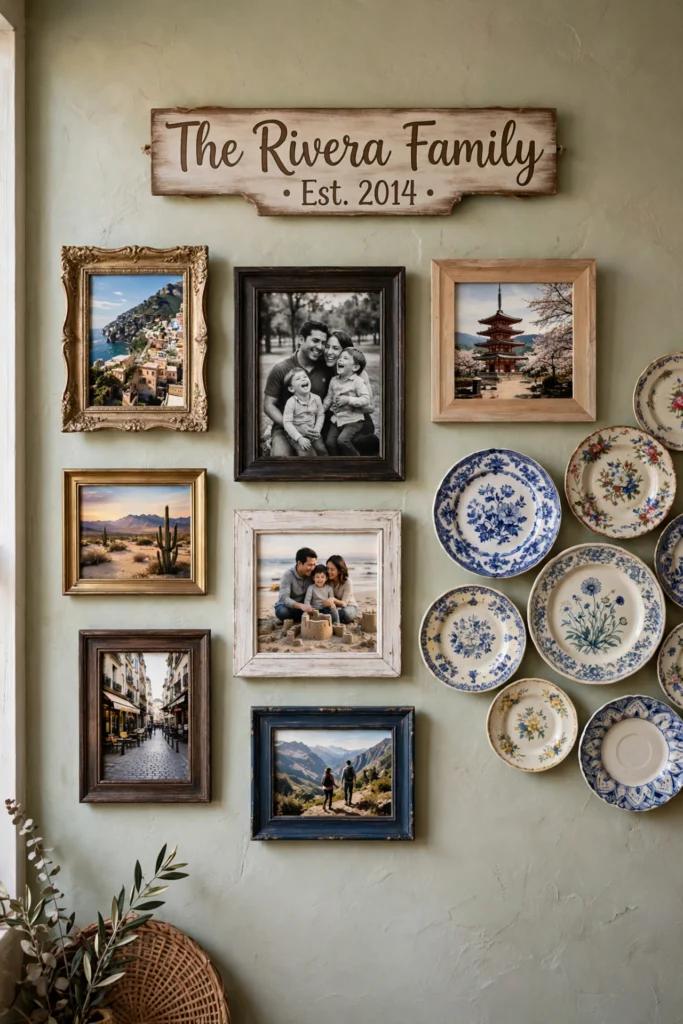
Family photos, travel prints, and children’s art mean more than any shop bought canvas, but they need editing to look good above a sofa. Choose 6 to 9 photos, print them all in the same size, such as 8 by 10 inches, and use matching frames. A grid of nine 8 by 10 inch frames with 2 inches between them measures about 28 by 34 inches, which suits a loveseat. For a three seater, use 11 by 14 inch prints or add a row, so the whole grid reaches 50 to 58 inches wide.
Mixing every size and frame colour is the fastest way to make a photo wall look messy, so keep the frames uniform and let the photos vary. Hang the grid so its centre sits at about 57 to 60 inches from the floor, which is eye level for most adults, and check the bottom row still clears the sofa back by 6 to 8 inches. Rotate a few photos each season to keep the wall feeling current without rehanging the whole grid.
10. Sculptural and Mixed Media Options
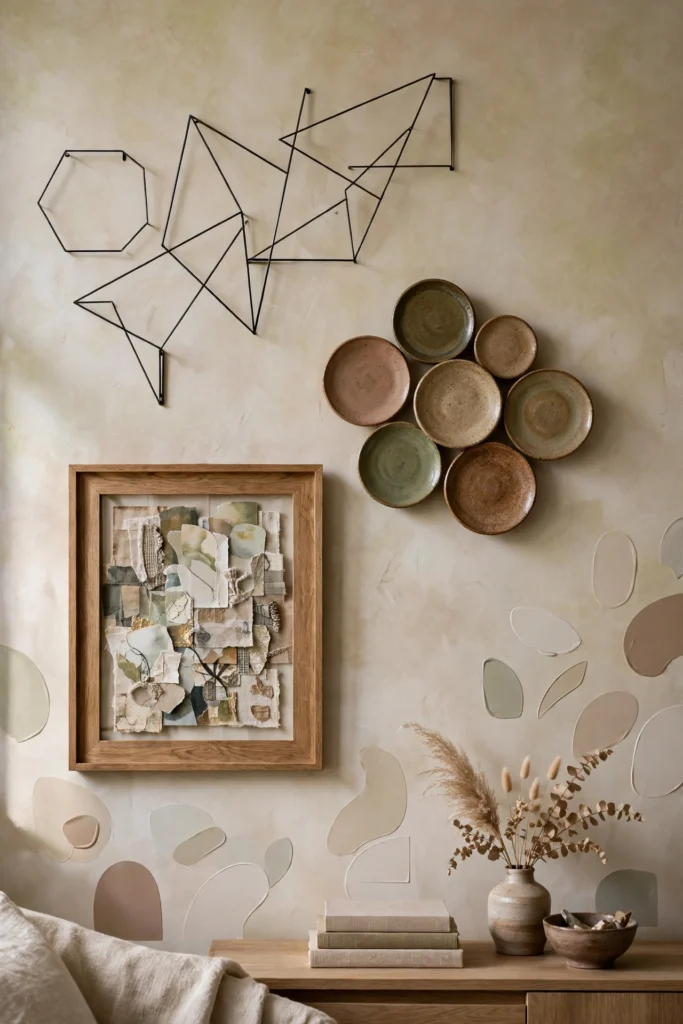
Metal wall sculptures, ceramic plates, and mixed media pieces add depth that flat art cannot, because they cast small shadows and catch light through the day. A metal sculpture of 40 to 54 inches wide suits a standard sofa, and a set of decorative plates works in a loose cluster of 5 to 7 plates spanning about 50 inches.
Give sculptural pieces more side space than flat art, about 6 to 8 inches on each side, so the shadows have room to fall on the wall. Avoid hanging heavy metal or ceramic pieces on plasterboard with a single small nail. Use two fixings spread across the width, or a stud, and check the weight rating. Keep the palette to two or three finishes at most, or the wall starts to look like a collection of unrelated objects.
11. A Few Unexpected Ideas
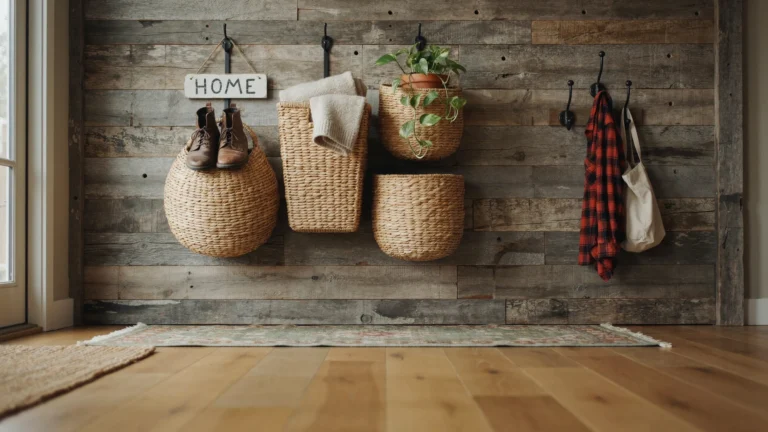
Some of the best above sofa walls break the usual rules on purpose. A vintage map, a large wall clock, or a set of woven baskets can work beautifully, as long as the size is right. A wall clock needs a face of at least 24 to 30 inches across above a three seater, or it reads as a small circle lost on a big wall. A basket arrangement should span 48 to 56 inches in total, with the largest basket in the centre and smaller ones around it, spaced 2 to 3 inches apart.
A tapestry hung from a rod gives a soft, large scale option for a wide sofa, with a width of 55 to 65 inches for a standard three seater. Whatever unexpected piece you choose, test it with the paper template trick first. Unusual shapes fool the eye more than rectangles do, and a template on the wall for a day tells you the truth before you drill.
12. Matching Ideas to Your Style
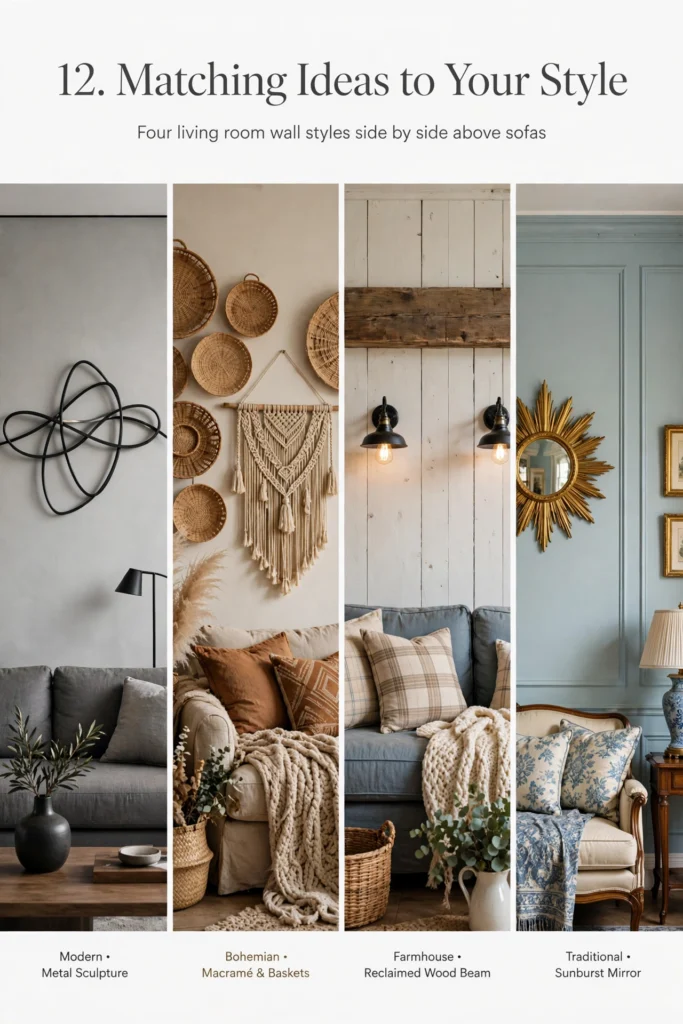
Your sofa wall should match the room you already have, not the room in a catalogue. In a modern room with clean lines, one large abstract canvas or a set of slim black frames fits best. In a relaxed, layered room, woven pieces, warm wood, and a gallery wall feel more at home, and the soft neutral palette in these cozy grey boho living room ideas shows how texture can do the decorating without strong colour. In a traditional room, symmetrical pairs, classic landscapes, and gold or wood frames suit the furniture.
Start from your sofa, since it is the biggest object in the room. A deep, soft sofa with rounded arms suits relaxed art, like textiles or landscapes. A firm, tailored sofa suits structured art, like a grid or a single bold canvas. The guide to comfortable sofas for relaxing living rooms is a useful check here, because the sofa shape and fabric set the tone for everything hung above it.
13. Mistakes Worth Avoiding
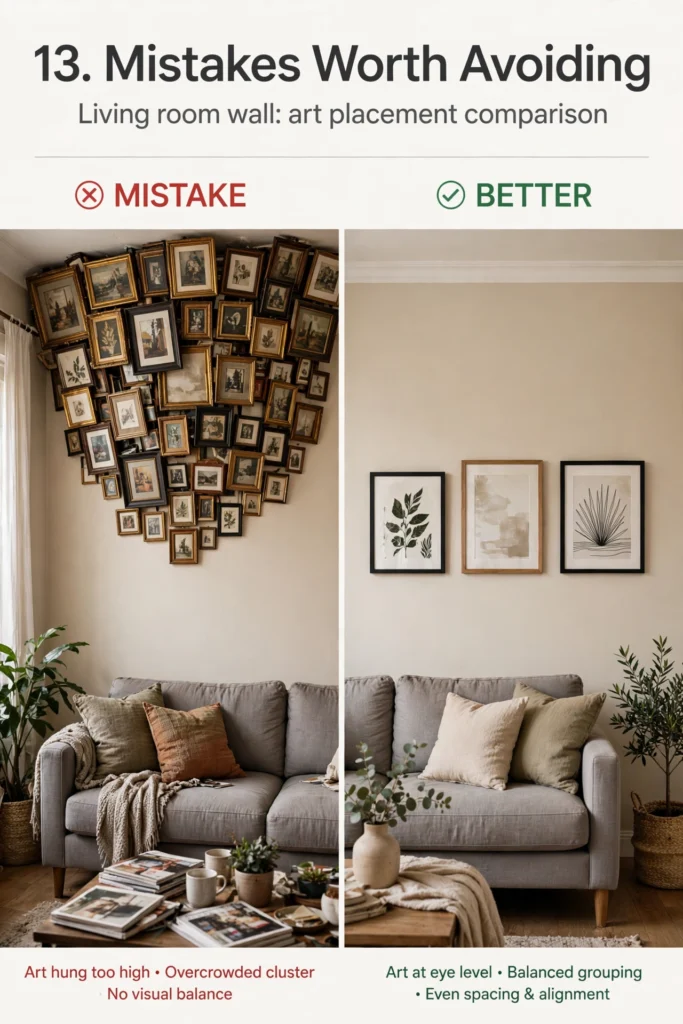
The most common mistake is hanging art too small. A single 16 by 20 inch frame above a three seater sofa looks lost, no matter how pretty the print. The second most common mistake is hanging art too high, centred on the wall instead of related to the sofa. Art should feel like part of the seating area, not like it belongs to the ceiling. Measure the 6 to 8 inch gap every time, even if the piece looks right at first glance from a ladder.
Other mistakes are easy to fix once you spot them. Too many small frames with no plan create clutter, while one frame per wall with nothing else can feel bare if the sofa is wide. Dark glass in a sunny spot creates glare that hides the art from the seating position, so check the view from the sofa, not just from the ladder. A beautiful wall is not worth a falling frame, so use two fixings for anything wide and check them once a year.
Hanging Mistakes That Undo an Otherwise Good Wall
Even with the right size and height, a few practical errors can spoil the result. The first is a single nail for a wide frame. A frame wider than 36 inches should hang from two hooks, spaced about 16 inches apart where possible, so it stays level and does not swing when a door closes. The second is skipping the level. A frame that tilts by even a small amount draws the eye at once, so check with a spirit level or a phone level app before you step down.
The third error is ignoring the fixings for your wall type. Plasterboard needs anchors, solid brick needs masonry plugs, and old plaster needs care and a pilot hole. The fourth is hanging art where a lamp or a tall plant blocks part of it from the main seat. Sit on the sofa and look up before you call the job done. The fifth is leaving cords, picture lights, or shelf wires dangling in view.
14. Bringing It All Together
Once you have chosen a style, pull the wall together with three finishing checks. First, step back to the far side of the room and check the width: the arrangement should span about two thirds of the sofa, with roughly equal space on each side. Second, sit on the sofa and check the height: the bottom edge should sit 6 to 8 inches above your head height when seated, not towering above you. Third, look at the colours from the doorway. One colour from the art should appear somewhere else in the room, so the wall feels part of the room rather than pasted on.
If the wall still feels unfinished, add one layer, not three. A small plant on a side table, a cushion that picks up the art colour, or a picture light above the frame can finish the look. If the wall feels crowded, remove one item before adding anything else. Most above sofa walls fail from too much, not too little.
Measure Twice, Hang Once, Then Step Back
The whole guide comes down to a simple routine. Measure the sofa, mark the two thirds width on the wall with painter’s tape, and mark the 6 to 8 inch gap above the sofa back. Hang the piece, check it with a level, and then step back to the far side of the room. Sit down, look up, and check the view from the seat you actually use. That routine takes ten minutes and saves a wall full of extra holes.
Pick the idea that fits your room, your sofa, and your light, and give it the size it needs. A well hung wall above the sofa makes the whole living room feel finished, and it stays finished, because the measurements do not change when trends do.
Above the Couch: Questions Readers Ask Before Hanging Anything
How high should I hang art above a couch?
Hang it so the bottom edge of the frame sits 6 to 8 inches above the top of the sofa back. This keeps the art connected to the seating area instead of floating high on the wall. Measure from the sofa back, not from the floor, because sofa heights vary.
How wide should wall decor be above a sofa?
Aim for about two thirds of the sofa width. For an 84 inch sofa, that means decor about 54 to 58 inches wide. For a 72 inch sofa, aim for 46 to 50 inches. A single piece, a pair, or a gallery group all count, as long as the total width lands near two thirds.
Can I hang a mirror above a couch?
Yes, if it is large enough and reflects something pleasant. A mirror of at least 40 inches wide suits a three seater, and it should hang at the same 6 to 8 inch height as art. Check the reflection from the sofa before fixing it, and use anchors rated for the mirror weight.
Should art be centred on the sofa or on the wall?
Centre it on the sofa. The sofa is the anchor for the arrangement, so art centred on the wall but off centre from the sofa looks like a mistake. If the sofa sits off centre in the room, the art follows the sofa.
What if my ceilings are very high?
Keep the same 6 to 8 inch gap above the sofa back, and use a taller piece or a vertical arrangement to fill the height. A tall canvas, a set of stacked frames, or a panel that runs 48 inches tall all suit a high wall. Do not raise a small piece to fill a tall wall, since it will still look small, just higher up.
Can I hang decor above a sofa without drilling?
Yes, for light pieces. Adhesive strips rated for the frame weight work for prints and small frames, and a leaning picture ledge needs no wall fixings at all. Heavy mirrors, shelves, and sculptural pieces still need proper anchors or studs, so check the weight before you choose a no drill option.
How do I stop a gallery wall above a sofa looking messy?
Use matching frames, one mat colour, and consistent spacing of 2 to 3 inches between frames. Lay the whole arrangement on the floor first, photograph it, and then transfer it to the wall. Keep the total width near two thirds of the sofa, and leave the bottom row 6 to 8 inches above the sofa back.