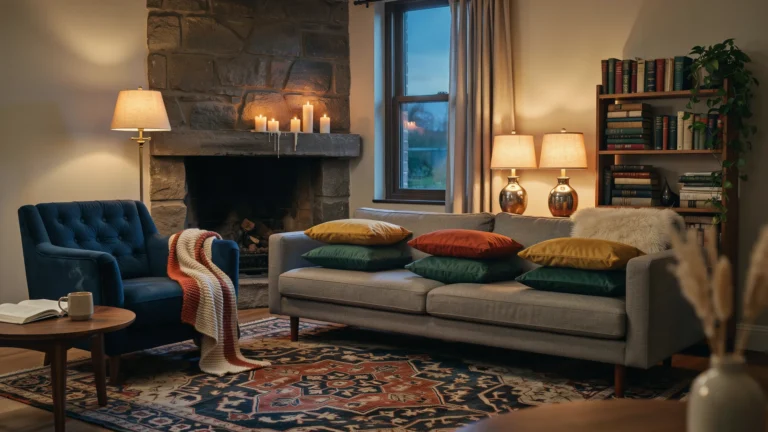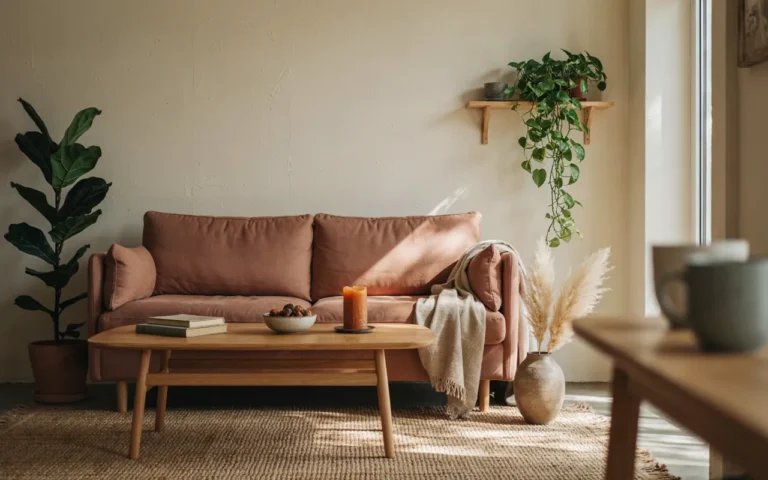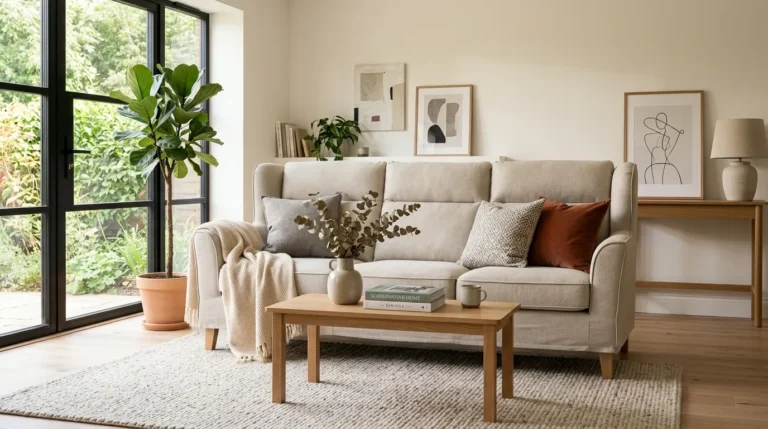
A grey boho living room stays cosy when grey is treated as the backdrop, not the whole room. Pick one warm grey, then add natural wood, woven texture, soft cream textiles and one earthy accent colour. That mix is the whole recipe, and every idea below is a different way of cooking with it.
If your grey room feels cold right now, the fix is almost never more grey. It is usually texture, warm light, or a second colour that has some warmth in it. Start with the palette table, choose one row that matches your sofa, then build around it.
Pick Your Grey Plus Accent Recipe First
Boho rooms go wrong when every grey in the room is a slightly different cold shade and nothing else joins in. The table below gives you five recipes that work. Choose one, and let it guide every cushion, rug and lamp you buy next. You do not need all five. One done well beats five done halfway.
| Grey shade | Accent colour | Mood it creates |
|---|---|---|
| Warm light grey | Cream and soft terracotta | Bright, relaxed, easy to live with |
| Mid grey | Sage green and natural wood | Calm, fresh, quietly earthy |
| Charcoal grey | Tan leather and warm brass | Moody, intimate, evening friendly |
| Cool pale grey | Warm white and woven rattan | Airy, clean, still soft to the eye |
| Greige, grey mixed with beige | Caramel brown and faded rust | Grounded, warm, collected over time |
Notice what each row has in common. The grey never stands alone. There is always a warm material next to it, wood, rattan, wool or leather, and one colour with actual warmth. Keep that rule in mind as you read through the 22 ideas, because it is the thread running through all of them.
1. Soft Grey Sofa With Layered Neutrals
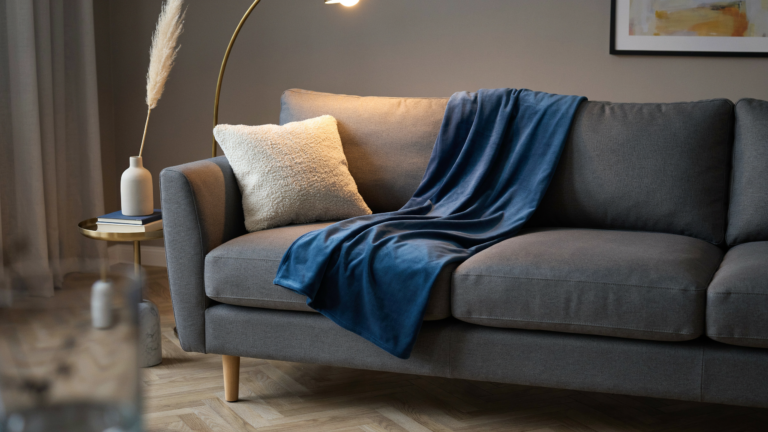
A soft grey sofa is the easiest starting point in this whole list, because it asks so little of you. The trick is to stop at one grey and layer neutrals around it instead of adding more grey. Try cream cushions, a beige throw folded over one arm, and a natural fibre rug under the coffee table. Each piece should sit one or two shades away from the sofa, close enough to feel calm, different enough to keep the eye moving.
Watch the fabric mix as much as the colours. A smooth linen cushion next to a chunky knit throw reads as layered even when both are pale. One nubby or woven texture in the mix stops the room looking washed out.
2. Grey And Rattan Boho Combination
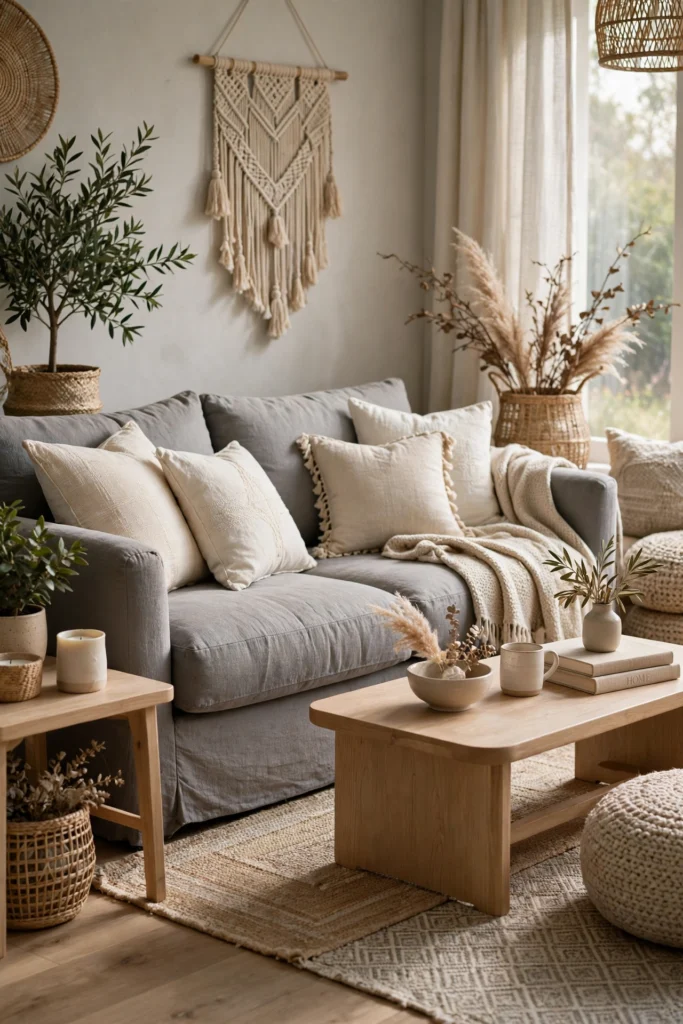
Rattan is the fastest way to warm up a grey sofa. One rattan armchair, a cane fronted cabinet, or a woven pendant light is often enough. The open weave lets light through it, which stops a grey room from feeling solid and blocky. Place the piece where you actually use it, an armchair by the window, or a side table within reach of the sofa, not as a display item in a corner nobody sits in.
Keep the rest of the palette quiet so the rattan can stand out. Cream, sand and soft grey do that job well. The mistake to avoid is filling the room with rattan until it looks like a furniture showroom. Two or three woven pieces, spread across the room, give you the boho feel. Ten of them just give you a theme park.

3. Warm Grey Walls With Cream Textiles
If you are repainting, choose a warm grey, one with a hint of beige or taupe in it, rather than a blue based grey. Blue greys look crisp in a paint chart and cold on a north facing wall in winter. Test a large swatch on the wall and look at it in the evening under your normal lamps, not just in daylight, because that is when you will live with it most.
Cream textiles do the rest. Full length cream curtains soften the window wall, an off white throw breaks up the sofa, and a pale rug stops the floor from feeling hard. Add one rough texture, a jute rug or a woven basket, to keep the quiet combination from feeling flat.
4. Grey Sofa With A Vintage Boho Rug
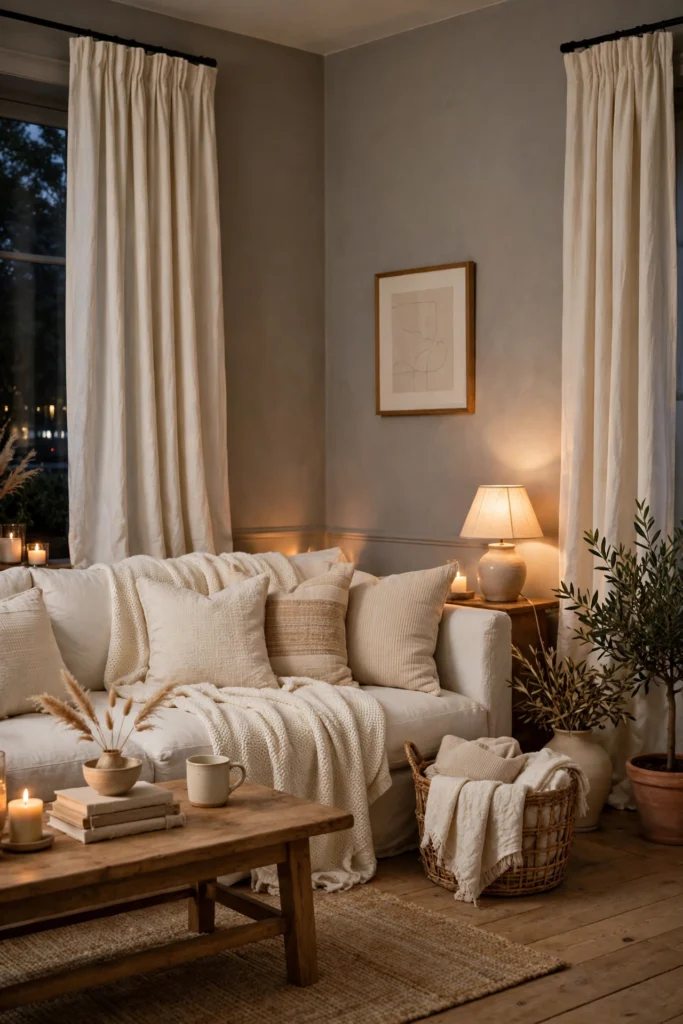
A vintage style rug changes a grey sofa more than almost any other single purchase, because it puts pattern and age under your feet. Look for faded patterns in muted terracotta, beige, charcoal or dusty blue, and avoid anything screaming bright. The worn look is the point. It makes the room feel collected rather than bought in one afternoon. For more on getting the size and style right, read our guide on how to choose the perfect rug for your home before you order, because a rug that is too small is the most common mistake here.
Size matters more than pattern. The front legs of the sofa and chairs should sit on the rug, which typically means at least 8 by 10 feet for a standard three seat sofa. A small rug floating in the middle of the floor makes the arrangement look lost, however pretty the pattern is. Leave roughly 18 inches of bare floor around it so the room still breathes.
5. Add A Large Green Plant
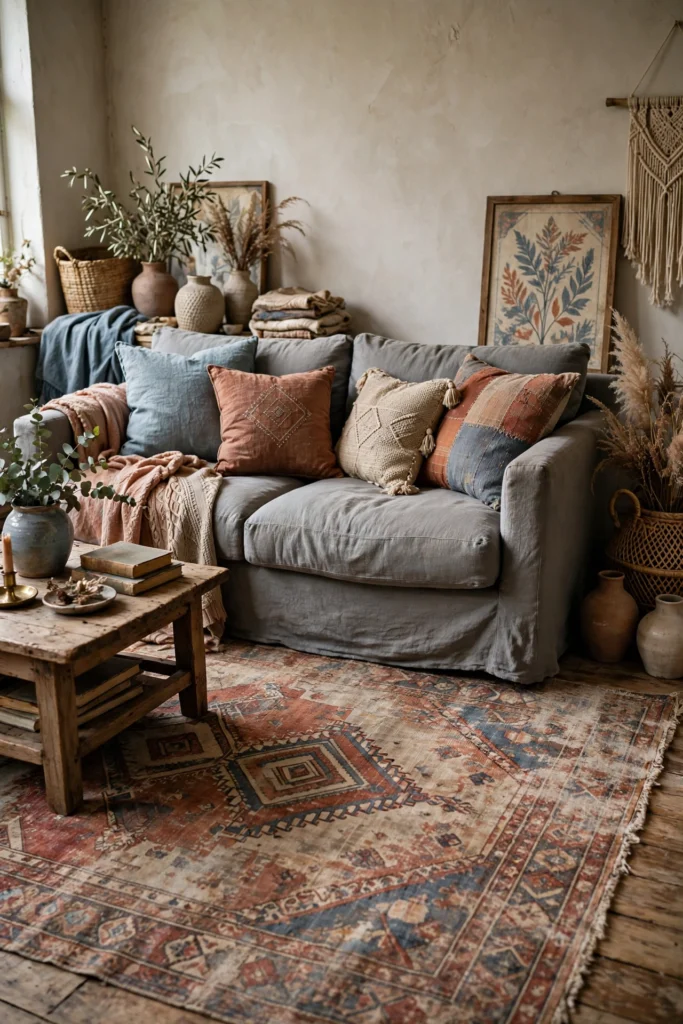
One large plant does more for a grey room than five small ones scattered around, because it gives the eye a vertical break from all the horizontal furniture. A fiddle leaf fig, olive tree or tall monstera beside the sofa works well, as long as the spot gets enough light for the plant you choose. Check the light honestly before you buy. A plant that slowly dies in a dark corner helps nobody and costs you money twice.
Put it in a terracotta pot or a woven basket planter, not a shiny plastic pot. If floor space is tight, trail a pothos from a high shelf instead. The uneven leaves break up big blocks of grey, which is exactly what a grey room needs.
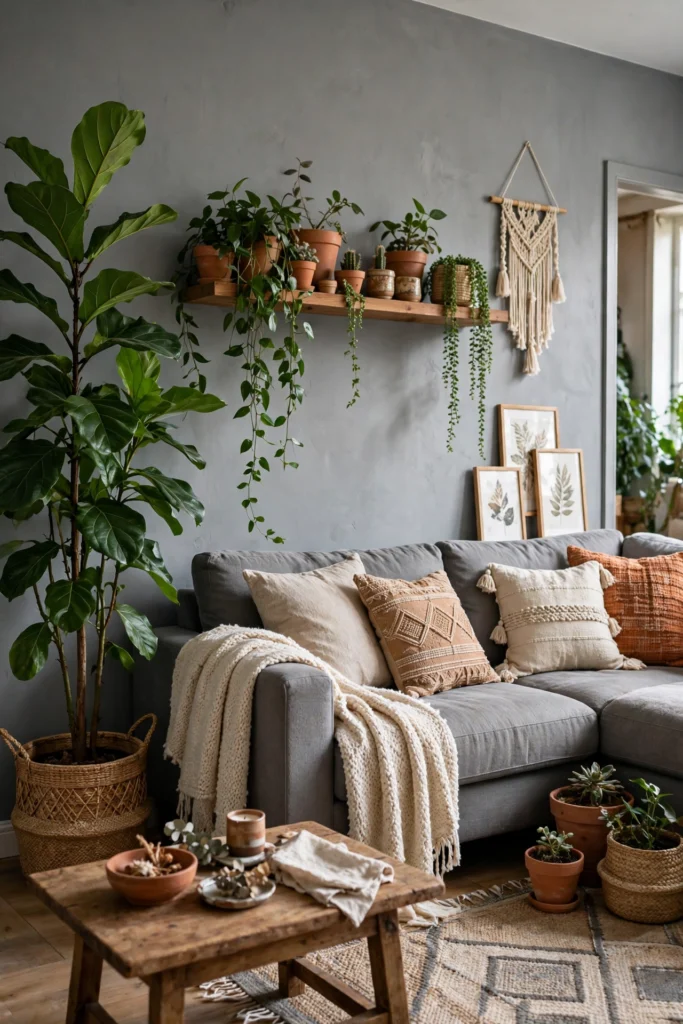
6. Grey And White Boho Living Room
Grey and white can be beautiful together, but only when the white is warm. Bright, stark white next to cool grey is what makes rooms feel clinical. Use warm white walls, ivory curtains and cream cushions instead, and let the grey sit a few shades deeper than the white so there is gentle contrast rather than a sharp edge.
Wood and woven accessories keep this palette from turning too clean. A wooden coffee table, a rattan basket and a linen throw give the white something to sit next to. Without those, the room reads as a showroom. If your room gets little natural light, lean warmer still, since dim light pushes cool greys colder.
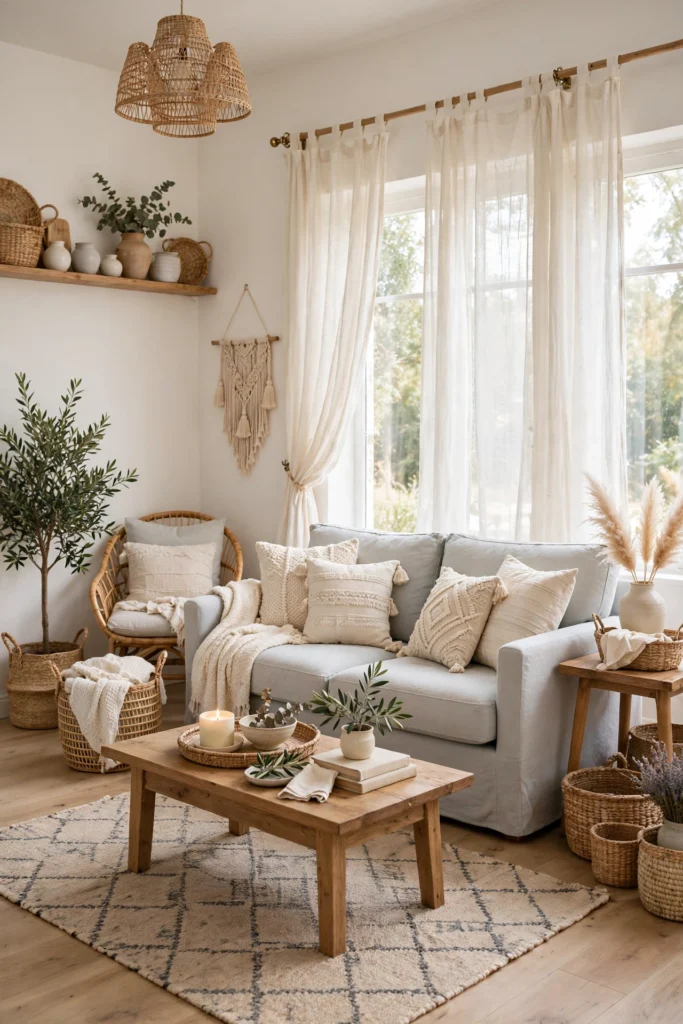
7. Moody Charcoal Boho Corner
Charcoal sounds risky in a small room, but used on one wall or one corner it can make the space feel intimate instead of dark. The secret is everything around it. Tan leather, warm wood, cream textiles and golden lamplight all glow against charcoal in a way they never do against white. Keep the seating deep and soft, so the corner invites long evenings rather than looking like a formal set.
Do not paint all four walls charcoal unless the room is large and bright. One accent wall, or a charcoal sofa against pale walls, gives you the mood without shrinking the room. A mirror opposite the window bounces light back into the dark corner.
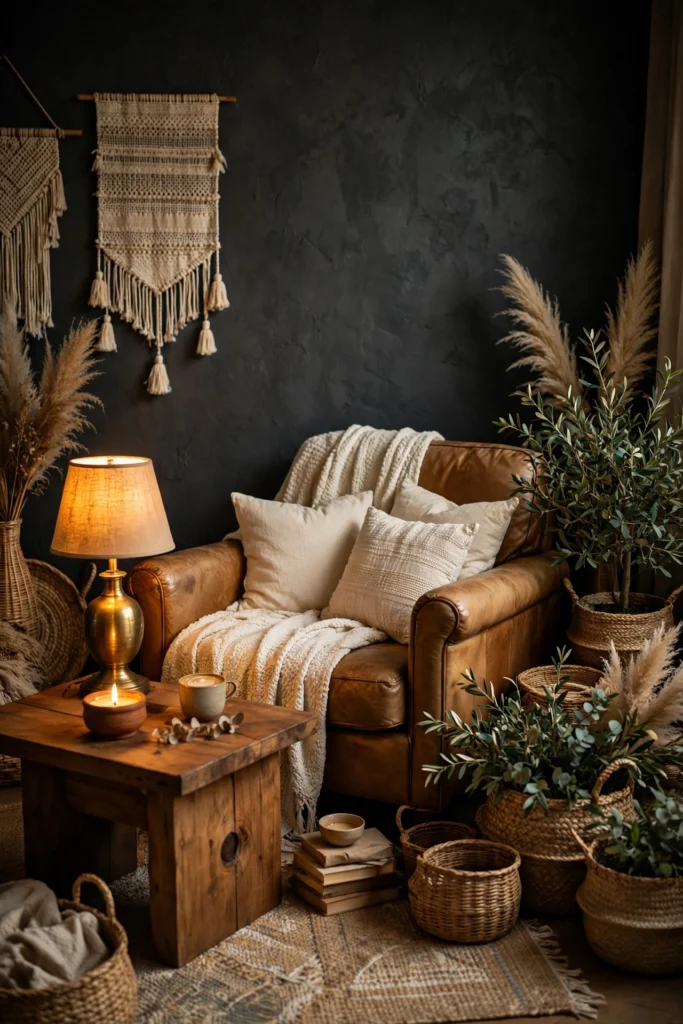
8. Layer Plenty Of Soft Textures
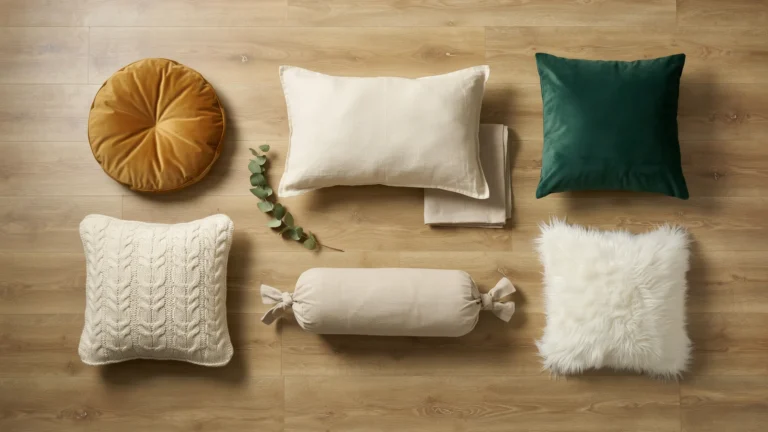
Boho rooms lean on texture more than colour, and a grey room is where that rule matters most. Combine linen, cotton, wool, jute, boucle and knitted throws around the grey seating, and make sure they actually look different from each other. A boucle cushion next to a flat linen one, a chunky knit throw over a smooth sofa, these contrasts make the room feel rich without adding clutter.
There is a limit, though. Four or five textures in a seating area is plenty. More than that and the eye has nowhere to rest. If you are unsure, hold each new cushion against the sofa before buying and ask whether it adds a new feeling, not just a new colour. Our roundup of throw blanket living room ideas shows how one well chosen throw can change the whole seating area without touching the furniture.
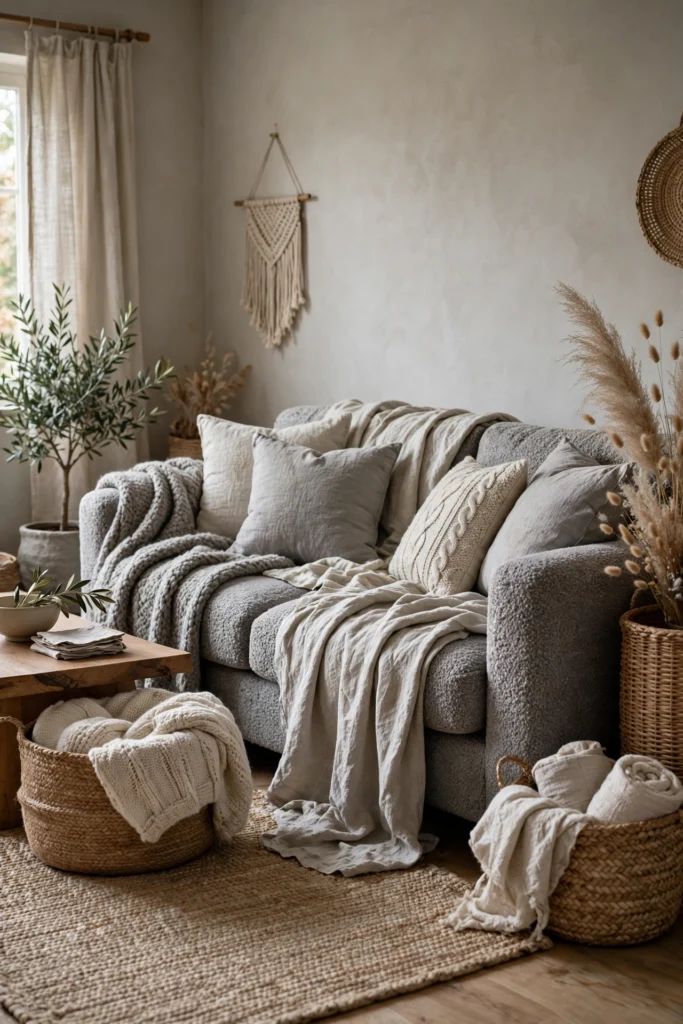
9. Bring In Warm Wooden Furniture
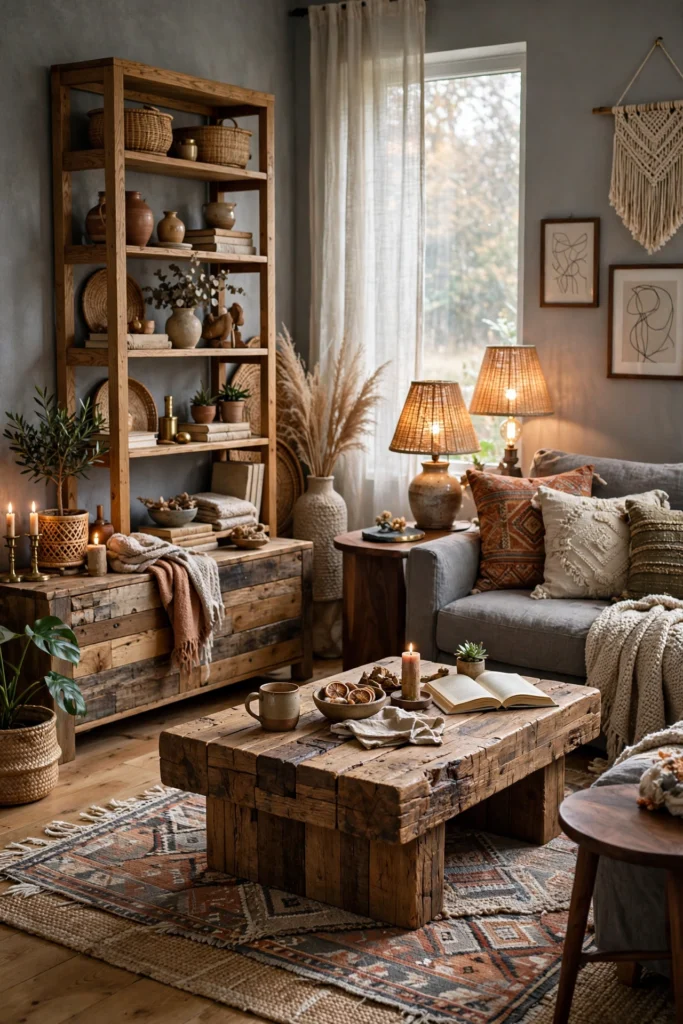
Natural wood is the simplest warmth you can add to grey. A chunky coffee table, a reclaimed wood console, oak shelving or a walnut side table each bring grain and variation that grey paint never has. You do not need matching wood throughout the room. In fact, slight differences in tone and finish suit boho style better, since the look is collected, not matched.
Keep the wood tones warm rather than ashy. Pale ash and bleached oak can push a grey room colder, while honey oak, walnut and teak pull it warmer. If your floors are already grey washed wood, a warmer wooden coffee table is the fix. One solid piece with visible grain beats three thin, pale ones.
10. Create A Relaxed Floor Seating Area
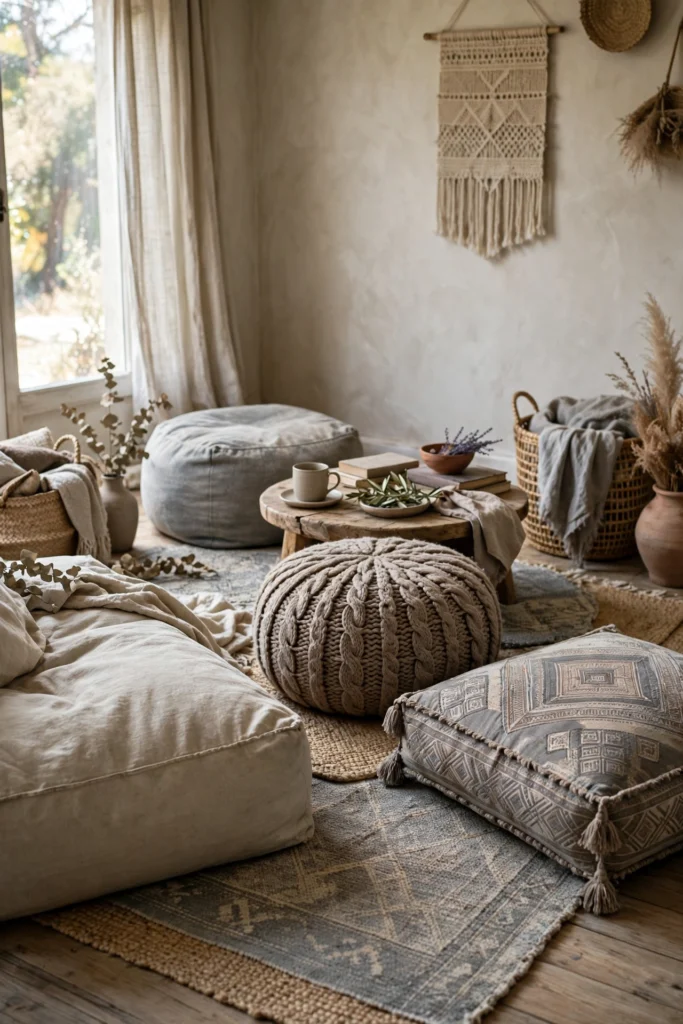
Boho style gives you permission to sit lower, and a floor seating area makes a grey living room feel casual in the best way. A large floor cushion, a low pouf or a knitted ottoman near the coffee table gives guests somewhere extra to sit and gives the room a second, softer layer. Choose oatmeal, taupe, faded grey or earthy brown so the pieces blend with the sofa instead of shouting over it.
Keep it practical. Floor seating needs a rug underneath or it slides around, and it needs to be easy to move when you vacuum. One or two pieces is the sweet spot. A whole circle of them makes the room hard to walk through.
11. Use Macrame As A Focal Point
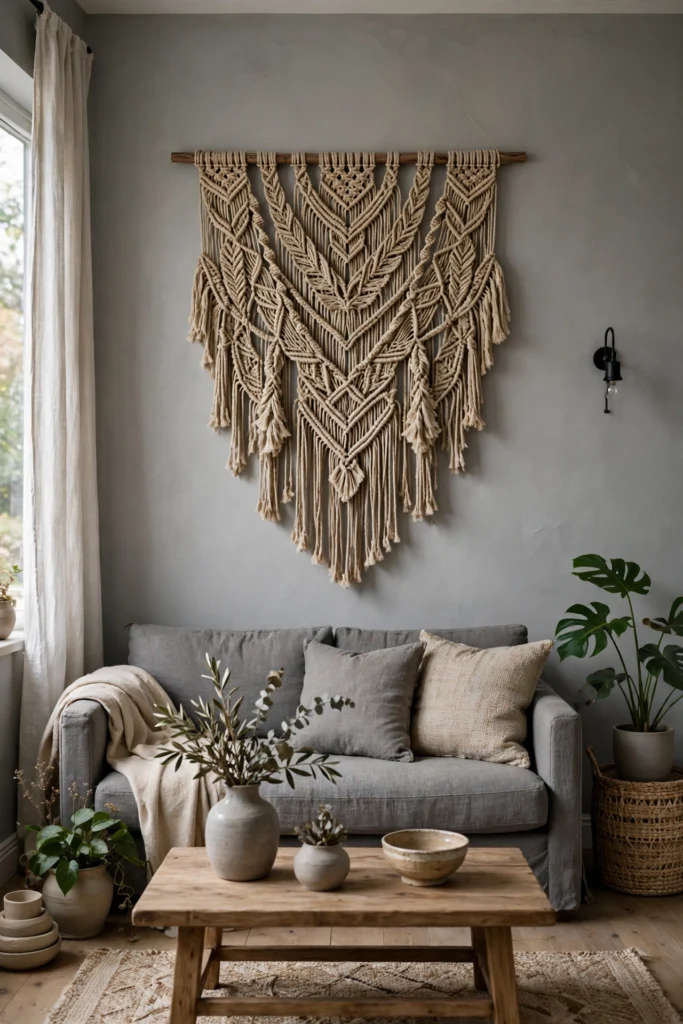
Macrame works in a grey room when you use it with restraint. One substantial woven piece above the sofa or console, hung at eye level, gives the wall a handmade focal point that softens all that flat grey. Natural cotton rope tones sit gently against grey, and the shadows in the weave add depth that a flat print cannot.
Do not cover a whole wall with small woven pieces. Pick one piece you genuinely like, give it breathing room, and pair it with simple ceramics and a plant. If your sofa wall is already busy, hang it on a quieter wall instead.
12. Mix Grey With Terracotta Accents
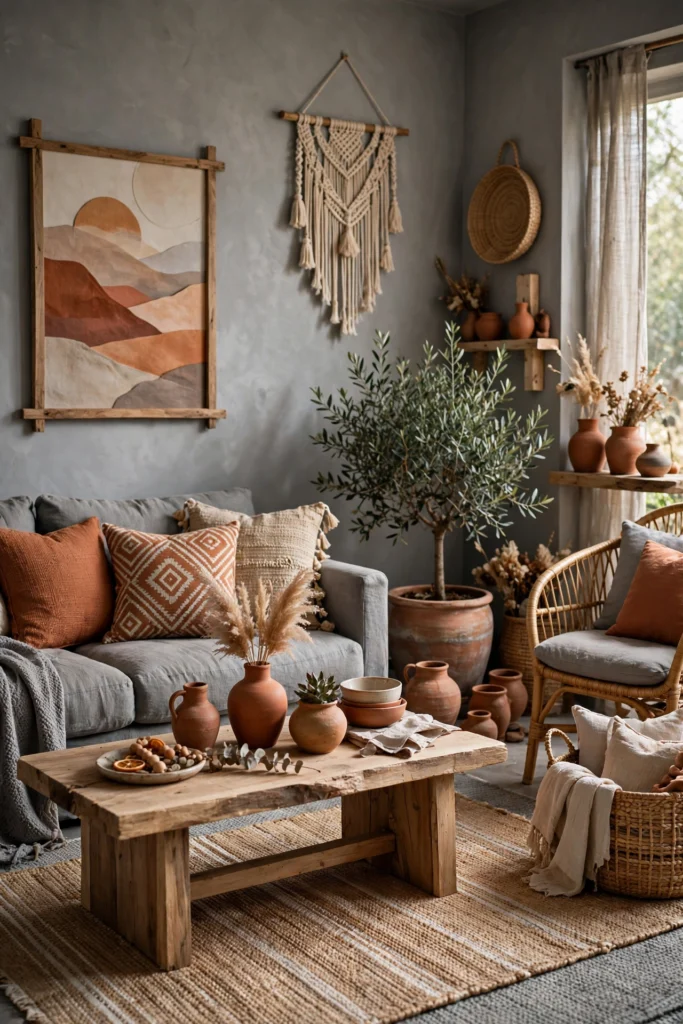
Terracotta is the accent colour most grey rooms are missing, because its earthy orange brown warmth is the direct opposite of grey’s coolness. Introduce it in small doses: two cushions, a ceramic planter, a throw, or one piece of artwork. That is enough to change the temperature of the whole room. Spread across every surface, it stops being an accent and starts being a theme.
It pairs best with unfinished wood and natural fibres. If you are nervous about the colour, start with pottery. A terracotta pot on the coffee table lets you test the shade in your light before you commit to cushions or a rug. Terracotta should be the warmest thing in the room, but not the loudest.
13. Try A Grey Boho Gallery Wall
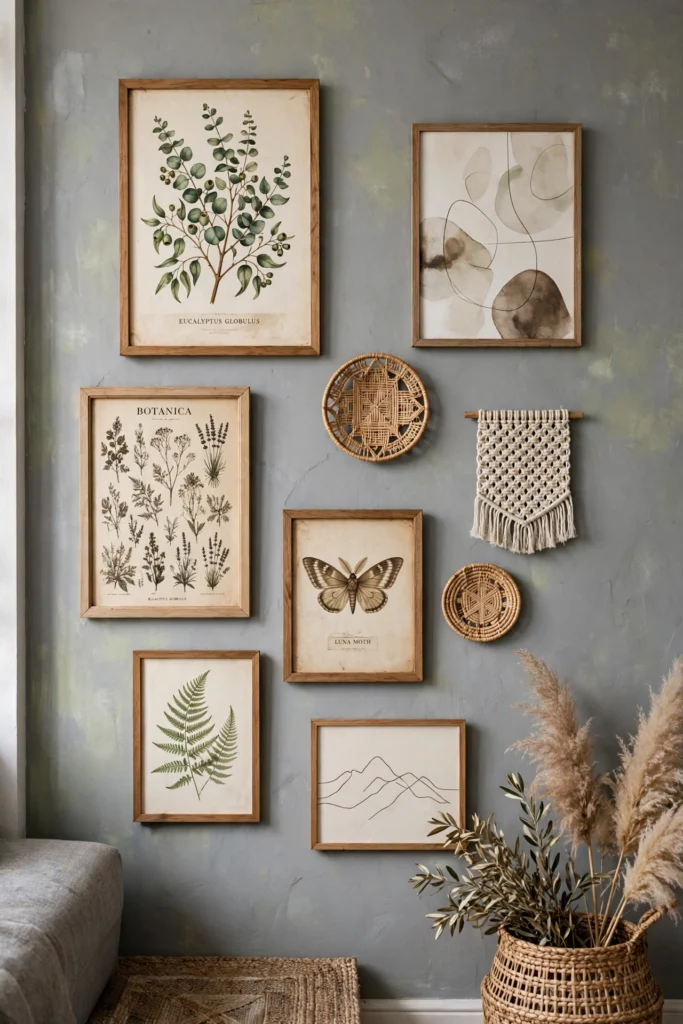
A gallery wall gives a neutral room personality without any new furniture, and grey walls are a forgiving backdrop for one. Mix botanical prints, abstract art, vintage style illustrations and one small woven piece, in simple wooden frames. Keep a loose colour thread running through them, grey, cream, brown and muted earth tones, so the wall feels personal rather than random.
Plan it on the floor first. Lay the frames out, leave roughly 2 to 3 inches between them, and step back before you hammer a nail. Start with the largest piece slightly off centre, then build outward, since a symmetrical grid reads as formal and defeats the relaxed feel. For ideas on what goes above the sofa specifically, our above couch wall decor ideas cover spacing and sizing in more detail.
14. Add A Woven Pendant Light
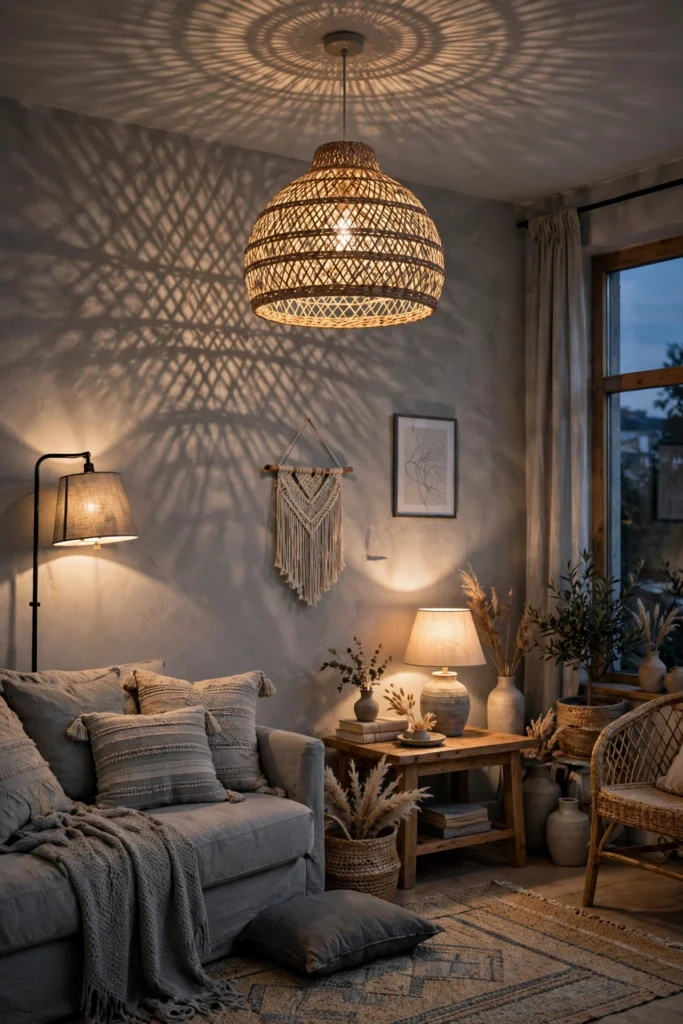
Lighting changes grey more than paint does after sunset, and a woven pendant is the single fixture that does the most work. Rattan, seagrass or bamboo shades cast soft patterned shadows and warm the light in a way a plain ceiling fixture never will. Hang it over the coffee table or seating area, roughly 30 to 36 inches above the table surface, so it lights the conversation zone instead of the whole ceiling.
Do not rely on one light source. Add a floor lamp or table lamp nearby so the room has two or three gentle pools of light rather than one bright overhead glare. Warm bulbs, around 2700 Kelvin, keep grey looking soft in the evening. Cool white bulbs do the opposite, and they are the quiet reason many grey rooms look great by day and harsh by night.
15. Keep It Minimal With Boho Details
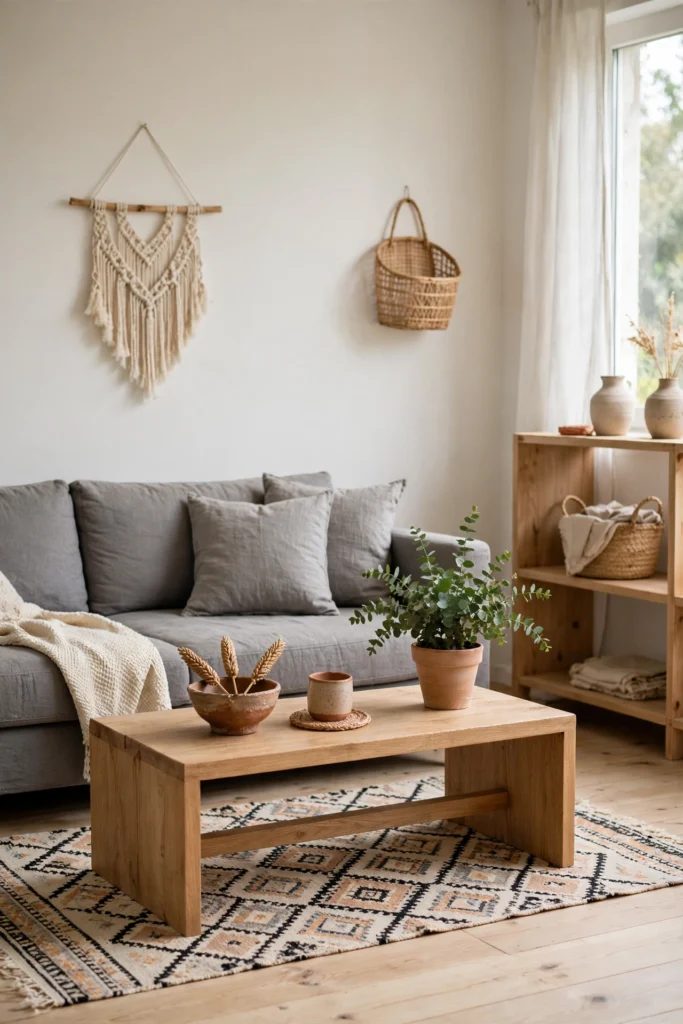
Boho does not have to mean maximum decoration. A restrained room can still have plenty of character, and honestly, it is easier to live in. Start with grey seating, natural wood, one patterned rug, a plant and one or two handmade accessories. Then stop. Leaving surfaces open gives every texture room to stand out, and it gives you room to add pieces slowly as you find ones you actually love.
Minimal boho works when the few pieces you keep are good ones. A cheap, thin throw will not carry the look, but one thick wool throw will. If your budget is tight, buy fewer pieces and better ones, and let the room grow over months. A room that grows slowly always looks more personal than one bought all at once.
16. Mix Grey With Sage Green
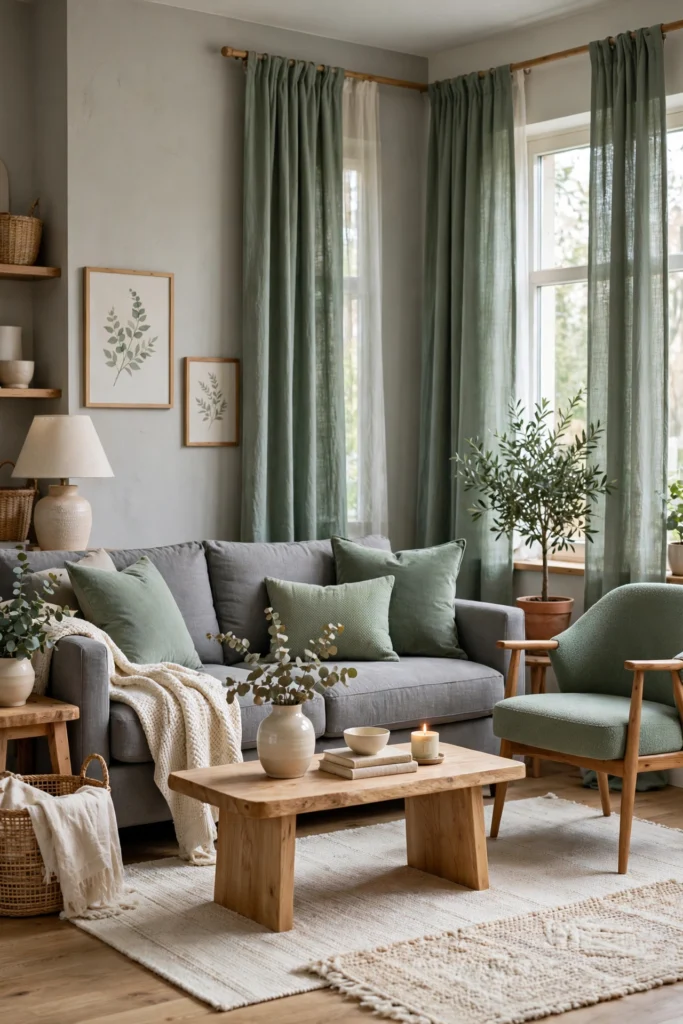
Sage green and grey are natural partners because both are muted, so neither fights the other. Use sage in cushions, curtains, an accent chair or artwork, and keep it to one or two places rather than spreading it everywhere. Add natural wood and cream textiles to finish the palette, and you get a room that feels fresh without losing the calm that made grey attractive in the first place.
Be careful with the shade. A sage that leans too yellow can look muddy next to grey, while one that leans too blue pushes the room cold again. Hold the fabric against your sofa in your own light before you commit. If it looks greyish green rather than clearly green, that is usually the right one.
17. Introduce Black For Definition
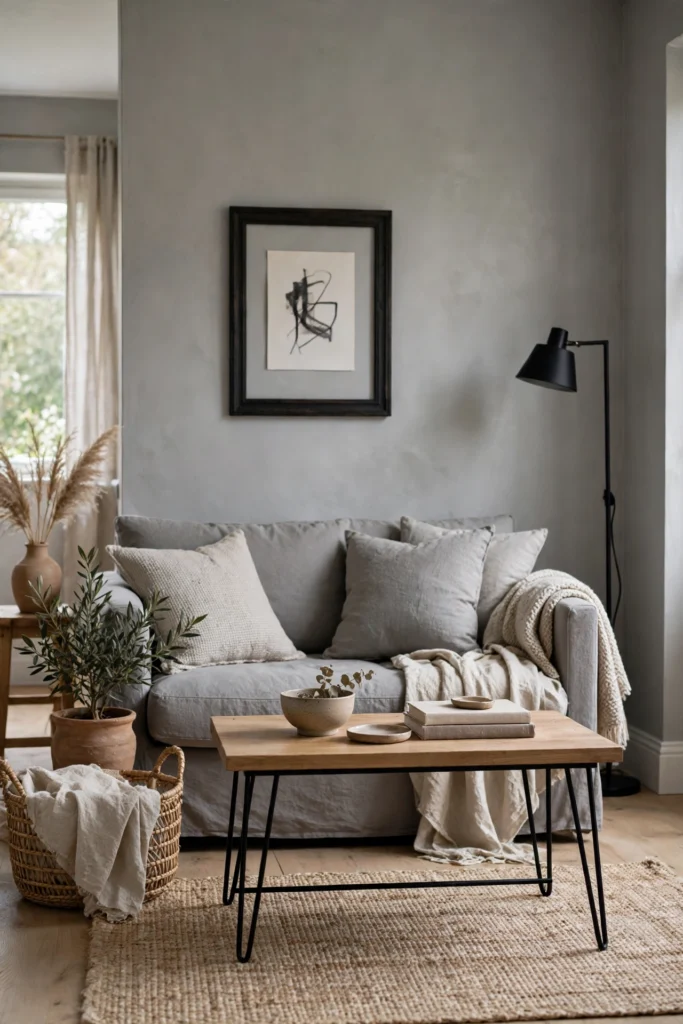
A small amount of black gives a soft grey room structure, like eyeliner for a room. Try black metal legs on a coffee table, a dark picture frame, a simple floor lamp or one small decorative object. These dark points stop the eye from sliding across an all soft palette and give the furniture a bit of shape.
Keep it limited. Two or three black touches is enough, or the room tips into high contrast modern style. Pair a black frame with a wooden shelf, or black lamp legs with a linen shade, and the contrast stays gentle.
18. Style A Cozy Reading Nook
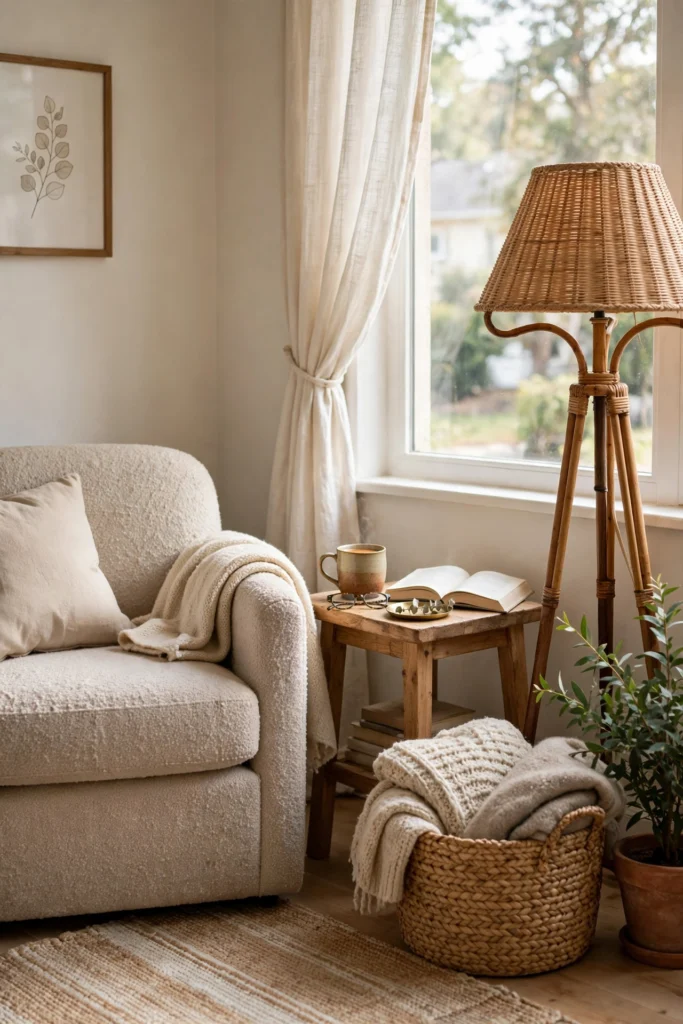
A reading nook makes the whole living room feel more personal, because it shows the room is used, not just arranged. Place a comfortable grey or oatmeal chair near a window, add a small wooden side table, a floor lamp and a woven basket for blankets. A plant beside the chair finishes the scene. The nook does not need much furniture. Its charm comes from comfort and placement, not from filling the corner.
Light is the make or break detail. The lamp should sit over your shoulder, not behind you, so you can read without glare. A chair that hurts your back after twenty minutes is a failed nook, so sit in it properly before you buy. If space is tight, a sofa corner with a good lamp and a basket of throws works instead.
19. Use Vintage And Handmade Accessories
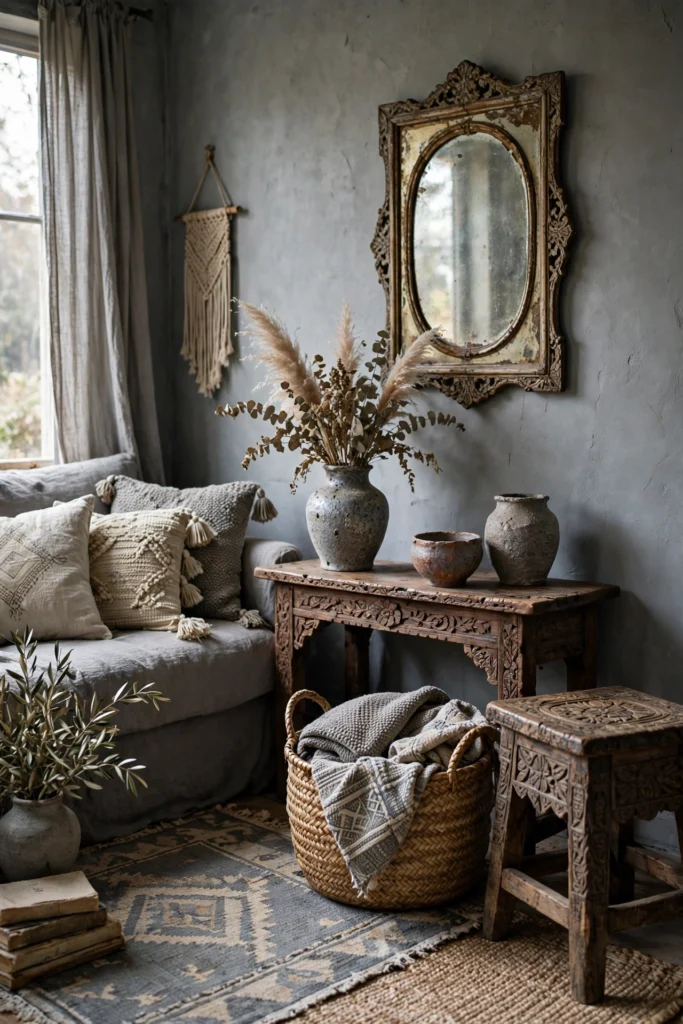
A room feels authentic when not everything looks brand new. A vintage ceramic vase, an old style mirror, handmade pottery, a carved wooden stool or a woven basket with visible imperfections all give a grey palette some history. These are the pieces guests notice and ask about, because they look like they came from somewhere real.
Choose pieces you genuinely like rather than buying to fill a checklist. One handmade bowl from a trip does more than five matching accessories from one store. Check each piece in your light before you commit, since glazes and wood tones change a lot between a shop and your living room.
20. Make The Fireplace A Cozy Feature
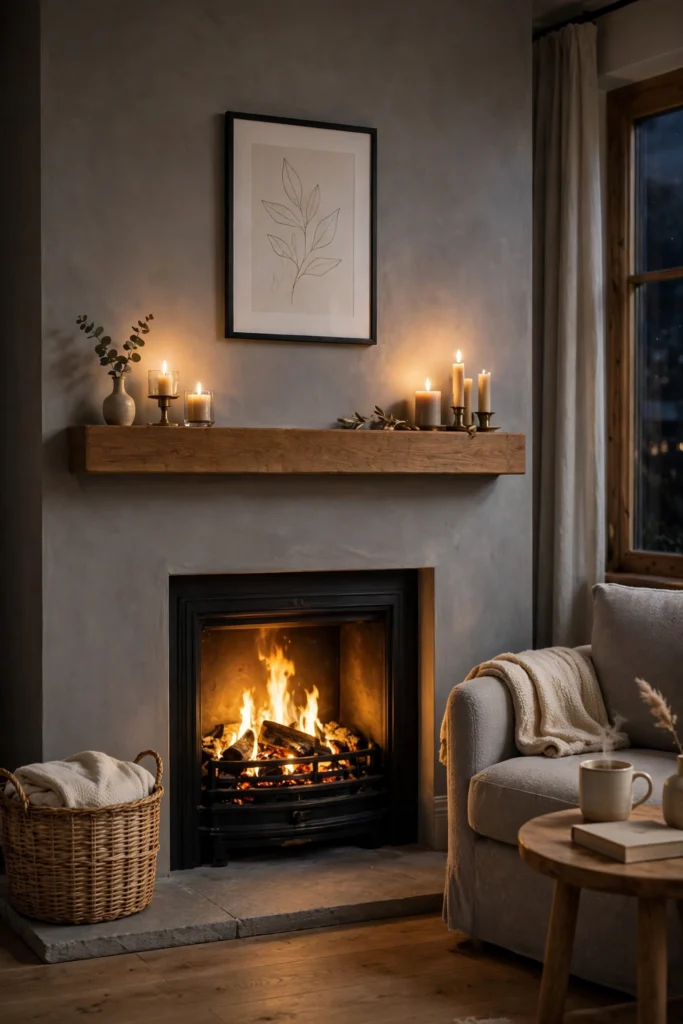
If your living room has a fireplace, let it be the natural centre of the design instead of competing with it. A soft grey wall around the fireplace pairs well with a wooden mantel, a woven basket for logs or blankets, candles and one simple piece of artwork. Keep the seating close enough to make a real conversation area, roughly 8 feet or less between facing seats, so the firelight actually reaches the people sitting there.
Keep the mantel simple. Two or three items with different heights look styled, ten look like storage. If your fireplace is not working, candles in the firebox or a stack of birch logs give the same visual warmth without any renovation.
21. Go Earthy With Brown And Grey
Brown makes grey feel warmer without changing its understated character. Leather, walnut, caramel, tan and dark wood all work, and you can mix them, since brown tones layer more forgivingly than grey tones do. Keep your grey slightly warm so the colours connect naturally. A cool blue grey next to warm caramel can look like two rooms arguing, while a warm grey next to the same caramel looks like one room agreeing.
Cream textiles and woven materials stop the browns from getting heavy. A tan leather chair, a walnut table and a cream throw is a complete combination on its own. If the room starts feeling dark, lighten the rug and curtains first, since they are the largest surfaces after the sofa.
22. Finish With Personal Boho Touches
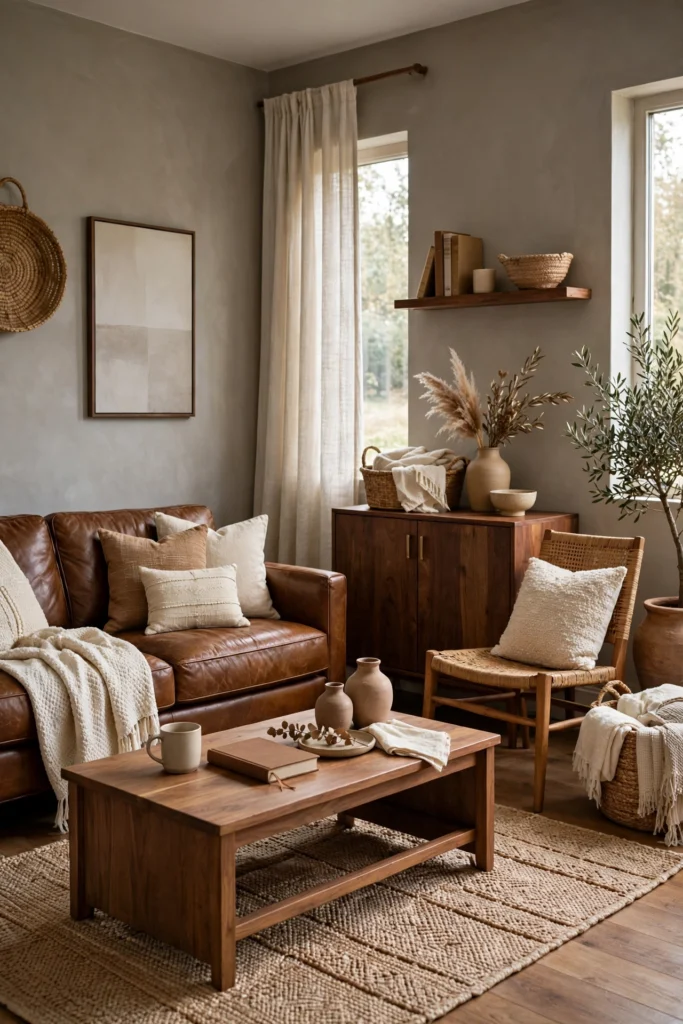
The best boho living rooms feel personal rather than staged, and this last idea is really about permission. Display the books you actually read, travel objects that mean something, handmade ceramics, family photographs, plants and textiles you chose for a reason. Keep the grey foundation simple so these details become part of the story instead of competing with a busy background.
Personal and cluttered differ only in editing. If an object has a story or a use, it earns its place. If it is there because a shelf looked empty, it probably does not. Rotate pieces occasionally rather than adding more. When comfort and personality guide the choices, the room looks collected, not decorated all at once, and that is the whole point of boho style.

Grey Is the Backdrop, Not the Whole Room
If you take one thing from this list, let it be this. Grey does its best work quietly, holding the room together while wood, texture, plants and one warm accent colour do the talking. The rooms that fail are the ones where grey was asked to do everything alone, and the rooms that work are the ones where it was given good company.
You do not need all 22 ideas. Pick your palette row from the table, then choose three or four ideas that fit your room and budget, and start there. A new rug, a woven pendant and a warm throw can change a grey living room in a single weekend. The rest can wait until you find pieces you genuinely love. For a wider look at what is trending in home colour right now, our interior color trends for cozy homes post pairs well with the palettes in this guide, and if you are still sofa shopping, our comfortable sofas ideas for living room roundup covers sizes and comfort before you commit.
Grey Boho Questions, Answered Honestly
Is grey actually good for a boho living room, or does it always look cold?
Grey is a good base, but it is not a complete room on its own. It looks cold when it is paired only with more grey, white and metal. Add wood, woven texture, warm light and one earthy accent, and the same grey sofa suddenly reads as calm instead of cold. The grey was never the problem. The missing warmth was.
What colour goes best with a grey boho living room?
It depends on the mood you want. Terracotta gives the most warmth, sage green gives a fresh natural feel, and caramel brown gives depth without drama. Cream and warm white keep things light. Pick one main accent and let the rest of the room support it, rather than mixing all of them at once.
How can I make my grey sofa look more boho without replacing it?
Layer it. Textured cushions, a chunky throw, a vintage style rug and a rattan side table change a plain grey sofa completely, and none of those require replacing furniture. Our guide to mixing and matching throw pillows walks through cushion sizes and combinations that work with grey upholstery.
Does grey and white work with boho style?
Yes, as long as the white is warm. Ivory, cream and warm white keep the combination soft, while bright stark white next to cool grey turns clinical. Add wood and woven materials so the room keeps its relaxed character instead of looking like a showroom.
What rug looks best in a grey boho living room?
Vintage inspired, Moroccan, jute and flatweave rugs all work well, in muted terracotta, beige, cream, charcoal or faded blue. Size matters as much as style. The front legs of your seating should sit on the rug, and a rug that is too small will make the whole arrangement look lost.
Should a boho living room have lots of plants?
Plants help a lot, but you do not need a jungle. One large plant or a small group placed with thought does the job. Too many plants in a grey room can start to feel like maintenance rather than decoration, especially if some of them are struggling for light.
Can a small living room use dark grey?
Yes, but use it selectively. A charcoal accent wall, a dark sofa, or one dark furniture piece works well in a small room. Covering every wall in charcoal usually shrinks the space. Balance the dark piece with cream, wood, a mirror and natural textures, and keep the rest of the room light.