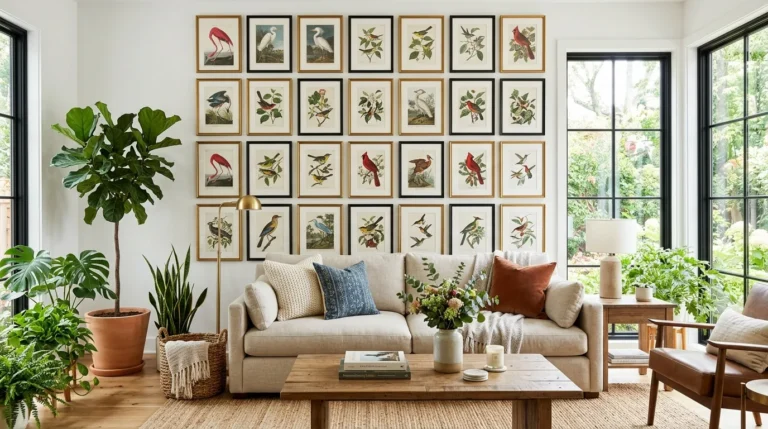
The 5 Top Classic Scenic Wall Murals for Beautiful Interiors are panoramic landscapes, Chinoiserie scenes, Toile de Jouy, botanical gardens, and mythological art. Each style brings timeless charm, depth, and a sense of artistry that elevates any room without chasing short-lived trends.
A blank wall is a missed opportunity. While paint and framed prints have their place, nothing transforms a room quite like a scenic mural. These large-scale designs turn ordinary walls into immersive works of art, wrapping a space in story, color, and atmosphere.
Classic scenic murals, in particular, have stood the test of time. They borrow from centuries of decorative tradition think grand European estates, hand-painted Chinese wallpaper, and pastoral French prints. The result is a look that feels rich, considered, and quietly luxurious.
In this guide, you’ll discover the five most beloved classic mural styles, learn how to choose the right one for your space, and pick up practical tips on installation, care, and even how to make your mural content more visible online. Whether you’re redecorating a living room or refreshing a hallway, these ideas will help you create interiors with lasting appeal.
Why Choose Classic Style Murals?
Trends come and go, but classic design endures. Classic scenic murals draw on decorative styles that have remained popular for hundreds of years, which means they rarely look dated.
There are a few reasons designers keep coming back to them:
- Elegance and sophistication. Classic murals carry a refined, artistic quality that mass-produced wallpaper often lacks. They suggest care and good taste.
- Lasting value. Because these styles are timeless, you won’t feel pressured to redecorate every few years. A Toile de Jouy or landscape mural can look just as fresh a decade from now.
- A strong focal point. A scenic mural instantly anchors a room. It gives the eye somewhere to land and sets the tone for the rest of your decor.
- Versatility. Classic doesn’t mean stuffy. These styles pair beautifully with both traditional and modern furnishings, making them flexible choices for almost any home.
In short, a classic mural is an investment in beauty that holds its charm year after year.
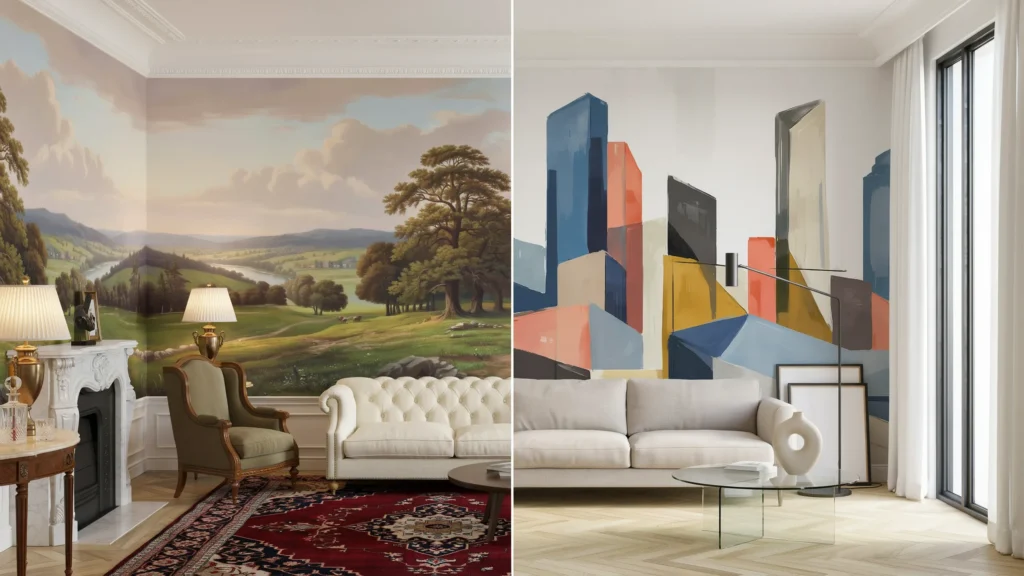
The 5 Best Classic Scenic Mural Styles
Below are the five classic mural styles that consistently top designers’ lists. Each has its own history, mood, and ideal setting.
1. Panoramas and Landscapes
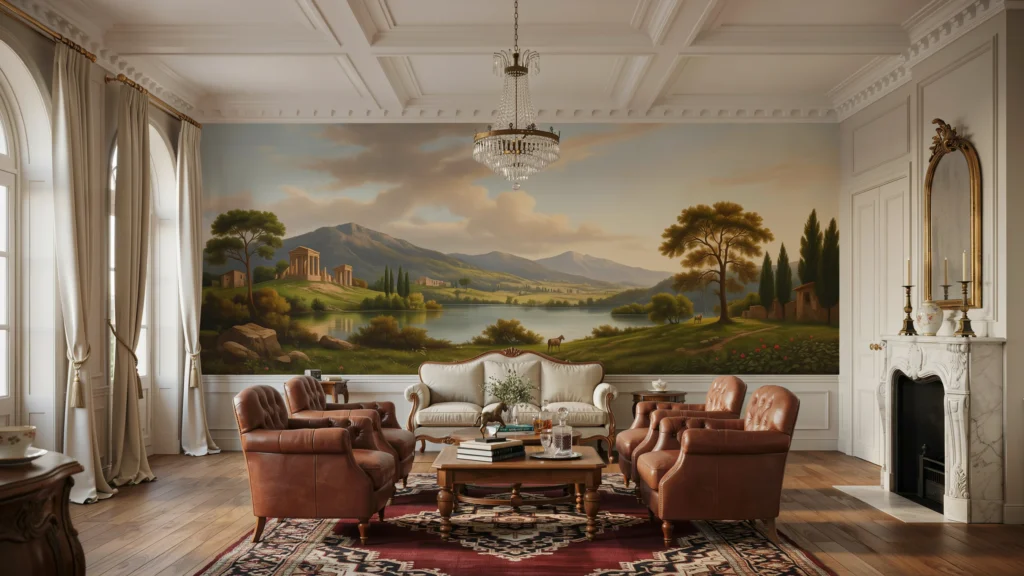
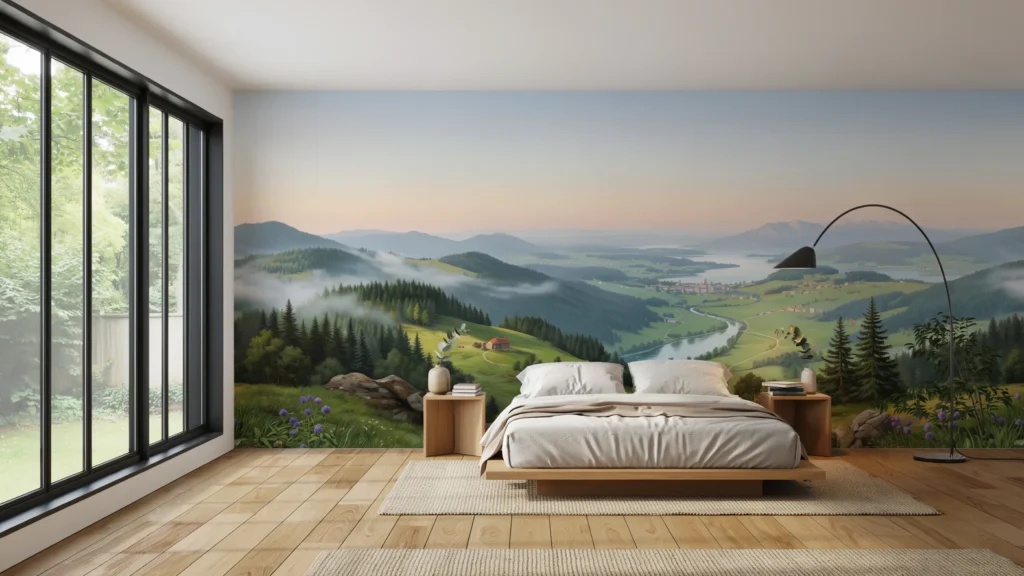
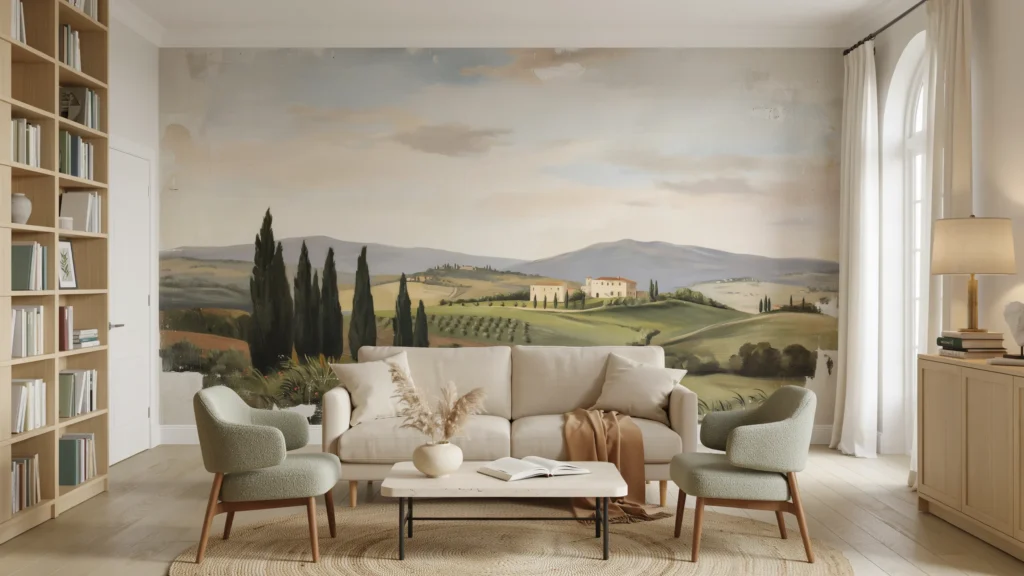
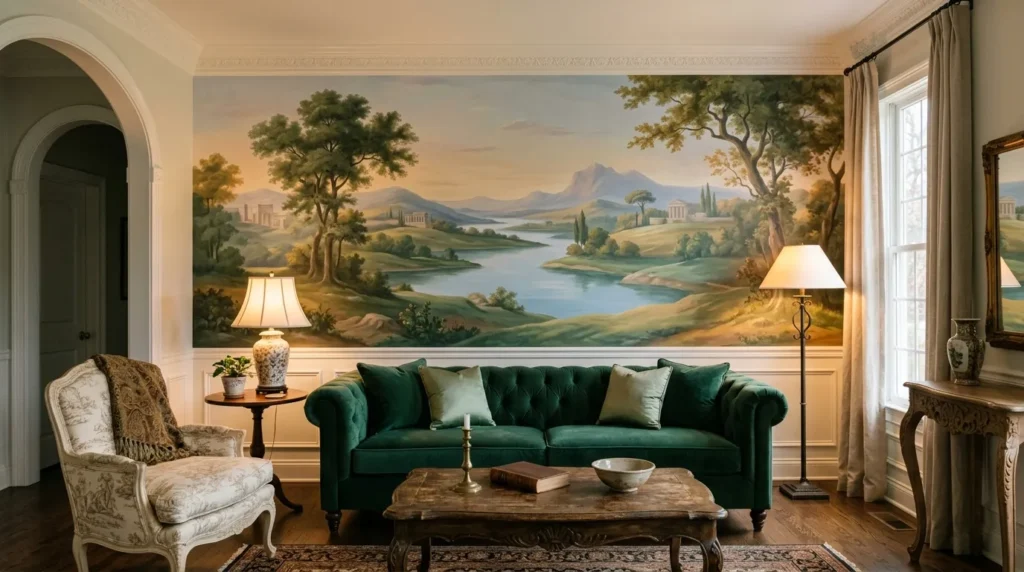
Panoramic and landscape murals bring the outdoors in. Picture rolling hills, misty mountains, calm seascapes, or sweeping countryside views stretching across your wall.
This style has deep roots. In the early 1800s, French manufacturer Zuber & Cie began producing hand-blocked panoramic wallpapers featuring exotic and scenic views. These murals became symbols of wealth and culture one Zuber design, “Scenic America,” even hangs in the White House.
Design tips:
- Use landscape murals in rooms where you want to feel calm and open, such as a living room or bedroom.
- Lighter, hazy scenes can make a small room feel larger.
- Keep furniture relatively simple so the scenery remains the star.
2. Chinoiserie and Oriental Scenes
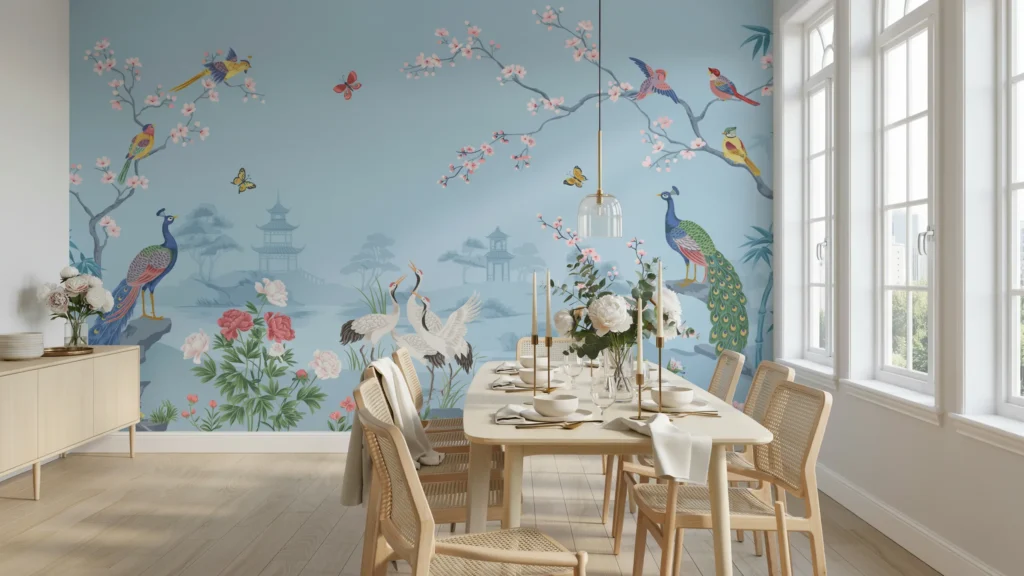
Chinoiserie is a European interpretation of East Asian art, popular since the 17th and 18th centuries. These murals feature delicate motifs: blossoming branches, exotic birds, pagodas, and graceful figures, often set against soft hand-painted backgrounds.
What makes Chinoiserie so enduring is its blend of detail and airiness. The designs feel ornate yet light, which is why they suit both grand dining rooms and intimate powder rooms.
How to use it in modern decor:
- Pair a Chinoiserie mural with clean-lined contemporary furniture for a fresh contrast.
- Choose a soft background tone pale blue, blush, or cream to keep the look serene.
- Use it in a dining room or bedroom where its romance can shine.
3. Toile de Jouy
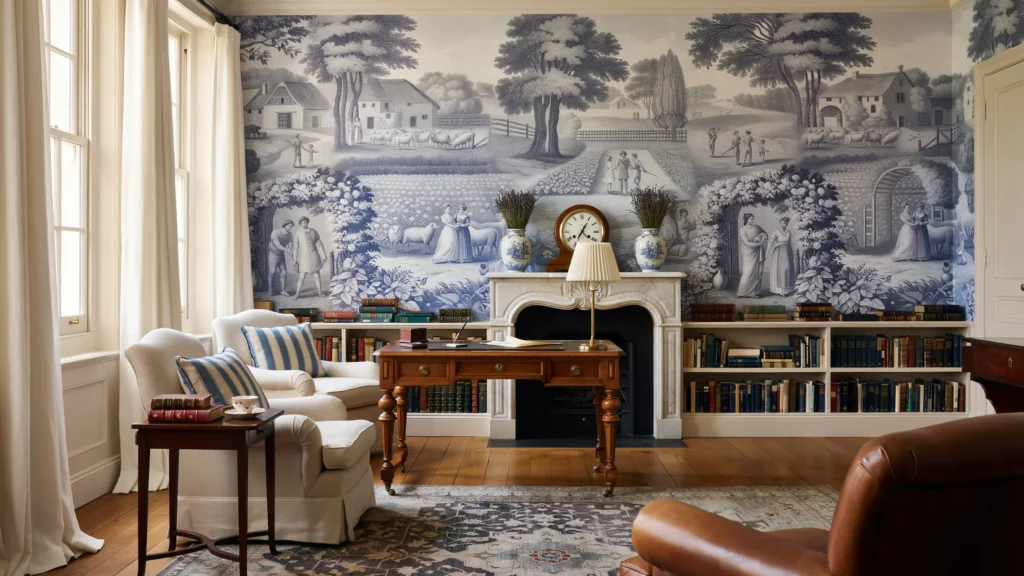
Toile de Jouy originated in late 18th-century France, in the town of Jouy-en-Josas. The name refers to the printed cotton fabrics produced there, typically showing detailed pastoral or romantic scenes in a single color on a light background.
Classic Toile patterns depict country life: shepherds, gardens, courting couples, and rural landscapes. The two-tone simplicity often blue, red, or black on white gives it a crisp, charming look.
Versatile applications:
- Use Toile in bedrooms, studies, or hallways for a cozy, storybook feel.
- It works wonderfully in small spaces because the repeating pattern adds interest without overwhelming.
- Match accessories, such as cushions or curtains, to the mural’s single color for a pulled-together look.
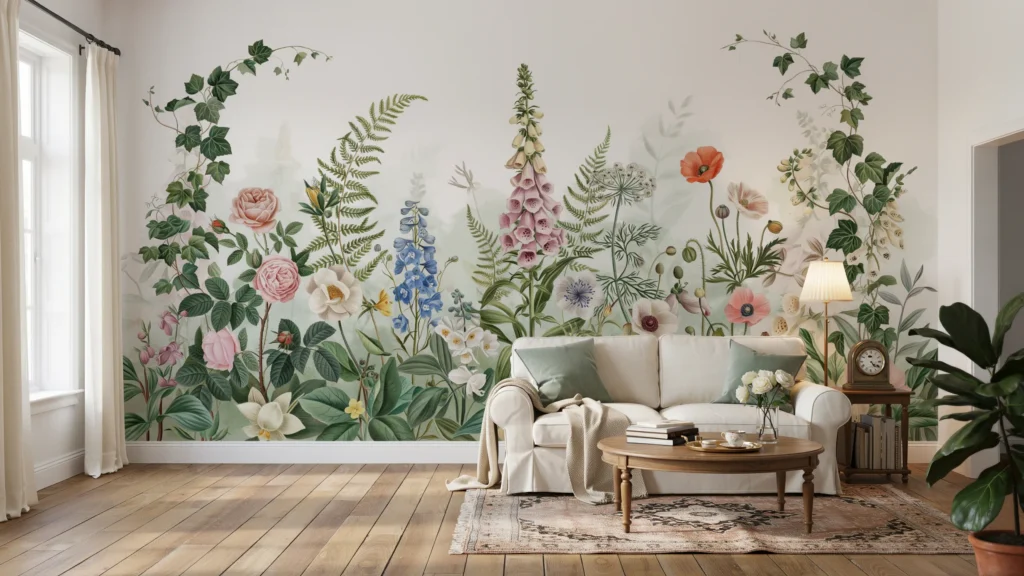
4. Botanical and Garden Scenes
Botanical murals celebrate the beauty of plants, flowers, and gardens. They range from formal, symmetrical European gardens to wild, lush tropical jungles bursting with greenery.
This style is endlessly adaptable. A delicate floral mural suits a romantic bedroom, while a bold jungle scene adds drama to a study or entryway. Botanical designs also bring a sense of freshness and life to spaces that lack natural greenery.
Impact on your space:
- Green tones are restful and easy to live with, making botanicals great for relaxation areas.
- Large-leaf tropical prints can add energy and a touch of the exotic.
- For a softer effect, choose pale florals or muted watercolor-style designs.
5. Mythological and Classical Art Scenes
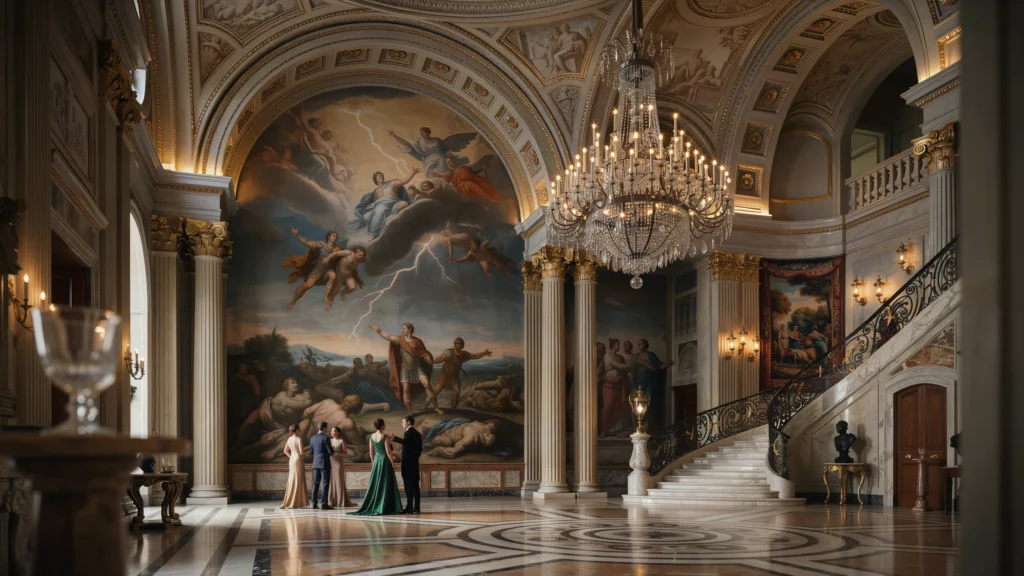
For pure grandeur, few styles rival mythological and classical art murals. These designs draw on Greek and Roman mythology, Renaissance paintings, and classical architecture think gods, heroes, columns, and dramatic skies.
This style tells a story. A mural depicting a mythological scene adds depth and a sense of history, making it a wonderful conversation piece.
Suitable room types:
- Use classical murals in formal spaces such as dining rooms, libraries, or grand entryways.
- High ceilings enhance the dramatic effect, so these designs shine in larger rooms.
- Pair with rich textures velvet, marble, or gilded accents to complete the elegant look.
How to Choose the Right Classic Mural for Your Space
Picking the perfect mural is about more than just liking the image. A few practical factors will help you make a choice you’ll love for years.
How do room size and natural light affect mural choice?
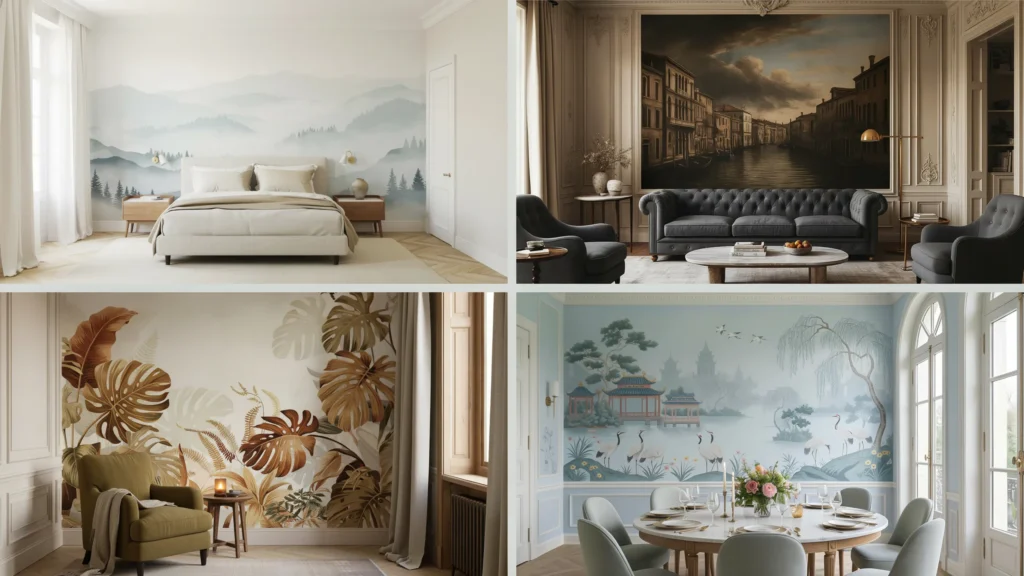
Room size and light shape how a mural reads. In small rooms, choose lighter, airy scenes such as a hazy landscape or soft Chinoiserie to keep the space feeling open. Darker, bolder murals can shrink a small room but look stunning in larger spaces with plenty of light.
If your room gets little natural light, lean toward murals with warm, bright tones to lift the mood.
How do you match a mural to your color palette?
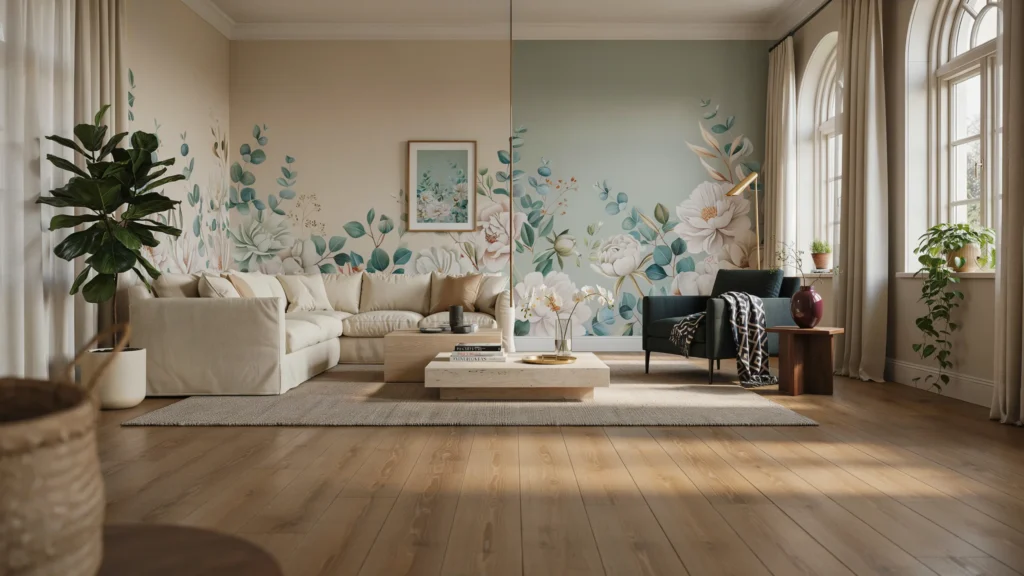
Look at the colors already in your room your furniture, flooring, and textiles. Choose a mural that either blends with these tones for a harmonious feel or contrasts with them for a striking statement.
A simple trick: pick one or two colors from the mural and repeat them in your cushions, rugs, or artwork. This ties the whole room together.
How should furniture and decor work with a mural?
Let the mural lead. If your mural is busy and detailed, keep furniture clean and understated so the room doesn’t feel cluttered. If the mural is subtle, you have more freedom to add decorative pieces.
Position furniture so it frames rather than hides the mural. Avoid covering the most beautiful parts of the scene with tall bookcases or cabinets.
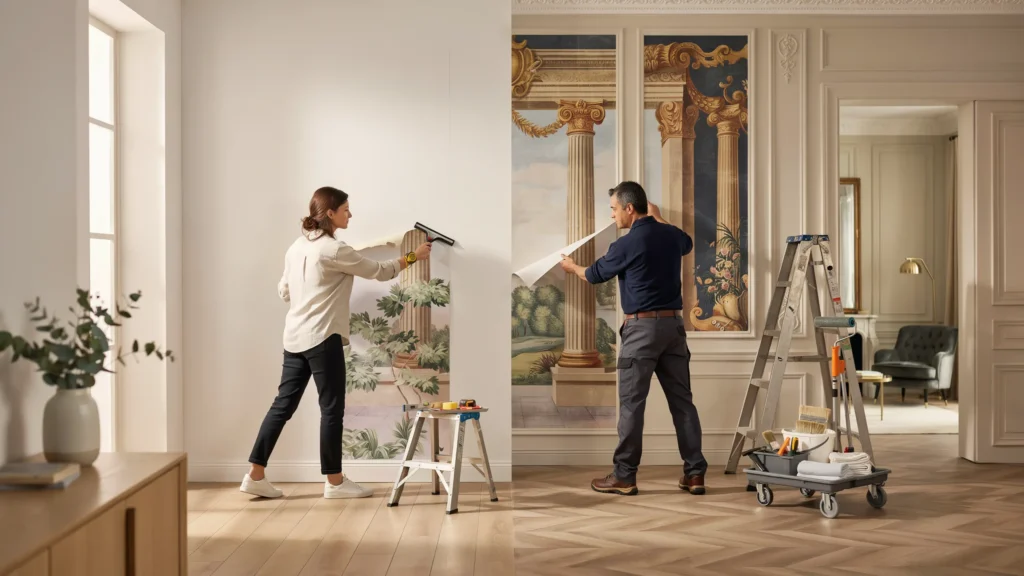
Should you install a mural yourself or hire a professional?
This depends on the mural type and your confidence. Pre-pasted and peel-and-stick murals are beginner-friendly and work well for DIY. Traditional paste-the-wall murals, especially large or high-end ones, are best left to a professional installer who can match seams and avoid bubbles.
Choose DIY if your wall is small and smooth and the mural is peel-and-stick. Choose a professional if the mural is expensive, the wall is large, or precise pattern matching matters.
How Do You Make Classic Mural Content More Visible Online?
Suppose you sell or write about classic murals; getting found online matters. Search engines and AI tools reward content that is clear, well-organized, and rich in helpful detail.
Use semantic SEO and keyword clustering.
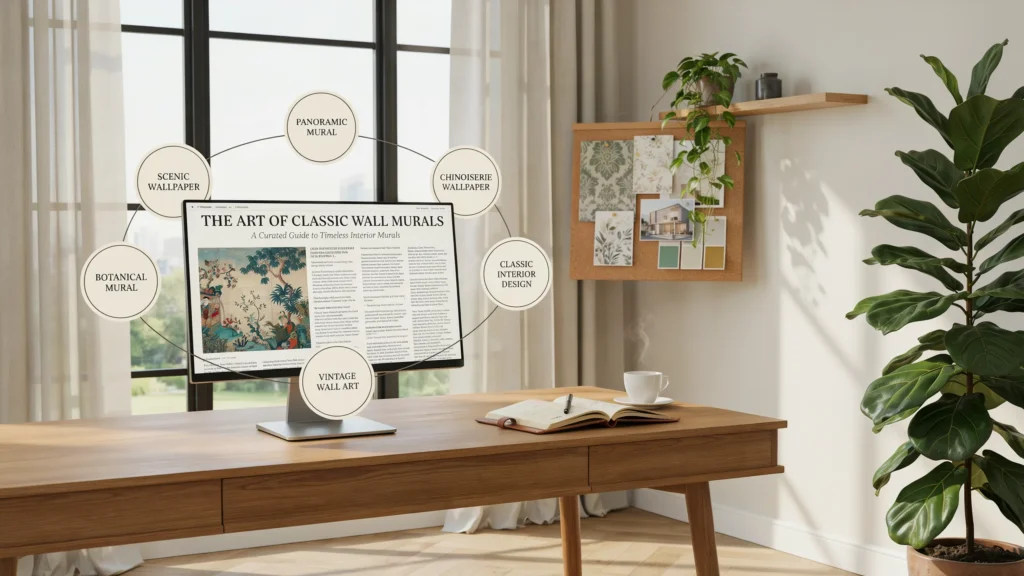
Group related terms together rather than repeating one keyword. For a mural article, this might include “scenic wallpaper,” “panoramic mural,” “Chinoiserie wallpaper,” and “classic interior design.” Covering a topic thoroughly signals expertise to search engines and AI systems.
Optimize images for visual search.
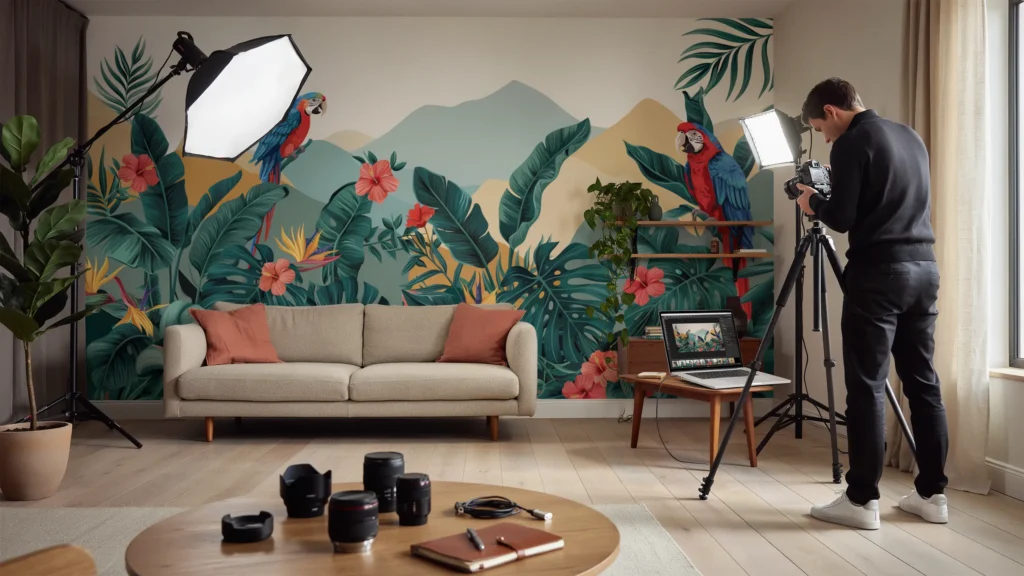
Murals are highly visual, so image optimization is key. Use descriptive file names (such as “chinoiserie-blue-dining-room-mural.jpg”), add detailed alt text, and compress images so pages load quickly. Clear, high-quality photos also help your content appear in Google Images and AI visual search.
Add structured data for rich snippets.
Structured data, such as Product or Article schema, helps search engines understand your content. This can lead to rich snippets the enhanced results with star ratings, prices, or FAQs that stand out on the page and attract more clicks.

How to Care for and Maintain Classic Wall Murals
A beautiful mural deserves proper care. With a little attention, it can stay vibrant for many years.
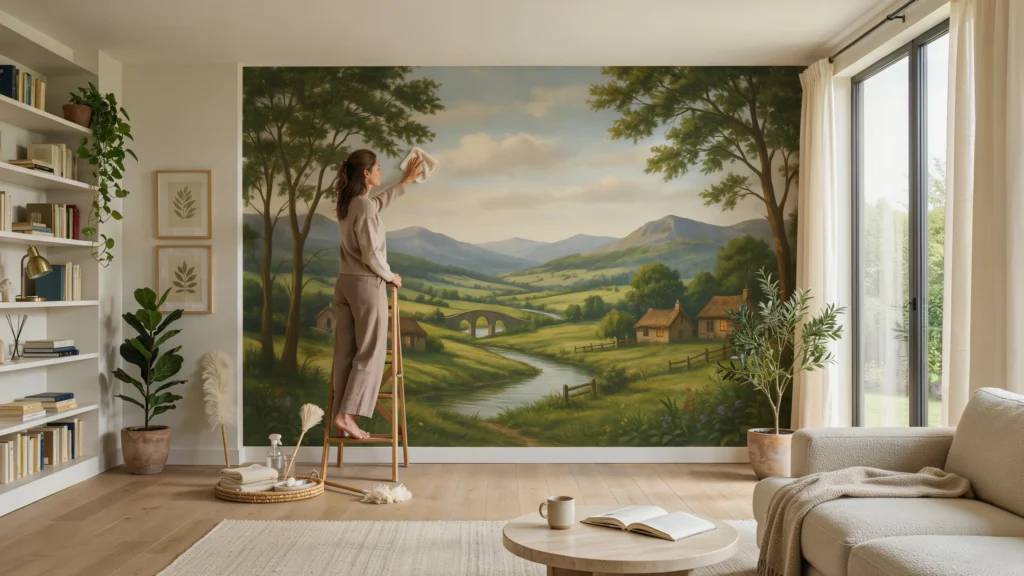
- Dust regularly. Gently wipe the surface with a soft, dry cloth or a feather duster to prevent dust buildup.
- Clean spots carefully. For washable murals, use a damp cloth with mild soap. Test a hidden corner first, and never scrub hard.
- Avoid moisture. Keep murals away from very humid areas unless they are rated as moisture-resistant. Bathrooms and kitchens may need special vinyl finishes.
- Protect from sunlight. Direct sun can fade colors over time. Use curtains or UV-protective window film in very bright rooms.
Following these simple steps keeps your mural looking as stunning as the day it was installed.
Bring Timeless Beauty to Your Walls
Classic scenic murals offer something rare in interior design: beauty that lasts. From the sweeping calm of a panoramic landscape to the storytelling drama of a mythological scene, each style transforms a plain wall into a centerpiece full of character.
The key is choosing a mural that fits your space, your light, and your taste then caring for it well so it stays gorgeous for years. Start by deciding which of the five styles speaks to you, measure your wall, and consider whether DIY or professional installation suits your project.
With the right mural, even the simplest room can feel like a work of art.
Frequently Asked Questions
What is a scenic mural?
A scenic mural is a large-scale decorative design applied to a wall, depicting a scene such as a landscape, garden, or historical motif. Unlike repeating wallpaper, a scenic mural creates one continuous picture across the wall.
Which classic mural style is best for a small room?
For small rooms, lighter styles work best. Toile de Jouy, soft Chinoiserie, and hazy panoramic landscapes add interest without overwhelming the space. Pale, airy colors can even make a small room feel larger.
Are classic murals expensive?
Prices vary widely. Peel-and-stick murals can be quite affordable, while hand-finished or high-end designs like genuine Zuber panoramics cost significantly more. Your final cost depends on the material, size, and whether you hire a professional installer.
Can I install a mural myself?
Yes, many murals are DIY-friendly. Peel-and-stick and pre-pasted options are ideal for beginners working on small, smooth walls. For large, expensive, or pattern-matched murals, hiring a professional installer is the safer choice.
How long do classic murals last?
With proper care, a quality mural can last 10 to 15 years or more. Keeping it dust-free, away from excess moisture, and protected from direct sunlight will help preserve its color and finish.