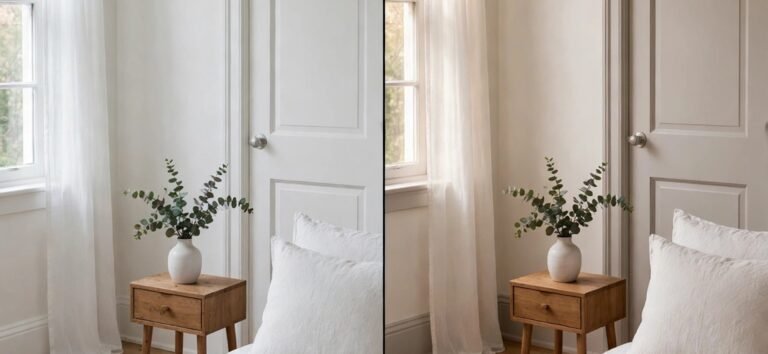
The Mistake I Made First
I painted all four walls dark on day one. Not a test patch, not one accent wall, all four, floor to ceiling, in a deep charcoal that looked rich and brave on the sample card. By three in the afternoon the room felt smaller than it was. By nine at night it felt like a cave with a bed in it. I stood in the doorway with a roller in my hand and realised I had made the room moody in the wrong way. It was gloomy, not cosy, and there is a real difference between the two.
That first attempt taught me more than any mood board ever did. A moody modern vintage bedroom is not about how dark you can go. It is about balance, and balance is something you build slowly, one decision at a time. The room I live with now has dark walls, yes, but it also has warm wood, soft lamps, linen bedding in a lighter tone and a Persian rug that has seen better days and looks better for it. In the morning it feels calm. In the evening it glows. At night it helps me sleep. That is the whole point.
This guide is a transformation diary, told by light. We will move through the room the way a day moves through it, from morning daylight to evening lamp light to the dark of night. Follow it in order and you will end up with a bedroom that feels deep and dramatic without ever feeling heavy, and you will not have to repaint four walls twice, the way I did.
Quick answer: A moody modern vintage bedroom works when dark walls are balanced with warmth. Start with one dark accent wall behind the bed in a matte charcoal, navy, forest green, plum or teal. Add warm wood, soft textures like velvet and linen, layered warm lighting with dimmers, and one or two vintage pieces such as an ornate mirror or an antique dresser. Keep the bedding lighter than the walls, in the same tonal family, and let heavy drapes finish the mood. One wall, one weekend, then live with it before you paint more.
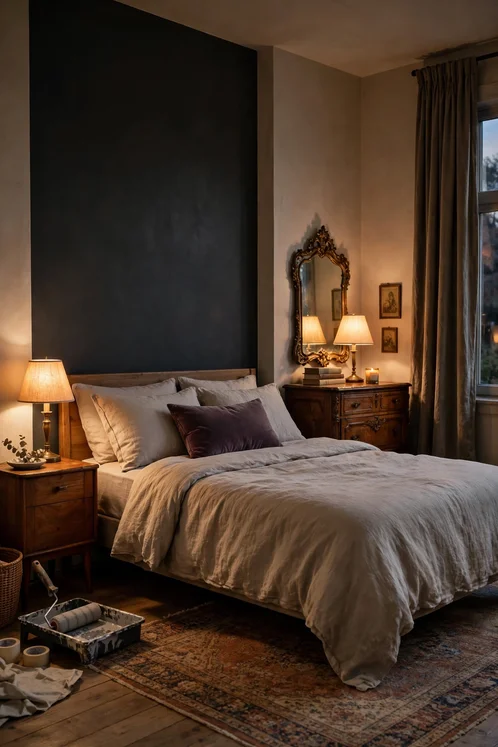
Daylight: Seeing the Room Honestly
Morning light tells the truth about a bedroom. It shows every scuff on the skirting, every patch where the old paint went thin, and exactly how much sun the room really gets. So the first step of this transformation happened at ten in the morning, with the curtains open and nothing new in the room at all. I just looked. The window faced east, which meant bright light for a few hours and soft light after lunch. The floor was a medium oak, warm enough to work with. The ceiling was low, which mattered more than I expected, because dark paint on a low ceiling can press down on a room if you are not careful.
If your room gets strong sun for most of the day, you can go darker with more confidence. The light will do half the work of keeping the room bright. If your room faces north, or a tall building blocks the sun, you need to be more careful. Dark walls in a dim room can still work, but they need more help from lamps, mirrors and light bedding. Neither situation is wrong. You just need to know which one you are in before you buy paint.
Which dark colour is right for your room?
Five colours carry this style, and each one changes the mood of the room in a slightly different way. Charcoal is the safest starting point. It reads as a neutral, it works with almost any wood tone, and it never fights with your bedding. Navy is cooler and a little more formal, and it looks wonderful with brass and warm wood. Forest green feels the most restful of the five, like a garden after rain, and it pairs beautifully with leather and linen. Plum is the boldest choice, romantic and a little dramatic, and it needs warm light to stay soft. Teal sits between green and blue, and it suits rooms with a lot of natural light because the colour shifts through the day.
The way to choose is simple, and it costs very little. Buy sample pots, not full tins, and paint large swatches, at least a metre square, on the wall behind the bed. Live with each swatch for three days. Look at it in morning light, in the evening with the lamps on, and at night with just one bedside lamp lit. The colour you still like on the third evening is the right one. The colour that looked perfect in the shop and wrong at home is the one you are glad you tested. I tested three. The charcoal I expected to choose looked flat and cold by day two. The forest green I almost skipped is the one on my wall now.
One more thing about paint finish. Matte is the right choice here, every time. Gloss and satin reflect light in hard patches and make dark walls look uneven. Matte paint soaks up the light instead, and the colour looks deeper and richer for it. It also hides the small bumps and marks that old walls always have. The trade-off is that matte marks more easily if you scuff it, so keep a small pot of the same paint for touch-ups. That is a small price for walls that look like velvet instead of plastic.
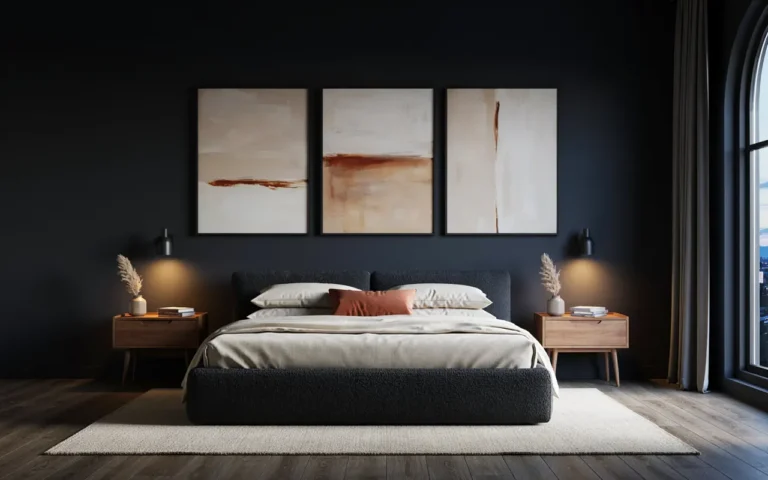
So, is one dark wall enough? For most rooms, yes, and it is the smartest place to start. Paint the wall behind the bed, and keep the other three walls in a warm off-white or a very pale version of the same colour family. The dark wall becomes the backdrop for the bed, the art and the lamps, and the lighter walls bounce daylight around the room. You get the drama without the cave. If you love it after a month, you can paint a second wall, or take the dark colour up across the ceiling in a small room. But you will probably find that one wall was enough all along.
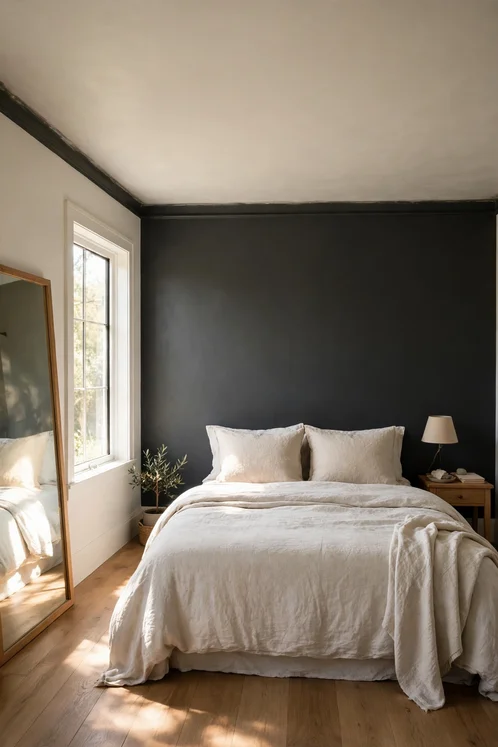
The Ratio That Keeps Moody From Turning Gloomy
After the failed four-wall experiment, I needed a rule I could trust, something I could check with my eyes instead of guessing. What I landed on is a simple ratio, and I have used it in every dark room since. Roughly half the room should be your dark colour, about a third should be light and soft, and the rest should be warm wood and metal. It is not a law of nature, and nobody will measure your walls with a ruler, but it gives you a way to look at a room and see what is missing. If the room feels heavy, you almost always need more light or more wood, not less dark.
| Element | Share of the room | What it does | Examples |
|---|---|---|---|
| Dark tones | About half | Sets the mood and gives depth | Accent wall, velvet headboard, dark bedding layers |
| Light and soft tones | About a third | Keeps the room bright and breathable | Cream or pale sage bedding, light rug, pale walls |
| Warm wood and metal | The rest | Adds warmth and stops the dark from feeling cold | Oak floor, walnut dresser, brass lamps, leather chair |
Look at the table and notice where the light comes from. It is not only the walls. The bedding does a huge amount of work, because the bed is the biggest surface in the room. Lighter bedding in the same tonal family as the walls, a soft sage duvet against forest green walls, a warm cream against charcoal, keeps the bed from becoming a dark block in the middle of a dark room. A light rug does the same job on the floor. Together they lift the whole room without weakening the mood at all.
Warm wood is the other half of the trick. Dark paint can feel cold on its own, and wood is the fastest way to warm it up. An oak floor, a walnut dresser, a worn wooden bench at the foot of the bed, each one adds a note of warmth that paint cannot. Brass does the same thing in smaller doses. A brass lamp base, a brass picture frame, a set of old brass drawer pulls, these little glints catch the lamplight in the evening and stop the room from feeling flat. You do not need much. A few warm pieces, placed where the light falls, are worth more than a room full of them.

Texture Does the Work That Colour Cannot
Here is the secret of every good moody bedroom, and it is not the paint. It is texture. When most of the room is dark, the eye needs something to hold onto, and a flat dark wall next to a flat dark duvet next to a flat dark rug just turns into one big shadow. Texture breaks that shadow up. Velvet catches the light one way, linen catches it another, worn wood and old leather catch it in their own way again. The room stays dark, but it stops being flat, and that difference is everything.
I learned this the slow way, by buying a velvet cushion and realising it changed the whole bed. Then a chunky knit throw. Then a linen duvet cover that wrinkled in the way linen always does, and somehow looked better wrinkled than ironed. Each piece added a different surface, and each surface made the dark colours look richer instead of heavier. If you take one idea from this guide, take this one. When a dark room feels dull, add texture before you add colour.
Start with the bed, because that is where texture matters most and where you feel it every night. A velvet headboard is the classic move in this style, and it earns its reputation. It is soft to lean against when you read, it catches the lamplight beautifully, and it turns a plain bed into the centre of the room. If a new headboard is too much right now, a row of velvet cushions in two or three tones does a smaller version of the same job. Layer a chunky knit throw across the foot of the bed, and a linen duvet underneath, and you already have three textures working together before you spend anything on the walls.
The floor deserves the same thinking. A Persian rug, or a rug with a Persian pattern, is one of the best buys for this style, because it brings pattern, colour and texture in a single piece. The deep reds and blues of a traditional rug sit happily against dark walls, and the pattern gives the eye somewhere to rest. If a real vintage rug is out of reach, a good quality patterned rug in the same colours works just as well. Lay it so it extends past the sides of the bed, so your feet land on something soft and warm in the morning. A rug that is too small looks like an afterthought, and it is one of the most common mistakes in bedroom decorating. Bigger is almost always better here.

How much texture is too much?
It is possible to overdo it. A room with velvet, knit, linen, leather, fur, silk and tweed all at once feels like a fabric shop, not a bedroom. The rule I use is three main textures, repeated in different places. In my room those three are velvet, linen and worn wood, with leather as a small accent in the chair. The velvet shows up on the headboard and two cushions. The linen shows up on the duvet and the curtains. The wood shows up on the floor, the dresser and the bench. Repeating the same textures keeps the room calm, and calm is what a bedroom is for. If you want to try a new texture, take one out first.
Small bedrooms need this thinking even more, because texture can make a tight room feel rich instead of cramped. Dark walls plus soft layers can turn a small space into a cocoon, but only if the furniture fits and the floor stays clear. If your bedroom is on the small side, it is worth reading through some small bedroom design ideas that maximise space and style before you buy anything bulky. The same goes for layout. A bed that is too big for the room will undo all the good work of the paint and the textures, so measure first and fall in love second.

Evening Lamp Light: Where the Room Comes Alive
Daylight is for seeing the room honestly. Evening is for enjoying it. This is when a moody bedroom earns its keep, because the dark walls that looked bold at noon turn soft and glowing when the lamps come on. The whole room changes character at about six in the evening, and that change is the reason people fall in love with this style. But it only happens if the lighting is layered properly. One ceiling light, however pretty, will never do it. It throws hard light from above, flattens every texture you worked so hard to build, and makes the dark walls look muddy instead of rich.
I use three layers of light, and each one has a job. The first layer is the main light, usually the ceiling fixture, and it should be on a dimmer. At full brightness it is for cleaning and finding things. At half brightness it is for the evening, when you want to see the room without washing it out. A dimmer switch is one of the cheapest upgrades in this whole guide, and it changes the room more than a new lamp does. If you do one electrical job, make it this one.
The second layer is the light you actually live by, the bedside lamps or the wall sconces. This is the warm pool of light you read by, the glow that makes the velvet look soft and the brass look golden. Two matching lamps on either side of the bed give the room symmetry and make the bed feel like the centre of the space. Sconces do the same job while freeing up the nightstand, which matters in a small room. Either way, the bulbs should be warm toned, in the 2700K to 3000K range, because cool white light kills this style instantly. Warm light is the difference between a room that feels like a library and a room that feels like a hospital corridor. Check the box before you buy, because shops sell both and they look identical on the shelf.
The third layer is accent light, the small lights that nobody notices until they are gone. A tiny lamp on the dresser. A candle on the windowsill, real or battery, whichever you trust yourself with. A picture light over the art above the bed. These small lights create little bright spots around the room, and the contrast between those bright spots and the dark walls is what makes the evening mood. Without them, the room is evenly dim. With them, it has depth, and depth is what makes a room feel expensive.
| Light layer | What it is | When to use it | Warm bulb tip |
|---|---|---|---|
| Main light | Ceiling fixture on a dimmer | Cleaning, getting dressed, full room light | Dim to half in the evening |
| Bedside light | Table lamps or wall sconces | Reading, winding down, everyday evenings | Warm 2700K to 3000K bulbs |
| Accent light | Small lamp, candle, picture light | Creating glow and depth after dark | One or two small warm points only |
Fixtures matter as much as bulbs, because a lamp is also decor. Aged brass, dark metal, seeded glass, a ceramic base with a linen shade, all add character while they work. Brass sconces flanking the bed add symmetry, a pendant with an antique finish saves nightstand space, and a table lamp with a vintage base gives a soft glow a bare bulb never will. Choose fixtures you would like even switched off, because in daylight they are still part of the room.

Night: Bedding, Drapes and Better Sleep
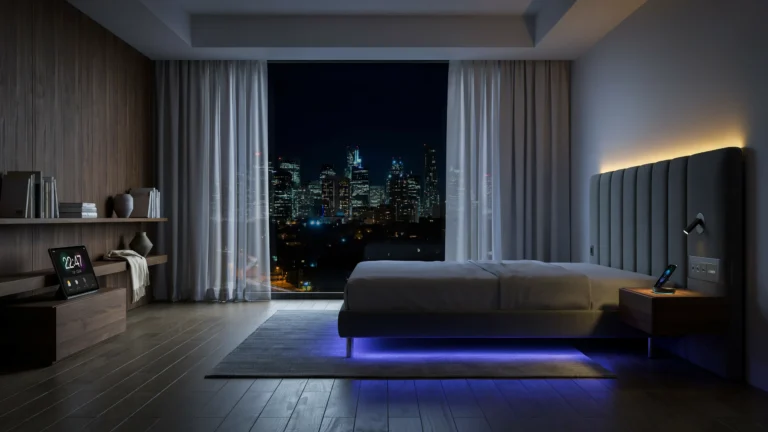
Night is when this style stops being decoration and starts being useful. Dark walls, heavy drapes and warm low light are not just a look, they are genuinely good conditions for sleep. Your body reads darkness as a signal to wind down, and a room that goes properly dark in the evening helps that signal along. This is one of the reasons moody bedrooms feel so restful, and it is worth leaning into rather than fighting.
Bedding is where the night shift starts. Keep it lighter than the walls, in the same tonal family, and the bed becomes a soft pale shape against the dark wall instead of another dark mass. Cream against charcoal, pale sage against forest green, soft dusty rose against plum, these combinations feel calm and layered. The fabric matters too. Linen is my first choice for the duvet cover, because it breathes in summer, feels warm in winter, and has a relaxed texture that suits the vintage side of the style. Cotton percale is the alternative if you like a crisper feel. Either way, choose plain colours or very small patterns for the main bedding, and save the stronger patterns for the cushions and the throw, where they can be changed easily.
Layering is what makes the bed look inviting and feel warm. A flat sheet, a duvet, a throw folded across the foot, two sleeping pillows and two or three decorative cushions, that is enough. More than that and the bed becomes a chore to make every morning, and a bed that is a chore to make is a bed that stays unmade. The throw is the easiest way to add a new colour or texture without committing to it. A mustard throw in autumn, a deep rust one in winter, and the whole bed changes mood for the price of a single piece.
Heavy drapes are one of the best investments in this style, and they do three jobs at once. They block morning light so you sleep better, they add a huge soft surface that balances the hard dark wall, and they make the window look finished. Hang them high, close to the ceiling, and let them fall to the floor, even if the window is small. Short curtains make a room look unfinished and chop the wall in half. Velvet or heavy linen works best, in a colour close to the walls or a tone or two lighter, and a sheer inner layer keeps the daylight soft when the drapes are tied back.
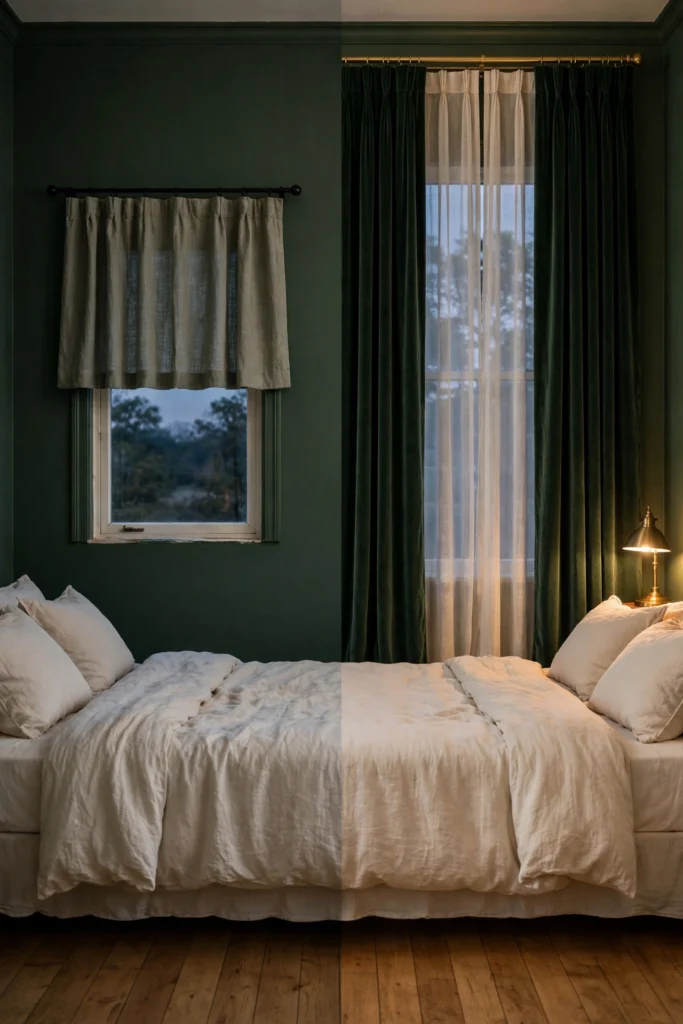
Furniture: One Old Soul, the Rest Modern and Quiet
The furniture is where the modern and the vintage meet, and the balance matters more here than anywhere else in the room. Too much vintage and the room feels like an antique shop. Too much modern and it feels like a hotel. The mix that works, in my experience and in most of the rooms I admire, is one or two vintage statement pieces, with everything else modern, simple and quiet. The vintage pieces provide the character. The modern pieces provide the comfort. Neither one should shout.
The statement piece is worth taking your time over. A carved wooden dresser, an aged leather chair, an ornate mirror, a brass bed frame, any one of these can anchor the room. Look for pieces with real age on them, not new furniture made to look old. The wear is the point. A dresser with a scratched top and original brass handles has a history a new copy cannot fake, and that history is what makes the room feel personal. Flea markets, estate sales, thrift stores and online marketplaces are all good hunting grounds. I looked for three months before I found my dresser, and I have never regretted waiting.
When you find a piece, give it room to be seen. Place the ornate dresser against the plain dark wall, not crowded between two other pieces. Let the leather chair sit in a corner with a small lamp beside it, so it becomes a reading spot instead of a dumping ground for clothes. One statement piece per wall is plenty. Two in the whole room is ideal. Three starts to feel like a collection, and collections need more space than a bedroom usually has. If you fall in love with a third piece, put it in another room and enjoy it there.
Where do you find vintage furniture without spending a fortune? The honest answer is that the cheapest sources take the most time. Thrift stores and flea markets reward patience and early mornings. Estate sales are good for quality pieces at fair prices, especially on the last day when sellers want things gone. Online marketplaces are fast but need care, because photos hide damage, so always ask for close-up pictures of joints, drawers and the back of the piece before you pay. And remember that a piece does not need to be perfect. A wobbly drawer is a cheap fix. A missing handle is a chance to add a beautiful brass one. What you are really buying is solid wood and good bones, and those are hard to fake.

This balance is especially important if you are working with a small room, because a heavy vintage piece can overwhelm a tight space fast. In a tiny bedroom, the layout matters as much as the furniture itself, and a clever arrangement can make the same pieces feel spacious instead of cramped. If your room is small, look at some smart furniture layouts for tiny bedrooms before you commit to a large dresser or a wide bed frame. A few inches in the wrong place can be the difference between a room that flows and a room you have to sidestep through.
Art, Mirrors and the Walls Between the Walls
Once the paint is dry and the furniture is in place, the walls still need something. Dark walls are a wonderful backdrop for art, because colours and frames stand out against them in a way they never do on white. One large piece beats five small ones, almost every time. A single moody landscape above the bed, a large abstract in deep tones, a framed vintage botanical print, any one of these becomes a focal point. Five small frames scattered across the wall just look like clutter that happens to be framed.
Scale is the thing people get wrong most often. Art that is too small for the wall looks lost, and art that is too small above a bed looks like a mistake. As a rough guide, the art above a bed should be about two thirds as wide as the bed itself. Hang it so the centre sits at eye level when you are standing, not when you are lying down. If you are unsure, hang it slightly lower than you think. Most people hang art too high, and in a bedroom that mistake is easy to spot because you look at the wall every morning.
Mirrors are the hardest working decor in a moody bedroom. A large ornate mirror reflects the lamplight and doubles the evening glow, makes the room feel bigger, and adds vintage character on its own, especially with a carved or gilded frame that has a bit of age on it. Hang it where it catches the window or a lamp, because a mirror facing a blank wall just reflects a blank wall. The best spot is usually opposite the window, or beside the bed where it catches the bedside lamp. Try two or three places before you fix it to the wall.
Colour trends change every year, but the moody palette is forgiving, because it is built on colours that have been in style for decades. If you want to see how your dark walls sit alongside the wider world of home colour, it helps to look at the interior colour trends for cosy homes and notice which ones share your room’s DNA. You will find that deep greens, warm charcoals and rich plums appear again and again, which is reassuring. It means the room you are building is not a passing fashion. It is a classic that happens to be fashionable right now.

The smaller surfaces matter too. A dresser top, a nightstand, a shelf, these are the places where the room gets its personality in small doses. The rule here is the same as everywhere else in this style, curate, do not clutter. Three objects on a dresser look intentional. Ten look like a jumble sale. A small stack of old books, a brass candle holder, a framed photo, that is a finished dresser top. A shelf works the same way, with a mix of heights and materials, a tall vase, a short stack of books, a small plant, and some empty space between them so the eye can rest. If you want a proper grounding in this, the guide to mastering shelf decor for a designer look is worth reading before you start arranging, because shelf styling is a skill and a few simple rules make a real difference.
Storage That Hides and Tech That Disappears
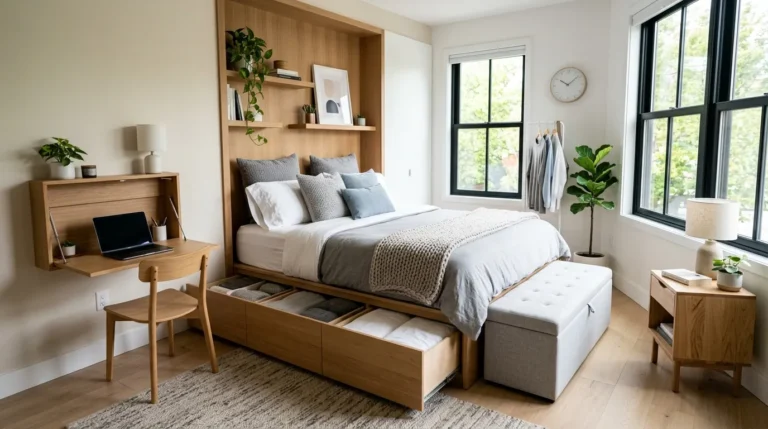
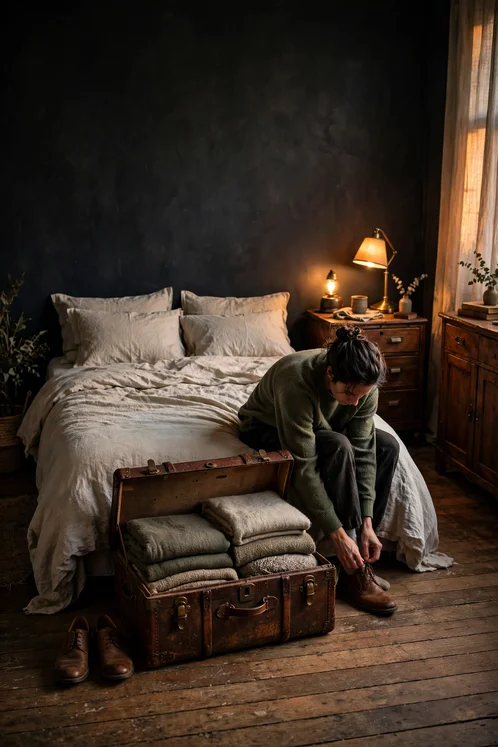
A beautiful bedroom only works if it stays tidy, and staying tidy needs storage that is easy to use. The best storage in this style is furniture that does two jobs at once. A bed with drawers underneath hides out of season clothes and spare bedding. A vintage trunk at the foot of the bed stores blankets and doubles as a bench for putting on shoes. An old chest of drawers holds clothes and gives you a surface for a lamp and a mirror. These pieces hide the mess while adding to the look, which is the whole point. Storage that looks like storage is fine in a garage. In a bedroom, it should look like furniture.
Modern tech needs the same treatment, because a glowing screen or a tangle of cables breaks the mood faster than anything else in the room. Tuck cords into cable boxes or run them behind the furniture where nobody sees them. Keep the phone charger inside a drawer, as I mentioned earlier, and choose a nightstand with a charging drawer if you are buying new. If there is a television in the room, hide it behind a sliding panel or inside a cabinet, so the room looks like a bedroom when the television is off, which is most of the time. A small speaker for music can sit on a shelf and look like decor, which is fine, because music suits this room. A tangle of black cables does not.

The Personal Touch: What Makes It Yours
The last layer is the one no shop can sell you. Personal things are what turn a stylish room into your room. A framed photo from a trip, a clock your grandfather owned, a small shelf of books you actually read. These pieces carry memories, and memories are what make a bedroom feel like home instead of a display. Group similar items together so they look deliberate, and give each group a little breathing room.
Do not rush this part. The personal layer grows on its own if you let it, and a room that fills up slowly over a year looks more honest than one finished in a weekend. Leave one shelf half empty on purpose. It is a promise to your future self that the room is still growing.
DIY and Upcycling: Character You Make Yourself
Making or refreshing a piece yourself adds character that money cannot buy, and it fits this style perfectly, because worn things are welcome here. Paint a thrifted dresser in the same deep colour as your accent wall and swap its handles for old brass ones. Reupholster a tired chair in rich velvet. Build a simple headboard from reclaimed wood and stain it dark. Sand a scratched table top back and oil it instead of painting over it, so the grain shows. Each project gives you something one of a kind, and each one teaches you something about the room.
Start small. One drawer, one frame, one lamp base. A small win builds confidence faster than a big project builds regret, and you can always take on a bigger piece next month.

What if I love the first wall and want more dark?
Then go slowly, one wall at a time, and live with each step for a few weeks. A second dark wall can work, especially in a large room with good light, and many people end up painting the wall opposite the bed as well. If you are thinking about taking it further, look at some black bedroom wall ideas for a modern makeover first, because they show how far dark walls can go when they are done well. The key is the same ratio as before. Every wall you darken means a little more light or warm wood somewhere else to keep the balance.

One Wall, One Weekend
Here is the whole transformation, boiled down to a single weekend. Saturday morning, buy a sample pot and paint a large swatch behind the bed. Saturday afternoon, change the bulbs to warm ones and move one wrong piece of furniture out. Sunday, paint the one accent wall, put the lighter bedding on, hang the drapes high, and light a lamp. Then stop, and live with it for a week. Sit in the room in the evening with just the bedside lamp on, and see how it feels.
If it feels calm and warm, keep going, one piece at a time. A vintage mirror next month. A Persian rug when you find the right one. A brass lamp when the flea market is kind. The room will grow the way good rooms always grow, slowly, and it will be yours in a way no finished showroom ever is. One wall, one weekend, and the rest will follow.

Frequently Asked Questions
1. Can a small bedroom handle dark walls?
Yes, if you keep it to one wall. Paint only the wall behind the bed, keep the other walls in a warm off-white, and add a large mirror and warm lamps. Dark walls plus soft layers can turn a small room into a cocoon, but only if the furniture fits and the floor stays clear.
2. Which dark paint color is best for a moody bedroom?
Charcoal is the safest starting point because it works with almost any wood tone. Navy looks formal with brass, forest green feels the most restful, plum is the boldest, and teal suits rooms with lots of daylight. Paint a swatch at least a metre square behind the bed and live with it for three days before choosing.
3. Is one dark wall enough?
For most rooms, yes. The dark wall becomes the backdrop for the bed, art and lamps, while the lighter walls bounce daylight around. If you love it after a month, you can add a second wall, especially in a large, bright room.
4. What paint finish works best on dark walls?
Matte, every time. Gloss and satin reflect light in hard patches and make dark walls look uneven, while matte soaks up the light and looks deeper and richer. It also hides small bumps on old walls. Keep a small pot of the same paint for touch-ups, since matte marks more easily.
5. How do I stop a dark bedroom from feeling gloomy?
Use a simple ratio: about half dark tones, a third light and soft tones, and the rest warm wood and metal. If the room feels heavy, add more light or more wood, not less dark. Lighter bedding in the same tonal family as the walls stops the bed from becoming a dark block.
6. What lighting works best in a moody bedroom?
Use three layers: a ceiling light on a dimmer, bedside lamps or sconces for reading, and small accent lights such as a dresser lamp or a picture light. Choose warm bulbs in the 2700K to 3000K range, because cool white light kills this style instantly.
7. How many textures should I use?
Aim for three main textures, repeated in different places, such as velvet, linen and worn wood, with leather as a small accent. Too many textures make the room feel like a fabric shop. If you want to try a new one, take one out first.
8. What kind of bedding suits dark walls?
Keep bedding lighter than the walls, in the same tonal family, such as cream against charcoal or pale sage against forest green. Linen is a great choice for the duvet cover. Use plain colors or very small patterns for the main bedding and save stronger patterns for cushions and the throw.
9. How do I mix vintage and modern furniture?
Choose one or two vintage statement pieces, like a carved dresser, an aged leather chair or an ornate mirror, and keep everything else modern, simple and quiet. Give each statement piece room to be seen, and aim for no more than one per wall.
10. How high should I hang drapes?
Hang them close to the ceiling and let them fall to the floor, even if the window is small. Short curtains look unfinished and chop the wall in half. Velvet or heavy linen works best, in a color close to the walls or a tone or two lighter, with a sheer inner layer for soft daylight.
11. How big should art above the bed be?
About two thirds as wide as the bed, with the center at standing eye level. If you are unsure, hang it slightly lower than you think, because most people hang art too high. One large piece usually beats five small ones.
12. Where should I start if I want to try this style?
Start with one wall and one weekend. Paint a large swatch on Saturday morning, switch to warm bulbs and move one wrong piece of furniture out on Saturday afternoon, then paint the accent wall, add lighter bedding and hang the drapes on Sunday. Live with it for a week before changing anything else.