Black bedroom walls can completely change the character of a room. Instead of making the space feel gloomy, the right black wall can create depth, highlight furniture, and give even a simple bedroom a more considered appearance. The key is not simply painting everything black. Finish, lighting, texture, artwork, bedding, and surrounding colours all affect how the wall feels once the room is finished.
For a modern bedroom, paint one black accent wall behind the bed in a matte finish, keep the bedding and at least one other large surface light, and add warm layered lighting. That single wall gives you the drama without the cave effect, and it works in small rooms too if mirrors and light surfaces do the balancing work.
If you are planning a modern bedroom makeover, these black bedroom wall ideas give you different ways to work with the colour without making the room feel flat or overly heavy. Some designs use one dramatic accent wall, while others take black across the trim, ceiling, or architectural details for a stronger effect. Before you choose a look, make three decisions in order: which wall, which finish, and what will lighten it. Everything below follows from those three choices.
Which wall, which finish, how much light
The wall behind the bed is the safest first black wall, because it naturally becomes the focal point and it allows lighter furniture and bedding to provide contrast. Painting all four walls black can work when you want a deep, enveloping bedroom, but it is not the only option, and it needs far more light and far more light coloured surfaces to stay comfortable. If you are uncertain, start with the bed wall. You can always extend the colour later, but repainting three walls back to light is a much bigger job.
Finish changes the wall more than most people expect. Matte paint absorbs light and gives a soft, velvety look that hides minor wall imperfections, which is why it suits most bedrooms. A glossy finish reflects more light, which can help a dark room, but it also shows every bump and brush mark, so the wall surface needs to be smooth first. Eggshell sits between the two, with a gentle sheen that is easier to wipe clean than matte, which matters if the wall is behind a bed that gets leaned on.
| Decision | Safe choice | Bolder choice |
|---|---|---|
| Which wall | Bed wall only | Bed wall plus trim, or all four walls in a large, bright room |
| Finish | Matte or eggshell | Gloss on one smooth accent wall, or gloss trim with matte walls |
| What lightens it | White or cream bedding, warm lamps | Mirrors, metallic accents, a light rug and pale wood |
| What to avoid | Dark bedding, dark floor and dark curtains all together | Competing accent colours, too many small dark objects |
Natural light matters as well. A bedroom with a generous window can handle darker walls differently from a room with limited daylight. If your room is naturally dim, use several warm light sources rather than depending on one ceiling fixture, and keep at least one large surface light. The ideas below are organised by pairing, so you can find the combination that matches the light and furniture you already have.
1. Create a matte black feature wall
A matte black feature wall is one of the easiest ways to introduce a dramatic colour without committing the entire bedroom to it. Place the dark wall behind the bed so it naturally becomes the visual anchor of the room. The soft, non reflective finish also gives the bedroom a quiet appearance, particularly when paired with warm bedding, timber furniture, and soft evening lighting.
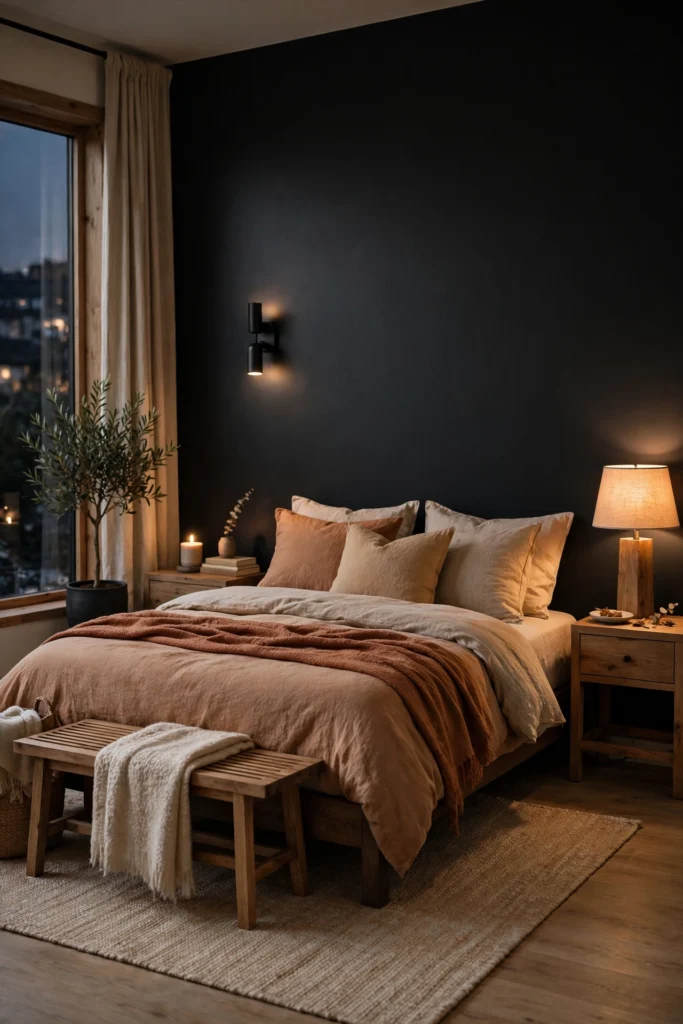
Matte black is especially effective when the rest of the room remains restrained rather than competing with the wall. Keep the other walls light, keep the bedding simple, and let the black wall do one job well instead of asking it to carry the whole room.
2. Try black walls with white bedding
White bedding creates a sharp contrast against black walls and keeps the bedroom visually balanced. The combination works particularly well when the bed has a simple silhouette, because the strong wall becomes the backdrop rather than another competing feature.
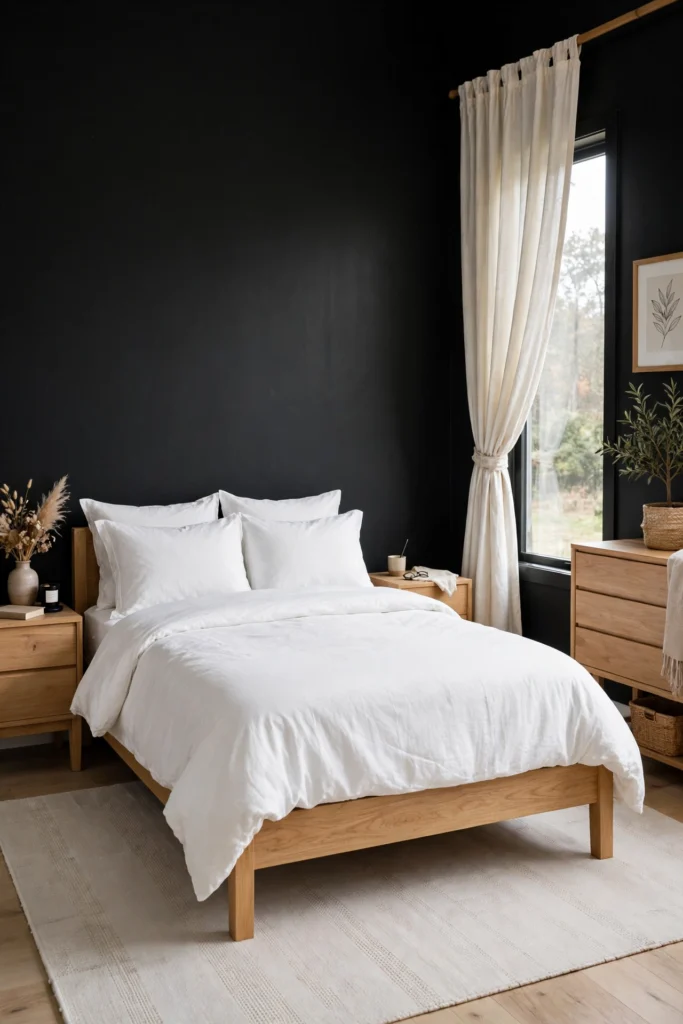
Add ivory curtains, a pale rug, or light oak furniture to soften the contrast while keeping the overall room modern. White bedding is also practical: it is easy to wash, easy to replace, and it tells you at a glance whether the bed looks fresh, which matters more in a dark room where details are harder to see.
3. Add black panel moulding
Black paint becomes far more interesting when it follows architectural detailing. Install rectangular panel moulding across the main bedroom wall and paint both the moulding and wall in the same black shade. The raised profiles catch subtle shadows throughout the day, creating depth without introducing another colour.
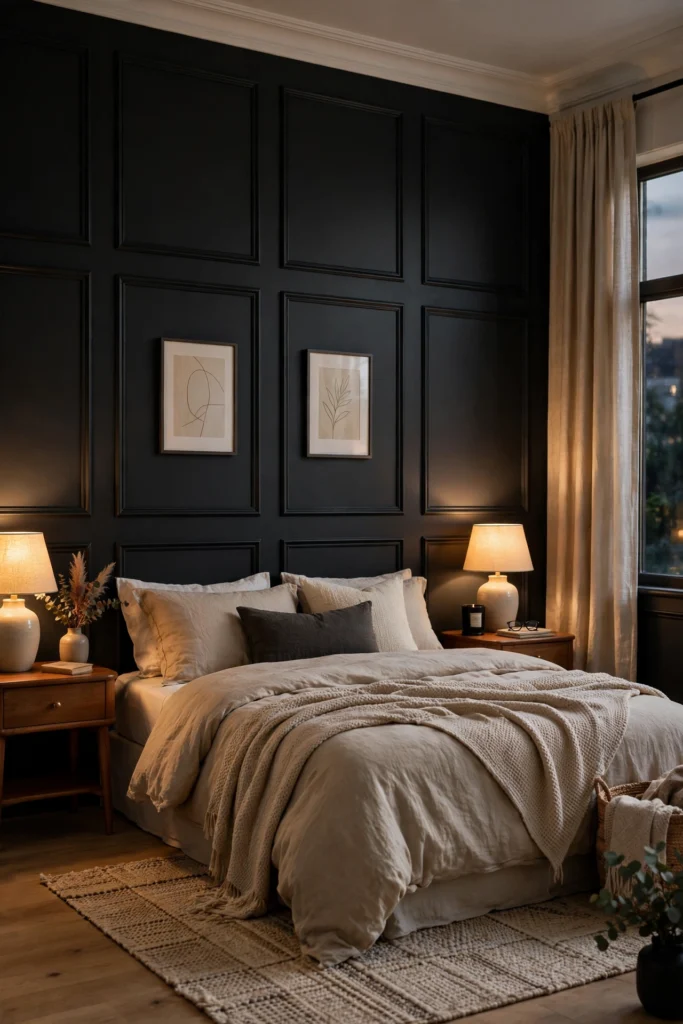
This approach is particularly attractive in traditional or transitional bedrooms because the detailing gives the dark finish a more refined character. Measure the panels so they are even and centred on the bed wall, because uneven panels draw the eye in a way a flat wall never does. The same panelled thinking works on entry walls too, as our small entryway ideas show, where a simple panel treatment can make a plain wall look finished without a full renovation.
4. Use black shiplap for texture
Black shiplap gives a bedroom a more relaxed character than a completely smooth painted wall. The narrow horizontal boards create repeating lines that break up the solid colour while adding architectural interest. A matte or eggshell black finish works beautifully with natural wood, cream textiles, woven baskets, and simple bedding.
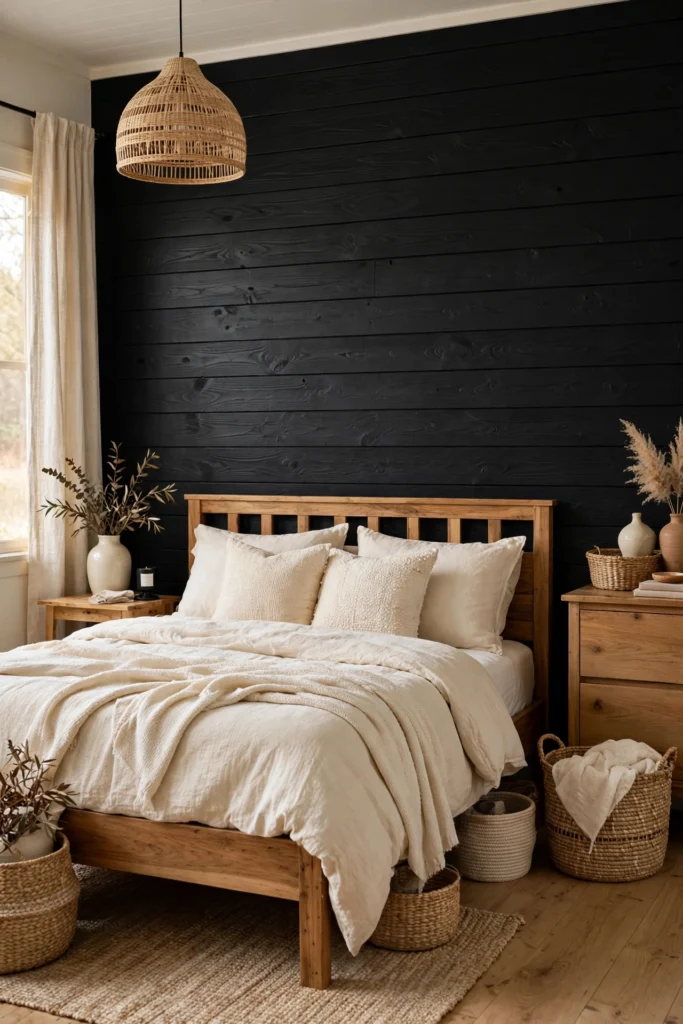
The result can feel modern farmhouse, Scandinavian, or casually contemporary depending on the furniture. Reference designs also show how black painted shiplap becomes more expressive when the finish allows the texture and imperfections of the wood to remain visible, so do not over sand the boards into a perfect, plastic look.
5. Bring in black patterned wallpaper
Paint is not the only way to create a black wall. Patterned wallpaper can add another layer of detail, particularly when the design includes charcoal, cream, gray, or metallic elements. A subtle botanical, geometric, plaid, or abstract pattern prevents the wall from reading as one solid block of black.
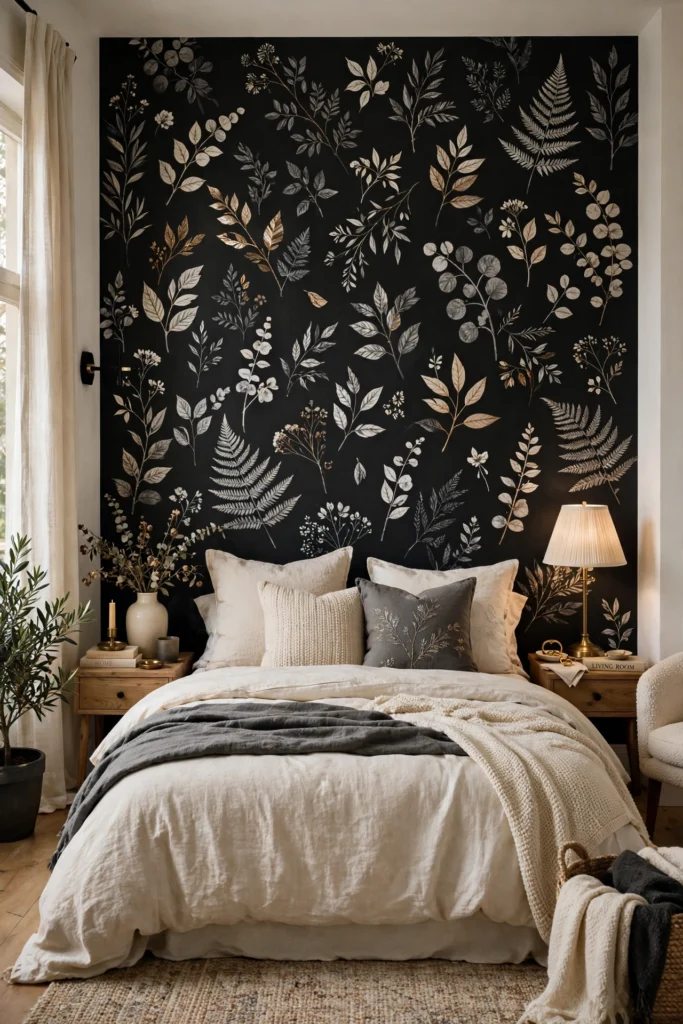
This option works well behind the bed because the wallpaper itself can become the room’s artwork. Patterned black wallpaper is also useful when you want texture and visual movement without installing permanent architectural features, and it is easier to change later than a painted panel wall if your taste moves on.
6. Combine black with warm wood
Black and natural wood create a strong balance because the darkness of the wall makes the warmth of timber more noticeable. Use walnut, oak, or medium toned wood for the bed, nightstands, ceiling detail, or flooring. The wood prevents the room from becoming visually cold while black gives the natural material a more sophisticated backdrop.
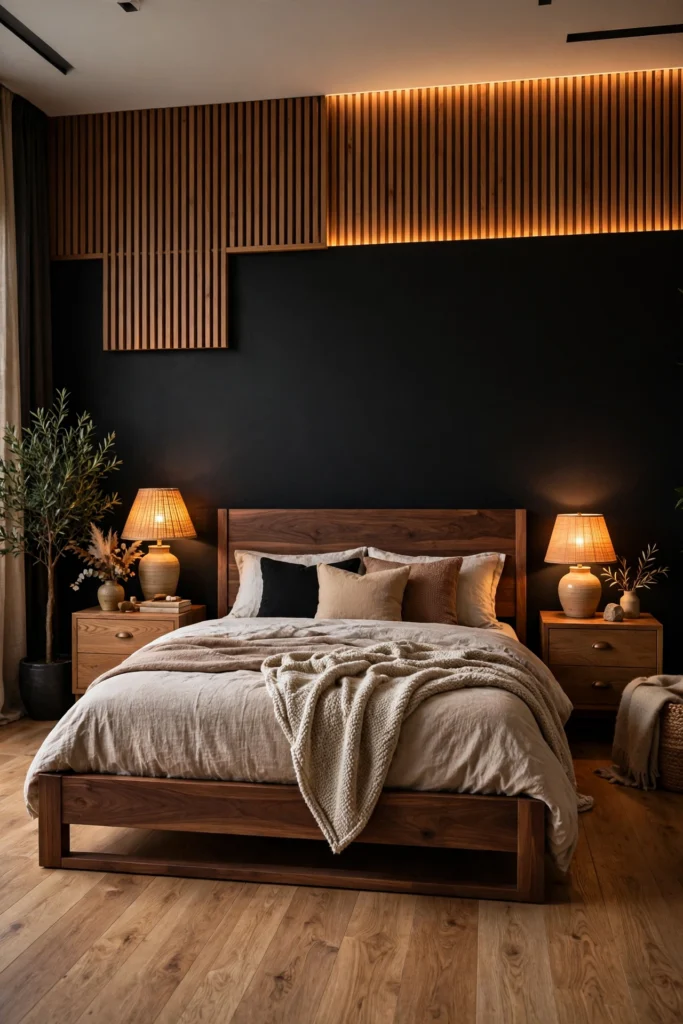
This combination is particularly effective in modern bedrooms where clean furniture needs some warmth to keep the space comfortable rather than stark. One warm wood piece is often enough. A walnut bed frame plus light oak nightstands, for example, can feel collected rather than matched, which suits a modern room better than a full matching set.
7. Make a gold and black bedroom
Gold accents immediately change the mood of a black bedroom. Instead of adding gold everywhere, concentrate it in practical details such as bedside lamps, drawer handles, picture frames, sconces, or a mirror. The dark wall gives those small metallic elements enough contrast to stand out.
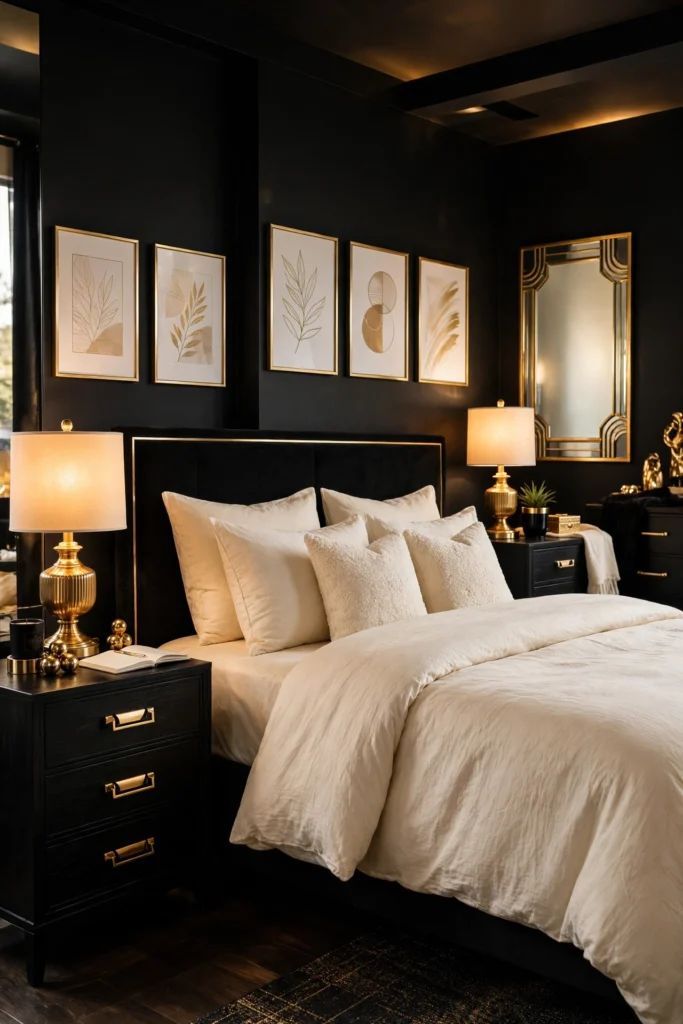
White or warm ivory bedding keeps the combination sophisticated instead of excessively dramatic. Black, white, and gold are also a proven combination in bedroom inspiration because metallic lighting and pale furnishings create definition against dark walls. Keep the gold to one finish, brushed or polished, not both, or the room starts to look like a collection of unrelated glamorous pieces.
8. Use a black wall behind a statement headboard
If you have a large upholstered headboard, a black wall can make its shape much more noticeable. A curved cream, camel, rust, or muted yellow headboard becomes an instant focal point against the dark background. Keep the wall simple so the headboard remains the main feature.
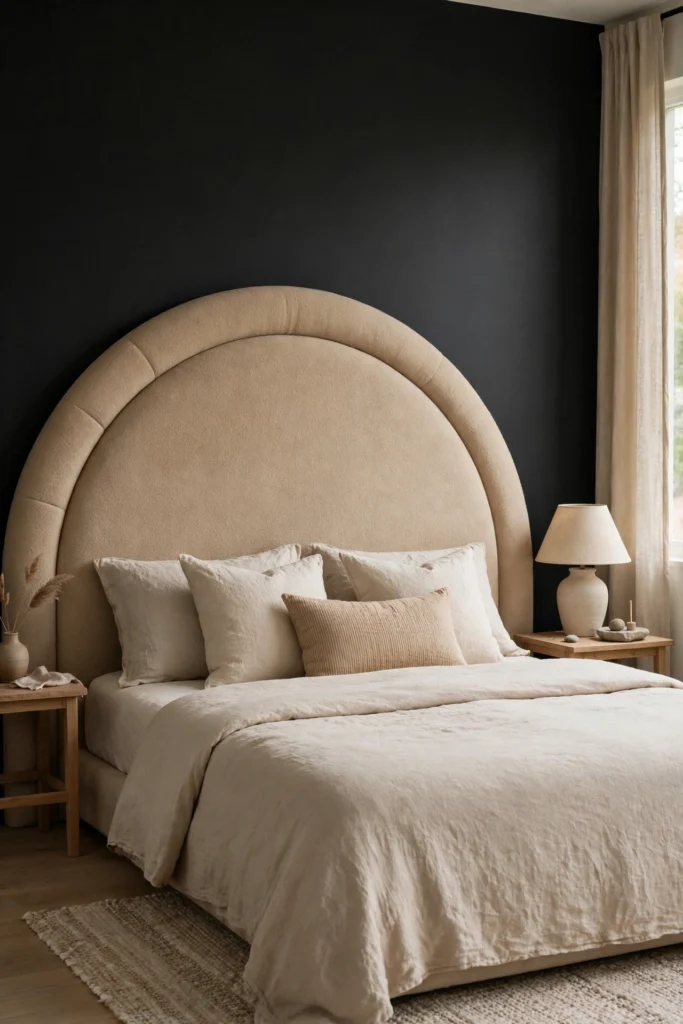
This is an excellent approach when you want drama without covering the room in multiple decorative elements. A bright or warm headboard against black creates the same type of strong focal contrast found in several black bedroom examples, and it means the bed can carry the room even if the rest of the furniture is plain.
9. Paint the trim black too
Painting the wall black while leaving bright white trim can create a classic contrast, but painting the trim black produces a much more seamless modern look. Continue the same dark colour around doors, baseboards, and window frames to make the architecture feel intentional.
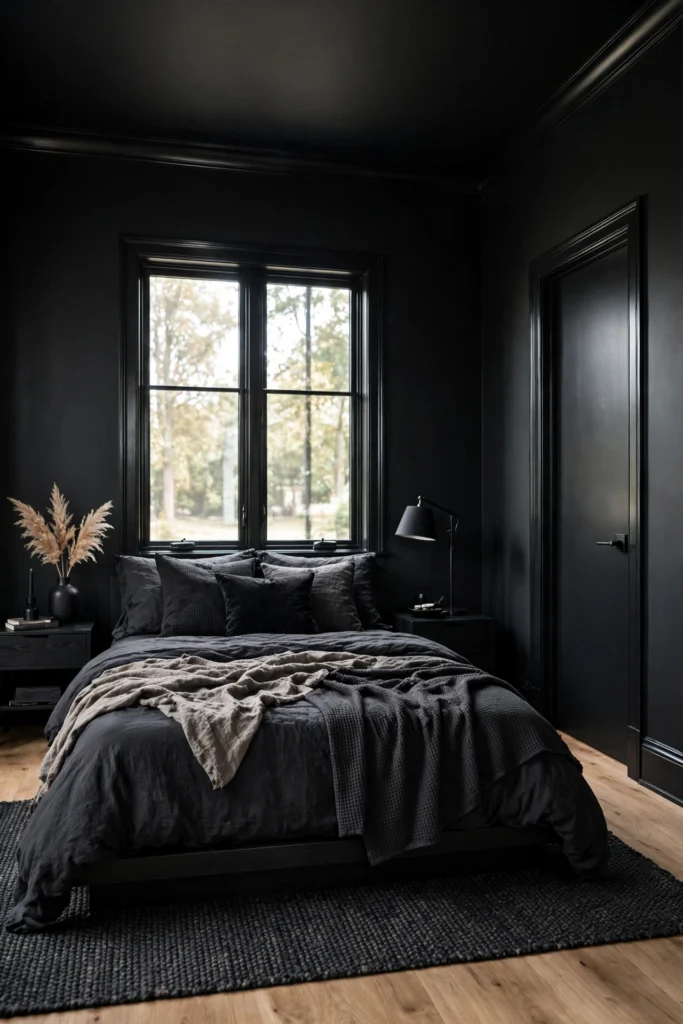
A slightly different sheen on the trim can add subtle definition without introducing another colour. For a monochromatic design, dark walls combined with dark trim and window frames create a more immersive effect, while a glossier trim can provide extra visual contrast. This is a bigger commitment than a single wall, so test it on one door frame first and live with it for a few days.
10. Add large artwork over the bed
A black wall creates an excellent gallery style background for artwork. Instead of filling the entire wall with small frames, use one oversized painting or a carefully arranged set of two or three pieces above the bed. Light artwork becomes especially striking against black, while muted landscapes, abstract paintings, or warm toned photography can introduce softer colour.
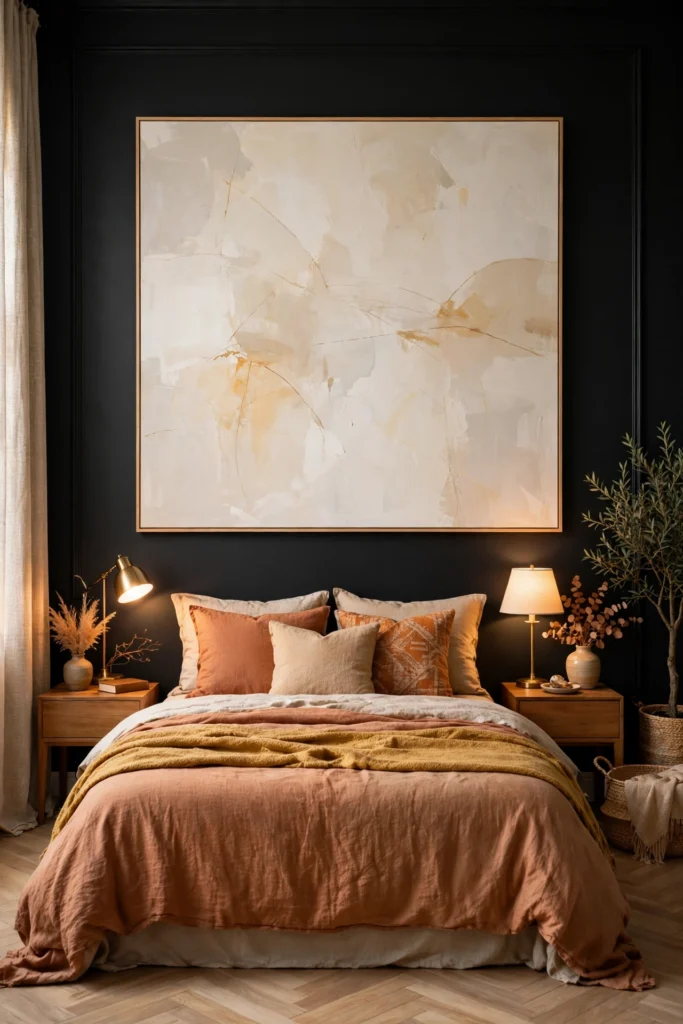
Large artwork can also visually define the bed wall without requiring a traditional headboard. Scale is the rule here: art that is too small looks lost on a black wall, while one large piece anchors the whole room. Aim for a piece, or a group, that spans roughly two thirds of the bed width.
11. Mix black with dark gray
You do not have to pair black with white to make the bedroom work. Layering black with charcoal, graphite, and deep gray creates a softer monochromatic scheme. Keep the bedding slightly lighter than the wall so individual pieces remain visible. Different fabric finishes, such as linen, velvet, wool, and cotton, can provide enough variation to stop the palette from looking dull.
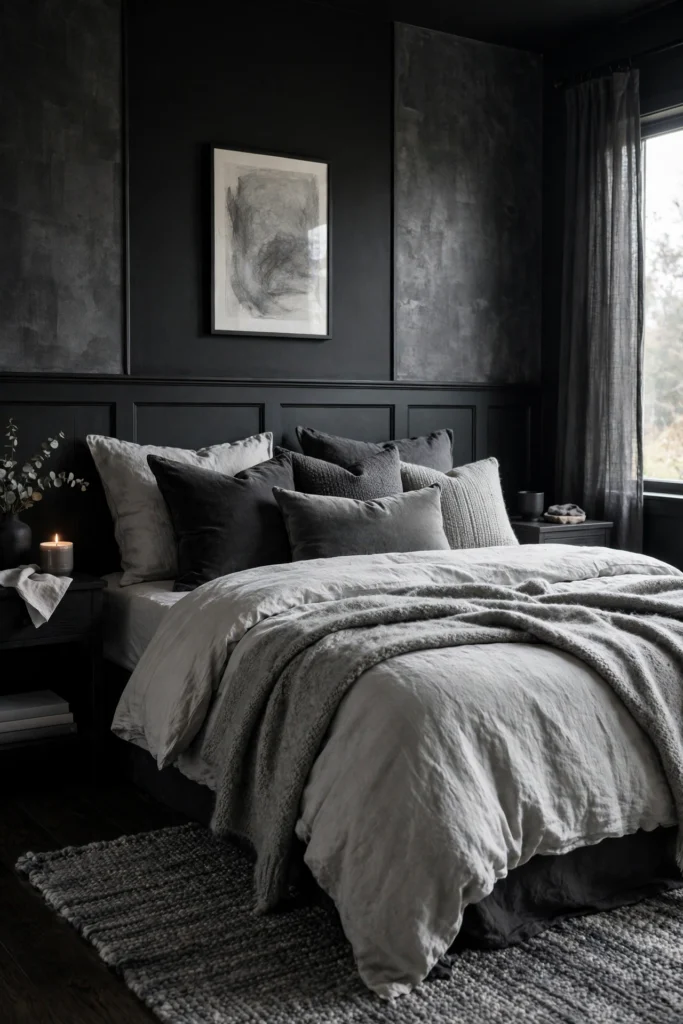
Design examples show how dark gray walls can work with a black bed while lighter bedding keeps the composition balanced. The risk with an all dark palette is that the room loses depth, so vary the textures deliberately: a velvet cushion, a linen duvet, a wool throw, and a smooth cotton sheet each read differently against black, even in similar colours.
12. Bring navy blue into the black wall scheme
Navy blue gives black bedrooms a slightly softer and more layered appearance. You can keep the wall black and introduce navy through curtains, bedding, a velvet chair, or an upholstered headboard. Another option is to use a very deep navy wall that appears almost black in low light.
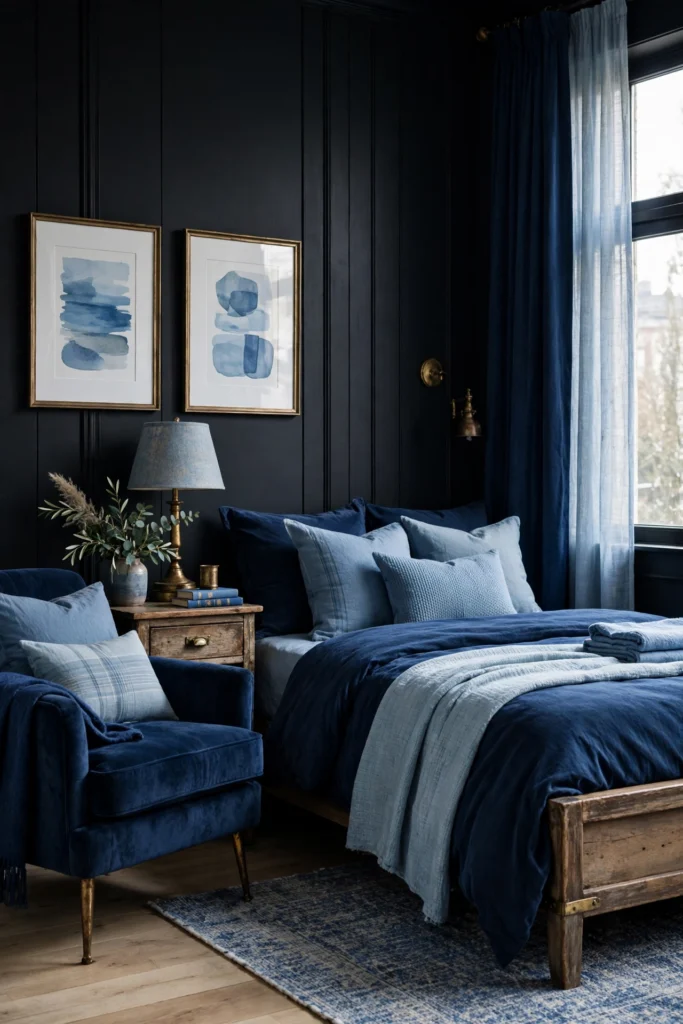
This works particularly well with brass, aged wood, and warm neutral fabrics. Layered blue tones are also useful when you want a dark bedroom to feel calm rather than severe. Keep the navy to one or two pieces, because navy plus black plus another colour quickly becomes a palette with no clear leader.
13. Choose black and warm brown
For a richer and more intimate bedroom, pair black walls with chocolate brown, caramel, tan, and warm wood tones. Brown softens the visual severity of black without making the room colourful. A leather bench at the foot of the bed, brown velvet cushions, or walnut furniture can create this effect without repainting anything else.
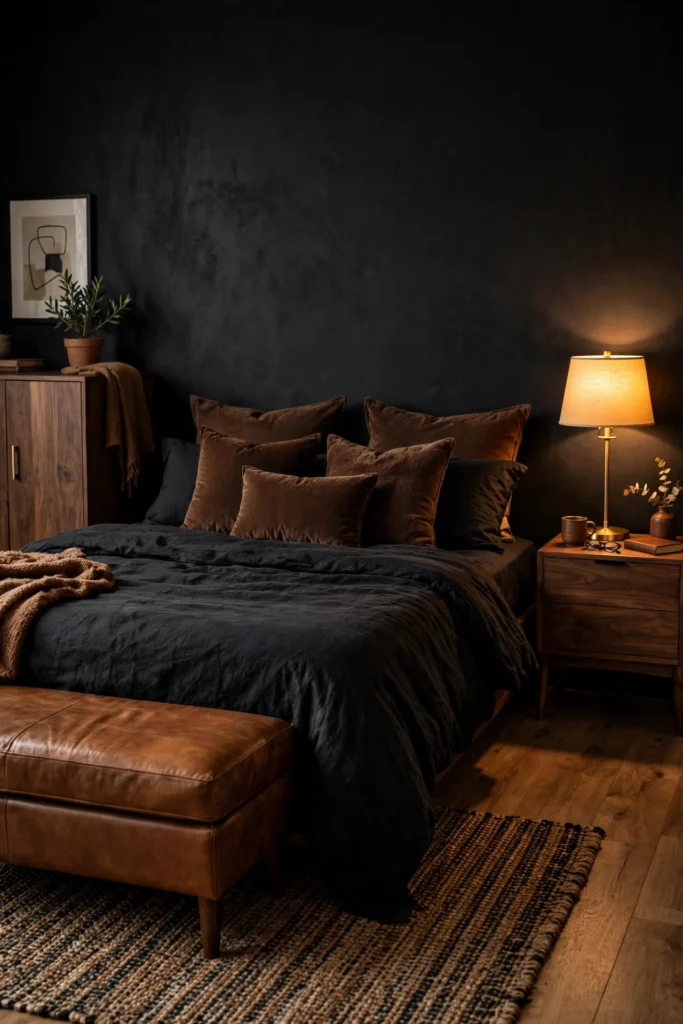
This palette works especially well in bedrooms with warm lamps because the golden light brings out the brown undertones and makes the black wall feel deeper. It is also a forgiving palette for a guest room, because it feels warm without being personal, a balance our elegant guest bedroom ideas use in a lighter form.
14. Add a black accent wall with wood slats
Vertical or horizontal wood slats can turn a simple black wall into a strong architectural feature. Paint the slats black for a monochromatic appearance, or use dark stained timber if you want visible grain. Horizontal slats create a wider visual rhythm, while vertical slats emphasise ceiling height.
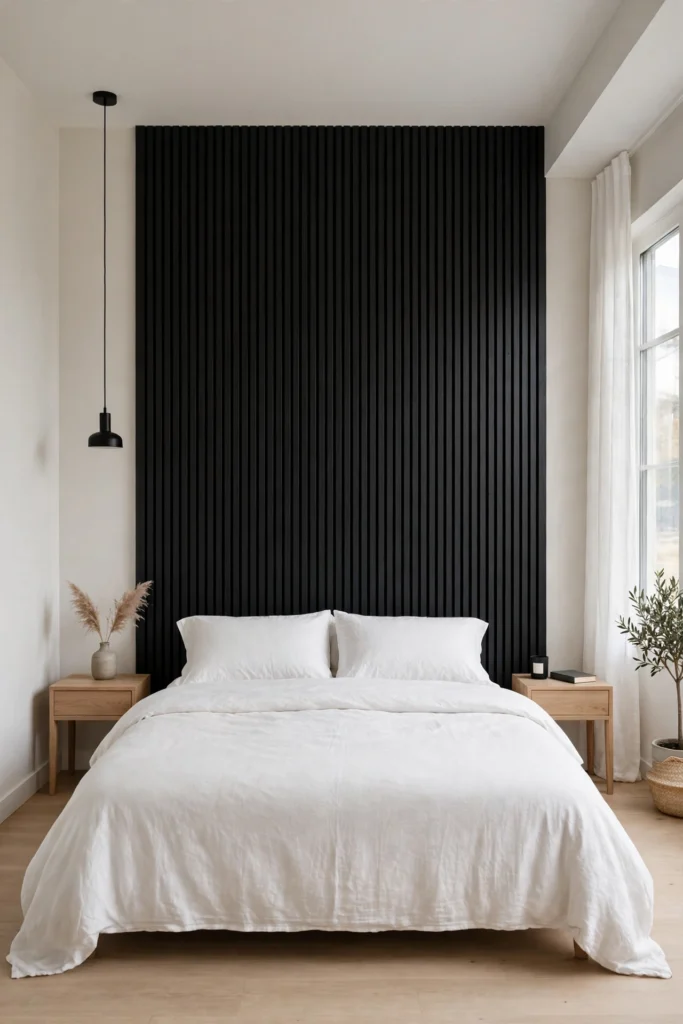
A black slatted accent wall works especially well behind a modern bed because it adds detail without requiring shelves or excessive decoration. Space the slats evenly and keep the gaps consistent, because the eye reads slat spacing immediately. A slat wall with uneven gaps looks like a mistake, while an even one looks like a design choice.
15. Use a black wall with green accents
Deep green and black create an earthy combination that feels more organic than a strict black and white palette. Add olive bedding, forest green cushions, leafy plants, or a muted green upholstered chair. Natural materials such as rattan, oak, linen, and stone help the colours feel connected to nature.
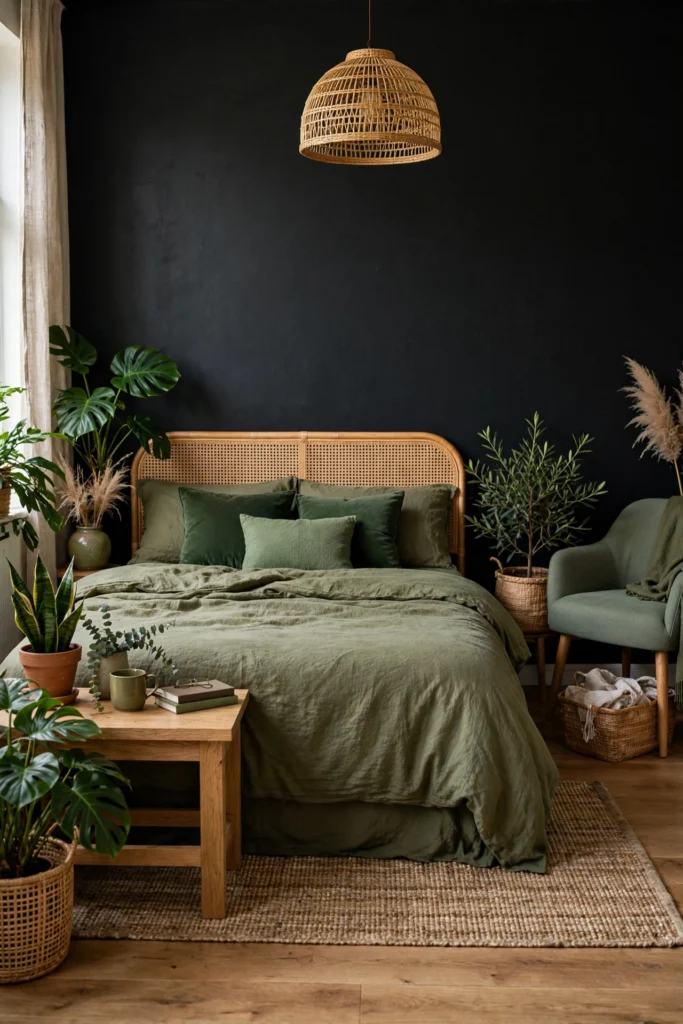
Dark green can also be used as an alternative to pure black when you want the wall to remain moody but slightly softer in daylight. Plants are particularly useful here, because a real plant against a black wall reads as alive in a way a picture of a plant never does, and it softens the hardest edge in the room.
16. Try a black and pink accent combination
Black becomes unexpectedly playful when paired with a muted pink headboard or soft blush accessories. The trick is to keep the pink sophisticated rather than overly bright. Dusty rose, muted blush, or terracotta pink tones work especially well with black walls and warm wood.
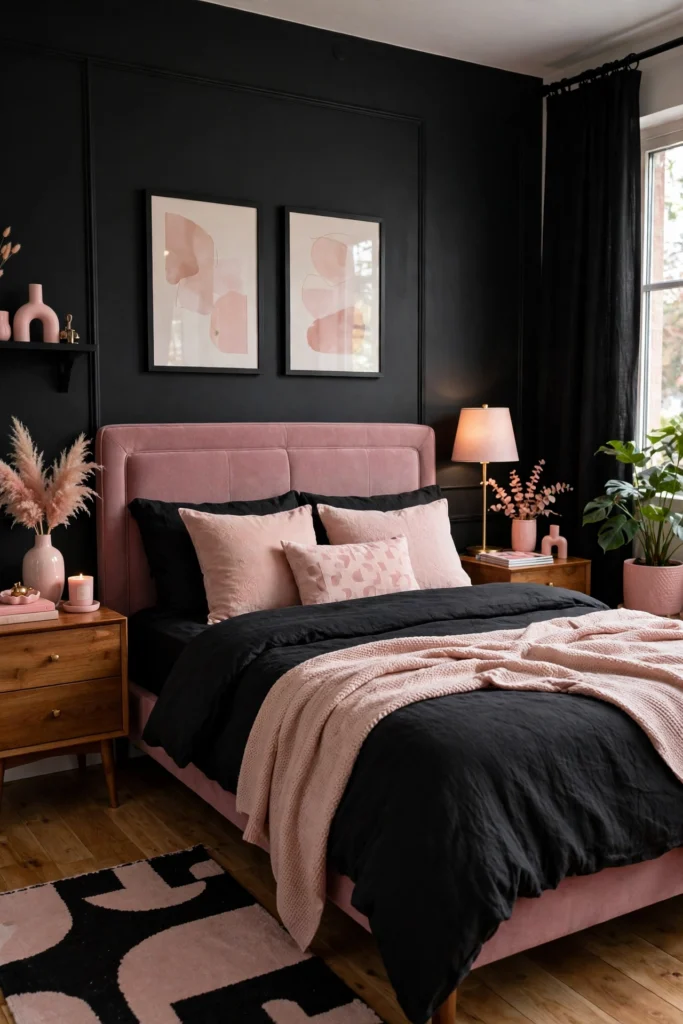
This approach is useful if you want the drama of a dark bedroom without creating a strictly masculine or industrial appearance. Bright accent colours can also keep a black room from feeling too serious, but keep them to a few pieces. A pink headboard plus pink bedding plus pink art is a theme. A pink headboard plus neutral bedding is a pairing.
17. Install mirrors against black walls
Mirrors are particularly useful when a black wall makes the bedroom feel visually dense. Place a large round mirror above a nightstand, lean a tall mirror against the wall, or use mirrored bedside furniture to reflect available light. The goal is not simply decoration. Reflective surfaces create small points of brightness across the dark background.
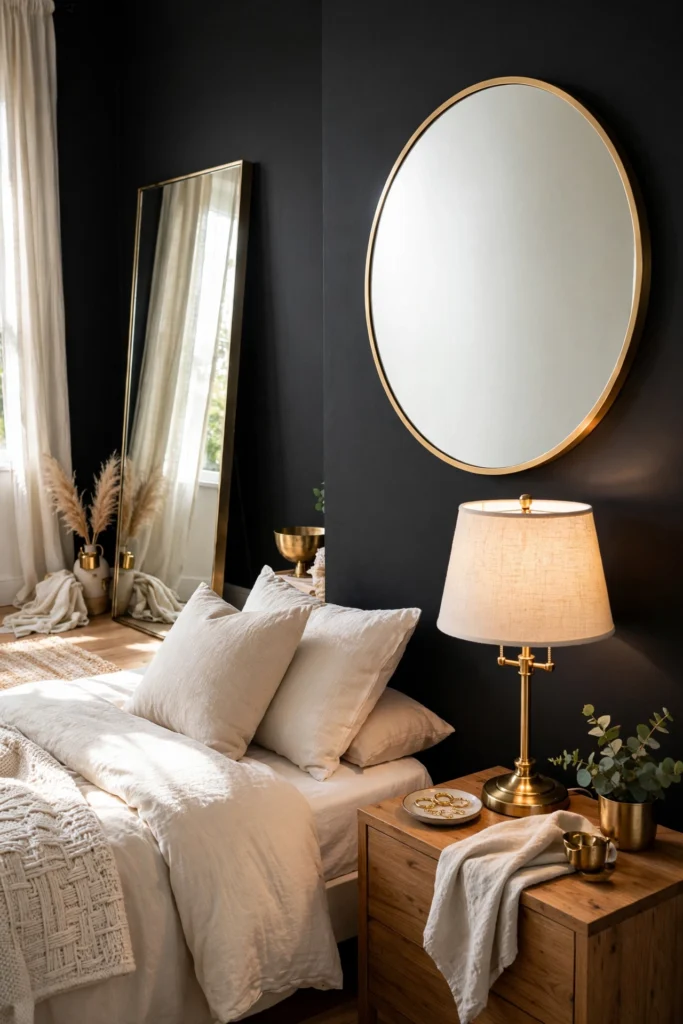
A combination of mirrors, metallic accents, and lighter textiles can keep a black bedroom from feeling enclosed. Place a mirror where it reflects a window or a lamp, not where it reflects a blank wall or a messy corner, because a mirror doubles whatever it faces.
18. Give the black wall a glossy finish
A glossy black finish reflects more light than a flat finish, which can change the entire character of the bedroom. Use it selectively if the room receives enough natural or artificial light. A glossy accent wall can look particularly striking with matte bedding and textured fabrics because the difference in surface finishes creates visual movement.
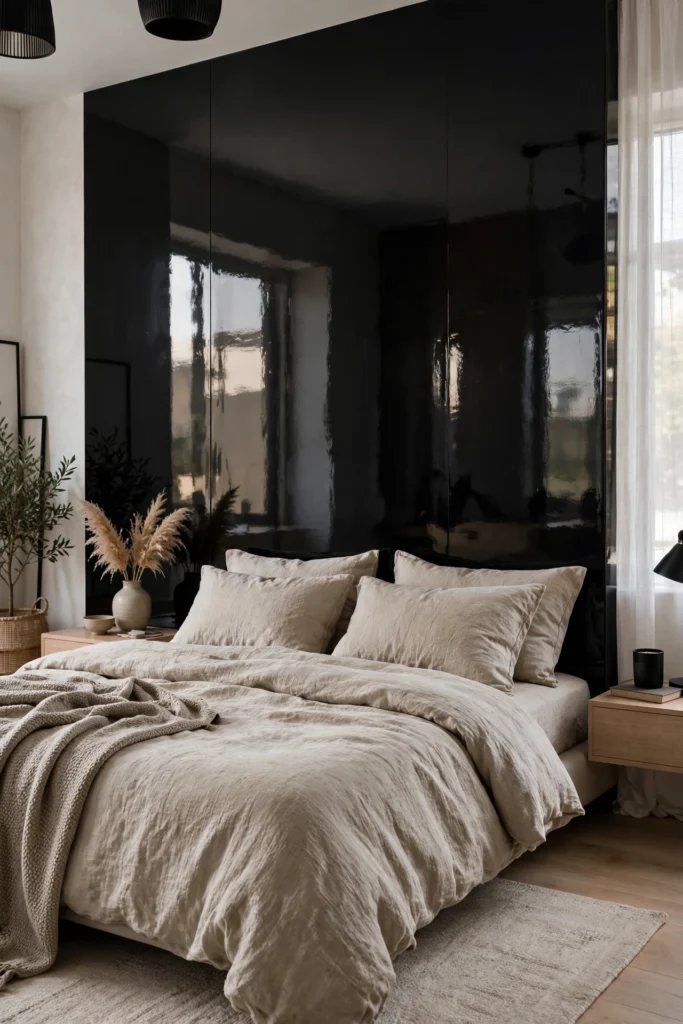
If the room has uneven walls, however, a high sheen finish may emphasise imperfections, so a smooth surface is important before choosing this approach. The reference material similarly notes that high sheen walls can reflect light differently from matte black surfaces, and that difference is most obvious in the evening, when lamps create bright spots on gloss and soft pools on matte.
19. Extend black onto the ceiling
For a dramatic bedroom makeover, continue the black wall colour onto the ceiling. This creates a cocoon like effect and visually connects the upper and lower parts of the room. Keep the floor, bedding, or major furniture lighter so the room retains some contrast. Warm lamps become especially important because they add pools of light against the darker surfaces.
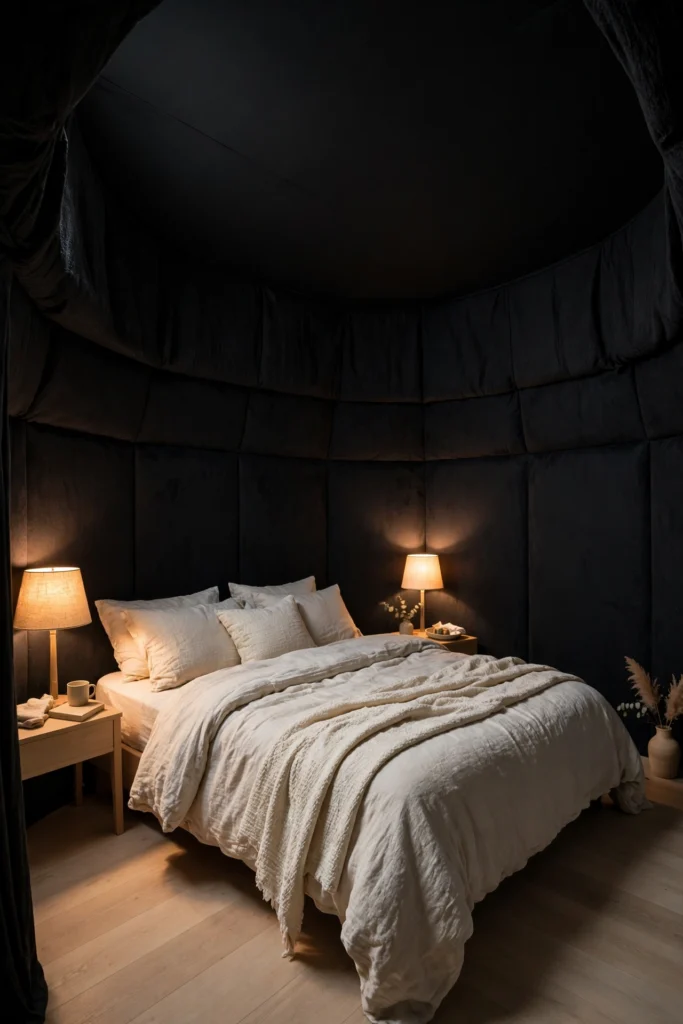
This approach works best when the goal is an immersive bedroom rather than a bright, airy look. It also lowers the visual ceiling, so it suits rooms with generous ceiling height better than low rooms. In a low room, a black ceiling can feel like it is pressing down, however beautiful it looks in a photograph.
20. Keep the black wall simple and let lighting lead
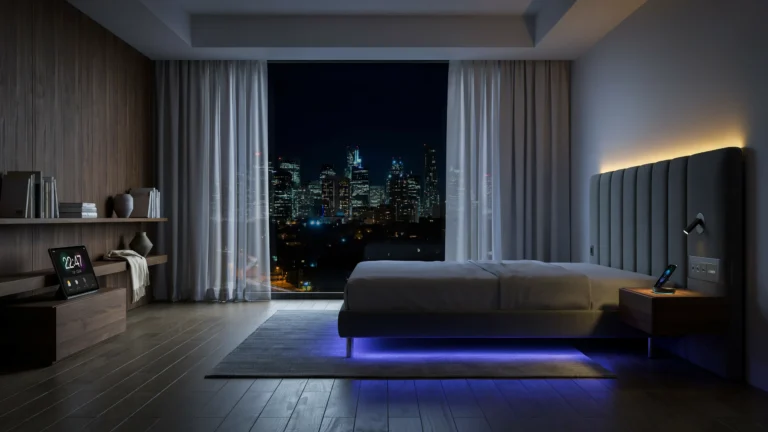
Sometimes the most modern solution is the simplest one. A completely plain black wall can look sophisticated when the lighting and furniture are carefully selected. Use two wall sconces, pendant lights, or concealed warm lighting to create layers across the dark surface. Avoid filling every available area with decor.
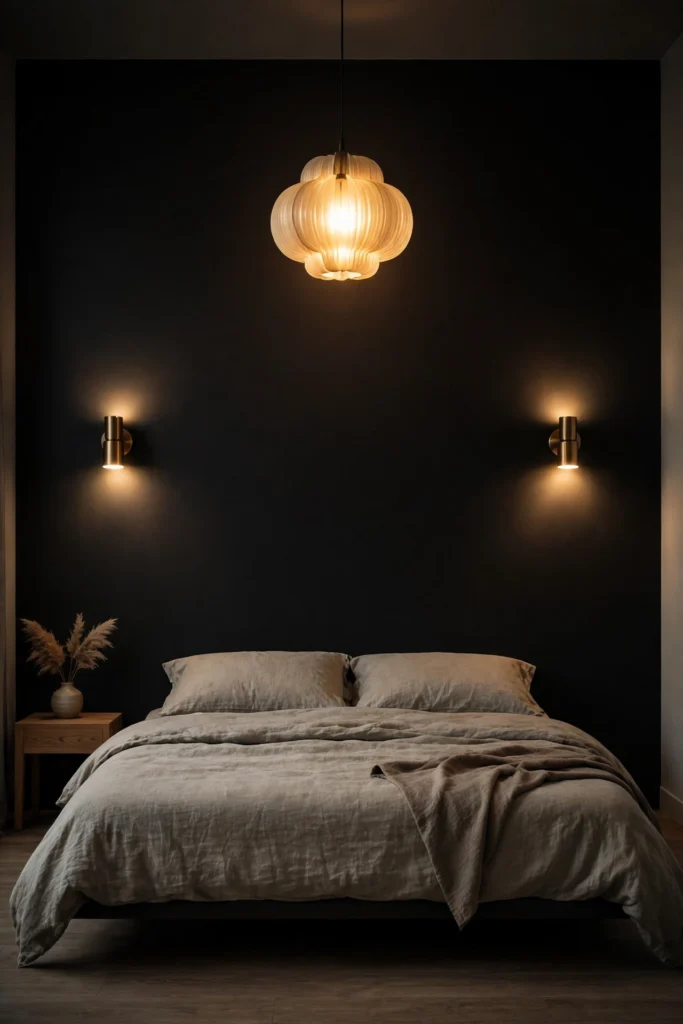
A dramatic light fixture can become even more noticeable against a dark wall because the background gives it a stronger visual stage. This is the lowest risk black wall of all: one wall, one light plan, and furniture you already own. If you later want more, you can add art or slats. If you want less, you already have it.
How to make black bedroom walls feel balanced
The easiest way to balance black walls is to introduce variation rather than simply adding more colours. Soft bedding, natural wood, textured rugs, woven accessories, curtains, artwork, and warm lighting all give the eye somewhere else to rest. You can also vary the black itself by combining matte walls with glossy trim or using charcoal textiles alongside true black paint.
Natural light matters as well. A bedroom with a generous window can handle darker walls differently from a room with limited daylight. If your room is naturally dim, use several warm light sources rather than depending on one ceiling fixture. Our small bedroom layout ideas and tiny bedroom layouts use the same balancing rule in small rooms: one dark focal point, light surfaces around it, and clear walking space preserved.
What colours work best with black bedroom walls?
White, cream, beige, walnut brown, camel, muted green, navy, dusty pink, brass, and soft gray all work well with black. Your choice should depend on the atmosphere you want. White creates crisp contrast, wood introduces warmth, green feels earthy, navy creates a layered moody palette, and brass gives the room a more polished appearance. You do not need to use several accent colours at once. One or two supporting tones usually create a more controlled and expensive looking result.
Should you paint all four bedroom walls black?
Painting all four walls black can work when you want a deep, enveloping bedroom, but it is not the only option. A single accent wall gives you the strongest visual effect with less commitment. You can also paint three walls a softer charcoal and reserve true black for the bed wall. If you are uncertain, start with the wall behind the bed. It is naturally suited to becoming a focal point and allows lighter furniture and bedding to provide contrast.
Questions painters ask before going black
Are black walls a good idea for a bedroom?
Yes. Black walls can create a cozy and intimate bedroom, particularly when combined with warm lighting, comfortable textiles, and contrasting furniture. The final result depends heavily on the room’s natural light and the finishes used.
What colour bedding looks best with black bedroom walls?
White, cream, beige, gray, camel, and muted green bedding all work well. White provides the strongest contrast, while warmer neutral bedding creates a softer and more relaxed appearance.
Do black walls make a small bedroom look smaller?
They can, especially when the room has limited natural light. However, a black accent wall can still work beautifully in a small bedroom when you use mirrors, lighter bedding, reflective surfaces, and layered lighting.
What trim colour works with black bedroom walls?
Black trim creates a seamless modern appearance, while white trim provides strong traditional contrast. Warm wood trim can also soften the overall scheme.
Start with one wall and live with it
Paint the bed wall, put the bedding back, and live with it for a week before you decide whether to go further. That week will tell you more than any photograph, because you will see the wall in morning light, in evening lamplight, and on a dull day. If it still feels like the room you want to sleep in, then add the next layer: a mirror, a slat detail, or a warmer lamp. A black bedroom that grows one considered layer at a time ends up looking designed. A black bedroom painted all at once, in a hurry, usually ends up looking like a decision you have to live with.