Will It Fit Through the Door?
That is the question most people forget to ask until the delivery van is parked outside and two movers are staring at a beautiful upholstered bed that will not turn the corner of the staircase. Someone falls in love with a tall tufted headboard online, orders it in a rush, and only then discovers that the headboard panel is wider than the bedroom door.
An upholstered bed is the biggest single purchase in most bedrooms, and it is also the hardest to return. Fabric, padding, a wide headboard and a heavy base make it awkward to move and expensive to send back. So this guide works backwards from the usual advice. We start with the tape measure, not the showroom.
Once the fit is sorted, the fun part begins: seven upholstered beds for modern bedrooms below that each solve a different real problem, from a tiny box room to a household with kids and a dog.
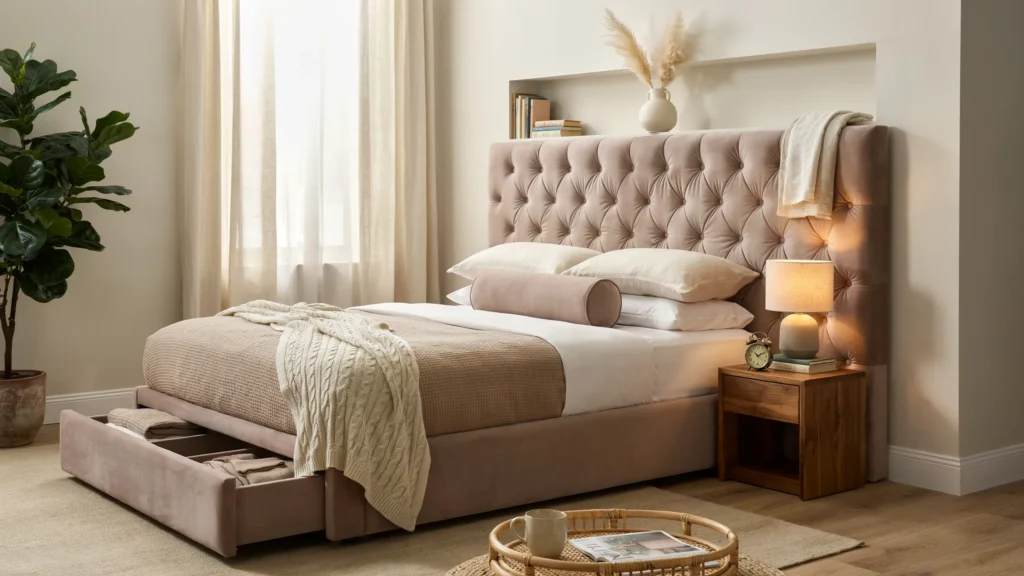
Quick answer: Measure your room, your doorways and your lift before you order any upholstered bed. A queen bed needs about 60 cm of clear space on each side for walking, and a padded headboard can add 10 to 15 cm to the width you see in the photos.
Pick a standard headboard of 90 to 110 cm above the mattress for most rooms, go taller only when your ceiling allows it, and choose the fabric by how your household actually lives, not by how it looks in a photo.
Measure the Room Before You Fall in Love
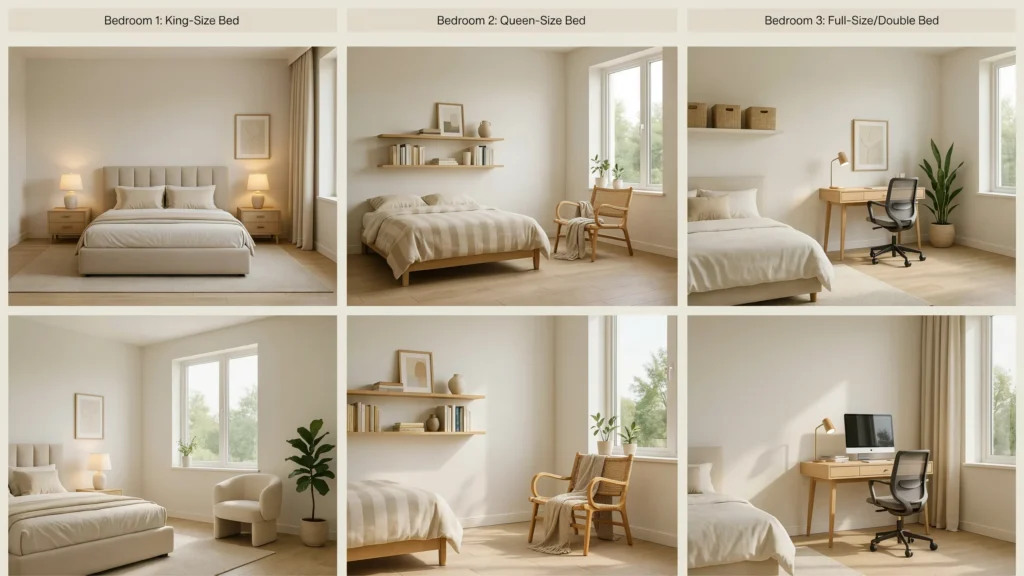
Grab a tape measure and a notebook. Start with the room itself. Measure the wall where the bed will stand, then measure the length of the wall on each side of it. A queen bed is about 152 cm wide, and most upholstered frames add another 10 to 20 cm because of the padded sides. That means the wall needs to be at least 170 cm wide for the bed alone, and that is before you think about bedside tables.
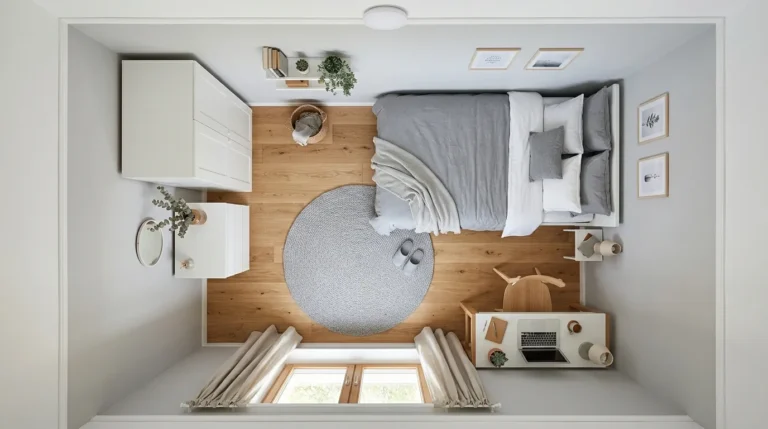
Now walk around the space where the bed will go. You need roughly 60 cm of clear floor on each side of the bed to get in and out without shuffling sideways. At the foot of the bed, leave at least 75 cm so you can walk past it and open a wardrobe door. If you are planning a storage bed with side drawers, add the drawer depth to that side, usually another 45 to 50 cm of clearance.
Mark the footprint on the floor with masking tape. Use the full outside dimensions of the bed, not the mattress size, and include the headboard thickness. Then live with the tape outline for a day or two. Walk past it in the dark. Open the wardrobe. This sounds fussy, and it takes ten minutes, but it saves you from the most common regret in bedroom shopping, which is a bed that technically fits but makes the room miserable to use.
The Doorway, the Stairs and the Lift
Measure every doorway, hallway corner and staircase turn between the street and your bedroom. Write down the narrowest point. Most upholstered headboards arrive as one solid panel, and if that panel is wider than your narrowest doorway, it is not coming through. Some brands split the headboard into two pieces or ship it flat packed, so ask before you buy, especially if you live upstairs.
Stairs deserve their own check. A long headboard panel needs room to turn on a landing, and a tight turn can stop a delivery cold. Measure the landing width and the ceiling height above the stairs. If you live in a flat, measure the lift as well. Note the door width, the cabin depth and the diagonal, because a panel can sometimes ride diagonally even when it will not fit flat.
One more thing people miss: the door into the bedroom itself. A bed base that arrives assembled can be wider than the door frame once the side rails are on. Ask the seller for the size of the largest single piece, not just the finished bed dimensions. If the largest piece will not fit, you need a bed that assembles inside the room, full stop.
Ceiling Height Sets the Headboard
Ceiling height decides how tall your headboard can be before the room starts to feel top heavy. A good rule is to keep the top of the headboard at or below two thirds of the ceiling height. In a room with a standard 2.4 m ceiling, that works out to about 1.55 m from the floor.
Go much taller and the headboard starts to crowd the room, no matter how lovely it looks in a showroom with a 3 m ceiling.
Also look at what sits above the bed. A low pendant light, a ceiling fan or a bulkhead can clash with a tall headboard. Measure from the floor to the lowest point of anything hanging above the bed, and keep at least 30 cm between that and the top of the headboard.
Leave Breathing Room on the Wall
A headboard looks best with some empty wall on either side of it. Aim for 40 to 50 cm of clear wall on each side, which gives your bedside tables room to sit without crowding the headboard. If the wall is too narrow for that, choose a headboard that is only slightly wider than the mattress, or skip the wide panel style altogether.
Think about the wall behind the bed as a whole. Sockets, light switches and radiators all compete for the same space. A tall headboard can cover a socket you use every night for your phone charger, and a wide one can block a radiator and trap heat behind the bed. Note where these are before you order, and check the headboard dimensions against them.
7 Upholstered Beds for Modern Bedrooms, Grouped by the Problem They Solve
Forget shopping by style first. Start with your biggest problem, then pick the bed that fixes it. Each bed below answers a different need, and each one comes with the measurements and fabric notes that matter most for that situation. If two of these sound like you, read both and weigh which problem bothers you more on a daily basis.
1. The Small Room Solver: Low Profile Storage Bed
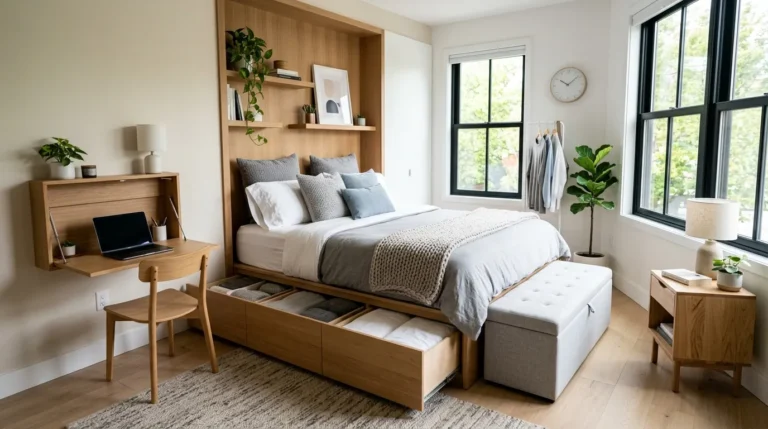
Small bedrooms punish every extra centimetre, and this bed is built for exactly that fight. It has a low, clean profile with no fussy details, and the storage hides underneath. A lift-up base or side drawers swallow spare bedding, winter blankets and the suitcase you never know where to put. One piece of furniture does the job of a bed and a chest of drawers.
Before you order, measure the drawer run. Side drawers need 45 to 50 cm of clear floor to pull out fully, and a lift-up base needs clearance behind the bed for the mattress to rise. If your room cannot spare that space, a lift-up base beats drawers, because it opens upward instead of outward. Check the weight of the lifting mechanism too. A gas lift that feels heavy in the shop will feel worse every time you change the sheets.
For fabric, pick something that forgives daily use. A plain polyester or a linen-look blend in a mid tone hides dust and marks better than pale velvet, and it wipes clean without drama. Keep the colour close to your wall colour so the bed blends in instead of looming over the room.
If you are short on floor space, these smart furniture layouts for tiny bedrooms show how a low bed like this fits a room that has to do more than one job.
Best for: studios, box rooms and anyone whose bedroom doubles as a dressing room. Watch out for: drawer clearance on the sides and a mattress that is too heavy for the lift mechanism.
2. The Tall Headboard Lover: Panel Bed With a Statement Headboard
Some people buy an upholstered bed for the headboard alone, and honestly, that is a fair reason. A tall panel headboard, 120 to 160 cm above the mattress, turns a plain wall into the feature of the room. It gives you a soft, padded backrest for reading in bed, and it makes even a simple white duvet look finished.
This is the bed where the ceiling rule matters most. Measure your ceiling first, then check the two-thirds rule from the section above. A 1.6 m headboard under a 2.4 m ceiling is fine, but pair it with a low bed base so the proportions stay calm. If your ceiling is lower than 2.4 m, a standard 90 to 110 cm headboard will look better and feel less cramped.
Tufting and channelling look wonderful on a tall headboard, but dust settles into the folds, so you will need to vacuum the crevices every week or two. If that sounds like a chore you will skip, choose a smooth padded panel instead. You get the same height and softness with far less upkeep.
Colour is the other big decision here. A tall headboard in a deep jewel tone or a rich neutral becomes the focal point of the room, so keep the rest of the bedding simple and let it carry the look.
If you want the drama without the commitment, a tall headboard in a warm neutral with strong texture, like a nubby tweed or a brushed chenille, gives you presence without locking you into one colour for years. For colours that sit well with a big upholstered headboard, these interior colour trends for cosy homes are a good place to start.
Best for: main bedrooms with decent ceiling height and anyone who reads in bed. Watch out for: headboard height against low ceilings and tufting that needs regular vacuuming.
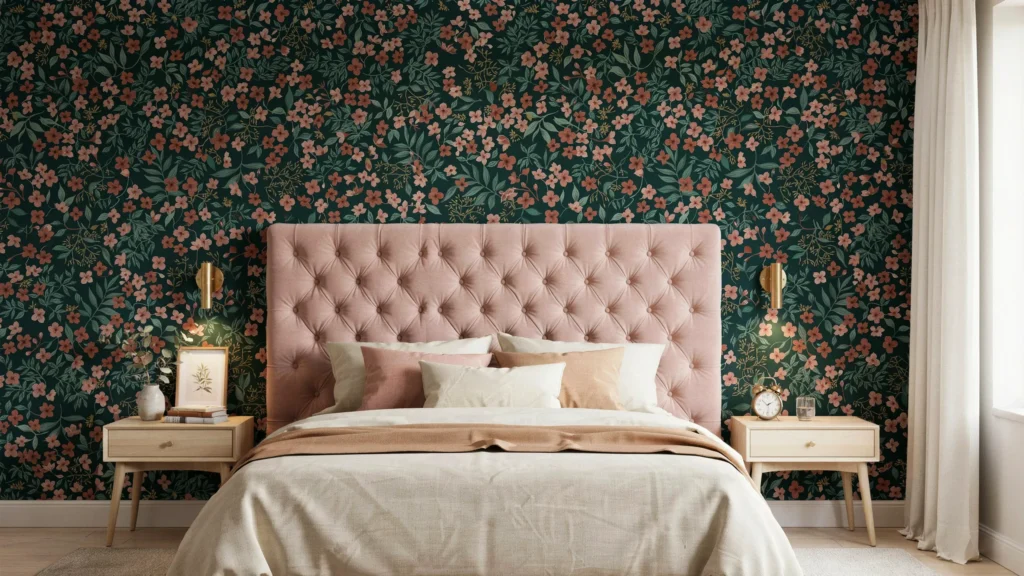
3. The Storage Hunter: Ottoman Bed With a Deep Lift-Up Base
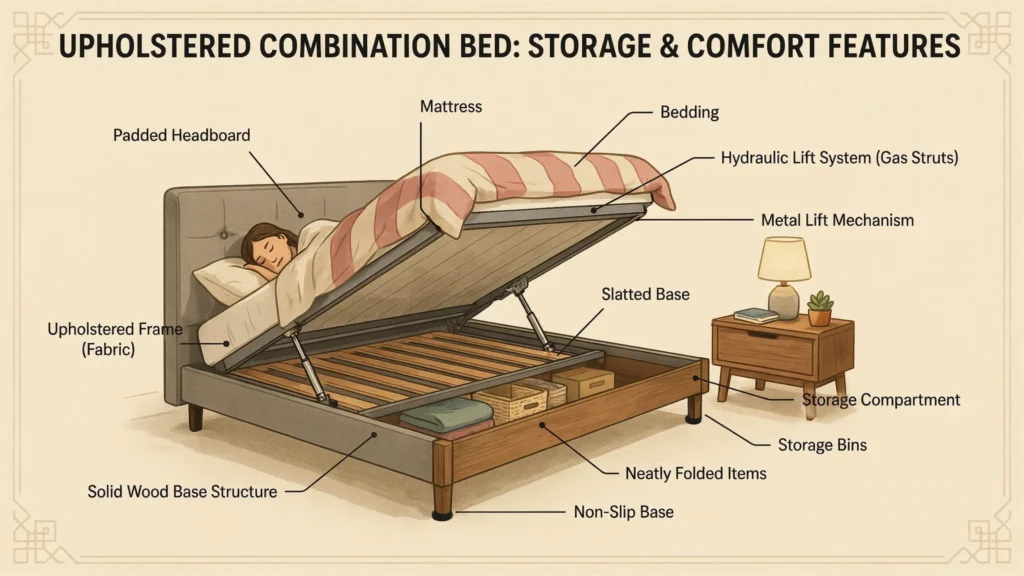
If storage is your number one problem, stop looking at drawers and look at ottoman beds. The whole mattress lifts on gas struts to reveal one deep compartment that runs the full size of the bed. It holds bulky things that drawers cannot, like a spare duvet, a pile of winter coats or a set of guest bedding.
The catch is access. You have to lift the mattress to reach anything, so put the things you need weekly near the foot end and the seasonal stuff near the head. Check the struts before you buy. Good gas struts should lift the mattress with one hand and hold it open safely while you reach inside. If the showroom model slams shut or needs two people to lift, walk away.
For fabric, durability matters more than luxury here, because you will be leaning over the frame and lifting the base often. A linen-look blend or a plain polyester holds up well to that kind of handling and cleans easily.
Darker mid tones hide the scuffs that come with daily use. Since a storage bed often lives in a room that also hosts guests, it pairs well with the ideas in these elegant guest bedroom ideas for adults, which show how to make a practical room feel welcoming too.
Best for: homes with no linen cupboard and anyone storing bulky bedding. Watch out for: weak gas struts, mattress travel when the base opens, and a base that is hard to lift when fully loaded.
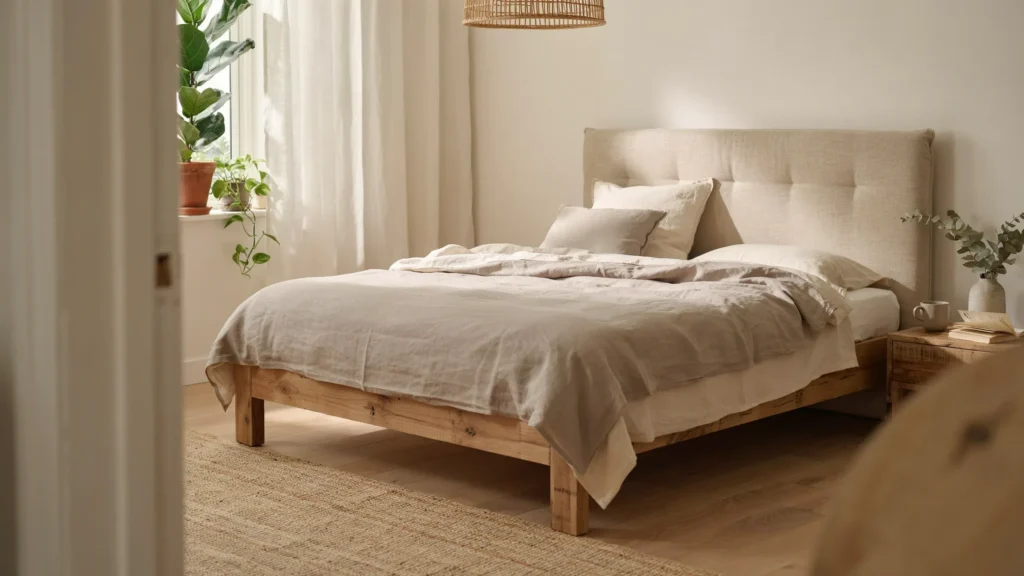
4. The Kids and Pets Bed: Trundle Daybed in a Tough Fabric
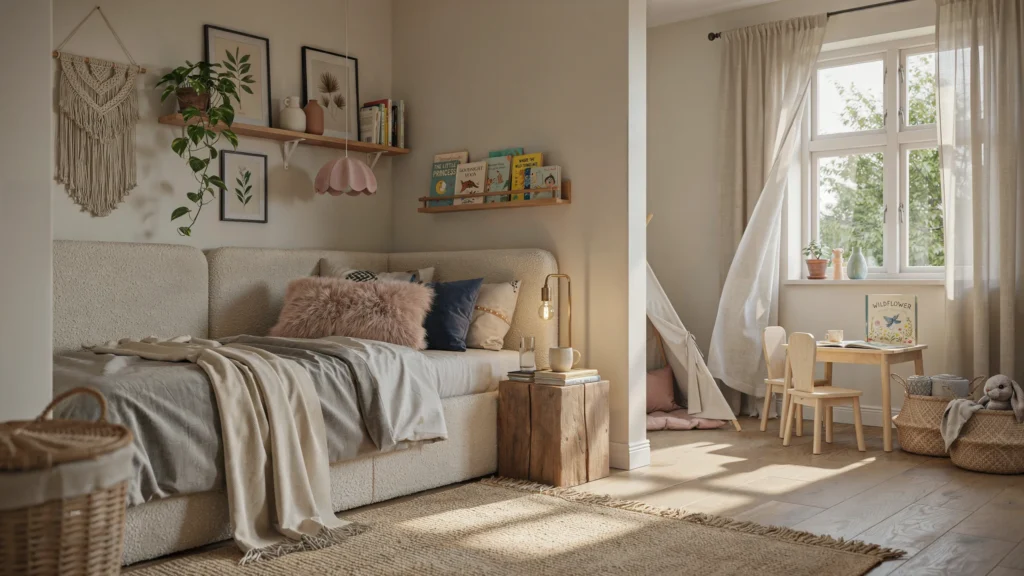
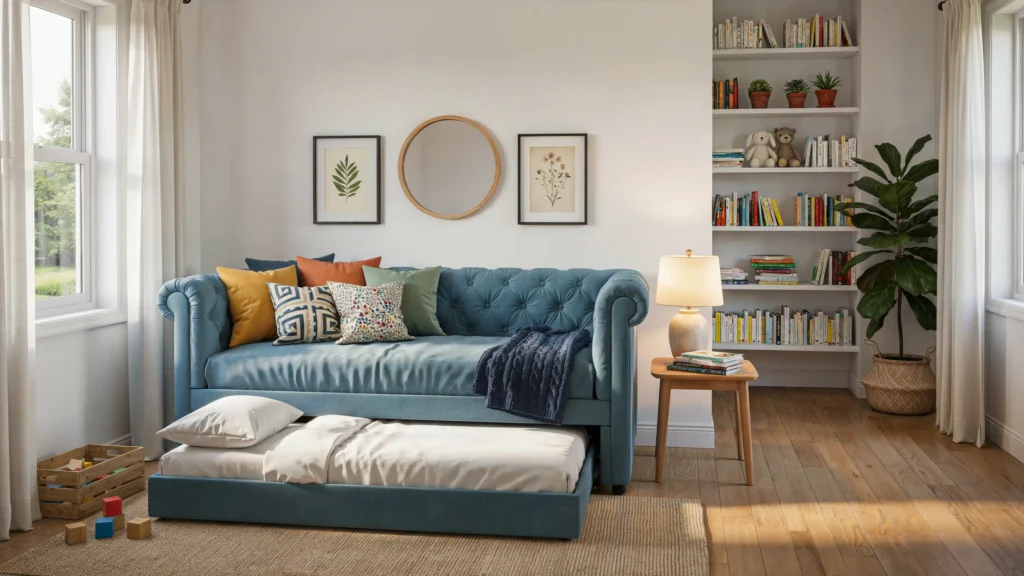
Families need furniture that bends. By day this bed looks like a smart upholstered daybed or a small sofa. By night a second mattress rolls out from underneath on a trundle, and suddenly you have a sleepover bed without needing a spare room. It works in a kids room, a guest room or a small home that hosts visitors often.
Measure the trundle run before you order. The pull-out mattress needs a clear strip of floor as wide as the bed itself, so move the rug and check that nothing blocks it. Also check the trundle height. A low trundle is easy for kids to pull out, but it sits close to the floor, so it is not the best choice for an older guest who struggles to get up from a low mattress.
Fabric is everything here. This is the bed for performance fabrics and plain polyester, the two options that handle juice spills, muddy paws and felt-tip pens with the least fuss. A linen-look blend also works if it has a stain-resistant finish, but plain velvet is a bad idea for this job. It shows every pull and crush, and pet claws catch in the pile.
Choose a mid tone with a bit of texture, which hides small marks far better than a flat pale colour, and ask whether the covers come off for washing. Removable covers are worth real money in a house with kids.
Check the frame corners too. Rounded or well-padded corners are kinder than sharp wooden edges in a kids room. For bedding that stands up to the same daily use, these dorm room bedding essentials work well in a kids room too, because dorm bedding is designed to be washed often and survive rough handling.
Best for: kids rooms, sleepovers and guest rooms that double as playrooms. Watch out for: trundle floor clearance, fabric that cannot handle spills, and sharp frame corners.
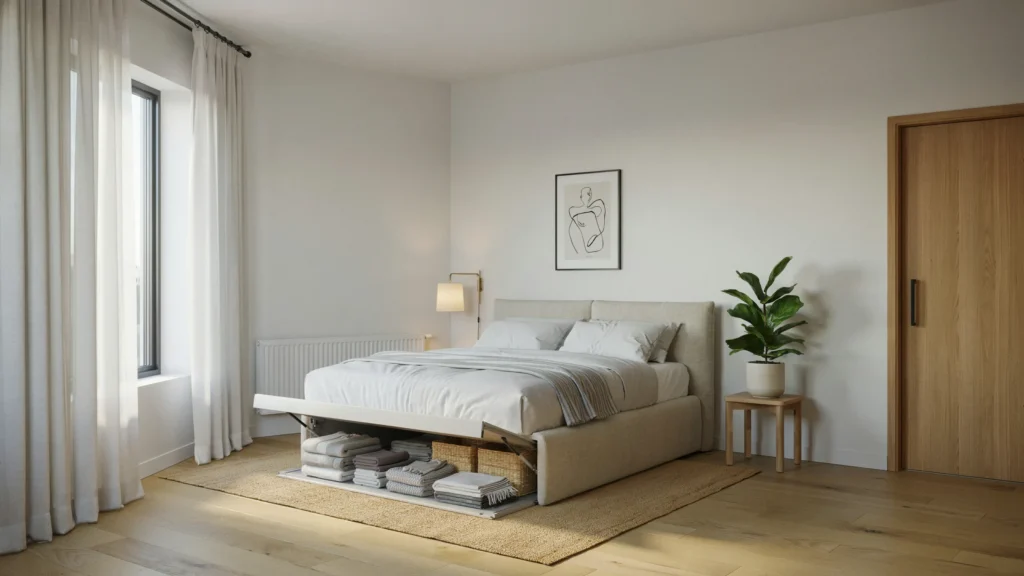
5. The Rental Friendly Bed: Modular Bed With a Split Headboard
Renters and frequent movers need a bed that comes apart without a fight. A modular upholstered bed breaks into pieces: a headboard that splits in two, side rails that unbolt, and a base that folds flat. It fits through narrow doors, up tight stairs and into small lifts, and reassembles easily in the next home.
Ask the seller three questions before you buy. Does the headboard split? Do the side rails detach with simple bolts? And does the bed pack down to pieces that one person can carry? If the answer to any of those is no, it is not really a modular bed, whatever the label says.
Check the fixings too. Good modular beds use sturdy metal brackets that line up exactly every time you rebuild them. Cheap fixings loosen after two or three moves, and a wobbly bed is no fun at all.
Because this bed moves with you, pick a fabric and colour that will work in a room you have not met yet. A warm neutral in a durable linen-look blend or plain polyester is the safest bet, and it suits most rental walls, which tend to be white or pale grey. Avoid a bold colour or a strong pattern that only works with one specific room.
You can add personality with bedding and cushions, which are cheap to change, while the bed itself stays neutral.
One thing renters often forget: check the bed against the rules of your building. Some flats limit lift use to certain hours or ban large deliveries through certain entrances. A bed that arrives in flat-packed pieces usually gets through these rules easily. If your rental bedroom is also small, these small bedroom design ideas show how a modular bed and a few clever pieces can make a tight rented room feel like home without drilling a single hole.
Best for: renters, frequent movers and anyone with narrow stairs. Watch out for: fixings that loosen after repeated assembly and headboards that do not split.
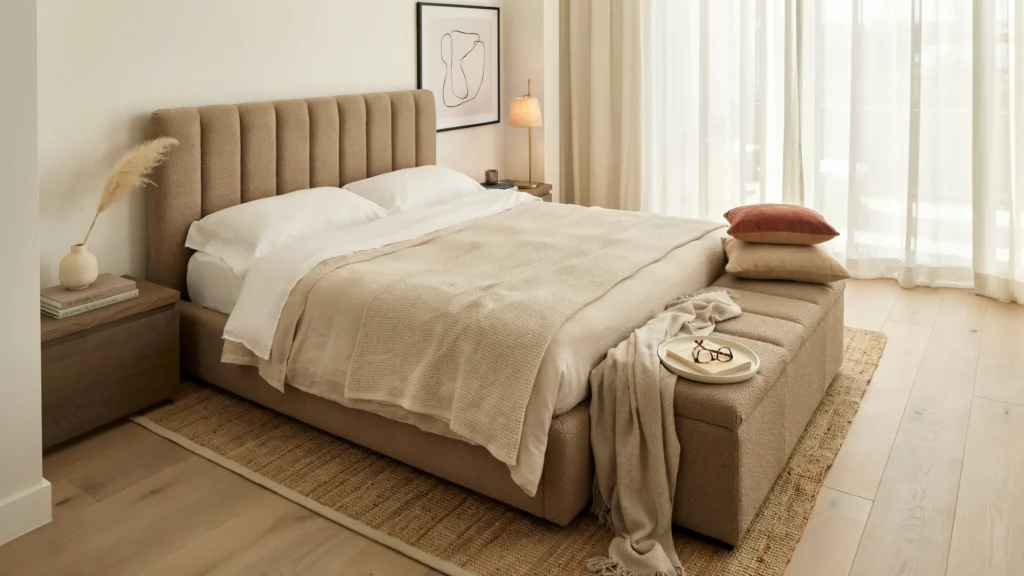
6. The Statement Room Bed: Curved or Channel Tufted Showpiece
Some bedrooms are built around the bed, and this is the bed for those rooms. A curved headboard, deep channel tufting or a rich velvet in a bold colour makes the bed the star the moment you walk in. It is the right choice when the room is big enough to let the bed breathe and the rest of the decor can stay quiet and let it carry the look.
Space is the first check. A curved or sculptural headboard is wider than a flat one, and the curves eat into the wall space on each side. Measure the full width including the widest curve, then check that you still have 40 to 50 cm of clear wall on each side. If the headboard crowds the bedside tables, the whole effect falls apart. A statement bed needs air around it.
Fabric is the second check, and here velvet earns its keep. Performance velvet is plush, catches the light beautifully and gives a curved shape real depth. But it shows pulls and crush marks, so it suits a main bedroom for adults far better than a kids room. If you love the look but not the upkeep, a brushed chenille gives you similar softness with more forgiveness.
Keep the rest of the room simple. Plain bedding in a colour pulled from the headboard, one good throw, and bedside tables that do not compete for attention. A statement bed with busy bedding looks cluttered, while the same bed with calm bedding looks like a hotel suite. And remember the commitment. A bold shape and colour are harder to change later than a neutral bed, so choose something you will still love in five years, not just this season.

7. The Budget Smart Bed: Simple Padded Frame With a Matching Headboard
You do not need to spend a fortune to get the comfort of an upholstered bed. A simple padded frame with a matching headboard, bought as a set, gives you the soft look and the comfortable backrest at a sensible cost. The key is buying the headboard and base together so the fabric, the colour and the fixings match. Mix and match sets often look slightly off, and mismatched fixings can leave a gap between the headboard and the base.
Where should the money go? Spend it on the frame and the fixings, not on fancy extras. A solid wood or metal frame with good joints will outlast a cheap frame with USB ports and lights. Check the stitching along the headboard seams and press the padding. It should feel even, with no hard spots or thin patches. Sit against the headboard and lean back. If it feels flimsy in the shop, it will feel worse at home.
For fabric on a budget, plain polyester is hard to beat. It is the easiest of the common fabrics to clean, it holds its colour well, and it costs less than velvet or linen blends. A mid grey, warm beige or soft sage in plain polyester looks far more expensive than it is, and it is easy to dress up with bedding. Avoid very pale colours on a budget bed, because budget fabrics in pale shades show marks faster.
Finally, measure twice even on a budget buy. A cheap bed that does not fit is not a bargain, it is a problem you have to live with or pay to return. The measuring steps at the top of this guide apply just as much to a budget bed as to a luxury one.
Best for: first homes, guest rooms and anyone furnishing on a tight budget. Watch out for: weak frames, mismatched headboard and base sets, and pale fabrics that mark easily.

Headboard Heights by Ceiling Height
Headboard height is where most people guess, so here is the simple version. A standard headboard sits 90 to 110 cm above the mattress, which suits most rooms and most people. A tall headboard runs 120 to 160 cm above the mattress and needs ceiling height to carry it. The table below uses the two-thirds rule: the top of the headboard should sit at or below two thirds of the ceiling height, measured from the floor.
| Ceiling height | Headboard top from floor | Best headboard style |
|---|---|---|
| 2.3 m or lower | Up to about 1.5 m | Standard 90 to 110 cm panel, smooth or lightly padded |
| 2.4 m (standard) | Up to about 1.55 m | Standard panel, or a tall panel with a low base |
| 2.6 m | Up to about 1.7 m | Tall 120 to 140 cm panel, tufted or channelled |
| 2.7 m | Up to about 1.8 m | Tall 130 to 150 cm panel, works with a higher base |
| 3 m or higher | Up to about 2 m | Full statement headboard, 150 to 160 cm, curved or oversized |
These are guides, not laws. If your bed base is unusually high or low, the numbers shift a little, because the headboard height is measured from the mattress up. Always measure the finished height from the floor, not just the headboard panel on its own. And if you are torn between two heights, go shorter. A headboard that is slightly too short looks calm. One that is slightly too tall looks like it is trying too hard.
Fabric Durability Compared: What Survives Real Life
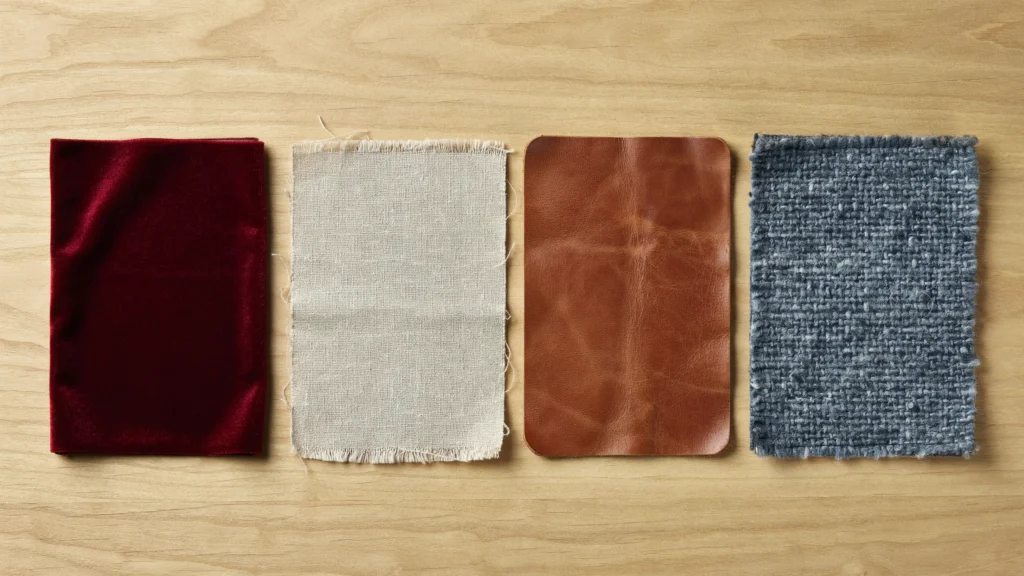
Fabric decides how your bed looks in two years, not just on delivery day. The right fabric for a quiet main bedroom is the wrong fabric for a house with a dog, and the prettiest fabric in the shop is not always the one you will still like after a year of daily use. This table compares the five fabrics you will meet most often, with honest notes on each one.
| Fabric | Feel and look | Durability | Cleaning | Best for |
|---|---|---|---|---|
| Performance velvet | Plush, rich, catches the light | Good, but shows pulls and crush marks | Vacuum often, blot spills fast | Adult main bedrooms, statement beds |
| Linen-look blend | Relaxed, textured, breathable | Very durable, resists wear well | Vacuum weekly, spot clean gently | Warm rooms, hot sleepers, daily use |
| Plain polyester | Smooth, even, holds colour well | Strong and colourfast | Easiest to clean of the group | Budget buys, rentals, busy households |
| Tweed | Textured, heritage look | Very durable, hides marks well | Vacuum with an upholstery nozzle | High traffic rooms, classic styling |
| Brushed chenille | Soft, cosy, slightly fuzzy | Practical for daily use | Vacuum regularly, avoid harsh rubbing | Everyday family bedrooms |
A few details from the table deserve a closer look. Tufting looks wonderful in photos, but every fold is a dust trap, so budget a weekly vacuum with the crevice tool if you choose a tufted headboard. Velvet, even performance velvet, will show a faint pattern where you lean against it every night. That is normal, and a light brush with a clothes brush usually lifts it.
Linen-look blends are the quiet heroes of this list. They breathe well in warm rooms, they resist wear, and their slight texture hides the small marks that would show on a flat fabric.
Whatever fabric you choose, order a swatch first and hold it against your wall in daylight and in lamplight before you commit.
If I were choosing for my own bedroom, I would take the storage bed first: it hides the everyday clutter and the headboard still carries the room.
Best for: large main bedrooms and anyone who wants the bed to be the feature. Watch out for: extra width from curves, velvet upkeep, and a colour you might tire of.

Making the Bed Sit Well in the Room
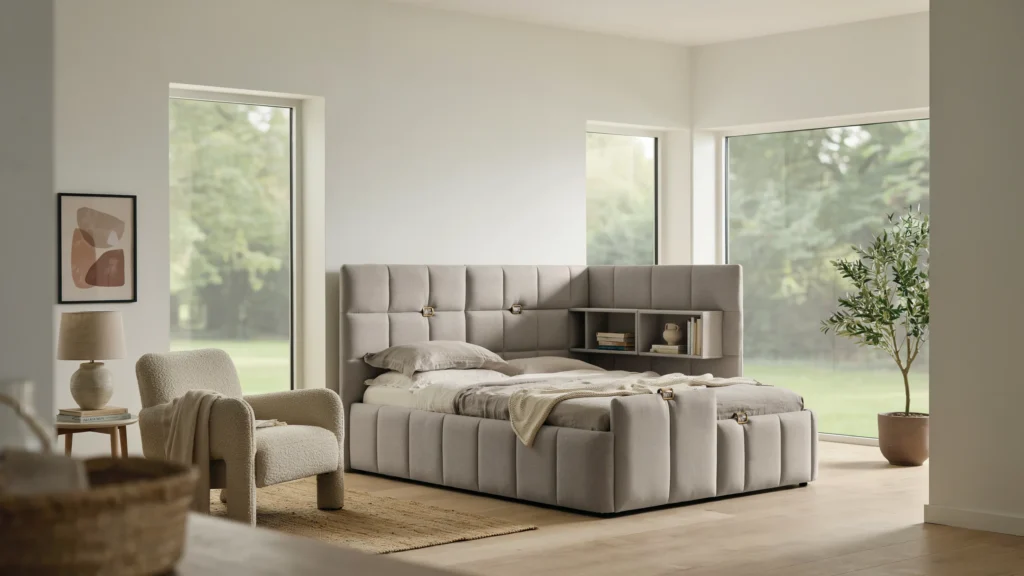
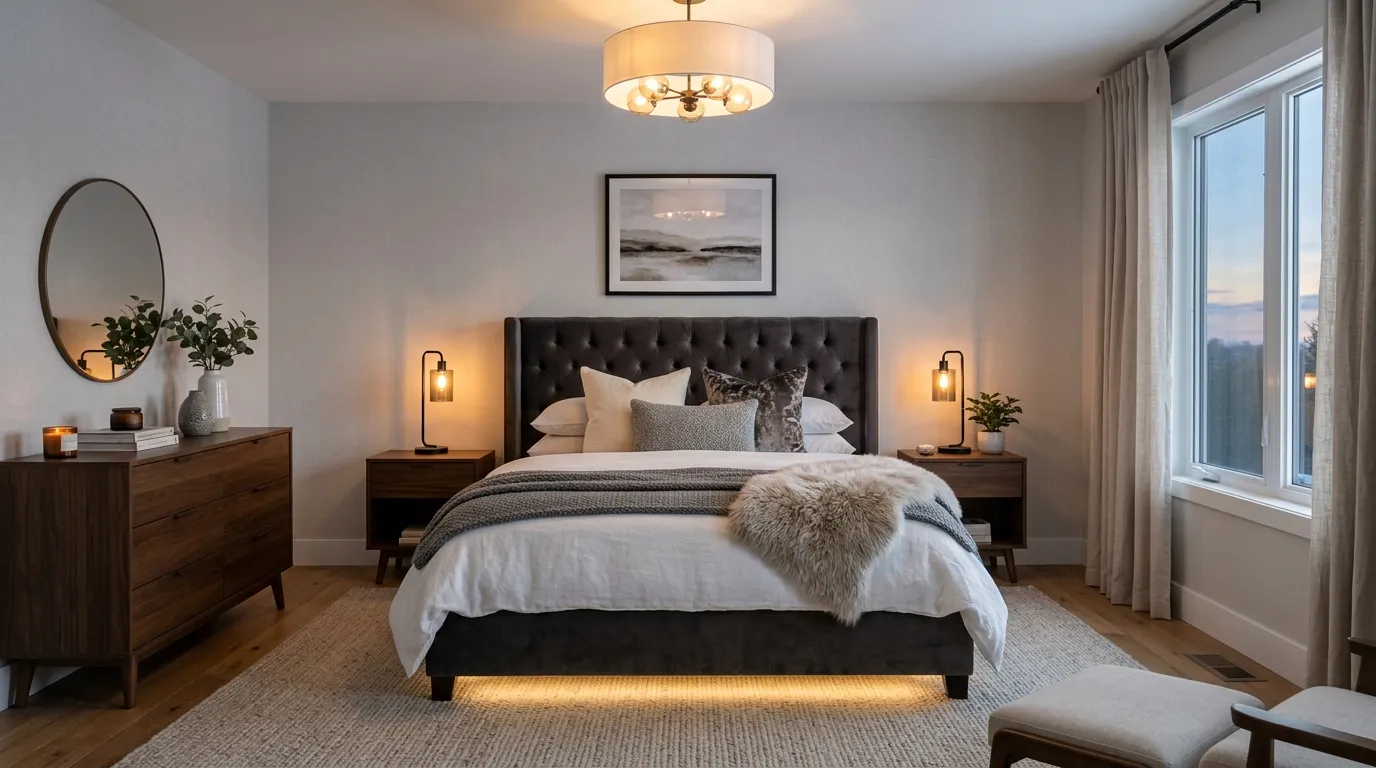
A good bed deserves a room that shows it off. Let the bed lead and build around it. If the headboard is bold, keep the nightstands and the dresser simple so nothing competes with it. If the bed is plain and low, you have room to add character with a rug, art or plants
Match wood tones and metal finishes across the room, and resist the urge to fill every corner. A few well-chosen pieces beat a crowded room every time.
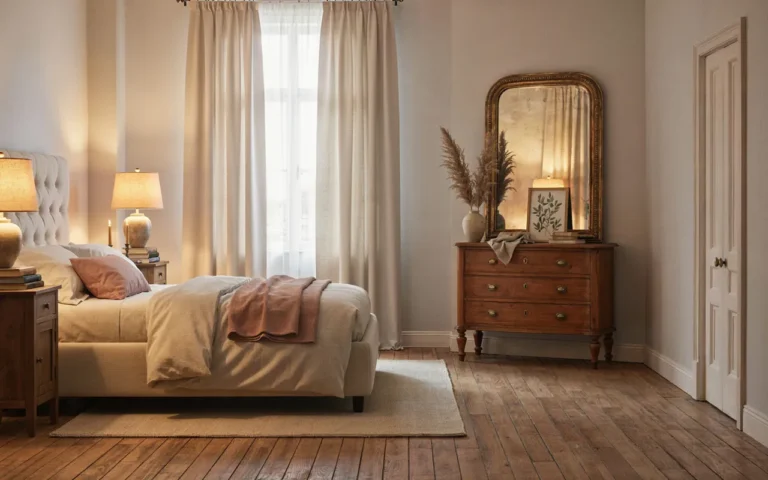
Lighting changes how the fabric reads. A soft warm bedside lamp makes velvet glow and linen look richer, while harsh white light flattens both. If your headboard has built-in reading lights, test them before you commit. Some are too bright for a partner who is trying to sleep, and some sit at a height that shines straight into your eyes when you lean back.
Think about the wall behind the bed as part of the bed, not separate from it. A painted accent wall in a deeper shade than the rest of the room makes a padded headboard stand out, and it is easier to change than wallpaper. If you do want wallpaper, pick one that shares a colour note with the headboard fabric so the two feel deliberate rather than accidental.
Keeping an Upholstered Bed Looking New
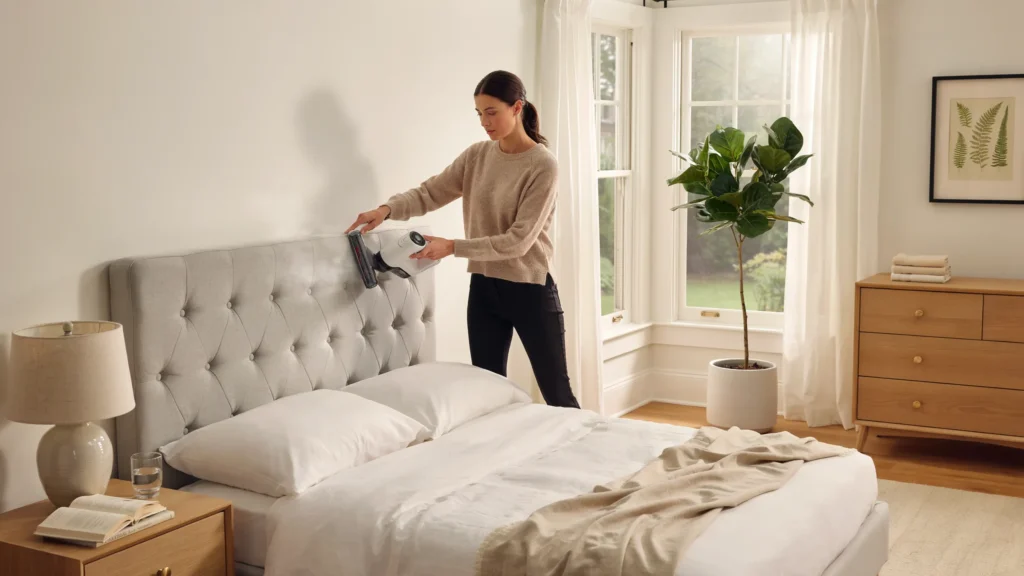
An upholstered bed is an investment, and small habits keep it looking good for years. Vacuum the fabric weekly with an upholstery attachment, and run the crevice tool along tufted folds and seams where dust gathers. Fluff any loose headboard cushions so they wear evenly.
Spills need speed. Blot right away with a clean cloth, and never rub, because rubbing pushes the stain deeper and roughs up the fabric. Check the cleaning code on the label before you use any product, and test a cleaner on a hidden spot first, like the back of the headboard. For tough stains, a professional clean is cheaper than a ruined headboard.
Two things to avoid. First, keep the bed out of direct sunlight where you can, because strong sun fades fabric over time and the fade will show most on the headboard. Second, avoid steam cleaning a foam-backed headboard.
The steam can soak into the foam and damage it, and it can also leave the fabric damp for hours. A dry vacuum and a gentle spot clean are the safer routine for most upholstered beds. Tighten any loose bolts on the frame once a year, and your bed will stay solid and quiet.
Questions People Ask Before Buying an Upholstered Bed
What is an upholstered combination bed?
It is a bed with a padded, fabric-covered frame and headboard, plus at least one extra function. The extra is usually storage, like a lift-up base or drawers, but it can also be a trundle, built-in seating, headboard shelves or USB charging. One piece of furniture does several jobs.
How do I choose the right size upholstered bed?
Start with the room, not the mattress. A queen bed needs about 60 cm of clear floor on each side and 75 cm at the foot, plus extra clearance for drawers or a trundle. Measure the full outside dimensions of the frame, including the padded sides and the headboard thickness, and mark the outline on the floor with masking tape before you order.
Are upholstered beds good for small bedrooms?
Yes, if you pick the right one. A low profile bed with a slim headboard and built-in storage makes a small room work harder without adding furniture. Avoid wide, tall headboards in a small room, because they eat wall space and make the room feel crowded.
Which fabric is best for an upholstered bed?
It depends on how you live. Plain polyester is the easiest to clean and the best value, linen-look blends are very durable and breathable, tweed hides marks well, and brushed chenille is practical for daily family use. Performance velvet looks luxurious but shows pulls, so it suits a quiet adult bedroom best. Order swatches and test them in your own light before you decide.
How tall should my headboard be?
A standard headboard is 90 to 110 cm above the mattress and suits most rooms. A tall headboard is 120 to 160 cm and needs ceiling height to carry it. Keep the top of the headboard at or below two thirds of the ceiling height.
Are upholstered beds hard to clean?
Not if you keep up a simple routine. Vacuum weekly with an upholstery attachment, blot spills immediately instead of rubbing them, and follow the cleaning code on the label. Removable covers make life much easier, so ask about them before you buy. Avoid steam on foam-backed headboards.
Can an upholstered bed fit through a narrow doorway?
Sometimes, but only if the largest single piece fits. Measure every doorway, hallway and stair turn, and ask the seller for the size of the biggest piece, not just the finished bed. Headboards that split in two and beds that assemble inside the room are the safest choice for tight access.
Is an upholstered combination bed worth the money?
It is worth it when the extra function replaces furniture you would otherwise buy. A storage bed that removes the need for a chest of drawers, or a trundle bed that removes the need for a guest bed, earns its price quickly. Buy the best frame and fixings you can afford.
Measure Twice, Order Once
Here is the whole guide in one checklist. Work through it before you spend anything, and tick each item off as you go.
- Measure the bedroom wall and mark the full bed footprint on the floor with masking tape, including the padded sides and headboard thickness.
- Check 60 cm of clear space on each side of the bed and 75 cm at the foot, plus drawer or trundle clearance where it applies.
- Measure the narrowest doorway, hallway corner, stair turn and lift, and ask the seller for the size of the largest single piece.
- Measure the ceiling height and use the two-thirds rule to set your maximum headboard height.
- Note the sockets, switches and radiators on the bed wall so the headboard does not cover something you need.
- Choose the bed by the problem it solves: small room, tall headboard, storage, kids and pets, rental moves, statement room or budget.
- Pick the fabric by your household, not by the showroom photo, and order swatches to test in your own light.
- Buy the headboard and base as a set so the fabric, colour and fixings match.
- Check the lifting mechanism on a storage bed, and make sure it opens safely with one hand.
- Plan a weekly vacuum and a gentle spot clean routine, and keep the bed out of strong direct sunlight.
An upholstered bed is the piece of furniture you will touch more than any other in your home. Ten minutes with a tape measure and a clear idea of what your room actually needs will do more for you than hours of browsing photos. Measure twice, order once, and the bed that arrives will be the one you actually wanted.