What actually makes a bathroom safe for a child?
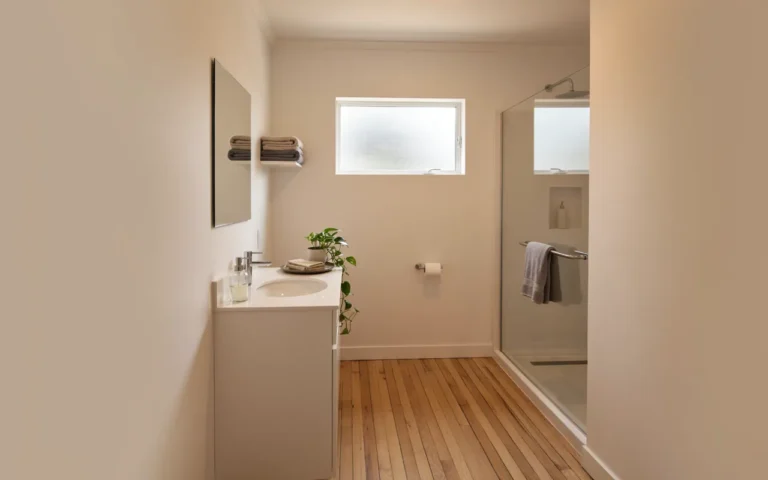
A safe kid bathroom is one a child can use without climbing, slipping, reaching for something sharp, or opening something they should not touch. Grip underfoot, a steady step up to the sink, locked storage for anything hazardous, rounded edges, and clear floor space matter far more than any theme.
Most parents start with colour or a cute theme, then discover the practical problems later. A towel rail is too high, the step stool slides, the bath toys live in a pile on the floor, and the cleaning spray sits under the sink at exactly toddler height. This guide flips that order. Safety comes first, then storage and sink access, then style. The result still looks good, and it keeps working as your child grows.
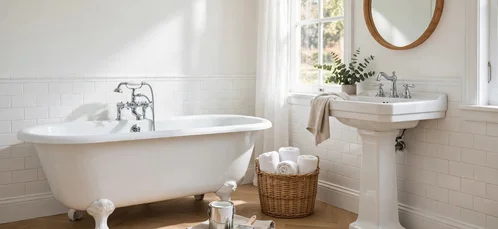
Think of the room in three layers. The base layer is fixed and hard to change, so get it right once: flooring, lighting, taps, and locked storage. The middle layer is adjustable: step stools, hooks, baskets, and mirrors can move up or down as a child grows. The top layer is easy to swap: towels, shower curtains, wall decals, and drawer pulls. When you spend on the base layer and stay flexible with the top layer, you avoid redoing the whole room every two years.
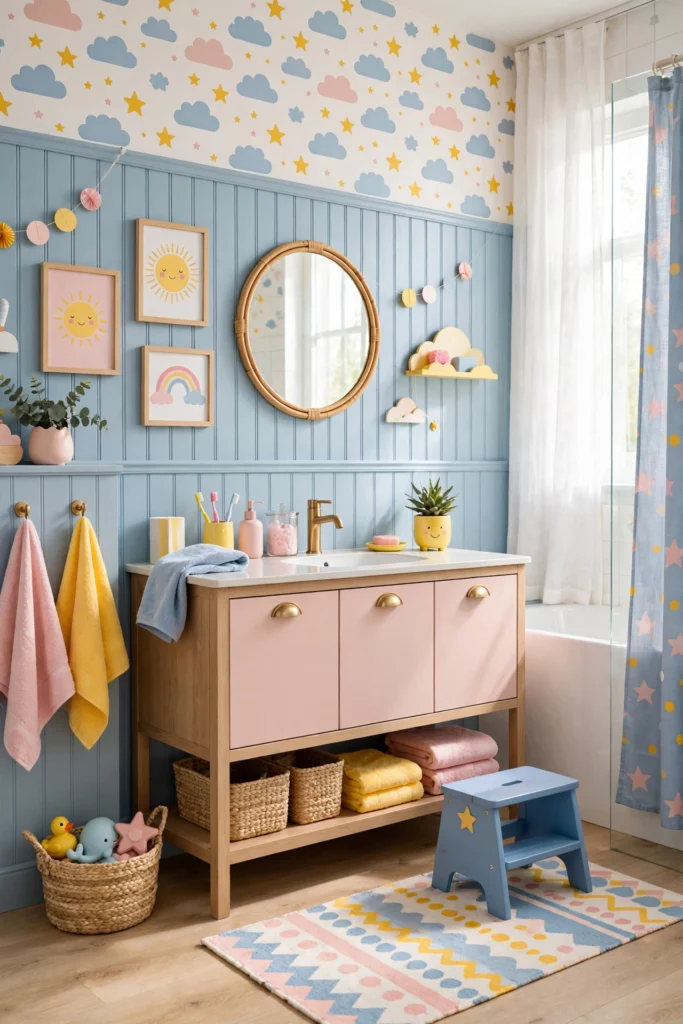
Colour is the first thing a child notices, so let it work for the room rather than against it. Two or three cheerful colours, repeated in towels and a few accessories, feel playful without turning the room into a theme park.
Safety foundations before you decorate
Before you buy anything pretty, walk the room the way a child would use it. Step in with wet feet. Reach for the tap. Try to open every low cupboard. Look for sharp corners at head height, cords near water, and anything small enough to be picked up and put in a mouth. A ten minute walk through will tell you more than a shopping list will.
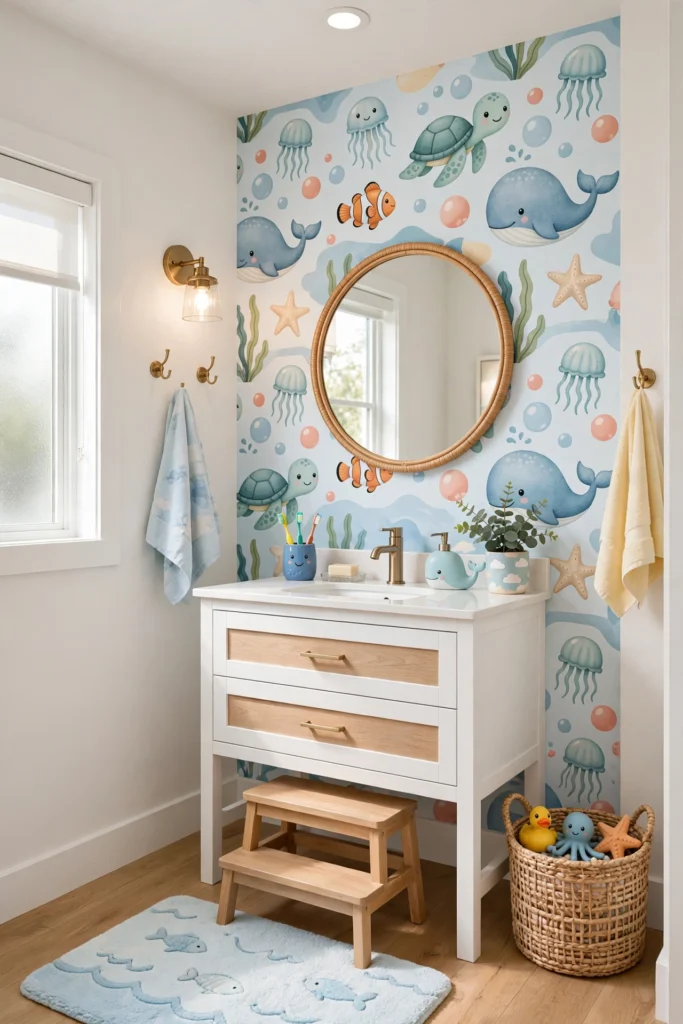
Walls take almost as much splash as floors in a kid bathroom. Vinyl wallpaper rated for bathrooms, used on one accent wall, adds pattern where it can be wiped clean, while washable paint on the other walls keeps the rest simple to maintain.
Grip underfoot, everywhere water lands
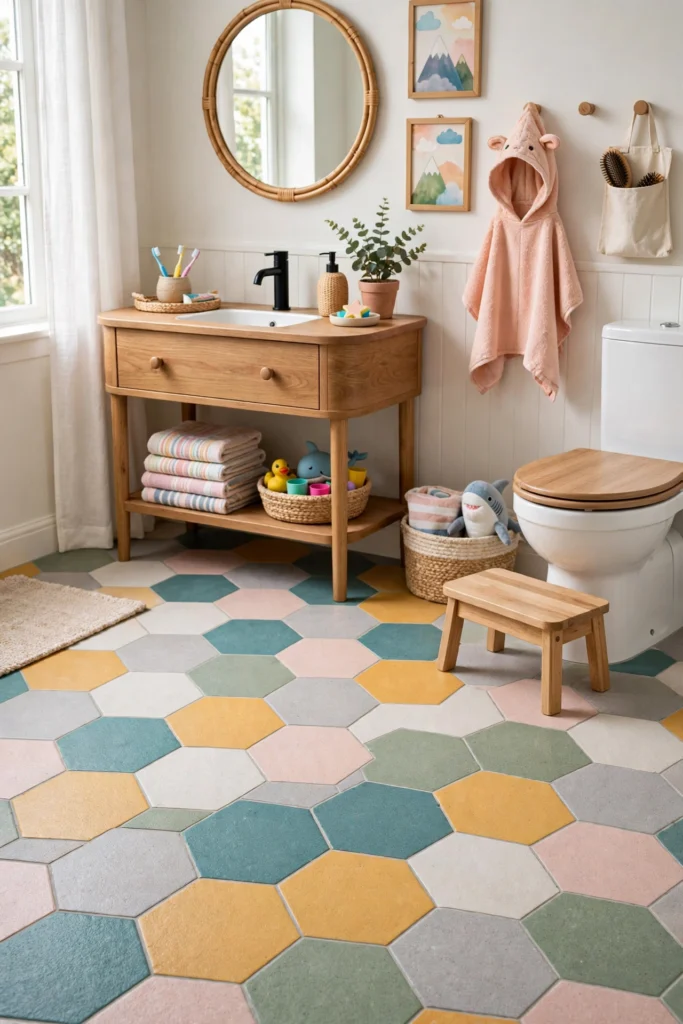
Wet tile is the main everyday risk in a kid bathroom, so treat the floor, the tub, and the step out zone as one system. Matte or textured tile grips far better than high gloss tile when it is wet. A rubber backed bath mat outside the tub catches drips before they reach the main floor. Inside the tub or shower, use a fitted non slip mat or adhesive strips and check them often, because a mat that curls at the edge becomes a trip hazard of its own.
Keep the walking path clear. A stool left in the middle of the floor, a pile of bath toys, and a trailing towel all invite a stumble in a small room. Give every item a home, and put the stool in the same spot every time so a child learns where to find it and where to leave it. If you are renting or you cannot change the tile, a good mat and a washable rug with a non slip backing will do a lot of the work without any drilling or permanent change. For more renter friendly approaches, these apartment bathroom decorating ideas without drilling show how to add hooks, storage, and colour without damaging walls.
Water you can trust, and a tap a child can use
Bath water should feel comfortably warm on the inside of your wrist or elbow, never hot. Always run the cold tap first when you fill a bath for a younger child, then add warm water and stir it so there are no hot pockets. Test again before your child gets in. A thermostatic mixer or anti scald valve, fitted by a plumber, can help keep the temperature steady when someone flushes a toilet or runs a tap elsewhere in the house. It is a practical upgrade, not a substitute for checking the water yourself.
Lever taps are easier for small hands than stiff twist knobs, and a handheld shower head on a slide rail is useful at every age. A toddler can be rinsed without water in their eyes, a young child can learn to rinse their own hair with help, and an older child can adjust the height themselves. Keep the shower head hose tidy so it does not hang across the tub edge where it can catch a foot.
Locked high, open low
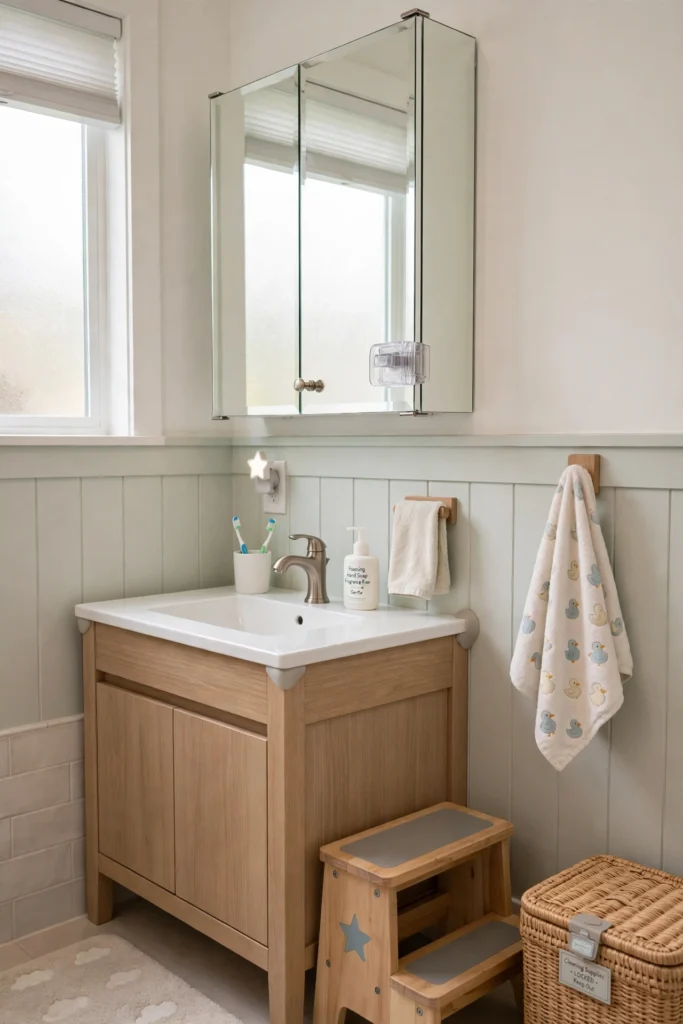
The simplest storage rule for a kid bathroom is also the safest: anything hazardous lives locked and high, and anything a child is meant to use lives open and low. Medicines, cleaning products, razors, scissors, and small batteries belong in a locked cabinet above adult reach, even with a step stool in the room. A mirrored medicine cabinet above the sink works well here, because it hides those items in plain sight while keeping the counter clear.
Everything else should be easy to reach without climbing. Towels, washcloths, bath toys, and a toothbrush cup belong at child height. When a child can get what they need without pulling at a high shelf or standing on the toilet lid, the room gets calmer fast. Put a small lock or latch on any low cupboard that still holds adult products, and check it now and then, because latches loosen with daily use.
Rounded edges, soft light, and clear electrics
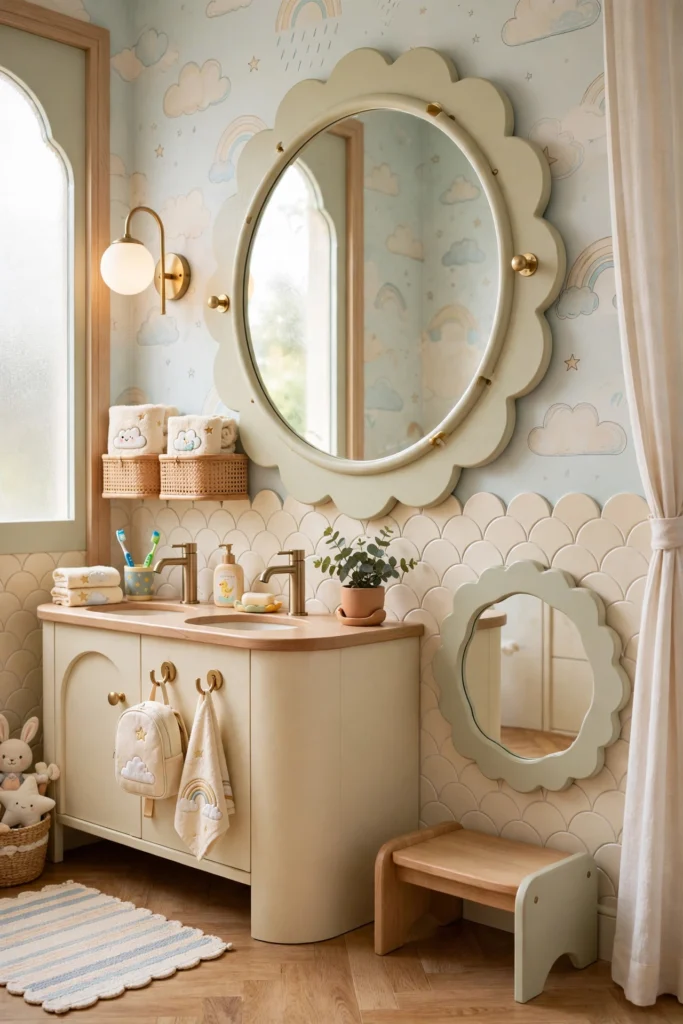
Choose rounded corners where you can. A vanity with a softened edge, a round or scalloped mirror frame, and chunky drawer pulls with no sharp points all reduce bumps at head height. Slow close drawers and toilet seats protect small fingers and stop the daily slam that wakes the house. Cover outlets with childproof covers, keep hair dryers and other plug in items unplugged and stored away from water, and keep any diffuser or plug in device well out of reach and away from splashes.
Lighting deserves the same care. A single harsh overhead light makes early morning routines harder and evening baths feel wired rather than calm. A dimmable main light plus a small warm night light near the door helps a child find their way without a bright glare. Avoid trailing cords, and keep candles and plug in warmers out of a kid bathroom altogether.
The toddler stage: everything low, soft, and in reach
For a toddler, the bathroom is mostly an adult led room, but the design should still invite independence in small steps. A toddler who can wash their own hands with a little help, put a toy in a basket, and hang a towel on a low hook is learning routines that will pay off for years. Keep the room simple at this stage. Fewer items on show means fewer things to pull down, spill, or chew on.
Sink access for little legs
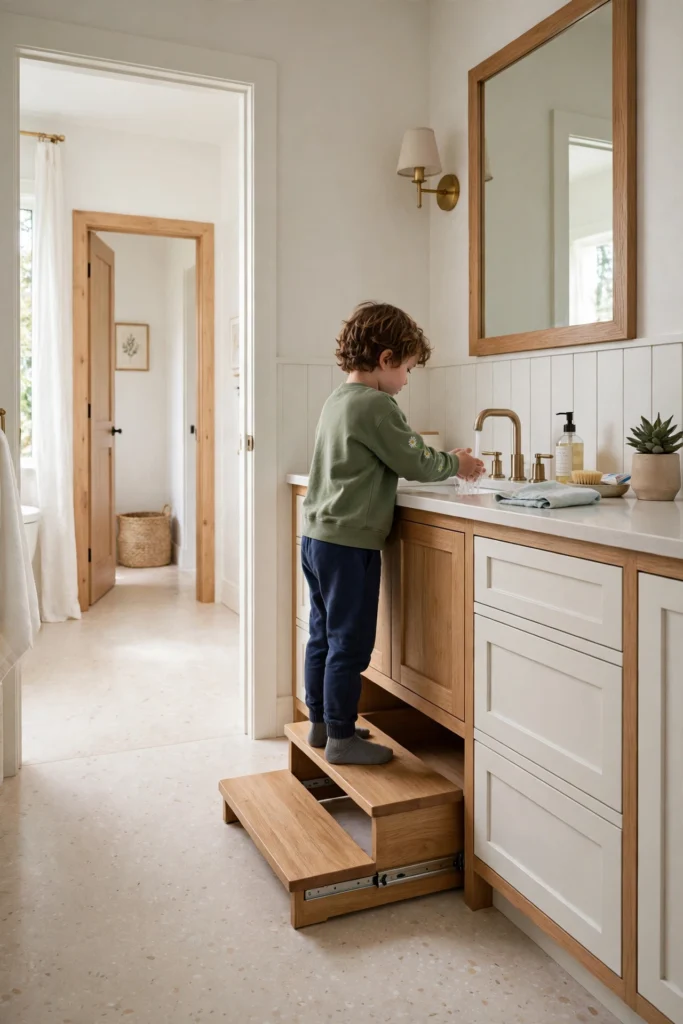
Most standard vanities sit around 30 to 32 inches high, which is far too high for a toddler. A single step of about 5 to 8 inches usually helps a toddler reach the basin edge, while a two step stool with a top platform around 12 to 15 inches suits a taller toddler at a standard counter. Measure your own vanity before you buy, because a stool that is too tall tips a child forward and a stool that is too short leaves them stretching on tiptoe.
Look for a wide base, rubber feet, a textured top, and no wobble when you press a corner. A slide out step built into the vanity toe kick is a neat option if you are renovating, because it disappears when it is not needed. A freestanding stool works just as well if it has a permanent home tucked against the vanity, not floating in the walkway. Teach one rule and repeat it: the stool stays in its spot, and wet feet stay off it until they are dried.
Storage a toddler can actually use
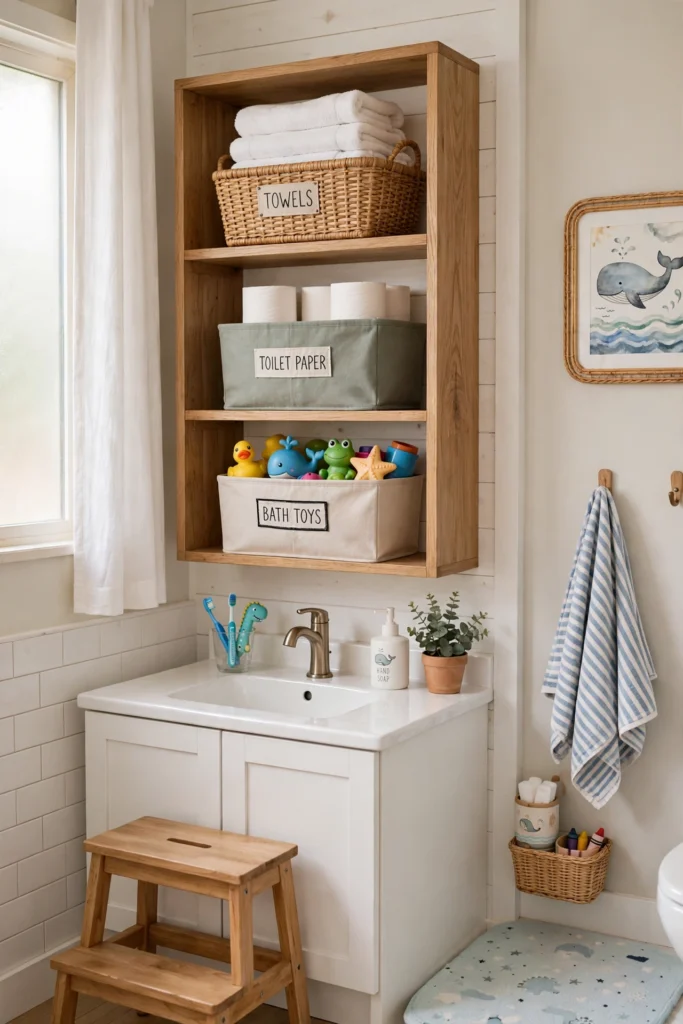
Open shelving with labeled baskets works beautifully for toddlers, because they can see what is there and put things back without opening heavy doors. Keep the baskets light and shallow. One basket for bath toys with drainage holes or mesh sides, one for washcloths, and one for spare nappies or wipes if you still need them. A picture label works better than a written label at this age, so stick a simple photo or drawing on the front of each basket.
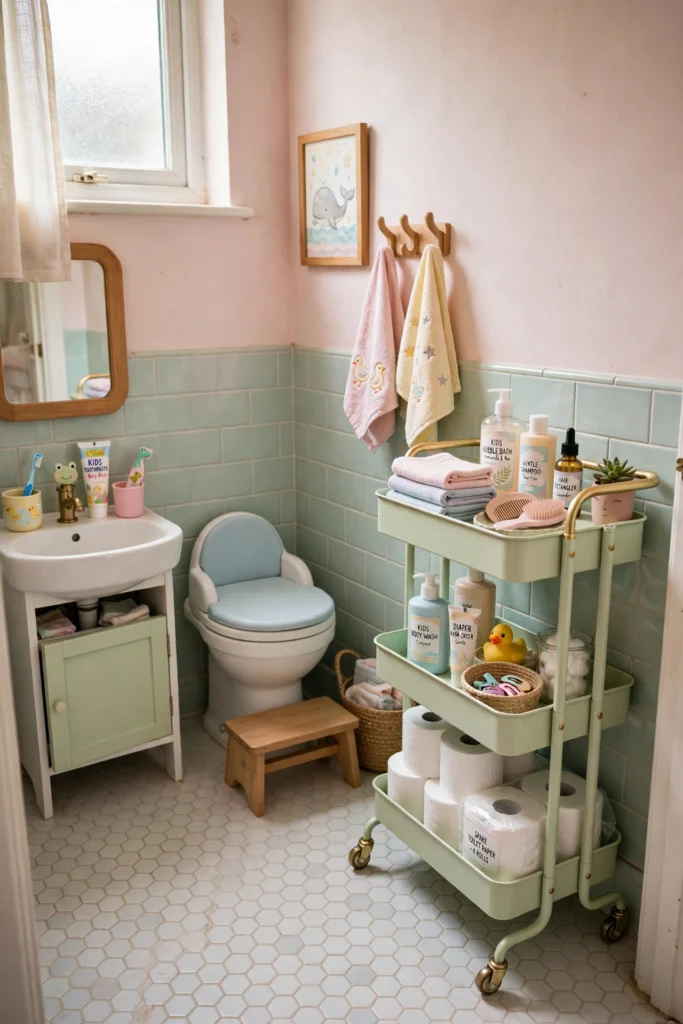
Keep bath toys in a net or mesh bag that hangs where water can drain, and rinse and dry the toys regularly. Toys left sitting in a puddle at the bottom of the tub go slimy fast and make cleaning much harder. A small rolling cart can help in a tight bathroom, because it can be wheeled out of the way after bath time and rolled back for the morning routine. Just make sure it has a brake or a stable base, so it does not roll when a toddler leans on it.
Style that survives splashing
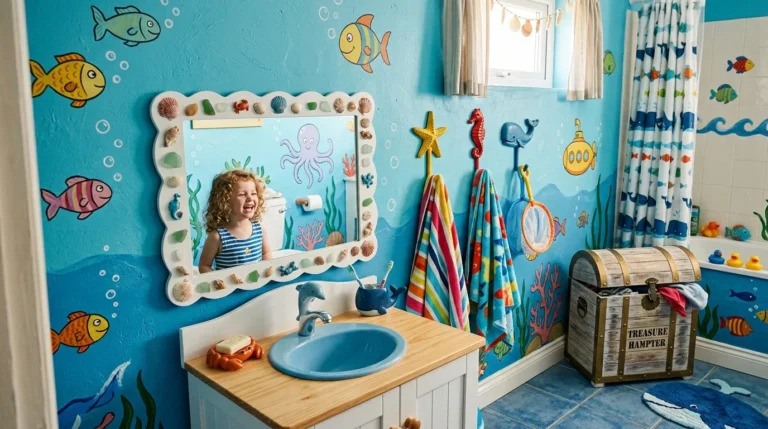
At toddler age, style should be washable first and cute second. A bright, cheerful palette on the walls or in towels is enough to make the room feel playful without a full theme that you will tire of. Washable, low odour paint made for humid rooms holds up better than flat paint, and a single accent wall in vinyl wallpaper rated for bathrooms adds personality without committing the whole room.
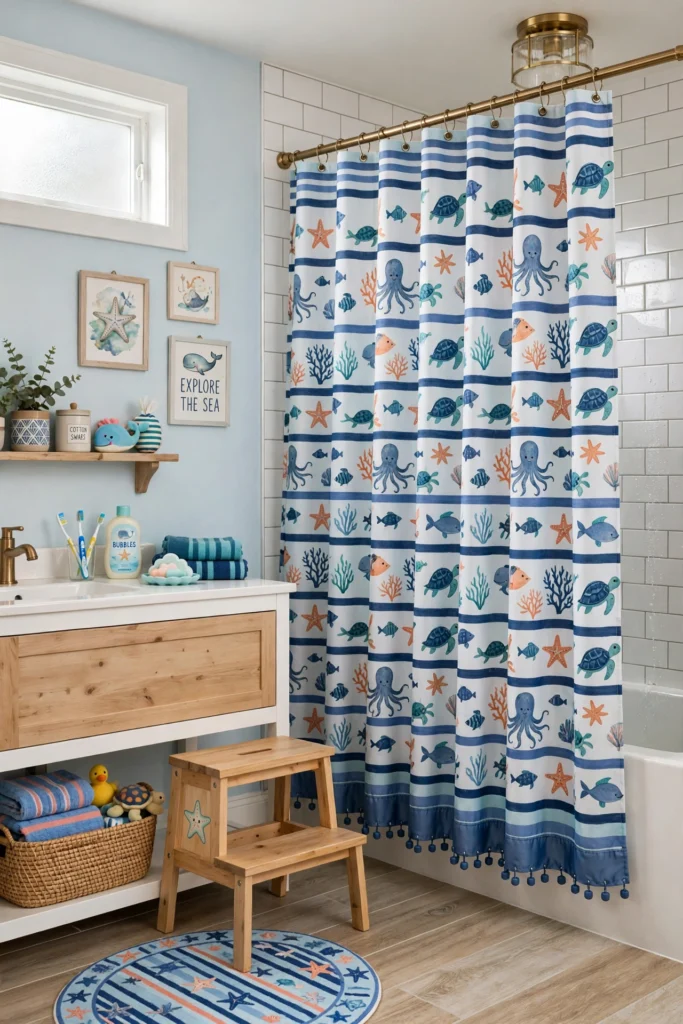
If you love a theme, keep it in the swap layer. A sea creature shower curtain, a set of animal hooks, and a colourful bath mat carry a theme on their own, and all three can change in an afternoon when tastes move on. Keep the permanent parts calm and neutral: white or pale tile, a simple vanity, and plain towels in two accent colours. That calm base is what lets the room grow up without a renovation.
Colour is also a good place to borrow ideas from the rest of the house. If you are choosing a palette and want it to feel warm rather than loud, these interior color trends for cozy homes show how soft, layered colours work in small rooms without looking flat.
The young child stage: routines, siblings, and a bit of ownership
Once a child is in preschool or early school, the bathroom becomes a daily routine room. Teeth, hands, hair, and getting dressed all happen here, often at the same time as a sibling. The design job now is to cut friction: give each child a place for their things, a mirror they can actually see into, and a routine they can follow without constant reminders.
Sink access and mirrors at child height
Many young children still need a step, but they need less height than a toddler did. Check the fit again rather than assuming the old stool still works. A child should be able to reach the tap and see their face in the mirror without leaning far forward or standing on tiptoe. If the main mirror is too high, add a smaller secondary mirror lower on the wall, or tilt a wall mirror slightly forward at the top so the reflection drops to child height.
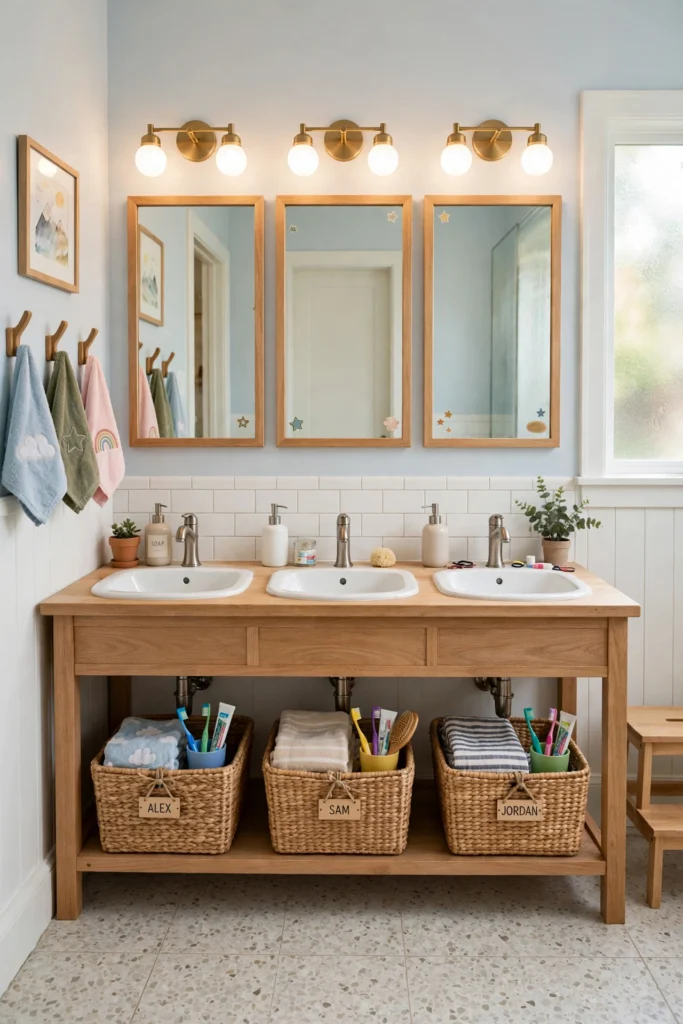
A double sink changes mornings completely when two children share one bathroom. Each child gets a tap, a cup, and a patch of counter, and the elbowing match disappears. If a second sink will not fit, a long counter with two clearly marked spots works almost as well. Give each child a coloured cup and a small tray for their toothbrush and toothpaste, and keep those trays in the same spot every day so the routine runs on autopilot.
Storage, hooks, and drawer pulls little hands can manage
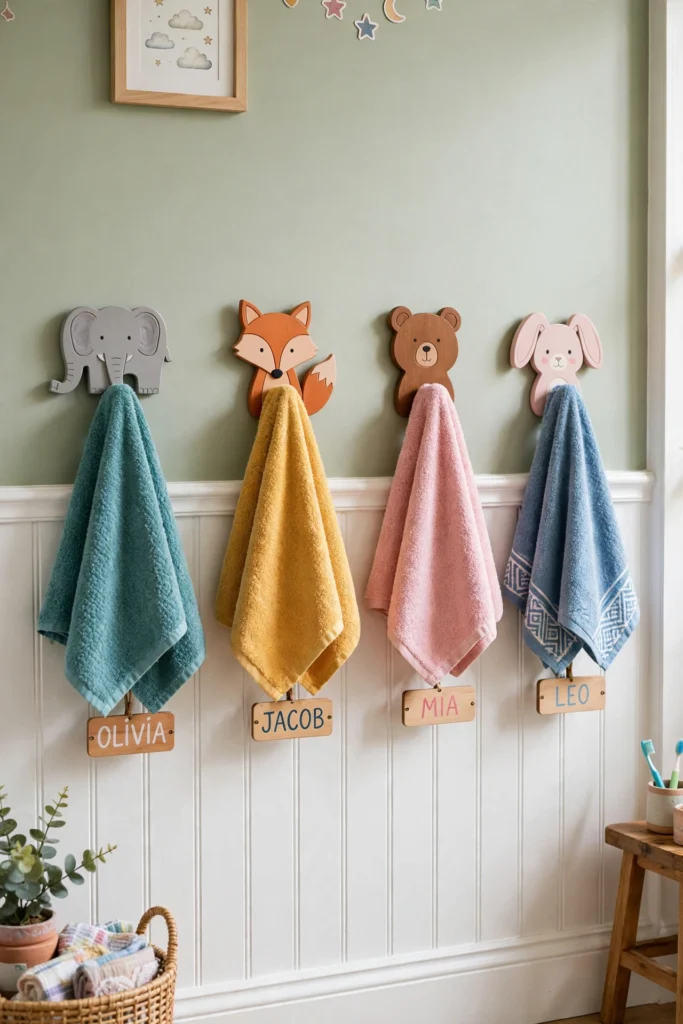
Hooks are the unsung hero of a shared kid bathroom. Put one hook per child at a height they can reach without a stool, usually around 36 to 42 inches for a young child, and label each hook with a name or a colour. Wet towels stop landing on the floor, and each child learns which towel is theirs. Use hooks with rounded ends and a firm wall fixing, because a hook that pulls out under a wet towel is worse than no hook at all.
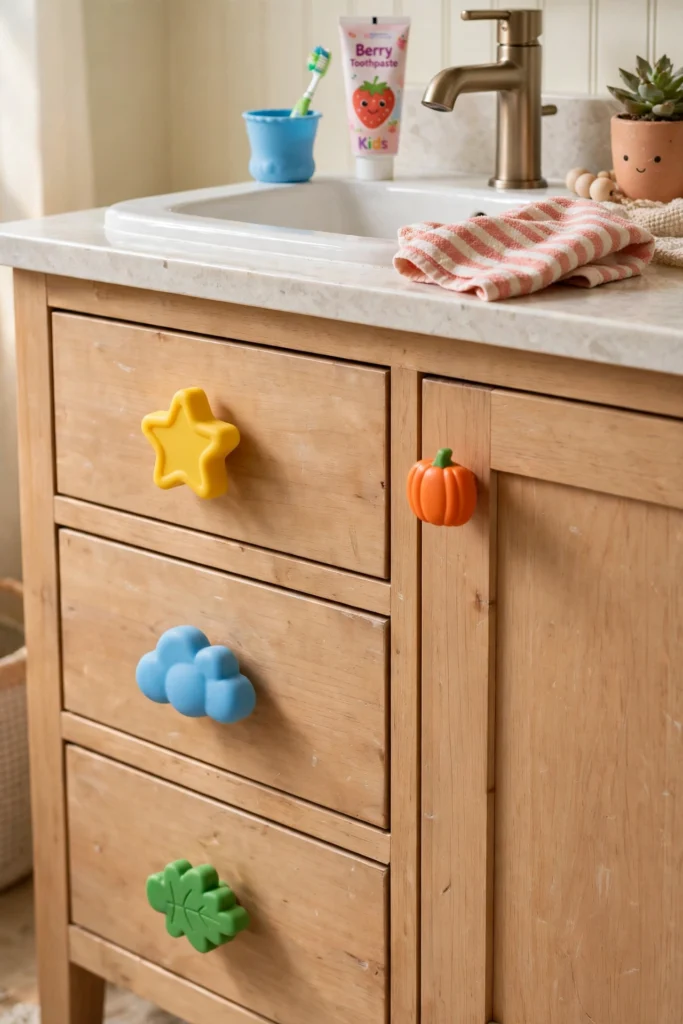
Chunky drawer pulls make a real difference too. A small round knob is hard for a wet hand to grip, while a chunky bar pull or a shaped pull gives a child something solid to hold. Swap the pulls on the vanity and any low drawers, and keep the old ones in a bag so you can swap them back later. For open shelves, style them lightly: a folded towel stack, a small plant out of splash range, and a basket. The same balance of useful and pretty that works in shelf decor tips for a designer look works in a bathroom too, as long as nothing fragile sits at child height.
Style with staying power
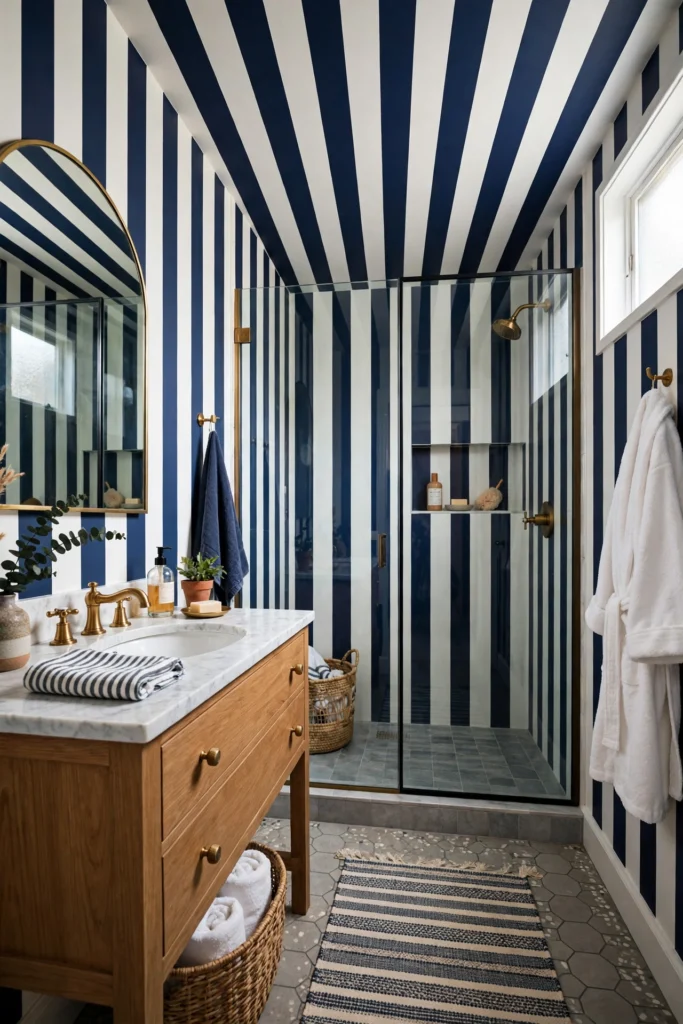
Stripes are a smart choice at this stage because they feel playful and grown up at the same time. Vertical stripes can make a low ceiling feel a little taller, while wide horizontal stripes feel calmer in a narrow room. A machine washable shower curtain in stripes or a simple print can carry the whole colour scheme, and a weighted or magnetic hem keeps water inside the tub instead of puddling on the floor.
Bath time grip still matters at this age, when a child starts washing more independently. A fitted tub mat, a handheld shower head they can control with help, and a dry mat to step onto after the bath keep the routine calm rather than slippery.
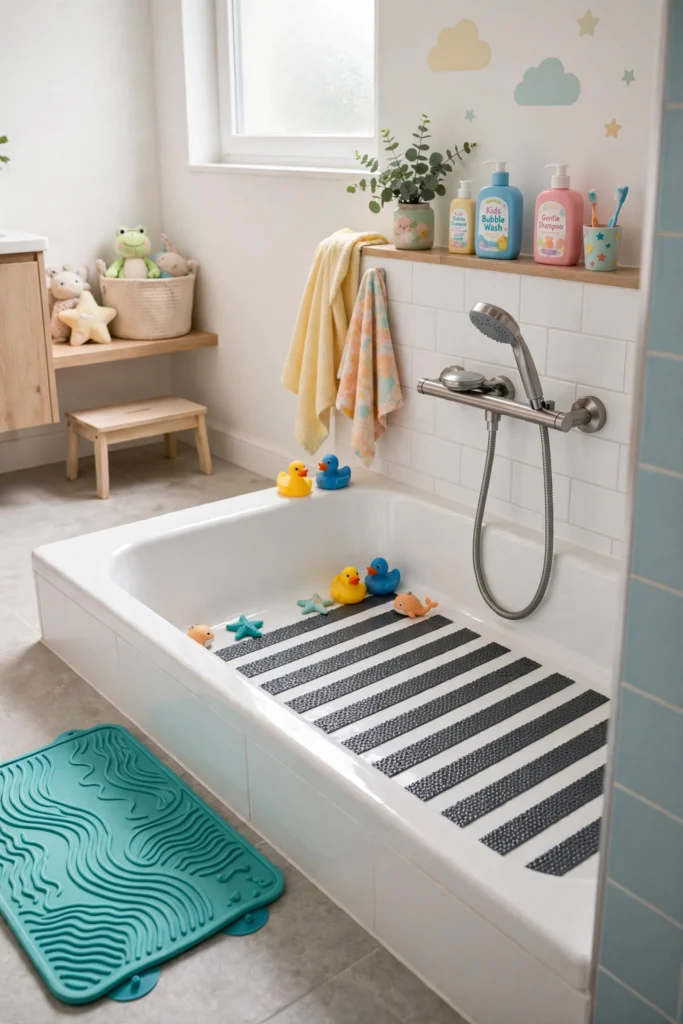
Keep the theme flexible. A shower curtain, towels, and a bath mat in the same two or three colours look intentional without locking you into cartoon characters. When a child outgrows a print, you change three soft items, not the tile or the vanity. That is the difference between a room that ages well and a room that needs a full redo at age eight.
Mirrors deserve a second check at this age. A rounded frame softens the room, and a mirror a child can actually see into without climbing makes the morning routine far smoother. If the main mirror is still too high, a smaller lower mirror bridges the gap until they grow into the main one.
The older child stage: privacy, homework for the bathroom, and room to grow
An older child wants a bathroom that feels less like a nursery and more like their own space, but they still need the same safety base. The shift now is toward privacy, better storage for more products, and a style they helped choose. Let them pick the towels, the shower curtain, and the wall art, and keep the fixed parts neutral so their choices can change again in a year or two without a fight.
Sink access without the stool
Most older children can reach a standard vanity without a step, so this is the moment to retire the stool or move it to a younger sibling. Check the mirror height again and raise the secondary mirror or remove it if it is no longer needed. A taller child also benefits from a handheld shower head set higher on its rail, and from a towel rail or hook at full adult height alongside the lower child hook, so the room works for guests as well.
A washable shower curtain still earns its place for an older child, because it gives privacy, carries the colour scheme, and can be changed in minutes when tastes change. A weighted hem keeps water inside the tub, which keeps the floor dry for the next person.
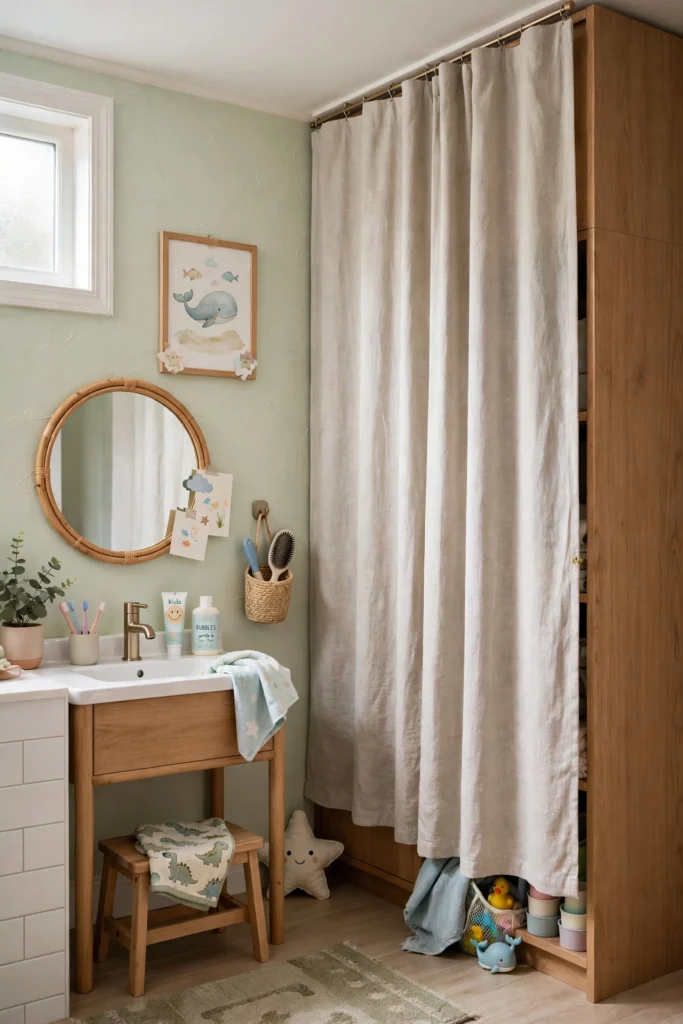
Storage needs grow with the child. Hair tools, skincare, sports kit, and school supplies start to creep into the bathroom, so a tall cabinet earns its place now. Floor to ceiling storage works well in a small bathroom because it uses wall height that would otherwise go to waste. Keep everyday items in the middle shelves, spare towels higher up, and anything adult only locked away as before. A curtain or fabric panel across open tall shelving hides clutter fast when guests visit.
Locked storage still matters when a child is older, even though they understand more. Medicines and cleaners stay in a locked high cabinet, while everyday items live in open low baskets. That split lets an older child be independent with safe items and never have to guess about the rest.
Flexible storage for a busy routine
A rolling cart still earns its keep at this age, especially in a bathroom shared with adults. Load it with folded washcloths, spare toilet paper, and bath products, then roll it out of the walkway when it is not needed. A coat of paint in an accent colour turns a plain cart into a design feature rather than an obvious storage fix. If space is tight, borrow the small space thinking from other rooms: the basket and bin system in these smart storage solutions for a small laundry room translates well to a bathroom, because both rooms need small, labeled, washable containers that survive damp air.
Stripes are a useful pattern for an older child, because they feel smart rather than babyish. A striped towel set or shower curtain, in the same colours as the rest of the room, updates the space without touching tile or fixtures.
Calm evenings and a style they chose
Evening baths get calmer when the light gets softer. A dimmable main light, a warm night light, and a simple wind down routine help an older child shift from play to bedtime. Keep the room tidy at night: toys in their basket, towels on hooks, and the floor dry. A five minute tidy before bed is easier than a full clean up on a busy morning, and it keeps the slip risk down overnight when someone pads in half asleep.
For style, let the older child lead on the swap layer and keep your veto for the fixed layer. A new shower curtain, a framed print, and a set of towels in their chosen colour can transform the room for very little money. Hooks by the door deserve the same care as hooks in the bathroom: the welcoming, labeled hook idea in these mudroom wall decor ideas for a welcoming entryway works just as well for school bags and robes as it does for coats, and it stops clutter piling up outside the bathroom door.
A rolling cart also helps with the evening tidy. Bath products and spare towels go back on the cart, the cart rolls out of the walkway, and the floor stays clear for anyone who comes in during the night.
Safety and size checklist
Use this table as a quick check before you buy anything new. If an item fails a row, fix that row first, even if the item looks perfect otherwise.
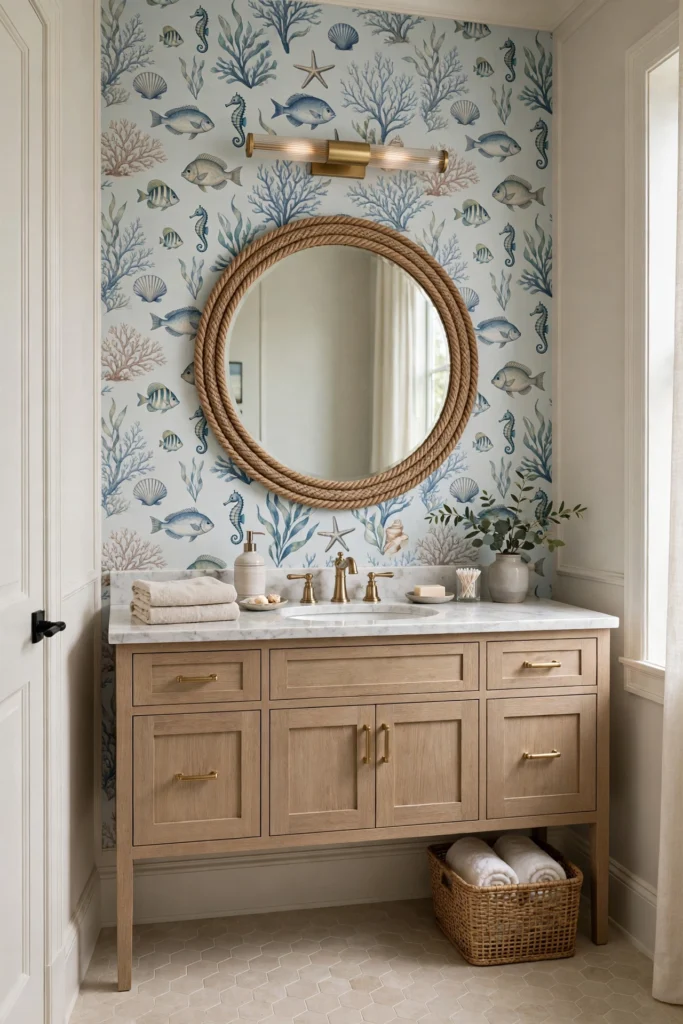
One accent wall can carry a whole theme, whether it is nautical, floral, or simply a bold colour. Keep the surrounding trim and vanity neutral, so the wall can change later without a full renovation.
| Check | Practical guide | What to avoid |
|---|---|---|
| Step stool | Wide base, rubber feet, textured top, height matched to your vanity | A wobbly stool, a stool in the walkway, a stool used with wet feet |
| Floor and tub grip | Matte or textured tile, fitted tub mat, rubber backed mat outside the tub | High gloss tile with no mat, a curling mat, loose rugs with no backing |
| Water temperature | Test on wrist or elbow, comfortably warm, check again after filling | Hot water straight from the tap, filling without stirring and testing |
| Locked storage | Locked cabinet above reach for medicines, cleaners, razors, small batteries | Any hazardous item in a low open cupboard or an unlocked drawer |
| Child storage | Open low baskets, labeled by picture or name, light enough to lift | Heavy lidded boxes at child height, glass containers in reach |
| Hooks | One per child, rounded ends, firm fixing, reachable without a stool | Hooks too high to reach, hooks that pull out under a wet towel |
| Mirror | Main mirror plus a lower secondary mirror for younger children | A single high mirror a child must climb to see into |
| Electrics and light | Covered outlets, plug in items stored away from water, dimmable light plus night light | Trailing cords, plug in devices near splashes, a single harsh light |
Drawer pulls are a small change with a daily payoff. A chunky pull that a wet hand can grip makes drawers usable for a child, and swapping pulls is one of the cheapest ways to refresh a vanity.
Kid bathroom questions parents actually ask
What is the most important safety feature in a kid bathroom?
Grip underfoot and locked storage, together. A non slip floor and tub surface reduces everyday slips, and a locked high cabinet keeps medicines and cleaners out of reach. One without the other leaves a clear gap, so sort both before you spend on decor.
How tall should a step stool be for a child?
It depends on your vanity height and your child. As a practical guide, a single step of about 5 to 8 inches often helps a toddler reach a standard basin, while a two step stool with a top platform around 12 to 15 inches suits a taller toddler at a standard counter. Measure the vanity, check that the child can reach the tap without leaning far forward, and recheck the fit as they grow.
How do I design a kid bathroom that will not need redoing as they grow?
Keep the fixed parts neutral and put personality in the swap layer. Pale tile, a simple vanity, and plain fixtures last for years. Towels, shower curtains, wall decals, hooks, and drawer pulls carry the theme, and all of them can change in an afternoon when tastes move on.
Is wallpaper safe to use in a kid bathroom?
Yes, if you choose vinyl or moisture resistant wallpaper rated for bathrooms, ideally on a single accent wall. Standard paper wallpaper bubbles and peels in steam and splashes. Keep it away from direct shower spray, and seal the edges well so damp air cannot get behind it.
How can I make a small kid bathroom feel bigger?
Use light colours, vertical storage, and a large mirror to draw the eye up and around the room. Keep the floor as clear as you can, use one or two accent colours instead of five, and choose a shower curtain that can be pushed fully to one side so the room does not feel cut in half.
What storage works best when kids share one bathroom?
Give each child their own cup, hook, basket, and patch of counter, and label them. A double sink helps if it fits, but labeled personal spots matter more than a second basin. When every item has one owner and one home, morning arguments drop fast.
Tall storage solves the overflow problem in a small bathroom. Towels and spare supplies live in one tall cabinet, everyday items sit at middle height, and the counter stays clear. Just keep anything adult only locked away, not simply placed on a high shelf a determined child could reach with a stool.
Your weekend checklist
You do not need a renovation to make a kid bathroom safer and nicer to use. Start with this weekend list, in this order, and stop when the room feels calm to use.
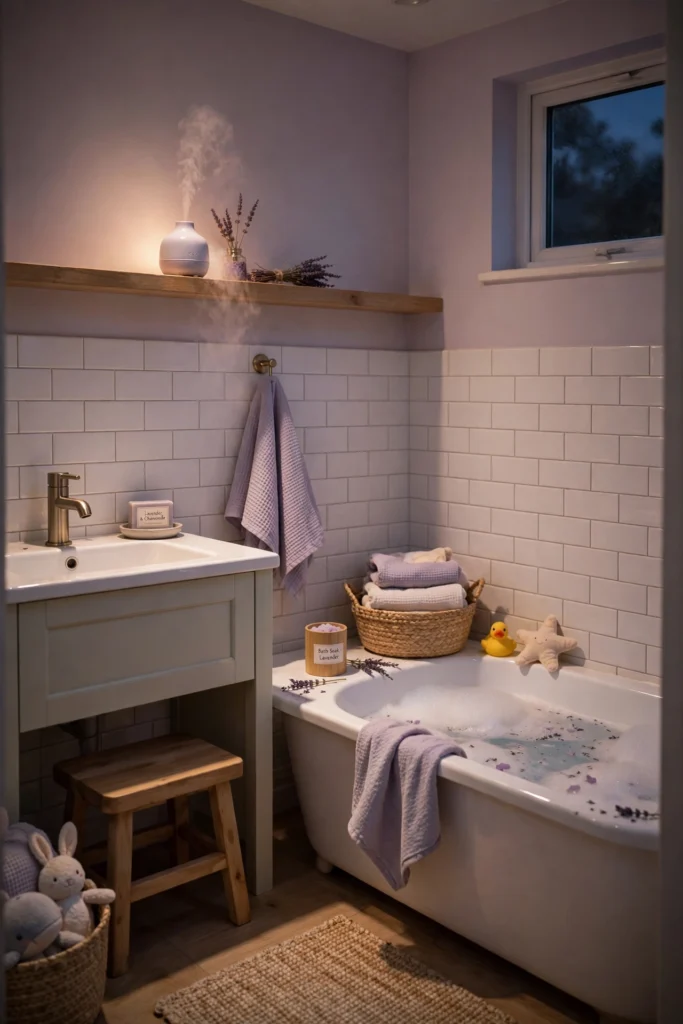
Soft evening light makes the last bathroom visit of the day calmer. A dimmable main light and a small warm night light help a child settle, and they also make it easier to spot a wet patch on the floor before anyone slips on it.
- Test the floor with wet feet and add a fitted tub mat and a rubber backed mat outside the tub if you need them.
- Move medicines, cleaners, razors, and small batteries into a locked cabinet above reach, and check that the lock still holds.
- Measure your vanity, check the step stool fit, and give the stool a permanent home against the vanity, out of the walkway.
- Put one labeled hook per child at a height they can reach, and move towels, washcloths, and bath toys to open low baskets.
- Check the mirror height, add a lower secondary mirror if a young child cannot see their face, and swap any sharp drawer pulls for chunky, easy to grip ones.
- Change the swap layer last: a washable shower curtain, fresh towels in two accent colours, and a bath mat that matches. That small change makes the whole room feel new.
Personal hooks finish the room. One hook per child, labeled by name or colour and fixed firmly at a reachable height, means towels stop landing on the floor and each child knows exactly where their things belong.
Once those basics are in place, style becomes the fun part rather than a cover for problems. A kid bathroom that is easy to use, easy to clean, and easy to update is a room your child will enjoy growing up in, and a room you will not dread cleaning at the end of the day.