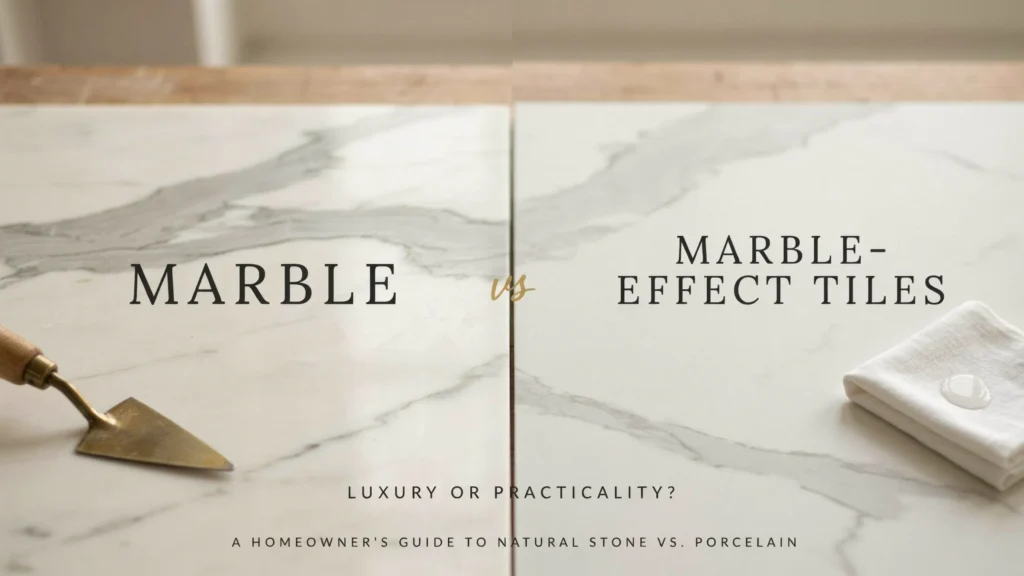
Marble vs Marble Effect Tiles Luxury or Practicality? Natural marble offers unmatched, unique luxury and increases home value, but requires high maintenance, regular sealing, and a larger budget. Porcelain or ceramic marble-effect tiles provide high durability, require zero maintenance, and cost significantly less, making them the superior practical choice for busy households or wet areas like bathrooms.
Homeowners constantly face the challenge of balancing high-end aesthetics with everyday functionality. When renovating a kitchen or upgrading a bathroom, the flooring and wall materials you choose set the tone for the entire space. Few materials capture the essence of luxury quite like marble. The elegant veining and smooth texture have made it a staple in palaces, monuments, and upscale residences for centuries.
However, modern manufacturing has introduced a compelling alternative. Porcelain and ceramic tiles can now mimic the exact look of natural stone without the associated upkeep. This advancement forces a decision between authentic luxury and modern practicality.
This guide breaks down the critical differences between natural marble and marble-effect tiles. You will learn how these materials compare in durability, cost, sustainability, and installation. By understanding the practical realities of both options, you can make an informed decision that aligns with your lifestyle and budget.
What exactly is natural marble, and what makes it unique?
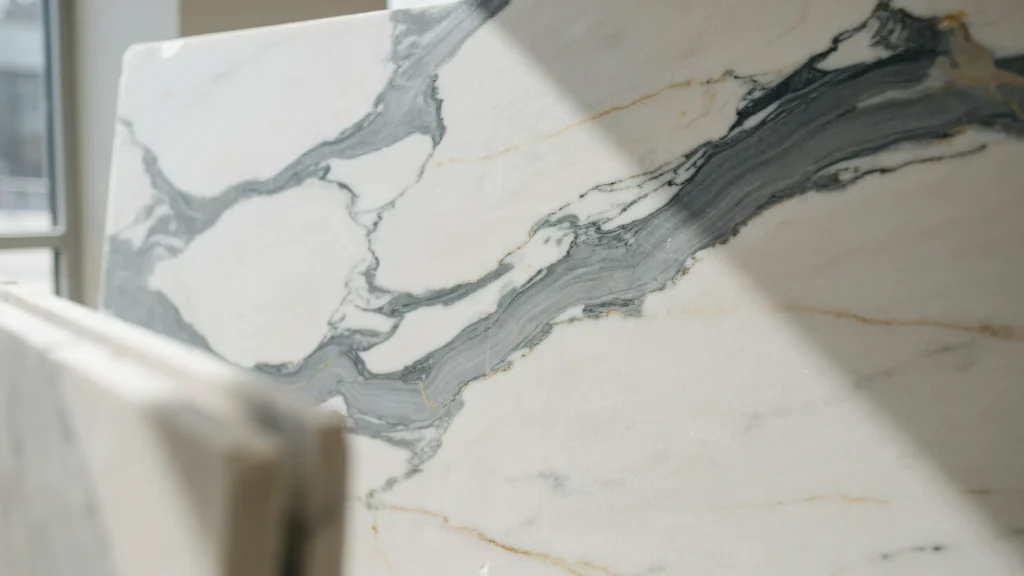
Natural marble is a metamorphic rock formed deep within the earth. It begins as limestone, which undergoes intense heat and pressure over millions of years. This process causes the minerals to recrystallize, resulting in the dense, beautiful stone we use in homes today. The primary mineral in marble is calcite, though impurities like clay, silt, or iron oxide create the distinct colored veins running through the slabs.
Because natural geological processes form marble, no two pieces are ever identical. When you install a natural marble countertop or floor, you possess a unique piece of the earth. The stone also has a slight translucency. Light penetrates the surface slightly before scattering, giving authentic marble a distinct glow that is incredibly difficult to replicate artificially.
How do marble-effect tiles replicate the real thing?
Marble effect tiles are engineered products, typically made from porcelain or ceramic. Manufacturers use high-definition inkjet printing technology to scan genuine marble slabs and print those exact patterns onto the surface of the tiles. Advanced glazing techniques then give the tile a glossy or matte finish that mimics the texture of natural stone.
Porcelain is fired at extremely high temperatures, making the final product incredibly dense and virtually waterproof. High-quality marble effect tiles now feature “through-body” coloring or textured veins that align with the printed pattern. This means if you run your fingers across the tile, you might actually feel the subtle grooves of a vein, closely matching the tactile experience of real stone.

Which material is more durable and easier to maintain?
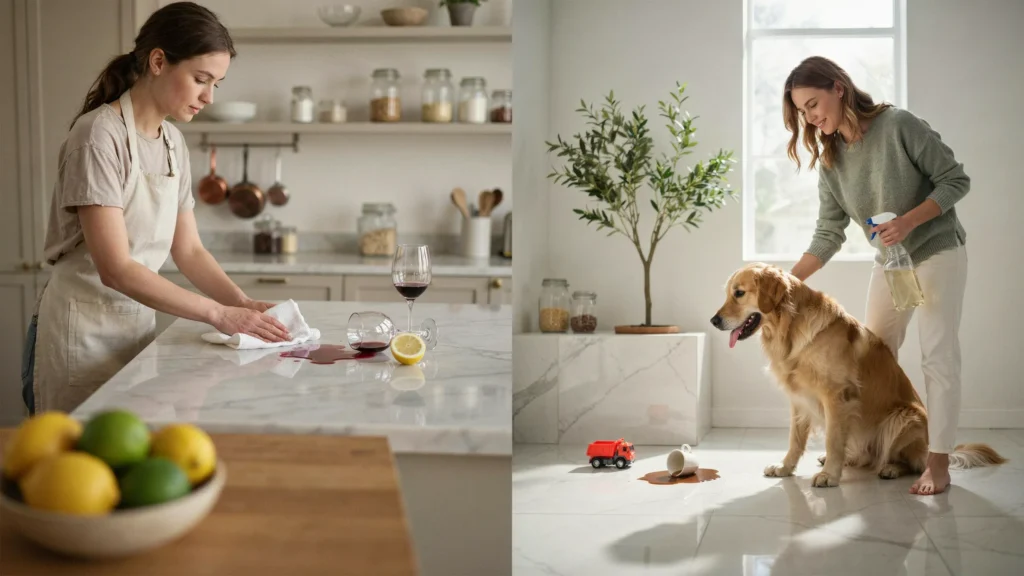
Natural marble is notoriously porous and relatively soft compared to other stones like granite. If you spill red wine or lemon juice on an unsealed marble countertop, the acid will react with the calcium carbonate in the stone. This causes etching a dull mark that permanently alters the finish. To prevent stains and moisture damage, natural marble requires regular sealing every six to twelve months. You must also use pH-neutral cleaners specifically formulated for natural stone.
Porcelain marble effect tiles excel in durability and maintenance. Porcelain is completely non-porous. You can spill wine, coffee, or harsh cleaning chemicals on it without fear of staining or etching. These tiles never require sealing, and you can clean them with standard household floor cleaners. For a busy household with young children or pets, porcelain tiles offer peace of mind that natural marble cannot match.
How do the costs of natural marble and effect tiles compare?
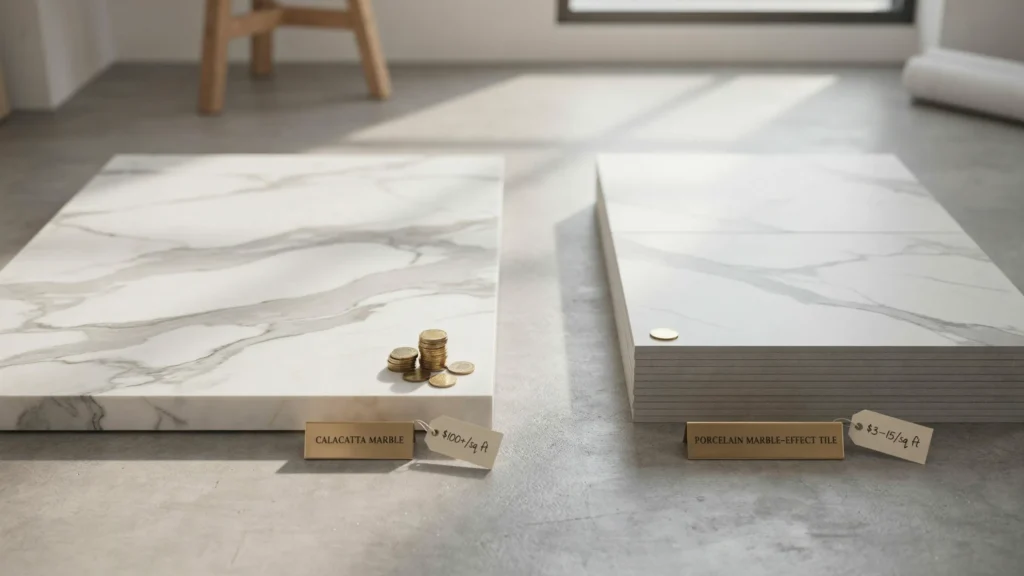
Budget often dictates the final material choice in any renovation. Natural marble is a premium material, and its price reflects the labor-intensive process of quarrying, cutting, transporting, and polishing heavy slabs of stone. Rare varieties, such as Calacatta marble, can cost well over $100 per square foot just for the raw material.
Marble effect tiles provide a massive cost advantage. High-quality porcelain tiles generally range from $3 to $15 per square foot. Because they are lighter and easier to manufacture in bulk, the material cost is a fraction of authentic stone. This price difference allows homeowners to achieve a high-end look in large spaces like an open-concept living area without draining their renovation budget.
What are the environmental impacts of marble versus tiles?
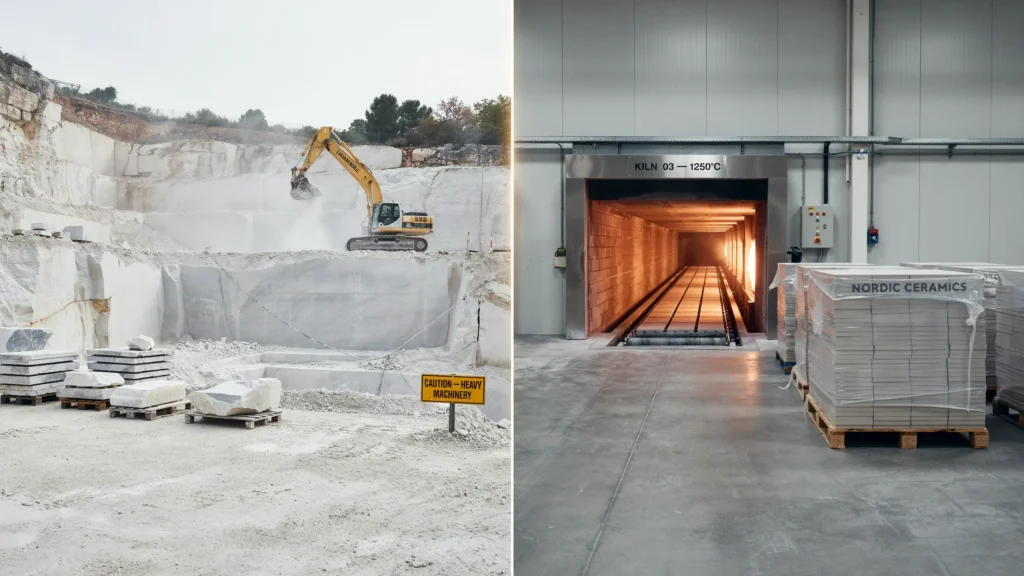
Quarrying natural stone takes a toll on the environment. It requires heavy machinery, significant energy consumption, and permanently alters the landscape where the quarry is located. Additionally, transporting heavy stone slabs across the globe contributes to high carbon emissions. However, marble is a 100% natural material and can last for centuries, meaning it rarely needs replacing.
Porcelain and ceramic tiles require energy-intensive firing processes. The kilns used to bake the clay emit greenhouse gases. Yet, many tile manufacturers now use recycled water and recycled materials in their production lines. Tiles are also lighter, reducing the carbon footprint associated with shipping. When choosing either material, looking for locally sourced stone or tiles from eco-conscious manufacturers helps mitigate environmental impact.
How do design options differ between the two materials?
Natural marble dictates its own design. You are limited to the colors and vein patterns that nature provides. While beautiful, finding perfectly matching slabs for a large project requires “book-matching,” where sequential slabs from the same block are placed next to each other to create a mirror image. This is a stunning but expensive technique.
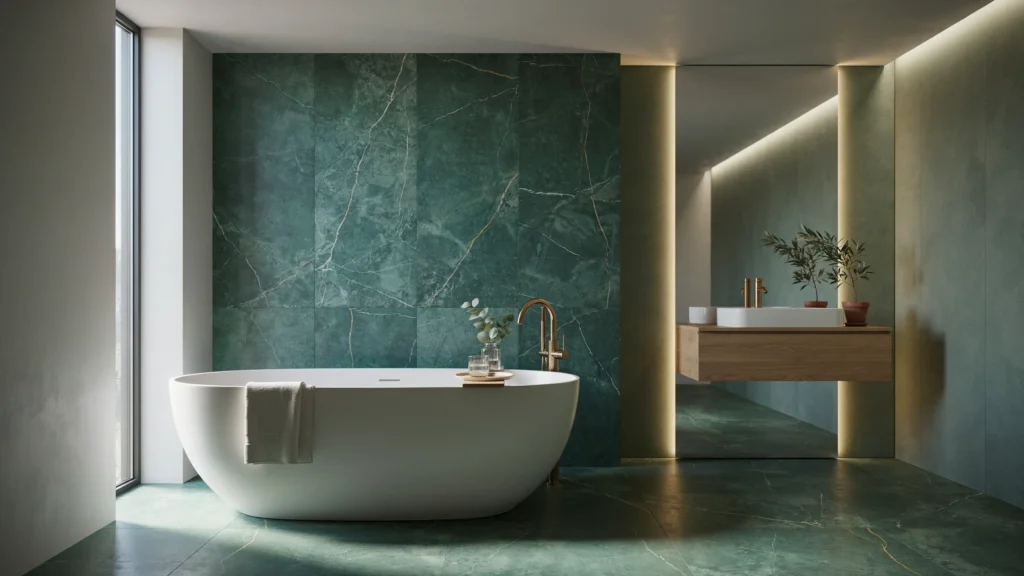
Marble effect tiles offer unlimited design versatility. Manufacturers can print tiles in pure white, deep black, or vibrant emerald green with gold veining. You can purchase large-format tiles that reduce grout lines, creating a seamless look. Because the patterns are controlled, you can easily plan a cohesive design for an entire bathroom without worrying about awkward color variations from tile to tile.
What should you expect during the installation process?
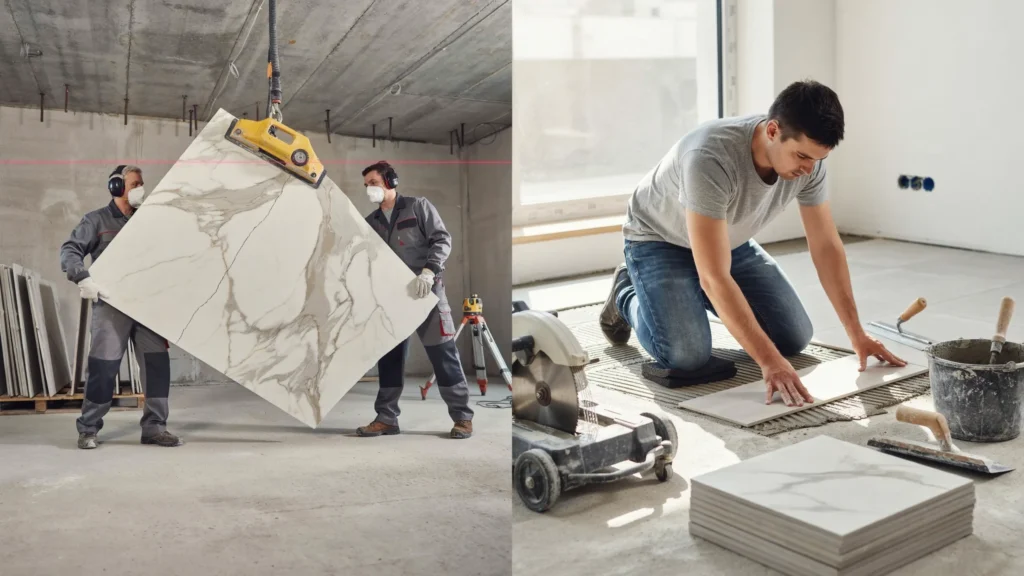
Installing natural marble requires specialized stonemasons. The slabs are incredibly heavy and prone to cracking if mishandled during transport or cutting. The subfloor must be perfectly level and structurally reinforced to handle the immense weight of the stone. Professional installation is mandatory, adding significantly to the overall project cost.
Marble effect tiles are lighter and uniform in thickness, making them much easier to install. An experienced DIY enthusiast can install ceramic or porcelain tiles using standard wet saws, thin-set mortar, and grout. While hiring a professional tile setter is still recommended for large-format tiles to ensure completely flat surfaces, the labor costs are substantially lower than hiring a specialized stonemason.
Where are the best places to use each material in a home?
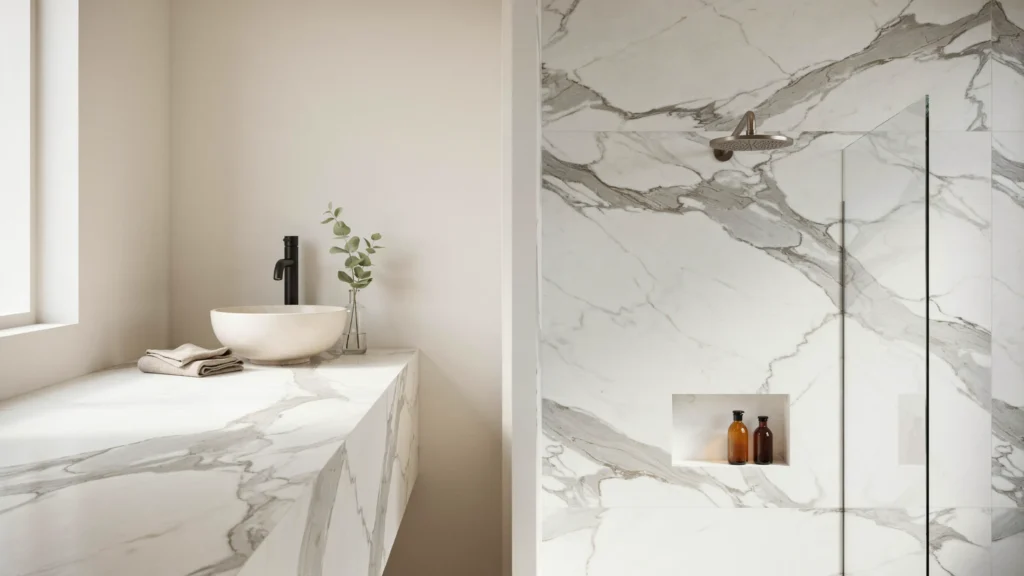
Natural marble shines in low-traffic areas where its beauty can be admired without heavy wear and tear. It serves wonderfully as a fireplace surround, a decorative accent wall, or a main bathroom vanity. Baking enthusiasts also favor marble countertops because the stone naturally stays cool, making it ideal for rolling out pastry dough.
Marble effect tiles belong in high-traffic and high-moisture environments. They are the perfect choice for kitchen floors, mudrooms, family bathrooms, and entryways. Because porcelain is highly water-resistant, it is also the superior choice for shower floors and walls. You get the opulent look of a Roman bathhouse without the risk of water damage or mold growth inside the stone’s pores.
How Can You Tell If Marble Is Really Real?
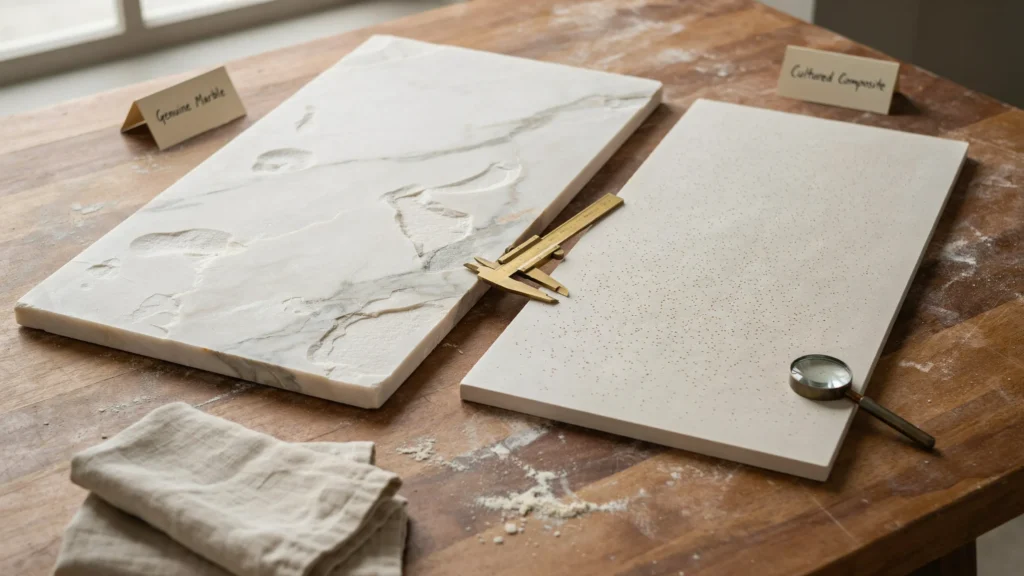
With so many convincing lookalikes on the market, it helps to know how to spot genuine marble before you buy. One reliable method is checking the underside of a tile: real marble will show natural, irregular dents from the stone’s formation process, while cultured or fake marble often reveals tiny holes where air pockets escaped during the mixing of resin and stone powder. Genuine marble also has a subtle depth and translucency that catches light in a way flat, printed surfaces simply can’t replicate. If a slab looks uniformly flat with no variation in tone or texture up close, it’s worth asking the retailer directly whether you’re looking at natural stone or a cultured composite.
How Does Marble Compare to Wood, Slate, and Other Natural Materials?
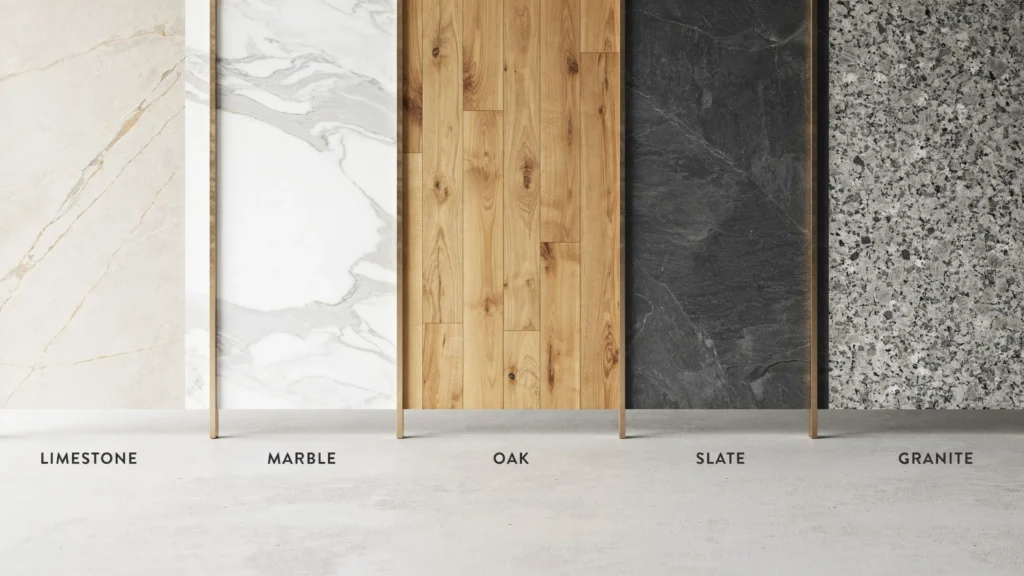
Marble isn’t just competing with porcelain tiles it’s also weighed against wood flooring and other natural stones like slate, limestone, and granite. Wood flooring brings a warmer, more organic feel that suits living rooms and bedrooms, but it’s vulnerable to moisture damage and isn’t recommended for bathrooms, an area where marble or tile handles water far better. Slate offers a rustic, textured look that contrasts with marble’s polished elegance, while limestone shares marble’s softness and sensitivity to staining but with a more muted, subdued appearance. Granite, by comparison, is considerably harder and more scratch-resistant than marble, making it a common choice for kitchen countertops where durability matters more than the softer veining marble offers.
What’s the Difference Between Porcelain and Vitrified Tiles?
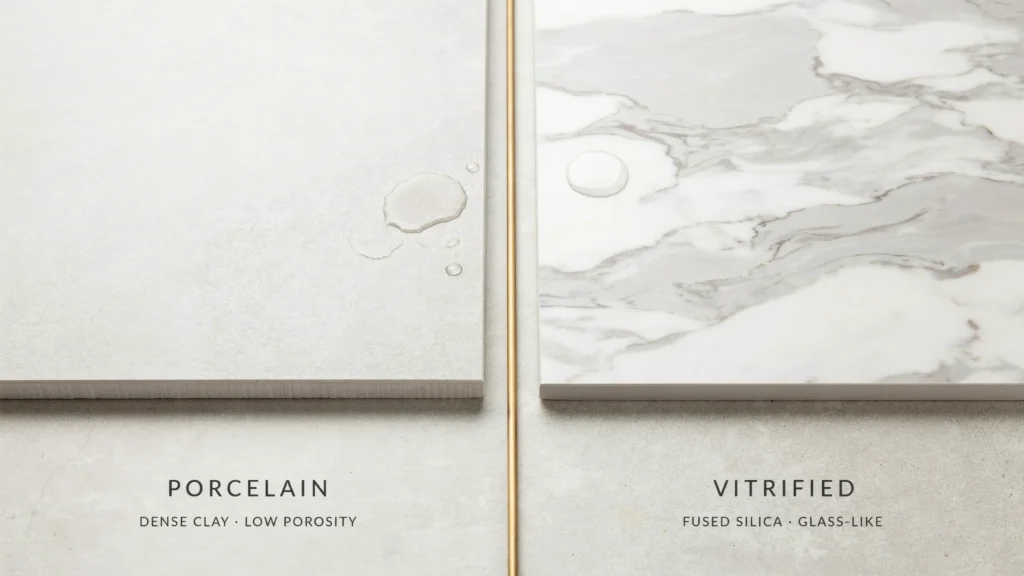
Not all marble-effect tiles are made the same way, and the terms porcelain and vitrified aren’t interchangeable. Porcelain tiles are made from refined clay fired at high temperatures, resulting in a dense, low-porosity surface that resists water and stains well. Vitrified tiles take this a step further by fusing silica and clay into an even harder, glass-like surface with an extremely low water absorption rate, often making them the more durable option for high-moisture areas like laundry rooms or outdoor patios. If you’re comparing options for a particularly wet or high-traffic space, ask specifically whether a tile is vitrified rather than simply porcelain, since the difference can affect long-term performance.
Which Rooms Suit Marble, and Which Suit Tiles?
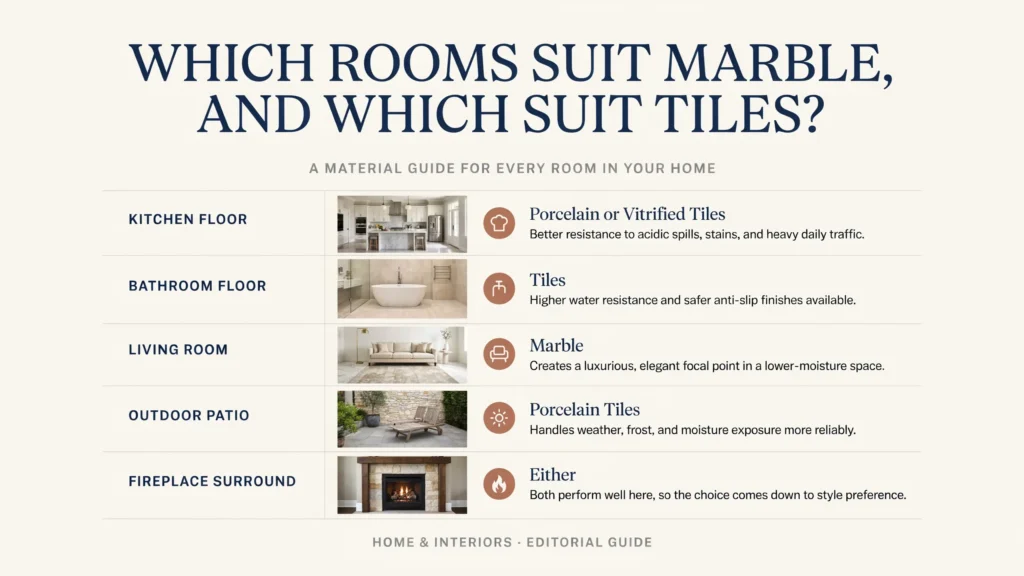
| Room or Area | Better Choice | Reason |
|---|---|---|
| Kitchen Floor | Porcelain or Vitrified Tiles | Better resistance to acidic spills, stains, and heavy daily traffic |
| Bathroom Floor | Tiles | Higher water resistance and safer anti-slip finishes available |
| Living Room | Marble | Creates a luxurious, elegant focal point in a lower-moisture space |
| Outdoor Patio | Porcelain Tiles | Handles weather, frost, and moisture exposure more reliably |
| Fireplace Surround | Either | Both perform well here, so the choice comes down to style preference |
How do you choose the right material for your specific project?
Selecting the right material requires evaluating your household dynamics, budget, and long-term goals. Choose natural marble if authenticity and resale value are your top priorities. Buyers in the luxury real estate market often expect genuine stone, and the patina marble develops over time adds historic character to a home.
Choose porcelain marble effect tiles if you prioritize low maintenance and durability. If you have pets that scratch floors, children who spill drinks, or a tight renovation budget, tiles will serve you far better. You will spend your weekends enjoying your home rather than sealing and polishing stone surfaces.

Final thoughts on balancing luxury, practicality, and preference
The debate between natural marble and marble-effect tiles does not have a single correct answer. It depends entirely on what you value most in your living space. Natural stone provides an undeniable, authentic connection to nature that synthetic materials cannot fully replicate. It commands attention and ages alongside your home.
Conversely, marble-effect tiles represent a triumph of modern engineering. They democratize luxury, allowing homeowners to achieve breathtaking interiors without the stress of constant upkeep. Evaluate your lifestyle honestly, consult your budget, and choose the material that will bring you the most joy and the least frustration over the life of your home.

Frequently Asked Questions about Marble and Effect Tiles
Do marble-effect tiles look fake?
High-quality porcelain marble-effect tiles look incredibly realistic. Modern inkjet technology prints high-definition images of real stone onto the tile. Unless you are a stone expert examining the surface up close, it is very difficult to tell the difference visually.
Can I use natural marble in a shower?
You can use natural marble in a shower, but it requires strict maintenance. You must seal the stone frequently to prevent water from penetrating the pores. If not maintained, the iron deposits in the marble can rust, turning the white stone yellow.
Does natural marble increase home value?
Yes. Natural marble is considered a premium, high-end building material. Installing authentic stone countertops or flooring often increases the resale value of a home, particularly in luxury real estate markets.
Are porcelain tiles slippery when wet?
Polished porcelain tiles can be very slippery when wet. If you are installing marble-effect tiles in a bathroom or entryway, look for tiles with a matte or textured finish, which provides better slip resistance.
How often do I need to seal natural marble?
Most stone professionals recommend sealing natural marble every six to twelve months, depending on how heavily the area is used. Kitchen countertops generally require more frequent sealing than decorative wall panels.