A beautiful bathroom does not depend on having a huge floor plan. A narrow ensuite can feel polished with the right vanity, mirror, lighting and tile layout, while a generous primary bathroom can become a true retreat with a freestanding tub, spacious shower and carefully chosen materials. The best bathroom designs balance everyday function with a strong visual idea.
Whether you are planning a complete renovation or simply collecting inspiration, these 22 Dream Bathroom Designs for Small and Large Spaces cover both compact and spacious rooms. You will find warm wood, dramatic marble, colorful tiles, smart storage, elegant lighting, classic details and modern layouts that can work in very different homes.
1. Soft Neutral Bathroom With Warm Wood
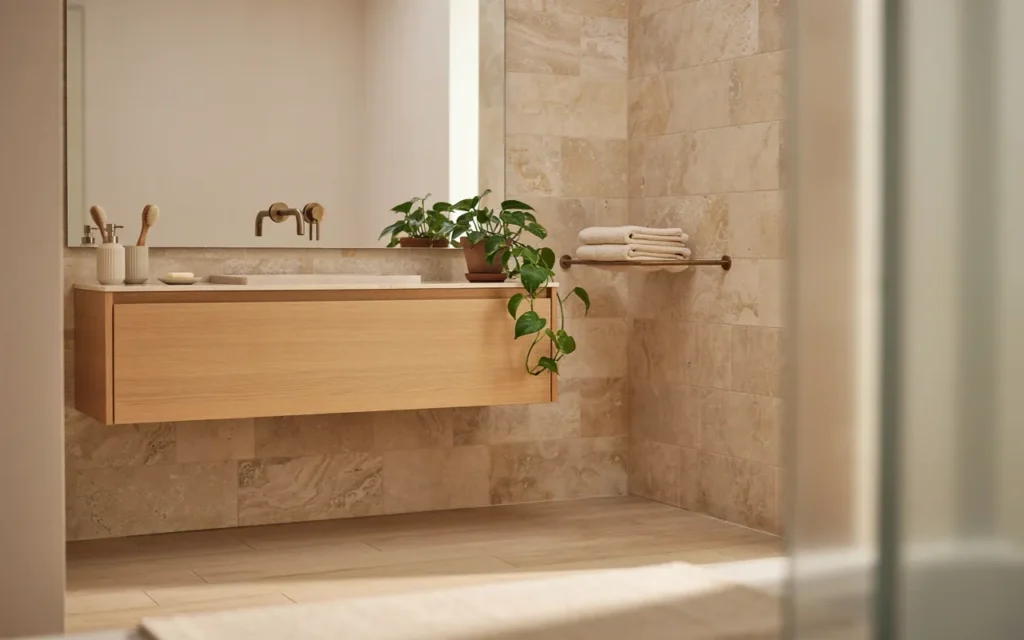
Soft beige, creamy stone and pale oak create a bathroom that feels calm without looking plain. A floating wood vanity keeps the floor visually open, while a large mirror reflects light across the room. Add textured towels, a simple ceramic vessel and warm lighting to give the neutral palette more depth. This approach works particularly well in small bathrooms because there are no heavy contrasts competing for attention.
2. Compact Bathroom With A Walk-In Glass Shower
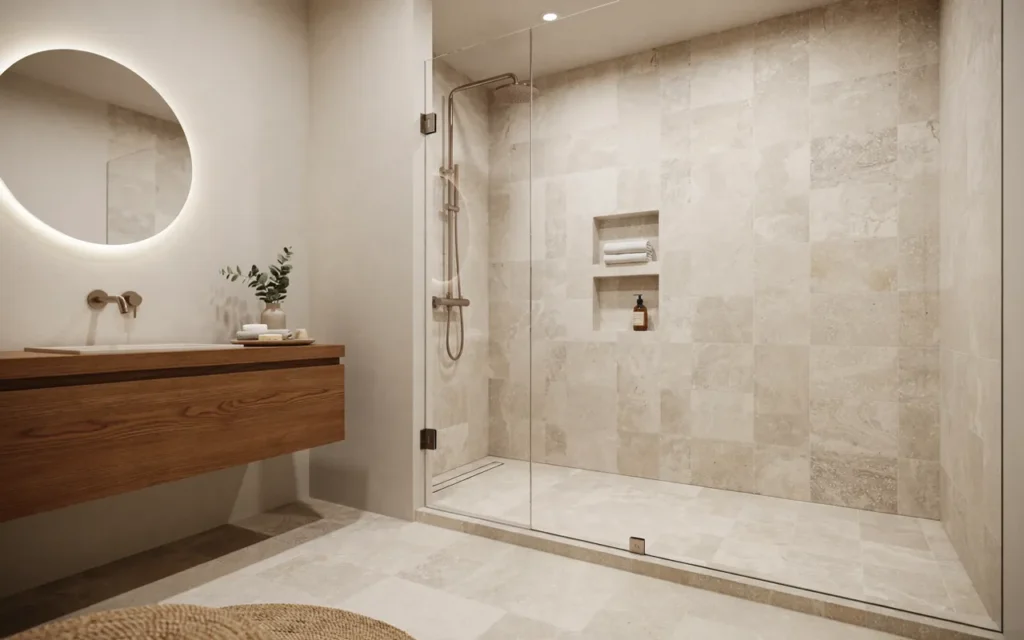
A frameless glass shower can make a compact bathroom feel considerably more open because the eye can travel through the entire room. Pair it with large-format tiles and a wall-mounted vanity for a clean, uninterrupted layout. A recessed shower niche provides a practical place for toiletries without adding shelves that project into the room.
3. Dramatic Black Marble Bathroom
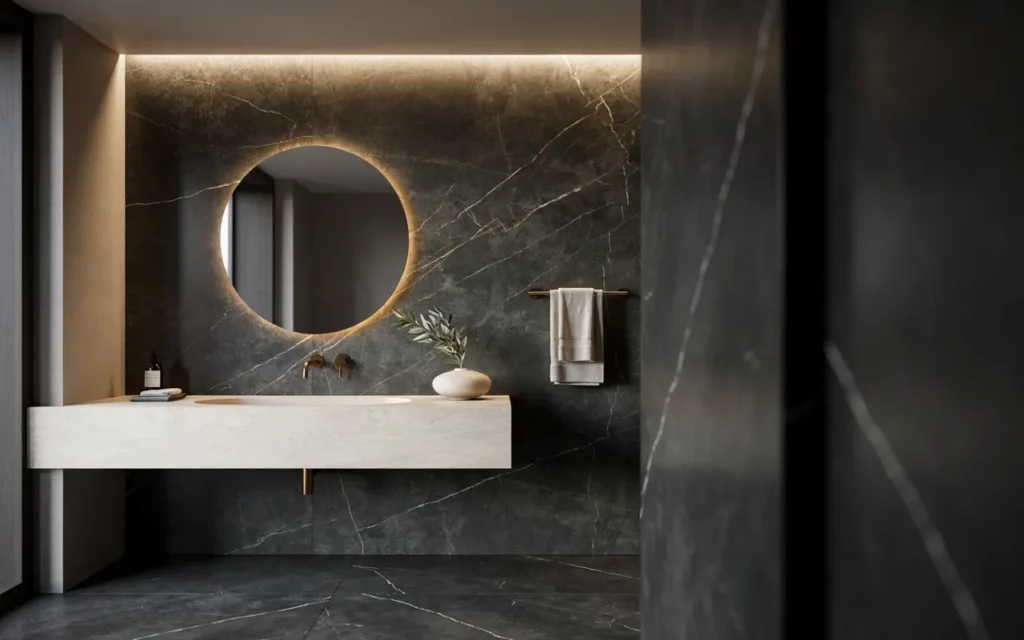
Dark marble brings instant drama to a bathroom, especially when its natural veining becomes the main decorative feature. Instead of covering every surface with accessories, let the stone carry the design. Warm brass fixtures and concealed lighting soften the darker palette, while a light vanity keeps the room from becoming visually heavy.
4. Small Bathroom With A Statement Mirror
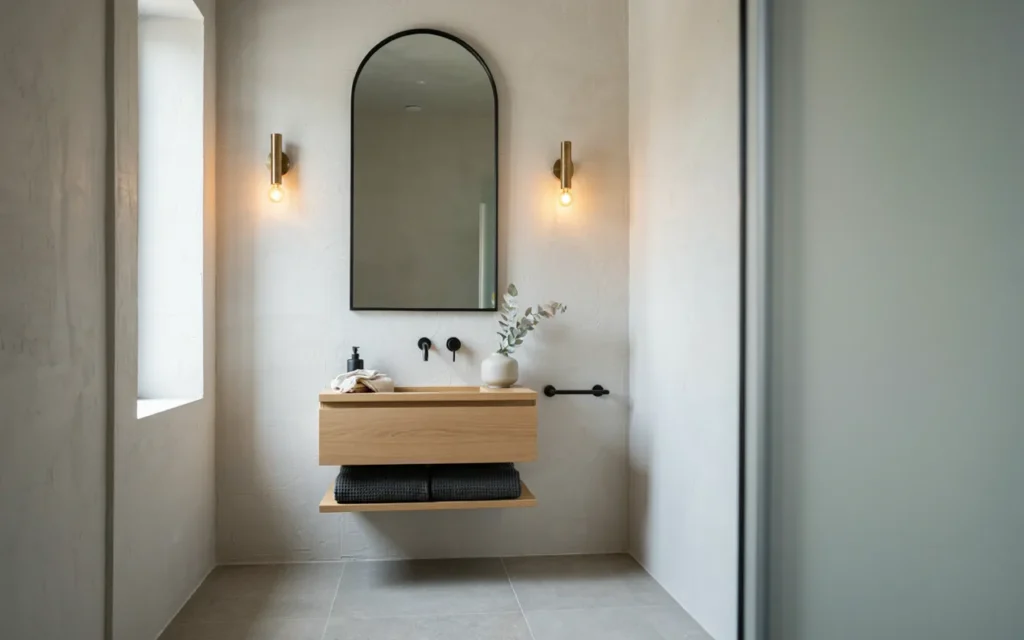
A mirror can do much more than provide a place to get ready. In a small bathroom, an oversized or unusually shaped mirror becomes a focal point while helping the room feel brighter and deeper. Try a rounded, arched or softly organic shape against straight tile lines. The contrast makes the space feel designed rather than simply fitted out.
5. Earthy Stone And Wood Retreat
Natural materials give a bathroom a relaxed character that works in both small and large spaces. Combine stone-effect walls with walnut or oak cabinetry, then introduce woven baskets and simple greenery. The result feels warmer than an all-white bathroom while remaining sophisticated enough for a modern home.
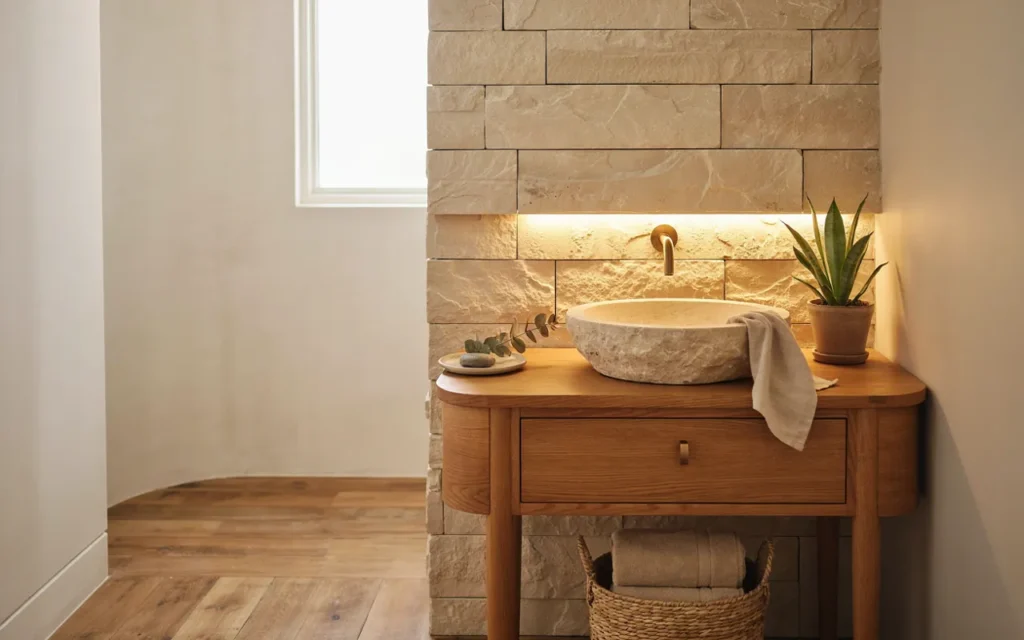
6. Elegant Grey And White Bathroom
Grey and white remain a reliable combination when you want a bathroom that feels fresh but not overly stark. Use a warmer grey rather than a blue-toned shade if the room receives limited daylight. Textured tiles, pale wood and warm metal details can prevent the palette from becoming flat.
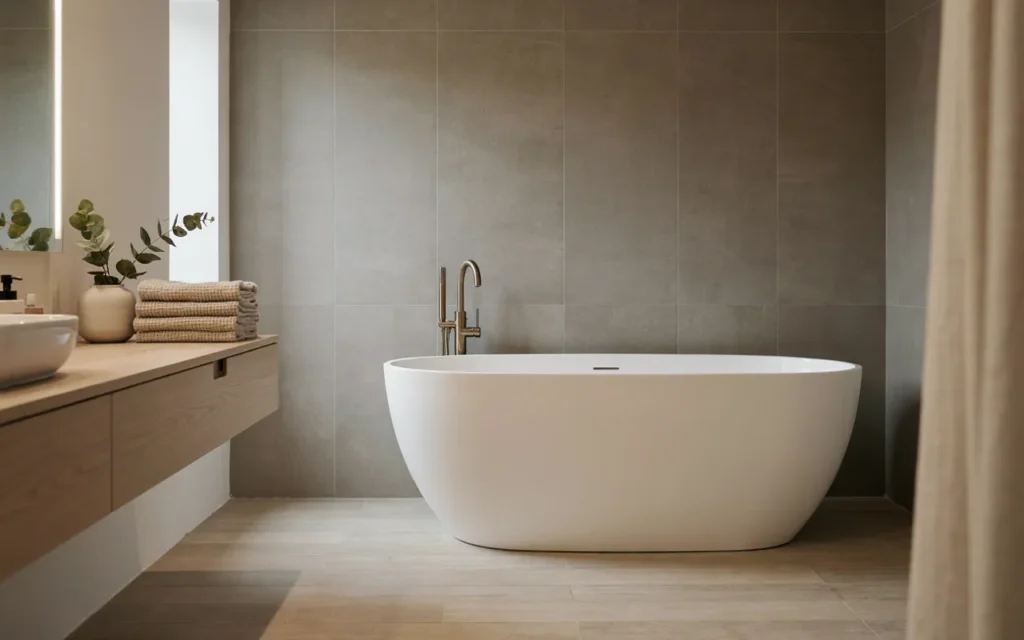
7. Freestanding Tub As The Main Feature
In a larger bathroom, a freestanding tub deserves enough breathing room to become the visual centerpiece. Position it near a window, beneath a feature wall or opposite the vanity so the shape can be appreciated from the entrance. A simple sculptural tub works particularly well when the surrounding finishes remain restrained.
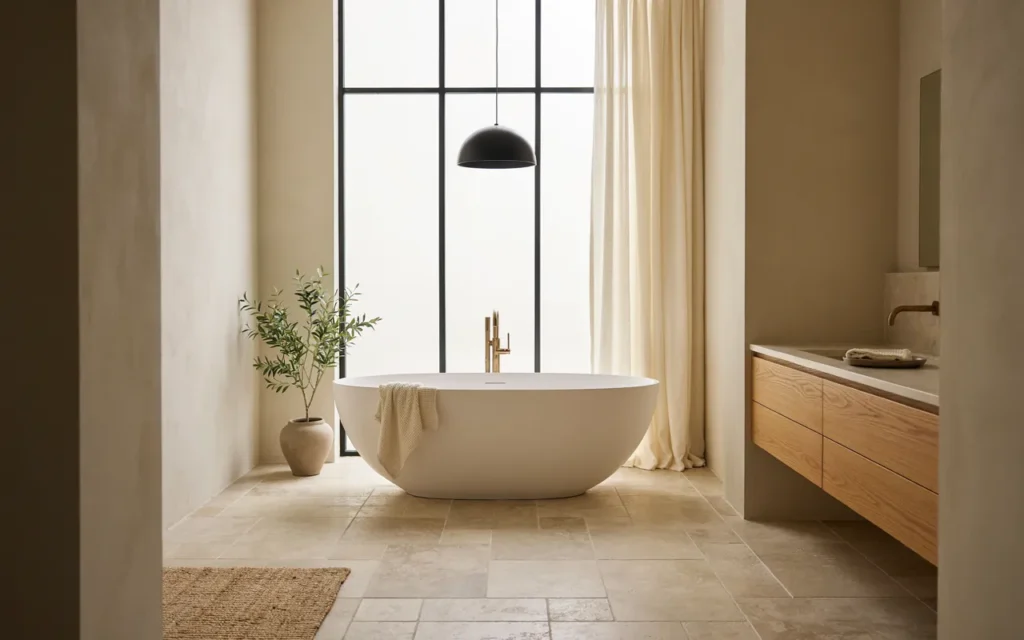
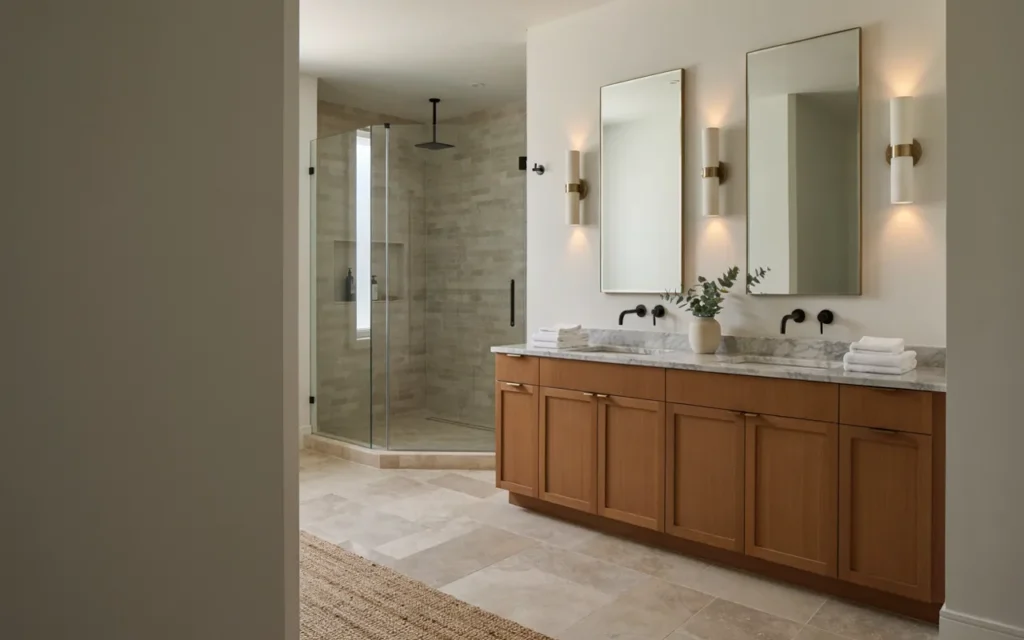
8. Double Vanity For A Spacious Primary Bathroom
A double vanity is useful when two people share the bathroom, but it should also look intentional. Matching basins, generous drawers and individual mirrors create visual order. Add wall sconces between or beside the mirrors and keep the countertop relatively clear so the larger installation does not become cluttered.
9. Bold Blue Tile Bathroom
Color can completely change the personality of a bathroom. Deep blue or teal tiles create a rich backdrop without requiring numerous decorative objects. Use a lighter vanity and simple fixtures to balance the stronger walls. Glossy tile can also catch natural or artificial light, adding movement to a compact room.
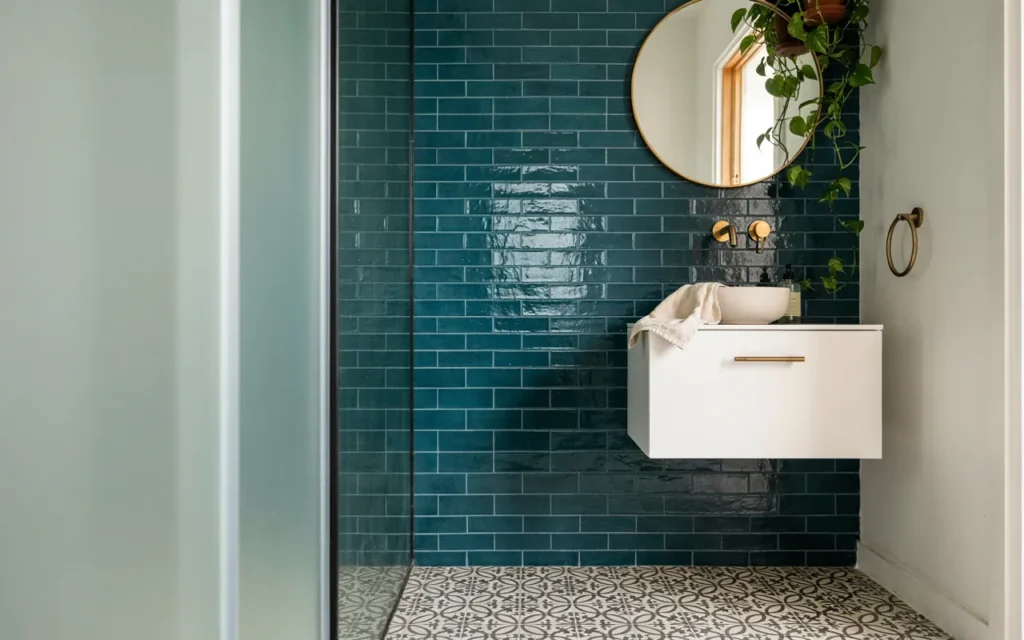
10. Warm Scandinavian-Inspired Bathroom
For a quieter look, combine pale timber, creamy walls and simple black or brushed-metal fixtures. Keep the cabinetry streamlined and introduce lighting underneath the vanity or around shelving. The clean geometry provides a modern foundation, while the wood prevents the room from feeling cold.
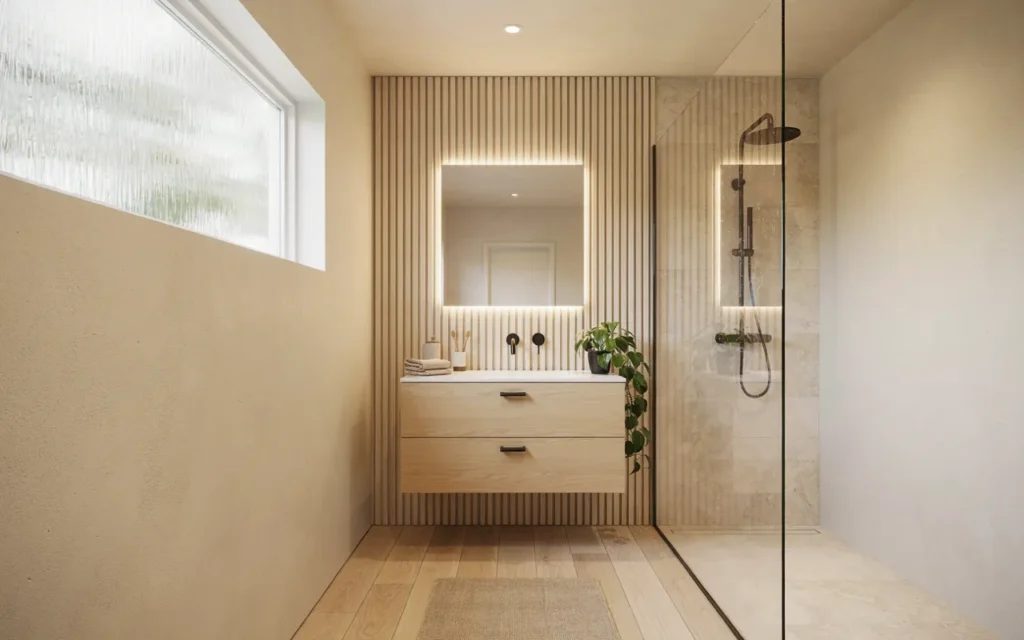
11. Vintage Bathroom With Modern Comfort
A bathroom does not have to look brand new to feel luxurious. Patterned floor tiles, an antique-style mirror and traditional fittings can create an established character. Keep the plumbing and modern conveniences practical while using vintage-inspired finishes for personality. This approach works beautifully in older homes where contemporary materials can otherwise feel disconnected.
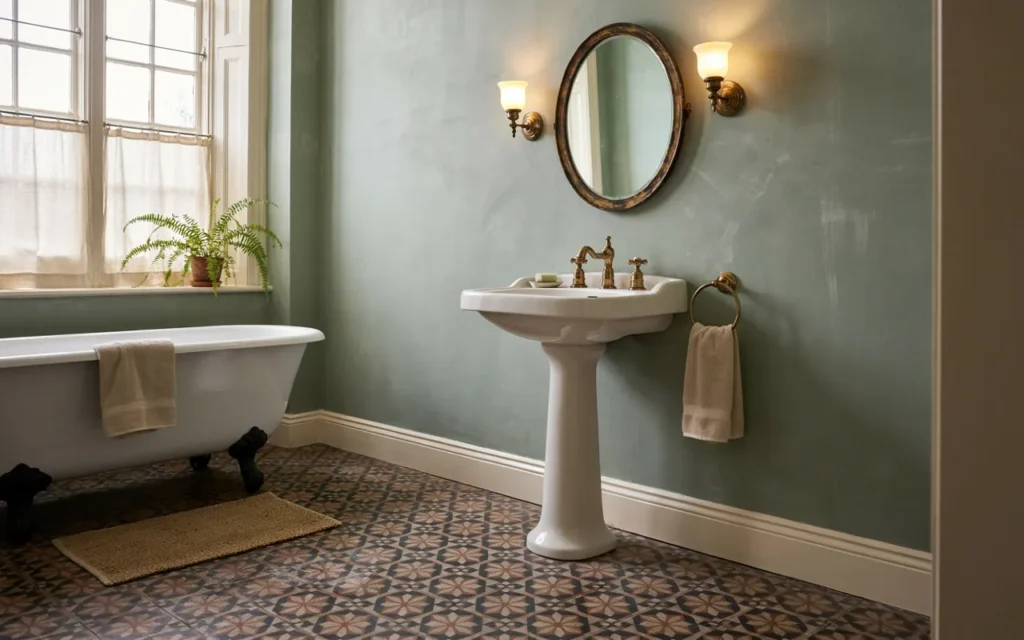
12. Minimalist Stone Bathroom
If you prefer a calm, uncluttered room, let one stone finish dominate the design. Large-format stone tiles reduce visual interruptions, while a floating vanity keeps the floor clear. Choose only a few accessories, such as folded towels, a ceramic tray and one small plant. The restraint allows the material itself to become the decoration.
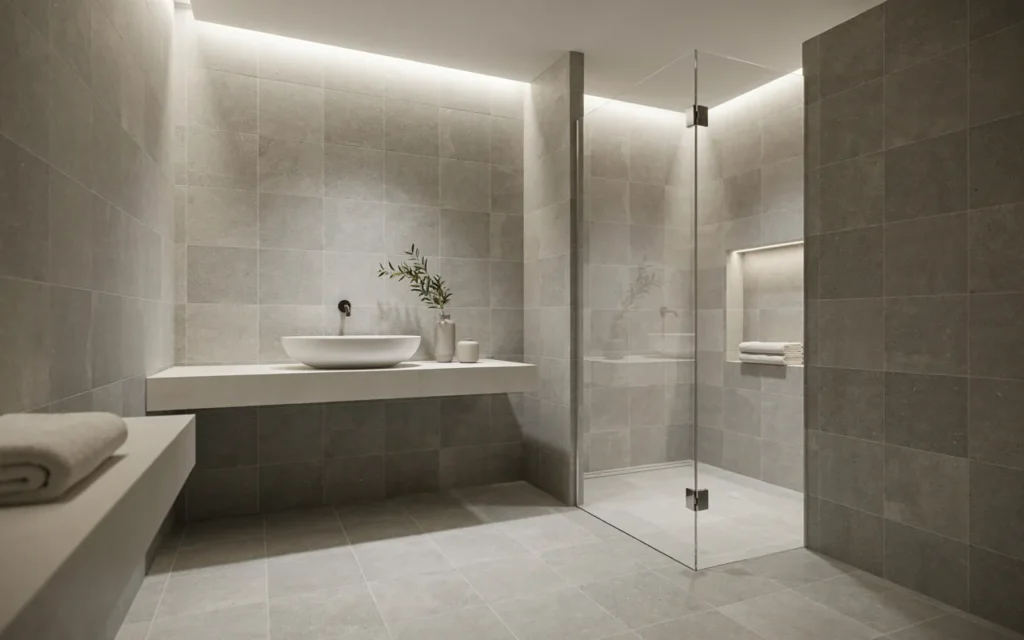
13. Small Bathroom With Open Shelving
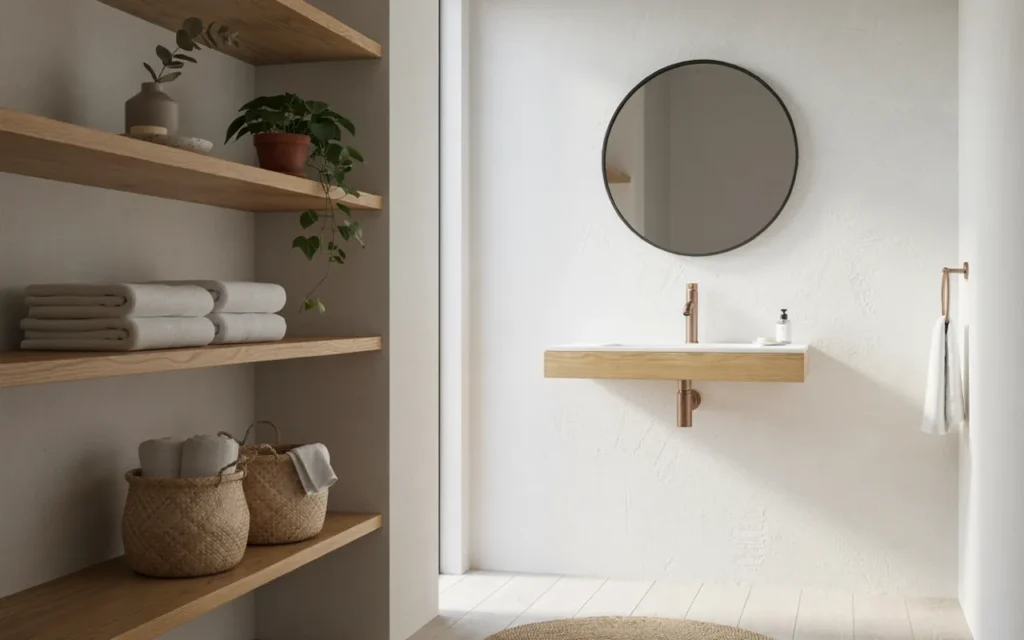
Open shelving can turn necessary storage into part of the room’s styling. Use two or three wooden shelves for neatly folded towels, baskets and a few decorative objects. Keep everyday products contained so the shelves do not become visually chaotic. This is especially effective when floor space is limited and every storage element needs to work harder.
14. Luxurious Marble And Brass Combination
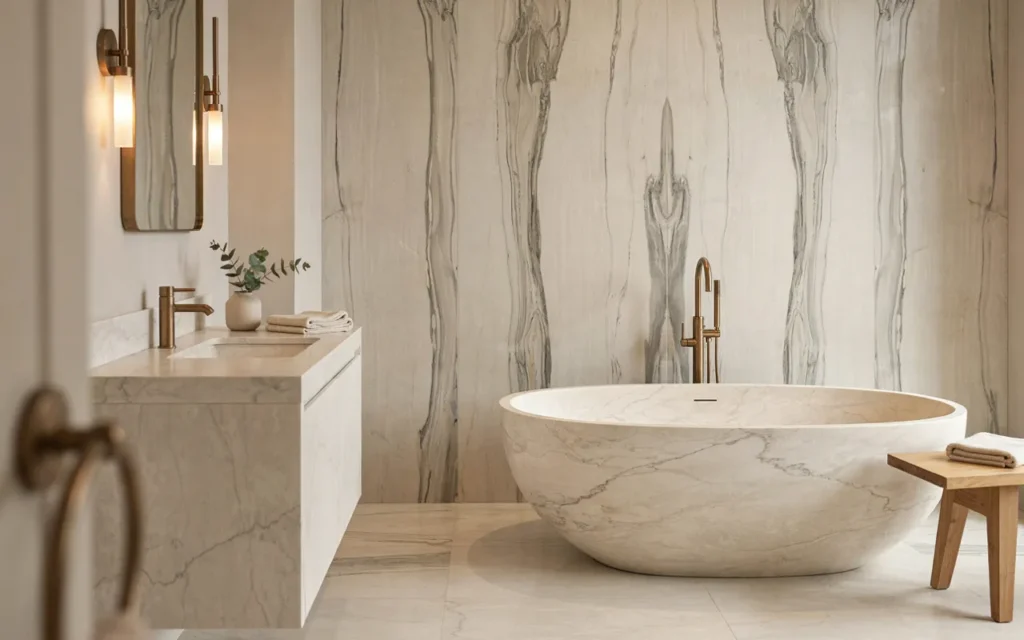
Marble and brass create a classic luxury pairing, but the proportions matter. Let the marble provide the visual richness and use brass selectively on taps, handles, sconces and mirror frames. A creamy marble with subtle veining can make the bathroom feel expensive without becoming excessively formal.
15. Nature-Inspired Green Bathroom
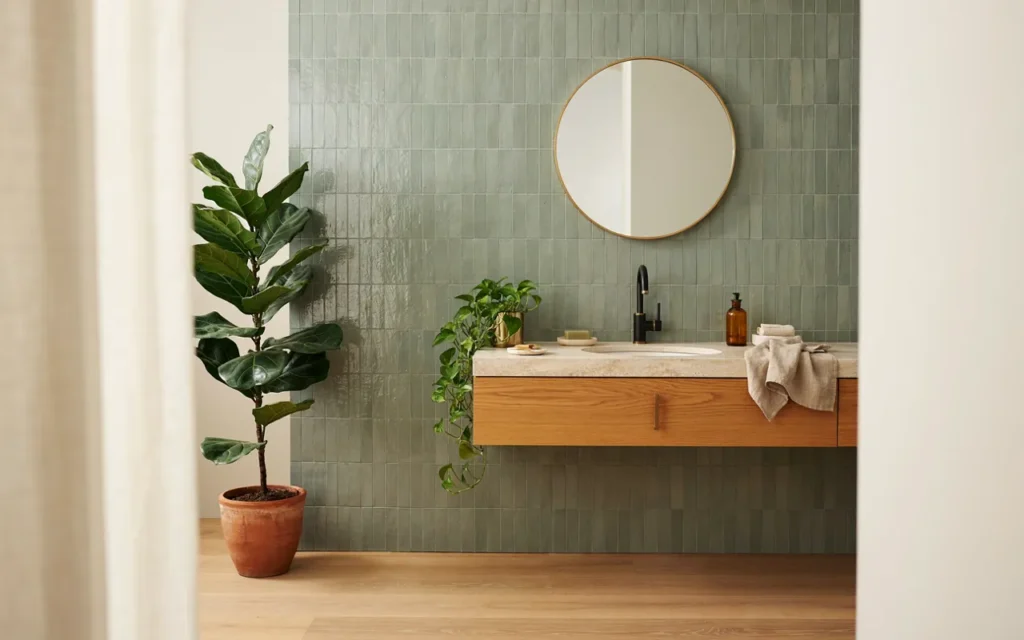
Green works naturally in bathrooms because it connects the room with plants and outdoor landscapes. Sage creates a quiet atmosphere, while deeper forest or emerald shades bring more drama. Pair green walls with natural wood and warm lighting for a balanced result rather than relying on bright white everywhere.
16. Long Narrow Bathroom With Horizontal Details
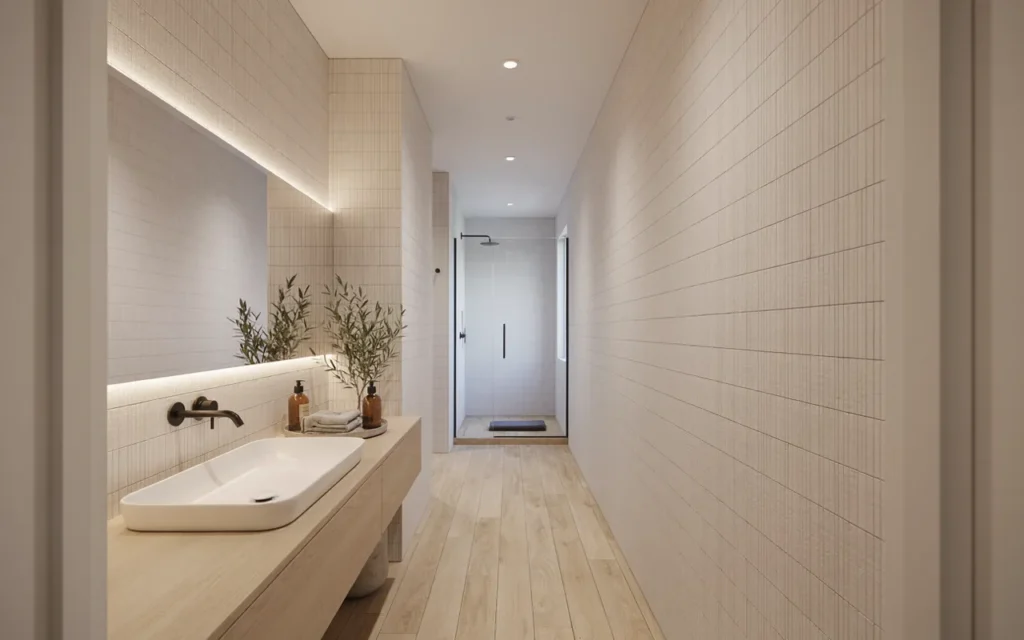
A narrow bathroom benefits from design choices that respond to its proportions. Horizontal wall treatments or elongated tile patterns can visually stretch the room, while a compact vanity placed along one wall preserves the walking path. Keep the shower glass clear and avoid bulky furniture that interrupts the narrow sightline.
17. Cozy Bathroom With A Petite Soaking Tub
Even a compact bathroom can accommodate a bathtub when the model is carefully proportioned. A petite soaking tub can sit against a wall or beneath a window without overwhelming the room. Keep surrounding finishes light and use a simple shower arrangement so the tub remains comfortable rather than crowded.
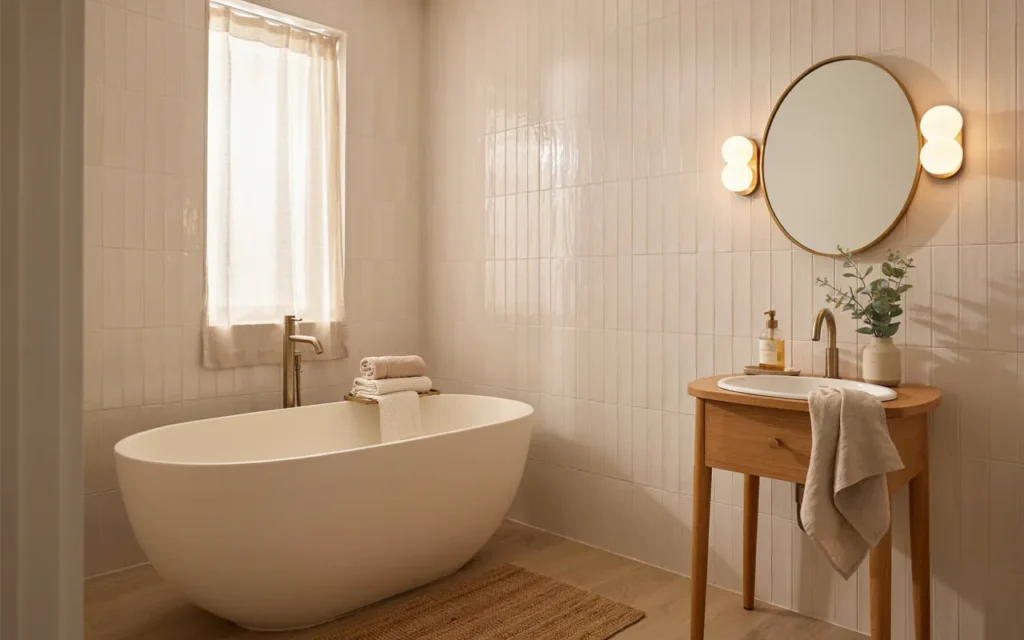
18. Statement Floor Tile With Simple Walls
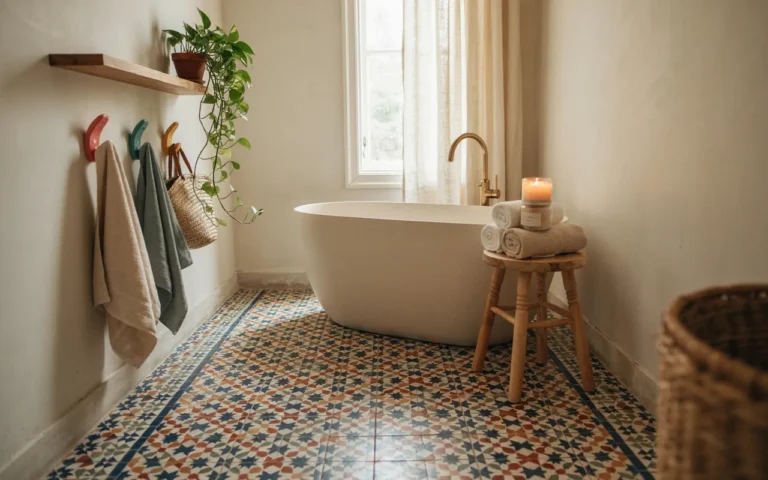
If you love pattern but do not want the entire bathroom to feel busy, put the strongest design element underfoot. Geometric, Moroccan-inspired or encaustic-style flooring can create an instant focal point. Keep the walls relatively quiet and repeat one color from the floor in the vanity or accessories to make the scheme feel connected.
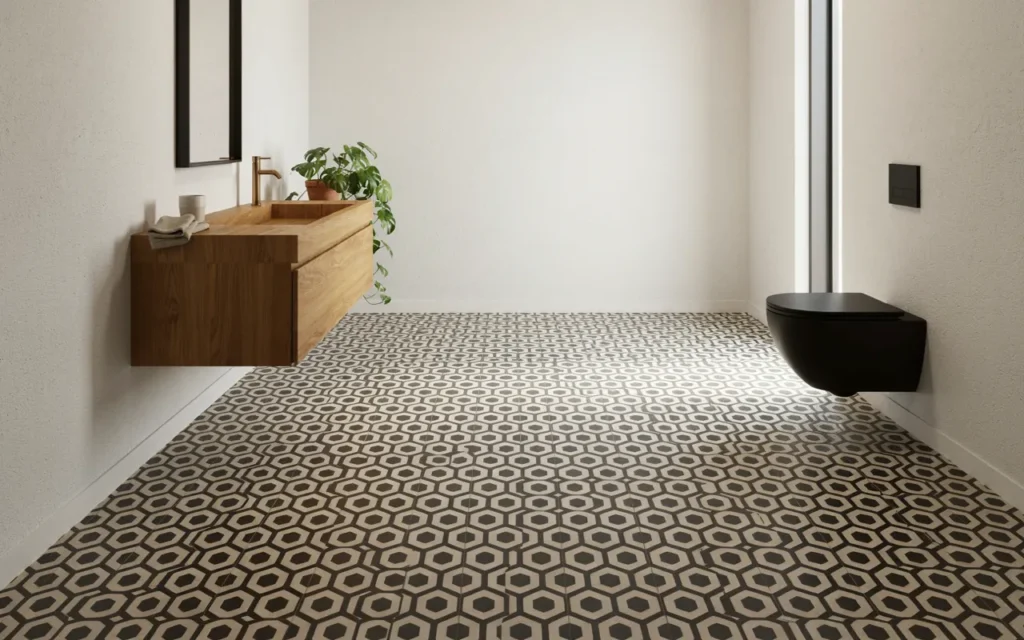
19. Moody Charcoal Bathroom
A dark bathroom can feel intimate and luxurious rather than small when the lighting is handled carefully. Charcoal walls paired with warm wood and soft illumination create a cocoon-like atmosphere. Use reflective details sparingly through mirrors, glass or polished fixtures so the darker surfaces still have visual depth.
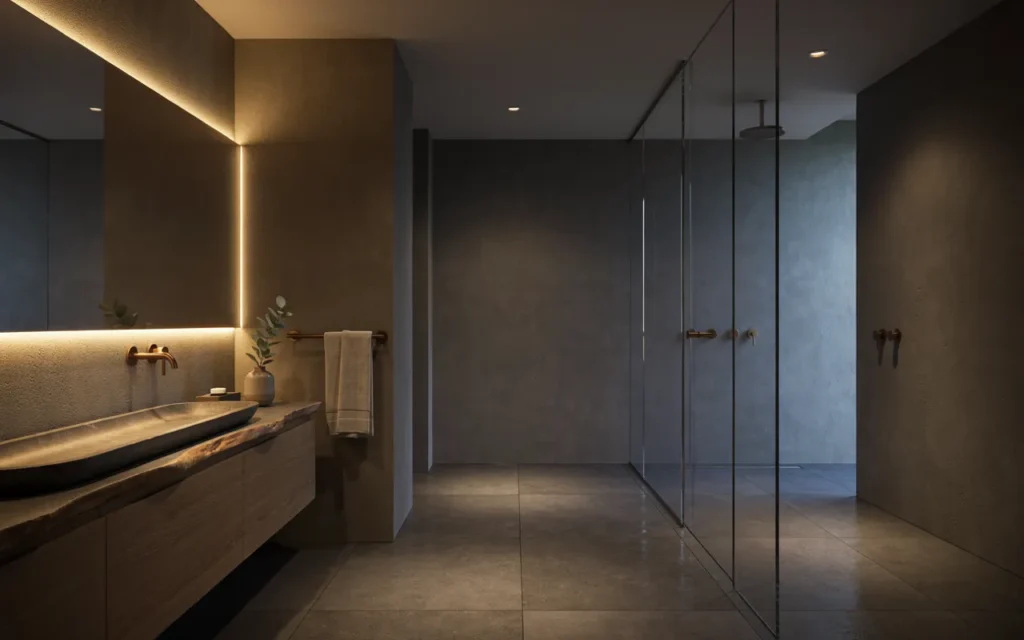
20. Bright Bathroom With A Large Window
Natural light can become one of the strongest design features in a bathroom. If your room has a generous window, keep the surrounding palette relatively light and use the view as part of the composition. A freestanding tub, simple stone floor and understated vanity allow daylight to remain the star.
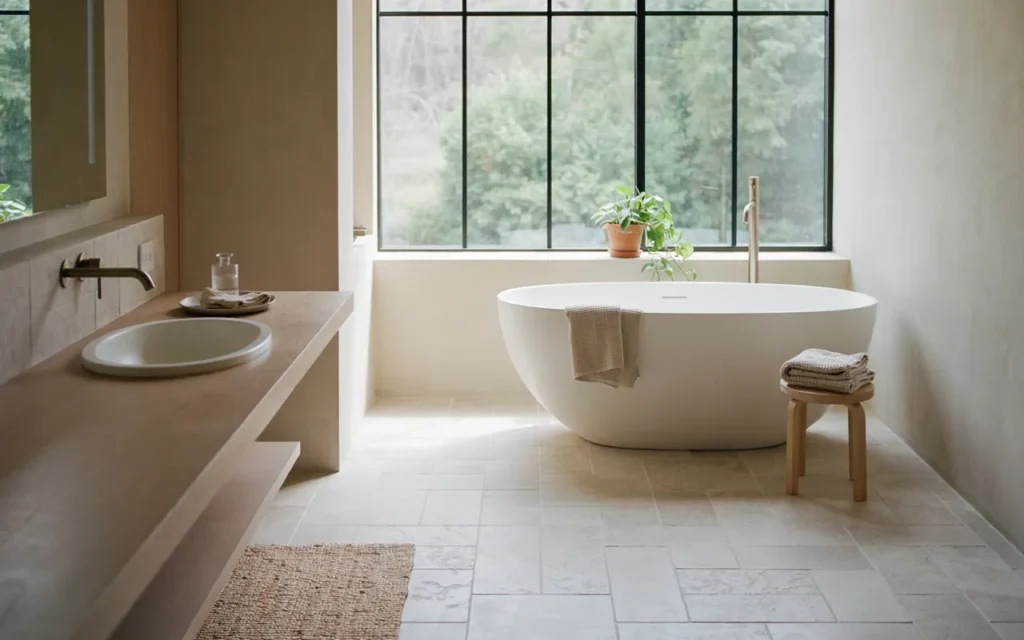
21. Boutique-Hotel Style Bathroom
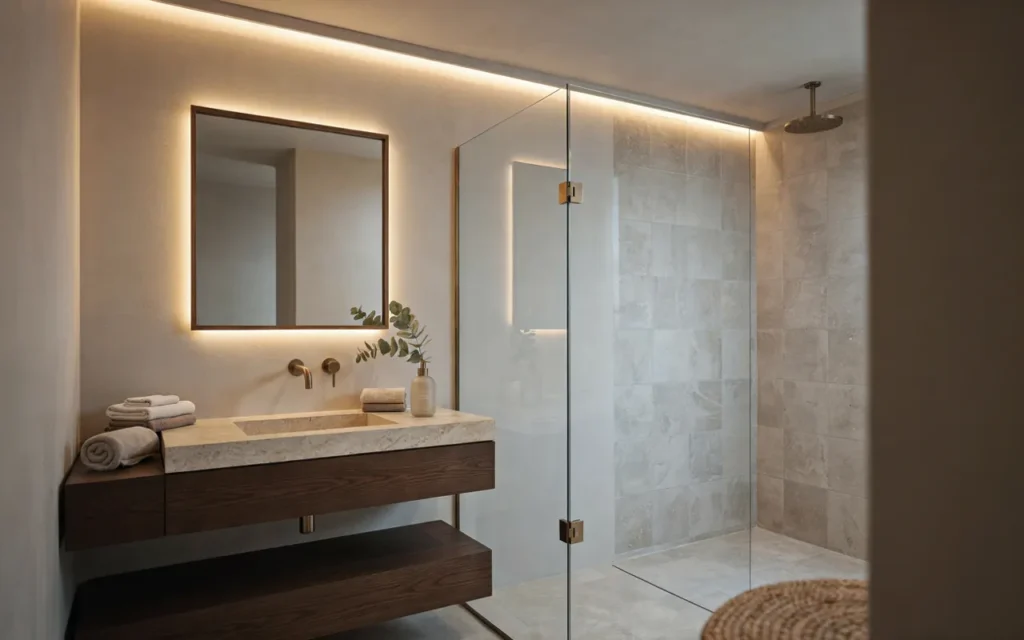
For a polished bathroom with a hotel feel, combine strong materials with carefully controlled lighting. A floating vanity, oversized mirror, rainfall shower and stone-effect walls create the foundation. Add warm sconces and neatly arranged towels rather than filling every surface with decoration. The goal is comfort with a clean visual finish.
22. Personalized Bathroom With Collected Details
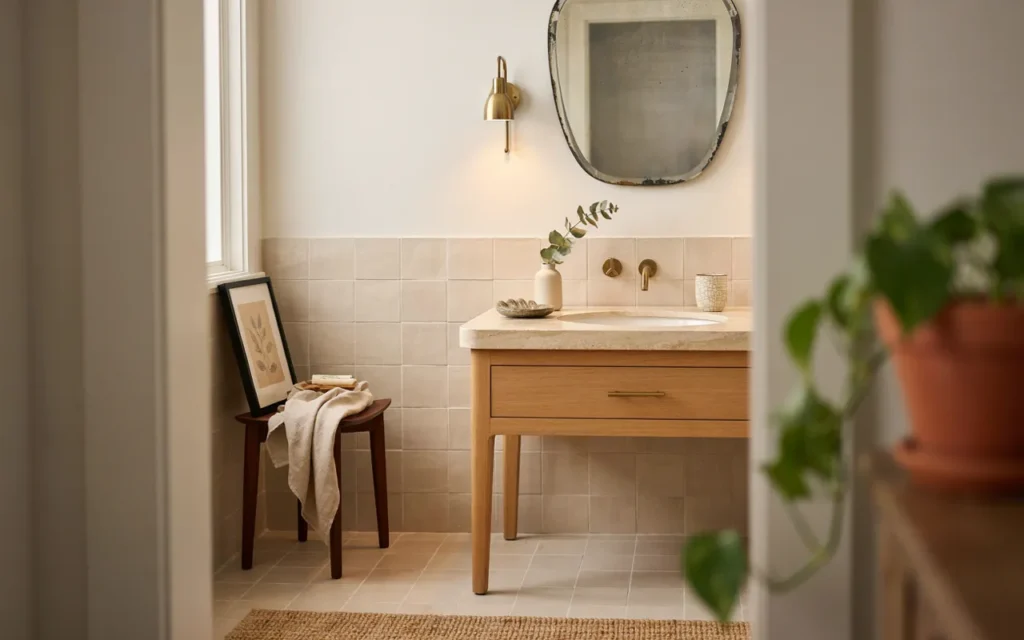
The most memorable bathroom may be the one that feels connected to the rest of your home. Introduce a framed print, unusual mirror, vintage stool, handmade ceramic or favorite color instead of following one strict trend. These small decisions give the room character and make it feel lived-in rather than staged.
How To Choose The Right Bathroom Design For Your Space
The first decision should be based on the room’s proportions rather than a trend you like online. Measure the available floor area, door swing, window position and plumbing locations before deciding where the main fixtures should go. In a small bathroom, wall-mounted vanities, clear glass and carefully planned storage can preserve a sense of openness. References also show how floating fixtures and open shelving can make compact layouts feel less visually crowded.
Larger bathrooms give you more freedom, but extra space does not automatically create a better design. Give important elements enough breathing room instead of filling every corner. A generous vanity, large shower and freestanding tub can coexist when the layout has a clear circulation path. One of the supplied references specifically highlights a larger bathroom planned around these three elements.
How To Make A Small Bathroom Feel Bigger
Start with the visual weight of your fixtures. A floating vanity exposes more floor, while a frameless glass shower keeps sightlines open. Large mirrors can also reflect the room and increase the feeling of depth.
Lighting deserves equal attention. Instead of relying on one ceiling fixture, combine mirror lighting, wall sconces or recessed lights with softer ambient illumination. This creates useful task lighting while preventing dark corners from making the bathroom feel tighter. The reference material also emphasizes layered lighting and backlit mirrors as useful solutions for compact rooms.
What Makes A Bathroom Feel Luxurious?
Luxury is often created through consistency rather than expensive decoration. Choose two or three strong materials and repeat them throughout the room. For example, warm oak can appear in the vanity and shelving, while brass can connect the mirror, tapware and lighting.
Texture matters too. Stone, fluted wood, handmade-looking tiles, linen towels and matte finishes give the eye different surfaces to explore. A bathroom with simple colors can therefore feel far richer than one filled with competing patterns.
Frequently Asked Questions
1. What is the best bathroom design for a small space?
A floating vanity, clear glass shower, large mirror and built-in storage are strong choices for a small bathroom. These features reduce visual clutter while keeping the essential functions of the room.
2. Can a small bathroom have a bathtub?
Yes. A compact soaking tub or carefully sized shower-bath can work when the layout leaves enough space for comfortable movement. Keep surrounding fixtures streamlined so the tub does not dominate the room.
3. What colors make a bathroom look bigger?
Light neutrals such as warm white, cream, pale beige and soft grey can help a bathroom feel more open. However, darker colors can also work when balanced with good lighting and reflective surfaces.
4. Are floating vanities good for small bathrooms?
Yes. Floating vanities expose some of the floor underneath, which can make a compact bathroom appear visually lighter. They can also provide useful drawers without creating a bulky furniture-like appearance.
5. What type of mirror works best in a small bathroom?
A large mirror is usually effective because it reflects light and visually expands the room. An arched or rounded mirror can also soften the hard lines created by tiles and rectangular cabinetry.
6. How can I make a large bathroom feel cozy?
Use warm wood, textured textiles, soft lighting and natural materials to reduce the emptiness of a large room. A freestanding tub or comfortable seating area can also create a defined focal point.
7. Is marble suitable for modern bathrooms?
Marble works with modern, traditional and transitional styles. If you want a contemporary appearance, combine it with simple cabinetry, clean fixtures and restrained accessories rather than ornate details.
8. What lighting is best for a bathroom?
A combination of ambient, task and accent lighting usually creates the most balanced result. Wall lighting around the mirror helps with everyday grooming, while softer lighting elsewhere can make the room feel more relaxing.
9. Can dark bathroom colors work in a small room?
Yes. Charcoal, deep green and navy can create a dramatic, intimate atmosphere. Use adequate lighting, reflective mirrors and lighter fixtures to maintain visual balance.
10. How do I choose between a walk-in shower and a bathtub?
Consider your daily routine first. A walk-in shower can preserve space and provide easy access, while a bathtub is worthwhile if you regularly enjoy soaking. Your available floor area should guide the final choice.