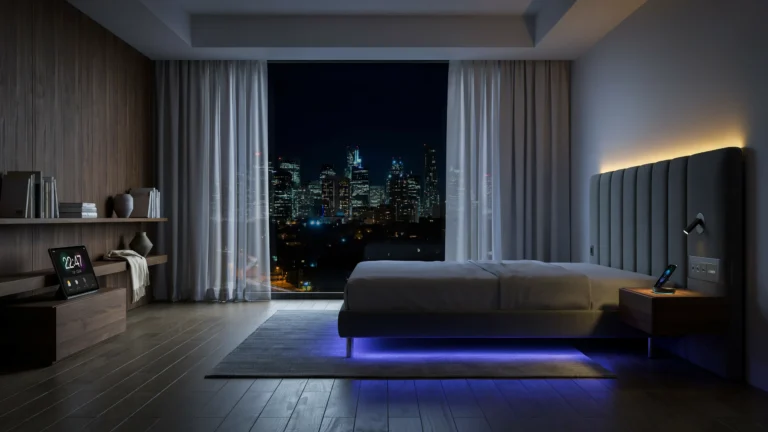
A luxury guest bedroom is not about expensive furniture. It is about a room that answers every small need before a guest has to ask. The bed should feel inviting at first sight, the lights should be easy to control from the bed, there should be a clear place for a suitcase, a glass of water within reach, and a quiet corner to sit. Get those basics right, add one or two beautiful details, and the room will feel generous even if it is small.
Think of the room as a journey. Your guest arrives tired, drops a bag, freshens up, sleeps well, wakes rested, and gets ready without hunting for things. Every idea below follows that journey, in the order a guest actually experiences the room, from the doorway to the final personal touch that makes the stay memorable.
Your Guest Welcome Checklist
Before you start decorating, run through this checklist. It covers the moments guests notice most, and it will show you which of the twenty ideas below matter most in your room. A room can look beautiful in photos and still fail this test if the bed is uncomfortable or the phone charger is nowhere to be found.
| Moment in the stay | What your guest needs | What to check before they arrive |
|---|---|---|
| Arrival | A place to set down a bag and coat | Clear floor space by the door, a hook, a bench or luggage rack |
| Settling in | Room to unpack without living from a suitcase | Empty drawers, spare hangers, a flat surface for toiletries |
| Evening wind down | Soft light and a calm, quiet room | Bedside lamp, dimmer or low light option, blackout curtains |
| Sleep | A bed that suits different sleepers | Breathable bedding, pillows in two firmness levels, an extra blanket |
| Morning routine | Light, a mirror and a place to get ready | Full length mirror, daylight or bright task light, a clear outlet |
| Daytime downtime | A seat that is not the bed | One comfortable chair, a side table, a book or a glass of water |
| Leaving | An easy goodbye and a room that still looks cared for | A small welcome note, fresh towels, a scent that is light, not strong |
Keep this list beside you while you read. Some ideas fix a practical problem, others add the feeling of luxury. You need both kinds.
Elevate the Entryway
The first few seconds inside a guest room set the tone for the whole stay. A guest who walks in holding a bag needs somewhere to put it down, and a guest who has just travelled needs a moment to breathe. A slim console table, a small bench, or even a single sturdy hook by the door gives that arrival a natural pause. It tells your guest, without a word, that this room was prepared for them, not just cleared out for them.
Keep the entry clear rather than crowded. Leave about 60 to 90 centimetres of open floor just inside the door so a suitcase can sit without blocking the walkway. If your entry is tight, a wall hook and a narrow shelf do the same job as a console. For more small entry ideas that work in tight halls, see these small entryway ideas for tiny halls and shared landings.

Invest in High-End Bedding and Linens
Bedding is where luxury is felt, not just seen. A guest may forgive a plain wall, but a scratchy sheet or a flat pillow will shape how they remember the whole visit. Choose breathable cotton sateen or washed linen, a duvet that is warm without being heavy, and pillowcases that feel smooth against the skin. Wash everything before a guest arrives, even if it looks clean, because freshly laundered bedding smells and feels different from bedding that has sat in a cupboard.
Offer choice, because no two sleepers are alike. Two sleeping pillows per side, one soft and one medium firm, plus one extra pillow stored nearby, covers most preferences. Fold a light throw at the foot of the bed for guests who sleep cool, and keep a second blanket in the wardrobe rather than piled on the bed. For more bed layering guidance, see these elegant guest bedroom ideas for adults.

Layer Your Lighting
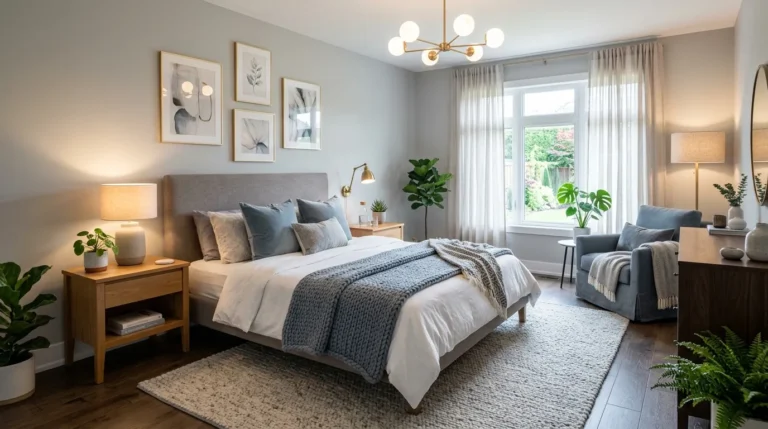
One ceiling light forces a guest to choose between a bright room and a dark one, and neither feels restful. Layered lighting solves this by giving each part of the evening its own light. An overhead fixture handles general light, bedside lamps handle reading, and a low light or dimmer handles the last hour before sleep. Guests should be able to reach at least one lamp switch from the bed, so they are never fumbling in the dark.
Warm light, typically around 2700 Kelvin, suits evenings better than cool white, which can feel harsh in a bedroom. Put brighter task light where guests get ready, near a mirror or a desk, and keep the bedside light soft and shaded. A dimmer switch is one of the cheapest upgrades with the biggest payoff, since it lets each guest set the mood they prefer.
Choose a Cozy, Warm Color Palette
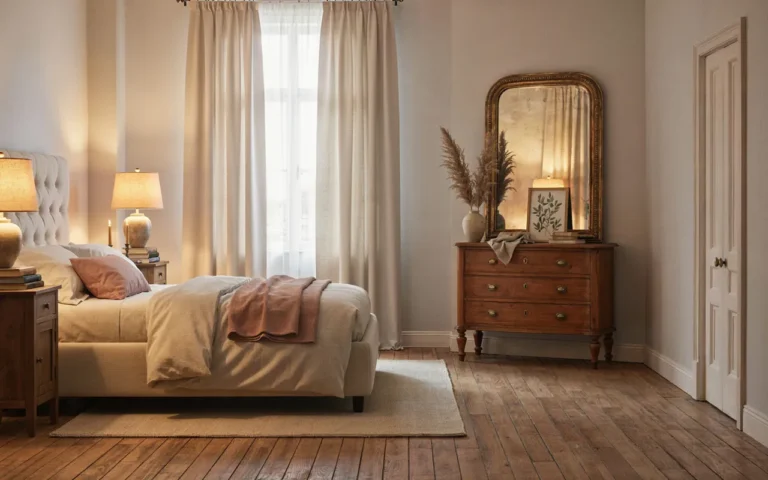
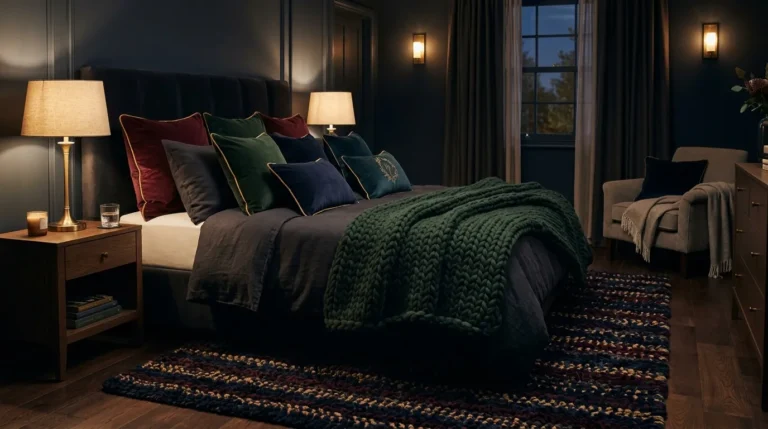
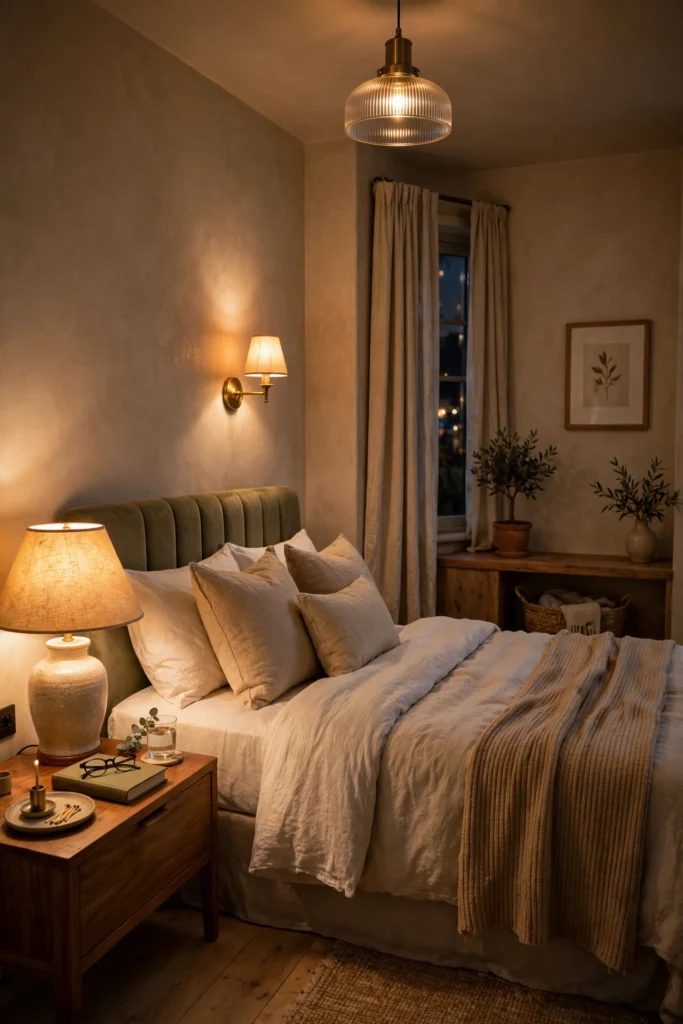
Colour does quiet work in a guest room. A guest who arrives in an unfamiliar house relaxes faster in warm, grounded tones than in stark white or cold grey. Soft sage, warm greige, muted terracotta, and deep chocolate brown all create that settled feeling, especially when the same warm tone repeats in the bedding, a throw, and one piece of art. The goal is a room that feels like a deep breath, not a showroom.
Pick one main wall colour and two supporting tones, then stop. Too many colours make a small room feel busy, and too much contrast can feel restless at night. If you love a bold shade, use it on one wall or in textiles rather than on every surface, and test it in evening light before committing.

Add Blackout Window Treatments
Good sleep is the kindest luxury you can offer, and light is its most common enemy. Streetlights, early sunrise, and a bright hallway can all wake a guest who is already adjusting to a new bed. Heavy blackout curtains, hung close to the wall and extending a few centimetres past the window frame on each side, block most of that light. A sheer layer underneath lets the same window feel soft and private during the day.
Hang the curtain rod 10 to 15 centimetres above the window frame and wider than the window itself, so the curtains stack clear of the glass when open and cover it fully when closed. Check the edges at night, since light leaking around the sides defeats the purpose. For fabric and hanging comparisons, see these window treatment ideas for every room.

Create a Statement Headboard
A headboard gives the bed a finished look with a single piece, which makes it ideal for guest rooms where space is limited. An upholstered headboard in velvet or boucle feels soft to lean against while reading, and a tall wooden or rattan design adds shape to a plain wall. The headboard should be wide enough to sit behind both pillows on a double or queen bed, usually the full width of the mattress or a few centimetres wider.
Height matters as well. A headboard around 120 to 140 centimetres tall reads as a proper feature behind a dressed bed, while a very low one can disappear under pillows. If a new headboard is not in the budget, a large piece of art hung at the same height, or a row of framed prints centred over the bed, creates a similar focal point. Keep the wall behind the bed otherwise calm, so the headboard, not a crowd of small objects, holds the eye.

Add a Comfortable Seating Nook
Guests need somewhere to sit that is not the bed. A bed is for sleeping, and sitting on it all day to read or take a call feels awkward. One upholstered armchair with a small side table, placed near a window if possible, gives a guest a private retreat inside the house. It also gives the room a lived in quality, as if someone actually spends time there rather than just sleeping there.
Choose a chair with a seat height around 45 centimetres, so it is easy to get in and out of, and leave enough room to pull it slightly away from the wall. A small table within arm’s reach holds a book, a phone, or a cup of tea. If floor space is tight, a compact accent chair works better than a large armchair that blocks the walkway.

Provide Smart Storage Solutions
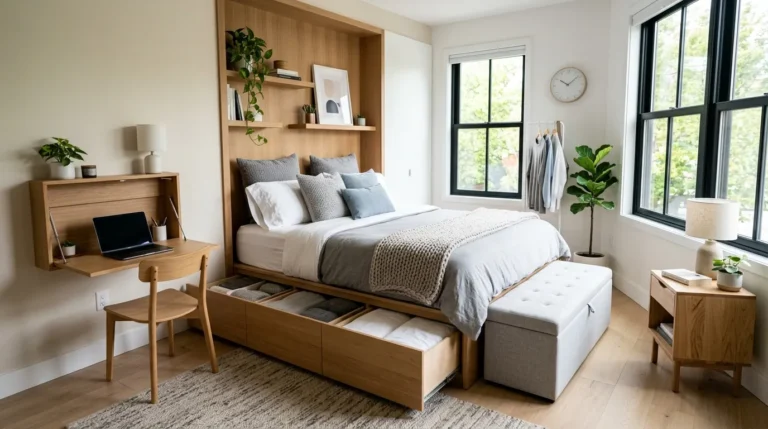
Living from a suitcase for several days is tiring, and it makes a room look messy no matter how tidy the guest tries to be. Clear two drawers in a dresser, leave six to eight empty hangers in the wardrobe, and make sure at least one surface is empty for folded clothes or toiletries. Guests will not use storage they cannot find, so open the drawers before they arrive and remove anything that belongs to the household.
Built in shelving or a small armoire helps in rooms without a wardrobe, and a basket on a shelf can hold spare towels without taking drawer space. Keep the storage near the bed or the door, not hidden behind another piece of furniture. If your guest room doubles as an office, move household items out completely for the stay.

Include a Luggage Bench
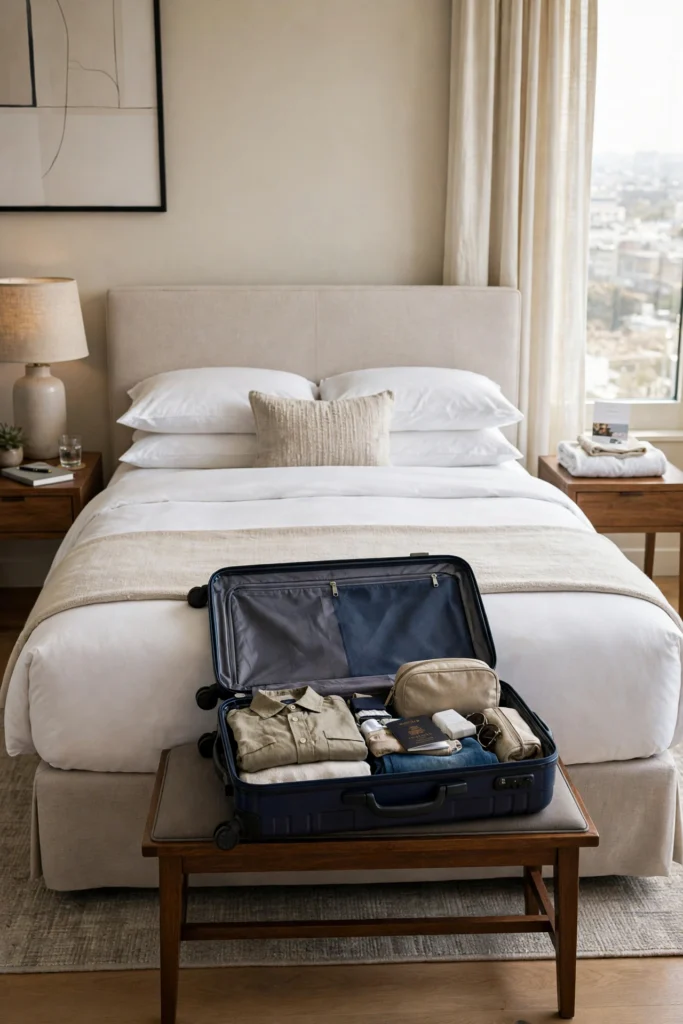
A luggage bench is a small hotel habit worth copying at home. Without one, a guest must choose between putting a suitcase on the clean bed or on the floor, where it is hard to reach into. A bench or folding luggage rack at the foot of the bed, or against a free wall, solves this in seconds. The guest can unpack standing up, keep clothes neat, and close the case without bending to the floor.
A bench around 60 to 75 centimetres wide fits most cabin cases, and a folding rack can be stored flat when the room is not in use. Place it where it does not block the path to the bathroom, and keep the top clear so it is obviously meant for luggage. Avoid using the bench as extra display space, since a guest will hesitate to move your decor just to set down a bag. This is one of those details guests rarely mention, but they notice its absence at once.
Set Up a Small Workspace
Many guests now need to answer emails or join a call during a visit, and working from the bed or the kitchen table is uncomfortable for everyone. A small desk in a corner, even a floating shelf desk about 90 centimetres wide, gives a guest a proper place to work. Add a chair that supports sitting upright, a power outlet within reach, and a lamp that lights the desk without shining into the bed.
Keep the desk surface clear except for a notepad and a pen. A guest who has to clear your paperwork before working will feel like an intruder in their own workspace. If the room is small, a narrow console that doubles as a dressing table works, provided the chair can tuck underneath. Avoid placing the desk facing the bed if possible, since a clear view of the door or window helps concentration and makes video calls feel less awkward.

Use Bronze and Cohesive Hardware Finishes
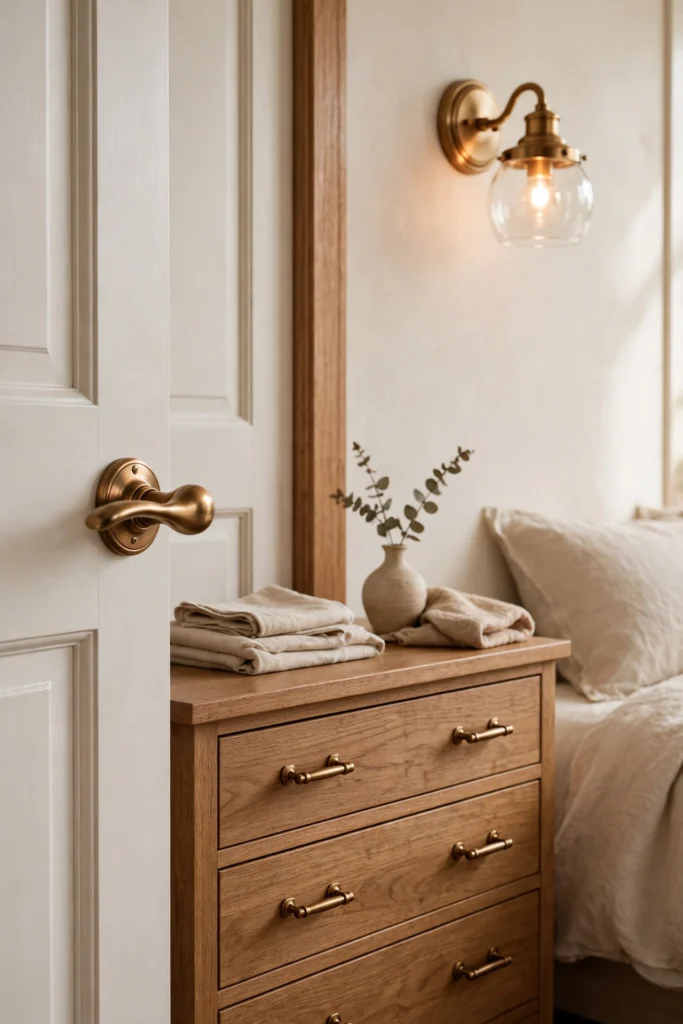
Hardware is easy to overlook, and that is exactly why it matters. A room where the door handle, drawer pulls, light switches, and curtain rod all share one warm finish feels calm and considered. Mixed finishes, one chrome, one black, one brass, create a low level visual noise that guests sense even if they cannot name it. Warm bronze or brushed brass suits most warm bedroom palettes and ages gracefully with use.
Start with the pieces guests touch most, such as drawer pulls and door handles, and match the rest to them over time. You do not need to replace everything at once, but keep new purchases inside the same finish family. Check that pulls are comfortable to grip and that knobs turn smoothly.
Add Statement Lighting Fixtures
One well chosen fixture can give a guest room its character. A sculptural pendant over a reading chair, a pair of matching sconces beside the bed, or a distinctive table lamp on the dresser becomes the piece guests remember. The fixture should suit the size of the room, so a large chandelier in a small bedroom feels crowded, while a tiny lamp in a large room looks lost. Measure the space before buying, and hang pendants high enough that no one walks into them.
Keep the finish consistent with the rest of the hardware, and choose a warm bulb so the statement piece flatters the room at night as well as during the day. If you already have layered lighting in place, the statement piece should replace one layer, not compete with all of them.

Layer Textures and Soft Furnishings
Texture is what makes a room feel soft to be in, especially when the colour palette is restrained. A smooth cotton duvet, a chunky knit throw, a woven cushion, and a rug underfoot give the hands and feet something pleasant at every point of contact. Guests experience this constantly, pulling a throw over their legs, stepping onto a rug in the morning, leaning against a textured cushion. It is luxury you feel rather than photograph.
Mix three or four textures rather than repeating one fabric everywhere. A rug around 160 by 230 centimetres suits a queen bed and gives bare feet a soft landing on both sides. Keep throws folded, and limit cushions to four or five on a double bed so the guest is not clearing a pile before sleeping.

Fresh Flowers and Greenery
A small bunch of fresh flowers or a healthy potted plant is one of the simplest ways to say this room was prepared today, not last month. Flowers add colour and life to a bedside table or dresser, and a plant softens a corner that might otherwise feel empty. Choose varieties that last well indoors, such as eucalyptus, chrysanthemums, or a pothos, and place them where they will not be knocked over in the dark.
Keep arrangements low on the bedside table so they do not block the lamp, and avoid strongly scented flowers in a sleeping room, since scent that is pleasant for an hour can become tiring overnight. If fresh flowers are not practical, a realistic faux arrangement or a snake plant, which tolerates low light and irregular watering, works just as well.

Thoughtful Welcome Touches
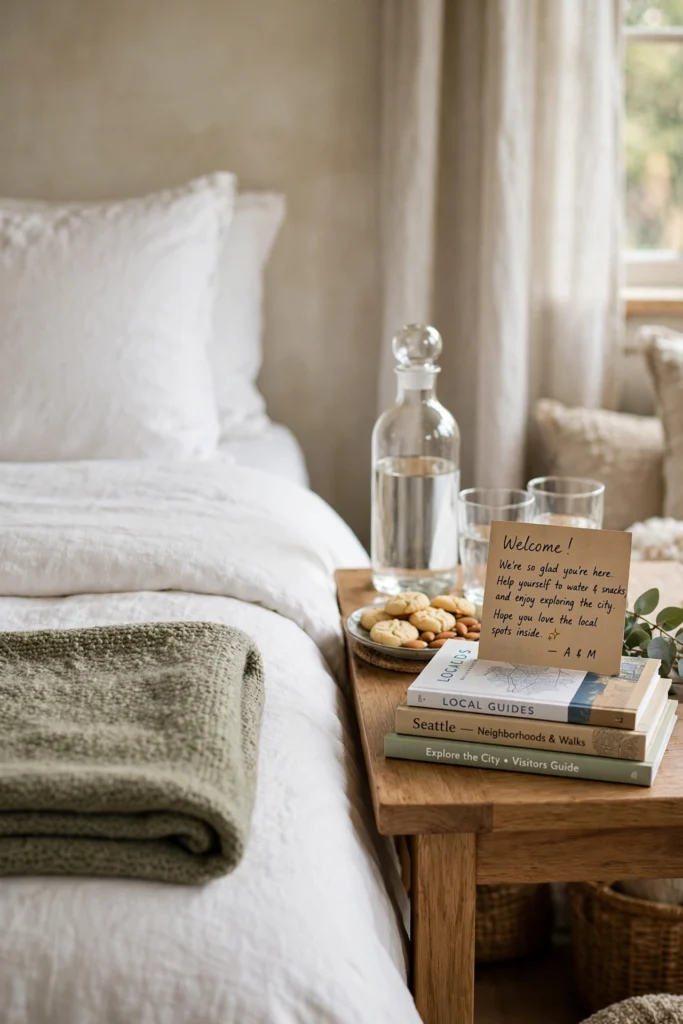
Welcome touches are the difference between a room and hospitality. A carafe of water with a clean glass on the nightstand, a folded extra blanket, a short handwritten note with the Wi-Fi password, and a small snack all tell a guest they were expected. These gestures cost little, yet guests remember them long after they forget the paint colour. Place them where they will be seen on arrival, not hidden in a drawer.
Keep the selection small and useful. A stack of local guides, a phone charger with common cable types, and a spare towel set cover most needs without cluttering the room. Avoid overfilling the nightstand, since a guest still needs space for their own phone, book, and water. For a broader take on rooms designed around the guest experience, see these luxury guest suite ideas.
Add a Full-Length Mirror
A full length mirror saves guests repeated trips to the bathroom just to check an outfit. It also makes a small room feel larger, because it reflects light and doubles the sense of space. Lean a framed mirror against a wall near the wardrobe or hang it on the back of the door, and check that it reflects something pleasant, such as a window or a piece of art, rather than a cluttered corner.
Position the mirror where daylight reaches it, and leave enough floor space in front for a guest to step back and see their full outfit, ideally about a metre. A mirror around 150 centimetres tall suits most adults. Make sure a leaning mirror is secured at the top so it cannot tip.

Engage the Senses with Scent
Scent shapes a first impression before a guest has looked around. A lightly scented room feels clean and cared for, while a strong fragrance can cause headaches or disturb sleep. A reed diffuser, a single unlit scented candle as decoration, or freshly laundered linen with a gentle fragrance all work, provided the scent is subtle. Choose calm notes such as lavender, cedar, or clean cotton, and introduce the scent a few hours before arrival rather than minutes before.
Never rely on a plug in air freshener set to high, and avoid mixing several scented products, since layers of fragrance quickly become overwhelming. If your guest has sensitivities, unscented clean linen is the safer luxury. Never leave a lit candle in a room where a guest is sleeping.

Go Bold with Wallpaper or Pattern
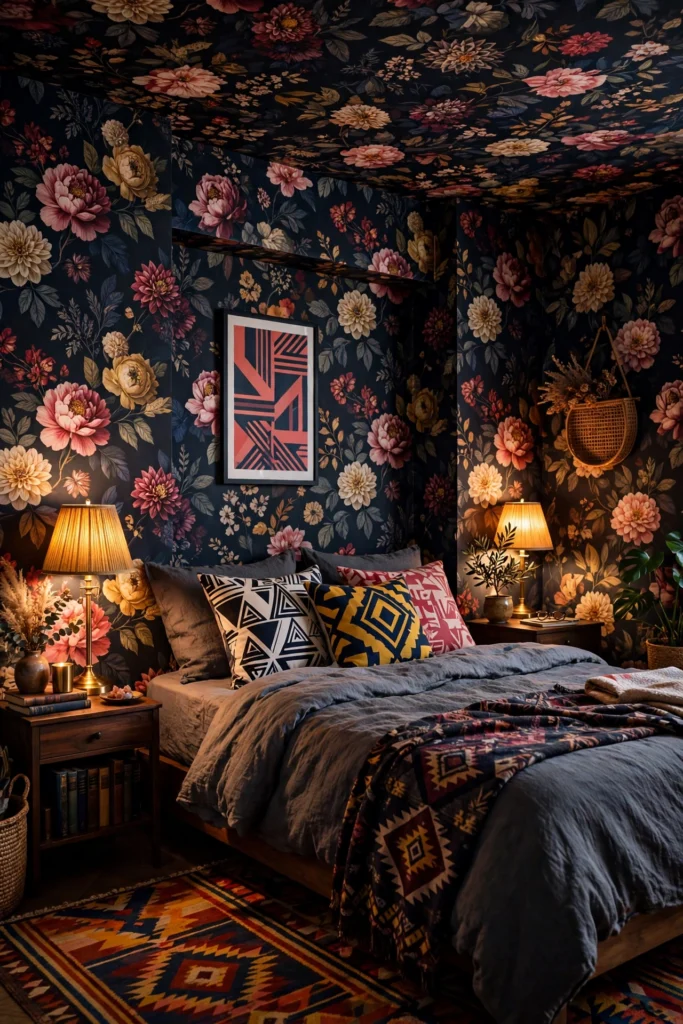
A guest bedroom is the perfect place for a bolder pattern, because it is used less intensively than a main bedroom and a strong design makes the stay feel special. A floral, a graphic print, or a textured grasscloth on one feature wall adds personality without demanding a full redecoration. A wallpapered ceiling, in a small room, can be surprisingly effective, since guests notice it when they lie down.
Commit to one pattern and let the bedding stay relatively plain, so the room feels designed rather than busy. Large scale patterns suit larger rooms, while smaller repeats work better in compact spaces. Order a sample first and view it in both daylight and lamplight, since pattern and colour shift between the two.
Add an En-Suite Bathroom
A private bathroom is the biggest step up a guest room can offer, because it gives a guest independence. No waiting, no coordinating shower times, no carrying toiletries down a hallway in the morning. Even a compact en-suite, with a shower, a basin, and a toilet in a well planned layout, changes how relaxed a guest feels. If a full en-suite is not possible, a dedicated bathroom nearby, stocked as if it were private, comes close.
Stock the bathroom as carefully as the bedroom, with thick towels, a spare set folded nearby, basic toiletries, and a hook for a wash bag. Good lighting around the mirror, ideally on both sides of the face rather than only overhead, makes getting ready far easier. For layout and styling inspiration, these dream bathroom designs for small and large spaces show how even compact bathrooms can feel generous. Keep the bathroom spotless before arrival, since a private bathroom that feels neglected undermines the whole room.

Personalize with Local Flair
Local touches are what stop a guest room from feeling like a generic hotel room. A piece of art by a nearby maker, pottery from a local market, a framed photograph of the area, or a book about your town gives the room a sense of place. Guests enjoy these details because they connect the room to the home and the hosts, not just to a catalogue. One or two well chosen pieces are enough, and they should feel genuine rather than themed.
Keep local pieces where guests can see and enjoy them, such as on a dresser or above the seating nook. Avoid filling every surface with souvenirs, since a crowded room feels less restful. A short note about one piece, where it came from or why you chose it, turns decoration into conversation.

The One Test That Tells You the Room Is Ready
When the decorating is done, spend one night in the room yourself, or at least walk through a full evening and morning in it. Arrive with a bag, put it down, unpack a few things, read in the chair, turn the lights low, sleep, wake, shower, and get dressed. You will discover in one hour what no checklist reveals: the outlet hidden behind the bed, the curtain that leaves a gap, the chair that faces a wall, the mirror that catches glare.
Fix what you find before your next guest arrives. A guest room improves with every stay when the host pays attention to the small frictions, and it slowly drifts when no one checks. The best guest rooms were not decorated once and forgotten. They were lived in, adjusted, and cared for, one guest at a time.
Questions Guests Never Ask Out Loud (But Hosts Should Answer)
What makes a guest bedroom feel luxurious without a big budget?
Clean, high quality bedding, layered lighting, blackout curtains, and a few thoughtful touches such as water by the bed and space to unpack. These cost far less than new furniture, and guests notice them more, because they affect sleep and comfort directly.
How do I make a small guest bedroom feel generous?
Keep the floor clear, use one focal point such as a headboard, add a full length mirror, and choose furniture that fits the room rather than filling it. A small room with breathing space feels larger than a large room crowded with pieces no one uses.
What colours work best for a luxury guest bedroom?
Warm neutrals, soft sage, muted terracotta, and deep chocolate brown all suit guest rooms, because they feel calm in both daylight and lamplight. Test any colour in the evening before committing, since bedroom light changes how paint reads.
Do I need an en-suite bathroom for a luxury guest room?
No, though it helps when the layout allows it. A well stocked shared bathroom, with thick towels, toiletries, and clear mirror lighting, can feel just as considered. What matters is privacy and ease, not the plumbing alone.
What do guests actually use, and what just takes up space?
Guests use the bed, the lights, the mirror, storage, an outlet, and a seat. Decorative piles of cushions, crowded surfaces, and furniture that blocks walkways get moved aside and add nothing. Design around the first list, and keep the second list small.
How can I keep the room fresh between visits?
Air the room, wash bedding and throws, dust surfaces, check bulbs and outlets, and replace water and snacks before each stay. A room that is cleaned and reset between guests feels newly prepared every time, even if the decor has not changed.
What is the most common guest bedroom mistake?
Putting looks before function. A beautiful room without blackout curtains, storage, a charger, or a place for a suitcase will frustrate a guest, no matter how stylish it photographs. Comfort first, decoration second, and the room will look better for it.