Apartment living comes with its own rulebook. Square footage is limited, walls often can’t be touched, and every piece of furniture has to earn its spot. But small or rented doesn’t have to mean plain with the right apartment design ideas, even a compact one-bedroom can feel curated, warm, and completely your own. From layout tricks and multi-functional furniture to lighting, storage, and color, modern apartment design in 2026 is less about square footage and more about intention. Every corner, every wall, and every piece of furniture is expected to work harder, look better, and reflect the personality of the person living there.
1. Float Your Sofa Away From the Wall
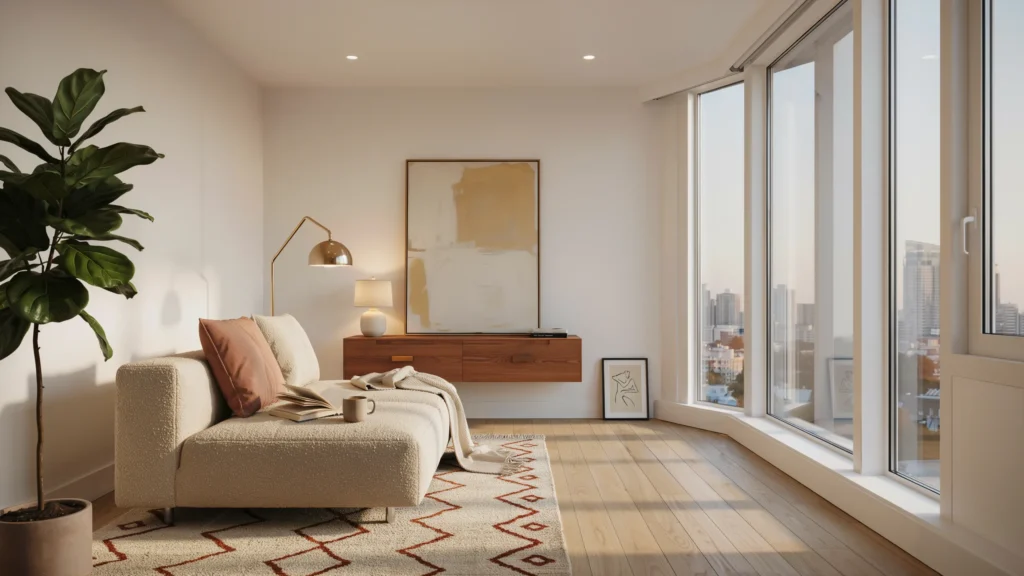
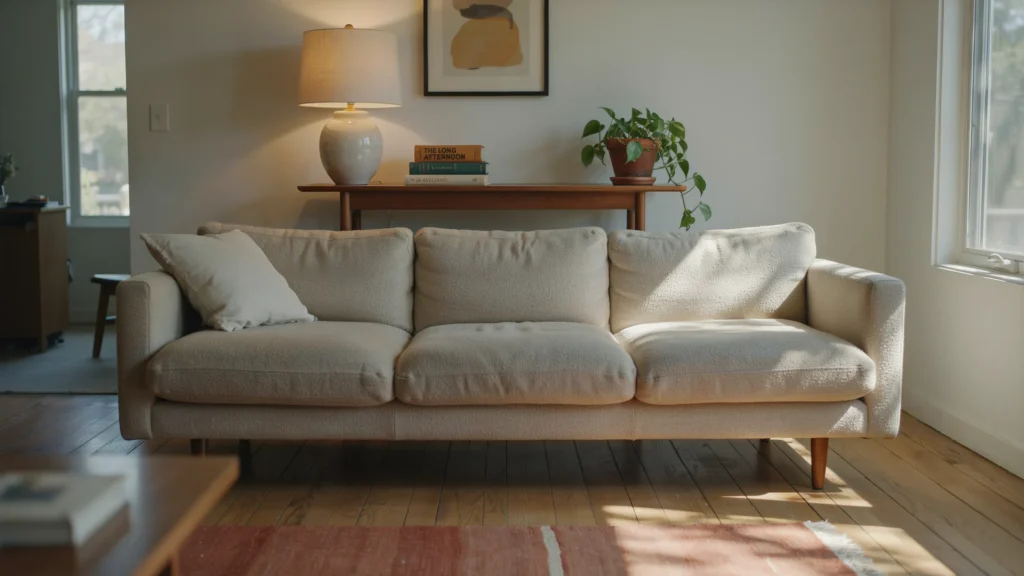
One of the simplest shifts that transforms a small living room is pulling the sofa off the wall and into the center of the space. It sounds counterintuitive in a tight apartment, but floating the sofa even by a foot or two creates a defined social zone, opens up the perimeter for a console table, art, or storage, and instantly makes the layout feel considered rather than pushed-into-place. This trick works especially well in studio and open-plan apartments, where the sofa’s placement also helps signal where the living zone ends and the dining or work zone begins. Add a slim console table behind the sofa to keep the look grounded, and use it for a table lamp, a stack of books, or a small vase of greenery. The extra breathing room around the furniture also makes it easier to walk through the space, which matters enormously when every square foot counts.
2. Zone an Open-Plan Space With Rugs
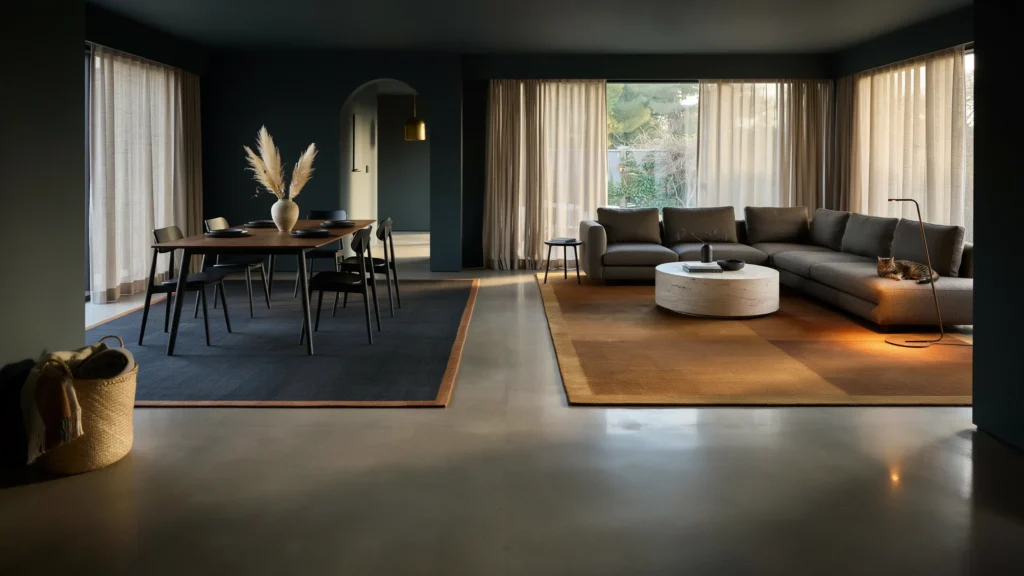
Studio and open-concept apartments often blend the living, dining, and work areas into one continuous room, which can make the whole space feel undefined and a little chaotic. Instead of building walls, use rugs to do the zoning for you. A rug under the sofa and coffee table defines the lounge area, while a second rug beneath the dining table marks that space as visually and functionally distinct. If you have a small desk tucked into a corner, a third, smaller rug can anchor that zone too. This layered-rug approach adds texture and color while giving an open floor plan a genuine sense of structure and purpose, all without a single nail in the wall or a conversation with your landlord.
3. Choose Multi-Functional Furniture
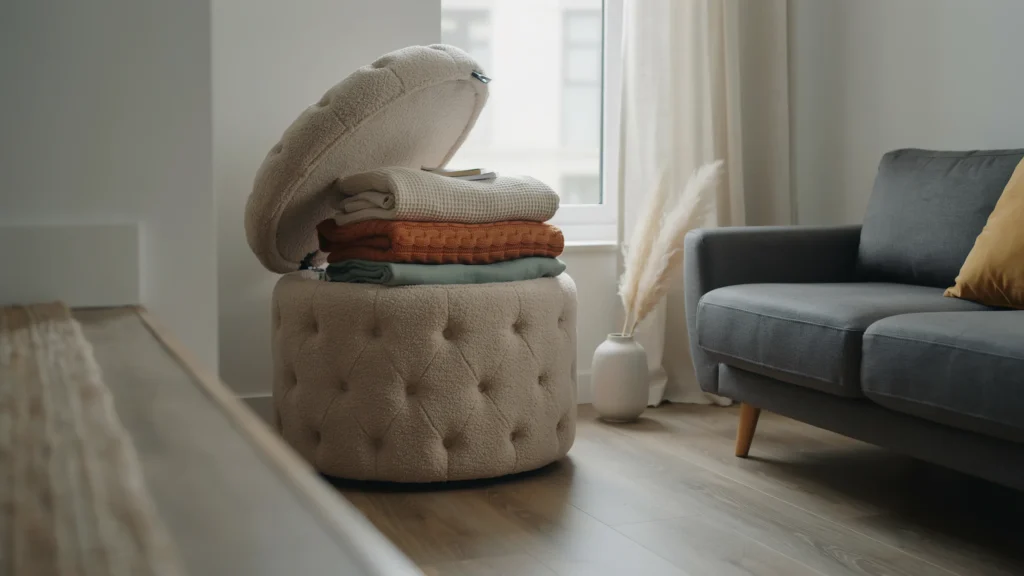
In an apartment, every piece of furniture should do more than one job. Think ottomans that open for storage, console tables that convert into desks, daybeds that double as guest beds, and drop-leaf dining tables that expand only when needed for guests. Multi-functional furniture is the backbone of smart apartment design it reduces clutter, keeps sightlines open, and means you never have to sacrifice function for the sake of space. Look for pieces designed specifically for small-space living rather than trying to retrofit oversized furniture into a tight footprint; the difference in how a room feels is significant, even if the square footage stays exactly the same.
4. Add a Statement Accent Wall
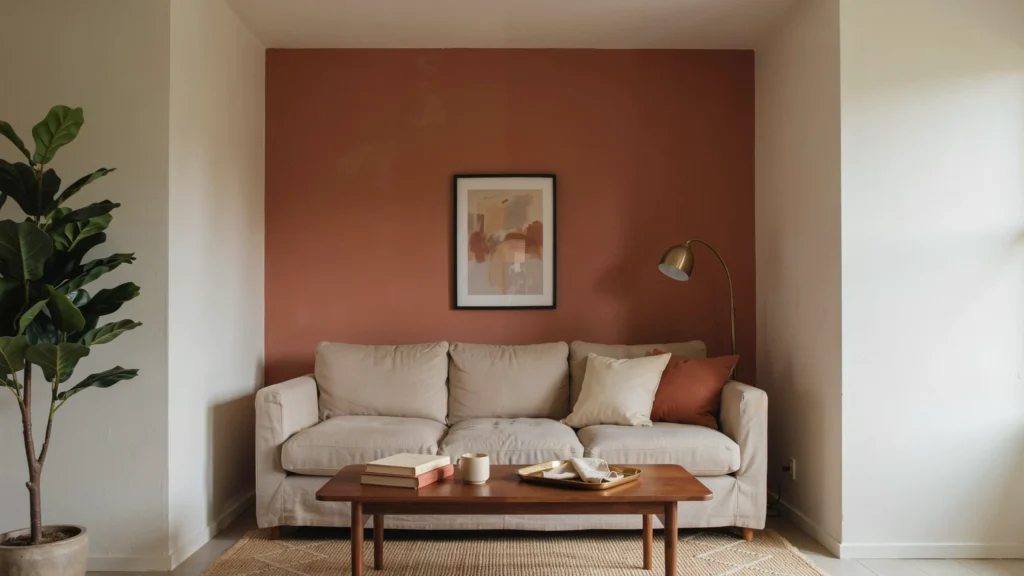
A single, well-considered accent wall can redefine an entire room without any structural work. Deep terracotta, sage green, dusty blue, or a moody charcoal behind the sofa or bed instantly gives a rental apartment personality and a clear focal point. Keep the remaining walls in a soft neutral so the accent wall stays the star of the room rather than competing with itself. If your lease doesn’t allow paint, peel-and-stick wallpaper is a fully renter-friendly alternative that delivers the same visual punch and can be removed cleanly when you move out. Even a textured plaster or limewash finish, applied to just one wall, can turn a flat rental surface into something that feels genuinely designed.
5. Maximize Vertical Storage
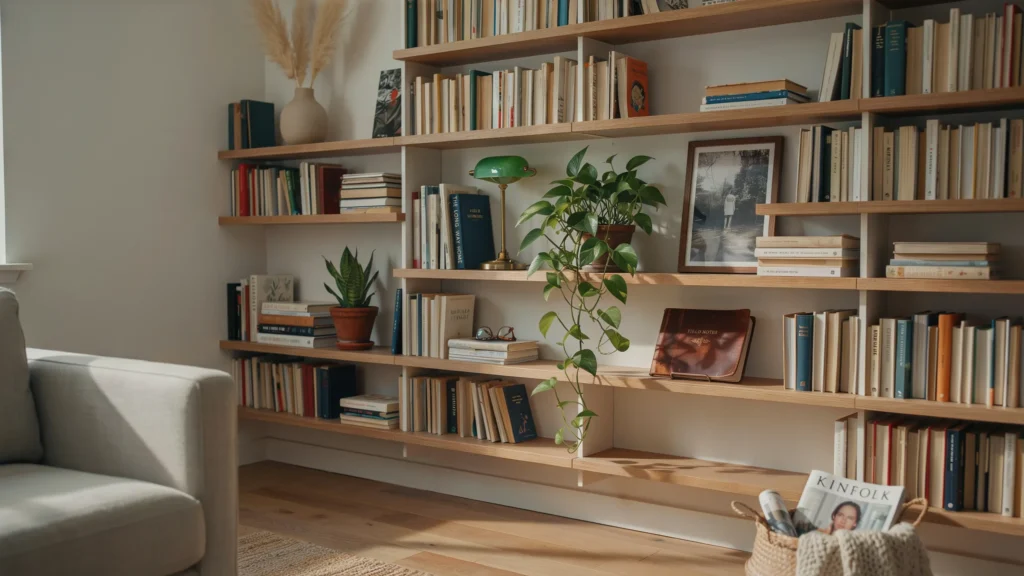
When floor space is limited, the walls become your best storage asset. Floor-to-ceiling shelving, tall bookcases, and wall-mounted cabinets pull the eye upward and use square footage that would otherwise sit completely empty. This is especially useful in apartments with high ceilings, where a few feet of unused wall space above eye level can be turned into a home library or a display area for books, plants, and decorative objects. Vertical storage also keeps the floor clear, which is one of the fastest ways to make a small room feel more spacious and less crowded, even when you technically own just as much stuff as before.
6. Convert an Unused Closet Into a Bar Nook
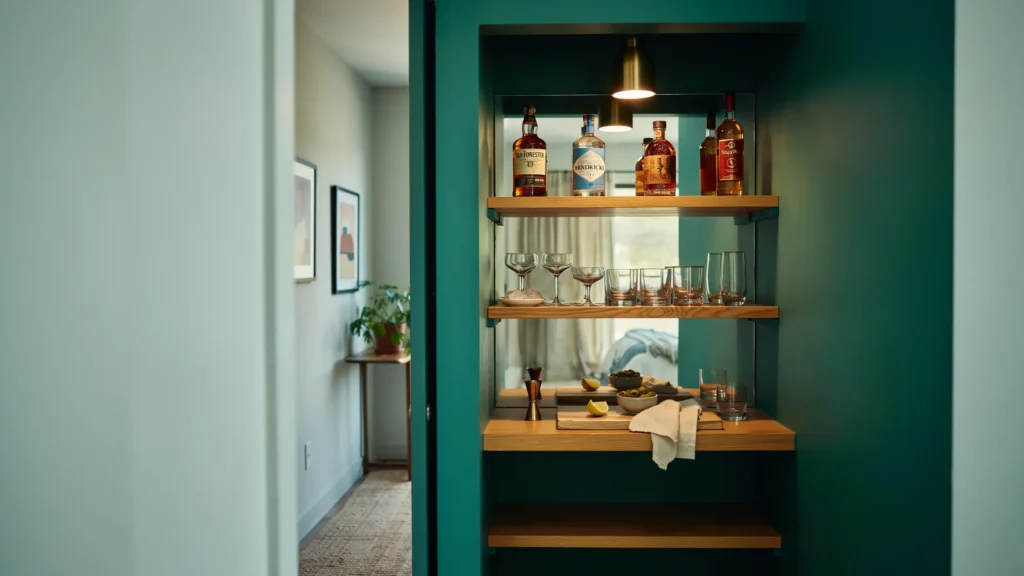
Many apartments come with an extra coat closet that rarely gets used to its full potential, especially in cities where guests tend to keep their coats on anyway. Instead, clear it out and turn it into a compact bar nook add a small shelf, a mirror backdrop to bounce light and make the space feel deeper, and a few glasses and bottles arranged with intention. Painting the interior a contrasting color instantly gives the nook depth and character, and turns a forgotten corner into a genuine conversation piece whenever you’re entertaining guests.
7. Bring in Bold, Oversized Greenery
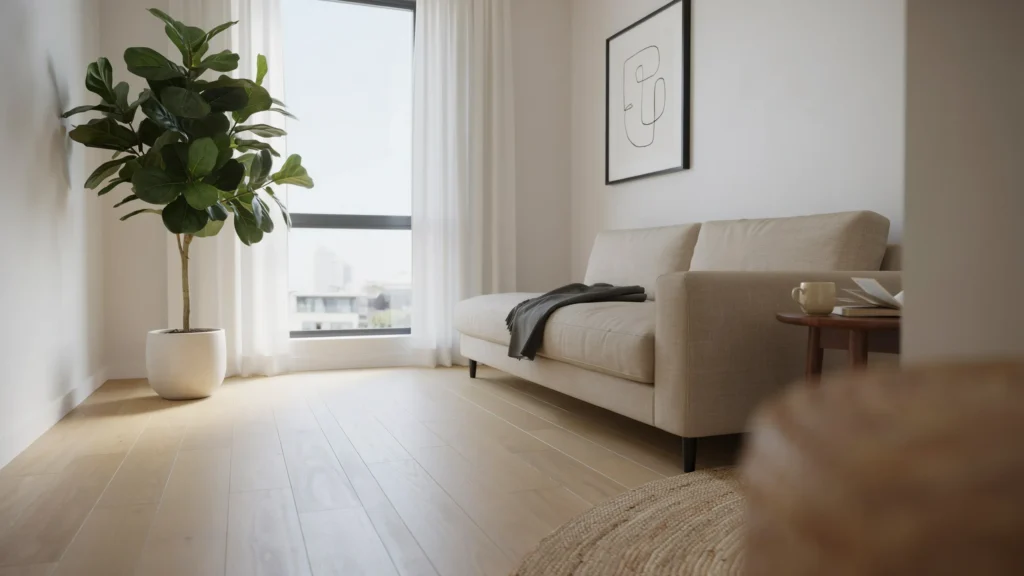
Without a yard, greenery has to come indoors and going big pays off more than you’d expect. A single large plant, like a fiddle-leaf fig, rubber tree, or bird of paradise, does more for a room than several small potted plants scattered around on shelves and windowsills. Placed in an empty corner, an oversized plant fills dead space, softens the hard lines created by furniture and walls, and adds color, texture, and a sense of life to a room without taking up valuable floor real estate anywhere else. If natural light is limited, choose a low-light-tolerant variety, or opt for a high-quality faux plant that delivers the same visual impact with none of the maintenance.
8. Use a Gallery Wall for Personality
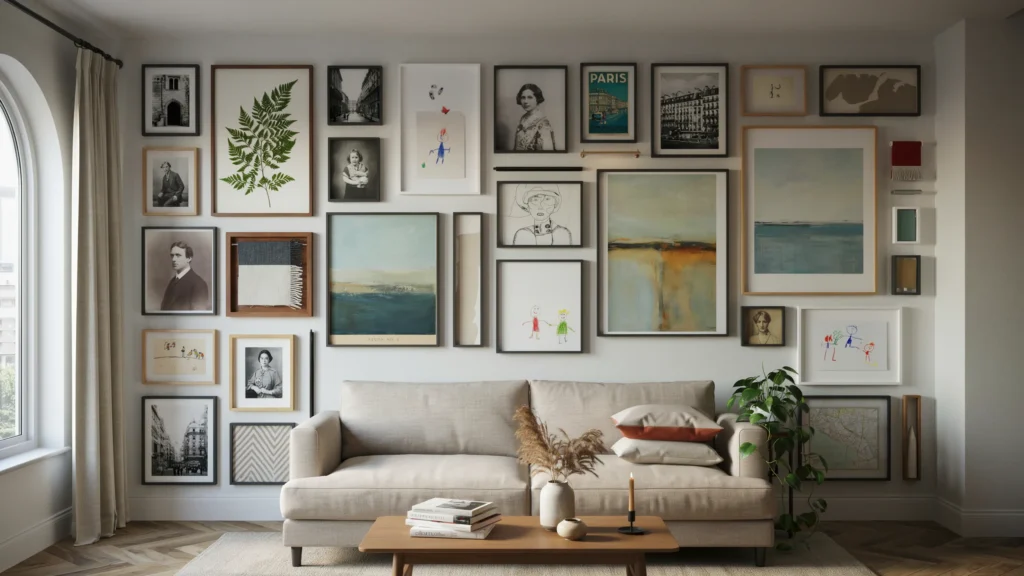
Nothing makes an apartment feel like home faster than a wall filled with art, photos, and prints that actually mean something to you. A gallery wall works especially well in small apartments because it draws the eye without requiring any additional furniture or floor space, and it can grow and evolve with you over time. Mix frame sizes and finishes for an eclectic, collected-over-time look, or keep frames uniform for a cleaner, more gallery-style presentation. Hanging the collection slightly above eye level, rather than centered on the wall, also helps draw the ceiling upward and makes the whole room feel taller.
9. Layer Lighting for Warmth and Depth
Overhead apartment lighting is almost always flat, harsh, and uninviting on its own. The fix is layering: combine ambient ceiling light with a floor lamp, a table lamp, and even accent lighting like a picture light or a warm LED strip tucked behind a shelf. Three independent light sources let you adjust the mood of a room throughout the day, from bright and functional in the morning to soft and warm in the evening, and eliminate the harsh, one-note glow that makes so much rental lighting feel impersonal and clinical.
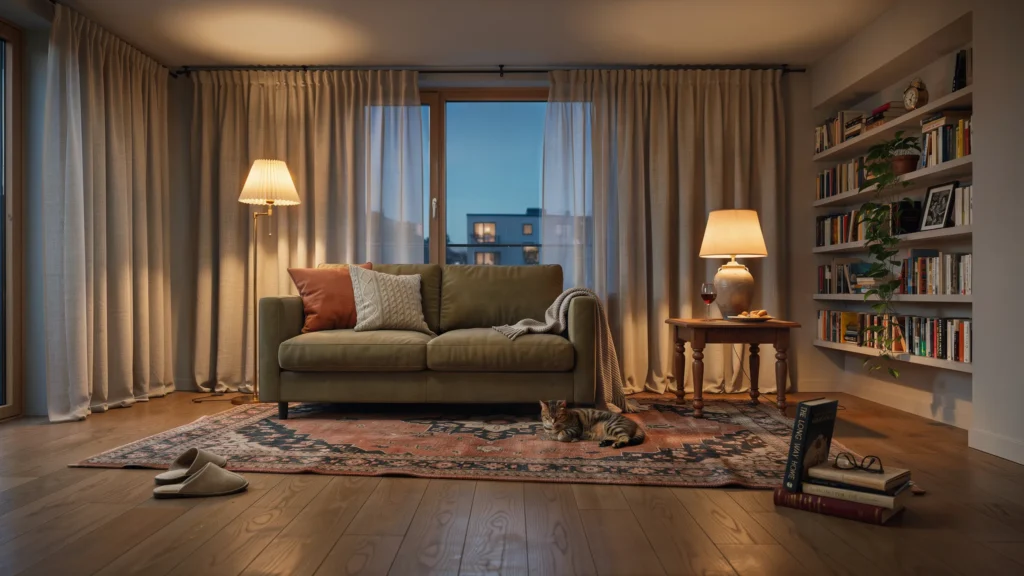
10. Try Ceiling-Height Curtains
Hanging curtains from as close to the ceiling as possible rather than directly above the window frame is one of the easiest tricks for making a small apartment feel noticeably taller. The extra vertical length draws the eye upward and visually stretches the whole room, even if the actual window itself is fairly modest in size. Choose a rod that spans slightly wider than the window frame too, so the curtains can be pulled fully back during the day to maximize the amount of natural light entering the room, then drawn closed in the evening for privacy and warmth.
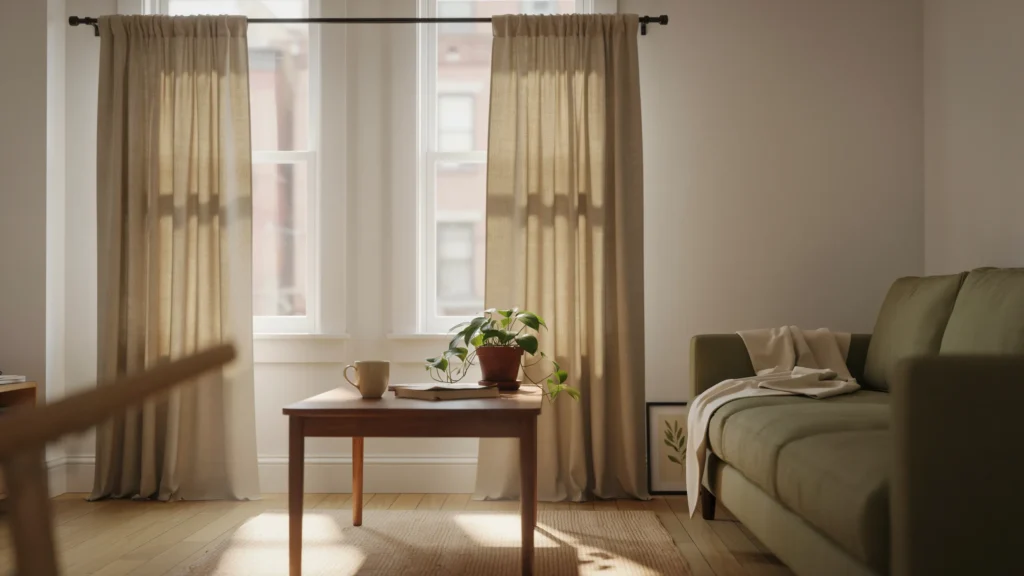
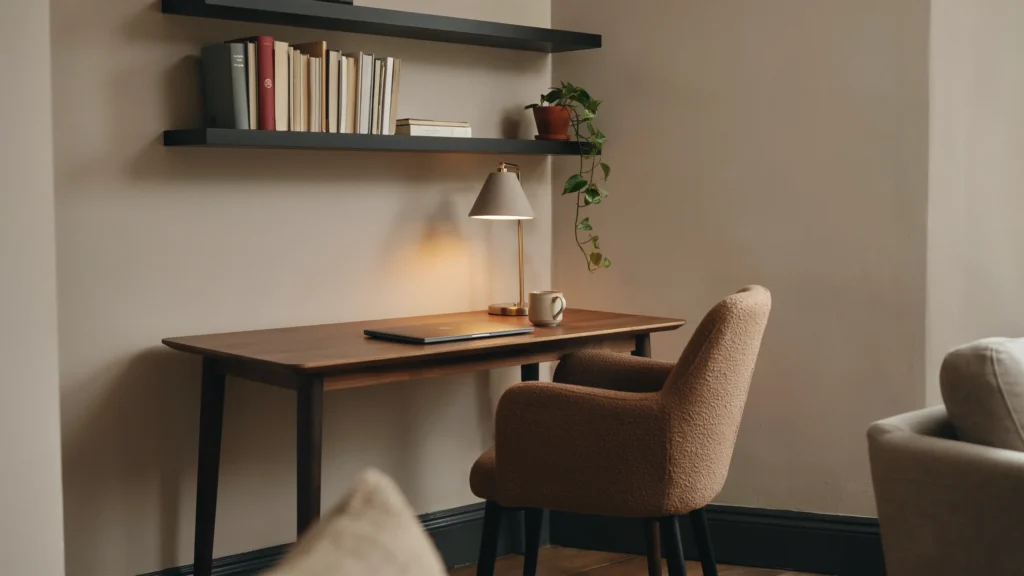
11. Create a Dedicated Work Corner
With remote and hybrid work now a permanent fixture for many renters, apartments need a work zone that doesn’t take over the entire living space. A slim desk tucked into an underused corner, paired with a comfortable chair and a wall-mounted shelf for supplies, creates a functional office nook that can be visually “closed off” at the end of the workday. Orienting the desk away from the main seating area, rather than facing it, also helps signal a psychological separation between work mode and relaxation mode, even when both zones technically exist in the same room.
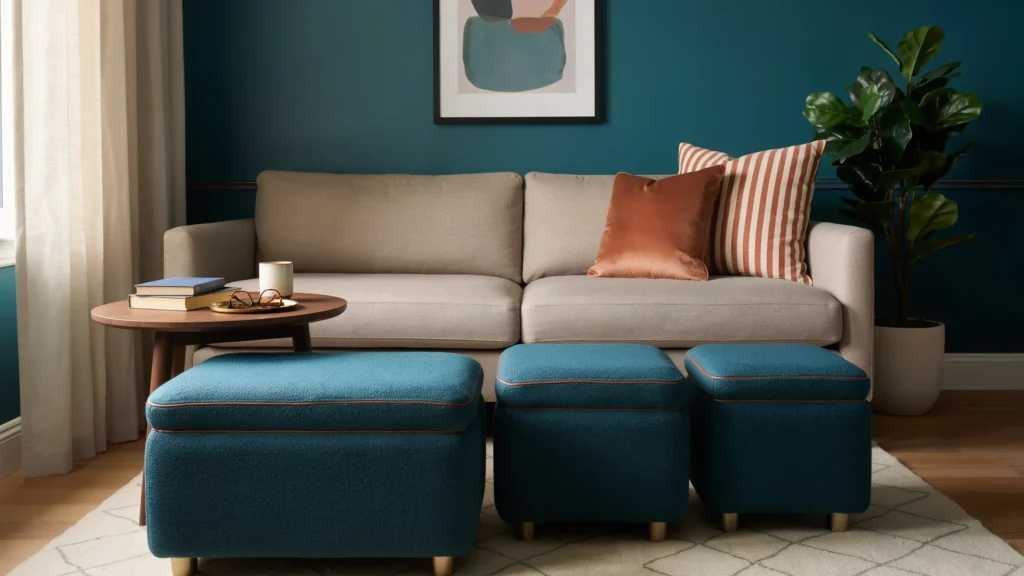
12. Use Nesting Ottomans Instead of a Coffee Table
A traditional coffee table is often the bulkiest, most immovable piece of furniture in a small living room. Swapping it for a set of nesting ottomans solves that problem instantly they provide a stable surface for drinks and books, extra seating whenever guests come over, and can be tucked together to reclaim floor space whenever you need it for yoga, a game night, or simply more room to move. Choose ottomans with hidden storage lids for an added functional bonus, giving you a place to stash blankets, remotes, or magazines out of sight.
13. Install Open Shelving Instead of Bulky Cabinets
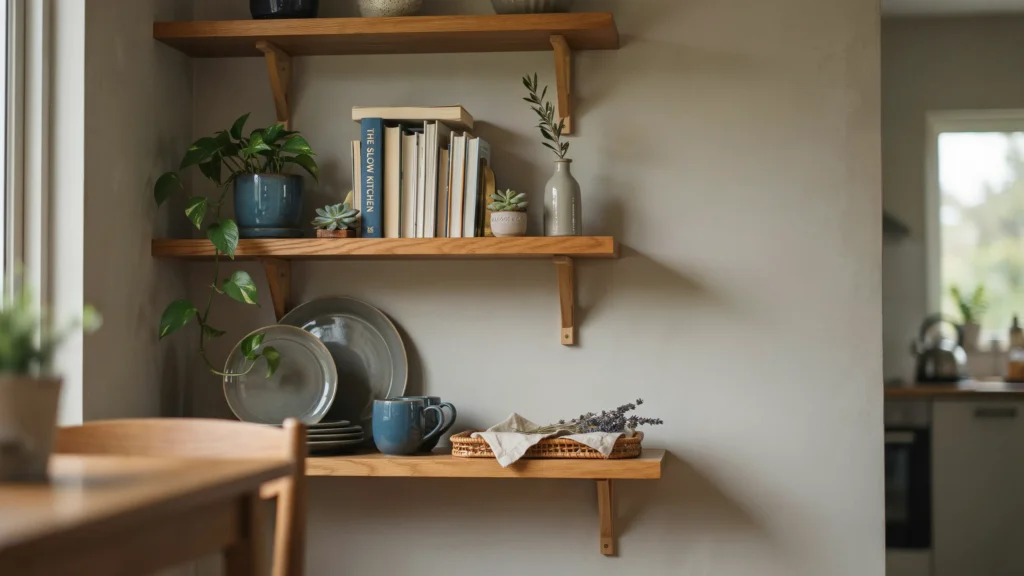
Closed cabinetry can make a small room feel heavier and more enclosed than it actually needs to be. Open shelving, by contrast, keeps sightlines clear and turns everyday items books, plants, ceramics, and glassware into part of the room’s overall decor rather than something hidden away behind a door. It works especially well in kitchens and living rooms alike, giving you meaningful storage without the visual weight of solid doors and frames closing in on the space. Just be mindful to style open shelves with intention, since everything on display becomes part of the room’s design.
14. Embrace a Feature Rug System
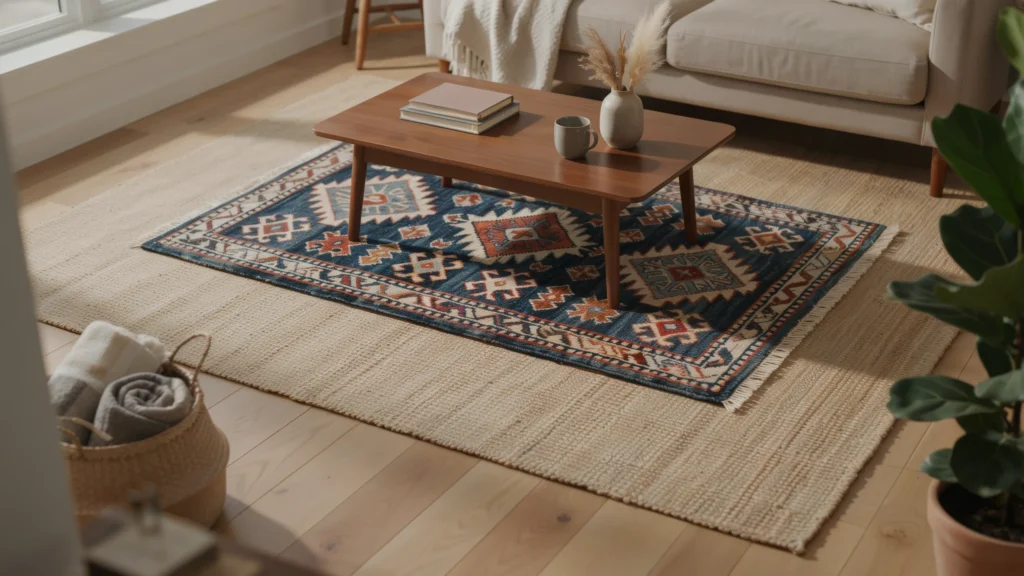
Rather than settling for one plain rug, layer a large natural-fiber base like jute or sisal with a smaller patterned rug on top. This layered approach adds depth, texture, and personality to a plain apartment floor, and it’s an easy, low-commitment way to introduce pattern or color without committing to it on the walls or furniture. It also solves a common apartment problem: base rugs are often the most affordable way to cover a large floor area, while the smaller patterned layer on top lets you experiment with bolder colors and motifs at a fraction of the cost of a full-size statement rug.
15. Mix Vintage and Modern Pieces
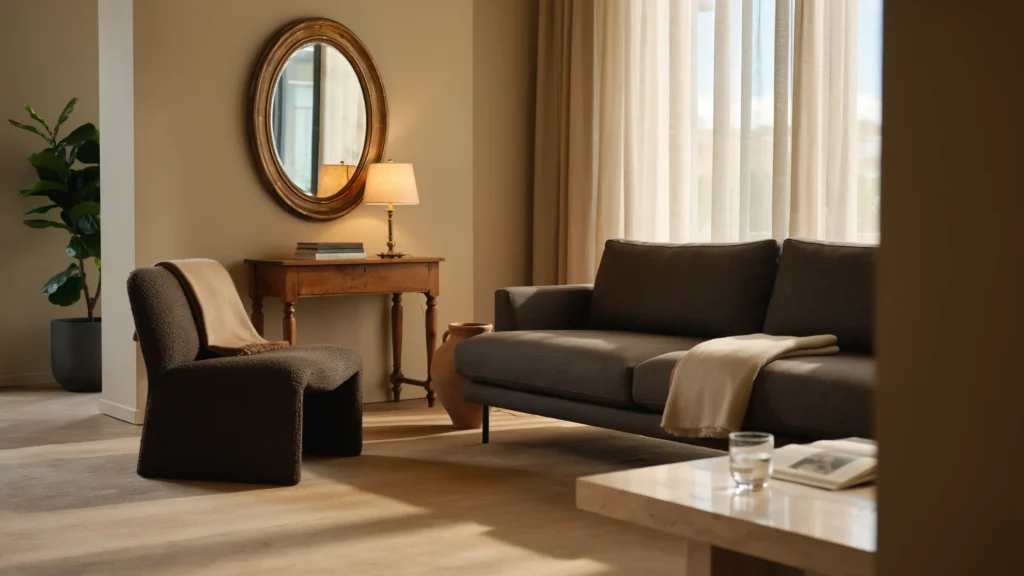
New, matching furniture sets can make an apartment feel generic, temporary, and a little like a showroom rather than a home. Mixing in a few vintage or secondhand finds an antique side table, a thrifted mirror, a well-loved armchair with real character gives the space history and warmth that brand-new pieces alone simply can’t replicate. It also tends to be far more budget-friendly than furnishing an entire apartment from scratch, and it means your home will never look exactly like anyone else’s, no matter how similar the floor plan.
16. Use Mirrors to Expand the Space
Few tricks are as effective, or as affordable, as a well-placed mirror. Hanging a large mirror directly across from a window bounces natural light deeper into the room and visually doubles the sense of space, making even a windowless hallway or a dim corner feel brighter and more open. Beyond pure function, an oversized mirror also acts as a statement piece in its own right, especially when framed in a bold material like brass, black metal, or reclaimed wood, turning a practical fix into an intentional design moment.
17. Add a Cozy Window Seat
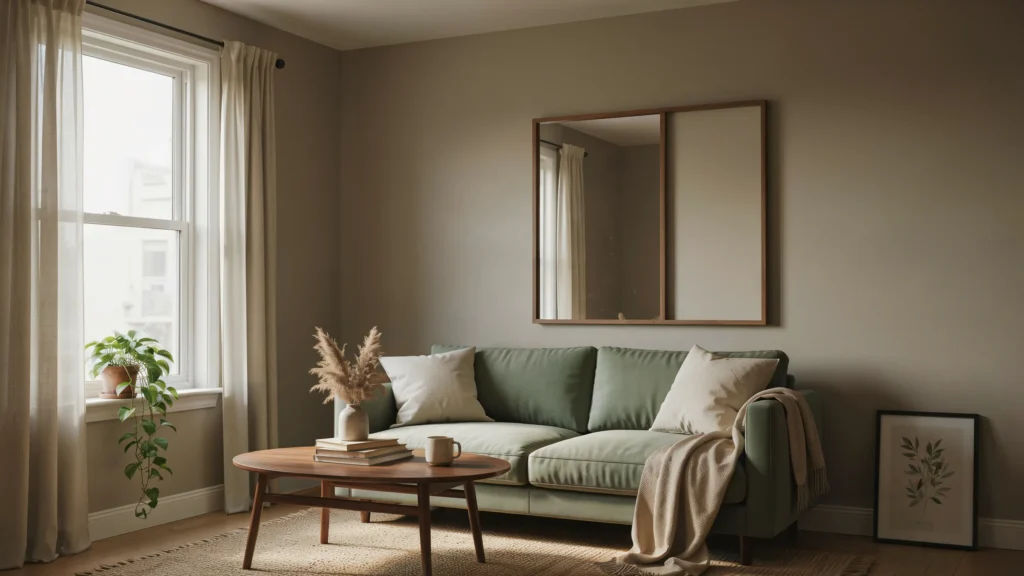
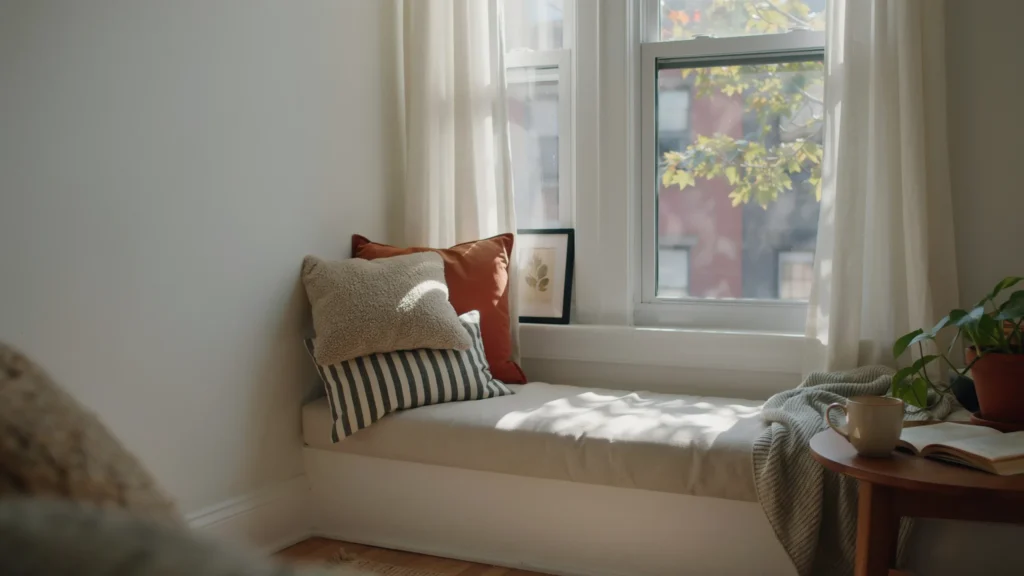
If your apartment has a deep windowsill or an awkward nook near a window, turn it into a built-in or DIY window seat rather than letting it go to waste. A cushioned bench with a few throw pillows creates an inviting reading spot, adds a small amount of hidden storage underneath if built correctly, and makes use of a corner that would otherwise sit empty or slowly become a dumping ground for shoes, mail, and miscellaneous clutter. It’s also one of the coziest features you can add to a rental, and most versions can be built without any permanent changes to the apartment itself.
18. Choose a Bold Sofa Color
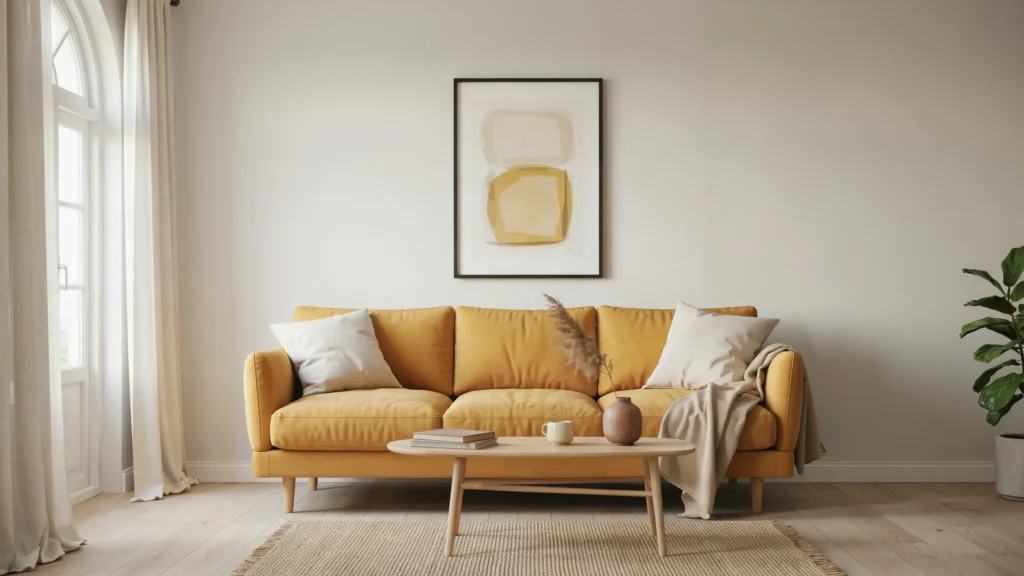
Renters are often told to stick to neutral furniture in case they need to sell it or move it later, but a bold sofa color can be the single most impactful design choice in an entire apartment. A deep emerald, mustard, or terracotta sofa immediately gives a room personality and signals confidence in your design choices, rather than a room that’s playing it safe. It’s also far easier to swap out a rug, throw pillows, or curtains to complement a bold sofa than it would be to repaint an entire apartment’s worth of otherwise neutral furniture down the line.
19. Transform the Balcony Into an Outdoor Living Room
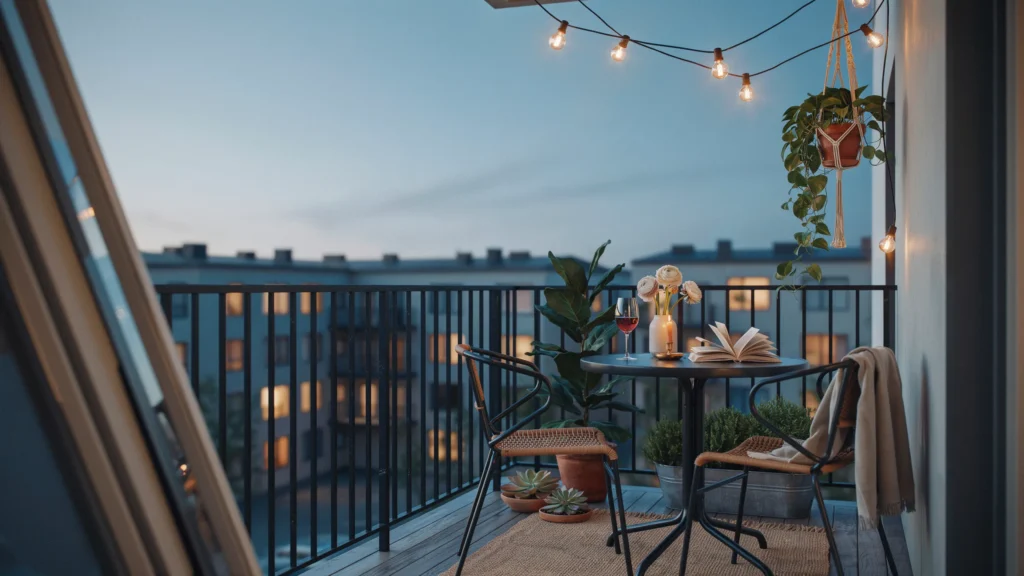
A balcony is one of the most underused spaces in an apartment, often reduced to a spot for storing bikes, bins, or forgotten boxes. Even a small one can become a genuine second living room with a compact bistro table, two chairs, a few potted plants lined along the railing, and warm string lights strung overhead for evening ambiance. Treating the balcony as a true extension of your indoor living space rather than just an afterthought adds meaningful usable square footage and gives you a proper outdoor retreat without ever having to leave the building.
Frequently Asked Questions
1. How can I make my small apartment living room look bigger?
Use ceiling-height curtains, a large mirror positioned opposite a window, light and neutral wall colors, and furniture that’s properly proportioned to the size of the room. Floating the sofa away from the wall, keeping the floor clear of clutter, and choosing multi-functional pieces over bulky single-purpose furniture also help the space feel more open, airy, and intentional rather than cramped.
2. What is the best furniture for a small apartment?
Look for multi-functional pieces storage ottomans, nesting tables, drop-leaf dining tables, and daybeds that serve more than one purpose so you get the most value out of every square foot. Furniture on slim, raised legs also helps a small room feel less visually heavy, since you can see the floor beneath it rather than a solid block taking up the space.
3. Can I redecorate my apartment if I’m renting?
Yes, in most cases. Renter-friendly options like peel-and-stick wallpaper, removable accent panels, tension curtain rods, and adhesive wall hooks let you personalize a space significantly without violating most standard lease agreements. That said, always check your specific lease terms before making any paint changes, drilling into walls, or altering fixtures, since rules vary widely by building and landlord.
4. What colors work best in a modern apartment?
Warm, earthy tones like terracotta, sage green, and warm taupe are especially popular for modern apartment design in 2026, often paired with one neutral base color and a single bold accent color to keep the overall palette cohesive rather than overwhelming. This approach gives a space warmth and personality without making it feel visually chaotic.
5. How do I zone an open-plan apartment without building walls?
Use rugs, lighting, and furniture placement to define separate functional zones within one open room. A dining table anchored under a statement pendant light, a sofa floated away from the back wall, and a distinct rug placed under each seating or dining area all work together to create the feeling of separate rooms within a single open floor plan, without any construction involved.
6. What’s a budget-friendly way to upgrade an apartment living room?
Start with soft furnishings new throw pillows, a layered rug, and a floor lamp before investing in larger, more expensive pieces of furniture. A single accent wall, a curated gallery wall, or one statement lighting fixture are also relatively low-cost changes that deliver a disproportionately large visual impact for the money spent.