Window treatments are often the last detail homeowners consider, but they deserve to be one of the first. Beyond their obvious role in providing privacy, curtains, blinds, and shades set the mood of a room, control natural light, add texture and color, and can even make a space feel larger or more architecturally refined. The right window treatment doesn’t just finish a room it can guide the entire design direction. That’s why we’ve put together this list of the 20 Best Window Treatment Ideas for Every Room, so you can find inspiration tailored to your unique space.
Whether you’re dressing a cozy bedroom, a sun-drenched living room, or a hardworking kitchen, there’s a window treatment idea here to elevate the space. Below are our 20 Best Window Treatment Ideas for Every Room in your home, along with practical tips to help you choose the perfect style, fabric, and fit.
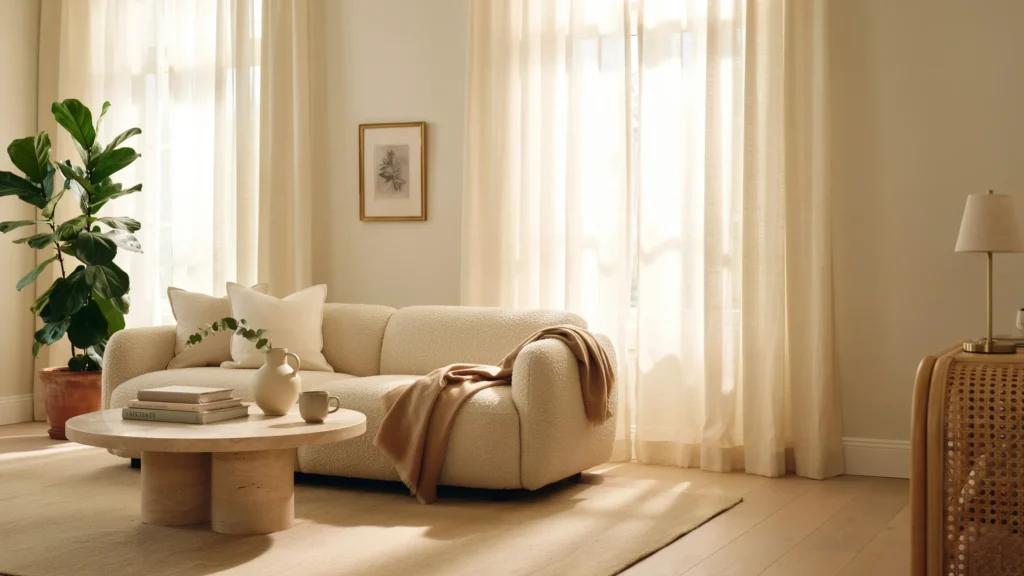
1. Choose Colors That Match Your Room’s Mood
The color of your window treatment sets the tone for the entire room. Neutral tones like white, beige, and gray offer a timeless, versatile backdrop that makes a space feel open and serene, while bold colors create a striking focal point and inject energy into the design. Matching your curtain color to your existing scheme is the easiest way to tie a room together seamlessly.
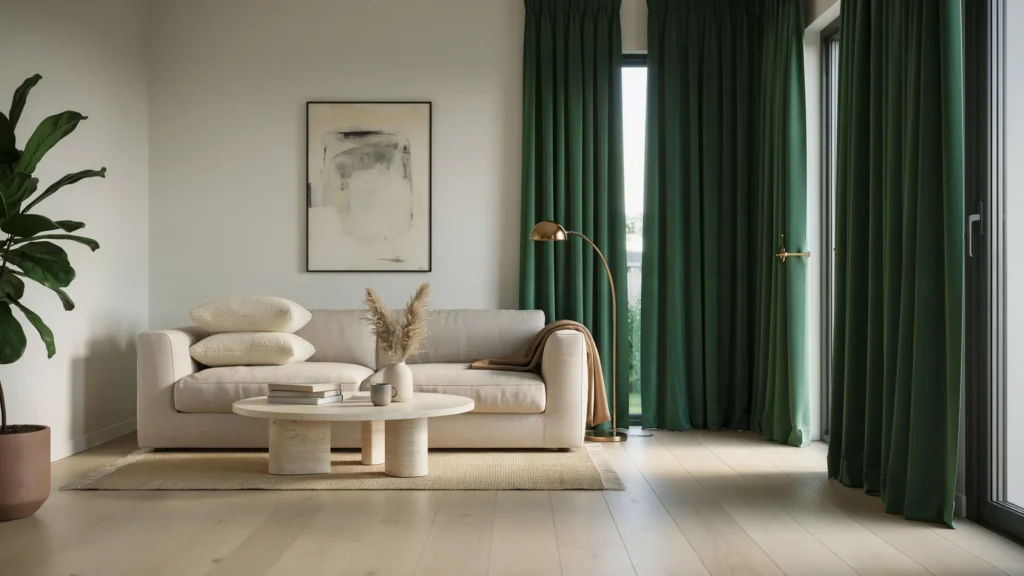
2. Select the Right Fabric and Drape
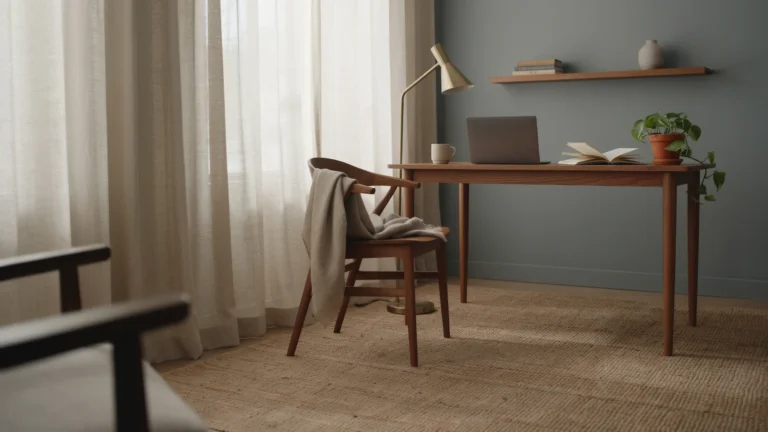
The fabric you choose directly affects how much light enters a room and the overall ambiance it creates. Lightweight linen curtains let light gently filter through while still offering privacy, whereas heavier fabrics like velvet provide a cozier, more enclosed feel. For best results, curtains should hang long ideally to the floor or slightly beyond for a more luxurious look.
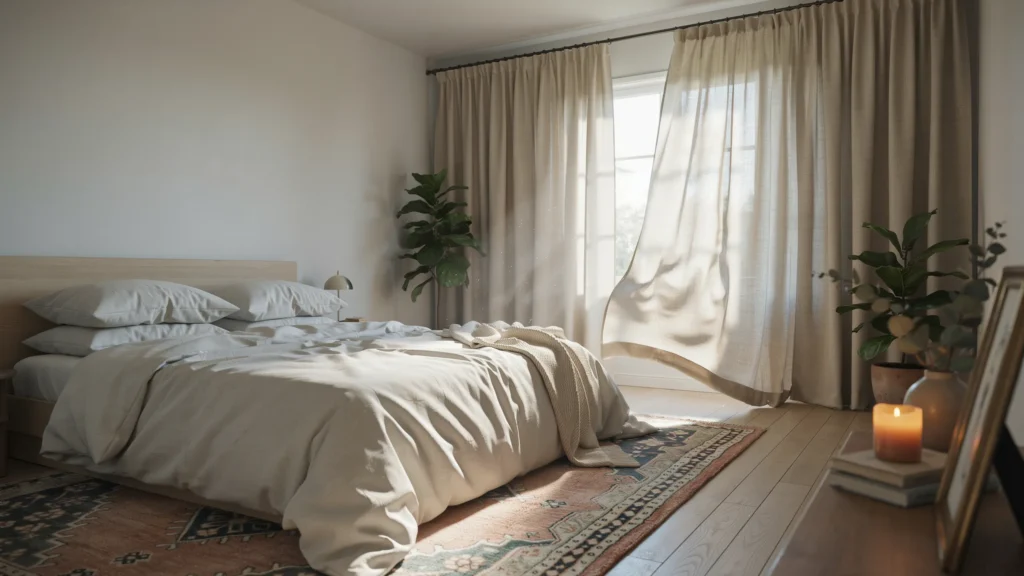
3. Install Curtains That Swing for Tricky Spaces
For windows or French doors that open inward, traditional curtains or blinds can create awkward bunching. Curtains hung on portiere rods that swing open and closed with the door offer a smart, stylish solution, allowing full functionality without ever blocking the opening.
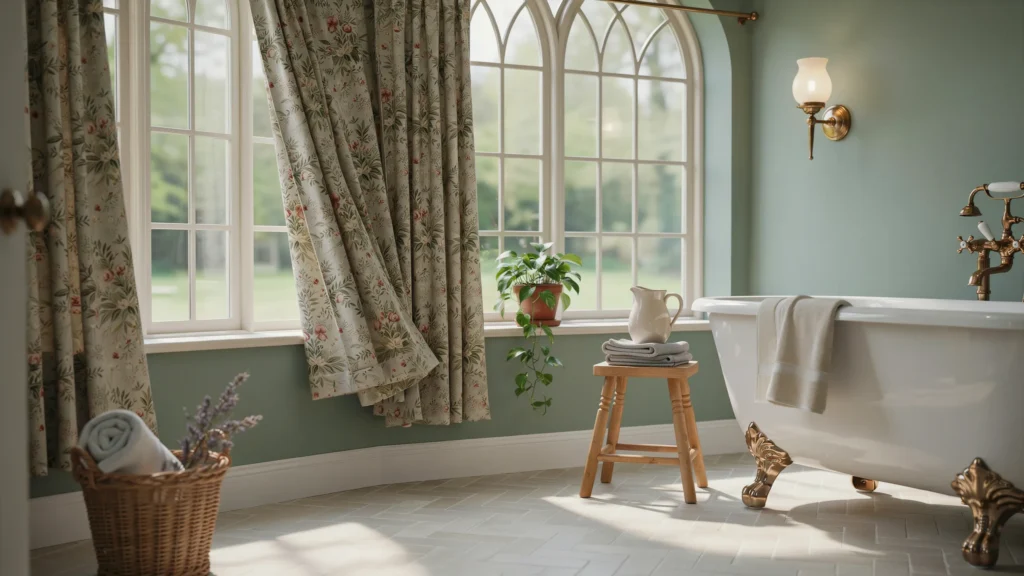
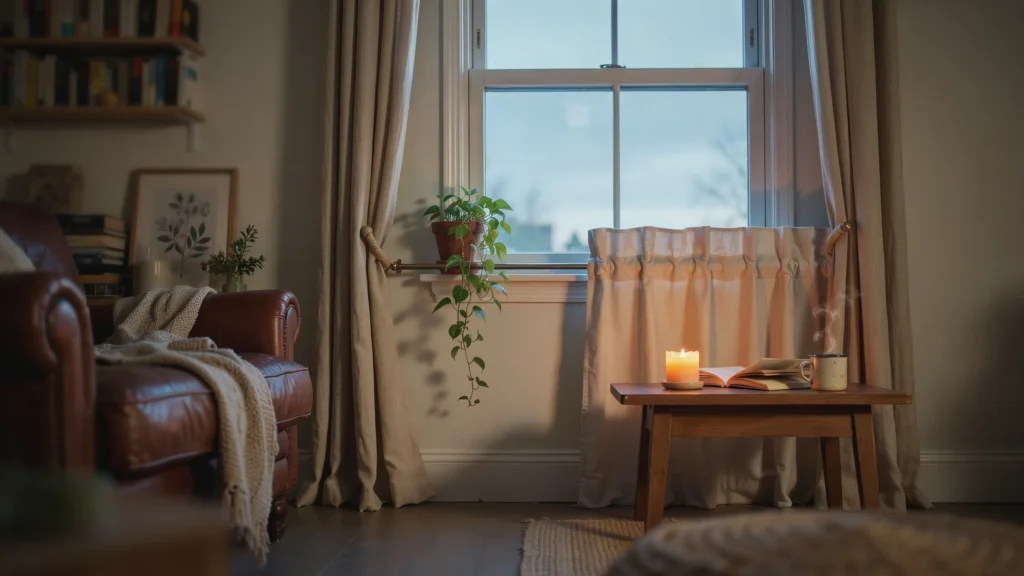
4. Layer Full-Length Curtains With Cafe Curtains
Double-dressing your windows with both a sheer cafe curtain and full-length drapes is a popular trend that balances privacy with natural light. The cafe curtain covers just the lower half of the window for daytime privacy, while the longer curtains can be drawn for a cozy, cocooned feeling in the evening.
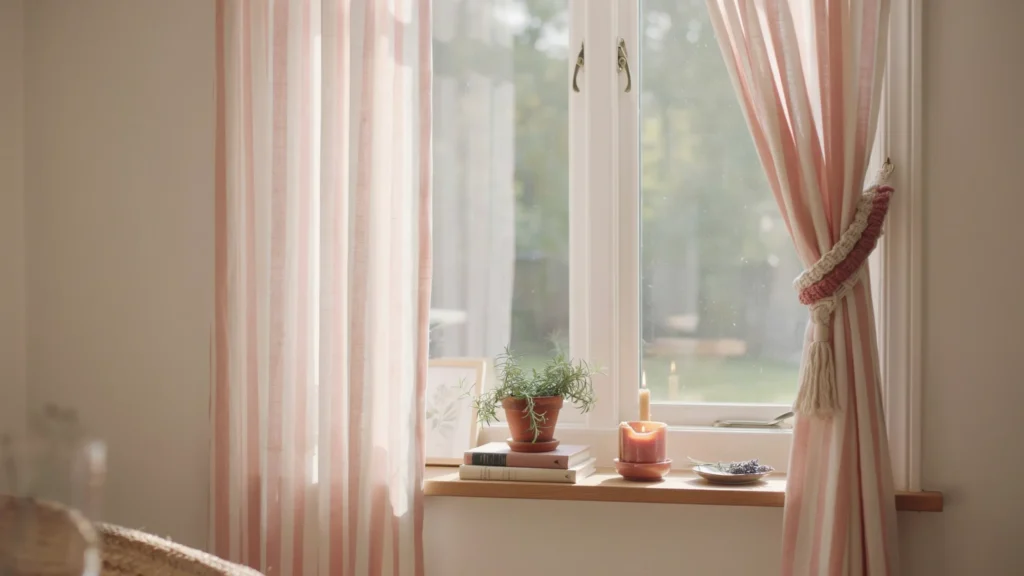
5. Add Decorative Tiebacks for Structure
Curtain tiebacks do more than hold fabric out of the way they add a sense of elegance and shape the way light enters a room. Whether you choose a woven rope tieback for coastal charm or a polished brass hook for a formal look, this small detail makes a noticeable difference in how curated your window treatment feels.
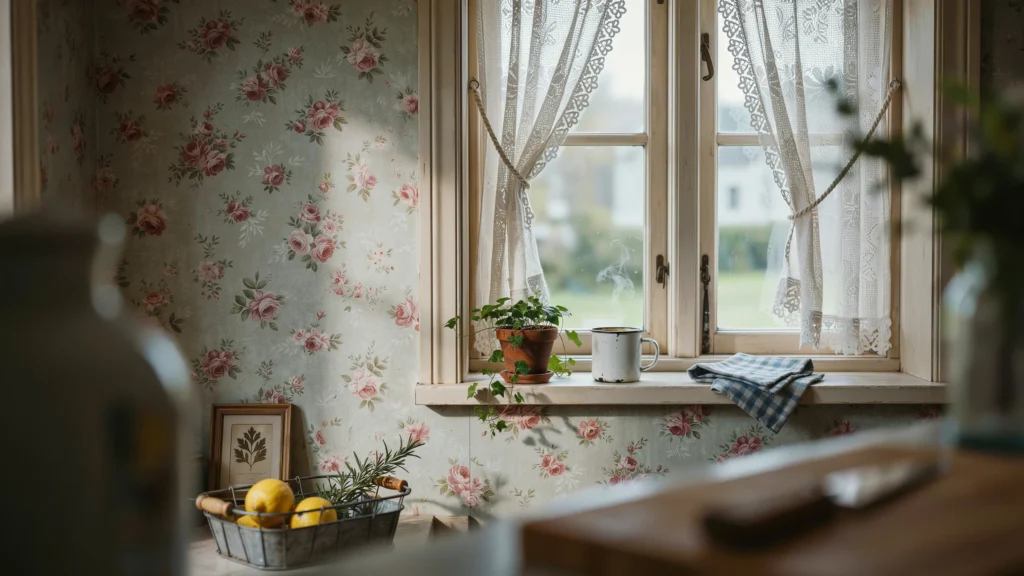
6. Lean Into Lace for Timeless Softness
Lace curtains and blinds bring a romantic, nostalgic quality to a room that few other materials can match. They gently filter light into a soft, diffused glow while maintaining privacy, adding an airy layer that subtly transforms the mood of any space.
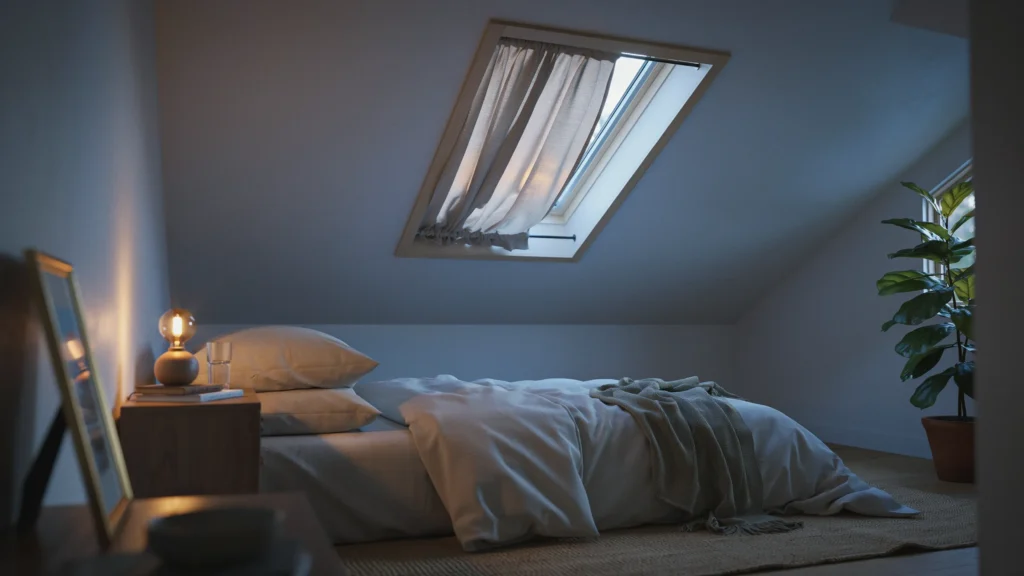
7. Dress Skylights With Clever Pocket Curtains
Skylights bring beautiful natural light but can be tricky to cover when privacy or darkness is needed. Installing rods at both the top and bottom of the window with a pocket curtain allows you to block light completely when desired while adding a unique layer of texture to an often-overlooked architectural feature.
8. Hang Curtains Floor-to-Ceiling for Added Height
One of the simplest ways to elevate a room is to hang curtains from ceiling height all the way to the floor, with no gaps in between. This trick draws the eye upward, making the entire room feel taller and more expansive, while creating a clean, sophisticated aesthetic that never feels dated.
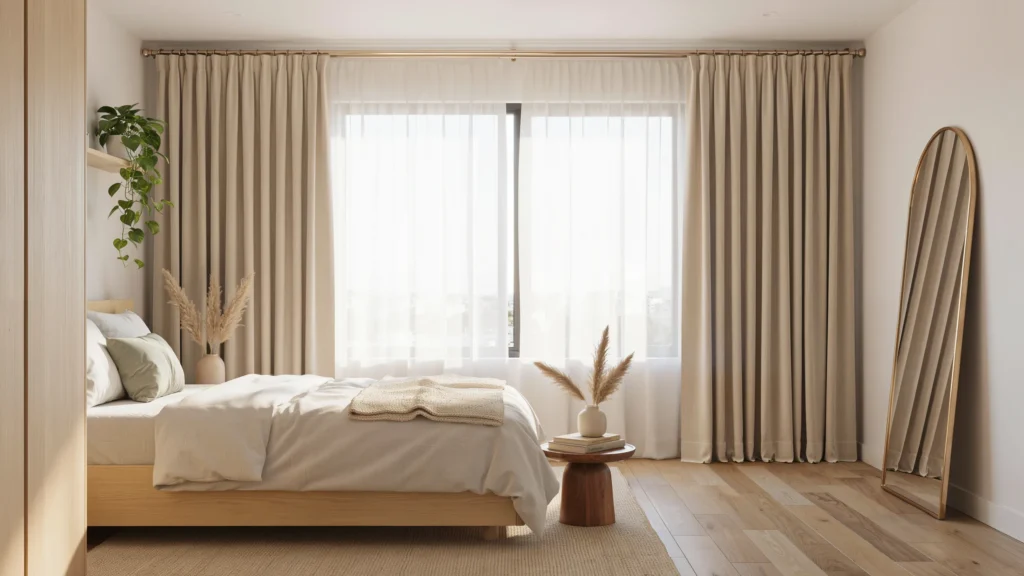
9. Go Custom for a Truly Bespoke Look
When ready-made curtains simply won’t do, custom drapery allows you to choose the exact fabric, trim, and finish that suits your vision. Working with specialty fabric houses or even repurposing garment-industry textiles can result in a one-of-a-kind window treatment that elevates the entire room to a luxurious, tailored level.
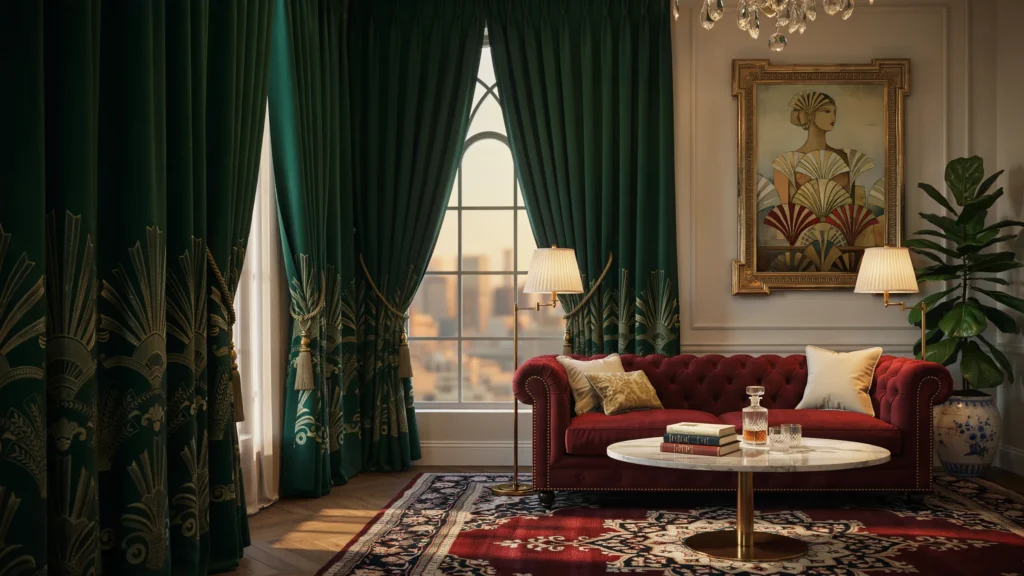
10. Embrace the Comeback of Austrian Blinds
Once considered old-fashioned, ruched Austrian blinds are making a stylish return in modern interiors. Their soft, gathered folds add texture and romance to a space, and you can adjust the fullness depending on whether you want a dramatic statement or a more understated, practical look for kitchens and dining rooms.
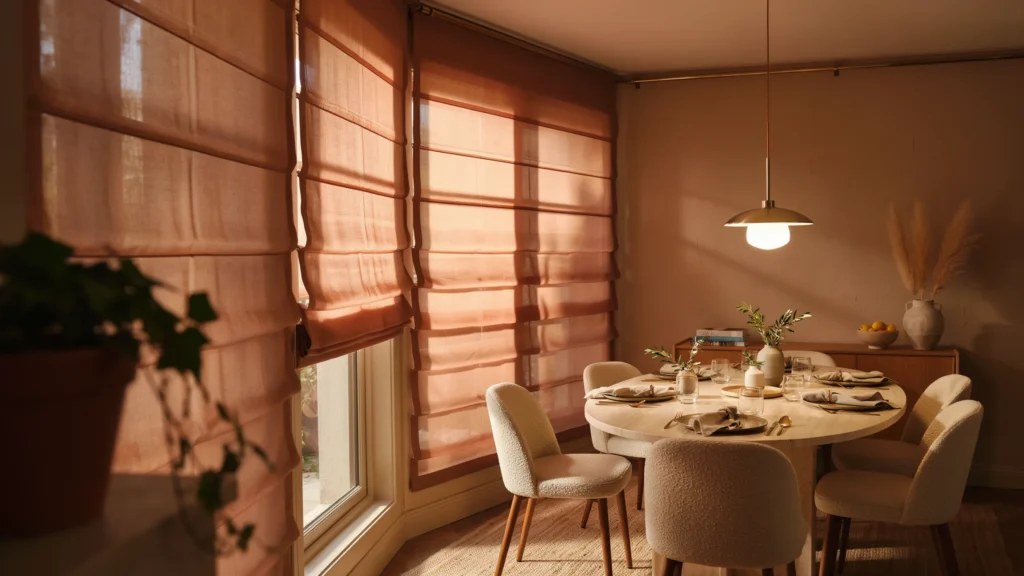
11. Make Small Windows Look Larger
Curtains hung just at the edge of a small window frame can make the whole room feel cramped. Instead, extend the curtain rod well beyond the window and hang the panels closer to the floor for an elegant illusion of height and width an easy trick that instantly makes any window look more expensive.
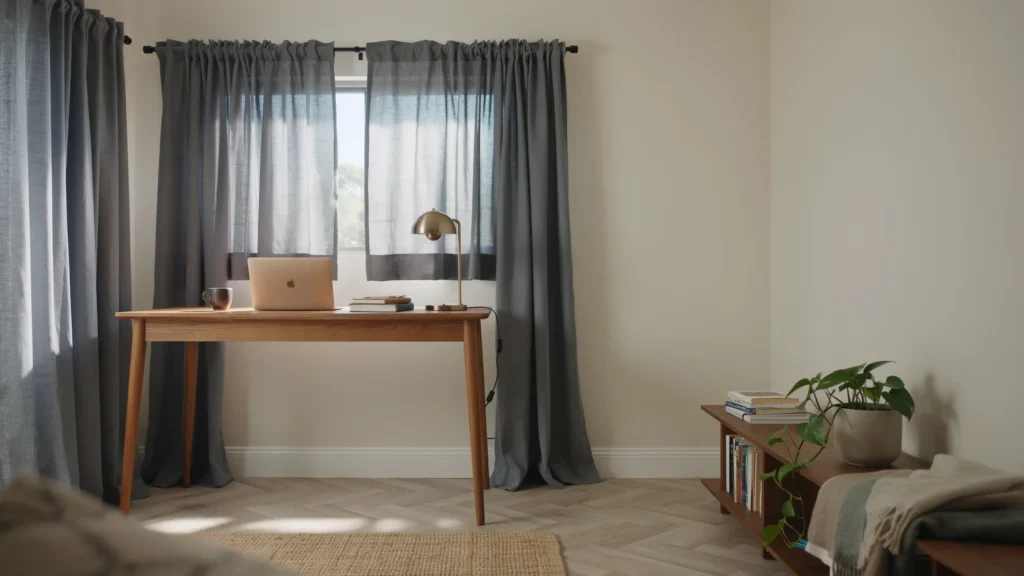
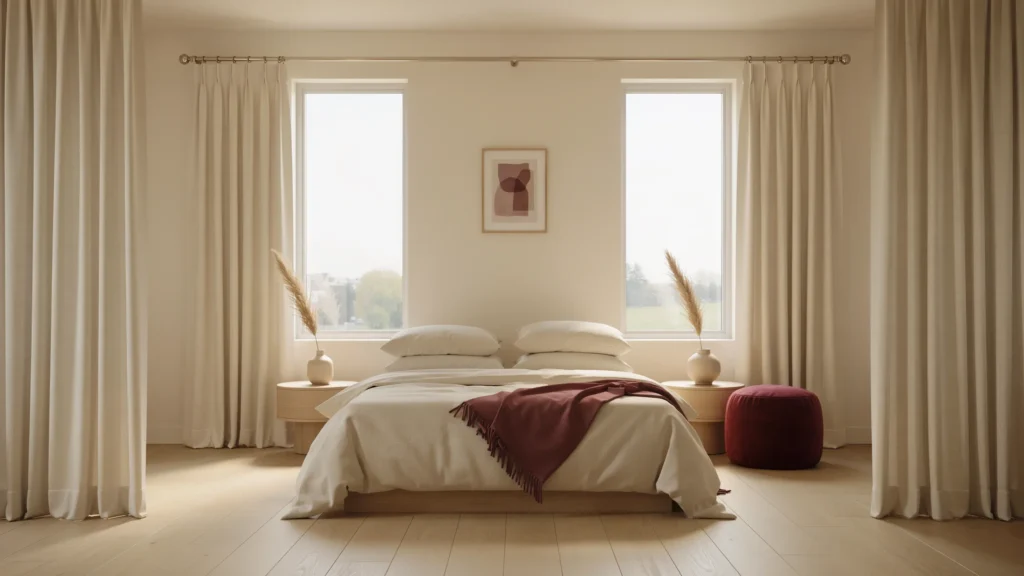
12. Create a Seamless Look With a Single Rail
For rooms with two windows close together, running a single curtain rail across both eliminates visual clutter and creates a streamlined, cohesive look. This approach also allows you to push curtains fully open, letting in maximum natural light when desired.
13. Use a Single Panel for Petite Windows
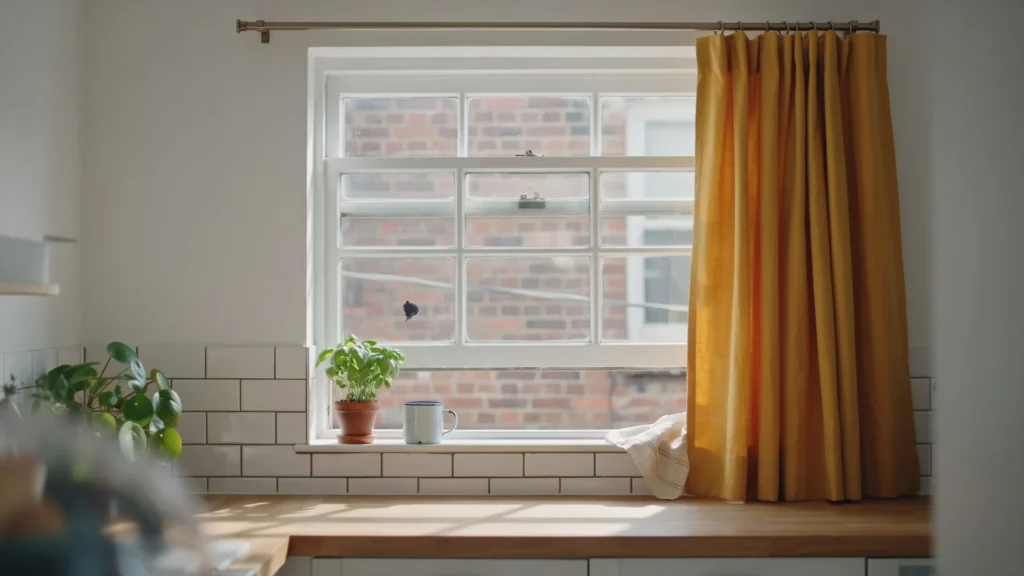
Not every window needs a pair of curtains. For smaller windows, a single bold panel pushed to one side can maximize natural light while still making a stylish statement. This approach works particularly well in kitchens or bathrooms where space is limited.
14. Frame the Window as a Focal Point
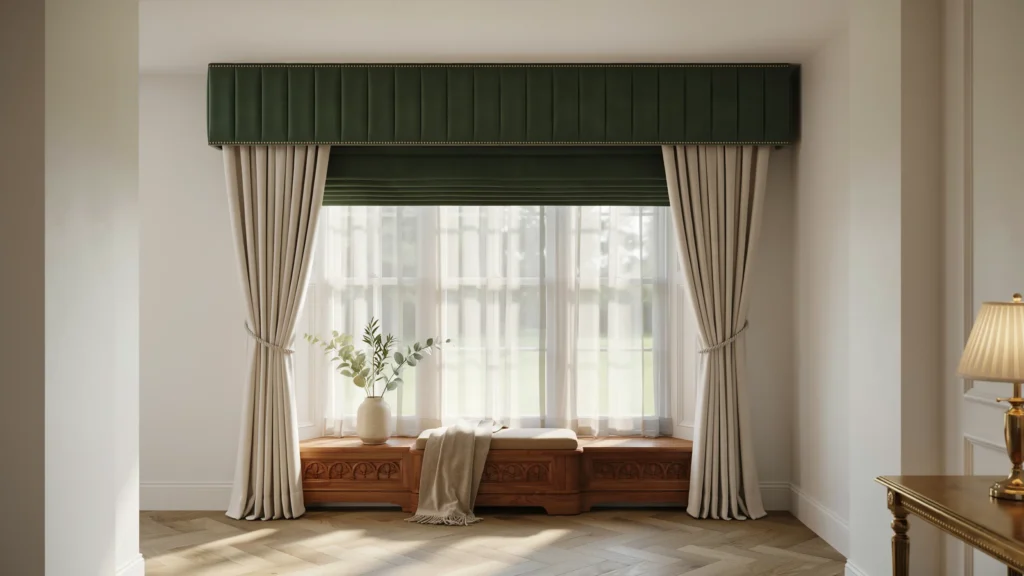
Architectural details like cornices, pelmets, or a decorative lambrequin can transform a simple window into the focal point of the entire room. These structural elements add a tailored, polished finish that works especially well in formal living and dining spaces.
15. Create the Illusion of Higher Ceilings
If your room has lower ceilings, mounting curtain rods as high as possible well above the window frame draws the eye upward and makes the entire space feel taller. This same trick works for Roman blinds, which can be fitted higher and pulled down to conceal bare wall space above the window.
16. Pattern-Match With Upholstery or Wallpaper
Coordinating your window treatment with existing patterns in the room whether on upholstery or wallpaper creates a cohesive, professionally designed look. The key is to introduce subtle variation rather than an exact match, keeping the room feeling layered and intentional rather than overly matchy.
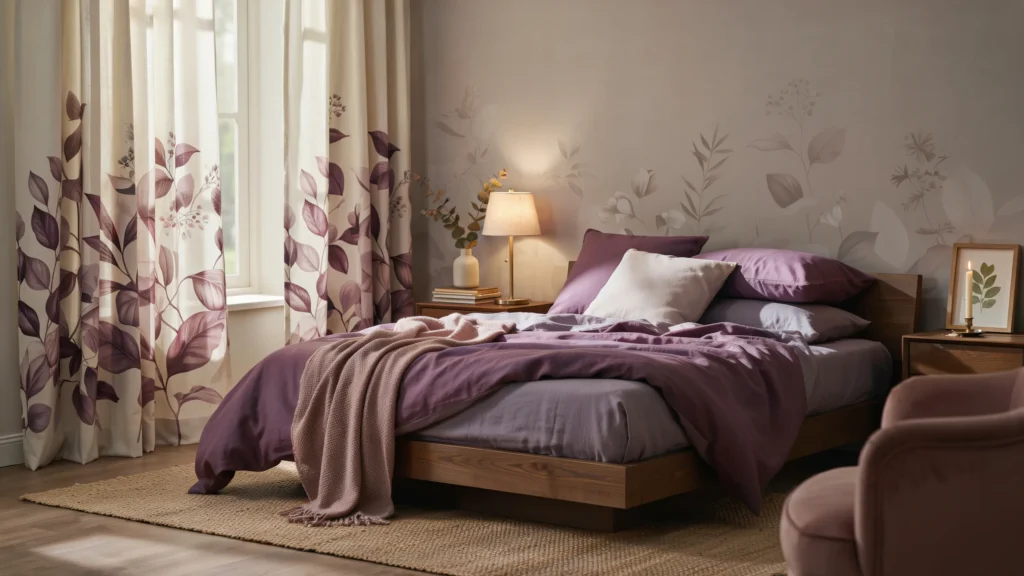
17. Choose Decorative Blinds for Color and Pattern
Blinds don’t have to be purely functional. A bespoke, patterned blind can bring color, texture, and personality into a room, especially when paired with a sheer layer underneath for added light control. Choosing a fabric that echoes your existing soft furnishings ties the whole space together beautifully.
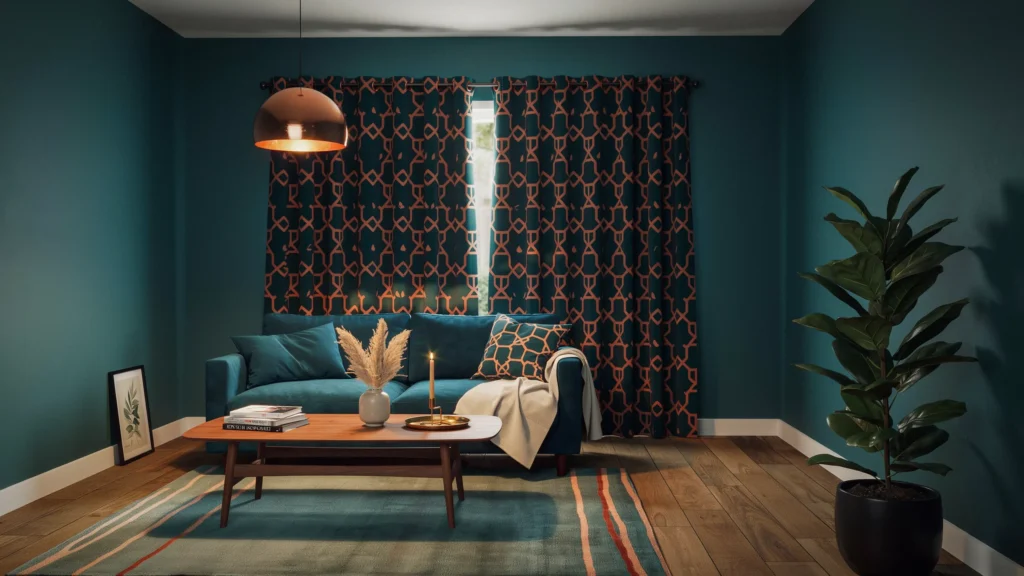
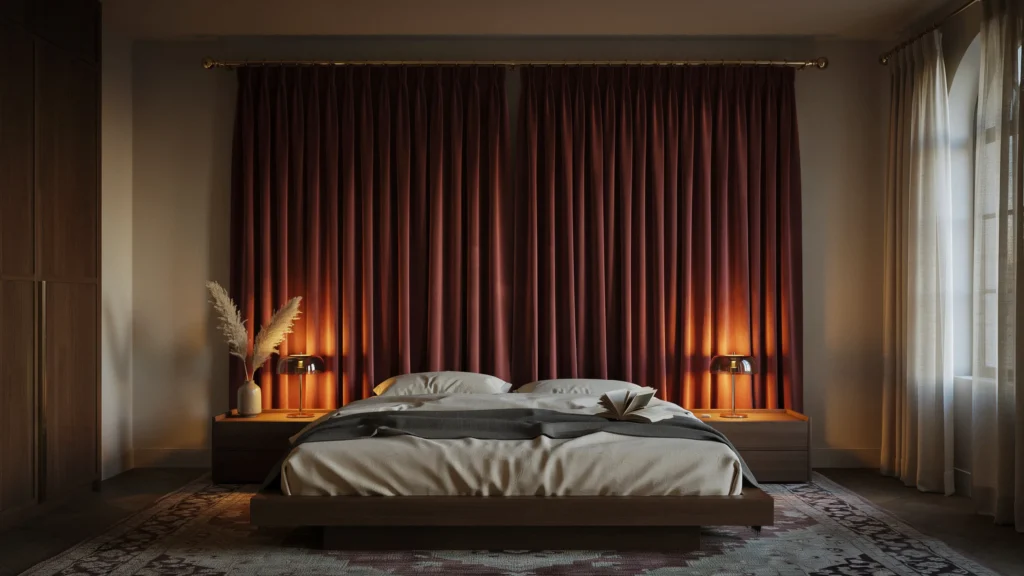
18. Wrap the Room in Wall-to-Wall Curtains
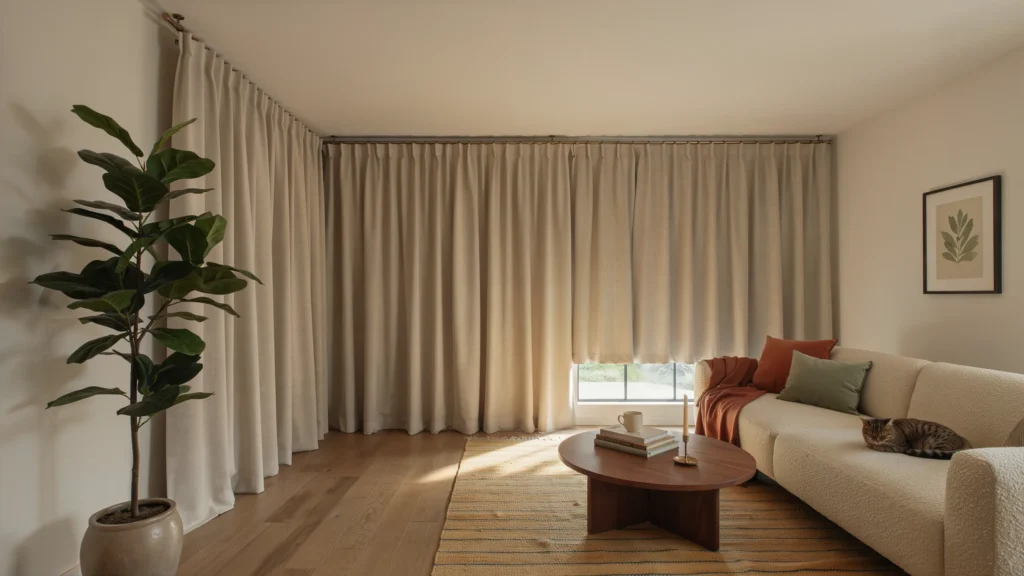
For a truly cocooning, luxurious feel, extend curtains wall-to-wall in front of large windows or doors. This approach not only blocks out light and sound but also helps insulate the room against drafts, making it an especially smart choice for bedrooms that open onto a patio or balcony.
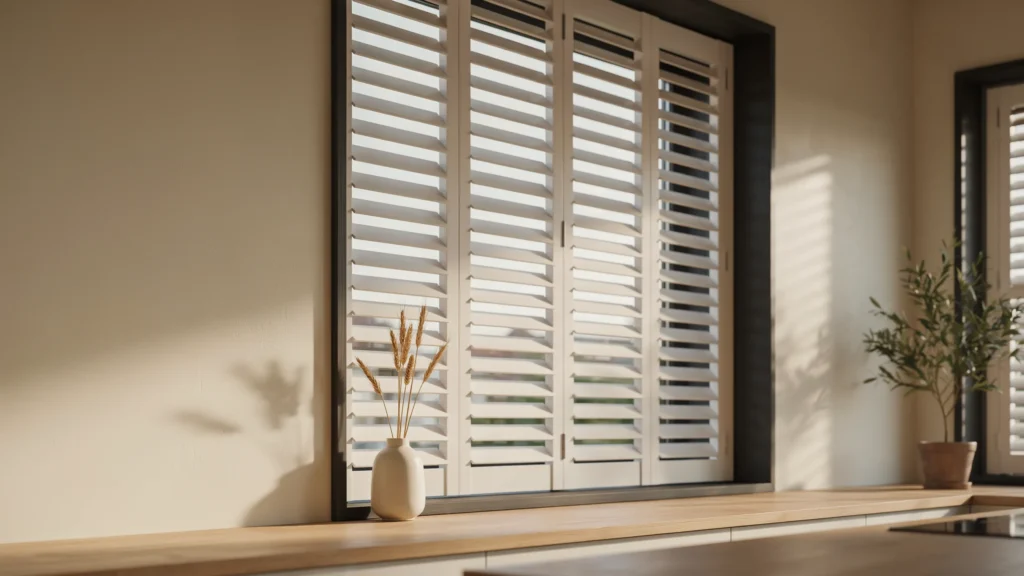
19. Install Shutters for Timeless Privacy and Light Control
Louvered shutters offer unmatched control over natural light while adding a timeless, elegant look to kitchens, bathrooms, and sunrooms. They’re also more durable and easier to clean than fabric treatments, making them a practical choice for high-moisture or high-traffic spaces.
20. Choose Natural Materials Like Linen for a Relaxed Feel
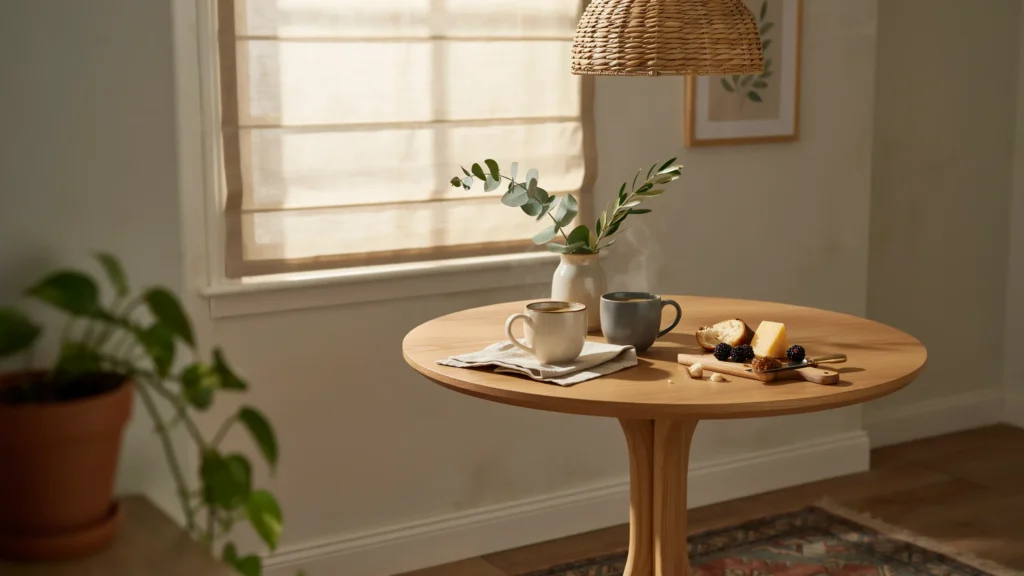
Linen curtains and Roman blinds bring an effortlessly relaxed, organic quality to any room. Their natural texture allows just the right amount of light to filter through while maintaining privacy, making linen an ideal choice for kitchens, breakfast nooks, and casual living spaces.
Frequently Asked Questions (FAQs)
1. How do I choose the best window treatment for my room? Start by identifying your primary need privacy, light control, insulation, or decorative appeal. Blackout curtains suit bedrooms, sheer panels work well in living spaces, and durable, washable fabrics are best for high-traffic areas like kitchens.
2. How should I measure my windows for curtains? Measure the full width of your curtain rod (not just the window) and aim for curtain panels that are 1.5 to 2 times that width for a full, elegant look. For length, measure from the rod to your desired endpoint, whether that’s the sill, the floor, or a slightly puddled effect.
3. Should window treatments be bold or simple? It depends on the room. Simple, neutral treatments work well in rental spaces or rooms with existing bold patterns, while bold, patterned options can create a striking focal point in living rooms or creative spaces. Layering a sheer base with a more dramatic curtain often offers the best of both worlds.
4. What’s the best window treatment for a bathroom? Lightweight, moisture-resistant options like Roman blinds, Venetian blinds, or sheer cafe curtains work best in bathrooms since they resist mildew and dry quickly, while still offering privacy and softness.
5. How can I make small windows look bigger with curtains? Extend your curtain rod beyond the window frame and hang panels close to the floor, mounting the rod higher than the top of the window. This creates the illusion of a larger, taller window.
6. Are shutters a good investment for my home? Yes, shutters offer excellent light control, durability, and timeless style, making them a great long-term investment for kitchens, bathrooms, and sunrooms where moisture and cleaning ease are priorities.
7. What fabric is best for a relaxed, casual look? Natural materials like linen offer a relaxed, effortless quality that works beautifully in casual living spaces, kitchens, and breakfast nooks, allowing soft light to filter through while maintaining privacy.
8. Can I use different window treatments in the same room? Absolutely. Mixing textures like pairing woven blinds with fabric curtains, or layering sheers with heavier drapes adds visual interest and gives you more control over light and privacy throughout the day.