A few years ago I stood in my own living room and could not work out what was wrong with it. The sofa was fine. The rug was fine. The paint color was one I had picked after three weekends of swatches taped to the wall. Everything on my list was checked off, and still the room felt flat, like a photo of a room rather than a place where someone actually lived.
The missing piece was the light itself. That is where industrial farmhouse lighting starts: not with a shopping list, but with one fixture chosen for warmth and shape.
Then a friend came over, looked up at the ceiling, and said the one thing I had missed. The light was wrong. The room had a plain builder grade flush mount that threw a cold, even glare over everything. It lit the room, but it gave it nothing. No warmth, no shadow, no shape.
That weekend I swapped the flush mount for a simple black metal cage pendant with a warm Edison bulb inside. It cost less than a new cushion set, and the change felt far bigger than the price. The wood in the coffee table looked richer, the evenings felt slower, and people sat down and stayed put instead of drifting toward the kitchen. One fixture did that.
That is the whole secret of industrial farmhouse lighting. It is not about buying a dozen fixtures or gutting a room. It is about choosing the right light for each room, one room at a time, and letting matte black metal, warm wood and a soft glow do the heavy lifting. This guide walks through the house room by room, with the sizes, heights and finishes that actually work, plus the budget tricks that keep the whole project affordable.
Start with one fixture in the room you use most. Pick matte black metal, warm wood or aged brass, a warm 2700K Edison style bulb, and hang it at the right height. That single change sets the tone for the whole house.
What Industrial Farmhouse Lighting Looks Like
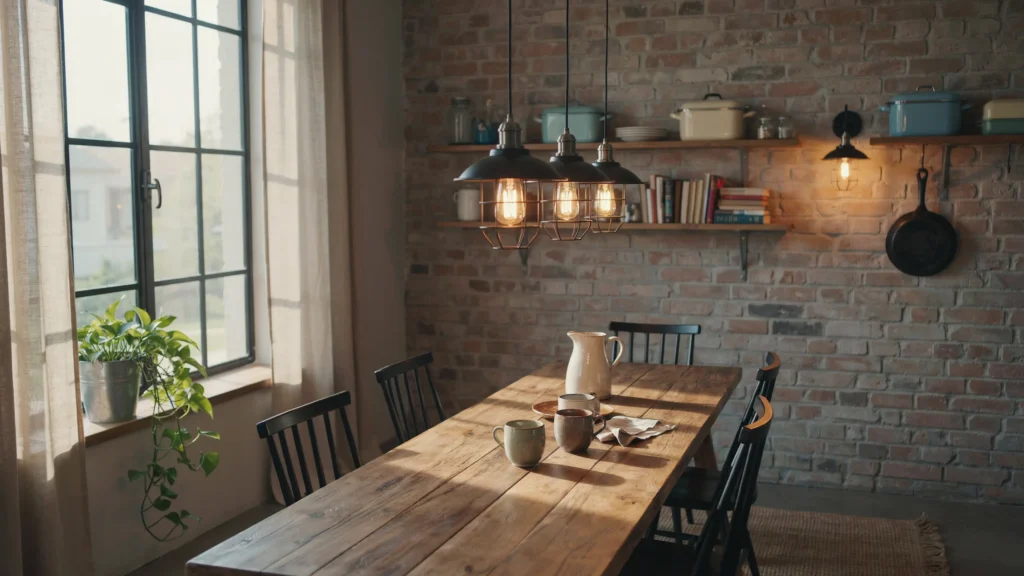
Before you shop, it helps to know what you are looking for, because the shops are full of fixtures that look close but miss the mark. Industrial farmhouse lighting sits right where two styles meet. The industrial side brings black metal, exposed bulbs, cage shades and clean, sturdy shapes. The farmhouse side brings warm wood, aged brass, soft linen and a glow that feels like evening, not a warehouse.
The combination works because the two sides balance each other. Metal on its own can feel cold and hard. Wood on its own can feel sweet and a little sleepy. Put them together and you get a room that feels both grounded and welcoming. A black metal pendant over a wooden table is the classic example, and it is classic for a reason.
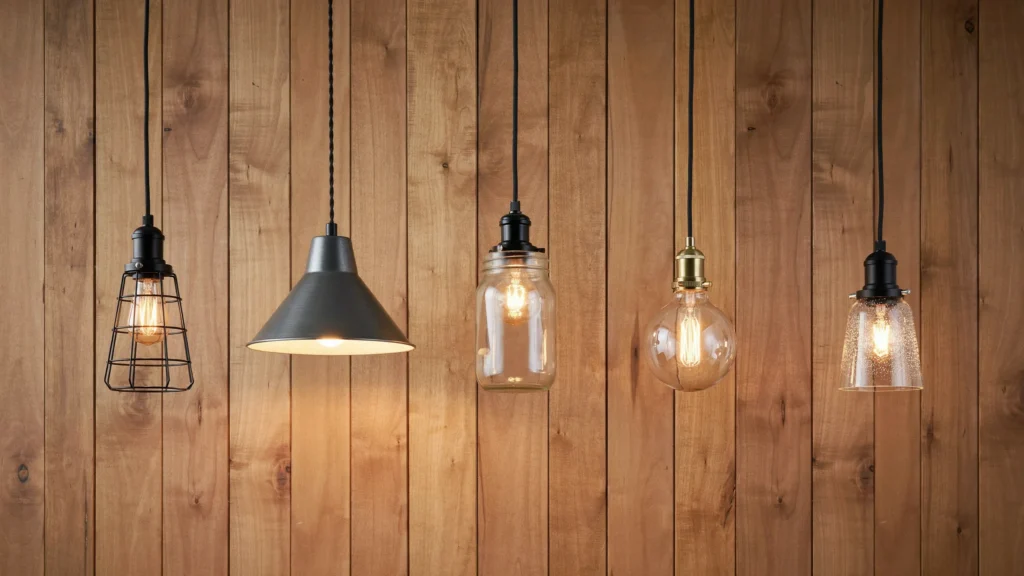
Look for these ingredients when you shop. Matte black is the anchor finish, and it shows up on almost every fixture in this style. Oil rubbed bronze and aged brass add warmth when black feels too stark.
Reclaimed or distressed wood softens the metal, especially on chandelier frames and sconce backplates. Exposed Edison style bulbs with visible filaments are the signature detail, and they glow with a cozy amber light that a frosted bulb cannot copy. Shapes stay simple: cages, barn domes, straight bars and round globes.
Color temperature matters as much as the fixture itself. Warm white bulbs around 2700K give the amber glow this style is known for. Cool white bulbs, the ones that look blue next to wood, will fight the whole look no matter how good the fixture is. Check the box before you buy.
One more thing to settle before you spend anything: decide which finish will lead in your home. You do not need every fixture to match, and a house where everything matches can look like a showroom. Pick one main finish, usually matte black, and let one warm metal, usually aged brass, show up as the accent. That pair will carry you through every room in this guide.
The Kitchen Island: Where Pendants Earn Their Keep
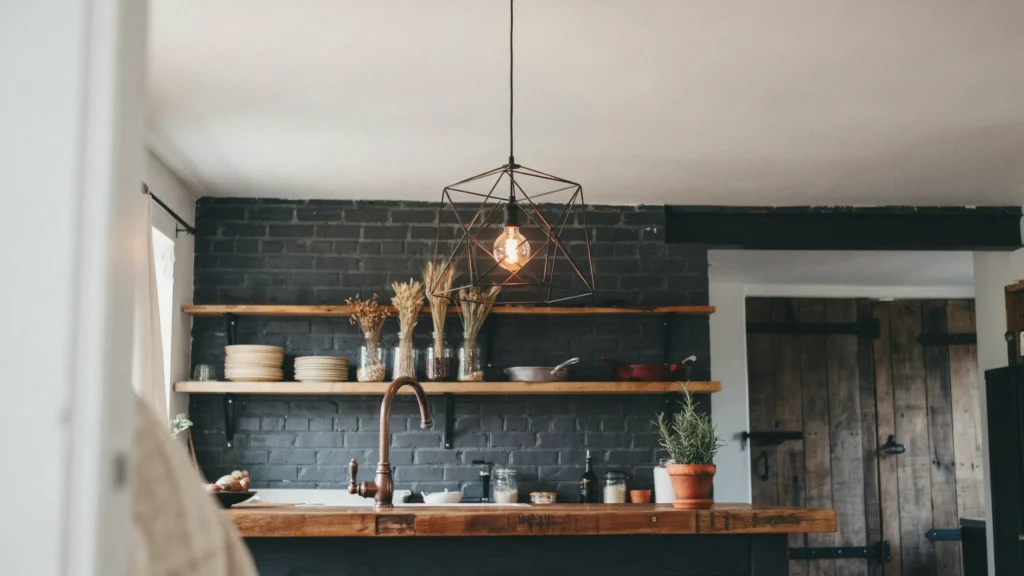
If you only change one light in the whole house, change the one over the kitchen island. It is the fixture you see in the morning and the one that stays on longest at night. It lights the chopping, the homework, the coffee and the late night conversations. Get this one right and the kitchen feels finished, even if the cabinets are ten years old.
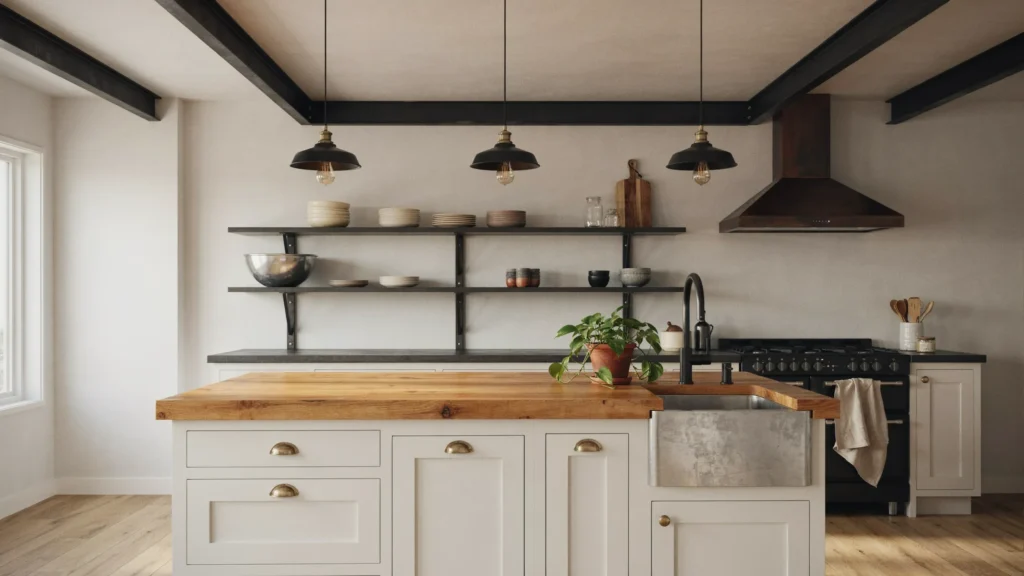
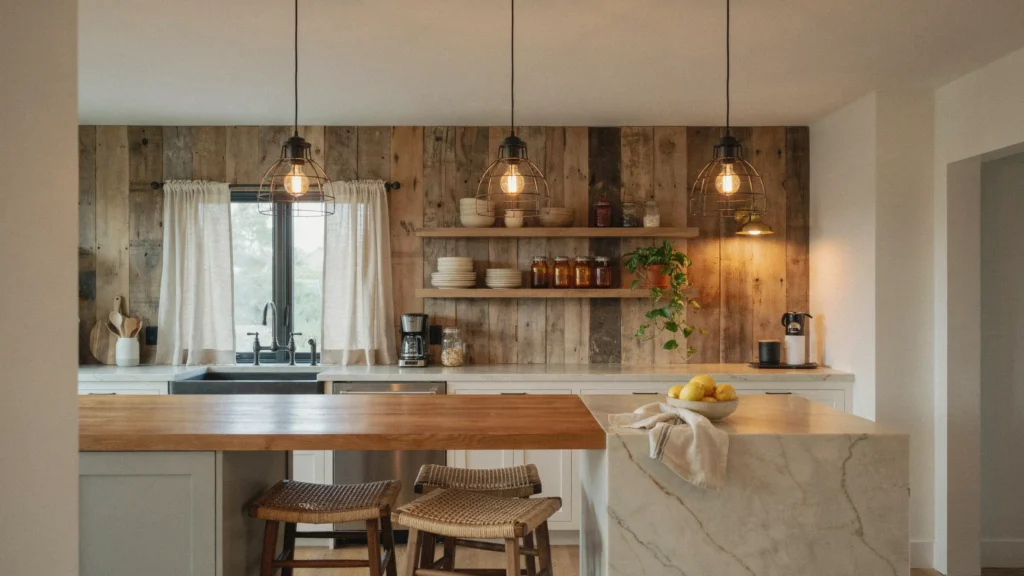
The most common mistake is hanging a single small pendant over a long island and wondering why it looks lost. Scale is everything here. For an island between four and six feet long, two pendants look right. For a longer island, three pendants spaced evenly feel balanced and intentional.
Height is the second thing people get wrong. Hang pendants about 30 to 36 inches above the countertop. Lower than that and tall guests will bump their heads and the light will glare in your eyes while you chop. Higher than that and the light floats away from the work surface and the fixture stops anchoring the island. Stand at the island and look across it after hanging. You should see the pendant, not stare into the bulb.
Shade shape changes the light more than most people expect. A wide barn dome shade pushes light down in a broad pool, which is wonderful over a big island where you actually cook. A wire cage pendant lets light spill in every direction, so it feels airy and a little more decorative.
A seeded glass pendant softens the bulb and takes the edge off the glare, which helps if your island faces the sofa. If your kitchen is small, these small kitchenette lighting ideas show how the same pendant rules work when every inch counts.
Pick the bulb with the same care as the shade. A clear Edison bulb inside an open cage looks beautiful, but it can glare when you sit at the island. A frosted Edison style bulb keeps the filament look and softens the light, and it is the better choice for a fixture that hangs at eye level. Dimmable bulbs are worth the small extra cost here, because island light needs to be bright at dinner prep time and soft afterwards.
Do Not Forget the Task Lighting Under the Cabinets
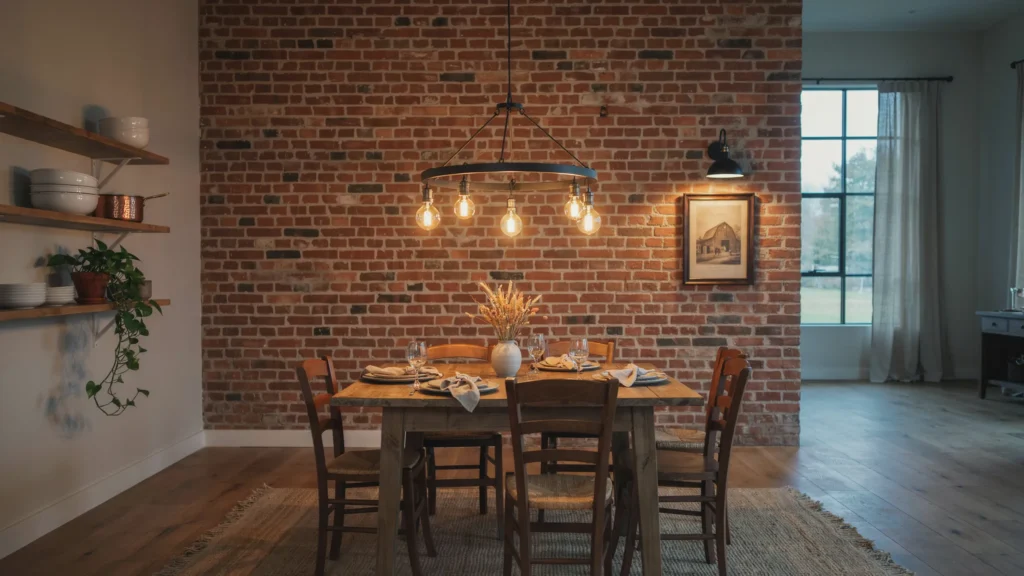
Pendants get all the attention, but a kitchen lives on its task lighting. The strip of counter under the upper cabinets is where the real work happens, and overhead pendants alone leave it in shadow. Under cabinet lights fix that, and they stay hidden during the day, which keeps the clean farmhouse look intact.
Warm LED strips or slim puck lights tucked under the cabinets cast a soft glow across the worktop at night. The trick is to match their color temperature to your pendants, so the whole kitchen glows the same warm color. Mixed color temperatures are one of those things you cannot name but can feel, and the kitchen will look off until you fix it.
One more kitchen spot people forget: the coffee corner. A small sconce or a tiny pendant over a coffee station turns a cluttered counter into a deliberate little nook, and these coffee station ideas for small apartments show how a little warm light makes a morning routine feel like a ritual.
The Dining Table: One Statement Fixture, Done Right
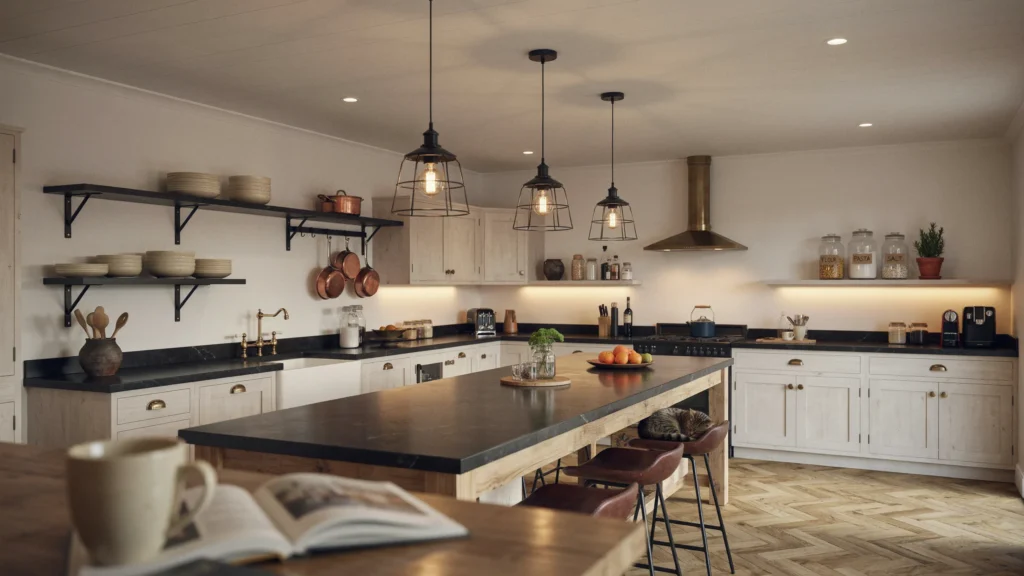
The dining table is where industrial farmhouse lighting gets to show off. Unlike the kitchen, where light has a job to do, the dining room fixture is allowed to be a little dramatic. It hangs over the table like a centerpiece, and it sets the mood for every meal.
Size is the rule that matters most here, and it is the one people break most often. A chandelier that is too small looks apologetic over a big table. One that is too big crowds the room and makes the ceiling feel low. A good guide is to choose a fixture about one half to two thirds as wide as the table below it.
A six foot table, for example, suits a chandelier around three to four feet wide. For a round table, measure the diameter and use the same ratio. When in doubt, go slightly bigger rather than smaller, because a generous fixture reads as confident, while a tiny one reads as a mistake.
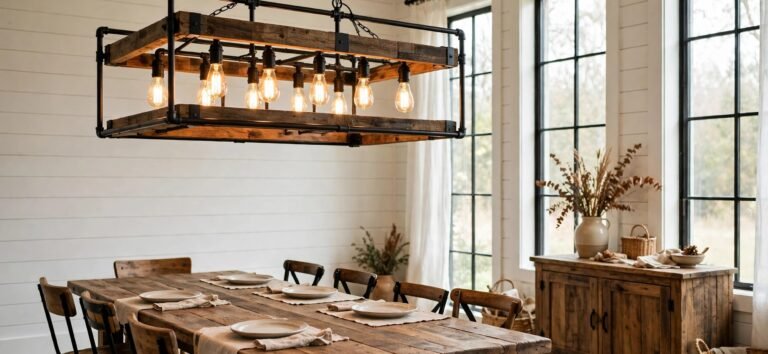
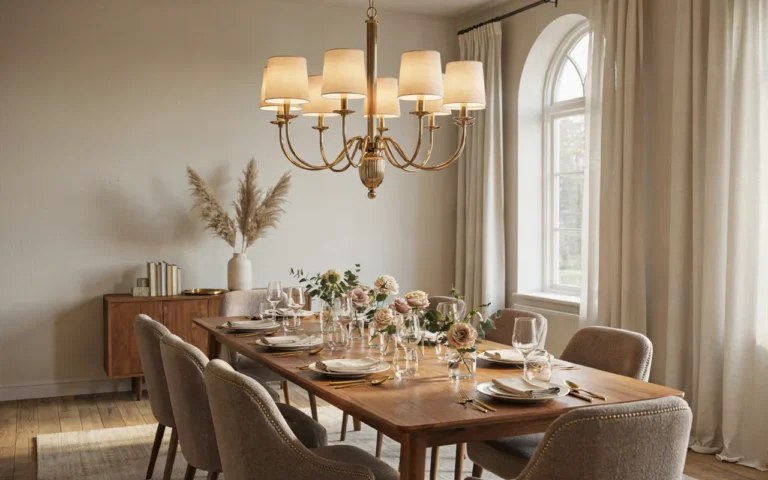
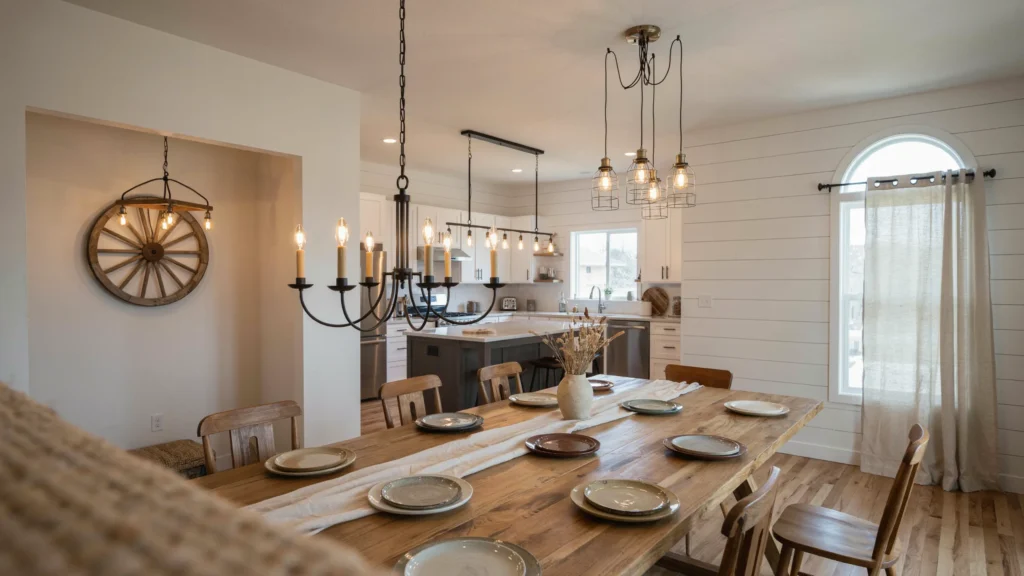
Shape follows the table. A long rectangular table loves a linear chandelier, a straight bar with bulbs in a row that lights every plate evenly. A round or square table suits a round fixture, a wagon wheel chandelier or a cluster of cage pendants grouped at different heights. A candle style metal chandelier, a black iron frame holding several bulbs shaped like candles, brings an elegant but rustic feel that works beautifully over a wooden farmhouse table.
Height follows the same logic as the kitchen. Hang the chandelier about 30 to 34 inches above the tabletop. That is low enough for the light to feel intimate and high enough that nobody has to duck around it when they stand up or pass dishes. If your ceilings are very high, add a longer chain rather than raising the fixture, because a chandelier hung too high loses its connection to the table.
A dimmer is non negotiable in the dining room. Bright light is fine for homework at the table, but dinner wants a soft glow. A dimmer switch costs little and changes the room more than a new tablecloth ever will.
Mixing Metals at the Table Without Making a Mess
The dining room is also where the metal finish question usually comes up, because the chandelier sits right next to the table hardware, the chairs and whatever sits on the sideboard. Here is the short answer: your metals do not have to match, but they do have to get along.
Matte black is the easiest lead finish at the dining table, because it reads as neutral and pairs with almost everything. Aged brass warms it up beautifully, so a black chandelier with brass candle sleeves or brass chain links looks layered and intentional.
Oil rubbed bronze sits close to black and adds a softer, older feeling. Galvanized steel brings a brighter, more industrial edge, and it works best as an accent, a tray or a vase, rather than the main fixture finish.
The mistake to avoid is mixing three or four finishes at equal strength, because then the eye does not know where to rest. Keep one finish dominant, let a second finish appear in one or two places, and let everything else stay quiet. That is the whole rule, and it works in every room, not just the dining room.
The Living Room: Layered Light for Slow Evenings
The living room is the hardest room to light well, because it asks the light to do three different jobs. It needs to be bright enough to read by, soft enough to watch a film by, and warm enough to make an ordinary Tuesday evening feel like a place you want to stay. One ceiling fixture cannot do all three, so the living room is where layering matters most.
Start with the overhead fixture, and keep it simple. A wood and metal ceiling fan with a light kit is an honest choice here, especially in a warm climate or a room with a high ceiling. Look for distressed wood blades and a matte black or bronze motor housing, so the fan carries the same rustic industrial feeling as the rest of your lighting.
If a fan does not suit the room, a flush mount with a metal cage or a small drum shade in linen keeps the ceiling calm and lets the lamps do the talking. Avoid a bright central fixture that floods the room with even light, because that is the light that made my own living room feel flat. The living room wants pools of warm light, not a stadium.
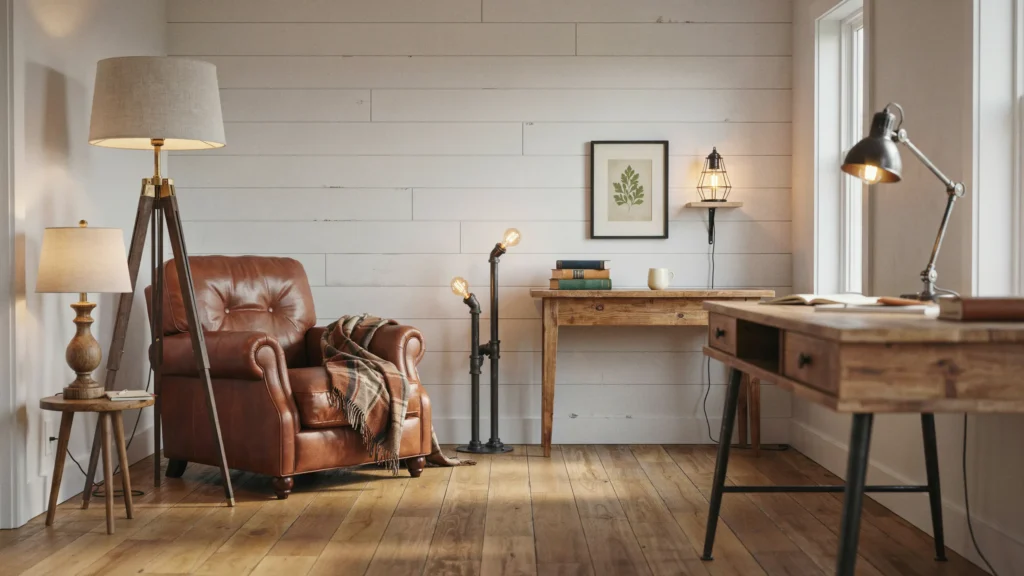
The lamps are where the room comes alive. A tripod floor lamp in black metal with wood legs fills an empty corner and gives the reading chair its own glow. A pipe floor lamp built from metal fittings looks expensive and industrial, and it anchors a corner that would otherwise collect clutter.
On the side tables, a wood base table lamp with a simple linen shade softens the metal, while a small metal cage table lamp brings the industrial edge to a shelf or a desk. Each lamp should sit where the bottom of the shade is roughly at eye level when you sit down, so the bulb never glares straight at you.
Light Around the Television Without the Glare
The television wall is the spot where lighting plans usually fall apart. A bright overhead light reflects on the screen, and no light at all leaves the wall looking like a black hole in the evening. The fix is a little glow behind or beside the television, not above it.
A pair of small sconces flanking the television, or a slim floor lamp tucked behind a console, gives the wall shape without glare. Warm light here makes the screen easier on the eyes, and it makes the whole wall feel finished rather than blank. These black TV wall ideas with beautiful lighting show how a dark wall and warm light work together instead of fighting each other.
Wall color plays into this too. The warm metals in industrial farmhouse lighting look their best against soft, warm neutrals, creamy whites, sage greens and warm greys. A cool grey wall can make black metal look harsh, while a warm white lets the brass and wood glow. If you are repainting anyway, these interior color trends for cozy homes are a good place to check which palettes sit best with black metal and aged wood.
Finish the living room with a dimmer on the main fixture and a habit: lamps on in the evening, overhead off. It sounds small, but it is the difference between a room that feels lit and a room that feels lived in.
The Bedroom: Soft Light That Helps You Sleep
Bedroom light should be the softest light in the house. It is the first light you see in the morning and the last one you switch off at night, and it sets the tone for both. Harsh overhead light in a bedroom feels like a hotel corridor. Soft, low, warm light feels like rest.
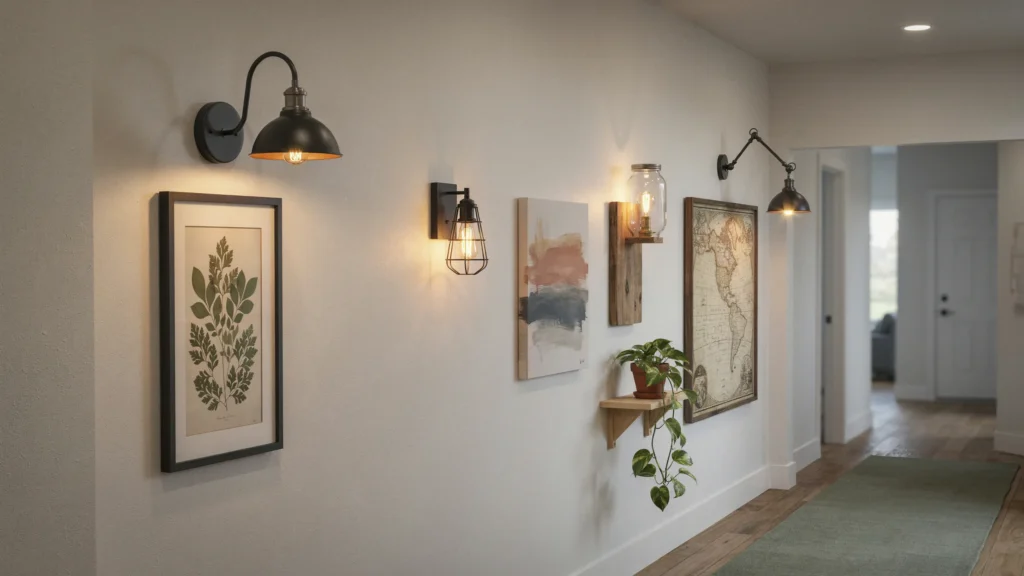
Wall sconces are the bedroom hero here. A swing arm sconce mounted beside the bed frees the nightstand, which is a gift in a small bedroom, and it puts the reading light exactly where you need it. A gooseneck barn sconce above a dresser or a piece of art adds a farmhouse touch without taking up any surface at all.
Plug in sconces are the budget friendly version, because they skip the electrician entirely. Run the cord down the wall inside a simple cord cover painted to match the wall.
Texture matters more in the bedroom than in any other room, because you are close to the fixture and you see it last thing at night. This is where rope and hemp wrapped fixtures earn their place. A rope wrapped pendant or a hemp wrapped chandelier softens the hard industrial lines and makes the light feel handmade.
It pairs beautifully with an Edison bulb, because the rough woven texture and the warm filament glow balance each other. Hang one over a reading corner or a small dressing table, not over the bed itself, where a heavy fixture can feel looming.
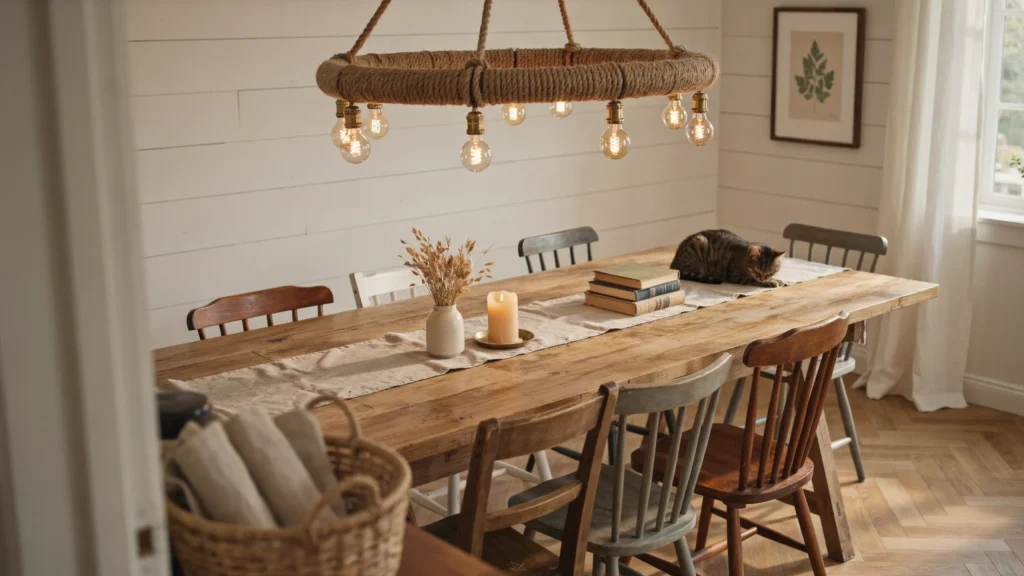
Keep the brightness low and the color warm. A bedside lamp with a linen shade and a warm bulb is the classic for a reason, and a dimmable bulb lets you drop the light as the evening goes on. Avoid cool white bulbs in the bedroom completely. They tell your brain it is daytime, which is the opposite of what a bedroom should do.
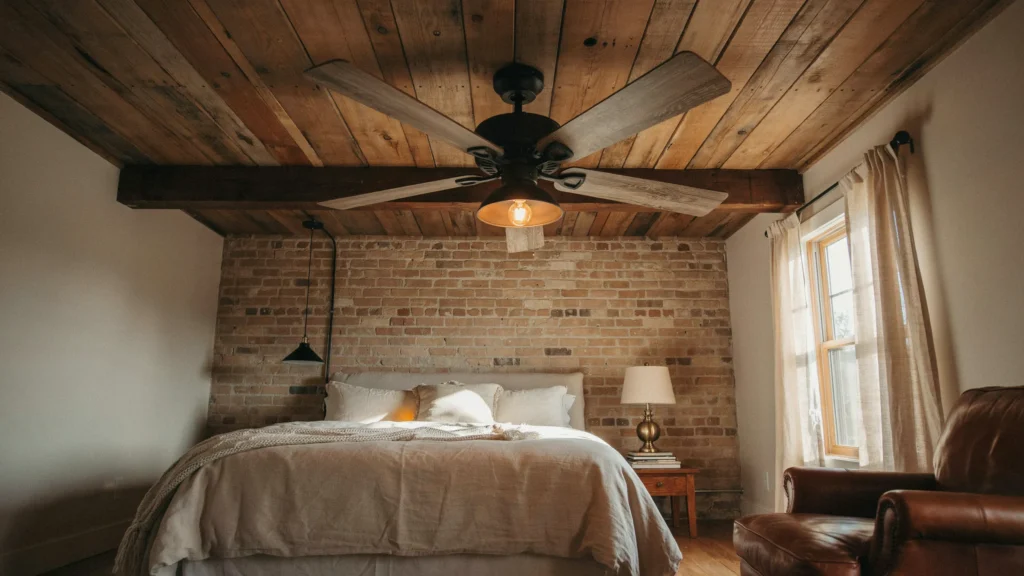
One ceiling fan note for the bedroom: if you sleep with a fan on, choose one with a light kit that takes warm bulbs, and check that the fan is quiet on its lowest setting. Weathered wood blades and a matte black housing keep it in the family with the rest of your fixtures.
Small detail, big difference: put the bedroom lights on a dimmer or use smart bulbs you can dim from the bed. Reaching across a cold room to switch off a bright light is a small annoyance that adds up every single night.
The Entry: The First Fixture Guests See
The entry is the smallest room in this guide and the one that works hardest. Guests form their first impression of the house in about five seconds, and the entry light is a big part of that impression. A dark entry says the house is closed. A warm, well lit entry says come in, stay a while.
A pendant or a small lantern is the right call here. A single cage pendant hanging in the middle of the entry gives a clear focal point, and it leaves the walls free for hooks, a mirror and a bench.
In a taller entry or a stairwell, a wagon wheel chandelier or a cluster of small cage pendants at different heights fills the vertical space without crowding it. Hang the fixture so the bottom sits at least seven feet above the floor, so tall guests can walk under it without ducking.
Scale matters even in a small space. A fixture that is too tiny disappears against the front door, while one that is too wide makes the entry feel cramped. Measure the width of the entry and choose a fixture about one third as wide. A four foot wide entry suits a pendant around sixteen inches across.
The entry is also the place for a second layer of light. A small sconce beside the mirror helps you check your coat before you leave, and a table lamp on a console gives a soft glow in the evening when the overhead light feels too much. If your entry flows into a mudroom, these mudroom lighting ideas to brighten your entryway show how the same warm fixtures keep a hardworking space feeling welcoming instead of purely practical.
Finally, put the entry light on the switch you reach first when you come home. If you come home to a dark entry every evening, a smart bulb on a timer is a cheap fix that makes the house feel like it was expecting you.
Should Your Finishes Match? One Simple Rule
Here is the question every reader asks, and the answer is simpler than the internet makes it sound. No, your finishes do not have to match. Yes, they do have to look like they belong in the same house. That is the whole rule. Everything else is detail.
Mixing metals looks intentional when one finish leads and the others support it. It looks accidental when every finish shouts at the same volume. Pick matte black as your lead in most rooms, because it is the most forgiving finish in this style, and let aged brass or oil rubbed bronze appear as the accent. Two finishes, one leading, one supporting, is enough.
| Finish | Pairs well with | Best place to use it | Watch out for |
|---|---|---|---|
| Matte black | Aged brass, warm wood, linen | Pendants, chandeliers, sconces in any room | Can feel stark in a very white room without wood to warm it |
| Aged brass | Matte black, dark wood, cream walls | Accent fixtures, sconces, lamp bases | Too much brass at once can look shiny and new rather than aged |
| Oil rubbed bronze | Matte black, reclaimed wood, sage green | Dining chandeliers, entry lanterns, hardware | Looks muddy next to bright chrome, so keep chrome out of the room |
| Galvanized steel | Matte black, pale wood, white walls | Barn dome pendants, kitchen and entry accents | Best as an accent, because a whole room of it feels like a workshop |
| Weathered wood | Any metal finish, linen, Edison bulbs | Chandelier frames, fan blades, sconce backplates | Fake distressed finishes can look printed, so check it in person if you can |
Use the table as a shopping filter. When a fixture catches your eye, check its finish against the table. If it fits your lead finish or your one accent, it belongs. If it introduces a third or fourth metal, put it back and keep looking. This one habit will save you more money than any sale, because it stops the slow pile of almost right fixtures that never quite work together.
Wood follows the same rule. One wood tone per room is enough, and it should echo the wood already in the room, the table, the floor, the beams. A chandelier frame in a wood tone close to your dining table will look like it was chosen for that table.
Shopping on a Budget: Where to Save and Where to Spend
Industrial farmhouse lighting looks expensive, but it does not have to be. The style is built from simple materials, black metal, wood, glass and a bare bulb, which means budget versions can look almost identical to the pricey ones. The trick is knowing where to save and where a little extra money actually shows.
Thrift Stores, Flea Markets and Online Marketplaces
Thrift stores and flea markets are the best hunting ground for this style, because old fixtures and metal pieces turn up there constantly. A brass chandelier from the eighties, a wooden bead chandelier that needs a clean, a metal pendant with a dent nobody will see from below, all of these are raw material. A can of matte black spray paint turns almost any dated fixture into a farmhouse piece in an afternoon.
Clean it well, sand it lightly, paint it in thin coats and let it dry fully between coats.
Online marketplaces deserve the same patience. People remodel kitchens and list barely used pendants and chandeliers for a fraction of their price. Search by description rather than by brand, phrases like black cage pendant or barn dome light, because budget twins of designer fixtures hide under plain descriptions. Check that all the parts are there before you pay: the canopy, the chain, the screws and the glass, if it has any.
Sales, Clearance and the Bulb Trick
Big home stores cut lighting prices hard during holiday weekends and end of season clearances, and floor models go for even less. If you are not in a rush, waiting for a sale can cut the cost of a dining chandelier in half. Keep a short list of the fixtures you want, with the size and finish noted, so you can buy fast when the price drops instead of guessing in the aisle.
One quiet money saver: buy the bulb separately. Shops often charge a premium for an included Edison bulb, and a multipack of warm LED filament bulbs from a general retailer costs far less per bulb. Buy the fixture bare, then buy the bulbs yourself. While you are at it, buy one spare, because an Edison bulb in an open cage fixture is the one bulb guests will notice when it goes out.
Three DIY Projects That Actually Work
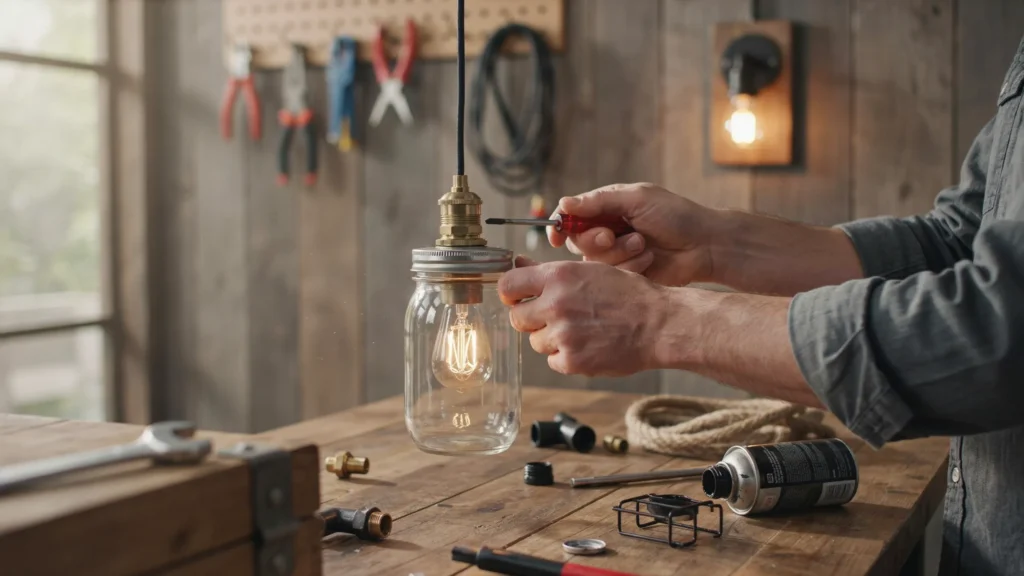
If you like making things, a few DIY lighting projects in this style are genuinely simple, and they cost a fraction of the shop version. Start small, and be honest about your wiring skills. If a project involves wiring you are unsure about, have an electrician check it before you use it.
The mason jar pendant is the classic first project. Take a pendant cord kit, a wide mouth mason jar and an Edison bulb. Drill a hole in the lid for the socket, fit it together and hang it. One jar over a kitchen sink is charming. Three in a row over a small island is a full look.
The pipe sconce is the second project, and it looks far harder than it is. Metal pipe fittings from the hardware store, a socket kit, a bulb and a stained wood board are the whole shopping list. Screw the pipes into a simple shape, mount the socket, fix it to the board and hang it. It looks like it came out of a design catalog.
The third project is not building at all, it is rescuing. Spray paint a thrifted fixture matte black, wrap a plain pendant cord in jute rope for texture, or add a cheap wire cage over a bare bulb fixture. Each of these takes under an hour and each one moves a fixture from almost right to exactly right. Keep the original wiring intact on all three, and replace any frayed cord rather than taping over it.

A Quick Placement Recap Before You Shop
Before you buy anything, walk through the house with a tape measure and this short list. Measure the table or island first, then the ceiling height, then the width of the entry. Write the numbers down, because guessing in the shop is how wrong sized fixtures end up on the ceiling.
Frequently Asked Questions About Industrial Farmhouse Lighting
What makes a light fixture industrial farmhouse style?
It combines raw industrial elements, black metal, exposed bulbs and cage shades, with warm farmhouse touches like wood accents, aged brass and soft linen. The mix of hard metal and warm wood is what gives the style its rustic but modern feeling.
How much should I expect to spend on budget industrial farmhouse lighting?
Most budget friendly fixtures typically range from about 30 to 150 dollars per piece, depending on size and whether it is a pendant, a chandelier or a sconce. Statement chandeliers can cost more, but plenty of stylish options sit well under 100 dollars, especially on sale or secondhand.
Where can I find affordable industrial farmhouse lighting?
Big home stores, online marketplaces and discount furniture retailers all carry budget versions of this style. Thrift stores and flea markets are worth checking too, because old fixtures can be repainted matte black for very little money. Sales during holiday weekends are the best time to buy a larger piece like a dining chandelier.
What rooms work best for industrial farmhouse lighting?
Kitchens, dining rooms, entryways and living rooms are the most popular spots. Pendants work over islands and sinks, chandeliers suit dining tables and entries, sconces fit hallways, bedrooms and bathrooms, and floor and table lamps fill in the living room and bedroom.
Can I mix industrial farmhouse lighting with other decor styles?
Yes. It pairs easily with modern farmhouse, rustic, transitional and even minimalist interiors, because black metal and warm wood are fairly neutral. Keep one metal finish leading the room and let the rest of the decor stay quiet, and the fixtures will blend in rather than clash.
What finishes are most common in this style?
Matte black, aged brass, oil rubbed bronze and weathered wood are the most typical finishes, often mixed together in a single fixture. Matte black is the easiest lead finish, with aged brass as the warm accent. Galvanized steel shows up too, as an accent rather than the main finish.
Is industrial farmhouse lighting still popular?
Yes, it has stayed popular because it blends warmth and texture without feeling overly trendy. The materials are simple and the shapes are classic, so a well chosen fixture looks good for years.
How do I choose the right size fixture for my space?
For islands and tables, a good guide is a fixture about one half to two thirds as wide as the surface below it. For an entryway, choose a size proportional to the ceiling height and the width of the space, about one third of the entry width. Always measure before you buy.
What color temperature should the bulbs be?
Warm white, around 2700K, is the right choice for this style. It gives the amber glow that makes wood look richer and rooms feel cozy. Cool white bulbs look blue next to wood and fight the whole look, so check the box before you buy.
Can I install these fixtures myself?
Swapping a like for like fixture is a job many homeowners do themselves, as long as the power is off and the wiring matches. Plug in sconces and lamps need no wiring at all. For anything involving new wiring, a fixture you are unsure about, or a heavy chandelier, call an electrician.
Your One Fixture at a Time Checklist
You do not need to light the whole house this weekend. You need one good decision, then another. Here is the order that works.
- Walk through the house in the evening and note which room feels darkest or coldest. That room goes first.
- Measure the table, island or entry in that room, and note the ceiling height.
- Choose your lead finish, matte black in most rooms, and your one accent, aged brass.
- Pick one fixture for that room, in the right size, with warm 2700K dimmable bulbs.
- Hang it at the right height, then give it a week of evenings before you buy the next one.
- Add a lamp or a sconce in the same room only if the first fixture leaves a dark corner.
- Repeat the lead finish in the next room, so the house feels connected without everything matching.
- Check thrift stores and sales before you pay full price for the next fixture.
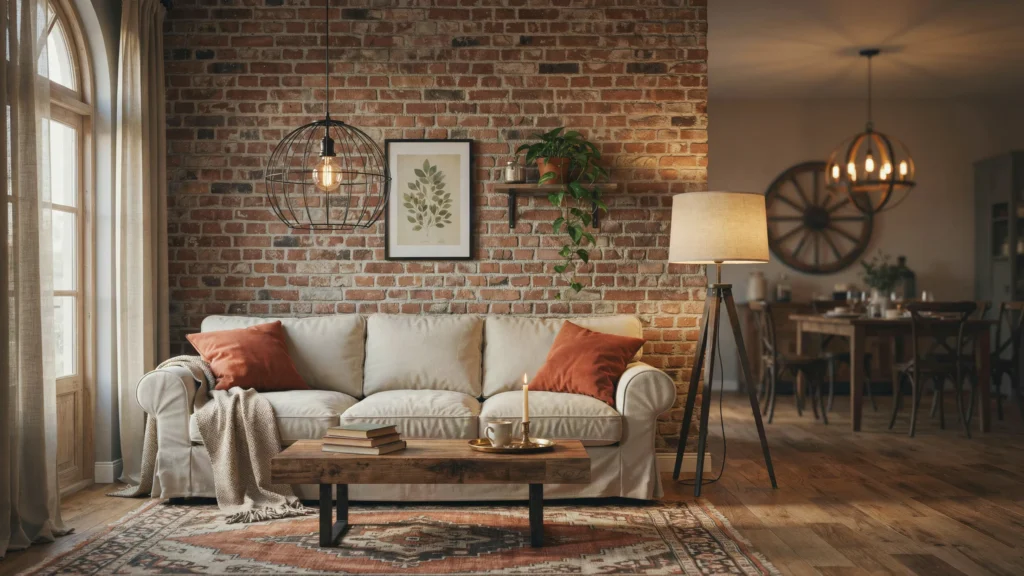
Lighting is one of the most powerful and affordable ways to bring industrial farmhouse style into your home, and it is also one of the most forgiving. A wrong cushion can sit in a room for a year before you notice it. A wrong light tells you on the first evening. The good news is that a right light tells you just as fast.
Start with the room that bothers you most. Choose one fixture, hang it at the right height, put a warm bulb in it and switch it on after dark. If the room suddenly feels like the place you meant it to be, you have found the look.