Your foyer is the handshake of your home. It’s the first thing guests see and the last thing you pass on your way out the door. Yet for many homeowners, this small but mighty space gets overlooked, stuck in a time capsule of dated wallpaper, dim lighting, and clunky furniture.
This guide walks you through exactly how to fix that swapping ornate details for clean lines, layered lighting, and smart storage, while keeping the warmth of timeless pieces. A foyer makeover does more than refresh one room; it sets the tone for everything beyond it. When you walk into a bright, organized, and stylish entryway, the whole house feels more intentional.
This guide covers the full journey from classic to modern: assessing your current style, then updating walls, floors, lighting, furniture, and storage to create a bright, functional, and welcoming first impression. You’ll learn how to choose the right materials and add furniture, lighting, and storage that work as hard as they look good. Whether your foyer leans traditional or feels tired, you’ll find practical, real-world advice to transform it.
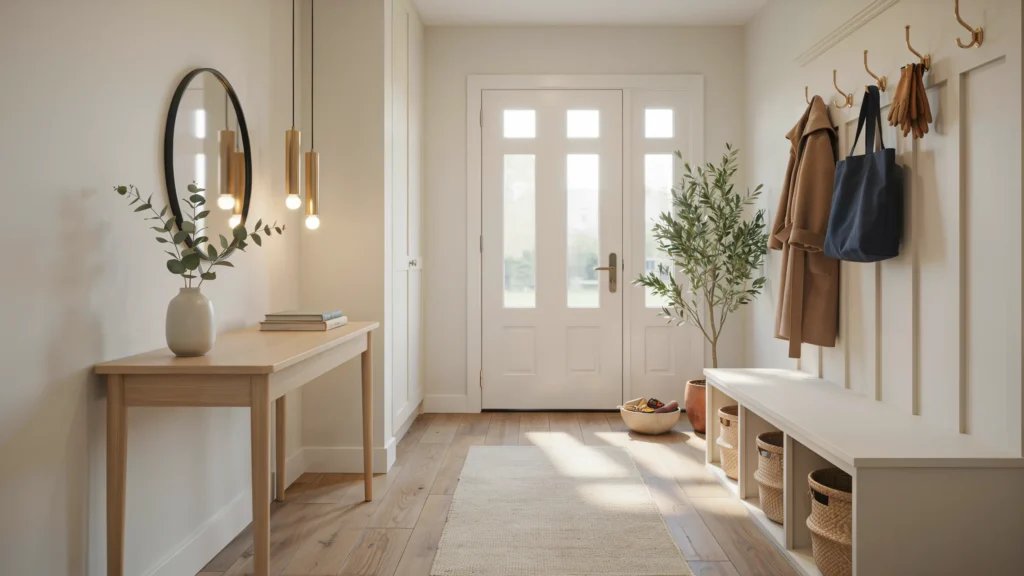
Understanding Your Foyer’s Potential
Before you pick paint colors or shop for furniture, it helps to understand what a foyer is and what yours could become. This section covers the basics and helps you size up your current space.
What Is a Foyer, and How Is It Different From an Entryway?
A foyer is the transitional space just inside your front door. It connects the outside world to the interior of your home. While people often use “foyer,” “entryway,” and “hallway” interchangeably, there are subtle differences.
An entryway is any area near an entrance it can be small, or simply a few feet of floor space. A hallway is a passage that connects rooms. A foyer, by contrast, is usually a defined room or alcove designed specifically to welcome people in. It often includes room for a console table, seating, or a coat closet.
The foyer plays two roles. Functionally, it’s where you drop your keys, kick off your shoes, and hang your coat. Aesthetically, it sets the design tone for your entire home. A well-designed foyer signals what’s to come.
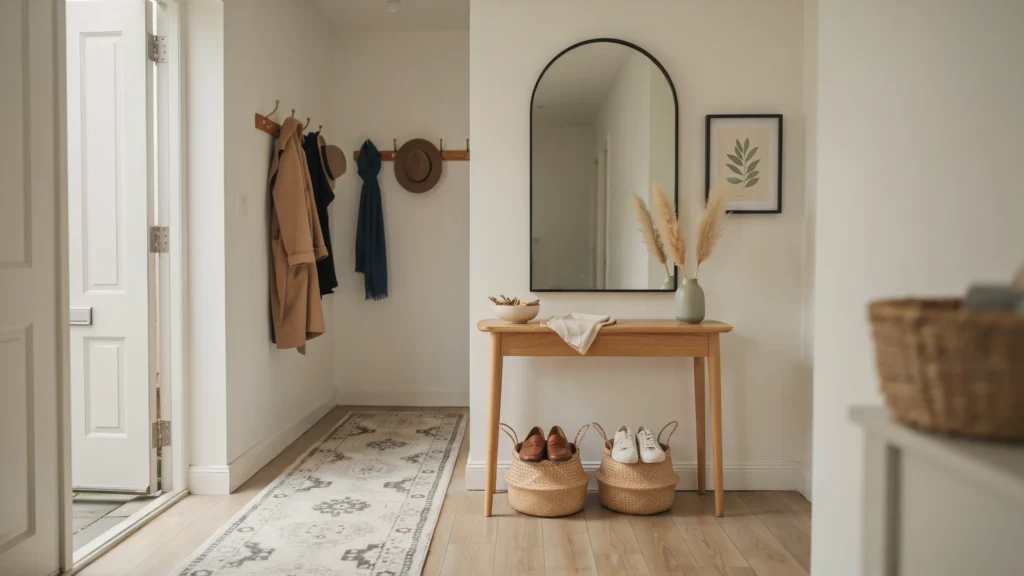
How to tell if your foyer is classic or just outdated
There’s a fine line between timeless and tired. Classic design feels intentional and elegant. Outdated design feels accidental like nobody has touched it in twenty years.
Ask yourself a few honest questions:
- Does the style feel cohesive? Classic foyers have a clear point of view. Dated ones often mix mismatched pieces collected over time.
- How’s the lighting? A single dim overhead fixture is a telltale sign of a space that needs help. Good lighting feels layered and warm.
- Does it flow? Can you move through the space easily, or do you bump into bulky furniture? Modern design prioritizes flow.
- Are the materials worn? Yellowed wallpaper, scuffed floors, and tarnished hardware usually point to “outdated” rather than “classic.”
If you answered honestly and the space feels stuck, that’s good news. It means you have room to grow.
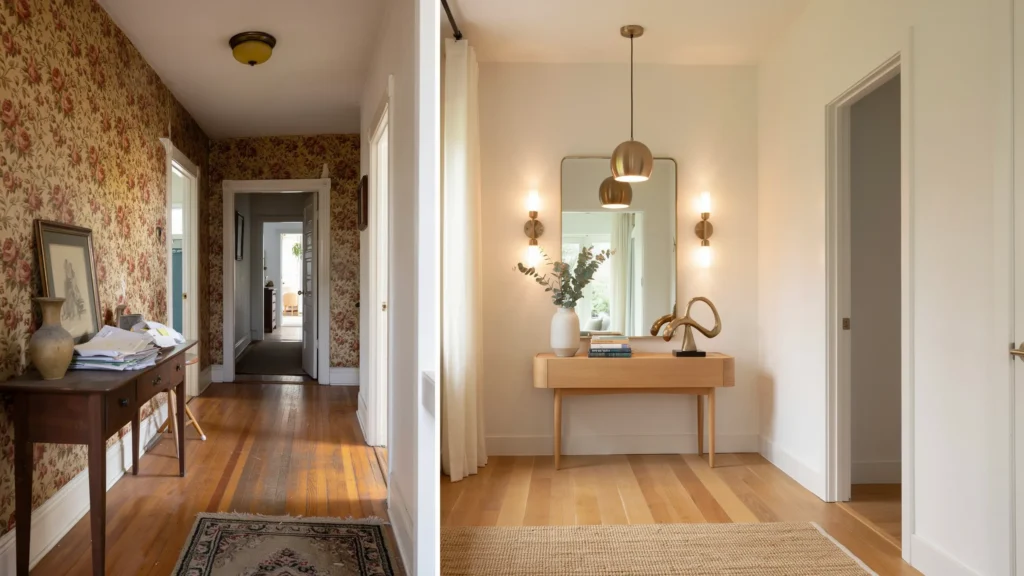
What defines a modern foyer design?
Modern foyer design is built on a few key ideas. Clean lines replace heavy ornamentation. Clutter gives way to smart storage. Every piece earns its place through both form and function.
Hallmarks of modern foyer design include:
- Minimalism: Fewer, better pieces instead of many small ones.
- Clean lines: Straight edges and simple shapes over carved detail.
- Functionality: Furniture that solves a real problem, like a bench with hidden storage.
- Neutral palettes: Whites, grays, warm beiges, and natural wood tones, often with one bold accent.
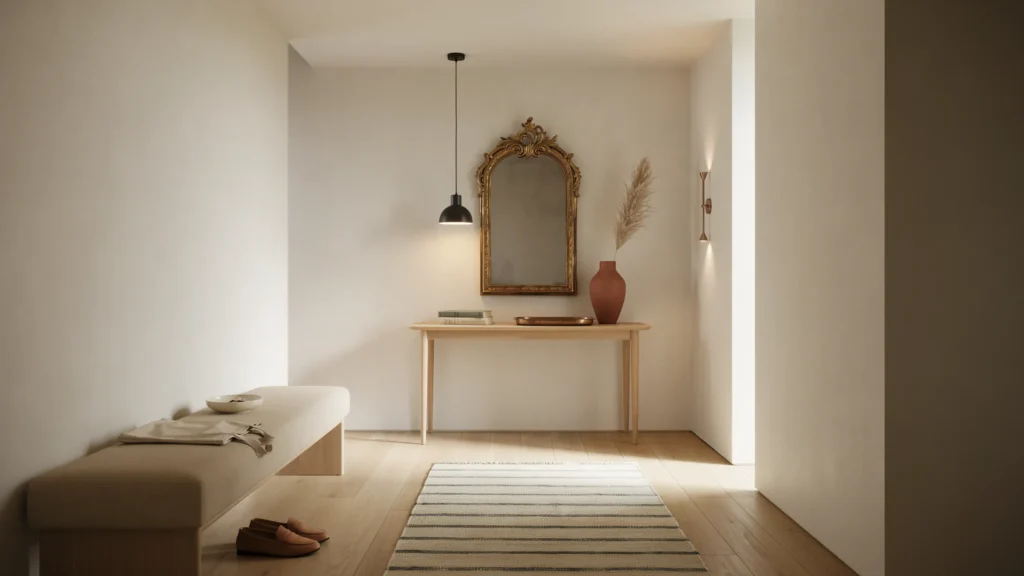
Here’s the secret most designers won’t say out loud: modern doesn’t mean cold. The best modern foyers blend old and new. A sleek console table can sit beside an inherited mirror. A minimalist bench can hold a soft vintage runner. This mix gives a space soul.
The Foundation: Walls, Floors, and Lighting
The bones of your foyer walls, floors, and lighting do the heavy lifting. Get these right, and the rest falls into place.
Wall treatments: from wallpaper to statement art
Classic foyers often feature traditional wallpaper, wainscoting, or heavy crown molding. These details can be beautiful, but they can also date a space fast.
To modernize, consider these swaps:
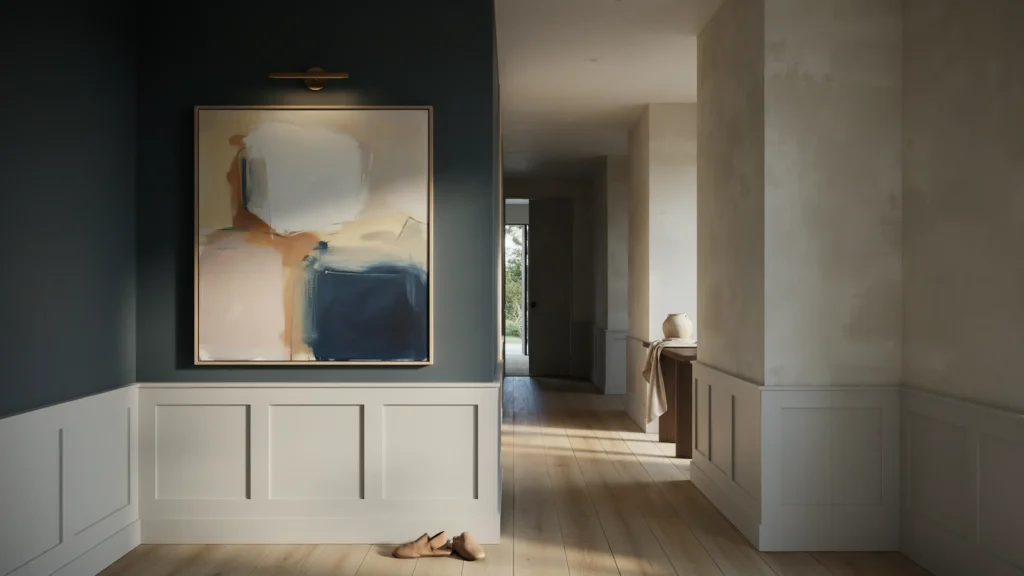
- Replace busy floral wallpaper with a bold, solid paint color or a subtle textured finish like limewash or microcement.
- Keep wainscoting if it’s in good shape, but paint it a fresh, modern shade instead of stripping it out.
- Add one large-scale piece of art as a focal point instead of many small frames.
For color, modern foyers lean on warm neutrals think soft white, greige, or muted sage. If you want drama, a deep charcoal or navy accent wall makes a strong statement without overwhelming a small space.
Flooring options for a modern entrance
Your floor takes a beating in the foyer. It needs to handle dirt, water, and constant foot traffic while still looking sharp.
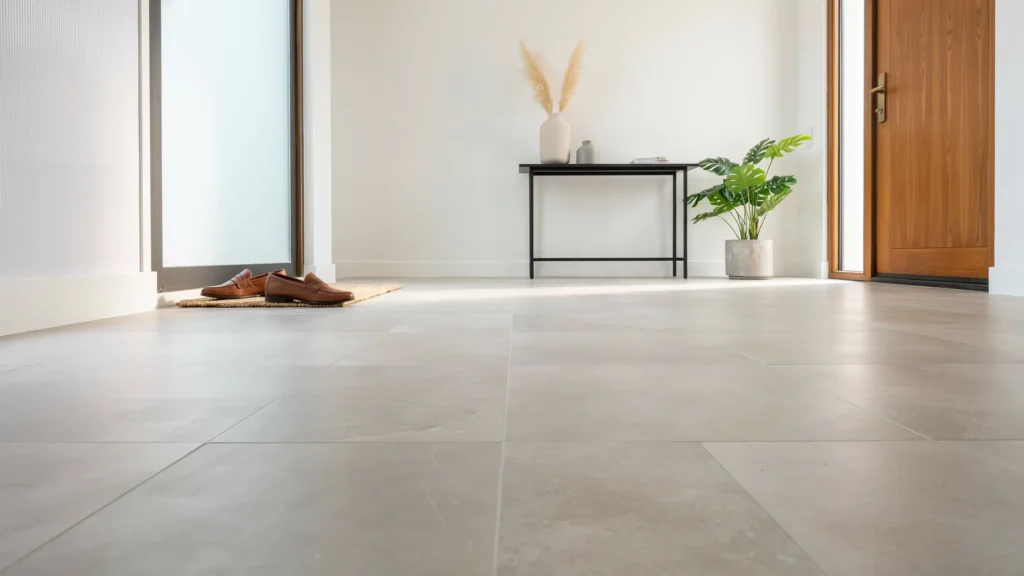
Classic options include hardwood and intricate patterned tile. These remain popular, but modern updates offer more durability and a cleaner look:
- Large-format tiles create fewer grout lines and a seamless, contemporary feel.
- Polished concrete is tough, low-maintenance, and perfectly modern.
- Engineered wood gives you the warmth of timber with better resistance to moisture.
When choosing, weigh durability against maintenance. Polished concrete and porcelain tile are nearly bulletproof. Natural hardwood looks gorgeous but needs more care in a high-traffic entry. If you love the hardwood look, engineered wood is a smart compromise.
Why layered lighting matters in a foyer
Lighting can make or break a foyer. Classic spaces often rely on a single statement chandelier or a pair of wall sconces. These can be stunning, but one light source rarely does the job.
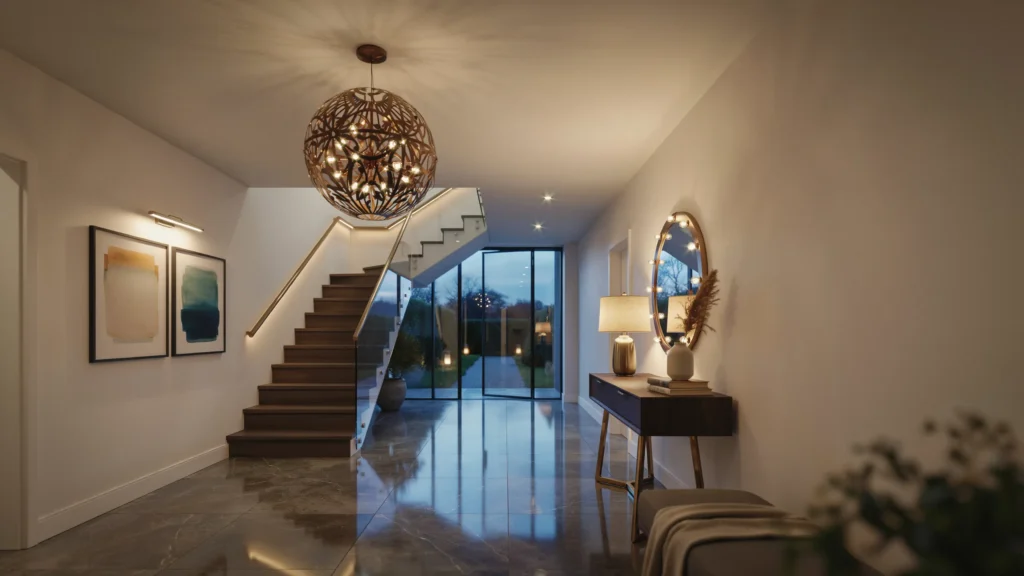
Modern lighting design is all about layers. You want three types working together:
- Ambient lighting for overall brightness recessed ceiling lights or a flush-mount fixture.
- Task lighting for specific spots, like a small lamp on a console table.
- Accent lighting to highlight art or architecture, such as LED strips or directional spots.
A sculptural pendant can still serve as a centerpiece in a modern foyer. Just pair it with recessed lights so the space never feels gloomy. Layered lighting adds depth, warmth, and a sense of welcome.
Furniture and Decor: Function Meets Modern Flair
Once the foundation is set, furniture and decor bring your foyer to life. The goal is to balance beauty with everyday use.
The best seating solutions for a modern foyer
A place to sit while you tie your shoes is a small luxury that makes a big difference. Classic foyers often feature antique benches or upholstered chairs. These add charm but can take up valuable space.
Modern seating tends to be sleeker and smarter:
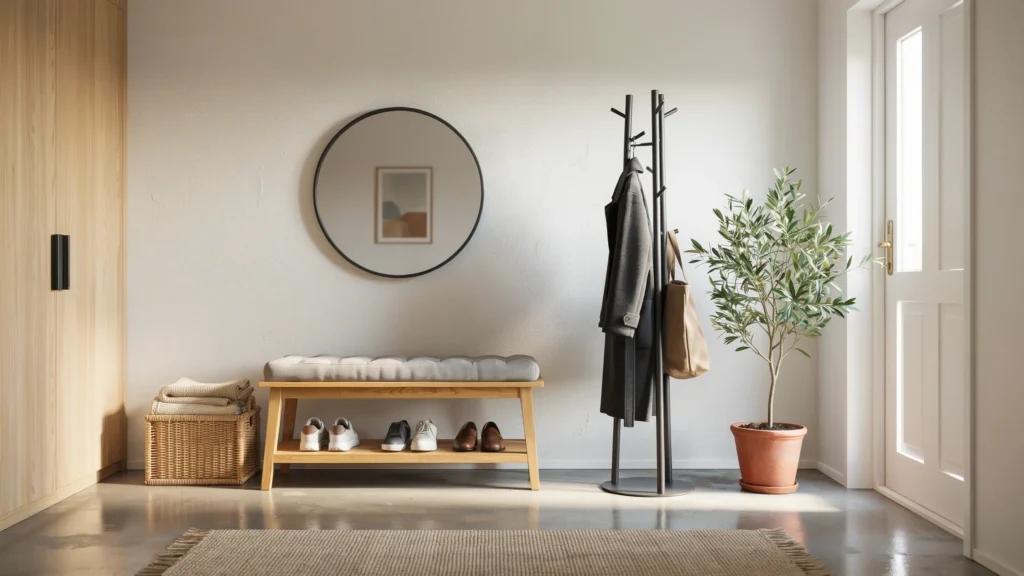
- A slim console bench fits tight spaces and offers a clean profile.
- A minimalist stool tucks neatly under a console table when not in use.
- A storage bench hides shoes and bags inside the seat itself.
If you have the room, blending styles works well. A simple wooden bench softened with a textured cushion gives you modern function with a touch of warmth.
How to style a console table for a sleek look
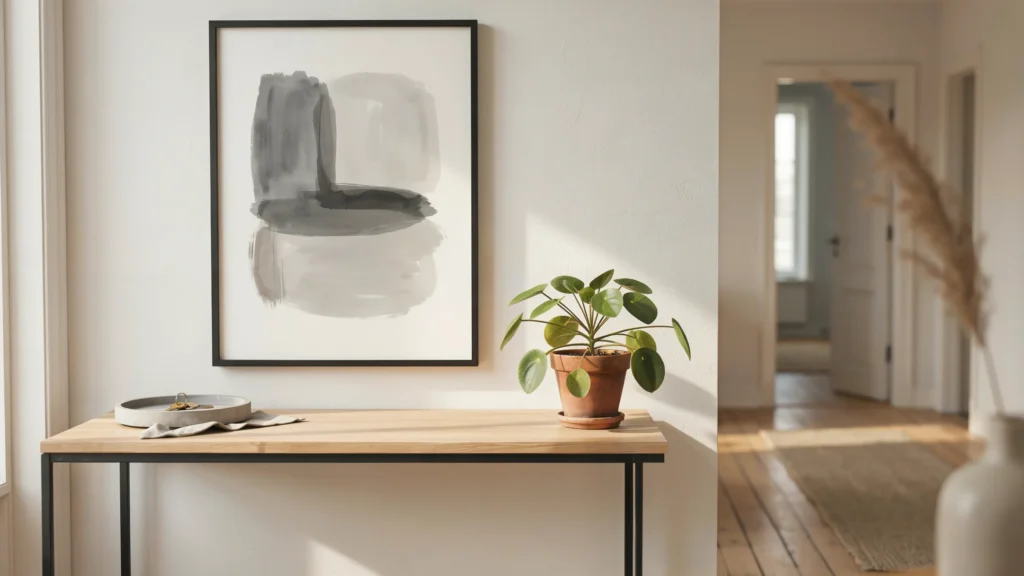
The console table is the workhorse of the foyer. Classic versions are often ornate, carved from dark traditional wood. Modern consoles go lighter and simpler.
Popular modern options include:
- Floating shelves that free up floor space and feel airy.
- Metal or glass consoles with thin frames and clean geometry.
- Slim wood consoles with tapered legs for a mid-century touch.
When styling, less is more. Use a small tray to corral keys and mail. Add a single plant or a sculptural object. Leave room for a charging station to keep devices tidy. The key is purpose every item should either be useful or beautiful, ideally both.
Choosing the right mirror to reflect modernity
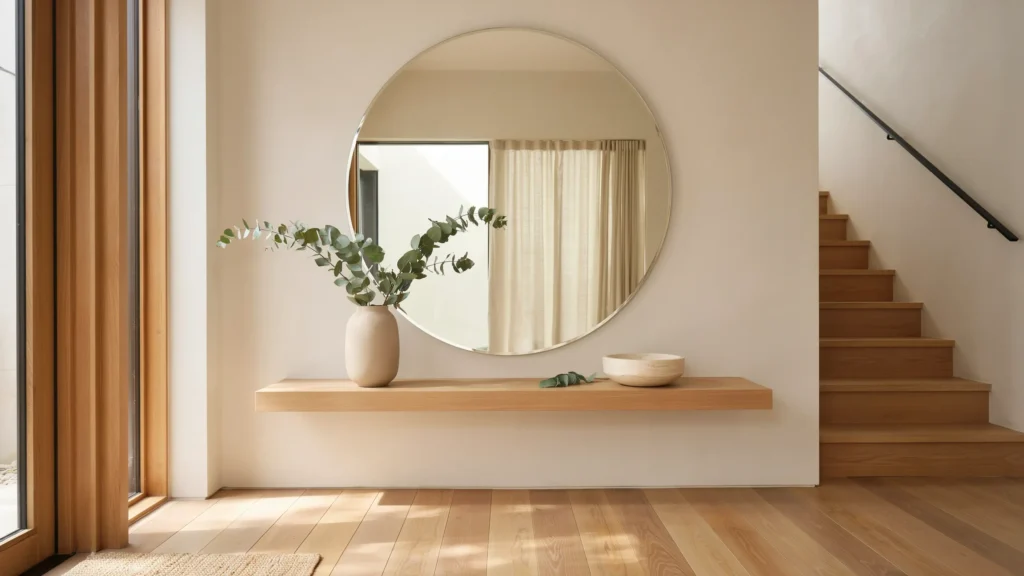
A mirror is a foyer essential. It lets you check your look before heading out and makes the space feel larger and brighter. Classic foyers favor ornate, heavily framed mirrors. Modern foyers strip that back.
Consider these modern mirror styles:
- Frameless mirrors for a clean, almost invisible edge.
- Geometric shapes like circles or arches for visual interest.
- Oversized mirrors that bounce light and double the sense of space.
Place a mirror across from a window or light source. It will reflect natural light deeper into your home and instantly brighten a dim entry.
How to add personality with art and accents
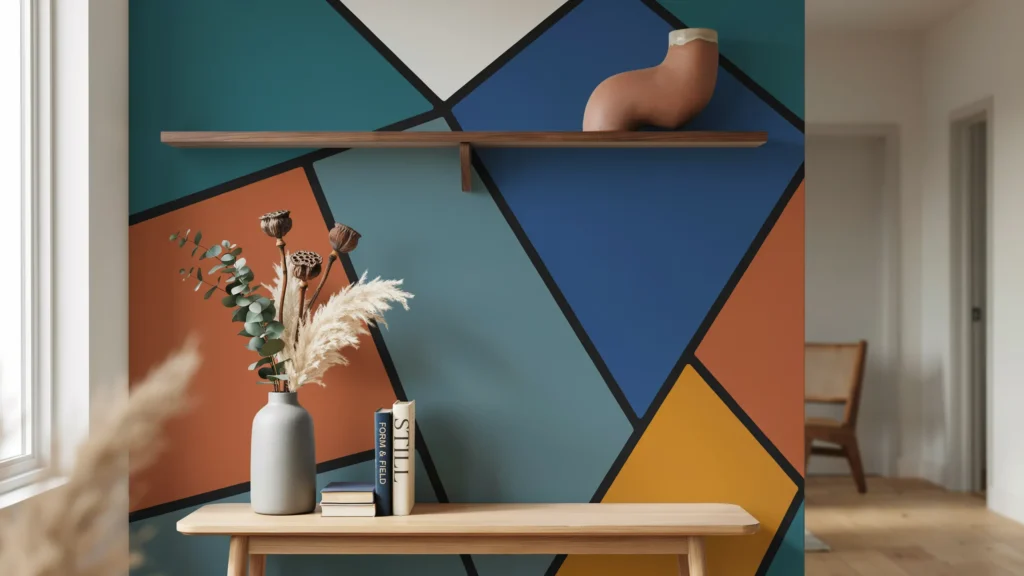
Art is where your foyer becomes truly yours. Classic spaces lean on traditional landscapes or framed portraits. Modern foyers embrace bolder, more personal choices.
Try these approaches:
- Hang a large abstract print as a striking focal point.
- Display a small sculptural piece on your console or a floating shelf.
- Frame family photos in matching modern frames for a clean gallery look.
- Add a unique vase or ceramic object for organic texture.
Personal touches keep a modern foyer from feeling like a showroom. One meaningful object often says more than a dozen generic ones.
Smart Storage and Organization: The Modern Foyer’s Secret Weapon
The difference between a foyer that looks good and one that lives well comes down to storage. A modern foyer hides the daily mess without sacrificing style.
Integrated storage solutions for a clutter-free entry
Clutter is the enemy of modern design. The fix is storage that blends into the space rather than fighting it.
Smart options include:
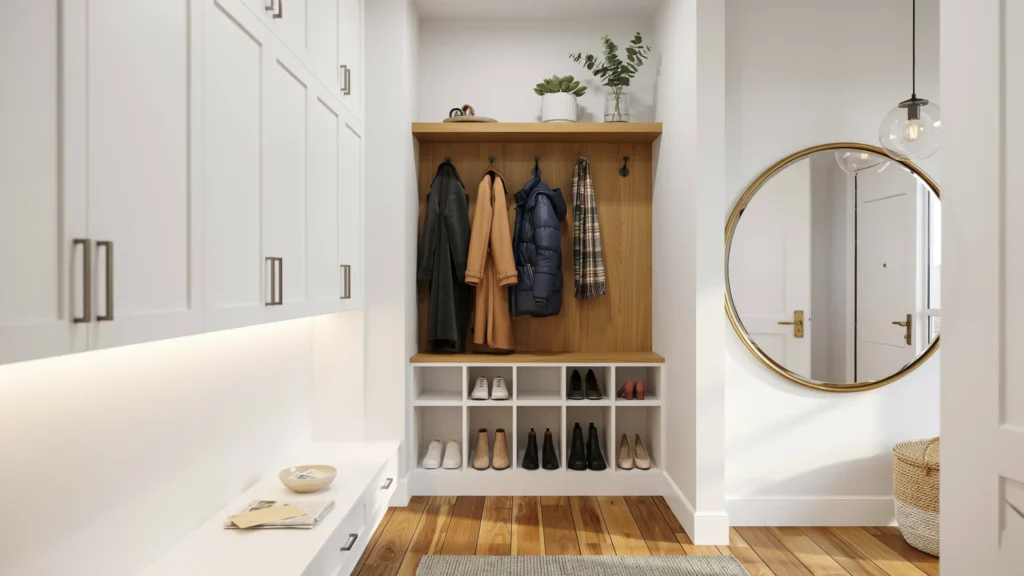
- Built-in cabinetry that runs floor to ceiling and disappears into the wall.
- Custom cubbies sized for shoes, bags, and sports gear.
- Wall-mounted organizers with hooks for coats and a shelf for keys.
Think about what your household actually drops at the door. Shoes, coats, bags, mail, and keys are the usual suspects. A dedicated home for each one keeps surfaces clear and mornings calm.
How to add smart home features to your foyer
The foyer is the perfect spot for technology that makes coming and going easier. Modern entryways often double as a small command center.
Consider integrating:
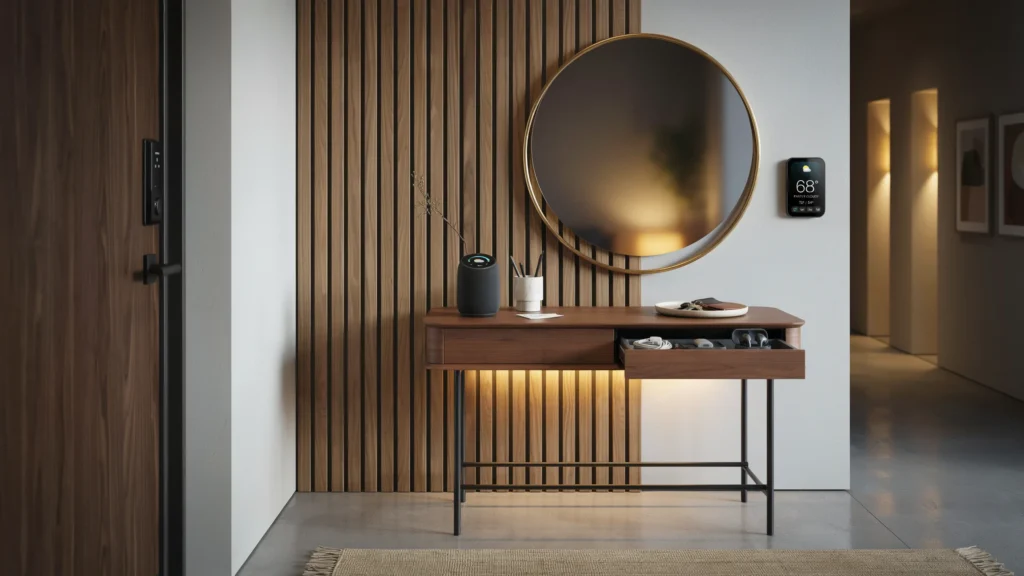
- A smart lock so you never fumble for keys.
- A video doorbell is linked to a small display for security.
- A charging station built into a drawer or console.
- Motion-sensor lighting that welcomes you with a glow when you walk in.
- A smart speaker or display for weather, reminders, and music.
Keep tech subtle. Hide cords, choose finishes that match your decor, and let the convenience speak for itself. The best smart features feel invisible until you need them.
Bringing Your Foyer Transformation to Life
A foyer makeover is one of the highest-impact projects you can take on. This small space shapes the first impression of your entire home, yet it rarely requires a huge budget or a full renovation to transform.
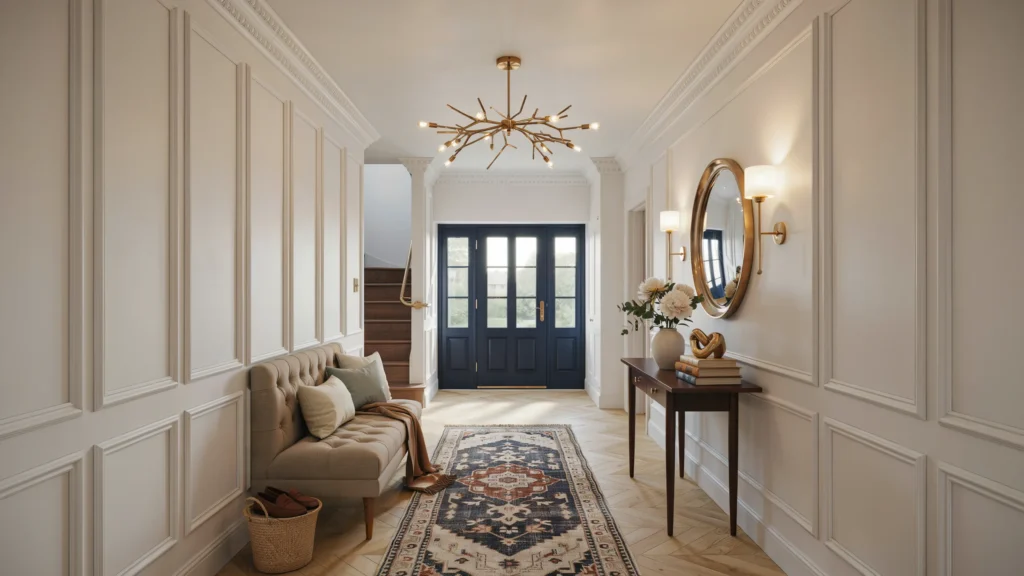
Start with the foundation refresh your walls, update your floors if needed, and layer your lighting. Then bring in furniture and decor that balance clean modern lines with the warmth of pieces you love. Finally, add smart storage and subtle technology to keep the space tidy and effortless.
The most successful foyers don’t chase trends. They blend the timeless with the contemporary, creating a welcome that feels both fresh and personal. Pick one section of this guide and begin there. Even a single change a new mirror, better lighting, or a storage bench can shift how your home feels the moment you walk in.
Frequently Asked Questions
How much does a foyer makeover cost?
Costs vary widely based on scope. A simple refresh paint, a new mirror, updated lighting, and a few accessories can run a few hundred to around $1,500. A mid-range makeover with new flooring and furniture often falls between $2,000 and $6,000. Adding custom-built-in storage or structural changes can push costs to $10,000 or more. Start small and prioritize the changes with the biggest visual impact.
How long does it take to make over a foyer?
A cosmetic refresh can be done in a weekend. Painting, hanging a mirror, and styling a console take just a few hours each. Bigger projects like installing new flooring or custom cabinetry usually take one to two weeks, including planning and installation. The timeline depends mostly on whether you hire professionals and how much you change.
Can I modernize my foyer on a tight budget?
Yes. The highest-impact, lowest-cost changes include fresh paint, improved lighting, and decluttering. Swap a dated light fixture for a modern one, add a large mirror to brighten the space, and use wall hooks or a slim bench for storage. These updates cost little but transform the feel of the space dramatically.
Should I keep any classic elements in a modern foyer?
Often, yes. Blending old and new gives a foyer character that pure minimalism can lack. Keep well-made classic pieces an inherited mirror, a solid wood bench, or quality molding and pair them with clean modern finishes. This mix feels collected and warm rather than sterile. Choose classic elements that are in good condition and that you genuinely love.
What’s the best lighting for a small, dark foyer?
Use layered lighting to brighten a dark entry. Combine recessed or flush mount ceiling lights for overall brightness with a table lamp or sconce for warmth. Add a large mirror across from any light source to reflect and multiply the light. Choose warm white bulbs (around 2700K–3000K) for a welcoming glow rather than a harsh, clinical feel.