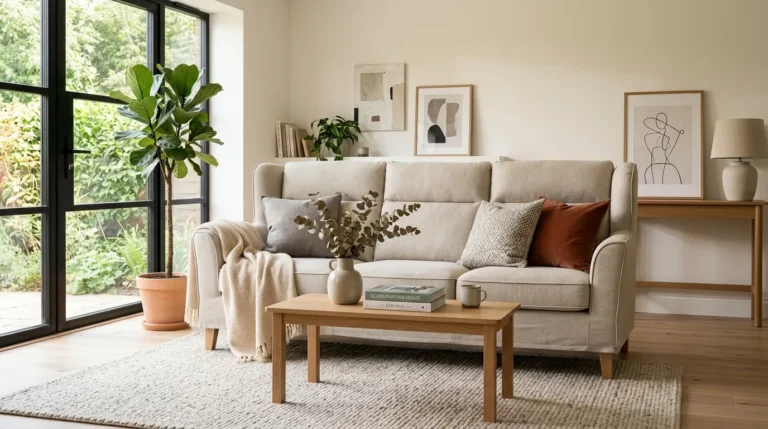
The ultimate guide to mixing and matching throw pillows starts with understanding how These small accents do heavy lifting. They add color, soften hard furniture lines, and make a sofa look like a place you actually want to sink into. Swap out a few pillows, and you can refresh an entire space without spending much.
Here’s the catch: mixing and matching pillows is harder than it looks. Grab a few you like at the store, toss them on the couch, and they often clash or feel random. The reward, though, is worth the effort. When you get the combination right, your seating looks pulled together, intentional, and warm.
This guide walks you through everything you need. You’ll learn pillow shapes and sizes, the fabrics that add texture, and the inserts that keep pillows looking plump. We’ll cover the rules that make any combination work, how to build a color palette, how to mix patterns without chaos, and how to arrange pillows on your sofa, bed, and chairs. By the end, you’ll be able to style like a pro.
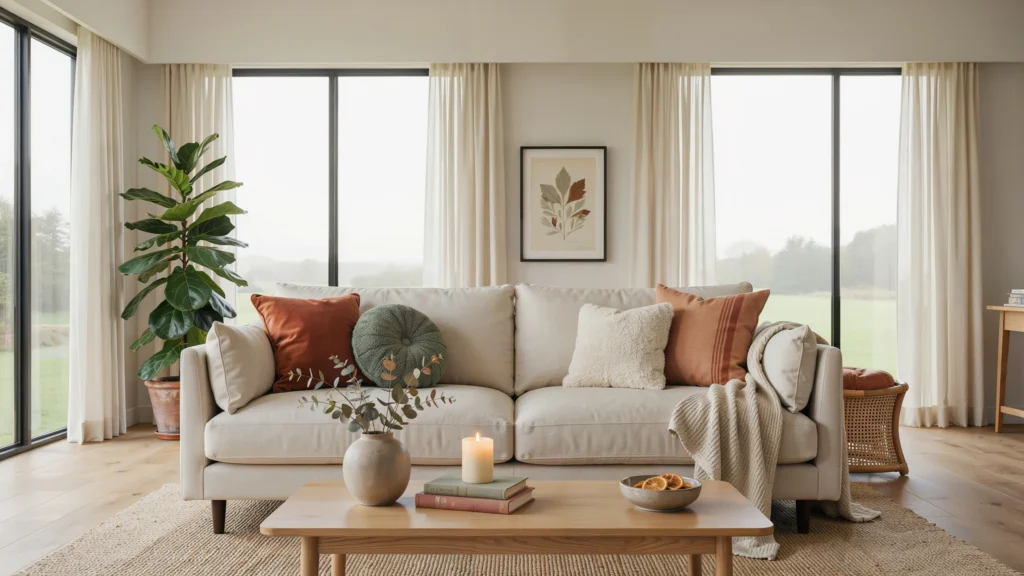
Understanding the Fundamentals: Pillow Anatomy and Terminology
Before you mix anything, it helps to know what you’re working with. Pillows come in different shapes, fabrics, and fillings, and each choice changes how your arrangement looks and feels.
Shapes and Sizes: The Building Blocks of Your Arrangement
Size matters more than most people think. A pillow that’s too small looks lost on a large sofa, while an oversized one can swallow a small chair. Here are the main shapes you’ll use:
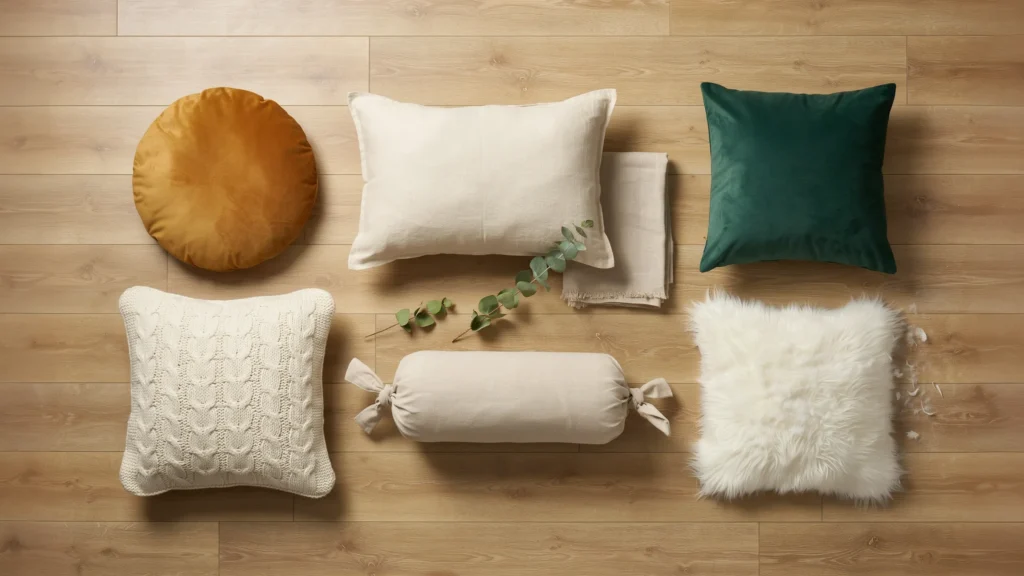
- Square: The workhorse of pillow styling. A 20×20-inch pillow suits most standard sofas. Go up to 22×22 for deeper or larger couches, and 24×24 for big sectionals or a bold, generous look.
- Lumbar: A rectangular pillow that supports your lower back. Common sizes are 12×20 and 14×22. These work well in front of larger square pillows or as a single accent on a chair.
- Round: A soft, playful shape that breaks up all those straight edges. One round pillow can add a surprising amount of charm.
- Bolster: A long, tube-shaped pillow. It’s great at the ends of a sofa or across the head of a bed for a polished, tailored finish.
Fabrics and Textures: Adding Tactile Interest
Texture gives a room depth, even when colors stay simple. Mixing materials keeps things from looking flat.
- Velvets and silks bring a sense of luxury. Velvet catches the light and feels rich, perfect for fall and winter.
- Linens and cottons feel casual and breezy. They suit relaxed, everyday spaces and warmer months.
- Knits and faux furs add cozy warmth. A chunky knit or soft faux fur pillow invites you to curl up.
A good trick: combine one smooth fabric with one textured one. A velvet pillow next to a chunky knit creates contrast you can actually feel.
Inserts and Fillings: The Secret to a Plump Pillow
The insert is the part nobody sees, yet it makes or breaks the look. A flat, lifeless pillow ruins even the prettiest cover.
- Down vs. synthetic: Down inserts feel soft and luxurious and can be fluffed into that perfect karate-chop shape. Synthetic fills cost less, resist allergies, and hold their shape well.
- Feather blends: A mix of feather and down gives you softness with a bit more structure and a friendlier price.
- Proper sizing: Always buy an insert one or two inches larger than your cover. A 22-inch insert in a 20-inch cover fills the corners and gives that full, plump look designers love.
The Golden Rules of Mixing and Matching
Now that you know your materials, let’s talk about the rules that make any combination work. These guidelines take the guesswork out of styling.
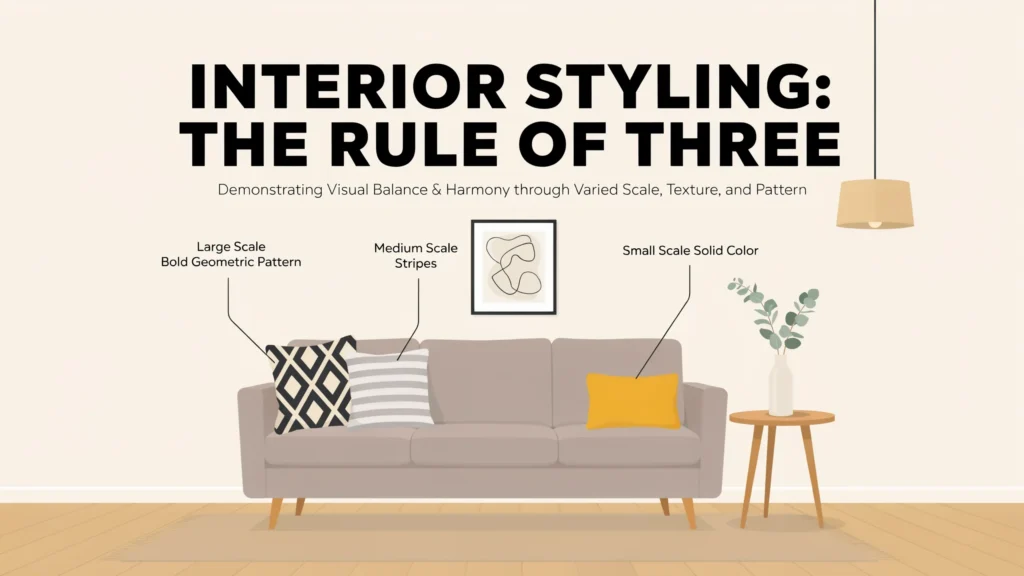
The Rule of Three (or Five): Odd Numbers Are Your Friend
Odd numbers look more natural and balanced to the eye. Two matching pillows can feel stiff. Three or five give your arrangement movement and interest. For a standard sofa, three pillows usually hit the sweet spot. For a large sectional, step up to five.
Varying Scales: Mixing Large, Medium, and Small Patterns
If every pillow has a pattern the same size, they compete and create visual noise. Instead, vary the scale. Pair a large, bold print with a medium pattern and a small, subtle one. Think of a big floral, a medium stripe, and a tiny dot. The eye moves smoothly between them.
The Power of Proportion: How Pillows Relate to Your Furniture
Match your pillow size to your furniture. A delicate accent chair needs one smaller pillow, like an 18×18 or a lumbar. A deep, oversized sofa calls for 22×22 or 24×24 pillows, so they don’t look like an afterthought. When in doubt, go slightly bigger.
Finding Your Anchor: Starting with a Focal Pillow
Pick one pillow you love first. Maybe it’s a bold pattern or a rich color that excites you. This becomes your anchor. Build the rest of your arrangement by pulling colors and tones from that single piece. Starting with an anchor keeps your whole look cohesive instead of scattered.
Choosing Your Color Palette: Harmony and Contrast
Color sets the mood of your space. The right palette ties your pillows to the rest of your room and makes everything feel intentional.
Monochromatic Magic: Tonal Variations for Sophistication
Stick to one color and play with its shades. Imagine a sofa with pillows in pale blush, dusty rose, and deep mauve. This approach feels calm, elegant, and grown-up. It’s nearly foolproof because every piece naturally agrees.
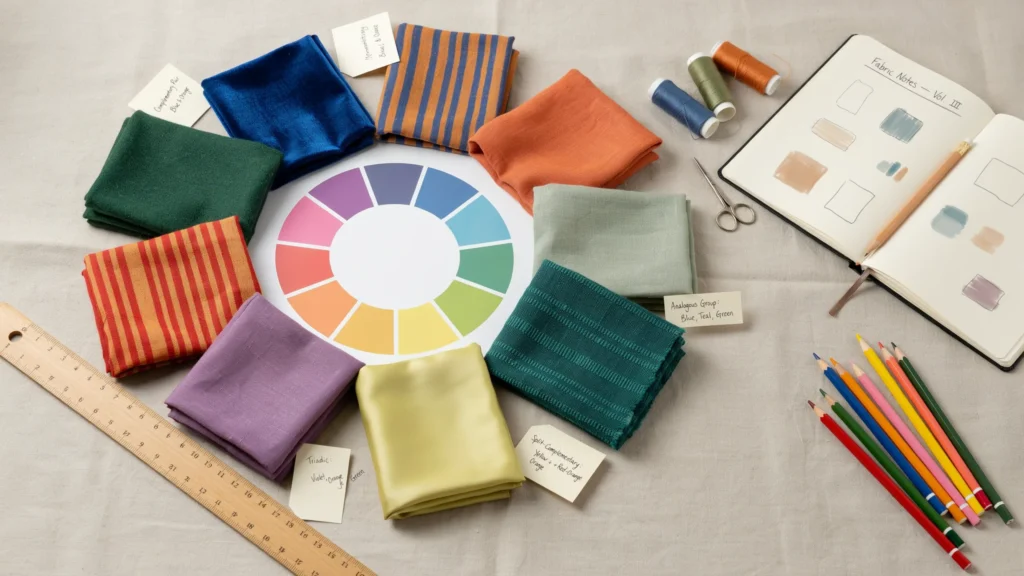
Complementary Colors: Creating Vibrant Energy
Complementary colors sit opposite each other on the color wheel, like blue and orange or purple and yellow. Pairing them creates energy and a lively pop. Use this when you want a room to feel bold and fun. To keep it from feeling loud, let one color lead and use the other as an accent.
Analogous Hues: A Serene and Cohesive Look
Analogous colors sit next to each other on the wheel, such as blue, teal, and green. Because they share undertones, they blend into a soft, harmonious flow. This is a great choice for bedrooms and spaces where you want to relax.
The Pop of Color: When and How to Introduce a Bold Accent
Sometimes a neutral room needs one jolt. Add a single pillow in a bright, unexpected shade, like a mustard yellow on a gray sofa. One pop draws the eye and adds personality without taking over. The keyword is one. Too many “pops” cancel each other out.
Drawing Inspiration: From Existing Decor, Art, or Nature
Stuck on where to start? Look around. Pull colors from a rug, a piece of art, or a favorite painting. Nature is endless inspiration too, like the greens and browns of a forest or the blues and sandy tones of a beach. Borrowing a palette that already works saves you from second-guessing.
Mastering Patterns: From Subtle to Statement
Patterns add the most personality, but they’re also where people get nervous. Once you understand a few pattern types and how to balance them, you can mix with confidence.
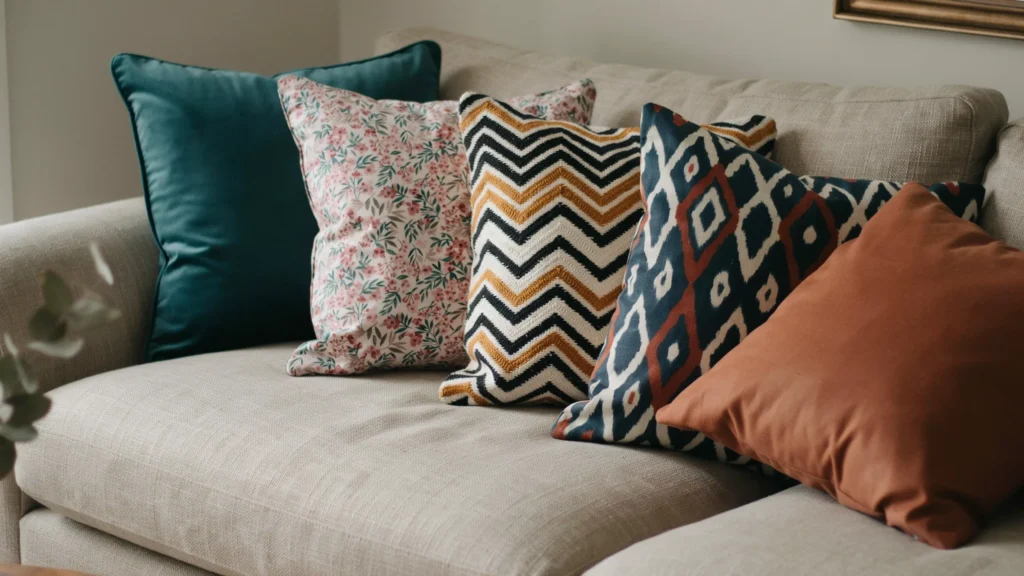
Geometric Glory: Stripes, Chevrons, and Abstract Forms
Geometric patterns feel modern and crisp. Stripes add structure, chevrons bring movement, and abstract shapes feel artistic. They pair well with almost anything because their clean lines give the eye a rest from busier designs.
Organic Elegance: Florals, Botanicals, and Natural Motifs
Florals and leafy prints soften a room and add a touch of nature. A large floral can act as your statement anchor, while a small botanical print works as a gentle supporting piece. These patterns feel warm and welcoming.
Global Influences: Ikat, Tribal, and Damask Patterns
Want texture and story? Global prints deliver. Ikat brings blurry, hand-dyed edges. Tribal patterns add bold, graphic energy. Damask offers an ornate, classic elegance. One of these can instantly make a sofa feel collected and well-traveled.
Solids and Textures: The Unsung Heroes of Pattern Mixing
Solids do the quiet work. A plain pillow gives your eye a place to rest between patterns and keeps the arrangement from feeling overwhelming. Add a textured solid, like a ribbed knit or a velvet, and you get interest without adding more print.
Balancing Act: How Many Patterns Are Too Many?
A safe formula: combine two to three patterns of different scales, then anchor them with one or two solids. If your pillows start to blur together or feel chaotic, you’ve gone too far. Pull one out and let the others breathe. When in doubt, less pattern usually look more polished.
The Art of Arrangement: Styling Your Sofa, Bed, and Chairs
You’ve chosen your pillows. Now comes the fun part: placing them. Each piece of furniture has its own styling tricks.
Sofa Styling: Symmetrical vs. Asymmetrical Setups
Your sofa is the main stage. You have two basic approaches:
- Symmetrical: Match each side, like two matching pillows on the left mirrored by two on the right. This feels formal, calm, and tidy. It suits traditional rooms.
- Asymmetrical: Vary the pillows and counts between sides. This feels relaxed and current.
Try these two methods:
- Classic pairing: Place two matching larger pillows at the outer corners, then add a smaller or patterned pillow in front of each.
- Layering for depth: Start with your biggest pillows at the back, layer medium ones in front, and finish with a lumbar or small pillow at the center. The layers add richness and pull you in.
Bed Bliss: Creating a Luxurious Pillowscape
A styled bed feels like a hotel. Build it in layers:
- Standard pillows as a base: Stand your everyday sleeping pillows upright against the headboard. They form the back wall of your design.
- Decorative shams and accents: Add euro shams in front, then layer in two or three throw pillows and finish with a single lumbar at the very front. This staircase of pillows looks full and inviting.
Chair Charm: One or Two for an Inviting Touch
Chairs need restraint. A single pillow, like a lumbar for support, often looks best on an accent chair. On a wider armchair, two coordinating pillows work. The goal is to invite someone to sit, not to bury the seat.
Beyond the Seating: Floor Pillows and Decorative Placement
Don’t forget the floor. Large floor pillows add casual, extra seating and work beautifully in reading nooks, kids’ rooms, or by a coffee table. You can also tuck a pillow into a window seat or a bench to extend your color story throughout the room.

FAQ: The Ultimate Guide to Mixing and Matching Throw Pillows
Q1: How many throw pillows should I put on a couch?
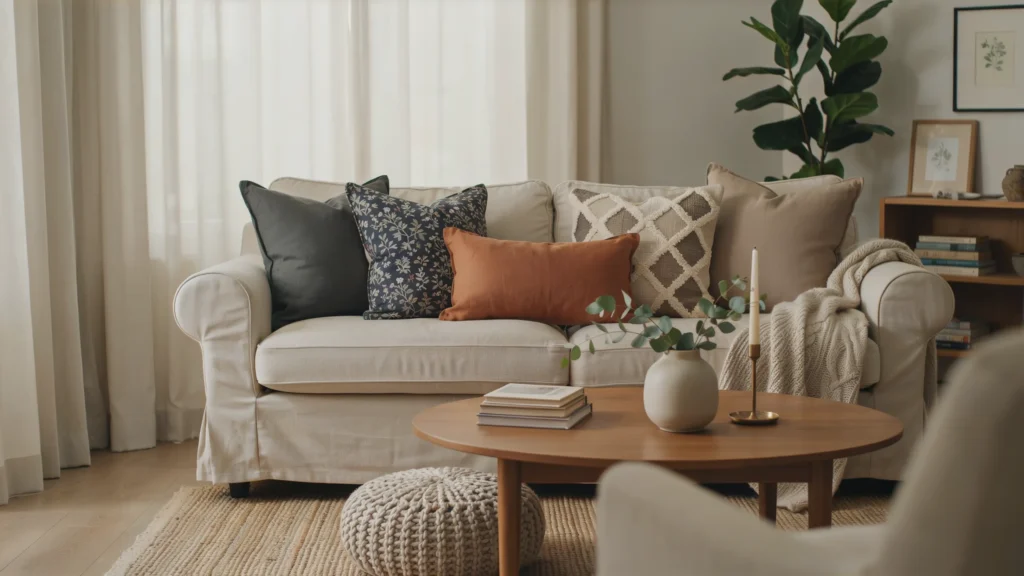
The general rule of thumb for the ultimate guide to mixing and matching throw pillows is the “odd number rule” most designers recommend using an odd number of pillows, typically 3 or 5, because odd numbers create a more natural, balanced look compared to even numbers, which can appear too symmetrical and stiff. For a standard 3-seater sofa, 3 to 5 pillows work best, while a loveseat looks great with just 2 to 3. For larger sectionals, you can go up to 5 or 7 pillows spread across the sections. However, this isn’t a strict rule the key is balance, not just quantity. Too many pillows can make a couch look cluttered and reduce actual seating space, while too few can make it feel bare and unfinished. Start with a base number and add or remove one at a time until the arrangement feels visually complete without overwhelming the furniture.
Q2: What is the 60-30-10 rule for mixing throw pillow colors?
The 60-30-10 rule is a classic interior design principle that translates beautifully into pillow styling. It means 60% of your pillows should reflect your room’s dominant color (usually matching your sofa, walls, or main decor tone), 30% should be a secondary complementary color that adds contrast, and the remaining 10% should be an accent color that pops and draws the eye. For example, if your living room has a neutral beige couch (60%), you might add navy blue pillows (30%) and a small pop of mustard yellow or coral (10%). This ratio prevents your pillow arrangement from feeling either too monotonous or too chaotic, striking the perfect balance between harmony and visual interest which is exactly the goal behind the ultimate guide to mixing and matching throw pillows.
Q3: Can I mix different patterns and textures together?
Yes, absolutely and doing so is actually one of the easiest ways to make a couch look professionally styled rather than store-bought and generic. The trick lies in varying the scale of your patterns: pair a large-scale pattern (like a bold floral or geometric print) with a medium-scale pattern (like stripes or a subtle plaid) and a solid-colored pillow to give the eye a resting point. Texture mixing works the same way combine materials like velvet, linen, faux fur, knit, and cotton to add depth and tactile interest. A common mistake is using patterns of the exact same scale and intensity, which creates visual competition instead of harmony. Always anchor multiple patterns with at least one or two solid pillows in a shared color from your palette to tie everything together cohesively.
Q4: What sizes of throw pillows work best together?
Mixing pillow sizes is essential to avoid a flat, one-dimensional look. A popular layering approach is to place larger pillows (20×20 inches or 22×22 inches) in the back corners of the couch, medium pillows (18×18 inches) in front of those, and smaller lumbar pillows (12×20 inches or 14×24 inches) in the center or front row. This creates depth, dimension, and a layered, designer-style cascade effect. Avoid using pillows that are all the exact same size, as this tends to look flat and uninspired. Rectangular lumbar pillows are particularly useful because they break up the monotony of square shapes and work beautifully as a centerpiece between two larger square pillows on each side.
Q5: How do I choose a color palette for mixing pillows without it looking messy?
Start by picking 2 to 4 colors maximum from your existing room decor pulling shades from your rug, curtains, artwork, or accent furniture ensures everything feels intentional rather than random. A safe and effective method is to choose one neutral (white, cream, grey, or beige), one dominant color, and one or two accent colors. Stick to this limited palette across all your pillows, even if the patterns and textures vary. The mistake most people make is introducing too many unrelated colors at once, which makes the space feel busy and disconnected. If you’re nervous about color mixing, monochromatic schemes (different shades and tints of a single color) are foolproof and still deliver a rich, layered aesthetic.
Q6: Should throw pillows match the sofa exactly?
No and this is actually one of the biggest misconceptions people have. Matching pillows too closely to your sofa’s exact color and fabric can make the space look flat, dated, and uninspired, almost like a hotel lobby rather than a lived-in home. Instead, aim for pillows that complement or contrast your sofa rather than match it identically. If your couch is a solid neutral color, this is actually the perfect canvas for bolder colors, patterns, and textures. If your sofa already has a pattern or bold color, balance it out with more solid, muted pillow tones so the overall look doesn’t compete or clash.
Q7: How often should I change my throw pillow covers?
While there’s no strict rule, many people refresh their pillow covers seasonally lighter fabrics like linen and cotton in bright colors for spring and summer, and richer textures like velvet, wool, or knit in deeper tones for fall and winter. This is a budget-friendly way to update your entire living space without buying new furniture. Beyond seasonal changes, it’s also smart to rotate covers whenever your room’s color scheme, artwork, or decor style evolves, keeping the space feeling fresh and aligned with your current taste.
Q8: What’s the biggest mistake people make when mixing and matching throw pillows?
The most common mistake is overthinking symmetry arranging pillows in perfectly matching, mirrored pairs on each side of the couch. While this can work for a formal, traditional look, it often results in a stiff and impersonal arrangement. The heart of the ultimate guide to mixing and matching throw pillows is embracing intentional asymmetry: varying sizes, patterns, and textures while still tying everything together with a cohesive color palette. Another frequent mistake is buying pillows one at a time without a plan, leading to a mismatched, cluttered look rather than a curated one. Always step back and view the full arrangement together before finalizing your choices.