
The best budget mattresses that feel like luxury share three things: a comfort layer thick enough to cushion your shoulders and hips, a support core that keeps your spine level, and a cover that feels soft the moment you touch it. Price alone does not decide any of these. Many mattresses in the typical budget range for a queen, roughly a few hundred dollars to just under a thousand, use the same foam and coil parts as beds that cost twice as much.
So the real skill is not finding a famous brand. It is learning to judge feel before you buy, then using the trial period properly once the mattress arrives at your home. This guide teaches you that skill, step by step, so you can spend less and still wake up feeling like you slept in a good hotel.
What Makes the Best Budget Mattresses That Feel Like Luxury

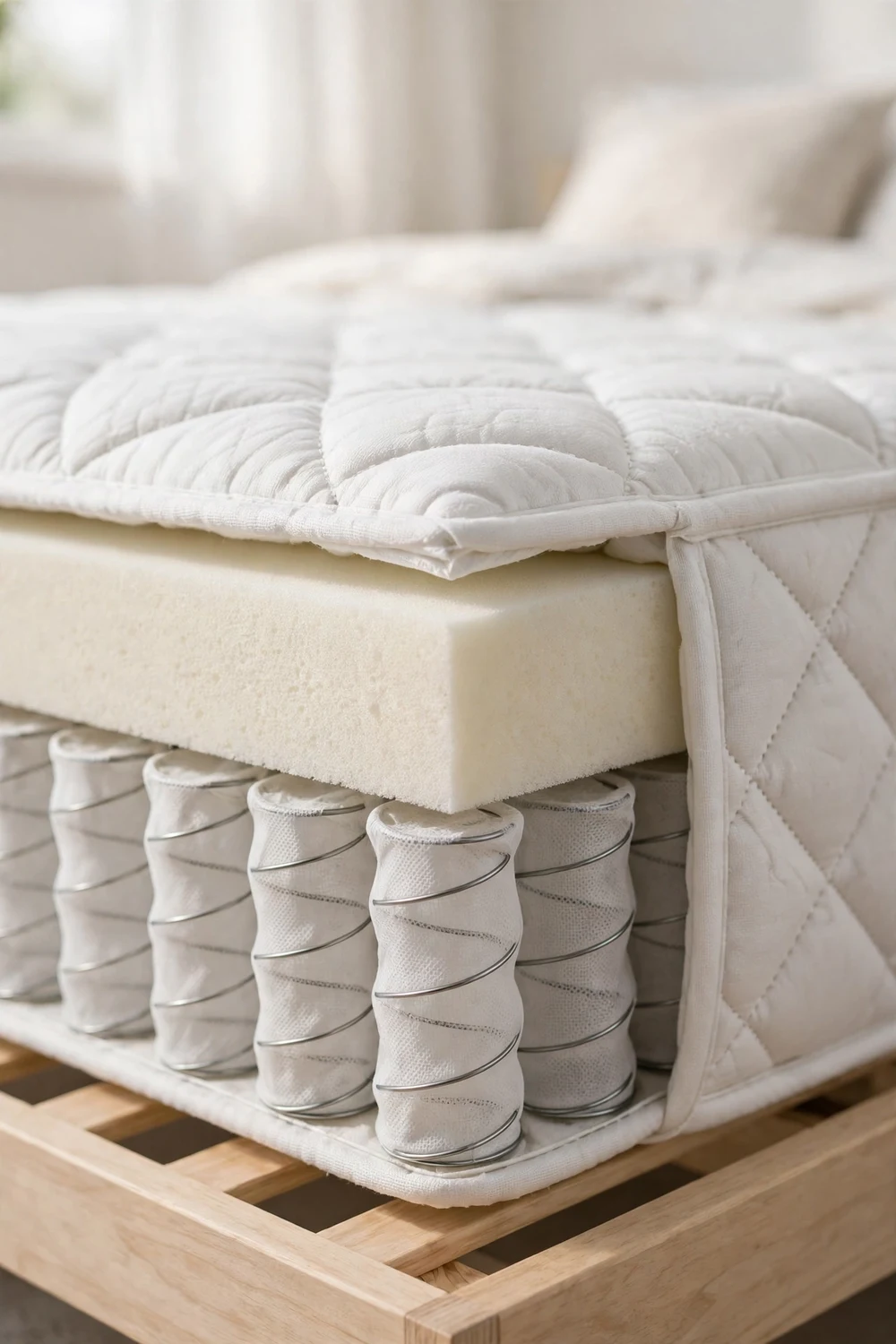
Luxury feel is not one thing. It is a small set of sensations that add up in the first minute you lie down, and again over the first few weeks. The first is the touch of the cover. A soft knit cover with a little stretch feels calm against your skin, while a stiff, plasticky cover can make even a good mattress feel cheap. Run your hand across the top before you judge anything else.
The second sensation is the way the surface greets your body. A luxury feeling mattress lets your shoulders and hips sink in just enough, then stops. It holds you instead of letting you drop through to the hard core below. That gentle stop is what people mean when they say a bed feels supportive and soft at the same time. It comes from a comfort layer that is thick enough, usually at least two to three inches of foam or a quilted pillow top, sitting over a firm support layer. The third sensation is stillness. When you turn over, a good mattress absorbs the movement instead of bouncing you around. Couples notice this most. Foam and pocketed coils both handle this far better than old style connected springs.
Then there is the edge. Sit on the side of a cheap mattress and you may slide straight off. A bed with a reinforced edge feels solid when you sit to put on your shoes, and it gives you the full width of the bed to sleep on. Hotels pay attention to this. You should too, because a mattress you can only use the middle of is a smaller mattress in practice.
Finally, there is temperature. A mattress that traps heat will never feel luxurious, no matter how soft it is. Foam holds warmth more than coils do, because air moves freely through a coil core. If you sleep warm, this one factor can matter more than firmness. Look for open cell foam, gel infusion, or a breathable cover, and treat a hybrid as your friend.
Notice what is missing from this list. Brand names, fancy stitching, and thick marketing words are not on it. None of those change how a mattress feels at 2am. What changes it is layers, support, and air flow. When you shop with that in mind, the budget section of the store starts to look very different. A plain looking bed with a good build can out-sleep a beautiful one with thin layers, and the only way to know is to test it properly.
The Firmness Scale, Decoded for Your Body
Every mattress you meet will carry a firmness number, usually on a scale from 1 to 10, where 1 is very soft and 10 is very firm. The trouble is that no two brands use the scale in quite the same way. One company’s 6 can feel like another company’s 7. So treat the number as a rough guide, not a fact, and always read it together with your sleep position and your body weight.
Side sleepers need the softest end of the middle range. Your shoulders and hips are the widest parts of your body, and they need to sink in a little so your spine stays straight. A mattress that is too firm will press on your shoulder and hip all night, and you will wake up stiff or with a numb arm. Most side sleepers are happiest around 4 to 6 on the scale, with lighter people nearer 4 and heavier people nearer 6. Back sleepers need a flatter kind of support. Your spine wants to rest in its natural curve, not sag in the middle and not arch upward. Medium firm, around 5 to 7, suits most back sleepers. Too soft and your hips sink, which pulls your lower back out of line by morning.
Stomach sleepers need the firmest surface of the three positions, usually 7 to 9. When you lie face down, your hips are the heaviest part of your body. A soft mattress lets them sink, and your spine bends in a way that aches by morning. A firm surface holds your hips level. If you mostly sleep on your stomach but sometimes roll to your side, look for a firm mattress with a slightly softer top layer, so your shoulders still get some give.
Body weight shifts all of this by about one step in either direction. If you weigh under 130 pounds, you will not sink as far into a mattress, so a bed that feels medium to most people may feel firm to you. Go one step softer than the guide suggests. If you weigh over 230 pounds, the opposite happens. You will sink deeper, so a soft mattress can bottom out and a medium one can feel soft. Go one step firmer, and look for a thicker mattress, at least 11 or 12 inches, so the comfort layers have room to work before you reach the support core.
Combination sleepers, people who change position through the night, need a mattress that responds quickly. Memory foam is slow to spring back, so you can feel stuck when you roll over. A hybrid or latex mattress bounces back faster and makes turning easy. If you love the hugging feel of memory foam but move a lot, look for a responsive foam or a hybrid with a foam top, which gives you some contour without the stuck feeling. Couples face one extra puzzle: two bodies, two weights, two positions. A medium firm hybrid is the safest shared choice, because it suits the widest range of sleepers.
Here is my honest opinion, after years of looking at bedrooms and listening to people talk about sleep. Most buyers choose too firm, because a firm mattress feels impressive for thirty seconds in a shop. It feels solid and expensive. Then they spend a month waking up with sore shoulders. Give the softer side of your range a fair chance, and trust what your body says after fifteen minutes, not thirty seconds.
Four Mattress Types, Four Different Feels
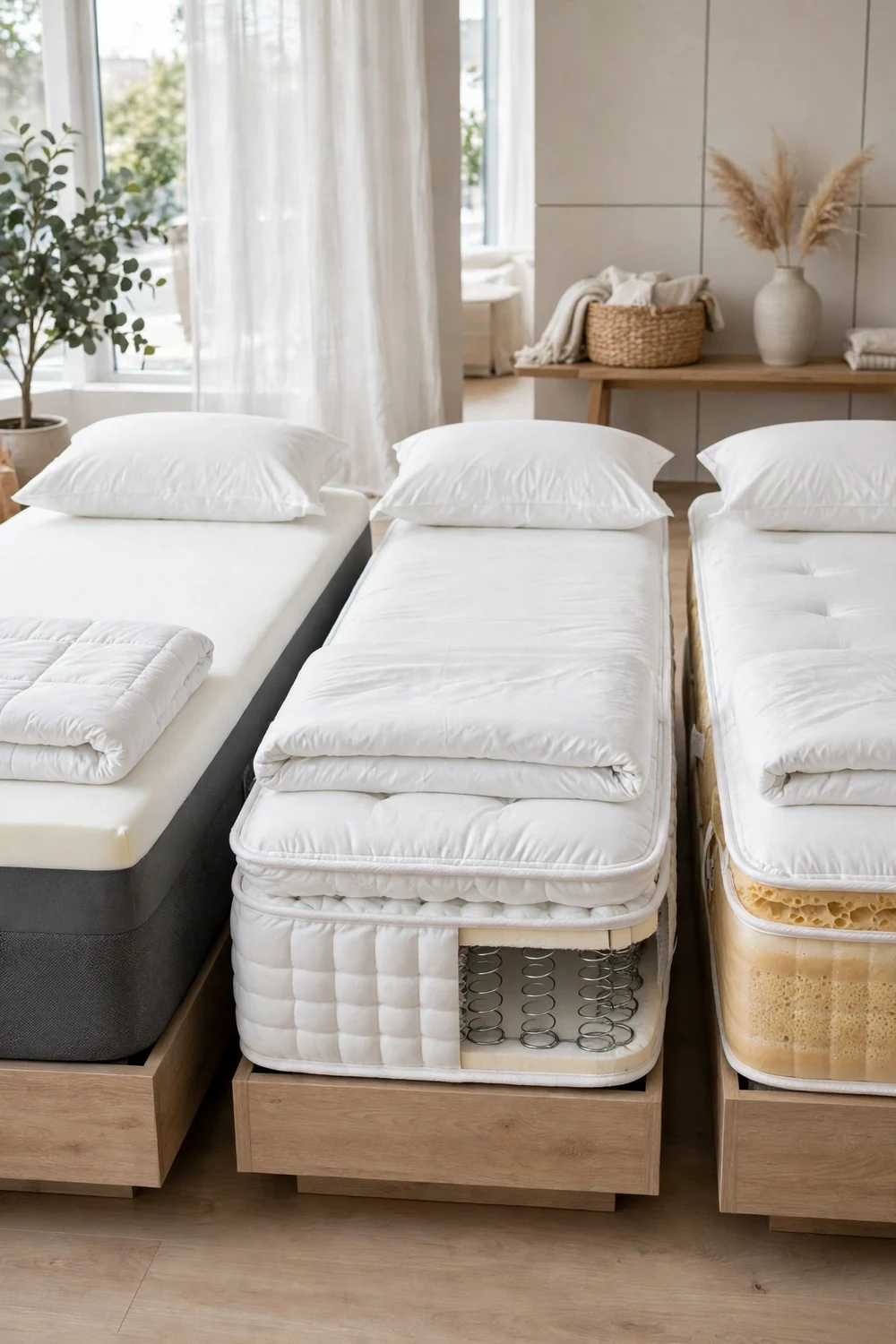
Most budget mattresses fall into four types, and each one feels different in a way you can notice in seconds. Memory foam hugs you. It moulds around your body, spreads your weight, and quiets movement. Side sleepers often love it for the pressure relief at hips and shoulders. The trade offs are heat and a slow response. You sink in, and turning over takes a little effort. If you sleep warm, look for gel infused or open cell foam, and keep the room cool. A hybrid pairs pocketed coils with a foam top. It gives you the contour of foam with the bounce and air flow of springs, and it usually has the strongest edge support of the budget types. This is the type I suggest first to most shoppers, because it suits the widest mix of sleepers and body weights. Check that the coil layer is pocketed, meaning each spring sits in its own fabric pocket, rather than connected wire, because pocketed coils move on their own and transfer far less movement.
A traditional innerspring mattress is the bounciest and often the cheapest. It sleeps cool and makes changing position easy, but it offers the least pressure relief, and motion travels across the bed. It can be a good choice for a guest room or a stomach sleeper who wants a firm, lifted feel, and it pairs well with a thick topper if you want more cushion without buying a new mattress. If you are setting up a guest room, the ideas in our elegant guest bedroom guide show how a simple bed can still feel welcoming. Latex is springy, cool, and durable, and it pushes back the moment you move. Natural latex costs more, so true latex beds rarely sit in the budget range, though you will find latex hybrid models with a thin latex layer over coils. If you find one at a fair price and you sleep hot, it is worth a lie down. It feels quite different from foam, more lifted and lively, and some people love it at once while others find it too firm.
| Mattress type | Feel | Typical budget range | Best for | Watch out for |
|---|---|---|---|---|
| Memory foam | Slow hug, deep contour | Lower end of budget | Side sleepers, light sleepers | Heat build up, slow to turn |
| Hybrid | Cushioned top, bouncy core | Middle of budget | Most sleepers, couples | Thin comfort layer on cheap models |
| Innerspring | Firm, lifted, bouncy | Lowest prices | Stomach sleepers, guest rooms | Pressure points, motion transfer |
| Latex or latex hybrid | Springy, lifted, cool | Upper end of budget | Hot sleepers, back sleepers | Firm feel, higher cost |
One more thing the table cannot show: height matters as much as type. A mattress under 10 inches tall has thin layers, and heavier sleepers will feel the core through the top. Look for 10 to 12 inches as a sensible minimum for an adult bed, and 12 to 14 if you are heavier or you share the bed.
The 15 Minute Showroom Test That Actually Works
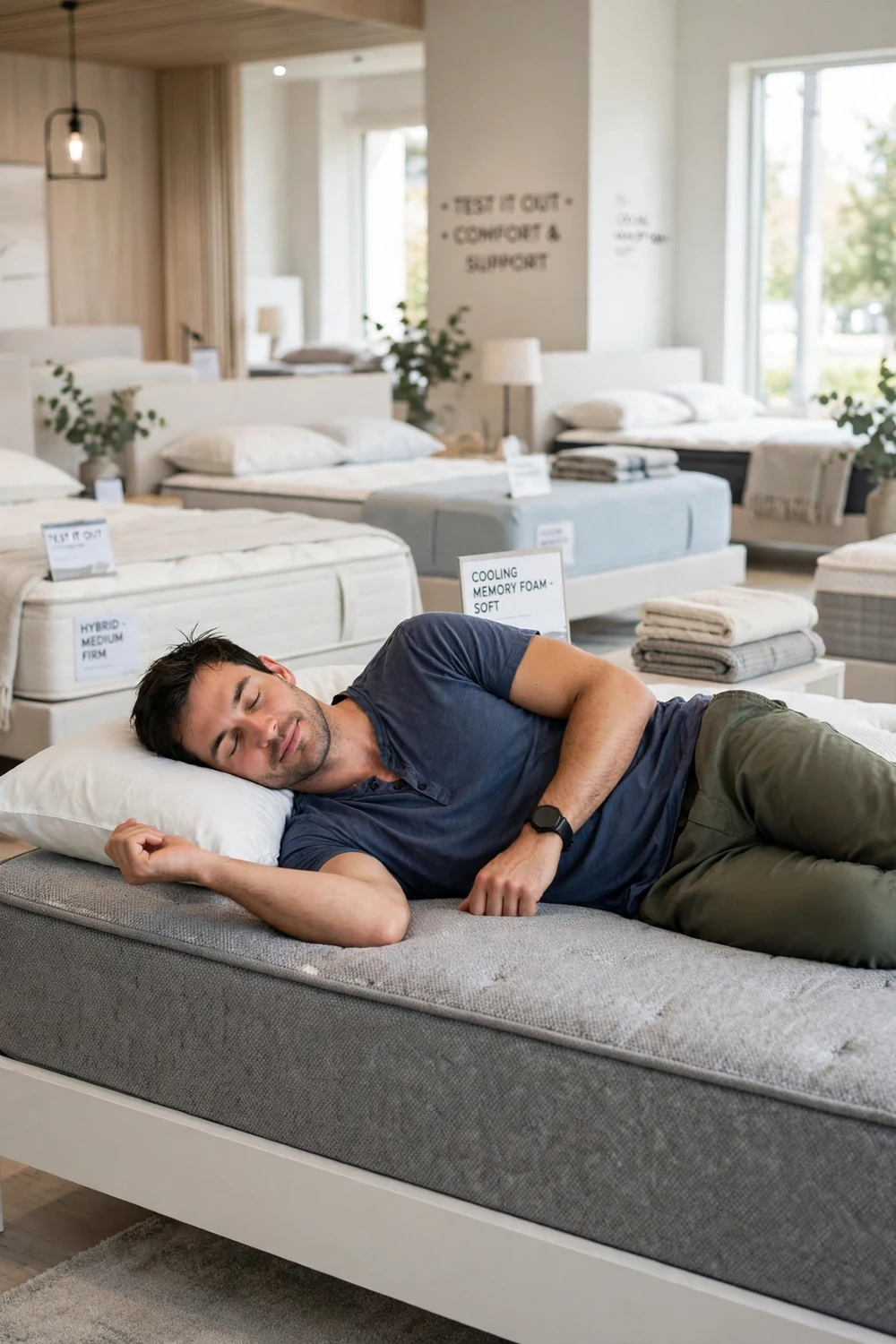
Most people test a mattress wrong. They sit on the edge, press it with a hand, bounce once, and move on. Your hand tells you almost nothing. Your body, lying in your real sleep position for fifteen minutes, tells you a great deal. Here is how to do it properly.
First, wear comfortable clothes and take your shoes off. Lie down exactly as you sleep at home. Side sleeper, lie on your side. Back sleeper, lie on your back. Bring your usual pillow if you can, or use a pillow of similar height, because a wrong pillow changes how your neck and shoulders feel on any mattress. Close your eyes and stay there for at least ten minutes. Boring is the point. Your body needs time to settle, and the first minute is mostly surprise.
While you lie there, check three things. One, can you feel pressure on your shoulder or hip? A little sinking is good. A sharp push is not. Two, is your spine straight? Ask your partner to look, or use your phone camera. Your head, shoulders, and hips should form a level line when you lie on your side. Three, can you roll over without a fight? If you feel stuck, or you have to heave yourself out of a dip, the mattress is too soft or too slow for you.
Then sit on the edge and stand up from it, as you do every morning. A good edge holds you. A weak edge collapses and makes you feel as if you might slide off. Lie near the edge too, because that is where you will end up when your partner takes the middle.
Test two or three mattresses in one visit, and no more. After four or five, they all blur together and you stop noticing differences. Take notes on your phone after each one: firmness, heat, edge, and one line about how your shoulders felt. Go home before you decide. A night of thinking beats a pressured sale, and most good shops will still have the same price tomorrow.
How to Test a Budget Mattress That Feels Like Luxury at Home

A showroom test is only the start. Your body needs two to four weeks to adjust to a new mattress, which is why the trial period matters more than the shop visit. Most online brands offer a trial of 90 to 120 nights, and many shops offer 30 nights or more. Before you buy, read the trial terms in full. Check whether the return is free, who collects the mattress, and whether there is a minimum number of nights before you can return it. Some trials ask you to keep the bed for 30 nights first, which is fair, because your body genuinely needs that time.
Once the mattress arrives, give it a proper run. Let it expand fully, usually 24 to 72 hours for a bed in a box, and sleep on it with your normal pillow and bedding. Keep a simple note on your phone each morning for the first two weeks: how your back felt, whether you woke up hot, and how many times you remember waking. Patterns show up fast. Three mornings of sore hips is a signal, not a coincidence.
Do not judge the mattress on night one. A new bed feels strange because it is new, not because it is wrong. Give it at least two weeks before you decide, unless the pain is sharp or your sleep is clearly worse. If you are struggling after three weeks, try one change before you return it. A thin topper can soften a firm bed, and a firmer pillow can fix a neck ache that you blamed on the mattress. If the problem is still there after that, use the trial. That is what it is for, and a return is not a failure. It is the system working as it should. Keep a mattress protector on from night one, and keep the original packaging for the first month if you have the space, since a clean, protected mattress makes any return go more smoothly.
Size, Height and the Base Underneath
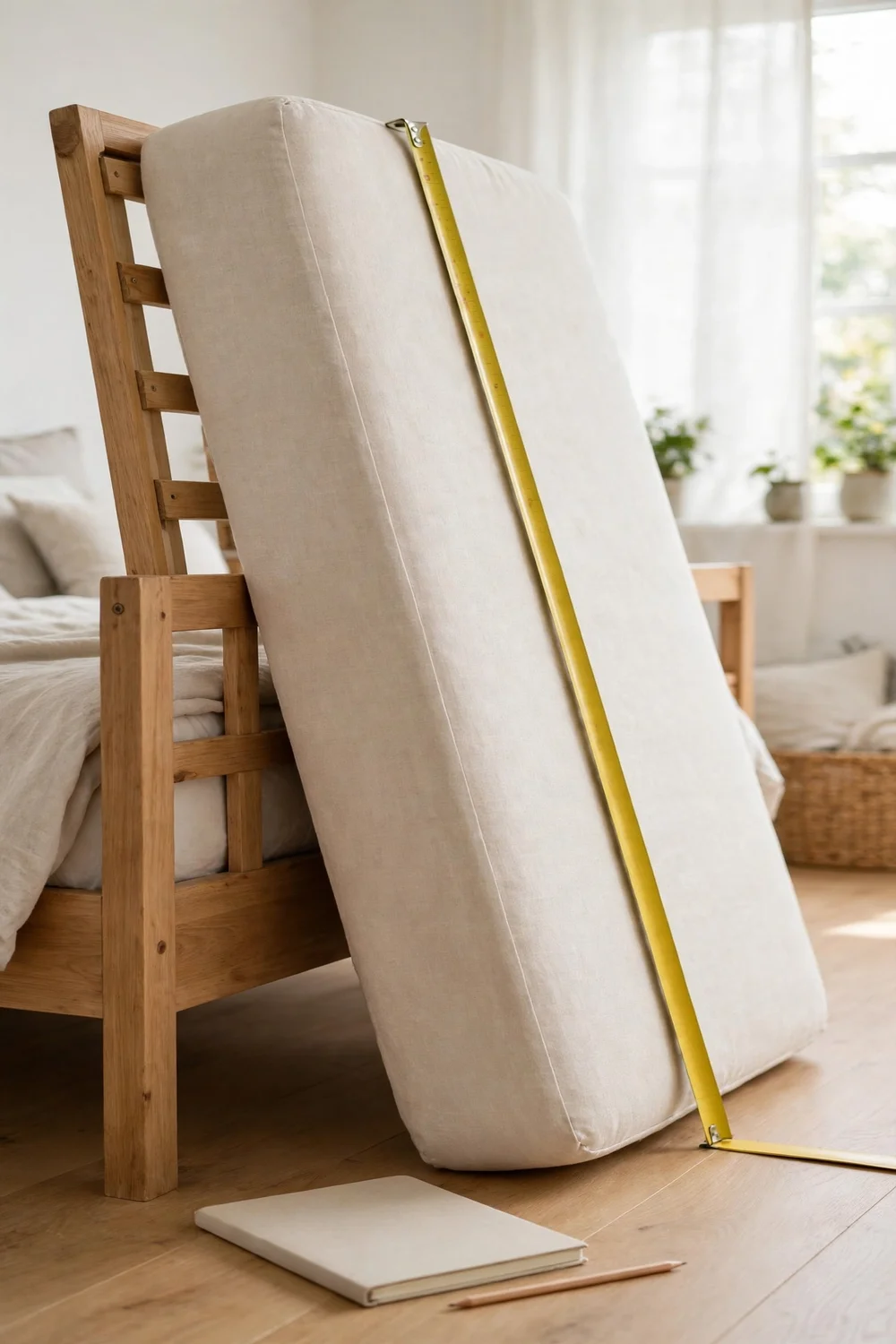
The best budget mattresses that feel like luxury can still disappoint if the size or the base is wrong, so measure before you order. A queen is 60 by 80 inches, a king is 76 by 80, and a full is 54 by 75. That sounds obvious, but many buyers forget to measure the room, the doorway, and the stairs. A king that cannot turn the landing is a problem you discover at the worst possible moment. Measure the tightest turn on the way in, not just the bedroom.
Height changes how the bed looks and how easy it is to use. Add the mattress height to the frame height to get the top of the bed. For most adults, a top height of 22 to 25 inches from the floor feels comfortable to sit on and get out of. A tall mattress on a tall frame can leave shorter sleepers climbing in, and a low bed can be hard on knees.
The base matters as much as the mattress. Foam mattresses need a solid or closely slatted base, with slats no more than about 3 inches apart, or the foam sags between the gaps over time. Hybrids are more forgiving, but they still need even support. An old box spring with a dip will pass that dip straight through to your new mattress. If your frame is an upholstered bed, our upholstered bed buying guide explains how to check the frame and slats before you buy. And if the room itself is small, measure the bed against the layout first. Our small bedroom layout ideas show how much space a queen really leaves for walking around it.
Five Cheap Upgrades That Make Any Mattress Feel More Expensive
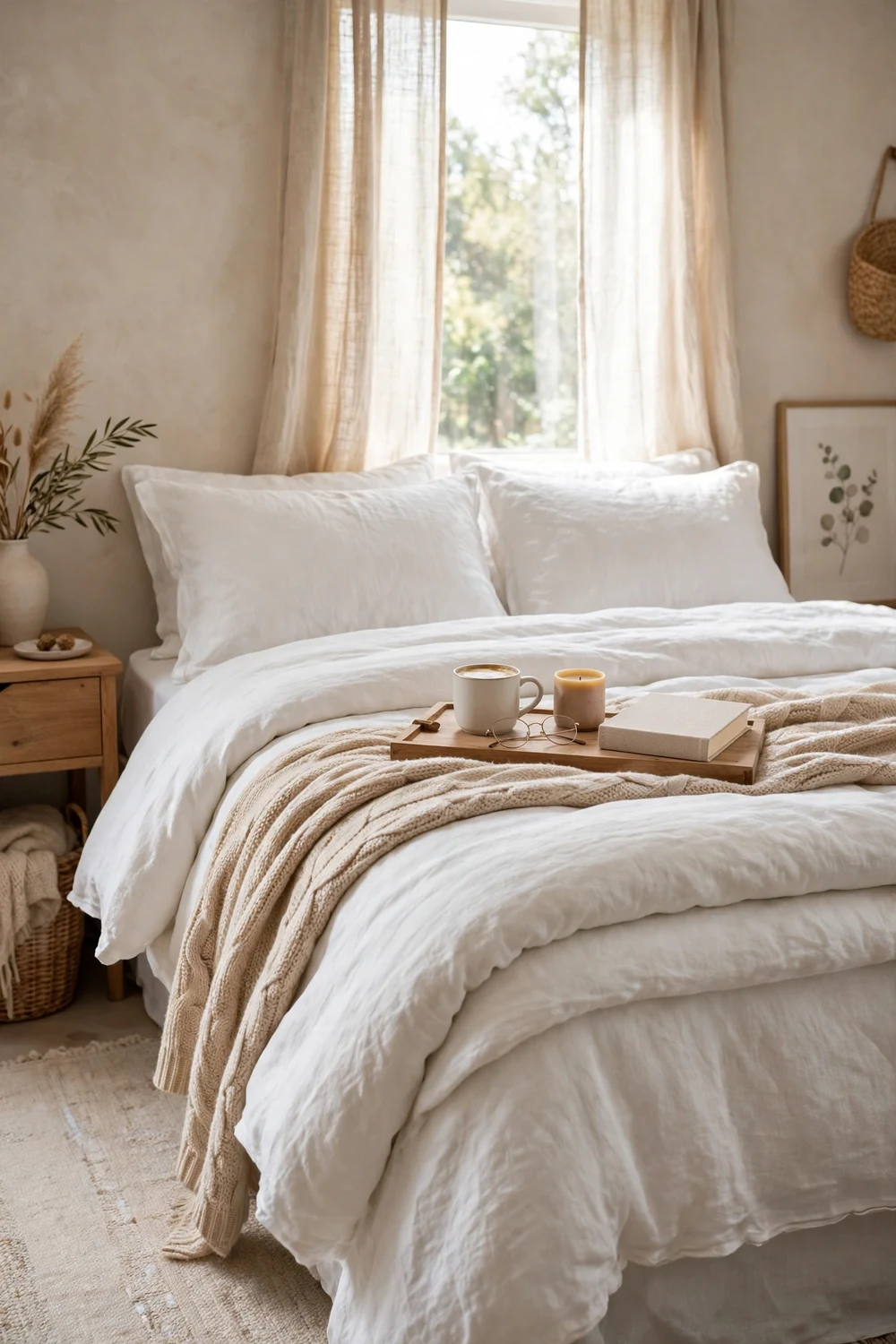
If your mattress is basically right but the bed still does not feel special, the fix is often above the mattress, not inside it. A good topper is the single most useful upgrade. A two to three inch foam or latex topper softens a firm bed and adds the plush surface that luxury hotels are known for. It costs far less than a new mattress, and it can rescue a bed that is slightly too firm. Choose a topper with a removable, washable cover, and keep it thin enough that you do not sink through to the mattress below.
Bedding does the next most work. Crisp cotton or linen sheets with a little weight to them feel better than thin, shiny ones, and a duvet that is slightly larger than the mattress drapes over the sides the way hotel beds do. Layer a light throw across the foot of the bed. It costs little, and it changes the whole look of the room.
Your pillow is the third upgrade, and it is the one people forget. A pillow that is too high or too flat can make a good mattress feel wrong, because your neck spends eight hours at the wrong angle. Side sleepers need a thicker, firmer pillow that fills the gap between ear and shoulder. Back sleepers need a medium pillow that supports the neck without pushing the head forward.
Fourth, check the frame and the floor. A creaking frame or a mattress that slides will ruin the feel of the best bed. Tighten the bolts, add felt pads under the legs, and use a non slip mat between the mattress and the frame if it moves.
Fifth, finish the room around the bed. A mattress in a bare, cluttered room still feels like a purchase. The same mattress in a calm room with soft light, a clear bedside table, and bedding you like feels like a retreat. If you are planning the room as a whole, our master bedroom design ideas and our romantic bedroom ideas show how small styling choices change the mood of the whole space. And if the budget is tight, our cheap room makeover ideas rank the changes that make the biggest difference for the least money.
Red Flags, Fine Print and the Warranty Trap

Budget shopping has real traps, and most of them hide in the fine print. The first is the trial that is not really a trial. Some sellers charge a restocking fee, make you pay for return shipping, or only offer store credit. A good trial is free to return with a full refund. If the terms are hard to find, that is your answer. Walk away.
The second trap is the warranty. A ten year warranty sounds reassuring, but read what it covers. Most warranties cover manufacturing defects, such as a broken spring or a seam that splits. They do not cover the mattress slowly softening, which is the most common complaint. They also often require a sag of a certain depth, often an inch and a half, measured without weight on the bed. And a stain can void the whole thing, which is another reason to use a protector from day one. The third trap is the comfort guarantee that only lets you swap once, for a different firmness from the same brand. That can still be useful, but know the limit before you buy.
Finally, be careful with reviews that only talk about the first week. A mattress can feel wonderful for seven nights and sag by month six. Look for reviews from people who have slept on the bed for several months, and pay attention to comments about heat, edge support, and sagging. Those are the things that decide whether a budget mattress still feels like luxury a year later.
Frequently Asked Questions
Can a cheap mattress really feel like a luxury mattress?
Yes, if the build is right. Luxury feel comes from a thick comfort layer, a solid support core, a soft cover, and good edge support. Many budget mattresses use the same kinds of foam and coils as expensive ones. The difference is often the cover, the finishing, and the brand name.
What firmness should I choose if I am not sure?
Start with medium firm, around 6 on the 1 to 10 scale. It suits the widest range of sleepers and positions. If you are mainly a side sleeper, go a step softer. If you mainly sleep on your stomach, go a step firmer. And remember that your weight shifts the feel by about one step in either direction.
How long should a mattress trial be?
Look for at least 90 nights, and give your body at least 30 nights before you judge it. Two to four weeks is the normal adjustment time. A trial shorter than 30 nights is a warning sign, because it does not give you a fair chance to know how the bed really sleeps.
Is a hybrid or a memory foam mattress better on a budget?
For most people, a hybrid is the safer budget choice. It sleeps cooler, responds faster when you move, and has stronger edges. Memory foam is better if you are a side sleeper who wants deep pressure relief and you do not mind warmth.
How thick should a budget mattress be?
Look for at least 10 inches for an adult bed, and 11 to 13 inches if you are heavier or you share the bed. Thickness gives the comfort layers room to work. A thin mattress can feel fine for a few minutes in a shop and then bottom out once you sleep on it every night.
Should I buy a mattress online or in a shop?
Both work, and they suit different shoppers. A shop lets you test the feel before you buy, which helps if you are unsure about firmness. Online buying usually gives you a longer trial and a lower price. If you buy online, the trial period is your showroom, so read the return terms carefully before you order.
Before You Click Buy, Run This One Last Check
You now know what luxury feel is made of, how firmness really works, and how to test a mattress in a shop and at home. The last step is simple. Write down your sleep position, your weight range, and whether you sleep hot. Then check your shortlist against those three facts. If a mattress fits all three, has a free trial of at least 90 nights, and a clear warranty, it is a sensible buy at almost any budget.
Then dress the bed well, give it a full month, and let your mornings tell you the truth. A good budget mattress does not announce itself. It just lets you forget about it, night after night, which is the most luxurious feeling of all.