The best DIY DVD storage ideas for a closet start with one simple choice: keep the cases or ditch them. If you keep the cases, build shallow shelves with at least 8.5 inches of clearance and store the cases upright like books. If you ditch the cases, paper sleeves in binders hold about 200 discs in the space of roughly 30 cases, which is the fastest way to shrink a big collection. Either way, measure your closet first, because most bedroom closets are about 24 inches deep and that depth decides whether shelves, towers or bins will fit without blocking the door.
A closet beats a living room wall for one plain reason: it keeps discs cool, dry and dark. Sunlight fades cover art and heat warps discs over time, so a closed closet is a better home than an open shelf beside a sunny window. The ten methods below all work inside a standard closet, from a low cost binder to a weekend shelving project.
DVDs are having a small comeback, and plenty of people are rediscovering boxes of discs they forgot. Maybe you inherited a collection, or you kept buying discs long after streaming took over. Whatever brought you here, the problem is the same: a stack of plastic cases takes up far more room than the films inside it deserve.
Before you buy anything, pull every disc out and count it. A rough count is enough. Under 100 discs is a small collection and almost any method here will work. Between 100 and 300 discs, binders or bins start to make real sense. Over 300 discs, you need labels and a clear order, or you will spend more time hunting for a film than watching it. Measure the closet too, and note the width, depth and height.
DIY DVD Storage Ideas That Start With a Binder
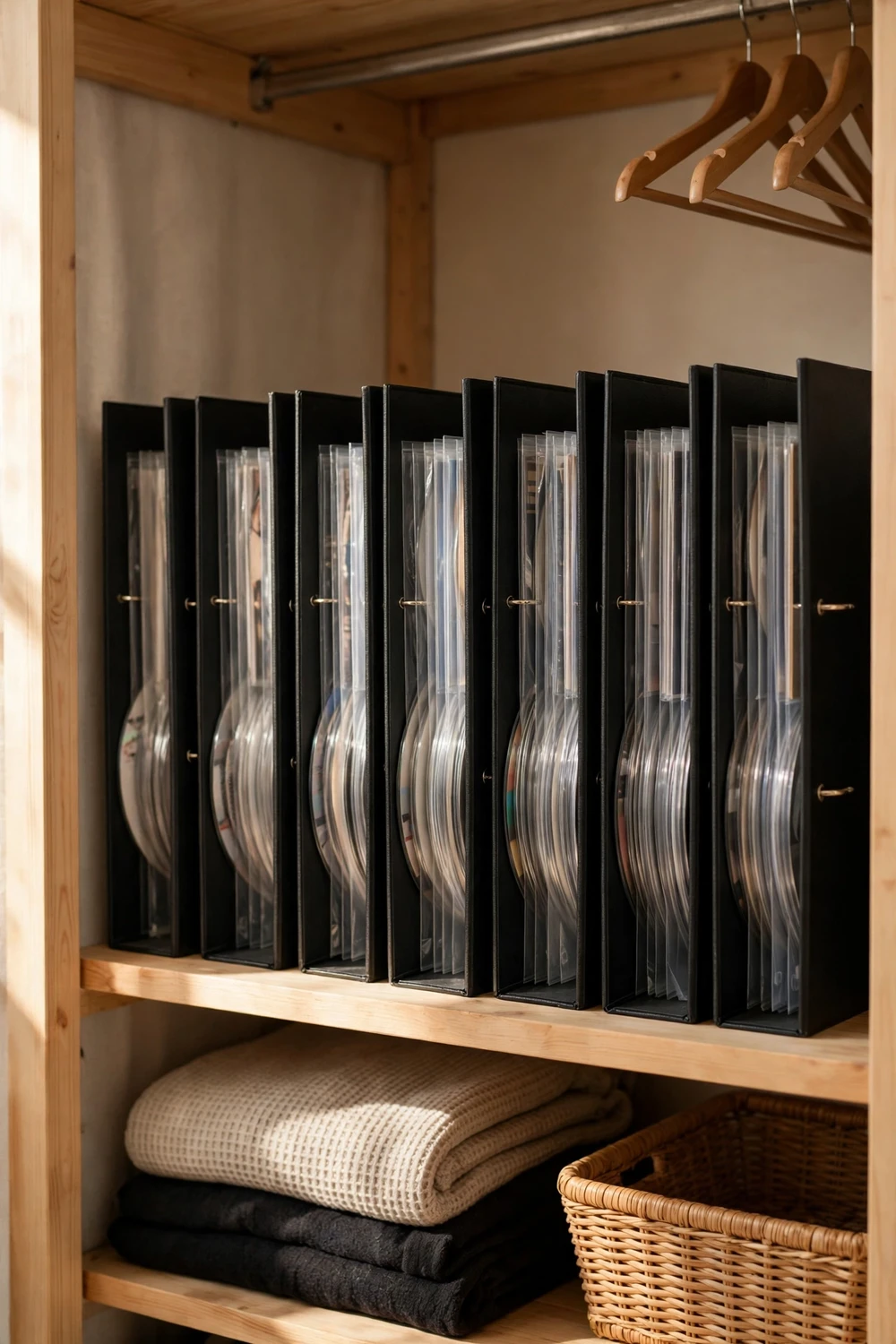
Binder storage is the single biggest space saver on this list, and the fastest way to organize a DVD collection that has outgrown its shelf. You take each disc out of its plastic case, slide it into a soft lined paper sleeve, and file the sleeves in a ring binder made for discs. One binder typically holds around 200 discs in about the same shelf space as 30 cases, so 300 cased DVDs shrink to the space of about 45 cases. That is the difference between a full closet and a single shelf.
Choose sleeves with a soft lining, not plain paper pockets, because the lining protects the playing surface from scratches. Sleeves with a clear window let you see the disc label without pulling it out, and some have a pocket on the back for the cover booklet. Keep the artwork if it matters to you.
Label the binder spine, not just the discs inside. A spine label that reads “Comedies A to M” saves you from pulling five binders off a shelf to find one film. Inside the binder, use alphabetical divider tabs and file discs in order. When you lend a disc to a friend, leave a placeholder card in its sleeve with the film title and the borrower’s name. It takes ten seconds.
Binders work best on a closet shelf at least 12 inches deep, because a full disc binder is about 11 inches tall and roughly 2 to 3 inches thick. Store binders upright like books, with a bookend at the end of the row so they do not slop sideways. Never lay a stack of binders flat in a tall pile, because the weight presses on the bottom binder and the rings can dent the sleeves. One honest trade off: binder storage means the cases are gone, and some collectors love the look of a wall of cases. If that is you, skip to the shelving ideas below. A set of sleeves and a binder usually costs in the range of 15 to 40 dollars for enough supplies to hold 200 discs.
Sort Discs Into Bins With Alphabet Tabs
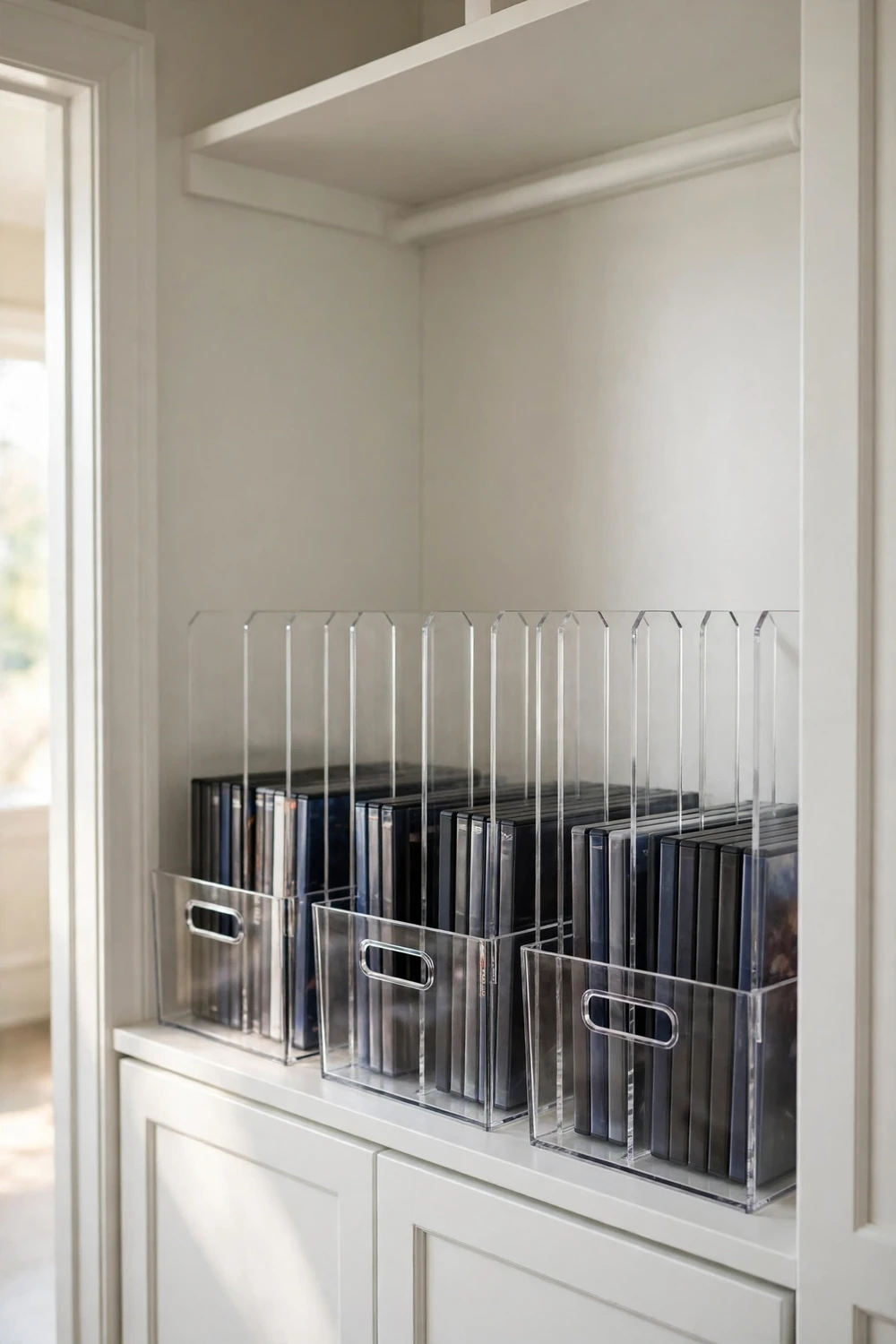
If binders feel too fussy, or you want to keep the cases, an acrylic storage bin is the next best thing. A clear bin shows what is inside without opening it, and a lid keeps dust off. The trick is the tab system: alphabetical divider tabs inside the bin, with cases filed in order behind them. Without tabs, a bin is just a box you dig through. With tabs, it is a filing cabinet you can search in seconds.
Pick a bin deep enough to hold DVD cases upright with the lid closed. A standard case is about 7.5 inches tall, 5.3 inches wide and half an inch thick, so the bin needs at least 8 inches of inside height. Measure before you buy, because bins that look right in a photo are often an inch too short. Clear acrylic is the safest choice: opaque bins look tidy, but you will open every one to find a single film. If you already own opaque bins, label the outside edge with the range inside, such as “Drama D to H”.
Disc storage bins shine in closets with deep shelves or floor space. A bin slides onto a closet floor under hanging clothes, or onto a wide shelf where a tower would not fit. They also travel well: you carry a bin by its handles instead of restacking a hundred cases. Keep bins off the floor if yours ever gets damp, and use placeholder cards for borrowed discs here too. One acrylic bin with tabs usually costs in the range of 20 to 45 dollars, and most closets need two or three for a medium collection.
Build Custom Floating Shelves Sized to Your Cases
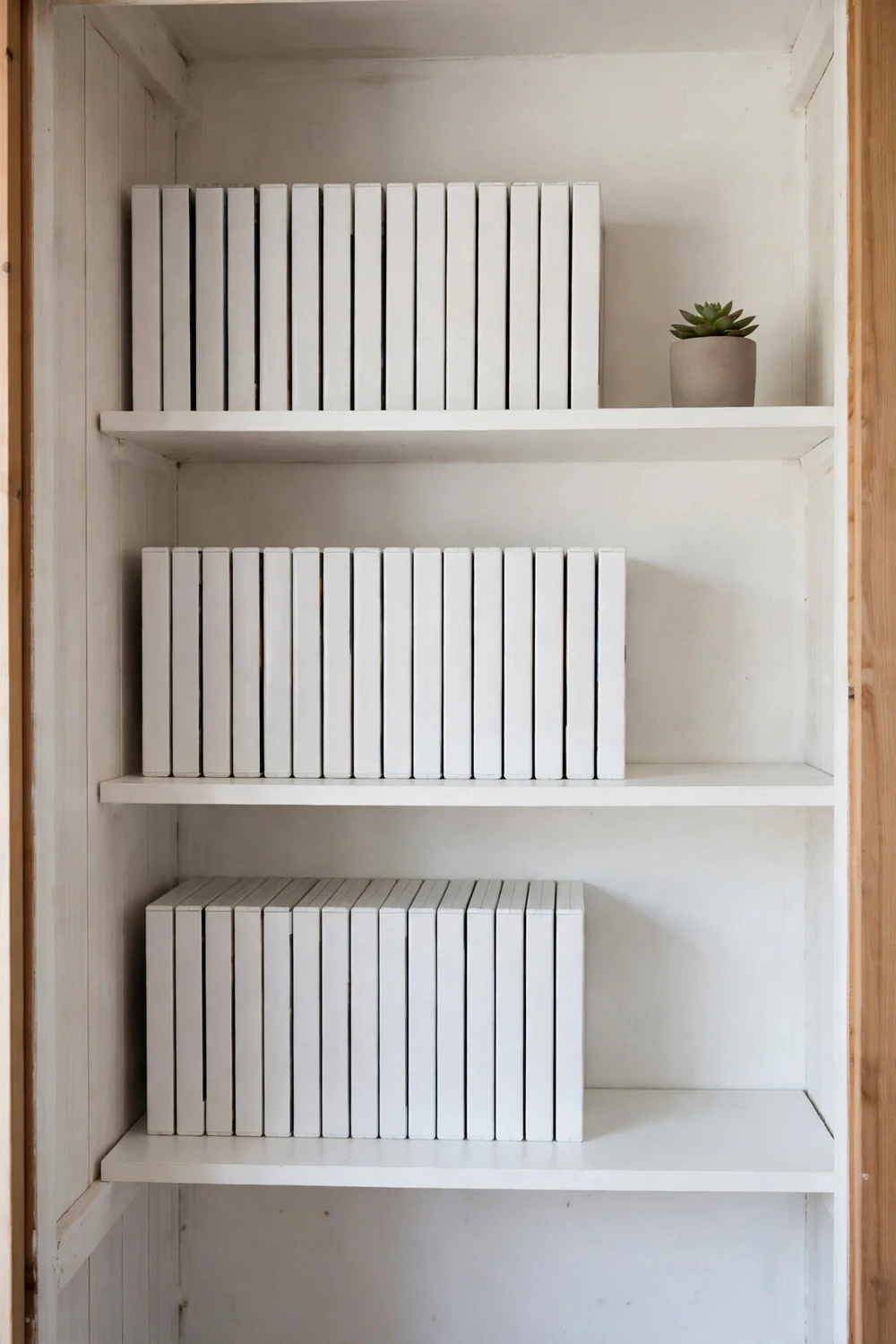
Floating shelves are the best choice if you want to keep the cases and still see them. A shelf built for DVDs is different from a general bookshelf, because the depth and spacing are tighter. A DVD case is about 7.5 inches tall, so leave at least 8.5 inches of clear space between shelves, which lets you tilt a case out without scraping the shelf above. Make the shelf 6 to 7 inches deep: enough to hold a case with a small lip at the front, and shallow enough not to eat into the space you need for clothes.
Start by finding the studs in the closet wall. A shelf full of DVDs is heavy, far heavier than most people expect. One shelf holding 40 cases carries roughly 15 to 20 pounds, and a full wall can pass 100 pounds. Brackets screwed into studs hold that weight without sagging. If you cannot hit a stud, use heavy duty wall anchors rated for the load, and test the shelf with books before you load it with discs. Paint the shelves the same colour as the closet walls so they look built in.
Plan the layout before you drill anything. Hold a case against the wall and mark the shelf height with a pencil, working from the bottom up with a gap of at least 8.5 inches per row. If the closet has a rod you still use, keep the shelves on the side wall or above the rod. Leave a gap of two or three inches at the end of each row so your fingers can pull a case out, and label each shelf edge with the range it holds, such as “Action A to F”. For a closer look at how shelves can look styled rather than stuffed, our guide to shelf decor ideas shows how layers, height and breathing space make a shelf look designed, and the same rules apply to a row of DVD cases. A basic three row DVD shelf DIY project usually costs in the range of 30 to 80 dollars in boards, brackets and paint.
Squeeze a Narrow DVD Tower Into a Corner or Closet Side
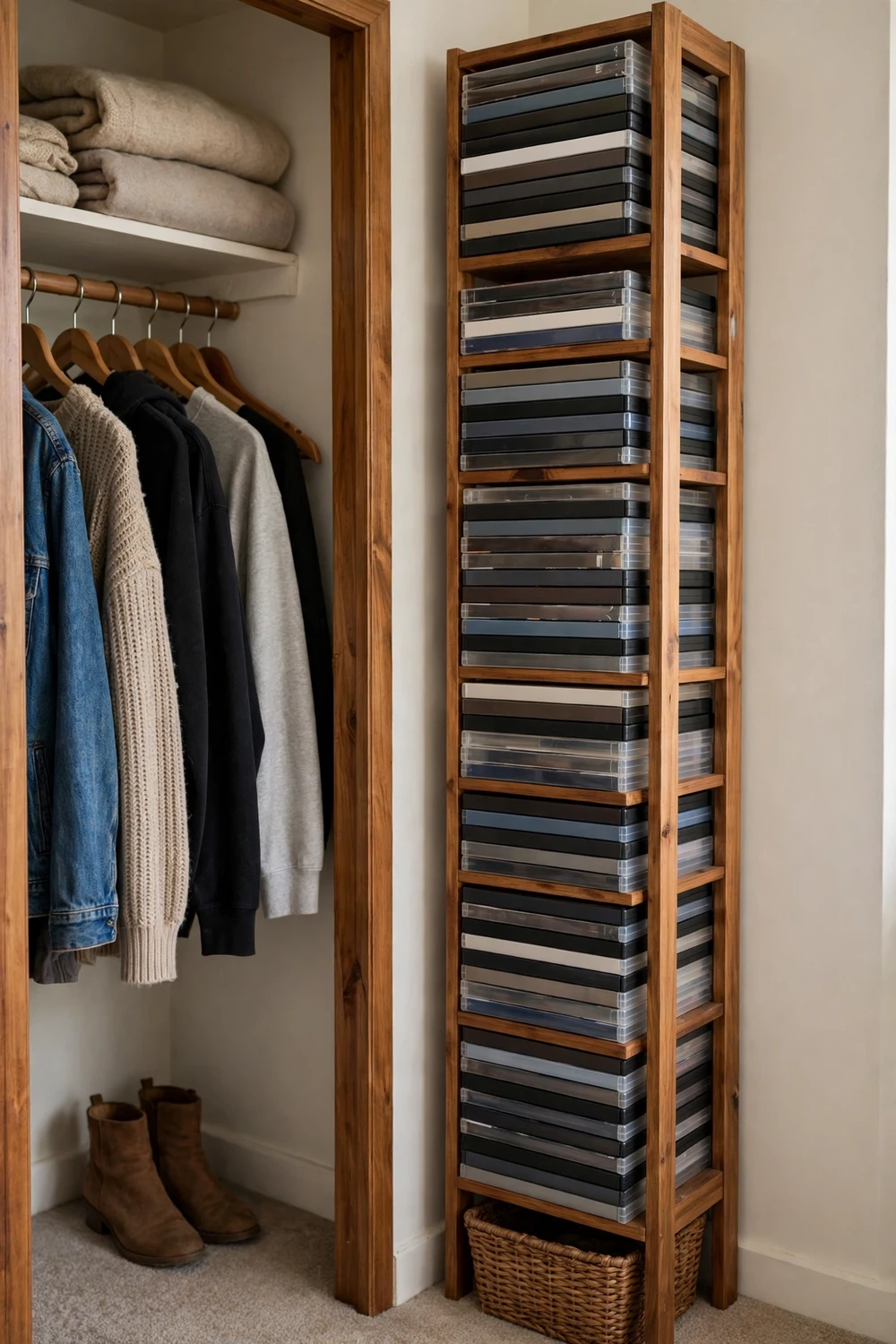
Every closet has a dead spot, usually the narrow strip beside the door frame or the corner where two walls meet. A narrow DVD tower turns that dead spot into storage. Towers made for discs are typically 8 to 10 inches wide and 48 to 72 inches tall. Measure the strip before you shop, and measure twice if the closet door swings inward: a tower that blocks the door is worse than no tower at all.
Build your own tower if shop bought ones are too wide. Two side boards, a back board and a set of small shelves are all it takes. Cut the side boards to the height of your space, space the shelves 8.5 inches apart, and add a solid base that lifts the first row off the floor, away from dust and damp. Screw the tower to the wall with a small bracket at the top, because a tall narrow tower can tip forward, and a single screw into a stud removes that risk.
Towers suit collections that are still growing, since you can add a second one beside the first later. Keep the most watched discs at waist to shoulder height and the rarely watched ones at the top and bottom. If the tower sits beside hanging clothes, leave a gap of at least two inches so sleeves do not snag on the edge. Do not mix tower depths: a tower built for books is usually 10 to 12 inches deep, which wastes closet space, while a DVD tower is 6 to 7 inches deep, which is all a case needs. A ready made tower usually costs in the range of 40 to 90 dollars, while a simple DIY tower from pine boards runs about 25 to 50 dollars in materials.
Repurpose Wooden Crates and Fabric-Lined Boxes
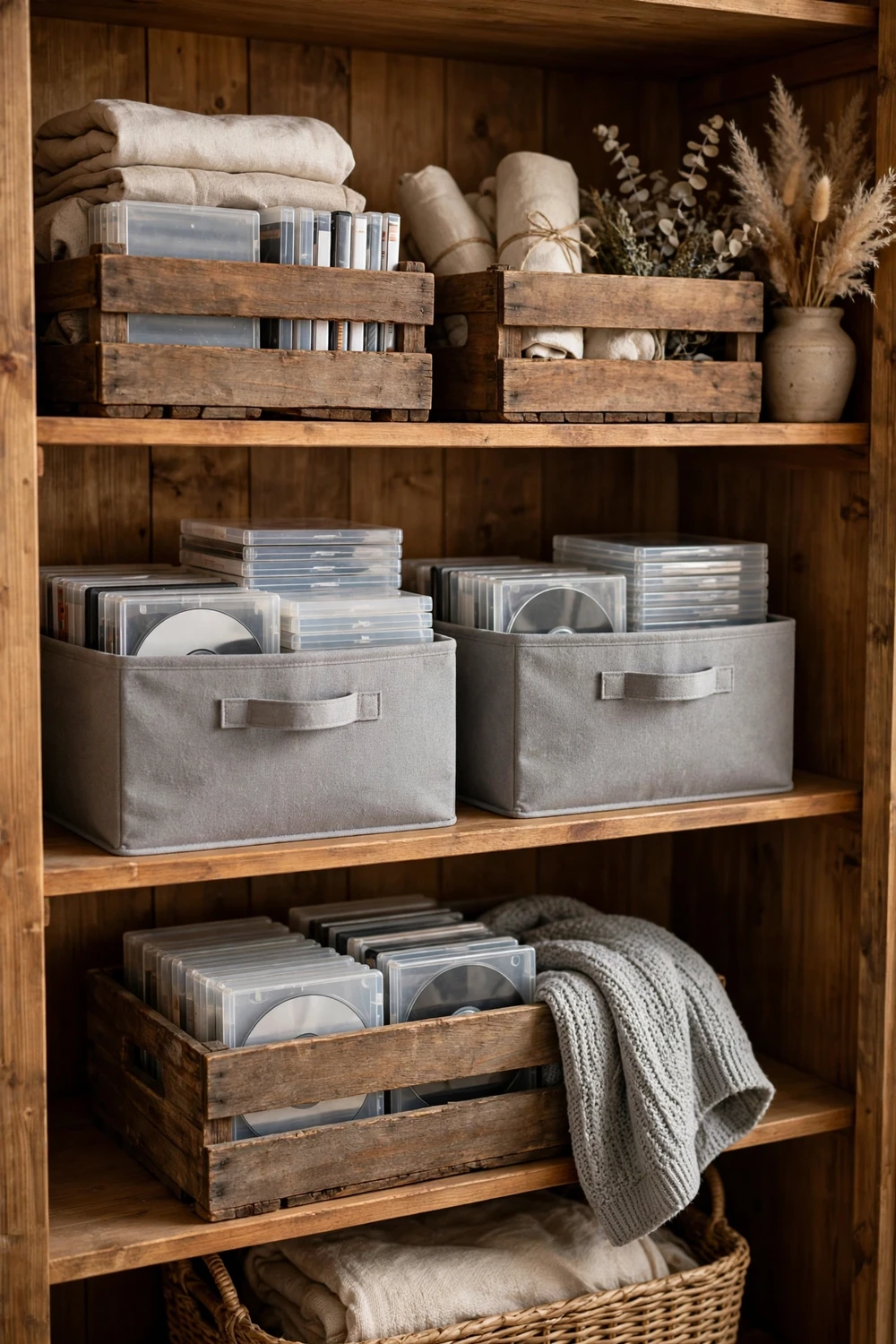
Wooden crates and fabric lined boxes are two different methods that solve the same problem: they give a casual collection a home that looks good on an open closet shelf. Crates suit the rustic look, fabric boxes suit a softer, tidier closet, and both are cheap and need almost no tools.
Start with crates. Old wine crates, apple crates and simple pine crates from a craft shop all work, as long as the inside width fits a DVD case standing upright. A case is 5.3 inches wide, so a crate needs at least 6 inches of inside depth to hold a row of cases with room to spare. Sand the inside edges so splinters do not scratch the cases, and add a coat of clear wax or light stain to finish the wood. Stack two crates on a closet shelf, or line three along the floor of a walk in closet, and label the front edge of each with the range inside. Do not stack them more than two high with discs inside, because the weight adds up and a tall stack is awkward to lift down.
Fabric lined boxes work the same way with a softer finish. Choose boxes with rigid sides so they hold their shape when full. A box about 12 inches wide, 8 inches tall and 10 inches deep holds roughly 20 cased DVDs upright, or far more sleeved. Keep the box on a shelf rather than the floor. Fabric boxes are also the best choice for discs out of their cases, because the soft sides will not scratch them the way rough wood can.
The weakness of both methods is the same: you cannot see what is inside without pulling the box out. Solve that with a label on the front, and keep the labels honest. “Comedies” is not helpful when you own 80 comedies; “Comedies A to K” is. Sort the discs before they go into the box, not after. Crates usually cost in the range of 10 to 25 dollars each, and fabric boxes run about 8 to 20 dollars each. If your closet also holds clothes, be honest about what belongs in there. Our list of things to keep out of your bedroom closet is a useful check before you start, because clearing out what does not belong frees the shelf space your DVD storage actually needs.
Turn a Closet Into a Media Cabinet With Glass Doors
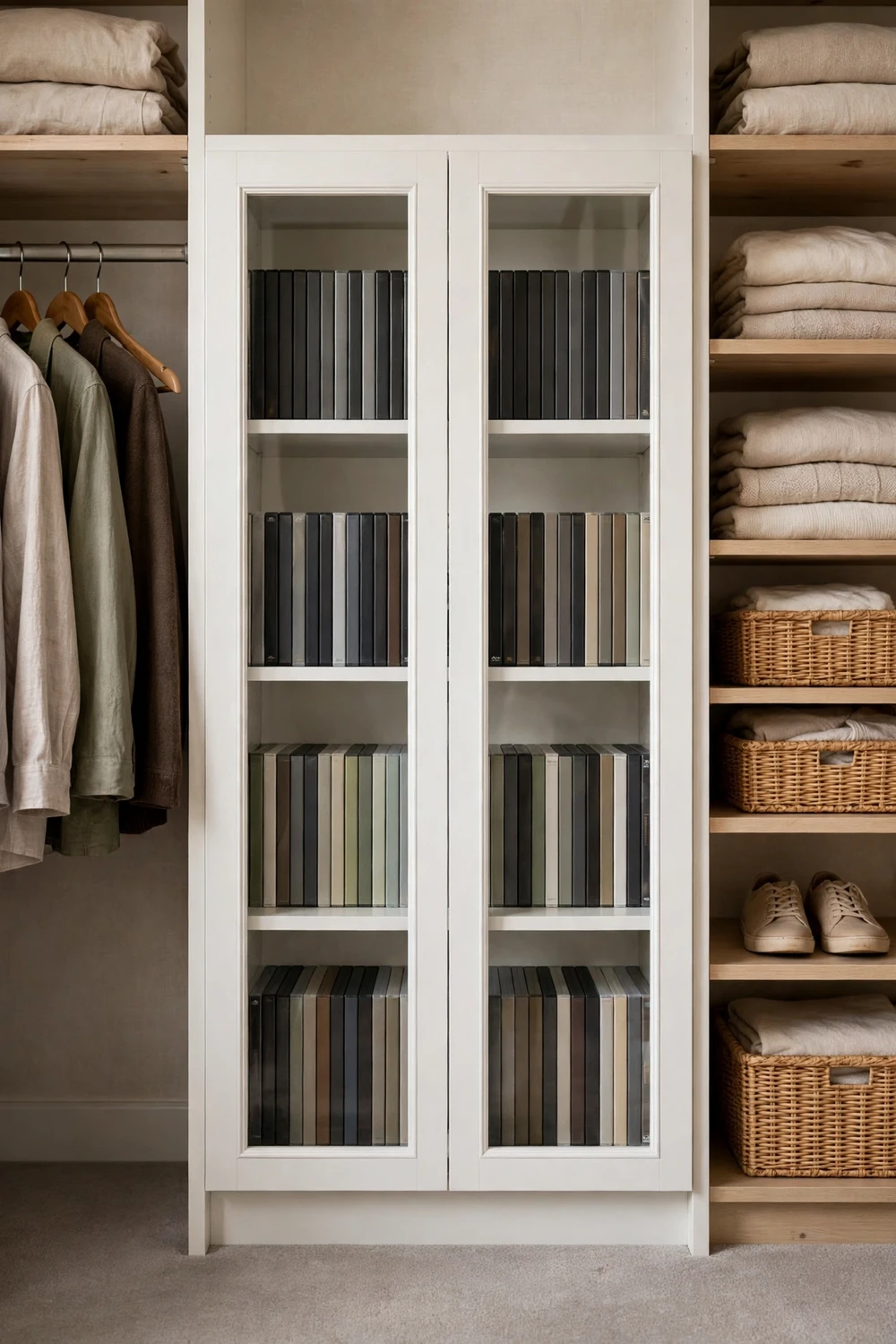
A glass door cabinet inside a closet is the tidiest looking closet media storage on this list, and it is the one that protects discs best. Fit a shallow cabinet into the closet, add shelves sized for cases, and close it with glass doors. The glass keeps dust out, the cabinet keeps light off the discs, and the whole thing looks like furniture. It is a bigger project than a binder or a bin, but it suits a collection you are proud of and want to keep for years.
The simplest version is a flat pack cabinet with glass doors, the kind sold for bookcases and display units. Look for one no more than 12 inches deep. Add extra shelves so the spacing suits cases: 8.5 inches of clearance per row, just like a floating shelf. If the cabinet has adjustable shelf pins, you can change the spacing later without tools, which is handy when a taller box set arrives.
For a full DIY version, build a simple plywood box, add shelves, and hang two glass doors on small hinges. Use clear glass, not frosted, so you can read the spines without opening the doors. A magnetic catch at the top keeps each door closed without a handle sticking out, and paint the cabinet the same colour as the closet interior. Glass doors also solve the dust problem open shelves never fully solve: a quick wipe of the glass is the only cleaning the cabinet needs. Keep the discs cool, dry and dark, roughly 65 to 75 degrees and 20 to 50 percent humidity. A flat pack glass door cabinet usually costs in the range of 80 to 200 dollars, while a DIY plywood version runs about 60 to 120 dollars plus the glass.
Use Deep Drawers, Dividers and Rolling Under-Bed Storage
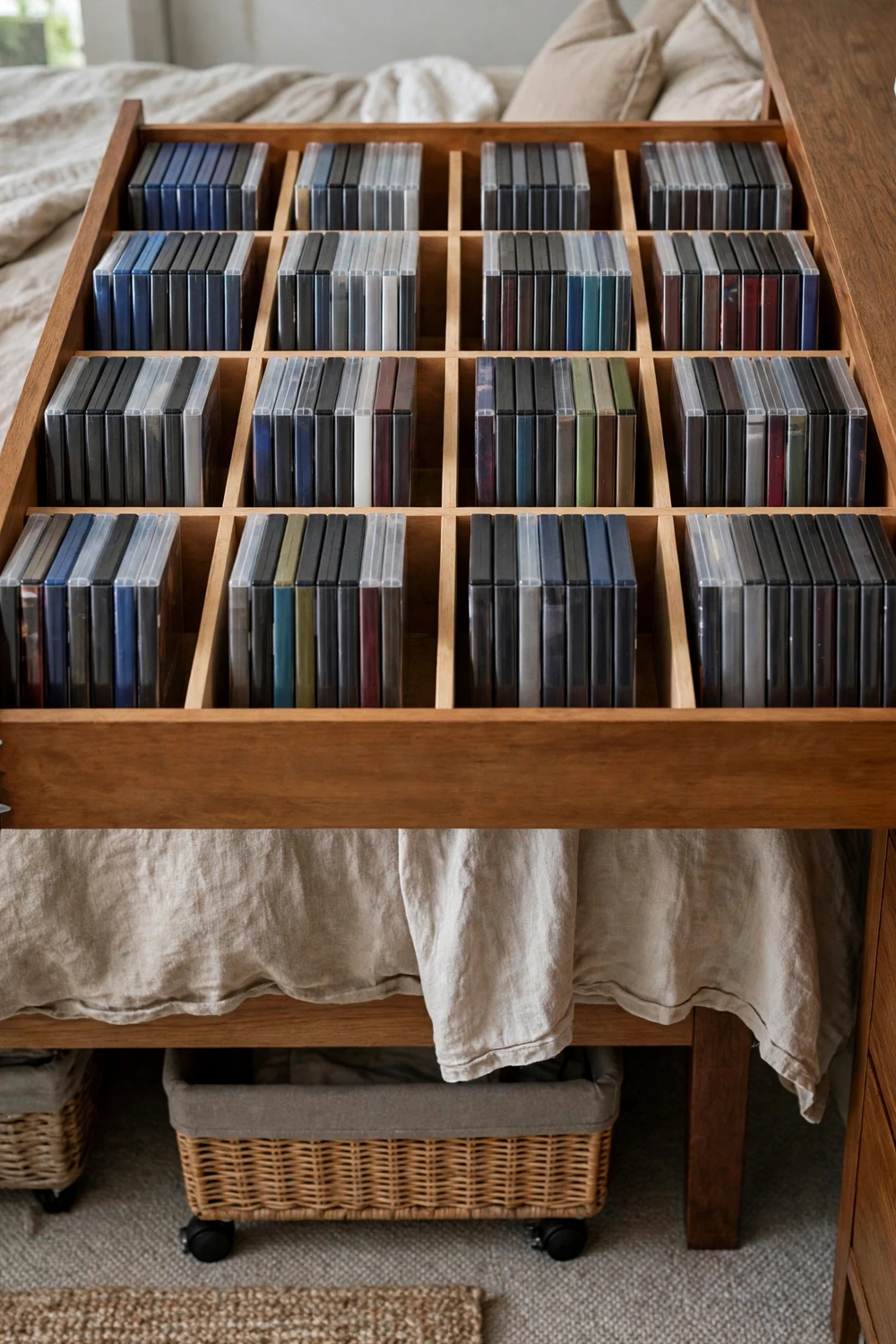
Drawers and under-bed storage are two more methods that hide a collection completely, which is exactly what some rooms need. A deep drawer with dividers turns a chest of drawers into a filing system, and rolling under-bed storage uses the empty space under a bed that most homes waste. Both keep discs out of sight and away from dust.
Start with drawers. A drawer needs to be at least 8 inches deep inside to hold DVD cases standing upright, and at least 12 inches wide to hold a useful row. Add dividers across the drawer to stop the cases from flopping sideways when you pull one out. Wooden dividers cut to fit, or adjustable spring loaded dividers, both work. File cases alphabetically from front to back, label the drawer front with the range inside, and leave a small gap at the back so your fingers can lift a case out.
Under-bed storage works differently. A low rolling bin slides under the bed and holds discs flat in rows or upright in short sections. Choose a bin with wheels, because a bin without wheels is hard to pull out once full, and dragging it scratches the floor. Measure the clearance under your bed before you buy: most beds leave 6 to 8 inches, and a taller bin will not fit. Under-bed storage is best for the discs you watch rarely, such as box sets and childhood films. Keep the everyday favourites in the closet and the archive under the bed, because that split matches how you actually use the collection. Rolling under-bed bins usually cost in the range of 15 to 35 dollars, and drawer dividers run about 10 to 25 dollars.
Go Digital as a Backup and Keep the Discs as Your Archive
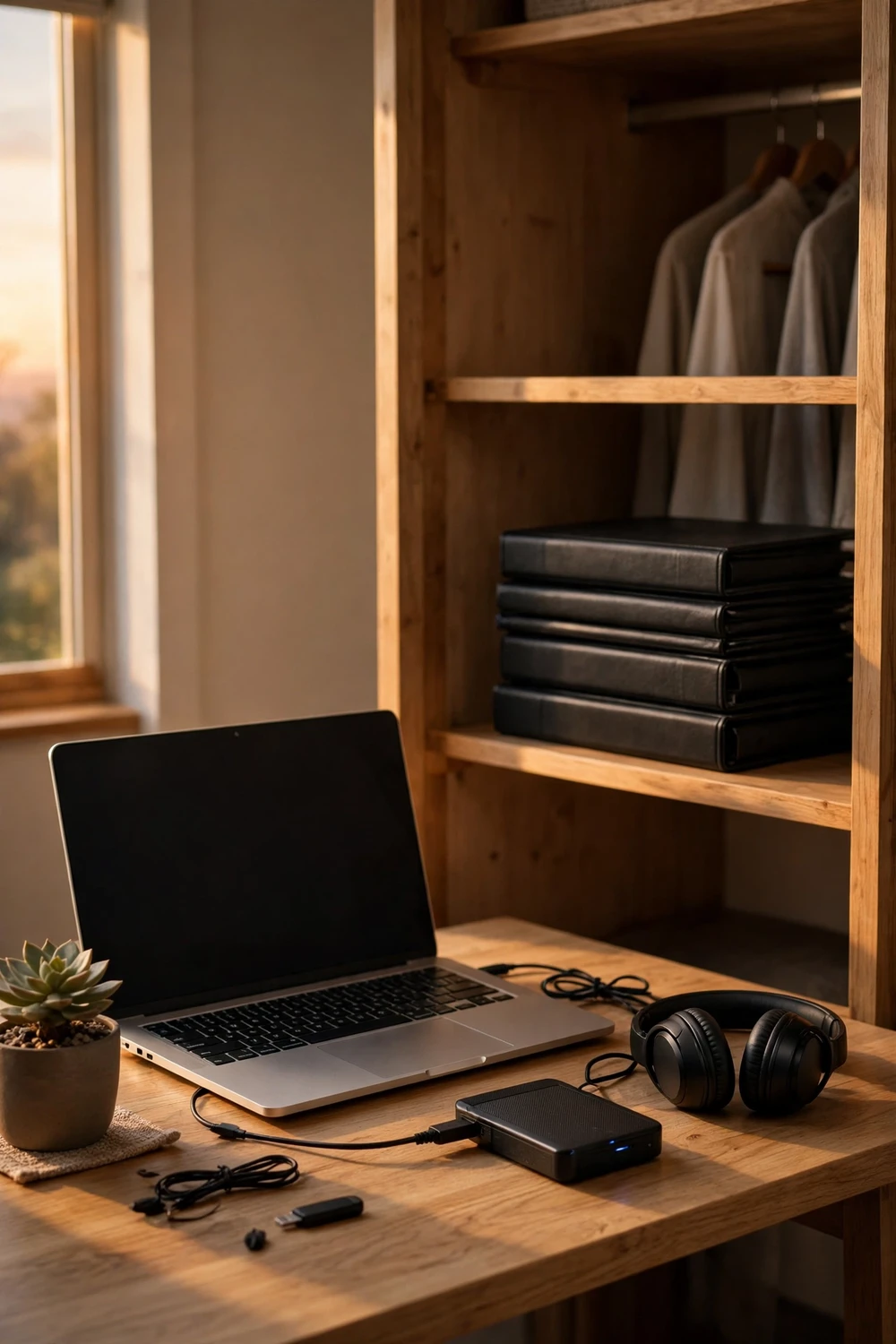
The tenth method is not a storage method at all, and that is the point. Going digital means you copy your discs to a hard drive so you can watch them without handling the disc, then store the discs as an archive in one of the methods above. The discs become the backup, and the digital copy becomes the everyday way you watch.
Start with the films you watch most. Copying a whole collection takes hours, so begin with twenty or thirty favourites and add more over time. Store the digital copies on an external hard drive, and keep a second copy somewhere else, because a single hard drive is not a backup. Keep the second drive in a different room, label both drives, and keep a list of what is on each one. The physical discs go into binders or bins in the closet, in alphabetical order, and they stay there unless the digital copy ever fails.
Check the rules where you live before you copy discs. In many places, a personal copy of a disc you own is allowed for your own use, but sharing it is not. Keep it simple: copy only discs you own, watch them only in your own home, and never share the files. The discs remain your proof of ownership, which is another good reason to keep them organised and safe. A one terabyte external drive usually costs in the range of 40 to 70 dollars and holds hundreds of films.
If the films are watched in the living room, think about that room too. A tidy media wall makes the habit feel intentional, and our guide to black TV wall ideas with lighting shows how a dark wall and good lighting can make movie night feel cinematic, even in a small room. The discs live in the closet, the screen lives in the living room, and each space does the job it is best at.
Compare All 10 Methods at a Glance
| Method | Typical cost | Capacity | Best for |
|---|---|---|---|
| DVD binder storage | Typically 15 to 40 dollars per 200 discs | 200 discs per binder | Large collections in small closets |
| Acrylic bins with tabs | Typically 20 to 45 dollars per bin | 40 to 60 cases per bin | Keeping cases, easy carrying |
| Custom floating shelves | Typically 30 to 80 dollars for three rows | 35 to 45 cases per row | Showing the collection, keeping cases |
| Narrow DVD tower | Typically 25 to 90 dollars | 150 to 250 cases | Dead corners and narrow closet sides |
| Wooden crates | Typically 10 to 25 dollars per crate | 25 to 40 cases per crate | Rustic look, open closet shelves |
| Fabric lined boxes | Typically 8 to 20 dollars per box | 20 cases per box | Soft storage, sleeved discs |
| Glass door media cabinet | Typically 60 to 200 dollars | 150 to 300 cases | Dust free display, prized collections |
| Deep drawers with dividers | Typically 10 to 25 dollars for dividers | 30 to 50 cases per drawer | Everyday favourites, quick access |
| Rolling under-bed storage | Typically 15 to 35 dollars per bin | 40 to 80 discs per bin | Archive discs, rarely watched films |
| Digital backup plus archive | Typically 40 to 70 dollars for a drive | Hundreds of films per drive | Watching without handling discs |
Decide in 5 Minutes: Keep the Cases or Switch to Binders
My honest opinion is that most people with more than 150 discs will be happier with binders, and most people with fewer than 100 will be happier keeping the cases on shelves. Test it in five minutes. Count your discs, measure your closet shelf, then ask three questions. Do I love looking at the cases, or do I just want to find a film fast? Is my closet short on space, or short on order? Do I lend discs often, or do they stay at home? If you love the cases and the closet has room, build shelves. If you want the smallest footprint and the fastest search, switch to binders. If you lend discs, add placeholder cards either way.
Once you have decided, start small. Do one shelf, one binder or one bin, and live with it for a week. If the system feels easy, finish the rest the same way. If it feels awkward, change it now, while only a small part of the collection is involved. Small spaces reward systems, not just containers, and our guide to the best home organization products that actually work takes a test first approach. If your collection shares shelf space with books, our reading nook ideas with bookshelves show how to mix books and media on the same shelves without either one looking like an afterthought.
Frequently Asked Questions About Storing DVDs in a Closet
How many DVDs fit in one binder?
A standard binder with 200 sleeves holds about 200 single discs. Double sided sleeves hold two per pocket, so the same binder can hold close to 400, though it becomes thick and heavy. Plan on one binder per 200 discs.
Is it safe to throw away DVD cases?
It is safe in a soft lined sleeve kept upright in a binder or a box. Keep the cover art and booklets if they matter to you, because the case is the part you can replace. If you ever plan to sell the collection, cases add value, so keep them in a labelled box.
What temperature and humidity are best for DVDs?
Store discs somewhere cool, dry and dark, roughly 65 to 75 degrees and 20 to 50 percent humidity. A bedroom closet is usually ideal. Avoid attics, garages and damp basements, where heat and humidity swings damage discs over time, and keep discs away from radiators and sunny walls.
Can I store DVDs flat in a stack?
Short stacks are fine for a few days, but tall stacks are not a good long term home. The weight presses on the bottom discs, and pulling one out of the middle scratches the ones around it. Store cases and binders upright like books, and sleeved discs upright in a binder or a box with dividers.
How do I keep track of discs I lend to friends?
Leave a placeholder card in the empty sleeve with the film title, the borrower’s name and the date. When the disc comes back, the card comes out. It takes ten seconds and works in binders, bins and on shelves.
Start With One Shelf and See How It Feels
You do not need to reorganise your whole collection this weekend. Pick the method that fits your closet and your disc count, and try it on a single shelf. Sort a hundred discs, label them, and live with the result for a week. If finding a film takes seconds instead of minutes, finish the rest the same way.
The goal is not a perfect closet. It is a collection you can actually use, in a closet that still has room for everything else. Measure first, choose the method that matches your habits, label everything, and keep the discs cool, dry and dark. Do that, and your films will be ready whenever you are.