A studio apartment may give you only one main room, but that does not mean it has to feel limited. With thoughtful furniture placement, smart zoning, and a little creativity, one open space can comfortably become a bedroom, living room, dining area, and workspace without feeling crowded.
The secret is to make every part of the apartment work harder. A sofa can separate the living area from the bed, a rug can visually define a zone, and a compact desk can become a dining surface when needed. These 25 Beautiful Studio Apartment Layout Ideas for Every Style will help you create a space that feels organized, stylish, comfortable, and completely suited to the way you live.
1. Divide the Apartment With a Sofa
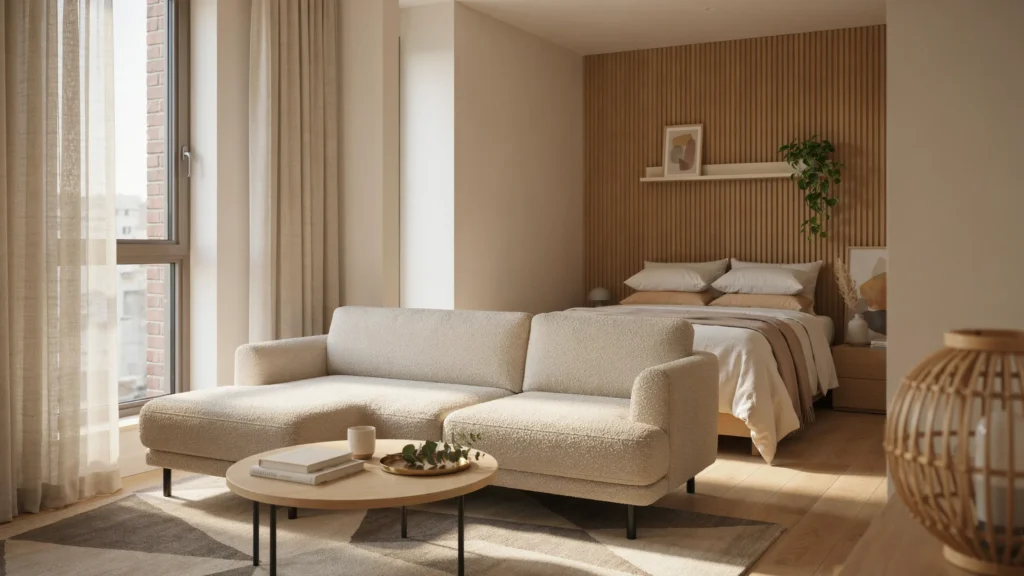
One of the simplest studio apartment layout ideas is to use the sofa as a visual divider. Instead of pushing it directly against a wall, position it with its back facing the sleeping area. This naturally creates two separate zones without installing a permanent partition.Place a rug beneath the sofa and coffee table to strengthen the living-room boundary. The bed can sit behind the sofa with a small walkway between the two areas. This arrangement works especially well in rectangular studios because it creates a natural flow from one end of the apartment to the other.
2. Create a Cozy Bedroom Nook
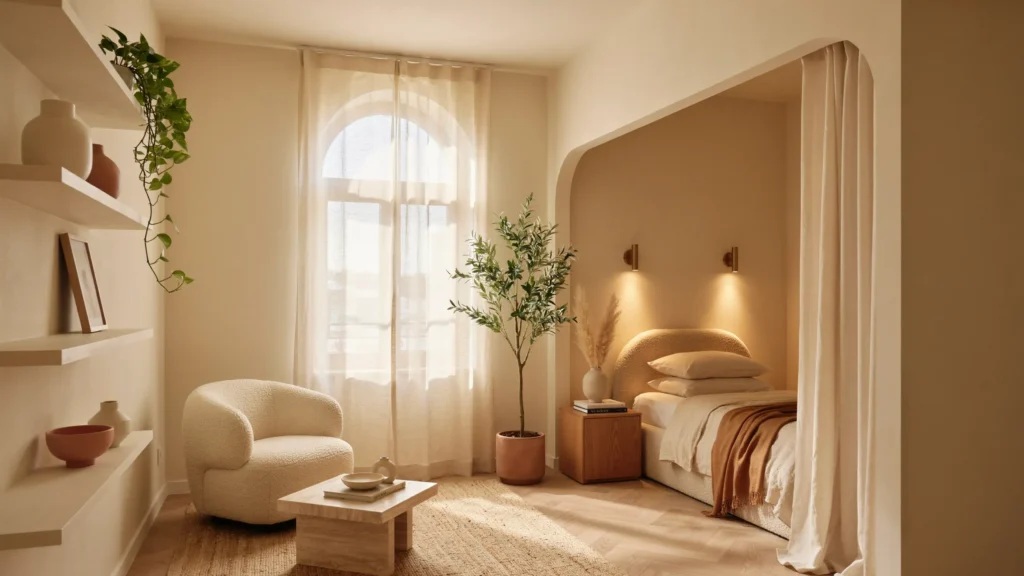
If your studio has an alcove, corner, or unusual architectural recess, turn it into a dedicated sleeping nook. A bed tucked into a niche immediately feels more private than one sitting in the middle of the room.Use matching bedding and soft wall lighting to make the nook feel intentional. A curtain across the opening can provide additional privacy when you want the sleeping area hidden. Bedroom niches are especially useful because they visually separate sleeping from the rest of the apartment without requiring a full wall.
3. Use a Curtain as a Flexible Wall
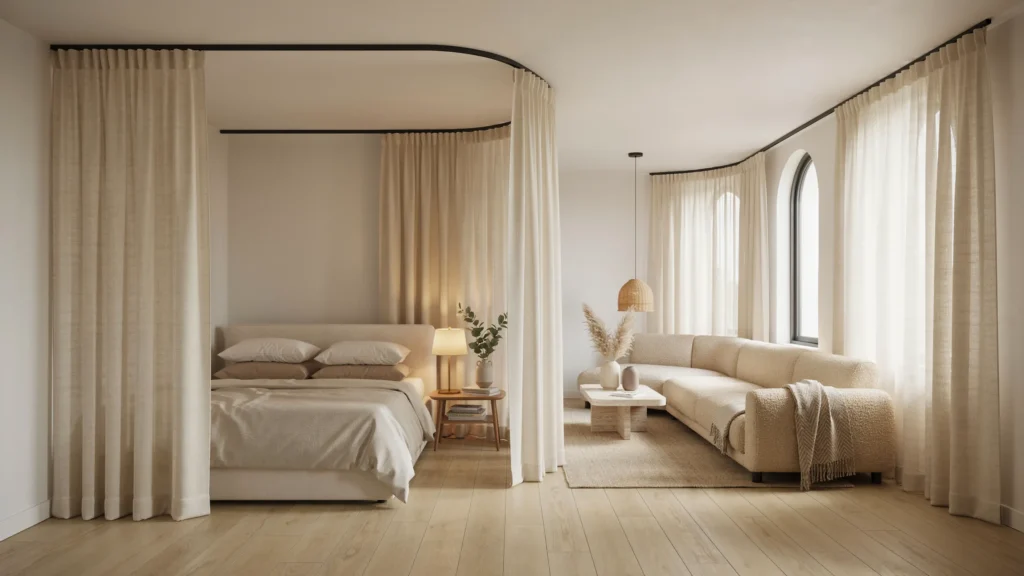
Curtains offer one of the easiest ways to separate a studio bedroom. Unlike a permanent wall, they can be opened during the day and closed at night.Choose ceiling-mounted curtains that extend from one side of the sleeping zone to the other. Linen or sheer fabrics keep the apartment bright, while heavier curtains create a stronger sense of privacy. This idea also gives you an opportunity to introduce texture and softness into an otherwise minimal space.
4. Choose a Daybed for Double Duty
A daybed can function as both seating and sleeping furniture, making it a practical option for compact studios. During the day, style it with cushions so it resembles a sophisticated sofa. At night, remove or rearrange the decorative pillows and use it as the main bed.Place a small side table beside it and define the area with a rug. This arrangement is particularly useful if you regularly host guests or want your apartment to feel more like an open living space during the daytime.
5. Build a Living Room Around a Rug
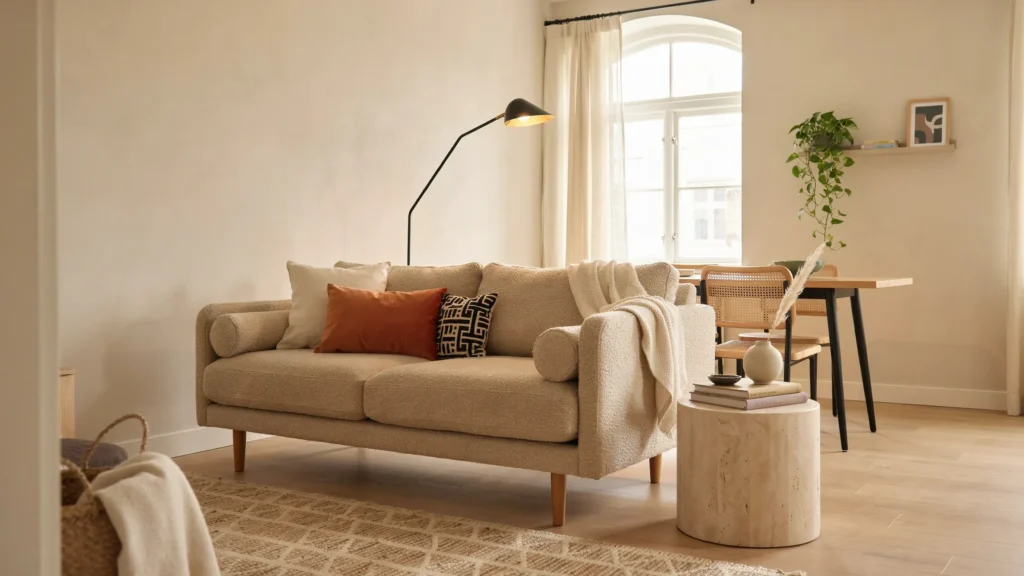
A rug can create a visual room within a room. Place a generously sized rug beneath the sofa, coffee table, and front legs of nearby chairs to establish the living zone.Keeping the rug large enough to connect the furniture makes the area feel intentional instead of randomly arranged. For a cohesive apartment, choose a rug that shares at least one color with your bedding, curtains, or artwork. A consistent palette helps an open studio feel more spacious and connected.
6. Install a Partial Partition
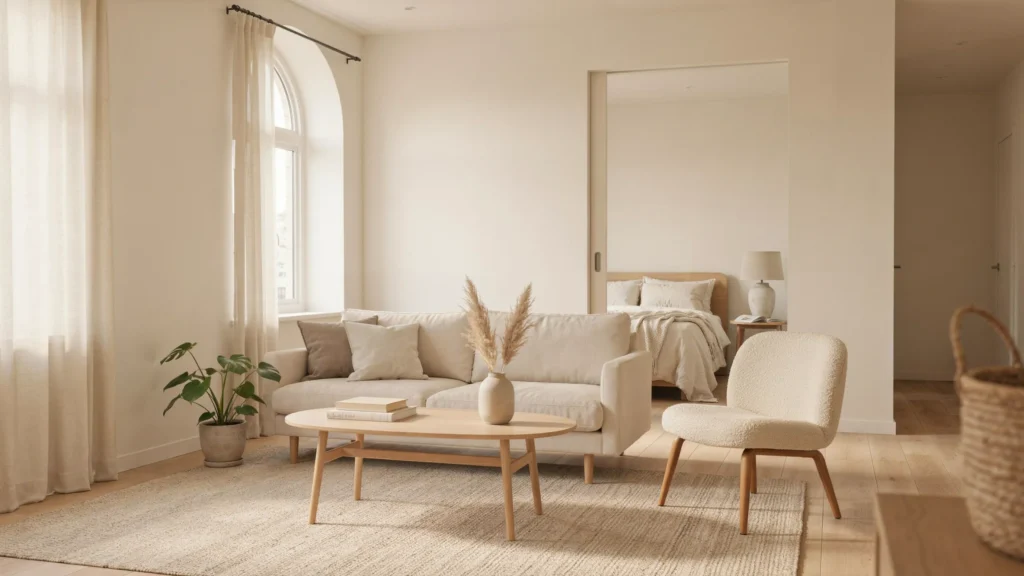
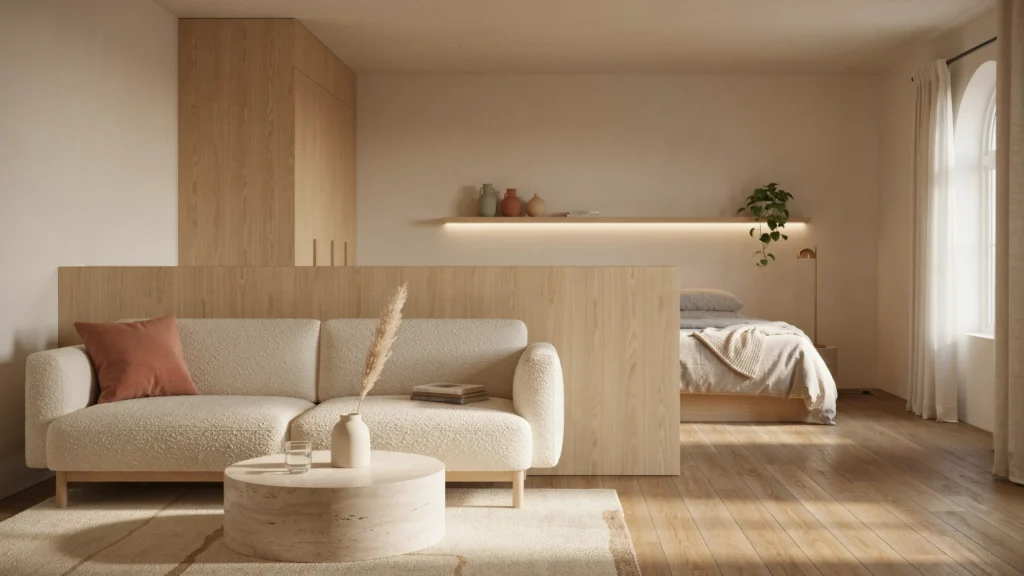
A partial wall can create privacy without completely blocking light. If architectural changes are possible, a half-height or ceiling-short partition can separate the bed while keeping the apartment visually connected.For renters, recreate the same effect with a tall open bookshelf, slatted divider, or decorative screen. The goal is to establish a boundary while preserving the sense of openness that makes studio apartments attractive.
7. Try an Open Bookshelf Divider
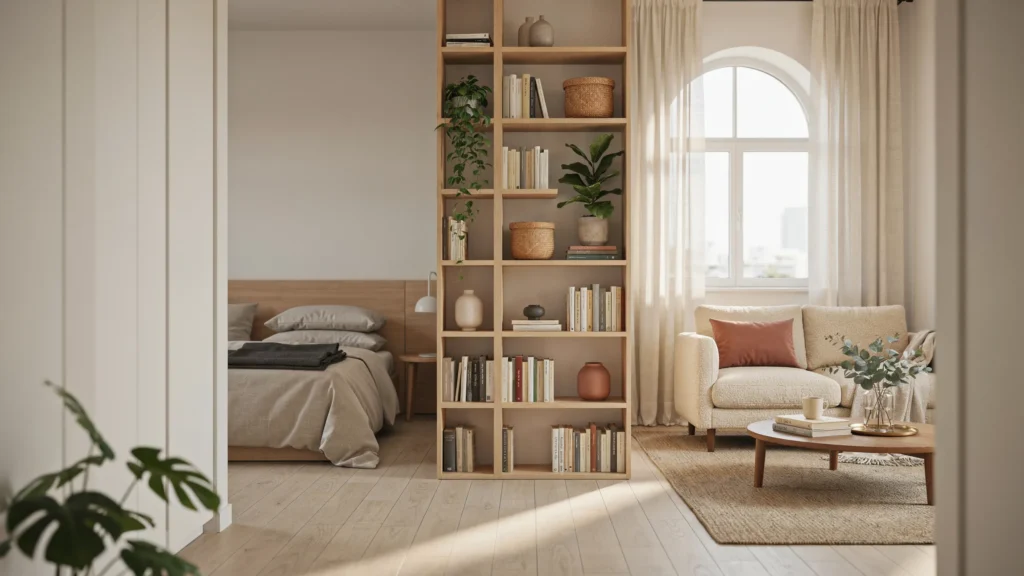
An open-backed bookshelf can provide separation and storage at the same time. Position it between the sleeping and living areas, leaving the shelves partially open so daylight can still travel through the apartment.Use books, baskets, plants, and a few decorative objects to make the divider attractive from both sides. Avoid filling every shelf because visual breathing room is important in a small space.
8. Create a Dedicated Work Nook
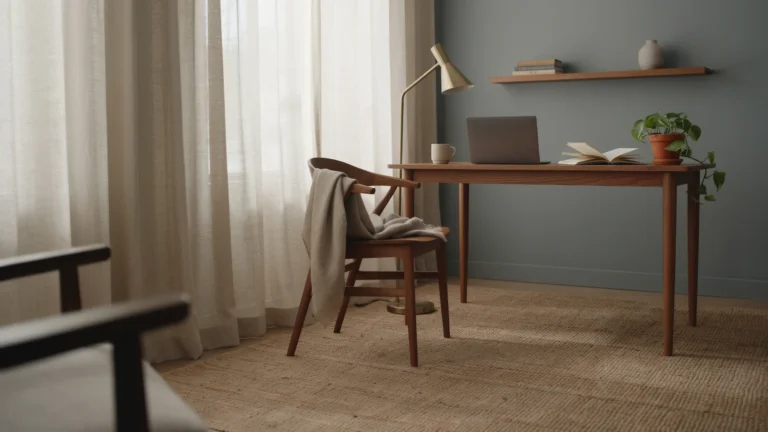
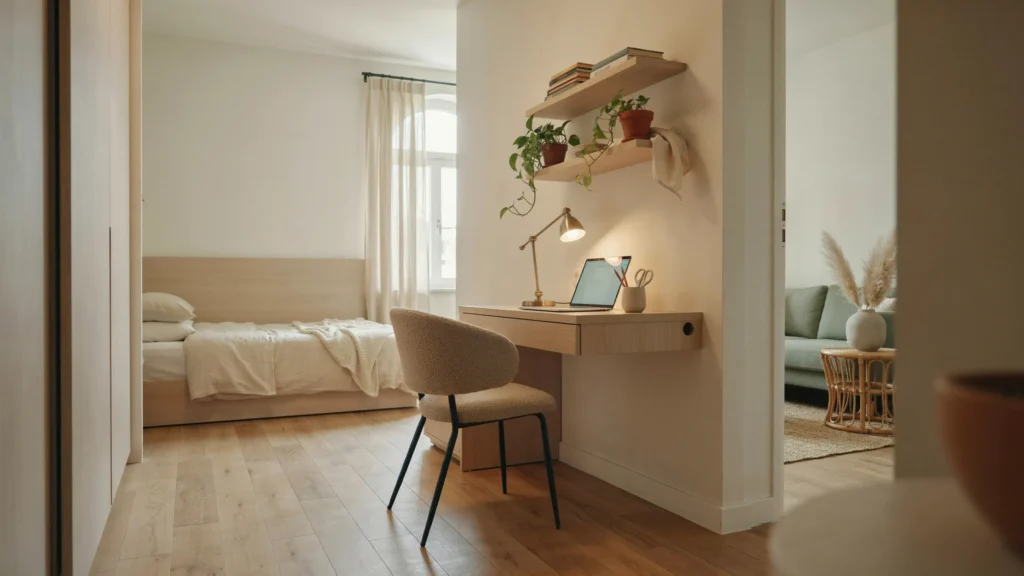
Working from the bed can make a studio feel less organized, so give your workspace its own small area whenever possible. A narrow desk against a wall can be enough.Install floating shelves above the desk for books and supplies, and add a small task lamp. If you have a window nearby, take advantage of the natural light. The workspace does not need to be large; it simply needs to feel distinct from the sleeping zone.
9. Combine the Dining Table and Desk
When floor space is limited, there is little reason to dedicate separate areas to eating and working. A narrow dining table can perform both jobs.Choose a table with enough width for a laptop while remaining comfortable for meals. Lightweight chairs can be pushed underneath when the table is being used as a workspace. A pendant above the table helps establish it as a distinct zone.
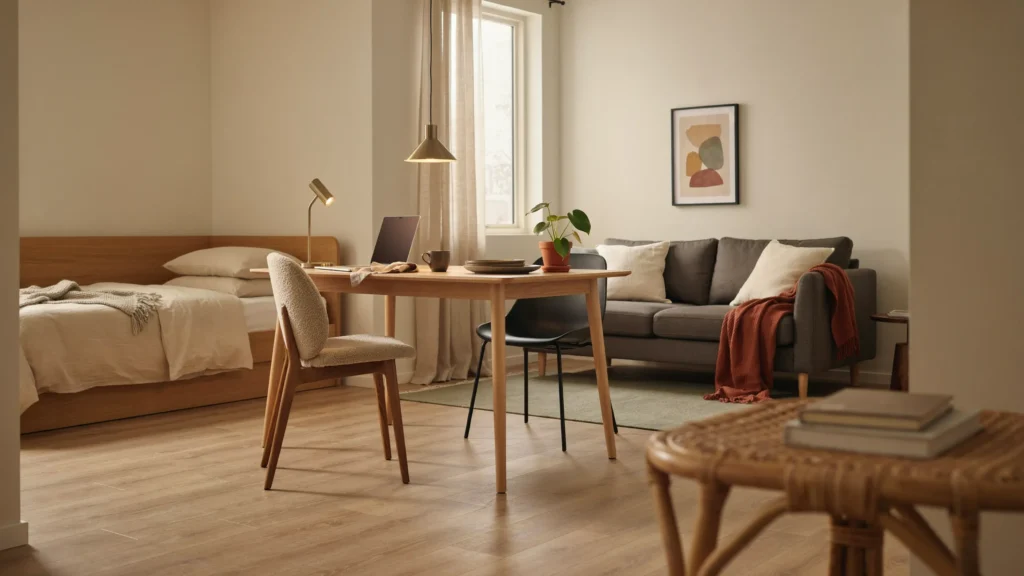
10. Put the Bed Behind a Console
A narrow console table can create a subtle boundary between sleeping and living areas. Place the console behind the sofa or at the foot of the bed, depending on your floor plan.The surface can hold lamps, books, plants, or decorative objects while visually marking where one zone ends and another begins. Choose a slim design so it does not interfere with circulation.
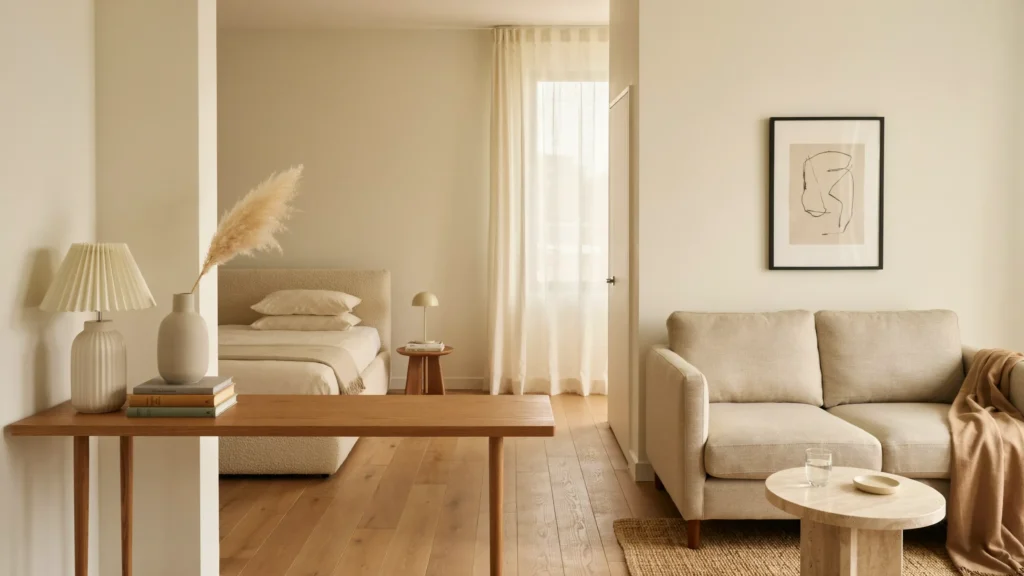
11. Use a Murphy Bed
A Murphy bed is one of the most efficient choices for a studio apartment. When folded away, it frees a significant amount of floor space for working, entertaining, exercising, or relaxing.Choose a design that integrates with surrounding cabinetry so it looks like part of the room rather than a large piece of bedroom furniture. Add shelves or storage around it if the wall allows.
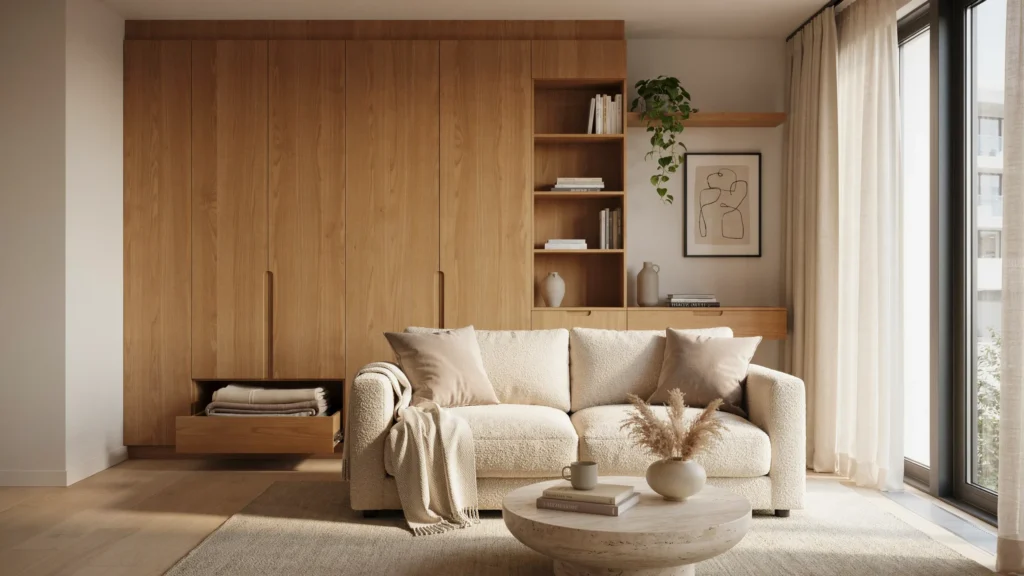
12. Design a Minimalist Studio
A minimalist layout works beautifully when you prefer a calm and uncluttered home. Begin with only the furniture you actually use and give every piece a clear purpose.Choose simple shapes, a limited color palette, and furniture with clean lines. Hidden storage is especially valuable because keeping surfaces clear makes the entire apartment feel larger and more peaceful.
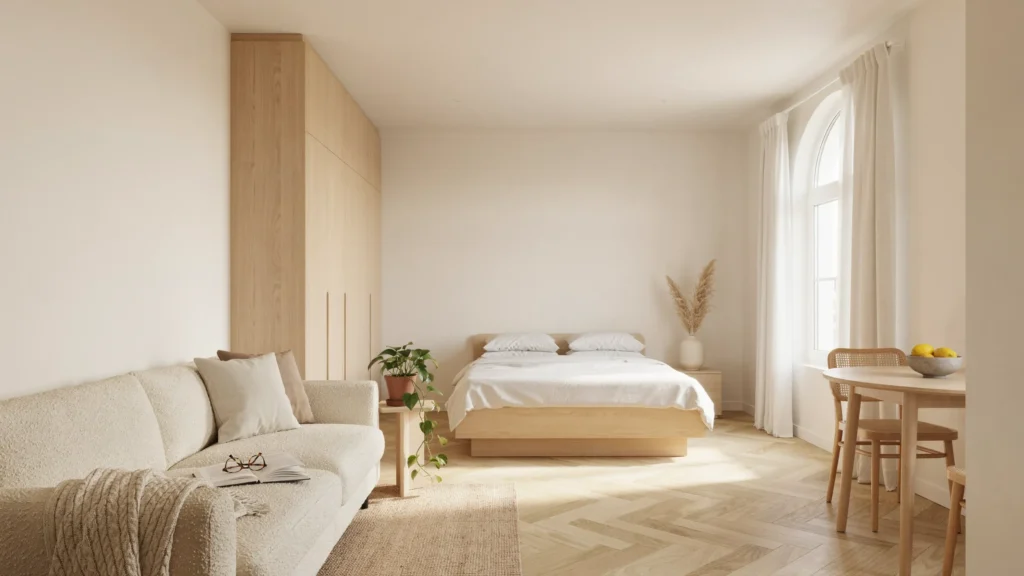
13. Make a Bold Maximalist Studio
Small spaces do not automatically have to be minimalist. If you love pattern, color, and collected objects, create a maximalist studio with discipline.Choose one or two dominant colors and repeat them throughout the apartment. Layer artwork, patterned cushions, vintage furniture, and decorative lighting while keeping walking paths clear. The result can feel rich and expressive rather than chaotic.
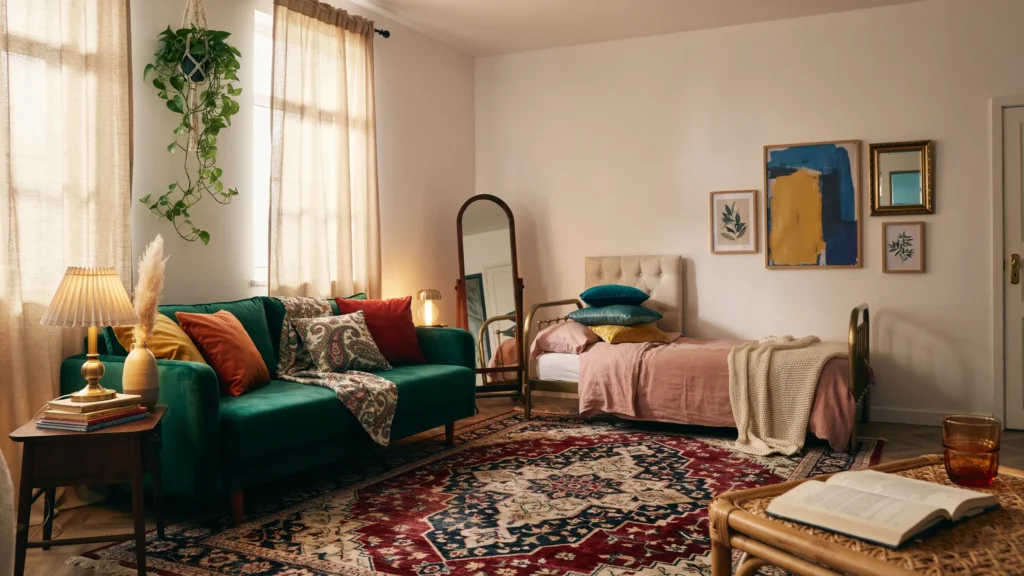
14. Use One Large Rug Throughout
Instead of using several small rugs, consider one large rug that visually connects the main areas. This approach can make the apartment feel like one cohesive environment rather than several disconnected sections.Choose a pattern or neutral texture that complements the furniture without overpowering it. The rug can extend beneath the sofa and toward the bed, visually linking both zones.
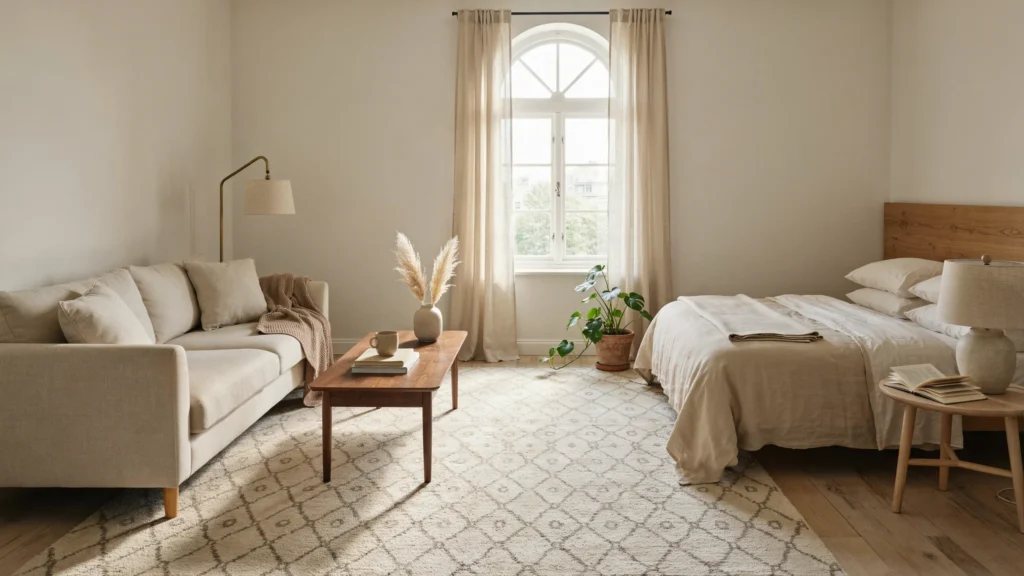
15. Raise the Sleeping Area
A slightly elevated platform can make a bedroom zone feel distinct without a traditional wall. Even a low platform creates a subtle visual boundary between the bed and living space.If the platform includes drawers, it becomes even more useful by adding hidden storage beneath the bed. Keep the platform simple and make sure the remaining floor area still has comfortable circulation.
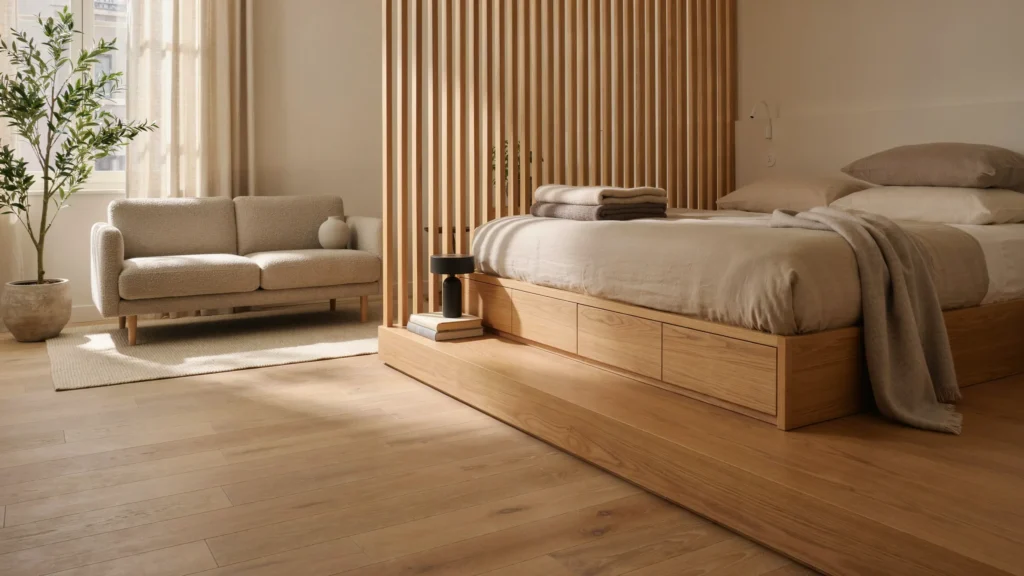
16. Take Advantage of Vertical Space
When floor space is limited, look upward. Tall shelving, high cabinets, wall-mounted storage, and ceiling-height curtains can make better use of the apartment’s vertical dimensions.Hanging curtains close to the ceiling can also make the room appear taller. Keep heavier storage toward the lower sections and use upper shelves for less frequently accessed items.
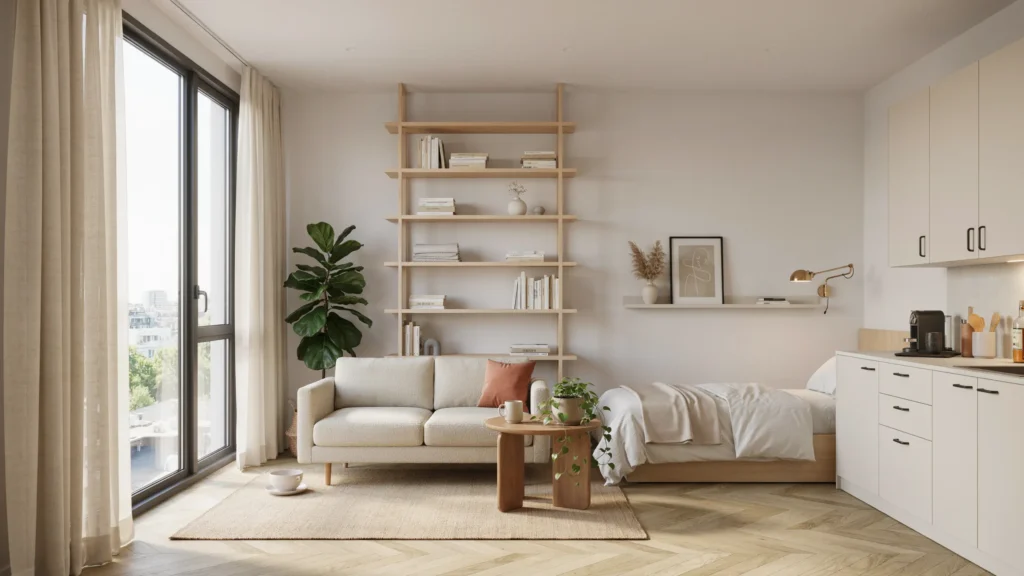
17. Use a Glass Divider
A glass partition can provide a stronger bedroom boundary while preserving light and sightlines. Clear glass keeps the apartment visually open, while frosted or textured glass offers additional privacy.Soften the partition with curtains if you want the option to completely hide the bed. This is especially effective in modern or industrial-style studios.
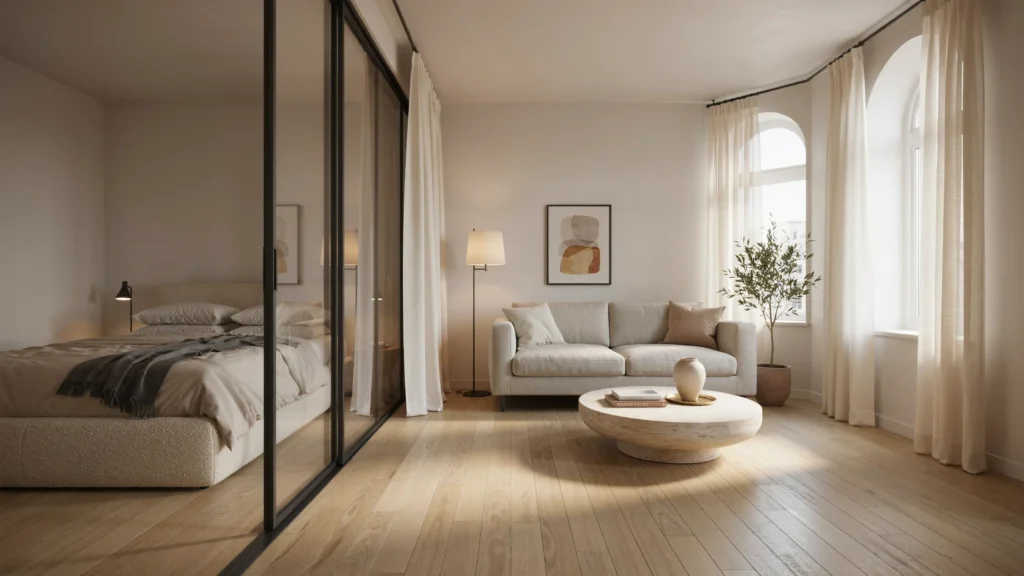
18. Choose Furniture With Visible Legs
Furniture raised slightly from the floor can make a studio feel lighter. Sofas, chairs, beds, and tables with visible legs allow the eye to see more floor underneath them.This does not mean every piece needs to be delicate. The idea is simply to avoid making the floor feel completely covered by heavy furniture. Combine raised furniture with a light rug and clear pathways for an airy result.
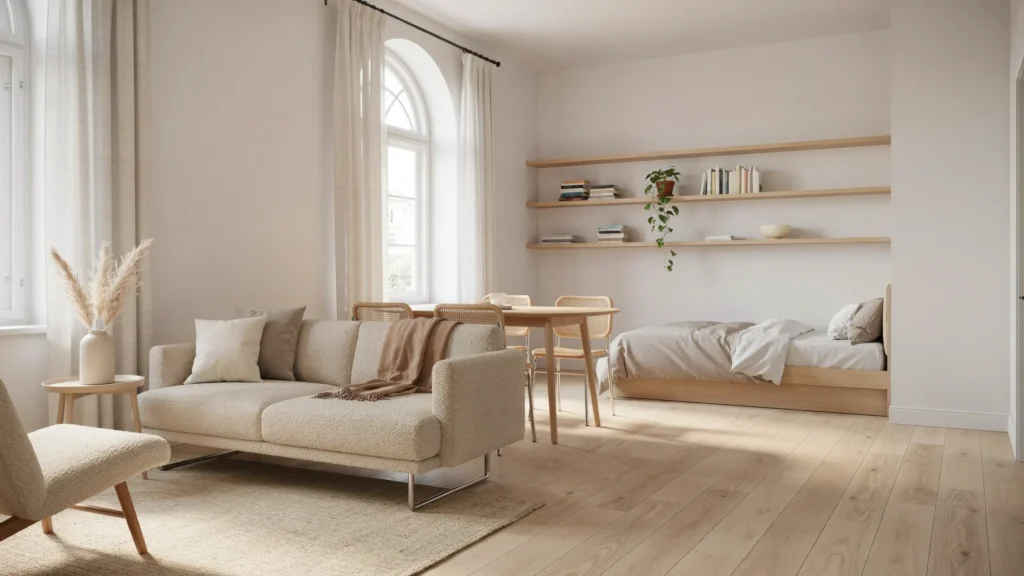
19. Add a Fold-Down Dining Table
A wall-mounted fold-down table is perfect when you occasionally need dining space but do not want a permanent table occupying the floor.Fold it down for meals or work and close it afterward. Pair it with stackable or folding chairs that can be stored against the wall. A small wall sconce above the table can make the setup feel more intentional.
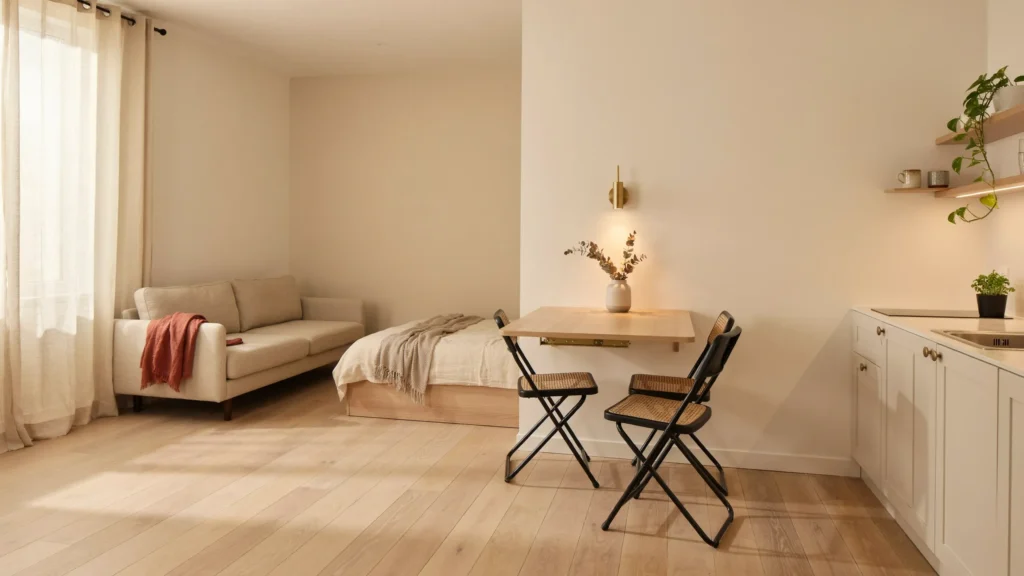
20. Create a Soft Boho Studio
A boho studio can feel incredibly welcoming when natural materials and warm textures are used thoughtfully. Combine woven baskets, rattan furniture, linen bedding, a textured rug, and a few leafy plants.Keep the larger furniture pieces in simple neutral shades so the natural textures become the main source of visual interest. This creates a relaxed apartment without sacrificing organization.
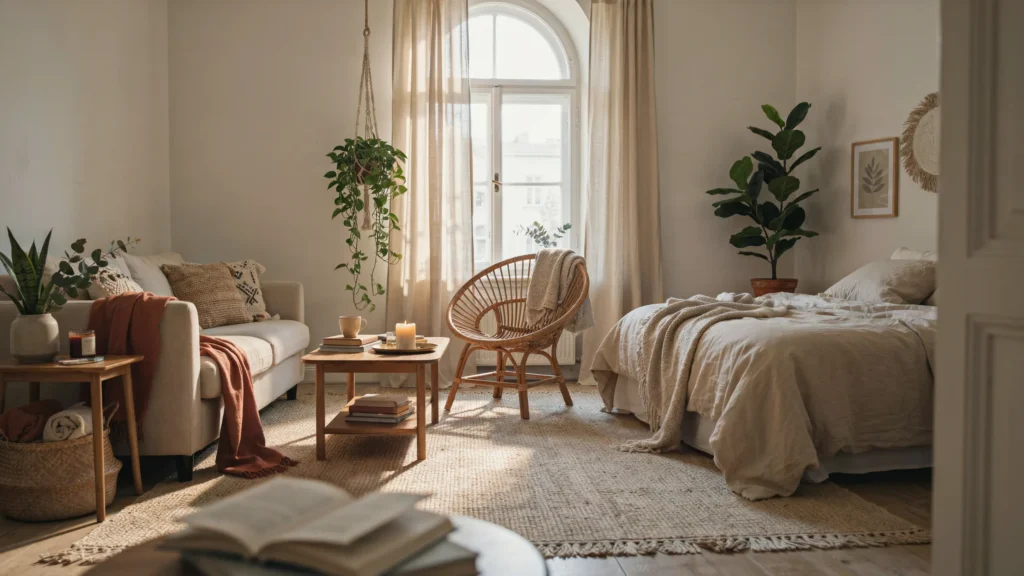
21. Create a Scandinavian-Inspired Layout
Scandinavian design is particularly suited to small apartments because it emphasizes functionality, natural light, simple furniture, and uncluttered surfaces.Use pale wood, soft whites, warm gray, and muted natural tones. Choose compact furniture with clean silhouettes and add softness through textiles. Keep decorative objects limited but meaningful.
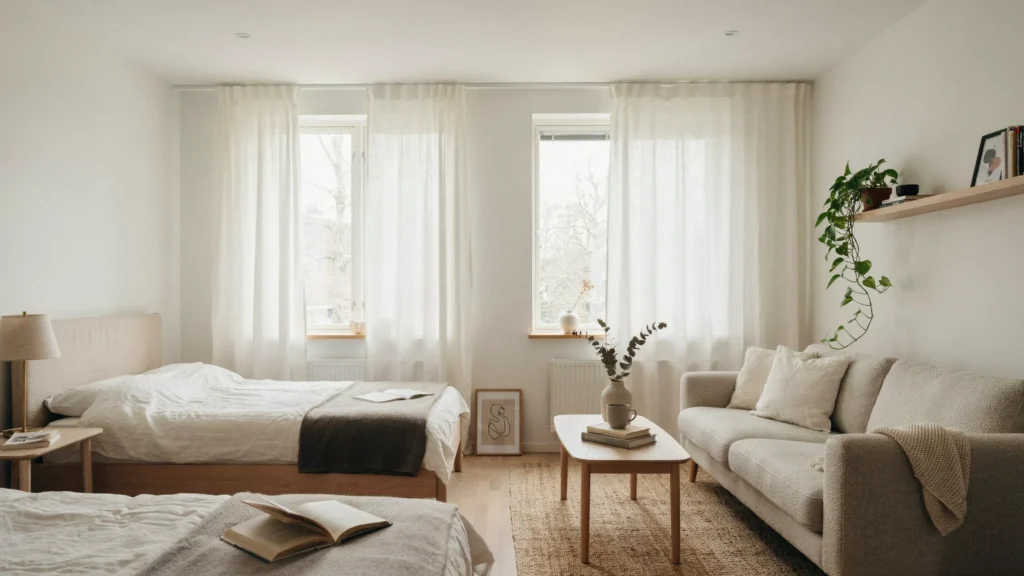
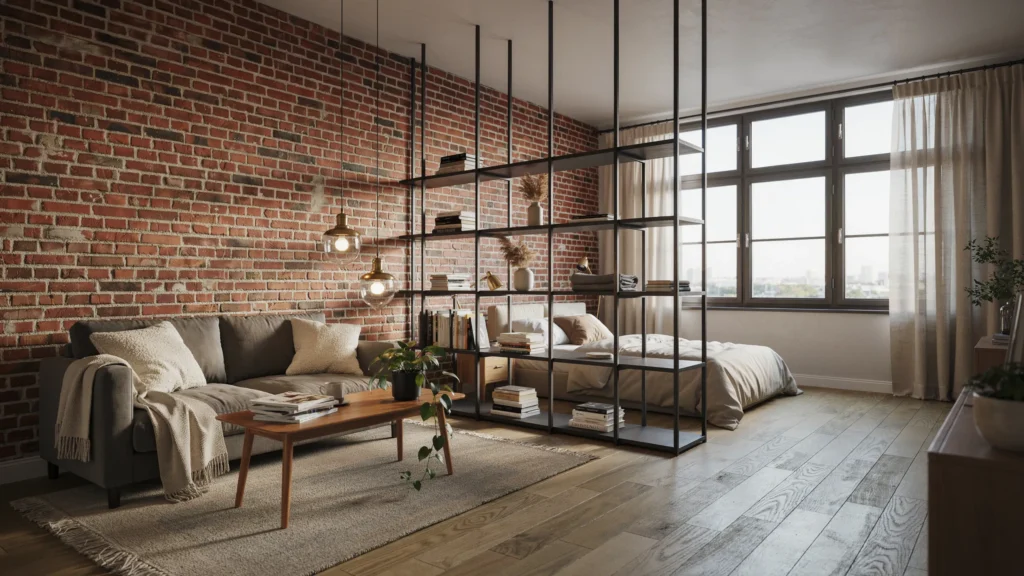
22. Try a Sophisticated Industrial Style
Industrial interiors can work well in studios with exposed brick, concrete, metal details, or high ceilings. Balance harder materials with softer elements such as upholstered furniture, rugs, curtains, and bedding.A black metal shelving unit can separate the bed from the living room while reinforcing the industrial character. Warm wood accents prevent the space from feeling too cold.
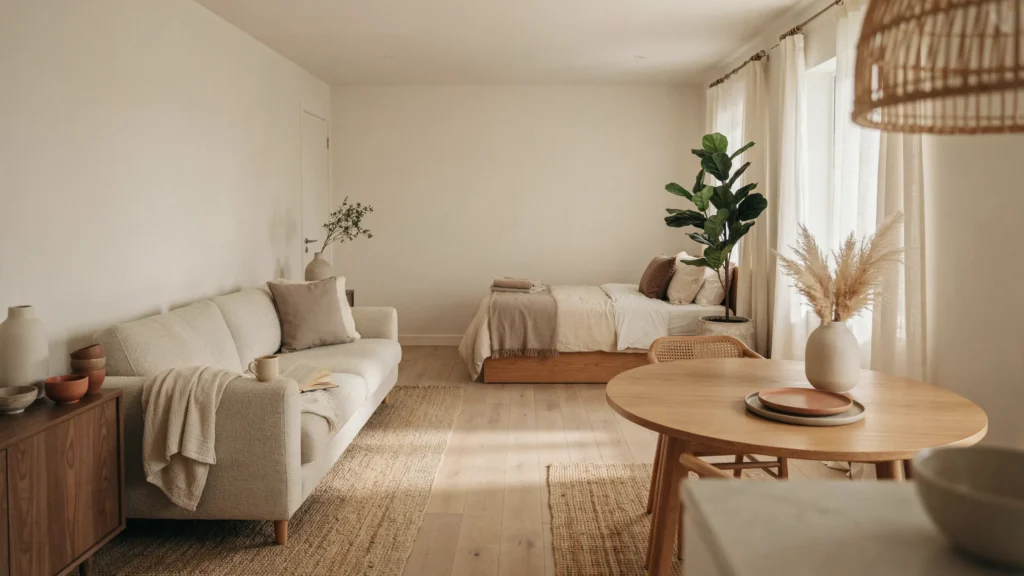
23. Build a Calm Neutral Oasis
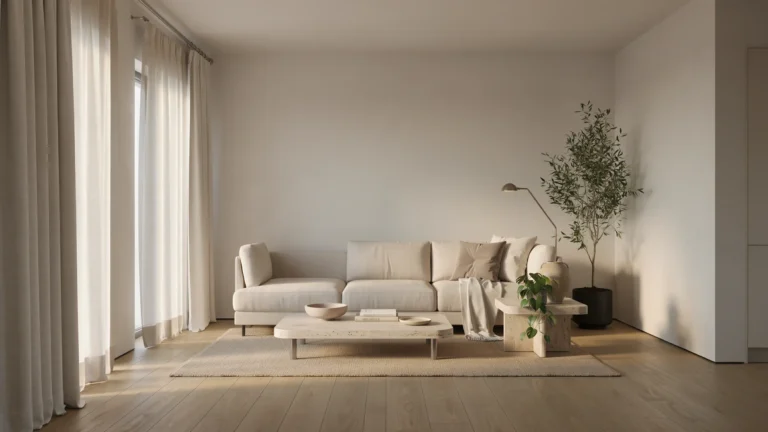
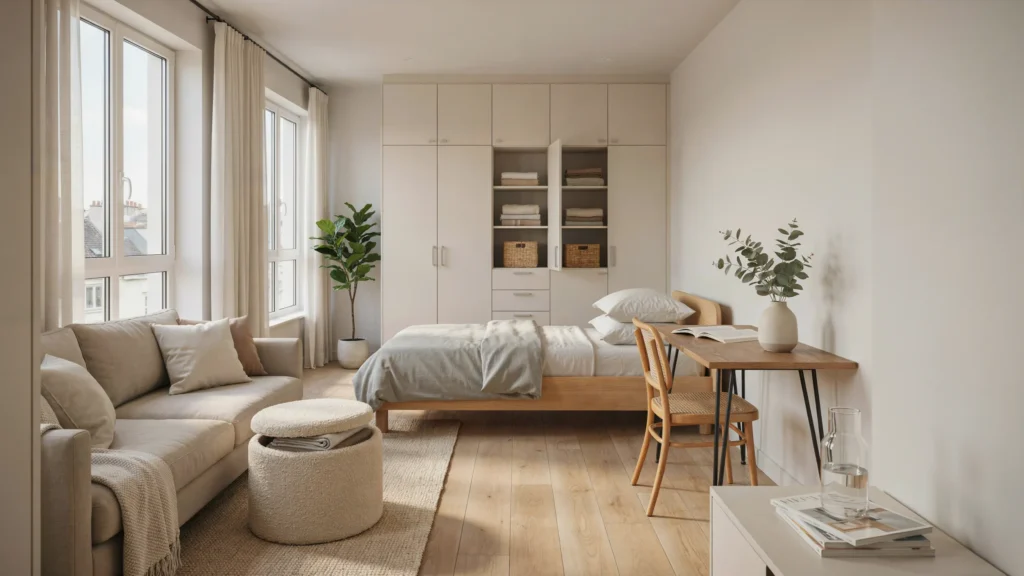
A neutral studio can feel much larger when the walls, furniture, textiles, and accessories share related tones. Cream, beige, taupe, brown, and soft gray create visual continuity.Add contrast through different materials rather than strong colors. A wooden table, woven rug, linen curtains, ceramic accessories, and upholstered seating can keep the room interesting while maintaining a peaceful appearance.
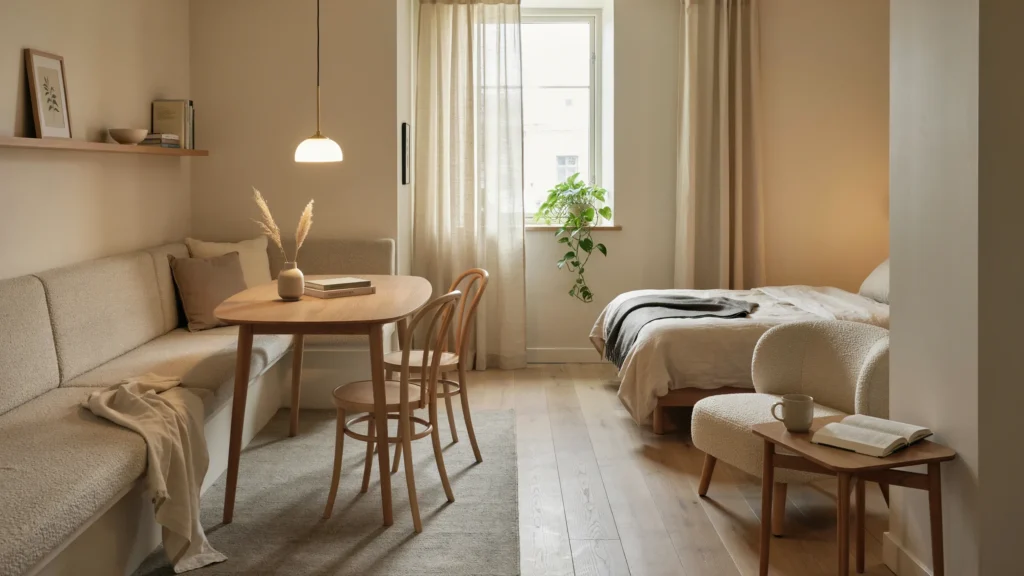
24. Use a Banquette for Dining
A compact banquette can provide comfortable dining without requiring several large chairs. Place it against a wall and pair it with a small round or rectangular table.The same seating can sometimes function as extra lounge space when friends visit. Add cushions in washable fabrics for comfort and practicality.
25. Make Every Piece Work Twice
The most successful studio apartment layouts are built around furniture that can perform more than one function. A storage ottoman can become seating, a dining table can become a desk, and a daybed can serve as both sofa and bed.Before buying anything, consider where the piece will live, what it will store, and whether it can serve another purpose. This editing process prevents the apartment from becoming overloaded and leaves more room for the things that genuinely improve everyday life.
How to Make a Studio Apartment Layout Feel Bigger
The easiest way to make a studio feel larger is to improve visual flow. Avoid blocking windows with tall furniture and keep the main walking path open. Furniture should define zones without creating unnecessary barriers.A consistent color palette can also make a major difference. When the walls, textiles, furniture, and accessories use related tones, the eye moves naturally through the apartment instead of stopping at every zone.
Mirrors can reflect natural light and create additional visual depth. Floor-to-ceiling curtains can make the ceiling appear taller, while furniture with visible legs keeps more of the floor in sight. Light fabrics such as linen and voile can also help maintain an airy atmosphere. These techniques closely reflect the small-space principles highlighted in the reference material.
How to Separate a Bedroom in a Studio Apartment
You do not need a permanent wall to make a bedroom feel separate. Curtains, folding screens, open bookshelves, glass partitions, partial walls, and strategically placed sofas can all establish a sleeping zone.A rug underneath the bed is another subtle option. It tells the eye that the bed belongs to its own area without physically dividing the room. If privacy is important, a ceiling-mounted curtain is one of the most flexible solutions because it can completely conceal the bed when needed.
How to Choose Furniture for a Studio Apartment
Start with the activities that matter most to you. If you work from home, prioritize a desk or dining-work surface. If you entertain often, choose flexible seating and a table that can expand. If sleep privacy matters most, dedicate more planning to the bedroom zone.
Look for furniture that performs multiple jobs and avoid buying pieces simply because there is an empty corner. In a studio, every item occupies valuable visual and physical space. Multifunctional furniture, such as daybeds, storage ottomans, foldable tables, and beds with built-in storage, can make the apartment significantly more adaptable.
Common Studio Apartment Layout Mistakes to Avoid
One of the biggest mistakes is pushing every piece of furniture against a wall. While this may appear to create more central floor space, it can actually make the apartment feel disconnected and leave zones undefined.
Another common problem is buying furniture that is too large. A massive sectional or oversized dining table can quickly consume the space needed for movement. Too many small decorative pieces can create a different problem by making the apartment look cluttered.
Finally, avoid trying to create too many separate rooms. A studio works best when the zones feel connected. The goal is not to imitate a large apartment with walls everywhere, but to make one open room perform several functions beautifully.
Frequently Asked Questions
What is the best layout for a studio apartment?
The best layout depends on your daily routine. Start by deciding where you want to sleep, relax, work, and eat, then use furniture, rugs, lighting, and flexible dividers to create clear but connected zones.
How do I separate my bedroom from my living room in a studio?
Curtains, open bookshelves, folding screens, partial partitions, glass dividers, and sofas can all separate the sleeping area without making the apartment feel completely closed off.
How can I make a small studio apartment look bigger?
Use a consistent color palette, keep walkways open, use mirrors strategically, hang curtains high, choose appropriately scaled furniture, and avoid unnecessary clutter. Furniture with visible legs can also make more floor area visible.
Is a Murphy bed good for a studio apartment?
Yes. A Murphy bed can be particularly useful when you want to reclaim floor space during the day. It can allow the same area to function as a bedroom at night and a living or working space during the day.
Should I use one rug or several rugs in a studio?
Either approach can work. One large rug can create visual continuity, while multiple rugs can clearly define individual zones. If the apartment already feels visually busy, one large rug may create a calmer result.
What furniture should I avoid in a studio apartment?
Avoid furniture that is oversized, difficult to move, or useful for only one very specific purpose unless you have plenty of room. Pieces that perform multiple functions generally provide better value in a compact apartment.
Can a studio apartment have a dining area and home office?
Absolutely. A narrow dining table can double as a desk, while fold-down tables and wall-mounted surfaces can create temporary work areas without permanently consuming valuable floor space.