A small backyard does not have to rule out the idea of having a pool. A plunge pool can fit into a narrow patio, unused corner, compact lawn, or townhouse garden without taking over the entire outdoor space. Because the pool itself stays relatively compact, you can give more attention to the things around it, including plants, paving, seating, lighting, privacy screens, and decorative features.
The best designs do not treat the pool as an isolated feature. They connect it with the landscape so the entire backyard feels intentional. A timber deck can make an above-ground pool look built-in, while stone walls can give a simple pool a substantial architectural presence. Dense greenery can soften hard surfaces and create privacy, while carefully placed lighting keeps the space useful after sunset. These approaches are reflected across the supplied plunge pool references, including compact layouts that combine pools with decks, greenery, patios, fire features, and outdoor lounges.
If you are planning a compact swimming area, these 16 Small Plunge Pool Ideas With Beautiful Landscaping can help you think about the pool and landscaping as one complete design.
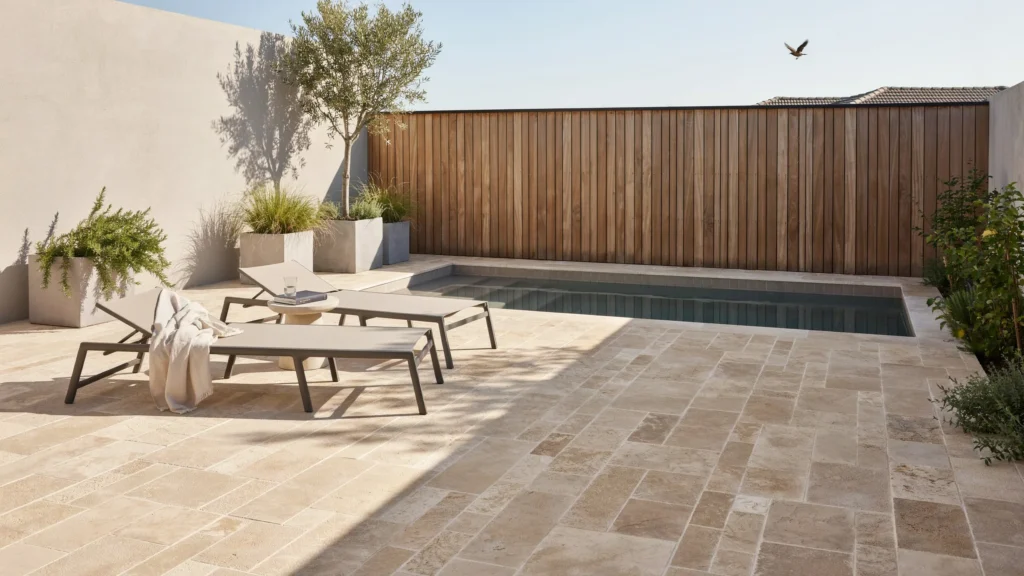
1. Tuck a Plunge Pool Into a Backyard Corner
One of the smartest choices for a small garden is to use a corner that would otherwise remain unused. A rectangular pool can sit against two boundaries, leaving the remaining yard open for walking and seating. This arrangement works particularly well in narrow gardens because the pool follows the existing shape instead of competing with it.
Use paving around the water rather than spreading the hardscape across the whole yard. A few large planters can soften the edges without making the space feel crowded. If the corner receives strong afternoon sun, add a retractable umbrella or lightweight shade structure that can be moved when necessary.
2. Surround the Pool With Low Grasses and Flowers
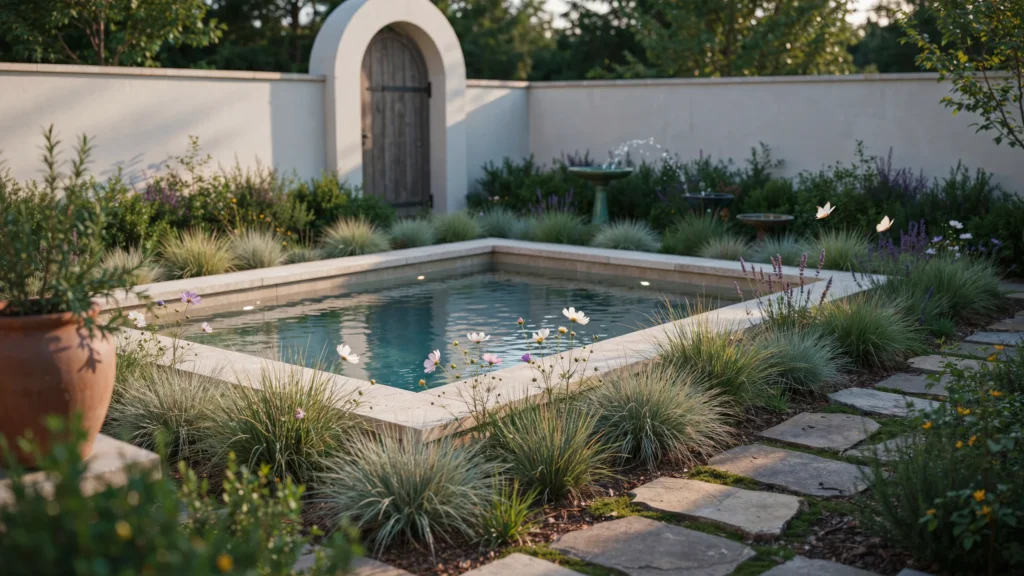
You do not need tall tropical plants to make a plunge pool feel surrounded by nature. Low ornamental grasses, flowering plants, and small shrubs can create a softer border while keeping the pool visually open.
This approach suits homeowners who want a relaxed garden rather than a formal resort appearance. Place taller plants toward the back and keep the plants nearest the pool low enough to preserve visibility. The reference material specifically shows how low-lying grasses and flowers can create an easy meadow-like setting around a plunge pool.
3. Build the Pool Into a Wooden Deck
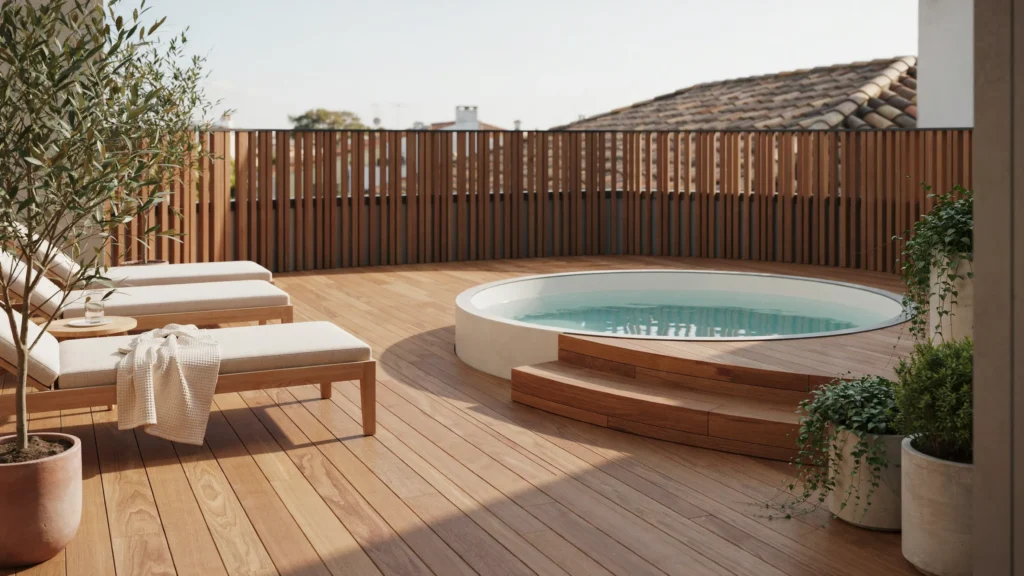
A wooden deck can make a compact above-ground plunge pool appear much more integrated with the backyard. Instead of leaving the pool sitting separately on the ground, design the decking around it and include built-in steps for easy access.
The deck can also become the main seating zone. Add two loungers, a small side table, and perhaps an outdoor rug if there is enough space. The supplied reference shows how a stock tank pool can be fitted into a timber deck cut-out, creating a cleaner and more unified appearance.
4. Use Stone to Make a Small Pool Feel Substantial
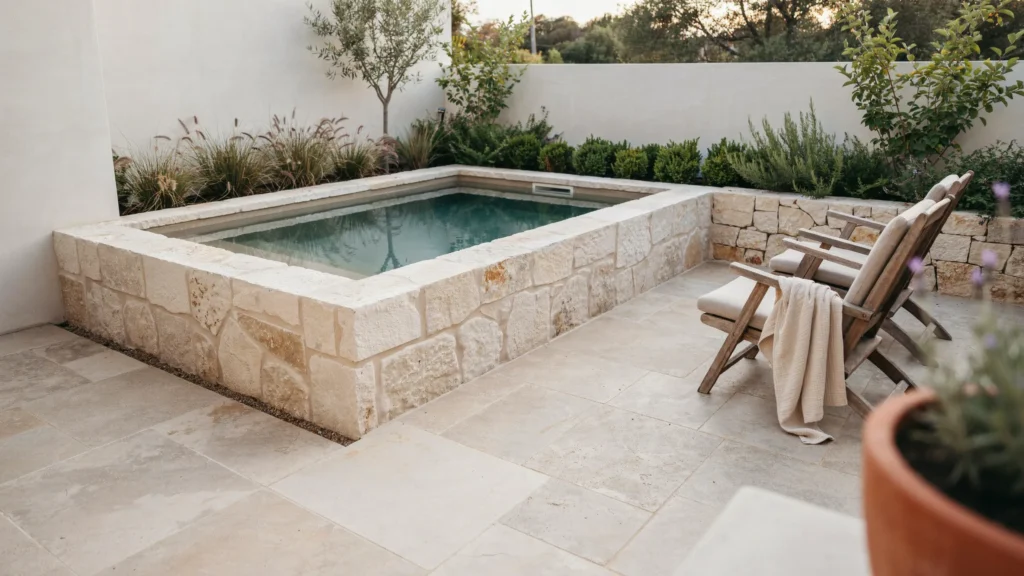
Stone cladding can add visual weight to a small plunge pool without increasing its footprint. Natural stone works particularly well when the surrounding patio, retaining wall, or house exterior already uses similar materials.
For a rustic setting, choose uneven stone with visible texture. For a contemporary backyard, large-format stone slabs will give the pool cleaner lines. Matching the pool surround with another architectural element can make the entire garden feel connected rather than decorated piece by piece.
5. Create a Green Privacy Wall
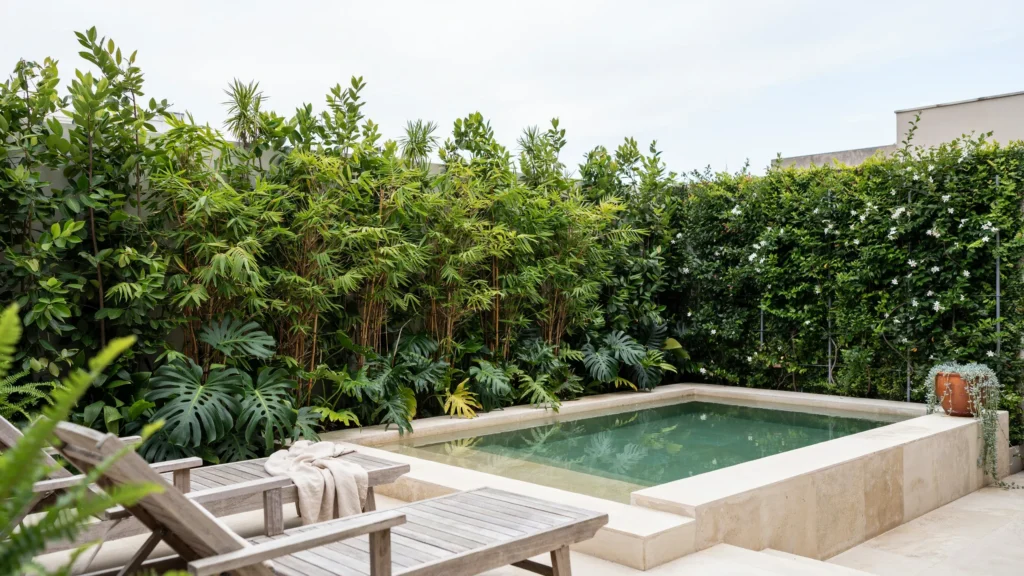
Privacy becomes more important when a plunge pool occupies a small backyard because neighboring homes may be close. Instead of relying entirely on a solid fence, use layered planting to make the boundary softer.
Evergreen shrubs, climbing plants, palms, or dense leafy plants can create a living screen. Keep the poolside planting controlled so leaves do not constantly fall into the water. The reference examples use dense greenery and planted walls to give compact pools a more private garden character.
6. Add a Simple Waterfall
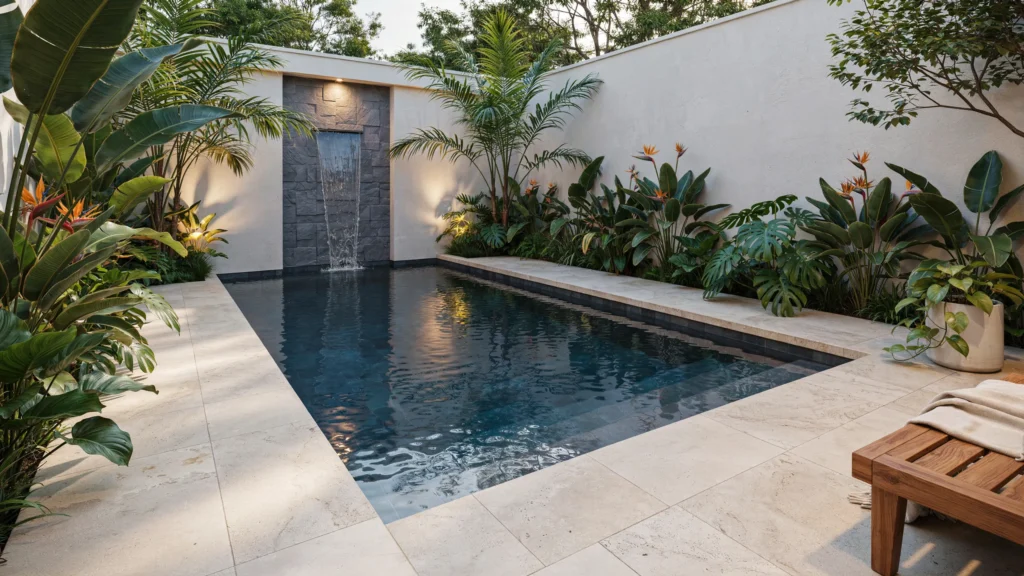
A waterfall can give a small pool a strong focal point without requiring a larger pool footprint. A narrow wall-mounted spillway or two small cascading outlets can add movement and sound to the space.
Keep the feature proportional to the pool. A massive waterfall wall can make a compact garden feel heavy, while a slim stone or tiled feature can look refined. Reference examples show compact pools using cascading water features as a decorative focal point.
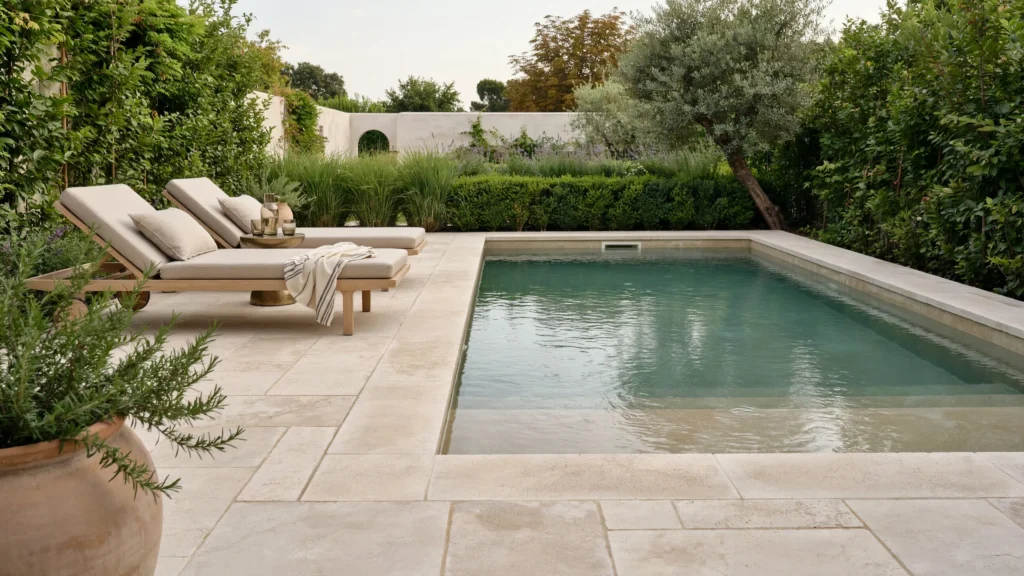
7. Choose a Mediterranean Courtyard Look
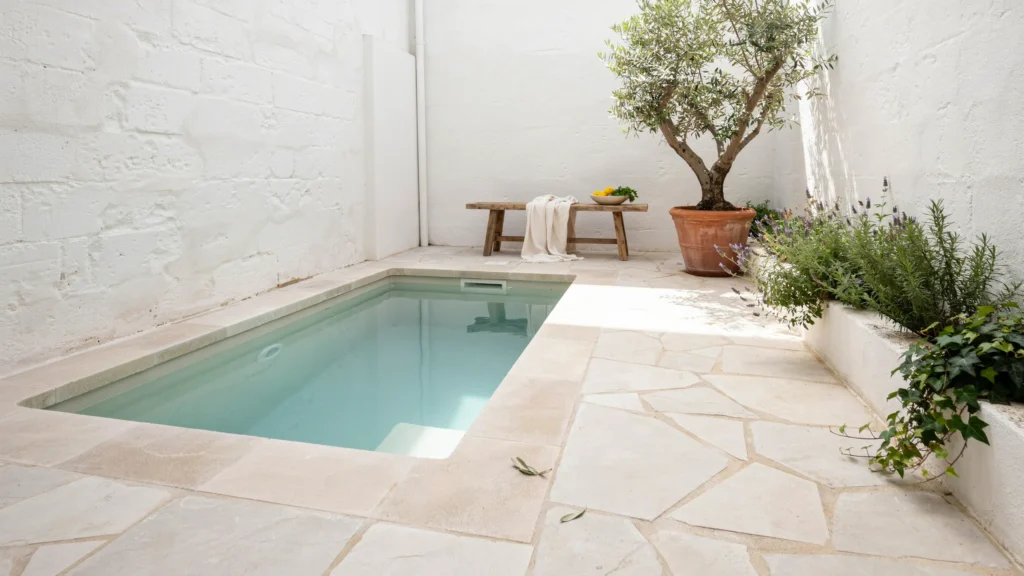
A small plunge pool can work beautifully in a Mediterranean-style courtyard. White plaster walls, pale stone, weathered wood, terracotta pots, olive trees, and simple greenery create a warm setting without needing a large garden.
The pool itself can remain simple. Let the surrounding materials carry the style. A compact rectangular pool with pale coping and one statement tree can look more convincing than a space packed with decorative accessories.
8. Use Palm Trees for a Tropical Backyard
If your climate supports palms, they can quickly change the character of a compact pool area. Place one or two palms where they can frame the pool without blocking views or crowding the walkway.
Combine the palms with broad-leaf plants and simple natural paving for a relaxed tropical setting. The reference material uses palm planting around small plunge pools to create shade and a holiday-like atmosphere.
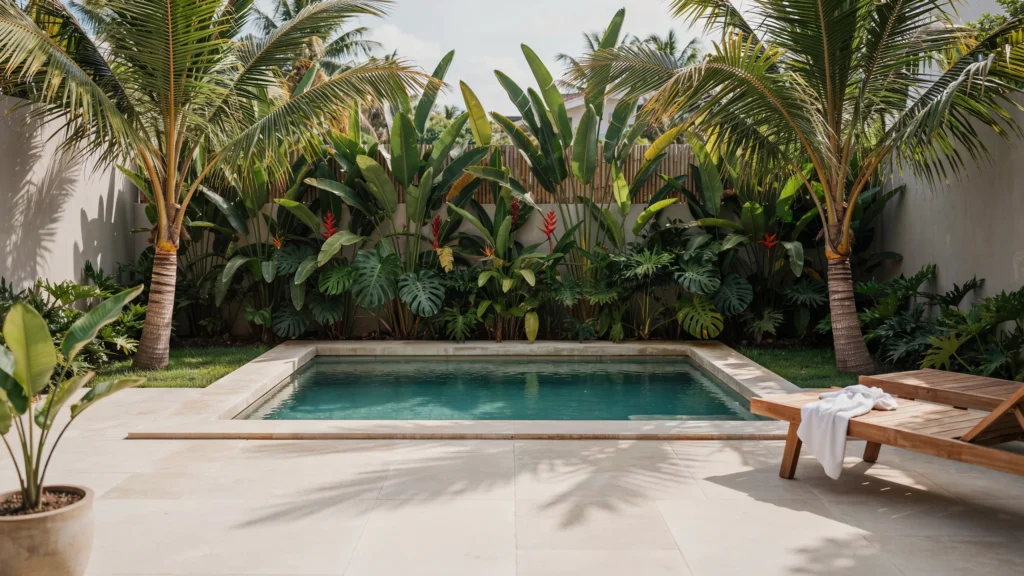
9. Match the Pool Deck to the House
A small pool looks more intentional when its surrounding materials relate to the house. If the exterior has warm timber, repeat that tone in the pool deck. If the home uses pale stone, carry the same family of colors into the pool surround.
This does not mean everything has to match exactly. Similar materials and tones are enough to create visual continuity. The pool then feels like part of the architecture rather than an addition placed in the garden later.
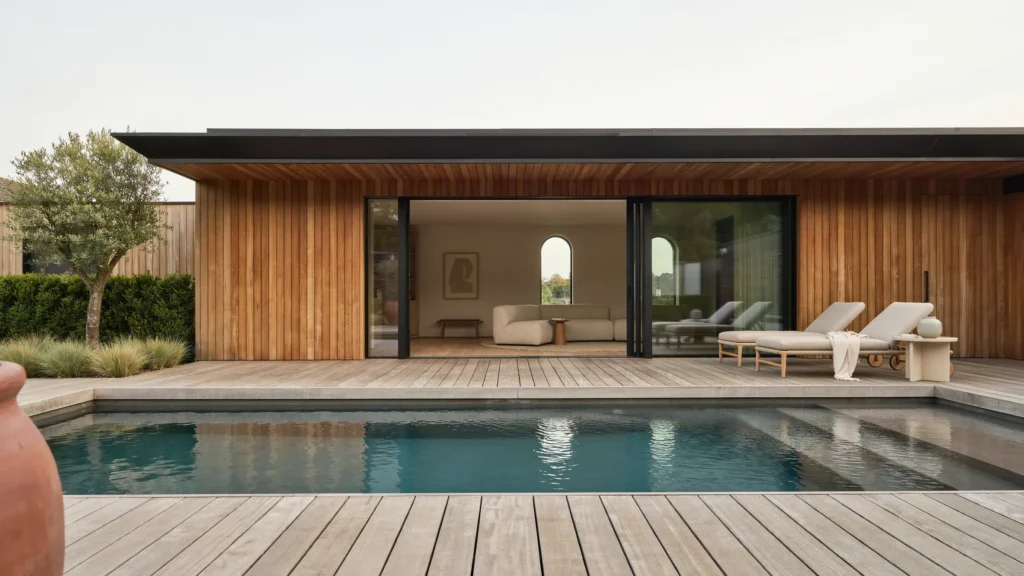
10. Add a Small Lounge Beside the Water
A plunge pool becomes much more useful when there is a comfortable place to sit beside it. You do not need a complete outdoor living room. Two compact lounge chairs and a small table may be enough.
Position the seating where swimmers can easily reach it but leave a clear path around the pool. In very tight gardens, floating loungers can also save floor space. One reference specifically demonstrates how a small pool can become part of a larger outdoor lounge with seating, dining, and sunbathing zones.
11. Install Integrated Landscape Lighting
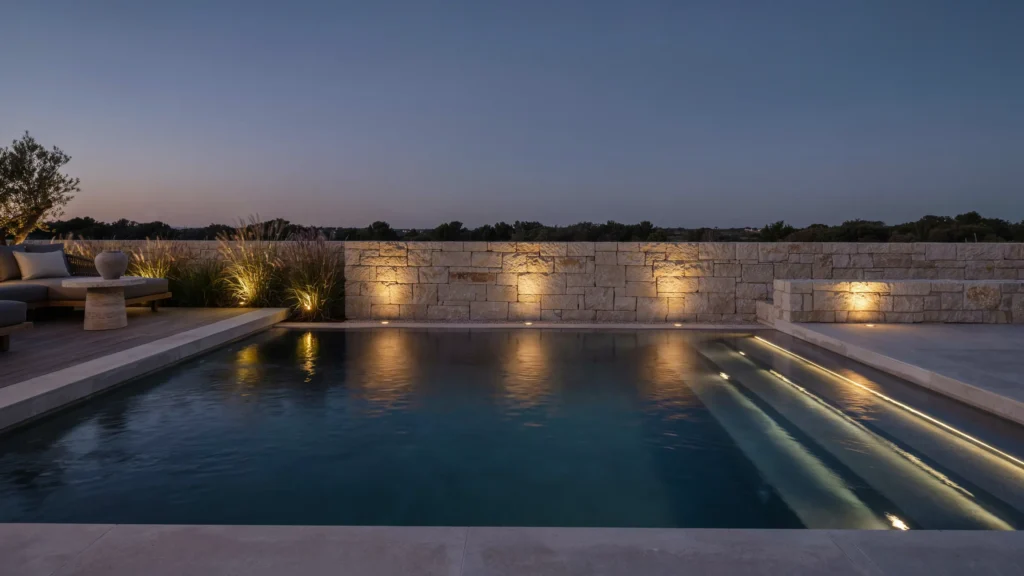
Good lighting can completely change a small pool after sunset. Instead of placing several bright fixtures around the garden, use subtle lighting along steps, retaining walls, planting beds, and pathways.
Warm recessed lights can highlight stone textures while low-level path lights help people move around safely. The supplied reference shows landscape lighting integrated into a stone retaining wall so the pool remains visible after dark.
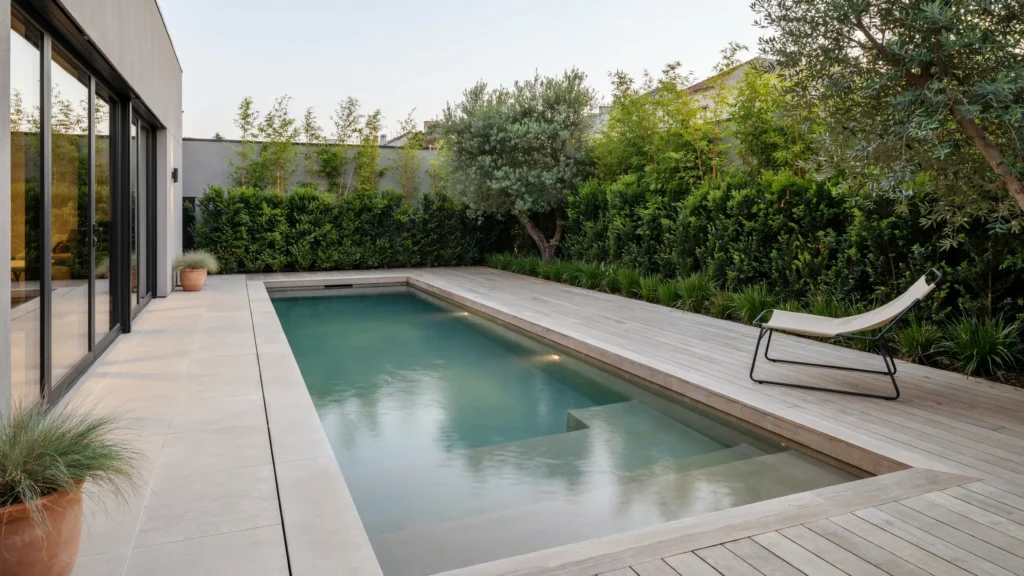
12. Try a Narrow Rectangular Pool
When the backyard is long and narrow, a slim rectangular plunge pool can make better use of the available footprint than a round design. Place it along one side and preserve a walking route or planting strip beside it.
This layout can also create the impression of a longer garden. Use continuous paving or decking along the pool edge to reinforce the length of the space. Keep furniture narrow and avoid oversized pieces that interrupt circulation.
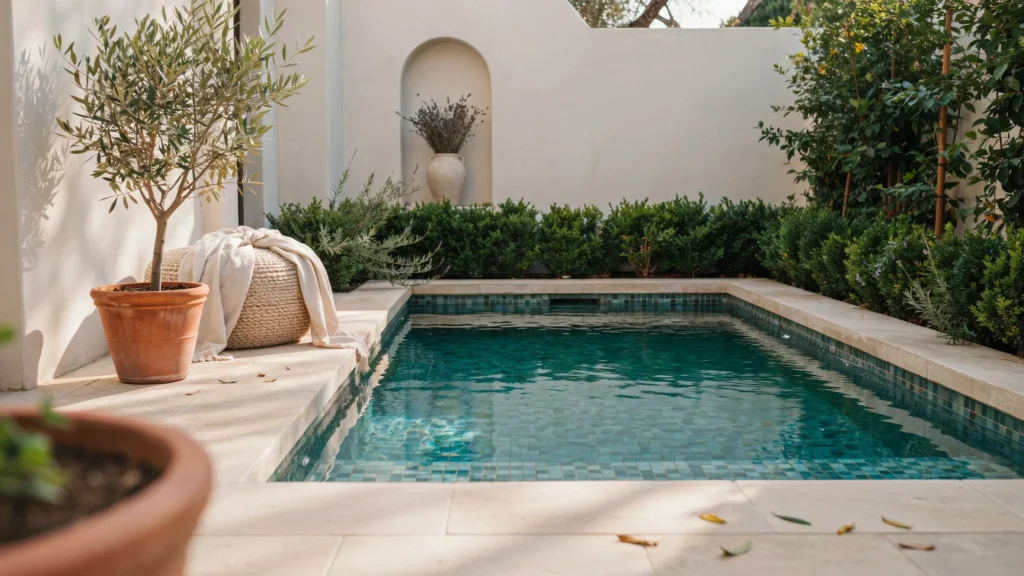
13. Give a Small Pool a Colorful Tile Interior
Pool tile can become the main decorative feature when there is little room for additional landscaping accessories. Blue-green mosaic, teal tile, or deep sapphire tones can make the water visually richer.
Keep the rest of the garden quieter so the tile has room to stand out. A neutral stone surround and simple greenery will allow the pool color to become the focal point. Reference designs use colorful mosaic and teal tile to create a strong visual center in compact outdoor spaces.
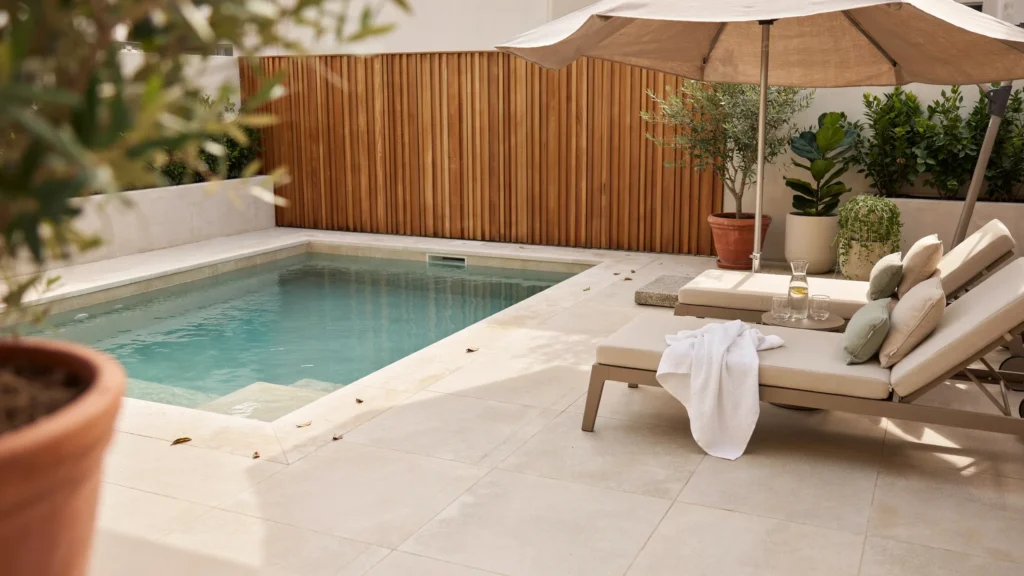
14. Add a Retractable Umbrella
A permanent pergola is not always practical in a small garden. A large retractable umbrella can provide shade when needed while allowing the area to remain open at other times.
Choose a neutral fabric that works with the pool surround and outdoor furniture. Position the umbrella so its base does not interfere with the main walkway. This is especially useful for townhouse gardens and compact patios where every square foot matters. A retractable umbrella is also featured among the compact plunge pool approaches in the reference material.
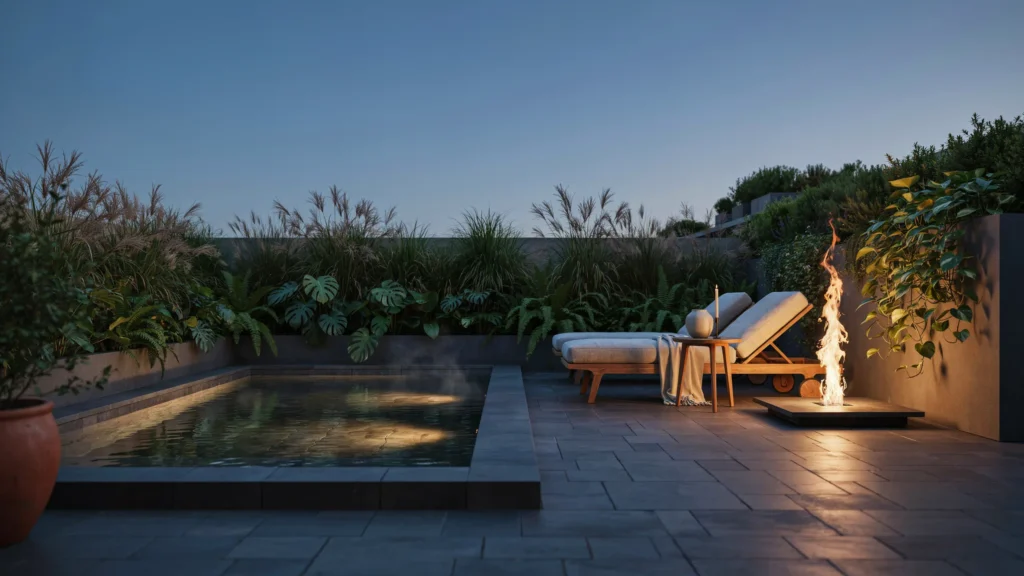
15. Combine the Pool With a Fire Feature
Water and fire create a strong contrast, especially in an evening backyard. A small fire bowl, linear fire feature, or fireplace can sit near the pool without requiring a large entertaining area.
Keep the fire element simple and place it away from areas where people enter and exit the pool. Natural stone or concrete can connect the two features visually. The supplied examples show plunge pools paired with fireplaces and fire elements to create a more complete outdoor setting.
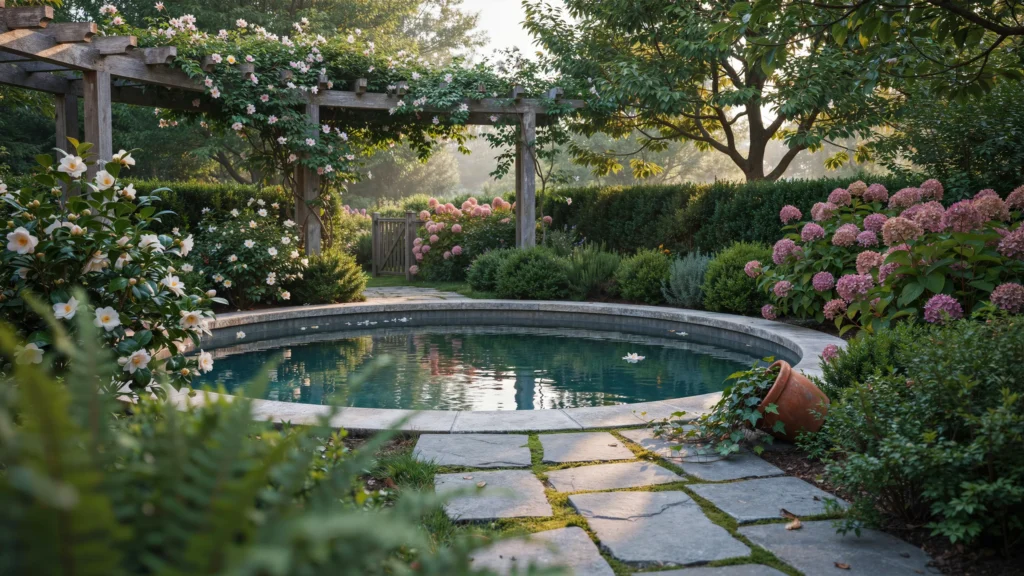
16. Create a Secret Garden Feel
For a romantic small backyard, make the plunge pool feel like something discovered inside the garden. Surround the pool with flowering shrubs, climbing greenery, mature-looking plants, and a simple stone path.
Do not expose every part of the pool from the house. A partially hidden view can make the garden feel deeper and more interesting. One reference uses a round plunge pool surrounded by flowering shrubs to create a secluded garden atmosphere.
How to Make a Small Plunge Pool Look Bigger
The easiest way to make a compact pool area feel spacious is to reduce visual clutter. Choose one dominant paving material and repeat it around the pool rather than mixing several unrelated finishes.
Use furniture with slim frames and keep large planting masses toward the boundaries. A continuous deck can visually extend the floor area, while a narrow pool placed along the longest axis can make the garden appear deeper.
Color also matters. Pale paving reflects more light and can make the area feel open, while darker pool interiors create depth in the water. Glass fencing, where appropriate and permitted, can preserve sightlines without adding another visually heavy boundary.
Best Landscaping for a Small Plunge Pool
Start with the conditions around the pool rather than choosing plants only because they look attractive. Consider sunlight, available soil, drainage, maintenance, mature plant size, and how much leaf litter could reach the water.
Layering usually produces a better result than using one type of plant repeatedly. Use low plants near the pool, medium shrubs farther back, and taller screening plants along boundaries where privacy is needed.
Hard landscaping should support the planting rather than overwhelm it. Stone, timber, concrete, and gravel can all work, but repeating one or two materials usually gives a compact space a cleaner appearance.
Small Plunge Pool Design Mistakes to Avoid
The first mistake is making the pool too large for the garden. A pool should leave enough room for safe circulation, maintenance access, seating, and planting.
Another common problem is choosing plants without considering their mature size. A plant that looks small at installation can eventually dominate the pool area and create extra maintenance.
Avoid putting every feature into one small space. Waterfalls, fireplaces, pergolas, large furniture, bold tile, heavy planting, and multiple decorative objects can compete with one another.
Think about evening use before construction is finished. Lighting should illuminate steps, pathways, seating areas, and important edges without making the backyard feel like a brightly lit commercial space.
Frequently Asked Questions
What is the best shape for a small plunge pool?
A rectangular pool usually works well in narrow or modern gardens because it can follow the existing lines of the property. Round, square, and hexagonal pools can work better when the garden has a central or informal layout.
Can a plunge pool work in a very small backyard?
Yes. The key is choosing the pool size after considering circulation, access, equipment, seating, drainage, and landscaping. Compact reference designs demonstrate how pools can occupy corners, courtyards, decks, and narrow outdoor areas.
What plants are best around a plunge pool?
Choose plants suited to your local climate and the amount of sunlight available. Low grasses, shrubs, flowering plants, palms, and layered greenery can all work, provided they do not create excessive debris or block necessary access.
How can I make an above-ground plunge pool look built-in?
Surround it with a deck, stone cladding, or coordinated paving. Built-in steps and matching materials can make the pool feel connected to the architecture rather than sitting separately in the yard.
Are plunge pools suitable for entertaining?
They can be. Add a few comfortable seats, a small table, good lighting, and enough clear circulation around the water. A compact pool can become the center of a small outdoor lounge without requiring a huge patio.
How do I create privacy around a small pool?
Layered planting, privacy screens, fences, walls, and strategically positioned trees can all help. Combining several elements often looks softer than using one tall solid barrier.