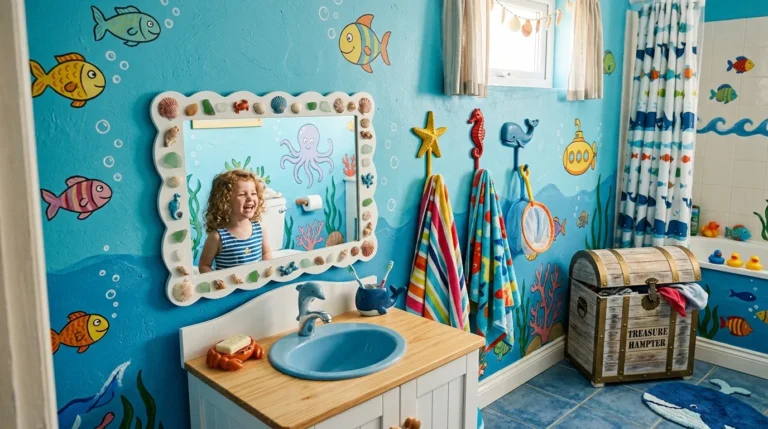
A kid’s bathroom has to do a lot of heavy lifting. It’s where tiny hands learn to brush their teeth on their own, where bath-time meltdowns and giggles both happen, and where safety and style constantly have to share the same square footage. Getting the balance right isn’t about picking one adorable theme and calling it done it’s about choosing materials, layouts, and details that protect your kids while still giving the room personality they’ll love growing up in.
Whether you’re planning a full renovation or just want to refresh a few details, these 17 kid bathroom ideas are built around one simple goal: a space that is genuinely safe for little ones to use on their own, and stylish enough that you won’t feel the urge to redo it in two years. Let’s get into it.
1. Start With a Bright, Kid-Friendly Color Palette
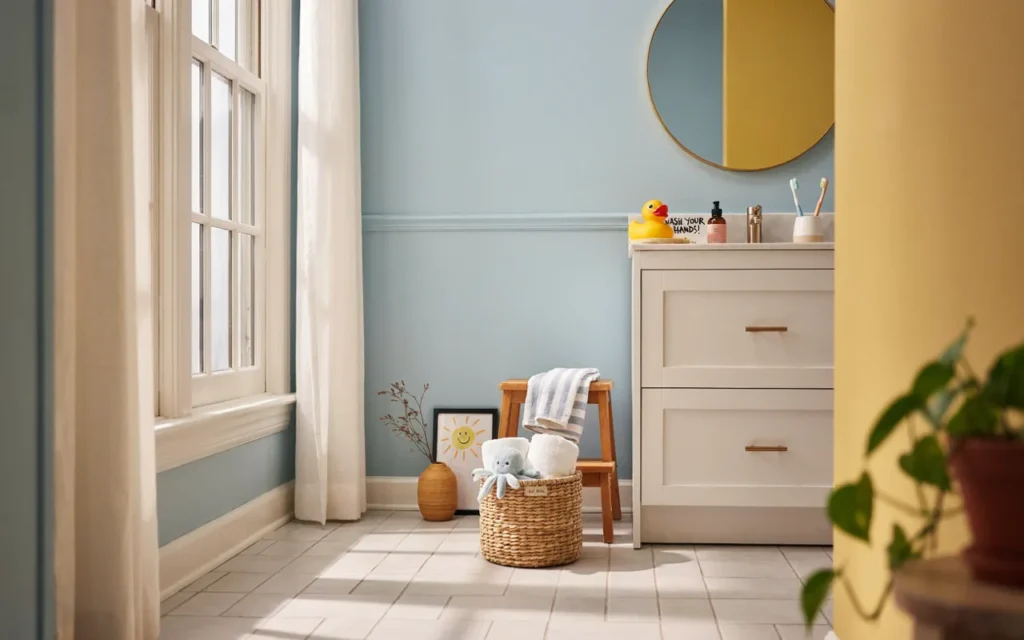
Color sets the tone for the entire room, and a cheerful palette instantly makes a bathroom feel less clinical and more inviting for children. Instead of committing to an all-out theme, pick two or three shades think soft blue, sunny yellow, or blush pink and let them repeat across the walls, vanity, and a few accessories. This keeps the look cohesive rather than chaotic, and because paint and small decor pieces are easy to swap, the palette can evolve as your child’s taste changes. For safety, stick to washable, low-VOC paints designed for high-moisture rooms so the walls hold up to splashes and steam without peeling.
2. Add Waterproof, Themed Wallpaper
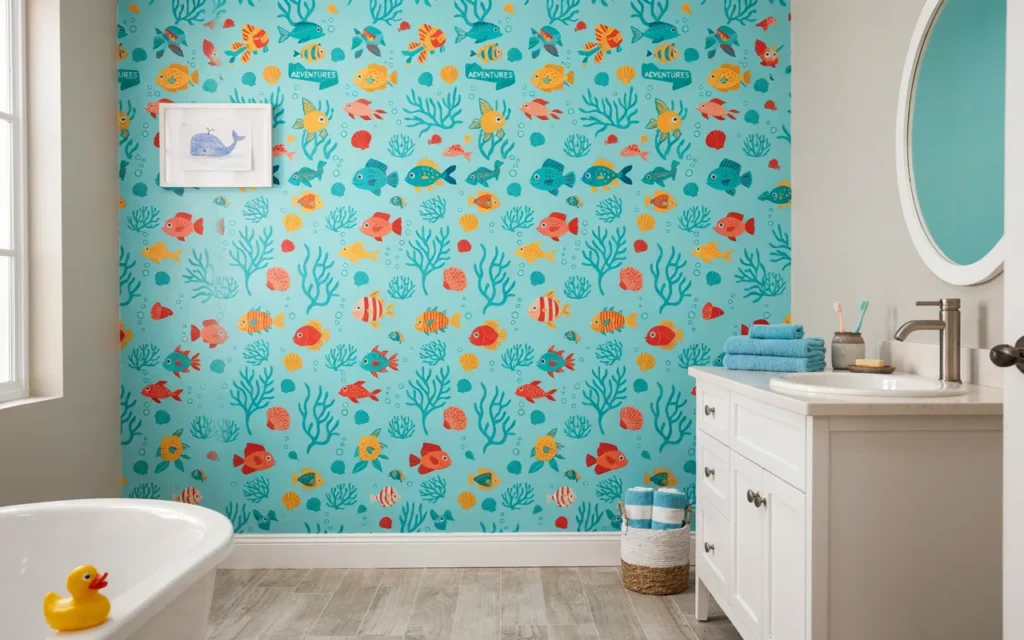
Wallpaper is one of the fastest ways to give a kid’s bathroom real personality, whether you lean into an ocean theme, a jungle scene, or a whimsical world map. The key is choosing a vinyl or moisture-resistant wallpaper specifically rated for bathrooms, since regular paper will bubble and peel in a humid environment. Many families apply it to a single accent wall rather than the whole room, which limits cost and makes it easy to update later without a full re-do. Look for options with rounded, non-jarring patterns rather than sharp geometric prints if the room is used by very young children who spend a lot of time close to the walls.
3. Choose Patterned, Slip-Resistant Flooring
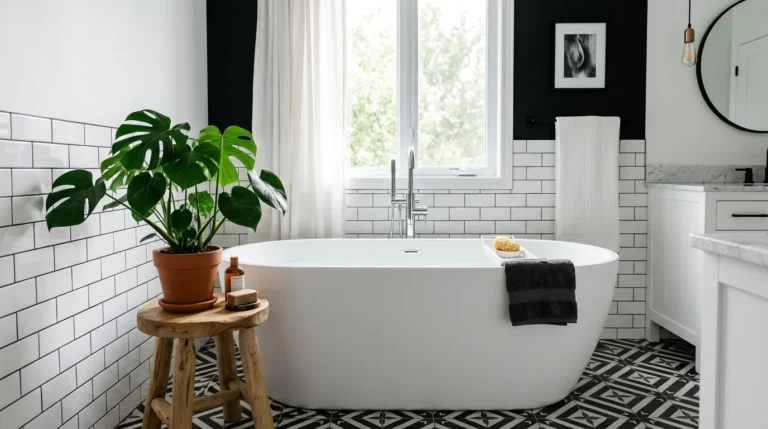
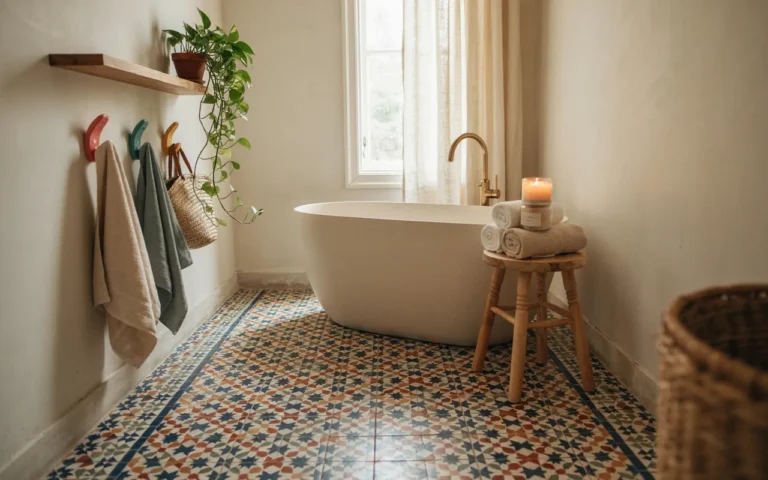
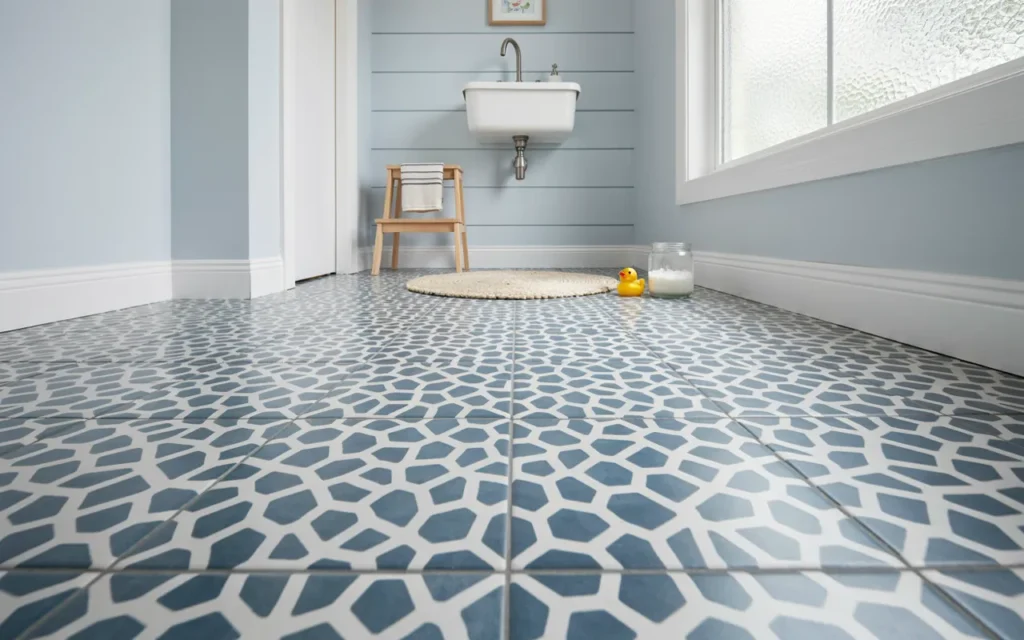
Flooring in a kid’s bathroom needs to check two boxes at once: it has to look fun, and it has to be safe underfoot when wet. Textured porcelain or matte-finish tile in a playful pattern geometric shapes, hexagons, or a bold color-block design adds visual interest without relying on paint or wallpaper alone. Textured, slip-resistant tile dramatically reduces the risk of falls during bath time, which matters far more in a kids’ space than in any other room of the house. If you’re not ready for a full tile replacement, a securely taped rubber-backed bath mat with a similar pattern can deliver the same playful effect on a budget.
4. Build In a Step Stool for Independence
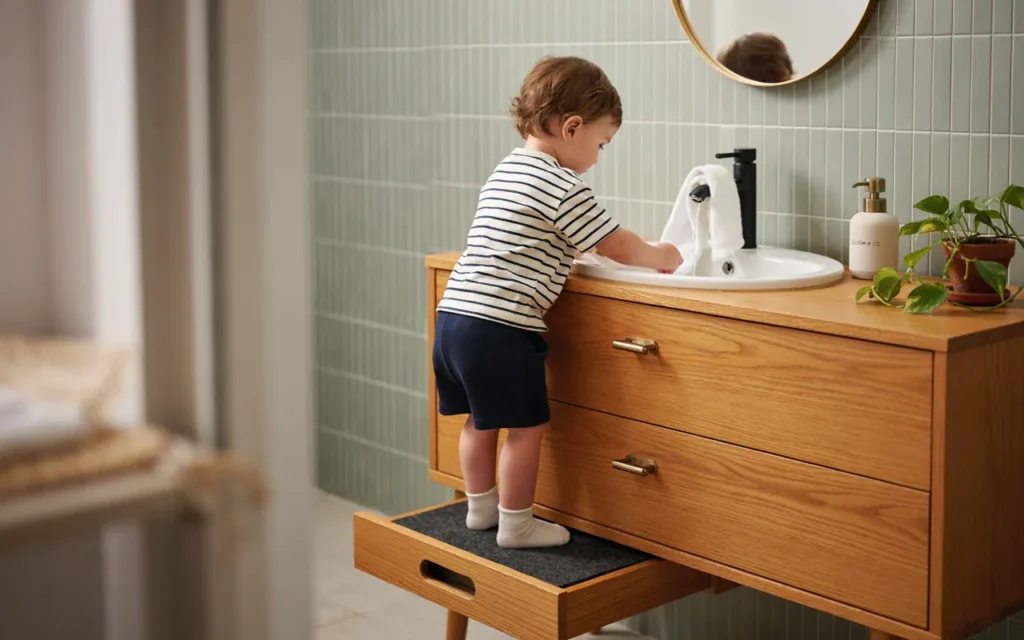
Nothing builds a child’s confidence at the sink faster than being able to reach it themselves, and a built-in step stool is both a safety upgrade and a design detail. Rather than leaving a bulky plastic stool in the middle of the floor where it becomes a tripping hazard, consider a slide-out wooden step built into the vanity’s toe-kick space, or a sturdy stool with a non-slip base tucked neatly to one side. This small addition supports independent handwashing and toothbrushing, which is exactly the kind of self-sufficiency parents want to encourage, all while keeping the walking path clear.
5. Install a Double or Triple Sink for Siblings
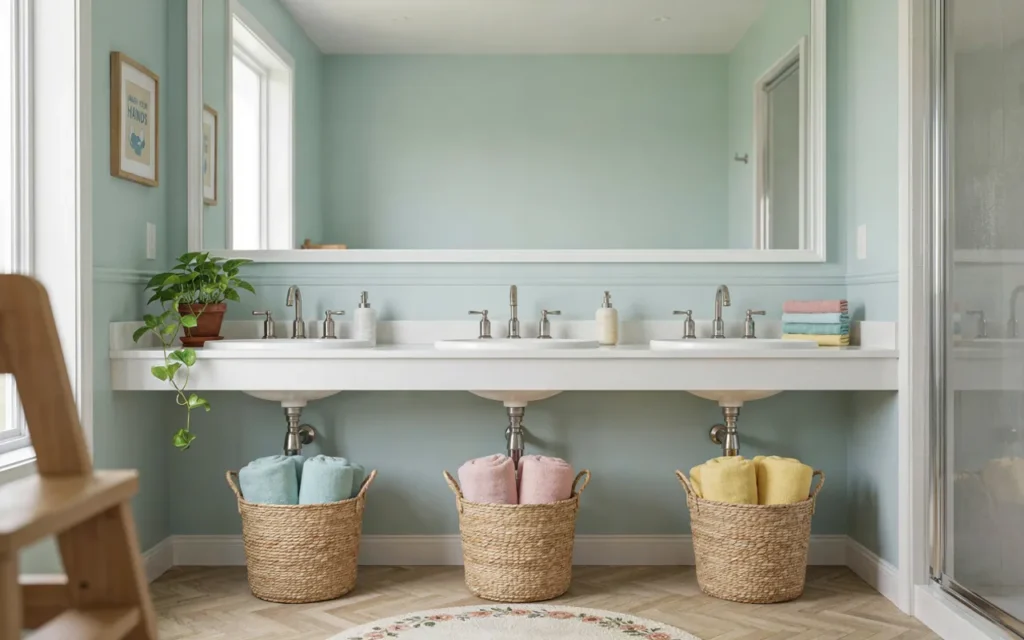
If more than one child shares the bathroom, a double or even triple sink setup can eliminate the daily elbowing match over who gets to brush their teeth first. Giving each child their own designated space also cuts down on morning rush chaos and teaches kids to take ownership of their own routine and area. When space allows, pair the extra sink with individual storage bins below so toothbrushes, cups, and skincare items stay organized and don’t get mixed up between siblings.
6. Use Open Shelving With Labeled Baskets
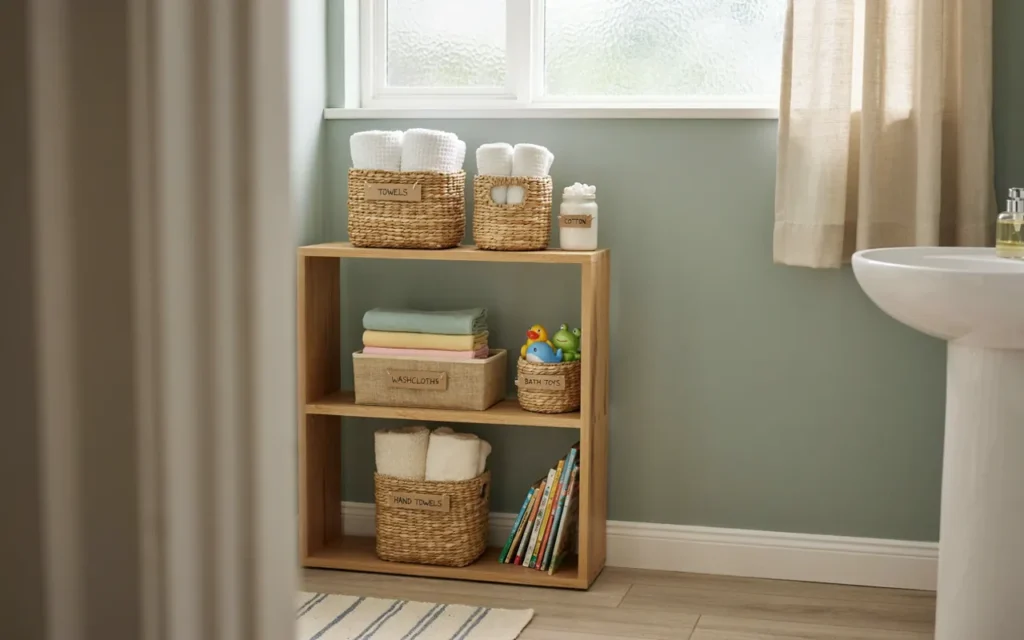
Open shelving keeps everyday items like towels, extra toilet paper, and bath toys within easy reach for kids, which reduces the chances of them climbing on counters or stools to grab something out of reach a genuine safety win. Fill the shelves with woven baskets or fabric bins rather than leaving loose items scattered, and label each one so children learn where things belong. Just be sure any cleaning products, medications, or sharp grooming tools are stored in a separate, locked, or high cabinet completely out of the open shelving system.
7. Prioritize Non-Slip Bath and Shower Surfaces
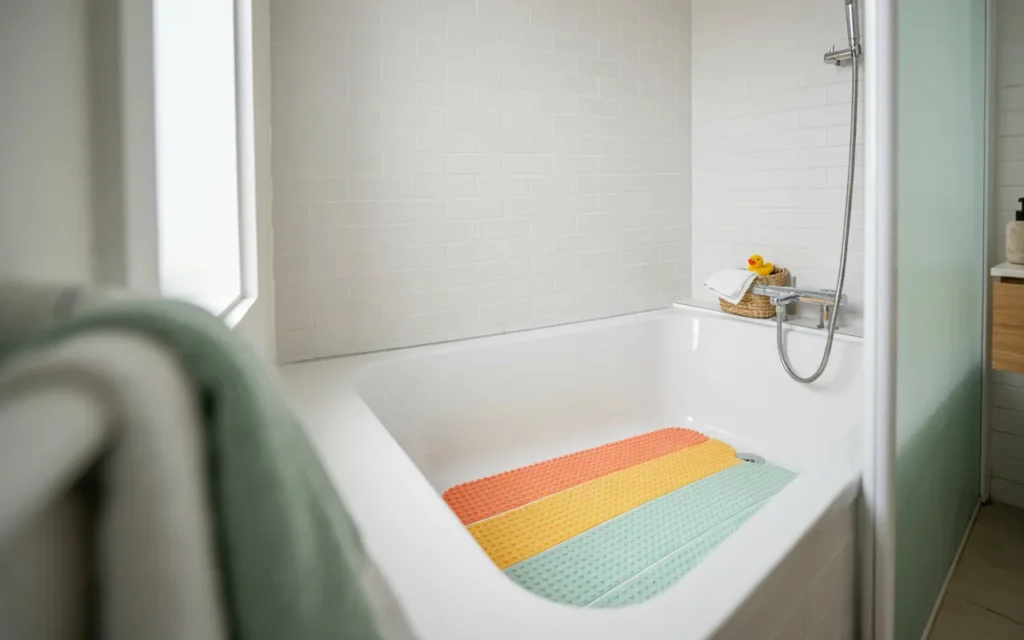
Wet tile and tub surfaces are one of the leading causes of bathroom injuries for young kids, so a textured, slip-resistant surface inside the tub and shower is a non-negotiable upgrade. Adhesive non-slip strips, a textured bath mat rated for tubs, or slip-resistant tile inside the shower area all reduce the risk significantly without compromising on style, since most now come in fun colors and patterns. Pair this with a handheld showerhead at a lower height so kids can rinse off without needing to stand on anything unstable.
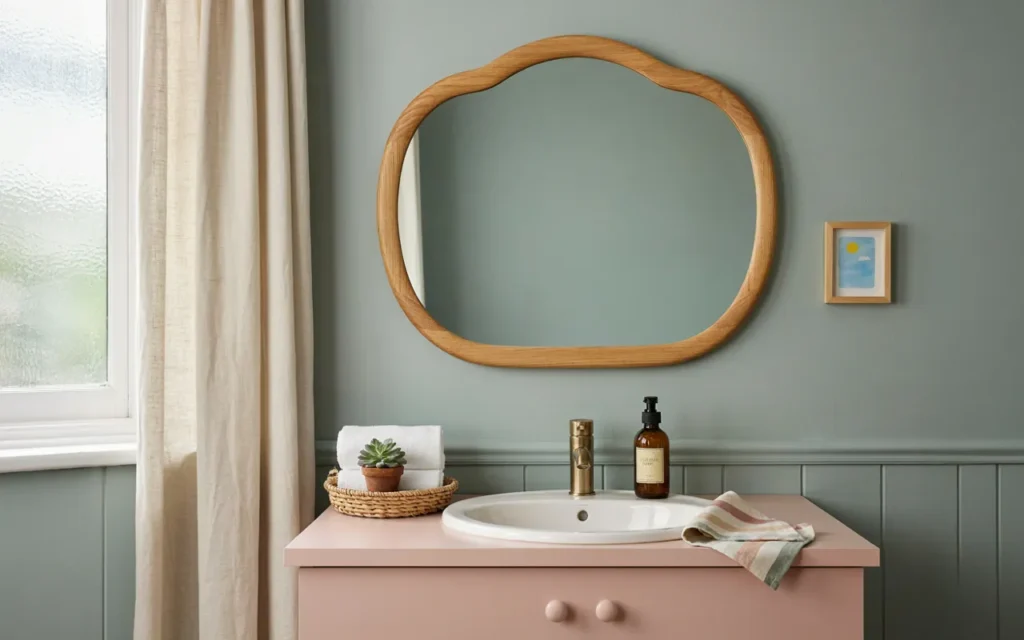
8. Add Whimsical, Rounded Mirror Frames
A decorative mirror does more than reflect a scalloped, curved, or playfully shaped frame softens the overall look of the room and avoids the sharp corners that straight-edged mirrors can pose at a child’s height. Choose a mirror mounted at a height kids can actually use, or add a smaller secondary mirror lower on the wall specifically for them. Rounded frames in brass, wood, or a soft painted finish also tie together other curved details in the room, like an arched doorway or a pedestal sink.
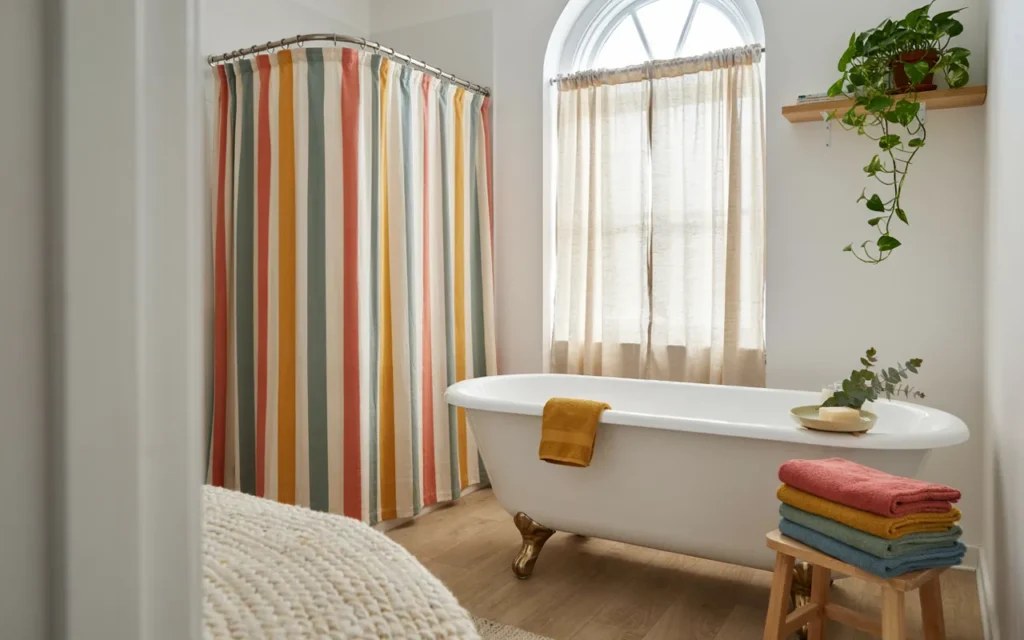
9. Hang a Fun, Easy-to-Clean Shower Curtain
A patterned shower curtain is one of the cheapest, fastest ways to add serious personality to a kid’s bathroom, and it can be swapped out in minutes as tastes change. Choose a machine-washable, mildew-resistant fabric so it stays hygienic between washes, and look for a weighted or magnetic hem that keeps water from splashing onto the floor an easy safety detail that prevents slippery puddles outside the tub. Whether it’s stripes, sea creatures, or an abstract print, this single item can carry an entire color scheme.
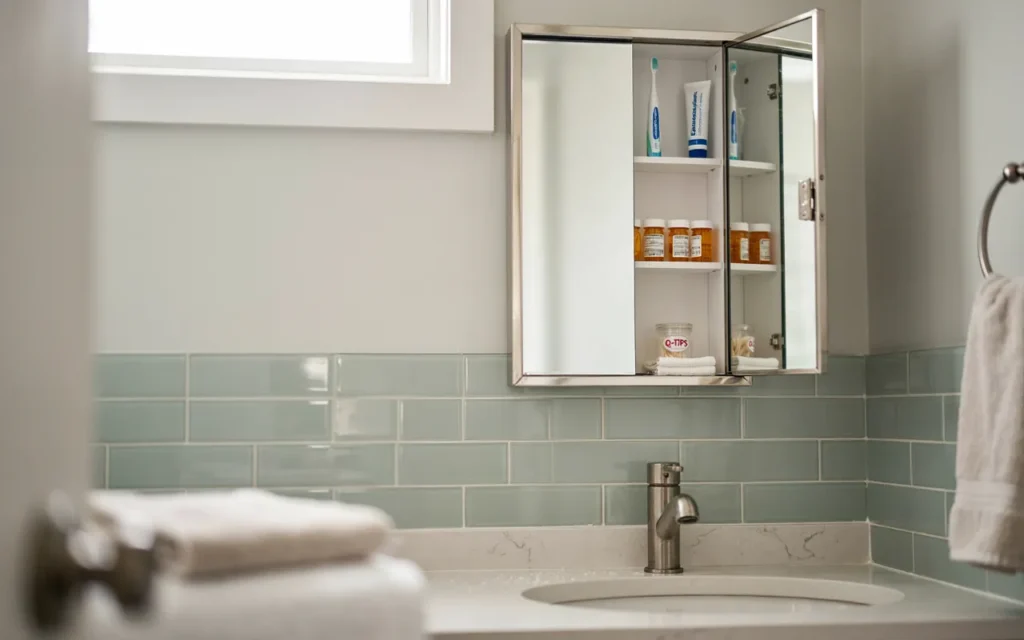
10. Lock Away Medications and Cleaning Supplies
No kid’s bathroom is complete without a genuine childproofing plan, and that starts with anything hazardous. Store medications, cleaning chemicals, razors, and any small swallowable items in a cabinet with a childproof lock, ideally mounted higher than a child’s reach even with a step stool. A mirrored medicine cabinet above the sink is a stylish way to hide these items while doubling the room’s visual depth, but the lock is what actually keeps it safe decor should never replace that basic precaution.
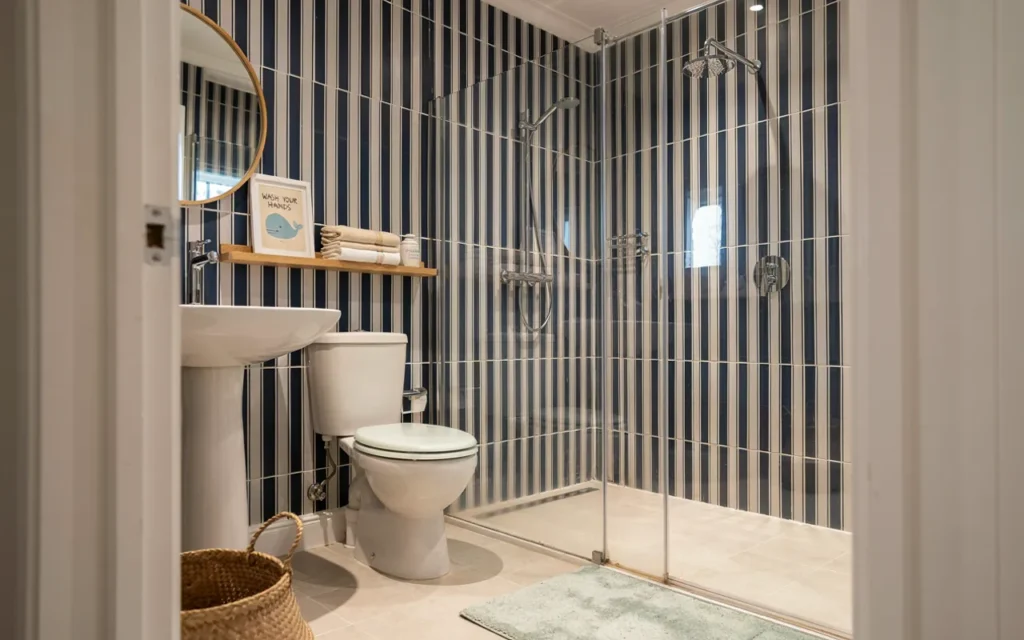
11. Bring in Bold Stripes for a Timeless Look
Striped walls are a design choice that manages to feel playful and grown-up at the same time, which makes them a smart pick for a bathroom that needs to age well with your child. Vertical stripes in vinyl wallpaper or paint can visually stretch a small, low-ceilinged room, while horizontal stripes add a calmer, more grounded feel. Carrying the stripe pattern from the walls into the shower area creates a cohesive, intentional look rather than a room that feels randomly decorated.
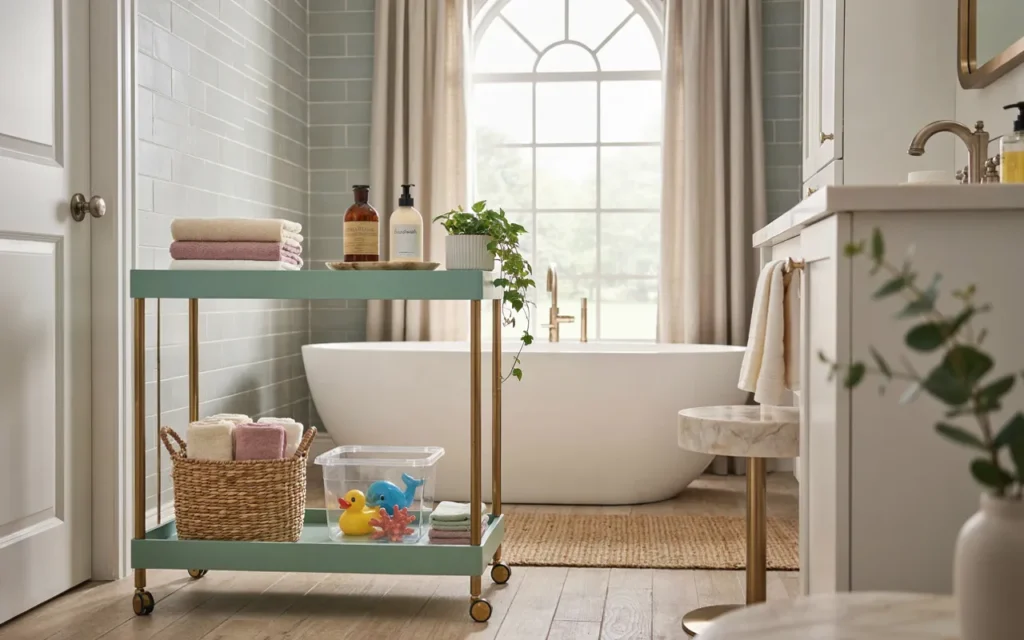
12. Repurpose a Bar Cart as a Rolling Vanity Station
For bathrooms that are tight on built-in storage, a small rolling bar cart makes a surprisingly practical and stylish vanity extension. Load it with folded washcloths, bath products, and spare toilet paper, and roll it wherever it’s needed. Because it’s mobile, it can be pushed out of the main walking path when not in use, reducing clutter that could otherwise become a tripping hazard. A coat of pastel or metallic paint turns a plain cart into a genuine design feature rather than an obvious storage fix.
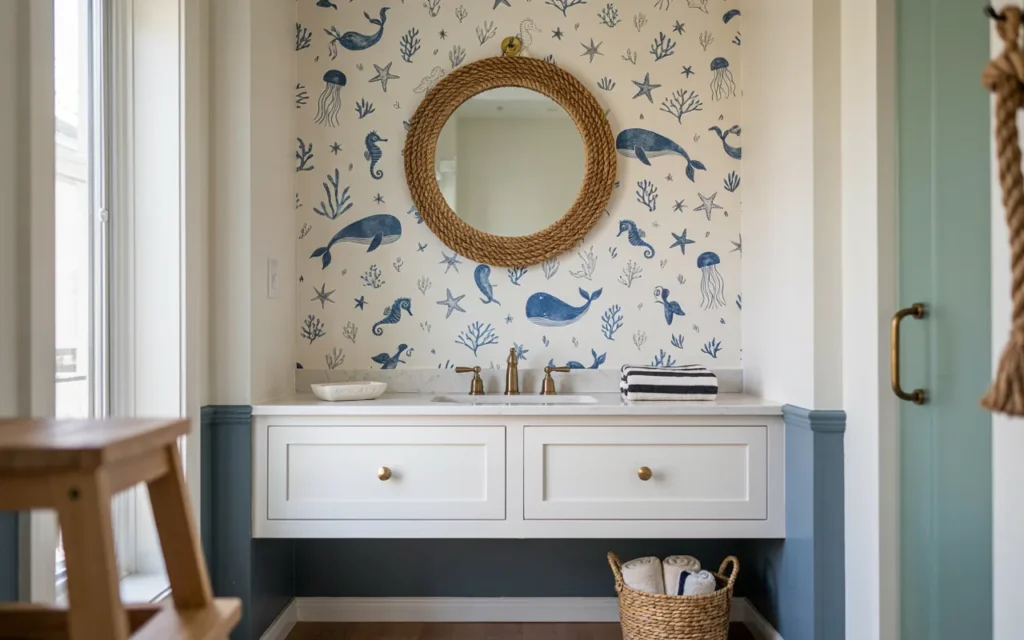
13. Choose a Nautical or Floral Accent Wall
A single accent wall rope-framed mirrors and sea-life wallpaper for a nautical look, or a soft floral print for a gentler feel gives the room a clear identity without overwhelming a small space. Keeping the surrounding trim, vanity, and flooring neutral lets the accent wall do the visual work, and it also means the theme can be swapped later with minimal effort. This approach works especially well in bathrooms that double as guest baths, since it reads as intentional design rather than an overtly childish theme.
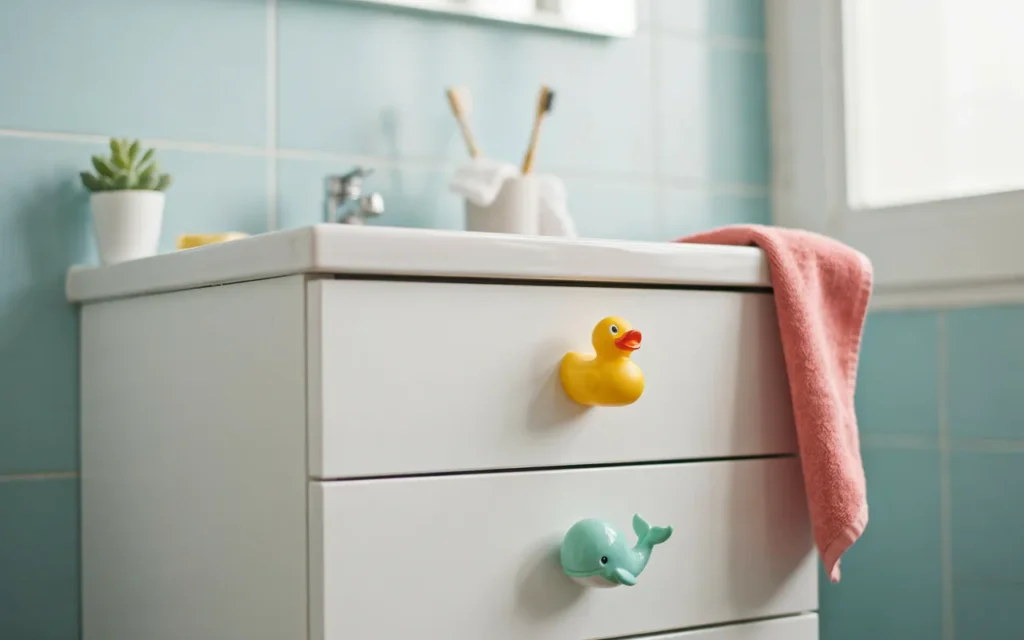
14. Upgrade to Fun, Kid-Sized Drawer Pulls
Small hardware details like drawer pulls and cabinet knobs are an easy, low-cost way to inject character into an otherwise simple vanity. Choose shapes and colors that are chunky and easy for small hands to grip, which also makes drawers more functional for kids learning to get their own supplies. Because these details are inexpensive and simple to swap, they’re a great option for parents who want the room to evolve alongside their child’s changing interests without a full renovation.
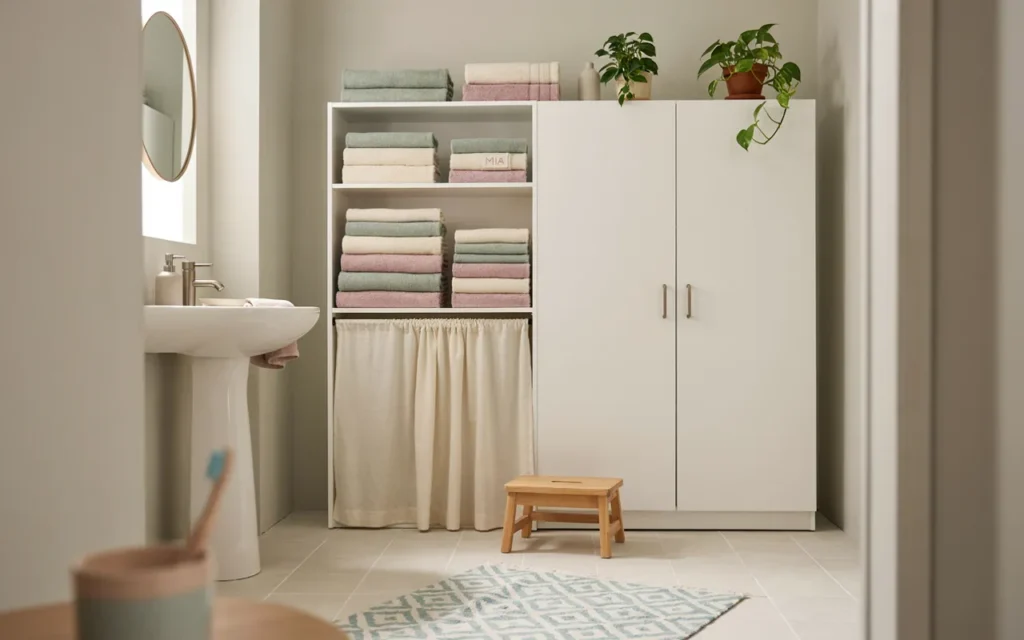
15. Add Tall or Floor-to-Ceiling Storage
Vertical storage is one of the smartest solutions for small kids’ bathrooms because it uses wall height that would otherwise go to waste. A floor-to-ceiling cabinet keeps towels, bath toys, and toiletries organized in one place, and a curtain or fabric panel across the front hides everyday clutter while adding a soft textile element to the room. Just make sure anything stored at a child’s reachable height is genuinely safe for them to access on their own, and keep hazardous items on the upper shelves instead.
16. Use Soft Lighting or a Gentle Diffuser for Bathtime
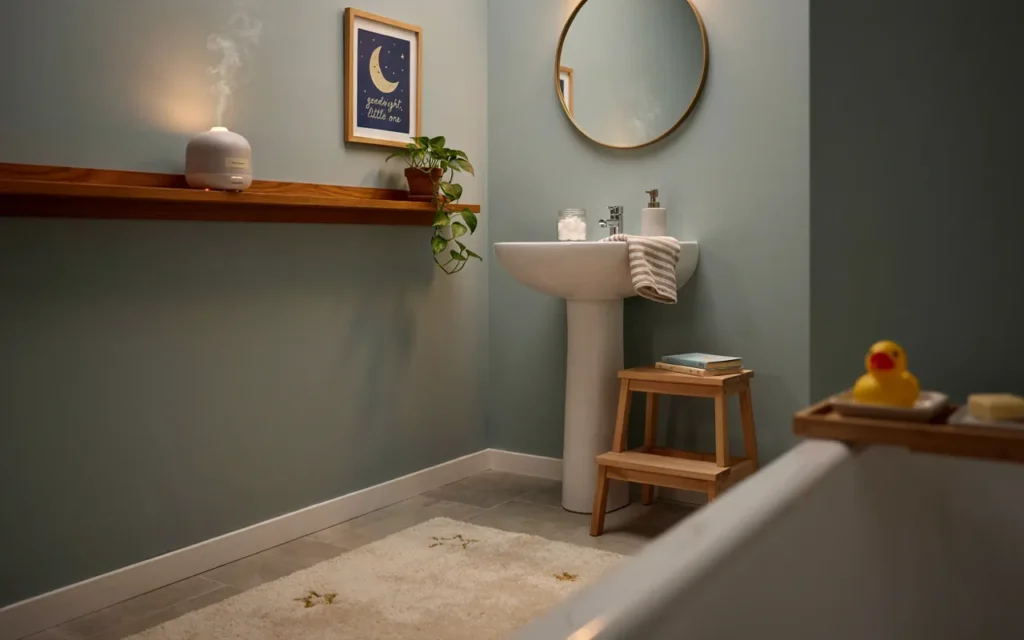
The right lighting can make bathtime feel calm instead of harsh, especially in the evening. Swap a single overhead bulb for warmer, dimmable lighting, and consider a small essential oil diffuser with a mild scent like lavender to help signal to kids that it’s winding-down time before bed. Just be sure any diffuser or plug-in device is placed well out of reach and away from water sources, since electrical safety matters just as much as slip-resistance in a bathroom used by children.
17. Personalize With Towel Hooks and Name Labels
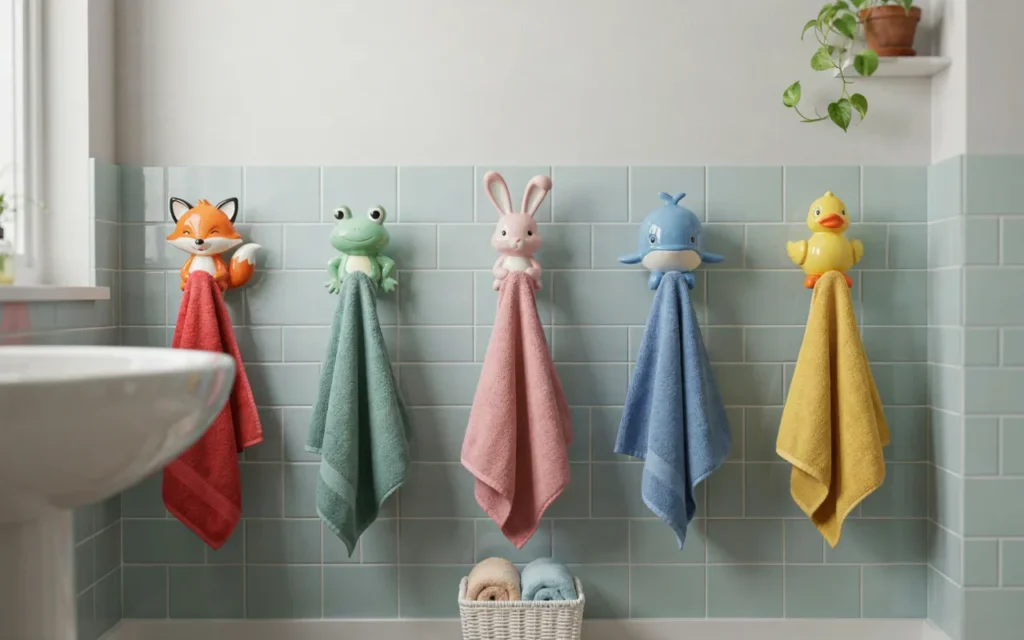
Individual towel hooks, especially ones shaped like fun animals or labeled with each child’s name, make daily routines smoother and give kids a real sense of ownership over the space. Hooks placed at a lower, child-accessible height also reduce the number of wet towels left on the floor, which cuts down on both mess and slip hazards. This is a small, inexpensive touch that adds genuine personality while solving a real everyday problem for busy households.
Final Thoughts
A great kid’s bathroom isn’t built around a single big renovation decision it’s built from a series of smaller choices that balance genuine safety with a design your child will actually enjoy using every day. Slip-resistant surfaces, childproof storage, and accessible fixtures should always come first, and once that foundation is in place, color, pattern, and personal touches are what turn a functional bathroom into a space kids genuinely love. Start with one or two updates from this list, and let the rest evolve as your child grows.
Frequently Asked Questions
1. What is the most important safety feature in a kid’s bathroom? Slip-resistant flooring and tub surfaces are the top priority, since falls on wet surfaces are one of the most common bathroom injuries for young children. Pair this with locked storage for medications and cleaning products for a fully childproofed space.
2. How do I design a kids’ bathroom that won’t need to be redone as they grow older? Keep permanent elements like tile, vanities, and fixtures fairly neutral, and add personality through easily swappable items such as shower curtains, wall art, towels, and paint color. This way, updating the look as tastes change only takes an afternoon, not a renovation.
3. Is wallpaper safe to use in a kids’ bathroom? Yes, as long as you choose a vinyl or moisture-resistant wallpaper specifically designed for high-humidity rooms. Standard paper wallpaper will peel and warp from steam and splashes over time.
4. How can I make a small kids’ bathroom feel bigger? Use vertical storage, light colors, and patterned flooring to draw the eye up and around the room. Large mirrors and good natural or warm lighting also help a compact bathroom feel more open.
5. What storage solutions work best for kids sharing one bathroom? Individual labeled baskets, a double or triple sink vanity, and personalized towel hooks all help siblings keep their own items separate and organized, which reduces both clutter and daily squabbles.