
Fall baby nurseries work best when they combine warm autumnal colors like burnt orange, forest green, and golden yellow with cozy textures, nature-inspired décor, and smart storage. Prioritize non-toxic materials and safety-certified furniture to create a space that’s as nurturing as it is beautiful.
There’s something deeply comforting about fall. The shift in light, the earthy scent in the air, and the instinct to nest and stay warm make autumn one of the most fitting seasons to welcome a new baby into your home. If you’re looking for inspiration, these Top 10 Fall Baby Nursery Ideas for a Cozy and inviting space will help you create a nursery filled with warmth, comfort, and timeless seasonal charm.
Whether you’re designing from scratch or refreshing an existing room, the ideas below cover everything: color, texture, lighting, storage, technology, and safety. The goal isn’t just a room that looks good in photos it’s a space that works for your baby, grows with your child, and gives you peace of mind every single day.
Here are 10 fall baby nursery ideas to help you build your perfect autumn sanctuary.
What autumn nursery colors work best for a baby’s room?
Color sets the emotional tone of any room and in a nursery, that matters more than most people realize. Research published in the journal Color Research & Application suggests that warm, muted tones promote calm and reduce visual overstimulation in infants, whose developing eyes are still adjusting to the world.
For a fall nursery, the most effective palettes layer:
- Anchor neutrals: Creamy whites, warm beiges, and muted browns as the base
- Accent warms: Burnt orange, terracotta, and rust as focal points
- Depth tones: Forest green and deep burgundy to add richness without overwhelming
Avoid highly saturated primaries on large surfaces. Instead, use bold autumnal shades as accents on a feature wall, in cushions, or through artwork while keeping the majority of the room soft and breathable.
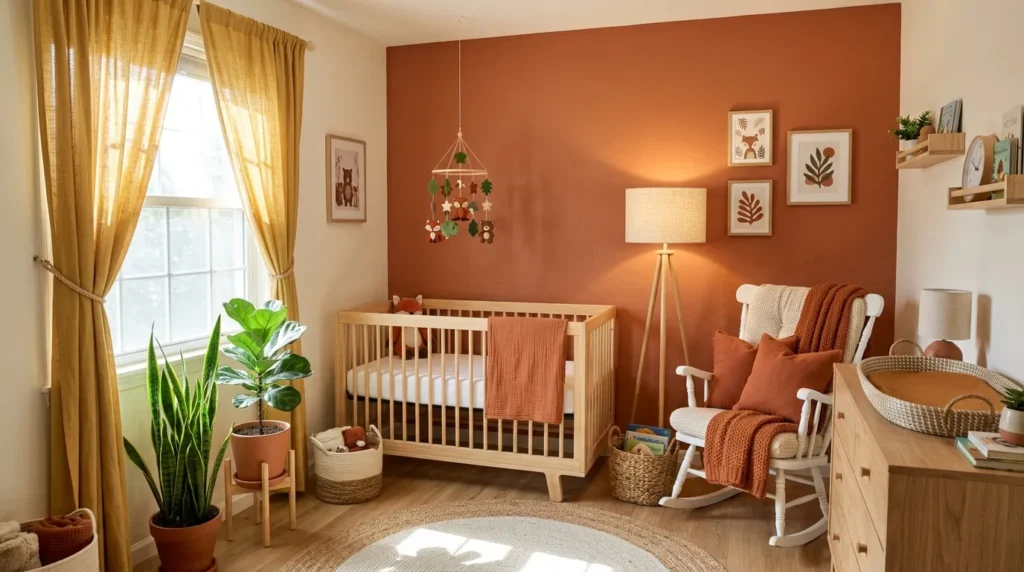
What cozy nursery textures and fabrics are safest for babies?
Texture transforms a visually appealing room into one that feels genuinely comforting. For a fall nursery, think layers both literally and figuratively.
Key textiles to include:
- Knitted blankets in chunky merino or organic cotton for warmth without weight
- Faux sheepskin or wool-look rugs for softness underfoot (check for non-slip backing)
- Velvet cushions in mustard, sage, or rust tones
- Organic cotton crib sheets certified to GOTS (Global Organic Textile Standard) standards
Safety note: Always confirm that any fabric in the sleep environment meets CPSC (Consumer Product Safety Commission) flammability standards. Avoid placing loose blankets, pillows, or cushions inside the crib these are for decorative display elsewhere in the room.
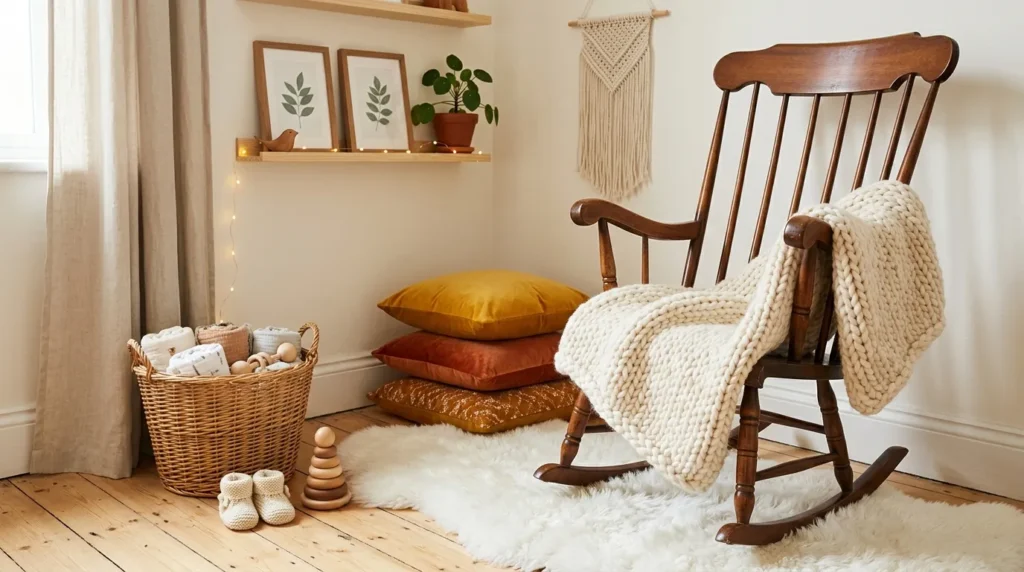
What are the best nature-themed nursery decor ideas for fall?
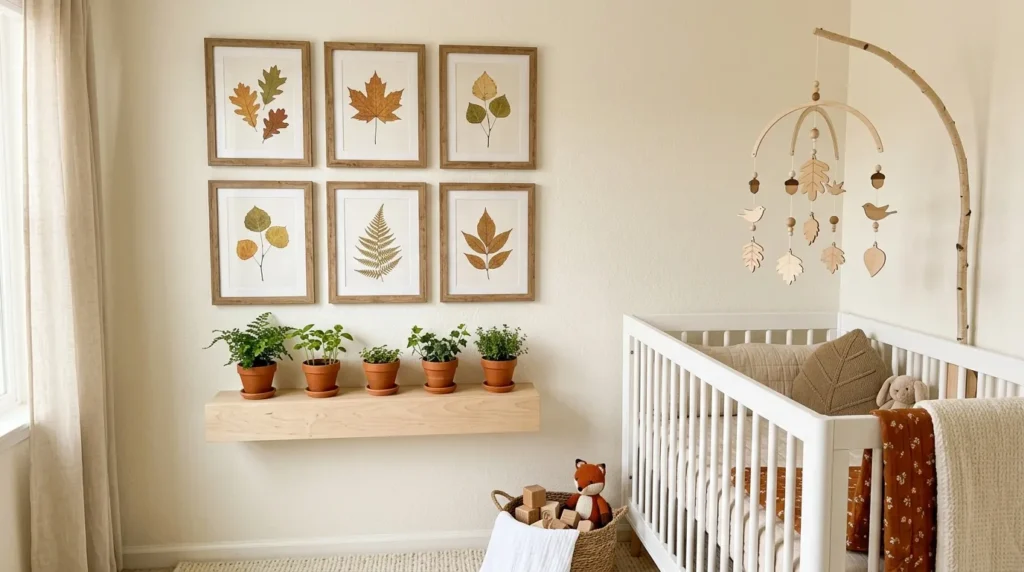
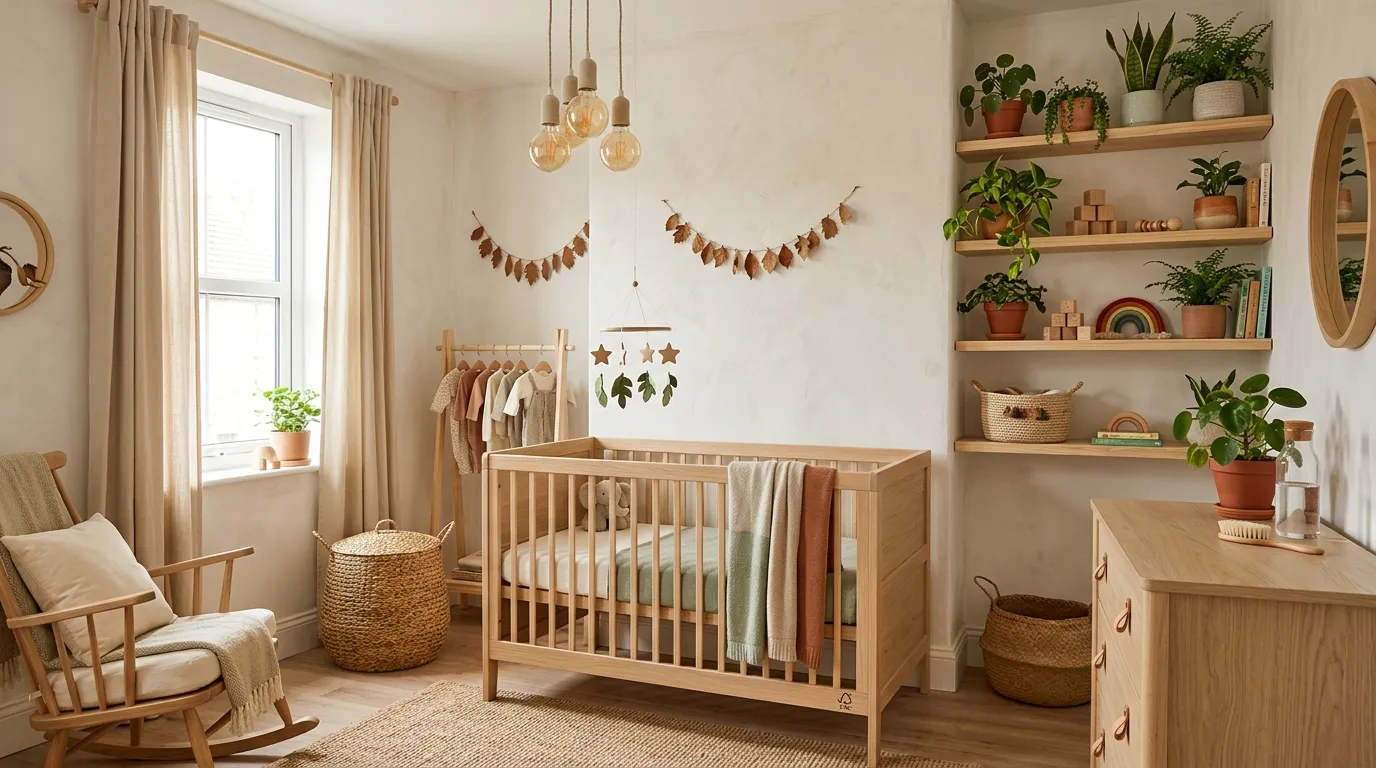
Bringing the outdoors in is one of the most timeless nursery design principles and fall gives you an especially rich visual vocabulary to work with. Leaf motifs, botanical prints, and wooden accents all echo the natural world without requiring a full woodland theme.
Practical nature-inspired ideas:
- Botanical wall prints: Pressed fern or oak leaf prints in simple wooden frames
- Wooden accents: A natural wood crib, shelf, or rocking chair grounds the space
- Dried floral arrangements: Beautiful when placed on high shelves, well out of reach
- Leaf-print textiles: Subtle leaf patterns on curtains or a crib mobile
Natural materials also tend to be more breathable and durable than synthetic alternatives. According to the Environmental Working Group (EWG), wood furniture finished with low-VOC or water-based paints significantly reduces indoor air pollutant exposure for infants.
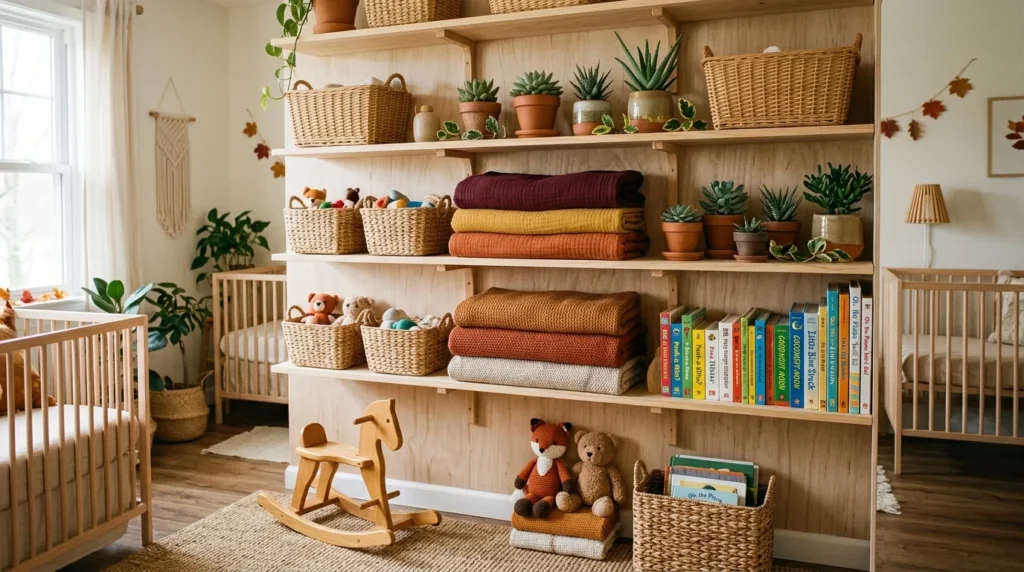
What are the best nursery storage ideas with a fall aesthetic?
Storage is one of the most underplanned aspects of nursery design. Babies come with an extraordinary volume of stuff and without a clear system, clutter builds fast. The good news: practical storage and fall aesthetics are a natural pairing.
Stylish fall storage solutions:
- Wicker or rattan baskets in neutral or warm tones for blankets, toys, and spare onesies
- Wooden open shelving painted in sage green or warm white for books and displayed items
- Built-in cubbies with fabric drawer inserts in autumnal hues
- Labeled canvas bins for easy sorting during sleep-deprived early months
Position storage at adult height where possible not only does this look cleaner, but it keeps small items like spare clips or accessories out of a curious baby’s reach.
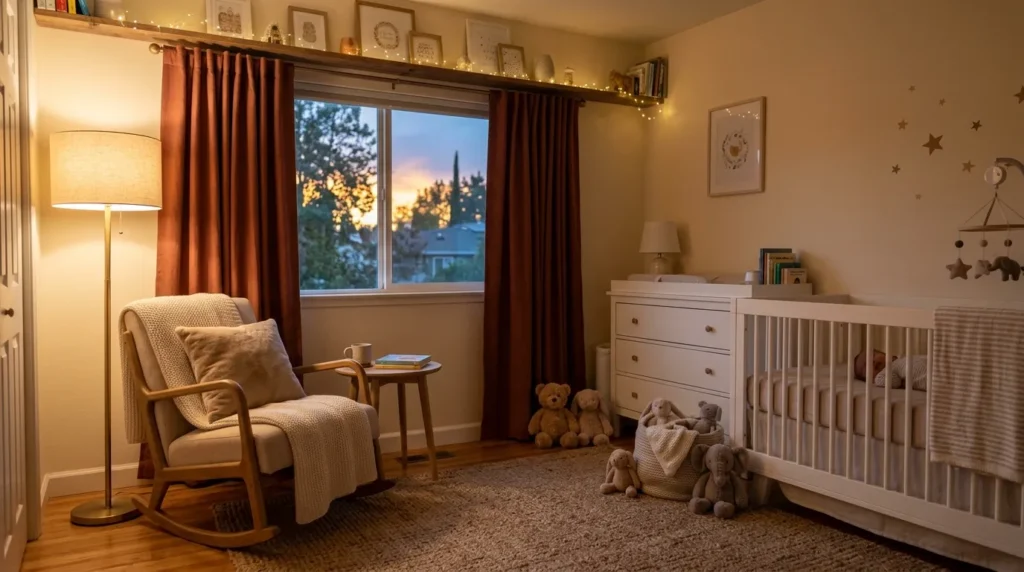
What nursery lighting creates the best ambiance for sleep and feeding?
Lighting does more than set a mood it directly influences your baby’s circadian rhythm development. According to the American Academy of Pediatrics (AAP), exposure to warm, dim light in the evening supports the natural production of melatonin in infants, helping establish healthy sleep patterns earlier.
For a fall nursery, aim for:
- Dimmable warm-white bulbs (2700K–3000K) as the primary light source
- A quality floor lamp or table lamp for feeding sessions bright enough to see clearly, dimmable enough not to fully wake the baby
- String lights (fairy lights) mounted safely along a shelf or wall, never near fabric or within reach
- Blackout curtains in a rich autumn tone like deep terracotta or forest green to control natural light during naps
Avoid cool-white or blue-spectrum LED lighting in the nursery, especially at night. These wavelengths suppress melatonin and can interfere with sleep.
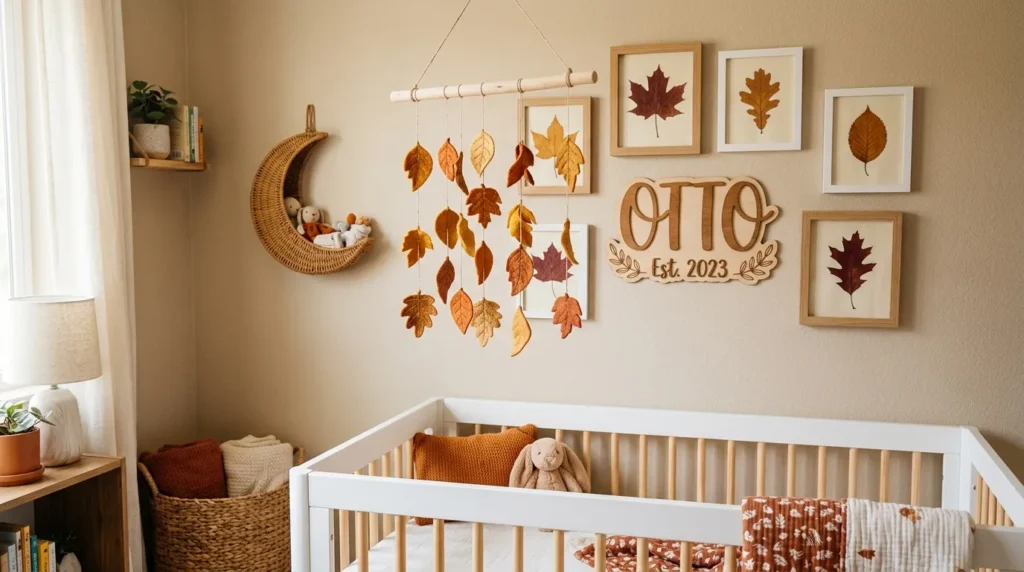
What are some DIY fall nursery decor ideas for a personalized touch?
Handmade elements give a nursery a warmth that no store-bought item can fully replicate. They also let you control exactly what materials are used helpful when non-toxic choices matter most.
DIY ideas that suit a fall theme:
- Felt leaf mobile: Cut felt leaves in amber, rust, and gold, attach to a wooden dowel with natural twine
- Pressed leaf wall art: Collect and press real autumn leaves, frame them under glass
- Personalized name sign: Wooden letters painted in warm tones and mounted above the crib
- Family photo gallery: Print favorite family photos and frame them in matching warm wood frames
The key with DIY is finish quality. Ensure all paints, adhesives, and sealants used are certified non-toxic and fully cured before the baby comes home.
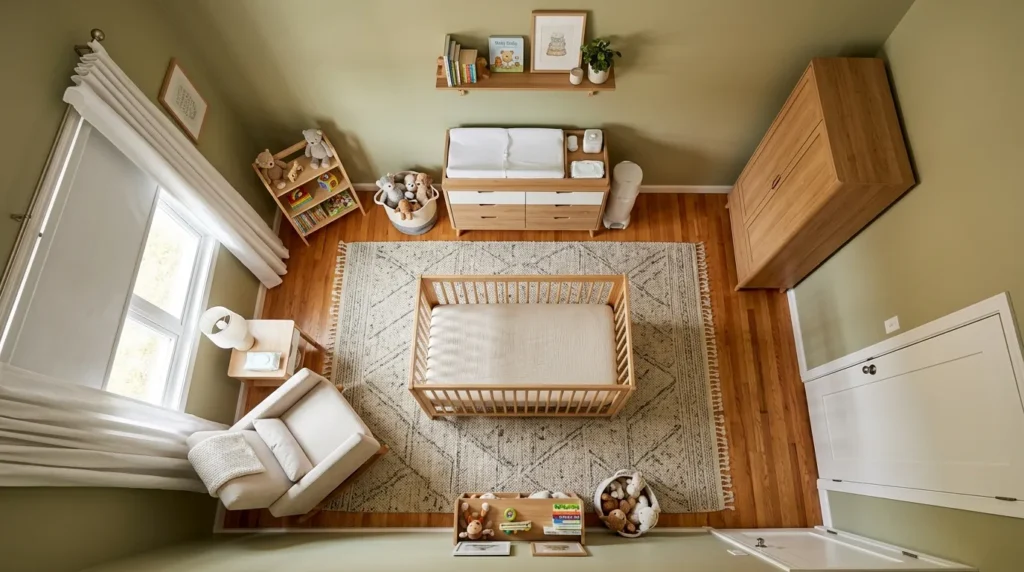
What does a fall nursery safety checklist include?
Design choices and safety standards must coexist and in a nursery, safety always wins. A beautiful space means nothing if it poses risk to a newborn.
Key safety checks for a fall nursery:
- Crib compliance: Ensure the crib meets current CPSC safety standards (slatted cribs with no more than 2⅜ inches between slats)
- Non-toxic paint: Use paints certified as low-VOC or zero-VOC on all surfaces
- Decor placement: Keep all dried florals, frames, and small objects well above crib height
- Furniture anchoring: Anchor dressers, shelves, and wardrobes to the wall to prevent tip-overs
- Rug safety: Non-slip backing on all rugs
- Window treatments: Cordless blinds or curtains looped cords are a serious strangulation hazard
Run through this checklist before the baby’s arrival, then repeat it as your baby becomes mobile.
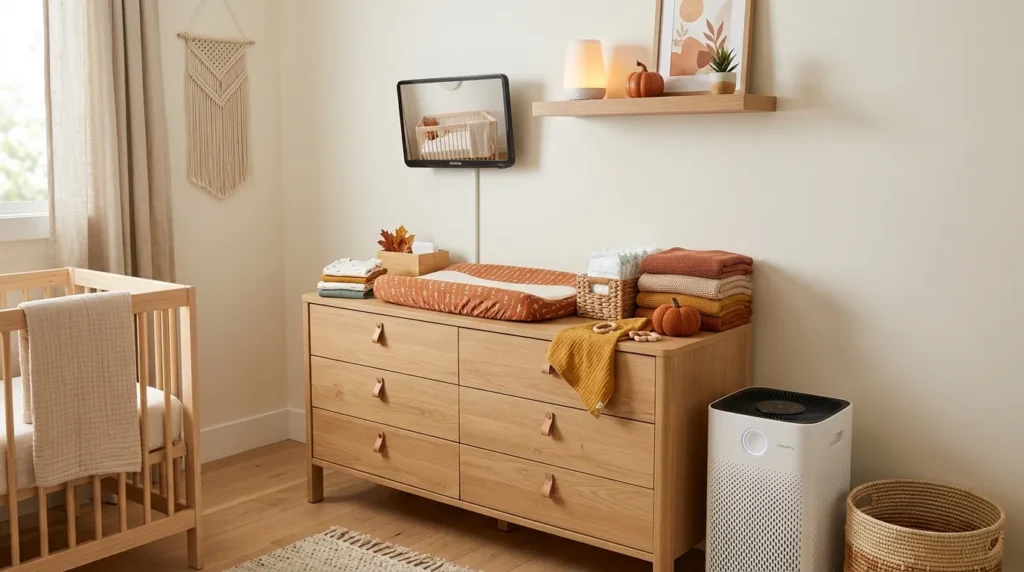
How can smart nursery technology enhance a fall-themed baby room?
Technology in a nursery doesn’t have to be clinical or out of place. When chosen thoughtfully, smart devices blend into the aesthetic while making life meaningfully easier.
Recommended nursery tech:
- Smart sound machines: Devices like the Hatch Rest 2nd Gen offer nature soundsrainfall, forest ambiance that pair naturally with a fall theme and can be controlled via app without entering the room
- Air purifiers with HEPA filtration: Brands like Coway and Dyson offer compact units that reduce allergens and VOC exposure worth prioritizing in a freshly painted or newly furnished room
- Smart video monitors: Allow real-time visual monitoring without repeated room entries that disturb sleep
- Smart bulbs: Philips Hue or similar smart bulbs allow precise color temperature and brightness control via phone
Keep all tech cables managed and hidden. Power strips and loose wiring pose both electrical and entanglement risks.
What eco-friendly and sustainable choices work well in a fall nursery?
Sustainability and safety overlap significantly in nursery design. Products made from natural, renewable materials tend to have fewer synthetic chemicals a genuine benefit in a space where a newborn will spend most of their time.
Eco-conscious choices for a fall nursery:
- GREENGUARD Gold-certified furniture: This certification confirms that products meet strict chemical emission standards for children’s environments
- FSC-certified wood: Furniture made from Forest Stewardship Council-certified timber supports responsible forestry
- Organic cotton and wool textiles: Look for GOTS certification
- Recycled or upcycled decor: Vintage wicker baskets, secondhand wooden frames, and preloved furniture reduce waste and add genuine character
- LED lighting: Uses up to 75% less energy than incandescent bulbs, according to the U.S. Department of Energy
Sustainable choices also tend to be more durable meaning they last longer and need replacing less often.
How do you design a fall nursery that grows with your child?
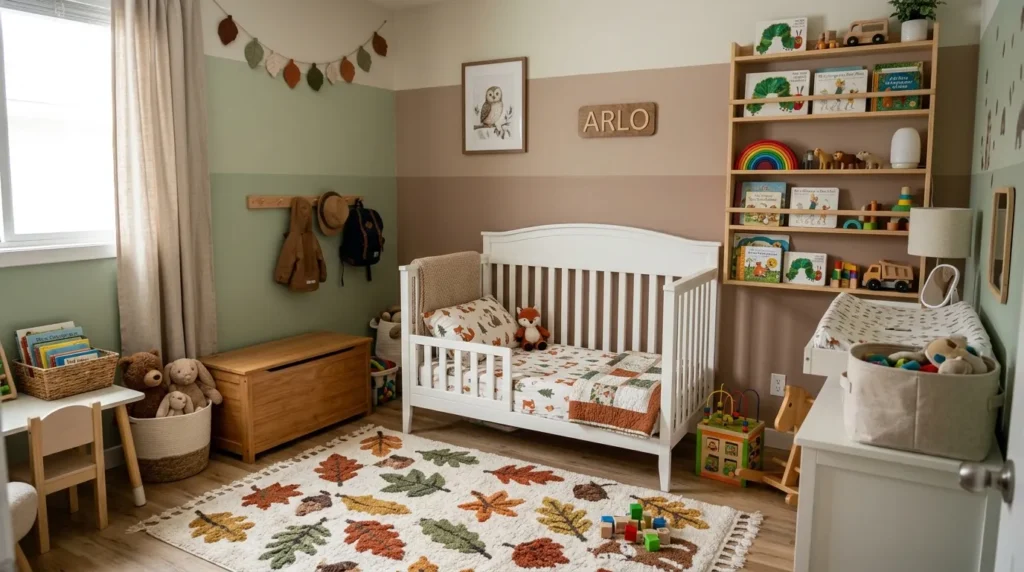
The best nursery investments are the ones that don’t become obsolete by age two. Versatile, convertible design choices protect your budget and reduce waste.
Design decisions that stand the test of time:
- Convertible cribs: Models that convert to toddler beds and then full-size beds are widely available from brands like Babyletto and DaVinci
- Timeless color palettes: Warm neutrals and earthy tones grow with a child far better than highly themed or novelty-specific designs
- Open shelving: Adapts easily as storage needs shift from diapers and burp cloths to books and small toys
- Removable wall decals: Allow the theme to evolve without repainting
- Quality rugs: A good-quality rug ages well and works in a toddler room just as comfortably as a nursery
The fall aesthetic grounded, warm, and natural happens to age beautifully. It’s a theme rooted in nature and texture, not in cartoon characters or novelty prints, which means it remains relevant far longer.
Your Perfect Autumn Nursery Starts Here
A fall nursery done well balances three things: beauty, function, and safety. The color palette grounds the room emotionally. The textures make it feel inviting. The storage keeps it livable. And the safety standards give you the peace of mind to actually enjoy it.
Start with the elements that matter most to you whether that’s finding the perfect organic crib sheet or sourcing a sustainably made dresser and build outward from there. You don’t need to implement every idea on this list. A few well-chosen pieces, thoughtfully arranged, will always feel more considered than a room that tries to do everything at once.
Autumn is a season of abundance and warmth. Your nursery can be exactly that too.
Frequently Asked Questions
What colors are best for a fall baby nursery?
Warm neutrals like creamy white and beige work best as base colors, with burnt orange, terracotta, forest green, and golden yellow used as accents. These tones create a calm, visually cohesive environment without overstimulating a newborn’s developing visual system.
What materials are safest for a baby nursery?
Look for GOTS-certified organic cotton for textiles, GREENGUARD Gold-certified furniture, and low-VOC or zero-VOC paints. These certifications confirm that products meet strict safety and chemical emission standards for infant environments.
How can I make a nursery feel cozy without using unsafe items in the crib?
Use cozy textures knitted blankets, velvet cushions, faux sheepskin rugs as display and seating elements outside the crib. The sleep space itself should contain only a firm, flat mattress and a fitted sheet. All soft furnishings should be used in the feeding chair area or for decor only.
What lighting is best for a baby’s nursery?
Warm-white dimmable bulbs between 2700K and 3000K are ideal. Dim lighting during evening feeds and nighttime changes helps protect the baby’s melatonin production and supports healthier sleep patterns. Avoid cool-white or blue-spectrum lighting in the nursery at night.
How do I choose nursery decor that will last beyond the baby years?
Prioritize convertible furniture, timeless color palettes, and nature-inspired motifs over novelty themes. Warm earthy tones and natural materials age gracefully and remain suitable as a child grows from infant to toddler to school-age.
Is a fall nursery theme suitable for babies born in any season?
Absolutely. A fall nursery is about warmth, texture, and natural tones not a literal celebration of the season. These design principles create a nurturing environment year-round, regardless of when your baby was born.


