The room was fine. That was the problem. White walls, a new flat pack bed, a plastic storage unit in bright pink, and nothing on the walls except a clock we had bought in a hurry. My daughter slept there happily enough, but the room felt like a waiting room. It had no softness, no story, nothing that looked like it had been loved for years.
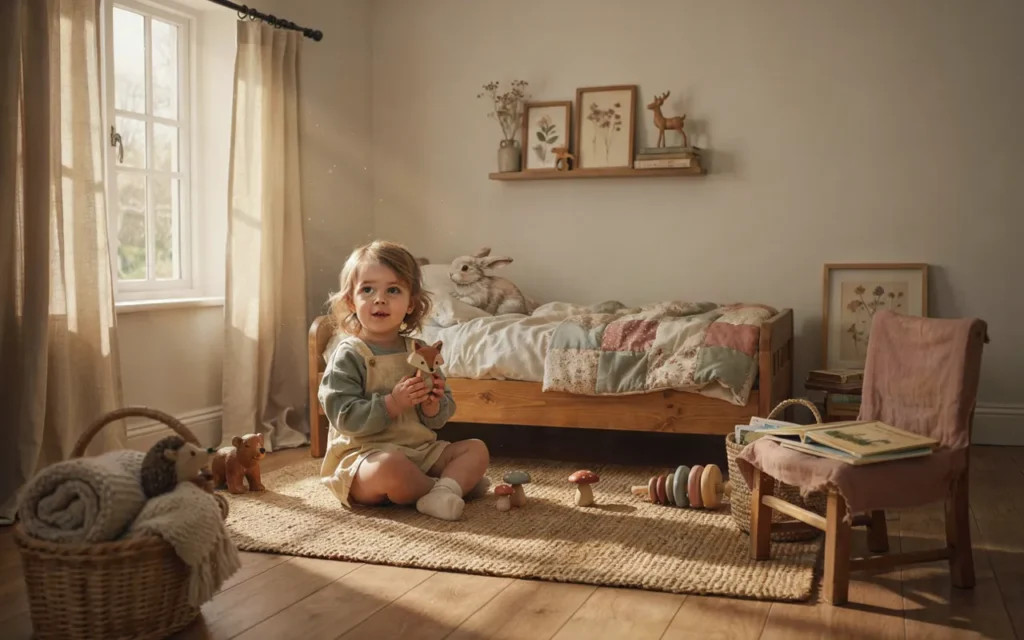
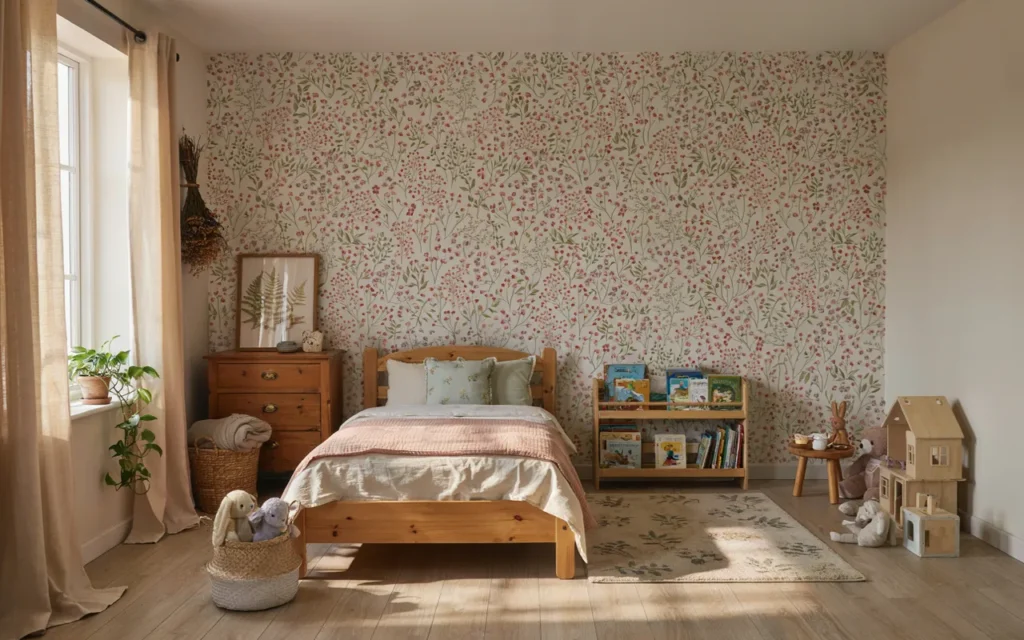
I wanted our cottagecore toddler girl room to feel like a cottage garden had wandered indoors, the kind of room where a little girl could read under a quilt and line up wooden animals on a windowsill. I did not want to buy everything in one weekend, and I did not want it to look like a shop display.
So we did it in seven steps, one at a time, over several weekends, and the room grew into itself slowly. That slow pace turned out to be the whole secret. A cottagecore toddler girl room should feel collected over time, not ordered in one go.
This makeover diary follows the exact order we used. Each step tells you what to do, how much effort it really takes, and what to avoid. The idea to hold in your mind is cottagecore toddler girl room: vintage florals, gingham, beadboard, thrifted furniture, linen bedding, soft pastels with sage and dusty rose, and handmade touches that make the room feel personal. If your room also feels too new and too plain right now, start with step one. It costs almost nothing, and it changes how every later decision feels.
Step 1: Clear the Room and See What You Already Have
Before you buy a single thing, empty the room as far as you can. Take everything out except the bed and the biggest piece of furniture, then stand in the doorway and look. Most toddler rooms are fuller than they look, and most of the clutter is not furniture at all. It is the pile of outgrown clothes on the chair, the broken crayons at the bottom of a toy box, the three half finished puzzles, and the gifts that never found a home. Clearing all of it out is the least glamorous step, and it is the one that makes every other step work.
Sort into four piles on the landing: keep, donate, store for a younger child, and throw away. Be honest about the keep pile. A toddler plays with a small number of toys again and again, and the rest mostly sits there looking busy. We kept her favourite books, her wooden blocks, her dolls, and one basket of dress up clothes.
Everything else went into bags for donation or into a labelled box in the loft. The room instantly felt bigger, and I could finally see the walls, the window, and the floor. That matters more than it sounds, because cottagecore rooms rely on breathing space. A crowded room cannot feel calm, no matter how pretty the wallpaper is.
While the room is empty, measure it properly. Write down the length of each wall, the height of the ceiling, and the width of the window, plus the size of the bed and the dresser. A tape measure and a notebook save more money than any sale ever will, because they stop you buying a dresser that blocks a drawer or a rug that swallows the whole floor. Note where the light falls in the morning. The sunny corner is where the reading nook wants to live.
Now look at what you already own with fresh eyes. An old wooden chair from a grandparent, a plain white dresser, a basket you forgot you had, a quilt folded at the bottom of a cupboard: these are the bones of a cottagecore room.
A plain dresser can be painted. A tired chair can be sanded and waxed. A basket can hold books by the bed.
Write a short list of what you already have that fits the look, and a second list of what is genuinely missing. That second list is your shopping list, and it should be short. If it runs to twenty items, you have not cleared enough yet.
What should you remove first from a toddler room before a makeover?
Remove the visual noise first, not the furniture. Broken toys, outgrown clothes, duplicate items, and anything plastic and bright that shouts across the room. Once the small clutter is gone, you can judge the furniture honestly. A surprising number of rooms need nothing new at the large scale. They need fewer things, better placed, with space around them. If a piece of furniture does not earn its floor space, move it out for a week and see if anyone misses it. Usually nobody does.
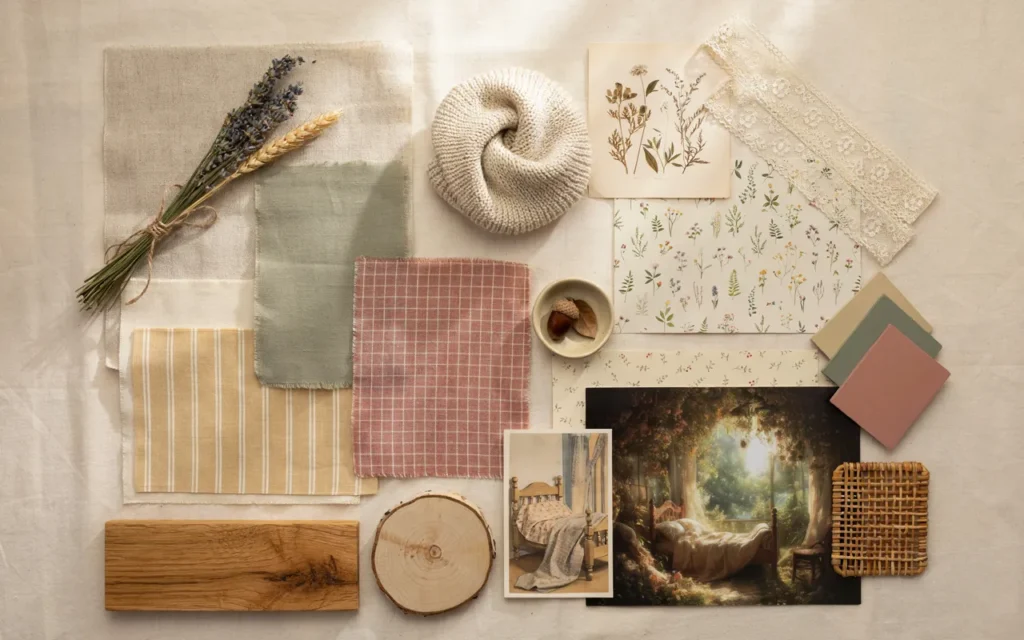
A cottagecore toddler girl room makeover works best in seven steps: clear the room, paint and add beadboard, choose a low wooden bed with linen bedding, layer florals and pattern, add thrifted vintage finds, hide the mess with pretty storage, then finish with soft lighting and handmade touches. Work slowly, buy second hand where you can, and let the room feel collected over time rather than bought in one trip.
Step 2: Paint the Walls and Add Beadboard
Paint is the biggest change for the smallest spend, and in a cottagecore room it does two jobs at once. It sets the mood, and it gives every later layer something soft to sit against.
We painted three walls a warm cream, the kind that looks like milk with a drop of honey in it, and kept the fourth wall for pattern later. Cream sounds boring on a paint chart, but on a wall it is the difference between a room that feels cold and a room that feels like late afternoon sun.
If cream feels too plain for you, soft sage is the other safe choice. Sage sits beautifully with dusty rose bedding, with wood tones, and with the green in botanical prints. It also hides small scuffs better than white, which matters in a toddler room.
Choose a paint finish you can wipe. Toddlers touch walls with sticky hands and lean toy prams against skirting boards, so a scrubbable matt or a soft eggshell finish will save you repainting in six months. Buy a small tester pot first and paint a square on two different walls, then wait two days before you judge it. Colours change completely between morning light and lamplight, and a sage that looks fresh at noon can look grey and dull at bedtime.
Beadboard is what turns painted walls into cottage walls. It is narrow vertical panelling, fitted on the lower half or lower third of a wall, with a small ledge or rail along the top edge.
In a toddler room it is practical as well as pretty, because the lower half of the wall is exactly where toy prams and shoes do their damage. Painted beadboard takes the knocks and wipes clean, and it gives the room that old cottage feeling instantly.
Fit it on the wall behind the bed, or around the whole room if your budget allows. Keep the height low, around 80 to 90 centimetres, so the room still feels tall and light above it. Paint it the same cream as the walls for a quiet look, or paint it a soft sage with cream above for a gentle contrast.
Which paint colours work best in a cottagecore toddler girl room?
Warm cream, soft sage, dusty rose, and pale butter yellow are the colours that keep coming up, and they keep coming up because they work. They are gentle on the eyes at bedtime, they suit wooden furniture, and they let floral patterns shine without fighting them.
Pick one main wall colour and one accent, then let bedding and curtains carry the rest of the colour. If you love pink, choose dusty rose rather than bright pink.
It reads as vintage, it photographs softly, and it will still suit your daughter when she is five and has strong opinions about her room. For more ideas on how these shades behave in real rooms, have a look at the colour combinations in these interior colour trends for cozy homes, and borrow the pairings that feel calm rather than loud.

Step 3: Choose the Bed and Dress It in Linen
The bed is the heart of this room, and it deserves more thought than anything else you buy. A toddler bed should be low to the floor, solid, and simple. Low matters because a two or three year old climbs in and out alone, sometimes in the dark, sometimes half asleep.
A low wooden bed with a small guard rail is safer and kinder than a tall bed with a ladder of cushions piled beside it. Look for solid wood rather than thin flat pack panels if you can. Second hand wooden beds are often better made than new budget ones, and a quick sand and a coat of paint make them look new again.
A white or cream painted frame keeps the room light. A natural pine frame brings warmth. Either works, so choose the one that suits the dresser you already have.
Size is worth a careful thought. A standard toddler bed, around 140 centimetres long, suits a small room and leaves space for play. A small single bed, around 190 centimetres long, costs more floor space but lasts for years longer. Measure the space with tape on the floor first, and leave at least 60 centimetres clear on one long side so you can sit beside the bed for stories.
Bedding is where linen earns its place. Linen and cotton bedding breathes, softens with every wash, and looks gently rumpled in exactly the way cottagecore likes. A linen duvet cover in dusty rose, sage, or a small vintage floral will do more for the room than any wall decoration. Layer it simply: a fitted sheet, a light duvet, and a folded quilt or crochet blanket across the foot of the bed. Add one pillow for sleeping and one small cushion for decoration.
Gingham earns its keep here too. A gingham pillowcase or a small gingham throw in soft pink or sage adds a cottage pattern without shouting. Mix it with the floral duvet carefully: one floral, one small check, and the rest plain.
That ratio keeps the bed looking collected rather than busy. If you are unsure, lay the pieces on the bed together before you wash them, and take one thing away.
The right amount of pattern feels like one item less than you first chose. Pillow and bedding choices are easier when you know how patterns sit together, so the advice on mixing and matching throw pillows is worth a read before you buy a set of cushions you do not need.
Should a toddler bed be low to the floor?
Yes, and this is one of the few firm rules in the whole makeover. A low bed means safer climbs in and out, easier story time on the edge of the mattress, and a calmer look in a small room.
A high bed dominates the space and makes everything else feel small. If you already own a taller bed, a firm step stool beside it and a soft rug underneath help, but a low wooden bed is the better starting point if you are buying fresh. Keep the space under the bed clear or use a single flat storage box for spare bedding. Anything more becomes a hiding place for lost toys.
Effort for this step: a day of shopping or thrifting, plus an afternoon to assemble and dress the bed. Cost: the bed is the biggest single spend in this makeover, which is why second hand is worth the hunt. What to avoid: a themed bed shaped like a carriage or a castle. It looks magical for a month and dates the room fast, and it fights with every other piece you add. A plain wooden bed lets the florals, the linen, and the vintage finds do the talking, and it will still look right when your daughter is six.
Step 4: Layer Florals and Pattern in a Cottagecore Toddler Girl Room, One Wall at a Time
This is the step everyone pictures when they think of cottagecore, and it is the step where most rooms go wrong. The mistake is adding pattern everywhere at once: floral wallpaper, floral bedding, floral curtains, floral cushions, and a floral rug, until the room buzzes. The fix is simple. Choose one hero pattern, then let everything else support it quietly.
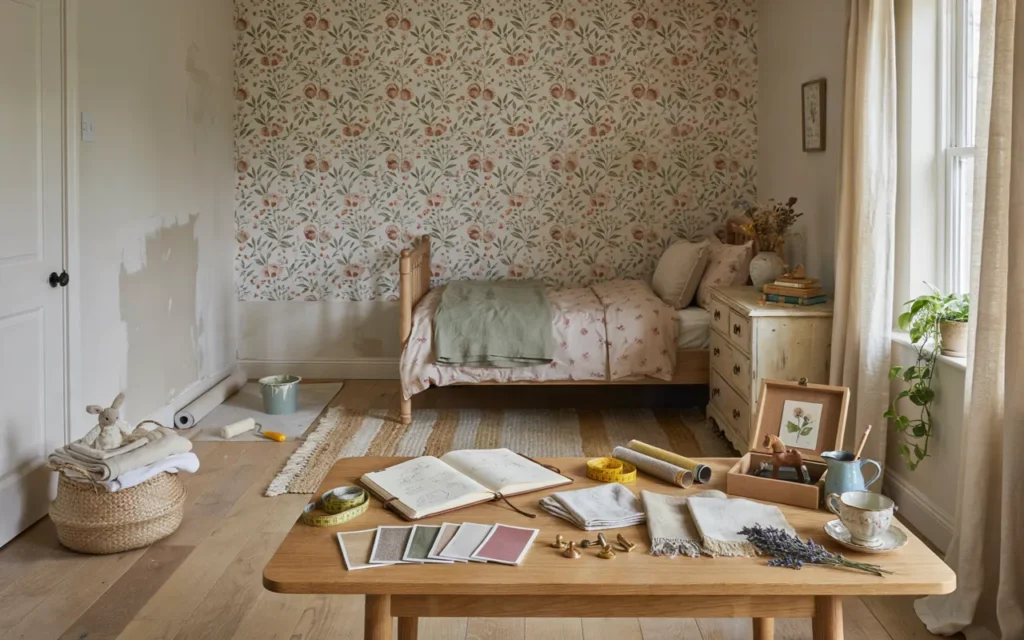
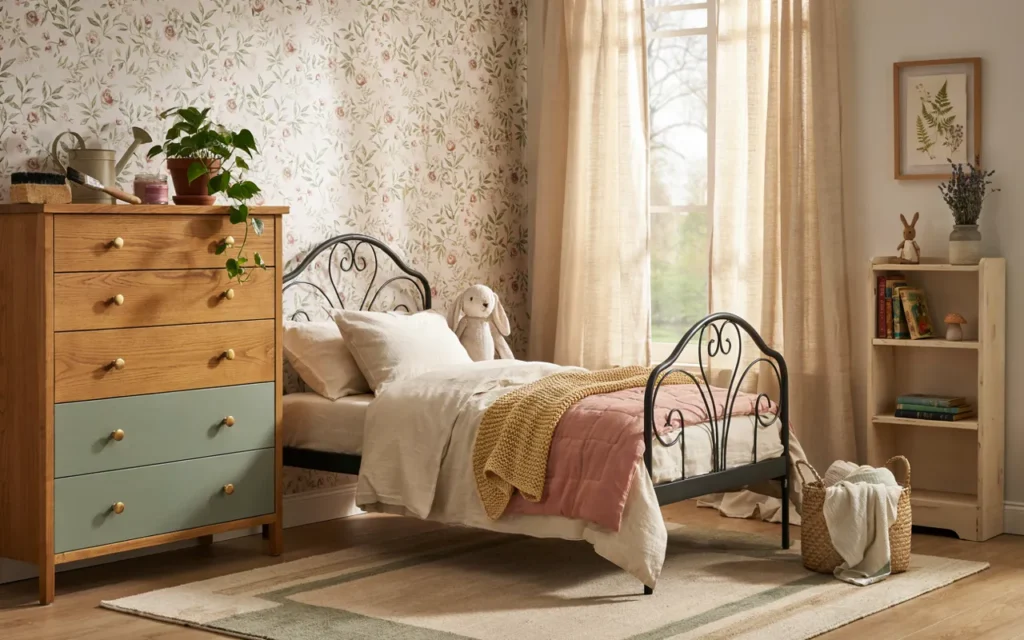
In our room the hero was the wallpaper on the wall behind the bed, a small scale botanical print with soft pink roses, sage leaves, and cream space between the stems. Small scale matters. Large bold flowers suit an adult bedroom. In a toddler room, small delicate prints feel gentle and vintage, and they do not overwhelm a small wall.
Peel and stick wallpaper is the friend of this step. It goes up without paste, it forgives a wobbly first strip, and it comes down without tearing the wall if you change your mind in a year or two. Measure the wall, add ten percent extra for pattern matching and mistakes, and order all your rolls from the same batch. Hang it on one wall only, the wall behind the bed or the wall you see first from the door. One patterned wall gives the room its cottagecore identity. Four patterned walls give it a headache.
Once the wallpaper is up, build the pattern layers slowly. The bedding can carry a second floral, but make it smaller and quieter than the wallpaper, or choose a plain linen duvet and let a floral cushion do the work. Curtains should be the calmest layer of all: plain linen or a tiny gingham in a soft tone, hung high and a little wide so the window looks generous.
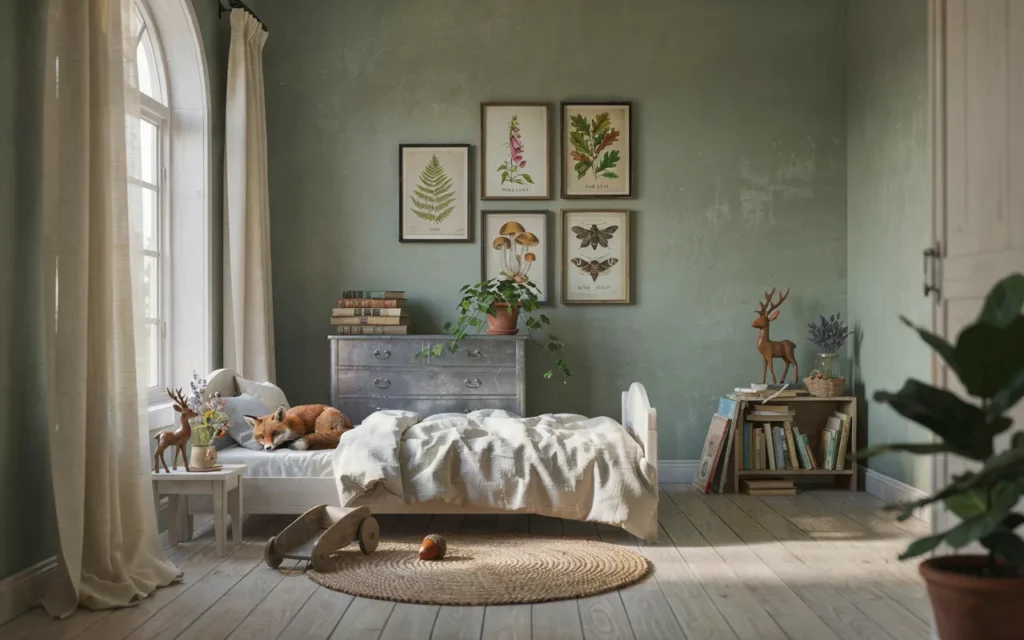
Artwork is the last pattern layer. Frame old botanical prints, pages from an antique flower book, or pressed flowers from your own garden in simple wooden frames, and hang two or three small frames together above the dresser. A small group feels collected, like pictures gathered over years. If you want more wallpaper inspiration before you choose, these wallpaper designs to transform a nursery show how a single patterned wall can carry a whole room.
How much floral pattern is too much in a small toddler room?
Count your patterns on one hand. One hero floral on the wall, one supporting floral or check on the bed, and plain textures everywhere else is the safe recipe. If you can spot more than three patterns when you stand in the doorway, take one away and live with the room for a week. You will rarely miss the thing you removed. The plain spaces are not empty. They are the breathing room that lets the florals look special instead of noisy.
Effort for this step: one afternoon for a peel and stick accent wall, plus an evening to hang curtains and frames. Cost: wallpaper is a medium spend, curtains and frames can be low if you thrift them. What to avoid: wallpapering all four walls, mixing two large florals that fight each other, and buying curtains before you measure the window drop. Measure from the curtain rod to the sill or the floor, and add a few extra centimetres so the fabric pools slightly or just kisses the sill. Short curtains that stop halfway look unfinished, and they are the first thing your eye notices.
Step 5: Hunt for Vintage Finds and Thrifted Treasures
No cottagecore room is complete without old things, and this is the step that gives the room its soul. Thrifted and antique furniture carries marks of use, a soft patina, and shapes you simply cannot buy new at a fair price.
A small wooden dresser with dovetailed drawers, a rocking chair with a worn arm, a bookshelf with a slightly wobbly shelf that still holds books perfectly well: these are the pieces that make a room feel like it has a history.
We found our dresser at a local charity shop for less than the cost of a new flat pack chest, and it is the sturdiest piece of furniture in the house. It needed a clean, a sand, and two coats of chalk paint in dusty rose, and then it looked like it had always belonged in that room.
Shop slowly and shop with a list. The list from step one tells you what is missing, and it stops you buying a beautiful but useless item that ends up in the hallway. Good hunting grounds are charity shops, flea markets, estate sales, and local selling groups. When you find a piece you like, check it properly before you pay. Open every drawer, rock it gently to test for wobble, and look underneath for woodworm holes or damp. Solid wood can be repaired, sanded, and painted. Thin veneer that is peeling badly, and particle board that has swollen with damp, usually cannot.
Safety comes first with anything vintage, and this is not a place to cut corners. Older furniture can carry lead paint, so test any piece painted before the late seventies, or strip it fully and repaint it with a modern child safe paint.
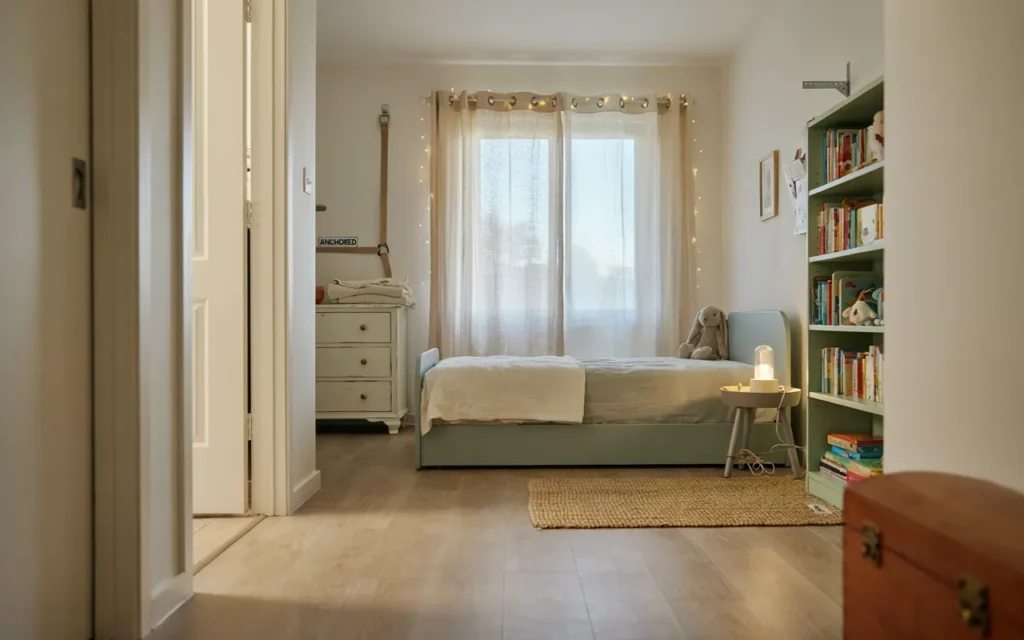
Check that handles are fixed firmly and that nothing small can be pulled off and swallowed. Anchor every tall piece to the wall with proper furniture straps, because toddlers climb, and a dresser that feels solid to you can still tip when a determined three year old uses the drawers as stairs.
Keep any small decorative objects out of reach, and place precious heirlooms on high shelves. For a wider set of girl room ideas to borrow from, these kids bedroom ideas for girls show how vintage pieces sit alongside newer furniture without clashing.
Where do you find good vintage furniture for a toddler room?
Charity shops and flea markets are the best starting points, because you can touch the piece and check it properly. Local selling groups are next, and they often have solid wood dressers and bookshelves at low prices from people clearing a house. Estate sales are worth a visit when one is nearby, because whole rooms of old furniture are sold together and the quality is often high. Whatever the source, take your tape measure and your room measurements with you. A beautiful dresser that does not fit through the door, or blocks a drawer when the bed is in place, is not a bargain at any price.
Effort for this step: spread over several weekends, because good thrifting cannot be rushed. Cost: usually low to medium per piece, and often far less than buying new. What to avoid: buying a piece because it is cheap rather than because it fits your list, skipping the safety checks, and painting over beautiful old wood that only needed a clean and a wax. Some pieces are better left in their natural timber, with their scratches and marks telling their own story.

Step 6: Build Storage That Hides the Mess
A toddler room is a working room, and no amount of floral wallpaper will help if you cannot find the floor. Storage is the step that keeps the cottagecore calm intact on ordinary days, when toys are everywhere and bedtime is ten minutes away. The trick is to make tidying easy for a small child. Low open shelves, baskets she can carry, and boxes she can open herself will be used every day. Tall cupboards with fiddly latches will not, and they will become your job instead of hers.
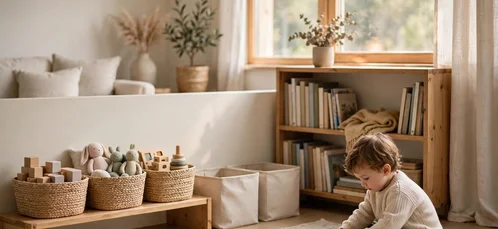
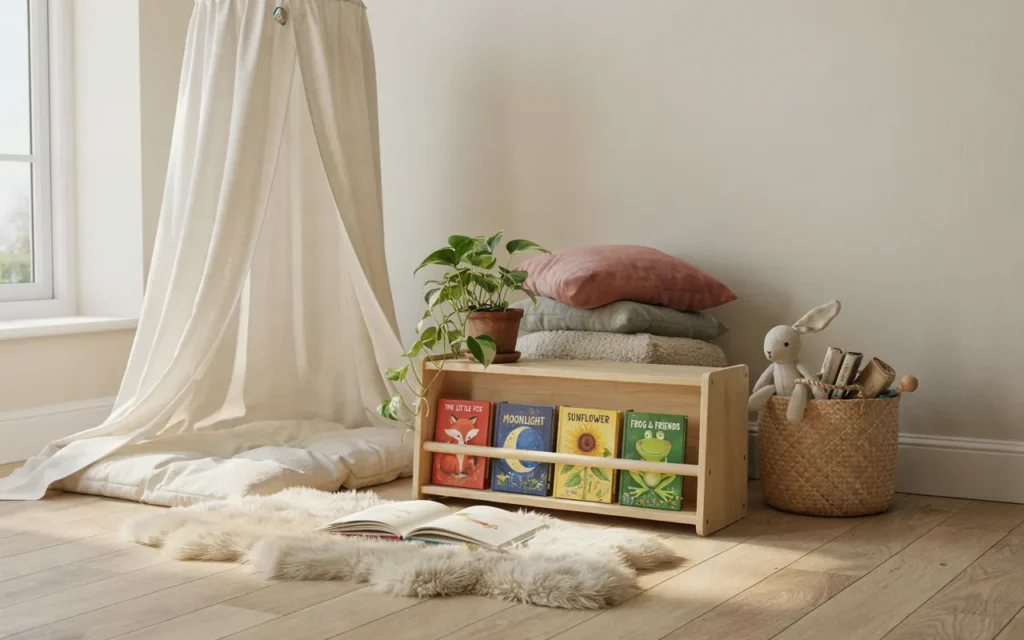
Start with the reading corner, because books are the mess that spreads fastest. A low forward facing bookshelf, with the covers facing out, lets her choose a book by its picture and put it back in the right slot. Place it near the bed or near the reading nook, not across the room where the books will be carried and dropped halfway. Add a soft rug underneath and a cushion or two, and you have a reading nook that costs almost nothing extra. For more small room storage tricks that translate neatly into a cottagecore scheme, see these toddler room ideas for boys and girls.
How do you keep a toddler room tidy without plastic storage boxes?
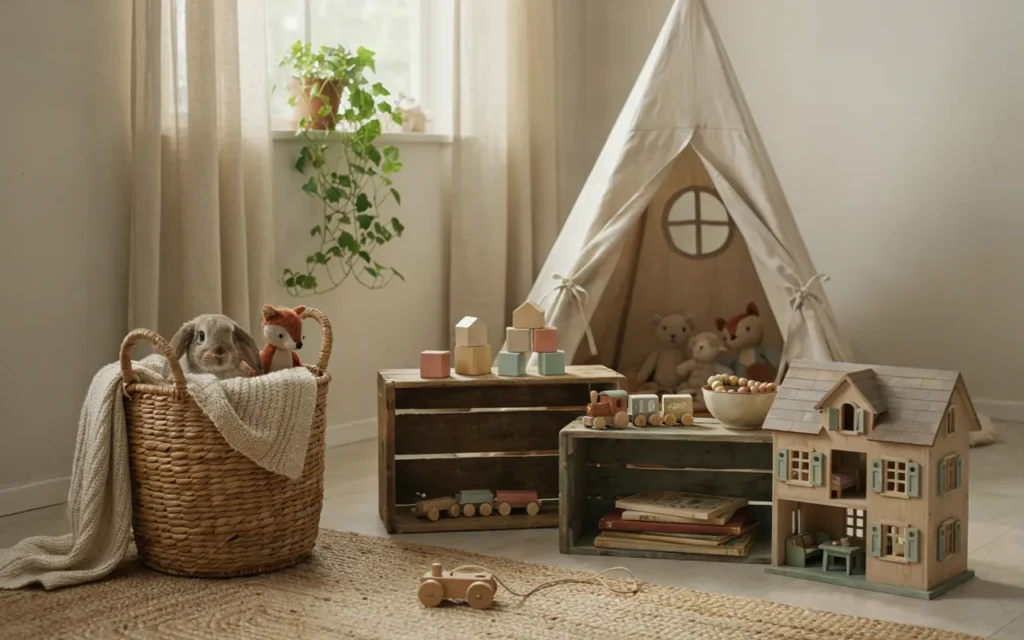
Use fewer, bigger containers and give everything a visible home. One basket for dolls, one for books, one for blocks, and one for dress up is enough. When a basket is full, something has to leave before something new goes in, and that rule keeps the room from slowly filling up again. Tidy together for five minutes before bed, every night, and make it a game rather than a chore. A room that is tidied little and often stays a cottagecore room.
Effort for this step: an afternoon to set up shelves and baskets, then five minutes a night to keep it working. Cost: low, especially if you use crates and baskets you already own. What to avoid: buying storage before you know what needs storing, choosing baskets too heavy for a toddler to carry, and hiding everything behind closed doors so she cannot find her own toys. Storage that a child cannot use is just furniture, and it will not keep the room tidy.
Step 7: Lighting and the Finishing Touches That Make It Hers
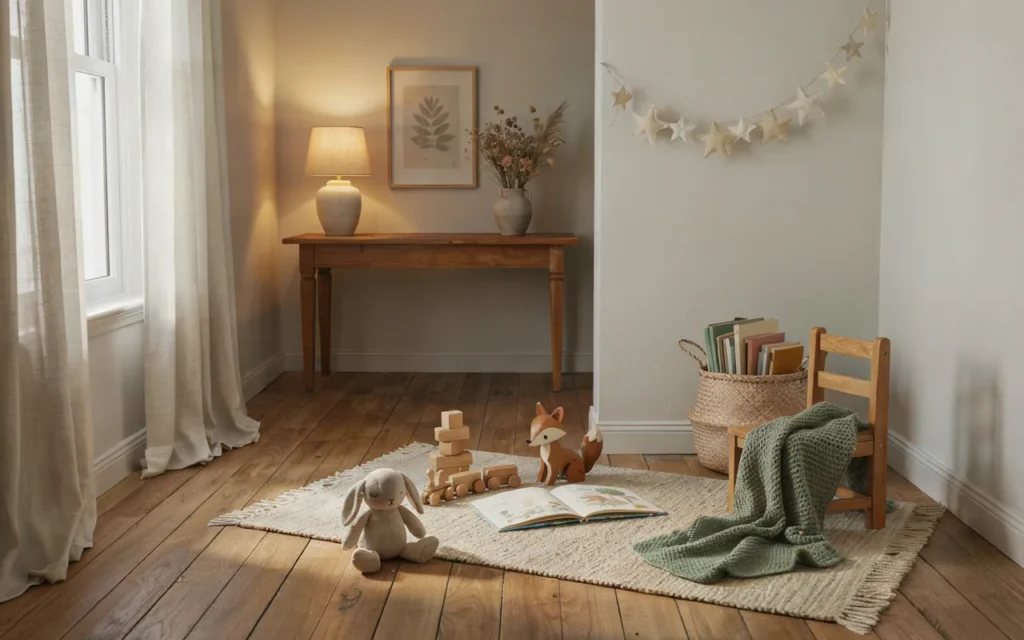
Lighting is the last big step, and it changes the room more at night than any other change does during the day. Harsh overhead light flattens a cottagecore room and makes every colour look cold. Soft light does the opposite. It warms the sage and the rose, it makes the linen look softer, and it turns bedtime into something gentle rather than something to rush through.
Start by using the daylight well. Linen or sheer curtains that let the sun filter through will make the room glow in the morning, and they are kinder on the eyes than heavy blackout curtains pulled shut all day. Keep a blackout blind behind them for naps if you need it, but let the sheer layer do the daytime work.
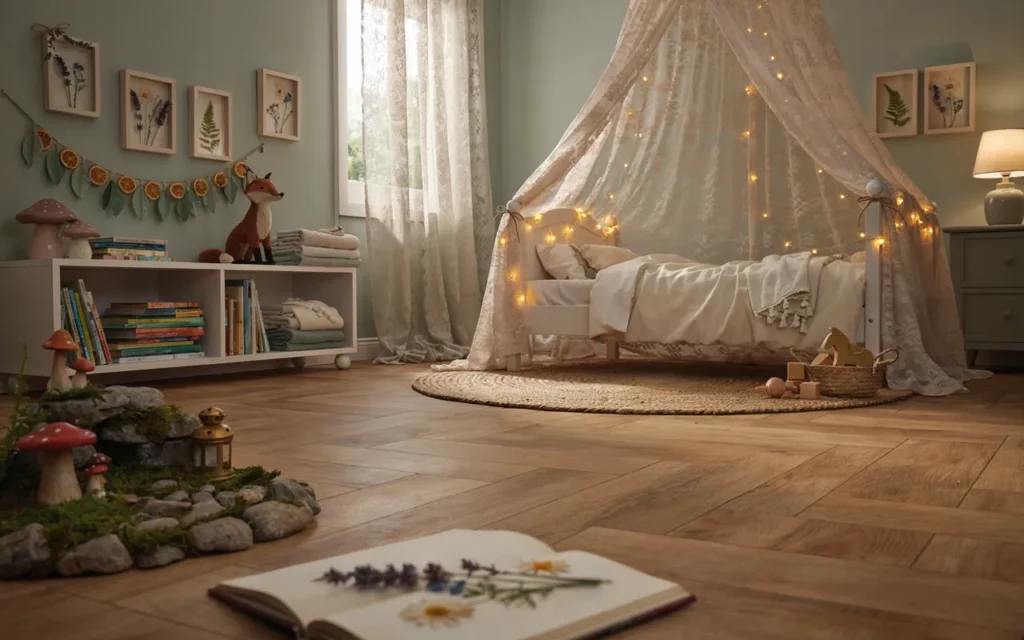
For evenings, use two or three small warm lights instead of one big one. A table lamp with a fabric shade on the dresser gives a soft pool of light for stories, and a small night light near the bed helps a toddler who wakes in the dark. Fairy lights woven around a bed frame add a firefly feeling, but keep them firmly fixed, keep the cord out of reach, and choose battery lights with a timer. Check the bulbs are warm white rather than cool white, which looks blue and modern and fights the vintage feeling.
Handmade touches are the final layer, and they are what make the room hers rather than a copy of a picture online. Press flowers from your garden and frame them. Sew a small bunting in gingham or floral fabric and hang it above the bed. Frame her own paintings in proper frames, at her eye height, so she can see them every day. A quilt made by a relative, a cushion embroidered with her initial, a silver rattle on a high shelf: these are the pieces that carry family history, and they are the pieces she will remember when she is older.
Before you call the room finished, do a slow walk through at her height. Crouch down to toddler level and look at the room the way she sees it. Can she reach her books and see her pictures? Is anything sharp or wobbly within grabbing distance? Is the path from the door to the bed clear in the dark? Fix what you find, then stand in the doorway and look. The room should feel soft, a little bit old, and full of small things to discover, without feeling crowded.
What handmade touches suit a cottagecore toddler room best?
The best handmade touches are the simple ones you actually make or choose together. Pressed flowers, a fabric bunting, a crochet blanket, a framed painting, a hand stitched cushion. Choose things with a story behind them, even a small one, like flowers from a walk you took together, or a blanket a grandparent made. Those stories are what make the room feel personal, and they are what turn a decorated room into a room that belongs to your daughter.
Effort for this step: an evening for lighting, and a few small craft sessions for the handmade touches. Cost: low, because lamps can be thrifted and handmade touches are often made from things you already have. What to avoid: fairy lights with loose cords, cool white bulbs, and adding so many finishing touches that the room tips back into clutter. Stop when the room feels finished, not when you run out of ideas.
Where to Spend, Where to Save, and Where to Thrift
A makeover diary is only useful if it is honest about money, so here is the simple rule we used. Spend on the things your daughter touches every day and the things that keep her safe. Save on the things that are only decoration. Thrift the things that look better old than new. The table below sets out that split in plain terms, so you can plan your own budget around the same idea.
| Item | Best approach | Why |
|---|---|---|
| Bed and mattress | Spend | She sleeps here every night, and safety and comfort matter most |
| Paint | Spend | Good scrubbable paint survives toddler hands and wipes clean |
| Bedding, linen and cotton | Spend | Natural fibres breathe, soften with washing, and last for years |
| Peel and stick wallpaper | Spend or save | One accent wall is worth good quality paper, the rest can wait |
| Dresser and bookshelf | Thrift | Solid wood second hand is sturdier and cheaper than new flat pack |
| Frames, baskets and jugs | Thrift | Old pieces carry the patina that makes cottagecore feel real |
| Curtains | Save | Plain linen or gingham works well, and simple styles cost little |
| Lighting | Save or thrift | A second hand lamp with a new shade looks lovely and costs little |
| Handmade touches | Save | Pressed flowers, bunting and framed paintings cost almost nothing |
Typical total costs vary so much by region and by how much you thrift that a single number would mislead you. As a rough guide, most families doing this in the same slow way spend the most on the bed and the paint, a moderate amount on bedding and wallpaper, and very little on everything else. If money is tight, do steps one, two, and three now, and let steps four to seven wait for birthdays, market trips, and quiet weekends.
The Room That Grows With Her: Your First Step Plan
This room is not a project with a finish line. It is a room that should grow with your daughter, from toddler beds and picture books to a bigger bed, a desk, and chapter books, without needing to start again.
The choices in this diary were made with that in mind. A plain wooden bed can move to a bigger mattress. A cream wall can take a new poster. A dresser painted dusty rose can hold school clothes as easily as toddler clothes.
The beadboard, the linen, and the vintage finds will still look right in three years, and that is the real test of a makeover. If the room only works for one age, it was decoration. If it still works when she is older, it was design.
Start this weekend, and start small. Clear the room on Saturday morning, measure the walls, and write your two lists. On Sunday, buy tester pots of cream and sage and paint your test squares. That is all. No big purchase, no wallpaper order, no furniture hunt until you have lived with those test squares for two days. Then paint, then choose the bed, then add the pattern one wall at a time. Thrift slowly, store simply, light softly, and finish with the handmade touches that make the room hers.
Keep a small notebook for the room as you go. Write down paint names, measurements, and the pieces you are still hunting for, and take a photo after each step from the same spot in the doorway. Most of all, let your daughter help where she safely can. Let her choose between two cushion covers, pick the pressed flowers for her frame, and put her own books back on the low shelf. A room she helped to make is a room she will love, and a room she loves is a room she will sleep in happily.