Affordable homework station ideas work when the fit comes first and the shopping comes second. Measure your child sitting down, match the desk height to their elbows and the chair height to their feet, and then spend your $250 budget on the pieces that hold that fit.
For most families, that means a simple stable desk, an adjustable chair with back support, a lamp that lights the page without glare, and one small place for supplies to live. Get those four things right and homework starts faster, lasts longer, and causes fewer complaints about sore backs and lost pencils.
I have watched too many parents buy a pretty desk first and then wonder why their child still does homework hunched over the kitchen table. The desk looked right in the shop. It did not fit the child who had to use it every school night. That is the mistake this guide is built to prevent.
We are going to start with measurements, because they cost nothing and they save the most money. A desk that is two inches too high will bother a child every single day. A chair that leaves feet dangling will do the same. Once you know the right heights, the rest of the choices get much easier. You will know what to skip, what to look for secondhand, and where a little extra spending actually helps.
The $250 frame in this post comes from the original guide, and I am keeping it as the budget frame. It is a realistic total for a desk and a chair together, plus a lamp and a few small organizers, if you shop with a plan.
It is not a promise that every good setup costs exactly that much. Some families will spend less by reusing a table they already own. Others will spend a little more on a chair that will last through three school years. Both are fine. The point is to spend on fit, not on looks alone.
Affordable Homework Station Ideas: Start With Fit and the Size Table That Saves You a Return Trip
Forget the age label on the box for a minute. Children of the same age can be very different heights, and a tall eight year old and a short eleven year old may need the same chair.
Sit your child on a chair, feet flat on the floor, knees bent at roughly a right angle, and look at where their elbows fall. The desk surface should sit close to elbow height when they are sitting upright. If their shoulders rise up to reach the desk, it is too high. If they hunch down over it, it is too low.
The table below gives starting points by age and grade. Use it to narrow your search, then check the real child in front of you. A footrest can rescue a slightly high chair. A desk that adjusts up and down can rescue a growing child. A fixed desk cannot, so buy fixed furniture a little closer to your child’s current size, not the size you hope they reach next year.
| Age and grade | Desk height, a good starting point | Chair seat height, a good starting point | What to check before you buy |
|---|---|---|---|
| Ages 5 to 7, early primary | 20 to 23 inches | 12 to 15 inches | Feet flat, or on a footrest, with knees comfortable |
| Ages 8 to 10, upper primary | 23 to 26 inches | 14 to 17 inches | Elbows level with the desk, shoulders relaxed |
| Ages 11 to 13, middle school | 25 to 29 inches | 16 to 18 inches | Room for a laptop and an open book side by side |
| Ages 14 and up, high school and older | 28 to 30 inches | 17 to 20 inches | A standard adult desk height usually fits now |
Width matters just as much as height. A young child can work well on a desk about 32 to 40 inches wide. That is enough for a workbook, a pencil case, and a reading book.
A middle schooler or teen needs 42 to 48 inches, because homework now means a laptop plus a textbook plus notes, all open at once. Depth matters too. Aim for at least 20 inches of depth so a book does not hang off the front edge and a laptop screen does not sit too close to their eyes.
Clearance is the part people forget. Pull the chair out and sit down as if homework has started. You need room behind the chair to stand up without hitting a bed or a wall, at least 30 inches from the desk edge to whatever is behind it.
You also need knee room under the desk, roughly 24 inches of clear height and 20 inches of clear depth, so legs are not jammed against a drawer or a crossbar. Measure the wall, measure the chair swing, and only then fall in love with a desk.
If two children share a room, do this test for each child. The older one may need the taller setup, and the younger one may need a footrest and a lower chair at a shared table. Shared stations can work, but only when each child has their own chair height and their own small storage spot. Otherwise the taller child wins the setup and the younger one quietly stops using it.
Affordable desks: pick the shape that fits the room, not just the child
Once you know the height and width you need, the desk shape almost picks itself. A small bedroom calls for a different shape than a shared living room corner. A child who spreads out needs a different desk than a child who works on a laptop and puts everything away after. Here are the shapes that make sense under $250, with honest notes about where each one struggles.
Compact writing desks for small bedrooms
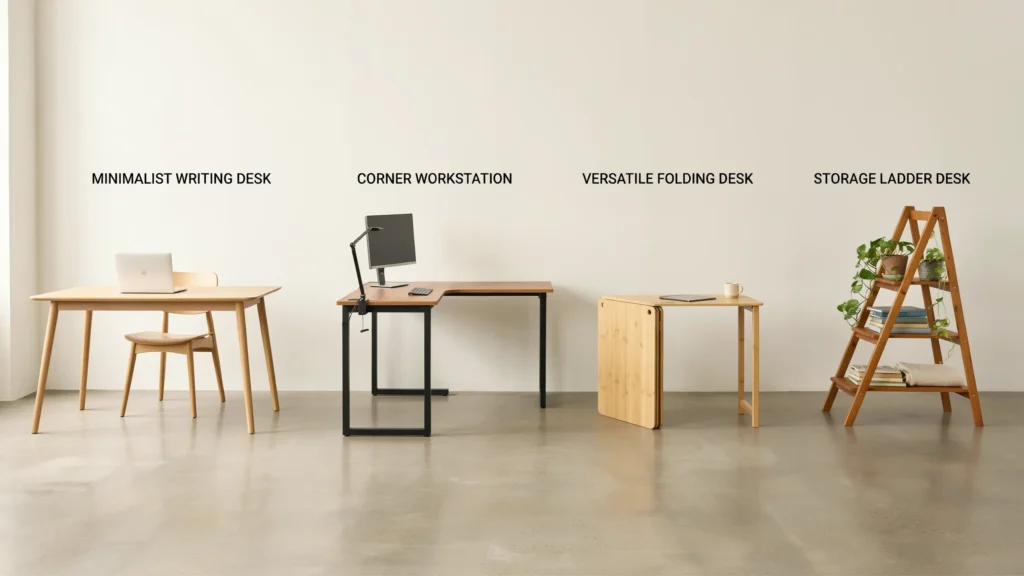
A compact writing desk is the simplest choice, and often the best one for a small room. It is a flat surface, four legs, and not much else. That simplicity is the point. There is nothing to break, nothing to dust behind, and it slides into a wall space that a bigger desk would block. For a younger child, a compact desk with one small drawer is plenty.
The limit is surface space. A compact desk can feel crowded once a teen adds a laptop, a textbook, and a notebook. If your child is in middle school or above, look for a compact desk at the wider end of the range, or pair it with a small side shelf for books so the main surface stays clear for actual work.
If you are short on floor space, small bedroom design ideas that make a tiny room feel spacious can help you place the desk so the room still feels open.
Corner desks for awkward walls and shared rooms
A corner desk turns dead space into a workstation. It gives a child two work surfaces at a right angle, one for writing and one for a laptop or books, without taking over the middle of the room. That extra surface is a real help for older students who juggle several books at once.
The catch is that a corner desk commits you to that corner. It uses two walls, so it is harder to move later, and the corner itself can become a dark spot if the lamp only lights one side.
Put the main work side on the wall with the better light, and keep the return side for storage or a second screen. Measure both walls before you order, because a corner desk that is an inch too long on one side will not sit flush.
Desks with storage built in
A desk with drawers or a small hutch keeps supplies close, which matters more than it sounds. Every trip across the room for a ruler is a chance to get distracted. A drawer for pens, a shelf for current books, and a hook or tray for a charger can keep the desktop clear without a separate storage unit.
Built in storage adds bulk and weight, though, and it can eat into knee room if the drawers sit where legs need to go. Check the clearance under the desk before you buy. If the drawer unit hangs low, a taller child will bump their knees. In that case, a desk with a side drawer unit, rather than a center drawer, is the kinder choice.
Folding desks and rolling carts for shared spaces
Not every homework station gets its own room. Some live in a living room corner, a dining area, or a bedroom shared with a sibling. A folding desk or a sturdy rolling cart can be set up for homework and folded away after, which keeps family space feeling like family space.
Be honest about how often it will be folded. If it folds away every night, a light folding desk is a gift. If it stays up for weeks at a time, a folding desk can wobble under a heavy textbook load, and a sturdier small desk is the better buy. Check the weight limit and the leg locks, and test it with a stack of books before you trust it with a laptop.
Standing desk converters and adjustable desks
Some children focus better when they can stand for part of homework time. A standing desk converter sits on top of an existing desk or table and lifts the work surface up, so a child can switch between sitting and standing. It is a useful option for a restless learner, and it costs far less than a full height adjustable desk.
Converters have limits. They add weight to the surface below, they need a stable base, and the keyboard height and screen height do not always move together. If standing time is the main goal, look for a converter that lifts smoothly and locks firmly at both heights. If your child mostly sits, put the money into a better chair instead.
Desk and chair sets: convenient, but check the fit twice
A matching desk and chair set is tempting, especially for a younger child. One box, one assembly session, and the room looks finished. Sets can be good value, and many are sized sensibly for primary school children.
The risk is that the set fits the average child, not your child. Check both heights against the table above before you buy, not after. A set with an adjustable chair is far more forgiving than a set with a fixed chair, because the chair can grow a little while the desk stays put.
If the set chair cannot adjust and your child is between sizes, buy the desk alone and choose the chair separately. That is the smarter $250 split.
Chairs: the part of the budget that pays you back every school night
If I had to put the $250 somewhere, I would put more of it into the chair than the desk. A desk only needs to be stable, flat, and the right height. A chair has to hold a growing body comfortably for an hour or more, night after night. A bad chair shows up fast: fidgeting, slouching, complaints about a sore back, and homework that takes twice as long because sitting hurts.
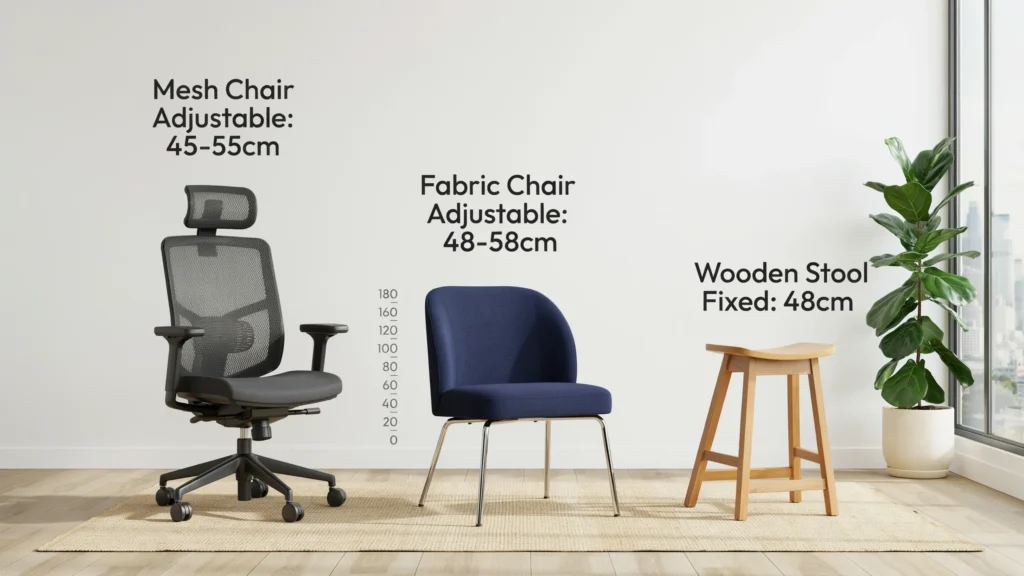
Start with adjustability. A chair that moves up and down lets you set the seat so feet rest flat on the floor and elbows sit level with the desk. That one adjustment fixes most fit problems. Next, look at back support.
A gentle curve in the lower back area, often called lumbar support, helps a child sit upright without thinking about it. It does not need to be fancy. A shaped backrest or a small cushion in the right place does the job.
Armrests divide parents. For younger children, armrests often get in the way of pulling close to the desk, and a chair without them is simpler. For teens who type a lot, armrests set at desk height can ease shoulder strain, as long as they slide under the desk or adjust low enough not to push the child away from the surface. Test the chair at the desk, not in the middle of the shop floor.
Task chairs: the reliable budget workhorse
A basic task chair is the most common budget choice, and for good reason. It adjusts in height, it rolls, and it fits most desks. For primary school children and short homework sessions, a simple task chair is often enough, especially if you add a small cushion for back support.
Watch for thin padding and a flat back on the cheapest models. Sit in it, or have your child sit in it, for a few minutes rather than a few seconds. A chair that feels fine for thirty seconds can feel hard after thirty minutes. If the seat edge presses into the back of the knees, the seat is too deep or too high for that child.
Ergonomic chairs for teens who study for hours
For middle and high schoolers, an ergonomic chair is worth the step up in price. The better back shape, the adjustable seat, and the sturdier base make long sessions easier, and the chair is more likely to last through several school years. You do not need every adjustment on the market. Height, back support, and a seat that does not tilt your child forward are the three that matter most.
Mesh backs are popular at this price because they breathe. A child who studies for an hour in a warm room will stay cooler in mesh than in a padded back. Fabric seats feel softer at first but can trap heat and show stains.
Wipe clean faux leather looks tidy and cleans easily, but it can peel over time and feel sticky in summer. For daily homework, mesh gives the best comfort for the money, with fabric a close second for younger children.
Stools and active seating: short sessions only
A stool or a wobble seat can be fun, and it encourages a child to move a little while they work. That movement helps some learners focus. But a stool has no back support, so it suits short sessions, a standing desk pairing, or a child who genuinely prefers to perch rather than sit back.
Do not buy a stool as the only chair for long homework nights. Pair it as a second seat if you like the idea, and keep a proper chair with back support as the main seat. The same rule applies to beanbags and floor cushions. They are fine for reading, but they are poor homework chairs because they offer no stable height and no back support.
How to stretch $250 without buying twice
The cheapest homework station is the one you do not have to replace in six months. That sounds obvious, but it changes how you shop. A desk that wobbles, a chair that sinks, and a lamp that flickers all cost more in frustration than they save in money. Spend first on stability and fit, then on looks.
Start with what you already own. A sturdy table, a small console, or a spare desk from another room can become a homework station with a chair that fits and a lamp that lights it properly.
I have seen families spend nothing on a desk and put the whole budget into a good chair and lighting, and the child used that station far more than a brand new set that did not fit. Reuse is not a compromise here. It is often the smartest move.
Secondhand furniture is the other budget hero, if you inspect it properly. Sit in the chair and move every adjustment. Open every drawer. Rock the desk from side to side and check the joints. Look underneath for water damage or cracked boards.
A solid used desk with a metal frame often beats a flimsy new desk at the same price, and a used ergonomic chair from an office clearout can be a bargain if the gas lift still holds height. Skip anything with a broken adjustment or a cracked frame, no matter how cheap it looks.
Make a must have list before you shop, and stick to it in the store. Must haves are a stable desk at the right height, an adjustable chair with back support, and a lamp that lights the page.
Nice to haves are built in USB ports, a fancy finish, extra shelves, or a matching set. Buy the must haves first. Add a nice to have only if money is left over, because a pretty extra never fixes a chair that hurts.
The study environment: light, order, and fewer distractions
A desk and a chair are the foundation. The environment around them decides whether homework actually happens there. A bright, tidy corner invites a child to sit down. A dark, cluttered corner invites delay, and delay usually wins.
Lighting that helps eyes, not hurts them
Natural light is the best starting point when you can get it. A desk near a window, with light coming from the side rather than straight behind the screen or straight into the child’s eyes, works well during the day. Side light reduces shadows on the page and glare on the screen at the same time.
For evenings, add a task lamp with adjustable brightness. You want the light to fall on the work, not into the child’s face. A lamp on the opposite side to the writing hand helps, so a right handed child gets light from the left and a left handed child gets light from the right. That simple placement keeps the writing hand from casting a shadow over the words.
Think in plain terms about brightness. A desk lamp should make the page easy to read without making the child squint or making the rest of the room look pitch black by contrast. A small room light on low, plus a focused desk lamp, feels better than a single bright lamp in a dark room.
Warm white light feels calmer in the evening, while a slightly cooler white can feel more alert for daytime study. If your child complains of tired eyes, move the lamp first, then check screen brightness, then check whether the desk faces a bright window that causes glare.
For entry and hallway corners that double as study spots, the same zone thinking applies. Mudroom lighting ideas that brighten every corner of an entryway show how layered light, rather than one harsh bulb, makes a small space easier to use after dark.
Organization that a child can actually keep up
Organization fails when it asks a child to be tidier than the system allows. A system that works is one a tired child can use in thirty seconds. That means supplies live within arm’s reach, in a place with a clear home, and the desktop holds only what the current task needs.
A small caddy or tray for pens, pencils, an eraser, and a ruler keeps the daily tools together. A shelf or a wall pocket for current books keeps them off the desk but close. A drawer or a box for spare supplies keeps the extras from spreading.
Label the spots for younger children, with words or pictures, so putting things away does not require a decision. The goal is not a showroom desk. It is a desk a child can reset quickly before the next subject.
Before you buy new organizers, test the system with what you have. A mug for pens, a shoebox for spare notebooks, and a tray for charging cables will tell you what actually gets used. Then buy only the organizer that replaces a box that is already working. Best home organization products that actually work follows the same test first idea, and it is a useful check against buying pretty boxes that nobody uses.
Cutting distractions without turning the room into a cell
Place the desk away from the television and away from the busiest path through the house, if you can. A child facing a wall or a window, rather than facing the whole living room, usually settles faster. That does not mean the desk has to face a blank wall with nothing to look at. A small plant, a favourite photo, or a piece of their own art gives the corner personality without pulling attention every minute.
Noise matters too. In a busy home, headphones can help an older child focus, especially for reading or writing. For younger children, a consistent homework time and a clear start signal work better than headphones. A timer on the desk, a short checklist of tasks, and a visible place to put finished work all reduce the number of times a child has to ask what comes next.
Keep the visible area simple. Too many posters, toys, and gadgets on the desk compete with the homework itself. Let your child choose one or two personal touches for the station, and keep the rest on a shelf nearby. A space that feels like theirs gets used. A space that feels like a display gets avoided.
Make it theirs, in small ways
Let your child pick the colour of the pen cup, the poster above the desk, or the small plant on the corner. Those little choices build ownership, and ownership builds habit. A child who chose the lamp is more likely to switch it on and sit down.
For a quiet corner that is also a reading spot, the same thinking works well. Reading nook ideas with bookshelves that actually get used show how a chair, a light, and a shelf within reach can turn a corner into a place a child returns to on their own.
Homework routines that make the furniture work harder
Good furniture helps, but routine is what turns a station into a habit. A child who knows when homework starts, where it happens, and what finished looks like will use even a simple station well. A child with a perfect desk and no routine will still drift.
If the station is in a shared adult workspace, the routine matters even more. A clear start and finish time, a caddy that can be lifted away, and a chair height that can be reset quickly let the same desk serve a parent in the morning and a child in the afternoon.
Minimalist home office ideas that help you focus all day offer useful lessons on keeping a shared desk calm, with less on the surface and more in a defined place.
Homework station questions parents actually ask
How much should a desk and chair cost together?
A complete pair fits the $250 frame in this guide for many families, especially if you shop sales or buy secondhand. As a rough split, expect the desk to take the smaller share and the chair to take the larger share, because the chair affects comfort more. If you already own a sturdy table, you can put the desk money into a better chair and lighting instead, and the station will usually be better for it.
What desk height is right for my child?
Use elbow height when seated as your guide, and the size table near the top of this post as a starting point. Feet flat on the floor, knees comfortable, shoulders relaxed, and elbows level with the desk surface. If your child is between sizes, an adjustable chair or a footrest can close the gap far more cheaply than a new desk.
Is an ergonomic chair worth it for a child?
For a teen who studies for an hour or more most nights, yes, it usually is. Adjustable height and back support make long sessions easier and the chair is more likely to last. For a younger child with short homework sessions, a simple adjustable task chair is usually enough, with a small cushion for back support if needed.
What is the best desk for a small bedroom?
A compact writing desk or a corner desk usually works best, because both use wall space without blocking the room. Measure the wall and the chair swing first. A folding desk is a good backup for a shared room, as long as it stays stable under books and a laptop.
Should the desk face a window or a wall?
Side light from a window is usually best, because it lights the page without glare on the screen. Facing straight into a bright window can cause squinting, and facing a busy room can distract. If the only window light comes from behind, add a task lamp on the writing side and keep the screen brightness comfortable.
How do I stop the desk from becoming a dumping ground?
Give everything a home beside the desk, not on it, and end homework with a two minute reset. A caddy for daily tools, a shelf for current books, and a box for spares keep the surface clear. When the desk fills up, move something to the shelf. That small habit, repeated daily, beats a big tidy up once a month.
Can I build a homework station without buying a new desk?
Yes, and it is often the best budget move. A sturdy table you already own, paired with a chair that fits and a good lamp, is a real homework station. Spend the saved desk money on the chair, lighting, and a caddy, and check the fit with the elbow and foot test before you call it done.
Your first step checklist
Do not buy anything until you have done the first three steps. They take ten minutes and they prevent most returns.
- Measure your child sitting down: feet flat, knees comfortable, elbow height noted.
- Measure the wall space, the chair swing, and the knee room under any desk you are considering.
- List your must haves: a stable desk at the right height, an adjustable chair with back support, and a lamp that lights the page.
- Check what you already own that could serve as the desk, and put the saved money toward the chair.
- Test the chair fit at home: feet, knees, elbows, back, and reading distance, all comfortable at once.
- Set up lighting from the side, with the lamp on the opposite side to the writing hand.
- Give supplies a home beside the desk, and agree a two minute reset at the end of homework.
- Live with the station for a week before adding extras, so you buy what is actually missing.
A homework station does not need to be expensive to be used every day. It needs to fit the child, light the work, and stay tidy enough to start without a search. Get the fit right first, spend where comfort lives, and let the station grow with your child rather than against them.