A dining table does not need a crowded arrangement or expensive accessories to look beautifully styled. The right centerpiece can make an ordinary table feel considered, polished, and ready for everything from a quiet breakfast to a dinner with guests.
The best 18 Simple Dining Table Centerpiece Ideas That Look Expensive usually rely on simple details: one beautiful vase, a wooden tray, a few candles, fresh greenery, or seasonal fruit. The trick is not how much you put on the table. It is how thoughtfully each piece works with the table, chairs, lighting, and room around it.
If your dining room feels unfinished, these 18 ideas can help you create a richer look without turning the table into a display shelf. Several of these arrangements also use items you may already have at home, making them practical for everyday decorating.
1. Style a Large Glass Vase With Branches
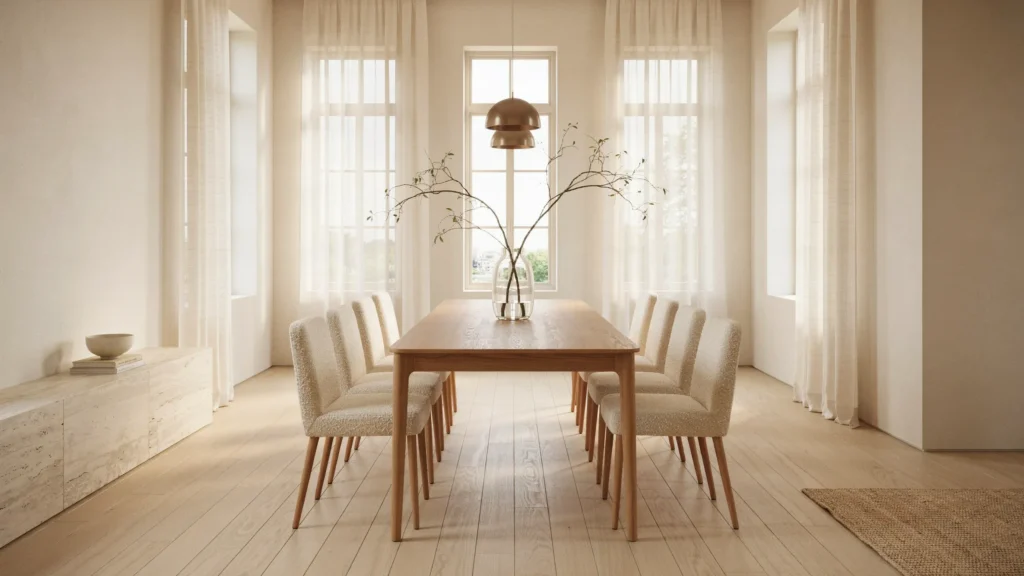
Tall branches can give a dining table an elegant focal point without requiring a complicated floral arrangement. Choose a clear or lightly tinted glass vase and fill it with several branches that have interesting shapes.Bare branches work especially well with modern interiors, while leafy stems bring a softer feeling to farmhouse, organic, or transitional rooms. Keep the arrangement slightly loose rather than forcing every branch into a perfect position.
This idea is particularly useful on a long table because the branches add height without taking up much surface space. The reference material also highlights tall branches in a simple glass vase as an inexpensive arrangement that can be reused with faux stems.
2. Use a Wooden Tray to Group Everything
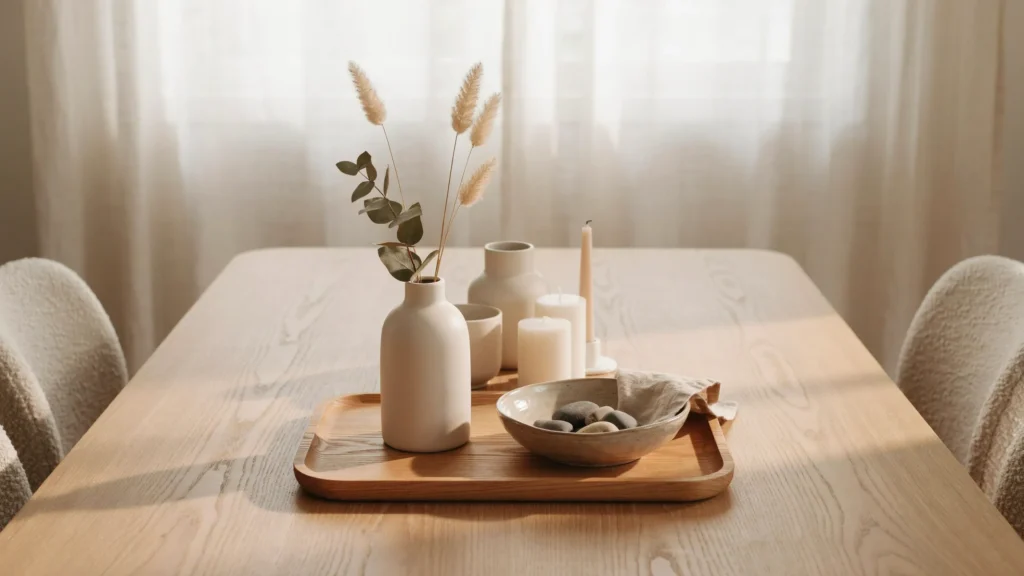
A tray instantly makes separate decorative pieces feel like one intentional centerpiece. Place a medium wooden tray in the center of the table and add a vase, candle holders, and one small decorative bowl.The tray creates a visual boundary, so the arrangement feels organized instead of scattered. It also has a practical advantage: when dinner is served, you can lift the entire centerpiece and move it elsewhere in seconds.
Choose the tray according to your table finish. A dark wood tray can add contrast to a pale table, while natural oak or light wood looks relaxed against darker furniture. The reference source specifically recommends trays for gathering centerpiece items and making them easy to move when the table needs to be cleared.
3. Arrange Three Candles for a Luxe Look
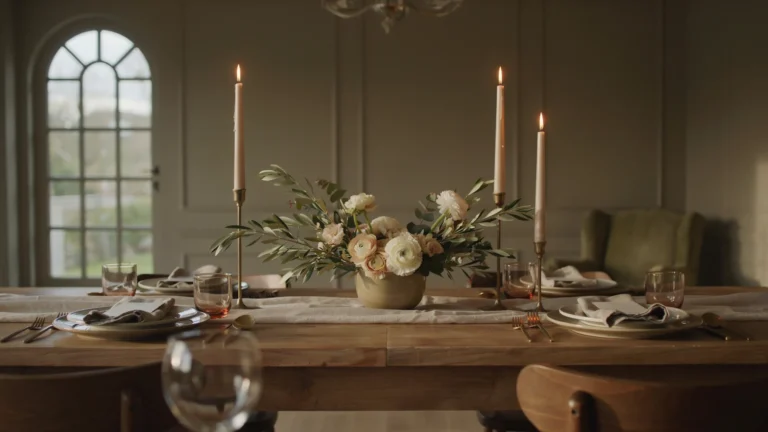
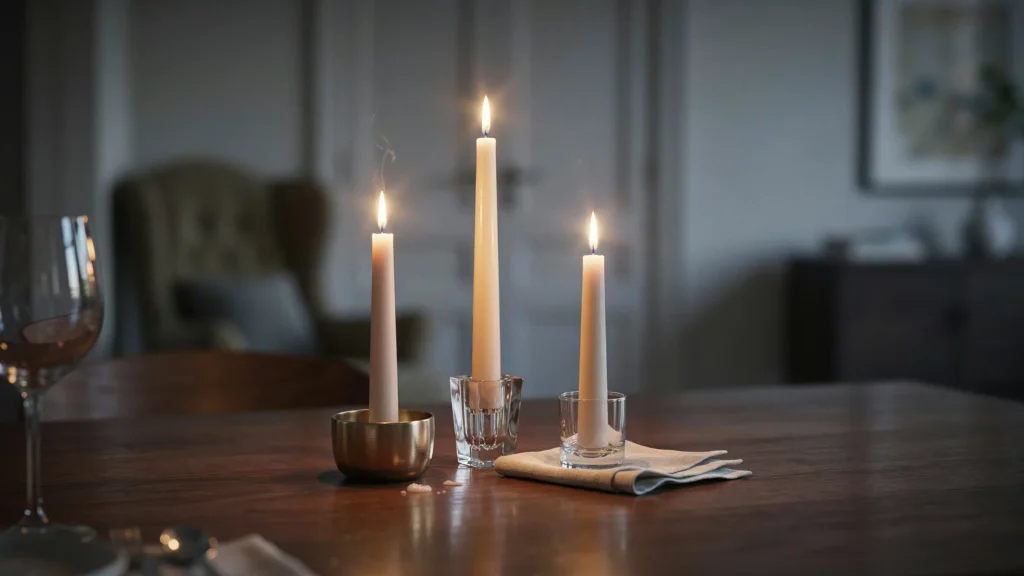
Candles are one of the easiest ways to make a dining table feel more refined. Instead of covering the surface with many candle holders, create a small group of three at different heights.Use ceramic, glass, brass, or stone holders depending on the style of your dining room. Place them beside a small vase or let the candle trio stand alone when you want an especially clean arrangement.
The glow becomes even more effective during evening meals because it adds warmth directly around the table. Groups of three are also specifically featured in the reference material as a simple way to create an elevated centerpiece.
4. Fill a Bowl With Seasonal Fruit
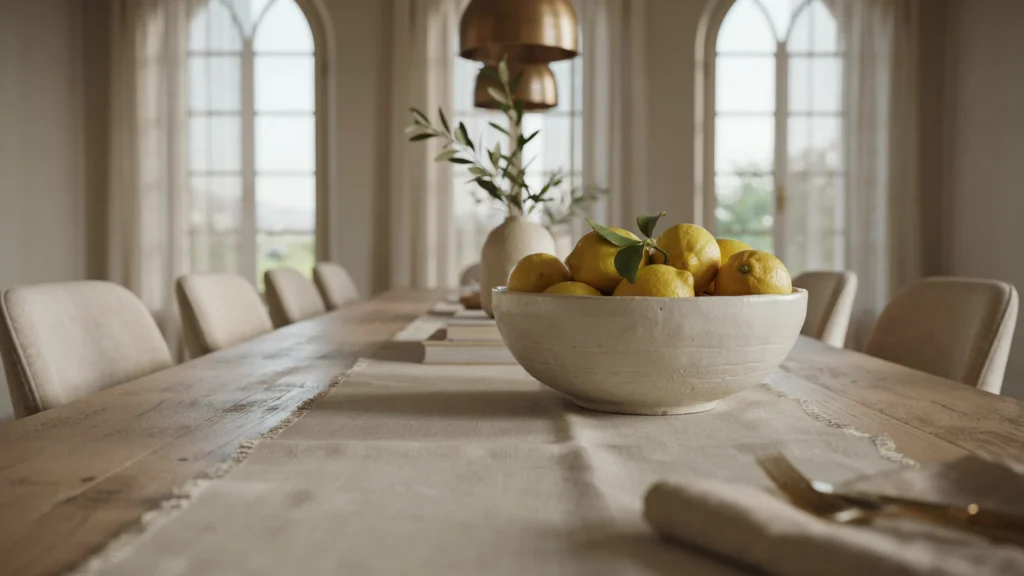
Fruit can become an attractive centerpiece when you choose it for both color and shape. A large ceramic, stone, or wooden bowl filled with lemons, oranges, pears, apples, or seasonal produce can make the table feel fresh.For a more expensive-looking result, avoid mixing too many colors. A bowl filled entirely with lemons creates a stronger visual statement than a random mixture of every fruit in the kitchen.
This arrangement is also functional because guests can help themselves during a meal. Seasonal fruit has been used in centerpiece styling as a colorful and festive option, particularly for larger gatherings.
5. Keep a Floral Arrangement Low
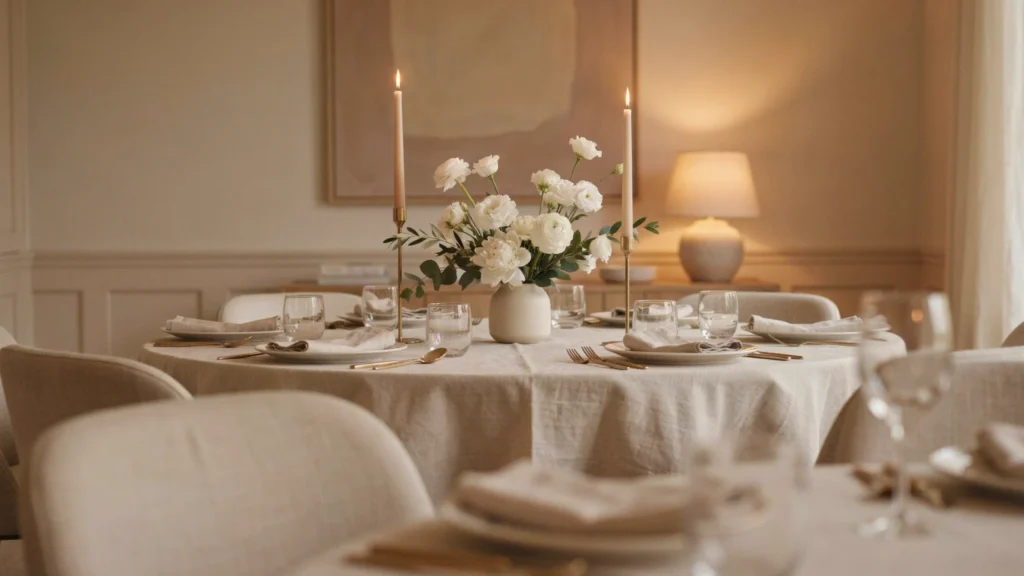
A beautiful centerpiece should not make conversation difficult. For everyday dining, use a low vase filled with flowers so people sitting opposite each other can still see one another.Choose flowers with shorter stems and arrange them loosely rather than creating a tall, formal bouquet. White flowers, soft greenery, or one-color blooms can give the table a calm and expensive appearance.
Low arrangements are especially useful for smaller dining rooms where visual clutter becomes noticeable quickly. The reference material advises avoiding centerpieces that block views and recommends keeping arrangements low enough for comfortable conversation.
6. Mix a White Vase With Greenery
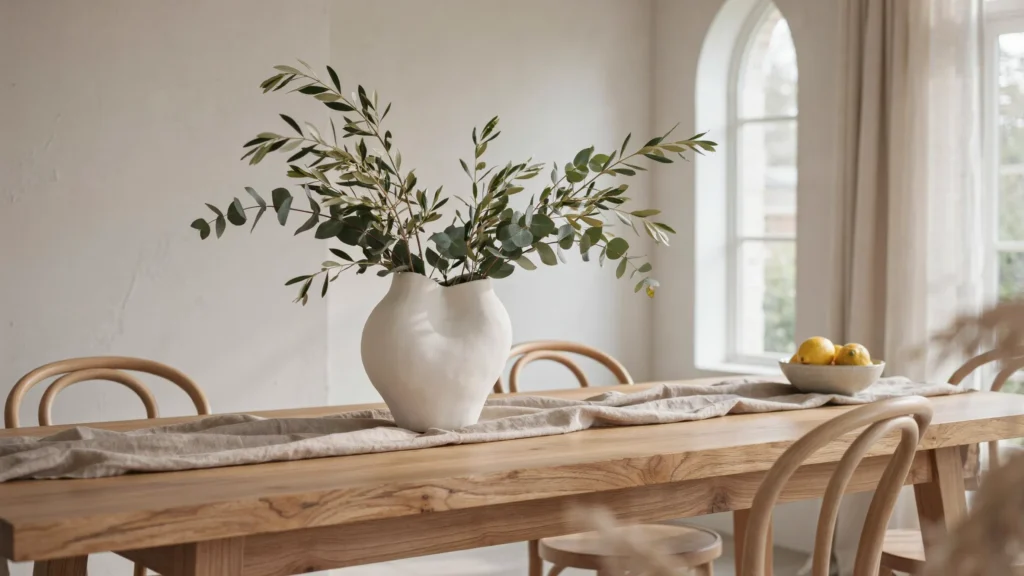
You do not always need colorful flowers to make a centerpiece interesting. A simple white ceramic vase filled with green cuttings can look calm, modern, and surprisingly expensive.The contrast between matte white pottery and natural greenery gives the table texture without adding visual noise. This combination works beautifully with wood tables because the natural materials feel connected.
For a rustic or relaxed room, choose a slightly handmade-looking vase. In a modern dining room, a smooth sculptural vase can create a sharper finish. White pottery with flowers is also presented in the reference material as a strong choice for rustic tablescapes.
7. Create a Dough Bowl Arrangement
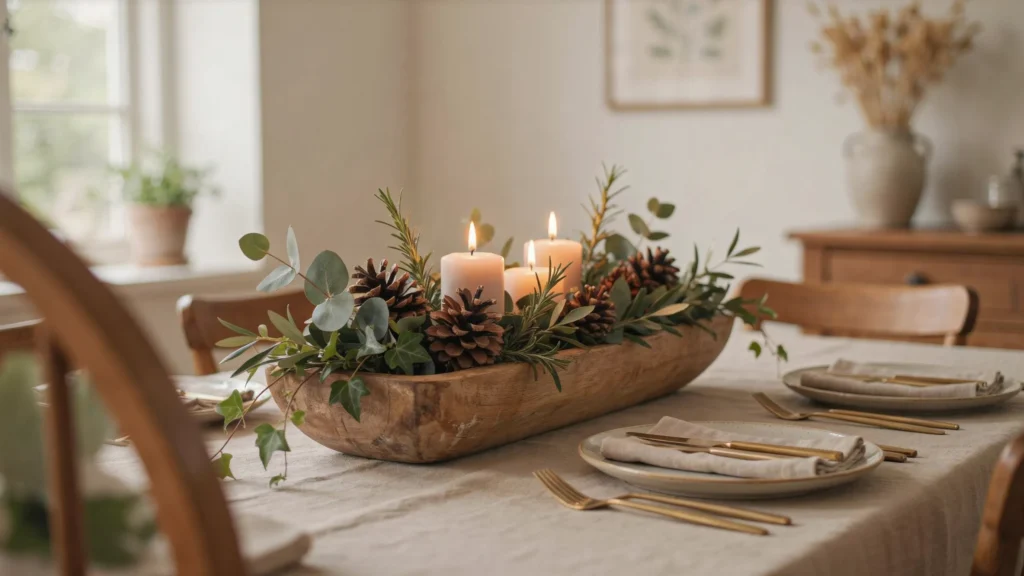
A wooden dough bowl gives you a wide container that can hold several small elements without making the centerpiece feel busy. Fill it with greenery, pinecones, small candles, or other seasonal details.The long shape works especially well on rectangular dining tables because it follows the table’s direction. You can leave some sections of the bowl visible so the wood remains part of the design.
For a year-round arrangement, change only the contents rather than replacing the bowl. The reference material suggests using dough bowls with candles, greenery, pinecones, potpourri, or other decorative fillings.
8. Try a Row of Small Bud Vases
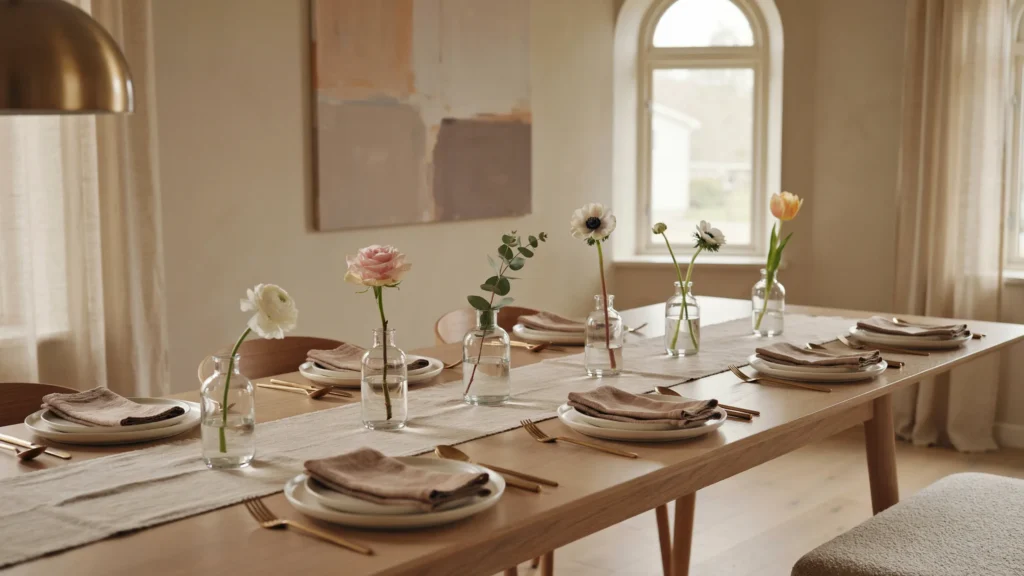
One large vase is not your only option. Place several small bud vases in a straight or slightly irregular line down the middle of a rectangular table.Put one or two stems in each vase rather than filling them completely. The repeated shape creates rhythm while the individual flowers keep the arrangement relaxed.
This works particularly well when you want the centerpiece to feel delicate rather than formal. Different vase shapes can add interest, but keeping their color similar will make the overall display look more intentional.
9. Add a Neutral Table Runner
Sometimes the most effective centerpiece begins underneath the decorations. A neutral table runner creates a visual path across the table and gives the objects placed on it a defined area.Choose linen, cotton, woven fabric, or another material that complements the dining chairs and room finishes. Beige, cream, taupe, soft gray, and natural flax are easy choices when you want a timeless look.
You can then place a vase or bowl in the center without adding several unrelated accessories. Reference styling also emphasizes runners as a simple foundation for centerpieces and everyday table decor.
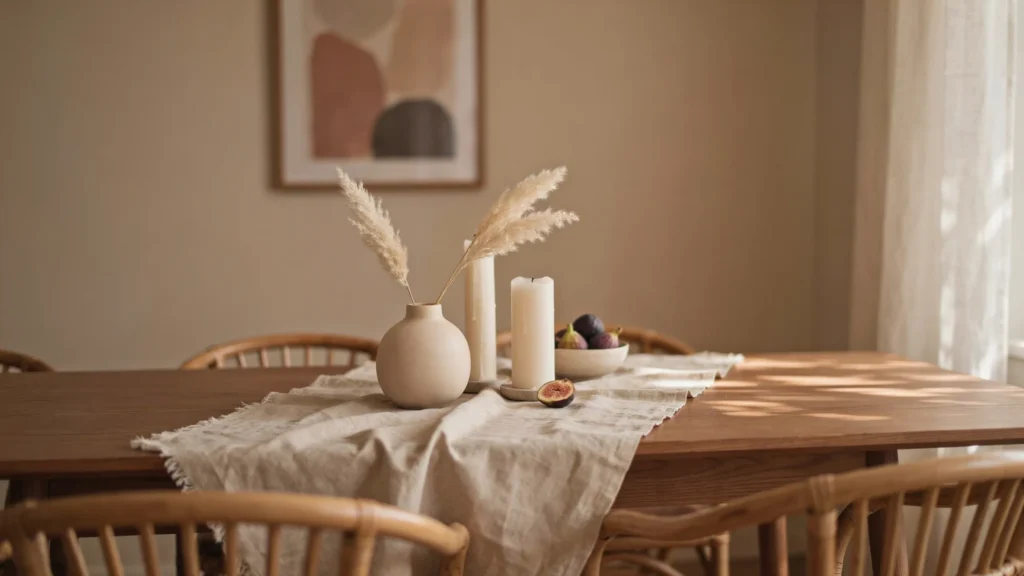
10. Combine Candles With Natural Greenery
For a centerpiece that feels warm but not overly formal, combine greenery with candles. Use a shallow arrangement of eucalyptus-like foliage or leafy branches and place several small candle holders around it.The greenery softens the hard surfaces of the table, while the candles provide warmth when the room becomes darker. Keep the foliage controlled so it does not spread across the entire table.
This approach works for everyday meals but can also transition easily into a dinner-party setting. Natural materials are repeatedly used in the reference sources because they bring texture and an uncomplicated visual quality to table arrangements.
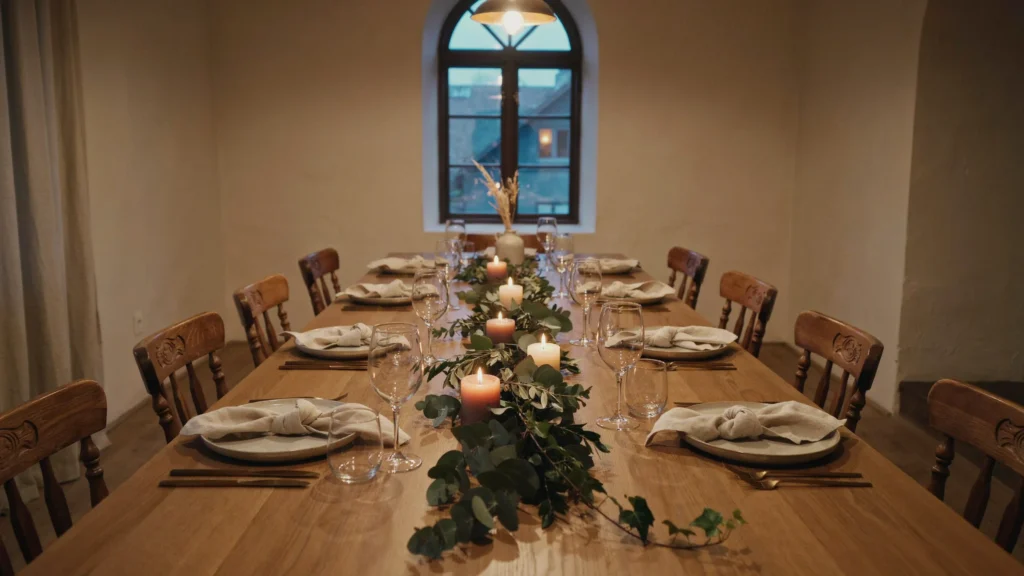
11. Make Symmetry Work for You
Symmetry is a useful shortcut when you want a centerpiece to look polished. Place one central vase and position matching candle holders on either side.The repeated shapes create balance from both ends of the table. This is especially effective when the surrounding dining room already has strong architectural details, because the centerpiece stays controlled rather than competing with them.
You can use matching objects or simply repeat similar heights and materials. The reference material demonstrates symmetrical arrangements using vases and candles to create a display that works from different viewing angles.
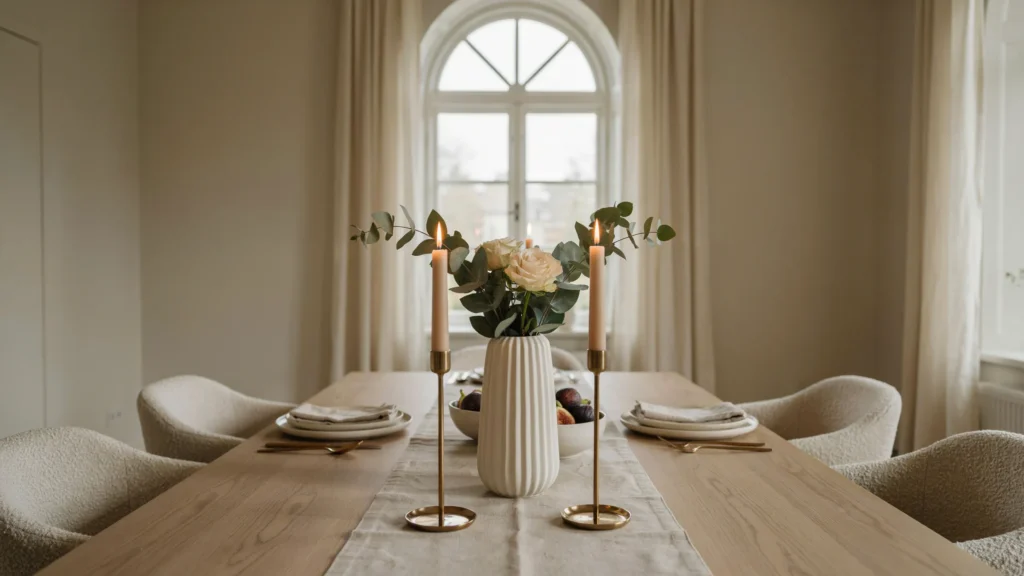
12. Use Dried Flowers for a Longer-Lasting Display
Fresh flowers are beautiful, but dried stems can stay on the table much longer. Choose dried grasses, seed heads, preserved flowers, or muted seasonal stems and place them in a simple vase.The restrained colors of dried arrangements work particularly well with beige, cream, brown, black, and warm wood interiors. You can also switch the vase while keeping the same dried arrangement for a different look.
This makes the idea practical when you want attractive decor without maintaining fresh flowers every few days. The reference source specifically notes dried florals for their longevity and recommends choosing a seasonal color that adds visual interest.
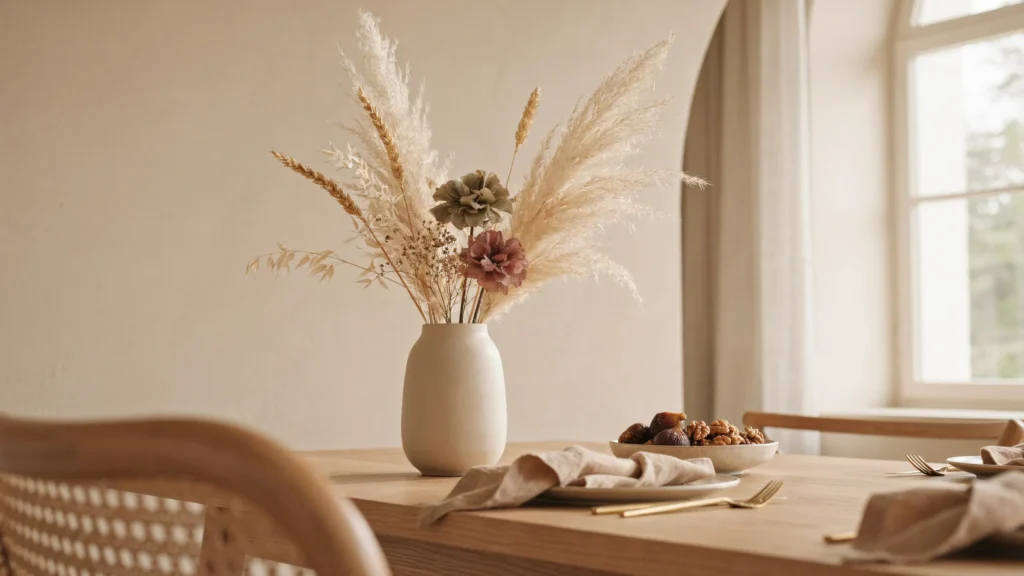
13. Add a Touch of Wicker
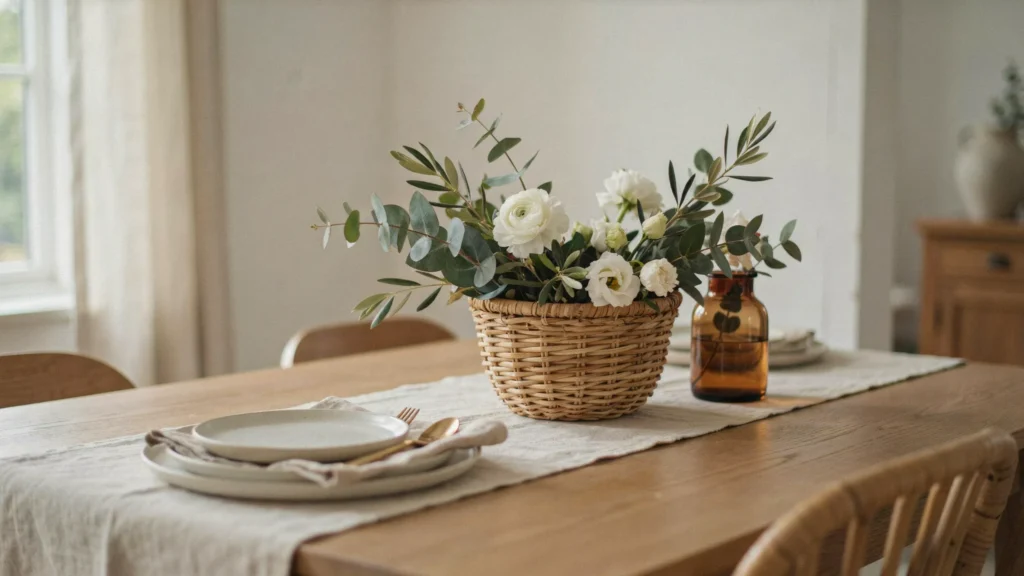
Wicker brings texture to a dining table and can make a simple arrangement feel warmer. Use a small woven basket, wicker vessel, or textured container as the foundation for greenery or flowers.The material works naturally with wood furniture and neutral fabrics, making it a strong choice for coastal, farmhouse, rustic, and relaxed interiors. Keep the surrounding accessories simple so the woven texture remains noticeable.
A wicker container can also be reused with different seasonal arrangements instead of becoming a one-purpose decoration. The reference material highlights wicker as an easy way to introduce texture into table styling.
14. Use a Dark Vase for Contrast
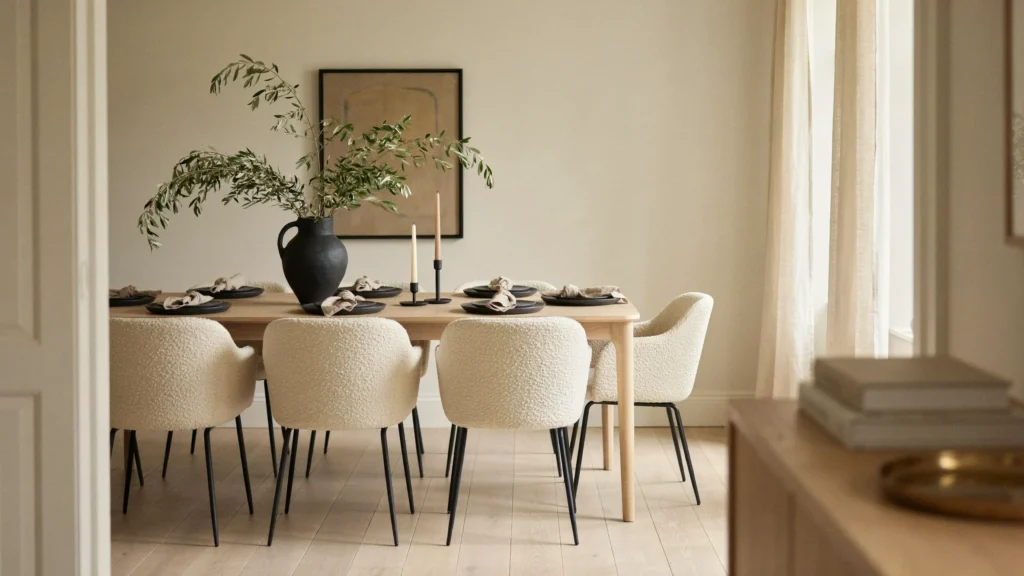
If your dining room has pale walls, light chairs, or a bright table, a dark vase can give the centerpiece more visual weight. Black, charcoal, deep brown, or dark green can create a sharp focal point.Fill the vase with lighter greenery or flowers to create contrast. You do not need many accessories because the difference between the vase and its surroundings already provides enough interest.
For an even richer appearance, repeat the dark shade in small details such as candle holders, napkins, or dining chair frames.
15. Let One Statement Bowl Lead the Table
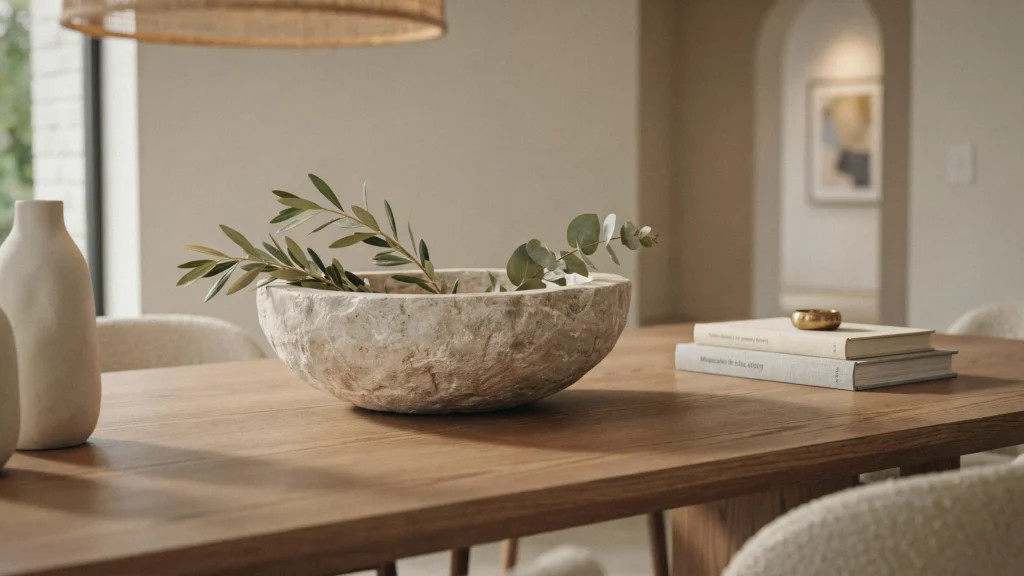
An oversized bowl can be enough to anchor the entire table. Choose a bowl with an interesting shape or handmade finish and leave it empty, fill it with greenery, or add a small collection of seasonal objects.The benefit of this approach is its simplicity. One substantial piece gives the table a finished appearance without filling every available space.
A large bowl can also change with the seasons. Pinecones, greenery, gourds, fruit, or other natural elements can give the same vessel a different character throughout the year. The reference material also presents oversized bowls as flexible centerpiece pieces that can be styled with branches or seasonal elements.
16. Mix Traditional and Modern Pieces
A dining table can look more interesting when old and new pieces share the same arrangement. Try a classic glass vase with modern candle holders, or combine traditional ceramic pieces with a contemporary tray.The goal is not to make everything match. Instead, choose materials or colors that connect the different styles. This keeps the centerpiece personal and collected rather than looking like a complete showroom set.
Traditional and modern combinations can work especially well when the dining furniture itself has a strong period or architectural character. The reference article recommends subtle combinations such as traditional materials with contemporary shapes and modern lighting.
17. Match the Centerpiece to the Dining Room Colors
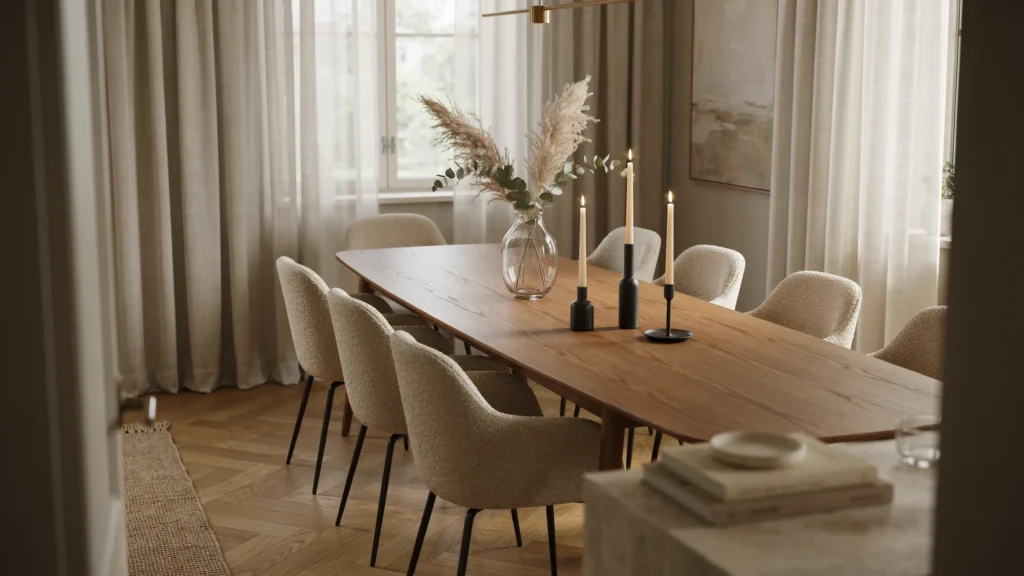
A centerpiece looks more expensive when its colors appear connected to the rest of the room. Look at the dining chairs, curtains, rug, wall color, and nearby accessories before choosing flowers or decorative objects.You do not need an exact color match. Repeating one shade or using a related tone is enough to make the arrangement feel intentional.
For example, muted green foliage can connect to a green accent chair, while cream flowers can echo a neutral rug. Consistent color schemes are recommended in the reference material as a way to create a cohesive dining area.
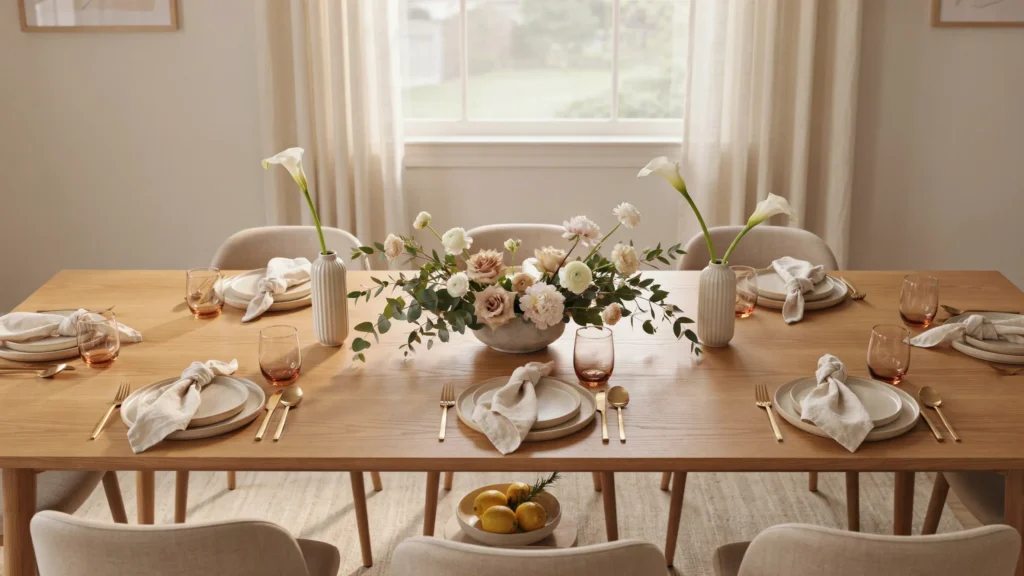
18. Keep the Whole Arrangement Simple
Sometimes the most expensive-looking centerpiece is the one you stop adding to. Start with one main piece, then add only one or two supporting elements if the table still feels empty.A vase paired with two candles may be enough. A bowl placed on a runner may need nothing else. If the table has beautiful wood grain or a sculptural shape, leaving some surface visible can actually make the arrangement look more intentional.
Minimal styling also makes the dining table easier to use every day. The reference material notes that simple, understated decor can create a serene and inviting table without unnecessary clutter.
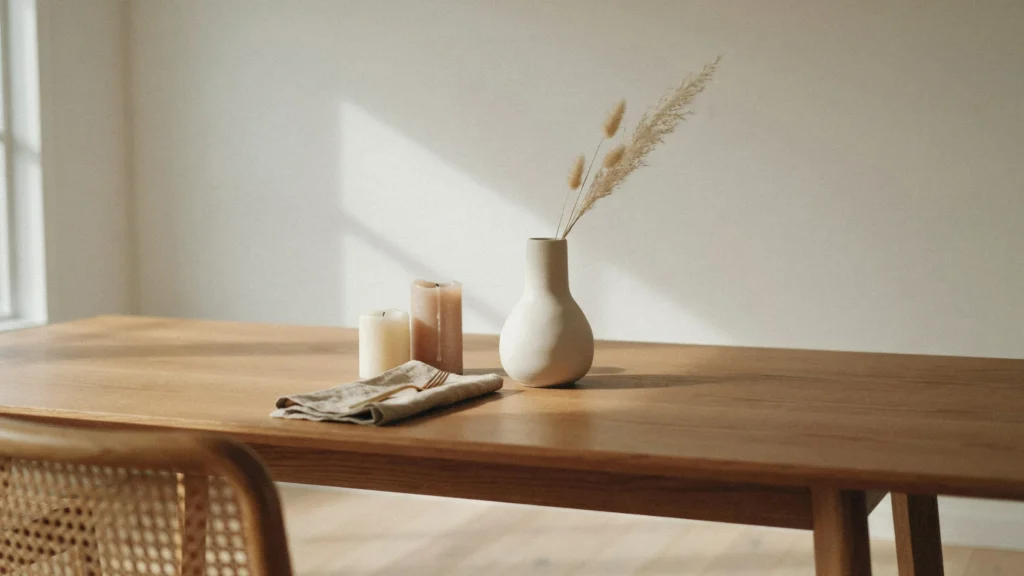
How to Make Dining Table Centerpieces Look More Expensive
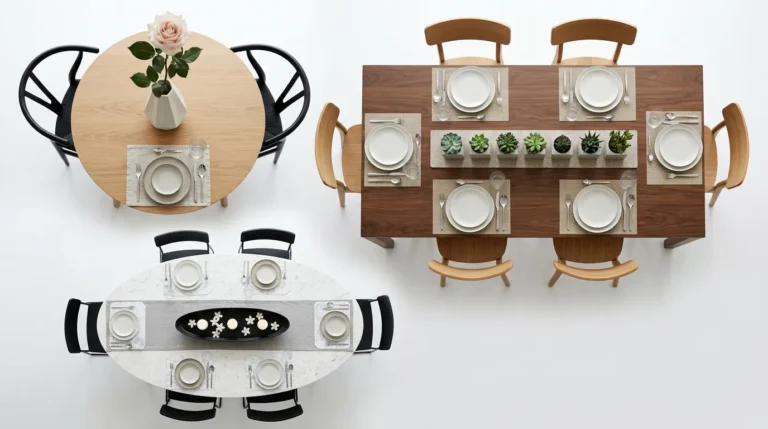
You do not need designer accessories to create an expensive-looking dining table. Start by limiting the color palette to two or three related shades and choose materials that have visible texture, such as wood, ceramic, glass, linen, stone, or woven fibers.Varying height also helps, but keep the arrangement controlled. A tall branch arrangement can be balanced with low candles, while a low floral bowl may work better with a simple runner underneath.
Pay attention to scale. A tiny vase can disappear on a large table, while an oversized arrangement can overwhelm a compact dining area. The centerpiece should have enough presence to be noticed without taking over the table.Most importantly, leave room for real life. Plates, serving dishes, glasses, and elbows need space during a meal. A beautiful centerpiece that has to be removed before every dinner is less useful than a simple arrangement that works with the table.
Centerpiece Mistakes to Avoid
Avoid filling every inch of the table with decorative objects. Too many unrelated pieces can make even expensive accessories look random.Strongly scented candles and flowers can also interfere with the dining experience, particularly when food is being served. The reference material recommends avoiding strong fragrances and centerpieces that obstruct guests’ views.
Another common mistake is ignoring the lighting above the table. If you have a chandelier or pendant fixture, leave enough visual space between the centerpiece and the light so the two focal points do not compete.Finally, do not choose an arrangement simply because it looks good in a photograph. Consider how often you eat at the table, how many people normally sit there, and how quickly you need to clear the surface.
Frequently Asked Questions
What makes a dining table centerpiece look expensive?
A limited color palette, quality-looking materials, good proportions, and plenty of empty space usually create a more refined appearance. You can achieve this with inexpensive branches, a ceramic vase, candles, or a simple wooden bowl.
What should I put in the center of my dining table?
Popular choices include flowers, greenery, branches, candles, bowls, fruit, decorative trays, and seasonal objects. Choose one main focal piece and build around it only if the table needs more visual interest.
How tall should a dining table centerpiece be?
For arrangements where guests need to see across the table, keep the centerpiece low enough to preserve eye-level visibility. The reference material suggests a vase around one-third of the table’s height or shorter as a practical guide.
Are candles good for dining table centerpieces?
Yes. Candles add warmth and atmosphere, particularly during evening meals. Small groups of three can create an attractive arrangement without taking over the table.
Can I use fruit as a centerpiece?
Absolutely. Lemons, oranges, apples, pears, and other seasonal fruits can add color while remaining useful during meals. A single fruit color often creates a cleaner appearance than a crowded mixture.
What is the easiest centerpiece for everyday use?
A ceramic vase with greenery is one of the easiest options. A wooden tray with a vase and two candles is another practical choice because you can move the entire arrangement when you need more table space.