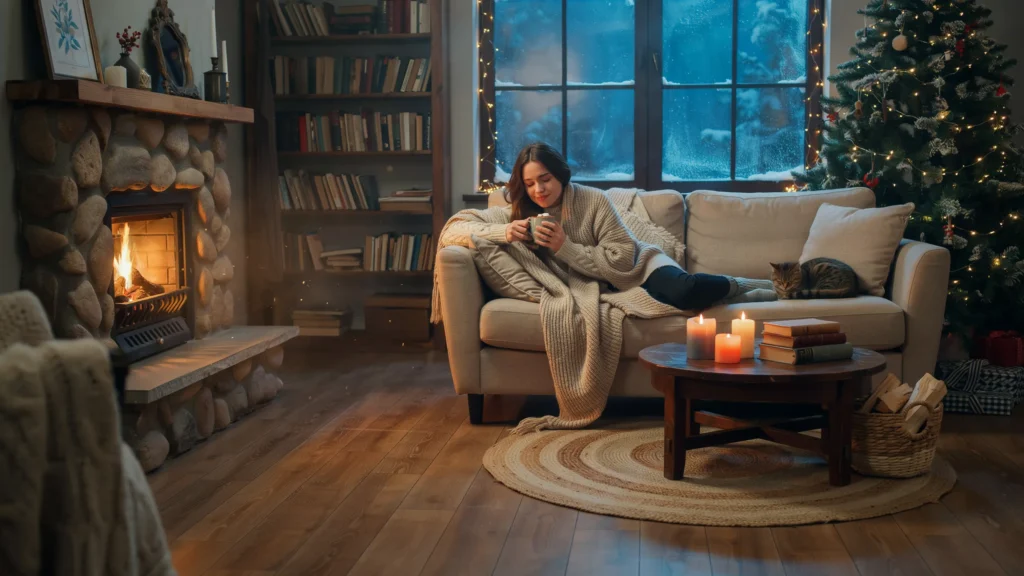
Last January I walked into a friend’s living room on a cold evening and felt it straight away. The room looked finished. The sofa was good, the rug was new, the shelves were styled. But something felt wrong, and it took me a minute to work out what it was. One bright ceiling light was doing all the work.
It lit every corner the same flat way, it made the walls look pale and tired, and it made a room full of nice things feel like a waiting room. We switched it off, turned on two lamps and a few candles, and the same room changed completely in about thirty seconds.
That is the mistake this guide starts with, because it is the one most people make first. A single overhead light cannot make a room feel warm, no matter how much money you spend on the rest of the decor. Warmth in winter comes from layers, and that is what cozy winter living room decor is built on: layers that start at the floor and work their way up.
The short answer is this. Cozy winter living room decor works when you layer warmth from the floor up: a rug that covers the main seating area, at least three textures within arm’s reach of every seat, warm colour in terracotta, rust, ochre, deep green or cream, heavy curtains closed at dusk, and light in pools at 2700K warm white from lamps and candles instead of one bright overhead light. Start with the floor, then the seating, then the walls and windows, then the light. Scent and sound come last, and they cost almost nothing.
The Cozy Winter Living Room Decor Warmth Audit: What Feels Cold, and the Fix
| What feels cold | Why it feels that way | The fix | Do it when |
|---|---|---|---|
| Bare feet on hard floor | Wood, tile and laminate pull heat from your feet and echo sound around the room | A rug that reaches under the front legs of the sofa and chairs, plus a smaller layered rug or sheepskin where feet land | First, before anything else |
| A sofa you perch on, not sink into | Thin cushions, smooth cold fabric and no throw within reach make sitting feel exposed | A folded throw on the arm, a cushion in a warm texture, and a footrest or ottoman close by | With the rug, same day |
| One bright ceiling light | A single overhead source lights the ceiling and the floor equally, flattens shadows and feels clinical | Switch it off. Use two or three lamps at different heights, all 2700K warm white, plus candles | Tonight, it costs nothing |
| Bare windows after dark | Glass is the coldest surface in the room and thin curtains do nothing to hold the heat in | Heavy lined curtains that reach the floor, closed at dusk, with a gap of no more than a few centimetres at the sides | This week, before the next cold snap |
| Pale, bare walls | Large areas of white or pale grey reflect cold light and give the eye nowhere warm to rest | One warm art print, a mirror to catch lamp light, or a textile wall hanging in rust, ochre or deep green | After the floor and light are sorted |
| A room that smells of nothing | Winter air is dry and still, and a room with no scent feels empty even when it looks finished | A simmer pot, a diffuser or one good candle in cinnamon, pine, clove or vanilla, lit an hour before guests arrive | Last, once the room looks warm |
| Echo and hard sound | Hard floors, bare walls and leather or smooth surfaces bounce sound and make a room feel empty | Soft furnishings do the work: rugs, curtains, cushions and throws absorb sound and make voices feel closer | Automatically, as you layer textiles |
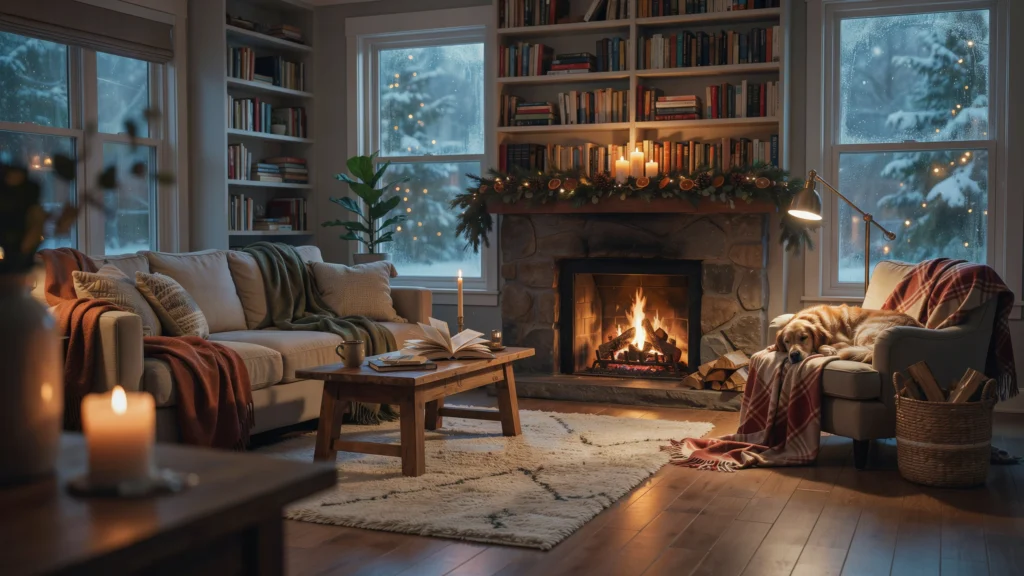
Start at the floor: rugs that actually warm a room
Size is the decision that matters most, and it is the one people get wrong most often. A rug that is too small makes the whole seating area look lost, like a postage stamp in the middle of a big floor.
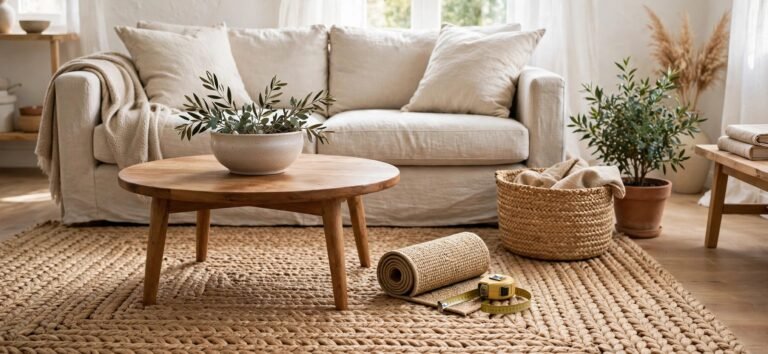
The rule that works in almost every living room is simple: the rug should be large enough to sit under the front legs of the sofa and the chairs, with at least 15 to 20 centimetres of rug showing in front of the sofa.
For a standard three seat sofa with two chairs, that usually means a rug around 240 by 300 centimetres. For a smaller two seat sofa and one chair, around 200 by 290 centimetres often works. Measure your seating group with a tape, not by eye, and mark the corners with masking tape on the floor before you order.
Live with the tape outline for a day. Walk around it, sit down, put your feet where they naturally land. If the tape feels tight, go one size up. A rug that is slightly too big almost always looks better than one that is slightly too small.
Placement is the last piece. Centre the rug on the main seating group, not on the room. In an open plan space the rug is what tells your eye where the living room ends and the dining area begins, so let it define the zone.
Leave a border of bare floor of about 30 to 45 centimetres around the rug where you can, so the rug looks like a deliberate island rather than wall to wall carpet that stopped short. If your room is small and a big rug would touch the walls, that is fine too.
In a small room a rug that nearly fills the floor makes the space feel larger and warmer at the same time, because the eye reads one continuous soft surface instead of a small island in a sea of hard floor.
Put a rug pad underneath, always. A good pad stops the rug sliding, adds a little extra cushioning underfoot, and protects both the rug and the floor. It is the least glamorous purchase in this whole guide and one of the most useful.
Seating: make the sofa the warmest place in the house
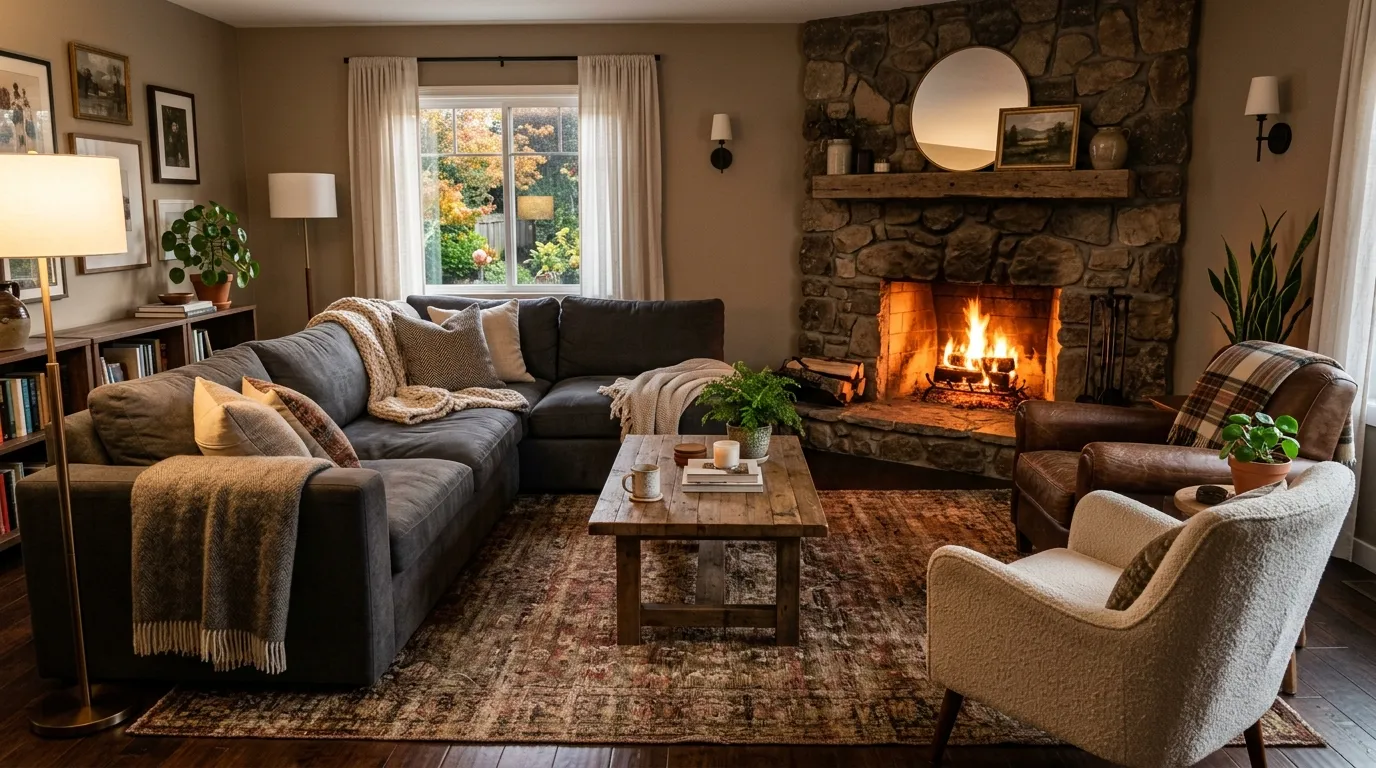
Now the throws, because this is where cozy winter living room decor earns its name. One throw is decoration. Three throws, placed with intent, is a system. Keep one folded over the back of the sofa where anyone can reach it without standing up. Keep one draped over the arm of your favourite chair. Keep one in a basket beside the sofa for guests.
Each one should be a different texture, so the eye and the hand both find variety: a chunky knit, a smooth fleece, a soft wool. If you want ideas for how to fold, drape and style them so they look deliberate instead of dumped, these modern throw blanket living room ideas show twenty five ways to place a throw so it looks like part of the room, not an afterthought.
The best throws for winter are the ones you actually use. A throw that is too precious to touch is not doing its job. Choose machine washable where you can, in a colour that hides a little daily life, and use it every evening.
The arm of the sofa matters more than people think. It is where your hand rests, where a book sits, where a mug of tea waits. A folded throw over the arm gives your hand something warm to touch and gives the sofa a finished edge. A small cushion tucked into the corner where the arm meets the back turns a hard corner into a place to lean. If you have a leather sofa, this layer is even more important, because leather feels cold in winter until your body warms it. A throw across the seat and a cushion at your back break the contact with cold leather and make the sofa usable from the moment you sit down, not ten minutes later.
Footrests finish the seating layer. Cold feet ruin a cozy evening faster than almost anything else, and an ottoman or a pouffe solves it. Place it close enough that you can reach it without stretching, about 30 to 40 centimetres from the front of the sofa.
A storage ottoman does double work in winter, because it holds the spare throws and the extra cushions inside, so they are there when you need them and out of sight when you do not. If you are choosing a new sofa or replacing an old one, comfort should come before style. Look for deep seats, soft arms and a frame that feels solid when you sit down heavily.
These comfortable sofa ideas for relaxing living rooms are a useful place to start, because they focus on sofas people actually want to sit on for hours, not sofas that only look good from the doorway. A sofa you love sitting on is the single best investment in a cozy winter living room.
Textiles within arm’s reach: the three texture rule
Here is a rule that will change how you shop for winter decor. From every seat in the room, you should be able to touch at least three different textures without standing up. A knit throw, a velvet cushion, a smooth wooden side table. A wool rug underfoot, a linen curtain beside you, a nubby boucle cushion at your back. Three textures is the minimum. Fewer than that, and a room feels flat, however expensive it looks. More than that, and it starts to feel busy, so three or four is the sweet spot.
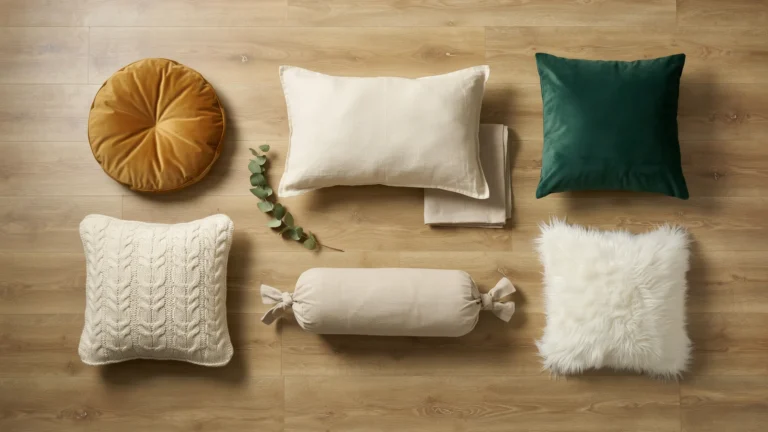
Colour and texture work together, and this is where mixing cushions becomes a skill rather than a guess. Keep a simple formula: one solid colour, one texture, one pattern. The solid anchors the group. The texture adds warmth. The pattern adds personality.
A rust velvet cushion, a cream knit cushion and a small plaid or checked cushion in rust and cream, for example, gives you all three without any clashing. If patterns make you nervous, start with texture only. Three cushions in the same colour but three different fabrics look sophisticated and calm, and they are almost impossible to get wrong.
If you want a deeper guide to getting the mix right, this guide to mixing and matching throw pillows walks through colour, scale and texture combinations with real examples, and it is worth reading before you buy a single new cover.
The fibre you choose changes how a textile behaves all winter, so it is worth knowing the differences before you spend. Wool is warm, durable and naturally resists odours, but it can feel scratchy if it is coarse, so look for fine merino or lambswool for anything that touches skin.
Cotton is soft, breathable and easy to wash, but it feels cooler and thinner than wool, so it works better as a layer than as the main warmth. Velvet, usually cotton or polyester, looks rich and holds colour beautifully, but it shows marks where you sit, so it needs a quick brush now and then.
Faux fur is the warmest to the touch and the most dramatic, but it sheds a little and it is hard to clean, so keep it to throws and small cushions. Linen looks wonderful in summer and feels cool, which is exactly why it is the wrong choice for a winter throw. Save it for curtains or a light summer layer.
| Fibre or fabric | How warm it feels | Best use in a winter living room | Care to know about |
|---|---|---|---|
| Wool | Very warm, holds heat well | Rugs, throws, cushion covers you lean on every evening | Air it outside, spot clean, dry clean for large pieces |
| Cotton | Moderate, soft and breathable | Throw layers, washable cushion covers, families with children | Machine washable, may shrink if washed hot |
| Velvet | Warm to the eye and to the touch | Cushions, an accent chair, a curtain panel for depth | Brush lightly to remove seat marks, keep away from damp |
| Faux fur and sheepskin | The warmest to the touch | Small rugs, throws over a chair arm, a footrest cover | Shake outside, hand wash or dry clean, expect some shedding |
| Boucle | Warm and cloud soft | Cushions and throws where you want softness without shine | Snags easily, so keep it away from sharp jewellery and pet claws |
| Chunky knit | Warm, with air trapped in the weave | Throws folded over a sofa back, the classic winter layer | Hand wash or gentle cycle, dry flat so it keeps its shape |
| Linen | Cool, light, airy | Not a winter warmth layer, use it for summer only | Wrinkles easily, which is part of its charm in the right season |
Colour: a warm palette that does the heavy lifting
Colour is the cheapest way to warm a room, because you do not have to repaint a single wall to use it. Warm colour in winter comes from textiles, art, books and objects, layered over whatever your room already is.
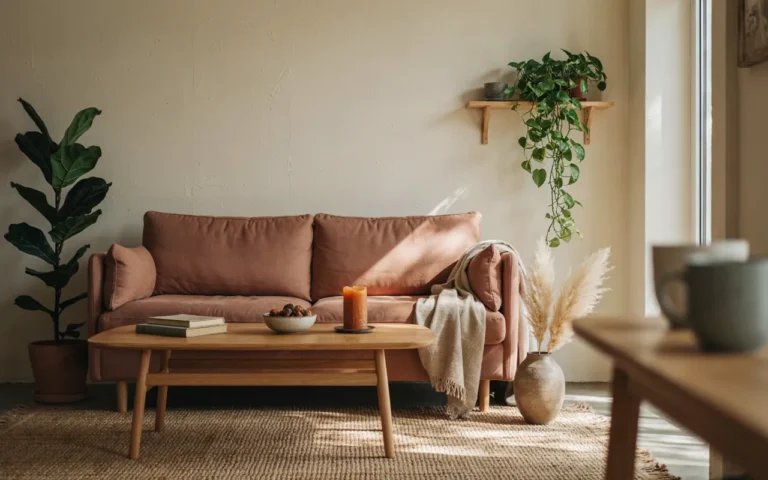
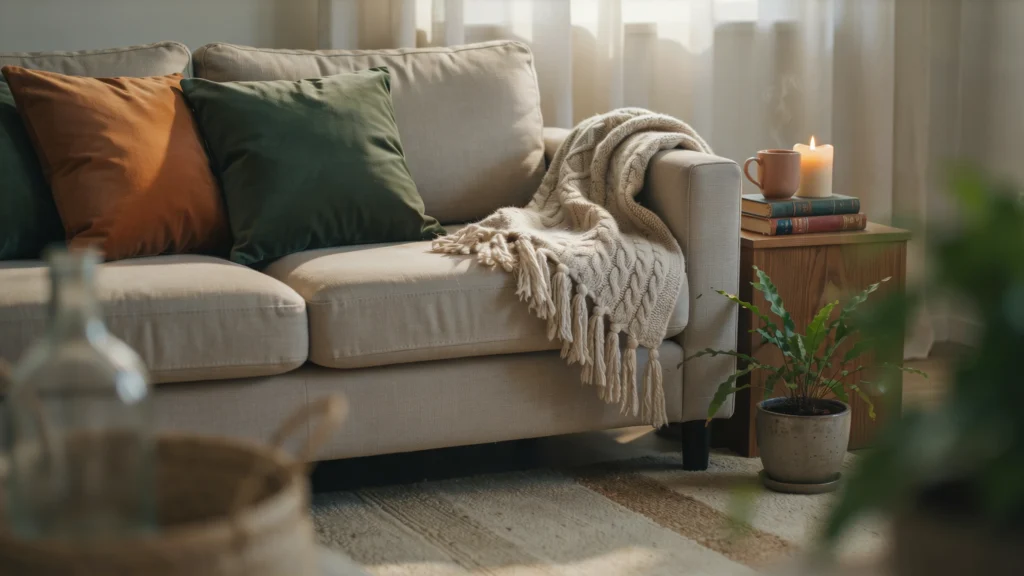
The palette that works best is an old one, and it works because it copies nature in late autumn: terracotta, rust, ochre, deep green and cream. Terracotta is the warmest of the group, a baked earth red that makes a cream sofa look richer and a grey wall look softer.
Rust is terracotta with a little more brown, and it is the easiest warm colour to live with, because it sits happily next to wood, leather and cream. Ochre is the yellow of autumn leaves and old brass, and a little of it goes a long way, a cushion, a throw, a book cover.
Deep green is the anchor, the colour of pine and evergreen, and it stops the warm reds and oranges from feeling too sweet. Cream is the base that holds them all together, softer than white, warmer than grey, and the colour your walls and your largest textiles should be.
Use the palette in proportion, not in equal parts. A good starting point is 60 percent cream and neutral, 30 percent your main warm colour, and 10 percent a deeper accent. In practice that means a cream sofa and rug, rust or terracotta cushions and a throw, and deep green in a plant, a book or a single cushion.
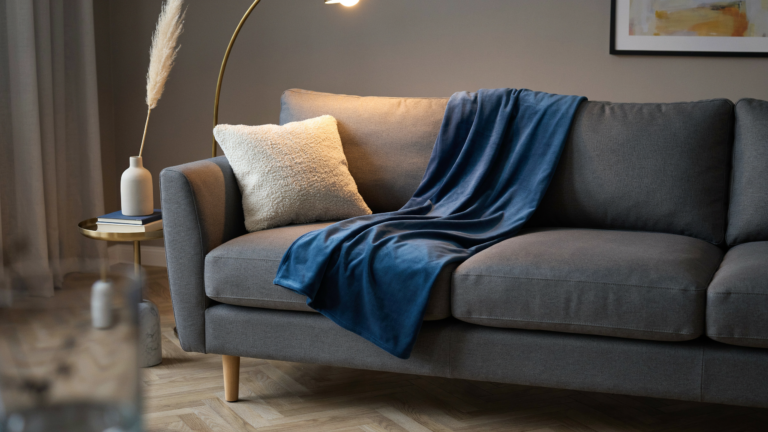
If your sofa is grey, the same rule still works, and grey can be wonderfully cozy in winter when it is warmed up properly. A grey sofa with rust cushions, a cream knit throw and warm lamplight feels calm and snug rather than cold.
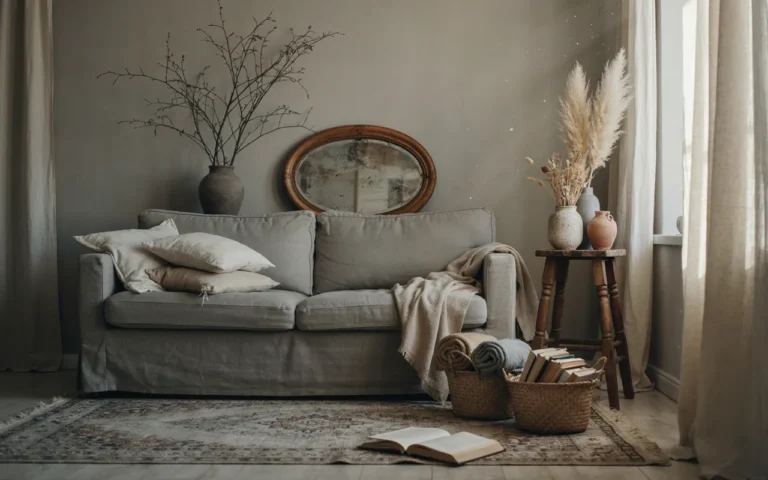
If you want proof that grey and cozy belong together, these cozy grey boho living room ideas show how warm textiles, layered rugs and soft light turn a grey base into a room that feels like a hug. The lesson is the same either way: grey is not the enemy, bare grey with cold light is.
Walls and windows: closing the room in for winter
Walls and windows are the biggest surfaces in your living room, and in winter they are also the coldest. A bare wall does nothing for warmth. A bare window actively works against it, letting heat out and cold in, and showing you a dark garden after four in the afternoon. This section is about closing the room in, gently, so it feels like a shelter rather than a box with a view of the dark.
Heavy curtains are the single most effective thing you can do to a window in winter, and they are worth every penny. Choose curtains with a lining, because the lining is what blocks the draught and holds the warmth in. The fabric should feel heavy in your hand. Velvet, heavy cotton, wool blends and lined linen all work.
Length matters: curtains should reach the floor, or just kiss it, with no gap underneath where cold air can pour in. Width matters too: when closed, the curtains should cover the whole window with a little fabric to spare, not stretch tight across it. A good rule is to buy curtains one and a half to two times the width of the window, so they hang in soft folds even when closed.
Hang the rod 10 to 15 centimetres above the window frame and 15 to 20 centimetres wider on each side, so the curtains stack clear of the glass when they are open and cover it fully when they are closed. Close them at dusk, every day, without exception. It is a small habit and it makes a real difference to how warm the room feels by eight in the evening.
Light in pools: the 2700K rule and where to put it
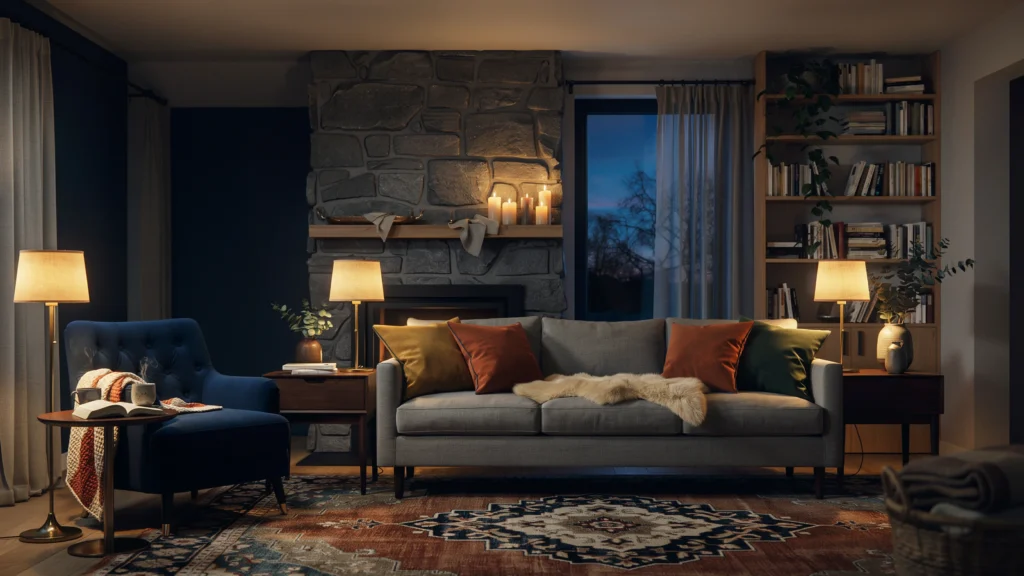
Now we come back to the mistake this guide opened with, and this time we fix it properly. Warm light in a winter living room comes from pools, not from a single source. A pool of light is a small area of warm glow with soft darkness around it: a lamp beside the sofa, a candle on the coffee table, a floor lamp behind a chair. The darkness between the pools is not a problem. It is what makes the pools feel warm. A room lit evenly from above has no pools and no shadows, and that is why it feels like an office. A room lit in pools feels like an evening, because it copies the way light actually behaves in a home after dark.
The number to remember is 2700K. That is the colour temperature of warm white light, the colour of a traditional incandescent bulb, of candlelight, of late afternoon sun. When you buy bulbs, look for 2700K on the box. It is usually printed near the brightness, and it is the single most useful number in this whole guide. Bulbs labelled 3000K look a little cooler, more like a bright kitchen. Bulbs at 4000K and above look blue white, and they will undo every warm textile you have layered, because they wash the room in a cold tone. If your lamps currently have cool bulbs, swap them before you buy anything else. A pack of warm white bulbs costs very little and changes the room more than a new cushion ever will.
Build your pools in three heights. Low light sits on the coffee table or a side table: candles, a small lamp, a string of fairy lights in a jar. Mid light sits at seating height: a table lamp on a side table beside the sofa, a floor lamp behind an armchair, a lamp on a console against the wall.
High light is the light you barely notice: a picture light over a piece of art, a small uplight behind a plant, a string of warm fairy lights along a shelf. Three heights, three pools, and the room feels layered instead of flat.
Most living rooms need two or three lamps in total, plus candles. More than that, and the room starts to feel like a shop. Fewer than that, and you are back to one source doing all the work.
Placement is a matter of habit, not of buying more lamps. Put a table lamp where you read, not where it looks symmetrical. Put a floor lamp behind the chair you sit in, so the light falls over your shoulder onto your book. Put candles on the coffee table where everyone can see them, not on a high shelf where nobody looks.
A cluster of three pillar candles of different heights, on a tray, is safer than a single candle and looks far better. The tray catches wax and stops the candles sliding, and it gives you one object to move when you need the table.
Keep candles away from curtains, throws and anything that can catch, and never leave them burning in an empty room. If you have children or pets, flameless LED candles give you the same flickering glow with no risk at all, and the good ones are hard to tell from the real thing in lamplight.
Light does not stop at the living room door. The way you arrive in a room shapes how it feels, and a cold dark hallway makes a warm living room feel like a surprise instead of a welcome. A small warm lamp or a soft wall light in the hallway or entryway, at the same 2700K, eases the change from outside to inside. The same thinking applies to the entry, and these mudroom lighting ideas to brighten your entryway show how a little warm light in a small transitional space makes the whole home feel more considered. You do not need a grand entrance. You need one warm pool of light where you hang your coat, so the first thing you feel when you come in from the cold is warmth, not a dark corridor.
Accessories with a job: greenery, books and objects that earn their place
Greenery is the first accessory, because it is alive, and a living thing changes a room in a way no object can. In winter, when the garden is bare and the days are grey, a green plant in the living room is a small act of optimism.
Hardy indoor plants are the ones to choose: snake plants, pothos, ferns and peace lilies all cope well with low winter light and central heating, as long as you do not overwater them. Water less in winter than in summer, because the plant is growing slowly and the soil stays damp longer. Keep plants away from radiators, where the dry hot air scorches the leaves, and away from cold draughts by the window.
A large plant in a corner fills an empty space that would otherwise feel cold, and a trailing pothos on a shelf softens a hard edge. Put the plant in a warm pot, terracotta, ceramic in a warm glaze, or a woven basket, and the pot does as much work as the plant.
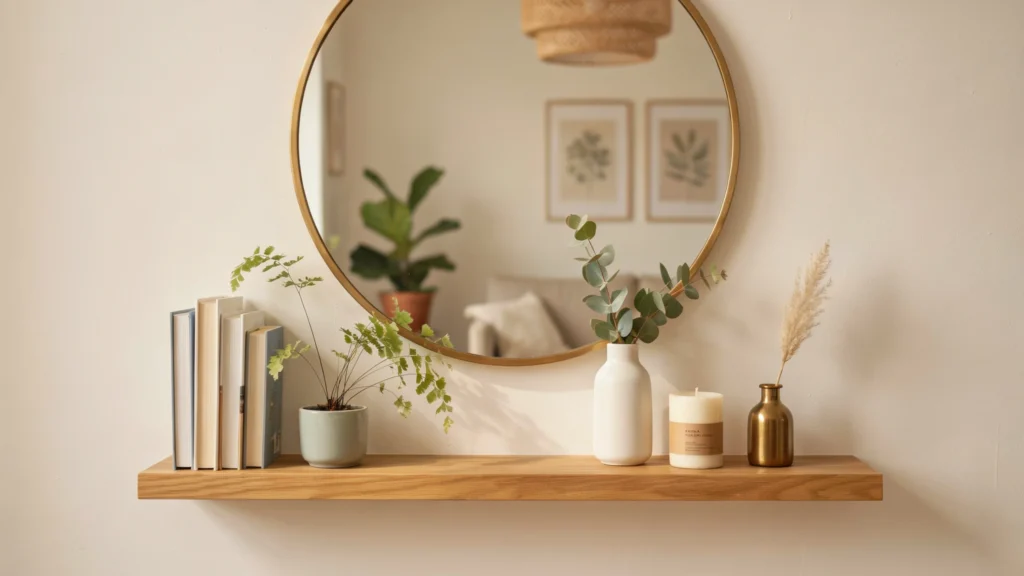
Decor objects should be few and meaningful. A ceramic vase you made or bought on a trip, a wooden bowl that holds the remote controls, a framed photo of a winter walk, a candle holder that has been in the family for years, these are the objects that make a room feel like yours. A room full of objects you love always feels cozier than a room styled purely for looks, because the objects carry memories and the memories warm the room. The rule is to keep the number small. Three objects on a coffee table is plenty. Five on a mantel is enough. More than that, and the eye has nowhere to rest, and the room feels like a shop. Leave empty space. Empty space is not wasted space. It is what lets the objects you keep shine.
Scent and sound: the layers you cannot see
Winter scents are warm ones: cinnamon, vanilla, pine, clove, orange, cedar. They are the smells of baking, of forests, of old libraries and kitchens. A scented candle in one of those fragrances, lit an hour before you settle in, fills the room gently without overwhelming it. One candle is enough for most living rooms. Two candles in different scents compete and cancel each other out, so pick one and let it do the work. Place the candle where the warm air moves, near the sofa but not so close that it sits under your nose. A candle on the coffee table, a little to one side, is usually right.
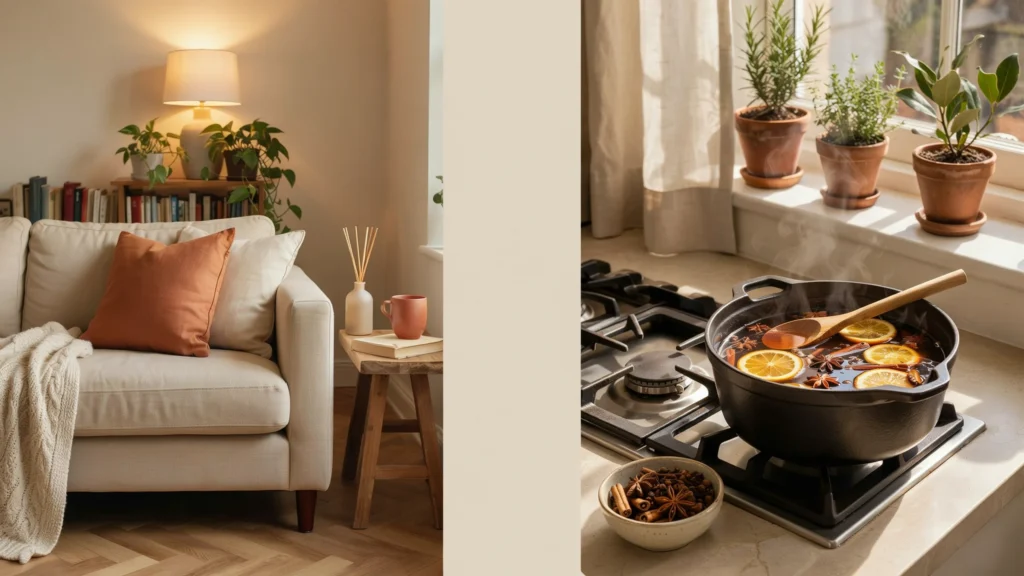
A simmer pot is the cheapest winter scent there is, and it is the one I recommend most often to friends who do not want to buy candles. Fill a small saucepan with water, add a few orange peels, two or three cinnamon sticks, a few whole cloves and a star anise if you have one, and let it simmer gently on the stove for an hour. The steam carries the scent through the whole house, and the pot costs nothing if you already have the ingredients in the kitchen. Refill the water as it drops, and the pot will keep going all evening. It is a lovely thing to have simmering when guests arrive, because the house smells like something good is happening before anyone has even sat down.
Sound is the other invisible layer, and it works the same way. A quiet room is not the same as a cozy room. A cozy room has a soft sound in the background that tells your nervous system it is safe to relax.
Music is the obvious choice, and the right music for a winter evening is slow and warm: acoustic guitar, soft jazz, piano, a singer with a low voice. Keep the volume low enough that you can talk over it without raising your voice.
A small speaker on a shelf, or a smart speaker in the corner, is all you need. Make a winter playlist once, with fifty or sixty songs you love, and you will use it all season. The act of making the playlist is part of the ritual, and it is a good job for a cold Sunday afternoon.
Smart touches: let the room warm itself up
Smart home gadgets are not essential to a cozy winter living room, and this guide would be dishonest if it pretended otherwise. You can build a wonderfully warm room with no technology at all. But a few small smart touches make the warmth automatic, so the room is already glowing when you walk in, and that is a pleasure worth having if the budget stretches to it. The rule is to automate the things you do every evening anyway, and nothing else.
Smart bulbs are the best place to start, because they solve the lighting problem with one change. Replace the bulbs in your two or three lamps with warm white smart bulbs, all set to 2700K, and set a routine that turns them on at dusk and dims them slowly through the evening.
The routine can be as simple as lights on at sunset, down to half brightness by nine, off at eleven. Once it is set, you never have to think about it again. The room is warm when you come home, and it winds down when you do.
A smart plug does the same job for a lamp that cannot take a smart bulb, or for a string of fairy lights, and it costs less than a bulb. Plug the lamp in, set the schedule, and the lamp becomes automatic.
One warning about smart touches, and it matters. Technology should serve the room, not run it. If the app is fiddly, if the lights flicker, if the speaker misunderstands you three times in a row, the technology is making the room less cozy, not more. In that case, take it out. A manual lamp you switch on with your hand is better than a smart lamp that frustrates you every evening. The warmest room is the one that works without thinking, whether the thinking is done by you or by a small routine you set up once and forgot about.

Frequently asked questions
What is the fastest way to make a living room feel cozy in winter?
Switch off the overhead light and turn on two or three lamps with 2700K warm white bulbs. Then add a folded throw to the sofa and close the curtains at dusk. Those three moves take about ten minutes and change the room more than any single purchase.
What colours make a living room feel warm in winter?
Terracotta, rust, ochre, deep green and cream work best, because they copy the colours of late autumn. Use cream as the base, one warm colour as the main accent, and deep green as the anchor. Keep the palette to two warm colours plus the anchor so the room feels intentional.
How big should a rug be in a winter living room?
Big enough to sit under the front legs of the sofa and chairs, with 15 to 20 centimetres showing in front of the sofa. For a three seat sofa with two chairs that usually means around 240 by 300 centimetres. Measure with a tape and mark the outline on the floor before you order.
Can I make a rented living room cozy for winter?
Yes, and almost everything in this guide works in a rented room. Rugs, throws, cushions, lamps, plants and books are all portable. A tension rod holds a thermal curtain lining without screws, and a floor lamp needs no drilling at all.
Do I need to buy new furniture to get a cozy winter living room?
No. A rug, warm bulbs, a few throws and heavier cushion covers do most of the work on the sofa you already have. Spend on the rug first, because it lasts for years, and layer the cheaper textiles around it.
Your first cosy evening, tonight
Here is your plan for tonight, and it takes less than an hour. First, switch off the ceiling light and leave it off. Put a lamp beside the sofa and one in the far corner, both with warm white bulbs, and light two or three candles on a tray on the coffee table. Second, pull the chairs a little closer and fold your warmest throw over the arm of the sofa.
Third, close the curtains as soon as it gets dark. Fourth, put a pot of water on the stove with orange peel, cinnamon and cloves, and let it simmer while you make a hot drink. Then sit down, put your feet up on the ottoman, and stay there for an hour with a book or a show you love.
Notice how the room feels. Notice which corner still feels dark, which seat still feels cold, and what you want to change next. Write it down. Tomorrow, measure for the rug. This weekend, swap the cushion covers. Next week, hang the heavier curtains. Warmth builds one layer at a time, floor to ceiling, and tonight is the first layer.