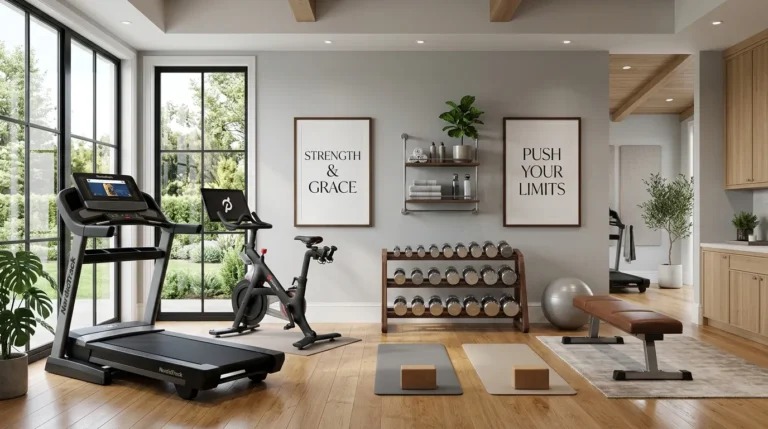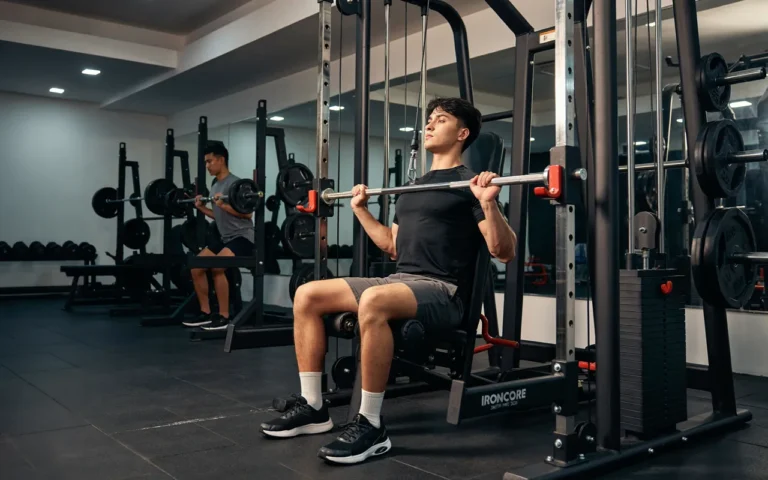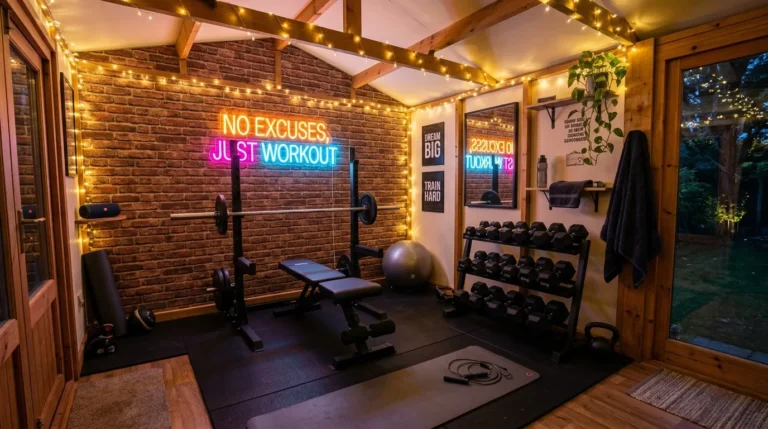
The smartest way to build a home gym is gradually, in phases. Start with affordable basics like resistance bands and a mat ($50–$200), then add equipment as your fitness and budget grow. This phased approach keeps costs manageable, prevents wasted purchases, and lets you build a setup that truly fits your goals. This guide, Top 5 Ways to Gradually Build a Home Gym: Ideas for Every Budget, shows how to create an effective workout space step by step without overspending.
A home gym promises something every busy person craves: a great workout without the commute, the membership fees, or the wait for a free squat rack. But the idea of building one can feel overwhelming and expensive. Where do you start? How much do you really need to spend? And what happens if you buy a pile of gear that collects dust?
Here’s the good news: you don’t need to drop thousands of dollars overnight. The best home gyms are built gradually, one smart purchase at a time. This approach spreads out the cost, helps you learn what you actually use, and grows alongside your fitness level.
In this guide, you’ll learn how to build a home gym in four budget-friendly phases from a $50 starter kit to a fully loaded dream setup. You’ll also pick up practical tips for saving money, maximizing space, and staying motivated along the way. Let’s get into it.
Why build a home gym instead of joining a commercial gym?
Training at home comes with real, measurable perks. The most obvious is time. The average gym-goer spends 15 to 30 minutes commuting to and from a gym, according to fitness industry surveys. Cut that out, and you reclaim hours every week.
Then there’s cost. A typical commercial gym membership runs around $40 to $60 a month, which adds up to $480–$720 a year. A modest home gym can pay for itself within a year or two and after that, your workouts are essentially free.
A home gym also offers privacy and convenience. You can train in your pajamas at 5 a.m. or squeeze in a quick session between meetings. There’s no waiting for equipment, no judgment, and no awkward small talk. For many people, removing these friction points is the difference between working out consistently and giving up.
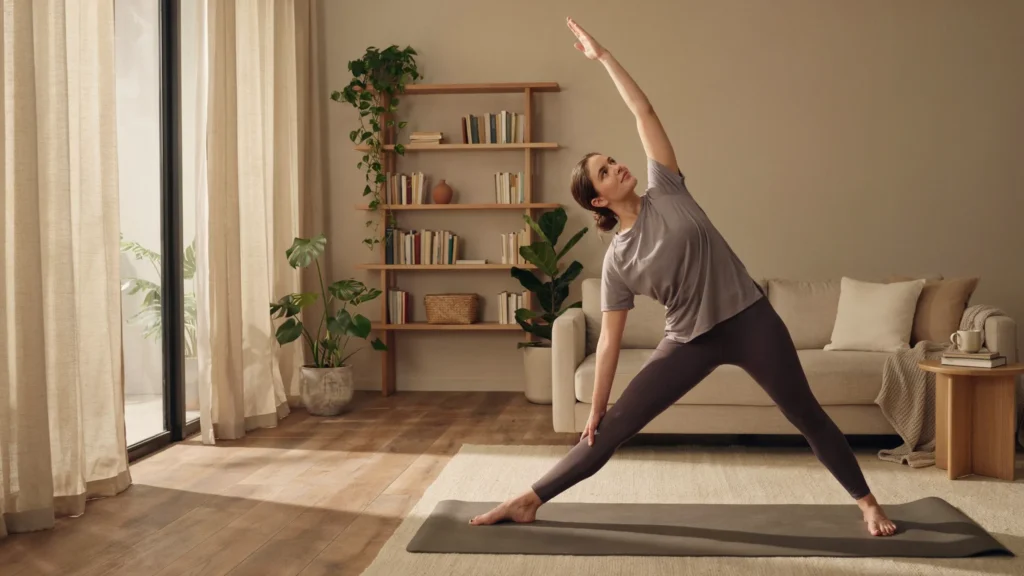
Do You Need to Prep Your Space Before Buying Equipment?
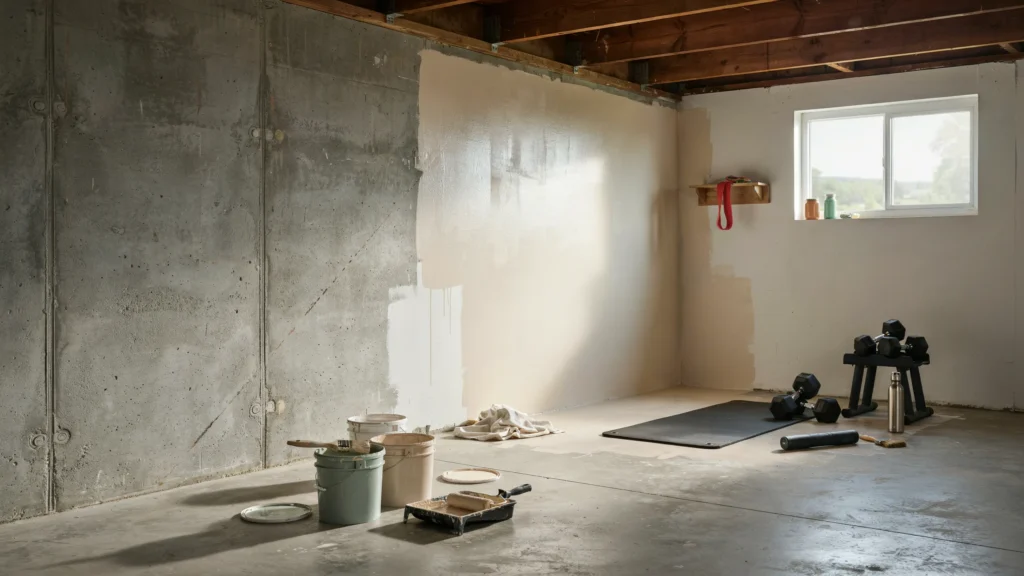
Before any gear arrives, it’s worth taking stock of the room itself, especially if you’re setting up in a basement or garage. Unfinished basements often have exposed insulation covered in plastic sheeting, which isn’t something you want to be breathing in heavily while working out, so removing it and sealing the concrete floors and walls underneath is a smart first step. This kind of prep doesn’t cost much and can usually be done in a weekend, but it makes a real difference in air quality and how comfortable the space feels long-term. If you’re setting up in a spare bedroom or garage instead, a simple deep clean and a fresh coat of paint go a long way toward making the space feel like a real gym rather than a storage room with weights in it.
Should You Add a Mirror to Your Home Gym?
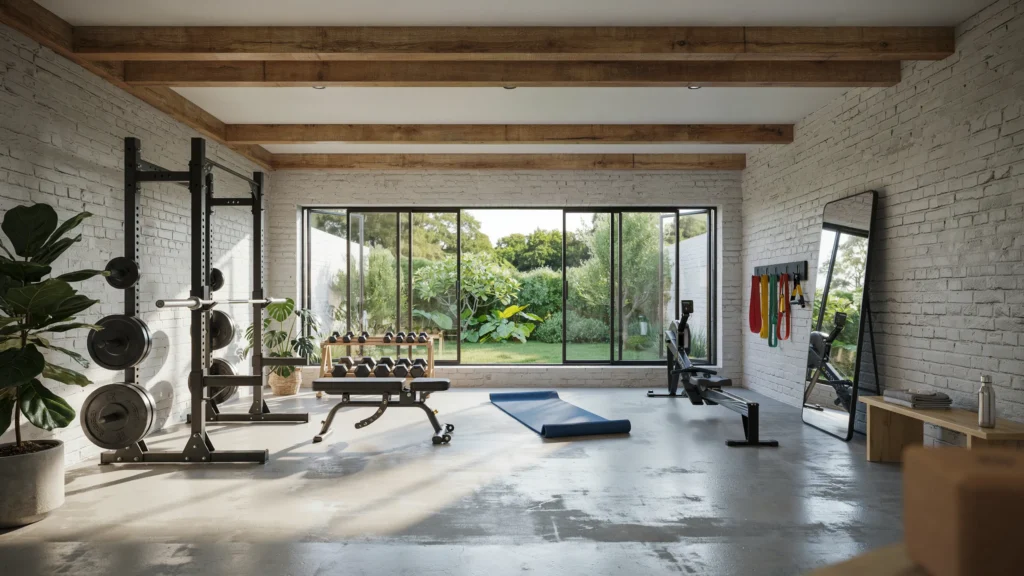
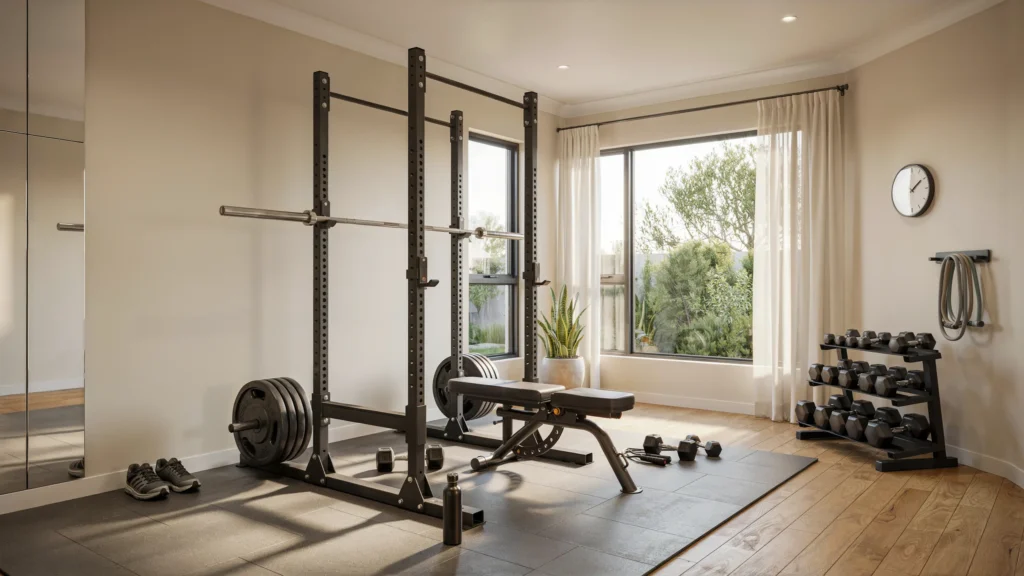
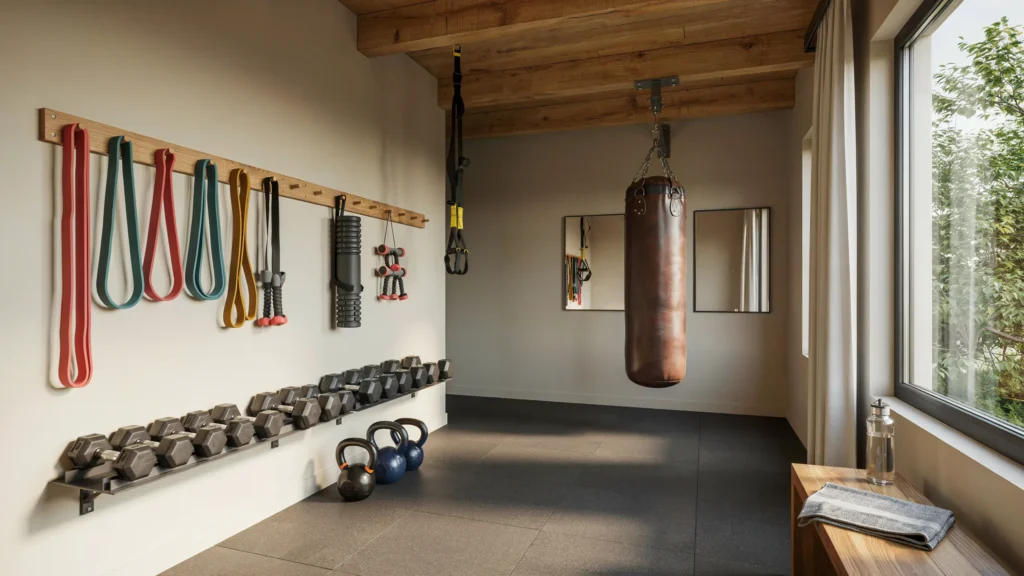
A wall mirror is a small addition with an outsized impact on your training, especially once you start lifting weights. Being able to check your form during squats, deadlifts, or overhead presses helps you catch technique issues before they become injuries, something you simply can’t do by feel alone. A single full-length mirror mounted with sturdy clips and concrete anchors works well against a masonry wall, and two mirrors placed side by side widen your field of view if your gym is set up along a longer stretch of wall. It’s an inexpensive addition compared to the rest of your equipment, but it’s one of the pieces people most often forget to plan for.
What’s a Budget-Friendly Alternative to Gym Flooring?
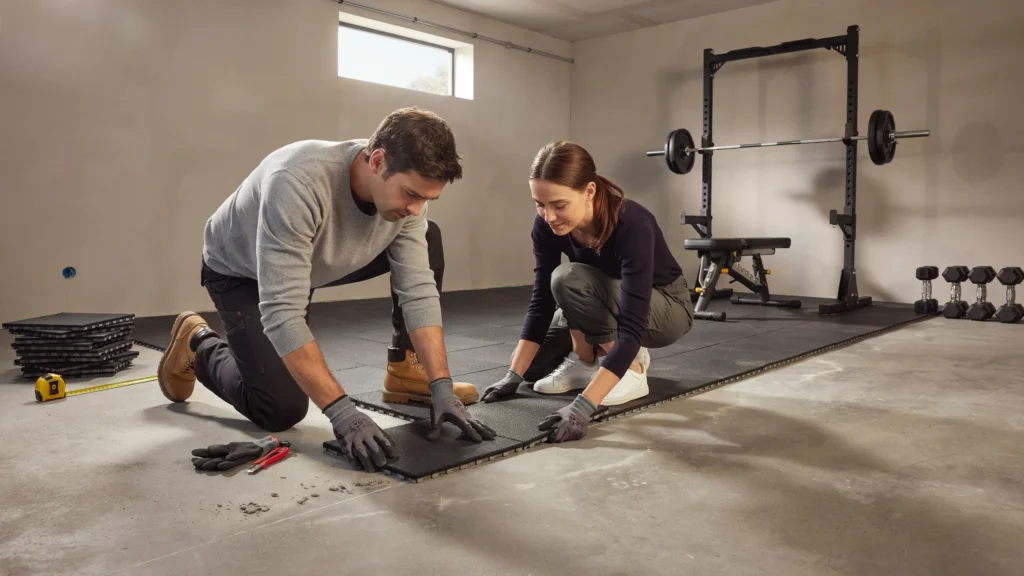
Dedicated home gym flooring can get expensive fast, but horse stall mats offer a sturdy, budget-friendly alternative that holds up just as well to dropped weights and heavy equipment. Sold at farm and ranch supply stores rather than fitness retailers, these thick rubber mats are typically far cheaper per square foot than mats marketed specifically for home gyms, while offering the same cushioning and protection for both your joints and your floor. They’re heavy and won’t shift around once placed, which also means you won’t need adhesive or special installation, just lay them down in the pattern that fits your space.
Should You Add Suspension Training or Combat Equipment?
Beyond barbells and dumbbells, a couple of specialty tools can round out a home gym with entirely different training styles. A suspension trainer, like a TRX system, uses your own body weight against adjustable straps for exercises that build core strength, balance, and stability in ways free weights can’t replicate, and it mounts easily to a ceiling anchor or door frame without taking up floor space when not in use. A punching bag adds a cardio and stress-relief option that doubles as functional conditioning work, particularly popular with anyone who wants an outlet beyond traditional lifting. Neither requires much space, making both good additions once you’ve outgrown your Phase 1 or Phase 2 basics.
How Do You Keep Weight Plates and Small Equipment Organized?
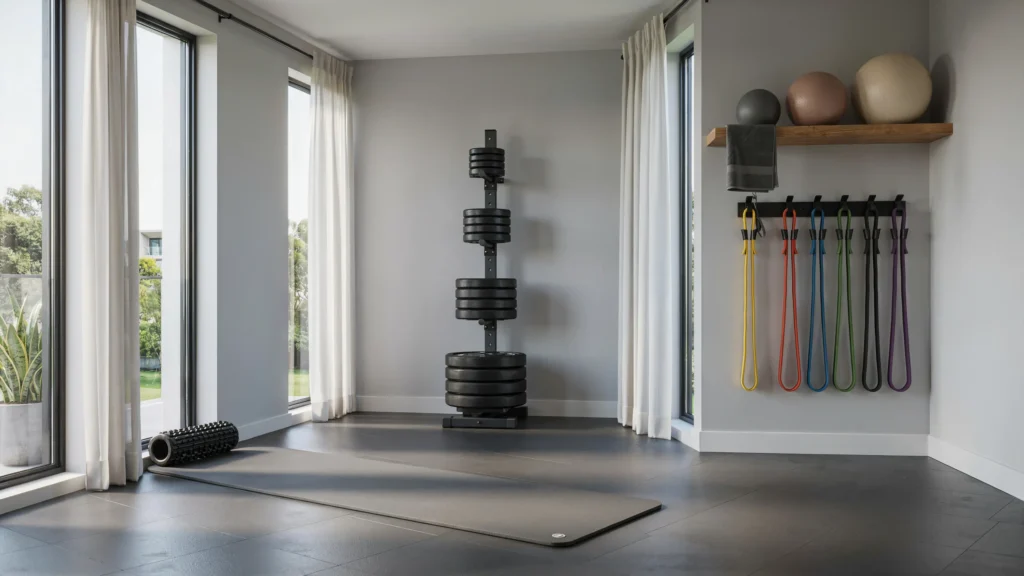
As your equipment collection grows, storage becomes just as important as the gear itself. A vertical plate tree keeps weight plates sorted by size and off the floor, and choosing one on wheels makes it easy to roll out of the way when you need open floor space. Medicine balls and kettlebells are easiest to grab quickly when stored on wall-mounted holders or a simple shelf rather than stacked on the ground, and a wall-mounted organizer with hooks works well for corralling resistance bands, straps, and other small accessories that tend to end up in a tangled pile otherwise. Keeping equipment organized isn’t just about looks, it also means less time digging through a pile to find what you need mid-workout.
What is the “gradual build” philosophy?
The gradual build philosophy is simple: add equipment in stages instead of buying everything at once. You start with versatile, low-cost basics and expand only when you’ve outgrown what you have.
This approach works for three reasons. First, it’s easier on your wallet you spread purchases over months or years. Second, it prevents waste. Many people buy expensive gear they never touch, and a phased approach lets you confirm you’ll actually use something before upgrading. Third, it matches your progress. A beginner doesn’t need an Olympic barbell, just as a seasoned lifter won’t get far with two-pound dumbbells.
Choose the gradual build approach if budget matters more than instant gratification, or if you’re still figuring out which types of training you enjoy most.
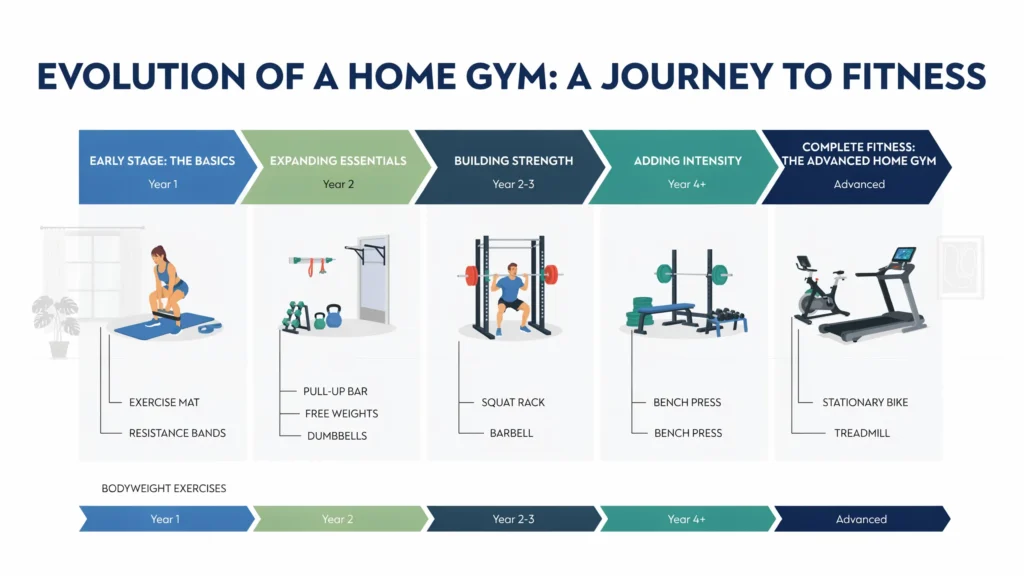
Phase 1: What essential gear do you need to start a home gym? (Budget: $50–$200)
The first phase is all about versatile, space-friendly tools that deliver a full-body workout for very little money. You can do hundreds of exercises with this starter kit alone.
Resistance bands
Resistance bands are the MVP of any starter home gym. They’re cheap (often $15–$30 for a full set), weigh almost nothing, and fit in a drawer. You can use them for squats, rows, chest presses, and shoulder work. They’re also great for adding resistance to bodyweight moves or assisting with pull-ups.
Jump rope
A good jump rope costs around $10–$20 and gives you a serious cardio session in minimal space. Ten minutes of jumping rope can burn as many calories as a 30-minute jog, making it one of the most efficient cardio tools you can own.
Exercise mat
An exercise mat provides comfort and stability for floor work like planks, push-ups, stretching, and core exercises. Expect to spend $20–$40 for a durable one. It protects your joints and keeps you from sliding around on hard floors.
Lightweight adjustable dumbbells
A pair of light adjustable dumbbells ($50–$100) lets you start strength training without buying a full rack. Adjustable models save space because one pair replaces several fixed weights. Start light you can always add more later.
A timer or workout tracker app
You likely already have this one. A free interval timer or workout tracking app on your phone keeps your sessions structured and helps you monitor progress. It’s the cheapest “equipment” you’ll ever own.

Phase 2: How do you expand a beginner home gym? (Budget: $200–$500)
Once you’ve built a consistent routine, Phase 2 adds tools that increase intensity and unlock new movement patterns.
Kettlebell
A kettlebell brings dynamic, full-body conditioning to your sessions. Swings, goblet squats, and Turkish get-ups build strength and cardio at the same time. A single quality kettlebell runs about $40–$80, depending on the weight.
Pull-up bar
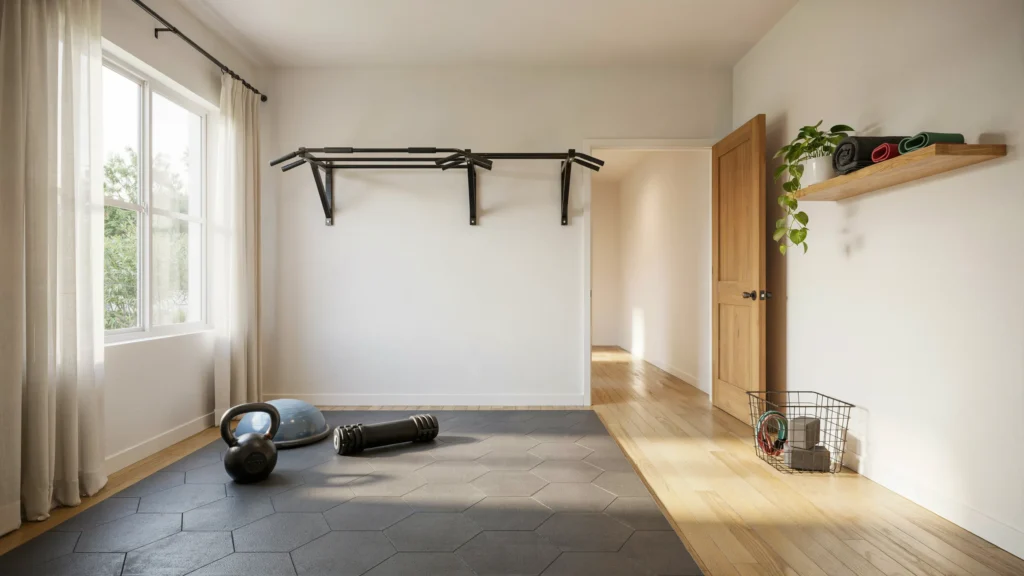
A doorway or wall-mounted pull-up bar ($25–$60) is one of the best upper-body investments you can make. Pull-ups and chin-ups build your back, arms, and grip with nothing but your own body weight.
Stability ball
A stability ball ($20–$35) challenges your core and balance during exercises like planks, crunches, and hamstring curls. It doubles as a chair for active sitting at your desk.
Foam roller
Recovery matters as much as the workout itself. A foam roller ($20–$40) helps loosen tight muscles, improve mobility, and reduce soreness. Five minutes of rolling after a session can make a noticeable difference.
Heavier adjustable dumbbells
By now, your starter dumbbells may feel too light. Upgrading to a heavier adjustable set ($150–$300) keeps you progressing as you get stronger. Adjustable dumbbells remain the most space-efficient choice for a growing gym.
Phase 3: What equipment takes a home gym to the next level? (Budget: $500–$1,500)
Phase 3 is where your home gym starts to rival a commercial setup. These additions support heavier lifting and more varied training.
Adjustable bench
An adjustable bench ($150–$300) opens up dozens of new exercises incline presses, seated shoulder work, step-ups, and more. It’s one of the most versatile pieces you can add.
Entry-level barbell and weight plates
A barbell with a starter plate set ($300–$600) brings serious strength training home. Squats, deadlifts, bench presses, and rows form the backbone of any strength program, and a barbell lets you load real weight.
Resistance loop bands
These small loop bands ($10–$20) are perfect for activating muscles before lifts and for rehab work. They’re especially useful for glute activation, shoulder health, and warm-ups.
Medicine ball
A medicine ball ($30–$70) adds explosive power training to your routine. Slams, throws, and rotational tosses build core strength and athleticism in ways static weights can’t.
A compact cardio machine
If you want dedicated cardio at home, a compact treadmill, spin bike, or rower ($300–$800 at this tier) boosts your endurance and convenience. Rowers are a popular choice because they train both cardio and strength in one motion.
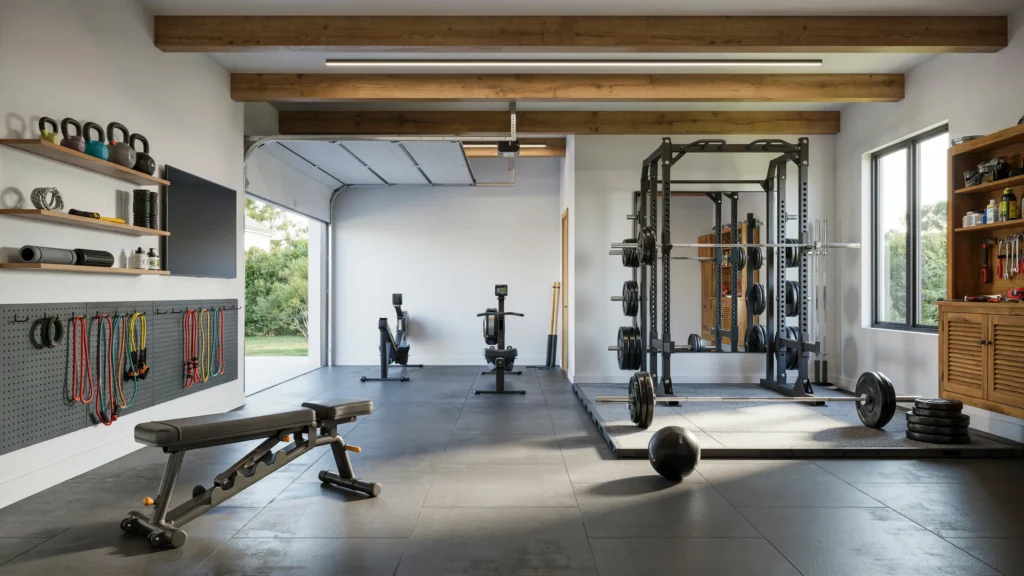
Phase 4: What does a dream home gym setup include? (Budget: $1,500+)
This is the full-scale setup for dedicated lifters and athletes who train at home long-term. Expect a real investment, but also a space that can do almost anything.
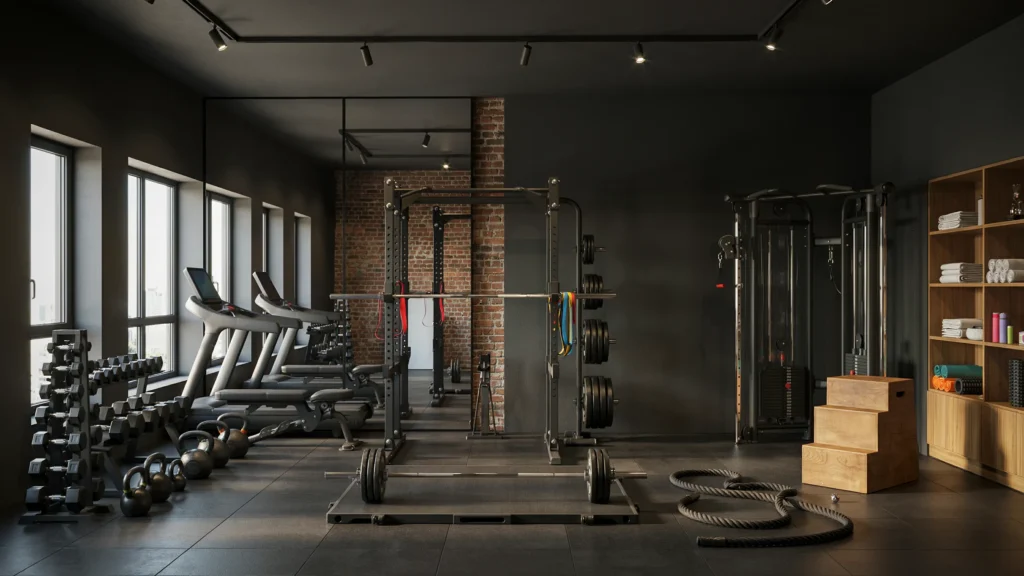
Power rack or squat stand
A power rack ($400–$1,200) is the centerpiece of any serious home gym. It lets you squat, bench, and press heavy weights safely thanks to its adjustable safety bars. If you lift alone, the safety it provides is invaluable.
Olympic barbell and bumper plates
An Olympic barbell paired with bumper plates ($500–$1,000+) is built for heavy and explosive lifting. Bumper plates let you drop the bar safely, which is essential for Olympic lifts like cleans and snatches.
Cable machine or functional trainer
A cable machine or functional trainer ($800–$2,000) adds smooth, controlled resistance for isolation work and functional movements. The variety it offers lat pulldowns, cable rows, flyes, and more is hard to match with free weights alone.
High-end cardio machine
At this level, a premium treadmill, rower, or elliptical ($1,000–$2,500) delivers commercial-grade durability and features. These machines are built to handle daily use for years.
Specialty accessories
Round out your dream gym with extras like a plyo box, battle ropes, or a weighted sled. Each adds a new dimension plyo boxes for jumps, ropes for conditioning, and sleds for pushing and pulling power.
How can you maximize space and budget at every phase?
Smart choices stretch both your money and your square footage. Here’s how to get the most out of every dollar.
Choose multi-functional equipment. Gear that does several jobs gives you more value. Adjustable dumbbells replace a whole rack, a stability ball doubles as a chair, and resistance bands cover dozens of exercises.
Shop the second-hand market. Sites like Facebook Marketplace and Craigslist are full of barely used equipment at steep discounts. Weights and racks are nearly indestructible, so buying them used carries little risk.
Try DIY solutions. Sandbags, water-filled jugs, and homemade plyo boxes can stand in for pricey gear while you save up. A little creativity goes a long way.
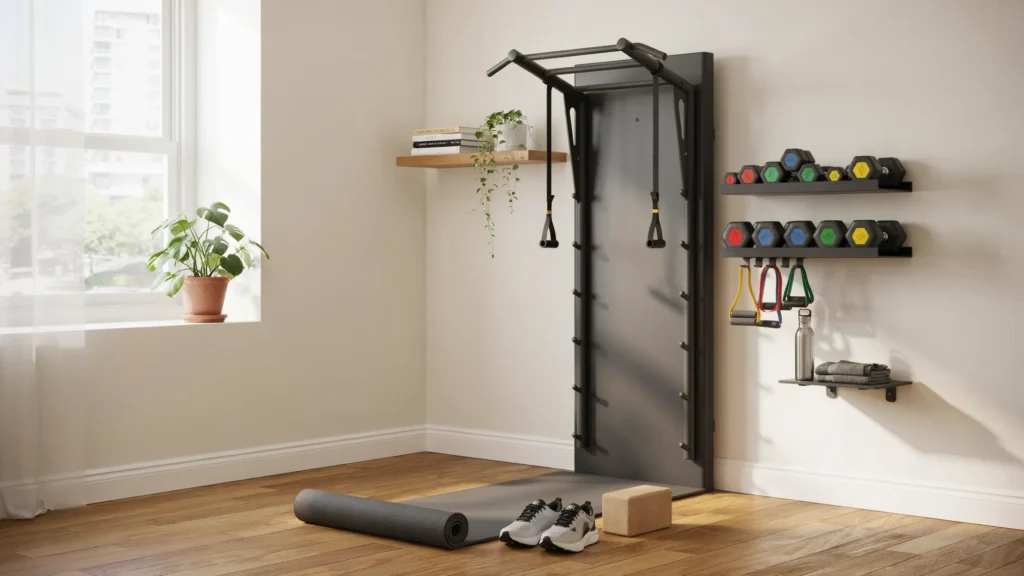
Use space-saving designs. Foldable benches, wall-mounted racks, and compact cardio machines are lifesavers in small homes and apartments.
Create a dedicated zone. Even a corner of a room that’s “yours” boosts motivation and focus. A consistent space signals to your brain that it’s time to train.
How do you stay motivated and keep progressing?
Equipment is only half the battle. Staying consistent is what delivers results.
Set realistic goals. Small, achievable wins build momentum. Aim to add five pounds to a lift or one extra rep each week rather than chasing dramatic overnight changes.
Vary your workouts. Boredom kills routines. Rotate exercises, try new training styles, and switch up your equipment to keep things fresh and challenging.
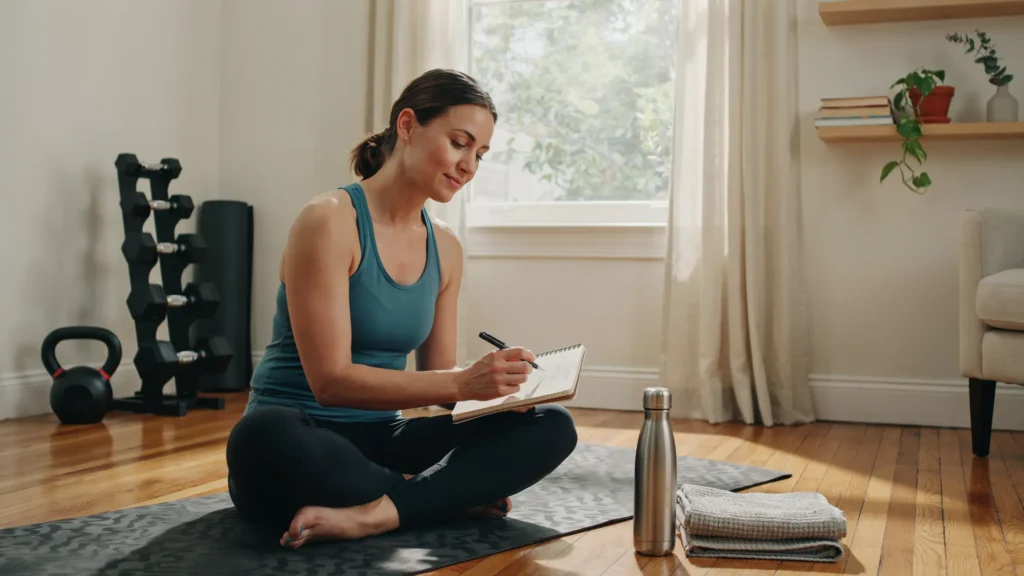
Track your progress. Logging your workouts shows how far you’ve come. Seeing those numbers climb is one of the most powerful motivators there is.
Prioritize recovery. Rest days, good nutrition, and mobility work prevent burnout and injury. Your muscles grow when you recover, not just when you train.
Join online communities. Fitness forums, subreddits, and social media groups offer support, advice, and accountability. Surrounding yourself with like-minded people makes the journey easier and more fun.
Your personalized fitness sanctuary awaits
Building a home gym isn’t a single purchase it’s a journey that grows with you. By starting small and expanding in phases, you avoid wasting money, build only what you’ll actually use, and create a space perfectly suited to your goals and budget.
Start with Phase 1 today. Grab a set of resistance bands and a mat, commit to a few weeks of consistent training, and see how it feels. From there, let your gym evolve naturally as your fitness grows. Before long, you’ll have a personalized fitness sanctuary that fits your life and your wallet.
Frequently asked questions
How much does it cost to build a basic home gym?
You can build a functional starter home gym for $50–$200. This covers resistance bands, a jump rope, an exercise mat, and a set of lightweight adjustable dumbbells enough for hundreds of full-body exercises.
What is the single most important piece of home gym equipment for beginners?
Resistance bands offer the best value for beginners. They’re inexpensive, take up almost no space, and let you train every major muscle group. A quality set costs $15–$30.
Is a home gym cheaper than a gym membership?
Over time, yes. A commercial membership averages $40–$60 a month, or $480–$720 a year. A modest home gym often pays for itself within one to two years, after which your workouts cost nothing.
How much space do I need for a home gym?
You can start in a space as small as a corner of a room roughly 4 by 6 feet is enough for bodyweight and band work. A full setup with a rack and bench typically needs about 50–100 square feet.
Should I buy new or used home gym equipment?
Buy used durable items like weights, barbells, and racks, since they rarely wear out and sell at steep discounts. Buy new items like resistance bands and mats, where hygiene and condition matter more.
How do I stay motivated to work out at home?
Set small, realistic goals, track your progress, vary your routine to avoid boredom, and join an online fitness community for accountability. A dedicated workout space also helps signal that it’s time to train.