
Your front door is where feng shui practitioners say chi, or life energy, first enters your home. Choosing the right feng shui plants for your entrance is one of the simplest ways to work with that idea no renovation required, just the right pot in the right spot. Below are 21 plants that different feng shui and Vastu traditions have long associated with luck, prosperity, protection, or calm, along with practical care and placement guidance for each one.
It’s worth saying upfront: feng shui isn’t a single fixed rulebook. Different schools and sources describe plant symbolism and ideal placement in slightly different ways, so treat the meanings below as widely shared traditions rather than guarantees.
Why Front Door Plants Matter in Feng Shui
A bare, cluttered, or neglected entrance sends a flat first impression to guests and, according to feng shui belief, to the energy entering your home. A well-placed plant softens hard architectural lines, freshens the air right where you breathe it in daily, and gives your doorway a sense of life before anyone even knocks. None of this demands a green thumb; most of the plants on this list are considered forgiving even for first-time plant owners.
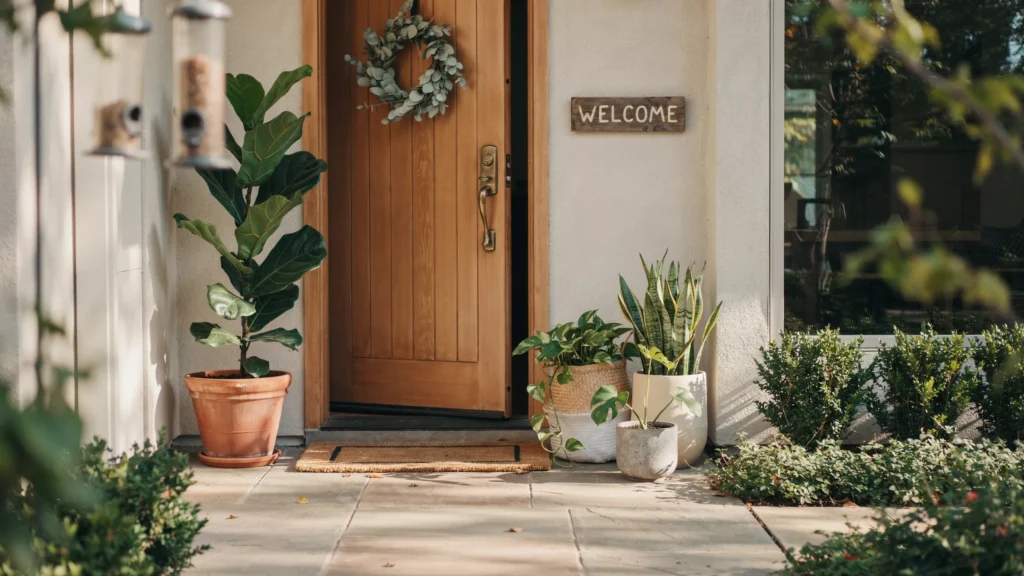
Wealth and Prosperity Plants
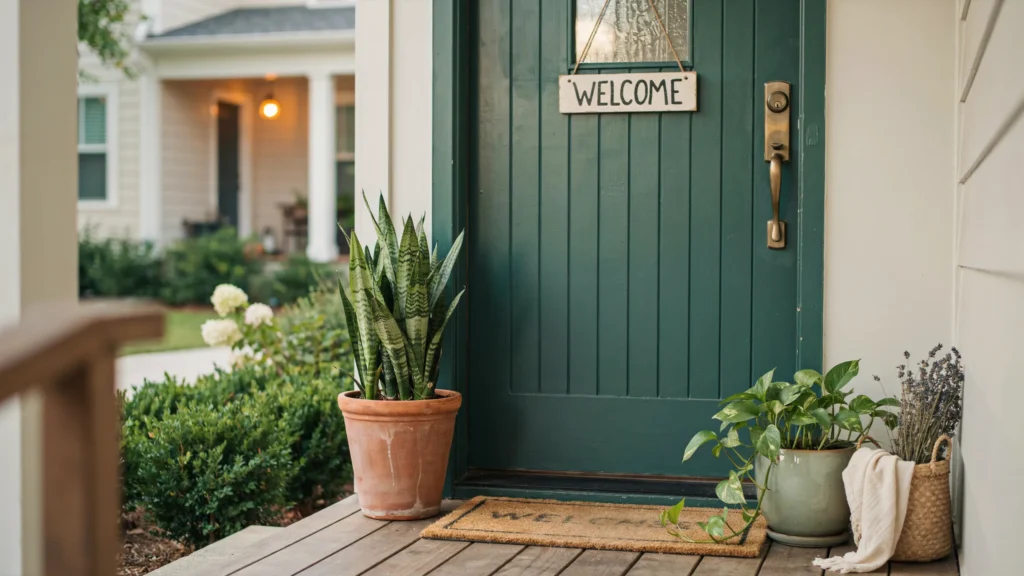
1. Money Plant (Golden Pothos)
With its trailing vines and heart-shaped leaves, the Money Plant is one of the most widely recognized symbols of growth and financial luck in feng shui. It tolerates low light reasonably well, which makes it a forgiving choice for entrances that don’t get much direct sun. Keep in mind it’s toxic to pets, so place it up high or out of reach if animals wander near your door.
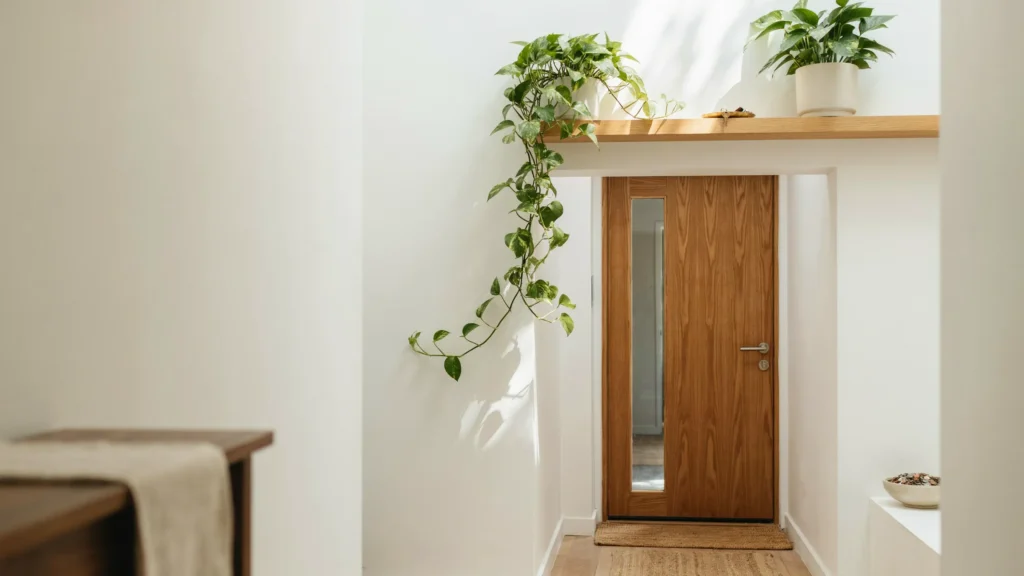
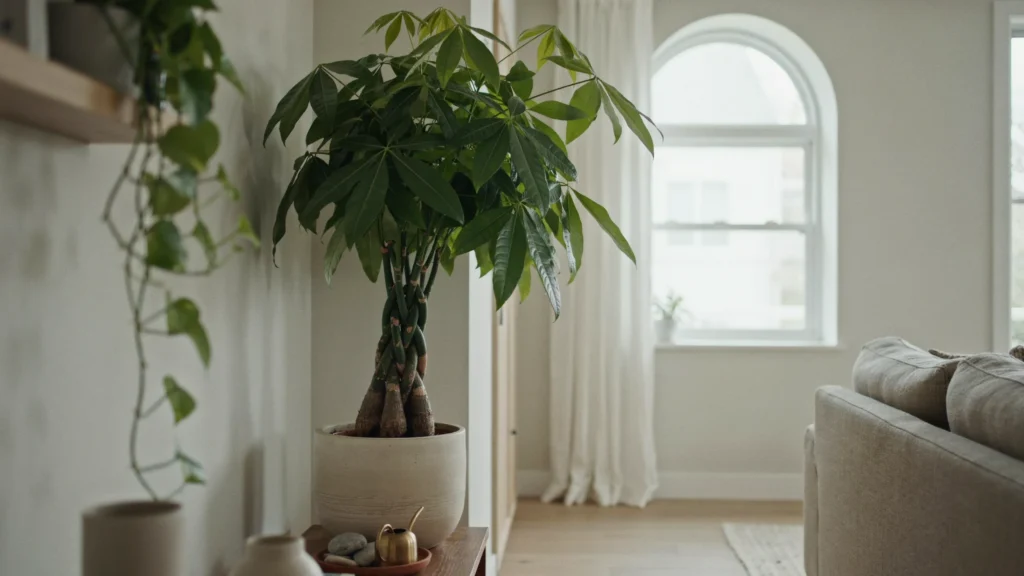
2. Money Tree
The braided trunk and glossy leaves make the Money Tree as much a design statement as a symbolic one. In feng shui’s five-element philosophy, it’s said to represent balance across the elements rather than wealth alone. Some practitioners consider a rare seventh leaf on a single stem an especially lucky sign, though this varies by tradition.
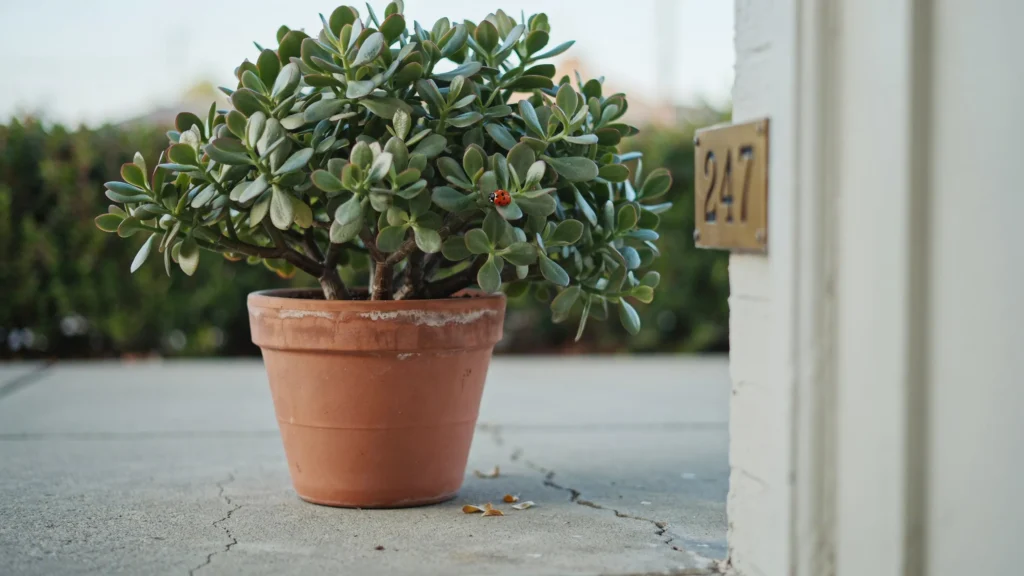
3. Jade Plant
Thick, coin-shaped leaves have given the Jade Plant its long-standing association with prosperity and success. It thrives in bright, indirect light and needs watering only every couple of weeks, making it a practical pick for a partially sunny front step. Many feng shui sources suggest placing it toward the southeast of your entrance, though placement advice does vary.
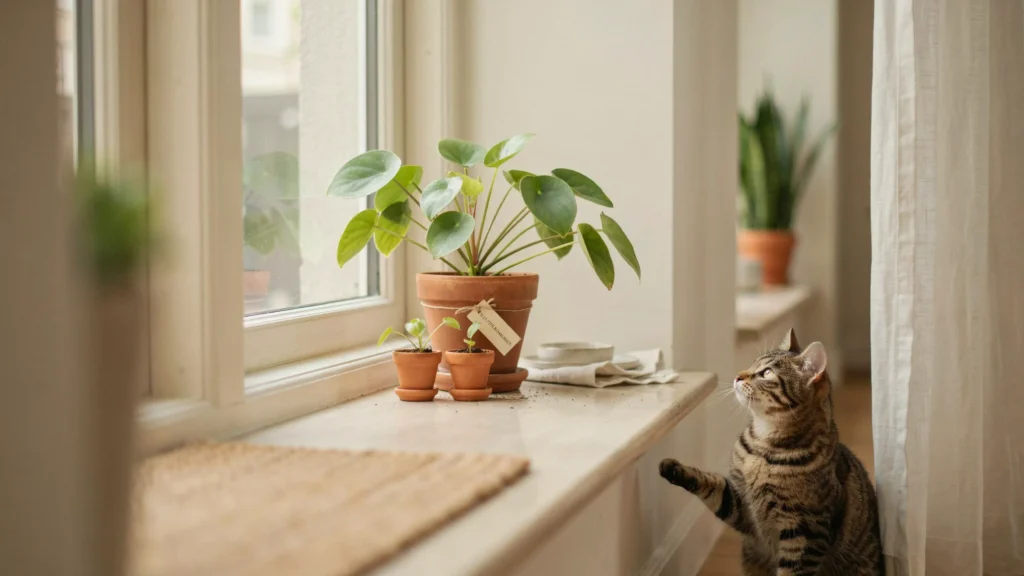
4. Chinese Money Plant
Round, coin-like leaves on thin stems give this plant its name and its reputation as a symbol of luck and abundance. It’s pet-friendly, unlike its Golden Pothos cousin, which makes it a safer option for homes with curious cats or dogs near the door.
Protection and Air-Purifying Plants
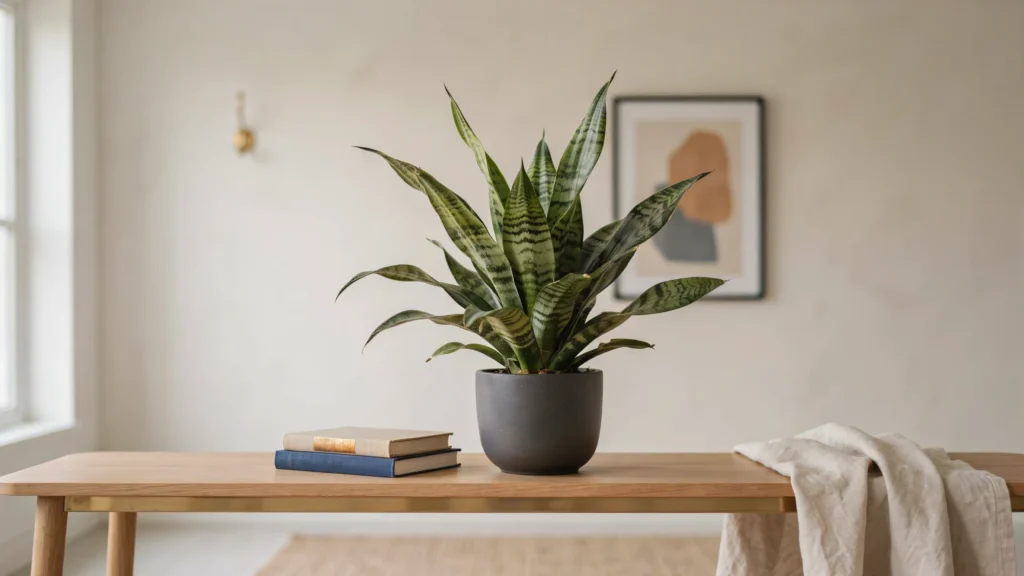
5. Snake Plant
Upright, sword-like leaves give the Snake Plant a sculptural look that suits modern entrances well. Feng shui tradition often calls it a “protector plant,” believed to help guard against negative energy while it quietly purifies indoor air. It tolerates low light and infrequent watering, so it rarely punishes you for forgetting it.
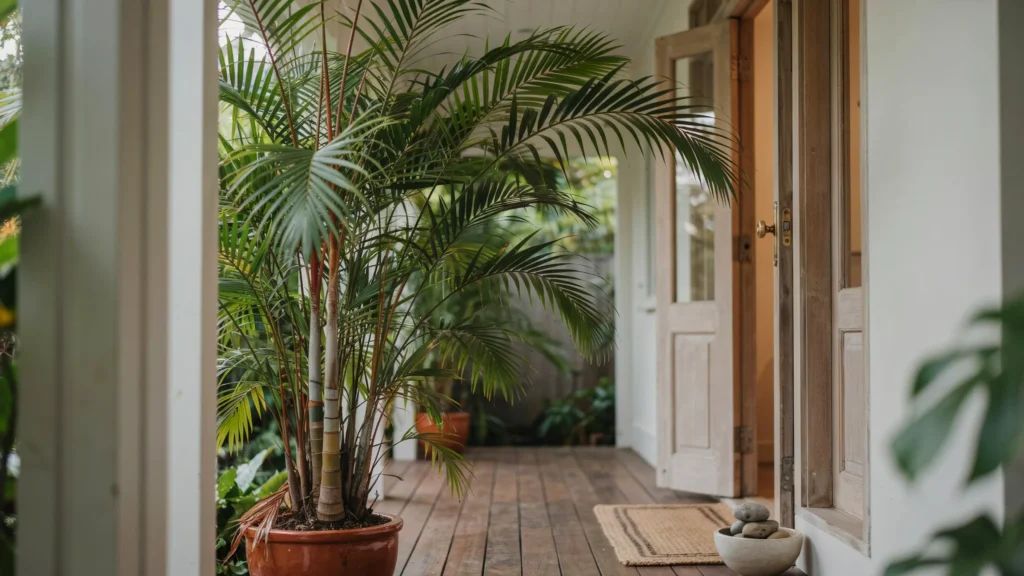
6. Areca Palm
Feathery, arching fronds bring a tropical softness to an entrance that might otherwise feel stark. Beyond the visual lift, this palm is a genuinely strong air purifier and is traditionally linked to peace and abundance. It adapts well to both covered porches and semi-outdoor spots with filtered light.
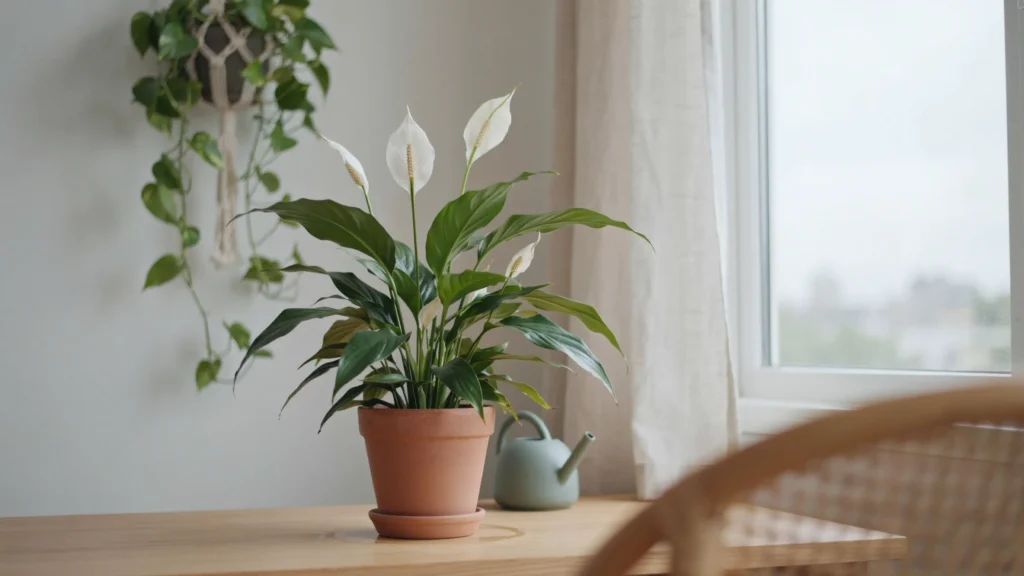
7. Peace Lily
Elegant white blooms against dark green leaves make the Peace Lily one of the more graceful options here. It’s associated with harmony and balance, and some feng shui guidance suggests a north-facing spot for the calmest possible energy. Keep it shaded from harsh afternoon sun to help it thrive.
Flowering Plants for Positive Energy
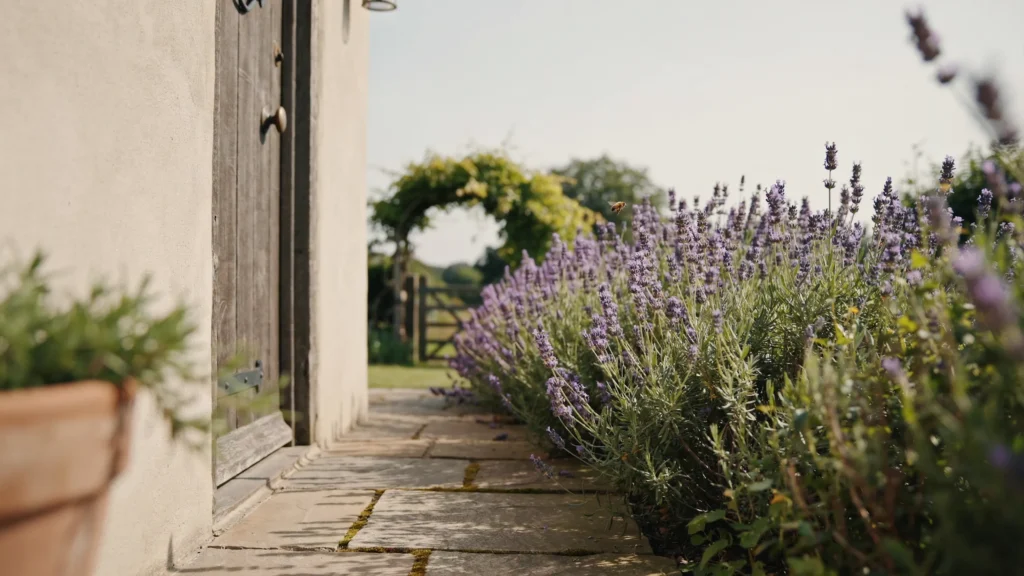
8. Lavender
Soft purple blooms and a calming scent make Lavender a favorite for entrances where you want guests to feel instantly at ease. It’s traditionally linked to stress relief and positivity, and it needs plenty of sunlight and well-drained soil to really flourish.
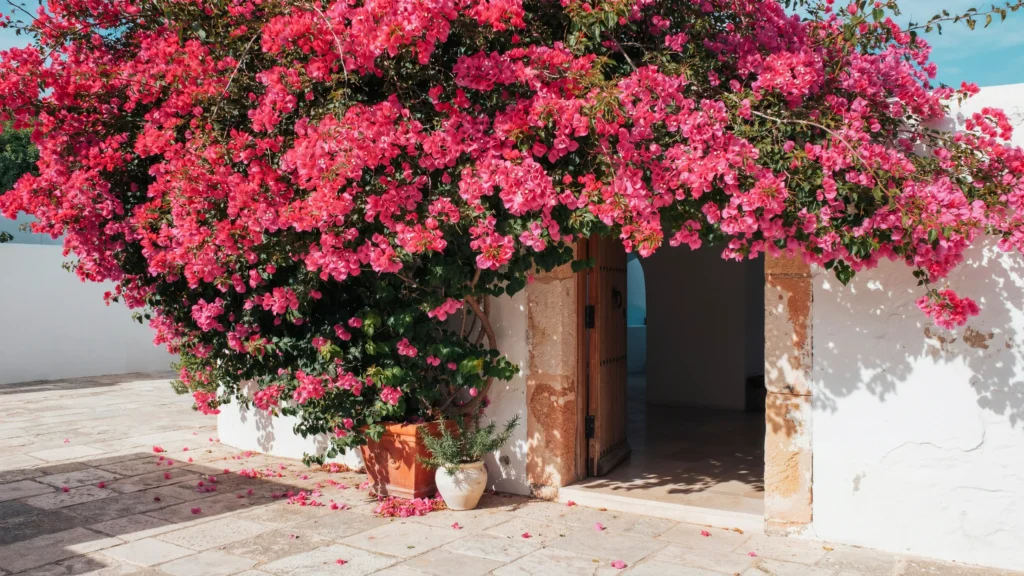
9. Bougainvillea
Cascading, colorful blooms in pink, orange, or purple turn a plain doorway into something genuinely eye-catching. Bougainvillea is often associated with passion and positive energy, and it holds up especially well in warm, sunny climates.
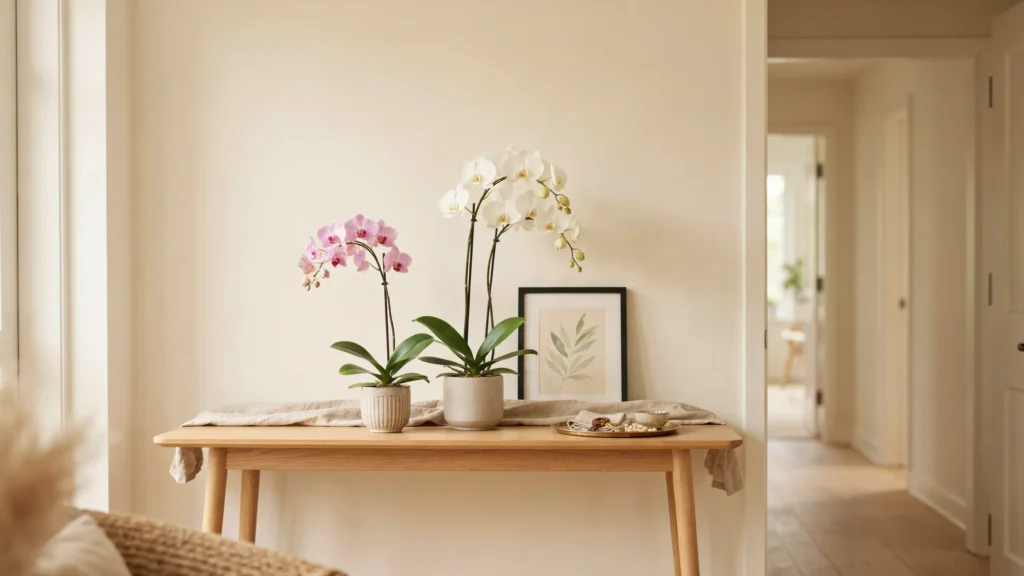
10. Orchids
Elegant and slightly exotic, Orchids are tied in feng shui tradition to love, refinement, and good fortune. White or pale pink varieties tend to keep an entrance looking fresh and sophisticated without feeling overdone.
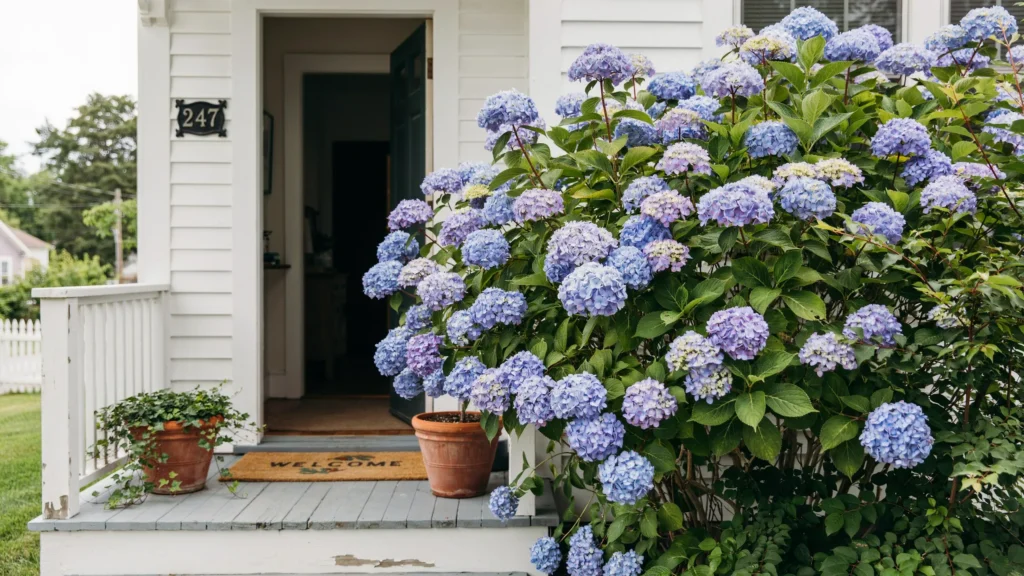
11. Hydrangea
Big, full blooms give Hydrangeas an instant sense of abundance and warmth. They’re commonly associated with gratitude and good fortune, making them a lovely choice for anyone who wants their entrance to feel welcoming rather than purely decorative.
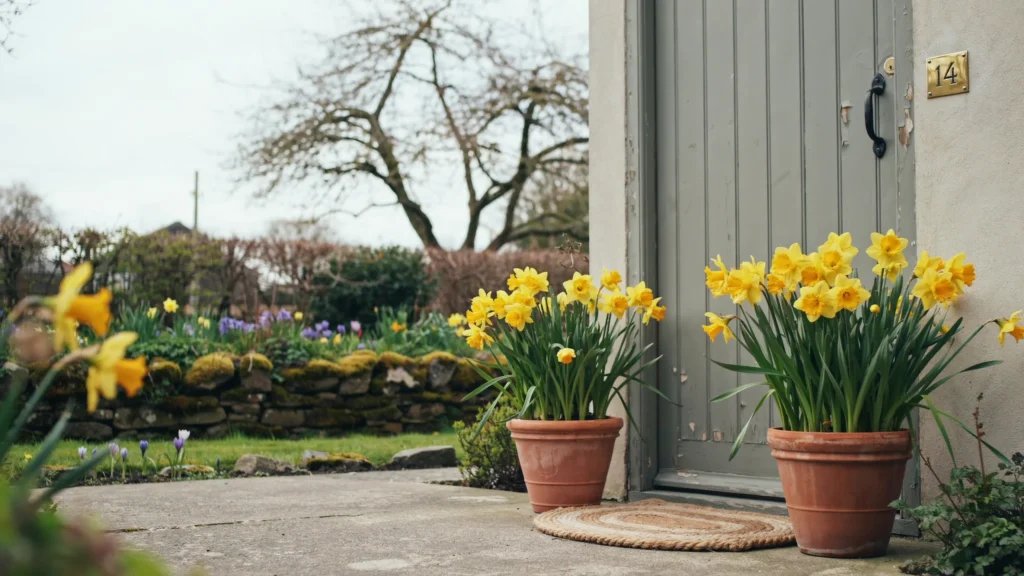
12. Daffodils
Bright yellow petals carry a fresh-start energy that several traditions link to renewal — in Welsh folklore, spotting the season’s first daffodil is said to promise a lucky year ahead. Planted in pots by the door, they bring cheerful color right as spring begins.
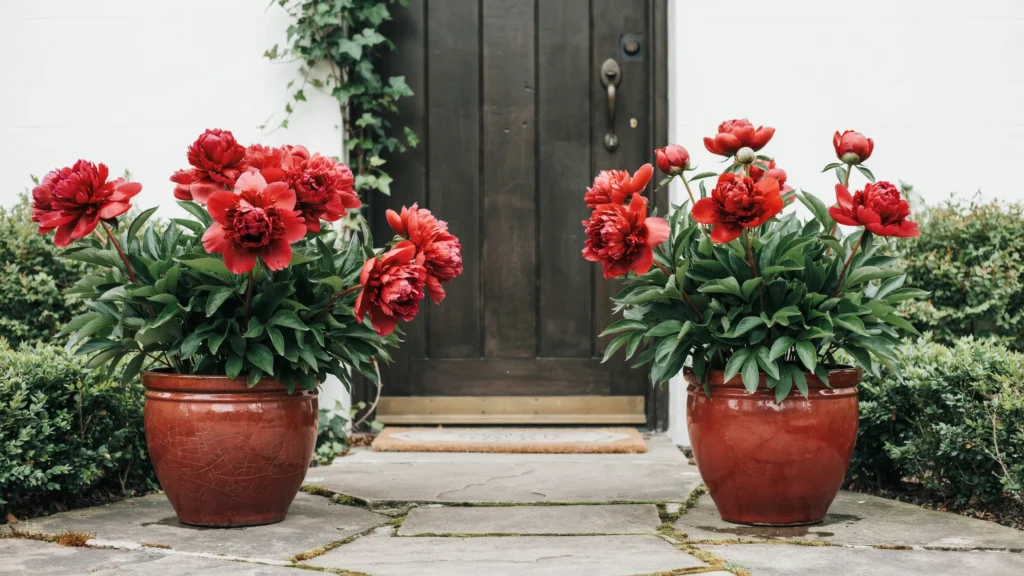
13. Peonies
Lush, ruffled blooms are traditionally linked to prosperity and lasting love, with red varieties in particular tied to passion and good fortune. A pair of peony pots on either side of your entrance adds a romantic, established feel.
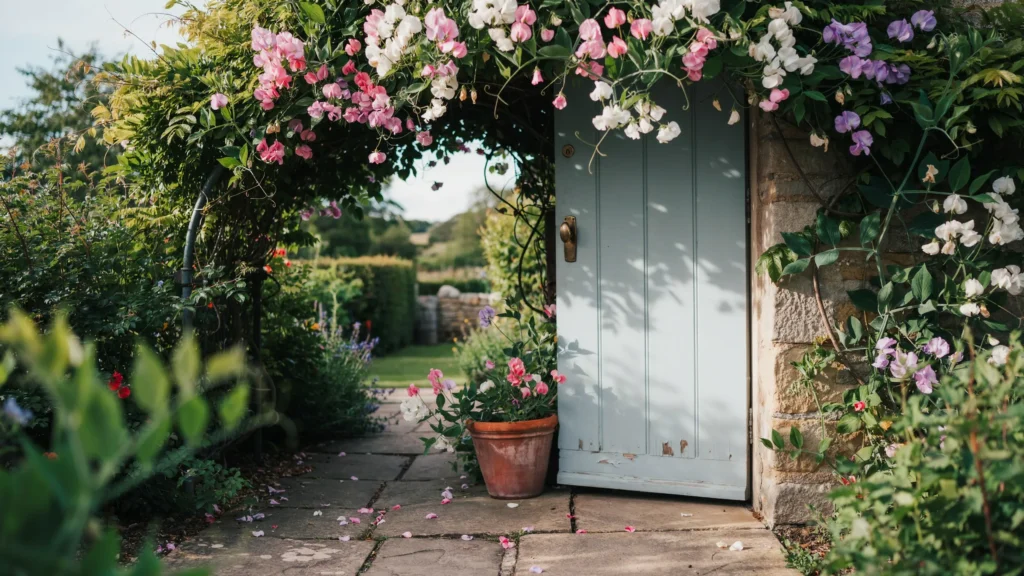
14. Sweet Peas
Small but fragrant, Sweet Peas are traditionally associated with gratitude and joyful new beginnings. Their delicate scent makes them a nice addition near a door you walk through daily, where you’ll actually notice the fragrance each time.
Plants for Balance and Calm
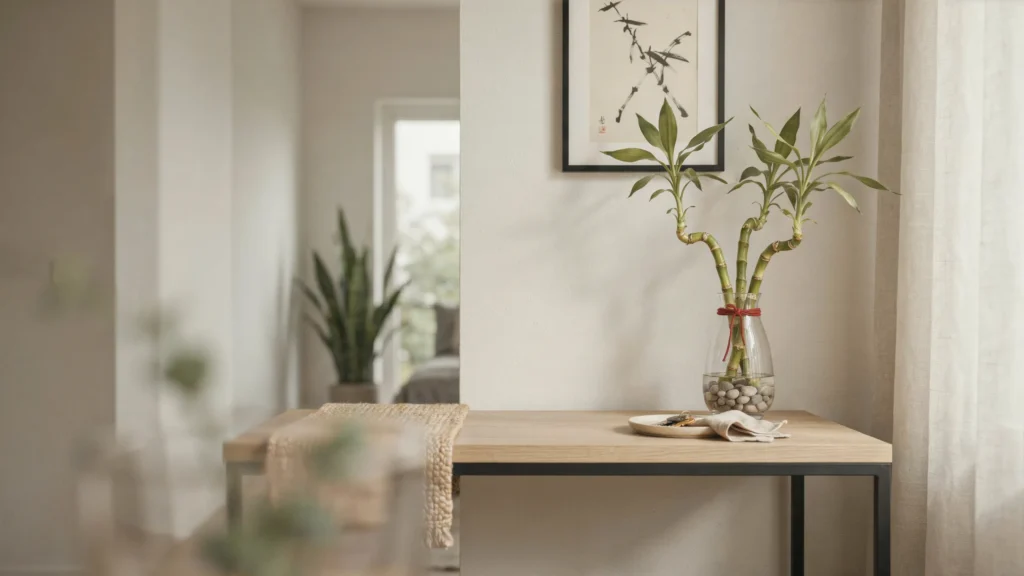
15. Lucky Bamboo
Sleek, low-maintenance stalks make Lucky Bamboo a favorite for smaller entrances or apartments with limited natural light. Stalk count is said to matter in this tradition — three stalks are linked to life balance, five to financial luck, and four is a number many practitioners avoid altogether due to its unlucky association in Chinese numerology.
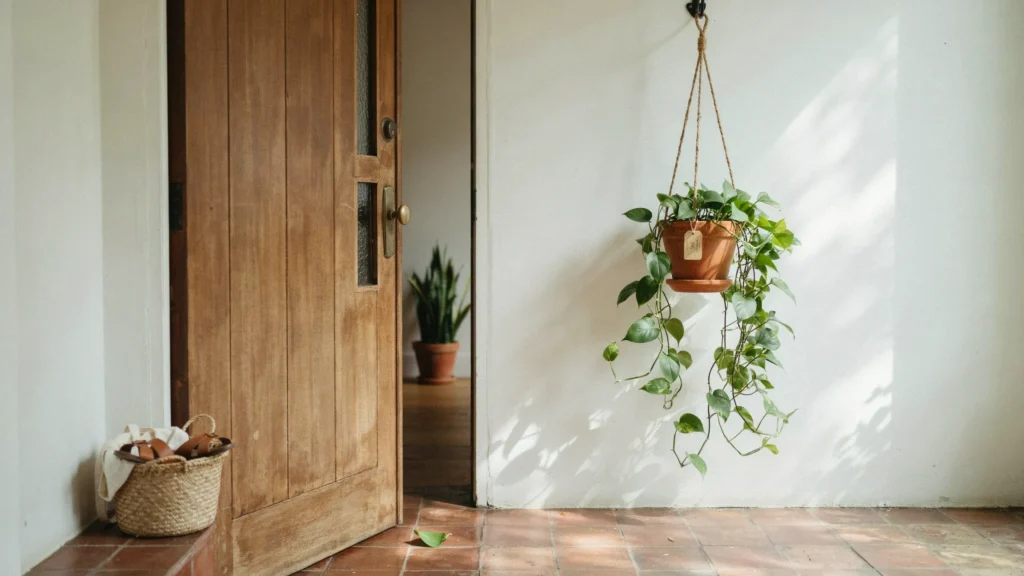
16. Philodendron Heartleaf
Glossy, heart-shaped leaves trail attractively from a hanging planter or tall pot, and the plant is linked in feng shui belief to calmness and partnership. It prefers bright but indirect light and consistent watering, so it suits a covered or partially shaded entry.
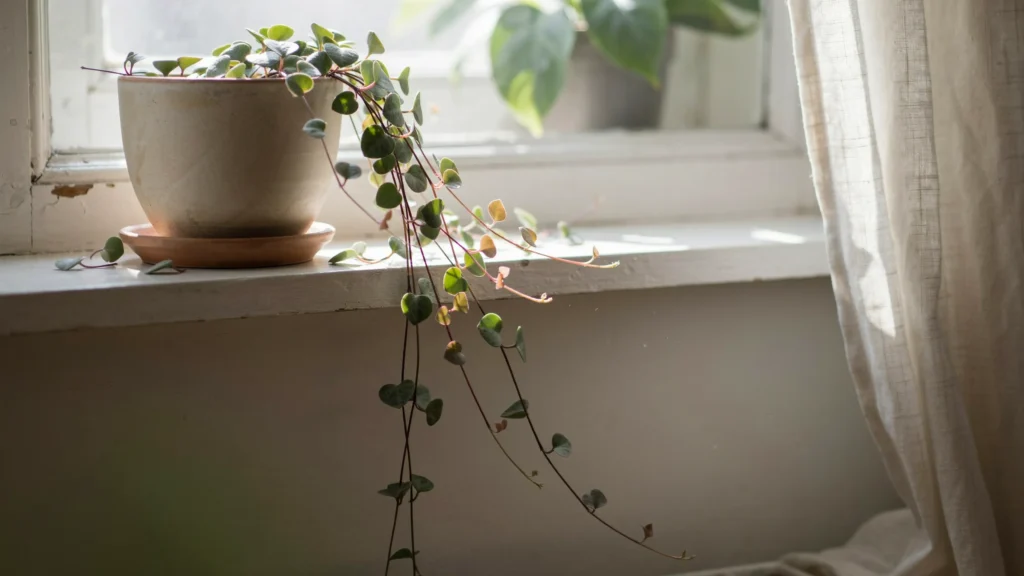
17. String of Hearts
This trailing succulent, with its delicate heart-shaped leaves, is traditionally associated with personal growth and quiet abundance. A single weekly watering and bright, indirect light are about all it asks for in return.
Bold Statement and Sacred Plants
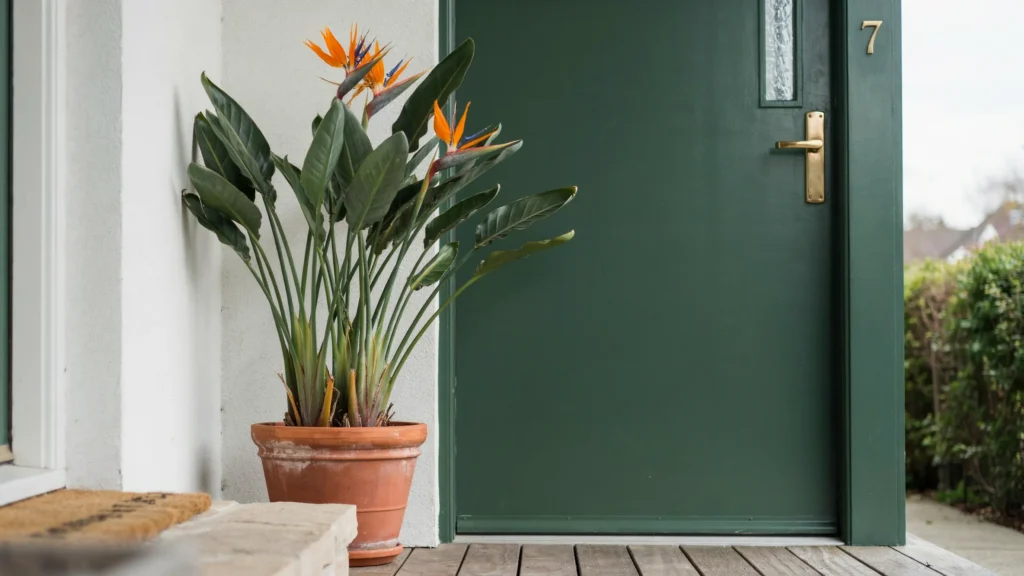
18. Bird of Paradise
Tall, banana-like leaves and striking flowers make this plant hard to miss by a front door. It’s associated with joy, freedom, and good fortune in feng shui tradition, and it tolerates several hours of direct light without much fuss.
19. Burgundy Rubber Tree
Deep, dark leaves give this tree a dramatic look that’s said to work especially well near a northeast-facing entrance, where some feng shui guidance links it to stability and resilience. It needs only weekly watering once established.
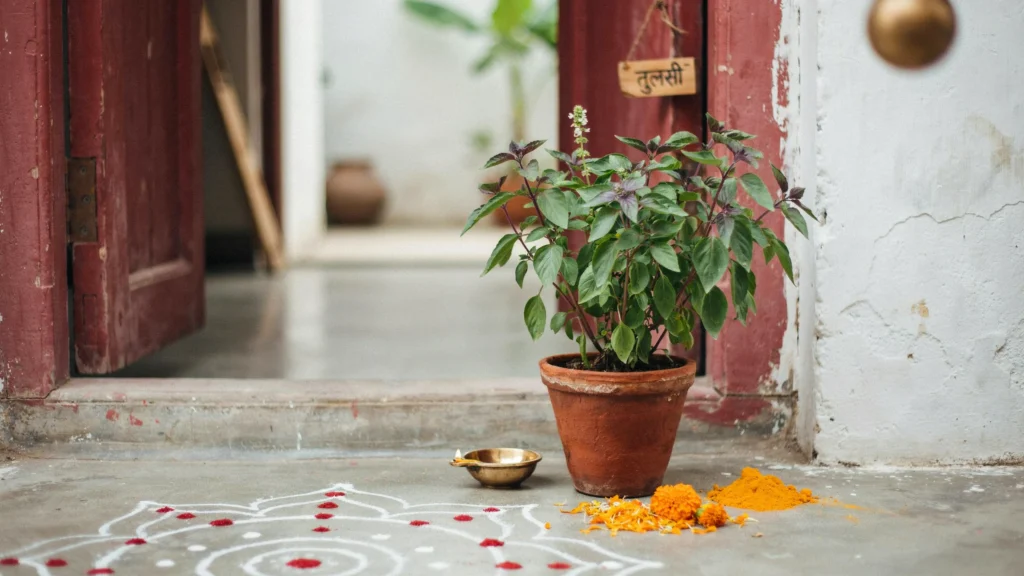
20. Basil (Tulsi)
Considered sacred in Indian tradition, Tulsi is often planted near entrances in the belief that it invites spiritual protection and positive energy. It’s also genuinely useful in the kitchen, making it one of the few plants on this list that’s both symbolic and practical.
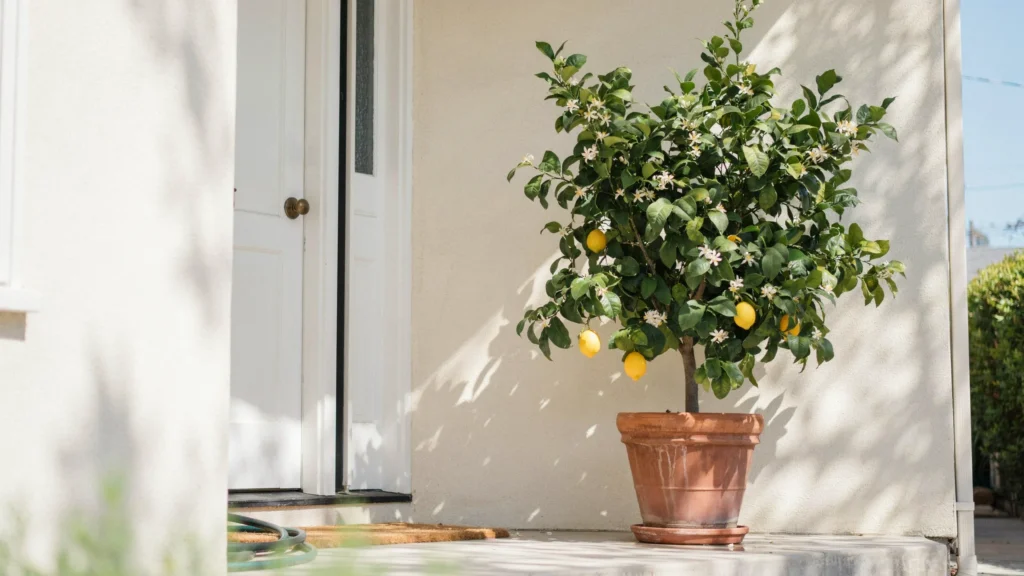
21. Lemon Tree
A Lemon Tree placed toward the east of your entrance is traditionally linked to growth, good health, and fresh starts. It needs several hours of full sun and regular watering to thrive as a potted plant, but the payoff includes fragrant blossoms and, eventually, actual lemons.
How to Place Feng Shui Plants at Your Front Door
Placement matters as much as which plant you choose, at least according to feng shui tradition. A few practical guidelines to work from:
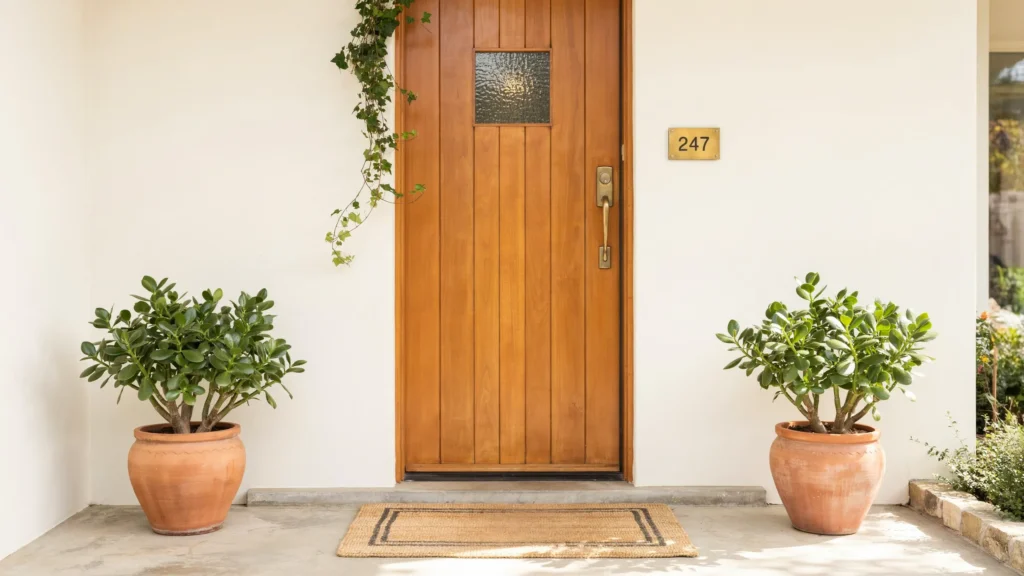
- Use pairs. Two matching plants flanking your door create symmetry, which many feng shui sources treat as inherently auspicious and it simply reads as more polished to the eye.
- Match your pots to your home’s style. Terracotta feels earthy and traditional, ceramic feels polished, and metallic finishes suit a more modern facade. Choose whichever fits what’s already there.
- Consider direction, loosely. Feng shui guidance often favors placing prosperity plants like the Money Tree or Jade Plant toward the north or east side of an entrance, though different schools describe this differently, so treat it as a starting point rather than a strict rule.
- Match plant to light and climate. A wilting plant undoes any good energy you were hoping to invite in. Pick species suited to how much sun your entrance actually gets, not just the ones with the best symbolism.
- Keep the doorway clear. Even a lucky plant placed where it blocks the door works against the basic feng shui principle of free-flowing energy and it’s simply inconvenient to walk around.
Common Mistakes to Avoid
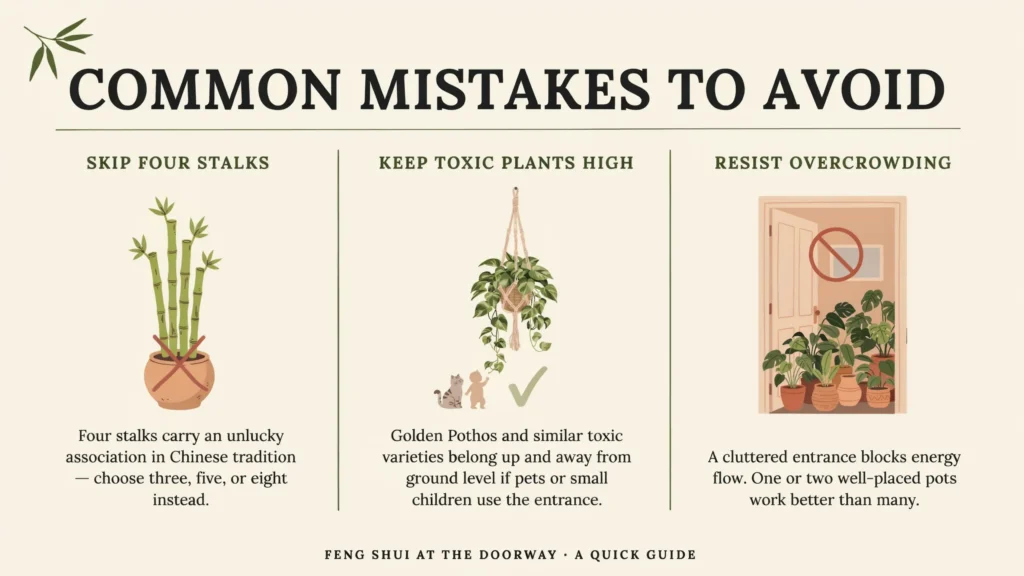
Skip four-stalk arrangements of Lucky Bamboo, since that number carries an unlucky association in Chinese tradition. Keep toxic plants like Golden Pothos up and away from ground level if pets or small children use the entrance regularly. And resist the urge to overcrowd the doorway with too many pots a cluttered entrance works against the very energy flow these plants are meant to support.
Bringing It All Together
You don’t need all 21 of these plants crowding your porch to see a difference. Pick two or three that suit your climate, your available light, and the kind of energy you’re hoping to invite whether that’s calm, prosperity, or protection and let those do the work. A thoughtfully chosen pair of plants by the door tends to say more than a dozen mismatched pots ever could.
Frequently Asked Questions
Which plants are considered the luckiest for a front door?
The Money Tree, Jade Plant, and Lucky Bamboo are the three most commonly cited in feng shui tradition, each traditionally linked to prosperity and good fortune in slightly different ways.
Do front door plants need direct sunlight?
It depends on the plant. Snake Plant, Peace Lily, and Jade Plant tend to do well in indirect light, while Bougainvillea, Lavender, and Bird of Paradise need several hours of direct sun to really thrive.
What are the easiest low-maintenance options for a front door?
Snake Plant, Jade Plant, and Areca Palm all tolerate irregular watering and less-than-perfect light, which makes them practical picks for busy households.
Can indoor plants work at an entrance, or do they need to be outdoor varieties?
Many popular choices, including Lucky Bamboo and the Money Plant, do fine near an entrance as long as they’re shaded from harsh direct sun and brought inside during extreme weather.
How many plants should I place at my front door?
A pair one on each side of the door reflects the classic feng shui approach, since it creates symmetry and balance. You can always add one larger statement plant nearby if your entrance has the space for it.
Why does four-stalk Lucky Bamboo have a bad reputation?
In Chinese tradition, the number four sounds similar to the word for “death,” so it’s generally avoided in bamboo arrangements and other symbolic plantings, even though the plant itself is otherwise considered lucky.
Is feng shui plant symbolism the same across every tradition?
Not exactly. Feng shui has multiple schools of thought, and Vastu Shastra a related but distinct Indian tradition sometimes assigns different meanings or placements to the same plants. Treat the guidance here as a widely shared starting point rather than a single fixed rulebook.