Is the Expensive Shaded Chandelier Actually Better, or Just Heavier?
Picture this. You fall for a shaded chandelier in a showroom. The linen drum shade glows softly, the brass frame looks hand finished, and the price tag reads more than your monthly grocery bill. Then you go home, open your laptop, and find a fixture that looks almost identical for a fifth of the price.
Same drum shape. Same warm glow in the photo. So which one is the real deal, and which one is a pretty picture hiding cheap parts?
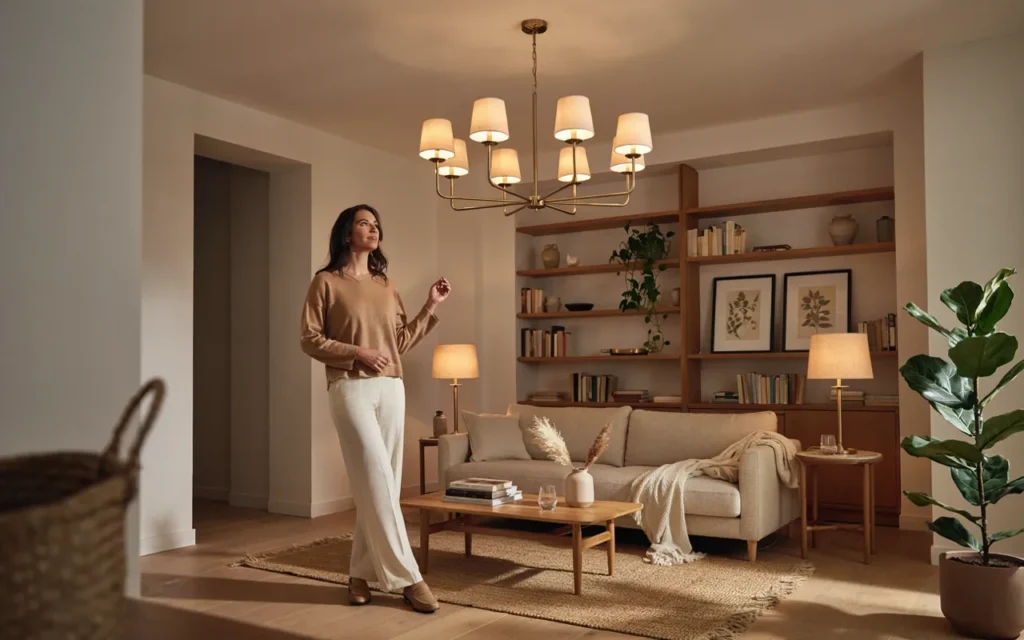
That question is the whole point of this guide. A shaded chandelier is a hanging light with bulbs covered by fabric or solid shades, and the shade is what makes it different from a bare bulb fixture. It softens the light, cuts the glare, and turns a plain ceiling fitting into the focal point of the room. Prices swing wildly, though. A modest big box fixture and a serious designer piece can look like twins in a photograph.
I have stared at both ends of that price range, in showrooms and in real living rooms, and the truth is less dramatic than the price tags suggest. Sometimes the expensive one earns every penny. Sometimes you are paying for a brand name and a fancy box.
The difference sits in details most shoppers never check: the weight of the frame, the stitching on the shade, the quality of the sockets, and, above all, whether the fixture fits the room. Get the size wrong and even a beautiful chandelier looks like a mistake.
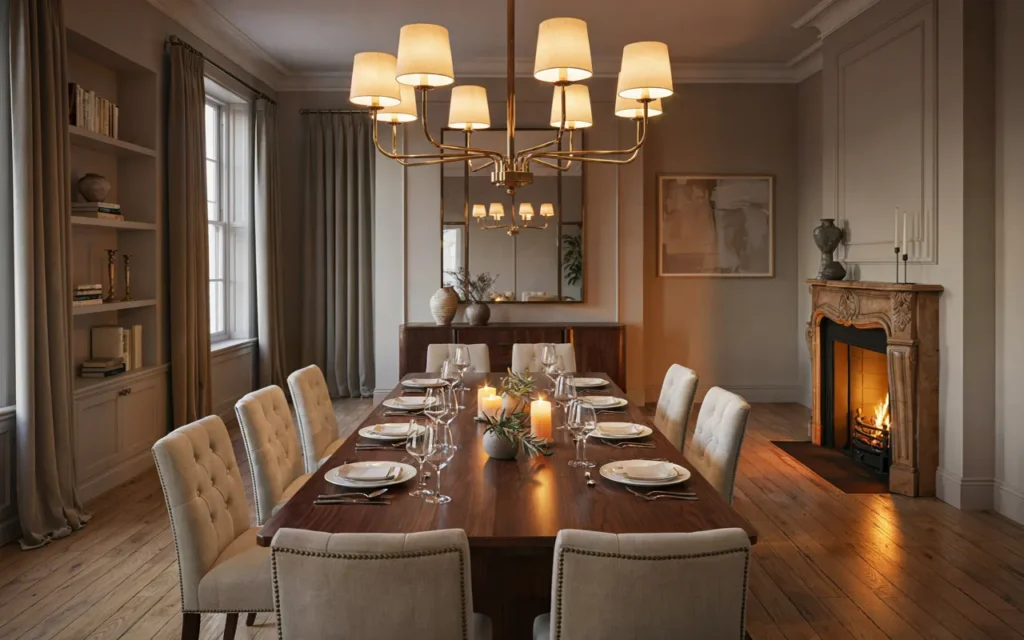
The short verdict: buy the save option when the room is small, the ceiling is standard height, and you plan to change the look within a few years. Buy the splurge option when the chandelier anchors a room you live in every day, the ceiling is tall, or you want a fixture that still looks good in fifteen years. Either way, size matters more than price.
What You Are Actually Buying
Before the numbers and the shopping, it helps to know what sits inside the box. A shaded chandelier has three parts that matter: the frame, the shades, and the light source. The frame holds everything together and carries the weight. The shades shape the light and set the style. The bulbs and sockets decide how bright the room gets and how warm it feels.
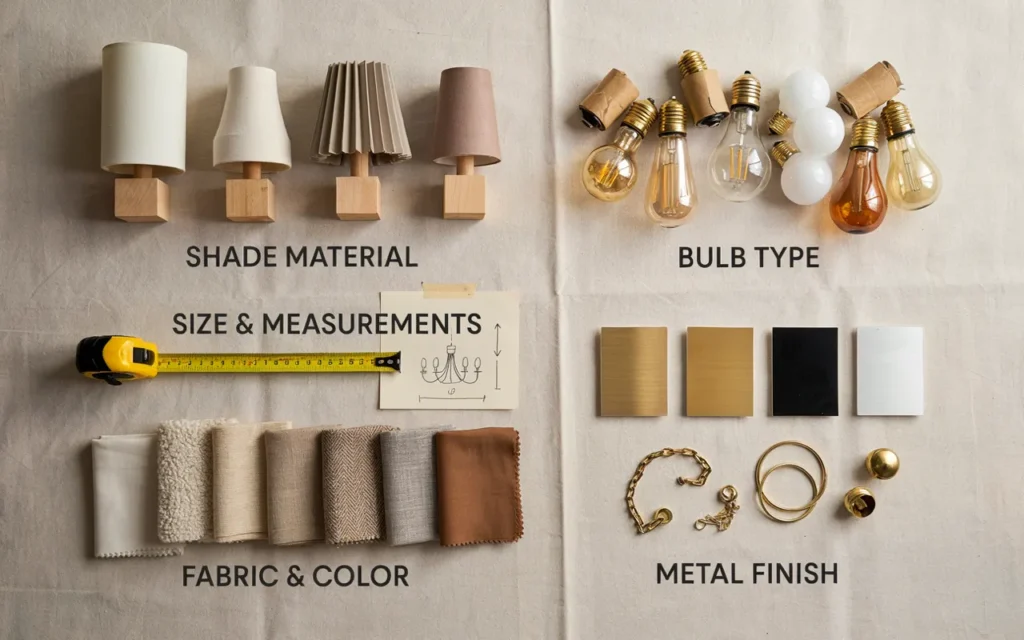
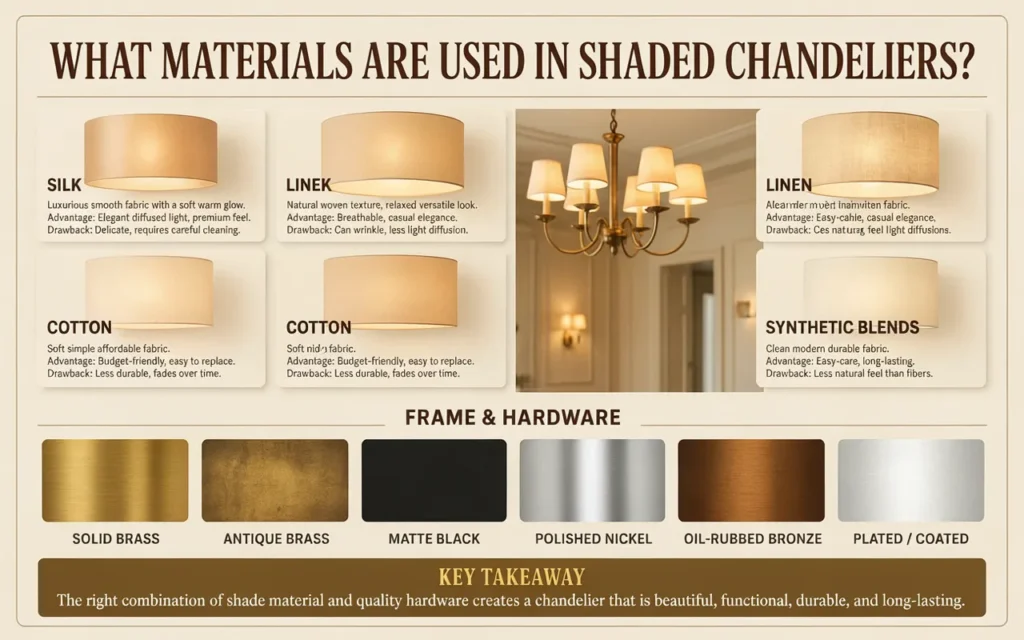
The shade is the star. Linen gives a soft, textured glow and suits modern, transitional and farmhouse rooms. Silk looks richer and more formal, but it costs more and needs gentler care. Cotton is the friendly middle ground, affordable and easy to find, though it can fade in strong sunlight. Synthetic blends are the workhorses of the budget world: they hold their shape and cost far less.
Shaded chandeliers are not new. When electric light replaced candles, people found bare bulbs harsh and cold, so shades were added to bring back the soft glow of candlelight. Drum, empire and bell shades all grew from that idea, which is why the style still works today: old enough to feel classic, flexible enough to fit a modern apartment.
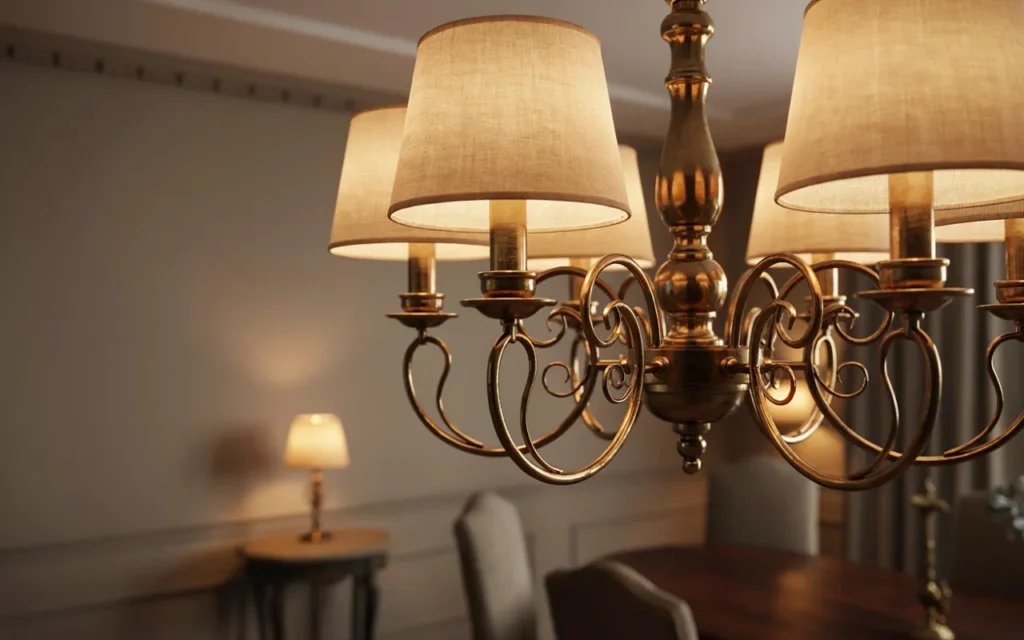
They are still popular because one fixture does two jobs. It lights the room and decorates it. The shade cuts glare so you can sit under it without squinting, and the fixture gives the room a centre. One good chandelier can lift a plain room without a renovation, and the change is instant.
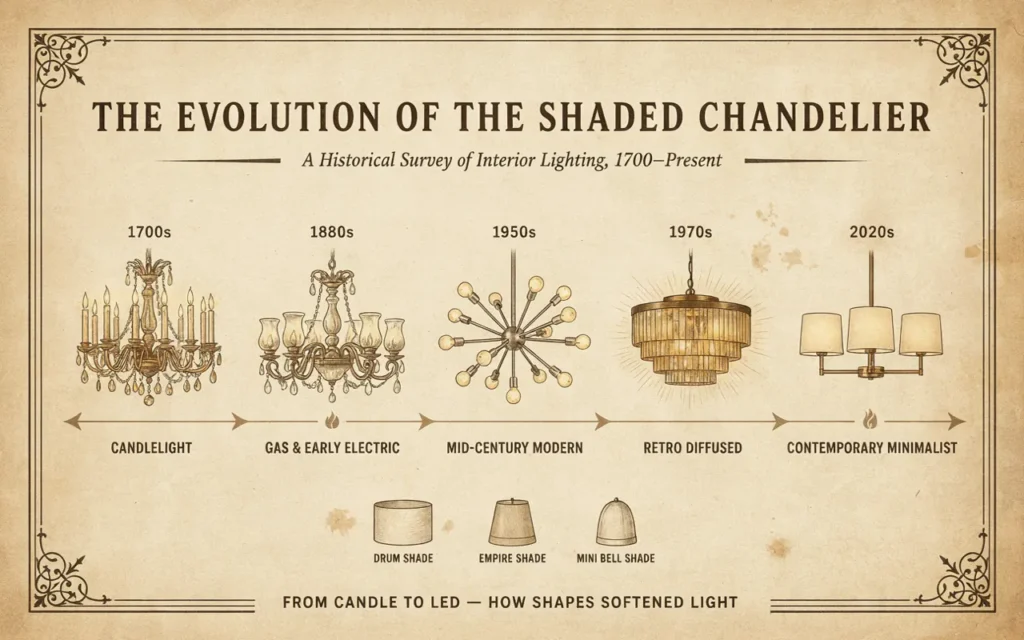
That double job is why the splurge vs save question matters. A shaded chandelier hangs in the middle of the room, at eye level, and everyone sees it. The choice is not only about light. It is about how the room feels when you walk in, and how long that feeling lasts.
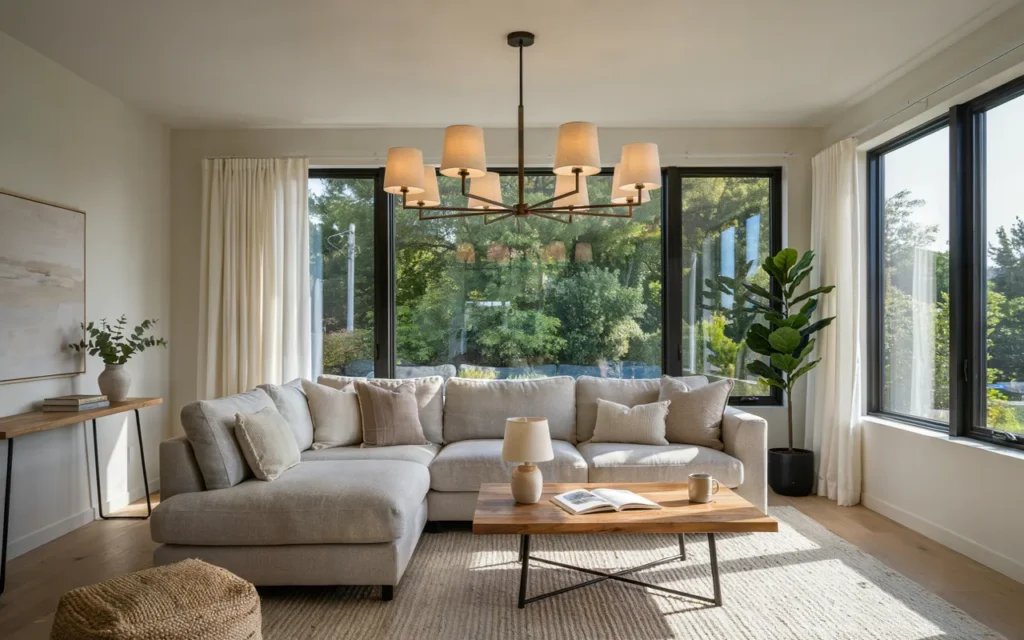
Start With Size, Not Price
Here is the mistake I see most often, and it has nothing to do with money. Someone buys a chandelier they love, brings it home, hangs it, and wonders why the room looks off. Nine times out of ten, the fixture is the wrong size. Too small and it looks lost. Too big and it crowds the ceiling and shrinks the furniture. Size is the first decision. Price is the second.
Three formulas take two minutes with a tape measure, and they save you from the most common regret in lighting. Write the numbers down before you shop. A fixture that passes all three tests will look like it belongs, whatever it cost.
The room sum rule for diameter
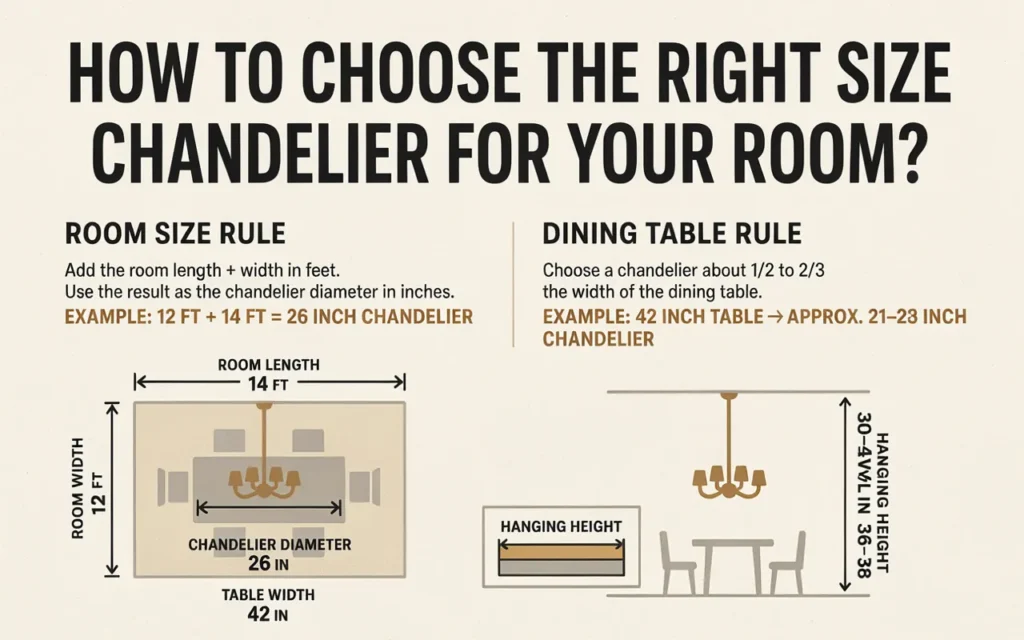
Add the length and width of the room in feet, and use that total as inches for the chandelier diameter. A room that measures 12 feet by 14 feet adds up to 26, so look for a fixture around 26 inches wide. A 10 by 12 foot bedroom points to a 22 inch chandelier. A grand 16 by 20 foot living room points to 36 inches, a substantial fixture and probably a multi tier design.
This rule scales the light to the room instead of to your taste. We all love oversized statement pieces in photographs, but a 36 inch drum in a 10 foot room will dominate everything else in it. If you love a fixture that breaks the rule, check the return policy before you buy.
The table width rule for dining rooms
Over a dining table, the chandelier should measure about one half to two thirds of the table width. A 60 inch table suits a chandelier between 30 and 40 inches wide. A small 42 inch round table suits a fixture around 21 to 28 inches. This matters more than the room rule in a dining room, because the table is what the light serves. A chandelier wider than the table looks top heavy, and one much narrower looks timid.
The hang height rule
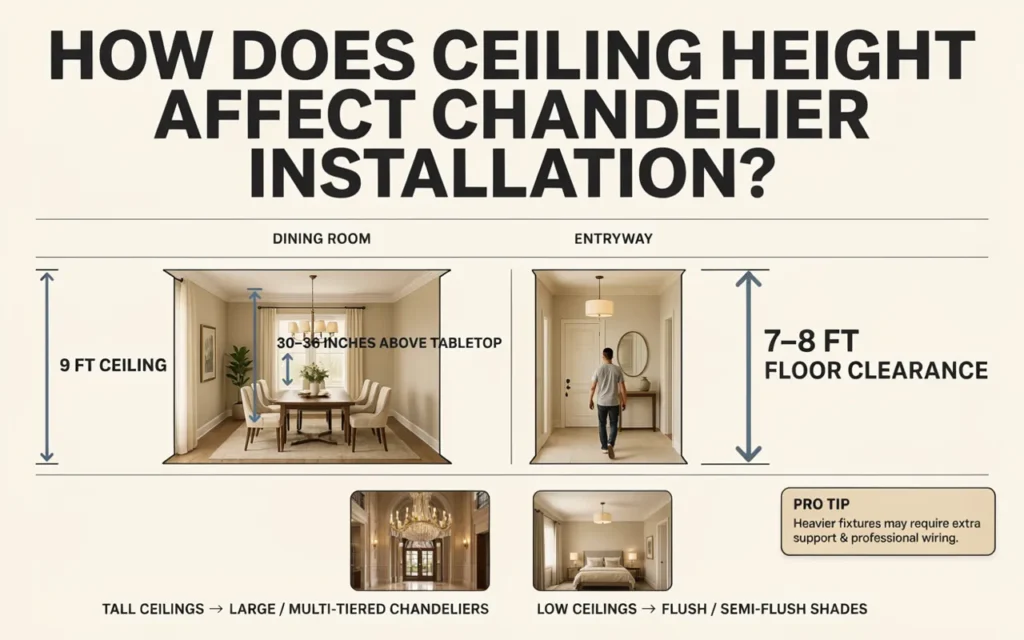
Height is the third number, and the one people forget until installation day. In a walkway or open room, allow 7 to 8 feet of clearance from the floor to the bottom of the fixture, so tall guests do not duck. Over a dining table, the bottom should sit about 30 to 36 inches above the tabletop, close enough to flatter faces and food, and high enough that nobody stares into a bare bulb across the table.
Ceiling height changes the math. Standard 8 foot ceilings suit a compact shaded chandelier, and a drum shade keeps the profile tidy. A 9 or 10 foot ceiling gives room for a taller fixture with a longer chain or rod.
Very tall ceilings, 12 feet and above, can carry a multi tier shaded chandelier, and this is one place where a larger splurge fixture genuinely earns its keep. A small budget fixture in a double height entry looks like a lost lantern.
One warning before you fall in love: check the weight. A heavy brass and silk chandelier can weigh far more than a basic ceiling fitting is rated for, and you may need a reinforced ceiling box and a professional install. Budget for that from the start, not as a surprise on installation day.
Chandelier size at a glance
| Room size | Chandelier diameter | Over a dining table | Best ceiling height |
|---|---|---|---|
| 12 x 14 feet | 24 to 28 inches | 30 to 40 inches over a 60 inch table | 8 to 9 feet |
| 14 x 16 feet | 28 to 32 inches | 36 to 44 inches over a 66 inch table | 9 to 10 feet |
Use the table as a starting point, not a law. A room with dark walls can carry a slightly larger fixture, because dark paint absorbs light. Trust the tape measure first and your eye second. A cardboard circle cut to the diameter you are considering, held up at the planned height, tells you more than any product photo.
Shade Materials: Where the Light Gets Its Personality
If the frame is the skeleton, the shade is the personality. Two chandeliers can share the same frame and look like different fixtures once the shades change. The material decides the colour of the light, how much of it escapes, and how the fixture ages. This is also where the price gap between splurge and save starts to show.
Linen: the favourite for a reason
Linen is the shade material I recommend most often, because it is forgiving. It diffuses light into a soft, even glow, hides dust better than silk, and suits almost every style from modern to farmhouse. A natural linen drum shade chandelier works in a dining room, a bedroom, and a living room without looking out of place.
What to check: good linen has a visible weave and a slight slub, those tiny irregular threads that prove it is a natural fibre. Very smooth, perfectly even “linen look” fabric is usually a synthetic blend wearing a linen costume. That is not a deal breaker, it just should not carry a linen price. Linen wrinkles a little over time, but it can stain, so keep it away from kitchen grease.
Silk: beautiful, pricey, and a little demanding
Silk shades are the luxury standard. The light through silk has a glow other fabrics struggle to match, warm and slightly golden, like late afternoon sun. A silk shaded chandelier in a formal dining room or a master bedroom feels special in a way that is hard to describe and easy to feel.
The trade offs are real. Silk costs more, fades in direct sunlight, and dislikes damp rooms and rough cleaning. A silk shade in a steamy bathroom or a sun blasted south facing room will age fast. Choose the room first: a dining room or calm bedroom is ideal, while a kitchen or kids room is not the place to spend silk money.
Cotton and synthetic blends: the sensible middle
Cotton shades are affordable, widely available, and easy to live with. They give a clean, even light and take colour well. The downside is durability: cotton can sag slightly over years of heat, and white cotton can yellow near a hot bulb. LED bulbs run cooler, so this problem mostly disappears.
Synthetic blends, usually polyester or a poly cotton mix, are the backbone of the save category. They hold their shape for years, resist stains, and cost a fraction of natural fabric. The light is a little flatter and cooler than linen, but a good synthetic shade on a well made frame can look genuinely smart. Check the seams: a straight, tight seam with no glue showing is the sign of a shade made with care.
How much light will it actually give?
Count the bulbs first. A three light drum over a small dining table can feel cosy and dim, while a six or eight light fixture in the same spot gives real light to eat by. Check the maximum wattage, usually printed on the socket or in the listing, and plan on LED bulbs, which give more light per watt and run cooler, protecting fabric shades.
For a dining room, aim for warm white bulbs around 2700K, which flatters food and skin. For a living room where you also read, 3000K is a good compromise. Cooler daylight bulbs above 4000K fight the warmth the shade creates, so skip them here.
Be honest about the room. A shaded chandelier as the only light in a large living room will leave corners dark. That is a planning gap, not a fault of the fixture. Pair it with a floor lamp, a table lamp, or recessed lights on a dimmer, and the chandelier can do what it does best: set the mood.
Window treatments change the equation too. Heavy curtains swallow light, while sheer panels let daylight do the heavy lifting by day. If you are rethinking the whole room, these window treatment ideas for every room will help you balance daylight and lamp light before you choose a shade colour.
A Quick Installation Checklist
Ceiling height and fixture weight decide whether installation is a quick job or a half day project. Low ceilings suit compact shaded chandeliers with short rods or semi flush mounts. Mid height ceilings, 9 to 10 feet, are the sweet spot for a drum shade chandelier. Tall ceilings can carry a multi tier design, but a heavy fixture needs a reinforced ceiling box, a longer drop, and often a professional installer.
- Turn off the power at the breaker, not just the wall switch, before any wiring work.
- Check the ceiling box rating. Heavy fixtures need a fan rated or fixture rated box, not a standard light box.
- Measure twice: floor to bottom of fixture in walkways, tabletop to bottom over dining tables.
- Use a dimmer switch. A shaded chandelier on a dimmer goes from bright family dinner to quiet evening.
- If the fixture weighs more than you can lift comfortably over your head, hire a licensed electrician.
Which Styles Suit a Shaded Chandelier?
Almost all of them, because the shade does the styling work. Change the shade and the frame, and the same idea fits a farmhouse kitchen, a glam bedroom, or a calm modern living room. Match the shade and the frame to the room you already have, not to the room in the catalogue photo.
A linen drum shade on a slim black metal frame leans modern and a little industrial. The same drum in cream silk on a brass frame leans traditional and soft. Crystal drops under a small shade lean glamorous. A dark bronze frame with burlap toned shades leans farmhouse. The fixture should echo something already in the room: a cabinet handle, a table, a curtain colour.
Black framed fixtures deserve a special mention, because they are everywhere right now and photograph beautifully. In a living room, a black metal shaded chandelier can anchor a television wall and balance a dark screen. If you are styling that wall, these black TV wall ideas with beautiful lighting show how dark frames and warm light work together.

Colour matters too. A white or cream shade is the safe choice, and safe is not a criticism here. Cream shades flatter warm paint colours and wood tones.
A coloured shade, sage, dusty blue, or soft blush, makes the chandelier a deliberate design choice, so it needs to repeat somewhere else in the room, a cushion, a rug, a piece of art. If the shade colour appears nowhere else, it will look like an accident.
For a wider look at the palettes working in real homes right now, these interior colour trends for cosy homes are a good place to start before you commit to a coloured shade.
The Splurge Side: What the Big Price Tag Actually Buys
Now to the expensive end. A high end shaded chandelier typically starts well above a thousand dollars and can climb steeply from there, depending on size, materials, and maker. That is real money. What does it buy that a cheaper fixture does not?
The honest answer has four parts: materials, craftsmanship, finish, and longevity. None of them is visible in a small online photo, which is why so many people feel cheated when a luxury fixture arrives and looks, at first glance, like the budget one they almost bought. The difference shows up over months and years, in the way it still looks new long after a cheaper fixture has started to sag.

Materials you can feel
Pick up a luxury chandelier frame and the first thing you notice is the weight. Solid brass, bronze, or hand finished steel feels dense and cool in the hand. Plated or hollow frames feel light and a little tinny by comparison. That weight is not vanity. A solid frame hangs straight, does not flex when you dust it, and resists the slow sag that makes cheap fixtures look tired.
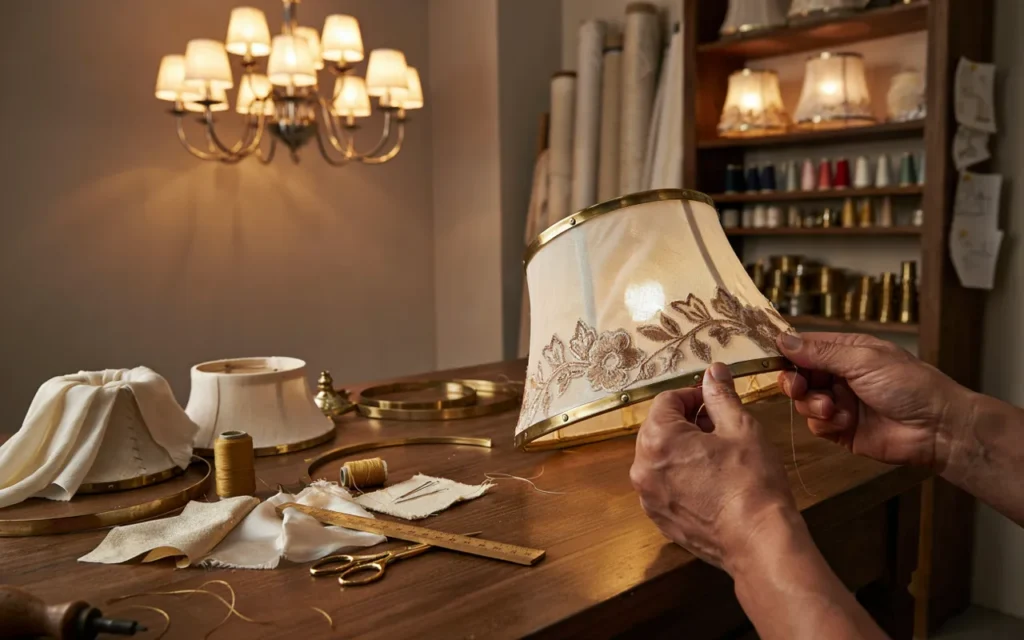
The shades tell the same story up close. A high end shade is usually hand rolled or hand stitched, with seams that sit flat and straight, real natural fibre, and a lining sewn in, not glued. Turn the shade over: on a well made shade, the inside is as tidy as the outside. On a cheap one, the inside is where the shortcuts live, glue lines, raw edges, and a wobbling spider fitter.
Craftsmanship and finish
Finish is where luxury makers earn their reputation. A hand applied brass or bronze finish has depth, catching light differently across the surface, with subtle variation that reads as warmth. A mass produced plated finish is flatter and more uniform, and it can chip or wear through at the edges. Look at the joints and the arms. On a good fixture, the arms curve smoothly and meet the centre column without visible welds or gaps.
Small batch and handmade pieces add another layer. Many luxury shaded chandeliers are made in limited runs, and the maker will often offer bespoke options: a different shade colour, a longer drop, a custom finish. That matters if your room has an unusual ceiling height or a specific palette. Custom is worth paying for only when standard does not fit.
Where the splurge genuinely pays off
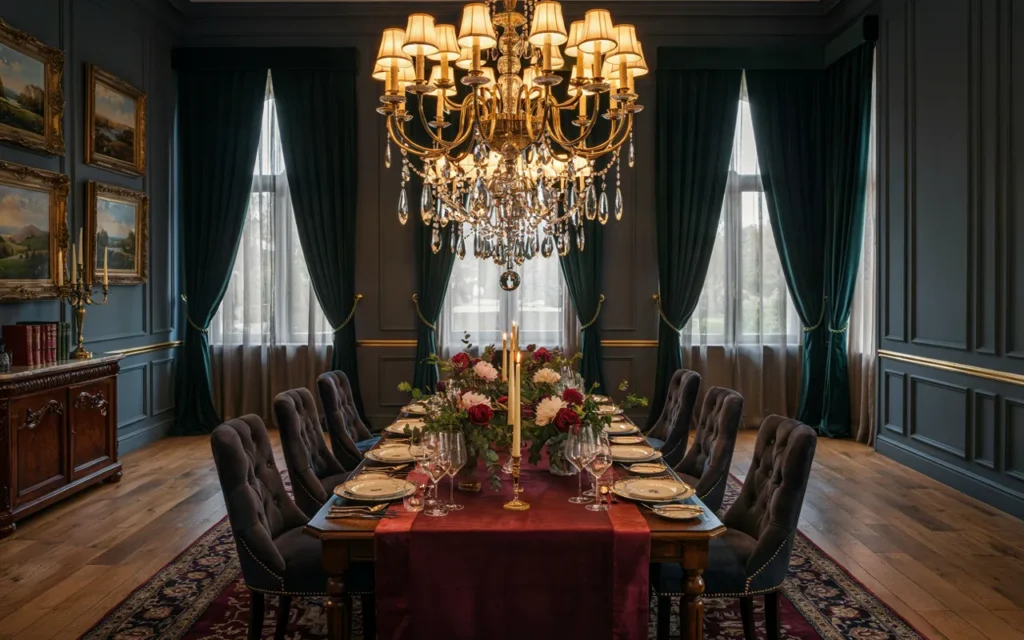
There are rooms where the splurge is the right call. A formal dining room you use several times a week is one: the chandelier is the centrepiece, lit often, and seen up close. A master bedroom you plan to keep for a decade is another. A double height entry or a great room with a tall ceiling is a third, because cheap details are hard to hide at that scale.
The splurge also pays off when the fixture is a long term decision. If you plan to stay in the home for many years, the cost per year of a well made fixture drops below the cost of replacing a budget one twice. Quality sockets last longer, and a solid frame can be rewired or refinished instead of replaced.
Where the splurge does not pay off
Now the other side. The splurge does not pay off in a room you are about to redecorate, a rental you will leave in a year, or a kids room where a ball is always in flight. It does not pay off when the fixture is small and high up, where nobody will ever see the hand stitching.
And it does not pay off when the money would be better spent on the rest of the room. A beautiful chandelier over a worn out table in a room with bare walls looks like jewellery on a tired outfit.
The Save Side: How a Budget Shaded Chandelier Can Look Expensive
The save category is where most people actually shop, and it is better than it used to be. Manufacturing has improved, LED bulbs run cooler and protect fabric shades, and good design has trickled down from high end makers to mid priced brands. A budget shaded chandelier today can look genuinely smart.
Expect a save fixture to be lighter and simpler, made from plated metal and synthetic or cotton blend shades. That is not a flaw, it is the deal. The frame is light enough for a standard ceiling box, which makes installation easier and cheaper.
The shades are machine made, which keeps the price down, and the sockets are standard, so replacement parts are easy to find. The risk is that the cheapest version of cheap cuts corners you will notice within a year.
What to expect from a budget chandelier
A good budget shaded chandelier does three things well: it hangs straight, it gives a pleasant light, and it looks tidy from normal viewing distance. That is the bar, and plenty of fixtures clear it. What it will not do is reward close inspection. The finish may be thinner, the shade seams may be glued rather than stitched, and the arms may flex slightly if you press them.
What to watch for: wobbly shades, loose sockets, a flimsy chain, and a finish that already shows wear on the display model. If the display model looks tired, yours will too, and sooner. Also check the bulb count and the maximum wattage.
Some budget fixtures save money by holding fewer bulbs, which leaves the room dim. A fixture with four or more bulbs serves a dining room far better than a pretty two light design that leaves half the table in shadow.
How to find a great deal without buying junk
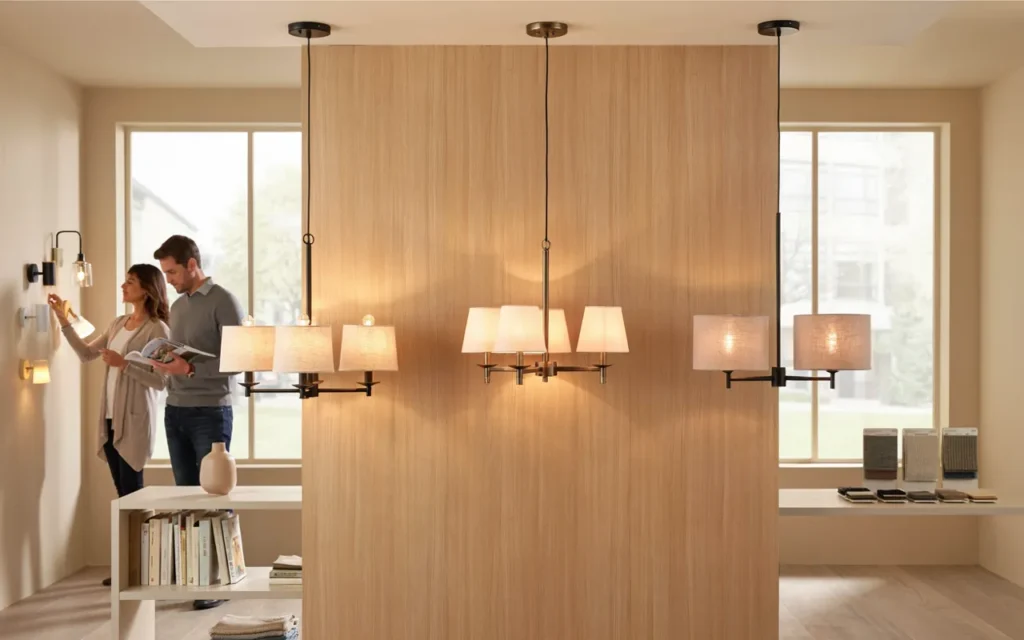
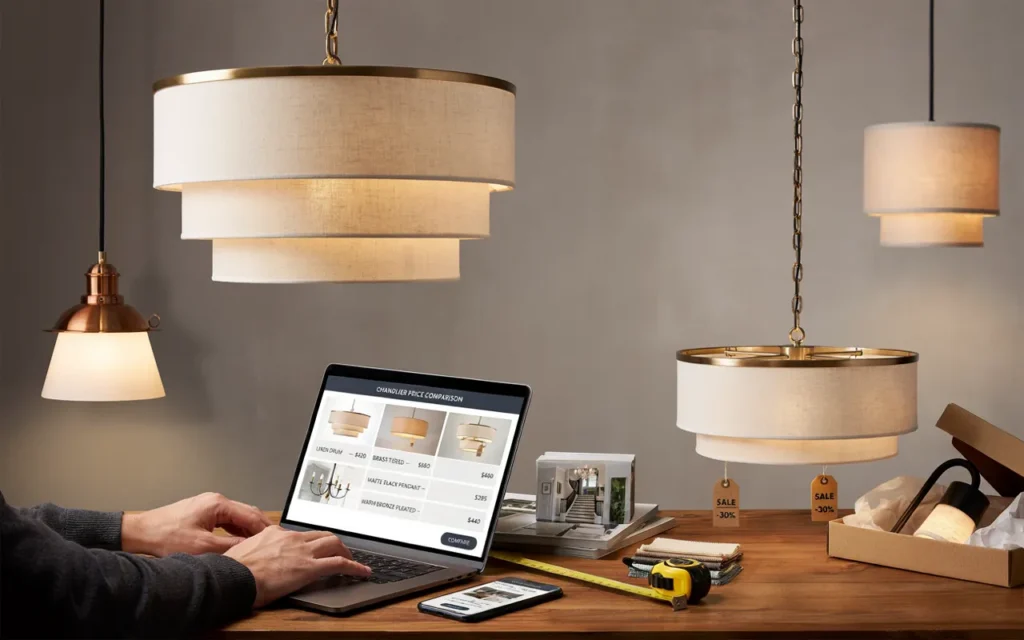
Online shopping needs a sharper eye. Read the reviews that mention installation and long term use, not just the ones that say “looks great”. A fixture that looks great on day one and sags by month six will show up in the later reviews.
Check the weight in the specifications, because weight is a quick proxy for frame quality. Compare the shade dimensions, not just the overall width: a drum shade that is too shallow looks flat, and one that is too deep swallows the light.
Can you customise a budget chandelier yourself?
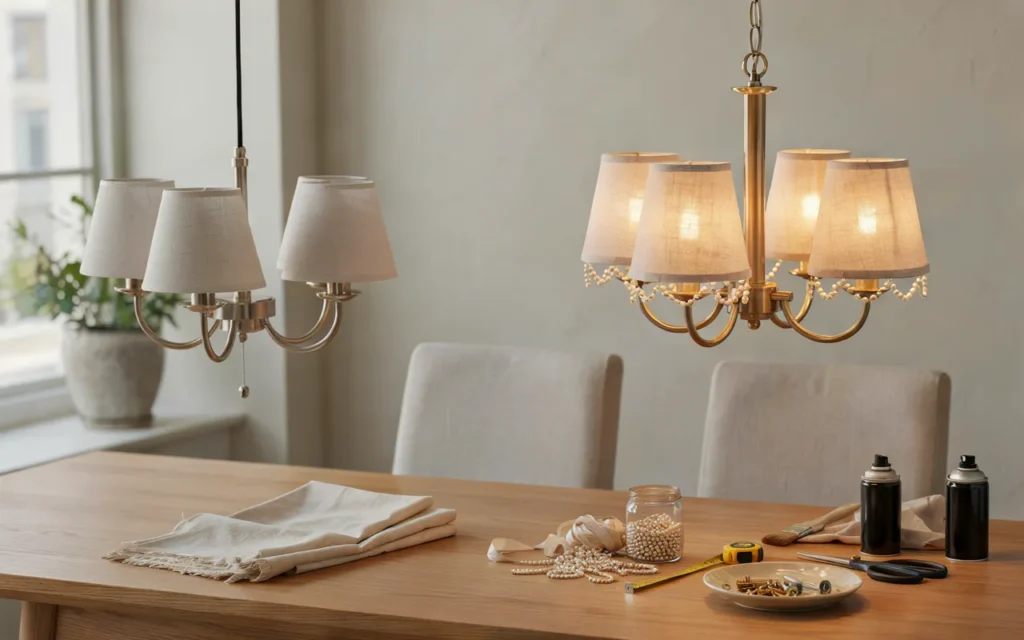
Yes, and this is the save category secret weapon. A budget fixture is a blank canvas, and a few careful changes can lift it a long way. Swapping the shades is the easiest win: replace a plain white cotton drum with a linen shade in a warmer tone, and the whole fixture changes character.
Spray painting the frame is another option, if you do it properly. Remove the shades and bulbs, clean the metal, prime for metal, and apply thin coats of spray paint in matte black, brass, or soft gold. Done well, it looks like a different fixture. Done in a rush, it looks rushed, so take your time.
Smaller touches work too. Changing the chain to a prettier link, adding a ceiling medallion, or fitting warmer LED bulbs can all make a budget chandelier feel considered rather than cheap. A ceiling medallion is a particularly good trick in a room with a plain ceiling: it gives the fixture a finished frame and draws the eye upward, for far less than a new chandelier. Keep the scale right.
The entryway is a good place to try this approach, because the fixture is seen briefly and from below, so a well customised budget piece shines there. If you are planning the whole entry, these mudroom lighting ideas to brighten your entryway show how a modest fixture, layered with a lamp or a wall light, can make a small space feel welcoming.
Splurge vs Save: The Side by Side Comparison
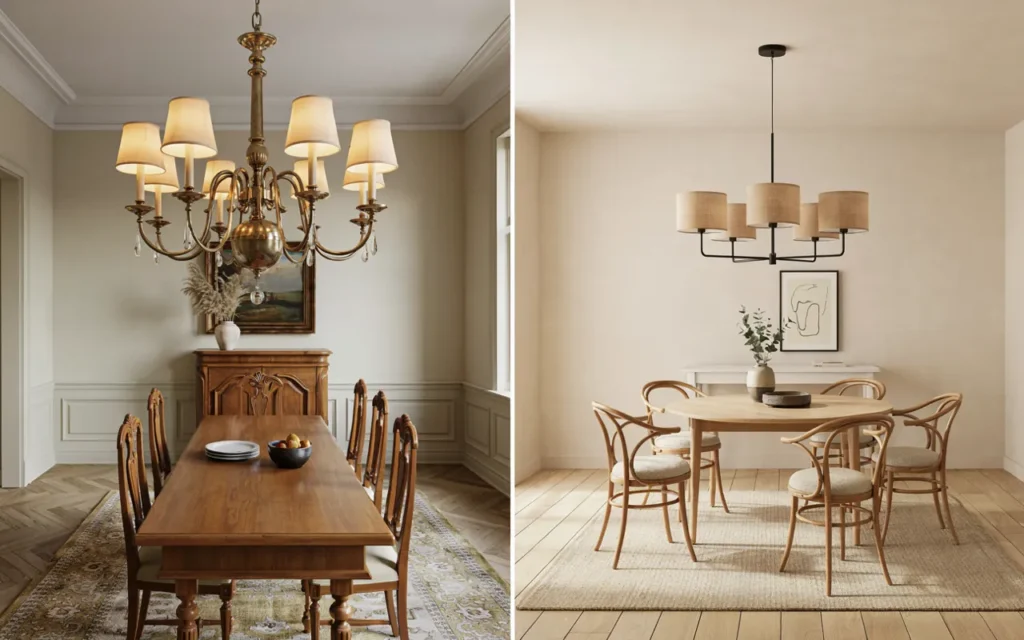
How do they actually compare, feature by feature? Read the table with your room in mind. The right answer for a formal dining room is not the right answer for a rented flat.
| Feature | Splurge shaded chandelier | Save shaded chandelier |
|---|---|---|
| Typical price range | High, often several thousand for large handmade pieces | Modest, typically a few hundred at most |
| Frame material | Solid brass, bronze, or hand finished steel | Plated metal or lightweight steel |
| Shade material | Hand stitched linen or silk, sewn lining | Cotton or synthetic blend, often glued seams |
| Light quality | Warm, even glow, excellent diffusion | Good warm glow, slightly flatter light |
| Lifespan | Many years, can be rewired or refinished | Several good years, then style or wear prompts replacement |
| Best for | Main living spaces, tall ceilings, long term homes | Rentals, first homes, rooms due a refresh, secondary spaces |
Look at the last row first. That is the row that decides the purchase. A fixture is not good or bad in the abstract. It is right or wrong for a specific room and a specific length of time you plan to live with it.
Where to Spend and Where to Save
The smartest approach is rarely all splurge or all save. It is a mix: spend where the eye rests and where hands touch, save where the fixture is high, small, or temporary. A dining room chandelier at eye level over the table is a spend spot. A hallway fixture glimpsed in passing is a save spot. Within a single fixture, spend on the shades first, because the shade is what you see and what shapes the light.
Where Should You Place a Shaded Chandelier?
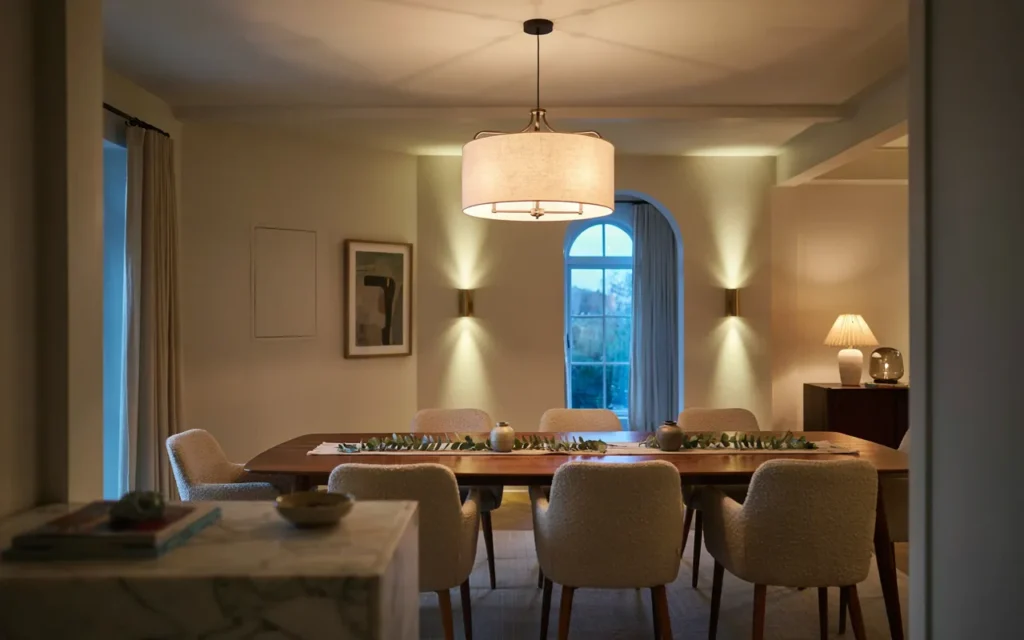
Placement is where a good purchase becomes a good room. The dining room is the classic spot, centred over the table, not centred in the room, because the table is what matters. If the table sits off centre, the chandelier follows the table. The living room is the second classic spot, hung over the seating area.
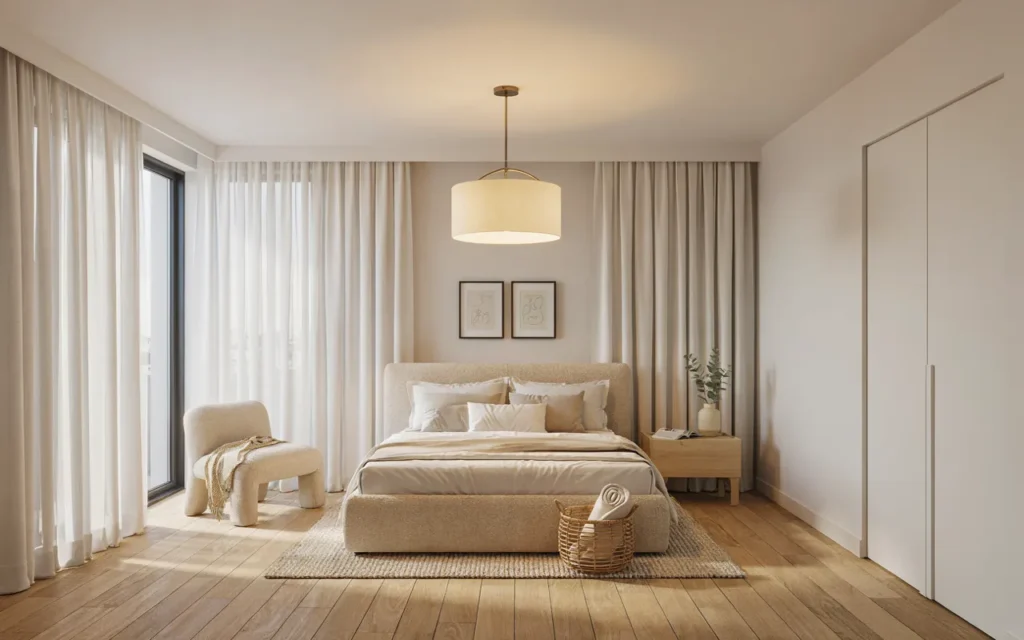
Bedrooms suit a shaded chandelier beautifully, because the soft light is exactly what a bedroom needs. Hang it in the centre of the room, or over the foot of the bed in a larger bedroom, and keep the clearance generous.
Entryways and foyers are the drama spot, especially with tall ceilings, where a larger fixture can be seen from the front door and from the stairs. Changing a bulb in a double height entry is a job, so choose long life LEDs.
The space above a fireplace is another placement people ask about, because the mantel is a natural focal point and the light above it frames the whole wall. A shaded chandelier hung in front of a fireplace wall needs room to breathe, so keep the proportions generous and the shade clear of the heat.
If you are styling that wall, these modern ways to style the area above your fireplace will help you balance the light with the art or mirror above it.
How Do You Match a Chandelier to the Decor You Already Have?
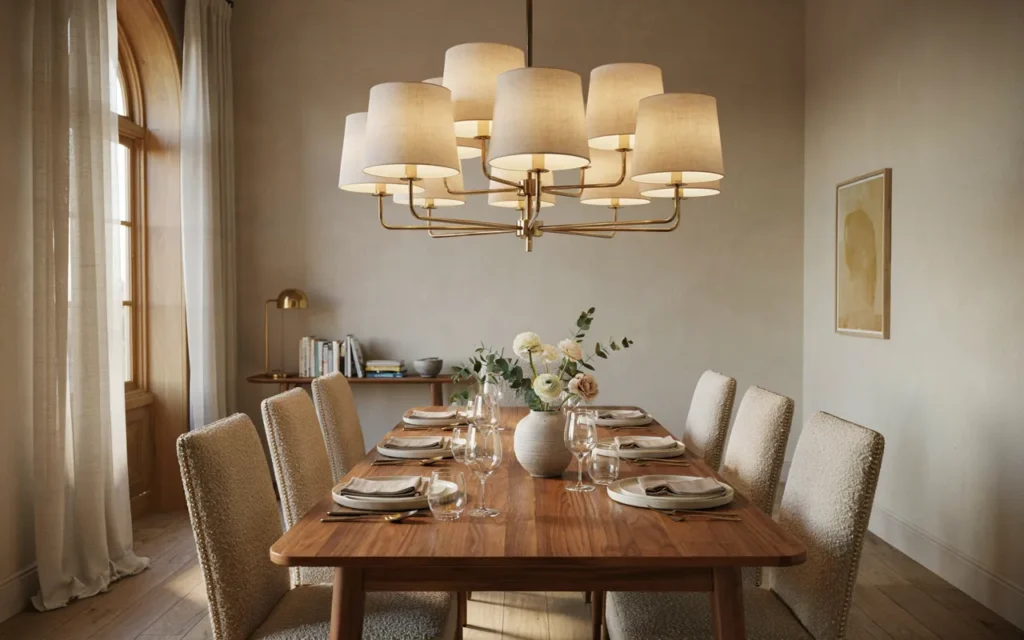
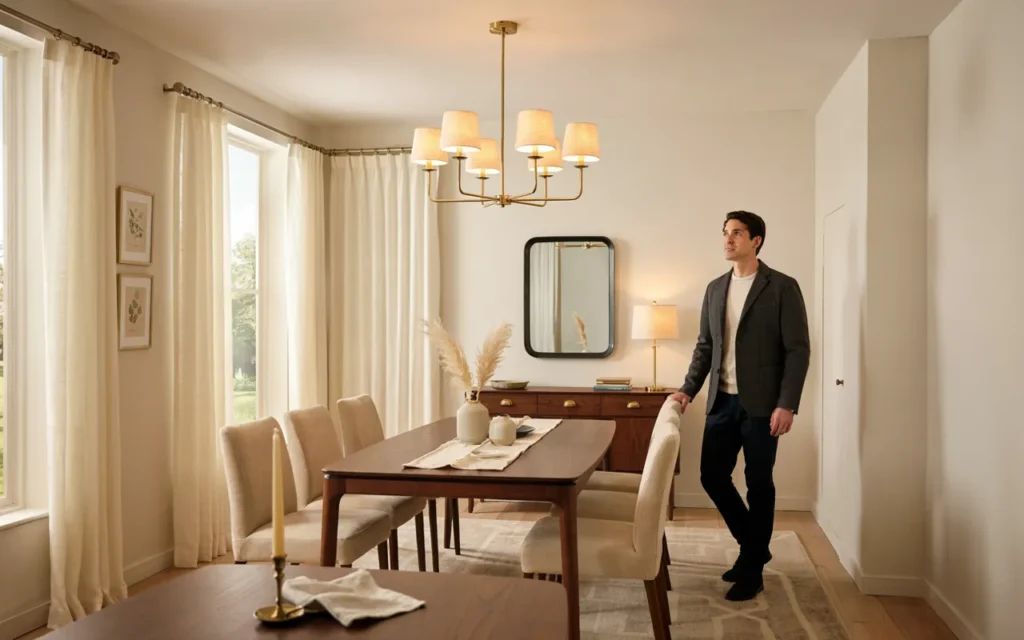
Matching is easier than most people think, because it only needs one or two echoes. Pick up the metal finish from something already in the room: the brass of a picture frame, the black of a curtain rod, the chrome of a lamp base. Pick up the shade colour from a cushion, a rug, or a curtain. Two echoes are enough.
Style matching follows the same idea. A traditional room with panelled walls and a wooden table suits a silk or linen shade with a warm metal frame. A modern room with clean lines and pale walls suits a drum shade with a slim frame. A farmhouse room suits natural textures, linen, and wood tones. A glam room can take crystal accents and a deeper finish.
How Do You Keep a Shaded Chandelier Looking Great?
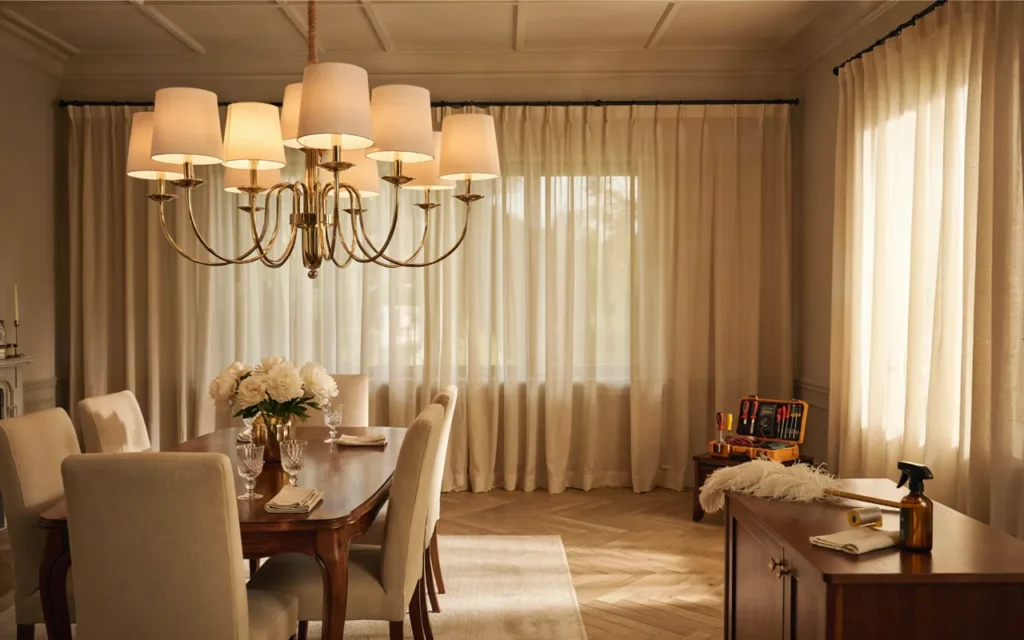
Care is simple, and it is mostly dust. Fabric shades collect dust, and dust dims the light. A soft brush, a feather duster, or a vacuum with a brush attachment on the lowest setting will keep a linen or cotton shade clean.
Work from the top down, gently, and never press hard on a silk shade. For a small mark on a synthetic shade, a barely damp cloth with mild soap usually does the job. Test it on the inside of the shade first.
Metal frames need a soft, dry cloth. Avoid harsh cleaners and abrasive pads, because they strip the finish faster than years of use will. Most modern fixtures are lacquered, so a gentle wipe is all they need. Check the bulbs twice a year. A dead bulb shows up as a dark patch in the shade, easy to miss until someone points it out at dinner.
Shaded chandelier questions, answered straight
What is a shaded chandelier?
A shaded chandelier is a hanging light fixture with multiple bulbs covered by fabric or solid shades. The shades soften the light, cut glare, and add texture and style.
How do I choose the right size shaded chandelier?
Add the room length and width in feet, and use that total as inches for the diameter. A 12 by 14 foot room points to a 26 inch fixture.
Are shaded chandeliers still in style?
Yes. They have been popular for decades because they solve a real problem, harsh overhead light, and they do it while decorating the room. Styles change, but the idea itself does not go out of fashion.
Do shaded chandeliers give enough light?
They give enough light for dining, relaxing, and bedrooms, especially with the right bulbs. They give less direct light than a bare bulb fixture, because the shade absorbs some of it, so count the bulbs and check the maximum wattage before buying.
Can I put a shaded chandelier in a low ceiling room?
Yes, if you choose a compact design. Look for a semi flush mount or a shaded chandelier with a short rod rather than a long chain, and keep 7 feet of clearance from the floor to the bottom of the fixture. A shallow drum shade works well here, because it gives the look without stealing headroom.
Is it worth spending a lot on a chandelier?
It is worth it when the fixture anchors a room you use every day, when the ceiling is tall, or when you plan to keep it for many years. Better materials, a solid frame, and hand finished shades pay you back in longevity and daily pleasure. It is not worth it for a rental, a room you plan to redecorate soon, or a secondary space.
Buy This One If…
Buy the splurge shaded chandelier if it will hang over the table where your family eats most nights, if the ceiling is tall enough that everyone will see it from below, or if you plan to stay in this home for a decade. In those rooms, the weight, the stitching, and the finish are not luxuries.
Buy the save shaded chandelier if the room is small, the ceiling is standard height, the home is rented or recently bought, or you enjoy changing the look every few years. Choose the best frame you can afford, check the shade seams and the socket quality, put it on a dimmer, and fit warm LED bulbs. Most visitors will never guess the price.
If you are still torn between two fixtures, measure your room, measure your table, and buy the one that fits those numbers. Size is the decision that survives every trend. The price tag fades from memory. The light stays.