Yes, you can hang decor on brick without damage, and the trick is matching the method to the weight. Brick clips for hanging grip the edge of a brick and hold light frames with no holes at all, while adhesive hooks suit only the lightest pieces on smooth or painted brick. Heavier frames need hardwall hangers, a picture rail, or masonry screws set into the mortar joint.
Start by reading your brick. Smooth, sealed, or painted brick takes adhesive fixings far better than rough, dusty, or crumbling brick. Weigh your frame, check the mortar, then pick the lightest method that safely holds it. The guide below ranks all six methods by weight, with honest limits and step-by-step instructions for the two best no-drill options.
Read Your Brick Before You Hang Anything
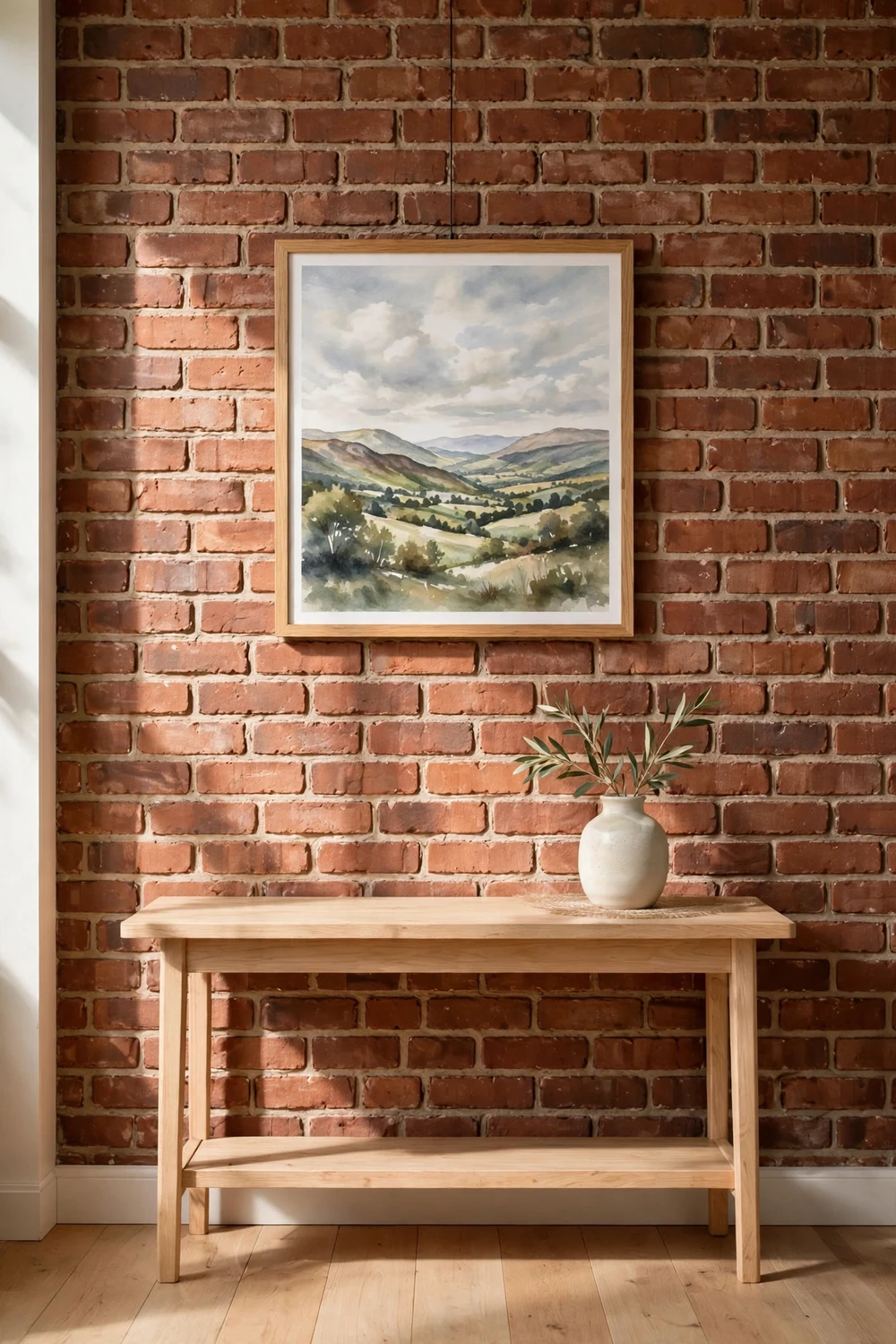
Every brick wall looks solid, but not every brick wall behaves the same way. Before you buy a single hook, spend five minutes learning what you are working with. That small check decides which methods will hold and which ones will fail, sometimes in the middle of the night.
Run your palm across the brick. If it feels smooth and cool, like a painted or sealed surface, adhesive fixings have a real chance. If it feels rough and sandy, and your hand comes away with a fine red dust, adhesive will not stick properly. The dust sits between the glue and the brick, and the bond fails. A rough surface also stops suction style hooks from working at all.
Next, look at the mortar joints, the pale lines between the bricks. Press a fingernail into the mortar. If it feels firm and barely marks, the wall is in good shape. If the mortar crumbles or sheds sand when you scratch it, the wall is soft or old, and drilling becomes risky. Soft old brick crumbles under a drill, and a hole that starts small can quickly turn into a crater. Painted brick hides cracks, so look closely along the joints for hairline lines that run through several bricks.
Check whether the mortar sits back from the brick face. This matters more than most people realise. Brick clips for hanging work by gripping the top and bottom lip of a brick where the mortar is recessed. If the mortar is flush with the brick face, there is no lip to grip, and clips will slide straight off. Hold a credit card against the wall and see whether the brick edges stand proud of the mortar. A gap of a few millimetres is enough.
Finally, weigh the thing you want to hang. A bathroom scale works fine for most frames. Stand on it holding the frame, then subtract your own weight. Write the number down. Everything in this guide comes back to that number, so do not guess it. A frame that feels light in your hands can still weigh more than an adhesive hook can hold.
Pick the Method by Weight to Hang Decor on Brick Without Damage
Here is the decision most guides skip. The right method is not the strongest one or the cheapest one. It is the lightest method that safely holds your piece. Use the table below to find your weight, then read the matching section for the full steps.
| Weight | Best method | Drilling | Typical hold |
|---|---|---|---|
| Under 5 pounds | Adhesive hooks or strips | No | Light prints, small frames, seasonal wreaths |
| 5 to 15 pounds | Brick clips | No | Medium framed prints, small mirrors, canvas art |
| 15 to 30 pounds | Heavy duty brick clips or hardwall hangers | No | Large framed prints, heavier mirrors, wooden signs |
| 30 to 50 pounds | Picture rail or masonry screws | Rail once, or screws | Large mirrors, heavy frames, shelving brackets |
| Over 50 pounds | Masonry screws with anchors | Yes | Oversized mirrors, heavy art, mounted TV frames |
When a piece sits near the top of a weight band, move up to the next method. A 14 pound frame on a basic clip rated for 15 pounds leaves no safety margin, and brick is not a surface that forgives a tight margin. The clip may hold on a cool dry day and slip on a humid one. Give yourself room.
Think about the room too. A frame over a bed or a sofa deserves a stronger method than the same frame in a hallway. Nobody stands under a hallway picture for long, but a frame above a bed falls onto a person. When in doubt, go one method stronger. The extra effort costs little, and the peace of mind is worth it.
Brick Clips: The Fastest No-Drill Fix
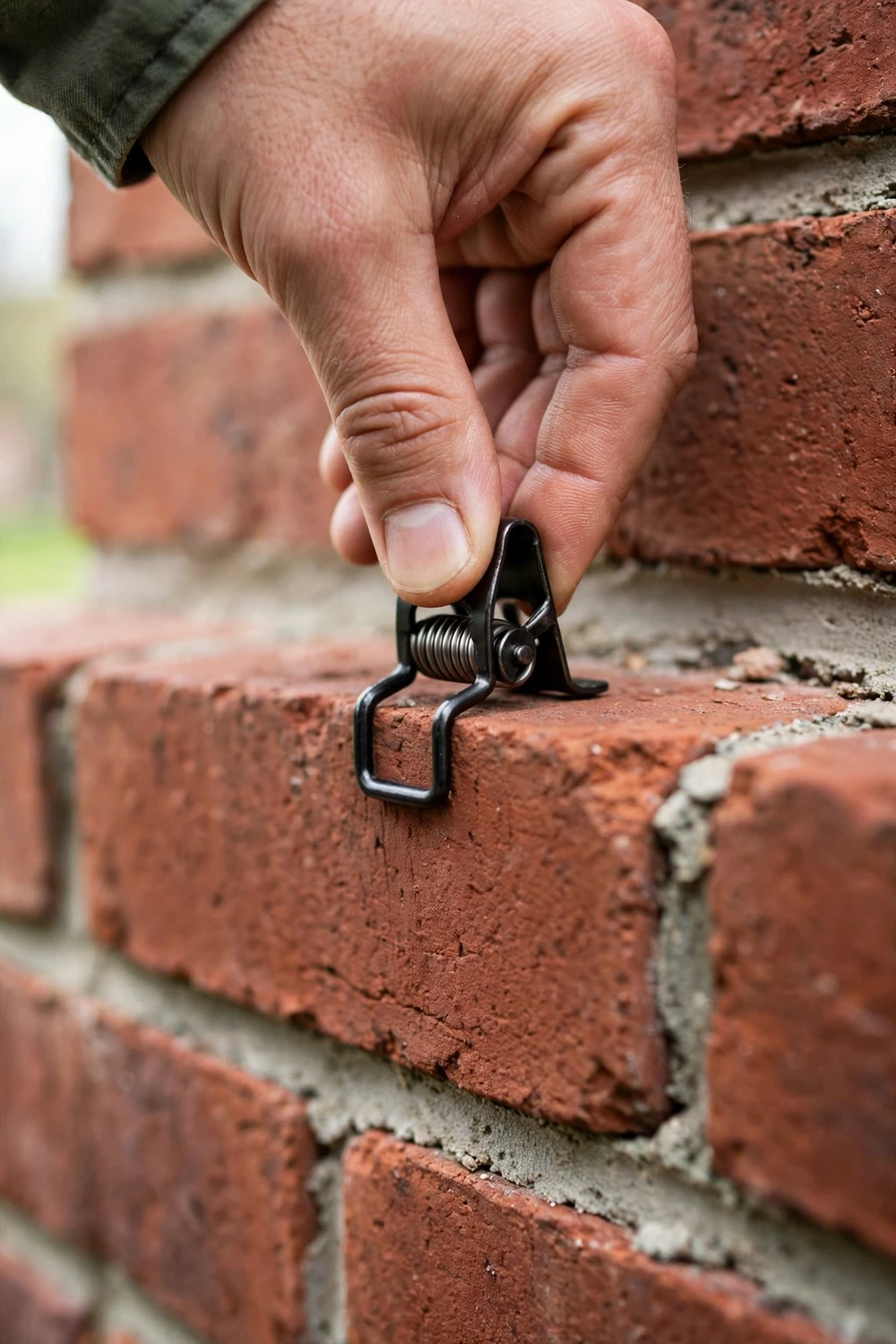
Brick clips are the first thing to try when you want to hang pictures on a brick wall without drilling. They are simple spring steel clips that hook over the top and bottom edges of a single brick. The spring tension holds them in place, and the weight of the frame pulls them tighter against the brick. No holes, no glue, no tools. You can fit one in under a minute. Renters who need to hang pictures on brick wall surfaces will find clips the most forgiving option of all.
Standard clips typically hold about 25 to 30 pounds, while smaller basic clips suit lighter prints under 15 pounds. Check the packet for the exact rating of the clips you buy, and buy clips sized for your brick. Bricks are not all the same height, and a clip made for a standard brick will not grip a thinner or taller one. Measure the height of one brick on your wall before you order. Most clips come in a few sizes, and the right size should snap on with firm resistance. If it slides on easily, it is too loose.
Here is how to fit one. First, clean the brick with a dry brush to remove loose dust. Pick the brick at the height where you want the frame to hang, and remember the frame will sit a little below the clip, so choose a brick one row above your target centre. Push the top jaw of the clip over the top edge of the brick, then pull the bottom jaw down and hook it under the bottom edge. Press the spring flat against the brick face. The clip should sit snug with no wobble. If it rocks from side to side, it is the wrong size or the mortar is too flush.
Hang the frame from the hook on the front of the clip. For a frame with a wire on the back, rest the wire on the hook and centre it. For a frame with a sawtooth hanger, hook the sawtooth over the clip. Step back and check the level, then give the frame a gentle tug downwards. It should not move. If the clip shifts, remove it and try a brick with a deeper recess.
Adhesive Hooks and Strips: Light Pieces Only
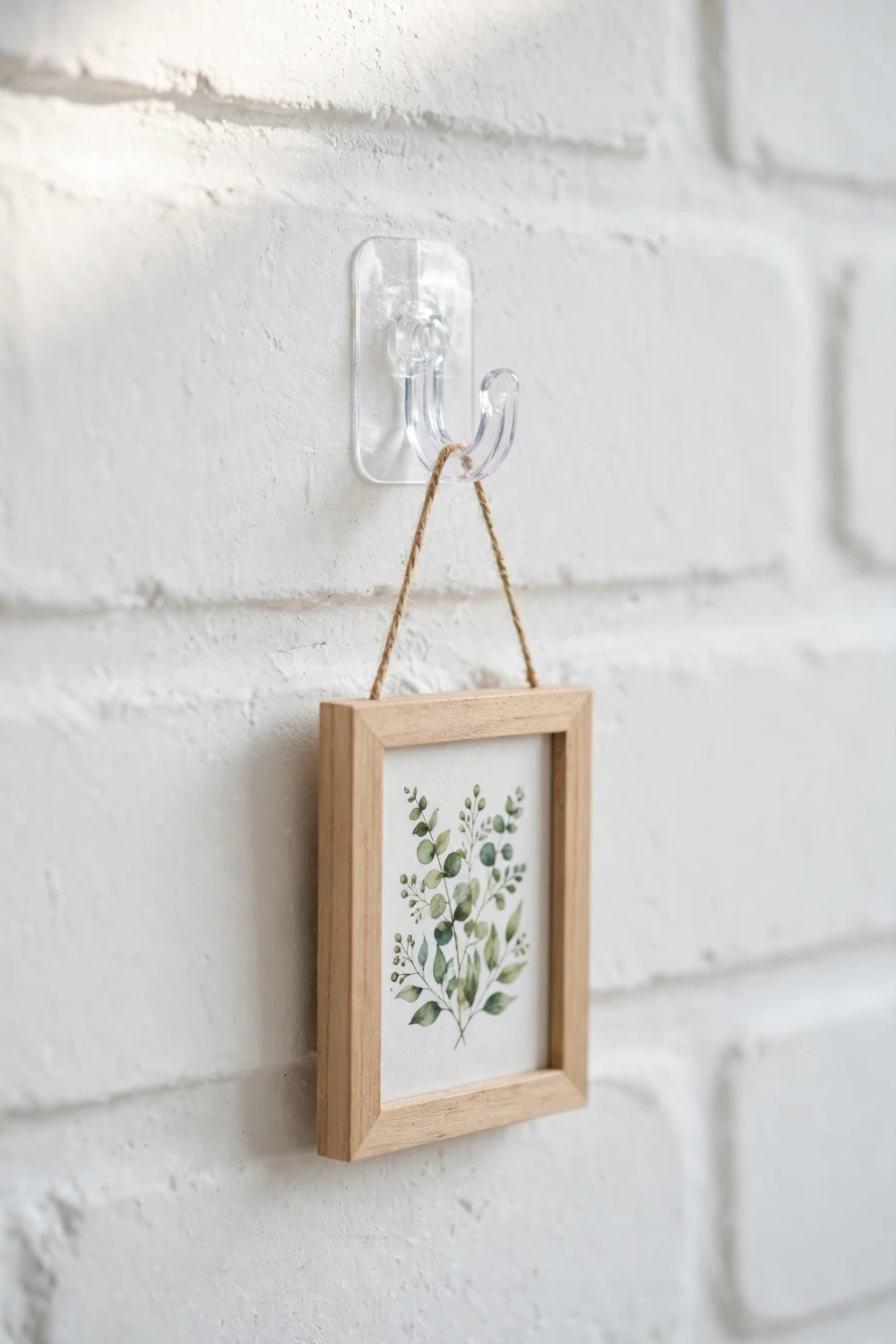
Adhesive hooks for brick promise the easiest fix of all, and for light pieces they deliver. A good quality hook or strip sticks to the wall, holds a small frame, and peels away when you are done. But adhesive is also the method most people overtrust. The limits are strict, and ignoring them is how frames end up on the floor.
The honest limit is about 5 pounds or less, and only on smooth or painted brick. Rough brick defeats adhesive because the glue cannot reach enough surface to bond. Even on smooth brick, dust, grease, and moisture weaken the hold. A kitchen wall near a stove, or a bathroom wall that steams up daily, is a poor place for adhesive. Choose adhesive for light prints, small canvases, and seasonal decorations, and nothing heavier.
Preparation decides whether the strip holds. Wipe the brick with a cloth dampened with rubbing alcohol and let it dry completely. Do not use a household cleaner that leaves a residue. Ordinary soap leaves a film that weakens the bond, and a damp wall will not hold at all. Wait until the surface feels fully dry to the touch, then wait a little longer. Patience here is the whole job.
Press the strip or hook firmly against the wall for a full thirty seconds. Do not just tap it and walk away. Real pressure pushes the adhesive into the tiny texture of the brick and starts the bond. Then leave it alone. Most brands need up to 72 hours to reach full strength, and hanging the frame early is the single most common mistake. The hook feels solid after an hour, but the bond is still forming. Give it the full three days if you can.
Hardwall Hangers: The Middle Ground
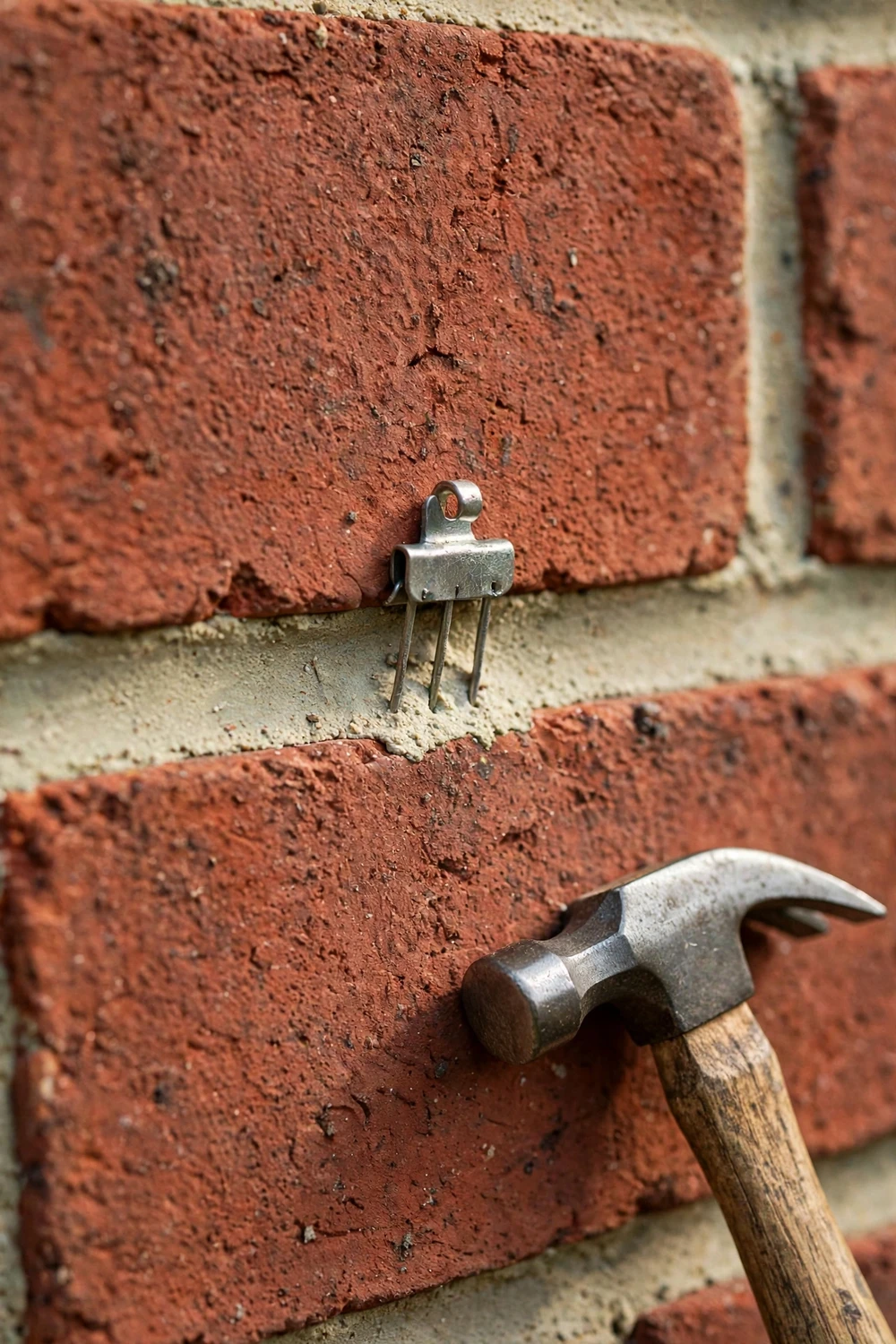
Hardwall hangers sit in the useful middle ground between no-drill clips and full drilling. They are small metal plates with three or four short, hardened pins. You tap the pins into the mortar joint with a hammer, and the plate holds a hook that takes the frame. The pins are thin, the marks they leave are barely visible, and the hold is surprisingly strong for such a small fixing.
Typical hardwall hangers hold medium frames well, often in the range of 20 to 30 pounds for a single hanger, though the exact rating depends on the size and the brand. Always check the packet, and always aim the pins into mortar, not into the brick itself. Mortar is softer and the pins go in cleanly. Brick is harder and the pins can bend or snap, and a snapped pin leaves a sharp stub in the wall.
Fitting one takes about two minutes. Hold the hanger against the mortar joint at your chosen height, with the hook facing outwards. Tap the pins in gently with a small hammer, working across the pins a little at a time rather than driving one pin fully home first. Short, light taps are better than hard swings. A heavy blow can crack the mortar or bend a pin. When all the pins are in, the plate should sit flat against the wall with no gap behind it.
The disadvantage is the mark. Each pin leaves a tiny hole in the mortar, about the width of a pinhead. On a pale mortar joint the holes are nearly invisible from a normal distance, and they fill in seconds with a dab of filler when you move out. On a dark or stained joint they can show as small pale dots. If that bothers you, a touch of matching paint or a mortar coloured filler pencil hides them completely.
Picture Rails: Hang Once, Swap Forever
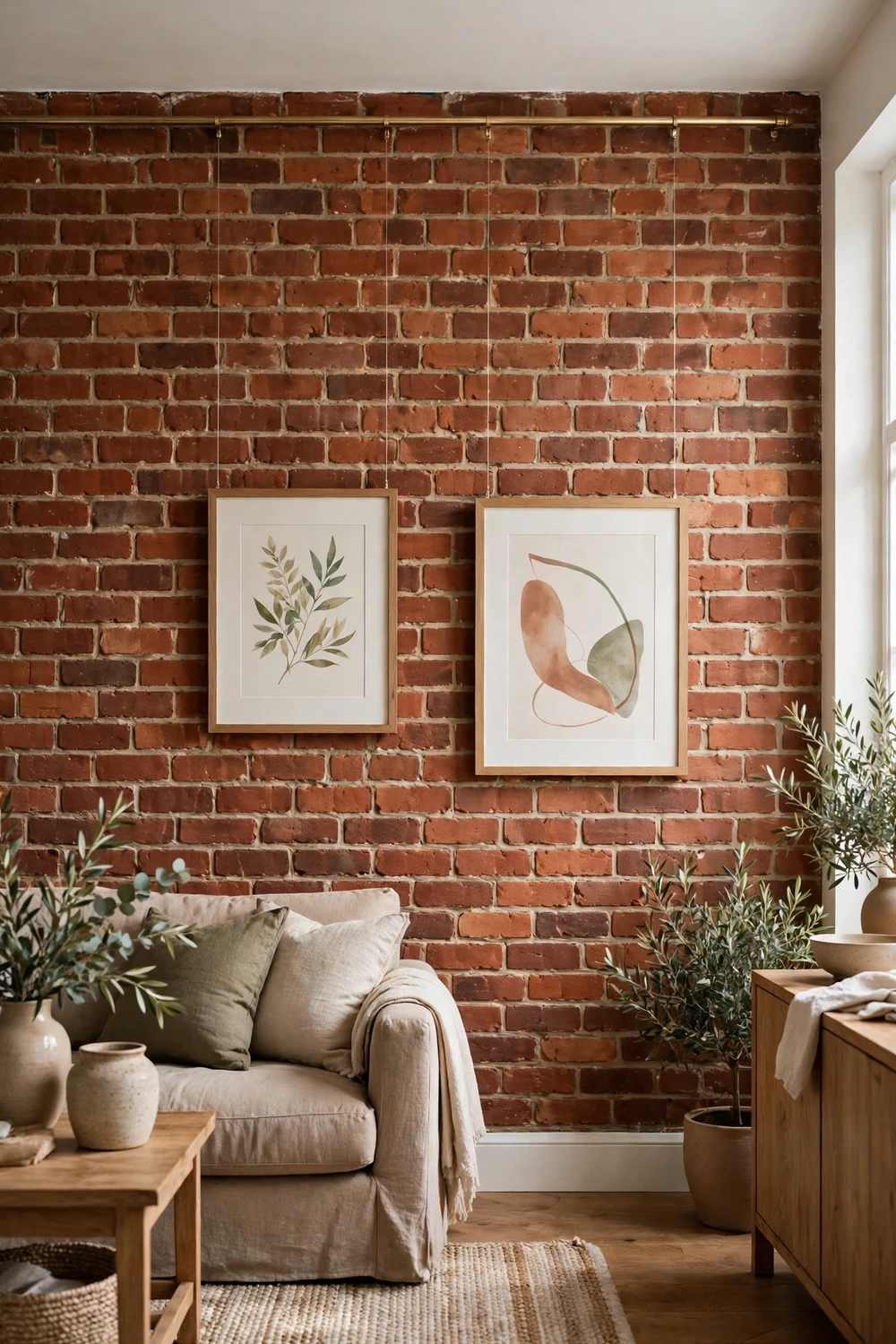
A picture rail is a slim moulding fixed high on the wall, just below the ceiling. Thin wires or cords hang from the rail, and hooks on the wires carry the frames. You mount the rail once, and after that you can swap, move, and rearrange art endlessly without touching the wall again. For anyone who changes art with the seasons, or who rents and wants a full gallery wall, it is the cleverest solution on this list.
The rail itself needs a solid fixing, which usually means masonry screws into the mortar or the brick, spaced along its length. That is one row of holes, high up where nobody looks closely, in exchange for never drilling again. If you own the home, that trade is an easy one. If you rent, ask the landlord first. Many landlords say yes to a picture rail because it stops tenants drilling holes all over the wall, and the rail itself can stay in place as an improvement when you leave.
Picture rails are strong. A single rail with good fixings can carry a large mirror or a heavy framed canvas, and the weight spreads along the rail rather than sitting on one point. For a heavy piece, use two wires and two hooks, spaced across the back of the frame. Two wires keep the frame level and share the load, and they look tidier than a single wire pulled to one side.
The height rules you already know still apply. The centre of a single frame should sit at about eye level, roughly 145 to 150 cm from the floor, and the same logic that guides sizing art above a sofa works on brick too. Measure from the rail down to the hook, and remember the wire length includes the part hidden behind the frame. Cut the wire a little long, hang the frame, then trim the spare once you are happy with the height. The same care with height applies when you hang curtains like a pro, where getting the rail position right once makes every later change easy.
When Drilling Is the Right Call
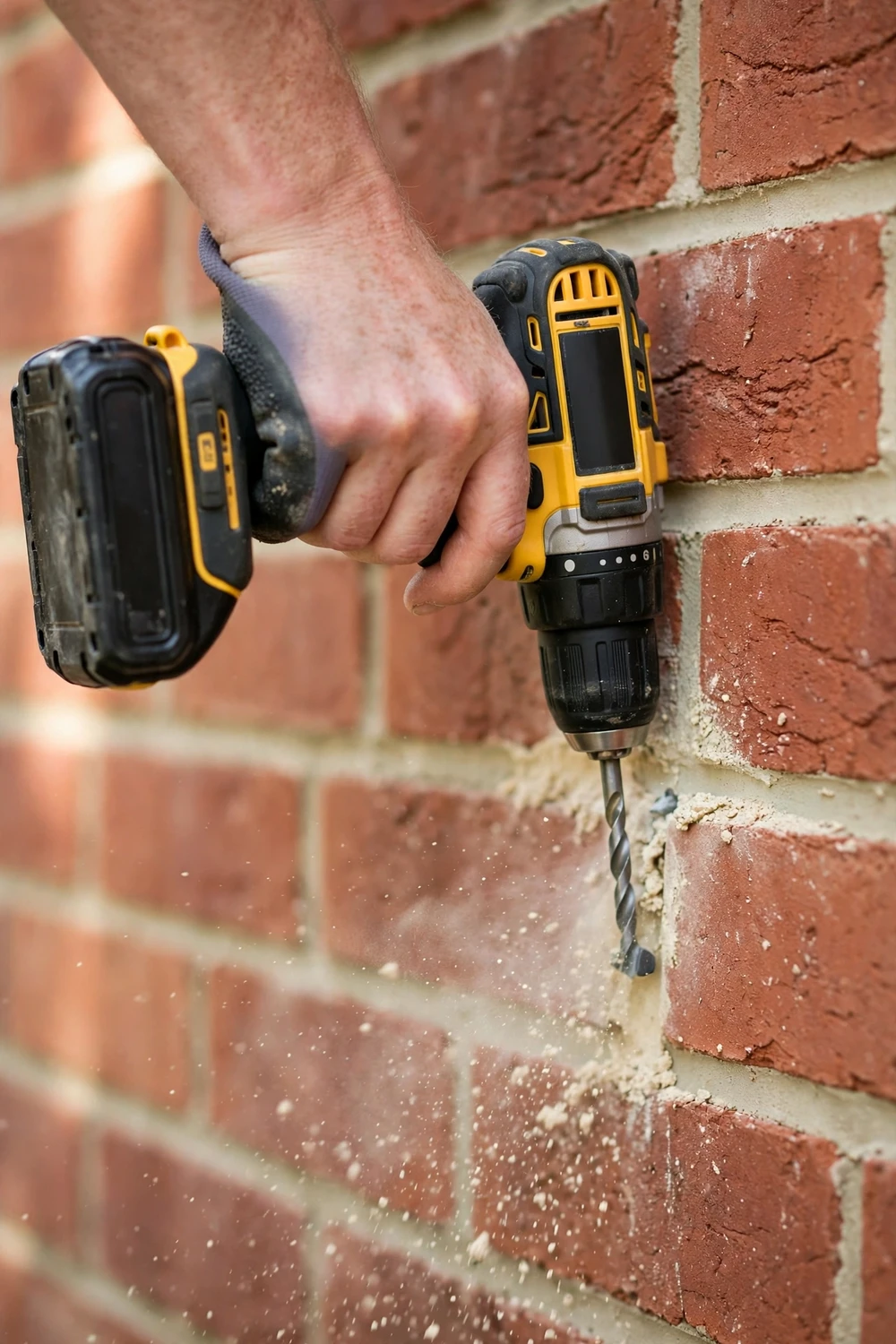
Some pieces simply need a screw. A heavy mirror, an oversized frame, or a mounted television frame will not stay up on clips or glue, and pretending otherwise puts the art and anyone below it at risk. Drilling is not failure. It is the right method for the right weight, and done properly it leaves a small, repairable hole.
The golden rule is to drill into the mortar, not into the brick. Mortar is softer, easier to drill, and far easier to repair. A hole in mortar fills with a dab of filler and disappears. A hole in brick is a permanent scar that is hard to patch convincingly. Always aim for the centre of a mortar joint, and choose a joint that lines up with the height you need. If the joint is a few centimetres off your ideal height, adjust the frame wire rather than drilling the brick.
Use masonry screws brick fixings, which usually means a masonry drill bit, a wall plug, and a screw. Mark the spot with a pencil, then drill slowly with a masonry bit, without hammer action at first. Let the bit cut rather than forcing it. Once the hole is started, switch on the hammer action if your drill has it, and drill to the depth of the plug. Vacuum the dust out of the hole, tap the plug in flush with the wall, and drive the screw in, leaving the head proud enough to hold the frame wire or hook.
For heavy pieces, use two fixings spaced across the frame rather than one. Two screws share the load and keep the frame level, and if one fixing ever loosened, the other holds the frame long enough for you to notice. A heavy mirror deserves this redundancy. The same care that goes into making an antique mirror from an old frame should go into hanging it, because a beautiful mirror is no good on the floor in pieces.
Painted brick hides cracks, so check the joints carefully before you drill. A crack running through the mortar near your chosen spot can spread when the drill vibrates. Pick a different joint if you see one. And always check what is behind the wall before you drill. Brick walls in older homes can hide pipes and cables in the plaster on the other side. A cable detector costs little and takes a minute to use.
A Gallery Wall on Exposed Brick

A gallery wall on brick looks wonderful, and it is easier than people think once you stop treating every frame as a separate problem. Plan the whole wall as one arrangement, choose one fixing method for the whole group, and hang the largest frame first. The rest of the wall follows from that one decision.
Start on the floor. Lay the frames out on a large sheet of paper or an old bedsheet, in the arrangement you want on the wall. Leave 5 to 8 cm between frames. That gap sounds small, but on brick it matters. A tight gap lets the frames read as one collection, while a wide gap makes the wall look scattered. Take a photo of the floor layout before you move anything. You will forget the exact arrangement the moment you start lifting frames. If you like a collected look, the free printable Audubon bird gallery wall guide shows how matching frames let varied prints sit together calmly.
Mark the wall with small pieces of masking tape. Painter tape sticks to brick well enough for marking, and it peels off cleanly. Mark the top corner of each frame position, then step back and look. The tape lets you see the whole wall at once and move a mark without leaving a trace. Check the level of the whole arrangement, not just each frame. A gallery wall that drifts downhill across the room looks careless, even if each frame is level on its own.
For a gallery of light to medium frames, brick clips are the simplest choice, because you can move a clip in seconds if a frame sits wrong. For a gallery with one heavy anchor frame, use a masonry screw or a hardwall hanger for the anchor and clips for the lighter frames around it. The anchor frame carries the visual weight, so it deserves the strongest fixing. The smaller frames around it can use the lighter method.
Keep the centre of the whole arrangement at eye level, about 145 to 150 cm from the floor. This is the same height rule that works above a sofa, and the detailed sizing guidance in above couch wall decor ideas applies here too. Measure from the floor to the centre of the arrangement, not to the top frame. A gallery that starts too high leaves a dead gap above the sofa, and a gallery that sits too low crowds the furniture. A dark anchor piece works the same way in black TV wall ideas, where a strong centre holds the whole arrangement together.
Removing a Mount and Fixing the Mark
Taking a fixing down deserves the same care as putting it up. A rushed removal can do more damage than the hanging ever did, and a little patience at this stage keeps the wall looking as good as it did before you started.
Start with the frame, then the fixing. Lift the frame off the hook and set it aside. Never pull the frame and the fixing off the wall together. For brick clips, squeeze the spring and slide the clip off the brick edge gently. If it resists, wiggle it side to side rather than forcing it straight off. A clip that has sat for a year can grip tightly, and a hard yank can chip the brick edge.
For adhesive hooks, pull the tab straight down along the wall, slowly and steadily. Keep the pull close to the wall and do not rush it. If the strip snaps, roll the remaining adhesive off with your thumb or warm it gently with a hairdryer on a low setting and peel it away. Never scrape adhesive off brick with a blade. The blade will score the brick face and leave a mark worse than the glue.
Hardwall hangers come out with a gentle pull. Grip the plate and pull it straight away from the wall, and the pins slide out of the mortar. If a pin snaps, leave the stub in place and cover it with filler rather than digging it out. Digging makes the hole bigger and the repair harder.
Masonry screws unscrew cleanly. Remove the screw, then pull the plug out with pliers or push it deeper into the hole and fill over it. Pushing it in is often tidier than pulling it out, because a plug that resists can widen the hole on its way out. Fill the hole with a small amount of mortar coloured filler or a general purpose wall filler, pressed in with a fingertip or a small spatula. Smooth it flush with the joint and wipe the edges clean with a damp cloth.
Hanging Things on Brick: What Readers Ask Before They Drill
Can I hang pictures on a brick wall without drilling?
Yes. Brick clips for hanging and adhesive hooks for brick both work without drilling, and hardwall hangers need only tiny pins in the mortar. Clips suit light to medium frames up to about 30 pounds, while adhesive suits only light pieces up to about 5 pounds on smooth or painted brick. Pick the method by weight, not by hope.
Do brick clips damage the brick?
Used properly, brick clips leave no holes and cause no lasting damage. They can leave a faint pressure mark where the metal pressed against the brick, and on very soft or old brick the edge can chip under a heavy load. Test the clip on a low, hidden brick first, and do not overload it. Remove clips gently by squeezing the spring rather than yanking them off.
Will adhesive hooks stick to rough brick?
Usually not. Adhesive needs a smooth, clean, dry surface to bond, and rough brick gives it too little contact. The glue sticks to the dust on the surface rather than to the brick itself. On rough brick, use brick clips or hardwall hangers instead. On smooth or painted brick, clean the surface with rubbing alcohol, press the strip firmly for thirty seconds, and wait up to 72 hours before hanging the frame.
Is it better to drill into brick or mortar?
Mortar, almost always. Mortar is softer, easier to drill, and far easier to repair, since a hole in mortar fills with a dab of filler and disappears. A hole in brick is a permanent scar that is hard to patch convincingly. Drill into the centre of a mortar joint, and use masonry screws with a wall plug for anything heavy.
How much weight can a brick clip hold?
Standard brick clips typically hold about 25 to 30 pounds, while smaller basic clips suit lighter prints under 15 pounds. Treat the packet number as a maximum in perfect conditions. On a dusty or damp wall, the real hold is lower, so give yourself a safety margin and move up to a stronger method if your frame sits near the top of the range.
How do I hang a heavy mirror on a brick wall?
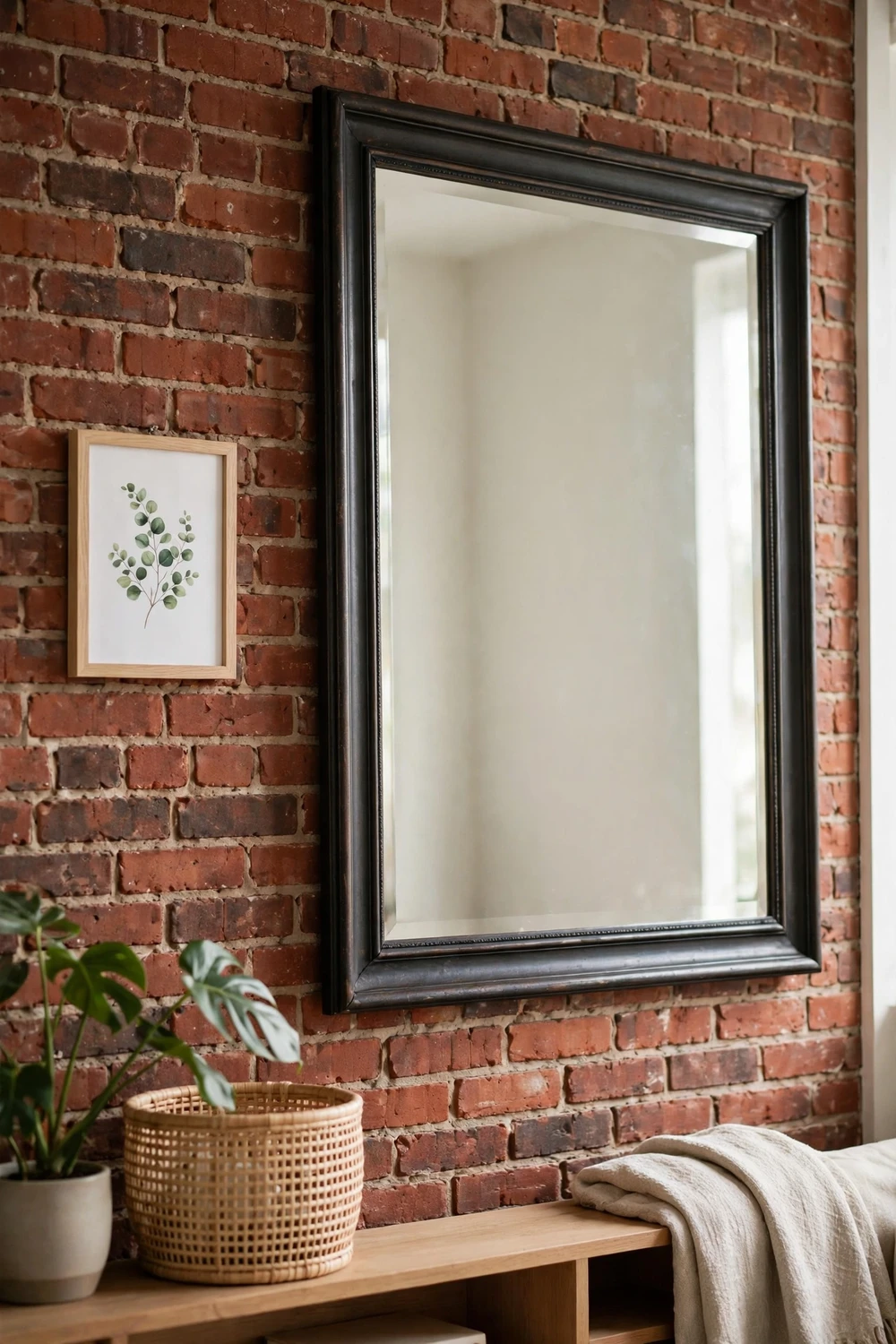
Use masonry screws with wall plugs set into the mortar joints, two fixings spaced across the back of the mirror, or a picture rail with two wires and two hooks. A heavy mirror is not a job for adhesive or a single clip. Two fixings share the load and keep the mirror level, and a rail spreads the weight across the whole wall. If the brick is soft or crumbling, a picture rail is the safest choice.
Hang the First Frame This Weekend
You do not need a full gallery wall to start. You need one frame, one method, and half an hour. Weigh the frame, read the brick, and pick the lightest method that holds it safely. Fit the fixing, hang the frame, and step back. That first frame changes the room more than you expect, because a bare brick wall stops being a blank surface and starts being part of the home.
If you are renting, start with brick clips. They go up in a minute, they come down in a minute, and they let you live with art on the wall while you decide what the room really wants. If you own the home and you rearrange often, consider a picture rail. It is the only method that asks you to drill once and then never again.
Keep the weight rule in your head and you will not go wrong. Light pieces take adhesive or clips, medium pieces take clips or hardwall hangers, and heavy pieces take screws or a rail. When a piece sits near a limit, go stronger. A frame that stays up quietly for years is worth far more than a fixing that was almost strong enough.
This weekend, hang one frame. Next weekend, hang another. A brick wall rewards a slow, confident approach, and before long the wall you were nervous about becomes the best wall in the house.