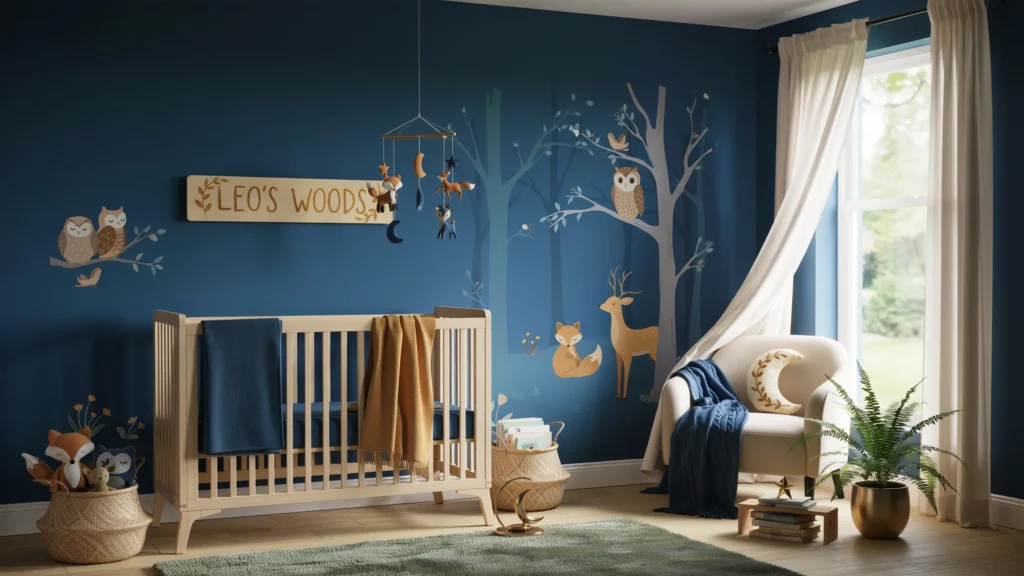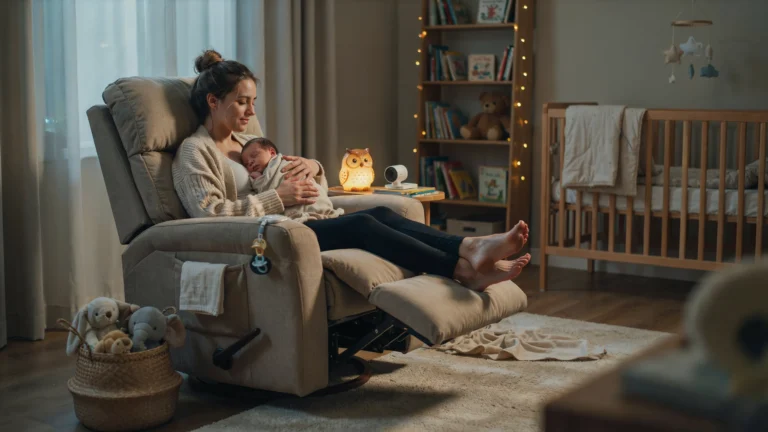
I made the classic mistake with my first woodland nursery plan. I had a fox on the bedding, a fox on the wall, a fox lamp, a fox growth chart, and a basket full of plush foxes staring at me from the corner. The room did not look like a forest. It looked like a gift shop that sold only foxes. My sister walked in, laughed, and said the baby would think he lived inside a toy catalogue. She was right, and that one comment saved the whole room.
That is the trap with a modern woodland nursery for a baby boy. The theme is so sweet that it is easy to buy too much of it. Every woodland item looks cute on its own. Put them all together and the room gets loud, busy, and hard to sleep in. A baby does not need twenty forest animals. He needs a calm room, a safe crib, a comfortable chair for you, and a few well chosen details that hint at the forest instead of shouting about it.
This guide takes a different route. Instead of a long list of things to buy, we build the room the way a forest grows, from the floor up to the canopy. You will pick a quiet palette first, then the big pieces, then the soft layers, and only at the end the small forest touches. Each layer has clear measurements and placement rules, so you can stop guessing and start with confidence. By the end you will have a room that feels like a walk in the woods on a mild morning, not a theme park.
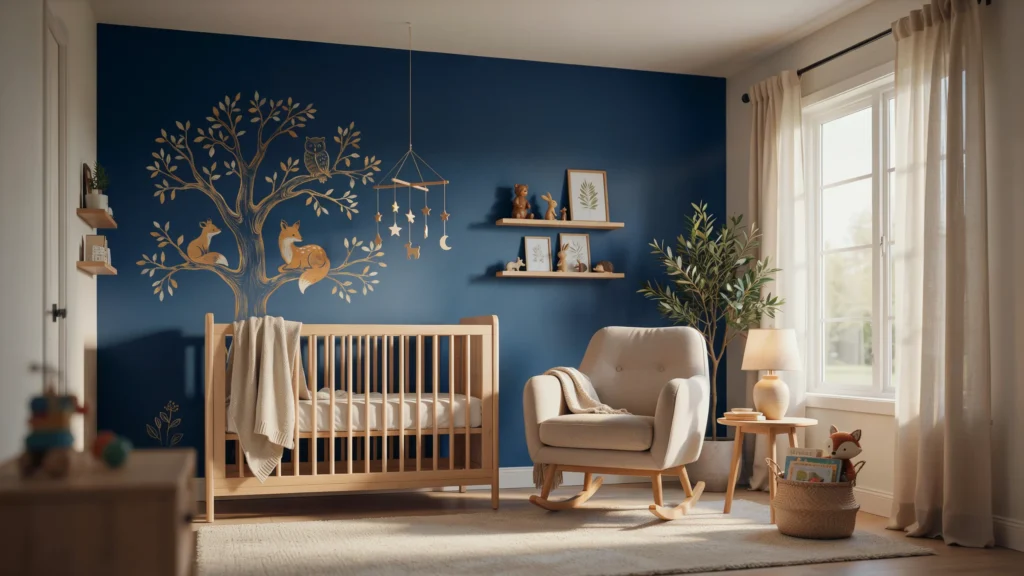
A calm modern woodland nursery starts with a warm neutral base, one green such as sage or moss, and one warm accent such as honey wood or soft terracotta. Keep the big furniture light and simple, put the crib on the longest clear wall away from the window, and limit the forest theme to three or four repeated motifs, such as trees, one animal, and leaf shapes. Add a dimmer, a good glider, and hidden storage, and the room will feel restful now and still work when your baby becomes a toddler.
Why a Modern Woodland Nursery Works So Well for a Baby Boy
A woodland room works because it copies what already calms us outside. Soft green, warm brown, and cream are the colours of leaves, bark, and morning light. They sit quietly on the eye. They do not demand attention the way bright red or electric blue does. In a room where you will spend long nights feeding and rocking, that quiet matters more than any single piece of decor.
The modern part is what keeps it from turning into a dark cabin. Older woodland rooms often used heavy dark wood, thick plaid, and a mural on every wall. The modern version keeps the warmth but lightens everything. Pale wood, white or cream walls, simple lines, and plenty of empty space do the work. The forest shows up in texture and shape, in a woven basket, a curved branch, a soft green curtain, rather than in a crowd of printed animals.
This theme also ages well, which is a real saving. A baby boy outgrows a crib in about two years, but he does not outgrow trees and mountains the same way he outgrows a cartoon character. The same sage walls and wooden dresser that suit a newborn still suit a three year old, once you swap the mobile for a low bookshelf and the changing pad for a small reading corner. You are decorating a room that will change jobs, from sleep room to playroom, without needing a full repaint.
How much theme is too much?
Here is the simplest test I know. Stand in the doorway and count the forest animals you can see. If you reach ten before your eyes land on the crib, you have too many. Pick three or four animals at most, and let one of them lead. A fox can be your main animal, with a bear and an owl as quiet seconds. The rest of the room should be plain wood, plain linen, and plain green. The animals then feel special instead of noisy.
The same rule works for patterns. One patterned thing per view is enough. If the curtains have leaves, keep the bedding plain. If the rug has a mountain design, keep the wall art simple. Your eye needs somewhere to rest, and a baby’s eye needs it even more. A calm room helps a baby settle, and it helps you settle too on the nights when sleep is short.
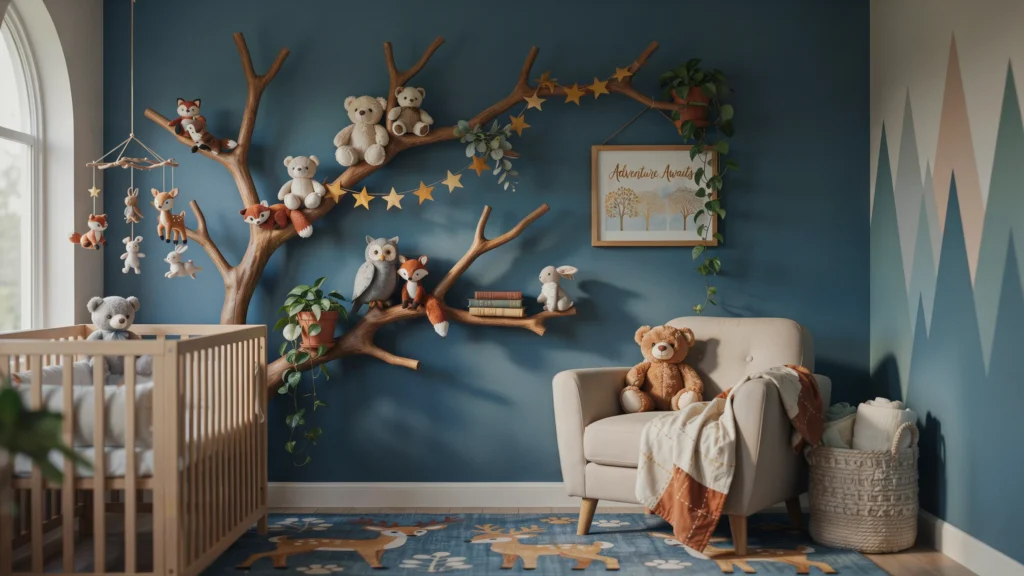
Build It Like a Forest: From the Floor to the Canopy
A real forest is built in layers. The floor is soft and dark. The trunks rise straight and plain. The leaves form a green roof that filters the light. Your nursery can follow the same order, and it makes every decision easier. When you know which layer you are working on, you stop buying random cute things and start choosing pieces that belong together.
Work from the bottom up. Floor first, because it sets the warmth underfoot and the size of everything else. Then walls, because they hold the colour. Then the big furniture, because the crib and dresser fix the layout. Then light, because it changes how every colour looks. Then textiles, because they soften the hard edges. Then the small forest details last, because by then you will know exactly how much room is left for them.
Layer 1: the forest floor
Start with the floor your baby will crawl on. If you have wood floors, you are already ahead. A rug does the rest. Choose a rug that is big enough to matter, at least 5 by 7 feet in a standard nursery, or 6 by 9 feet if the room allows it. A small rug in the middle of the room looks lost and slides around. A large rug anchors the crib zone and the play zone in one soft surface.
Pick a low pile rug in a flat weave or a short wool blend. Long shag looks cosy in photos but traps dust and makes it hard for a crawling baby to move. A moss green, warm oatmeal, or soft cream rug works best. Avoid a rug with a busy forest scene printed across it. A plain rug with a subtle border lets the rest of the room breathe, and it will still look right when the nursery becomes a toddler room.
Place the rug so its front edge sits about 12 inches out from the crib, and its side edge runs under the glider by a few inches. That way your feet land on softness when you stand up with the baby at night, and the play area in front of the dresser stays covered. Leave a clear strip of bare floor along the door swing so the door never catches the rug edge.
Layer 2: the walls and the one big view
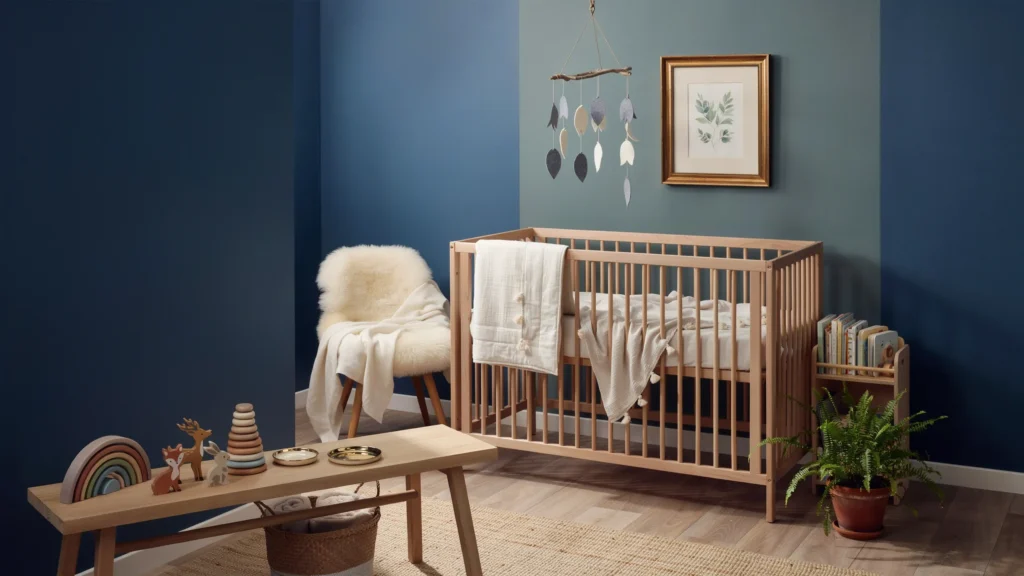
Walls carry the colour of the whole room, so keep them quiet. Warm white or soft cream on three walls is the safest base. It bounces light around, it makes a small room feel bigger, and it lets one green accent wall do its job without competition. If you paint an accent wall, choose the wall behind the crib. It becomes the backdrop for every photo you take of your baby, and it frames the crib the way a clearing frames a tree.
Sage green is the most forgiving accent colour for a woodland nursery. It reads as green in daylight and soft grey green at night, so it never feels harsh under a lamp. Moss green is deeper and works well in a bright room with a large window.
Forest green is beautiful but strong, so use it on one wall only, and keep the other three walls pale. Test your paint on a large piece of card first and move it around the room through the day. Green changes more than any other colour as the light shifts, and a shade that looks perfect at noon can look muddy at dusk.
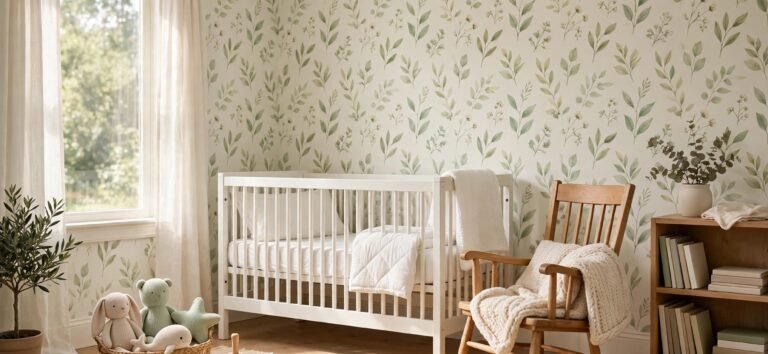
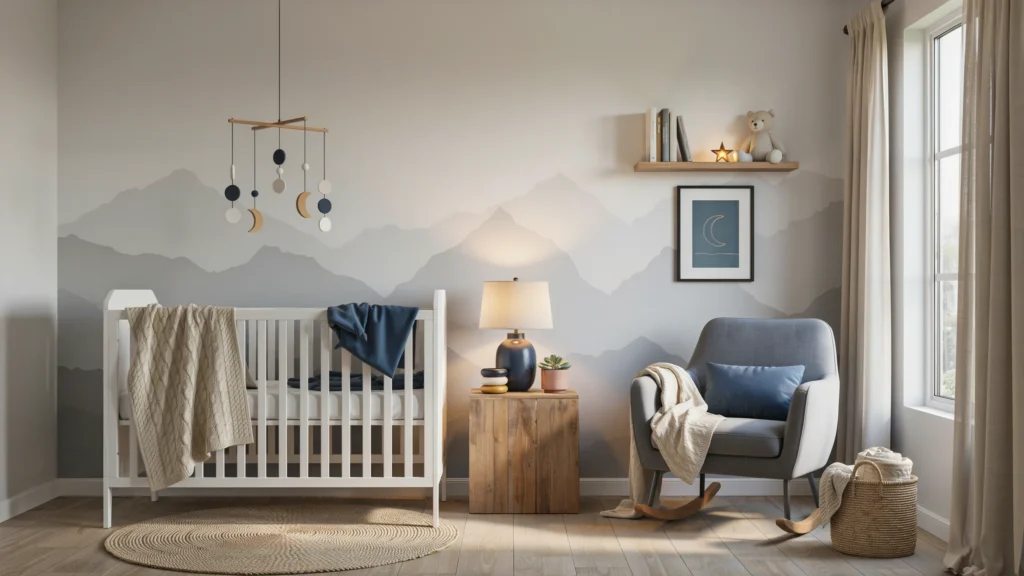
One wall deserves one clear idea. A simple mountain range painted in two or three tones of the same green is a classic for a reason, and it is easy to do with painter’s tape and a steady hand. Keep the peaks low, no higher than two thirds of the wall, so the top of the wall stays pale and the room keeps its height. A peel and stick woodland wallpaper on one wall is the other good choice, especially if you rent or you want to change it later.
It gives you trees and animals in one step, and you can take it down without repainting. If you go that way, keep the other walls plain and skip a painted mural too. One big view is enough, and two big views fight each other. For more pattern ideas that work in a nursery, these wallpaper designs to transform a nursery show how one wall can carry the whole theme.
The Palette Table: Pick Your Greens Before You Shop
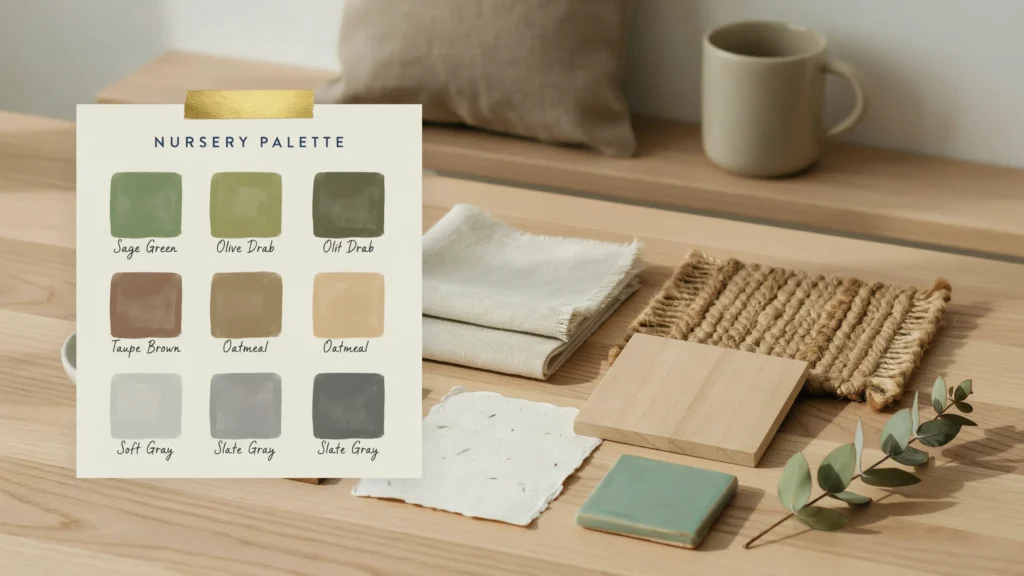
Choosing paint and fabric before you shop saves you from the most common nursery mistake, which is buying a green rug, a different green curtain, and a third green blanket that clash in the same room. Greens are tricky. Two sage greens from different shops can look like strangers. So pick your palette on paper first, then match everything to it. Carry a paint chip or a fabric swatch with you, even if it is just a photo on your phone, and hold it next to anything before you buy it.
The table below gives you three palettes that work for a modern woodland nursery for a baby boy. Each one uses two neutrals, one main green, and one warm accent. The percentages are a guide, not a rule. Roughly sixty percent of the room should be your lightest neutral, thirty percent your green and second neutral, and ten percent your warm accent. That balance keeps the room calm with just enough warmth to feel cosy.
| Palette | Main colours | Where each colour goes | Best for |
|---|---|---|---|
| Sage morning | Warm white, cream, sage green, honey wood | White walls, sage accent wall or curtains, cream bedding, honey wood crib and dresser | Small or dark rooms, a bright spring feel |
| Moss and stone | Soft grey, warm white, moss green, walnut brown | Grey green walls, white ceiling, moss rug and cushions, walnut shelves and frames | Rooms with good daylight, a calm grounded look |
| Forest and clay | Cream, taupe, deep forest green, soft terracotta | Cream walls, forest green accent wall, taupe bedding, terracotta in one throw and one print | A cosy room that feels warm at night |
Whichever palette you choose, keep the warm accent small. Terracotta or mustard looks lovely in a cushion or a book cover, but a terracotta wall next to a forest green wall will fight for attention all day. Let the green lead and the warm colour whisper. The same goes for blue. A dusty blue works as a second accent, like the sky above the trees, but keep it to bedding or art. Two strong colours plus a green is one too many in a small room.
The woodland palette stays close to nature, so it rarely looks dated. If you want to see how these greens sit beside other cosy colours, this roundup of interior colour trends for cosy homes is a useful cross check before you commit to a shade.
Layer 3: Furniture That Does the Heavy Work
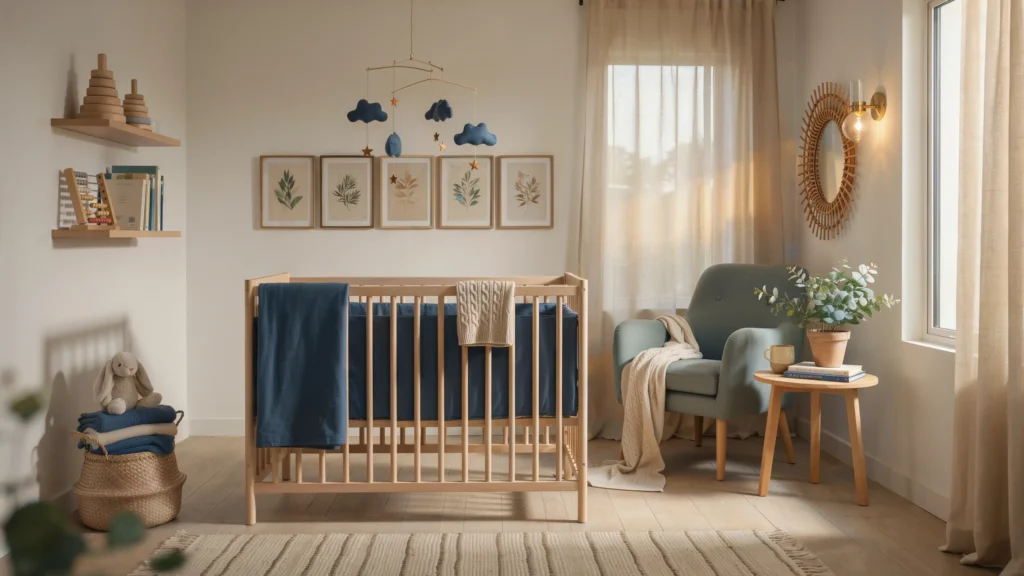
Nursery furniture has to work hard, and it has to be safe before it is pretty. Buy the big pieces first and let them set the size of everything else. The crib, the dresser with a changing top, and the glider are the three pieces that decide the layout. Everything else, shelves, baskets, a small side table, fits around them.
Choose a crib in a light wood such as ash, birch, or natural pine. Light wood keeps a small room bright, and it shows the grain, which is part of the woodland look. A white crib also works and is often easier to find second hand. What matters most is the build.
The slats should be no more than 2 and 3/8 inches apart, the mattress should fit with no gap wider than two fingers at the edge, and the sides should be fixed, not drop sided. Check the crib against current safety standards before you buy it, and skip any crib with peeling paint, loose joints, or missing hardware, however charming it looks.
Put the crib on the longest clear wall, away from the window, the radiator, and any blind cords. Leave at least 24 inches of clear space on the side you approach from, so you can lift the baby out without twisting. A crib pushed into a corner looks tidy but makes night changes awkward.
If the room is tight, a mini crib is a fair trade for a few months, but measure it first. A standard crib is about 52 by 28 inches, and a mini crib is about 38 by 24 inches. That smaller size buys you real floor space in a room under 100 square feet.
Your dresser should do two jobs. Pick a low wide dresser, about 36 to 48 inches wide and 32 to 36 inches high, with a changing tray that sits on top. The height matters because you will change nappies standing up, and a dresser that is too low will hurt your back within a week.
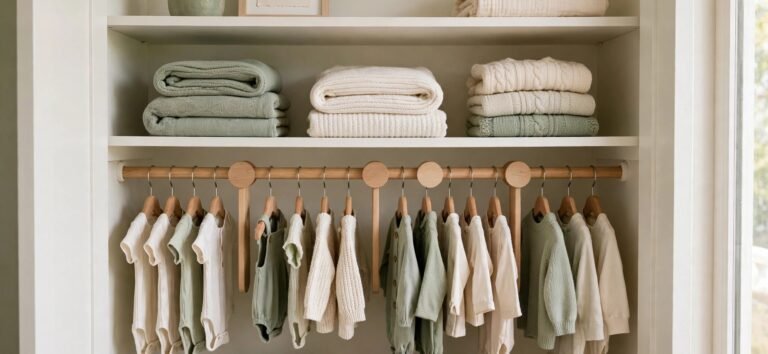
Three deep drawers beat six shallow ones for baby clothes, because folded sleepsuits and blankets need depth. Anchor the dresser to the wall with anti tip brackets as soon as it arrives, before you fill the drawers. A full dresser is heavy, and a climbing toddler can pull it over in seconds.
Now the glider, which is where you will spend the most hours of anyone in the house. Sit in it before you buy it if you can. Your feet should rest flat on the floor or on a small footstool, your lower back should feel supported, and the armrests should sit at a height that lets your arms rest while you hold the baby. A glider in a washable performance fabric is worth the extra cost.
Milk, spit up, and nappy cream will find it. Choose forest green, charcoal, or warm oatmeal, and add a cushion in your accent colour rather than buying a patterned chair that will clash with the rest of the room. If you are still choosing, this list of affordable nursery gliders that look expensive is a good place to compare shapes and fabrics before you commit.
Layer 4: Decor That Brings the Forest Indoors, Gently
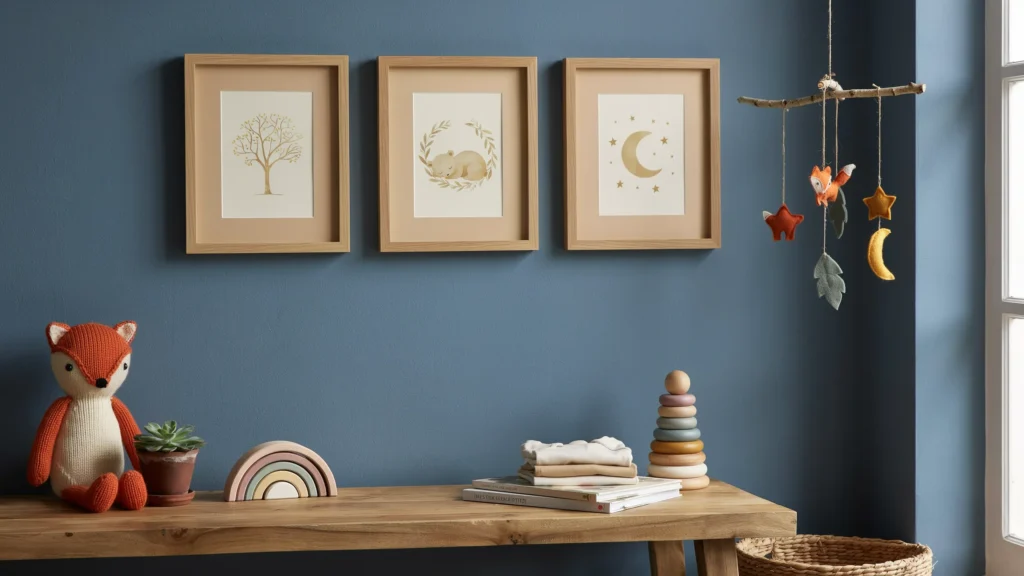
Decor is the layer where most woodland nurseries go wrong, so go slowly here. The rule is simple. A few good pieces, well placed, beat a shelf full of small ones. Start with the wall above the crib or dresser, because that is where the eye lands first. A set of three framed prints in matching light wood frames is enough.
Mix one animal print, one tree or mountain print, and one simple shape, such as a moon or a leaf. Keep the frames the same size, hang them in a straight row, and leave about 2 to 3 inches between them. That spacing looks calm and deliberate, while a scattered gallery wall can look messy in a small room.
A mobile is the one piece of decor your baby will actually watch. Hang a branch mobile or a felt animal mobile above the crib, high enough that your baby cannot reach it when he starts to pull up, at least 12 inches above the mattress and fixed to a ceiling hook that is screwed into a joist, not just plaster. Keep it light and simple. Five or six felt leaves, acorns, or small birds in your palette colours will hold a baby’s gaze far better than a crowded mobile with twenty pieces spinning at once.
Layer 5: Light Like a Clearing, Not a Stadium
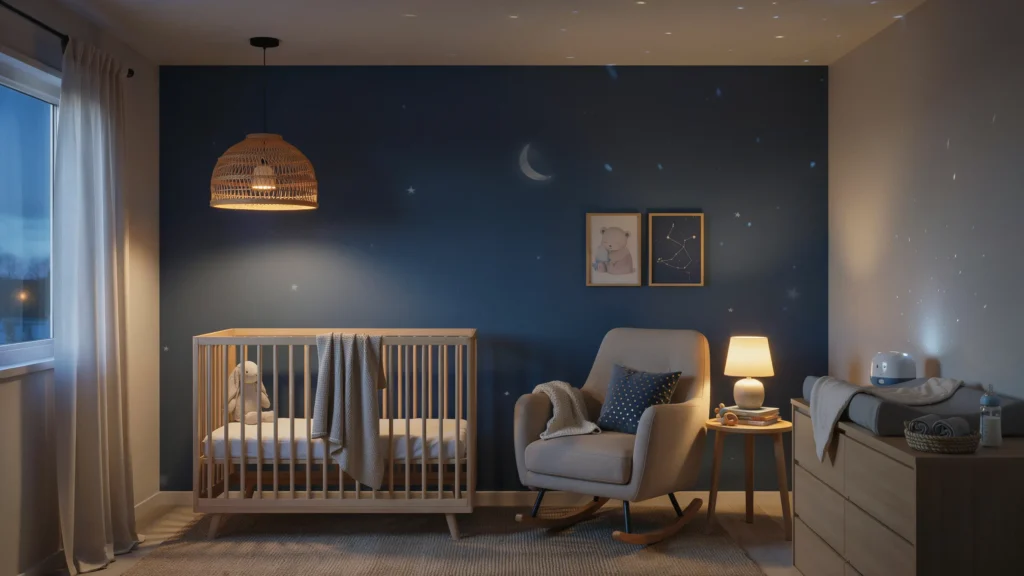
Nursery light needs to do two opposite jobs. Bright and clear for daytime play and nappy changes, soft and low for night feeds. One ceiling light on a dimmer is the best money you will spend in this room. A dimmer costs little and changes everything. You can check on a sleeping baby without waking him, and you can find a clean sleepsuit at 3 in the morning without turning the room into daylight.
Choose a ceiling fixture that fits the theme without trying too hard. A woven rattan pendant, a simple wooden bead shade, or a plain linen drum shade all work. Keep it in proportion. In a standard nursery of about 10 by 12 feet, a shade about 16 to 20 inches across is right.
A huge statement light will hang too low and dominate the room, and a tiny one will look lost. Hang it so the bottom of the shade sits at least 7 feet above the floor, well clear of your head and of any tall furniture.
What kind of night light actually helps?
A small warm night light near the glider is more useful than a bright one by the door. It should be just bright enough to see the baby’s face and your hands, no more. A mushroom shaped light, a small wooden lamp, or a salt lamp style glow all work if they are warm toned and dimmable.
Avoid cool white night lights and any light that projects moving patterns across the ceiling during sleep time. Gentle is the point. A star projector can be lovely for a calm wind down before bed, but switch it off once the baby is asleep so the room goes properly dark.
Layer 6: Storage That Hides the Chaos
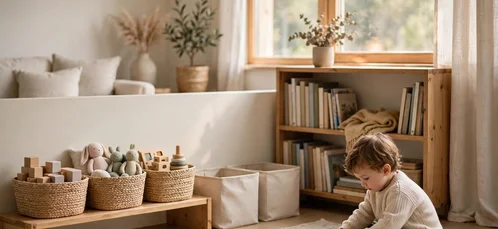
A baby arrives with a surprising amount of stuff, and a woodland nursery stays calm only if most of it is hidden. Plan storage before the baby arrives, because once the clothes and toys start coming, there is never a quiet week to sort it out. Give everything a home on day one, and the room will mostly look after itself.
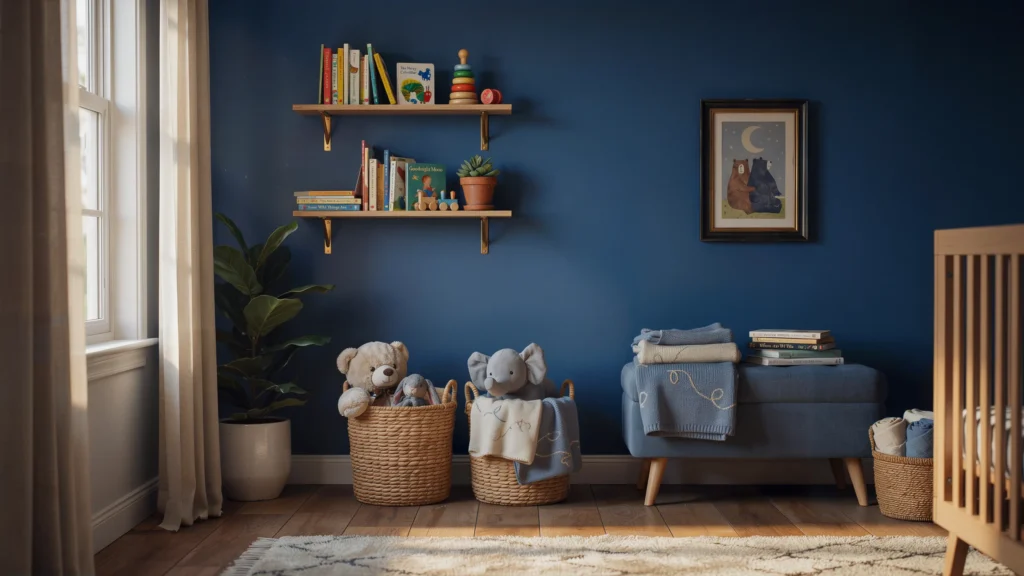
Floating shelves are the woodland room’s best friend, but only if they are used properly. Hang one shelf above the dresser at about 60 inches from the floor, out of a standing baby’s reach, for books and a few small wooden toys.
Keep the shelf shallow, about 8 inches deep, so it does not jut into the room. A second shelf can hold the baby monitor and a small plant. Do not load shelves with heavy objects above the crib or the changing area. If a shelf fails, nothing above a baby should be able to fall on him.
Make It His: Personal Touches That Mean Something
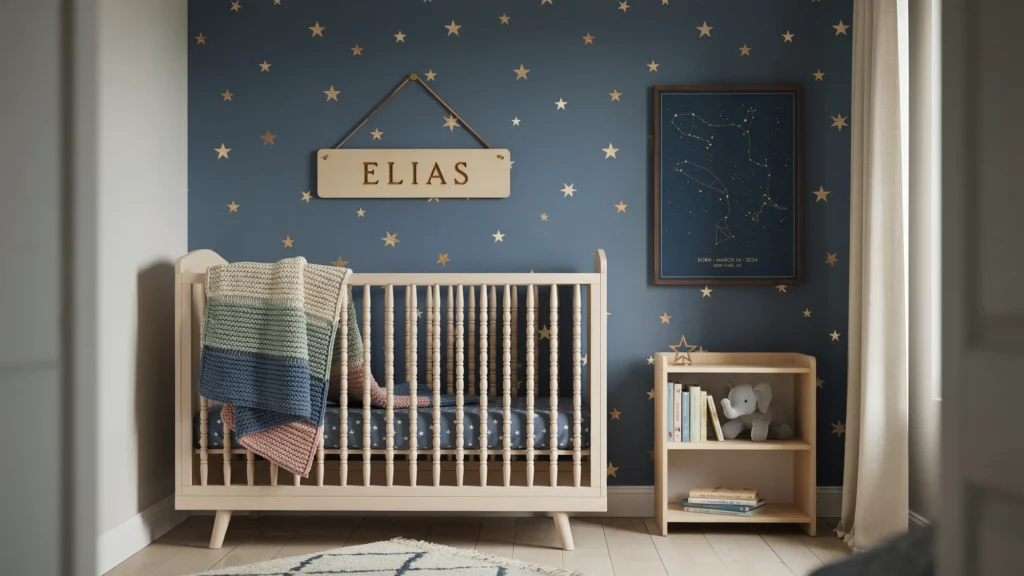
A nursery should feel like it belongs to your baby, not to a shop display. The personal pieces are what stop a woodland theme from feeling generic, and they do not need to cost much. A wooden name sign above the crib or dresser is the most loved one for a reason. Keep it simple, in the same wood as the crib, with the name in a clear font you can read from the door. Hang it with two fixings, not one, so it sits level and cannot spin on a single nail.
Family pieces carry more meaning than anything you can buy new. A blanket knitted by a grandparent, a small wooden rocking horse, or a framed photo of the family home all belong here, as long as they are safe. A rocking horse is for looking at until your baby is old enough to use it with you beside him. A handmade blanket is lovely folded over the glider arm, but it does not go into the crib with a sleeping baby. Display the things that matter, and keep the sleep space bare.
One personal idea that grows with the room is a height chart shaped like a birch tree, fixed to the wall beside the door. Mark it lightly in pencil as your boy grows, and ink the marks in once a year. It starts as a decoration in the nursery and becomes a record of his childhood. Put it where the door never hits it, and where you can stand back with a camera to take the yearly photo.
The Safety Table: Check These Before the Baby Comes Home
Safety is not the fun part of decorating, but it is the part that matters most. Work through this table in one sitting, before the baby arrives, when you still have the time and the energy to fix things properly. Most of these checks take minutes. A few, like anchoring furniture, need a drill and a stud finder, so borrow them now rather than putting the job off.
| Check | What to do | Why it matters |
|---|---|---|
| Crib slats | Slats no more than 2 and 3/8 inches apart, mattress snug with no gap wider than two fingers | Stops a baby’s head or body getting trapped between slats |
| Crib bedding | Fitted sheet only, no pillows, bumpers, blankets, or soft toys in the crib | Keeps the sleep space clear and lowers the risk of suffocation |
| Heavy furniture | Anchor dresser, bookshelf, and any tall unit to wall studs with anti tip brackets | Stops furniture tipping onto a climbing toddler |
| Cords and blind pulls | Move crib away from windows, use cordless blinds, tie up or remove long cords | Removes a strangulation risk near the sleep area |
| Outlets and cables | Cover outlets, run lamp and monitor cables behind furniture or in cord covers | Keeps small fingers and mouths away from power |
| Wall decor | Fix frames and shelves with proper wall fixings, nothing heavy above the crib | Stops a frame or shelf falling onto the baby |
| Paint and finishes | Use zero VOC paint and finishes, air the room well before the baby sleeps in it | Lowers chemical fumes in the air your baby breathes |
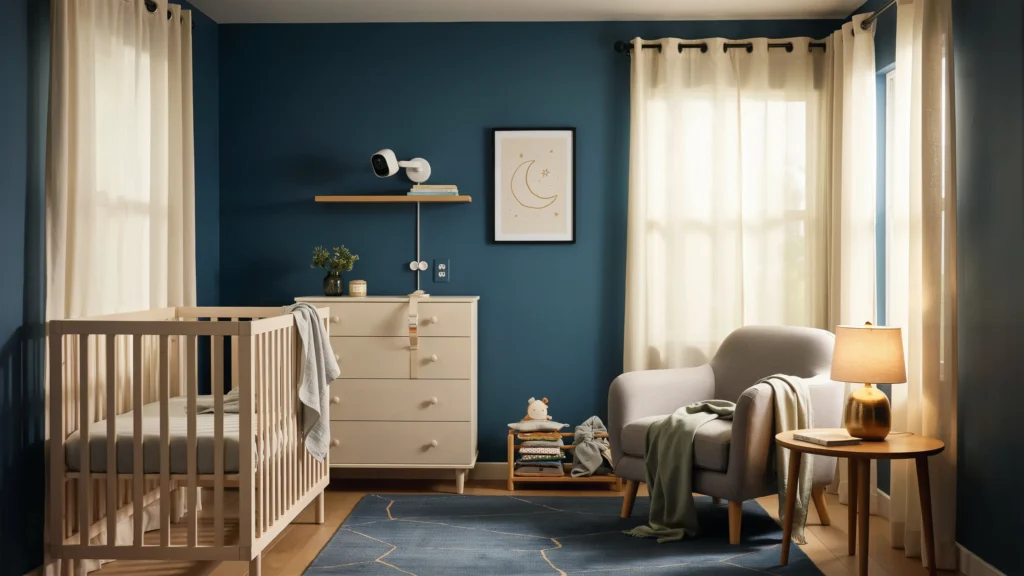
| Monitor placement | Camera in a corner with a clear view, cable well out of the baby’s reach | Lets you watch safely without a cable near the crib |
Is a woodland nursery safe with real plants and wooden toys?
Yes, with two rules. First, keep plants high and out of reach, and choose kinds that are safe if a leaf is touched or tasted. A spider plant or Boston fern on a fixed high shelf is a good choice. Second, choose wooden toys with smooth finishes and no small loose parts, and check them often for cracks or splinters.
A solid wooden rattle or stacking toy is a lovely woodland piece, but a toy with peeling paint or a loose eye belongs in the bin, not in the cot. When in doubt, leave it out. A plain room is safer than a pretty room with a hidden risk.
Three Easy DIY Projects That Actually Look Good
Handmade touches make a woodland nursery feel personal, and they can save money too. Pick one project, not five. A single well made piece will get more compliments than a shelf of rushed crafts, and you will actually finish it before the baby arrives.
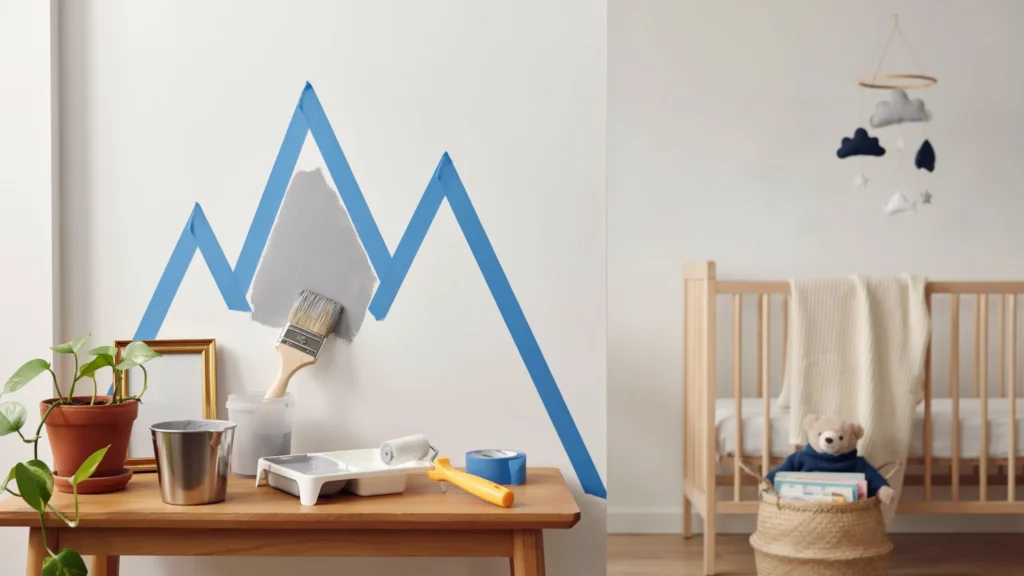
The mountain mural is the easiest big win. Tape off a row of peaks on the accent wall with painter’s tape, using a spirit level to keep the base line straight. Paint the peaks in three tones of the same green, darkest at the bottom, lightest at the top. Two coats, tape off while the second coat is still slightly tacky, and you have a clean mountain range that looks like you hired someone. Keep the peaks below two thirds of the wall height so the room keeps its airy feel.
A branch mobile is the second project, and it is the one your baby will watch most. Find a sturdy branch about 18 to 24 inches long, scrub it, let it dry fully, and sand any rough spots. Hang it from a ceiling hook with strong cord, then suspend five or six felt leaves, acorns, or paper birds from clear fishing line at different lengths. Keep the whole mobile at least 12 inches above the mattress. Test the hook by pulling down on it firmly before you hang anything a baby will look at every day.
Keep It Kind: Sustainable Choices That Suit a Woodland Room
A woodland theme and sustainable choices fit together naturally. The look is built on wood, cotton, and linen, so you do not need to force it. Start with the biggest item, the furniture. Solid wood furniture that is FSC certified, or good quality second hand furniture, will outlast flat pack pieces and can be passed on when your boy outgrows it. Check second hand cribs carefully against current safety standards, and buy a new mattress even if the frame is used. A mattress is the one thing that should always be new.
From Nursery to Toddler Room Without Starting Over
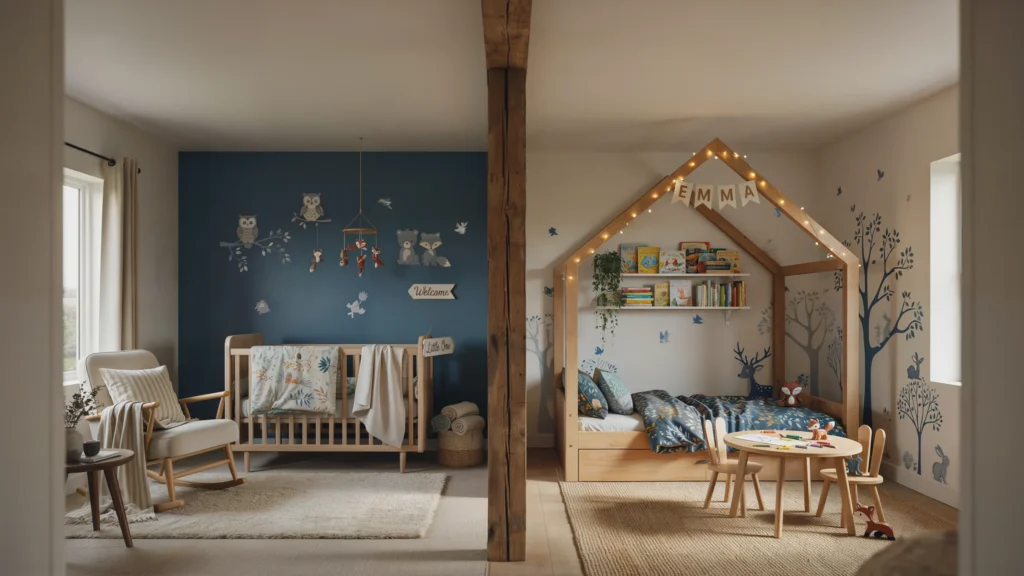
The best thing about a modern woodland nursery is how easily it becomes a toddler room. The palette, the furniture, and the storage all stay. Only the baby gear leaves. When your boy starts to pull up and climb, lower the crib mattress to its lowest setting, then move to a low toddler bed when he starts climbing out. A low wooden house bed frame, with the mattress close to the floor, suits the woodland theme and lets a toddler climb in and out safely on his own.
This is also the moment to think one step ahead. The same calm palette and wooden furniture that work at age two will still work at age five, with a bigger bed and a desk in place of the changing table.
If you want ideas for that next stage, these kids bedroom ideas for boys with a cool modern look show how a woodland base can grow into a proper boy’s room, and these toddler room ideas for boys and girls cover the in between stage, when the room needs to be safe for a climber and fun for a player at the same time.
Your First Weekend Plan: Build the Room in Two Days
Here is the part most guides skip. Knowing what to do is not the same as doing it, and a nursery list can sit untouched for weeks while the due date gets closer. So here is a simple two day plan that builds the whole room without rushing. You do not need to buy everything first. Buy the paint, the crib, and the rug in week one, and let the small things follow.
On Saturday morning, clear the room and paint the walls, one accent wall in sage or moss and the rest in warm white. While the paint dries, build the crib and anchor the dresser to the wall. In the afternoon, lay the rug, hang the curtains, and put the glider in place with its side table. By Saturday night the room will already look like a nursery, even with bare walls.
On Sunday morning, hang the art and the shelves, fix the mobile hook, and put the baskets and storage in place. Fill the dresser drawers, make the crib with a fitted sheet only, and place the night light by the glider.
In the afternoon, add the small forest touches, the three framed prints, the throw on the glider, and the books on the shelf. Then step back and do the doorway test. Count the animals, check the walkway is clear, and sit in the glider to check you can reach the table, the light, and the basket without standing up.
A modern woodland nursery for a baby boy is not about owning every forest animal ever made. It is about building a quiet room in layers, floor to canopy, with colours that rest the eye and furniture that works hard. Start with the palette, choose light wood and simple lines, add one green accent wall, and let three or four forest touches do the talking. Keep the crib clear, the cords hidden, and the furniture anchored, then add the pieces that make the room his.