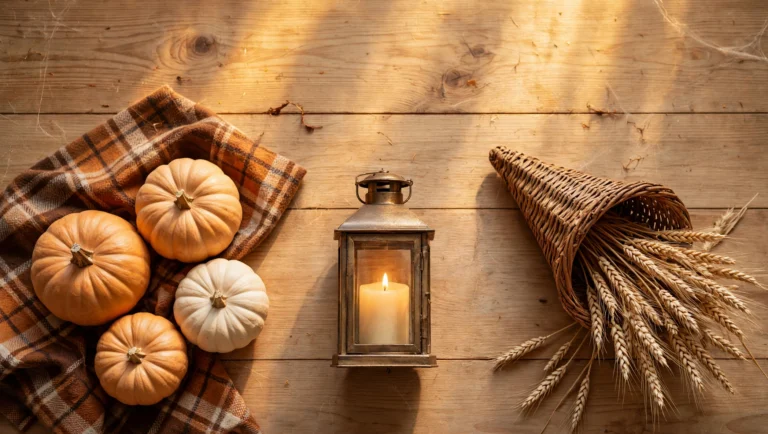
Last October I stood in a home store with a basket full of things I did not need, hunting for fall home decor under $40. A ceramic pumpkin, a plaid runner, a candle shaped like an acorn, a sign that said something about pumpkin spice. The total came to more than eighty dollars and none of it matched anything I already owned.
I put most of it back, went home, and spent the afternoon moving things I already had from one room to another. By dinner my living room looked more like fall than anything in that basket would have. That is the whole idea behind this plan. Fall home decor under $40 works best when the money comes last, not first.
Most fall decorating guides start with a shopping list. This one starts with your own house. You probably already own a warm throw, a couple of candles, a basket, a wooden bowl, and a vase that has been sitting empty since spring. Those pieces are the bones of your fall look. The forty dollars is for the gaps, the one or two things that make the free stuff look finished. Spend it where people actually look, and leave the rest alone.
Fall home decor under $40 starts with shopping your home first. Pull out warm textiles, baskets, candles and wooden pieces you already own, then gather free nature finds like branches, pinecones and leaves. Spend your money in tiers: nothing at all for the free layer, a few dollars on candles or mini pumpkins, a little more on a throw or pillow covers, and only up to $40 total if a piece earns its place. A room by room plan beats a big shopping trip every time.
Shop your home first: the free layer that does most of the work
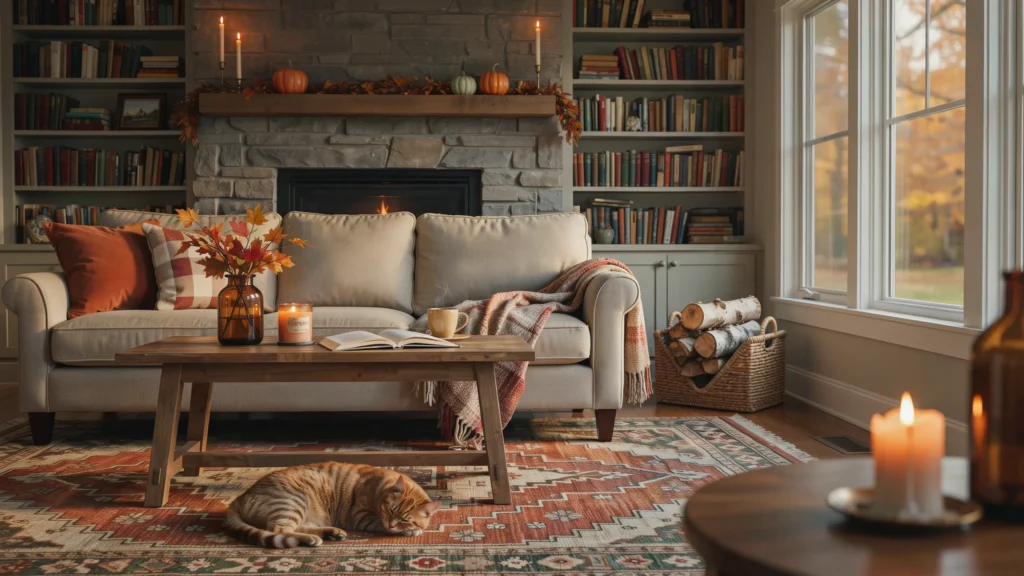
Before you spend a single dollar, walk through your house with fresh eyes and a laundry basket. You are not cleaning. You are hunting. Open the linen closet, the hall cupboard, the shelf above the washing machine, and the box of things you meant to put away last spring. Look for anything warm, textured, wooden, or woven.
A cream throw you forgot about. A rust colored cushion cover from two years ago. A wooden tray, a wicker basket, a glass jar, a brass candlestick. Put it all on the dining table and look at it as one pile. Most people find they already own half a fall display.
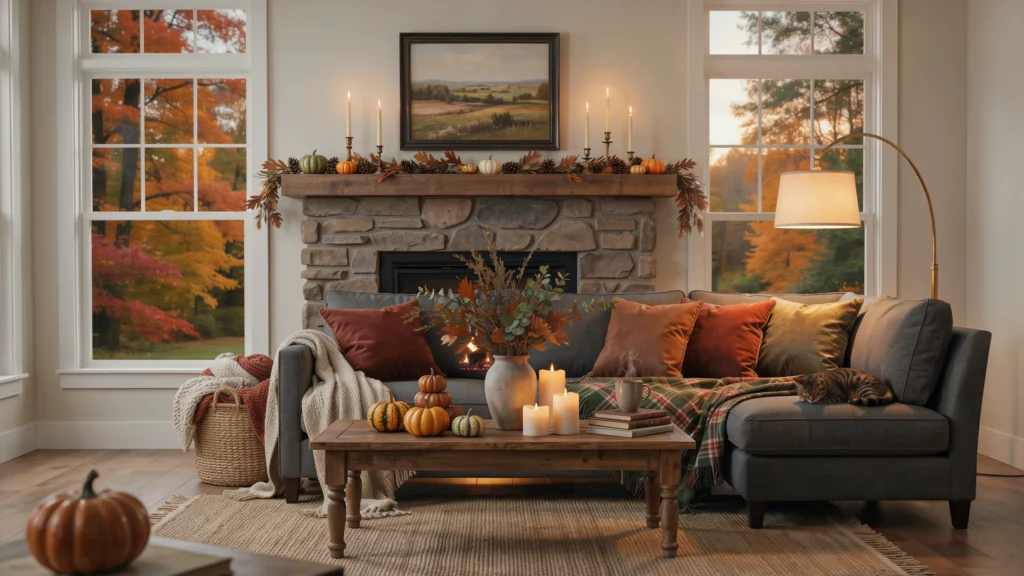
The trick is grouping. One candle on a shelf looks lost. Three candles of different heights on a wooden tray looks styled. A single pinecone on a side table looks like clutter. A bowl of pinecones on the coffee table looks like a plan. Gather your finds into groups of three or five, keep a little breathing room between groups, and suddenly the room feels settled. This is the oldest decorating trick there is, and it costs nothing.
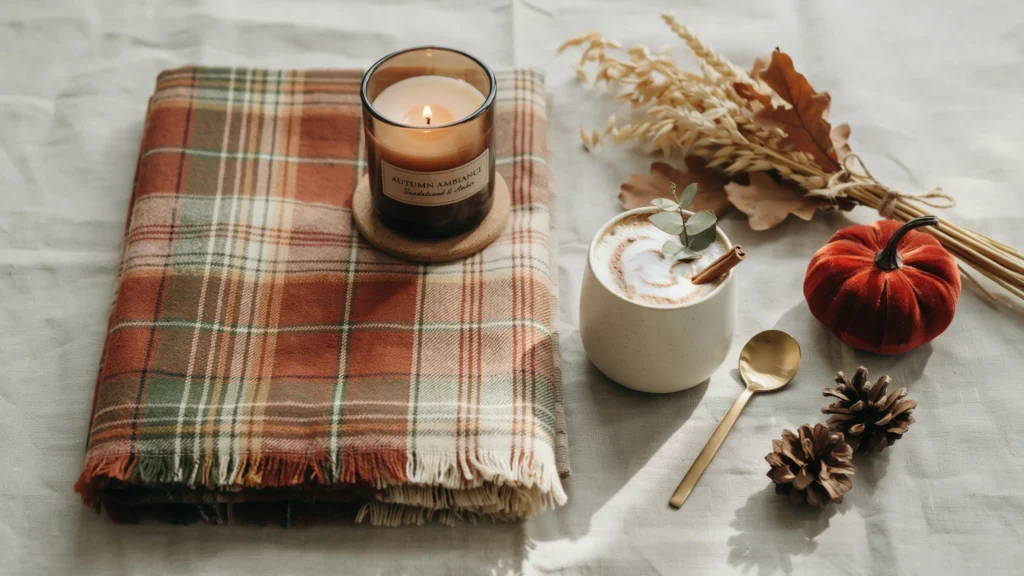
While you are at it, take one thing away from each surface before you add anything. A mantel with six objects on it cannot hold a fall garland without looking crowded. A coffee table covered in remotes and mail cannot hold a centerpiece. Clear the surface, wipe it down, then place your group. Restraint is what makes budget decor look expensive. A room with three thoughtful touches reads as calm and finished. A room with fifteen small purchases reads as a clearance aisle.
What to pull out, room by room
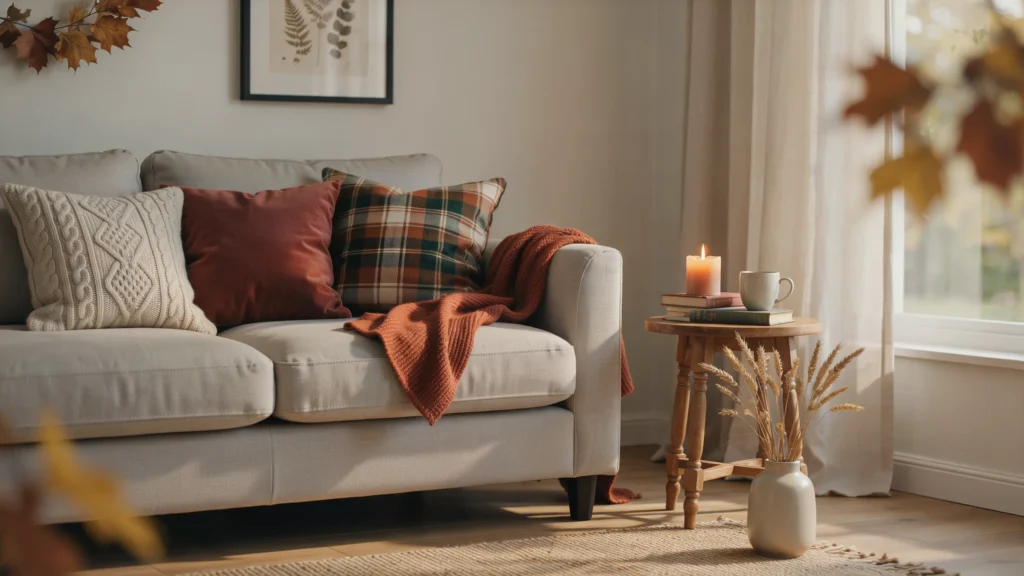
Start in the living room, because that is where you spend your evenings. Look for the warmest throw you own, one or two cushion covers in rust, mustard, olive or deep red, and anything wooden or woven that can sit on the coffee table. A stack of two or three books with a small candle on top works as a centerpiece on its own. If you have a basket, set it beside the sofa with a rolled throw inside it. That one move makes a sofa look inviting from the doorway.
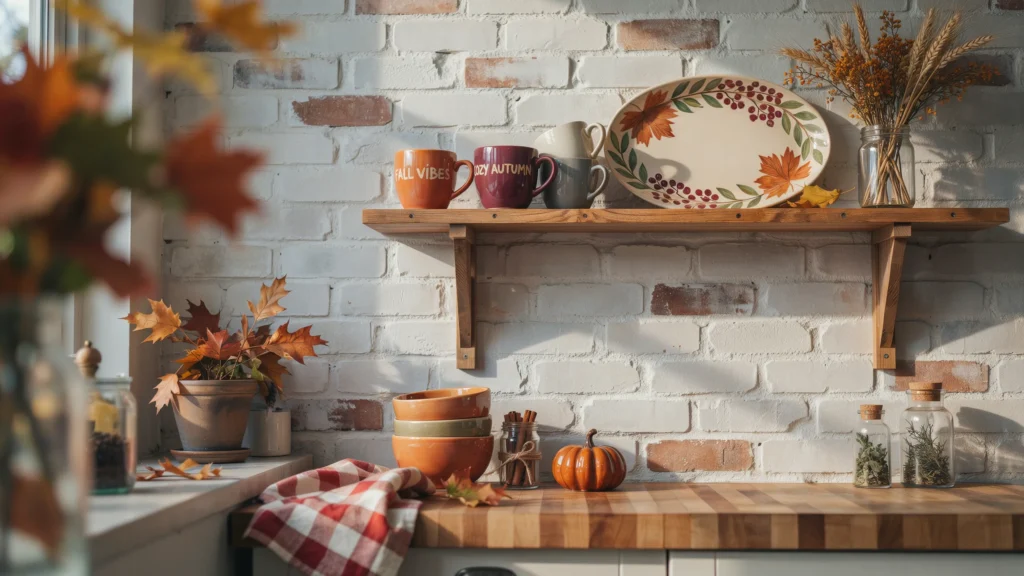
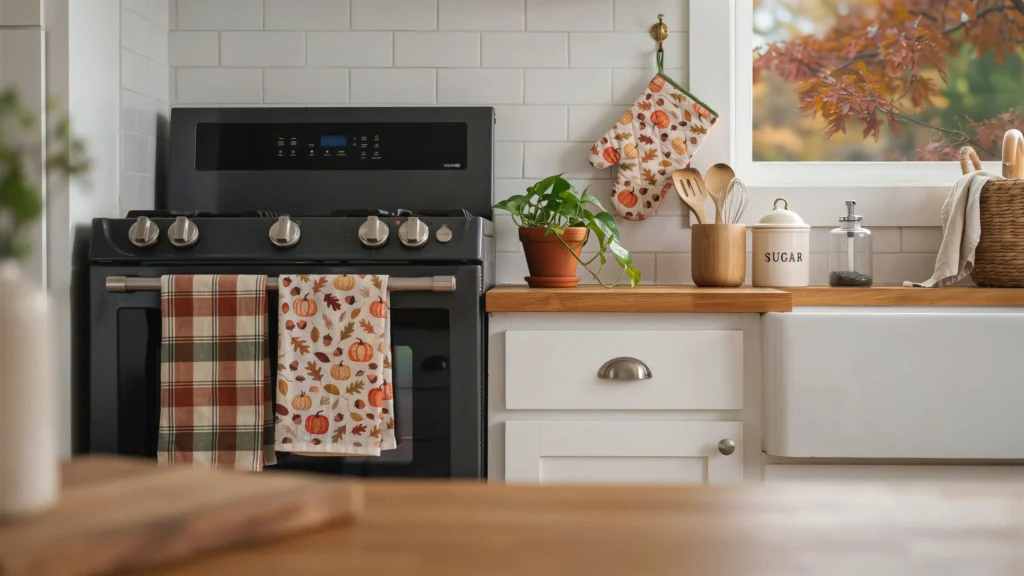
The kitchen gives you the easiest wins. A wooden chopping board leaned against the backsplash, a linen tea towel in a warm color, a glass jar filled with dried beans or cinnamon sticks, a bowl of apples on the counter. These are things you already use, shown a little more deliberately. Hang the tea towel over the oven handle instead of folding it in a drawer. Set the apples in a bowl instead of leaving them in a bag. The kitchen starts to feel like fall without a single purchase.
The spend tiers: what each level buys and where it goes
Here is the part that makes this plan different from a shopping list. Instead of buying ten small things at once, you spend in tiers, and you stop when the room looks done. Most rooms look done after the free tier and one small purchase. The table below shows what each tier typically buys and where it belongs. Think of $25 and $40 as maximums, not targets. If your living room looks finished after twelve dollars, keep the rest. The money you do not spend is the best part of a budget plan.
| Tier | What it typically buys | Where it goes | Best for |
|---|---|---|---|
| $0, free | Branches, pinecones, leaves, acorns, moved textiles and baskets | Entry, mantel, coffee table, dining table | Every home, every season |
| Under $10 | A candle, mini pumpkins, a tea towel, twine and ribbon | Kitchen, bathroom, bedside, entry table | Small rooms and quick wins |
| Under $25 | Pillow covers, a small throw, a wreath base, a table runner | Living room sofa, bed, dining table, front door | The one room guests see most |
| Up to $40 | A larger throw, a good faux garland, a set of velvet pumpkins | Living room, mantel, staircase | One hero piece per home |
Tier zero: free natural finds from outside your door
The best fall decor is growing outside right now, and it is free. A walk around your street or a nearby park can fill a basket with branches, pinecones, acorns, colorful leaves and seed pods. Take a tote bag and a pair of scissors, and look for branches with interesting shapes rather than perfect ones.
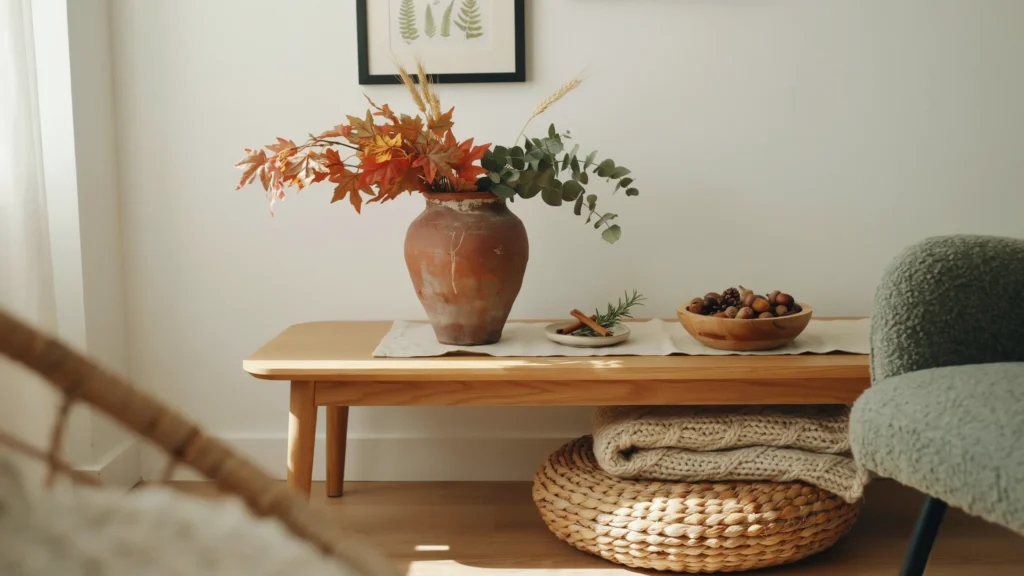
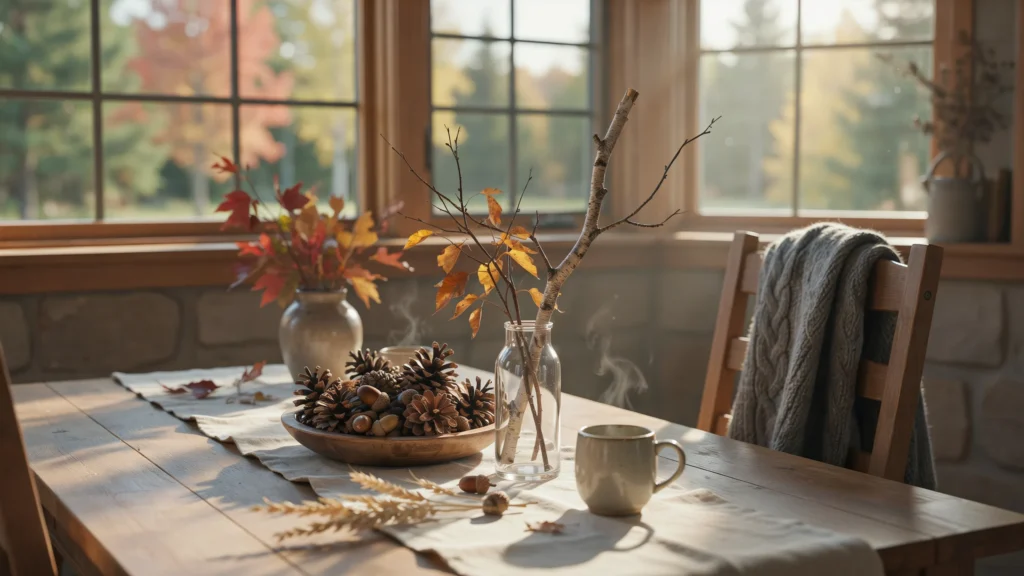
A branch with a slight curve looks better in a vase than a straight stick. Cut branches about 60 to 75 centimeters long for a floor vase, and about 30 to 40 centimeters long for a table vase. Trim the lower leaves so the stems sit cleanly in water or stand neatly in a dry vase.
Pinecones need a little prep before they come inside. Shake them outside first, then bake them on a foil lined tray at about 200 degrees Fahrenheit for around 30 minutes. This dries out sap and sends any small insects packing. Let them cool completely before you handle them. Once they are ready, pile them in a wooden bowl, a woven basket, or a glass jar. Mix in a few acorns and a short branch or two, and you have a centerpiece that cost you nothing but a walk.
A few rules keep free finds looking good instead of messy. First, only take what has already fallen or what you are allowed to cut. Never strip a living tree or a neighbor’s garden. Second, wash anything that will sit near food. Third, keep natural finds away from open flames. Dried leaves and pinecones catch fire easily, so never place them right next to a lit candle. A good rule is to keep at least 15 centimeters between any dried natural material and a flame, and never leave a candle burning in a room you have left.
If you have kids, make the gathering part of the plan. Give each child a small bag and let them pick their own pinecones and leaves. Their finds go in a jar on the kitchen windowsill or on their bedroom shelf. It costs nothing, it gets everyone outside, and the decor means more because they collected it. My own kitchen windowsill still holds a jar of acorns my daughter collected three years ago. It is not the prettiest object in the house, but it is the one I would keep if I had to choose.
Free versus bought: what to gather and what to skip
| Decor job | Free find that works | Worth buying instead |
|---|---|---|
| Height on a mantel or shelf | Tall branches in a vase | Nothing, branches win here |
| Texture in a bowl or basket | Pinecones, acorns, seed pods | Nothing, nature wins here |
| Softness on a sofa or bed | A moved throw or blanket | A chunky knit throw in your palette |
| Scent in a room | A simmer pot of orange and cinnamon | One good candle in a fall scent |
| Color on a table | Pressed leaves, small gourds | Pillow covers or a runner in your palette |
| Front door welcome | A branch wreath you make yourself | A sturdy wreath base and ribbon |

Under $10: candles, scent and the smallest rooms
Ten dollars is a small tier, but it covers the rooms people forget. The bathroom, the entry table, the bedside, the kitchen counter. These small spots take small things, and small things are cheap. A single candle in the bathroom makes a plain room feel considered. A tea towel in a warm color makes a kitchen feel seasonal. Two mini pumpkins on a stack of books make an entry table feel finished. None of these cost more than a few dollars each, and each one does a clear job.
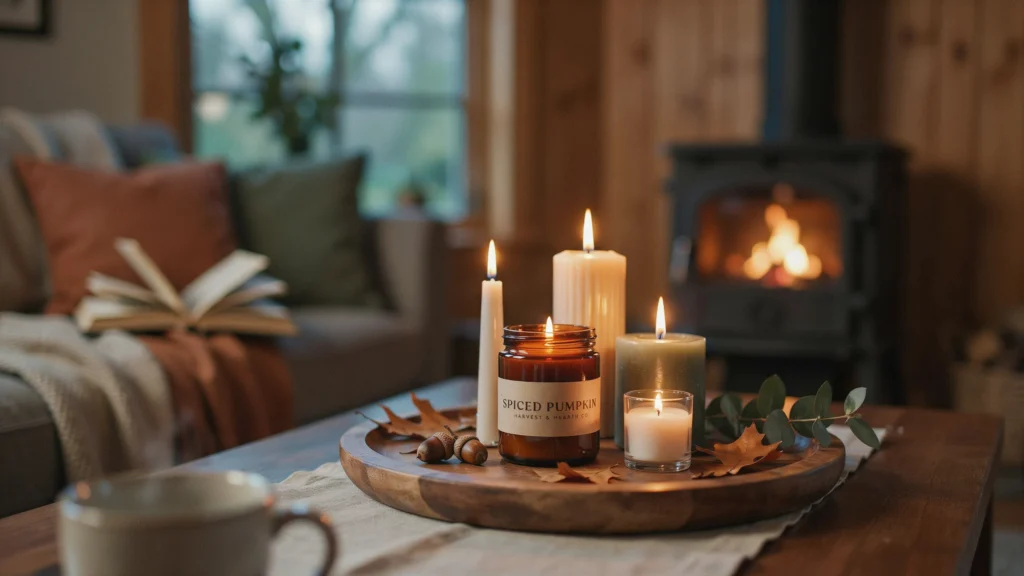
Candles deserve first pick in this tier. Look for one candle in a scent you actually like, not the scent the label says you should like. Pumpkin spice, apple cinnamon, woodsmoke and vanilla chai are the usual fall choices, and they are popular for a reason. They read as warm without being sweet enough to give you a headache.
A medium jar candle, roughly 8 to 10 ounces, will last several weeks of evening use. Set it on a small plate, a wooden board, or a tray you already own, and it instantly looks styled. Never burn a candle all the way to the bottom of the jar, and trim the wick to about 6 millimeters before each lighting so it burns evenly.

If you cannot burn candles, or you have pets or small children, a simmer pot costs even less. Fill a small saucepan with water, add orange slices, two or three cinnamon sticks, a few whole cloves and some apple peel, and let it simmer gently on the stove.
Your whole home will smell like fall within half an hour. Keep the water topped up and never let the pot boil dry. You can reuse the same pot of ingredients for a day or two, adding water as it evaporates. It is the cheapest scent in this whole guide, and honestly it smells better than most candles.
Mini pumpkins are the other smart buy in this tier. Real ones cost only a few dollars each, and three of them in different sizes make a better display than one large pumpkin. Group them in odd numbers, three or five, and vary the heights.
Put three on the mantel, or line five down the center of the dining table with a few leaves between them. If you buy faux mini pumpkins, choose ones in muted colors, cream, sage, or dusty orange, rather than bright plastic orange. Muted colors sit calmly next to real wood and linen. Bright ones fight with everything else in the room.
Under $25: the living room earns its money
If you only spend in one tier, spend it here, in the living room. This is the room you sit in every evening and the room guests see first. One good purchase here changes the whole house. The best buy in this tier is almost always textiles, because textiles cover the largest surface in the room. A sofa takes up more visual space than any other single piece of furniture. Change what sits on the sofa and you change the room.
Start with pillow covers, not new pillows. You already own the inserts, so why pay for them again? Two covers in your fall palette, a few dollars each, will do more than a whole bag of small decorations. Choose texture over pattern.
A cable knit cover, a velvet cover, or a nubby woven cover adds warmth even in a plain color. If you want one patterned cover, make it plaid, and keep the other plain. Mix one patterned cover with one plain cover on each end of the sofa. Two patterned covers side by side will argue with each other.
The second buy in this tier is a throw, if you do not already own a good one. Look for a chunky knit, a soft fleece, or a waffle weave in your palette. A throw around 130 by 170 centimeters covers a two seat sofa nicely and drapes well over an armchair.
Drape it over one arm of the sofa and let it fall in soft folds, or fold it in thirds and lay it across the back. Never fold a throw into a tight rectangle and place it dead center. It will look like a hotel bed. Let it look a little relaxed, like someone just put it down after using it. That is the whole point of a throw. It should look lived with.
For more ideas on draping and layering throws so they look natural rather than staged, these modern throw blanket living room ideas show how different folds, baskets and sofa positions change the feel of a room. The principle is the same in every example. One throw, placed loosely, beats three throws placed stiffly.
A runner, a rug or a wreath: pick one, not all three
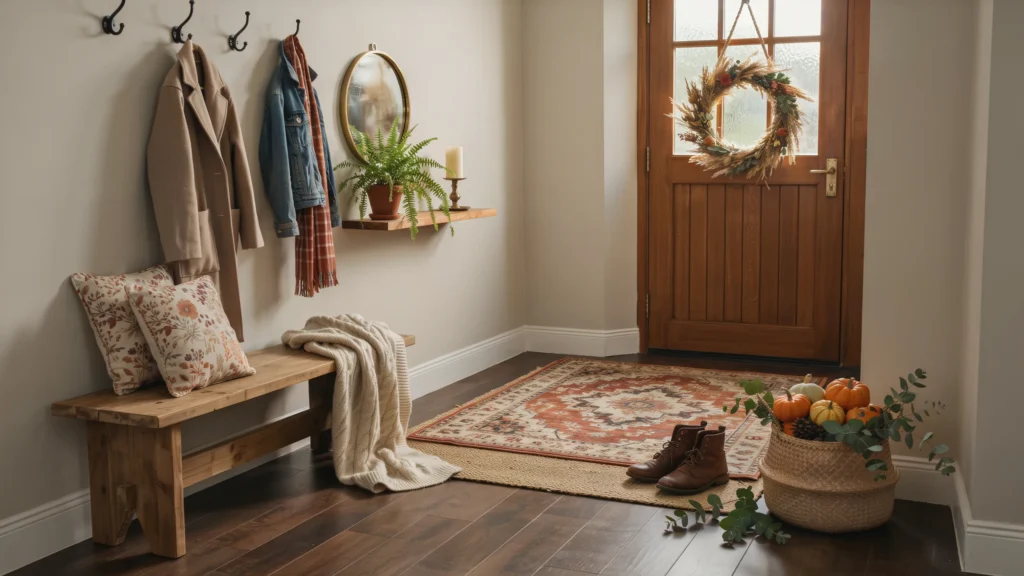
If your entry is bare, buy the rug or the doormat. A small rug by the front door, roughly 60 by 90 centimeters, catches dirt and sets the tone for the whole house. Choose a flat weave or a low pile so the door opens over it without catching.
A coir doormat with a simple pattern works well outside, and a soft rug works better inside. Layering a small patterned rug over a larger plain one is a nice trick if you already own a big neutral rug. It adds depth without buying a whole new floor covering.
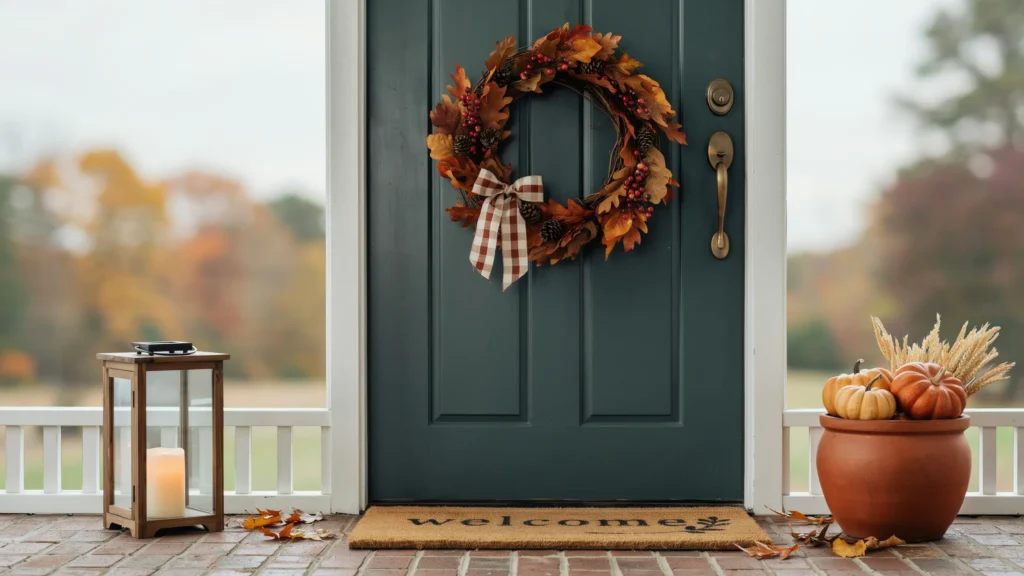
If your front door is the thing you notice every day, buy the wreath, or rather, buy the base and make the wreath yourself. A grapevine base, a few dollars, plus branches and pinecones you gathered for free, plus a ribbon in your palette, gives you a wreath that looks custom for less than a store bought one.
Hot glue the larger pieces first, then fill the gaps with smaller ones. Hang it with a ribbon loop rather than a nail, so you can adjust the height easily. A wreath should hang at eye level, roughly 150 to 160 centimeters from the ground to its center, so guests see it as they walk up, not as they look down.
For the porch around that wreath, a little planning goes a long way, and these essentials for a warm and inviting outdoor space cover the basics that work in every season, seating, light, texture and shelter from the wind, with fall layers added on top.
For the porch around that wreath, a little planning goes a long way. These tips to make your front porch look expensive are written for summer, but the ideas underneath them work in any season. Clear the clutter, give the door a clean frame, add one layer of texture, and let one strong piece do the talking. In fall that strong piece is usually the wreath, a basket of branches, or a pair of pumpkins flanking the door. Pick one and let it breathe.
Up to $40: one hero piece, chosen slowly
The forty dollar tier is not a target. It is a ceiling. Most homes will never need to spend it. But if one room still feels unfinished after the free layer and the small tiers, this is where a single hero piece earns its place. A hero piece is the one thing people notice when they walk in. It should be large enough to matter, in your palette, and useful for more than one season. If it only works for three weeks in October, it is not a hero piece. It is a costume.
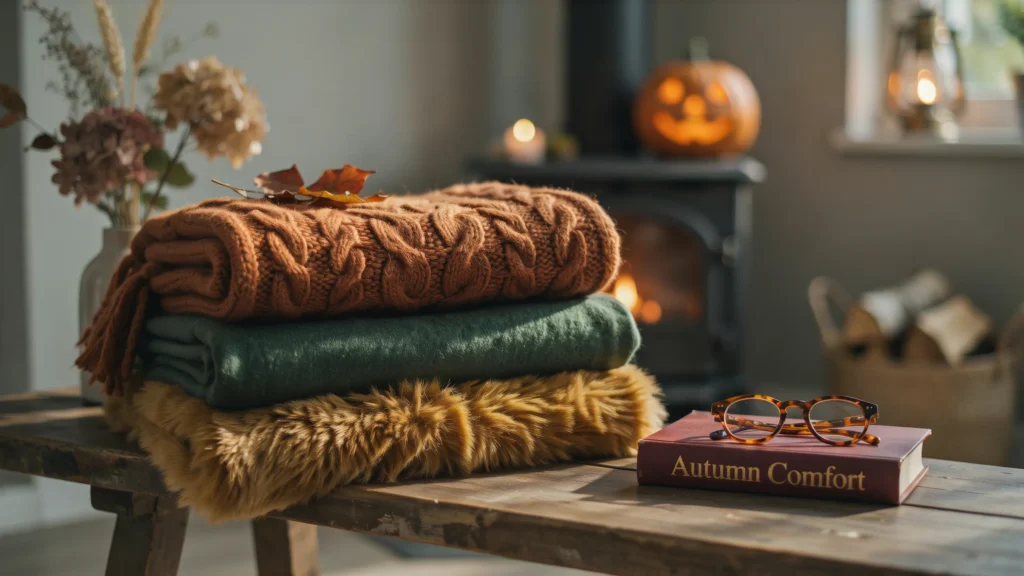
A larger throw is the safest hero piece. A good quality throw around 150 by 200 centimeters, in a chunky knit or a soft wool blend, will live on your sofa through fall and winter. You will use it every evening, which is more than you can say for any other piece of decor. Choose a solid color in your palette rather than a busy pattern. Solid throws layer well with patterned cushions, and they never clash with next year’s palette if you change one accent color.
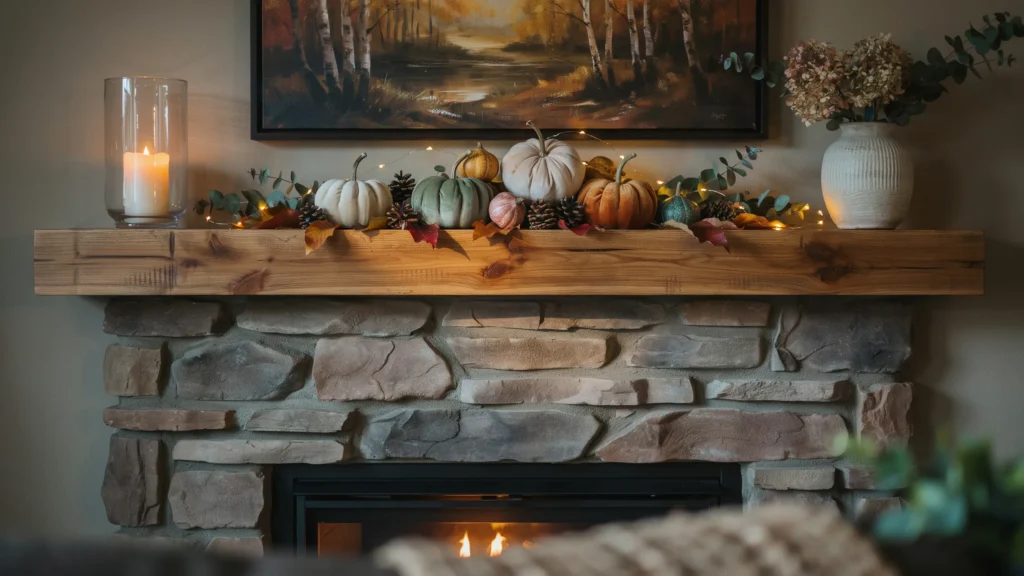
A faux garland is the second good hero piece, if your home has a mantel, a staircase, or a long shelf that needs dressing. A garland around 180 centimeters long will span a standard mantel with a gentle drape at each end. Look for one with varied leaf shapes and a few small berries or seed pods mixed in.
The varied shapes are what make it look real. A garland of identical plastic leaves looks like a garland of identical plastic leaves. Drape it loosely, let it dip in the middle, and tuck a few real pinecones or branches into it to break up the repetition.
Before you buy a hero piece, check your palette against the wider color ideas in your home. These interior color trends for cozy homes show how warm neutrals, deep greens and soft rusts work together across rooms, and they are a useful check before you commit forty dollars to one color. If your hero piece matches the palette you already live with, it will look like it belongs. If it does not, it will look like a visitor.
Pumpkins and gourds: the icon, used with restraint
Pumpkins are the symbol of fall, and they are also the easiest thing to overdo. A house with pumpkins on every surface looks like a farm stand, not a home. The rule is simple. Pick one surface for pumpkins, and keep the rest of the house free of them. The mantel is a good choice. The dining table is a good choice. The front steps are a good choice. All three at once is too much. One strong pumpkin moment beats three weak ones.
Real pumpkins and faux pumpkins each have their place. Real mini pumpkins are cheap, typically a few dollars each, and they look wonderful for a few weeks. They will soften and need replacing, so buy them when you are ready to display them, not a month early.
Faux pumpkins cost more up front but last for years, which makes them the better buy if you love the look and will use them every fall. Velvet pumpkins are the softest option and they suit living rooms and bedrooms. Ceramic pumpkins suit kitchens and shelves. Wooden pumpkins suit homes with a lot of natural texture already.
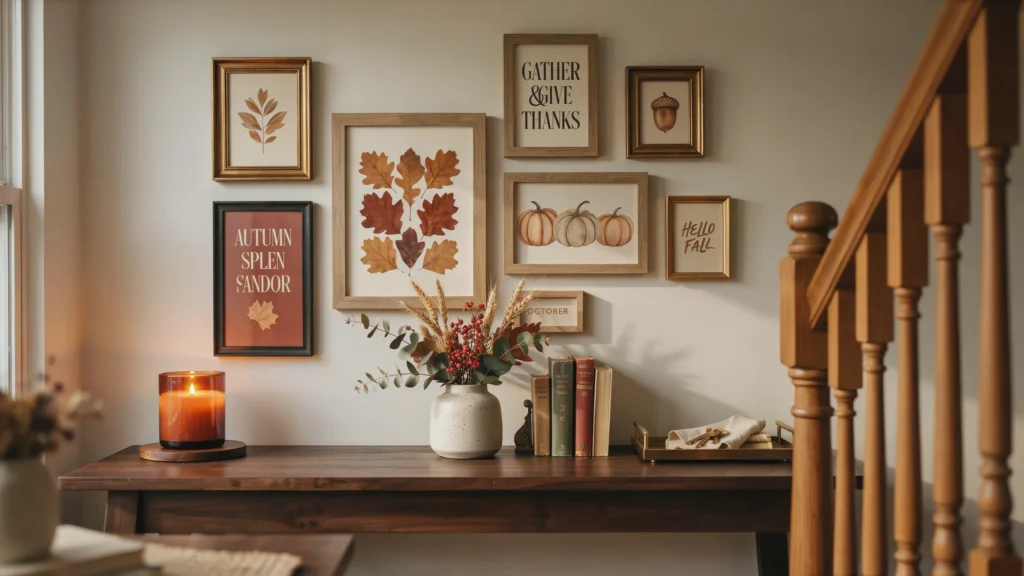
Styling is about grouping and height. Three pumpkins of different sizes, about 10, 15 and 20 centimeters across, grouped tightly together, look better than three pumpkins spaced evenly apart. Put the tallest at the back and the smallest at the front, and tuck a few leaves or a short branch between them. If you are styling a dining table, run the pumpkins down the center in a loose line, with leaves and pinecones filling the gaps. Leave at least 30 centimeters of clear table at each end so people can sit comfortably and reach their plates.
Kitchen and dining touches: where fall actually happens
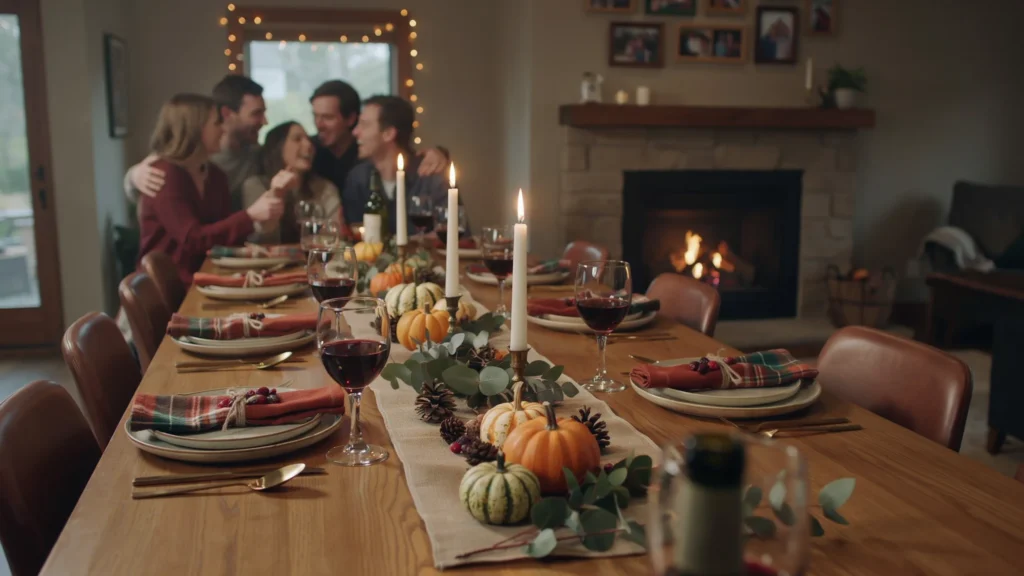
Start with the table. A runner, a few placemats, or a simple cloth in your palette will change the whole room. If you buy one thing for the dining area, make it the runner, because it frames everything else. A runner around 35 centimeters wide, hanging about 20 to 25 centimeters over each end, gives the table a finished edge.
Layer it with a centerpiece of pumpkins, branches, or candles, and the table is dressed. Keep the centerpiece low, under 30 centimeters tall, so people can see each other across the table. A tall centerpiece looks dramatic in a photo and blocks conversation at dinner.
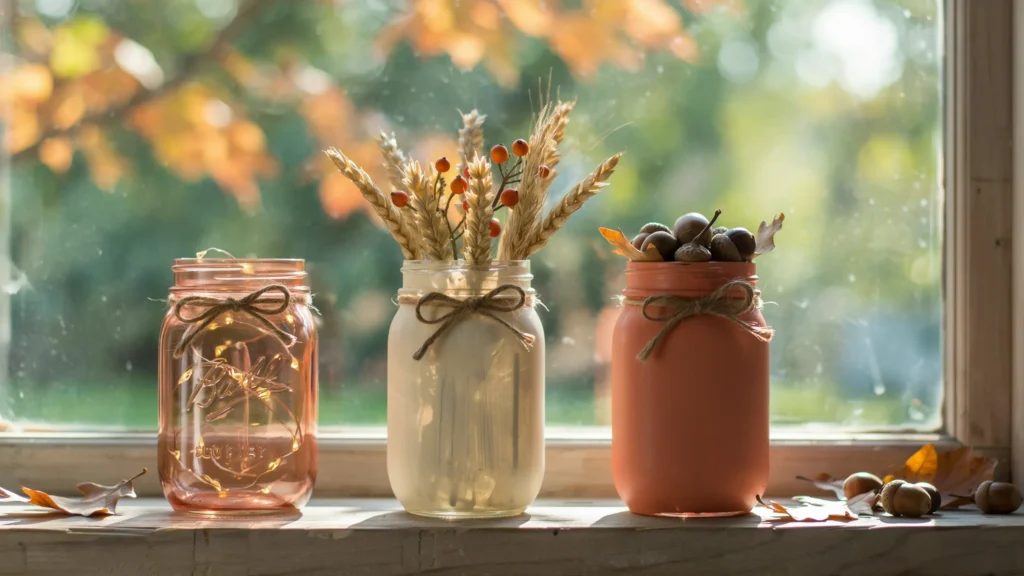
The counter needs restraint more than the table does. A kitchen counter is a working surface, not a display shelf. Keep one fall touch on the counter, a bowl of apples, a jar of cinnamon sticks, a small vase of branches, and keep the rest clear.
A clear counter with one warm detail looks calm and inviting. A counter covered in decorations looks like you cannot cook there. The same rule holds for the windowsill. One jar of acorns or a small plant is enough. Leave the rest of the sill empty so the light can come in.
If your kitchen opens onto your living room, tie the two rooms together with color. The rust in the living room throw should appear in the kitchen towel. The cream in the bedding should appear in the runner. This repetition is quiet, but it is what makes an open plan home feel like one home instead of two rooms that happen to share a wall.
And if your style has moved past the farmhouse look you started with, you are not alone. Many homes are ready for something warmer and less themed. This guide to evolving your style beyond farmhouse decor explains how to keep the pieces you love and let go of the ones that make a room feel like a set. The idea is simple. Keep the wood, keep the linen, lose the signs and the matching sets.
DIY projects: three builds that cost almost nothing
DIY fall decor works best when the project is simple, quick, and made from things you already own. Complicated projects eat a whole weekend and end up half finished in a cupboard. The three projects below each take under an hour, cost very little, and give you a piece you will actually use. Do one of them, not all three at once. The point of a DIY project is the pleasure of making something, not the pressure of finishing a list.
Project one: a branch and pinecone centerpiece
You need a low, wide bowl, a few pinecones, a short branch, and some leaves. Put the pinecones in the bowl first, filling it about two thirds full. Tuck the branch across the top so it leans at a slight angle. Add leaves around the edges to soften the shape. That is the whole project. It takes ten minutes. Place the bowl on the coffee table, the dining table, or the entry table, and you have a centerpiece that looks gathered rather than bought.
Project two: twine wrapped mason jars
Mason jars are the most useful DIY base there is, because every home has a few and they take almost any treatment. For this project you need a jar, a roll of jute twine, and a pair of scissors.
Start at the bottom of the jar and wrap the twine around it in tight, even rows, working your way up to about two thirds of the height. Secure the end with a small dab of hot glue or a knot tucked under the last row. Fill the jar with a few branches, a short candle in a glass holder, or a handful of acorns.
Project three: printable wall art in frames you already own
Wall art is the most expensive thing in most fall guides, and it does not need to be. You probably have frames already, empty ones in a cupboard, or prints you are tired of looking at. Take the old print out, keep the frame, and put a new fall print inside. Free printable art is easy to find online, with simple leaf designs, warm color blocks, and short seasonal words. Print at home on plain paper, or at a copy shop on slightly heavier paper if you want a better finish.
Frequently asked questions about fall home decor under $40
What should I buy first if I can only buy one thing?
Buy a throw in your palette, or two pillow covers, whichever your living room needs more. Textiles change the largest surface in the room, so they give you the most visible change for the money. If your sofa is already warm and soft, buy one good candle instead. Scent changes how a room feels the moment you walk in.
Are real pumpkins or faux pumpkins better on a budget?
Real mini pumpkins are cheaper this year, typically a few dollars each, and they look wonderful for a few weeks. Faux pumpkins cost more now but last for years, so they are cheaper over time if you will use them every fall. If you are not sure you will decorate next year, buy real. If you know you will, buy faux in a muted color and store them well.
What colors work best for budget fall decor?
Pick three colors and repeat them in every room. A warm neutral, one deep fall color, and one soft accent works well in most homes. Cream, rust and sage is a reliable combination. Cream, burnt orange and warm brown is another. Avoid using five or six strong colors at once, and use orange in one strong piece per room rather than everywhere.
How can I decorate a small apartment for fall without clutter?
Choose four pieces and stop there. A throw, two cushion covers, one candle, and a small vase of branches will make a studio feel like fall without taking up any floor space. Use vertical space, a wreath on the door, a print on the wall, and keep every surface clear except one dressed spot. In a small home, one thoughtful touch per surface is plenty.
Where should I spend the most of my $40?
Spend it in the living room, because that is the room you use every evening and the room guests see first. Pillow covers and a throw give you the biggest visible change. Spend the least in the bedroom and the bathroom, which need only one warm layer or one candle each. Treat $25 and $40 as maximums, not targets, and keep whatever you do not spend.
What is the best free fall decoration?
Branches in a vase, without question. They add height, shape and a natural texture that no store bought item matches, and they cost nothing. Cut branches about 60 to 75 centimeters long for a floor vase and about 30 to 40 centimeters for a table vase, trim the lower leaves, and place them where they catch the light. A few pinecones in a wooden bowl come a close second.
Your $40 fall weekend checklist
- Saturday morning: walk through the house with a basket and pull out every warm throw, cushion cover, basket, wooden bowl, tray, candle and vase you already own. Put them on the dining table.
- Pick your three colors from what you already have, and set aside anything that does not fit the palette.
- Clear one surface in each room, wipe it down, and place one grouped display of three or five pieces on it.
- Saturday afternoon: take a walk and gather branches, pinecones, acorns and leaves. Prep the pinecones in the oven and trim the branches to size.
- Place the branches in vases, the pinecones in bowls, and the leaves on the dining table or in a frame.
- Move one piece between rooms, so the basket from the living room becomes the throw basket by the front door, and the bowl from the kitchen becomes the pumpkin bowl on the dining table.
- Sunday morning: buy only what is still missing, starting with the under $10 tier. One candle, a few mini pumpkins, a tea towel, or twine and ribbon.
- Place the small buys, live with the rooms for a few hours, and only then decide if you need anything from the under $25 tier.
- If you buy pillow covers or a throw, measure your inserts and your sofa first, and choose texture over pattern.
- Hang the wreath at eye level, about 150 to 160 centimeters from the ground to its center, and sweep the porch steps before you place the pumpkins.
- Sunday evening: light the candle, put the throw on the sofa, and sit down. The room is done when it feels warm and calm, not when you have spent the whole budget.
- Pack away anything you did not use in a labeled box, so next fall starts with a collection instead of a shopping trip.
That is the whole plan. Shop your home first, gather what is free, spend a little where it shows, and keep what you buy for next year. Your home will look like fall, your budget will still be intact, and next October will be easier than this one. The best fall decor is not the most expensive fall decor. It is the decor that already belongs in your home, placed with a little care and a little patience.