My first home gym had exactly one light. A bare ceiling fixture in the middle of a spare room, switched on at full blast, and it made every workout feel like an interrogation. I would walk in, flip the switch, and the room would shout at me. Squats felt harder than they should. Stretching felt silly. I kept skipping sessions and blaming my willpower, when the real problem was hanging right above my head.
Then I changed the bulb. One warm, dimmable bulb, a cheap floor lamp in the corner, and a strip of LED lights tucked behind the mirror. Same room, same mat, same weights. The whole space softened. I started looking forward to my morning sessions instead of dreading them, and I finally understood what good home gym lighting ideas actually do. They do not just help you see. They tell your body what kind of workout this is going to be.
That is the workshop this post runs. We will fix the base layer first, then add task light where your body actually moves, then layer in accent light and smart colour for mood. By the end you will have a plan that fits the time you train, the size of your room, and the budget you actually have.
The best home gym lighting uses three layers. Overhead light gives you a bright, even base at 4000K to 5000K for strength and cardio. Task light aims at the mirror, the rack and the mat so you can check form without shadows. Accent light stays warm, around 2700K to 3000K, and sits low for yoga, stretching and cool-downs. Put the overhead and task lights on dimmers, and you can run the same room for a hard lifting session in the morning and a quiet stretch at night.
Pick Your Kelvin and Brightness Before You Buy Anything
Kelvin is the number on the bulb box that tells you whether light looks warm and golden or cool and blue-white. Lower numbers feel like candlelight. Higher numbers feel like midday sun. Most home gyms go wrong here because they pick one temperature for the whole room and then wonder why yoga feels tense and lifting feels sleepy.
Brightness matters just as much. A common guide for home gyms is 50 to 75 lumens per square foot for general training, and 75 to 100 lumens per square foot over the rack and mirror where you need to see form clearly. A small 100 square foot room therefore needs roughly 5,000 to 7,500 lumens in total, spread across several fixtures rather than one blazing bulb in the middle.
| Workout style | Best Kelvin | Brightness | What it feels like |
|---|---|---|---|
| Yoga, stretching, cool-down | 2700K to 3000K | 30 to 50 lumens per square foot | Warm, calm, easy on tired eyes |
| General training, mixed workouts | 3500K to 4000K | 50 to 75 lumens per square foot | Clean and neutral, not too cold |
| Strength and cardio | 4000K to 5000K | 75 to 100 lumens per square foot | Bright and alert, like daylight |
| Form checks at the mirror | 4000K to 5000K, task light | One focused fixture | Clear detail, no shadows on your face |
What if your gym has to do all four? That is normal, and it is exactly why dimmers and smart bulbs earn their keep. Buy bulbs that can shift from warm to cool, keep the base layer neutral at 4000K, and let the accent layer carry the warmth. You change the mood with a switch instead of changing the bulbs.
A Lighting Plan for the Time You Actually Train
Morning people and night people need different rooms, even when it is the same room. Light is the fastest way to switch between the two.
Early morning sessions
Before sunrise, your eyes are still adjusting and a blast of white light feels like an alarm going off in your face. Start low and warm. Use sconces or a floor lamp at 2700K, keep the ceiling light off or dimmed to about a third, and let the room wake up with you. Add brightness slowly as you warm up, and by the time you reach your working sets you can bring the overhead light up to full. The trick is the ramp. Nobody stretches well under a spotlight.
Midday sessions
Lunch break workouts are the easiest to light because daylight does half the work. Open the blinds, let the window carry the room, and use your overhead light only to fill the shadows. If your gym faces a bright window, angle the mirror so it catches that light instead of fighting it. A neutral 4000K ceiling light blends with daylight far better than a warm bulb, which can look yellow and tired next to real sun.
Evening sessions
Evening training is where most home gyms fall apart. You come home tired, the room is dark, and one harsh ceiling light makes the whole thing feel like overtime. Keep the overhead dimmed to half, switch the accent layer on, and let warm light do the talking. Your body reads warm, low light as a signal to wind down, so save the brightest setting for the heavy sets and drop it back down for the cool-down. You will sleep better for it.
What if you train at different times every week? Then build three saved scenes and stop thinking about it. Morning, midday, evening. One tap each. That is the whole system, and it is the reason smart bulbs show up so often in this list.
Overhead Light: Build the Base Layer First
Overhead light is the foundation. Get it right and everything else you add looks better. Get it wrong and no amount of LED strips will save the room.
1. Layer Overhead, Task, and Accent Light
One ceiling fixture gives you one flat wash of light, and flat light makes a room feel like a storage unit. Three layers change that completely. The overhead layer covers the room evenly. The task layer aims at the rack, the bench and the mirror. The accent layer sits low and warm, and it is the one that makes the room feel designed instead of just lit. Start with the overhead layer, add one task light, then add one accent light. Three fixtures, bought over three weekends, will do more than a single expensive chandelier ever could.
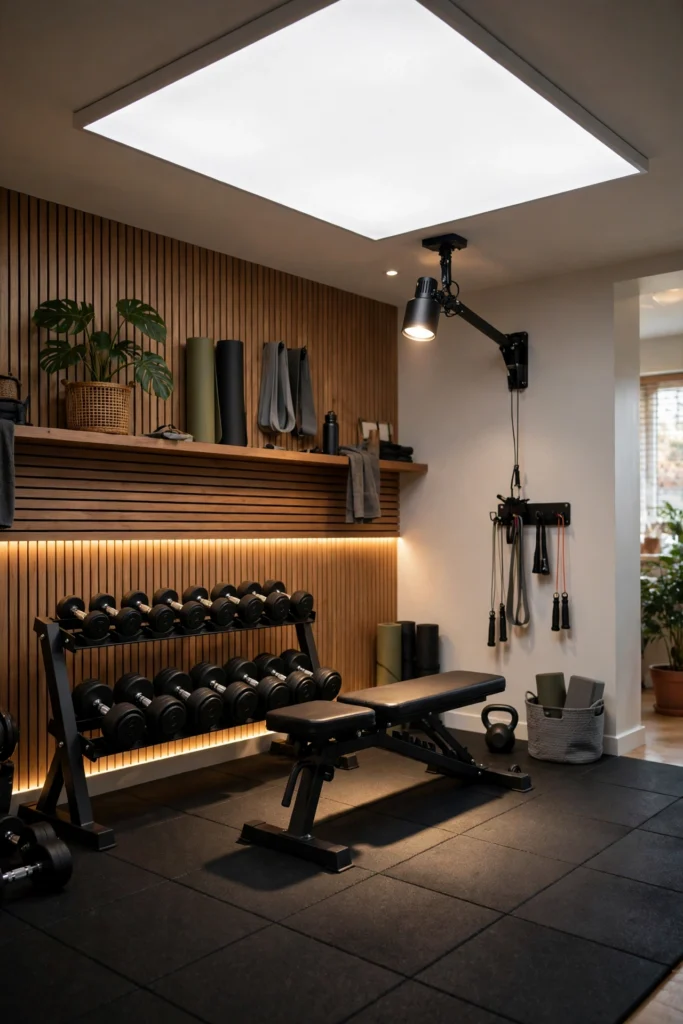
2. Replace Overhead Fluorescent Tubes Immediately
If your garage or basement gym still runs on fluorescent tubes, swap them out before you buy anything else. Fluorescent light flickers, hums, and throws a cold greenish cast that makes skin look tired and paint look grey. A flush-mount LED fixture with warm, dimmable bulbs costs less than most people expect, and the change is instant. The room will feel warmer, quieter and several degrees more inviting, and your eyes will stop working so hard during every set.
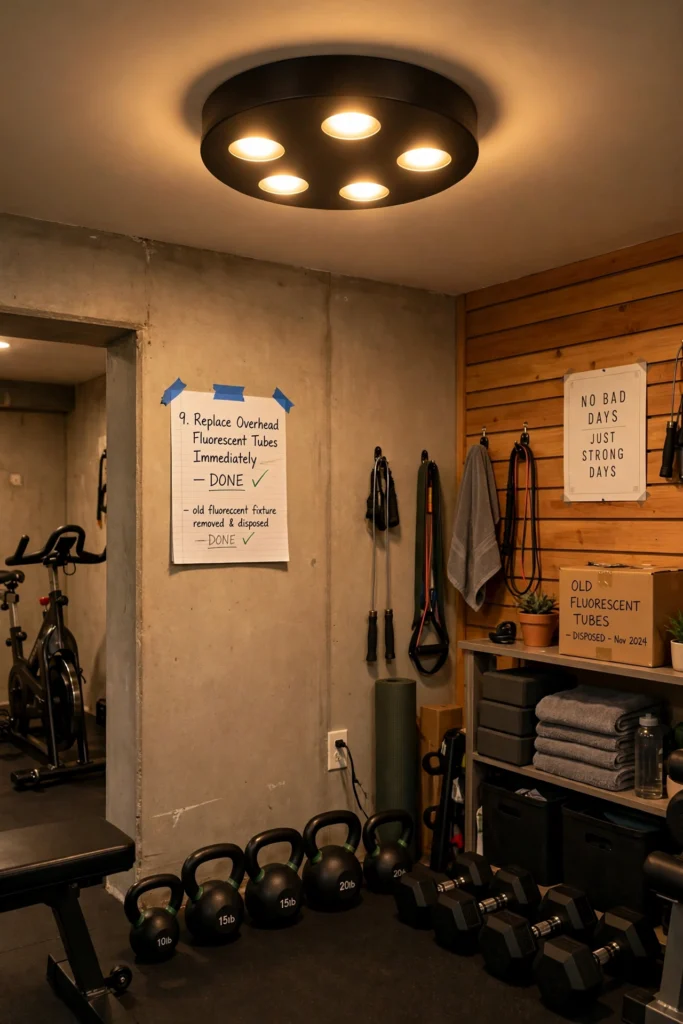
3. Install Ceiling-Mounted LED Panels for Even Coverage
A single central fixture leaves dark corners, and dark corners are where form breaks down and motivation goes to hide. Ceiling LED panels spread light across the whole floor instead of pooling it in the middle. Space two panels evenly over the training area rather than centring one over the room, and keep them at least a foot clear of any pull-up bar or ceiling mount. Many panels dim, which means the same fixture can run bright for lifting and low for stretching. In a low ceiling basement, slim panels are the practical choice because they sit almost flush and never get in the way of a jump rope.
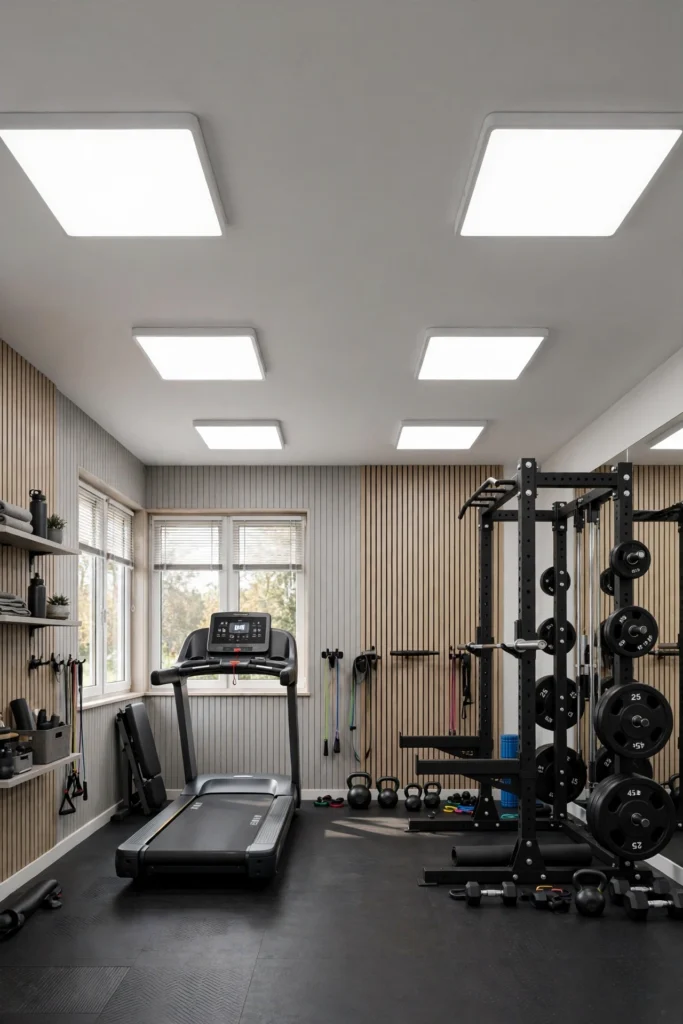
4. Try Adjustable Track Lighting for Multi-Use Spaces
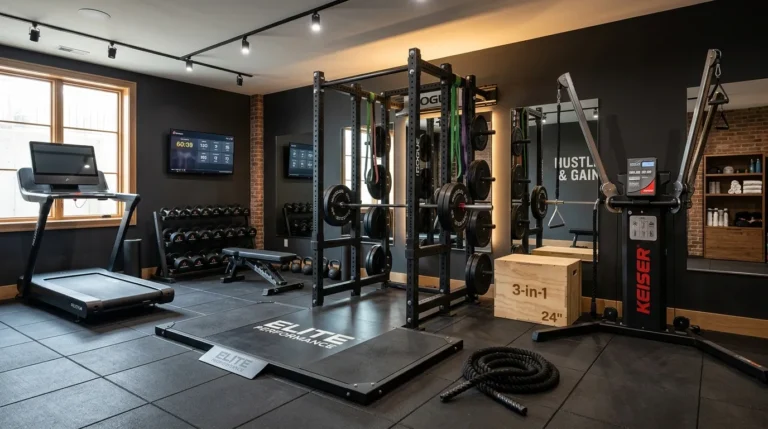
Some home gyms are also offices, playrooms or spare bedrooms, and track lighting is built for rooms that change jobs. Each head on the track aims separately, so you can point one at the rack, one at the mirror and one at the yoga corner, then re-aim them when the room changes. Aim the heads at walls and equipment rather than straight down at your head, because light bounced off a wall feels softer and fills the room better. Dim the track over the stretch zone while the lifting zone stays bright, and the same ceiling serves two workouts at once.
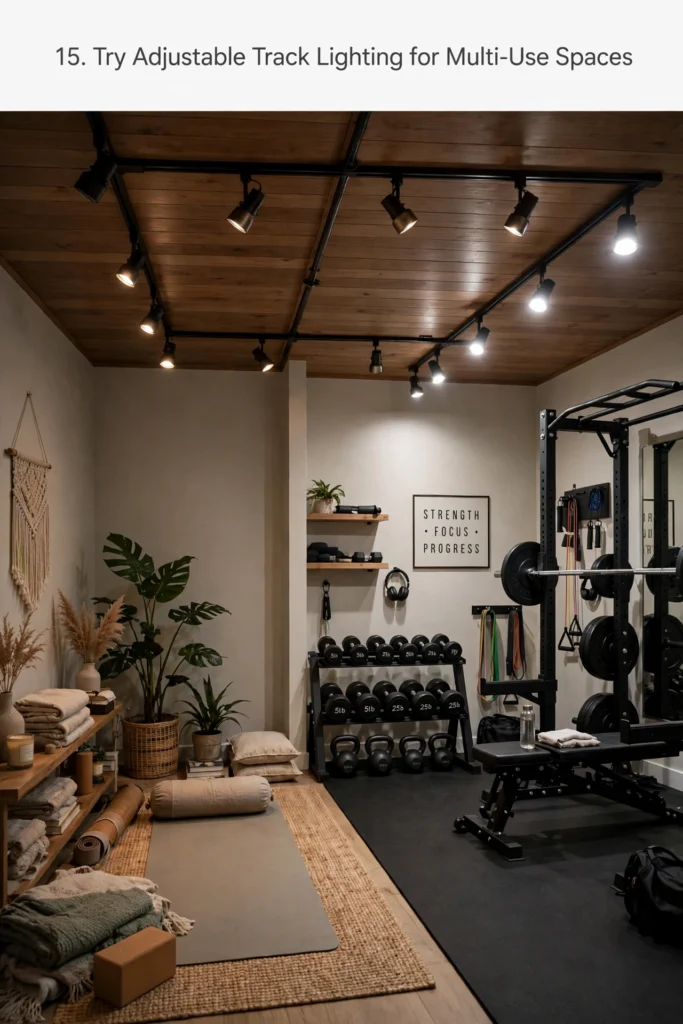
5. Hang Pendant Lights Over Cardio Equipment
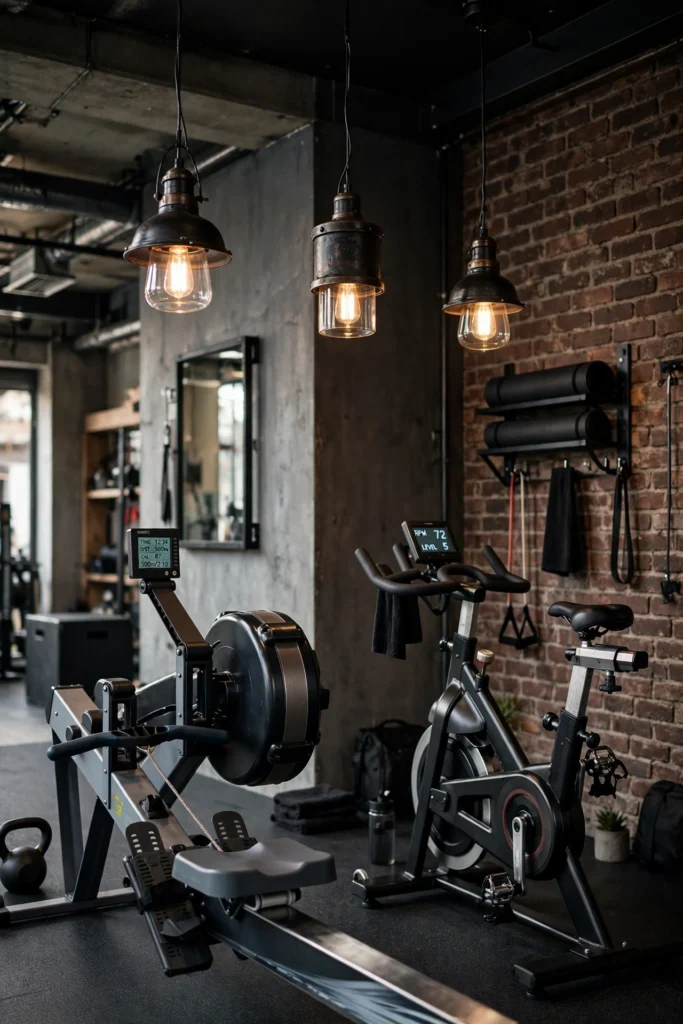
A row of small industrial pendants over the bike or rower turns the most boring corner of the gym into a deliberate design moment. Hang them high, at least seven feet from the floor, so no one catches one during jump rope or overhead work. Keep the bulbs warm and dimmable, because a pendant at eye level is the one fixture you will actually look at. Two small pendants beat one big one here. They spread the light, they balance the machine below them, and they cost less to replace if one breaks.
6. Put Every Fixture on a Dimmer
A dimmer is the cheapest upgrade on this whole list and the one people notice most. Morning stretches want soft light. Heavy lifting wants full brightness. Evening cool-downs want almost nothing at all. A dimmer serves all three from the same fixture, and it costs less than a pair of resistance bands. If you rent, use smart bulbs or a plug-in dimmer instead of touching the wiring. Put the dimmer switch where you can reach it from the mat, not behind the door, because a control you cannot reach is a control you will never use.
7. Choose Warm Bulbs Around 2700K to 3000K for the Base
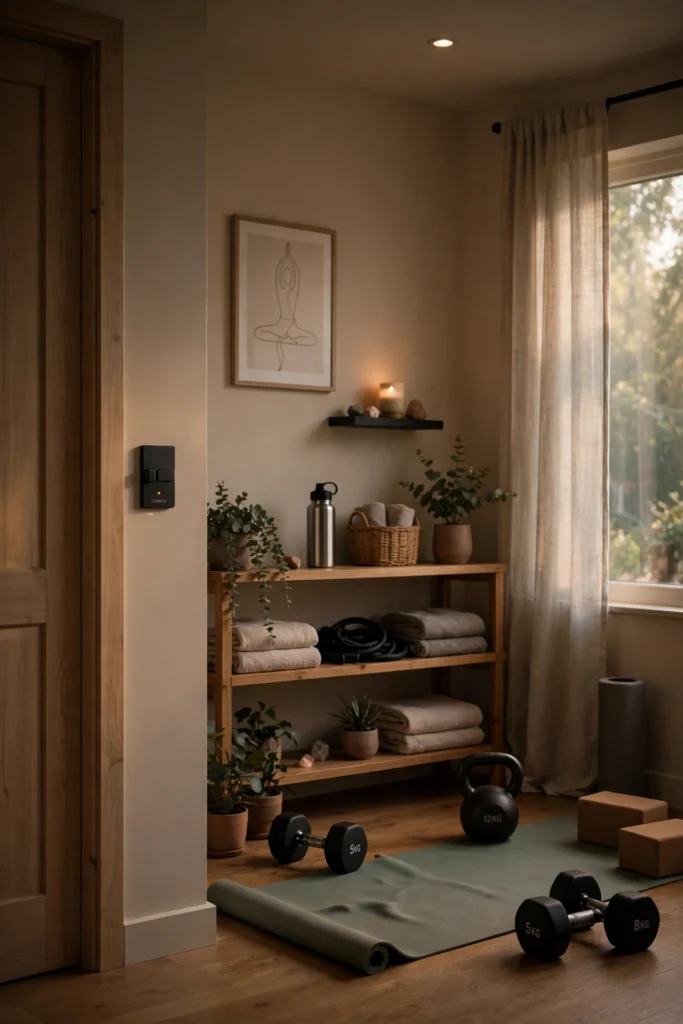
Warm white bulbs between 2700K and 3000K give the room a soft, residential glow that feels calm rather than clinical. That warmth belongs in the base layer and the accent layer, the lights that stay on the longest. Keep one cooler task light, around 4000K, over the mirror for form checks, and let the rest of the room stay warm. The mistake is going all cool white everywhere. A gym lit entirely at 5000K feels like a warehouse at midnight, and nobody wants to stretch in a warehouse.
Task Light: See Clearly Where Your Body Actually Moves
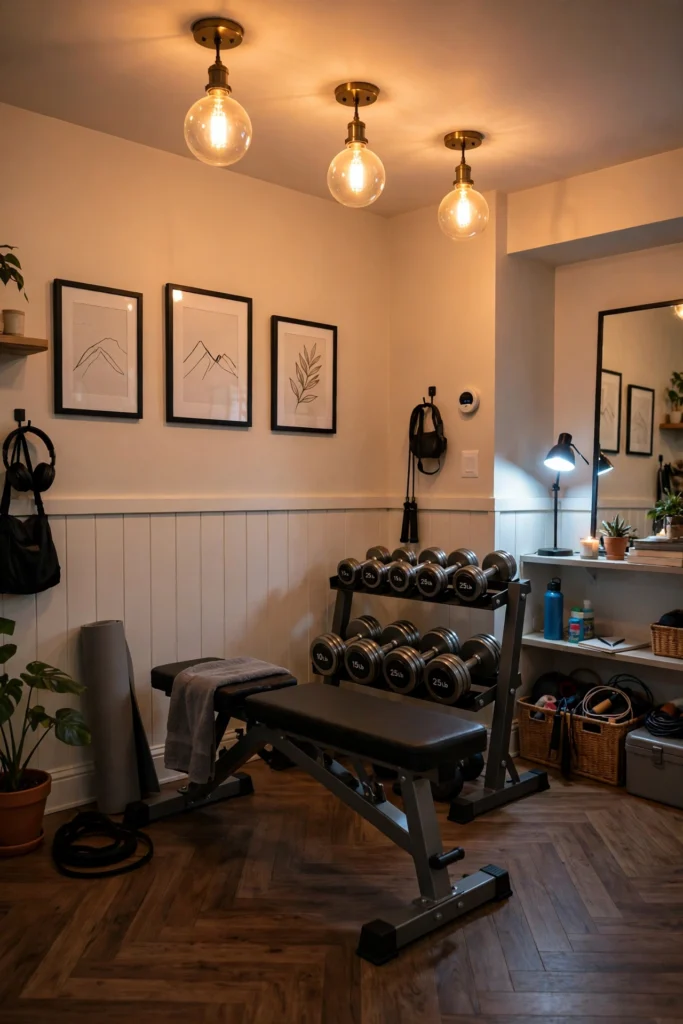
Task light is the working light. It goes where your hands, feet and eyes need it, and it is the layer that keeps you safe when the weight gets heavy.
8. Use Task Lighting Around Weight and Mat Areas
Shadows over a bench or a yoga mat are not a style choice, they are a safety problem. You need to see your feet, your grip and the edge of the mat, especially when you are tired near the end of a set. A slim LED bar under a shelf above the bench, or an adjustable floor lamp aimed at the mat, fixes this without any ceiling work. Aim the light across the working surface rather than straight down, because side light shows depth and texture while top light flattens everything. Keep the fixture out of the drop zone so a slipped dumbbell never lands on it.
9. Light the Mirror Directly, Not Just the Room
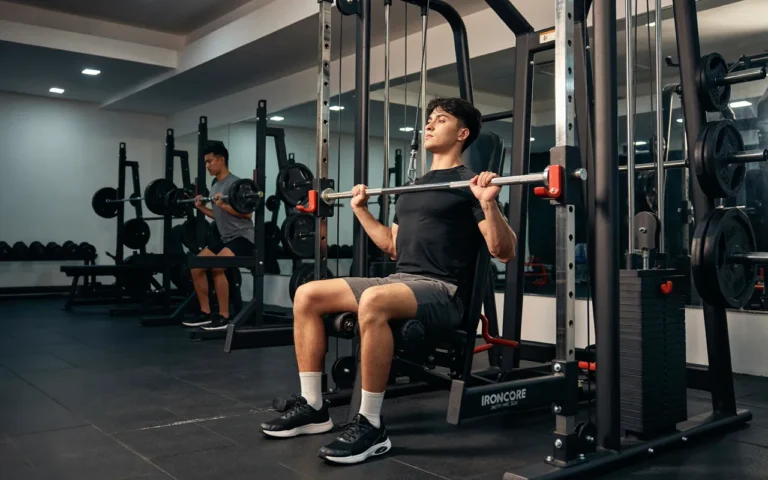
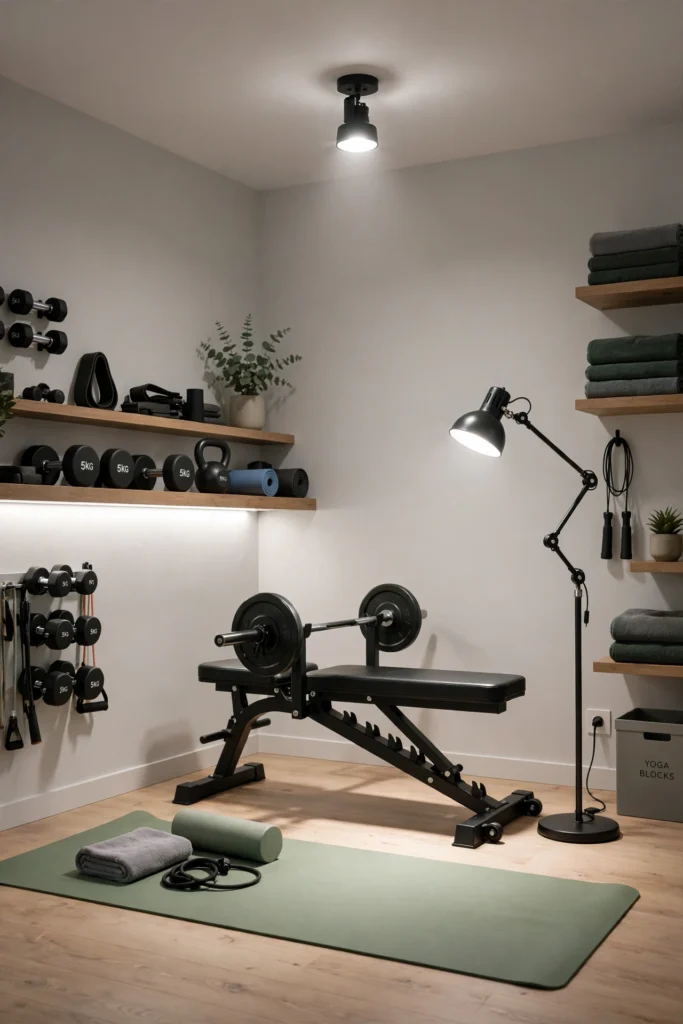
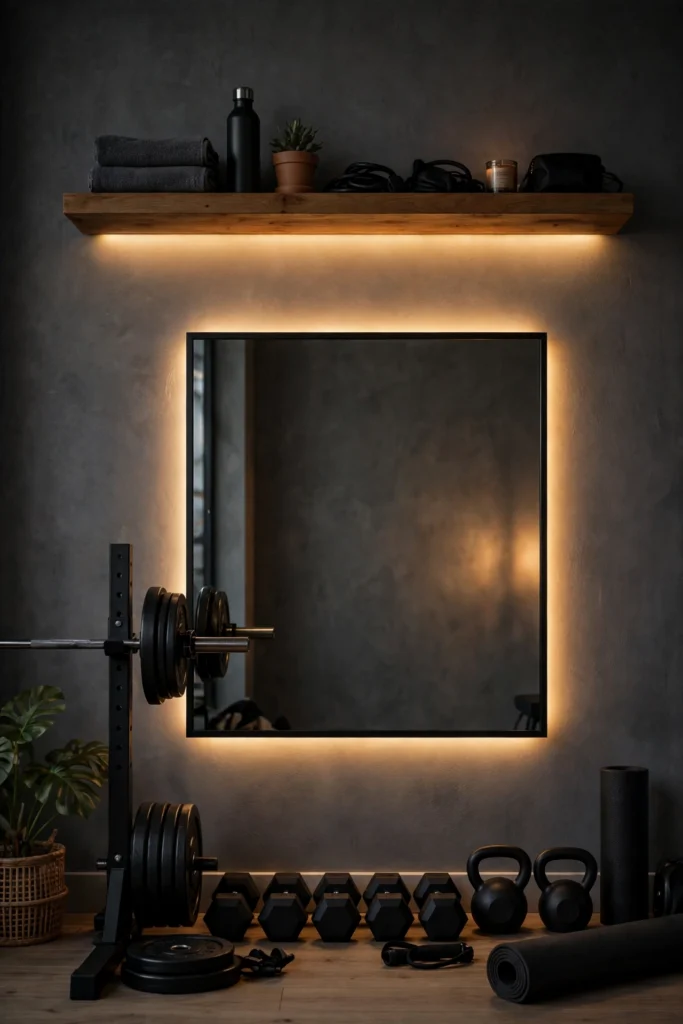
A mirror in a dim room reflects shadows back at you, and those shadows make your form look worse than it really is. Run an LED strip along the top of the mirror frame, or add small puck lights on either side at face height, and the reflection cleans up immediately. Light from both sides beats light from above, because overhead light alone throws shadows under your eyes and chin. Keep the mirror light around 4000K so colours look true, and put it on its own switch so you can turn it on only when you are actually checking form.
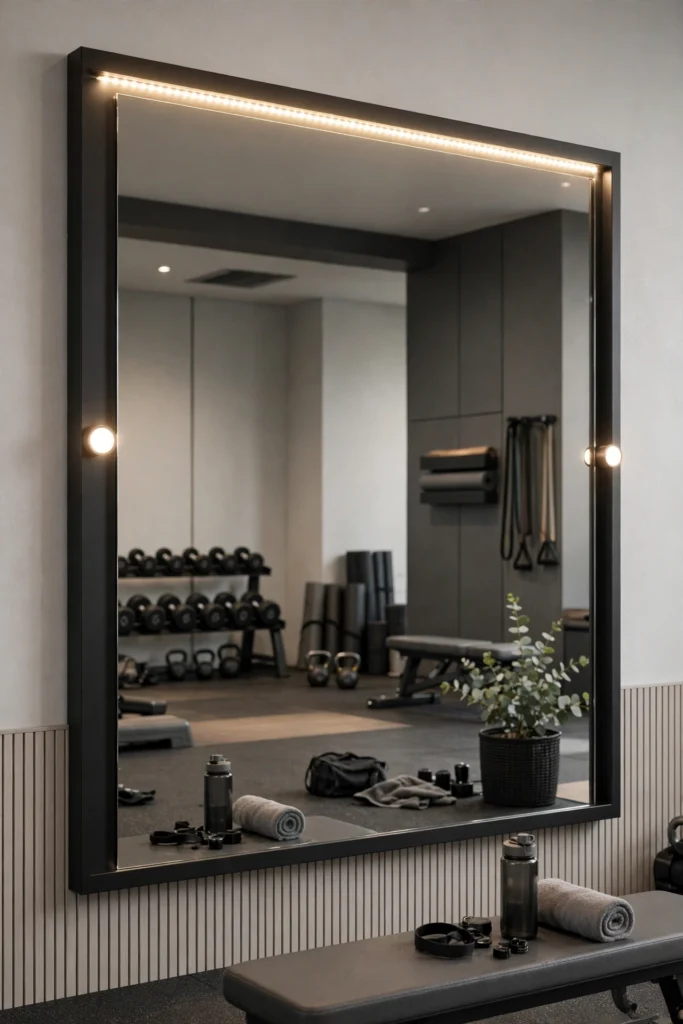
10. Install Adjustable Wall Sconces Near the Mirror
Sconces flanking a mirror give you the flattering, directional light that overhead fixtures cannot. Choose adjustable heads so you can tilt them toward the rack for lifting and back toward the wall for stretching. Dimmable sconces are worth the small extra cost because they let the same pair serve a bright morning session and a soft evening cool-down. Mount them at about eye level, roughly five and a half feet from the floor, and at least a foot clear of the mirror edge so the light washes the wall instead of glaring off the glass.
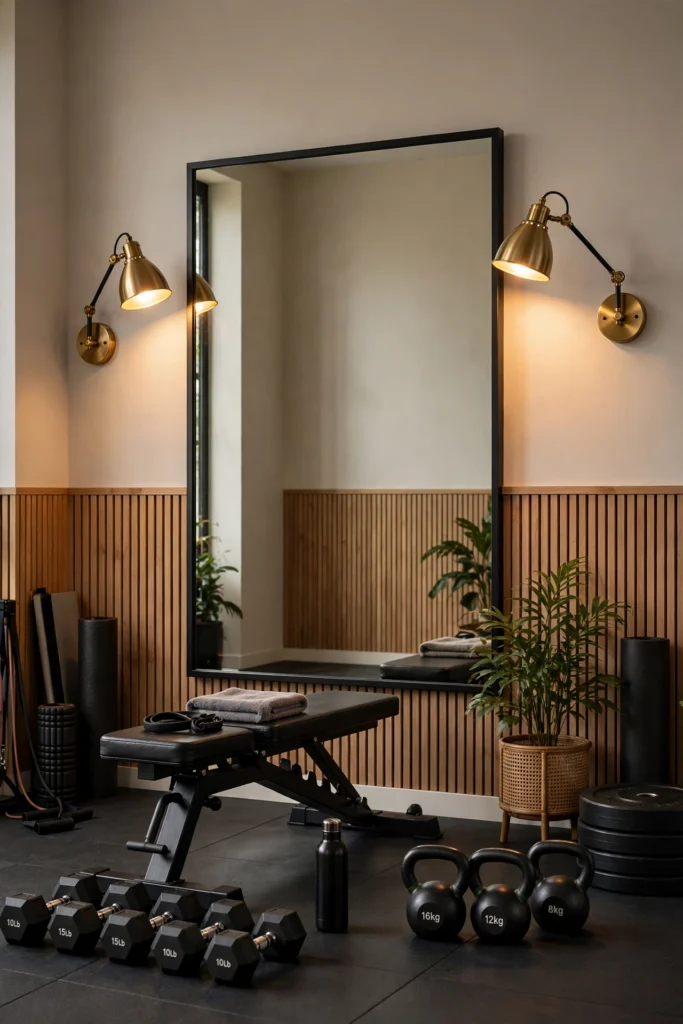
11. Frame the Lifting Zone With Deliberate Light Placement
Instead of lighting the whole room evenly, give the lifting zone a little extra. One brighter fixture directly above the rack creates a natural focal point, and your eye goes there the moment you walk in. It also means your form is clearly visible if you film a set or check technique in real time. Keep the surrounding light softer so the rack reads as the centre of the room, not just another corner. This is the same idea as a spotlight over a dining table, and it works because the eye loves a clear anchor.
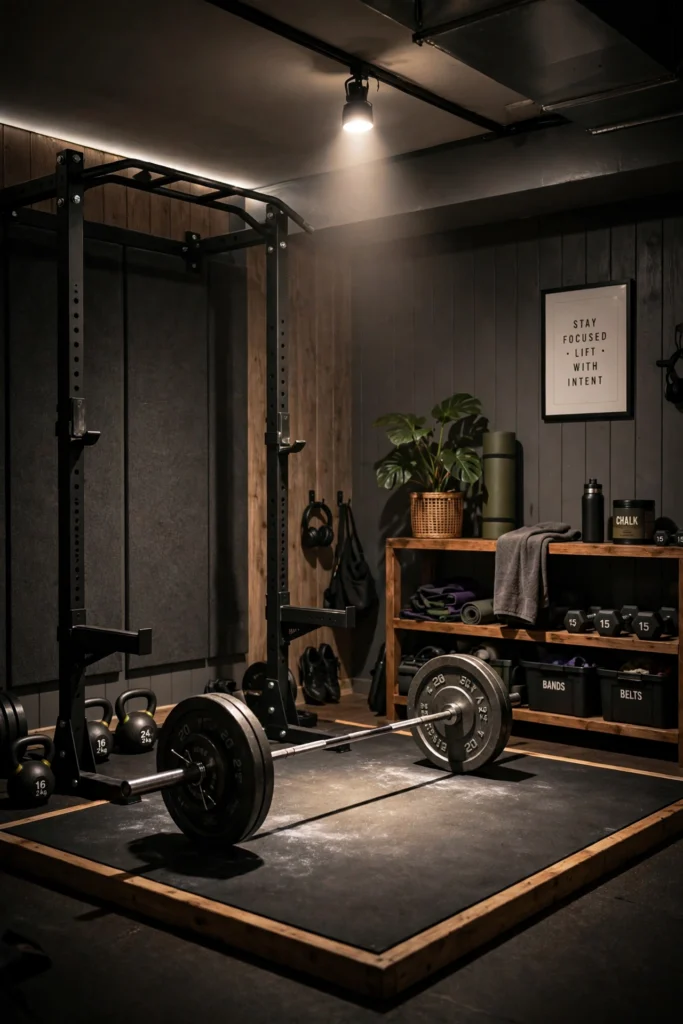
12. Cover Shadow Zones Behind Equipment and Racks
Every home gym has shadow traps. The corner behind the rack, the strip above the heavy bag, the space under a wall-mounted screen. Walk the room at night with the lights on and look for the dark pockets, then add one small light to each. A battery puck light or a short LED strip is usually enough. These are the spots where you trip, stub a toe or lose a small plate, and a five-minute fix removes the problem for good. Check behind the door too, because that corner hides more clutter than any other.
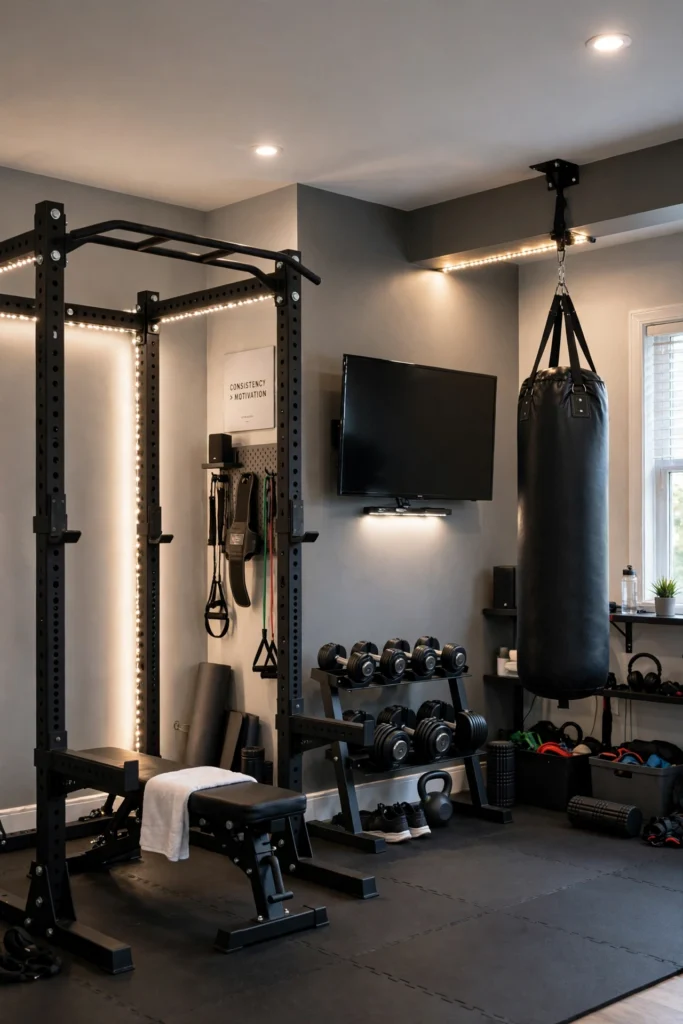
13. Use a Floor Lamp Instead of a Second Ceiling Fixture
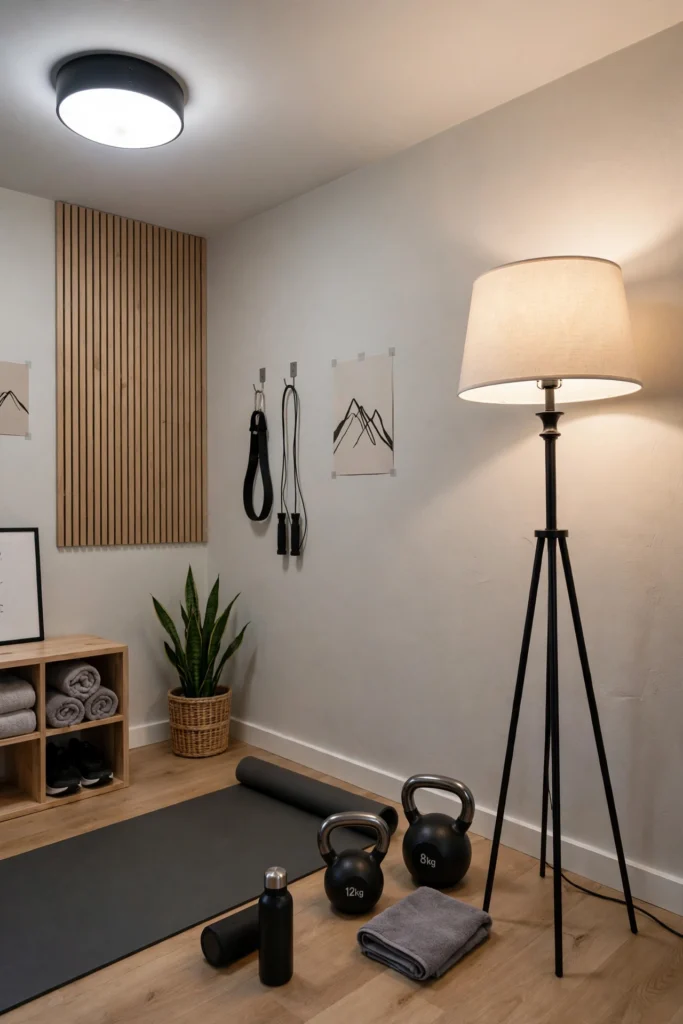
Renters, this one is for you. A tall floor lamp in the corner adds a whole second layer of light with zero drilling and zero wiring. Place it opposite your main light source so the two cancel out each other’s shadows, which matters if you ever film yourself to check form. Choose a lamp with a heavy base that will not tip if a band snaps back, and pick a shade that throws light up and out rather than trapping it. A torchiere style lamp works well here because it bounces light off the ceiling and fills the room softly.
14. Install Motion Sensor Lights Near the Entrance
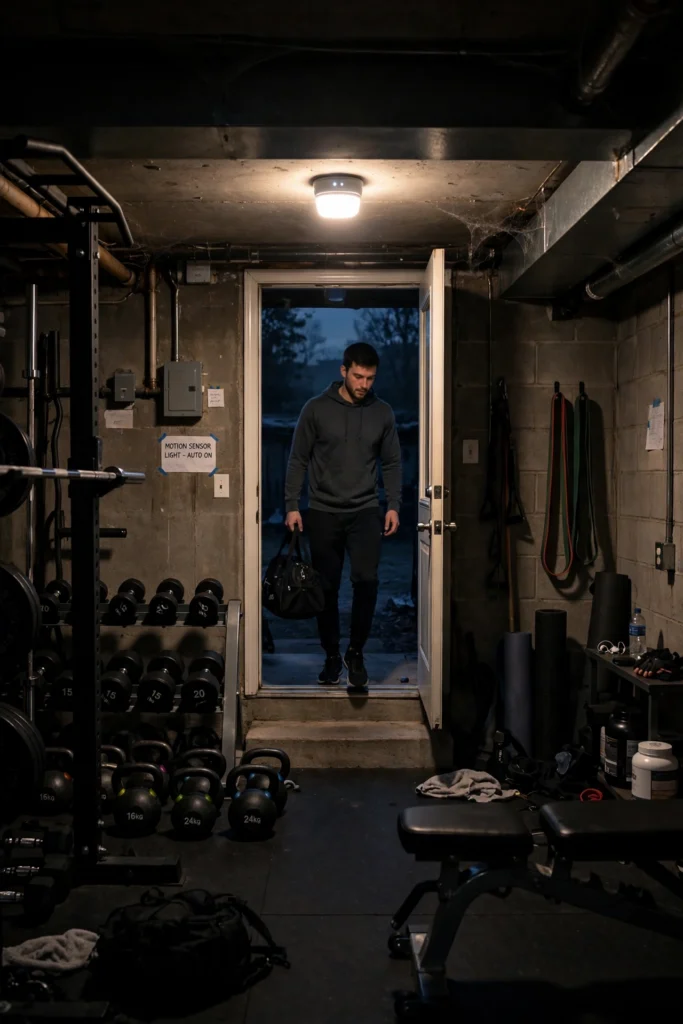
Fumbling for a switch in a dark basement gym at five in the morning is a small barrier, and small barriers are the ones that kill consistency. A motion sensor light near the door switches on the moment you step in, and switches itself off when you leave, so it saves energy as well as effort. The same thinking makes an entryway feel welcoming, and the ideas behind mudroom lighting that brightens an entryway work just as well at a gym door. Mount the sensor where it sees you coming down the stairs, not where it triggers every time someone walks past the room.
Accent Light: Give the Room Its Mood
Accent light is the layer people feel before they notice it. It is low, warm and indirect, and it is what turns a workout corner into a room you actually like spending time in.
15. Add an LED Strip for Ambient Glow
Run an LED strip behind a shelf, along a mirror frame or under a bench, and the room gains an instant ambient glow without a single new fixture. The trick is hiding the strip itself so you see only reflected light bouncing off the wall. Stick it to the back edge of a shelf, not the front, and keep the power supply tucked out of sight. Warm white strips at 2700K suit most gyms, and plug-in strips are one of the easiest renter friendly upgrades you can make, because they peel off cleanly when you move. Avoid running a strip where feet or plates can catch it.
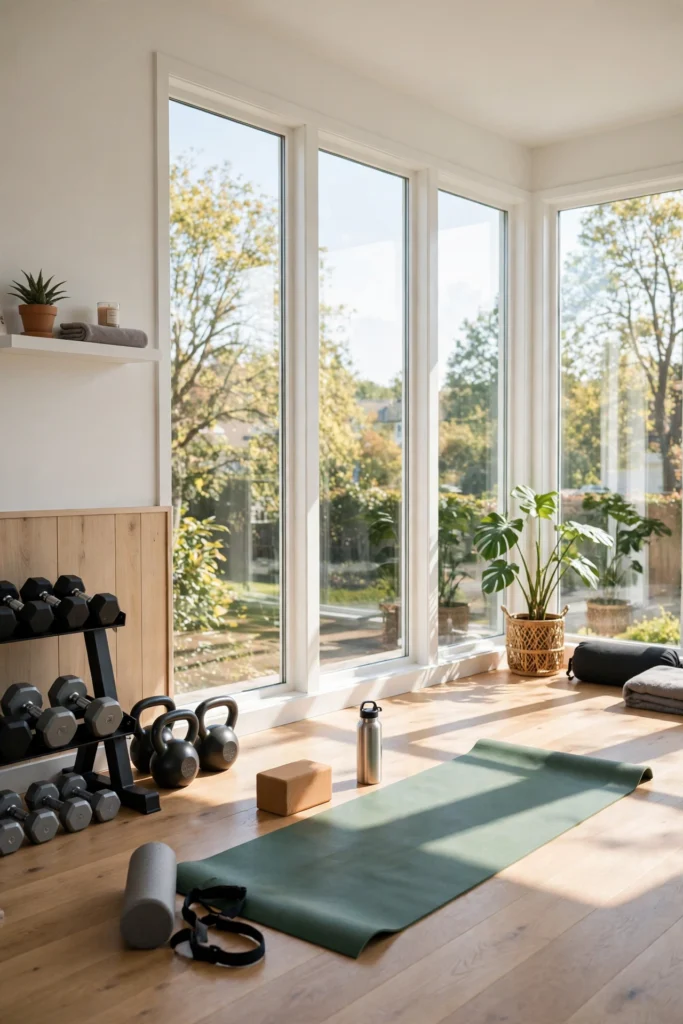
16. Treat Natural Light as a Design Element
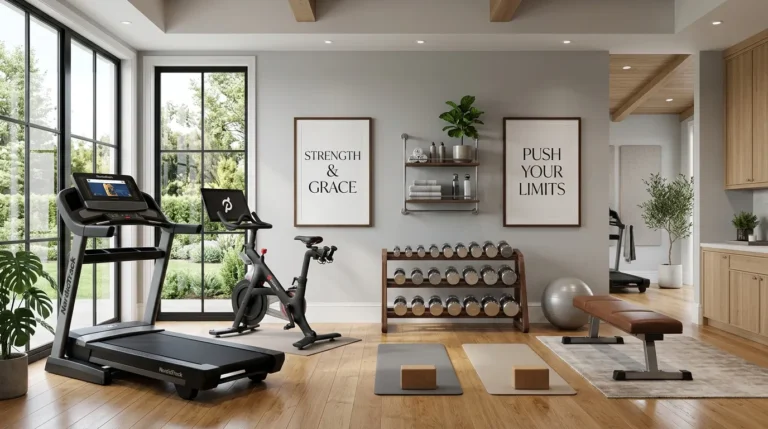
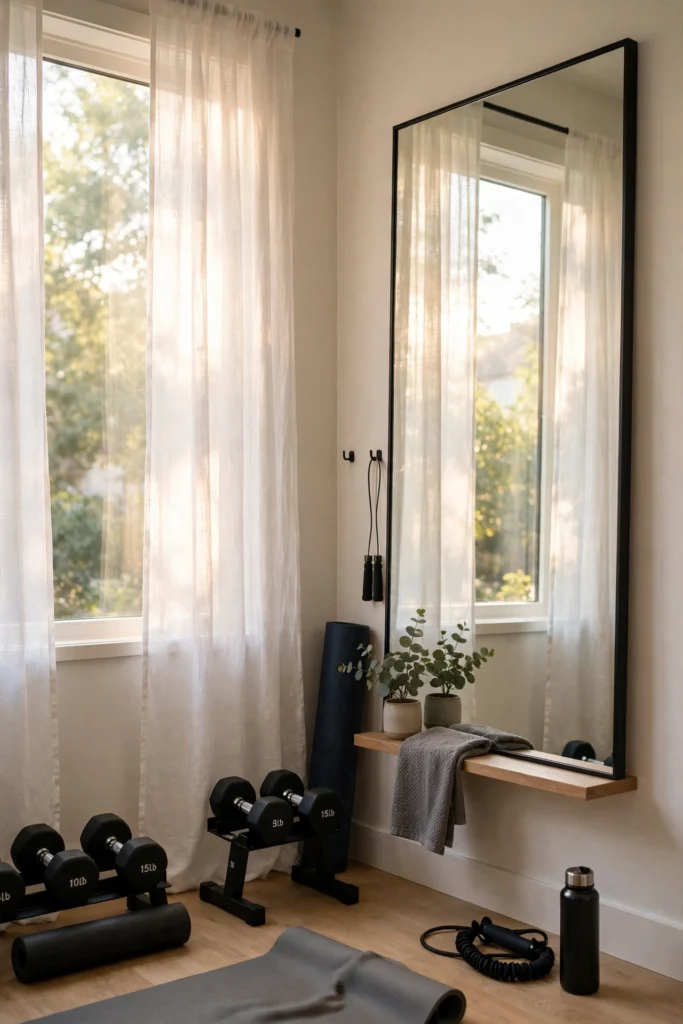
If your gym has a window, you already own the best light in the room. The job is learning to control it. Sheer curtains soften harsh direct sun without blocking it, and a tall mirror across from the window doubles the daylight and makes a small space feel larger. Keep the window clear of stacked equipment, because a blocked window is wasted light. If the sun hits the mirror directly in the afternoon and throws glare across the room, a simple linen curtain fixes it in one move. Natural light is free, and it is the one upgrade that never needs a bulb change.
17. Maximize Natural Light With Clean Windows
This sounds too simple to matter, and that is exactly why people skip it. A thin layer of dust on gym windows can dim the room more than you would think, especially in a basement or garage where the windows are small to begin with. Clean the glass inside and out, trim any plant that blocks the lower half, and keep the sill clear of bottles and towels. You will notice the difference the same afternoon. Pair clean windows with pale walls and the daylight travels further, which means less artificial light during the day and a room that feels open instead of boxed in.
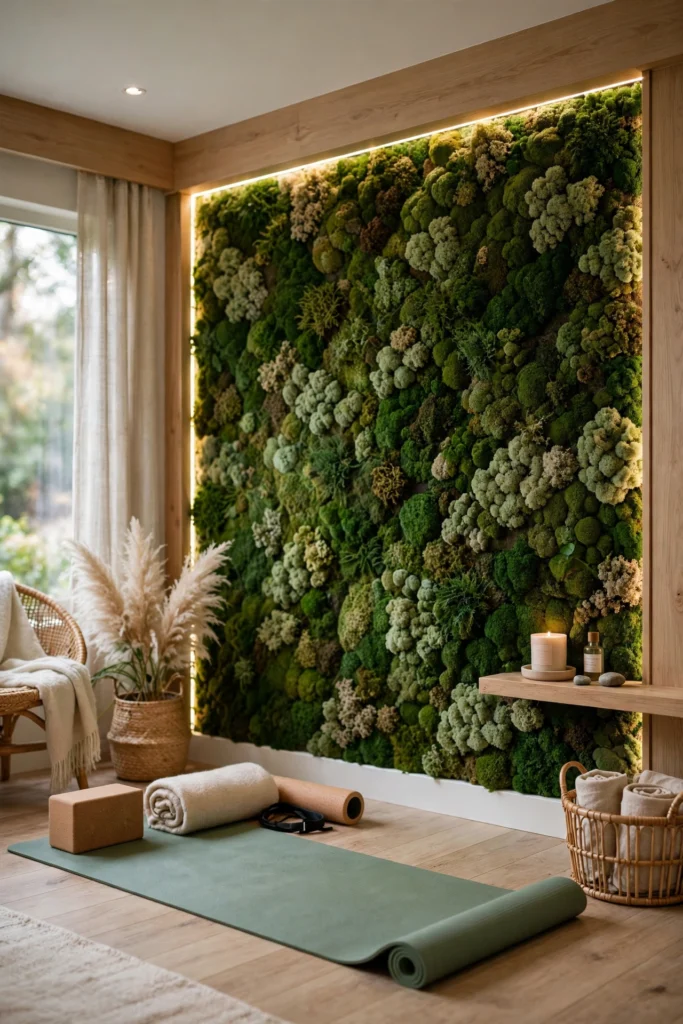
18. Bring In a Moss Wall or Greenery With Integrated Lighting
A preserved moss wall with a discreet strip of warm light behind it turns a plain stretch corner into a small wellness retreat. The greenery softens the hard edges of racks and rubber flooring, and the low light makes the whole zone feel calm enough for yoga or a long cool-down. Keep the moss away from direct spray and heavy sweat zones, because preserved moss does not like moisture. A narrow strip at 2700K tucked along the top edge is enough. You want a glow, not a spotlight, and the plants should look lit from within rather than lit up.
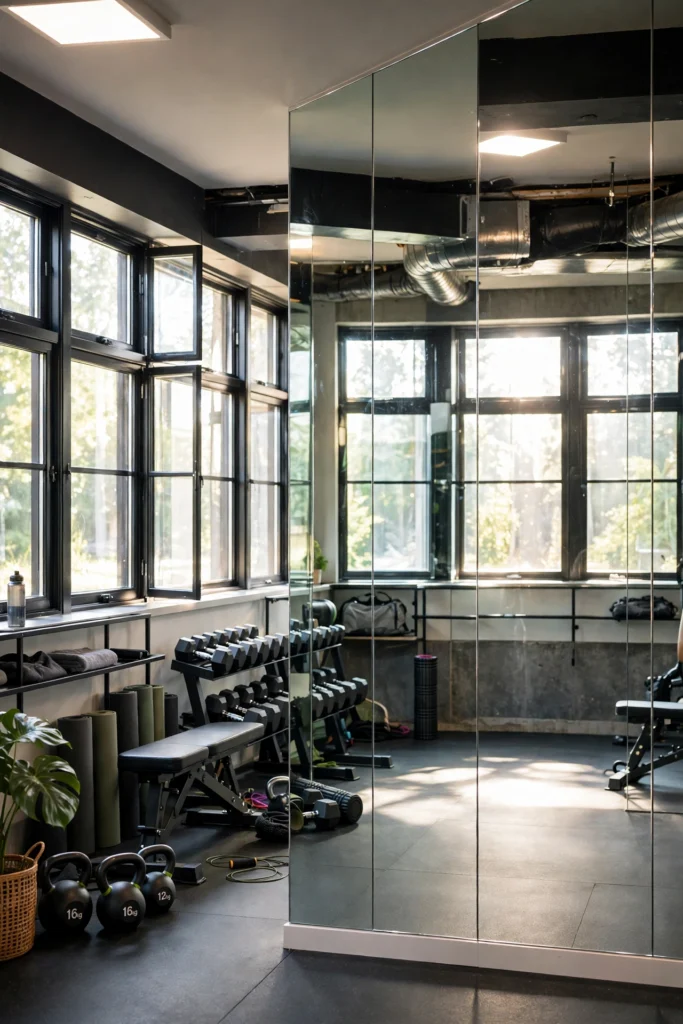
19. Use Wall-to-Wall Mirrors to Bounce Light Around
Floor-to-ceiling mirrors do two jobs at once. They help with form checks, and they visually double the light in the room. A small or dim basement gym feels significantly larger the moment a mirror wall goes up, because every fixture in the room suddenly has a second source. Position the mirror opposite your main light or window for the maximum effect, and keep the mirror light separate so you can switch it off when you want a softer room. Clean the mirrors weekly. A smudged mirror scatters light and makes the whole room look tired, while a clean one makes even a modest lighting setup look expensive.
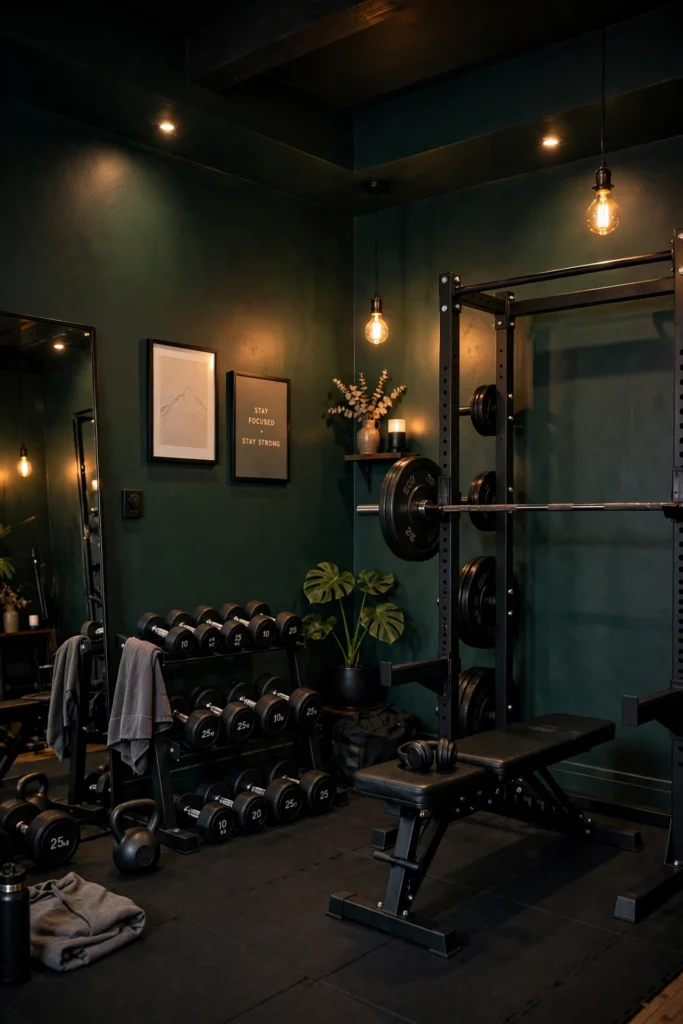
20. Paint the Room a Bold, Moody Color With the Right Lighting
Deep green, charcoal or navy walls paired with warm, intentional light feel more intimate and focused than another coat of stark white. The trick is balance. Dark paint absorbs light, so a moody room needs more lumens than a white one, and it needs them in layers. Dimmable fixtures let the room shift between energizing and calming as the workout changes. If you are nervous about going dark, paint one accent wall first and live with it for a week. The current interior colour trends for cosy homes are full of deep, liveable shades that pair beautifully with warm gym lighting, and the same bold-wall thinking works in a black bedroom wall makeover too.
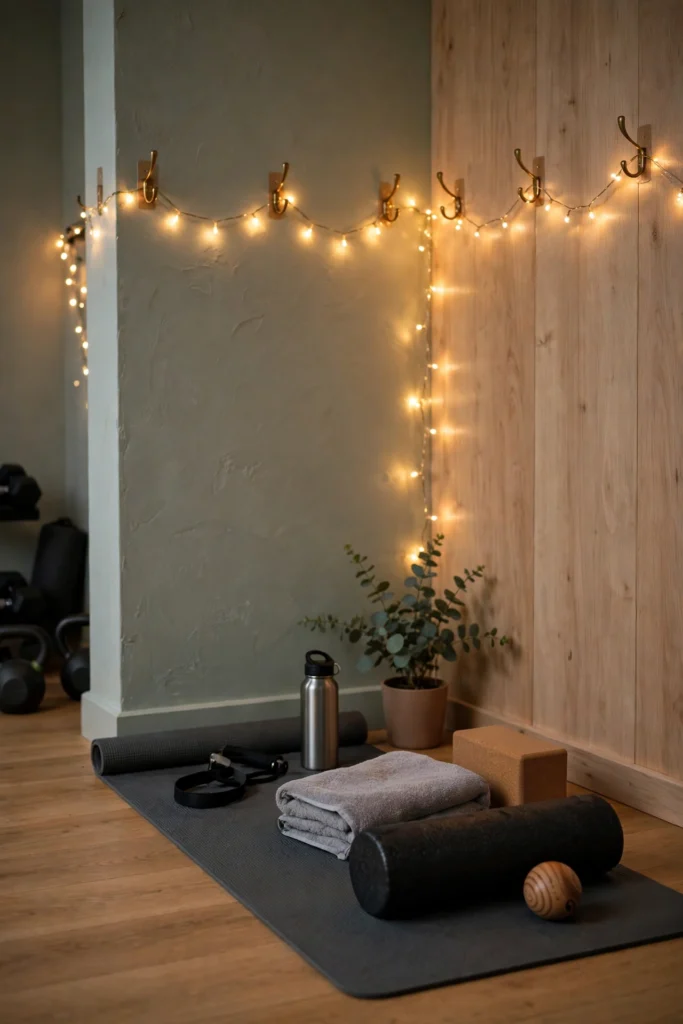
21. Add String Lights for a Soft Cool-Down Corner
String lights along the wall of a stretching area add a soft, twinkling layer that is perfect for winding down after a hard session. They are inexpensive, they run cool, and they install with basic adhesive hooks in under half an hour. Keep them in the cool-down zone only, not over the rack, because twinkle and heavy lifting do not mix. Warm white strings look calm and grown up, while multicolour strings can make the room feel like a party that never ends. One strand is usually enough. Two strands start to look like decoration instead of light.
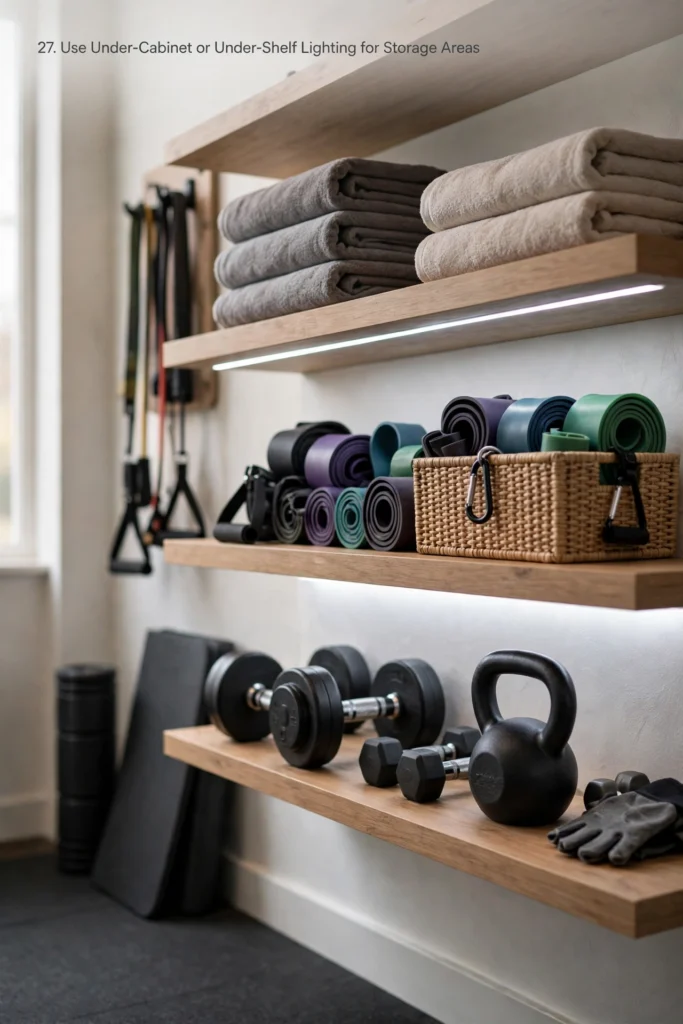
22. Use Under-Cabinet or Under-Shelf Lighting for Storage Areas
Gym storage is where small things go missing. Bands, towels, wraps, the clip for the cable machine. A slim LED strip under each shelf lights the storage zone without a separate overhead fixture, so you can find gear fast and the shelves look finished instead of improvised. Battery-powered strips work fine here and install with adhesive in minutes, which makes this a good first project if you have never wired anything. Keep the strip toward the front edge of the shelf so the light falls on the items below, not on the wall behind them.
Smart Light and Colour: Change the Mood in Seconds
This is the fun layer. Smart bulbs and colour let one room run a dozen different workouts, and you switch between them without touching a single fixture.
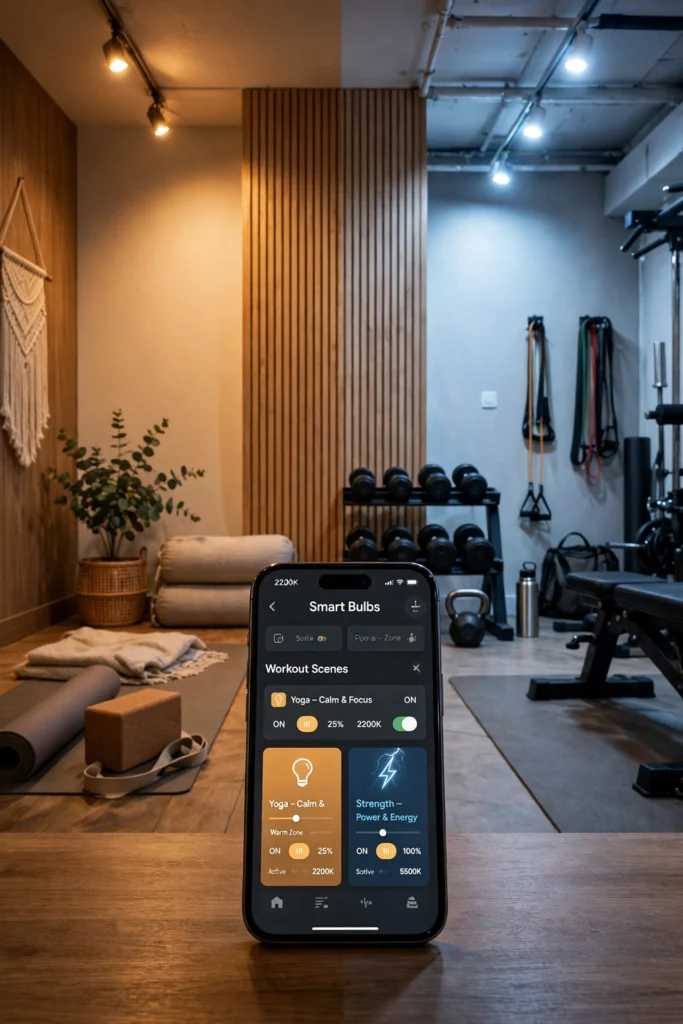
23. Use Smart Bulbs for Workout-Specific Scenes
Smart bulbs let you save presets and switch between them without fiddling with switches mid-workout. A low, warm scene for morning yoga. A bright, cool scene for strength training. A dim amber scene for the cool-down. Most smart bulb apps let you program two or three scenes in minutes, and a voice command or a phone tap does the rest. Name the scenes by workout, not by colour, because “leg day” is easier to remember than “4000K at 80 percent”. The same focus-first thinking shapes a good minimalist home office built for focus, and your gym deserves the same clarity.
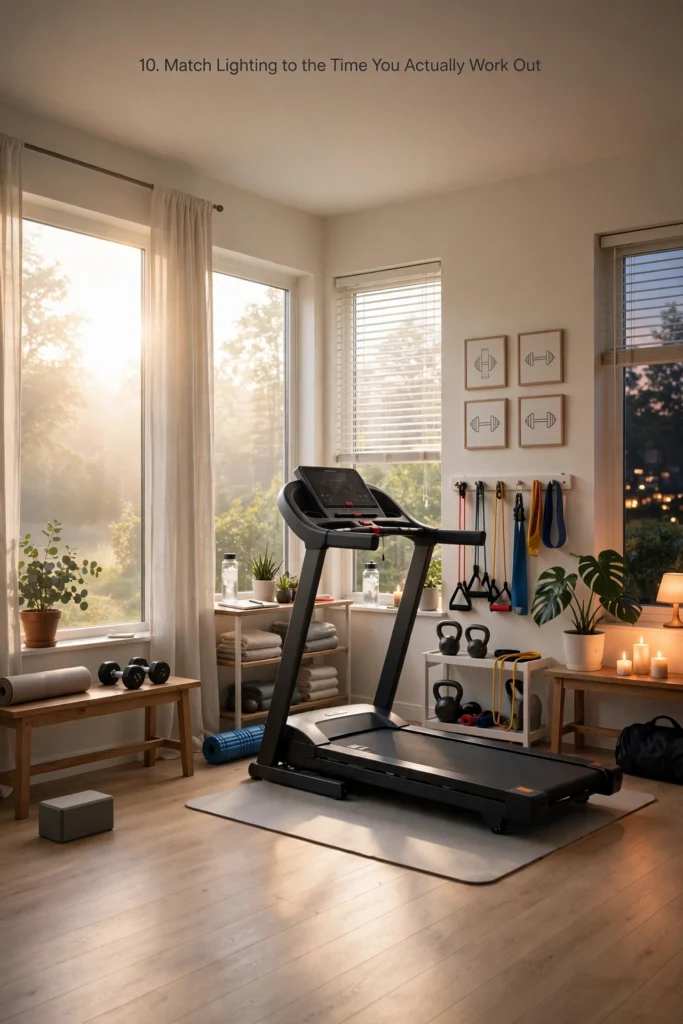
24. Match Lighting to the Time You Actually Work Out
Morning sessions want soft, warm light that builds toward brightness. Afternoon sessions take full layered brightness. Evening sessions call for low, warm light that feels close to candlelight. A room that adapts to these shifts works on your schedule instead of forcing you to work out on its terms. The practical version is simple. One bright scene, one soft scene, and a dimmer on the overhead light. If you only ever train in the evening, skip the bright scene entirely and spend the money on a better dimmer and a warmer accent strip.
25. Add Color-Changing RGB Strips for Personality
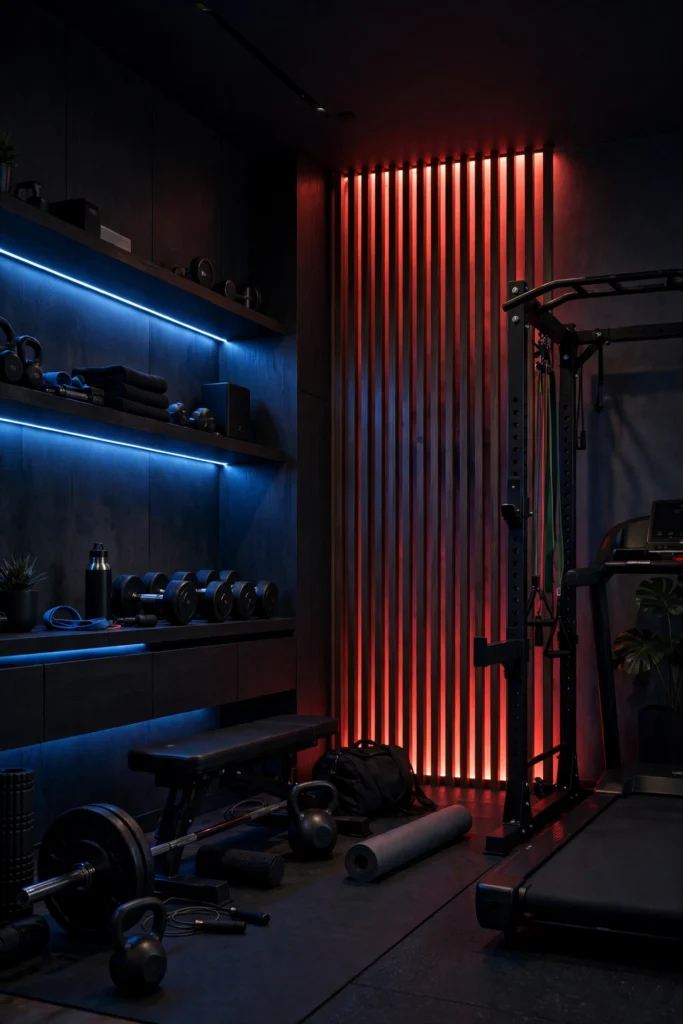
RGB strips let you shift the whole mood with a tap. Calm blue or green for yoga, warm amber for stretching, an energizing red for a high-intensity session. Tuck the strips under shelves or behind an accent wall so the installation stays subtle while the effect stays dramatic. The common mistake is running colour at full brightness all the time, which turns the room into a nightclub. Use colour as an accent at low brightness, keep the main workout light neutral white, and save the saturated colours for the warm-up and cool-down when mood matters more than detail.
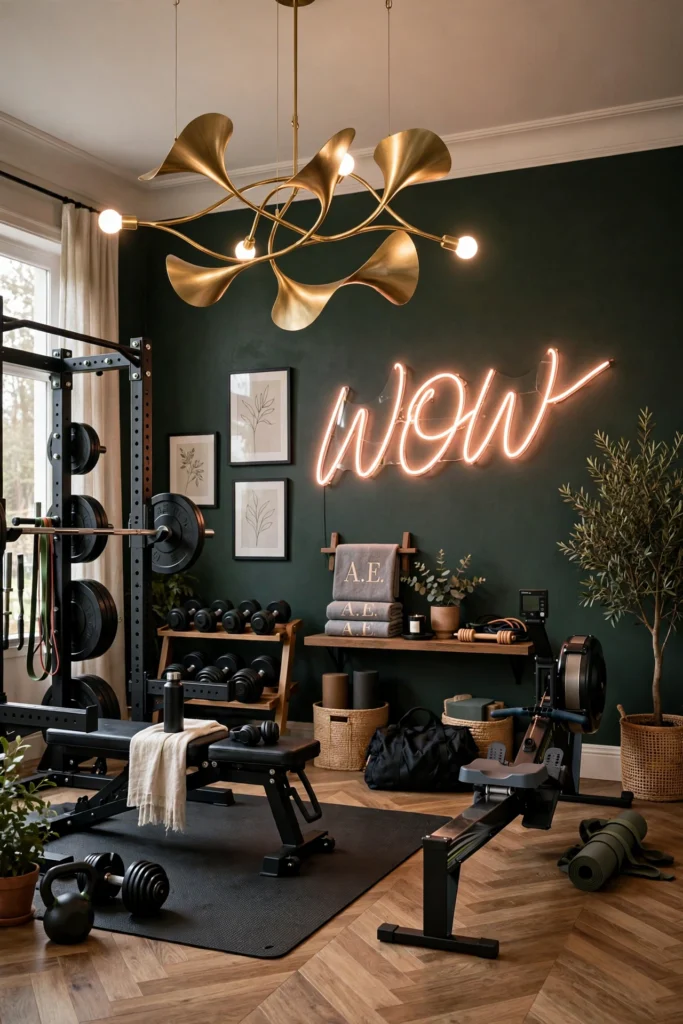
26. Add a Statement Fixture for the Wow Factor
Once the flooring and equipment are sorted, a sculptural fixture or a bespoke neon sign completes the room and makes it feel intentional. A statement piece becomes the thing people notice first, and it gives the space a personality that a row of plain downlights never will. Hang it where you can see it during rest periods, not where it blocks the mirror. Keep the rest of the lighting quiet so the statement piece has room to breathe. One bold fixture with simple companions always looks better than three fixtures competing for attention.
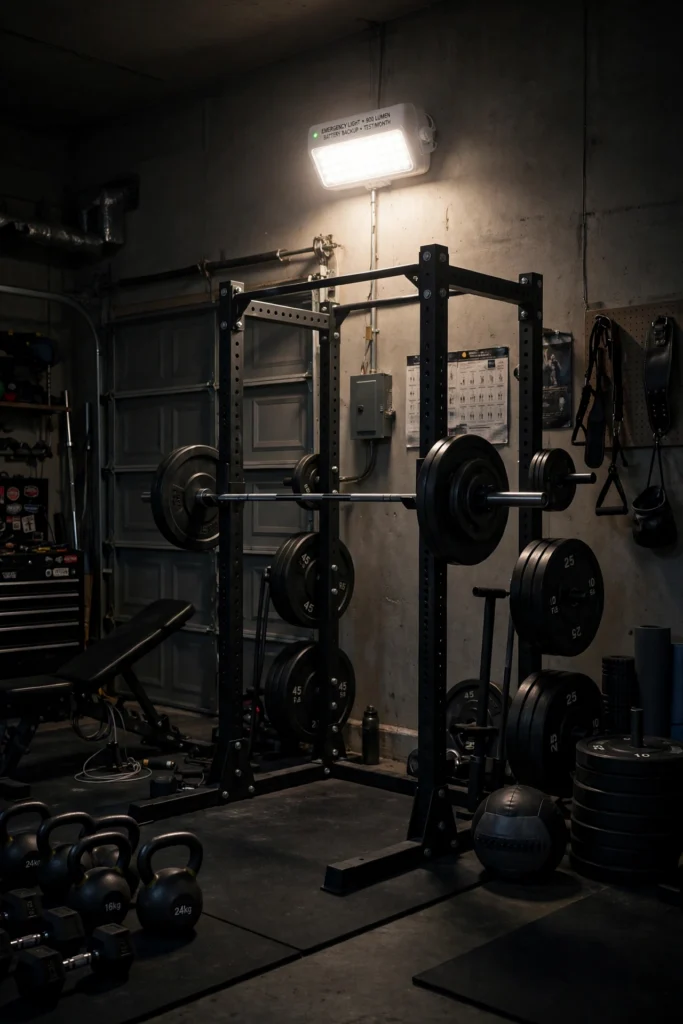
27. Install Emergency Backup Lighting for Safety
A power cut mid-lift is more than inconvenient in a garage or basement gym, especially with heavy equipment nearby. Battery-powered emergency lights make sure you can see well enough to rack the bar and walk out safely. Mount one near the door and one near the rack, and test them every few months by switching off the main breaker for a minute. Rechargeable puck lights work as a simple backup, and a small torch kept on a hook by the door covers the walk to the stairs. This is the least glamorous idea on the list and the one you will be most grateful for if you ever need it.
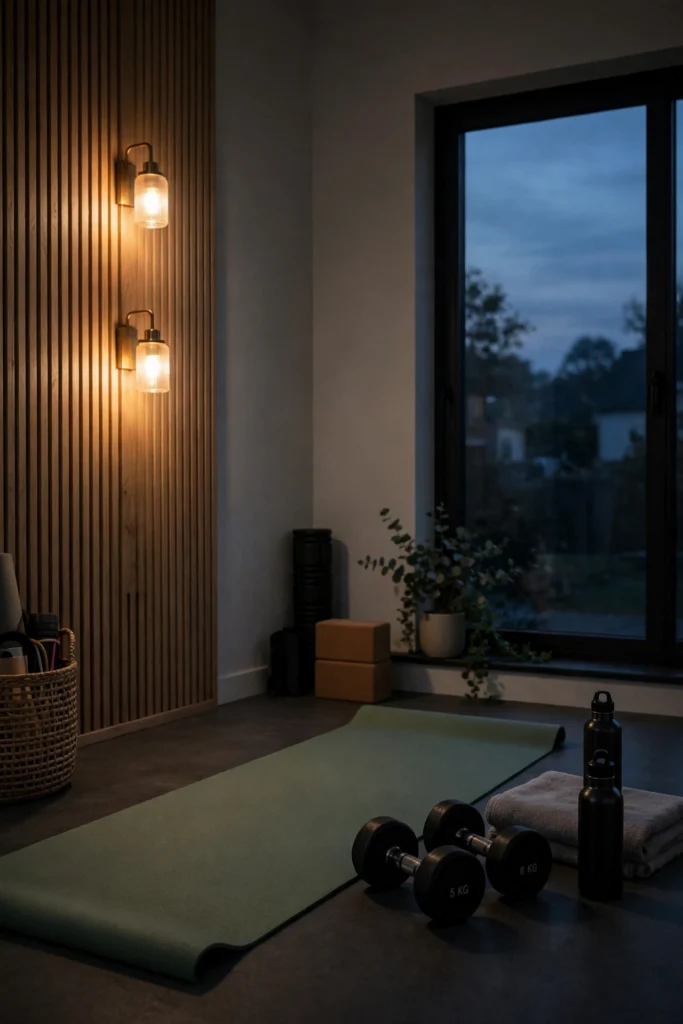
28. Choose Ambient Sconces for Early Morning Sessions
Harsh overhead light at five in the morning feels like a shock, and a shock is a bad way to start a workout. Ambient wall sconces offer a gentler entry, enough visibility to move safely without the jolt of full brightness. Choose warm bulbs around 2700K, mount the sconces on the wall you face during your warm-up, and keep the ceiling light off for the first ten minutes. By the time you reach your working sets, your eyes have adjusted and the overhead light feels normal instead of aggressive. Early risers notice this change more than anyone else in the house.
29. Backlight Sauna or Recovery Panels for Drama
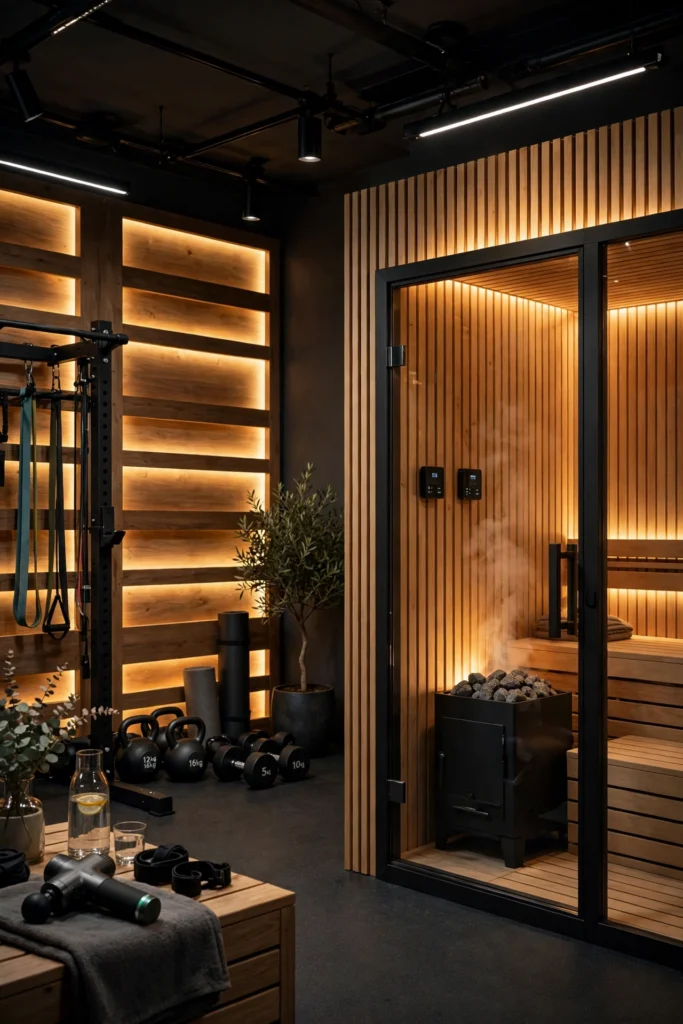
If your home gym includes a recovery corner or a small sauna, backlighting the wood panels adds a spa-like glow that makes the whole space feel considered. The light sits behind the panels and washes the wood from the edges, so the grain shows and the room feels warm even before the heat starts. Use heat-resistant fixtures rated for the space, and keep all wiring clear of the heater. A warm 2700K strip is the right choice here because cool white light fights the whole point of a recovery zone. Keep the control outside the sauna so you can switch it on before you step in.
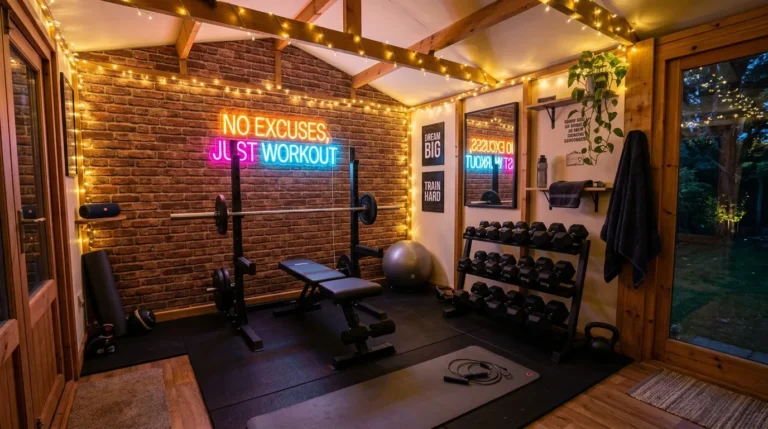
30. Add a Neon Sign for Motivation and Personality
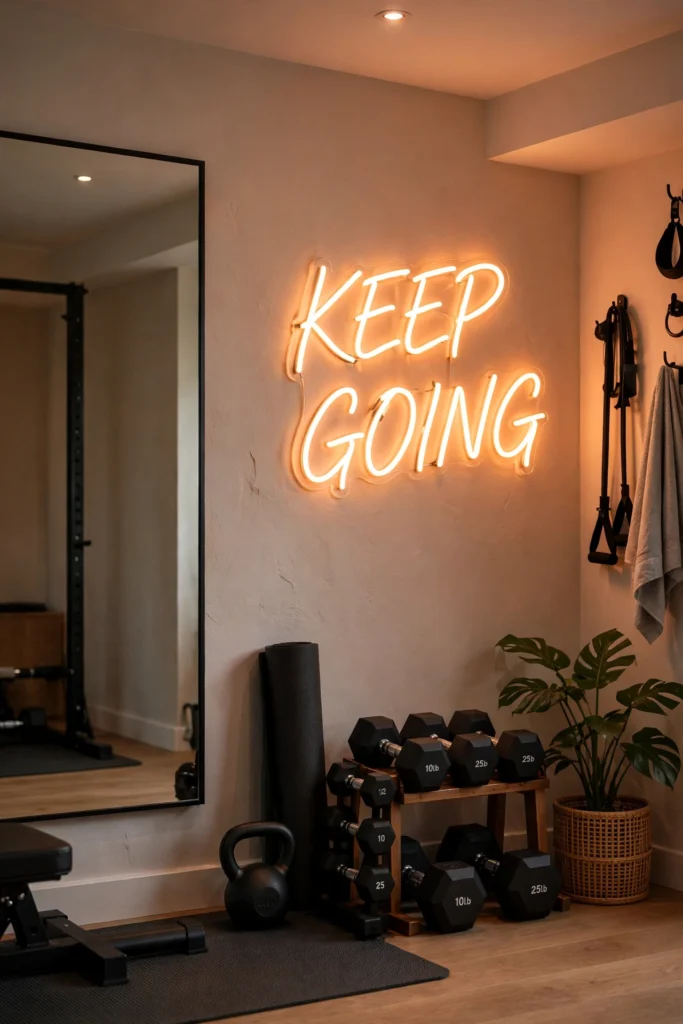
A custom neon sign with a short motivating phrase does two jobs at once. It throws a warm ambient glow across the wall, and it gives the room a personal touch that makes the space unmistakably yours. Hang it where it is visible during your workout without blocking the mirror, and keep the wording short so it reads at a glance. LED neon is the practical choice because it runs cool, uses little power and survives a bump from a stray plate far better than glass. Dim it slightly if it competes with the mirror light, because the sign should support the room, not outshine it.
Questions People Ask About Home Gym Lighting
What is the best colour temperature for a home gym?
Warm white between 2700K and 3000K suits yoga, stretching and cool-downs. Neutral to cool white between 4000K and 5000K suits strength and cardio, because it feels alert and daylight-like. Most home gyms work best with a neutral 4000K base and warm accent light, so the room can shift between the two.
Do I really need a dimmer in my home gym?
Yes, and it is the best value upgrade on this list. One dimmer lets the same fixture serve a soft morning stretch, a bright lifting session and a quiet evening cool-down. If you rent, smart bulbs or a plug-in dimmer give you the same control without touching the wiring.
How can renters improve gym lighting without installing fixtures?
Floor lamps, plug-in LED strips and smart bulbs add layered light with no drilling and no rewiring. A tall floor lamp in one corner plus a strip behind the mirror is enough to change the whole room, and everything comes down cleanly when you move.
Is natural light enough for a home gym?
Natural light is a wonderful bonus, but it is rarely enough on its own. Early mornings, evenings and overcast days all need artificial light, and most basement and garage gyms have small windows or none at all. Use daylight when you have it, and build your artificial layers for the hours when you do not.
How do I light a gym mirror properly?
Light the mirror from the sides, not just from above. An LED strip along the top of the frame or sconces on either side at face height gives you a clean, even reflection without harsh shadows. Overhead light alone throws shadows under your eyes and chin, which makes form harder to read.
What lighting works best for a small home gym?
Compact layers win in small rooms. An LED strip behind the mirror, one wall sconce, and a single floor lamp add real depth without taking any floor space from your equipment. Avoid one big central fixture, because it flattens a small room and leaves the corners dark.
Should I replace fluorescent lighting in a garage gym?
Yes. Swap the tube fixture for a warm, dimmable LED fixture and the room will feel warmer and more inviting the same day. Fluorescent light flickers and casts a cold tone that makes the whole space feel like a workshop, not a place you want to train in.
Can smart lighting really improve workout motivation?
It removes friction, and friction is what kills motivation. Saved scenes mean you walk in, tap once, and the room is already right for the workout you planned. You stop adjusting switches and start training, and that small difference adds up across a whole week of sessions.
Your First Weekend Checklist
You do not need to do all thirty ideas. You need the five that change the room most, and you can do them in one weekend.
- Swap the main bulb for a dimmable LED at 4000K, and put it on a dimmer you can reach from the mat.
- Add one warm LED strip behind the mirror or under a shelf at 2700K.
- Clean the windows and clear anything blocking them.
- Walk the room at night, find the dark corners, and add one small puck light to each.
- Save three smart bulb scenes: morning, midday and evening, named after your workouts.
- Hang one thing that makes the room yours, a sign, a print or a plant with a small light.
Start with the bulb and the strip. Train in the room for a week, notice what still bothers you, and then pick the next idea from the list. Good lighting is not a purchase, it is a habit of noticing what the room needs and fixing one small thing at a time. Your future self, the one who actually looks forward to the workout, will thank you for the weekend you spent on it.