Plan your home cafe exterior the way a guest experiences it, from the first step in the morning to the last cup under the lights at night. Start with a clear arrival, seating that suits real bodies and real weather, light in layers, plants at three heights, and one comfort detail that makes people stay. If you get those five zones right, in that order, the space will feel warm before you add a single decoration.
I learned this the slow way, by watching friends arrive at my own little outdoor coffee corner. In the morning they noticed the path and the door. By midday they noticed whether the chairs were comfortable and whether the sun was in their eyes. In the evening they noticed only two things: whether they could still see each other, and whether they wanted to stay for one more cup.
Nobody ever commented on a single ornament. They commented on how the place felt as the day moved through it.
That is why this guide is organised as a walk through the day, not as a shopping list. Each zone below holds the original ideas for this post, grouped where they actually matter, with the sizes, materials and placement rules that stop a pretty corner from becoming an awkward one. A small patio needs three good decisions per zone, not all twenty two.
Home Cafe Exterior: Plan the Day First, Then Buy Anything
Before you spend anything, walk your space at three times of day and note where the sun falls, where the wind comes from, and where guests naturally pause. The table below turns those notes into a plan. Use it to decide what to fix first, because the order matters: shade and paths come before cushions, and light comes before any evening gathering.
| Time of day | Zone | What to get right | First decision |
|---|---|---|---|
| Morning | Arrival | Colour, entrance, clear path | One palette and one clear route to the seats |
| Late morning | Seating | Comfort, weatherproof materials, shade | One seating group that fits the space, not three that crowd it |
| Afternoon | Light and shade | Layered light planned before dark | Overhead, table and path light on separate controls where possible |
| All day | Plants | Height, scent and soft edges | Tall, medium and low planting, with nothing blocking the path |
| Evening | Comfort | Warmth, privacy and small practical help | One screen, one throw basket, one place to charge a phone |
Every idea below names its zone, so you can build one zone at a time across a few weekends and still end up with a space that feels finished.
Morning: the arrival zone
Morning light is honest light. It shows every mismatched pot, every peeling edge, and every path that forces guests to guess where to go. Spend your first effort here, because the arrival sets the mood for the whole day, and it costs far less to fix than most people expect.
1. Start with a signature color palette
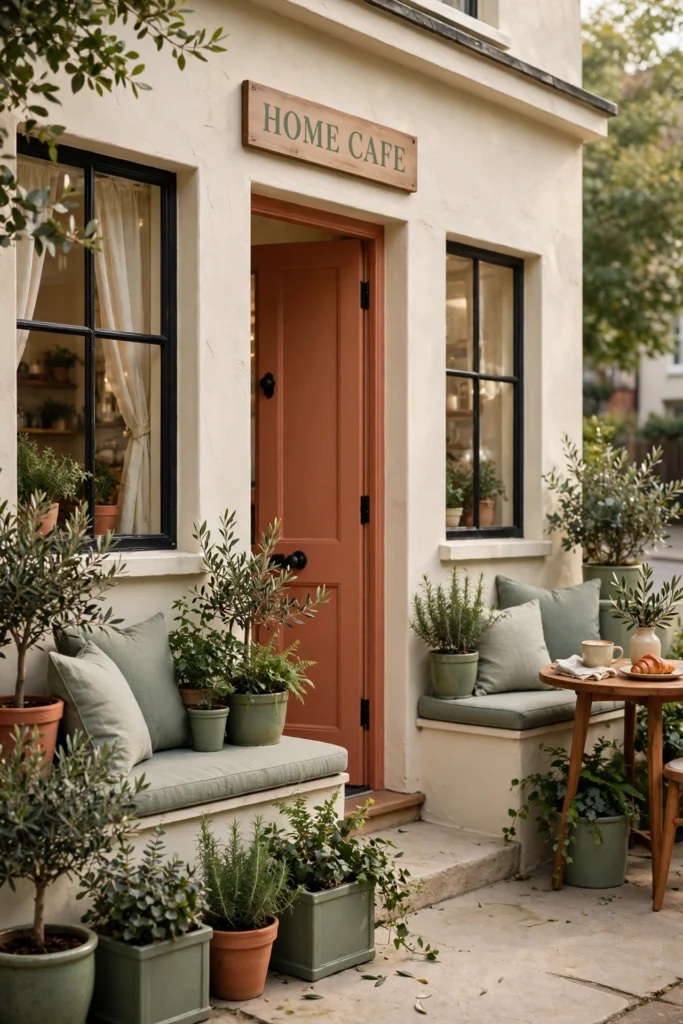
Every inviting cafe exterior begins with a color story, and the simplest version works best: one dominant shade, one accent, and one neutral that ties them together. Warm terracotta, soft cream and muted green tend to feel welcoming, while a scatter of unrelated brights reads as a garden center clearance aisle. Choose the palette from things that already exist, your door, your pots, your cushions, and repeat it until it looks deliberate.
Test the palette in morning and evening light before you commit, because colors shift a lot with the sun. Paint a swatch on cardboard and prop it where guests will actually see it, then look at it again at dusk. The same restraint that makes a porch look expensive applies here, and these front porch ideas show how a tight palette, right sized planters and warm light work together at an entry.
If a new purchase does not match your three colors, leave it in the shop.
2. Choose a statement entrance feature
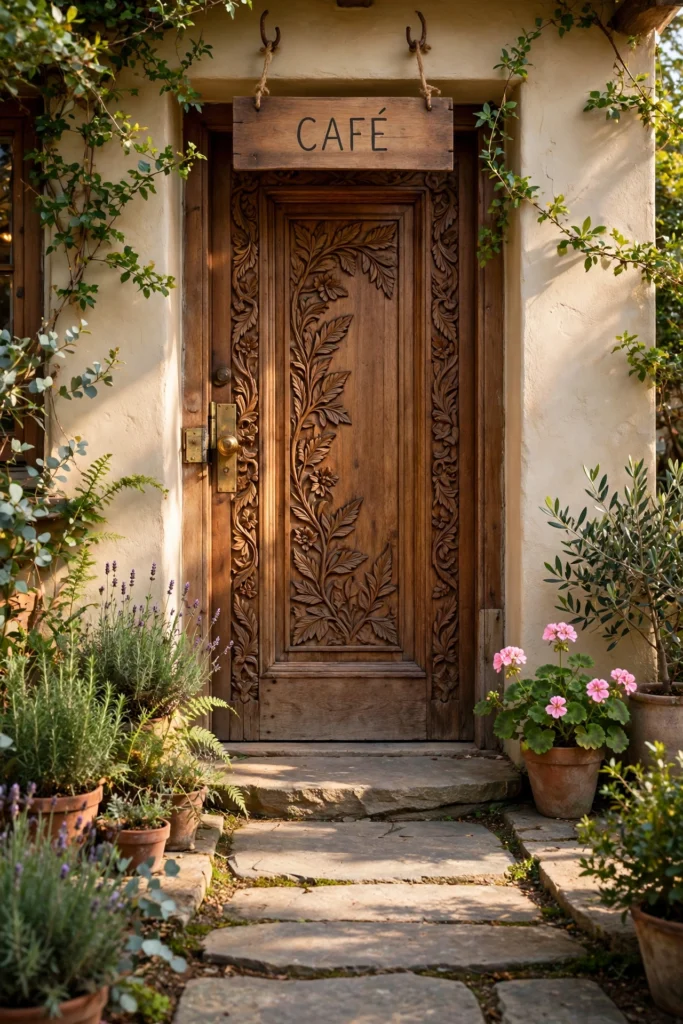
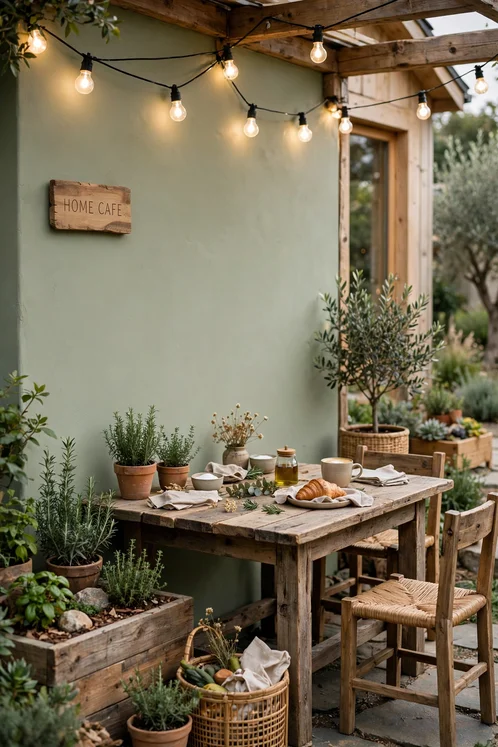
Your entrance is the handshake of the whole space. A carved wooden door, an arched gateway, or a simple hanging signboard tells guests they have arrived somewhere worth slowing down for. Keep the feature simple and distinct so it draws the eye inward without competing with everything else around it. One strong gesture beats three small ones fighting for attention.
Place the feature where the eye lands naturally, at the end of the path, not tucked to one side. Hang a sign at eye level, roughly 5 to 6 feet from the ground, where it can be read from the path without blocking the way in. If the sign swings, fix it so it cannot hit a guest in wind. A quiet invitation works better than a loud announcement, and a clear entrance means guests stop asking where to go.
3. Add a textured feature wall or mural
A textured wall gives your cafe exterior a personality and a natural photo spot in one move. Exposed brick, rustic stone, or a hand painted mural adds depth that flat painted walls cannot, and guests will drift toward it without being told. Keep the texture to one wall, so the rest of the space stays calm around it.
Choose a material that can handle weather without constant repair. Sealed brick and stone cope well outdoors, while an outdoor rated mural paint and a clear sealant protect painted work from rain and sun. Put the feature wall behind or beside the main seating, not behind a walkway where people pass without stopping.
Leave a clear patch of floor in front of it, about 3 feet deep, so a small group can stand and take a photo without blocking the path.

4. Design clear, accessible walkways
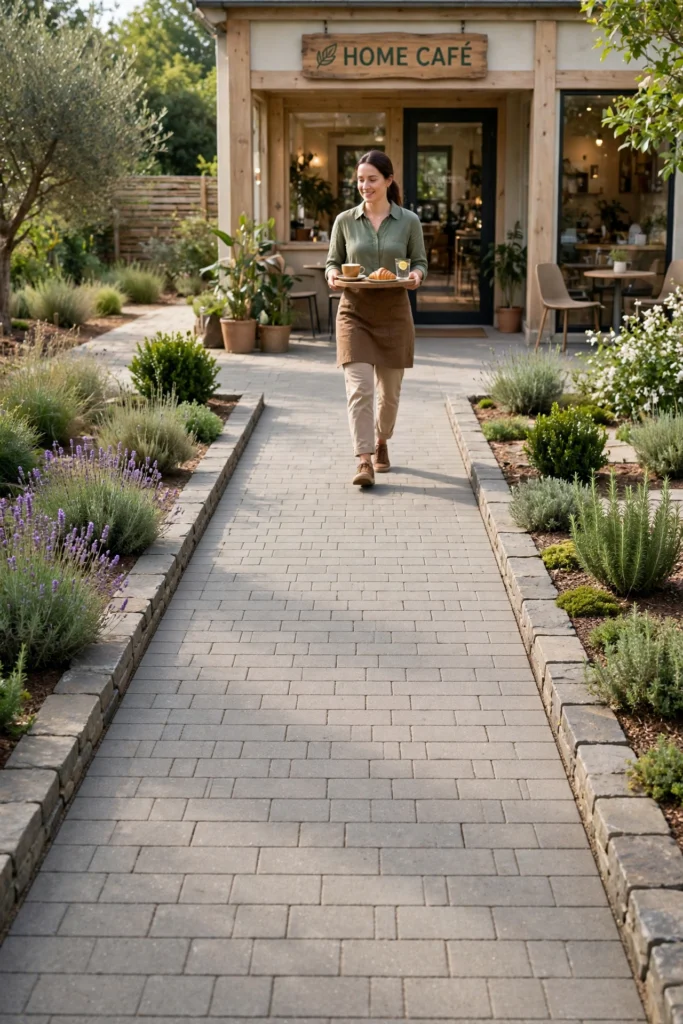
Guests should never have to guess where to go or squeeze past furniture to find a seat. Keep pathways at least 3 feet wide, free of clutter, and clearly defined with a change of flooring, pavers, or a simple border of stones. A clear walkway makes the space feel organised and safe, and it matters most in the morning when people arrive carrying bags, trays, or a sleepy child.
Walk the route yourself with a tray in both hands before you call it done. If you have to step off the path, move a pot, or duck under a branch, guests will face the same problem. Keep the surface even and slip resistant, and avoid loose gravel on the main route, because it scatters underfoot and ends up in the seating area.
Mark the edge of the path with low plants or a stone border rather than a raised lip that catches toes.
5. Choose a theme that reflects local culture
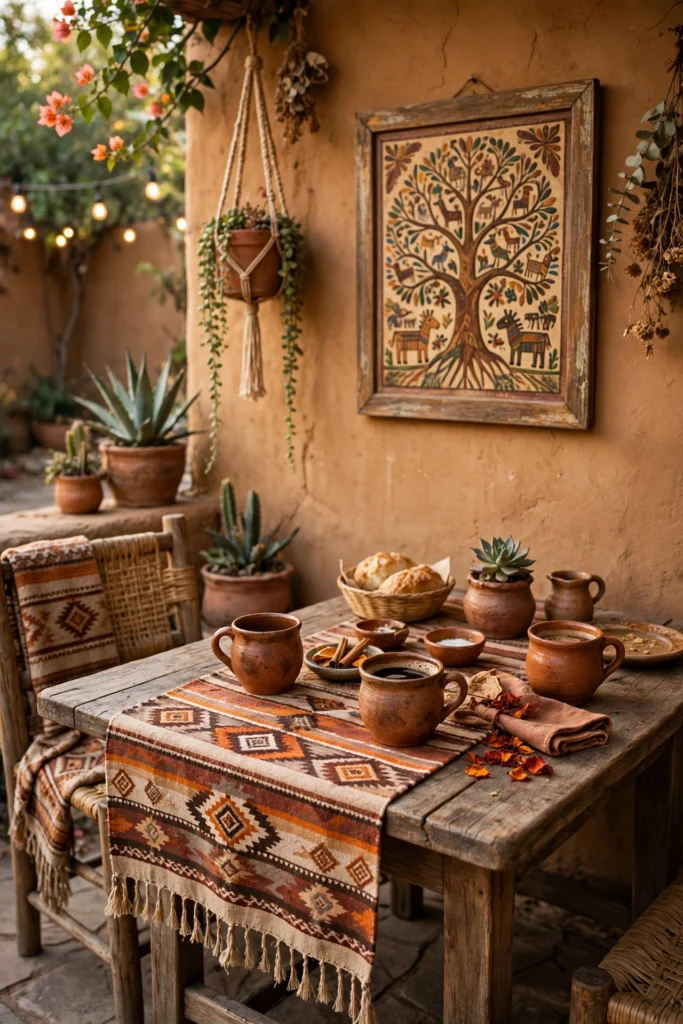
A cafe with a sense of place feels far more memorable than one that could belong anywhere. Local textiles, regional pottery, or artwork from nearby makers give your exterior an identity that guests will not find in a generic setup, and it is exactly the kind of detail people photograph and remember. Pick one thread of local character and repeat it, rather than collecting unrelated souvenirs.
Start with the table and the wall: a woven runner in a local pattern, two handmade cups, one piece of art that means something to you. Avoid fragile items in the main traffic route, and bring textiles inside during heavy rain so they last more than one season. When the theme is honest, the space stops looking decorated and starts looking lived in, which is the whole point of a home cafe.
Late morning: the seating zone
By late morning the sun has moved, the first cups are empty, and the seating gets its real test. This is when a chair that looked fine in the shop starts to hurt, and when a table that looked generous starts to crowd the path. Get the seating right and guests stay through lunch without thinking about it.
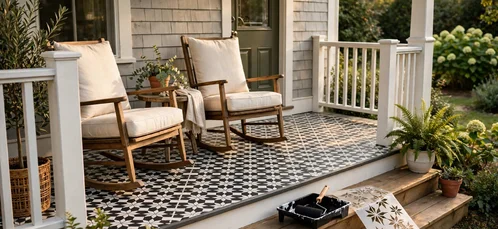
6. Mix comfortable and practical seating
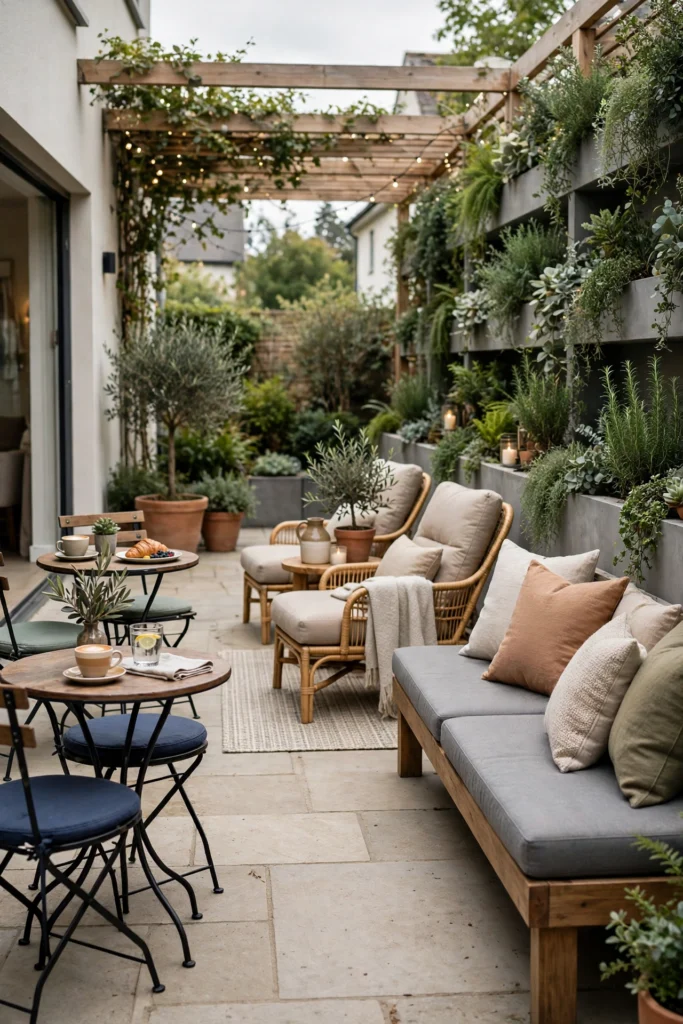
Not every guest wants the same seat, so variety matters more than matching sets. Offer small bistro tables for quick coffee breaks, cushioned lounge chairs for guests who want to linger, and a communal bench for groups who want to talk. This mix keeps the space flexible across moods and group sizes through the whole day.
Plan the mix around numbers, not wishes. A bistro table of about 24 inches across suits two people and one tray. A lounge chair needs roughly 30 inches of width and room to stretch legs, so do not line lounge chairs along a narrow path. A bench 5 to 6 feet long seats three adults comfortably, and it works best against a wall or a planter where it does not block circulation.
7. Invest in durable, weatherproof furniture
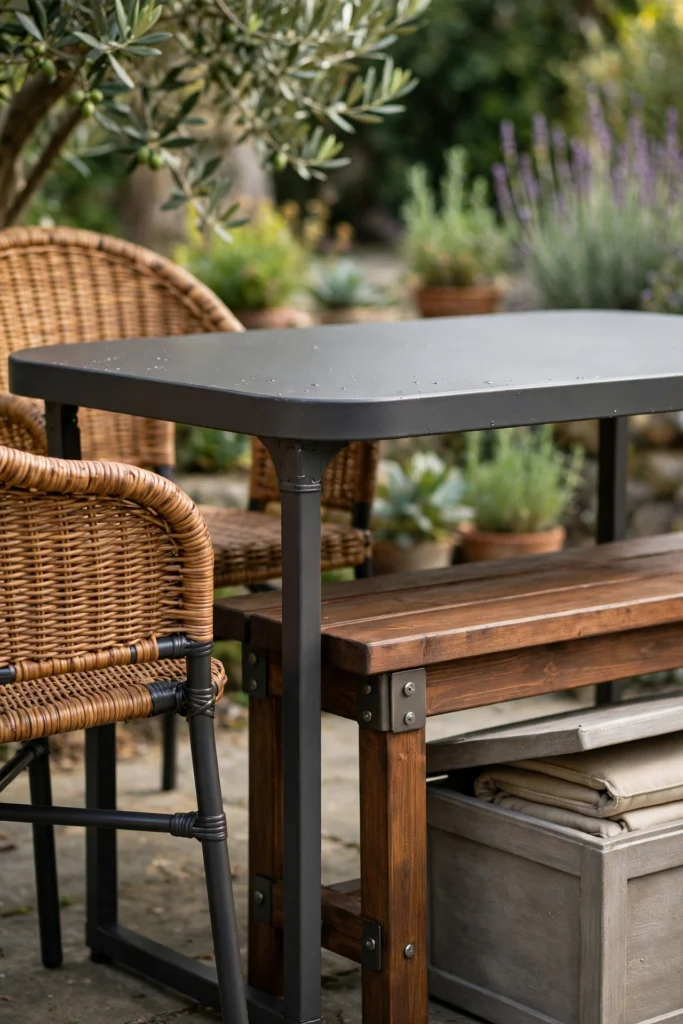
Outdoor furniture has to survive sun, rain, humidity and daily use without losing its charm. Rattan, powder coated metal and treated wood hold up far better than untreated alternatives that fade or warp quickly. Spending a little more at the start on weatherproof pieces saves money on replacements later, and it keeps the cafe looking fresh season after season.
Check the details before you buy. Joints should feel solid, not wobbly, and metal frames should have a smooth, even coating with no bare edges where rust can start. Treated wood needs a breathable outdoor oil or sealant, reapplied when water stops beading on the surface. Store cushions in a dry box or bring them in during storms, because even weatherproof fabric lasts longer when it is not left soaking for days.
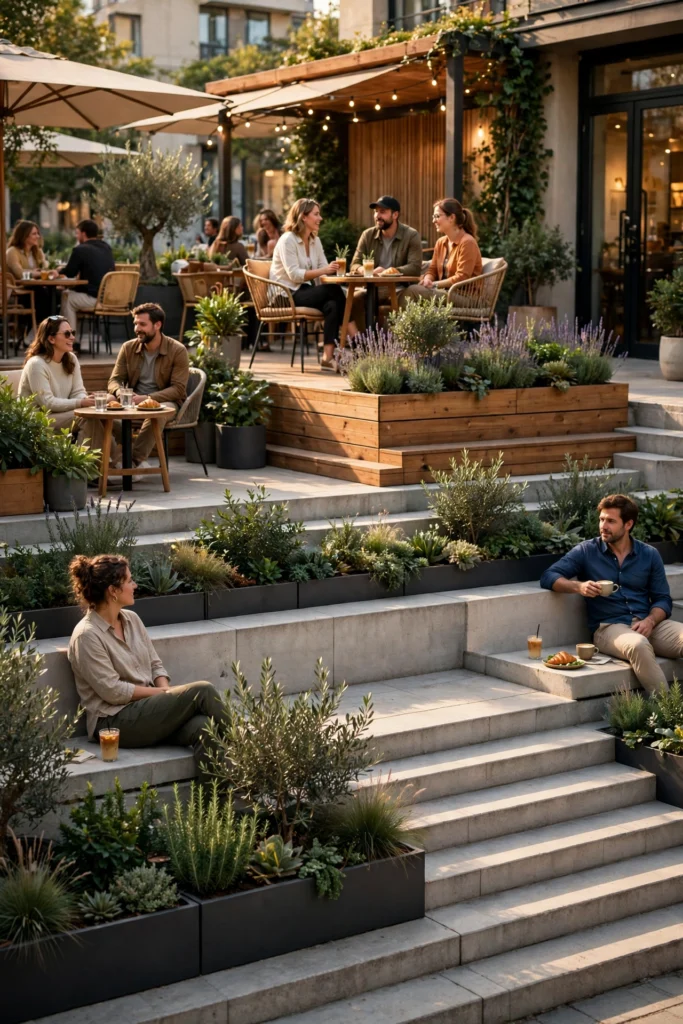
8. Create tiered or multi level seating
If your space has room, tiered seating adds a modern, dynamic feel while making the most of a small footprint. Steps or raised platforms give guests a slightly different view and make the whole area feel more spacious and layered than it really is. Tiers also separate groups naturally, without extra dividers.
Keep each step low and safe: a rise of about 6 to 7 inches and a tread at least 12 inches deep feels natural underfoot, and every level needs a clear edge guests can see in low light. Add a handrail or a planter edge where a step meets a path, and never put a chair with its back to a drop.
A single raised platform, about 6 to 8 inches high, under one seating group is often enough, and it is far easier to build well than a full staircase of levels.
9. Zone the space for work, relax, and social time
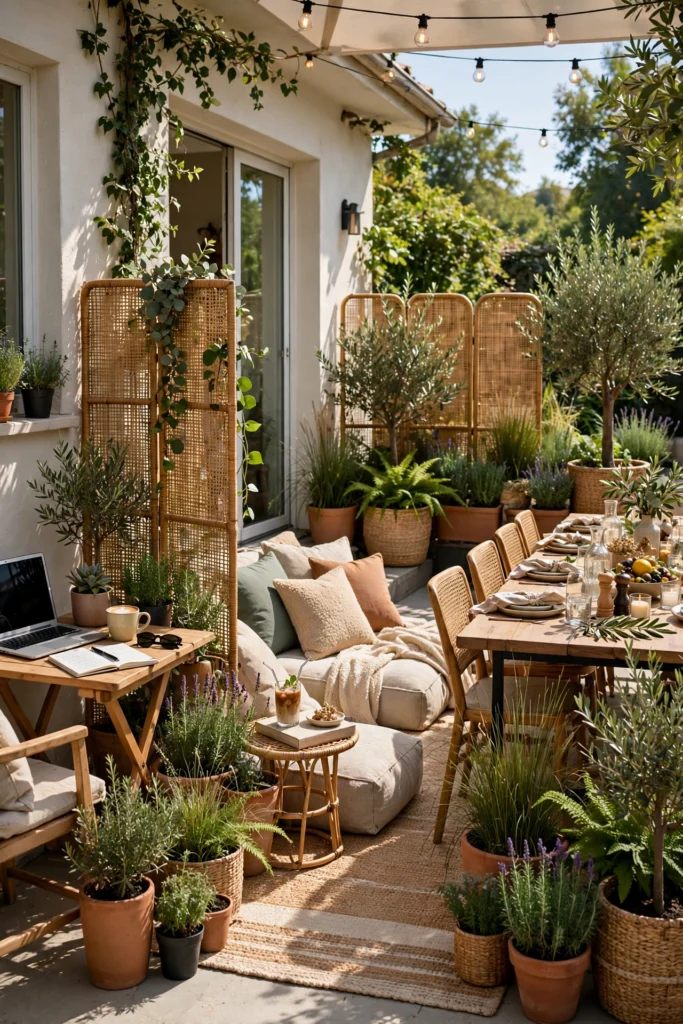
Not every guest visits for the same reason, so your layout should reflect that. Dedicate one corner to quiet work with a small table and good light, another to relaxed lounging with soft seating, and a third to group gatherings with a larger communal table. Zoning makes the cafe feel purposeful and genuinely tailored to different needs.
Separate zones with things that already belong there: a planter between work and lounge, a rug under the social table, a screen behind the quiet corner. Keep the work corner near power and out of the main traffic route, and keep the social table where people can pull up an extra chair without blocking the path. When zones blur, the quiet reader ends up in the middle of a birthday group, and nobody enjoys that.
10. Keep it flexible for events and seasons
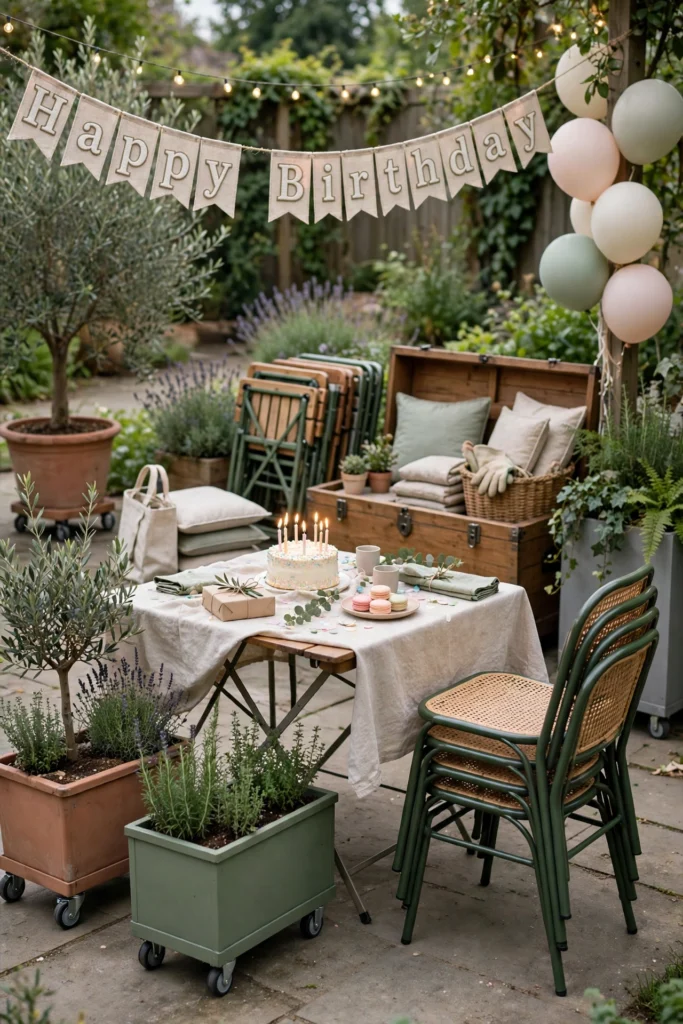
Design your exterior to adapt rather than stay fixed in one arrangement. Modular furniture, movable planters and foldable tables let you rearrange the space for a birthday gathering, a rainy afternoon, or a summer evening with friends. Flexibility keeps your home cafe genuinely useful no matter the occasion or the season.
The trick is to plan the change before the guests arrive. Keep one stackable set and one folding table stored within a few steps of the seating, not in a distant shed, so rearranging takes ten minutes rather than an hour. The same flow thinking that makes a garden party work, where arrival, drinks and seating each have a planned spot, is covered in these garden party ideas, and it applies just as well to a small home cafe.
After each rearrangement, walk the paths again and check that nothing blocks the way to the door.
Afternoon shade, evening light: the light zone
Afternoon is when shade becomes the main comfort, and evening is when light becomes the main mood. Plan them together, because the structure that gives shade at 3 in the afternoon is usually the structure you hang lights from at 8 in the evening. If you plan light only after dark, you will end up with one harsh bulb and a lot of regret.
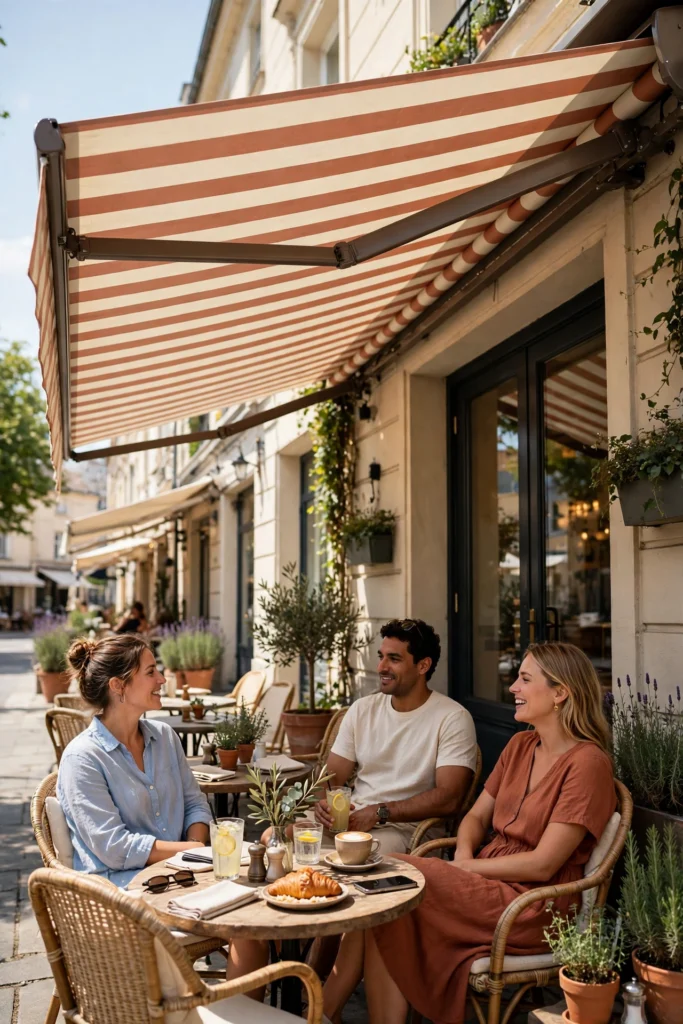
11. Install a weather resistant awning or canopy
Shade and shelter are not optional if you want your cafe usable through changing weather. A retractable awning or a sturdy canopy protects guests from sun and light rain while adding architectural charm to the exterior. Choose a fabric or material that matches your color palette so it blends naturally instead of standing out awkwardly.
Size the cover to the seating, not to the wall. The shade should cover the table fully at midday, with a little extra on the sun side, because a canopy that shades only half the table sends guests shuffling chairs all afternoon. Mount it high enough to walk under comfortably, at least 7 feet above the floor at its lowest edge, and angle it slightly so rain runs off away from the seats.
Retractable versions are worth the extra care in windy spots, since you can pull them in before a storm rather than repairing them after one.
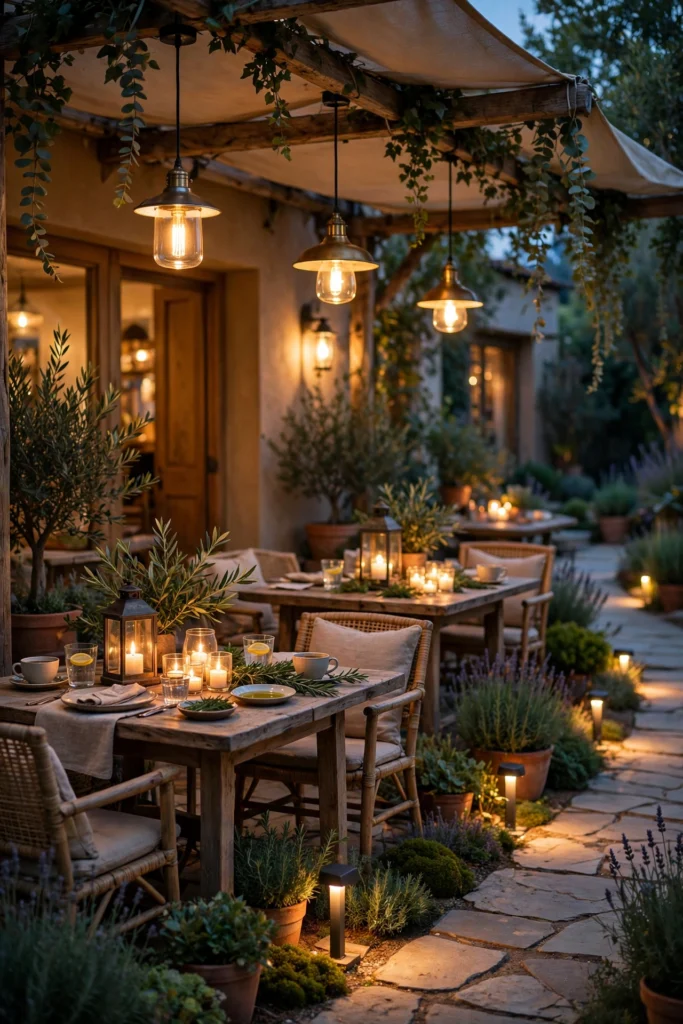
12. Layer your outdoor lighting
One light source is never enough to create real atmosphere. Combine ambient light for overall glow, task light above tables for practicality, and accent light to highlight plants or wall art for depth. This layered approach makes the space feel intentional rather than flat, and it keeps the cafe functional and inviting well after sunset.
Think in three heights: light overhead from the canopy or a pendant, light at table height from a lantern or candle, and light at ground level along paths. Keep all bulbs warm white, around 2700K to 3000K, so food and faces look flattering. A covered space makes layering far easier, because a roof gives you somewhere to hang and wire lights properly, and these lanai ideas explain why a sheltered outdoor room hosts evening gatherings so much better than an open patio.
Put path lights on first in the evening, then table light, then overhead glow, and you will never fumble in the dark.
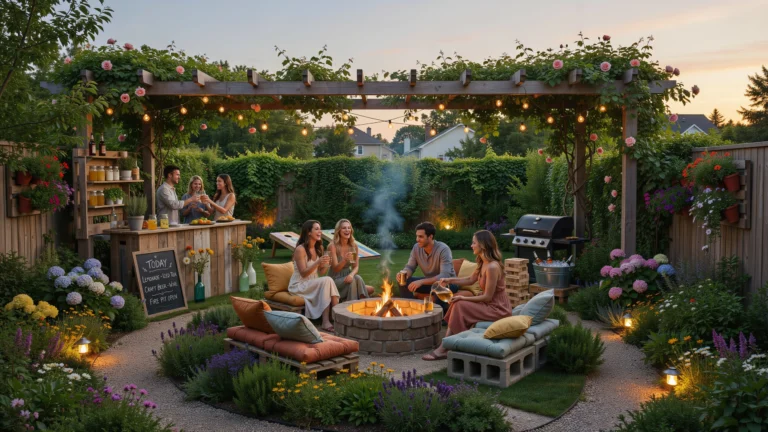
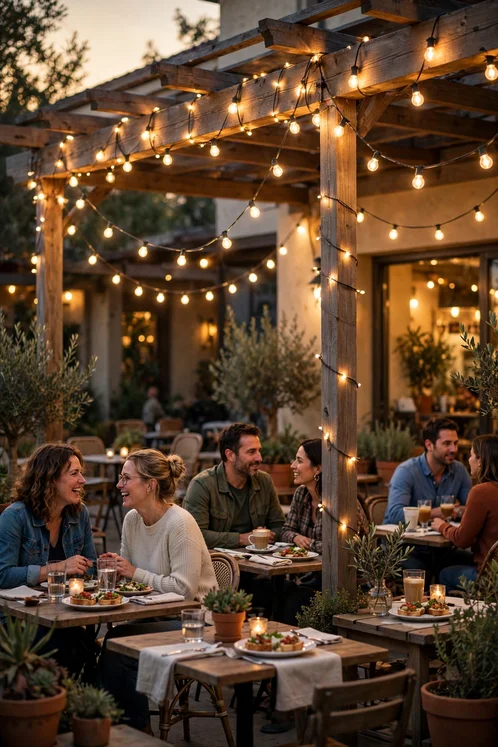
13. Use warm string lights for evening charm
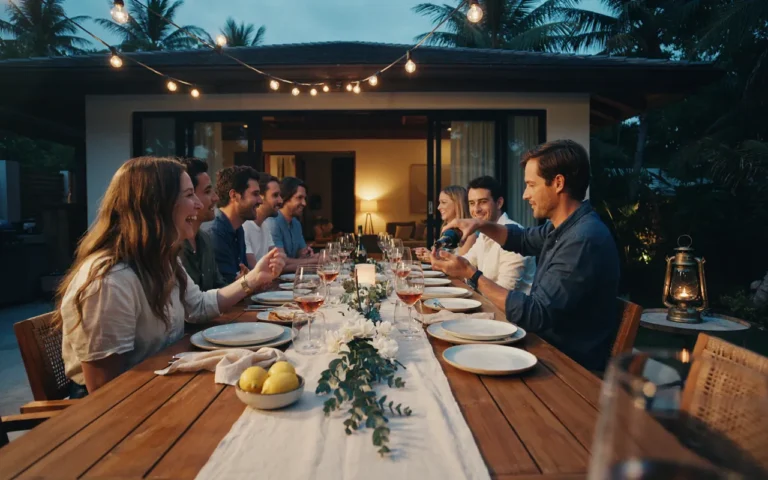
Few things transform an outdoor space as instantly and affordably as string lights. Hung overhead or wrapped around a pergola beam, warm white string lights create a soft glow that makes evenings feel special and worth staying for a little longer. Stick to warm color temperatures around 2700K for that cozy, golden effect that photographs beautifully too.
Hang them with a gentle sag, not pulled drum tight, and space the drops evenly so the light falls in a pattern rather than a tangle. Keep the lowest point above head height, at least 7 feet from the ground over walkways, so tall guests do not duck. Use outdoor rated strings with a proper weatherproof connection, and keep the plug and any joiners under cover. One well hung run across the seating beats three tangled runs every time.
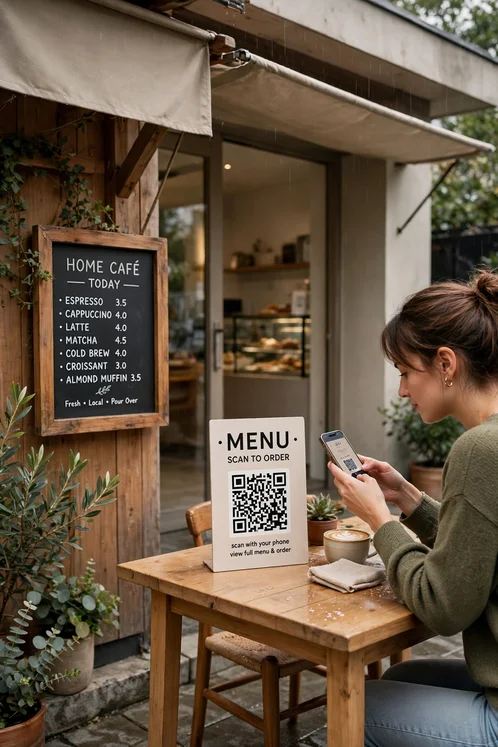
14. Use a menu board or QR code display
A small QR code menu card on each table keeps things modern, clean and easy to update whenever drinks or items change. It reduces clutter compared with printed menus and lets guests browse on their own phones at their own pace, which feels effortless and genuinely current. A small board near the entrance works just as well for a home cafe that serves the same few drinks every day.
Keep the display readable and sheltered. A board at eye level near the entrance, protected from direct rain, gets read far more than a card left to curl in the sun on a table. If you use QR codes, print them large enough to scan from a seated position, about 2 inches across, on a card that lies flat and does not blow away.
Test the code yourself from a guest chair before you print a whole batch, and keep one printed menu as backup for guests whose phones are flat.
All day green: the plants zone
Plants do more work in a home cafe exterior than almost anything else you can buy. They soften hard surfaces, add scent, give privacy, and make the space feel alive at every hour of the day. The mistake is to buy many small pots and scatter them. Buy fewer, larger plants, and place them at three heights: tall, medium and low.
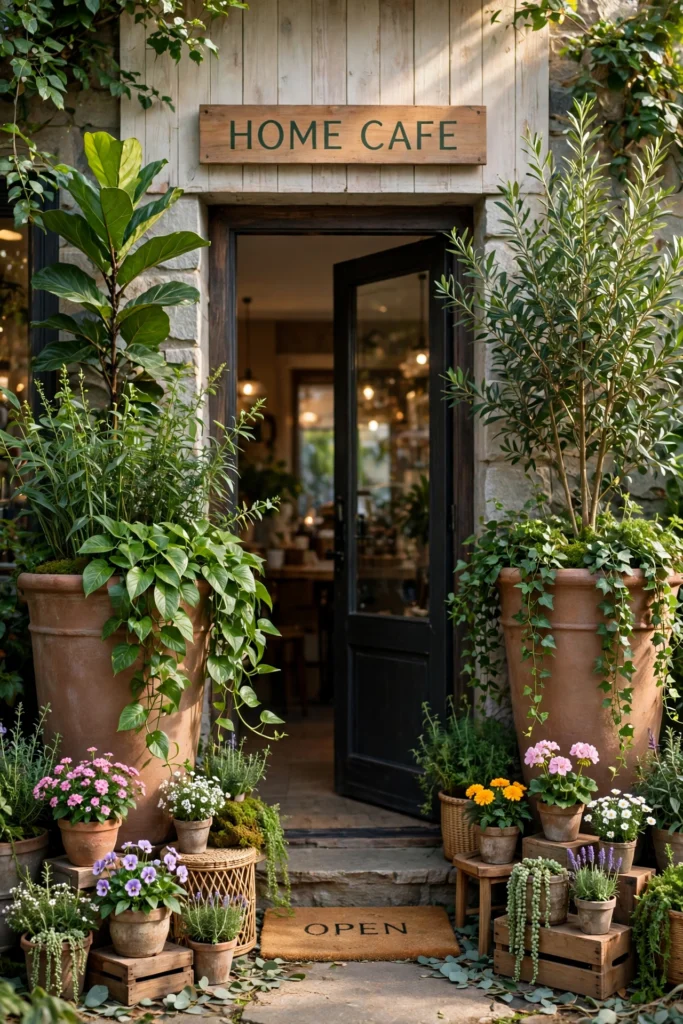
15. Add greenery with potted plants
Plants are one of the easiest and most affordable ways to soften a hard outdoor space instantly. Potted plants can be rearranged anytime, allowing you to change the layout without construction work or extra cost. Mix heights and textures: tall leafy plants, trailing vines, and small flowering pots for a naturally layered, garden like look.
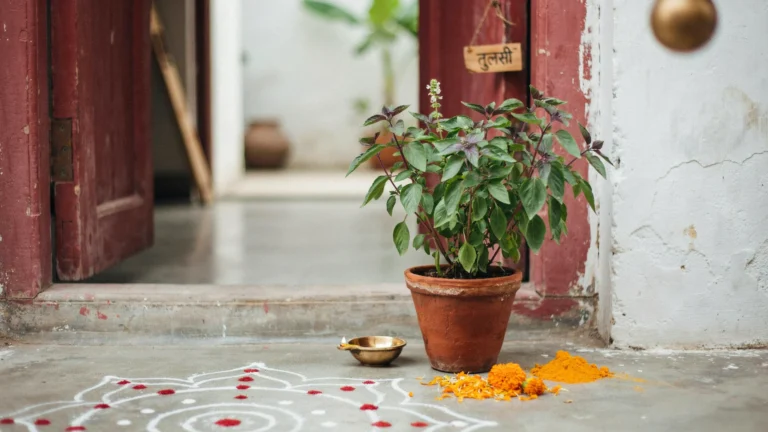
Start at the door, because that is where plants do the most welcoming work. Two matching pots flanking the entrance, each about 16 to 20 inches wide, look intentional, while a row of tiny pots looks like an afterthought. The same thinking guides doorway planting indoors and out, and these feng shui plants for the front door sort plants by the light your doorway actually gets, which is the detail that decides whether a plant thrives or fades.
Group the rest of your pots in odd numbers, water deeply rather than little and often, and move any plant that struggles to a spot with different light before it gives up.
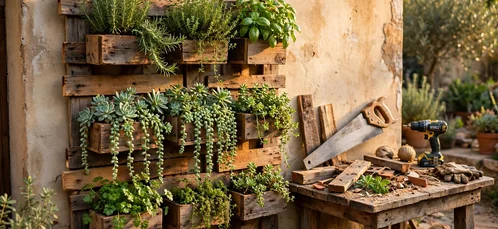
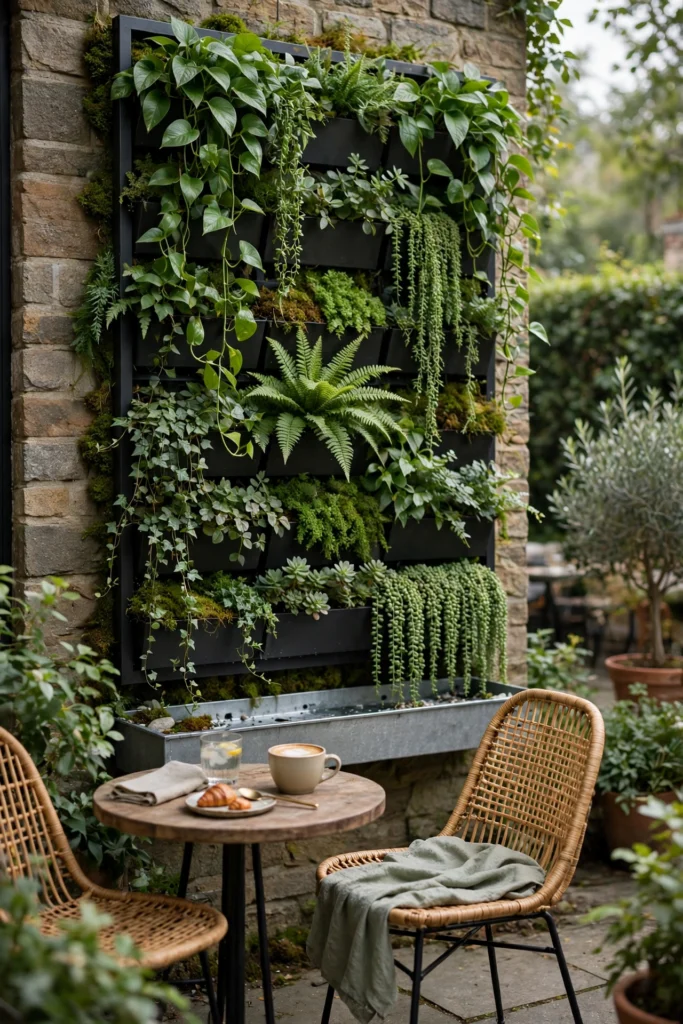
16. Build a small living wall or vertical garden
When floor space is limited, grow upward instead of outward. A vertical garden or living wall adds a lush, green backdrop without eating into your seating area or walkways. It also acts as a natural sound buffer, making conversations feel more private and calm even in a compact, tightly arranged space.
Build it on a wall that gets the light your chosen plants actually need, and fit a simple drip tray or waterproof backing so watering does not stain the wall behind it. Start with a modest panel, about 3 feet wide and 4 feet tall, planted with trailing and compact varieties that tolerate your light, rather than a whole wall that becomes a watering chore.
Check the fixings can hold the weight when the soil is wet, because a planted panel weighs far more after watering than it does dry.
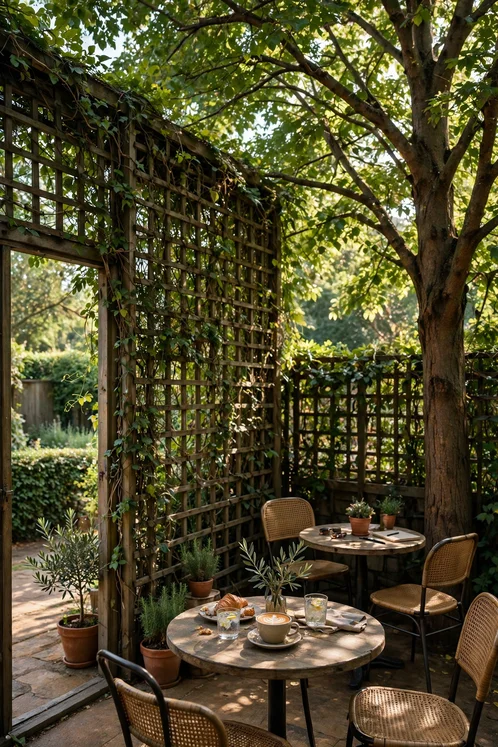
17. Frame the space with trees or trellises
Trees and trellises create natural boundaries that make an outdoor cafe feel enclosed and intimate rather than exposed to the street. Climbing vines trained along a trellis add height and softness, while a well placed tree offers dappled shade that changes beautifully through the day, shifting the mood from morning to evening.
Place the tallest element at a corner or at the far end of the space, not dead center in front of the door, so the eye travels upward without blocking the entrance. A trellis panel about 6 feet tall screens a seating group without turning it into a box, and it needs a gap of a few inches from the wall so air moves behind the vines.
Choose a climber that suits your light and that you can prune once or twice a season, because an unpruned vine will cover lights, signs and gutters faster than you expect.
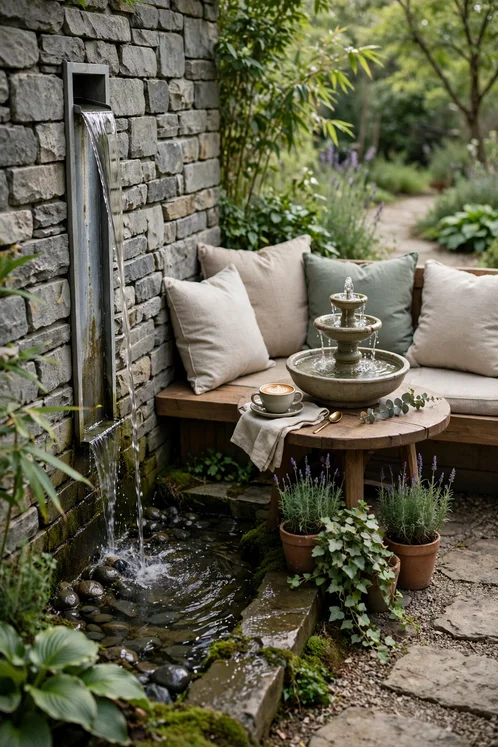
18. Add a water feature for calm ambience
Even a small tabletop fountain or a compact pond introduces a sense of calm through gentle, ambient sound that masks street noise. Water features work especially well near seating corners meant for relaxing or working quietly, and they add a subtle, upscale touch without requiring a large footprint.
Keep the feature small and in proportion to the space. A tabletop fountain or a narrow wall spillway suits a home cafe far better than a large basin that dominates the patio and needs constant topping up. Place it where the sound carries to the seats but the splash cannot reach cushions or menus, and keep it away from the main path so nobody brushes against wet stone.
The same restraint applies to larger water in a small garden, and these small plunge pool ideas show how to size water features to the garden you actually have, with clear walking space kept all round. Run the pump on a timer so the sound greets guests rather than running all night.
Staying longer: the comfort zone
Comfort is what turns a first visit into a habit. Guests do not stay because a space looks good in a photo. They stay because they feel warm enough, private enough, and looked after enough to order another cup. These four ideas are small, but they decide whether the evening ends early or stretches out.
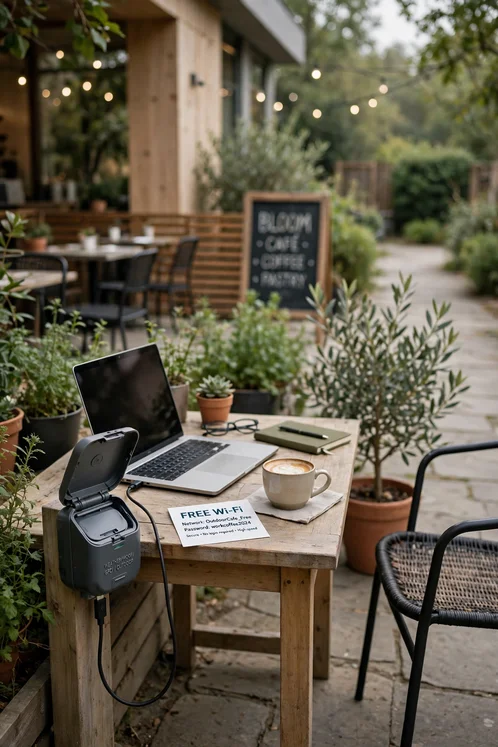
19. Add charging stations and free Wi-Fi
Modern guests expect connectivity, even in a home cafe tucked away from the city center. A few discreet outdoor rated power outlets near seating areas let guests charge devices comfortably without hunting for an adapter. Simple Wi-Fi access encourages longer, more relaxed visits and makes your cafe feel genuinely up to date.
Fit outlets that are rated for outdoor use, with covers that close when nothing is plugged in, and place them near the work corner rather than at every table, so cables do not cross walkways. Keep the Wi-Fi name and password on a small card at the work table, not shouted across the garden, and test the signal from the farthest seat before guests arrive. One working outlet in the right place beats four awkward ones that trip people up.
20. Go eco friendly with sustainable materials
Reclaimed wood furniture, low VOC paints, and energy efficient LED lighting are small choices that add up to a genuinely more sustainable cafe over time. Guests increasingly notice and appreciate these details, even if they do not say so directly, and they often translate into lower long term maintenance and utility costs as well.
Start where it shows: one reclaimed wood table, LED bulbs throughout, and a low VOC paint on the feature wall or door. Check reclaimed wood for sound joints and a smooth, sealed finish before it goes outside, because weather finds every weak spot.
LED bulbs in warm white, around 2700K, use less energy than older bulbs and last longer, which means fewer ladder trips to change a bulb over the seating. Sustainability that also saves effort is the kind that actually sticks.
21. Add cozy cushions and textiles
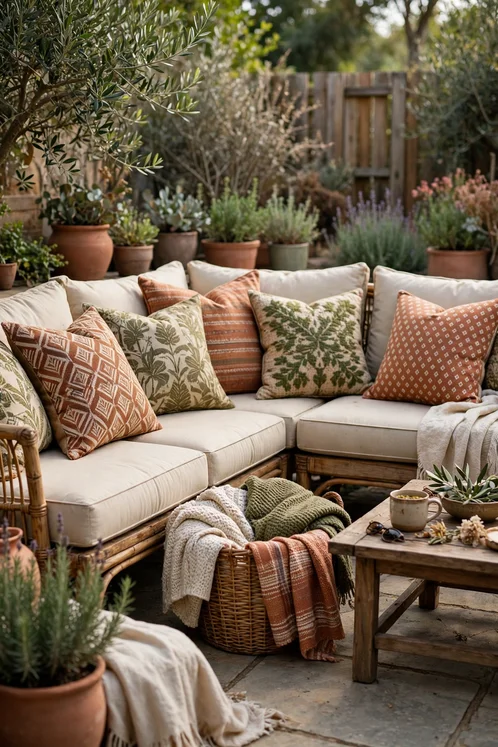
Soft textiles instantly warm up an otherwise hard, rigid outdoor setup and make it feel lived in. Weatherproof cushions, woven throws and patterned pillows in earthy tones invite guests to settle in and stay longer than they originally planned. Rotate textiles seasonally to keep the space feeling fresh and current through the year.
Choose covers you can remove and wash, in outdoor fabric that dries quickly after rain, and keep the palette to your three signature colors so the seating still reads as one space. A throw basket by the lounge chairs does more work than a pile of cushions on every seat, because guests take a throw when they feel cool and leave it when they do not.
Bring textiles in during storms and store them dry, and they will look good for seasons instead of one summer.
22. Create privacy with screens and planters
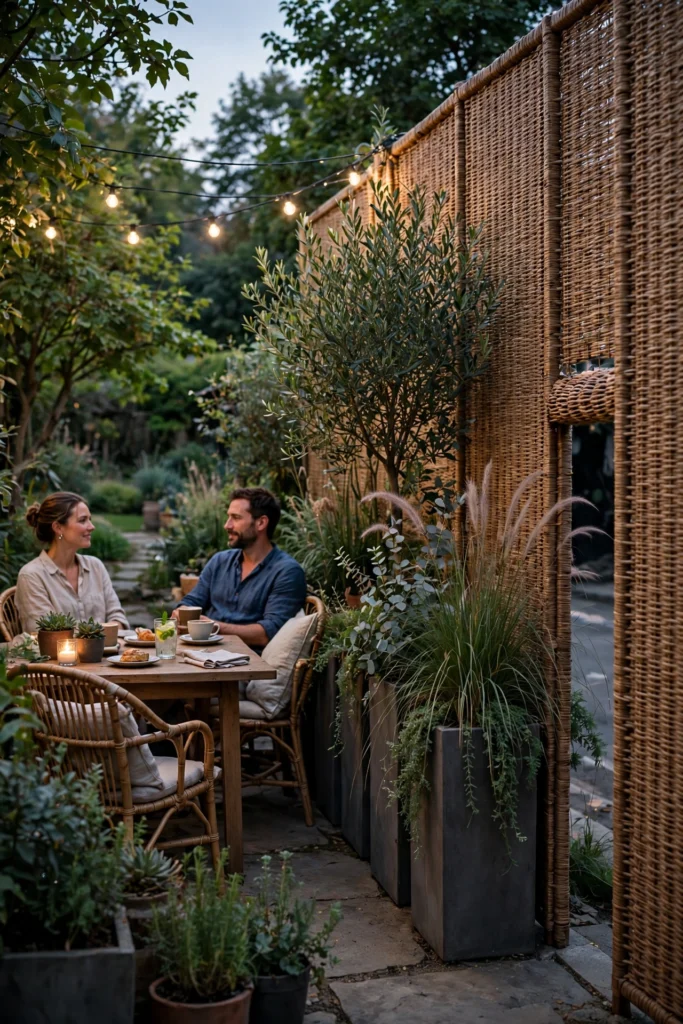
Guests relax more when they do not feel exposed to passing foot traffic or curious glances from the street. Tall planters, woven screens, or a simple trellis can visually separate your cafe from its surroundings while still allowing airflow and natural light to pass through freely, keeping the space open rather than boxed in.
Screen only the sides that actually need it, usually the street side or the neighbor side, and leave the garden view open where it is best. A screen about 5 to 6 feet tall gives seated privacy without blocking standing light, and tall planters at the base make it look planted rather than fenced.
Leave a gap at one end for airflow and for a clear exit route, because a fully enclosed corner feels stuffy and traps heat on warm evenings.
Home cafe exterior questions, answered plainly
What is the easiest way to make a home cafe exterior feel more inviting?
Start with light and seating comfort. Warm string lights paired with a few cushioned chairs can transform the mood of a space almost instantly, even before any major work begins. Add a clear path and one color palette, and the whole corner reads as intentional.
How much does it cost to design a home cafe exterior?
Costs vary widely with scale and ambition. A simple refresh with paint, lighting and one seating group can be done modestly, while a full build with a pergola, a water feature and custom furniture costs significantly more. Spend first on shade, seating and light, because those decide whether the space gets used at all.
What furniture materials work best for outdoor home cafes?
Rattan, powder coated metal and treated wood are the most durable choices, since they resist weather damage while still looking stylish and comfortable. Whichever you choose, check joints, coatings and drainage before you buy, and store cushions dry.
How can I make my home cafe exterior feel private without closing it off completely?
Use tall planters, trellises or woven screens instead of solid walls. These allow airflow and light through while still creating a genuine sense of separation from the street. Screen the street side first and leave the garden view open.
Do plants really make a difference in outdoor cafe design?
Yes. Greenery softens hard surfaces, adds color and texture, and even helps buffer noise, making the space feel calmer, greener and more naturally welcoming. Start with two large pots at the door and build outward in groups, rather than scattering small pots everywhere.
What lighting color temperature is best for a cozy cafe atmosphere?
Warm white lighting around 2700K to 3000K creates the most inviting, golden glow, especially for evening ambience and photos. Keep every layer the same warm tone, so the space glows evenly instead of clashing cool and warm.
What should I fix first if I only have one weekend?
Fix the path, the seating and the light, in that order. Clear a 3 foot route to the seats, set out one comfortable seating group under shade, and hang one warm string of lights. Those three moves change how the space feels more than any decoration you could add.
Your first weekend outside, in order
Do not try to build all twenty two ideas in one weekend. Work this list in order, and stop when the space feels finished rather than full. Each step builds on the one before it, so by Sunday evening you will have a cafe exterior that works from morning coffee to the last evening cup.
- Walk the space in the morning, at midday and at dusk, and note sun, wind and the natural path guests take.
- Pick your three color palette and write it down, then remove anything that clashes with it.
- Clear a path at least 3 feet wide to the seating, and mark its edges with pavers, stones or low plants.
- Set out one seating group that fits the space, with a table guests can actually reach from every chair.
- Fix shade over that seating group, so the table is covered at midday, not just at its edges.
- Place two large matching pots at the entrance and one tall plant at the far corner for height.
- Hang one run of warm string lights above the seating, above head height, with the plug under cover.
- Add one lantern at table height and check the path is lit before dark.
- Put a throw basket and one outdoor rated outlet near the seating, and test the Wi-Fi from the farthest chair.
- Sit down with a real cup of coffee in the morning and again in the evening, and fix whatever bothered you.
A home cafe exterior earns its warmth one morning at a time. When the path is clear, the seats are comfortable, the shade falls where it should, and the lights come on warm at dusk, guests stop noticing the decor and start noticing the coffee, the conversation, and the fact that they stayed longer than they planned. That is the whole secret, and it is one you can build in a single weekend.