The best welcome mats for entertaining are the ones that work hard and still look good when guests arrive. A classic coir doormat suits a covered porch, a heavy rubber mat handles open rain, and a water trapping mat keeps wet shoes from spreading mud inside.
Pick the material for your weather first, then the size and the look. Most homes do best with two mats, a scraper outside and an absorbent mat inside, and a standard single door usually needs a mat around 18 by 30 inches.
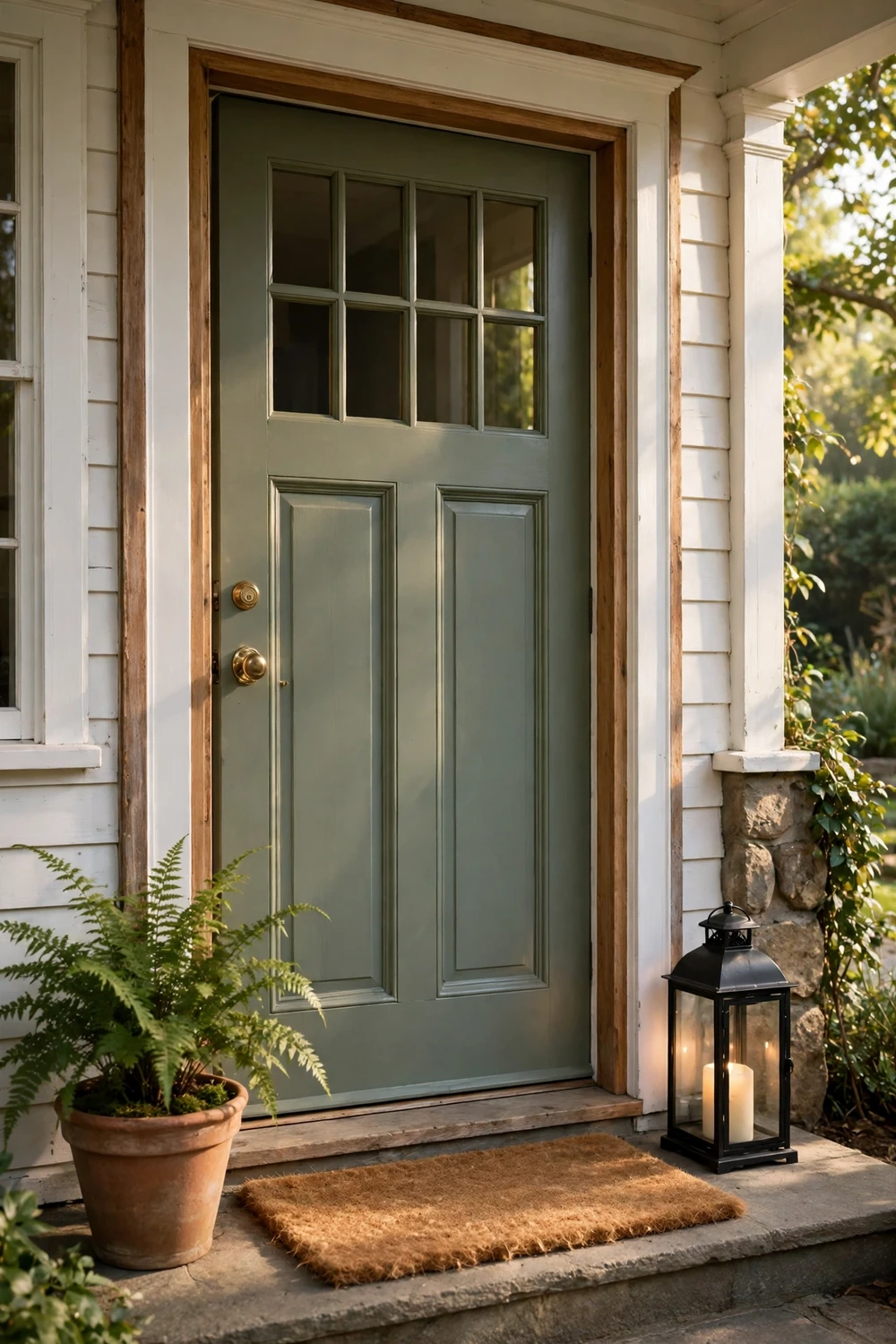
Guests form their first impression of your home before they knock. The mat is the first thing they step on, and it quietly tells them what kind of host you are. A clean, sturdy mat says you thought about their comfort. A thin, curling mat that slides across the step says the opposite, even if the rest of the porch looks lovely.
I have come to think the mat matters more than the wreath. A wreath is pretty, but a mat does a job every single time someone walks in. When friends come over with muddy shoes, wet boots or sandy feet, the mat is what stands between your floors and the mess. That is why this list groups mats by material and by job, not just by looks.
Below you will find 28 welcome mats in six style groups, from classic coir to washable chenille, plus a buying guide that covers materials, sizes, layering and care. Each entry describes a mat type, what it is good for, and what to watch out for, so you can spot the right one in any shop.
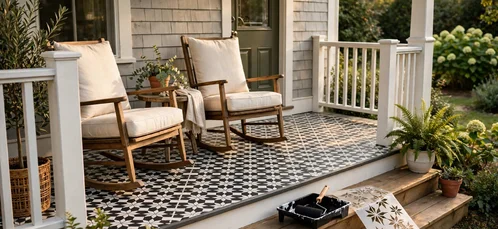
If your porch needs more than a new mat, these front porch ideas show how small changes can make the whole entrance feel more finished. A mat works best when the rest of the entry supports it, with a plant or a lantern nearby and a clear, dry place to stand.
Classic Coir Welcome Mats for Entertaining
Coir is made from coconut husk fibres, and it is the classic choice for a reason. The stiff bristles scrape dirt off shoes better than almost any other material, and the warm natural colour suits nearly every door. Coir wants a roof overhead, though. Rain soaks into it, it sheds loose fibres for the first few weeks, and a wet mat can stain pale concrete. Keep it under cover and it will serve you well for years.
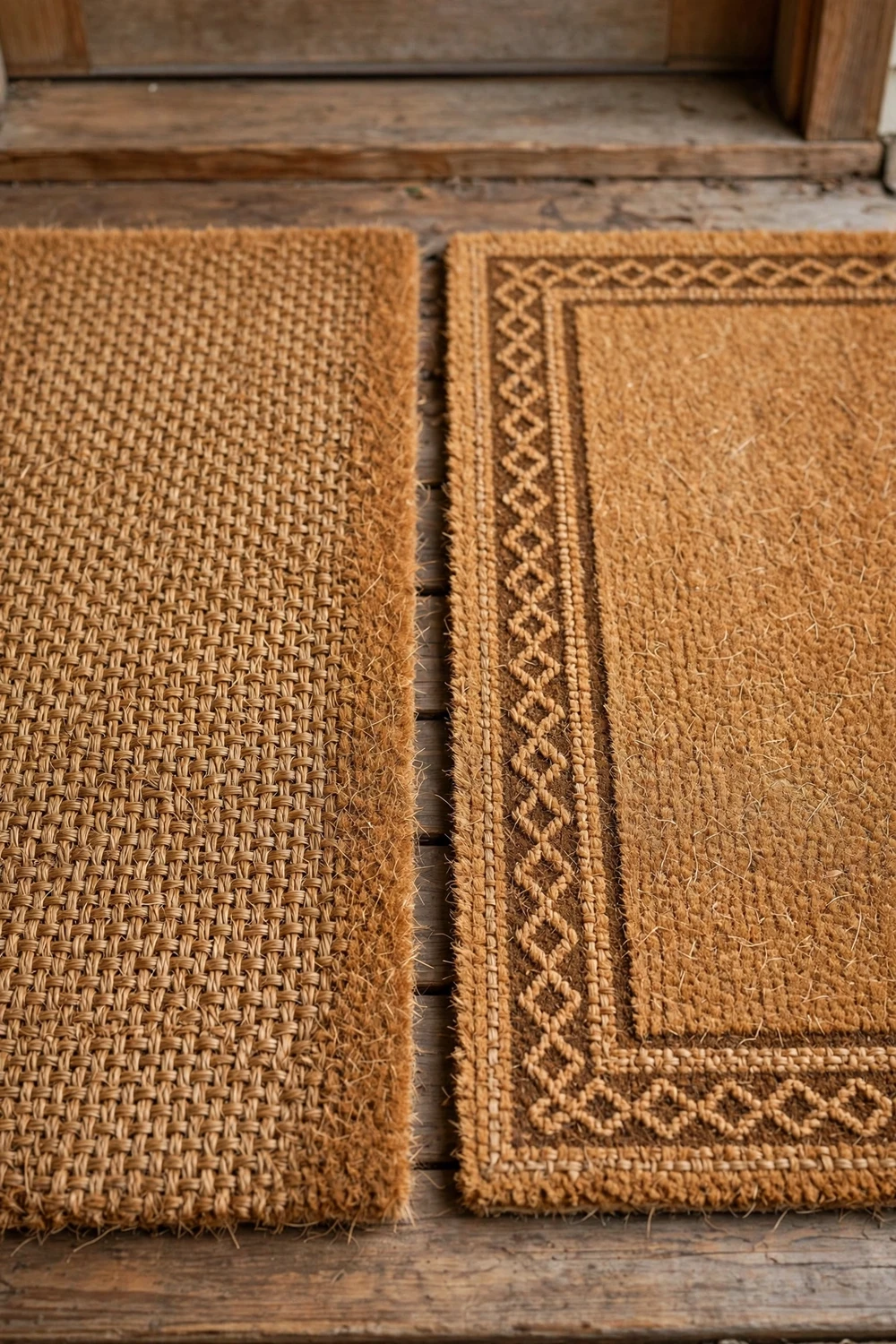
1. The Plain Natural Coir Mat
This is the simplest mat on the list and often the best one. A plain coir doormat has no pattern to date it and no printed message to fade in the sun. It scrapes shoes clean, it looks right with a painted door or a plain one, and it costs less than most decorated mats. Choose a thick one with a rubber or vinyl backing so it stays put on a smooth step.
2. The Coir Mat With a Dark Border
A dark border frames the mat and hides the dirt that gathers at the edges. This is a good pick if your porch floor is pale stone or painted wood, because the border gives the mat a finished edge instead of letting it blend into the floor. It works for everyday use and still looks smart when guests arrive.
3. The Stencilled Greeting Coir Mat
A stencilled word or simple pattern on coir adds personality without adding clutter. Keep the message short and the letters large, so it reads clearly from the top of the steps. Fine lettering fills with dirt quickly and turns muddy. This mat is best saved for a covered porch, where the stencil stays crisp longer. Swap it out for a plainer mat in the wettest months if you want it to last.
4. The Thick Bristle Coir Mat
Some coir mats are cut with longer, rougher bristles that dig into boot treads. These are the workhorses for homes near gardens, fields or building sites, where shoes arrive caked in mud. Bare feet will not enjoy it, so keep this one strictly outside. Check the thickness before you buy, because a very thick mat can block a door that swings low.
5. The Half Round Coir Mat
A half round mat suits a curved step or a narrow porch where a rectangle would stick out awkwardly. The straight edge sits against the door and the curved edge faces the path, which looks tidy and gives guests a clear place to wipe their feet. It is a good choice for small cottages and flats with a single step.
Heavy Rubber Welcome Mats for Entertaining
Rubber mats are the toughest option here. They are heavy enough to stay put in wind, they hose clean in minutes, and they handle open rain without complaint. They suit double doors, busy back steps and homes where lots of people come and go. The downside is looks. Plain rubber can feel stark, so choose a pattern you like and let the porch plants soften the edges.
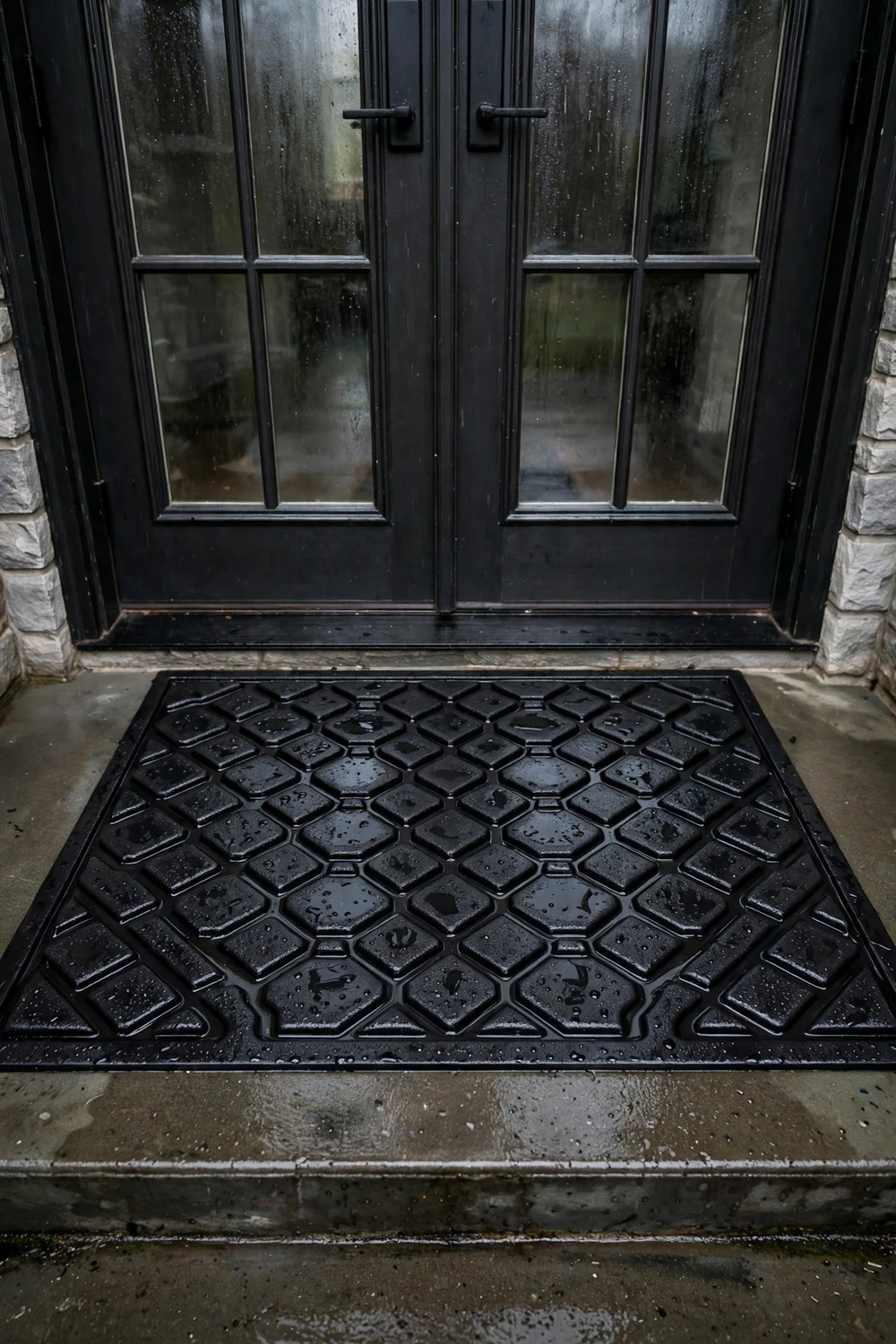
6. The Diamond Tread Rubber Mat
A raised diamond pattern gives shoes grip even when the mat is wet, which matters on a rainy evening when guests are carrying dishes or drinks. The raised shapes also lift dirt away from the surface so it does not grind into the mat. This is one of the best outdoor doormats for an uncovered step. Hose it down, let it dry in the sun, and it is ready for the next gathering.
7. The Scroll Pattern Rubber Mat
A scroll or swirl pattern softens the look of a rubber mat and suits older homes with period details. The pattern is moulded into the rubber rather than printed, so it will not wear off. Pair it with a simple planter to keep the entrance feeling warm rather than industrial.
8. The Extra Wide Rubber Mat for Double Doors
Double doors need a mat that spans most of the opening, or guests will step around it and track dirt straight inside. Look for a mat at least 36 inches wide, and wider if your doors allow it. A wide rubber mat is heavy, which is a plus here, because it will not bunch up when two people wipe their feet at once.
9. The Rubber Mat With Drainage Holes
Small holes or slots in a rubber mat let rain pass through instead of pooling on the surface. This keeps the mat from turning into a puddle in a downpour, and it stops the underside from staying damp against the step. It is a practical pick for a porch with no roof and for garden doors that open onto lawn.
10. The Low Profile Rubber Mat
A low profile mat sits close to the floor, which matters when your door swings inward over the mat. Thick mats can catch on the bottom of the door and stop it opening fully, and that is a daily annoyance you do not need before a party. Measure the gap between the bottom of the door and the floor before buying anything.
Water Trapping Welcome Mats for Entertaining
Some mats are built to hold water, not just scrape it off. WaterHog style mats use recycled polyester fibres with a rubber lip around the edge, and the fibres hold grit and water below shoe level. They suit wet, busy front steps, but they take a long time to dry when soaked through. The smart setup is to use one outside and keep a dry mat inside as backup.

11. The WaterHog Style Fibre Mat
This mat looks like a simple dark rectangle, but the fibres do serious work. Water sinks below the surface instead of sitting on top, so shoes grip better and less water gets tracked inside. It is a good choice for homes in rainy areas and for winter, when slush is the main problem.
12. The Deep Channel Water Trapping Mat
Deep grooves or channels in the mat surface catch mud and sand and hold them away from shoes. These mats work well at garden doors and back steps where people come in from the yard. The channels need cleaning out, so pick a mat you can lift easily and shake over the garden.
13. The Boot Tray Companion Mat
A boot tray is not a mat, but it belongs in this group because it does the same job. A shallow tray with a raised edge sits beside the door and holds wet boots while they drip. Pair it with a water trapping mat and you have a proper wet weather entrance. This combination is worth having if you host in winter or live somewhere with long rainy spells.
14. The Indoor Absorbent Mat for the Other Side of the Door
The second mat in the two mat setup lives just inside the door. Its job is to catch the water the outdoor mat missed. Choose something absorbent with a non slip backing, and pick a colour that hides footprints between washes. This mat is the one guests actually stand on while they take off coats and shoes, so it should feel pleasant underfoot. It also protects wood floors from the damp that follows a rainy arrival.
Washable Welcome Mats for Entertaining
Washable mats suit the inside of the door, the mudroom and any spot where paws and small children pass through. Chenille and microfibre fibres soak up water well, and a removable cover goes straight in the washing machine. They are not outdoor mats, though. Rain will soak them fast, so keep them under cover or inside, and let them dry fully between washes.
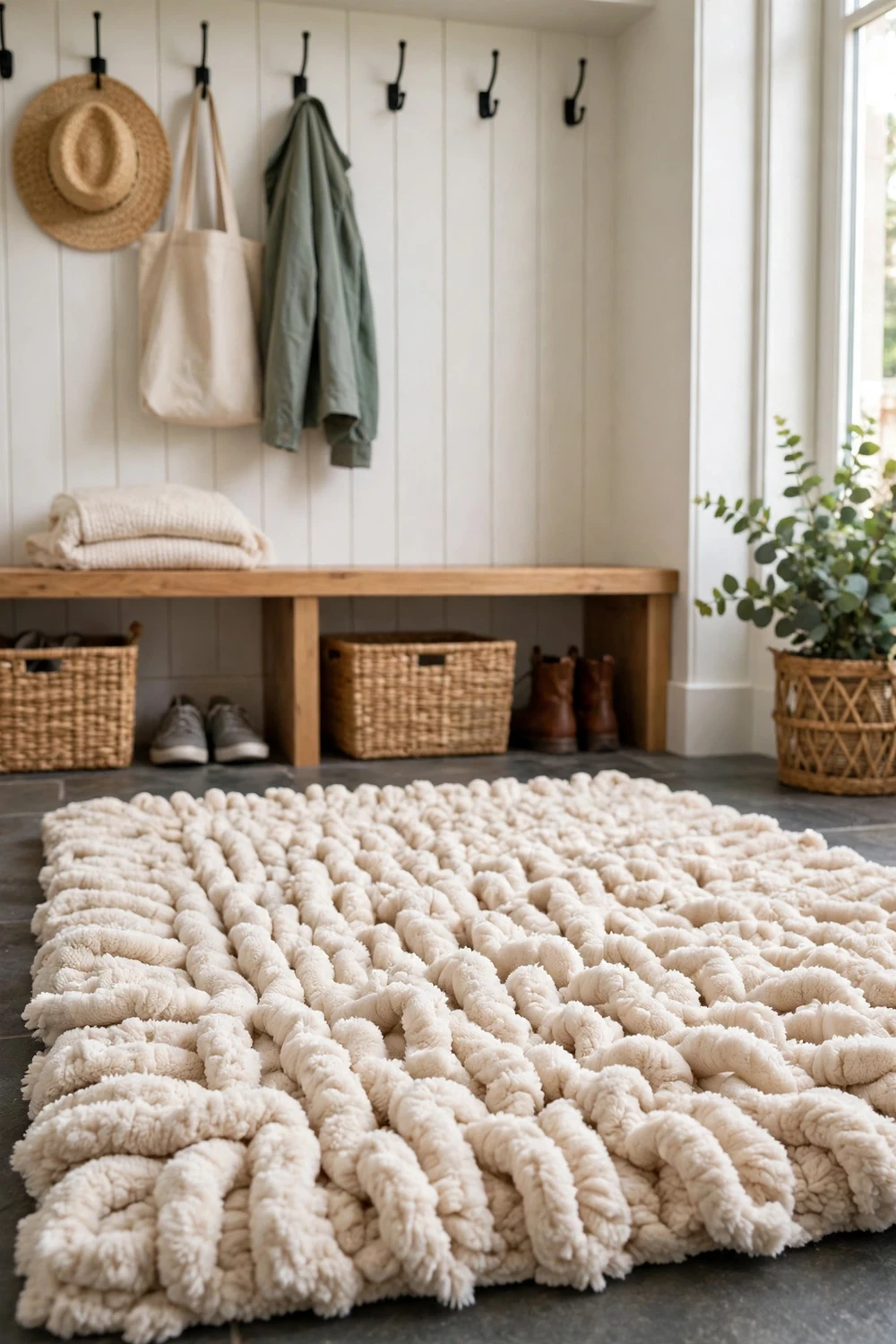
15. The Machine Washable Chenille Mat
Chenille mats have soft, nubby fibres that feel good under bare feet and soak up a surprising amount of water. They are a good choice for the inside of the front door, where guests slip off their shoes. Most wash well on a gentle cycle, but check the care label first, because some have a rubber backing that does not like high heat.
16. The Washable Microfibre Runner
A long, narrow microfibre runner works in a hallway or a mudroom where a square mat would be too short. It catches drips along the whole path from the door to the kitchen, which is useful when guests arrive in wet weather. Choose a dark or patterned colour, because a pale runner shows every footprint within an hour.
17. The Removable Cover Doormat
Some mats have a washable cover that zips or slips off a foam or rubber base. The cover goes in the machine and the base stays in place, which is handy if you host often and want a fresh looking mat every time. This type suits a covered porch or an entryway, and it is a good option if you like to change colours with the seasons.
18. The Soft Cotton Rag Mat
A woven cotton rag mat brings a handmade feel to the entrance and washes easily. It is best kept inside, where it can dry between uses, and it suits homes with a relaxed, cottage style. Cotton absorbs water well but holds it too, so do not leave it damp on a wood floor. It is a charming choice for a small entryway where a stiff mat would look out of place.
19. The Washable Mat for Wet Paws
If a dog greets your guests at the door, you need a mat that handles muddy paws. A washable mat with a grippy backing stays put when a dog runs across it, and the fibres trap dirt before it reaches the floor. Place one at the door your dog uses most, and keep a towel nearby for the worst days. If your mudroom doubles as the dog’s entrance, these mudroom lighting ideas will help the whole space feel brighter and more welcoming for guests and pets alike.
Layered Doormat Looks for Entertaining
Layering is the simplest way to make a plain mat look styled. A larger flat rug or rug pad goes underneath a smaller coir mat, with 3 to 6 inches of border showing all round. The bottom layer adds colour and pattern, the top layer does the scraping, and together they look far more considered than a single mat. It also gives you a bigger target for muddy shoes.
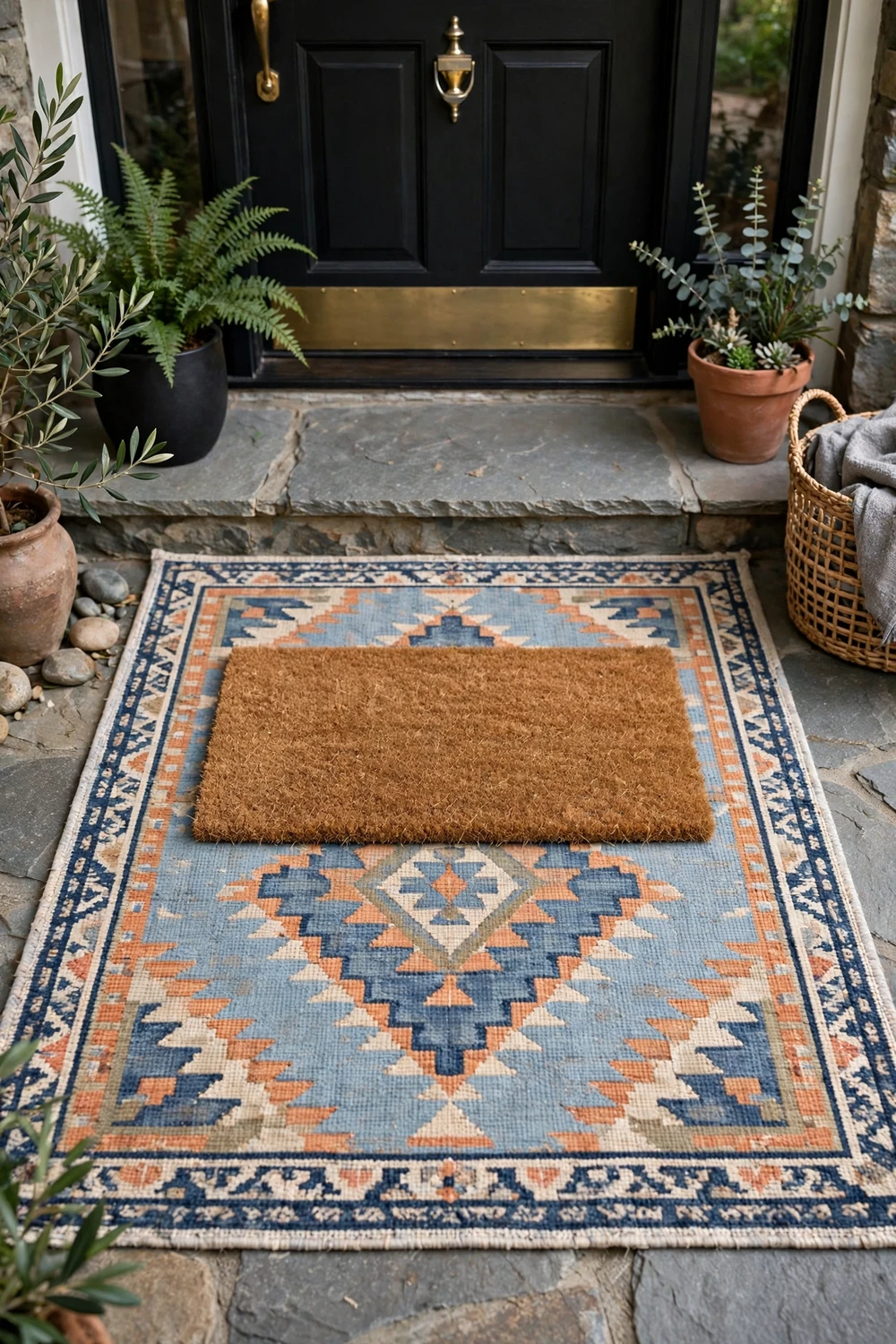
20. The Coir on a Patterned Outdoor Rug
This is the classic layered look, and it works because the two layers do different jobs. The patterned rug underneath adds colour and frames the door, while the plain coir mat on top handles the dirt. Choose an outdoor rug that can handle rain, because it will get wet even under a porch roof. A blue, terracotta or green pattern suits most door colours.
21. The Coir on a Striped Flat Rug
Stripes are a safe pattern for layering because they suit nearly every house style, from a cottage to a modern build. A flat woven striped rug stays low enough for the door to swing over, and the stripes guide the eye toward the door. Pick a stripe colour that echoes something else on the porch, such as a planter or the door itself.
22. The Coir on a Vintage Style Rug
A faded, vintage style rug under a coir mat gives a porch a collected, lived in feel. The soft colours work well with brick, stone and painted wood, and the pattern hides dirt better than a plain rug. Use a rug pad or a non slip layer underneath so the whole stack stays put. This look suits homes with older details, and it pairs well with a stencilled porch floor if your floor needs a lift before the party season.
23. The Double Layer for Wide Doors
Wide and double doors need a layered setup that is wide enough to match. Use a large outdoor rug that spans most of the doorway, then centre a wide coir mat on top. A narrow stack in front of a wide door looks lost, so measure first and go bigger than you think. This is one of the most useful front door mat ideas for entertaining, because it gives two guests room to wipe their feet side by side without stepping off the mat.
24. The Layered Look for a Covered Porch
A covered porch lets you layer with softer materials, because the rain never reaches the mat. Try a woven jute or cotton rug underneath the coir, and add a small cushion or a folded throw on a nearby bench to tie the colours together. Keep the layers flat and tidy, because a curled corner is a trip hazard in the dark.
Seasonal and Party Ready Welcome Mats for Entertaining
A mat is one of the cheapest seasonal swaps you can make. Changing it takes a minute, and it signals to guests that you have prepared for them. Keep a plain mat for everyday use and a few seasonal ones in the cupboard, then swap them in for parties, holidays and the change of seasons.
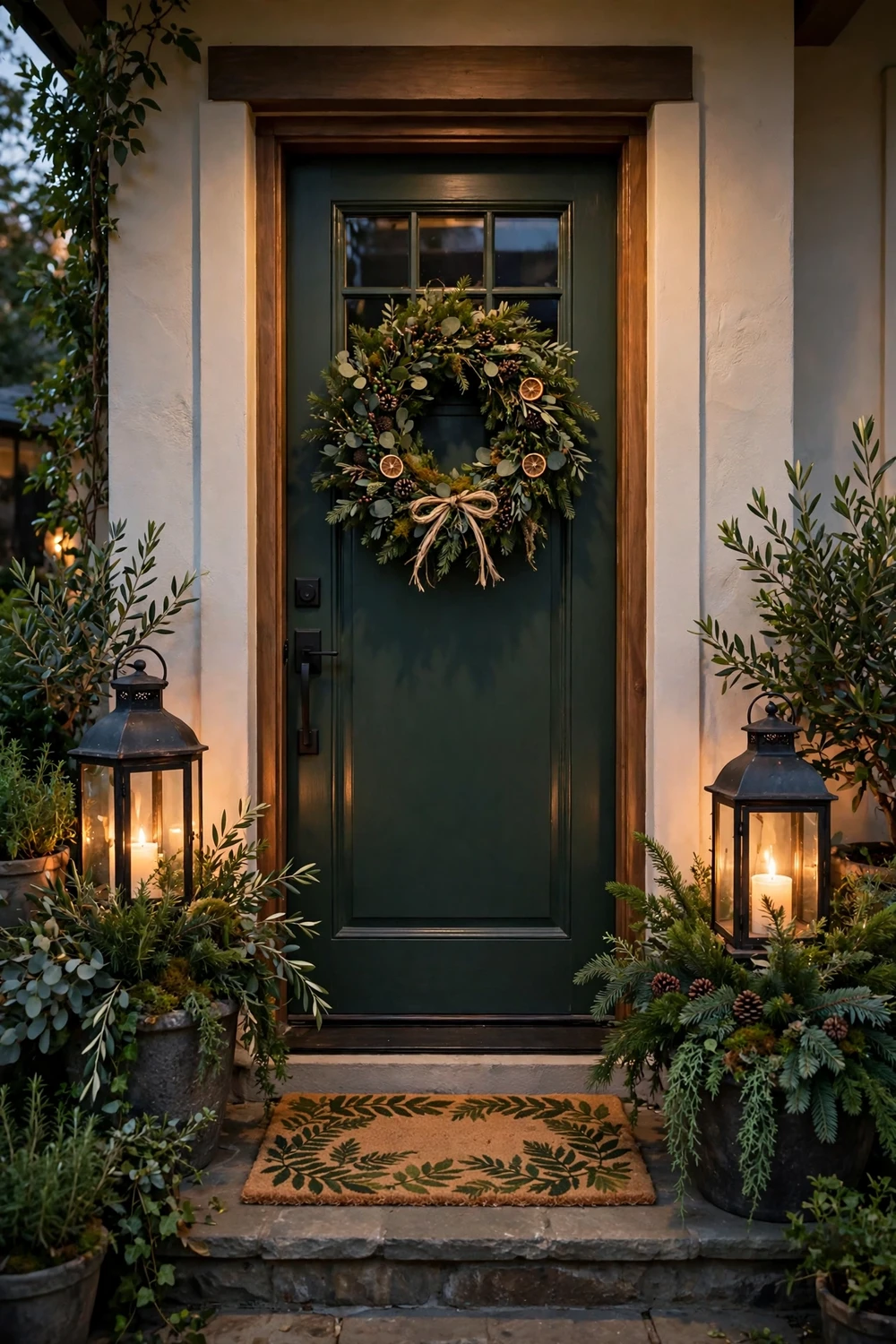
25. The Autumn Leaf Coir Mat
An autumn leaf pattern on coir suits the season when leaves are everywhere anyway. The pattern hides the odd leaf that blows onto the mat, and the warm colours match the rest of the porch. Pair it with a pumpkin or two and a lantern, but keep the mat itself simple. This mat earns its place for a few months, then goes back in the cupboard until next year.
26. The Winter Greenery Mat
A mat with a simple greenery or pine pattern works through the whole winter season, not just for one holiday. It suits a door dressed with a wreath and a pair of lanterns, and it looks right with both a painted door and a natural wood one. Choose a dark green pattern on coir or a washable mat for inside, because winter brings slush and salt.
27. The Spring Floral Mat
A floral mat wakes up a porch after winter. Soft colours and a simple flower pattern suit a door with fresh paint and a pot of spring bulbs beside it. If you like plants by the door, these front door plants can help you choose greenery that suits your light and your doorway.
28. The Simple Swap Mat for Party Season
Keep one clean, cheerful mat in reserve for party nights. It does not need a seasonal pattern, just a fresh look and a sturdy build that can handle a crowd. Put it out an hour before guests arrive, add a lantern or a planter beside the door, and the entrance is ready. For a bigger outdoor gathering, these garden party ideas cover the timeline, the table plan and the evening lighting, so the mat is only the first detail of a well planned night. A fresh mat, a lit lantern and a clear path set the tone before anyone reaches the door.
How to Choose, Size and Care for Your Welcome Mat
Choosing a mat is easier when you work through three questions in order: where will it live, how big is the door, and how much cleaning are you willing to do.
Materials Compared
Material decides where a mat can live. Coir scrapes well but wants cover. Rubber handles open rain. Water trapping fibres hold the mess, and washable mats are best kept inside. This table sums up the main options.
| Material | Best For | Watch Out For | Cleaning |
|---|---|---|---|
| Coir (coconut fibre) | Covered porches, scraping mud off shoes | Soaks in rain, sheds fibres at first, can stain pale concrete when wet | Shake, vacuum, hang in sun to dry |
| Rubber | Open rain, double doors, busy back steps | Can look plain, heavy to move | Hose down and air dry |
| Water trapping fibre | Wet, busy front steps | Takes a long time to dry when soaked | Vacuum, hose lightly, dry flat |
| Woven synthetic | Low doors, mud and sand | Thin mats can slide without a rubber back | Shake and hose down |
| Washable chenille or microfibre | Mudrooms, indoor entries, wet paws | Not for open rain, must dry fully | Machine wash on gentle, air dry |
Getting the Size Right
Standard sizes run about 18 by 30 inches for a single door and 36 inches plus for double doors. Measure your door width first, then aim for a mat that covers at least 80 percent of it. A mat that is too small looks lost and lets guests step around it, which defeats the purpose.
Measure the gap between the bottom of the door and the floor before buying. Thick coir can block a low swinging door even when the width is perfect.
Layering That Actually Works
Layering is simple once you know the rule. The bottom layer should be larger and flatter than the top layer, with 3 to 6 inches of border showing all round. A larger flat rug or rug pad underneath a smaller coir mat is the usual setup. The bottom layer adds colour, the top layer does the scraping, and the extra width catches shoes that miss the top mat.
Keep both layers flat. A rug pad or a non slip backing underneath stops the stack sliding on smooth stone or tile.
Keeping Your Mat Clean
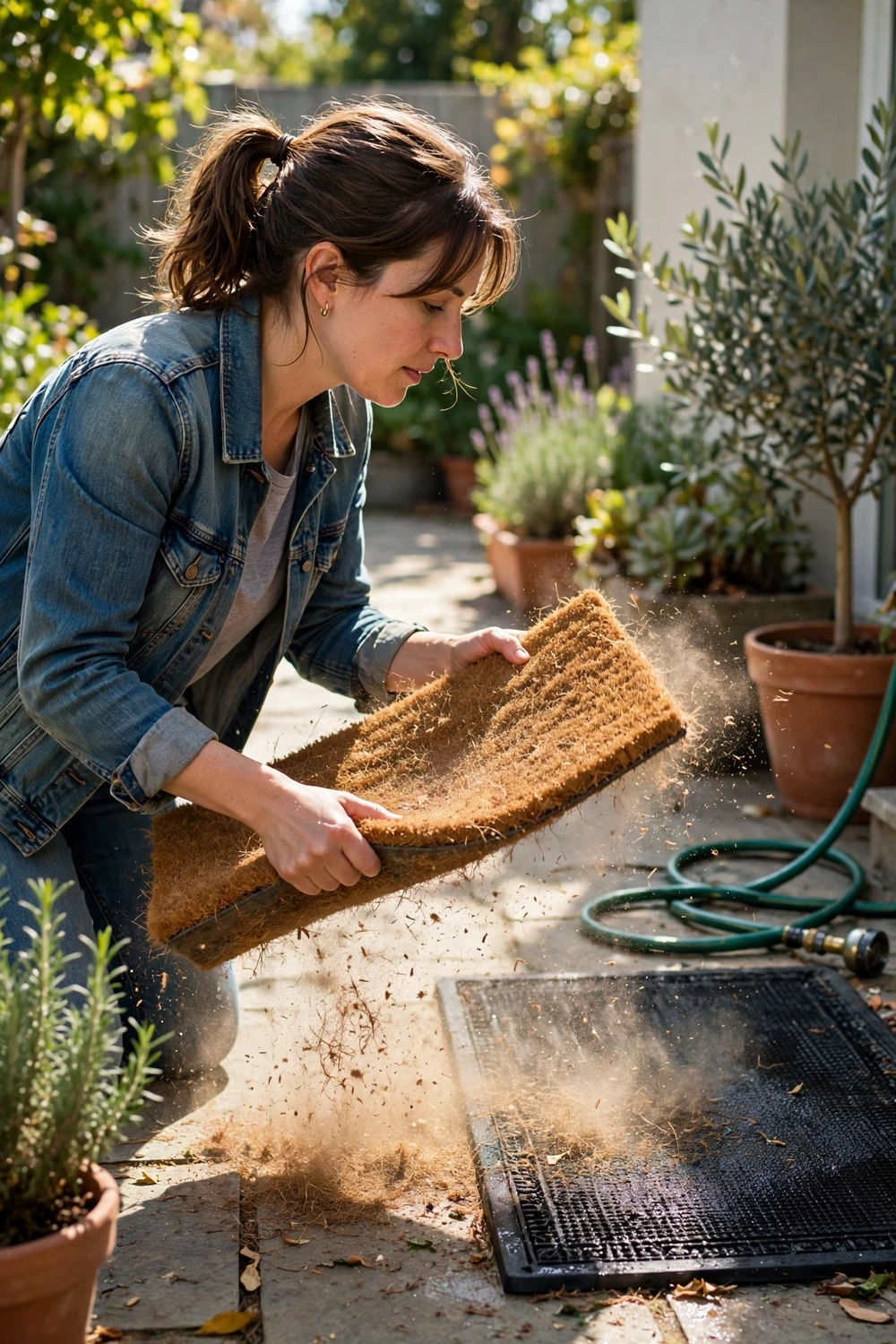
Most doormats hold far less water than people expect, often a cup or two, so they need regular cleaning to keep working. Shake coir mats over the garden, vacuum water trapping mats to lift the fibres, and hose rubber mats down on the drive. Coir dries best hung in the sun, while washable mats should air dry fully before they go back on a wood floor.
Set a simple routine. Shake the outdoor mat once a week, wash the indoor mat when it starts to look grey, and swap in a fresh mat before a party. For the space just inside the door, these small entryway ideas show how to make a tiny hall feel finished without spending much.
Welcome Mat Questions, Answered
What size welcome mat do I need for a single door?
Most single doors suit a mat around 18 by 30 inches. Measure your door width first and aim for a mat that covers at least 80 percent of it. For double doors, look for 36 inches wide or more, so guests step on the mat rather than around it.
Can a coir doormat get wet?
Coir can handle a light shower, but it soaks up heavy rain, sheds fibres when new, and a wet mat can stain pale concrete. Keep coir under a roof or a porch cover. For an uncovered step, choose rubber or a water trapping mat instead.
What is the best outdoor doormat for rainy weather?
Heavy rubber mats and water trapping fibre mats handle rain best. Rubber hoses clean and stays put, while water trapping mats hold grit and water below shoe level. Both need time to dry after a soaking, so pair them with a dry mat inside the door.
How do I layer a doormat?
Place a larger flat outdoor rug underneath a smaller coir mat, with 3 to 6 inches of border showing all round. The bottom layer should be flat and weatherproof, and the top layer does the scraping. Add a rug pad underneath if the stack slides on smooth stone or tile.
How often should I clean my welcome mat?
Shake the outdoor mat once a week and wash or hose it when it looks dirty or starts to smell damp. Washable indoor mats can go in the machine when they look grey, and coir mats dry best hung in the sun. Clean the mat before a party, because it is the first thing guests step on.
Start With the Mat That Works Hardest
If you only change one thing before your next gathering, change the mat. Pick the material for your weather, measure the door before you buy, and use two mats if you can, a scraper outside and an absorbent one inside. The rest of the entrance can follow at your own pace.
A good mat does not shout. It sits quietly on the step, catches the mud, dries the shoes and makes the door look cared for. Choose the mat that fits your door and your weather, layer it if you like, and let the party start at the threshold.