A romantic bedroom should feel personal, comfortable, and naturally inviting rather than overly decorated. The right combination of soft fabrics, warm lighting, thoughtful colors, and meaningful details can completely change how your bedroom feels. You do not need expensive furniture or dramatic renovations to create that atmosphere. Even a simple bedroom can become more intimate when you layer textures, soften harsh lighting, and give the bed a stronger visual presence.
These romantic bedroom ideas focus on practical decorating choices that make your space feel warmer and more personal. From elegant canopy beds and velvet accents to moody walls and cozy reading corners, each idea can work in a different type of home. Whether you are planning a complete romantic bedroom makeover or simply want a few changes for a dreamier room, these ideas give you plenty of directions to explore.
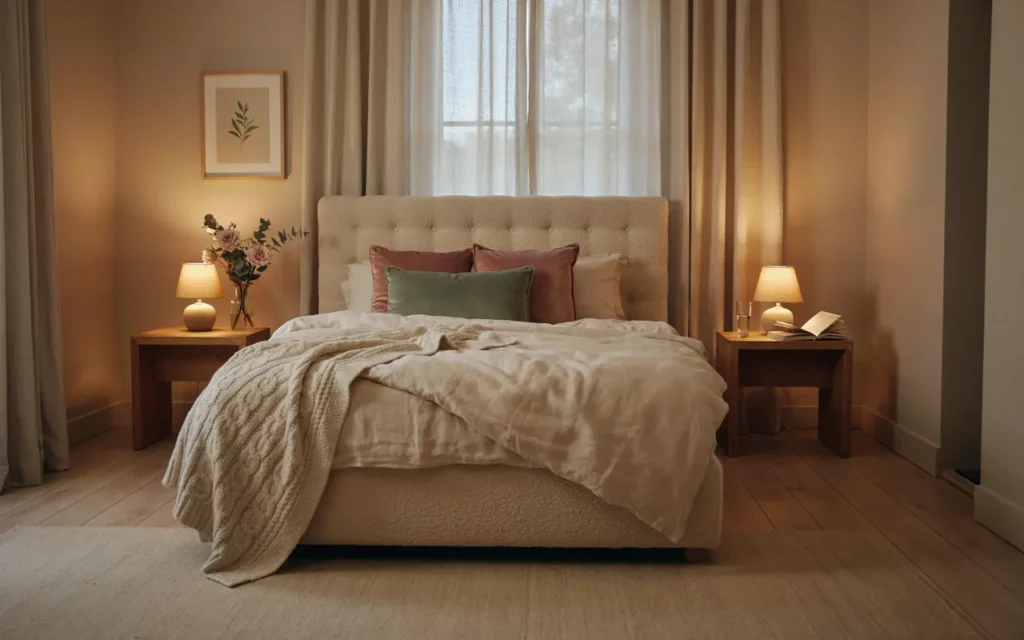
1. Layer the Bed Like a Boutique Retreat
The bed should be the visual center of a romantic bedroom, so start by making it look comfortable rather than perfectly staged. Combine crisp sheets with a soft duvet, a textured throw, and pillows in different sizes. Cream, warm white, taupe, dusty rose, and muted beige create an easy palette that feels calm without looking plain.
The secret is variety. Linen can sit beside velvet, knitted fabric can contrast with smooth cotton, and a slightly rumpled throw can make the arrangement feel lived-in. This approach gives your bedroom the relaxed luxury often associated with boutique hotels while keeping it comfortable enough for everyday use.
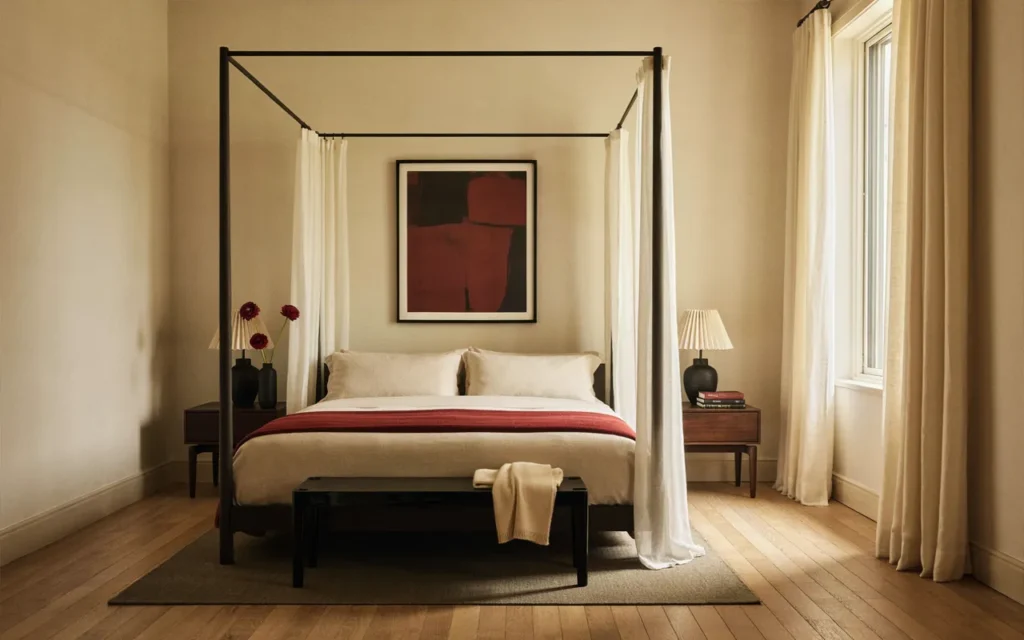
2. Wrap the Bed in a Simple Canopy
A canopy does not have to look elaborate or traditional. A slim four-poster frame with lightweight fabric can give the bed a private, dreamy character while keeping the room visually light. Choose white, ivory, or warm beige curtains if you want an airy effect.
For a more contemporary bedroom, leave the frame exposed and use fabric only on the sides. This creates vertical lines around the bed without making the room feel enclosed. In a larger bedroom, a canopy can also help define the sleeping area and make the furniture arrangement feel more intentional.
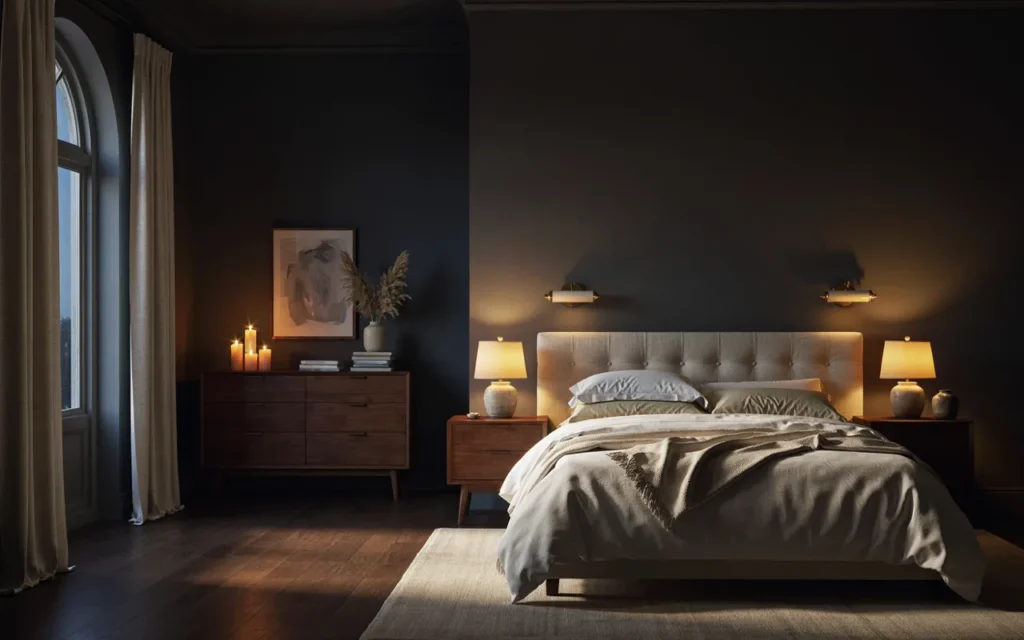
3. Let Warm Lighting Set the Mood
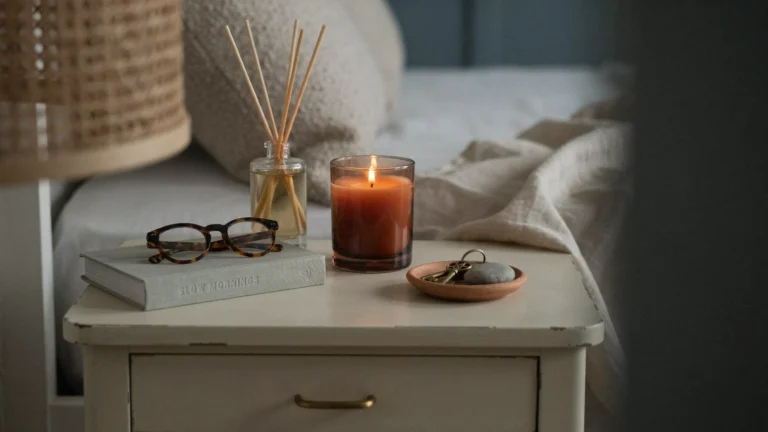
Lighting can change a bedroom more dramatically than almost any decorative accessory. Replace harsh overhead illumination with several softer sources placed around the room. Bedside lamps, wall sconces, dimmable pendants, and warm LED strips can create layers of light instead of one bright source.
Keep the brightest light away from the bed and use warmer bulbs for evening lighting. If you enjoy the look of candles, flameless candles can provide a similar glow without introducing an open flame near bedding. The goal is simple: make the room feel softer after sunset.
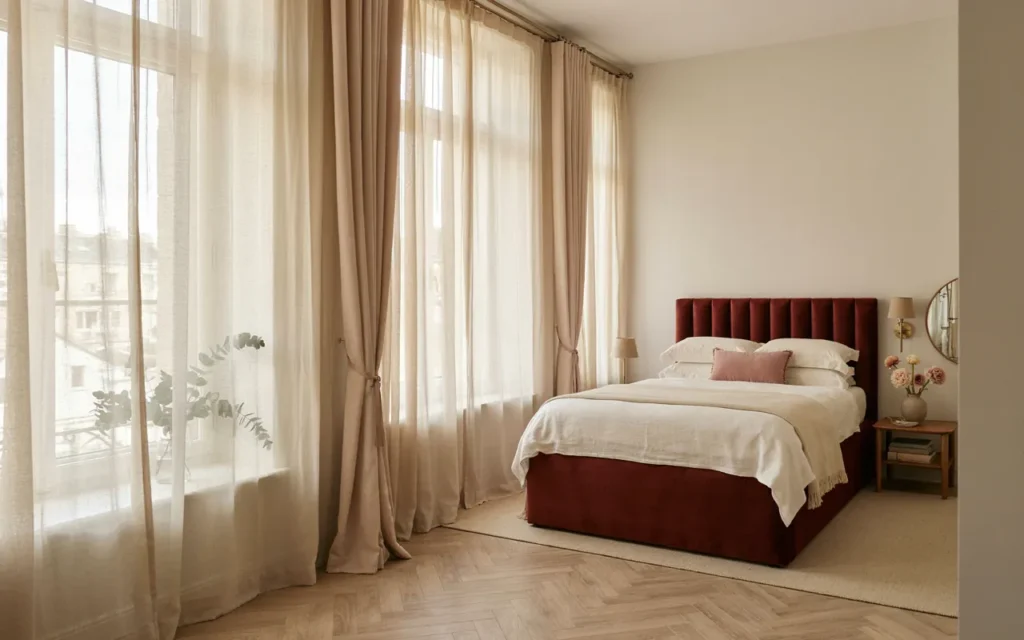
4. Dress the Windows in Sheer Curtains
Light-filtering curtains can make a bedroom feel instantly softer. Sheer ivory or off-white panels allow daylight to enter while reducing the hard contrast created by bare windows. Hang the curtain rod several inches above the window frame and extend it beyond both sides so the fabric looks generous when closed.
For a more luxurious finish, layer sheer panels with heavier curtains in taupe, dusty rose, or warm gray. During the day, the sheers keep the space bright. At night, the heavier layer adds privacy and makes the bedroom feel more enclosed.
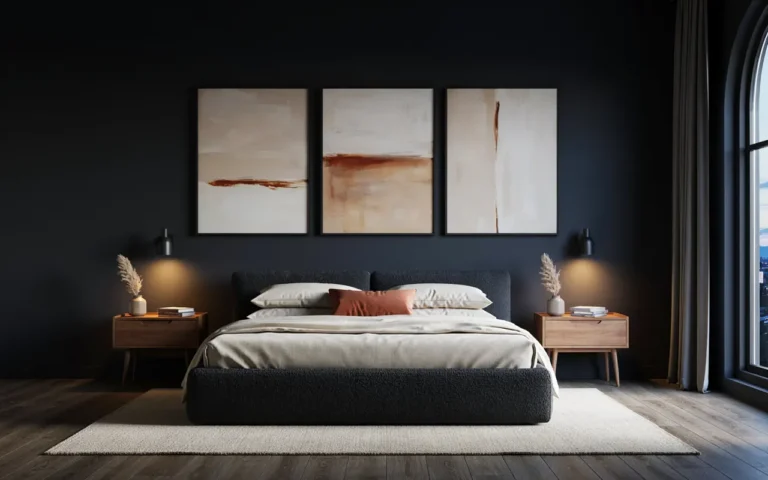
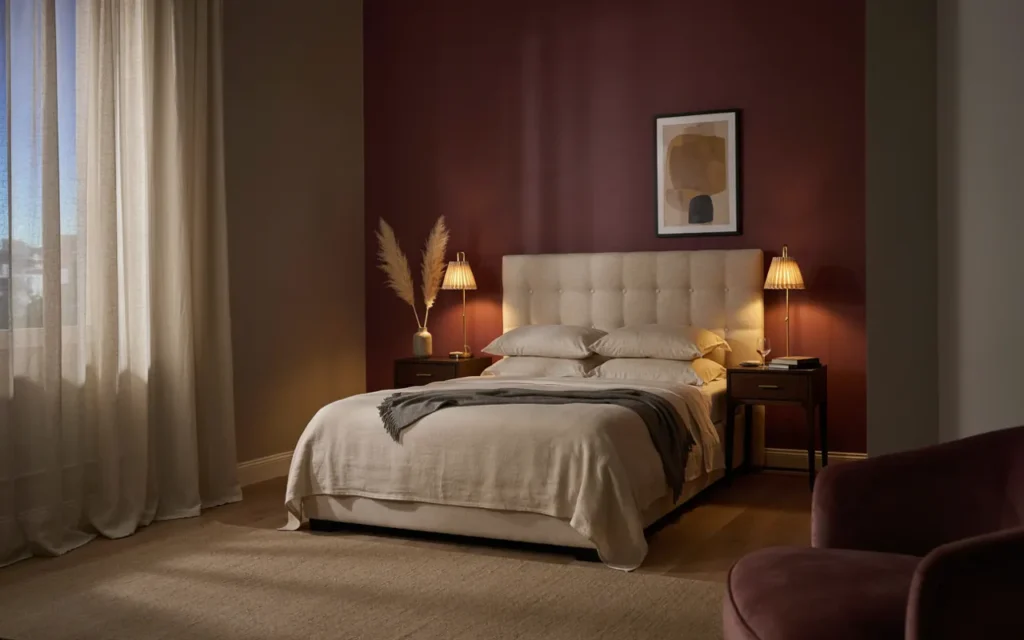
5. Paint a Deep Romantic Accent Wall
You do not have to paint the entire bedroom dark to create a romantic atmosphere. A single wall behind the bed can provide enough contrast to make the sleeping area feel dramatic and intimate. Burgundy, dusty plum, deep olive, charcoal, muted terracotta, and warm chocolate are strong options.
If your furniture is light, a darker wall creates a beautiful backdrop. If the room already contains dark furniture, choose a softer earthy shade so the result does not become visually heavy. Matte paint generally works particularly well when you want the wall to feel sophisticated rather than glossy.
6. Mix Velvet, Linen, and Bouclé
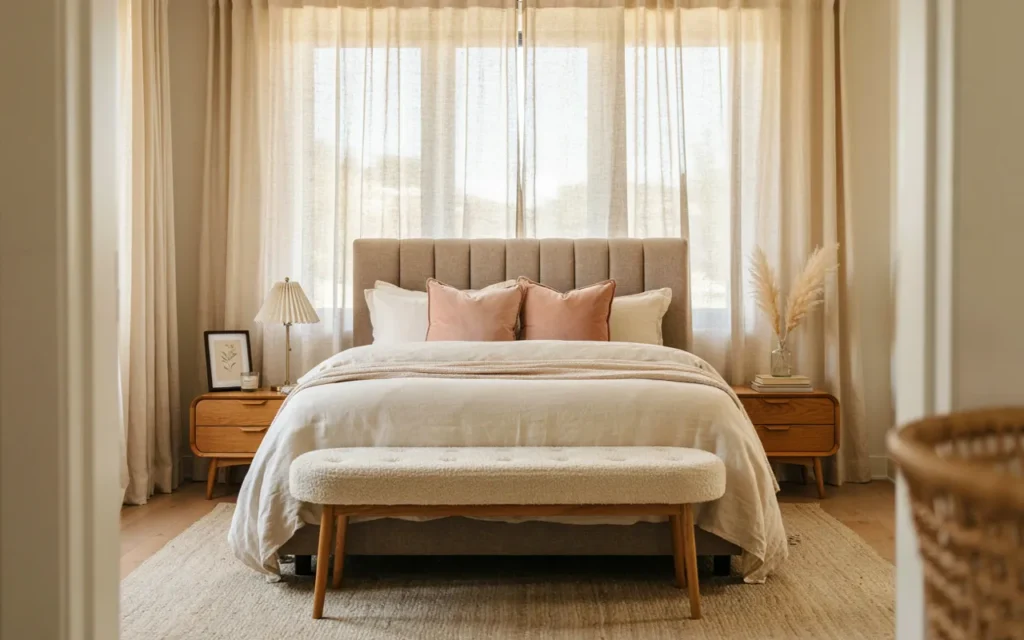
A romantic bedroom becomes much more interesting when several tactile materials work together. Velvet adds richness, linen brings relaxed softness, and bouclé contributes a cozy, slightly sculptural texture. You can use these materials through a headboard, cushions, bench, curtains, or accent chair.
Keep the color palette controlled so the textures do the visual work. For example, cream linen bedding can be paired with a blush velvet pillow and an ivory bouclé bench. The result feels layered without becoming cluttered.
7. Bring Warm Wood Into a Soft Palette
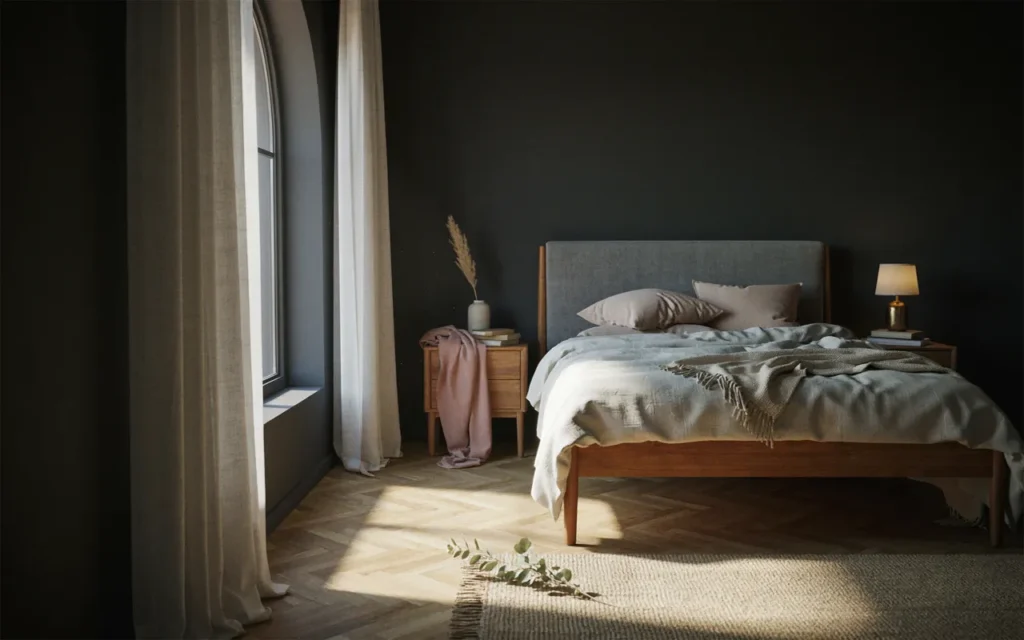
Soft colors can sometimes make a bedroom feel flat if every surface has the same finish. Warm wood adds contrast and visual warmth without taking away from the romantic mood. Consider walnut nightstands, an oak bench, wooden ceiling beams, or a natural wood bed frame.
The combination of warm timber with cream textiles and muted colors feels especially inviting. It also connects the bedroom with natural materials, making the space feel less manufactured and more comfortable.
8. Add Burgundy or Wine-Red Accents
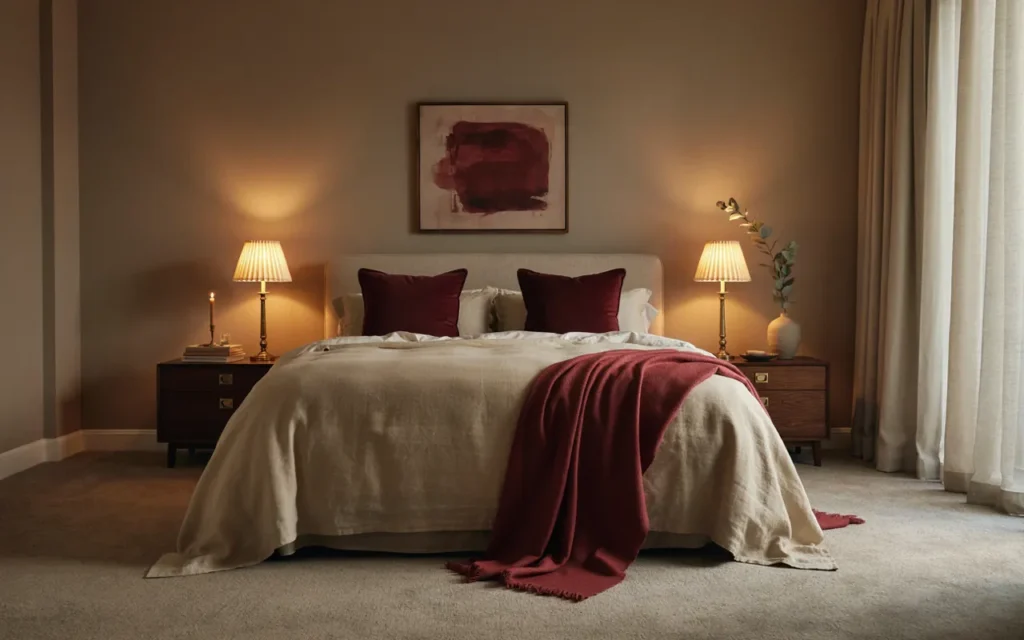
Red has an obvious connection with romance, but covering an entire room in bright red can quickly become overwhelming. A deeper burgundy or wine shade gives you the same warmth in a more sophisticated way.
Use it selectively through pillows, a throw, artwork, curtains, a small upholstered chair, or a decorative rug. Against cream, warm white, or beige, these darker red accents become focal points without dominating the bedroom.
9. Soften the Room With Blush and Cream
Blush does not have to make a bedroom look overly feminine. When combined with cream, warm beige, natural wood, and muted metallic finishes, it becomes a gentle accent color that adds warmth.
Use blush on only a few elements rather than every surface. A dusty pink headboard, one throw pillow, or a small artwork can be enough. Keep the main surfaces neutral so the bedroom still feels timeless when you change accessories later.
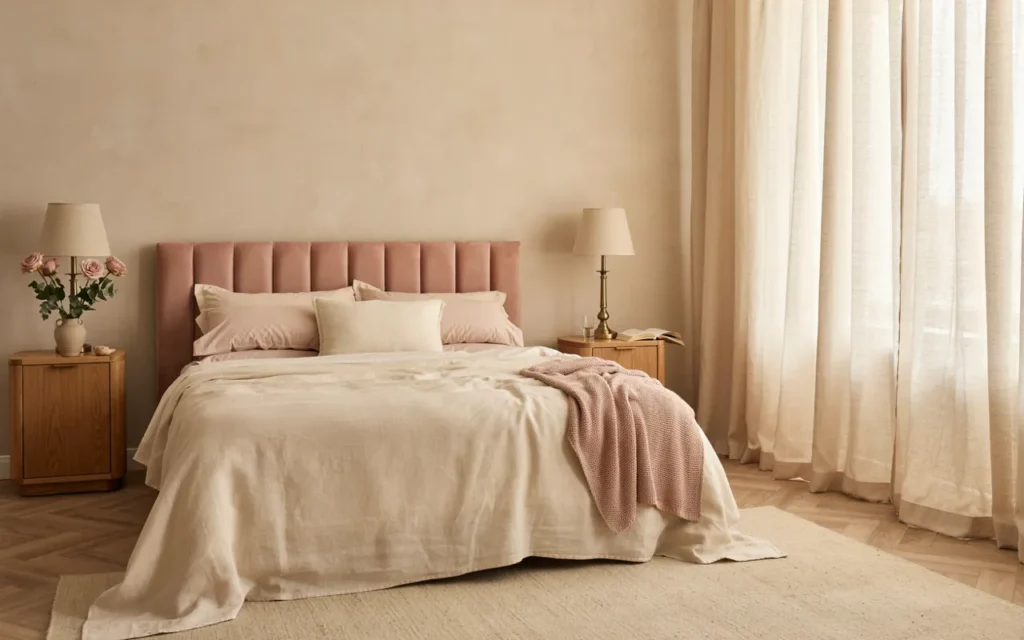
10. Give the Room a Story With Wallpaper
Wallpaper can transform the bedroom without requiring new furniture. Botanical prints, subtle scenic patterns, old-world motifs, and softly colored floral designs can create an immersive background behind the bed.
If you prefer a calmer look, choose a pattern with a low contrast between the background and print. For a stronger statement, use a large-scale botanical or scenic design. You can also continue wallpaper onto the ceiling in a smaller bedroom to create a wrapped, cocoon-like effect.
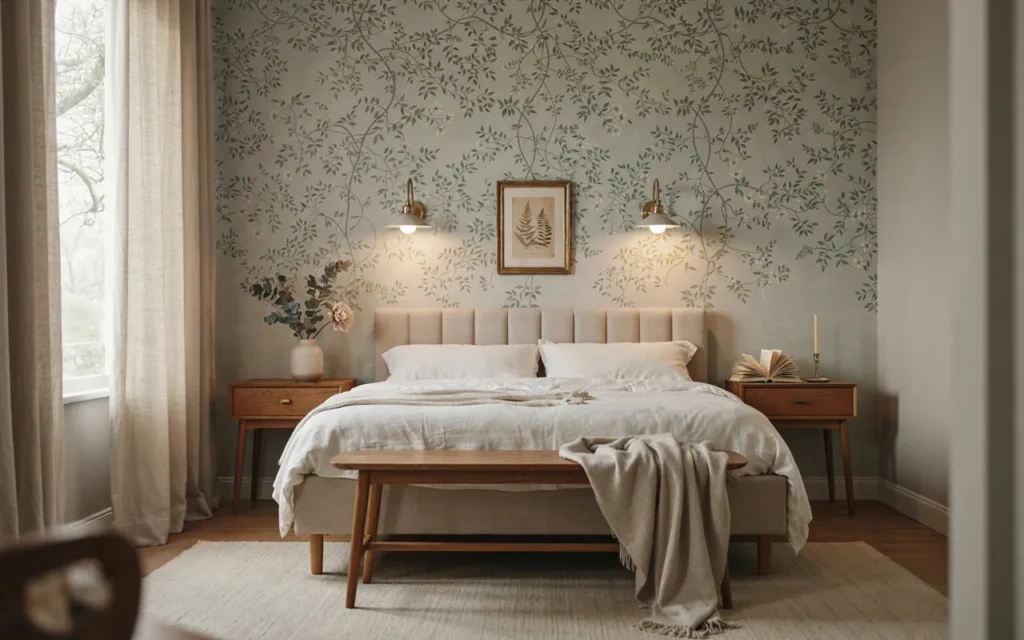
11. Turn Oversized Art Into a Headboard
Artwork can create the visual importance normally provided by a large headboard. Hang one oversized painting, textile artwork, or framed print behind the bed and let it become the main focal point.
Choose art with colors already present in your bedding or curtains so the room feels coordinated. Abstract landscapes, soft botanical compositions, romantic photography, and muted vintage artwork can all work beautifully. Keep the surrounding wall relatively quiet so the artwork has enough space to breathe.
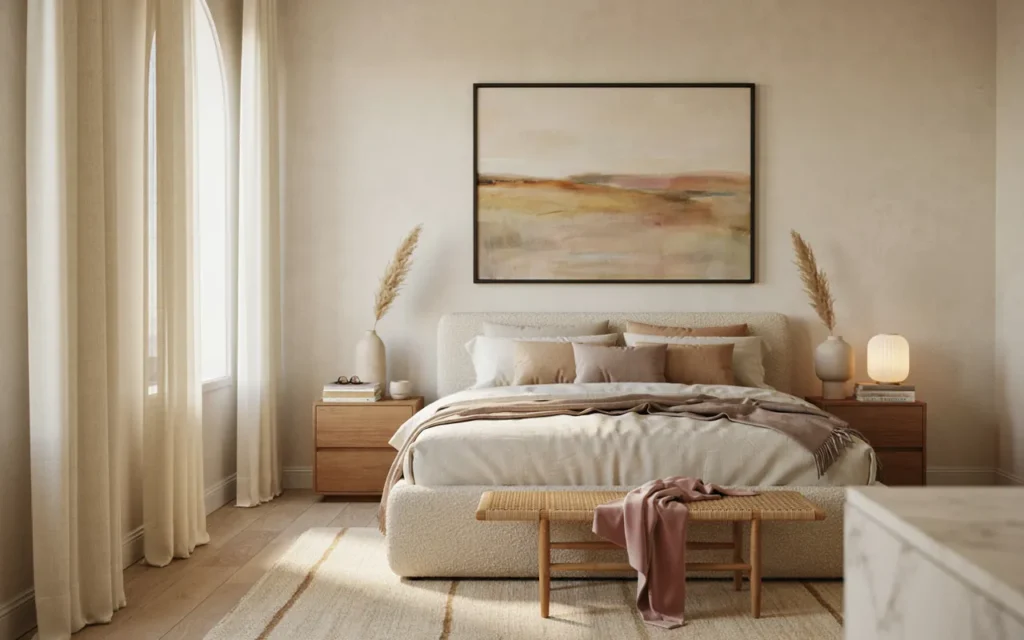
12. Hang Matching Bedside Pendants
Pendant lights suspended beside the bed can free up nightstand space while adding a strong architectural detail. Matching pendants also create symmetry, which naturally makes the sleeping area feel organized.
Glass, fabric, ceramic, and aged-metal pendants can all work depending on your bedroom style. Hang them at a practical height so they provide useful reading light without sitting directly at eye level.
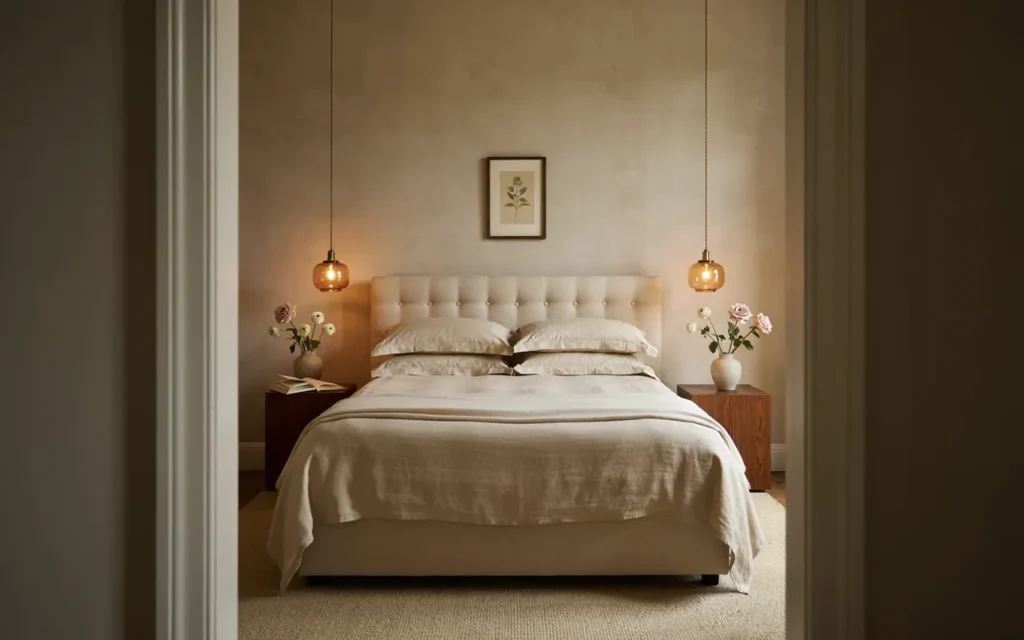
13. Use Symmetry Without Making It Rigid
Matching nightstands and lamps create an easy sense of balance around the bed. However, you do not have to make every accessory identical. Keep the larger elements symmetrical while allowing smaller decorative pieces to differ.
For example, use matching lamps but place a book stack on one nightstand and a small vase on the other. This gives the room structure while keeping it from looking like a furniture showroom.
14. Create a Personal Memory Wall
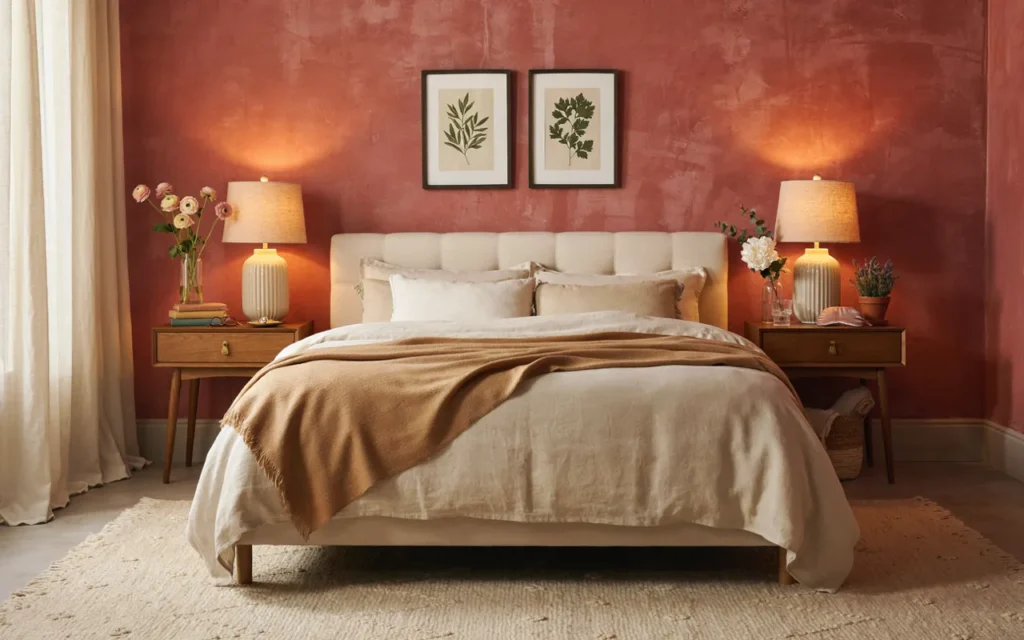
Romance feels more convincing when the bedroom contains things that actually belong to you. Instead of filling the room with generic decorative signs, display photographs, travel memories, small artworks, handwritten notes, or framed keepsakes.
Use matching frames if you want a polished gallery wall, or combine different frames for a more collected look. Position the arrangement where you can see it from the bed without making the wall feel crowded.
15. Add a Cozy Reading Corner for Two
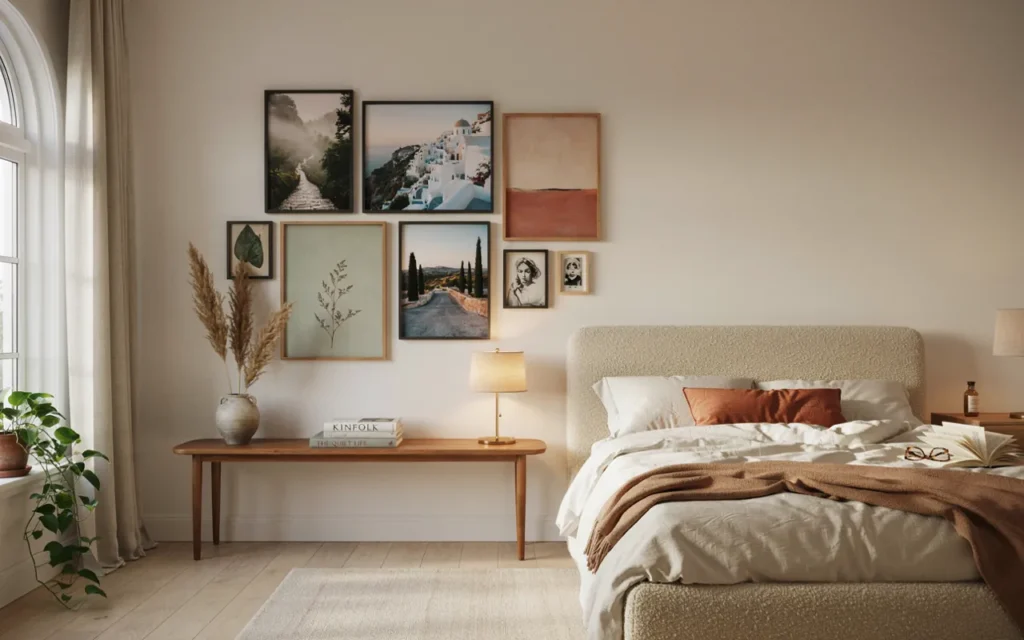
If your bedroom has unused floor space, turn it into a small seating area. Two compact chairs with a small round table can create a place for reading, conversation, or enjoying morning coffee without using the bed for every activity.
Place the seating near a window when possible. Add a floor lamp and a small rug to visually separate the corner from the sleeping zone.
16. Ground Everything With a Plush Rug
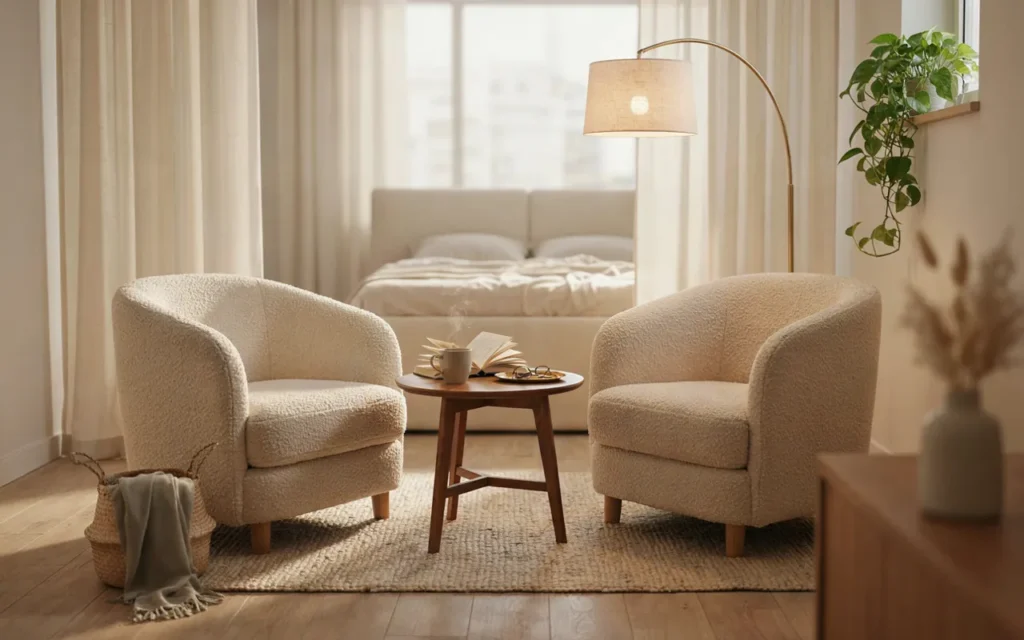
A rug can make a bedroom feel warmer both visually and physically. Choose a size large enough to extend beyond the sides and foot of the bed rather than placing a tiny rug directly underneath it.
For a romantic design, look for soft textures and subdued patterns. Cream, oatmeal, faded rose, muted gray, and warm taupe can connect different furniture pieces without introducing unnecessary visual noise.
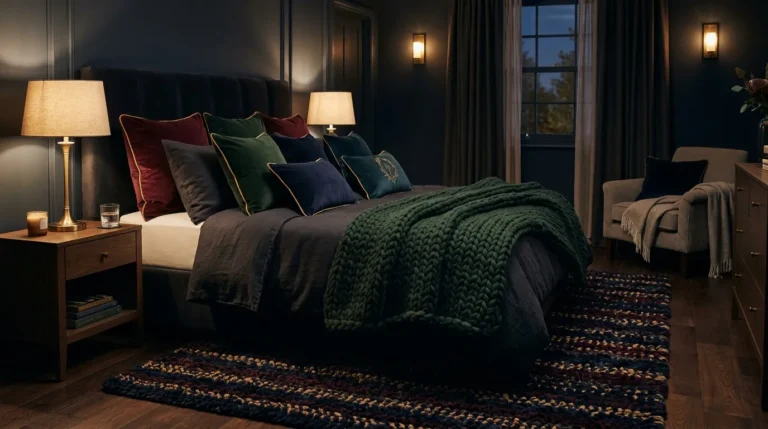
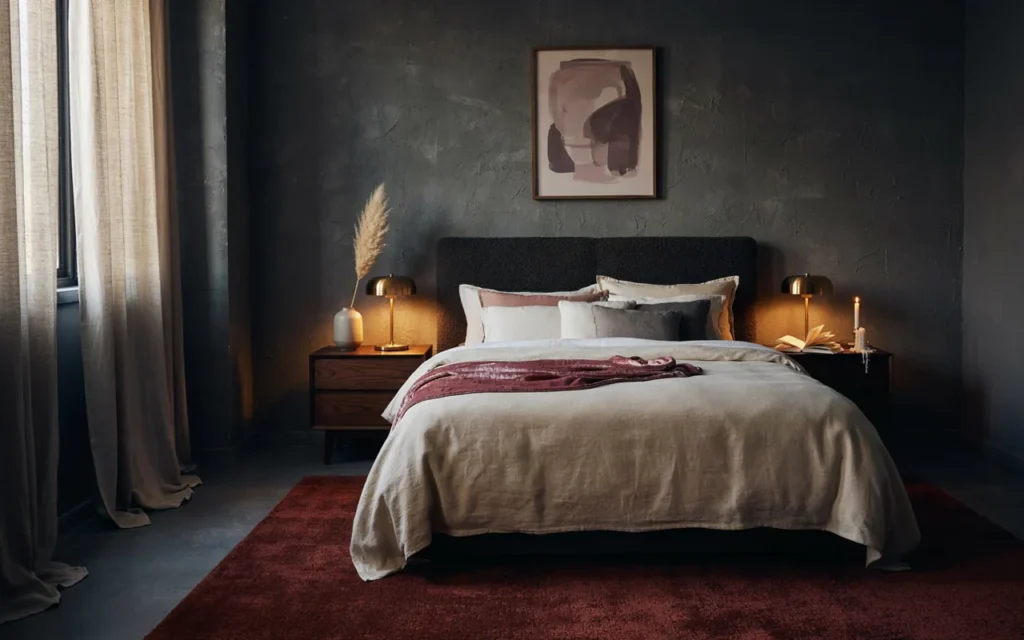
17. Try a Dark, Cocoon-Like Bedroom
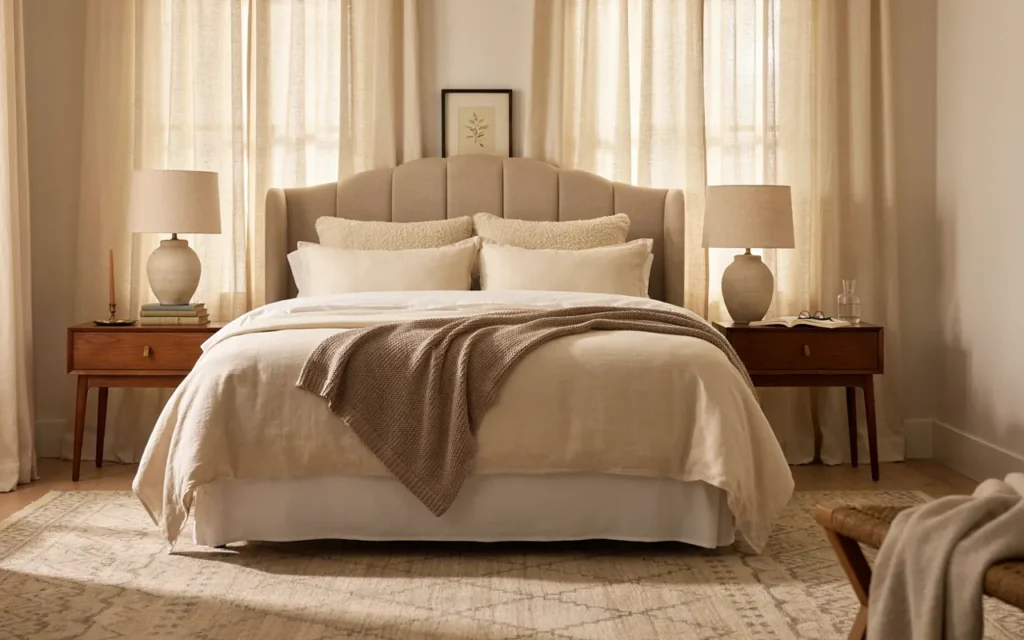
A dark bedroom can feel incredibly romantic when the darkness is intentional. Deep charcoal, soft black, forest green, or chocolate walls can create a cocoon effect, particularly in bedrooms with limited natural light.
Balance the darker background with lighter bedding and warm lighting. Brass, cream, rosy beige, and natural wood are useful for preventing the room from feeling cold or excessively heavy.
18. Use Mirrors to Add Glow and Depth
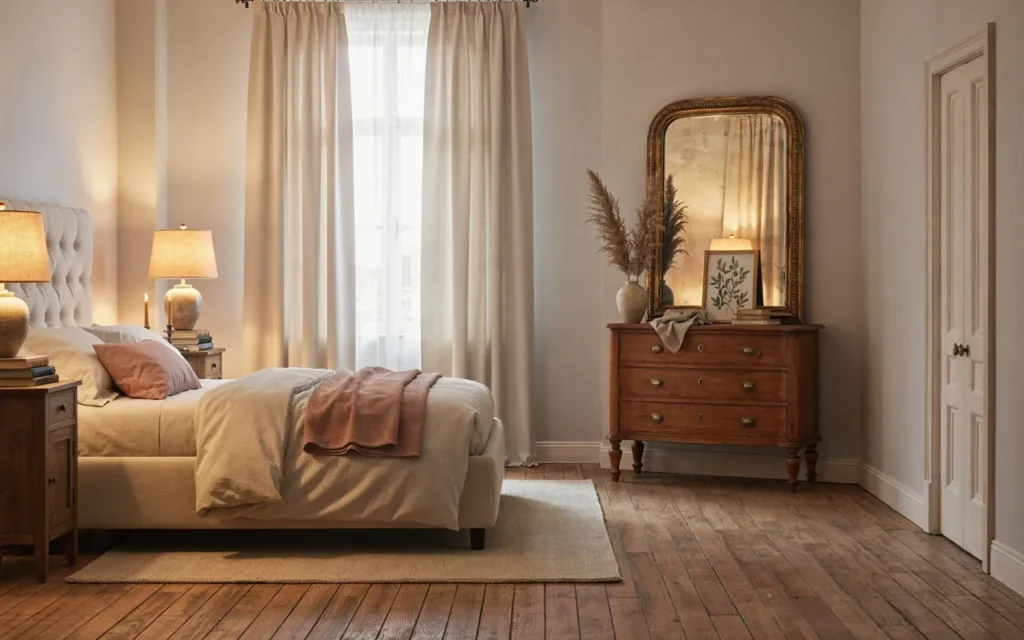
A well-placed mirror can make a bedroom appear brighter and more spacious while reflecting decorative lighting. Instead of covering an entire wall, consider one large framed mirror above a dresser or two smaller mirrors beside the bed.
Choose a frame that supports your style. Aged brass works with traditional interiors, dark wood feels grounded, and frameless designs suit contemporary bedrooms. Position the mirror where it reflects light or an attractive view rather than clutter.
19. Give Each Side of the Bed Its Own Comfort
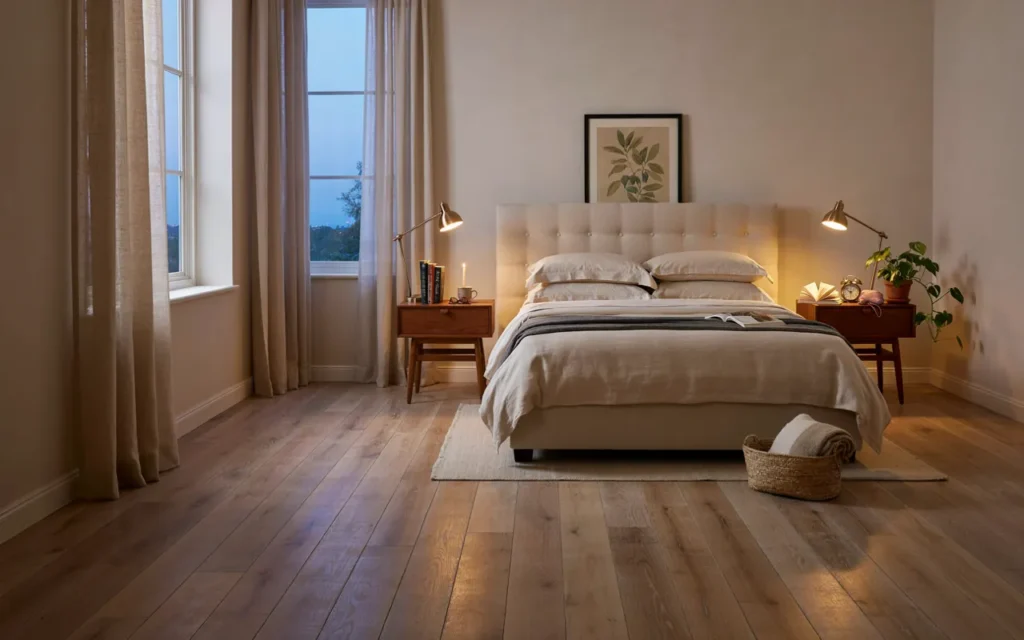
A bedroom shared by two people should accommodate both routines. One person may read before sleeping while the other prefers darkness, so individual bedside lighting can make the room more practical.
Separate charging points, personal storage, adjustable lamps, and different pillow preferences can also improve the space. These details may not appear dramatic in photographs, but they make a real couple bedroom more comfortable every night.
20. Make a Small Bedroom Feel Intimate
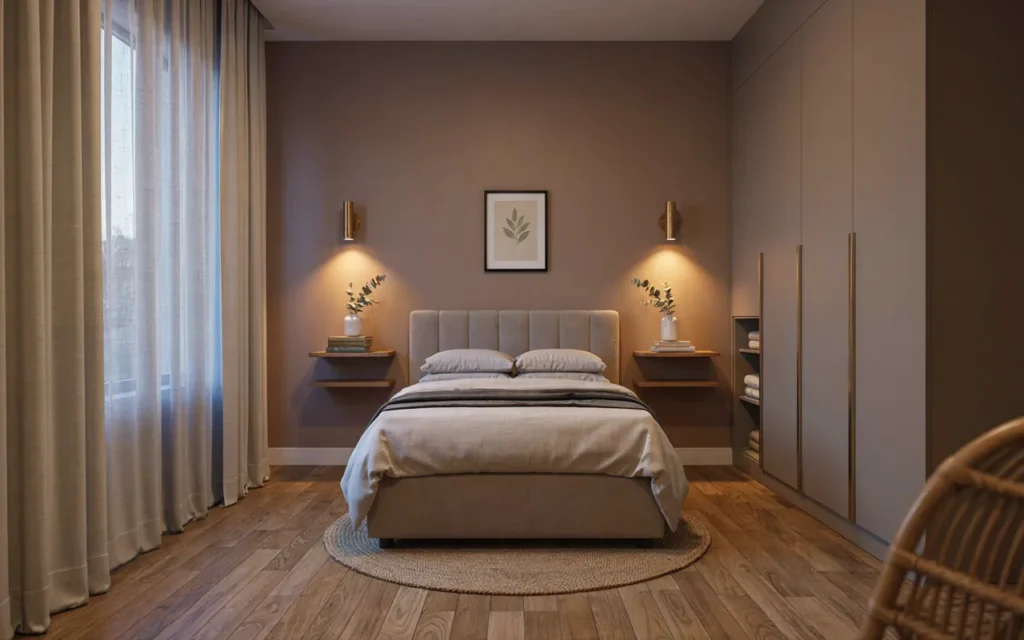
A small bedroom does not need to feel cramped. In fact, limited space can naturally create a cozy atmosphere when the furniture arrangement remains simple.
Choose one strong focal point, such as an upholstered bed or textured accent wall, and avoid filling every corner with furniture. Wall-mounted lights, floating nightstands, built-in storage, and light curtains can preserve floor space while keeping the room visually soft.
21. Bring a Destination-Inspired Mood Home
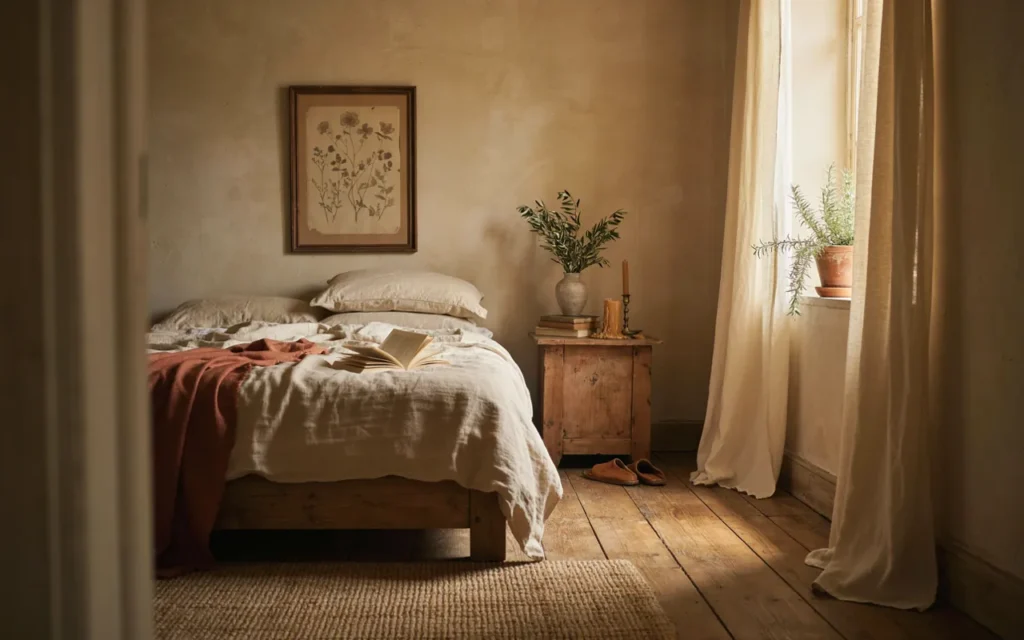
A bedroom can become more personal when its design reminds you of a favorite destination. Mediterranean colors, coastal textures, Parisian vintage details, Tuscan materials, or a quiet countryside palette can influence the room without turning it into a themed space.
Choose two or three references from the destination and translate them into materials and colors. For example, warm plaster tones, natural linen, aged wood, and terracotta accents can suggest a relaxed European retreat without looking like a hotel theme.
22. Finish With Flowers and Soft Personal Details
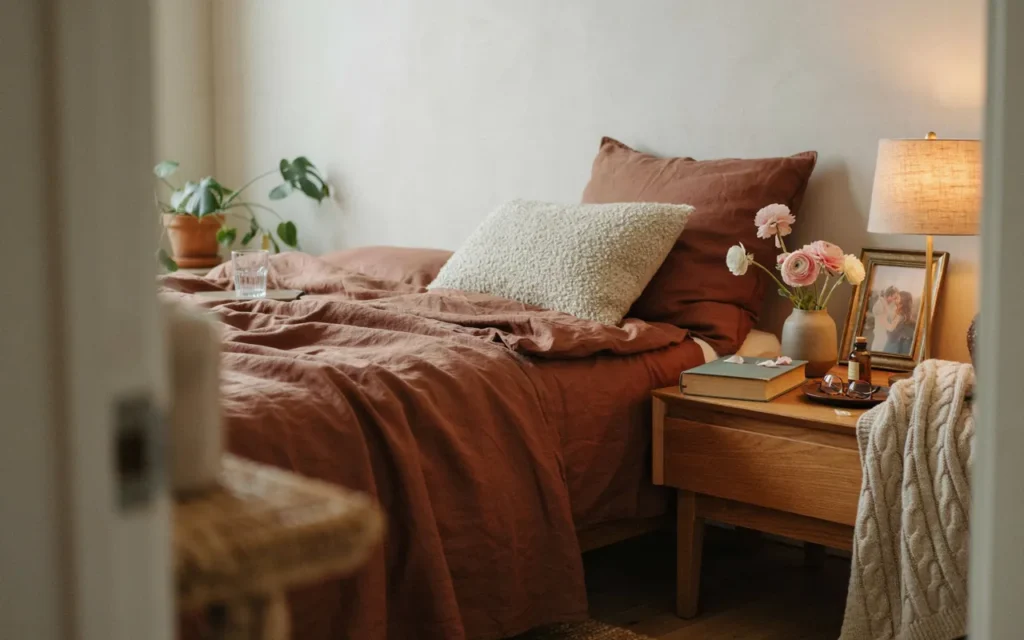
The final layer should make the bedroom feel finished without making it look decorated for one specific occasion. A small vase of fresh flowers, a beautiful tray, a textured throw, a favorite book, or a framed photograph can add personality.
Keep decorative objects selective. Romance comes from atmosphere, comfort, and personal meaning rather than filling every surface with hearts, roses, or themed accessories. A few thoughtful details usually create a stronger result.
How to Make a Romantic Bedroom Feel Personal
The best romantic bedroom decor does not look as though every item came from the same furniture collection. Mix new pieces with objects that already have meaning in your home. A vintage mirror can sit above a modern dresser, while a contemporary lamp can work beside an older wooden nightstand.
Pay attention to what you see from the bed. The wall opposite you, the lighting near the nightstands, and the view through the window all influence the experience of the room. If those areas feel calm and intentional, the bedroom will feel more relaxing even when the rest of the space is simple.
Texture is another easy way to create depth. Combine smooth cotton with linen, velvet, wool, wood, woven baskets, and soft rugs. You can keep the color palette restrained while still making the room visually rich.
Most importantly, avoid decorating only for photographs. Your bedroom should support real habits such as reading, sleeping, getting dressed, relaxing, and spending quiet time together. Practical choices often make the romantic atmosphere feel much more authentic.
Best Colors for a Romantic Bedroom
There is no single correct romantic bedroom color. Warm neutrals are a reliable choice because they create a calm background for richer accents. Cream, beige, taupe, mushroom, and warm gray work particularly well with natural wood.
For more drama, consider burgundy, dusty plum, deep olive, charcoal, chocolate, or muted terracotta. Blush and dusty rose can soften the palette without becoming overly sweet. If you prefer a brighter room, keep the walls light and introduce romance through fabrics, lighting, and smaller decorative pieces.
FAQs About Romantic Bedroom Ideas
What colors make a bedroom feel romantic?
Warm neutrals, dusty rose, burgundy, deep plum, muted terracotta, soft olive, and warm gray can all create a romantic atmosphere. The final effect depends heavily on lighting and texture.
How can I make my bedroom romantic without spending much money?
Start with bedding, lighting, and curtains because these elements change the overall atmosphere quickly. Rearranging furniture, adding a textured throw, using warm lamps, and displaying meaningful photographs can also make a noticeable difference.
What type of lighting is best for a romantic bedroom?
Use layered, warm lighting rather than relying on one bright ceiling fixture. Bedside lamps, sconces, pendant lights, and dimmable warm LEDs can create a softer evening atmosphere.
Is red a good color for a romantic bedroom?
Yes, but deeper shades usually feel more sophisticated than bright red. Burgundy, wine, and muted brick red work particularly well with cream, beige, walnut, and brass.
How do I make a small bedroom feel romantic?
Keep the furniture simple, use a strong focal point, and rely on wall-mounted lighting or floating nightstands to preserve floor space. Soft textiles and warm lighting can make the room feel intimate without adding clutter.
Can a romantic bedroom still have a modern style?
Absolutely. A modern romantic bedroom can use clean furniture, neutral colors, simple lighting, and tactile materials such as linen, velvet, wood, and bouclé. Romance comes from the atmosphere rather than a specific decorating style.
How do couples make a shared bedroom more comfortable?
Give each person useful bedside storage, individual lighting, charging access, and enough space for personal items. These practical details make the room work better for both people while maintaining a cohesive design.
What is the easiest romantic bedroom makeover?
Changing the bedding, adding warm bedside lighting, introducing soft curtains, and placing a few personal accessories can produce a noticeable transformation without replacing major furniture.