
Overwhelmed by every wallpaper option looking either too babyish or too plain for the nursery you’re picturing? You’re not alone. Wallpaper is one of the most transformative choices you’ll make for a nursery, since it sets the emotional tone of the room in a way paint alone often can’t, but choosing the wrong pattern, scale, or material can feel like a much bigger commitment than it needs to be, especially with a baby’s changing needs over the coming years.
In this guide on 17 Beautiful Wallpaper Designs to Transform a Nursery, you’ll find seventeen beautiful wallpaper designs that work well in a nursery, along with the reasoning behind each style, practical guidance on choosing between peel-and-stick and traditional paper, and how to apply wallpaper safely in a baby’s room. Each idea includes a unique image inspiration prompt so you can picture exactly how the design would look in a real space. Whether you’re decorating for a newborn or refreshing a toddler’s room, there’s a wallpaper direction here to match your style and your practical needs.
Choosing Between Peel-and-Stick and Traditional Wallpaper
Before diving into specific designs, it’s worth understanding the two main wallpaper application types, since this decision affects cost, longevity, and how easily the room can be updated as your child grows.
Peel-and-Stick Wallpaper is removable, making it ideal for renters, for parents who anticipate changing the room’s theme as their child grows, or for anyone hesitant to commit to a permanent design. It’s generally easier to apply as a DIY project but can be less durable over many years and slightly more visible at the seams than traditional paper.
Traditional Pasted Wallpaper offers a more seamless, long-lasting finish and tends to hold up better over time, making it a good choice for a nursery you plan to use for multiple children or don’t intend to redecorate frequently. It typically requires professional installation or significant DIY experience and is more difficult to remove without wall repair.
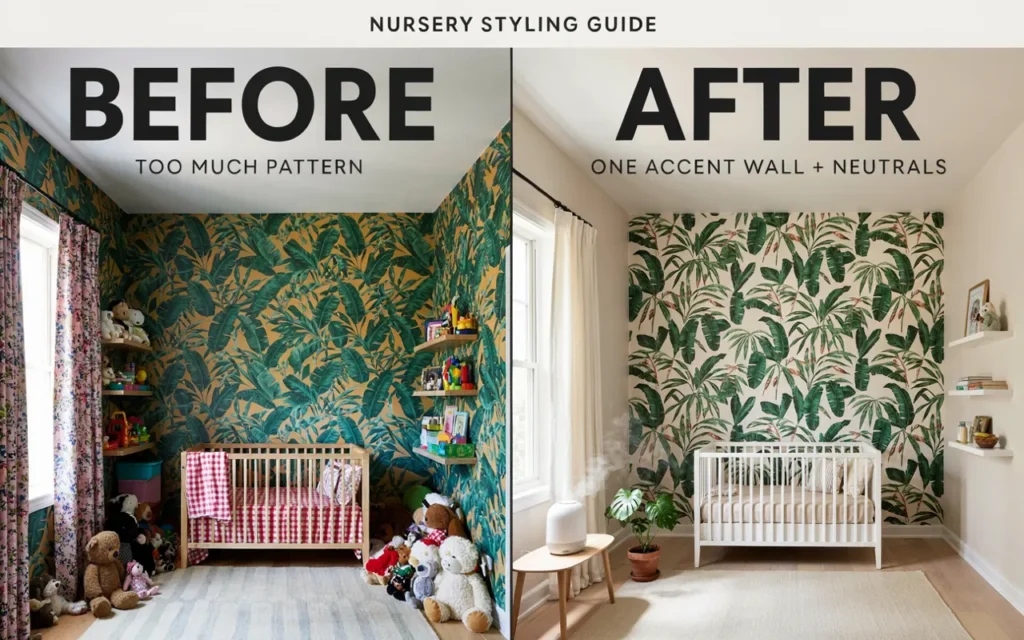
Accent Wall vs Full Room is another key decision. A single accent wall, usually behind the crib, lets you use a bolder or more detailed pattern without overwhelming the room, while wallpapering all four walls creates a fully immersive design but works best with a simpler, more subtle pattern to avoid visual overload in a smaller space.
17 Beautiful Wallpaper Designs to Transform a Nursery
1. Soft Watercolor Botanical Print
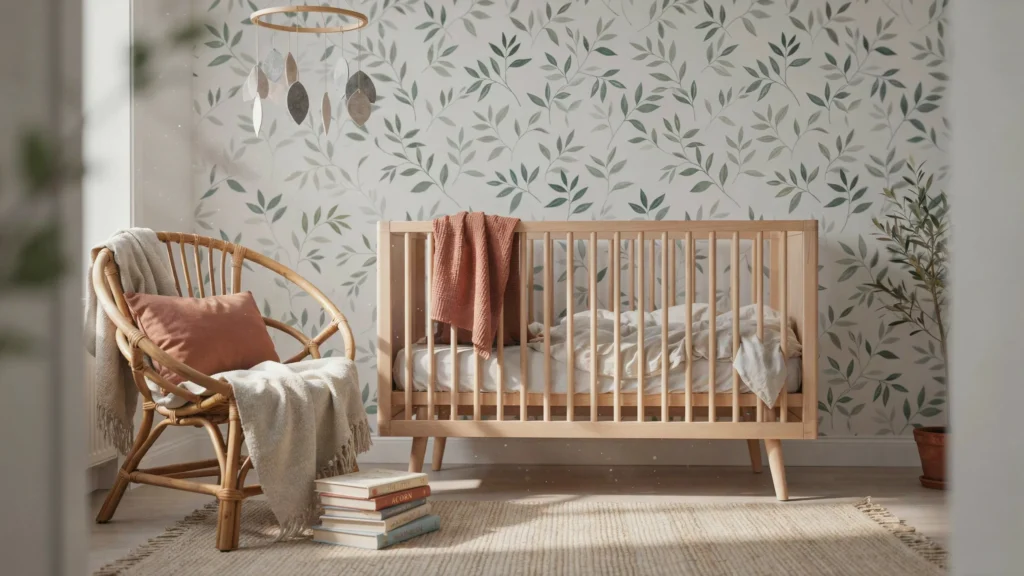
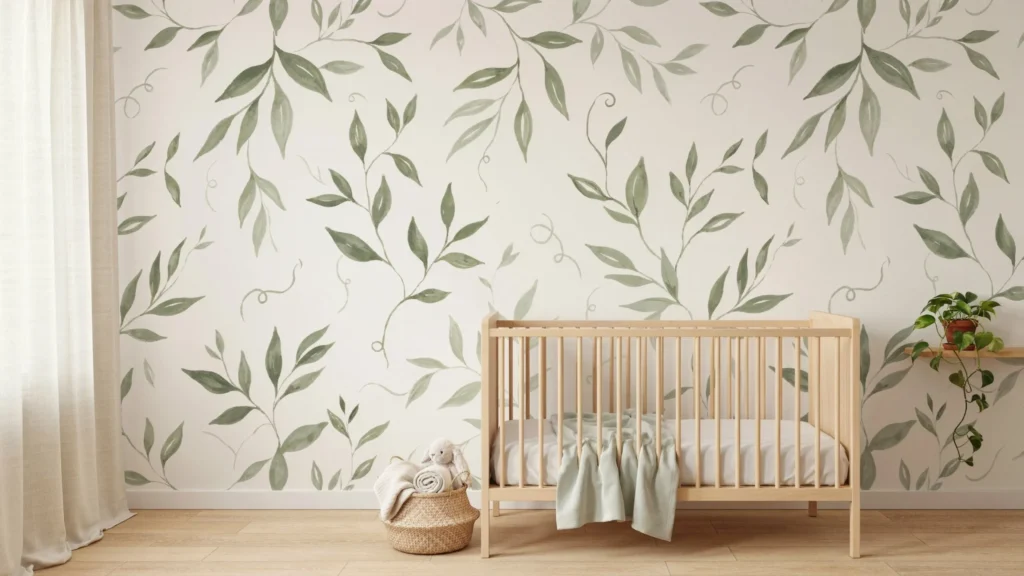
A gentle watercolor botanical pattern in muted greens and creams brings an organic, calming quality to a nursery without feeling overly literal or theme-heavy. This style works particularly well for parents who want a design that will still feel appropriate as their child grows into a toddler, since it avoids overtly babyish imagery in favor of a timeless nature motif, and it transitions easily into a big-kid room years down the line without needing to be replaced.
2. Gender-Neutral Cloud and Star Pattern
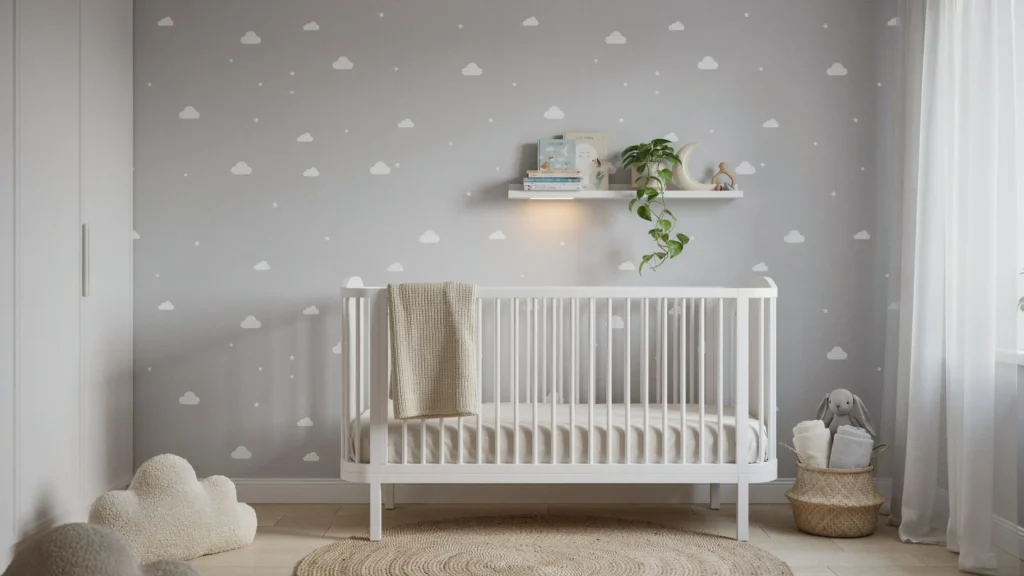
A subtle cloud and star print in soft grey or sage tones is one of the most versatile choices for parents decorating before knowing their baby’s gender, or who simply prefer a calming, dreamlike design. The small-scale repeat pattern also tends to read as more sophisticated than larger novelty prints, giving the room a gentle, nursery-appropriate character without feeling overly literal.
3. Vintage-Inspired Woodland Animals
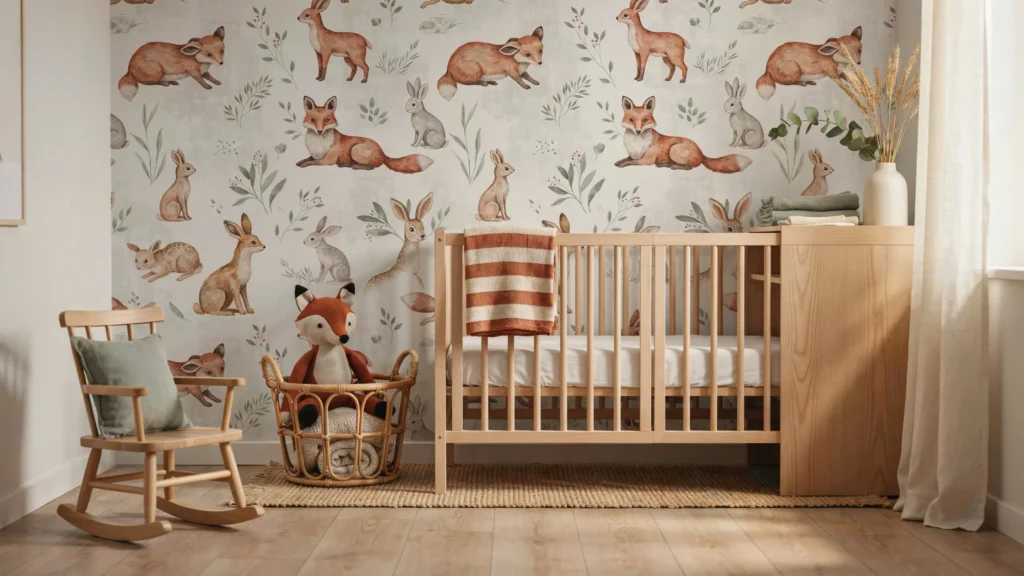
An illustrated woodland animal print featuring foxes, rabbits, and deer in a muted, vintage-style color palette brings storybook charm without leaning into overly bright or cartoonish imagery. This design pairs particularly well with natural wood furniture and warm, earthy accent colors throughout the rest of the room.
4. Large-Scale Tropical Leaf Print
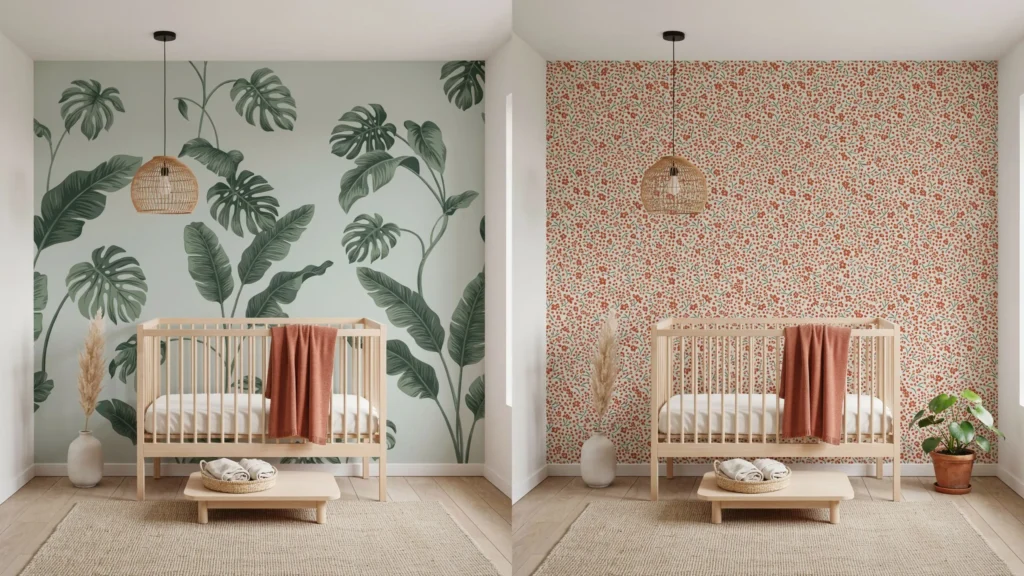
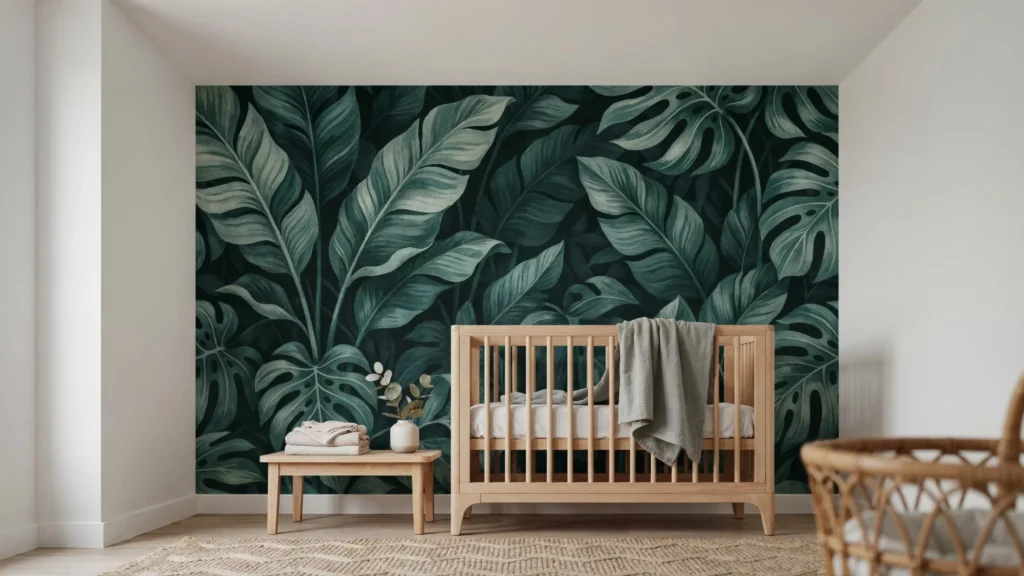
For parents drawn to a bolder, more dramatic look, an oversized tropical leaf pattern in deep green creates a jungle-inspired accent wall that photographs beautifully and adds real visual drama to an otherwise simple room. Because the scale is large, this pattern works best as a single accent wall rather than covering all four walls of a smaller nursery.
5. Delicate Floral Trellis Pattern
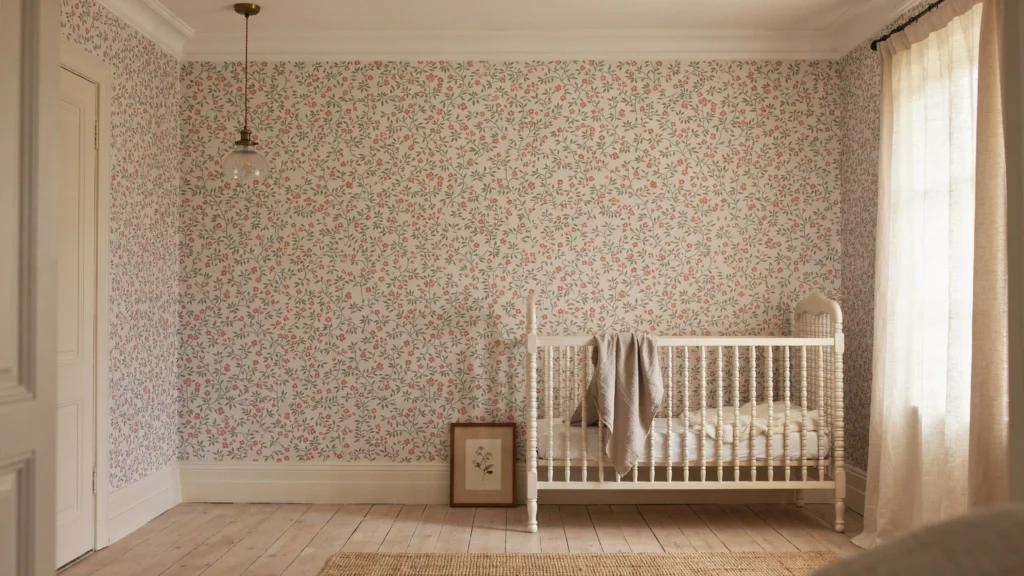
A classic floral trellis design, featuring small flowers arranged along a subtle geometric grid, brings timeless elegance to a nursery without feeling overly sweet or juvenile. This pattern works especially well in a traditional or transitional-style home, where it complements existing millwork and classic furniture silhouettes.
6. Abstract Rainbow Arch Print
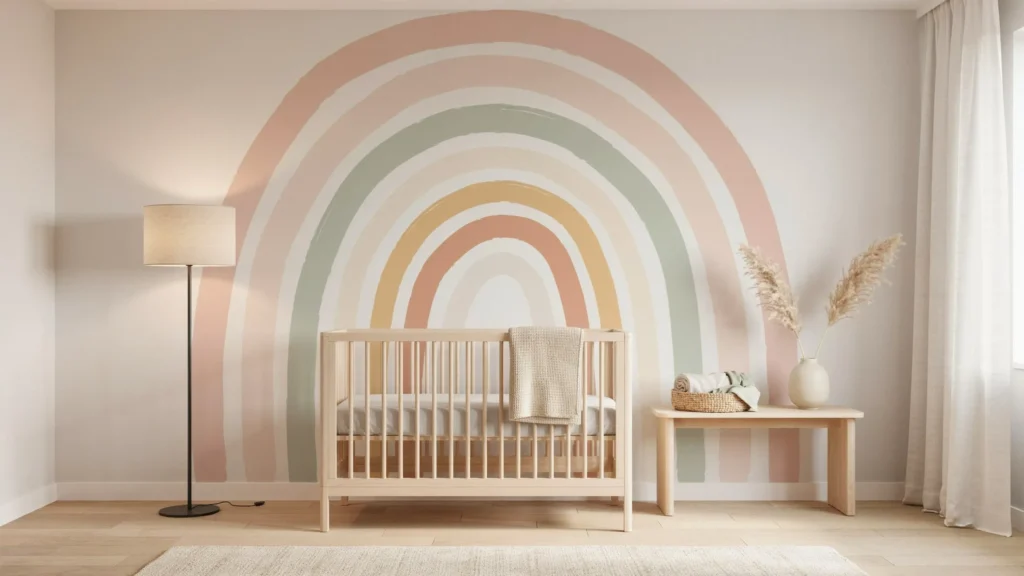
A modern, abstract rainbow arch pattern in muted pastel tones offers a playful design element without relying on primary colors or overtly childish imagery. This style has become especially popular for parents seeking a Scandinavian-inspired nursery that still incorporates a sense of whimsy appropriate for a child’s room.
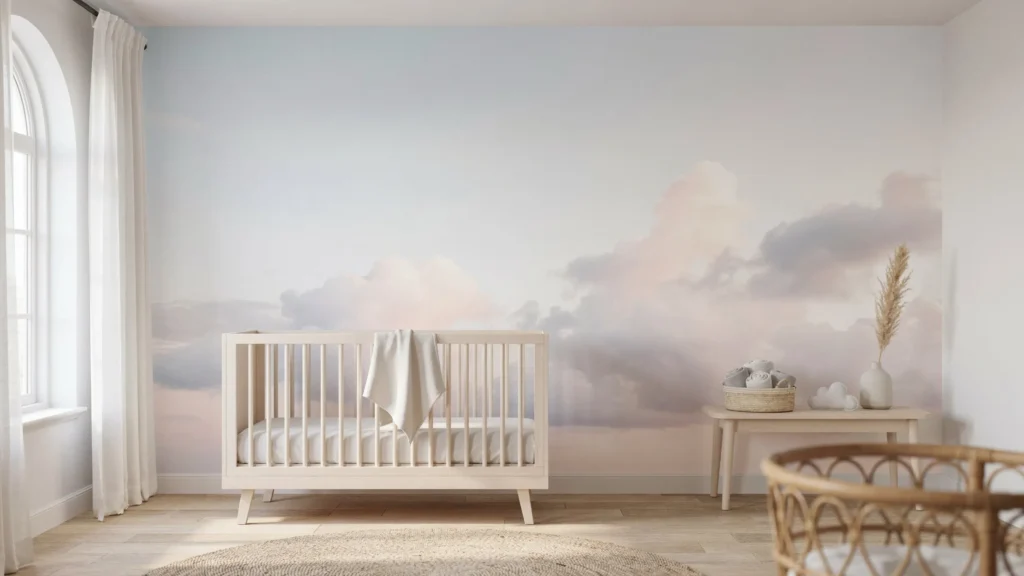
7. Sky and Cloud Mural Wallpaper
A large-format mural wallpaper depicting a soft, dreamy sky creates an immersive, almost ethereal atmosphere in a nursery. Because mural wallpapers are typically designed as a single cohesive image rather than a repeating pattern, this option works best as a dedicated feature wall rather than covering the entire room.
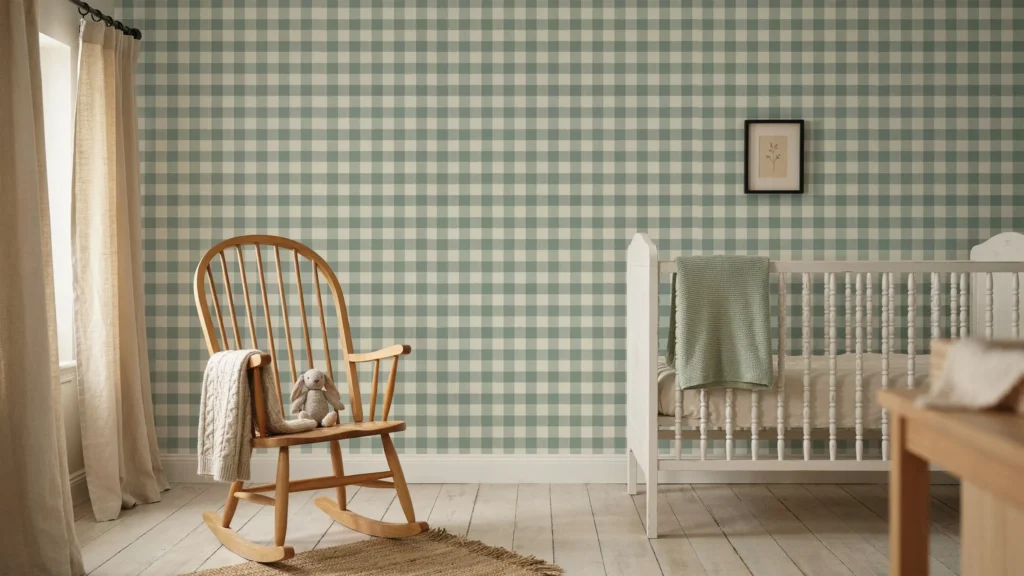
8. Classic Gingham Check
A soft gingham check pattern in a muted color, such as sage, blush, or soft blue, brings a cheerful, cottage-inspired quality to a nursery while remaining simple enough not to compete with other decor elements in the room. This pattern is particularly well suited to a farmhouse or cottage-style nursery aesthetic.
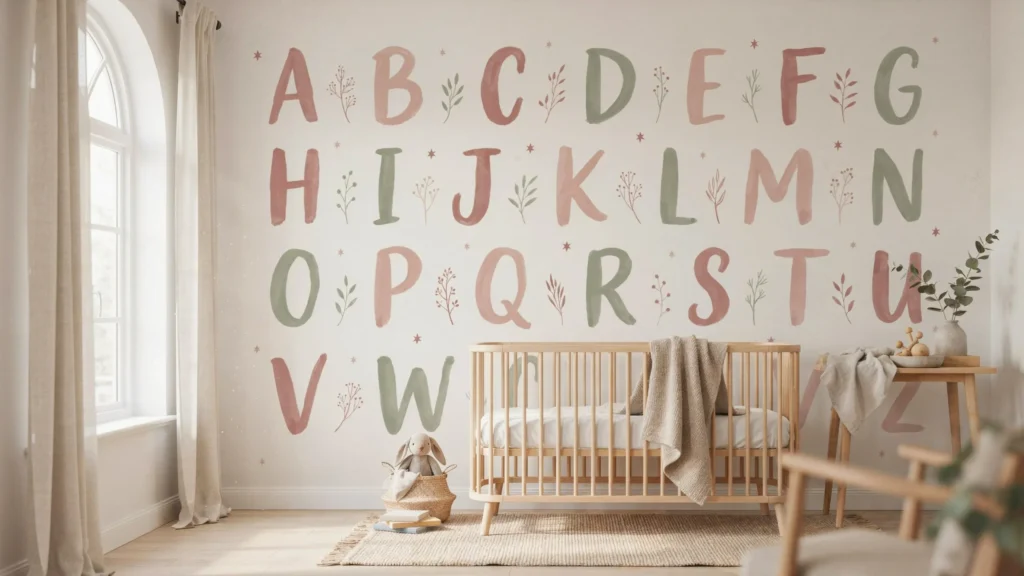
9. Hand-Illustrated Alphabet or Number Print
An educational-leaning wallpaper featuring hand-illustrated letters or numbers in a soft, artistic style offers both visual interest and a design that grows with your child into early learning years. Choosing a muted, artistic rendering rather than bright primary-colored blocks keeps the look sophisticated rather than resembling a classroom.
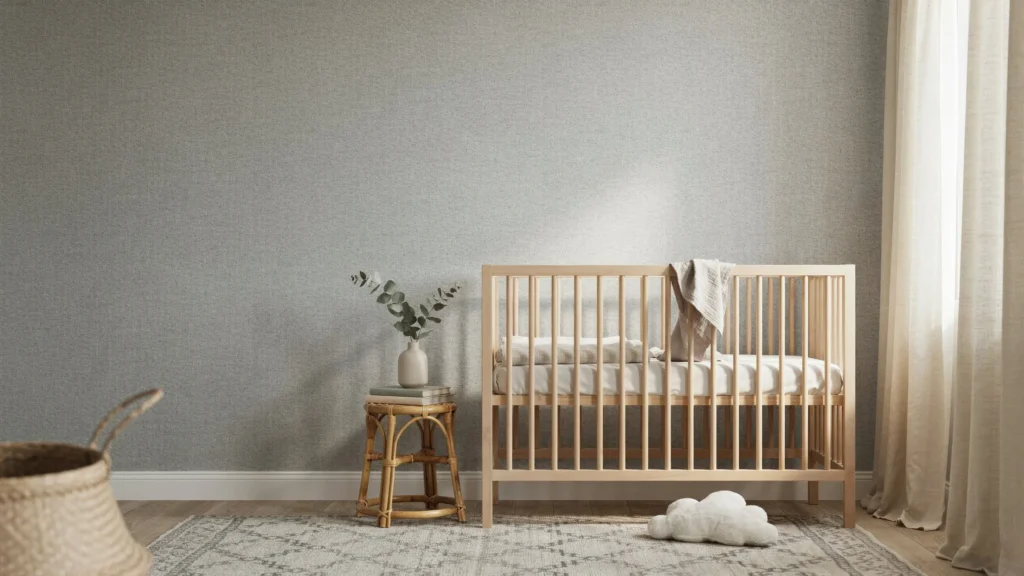
10. Textured Grasscloth in a Soft Neutral
For parents who want the depth and warmth of wallpaper without a printed pattern, textured grasscloth wallpaper in a soft neutral tone like oatmeal or dove grey adds subtle dimension to the walls. This option pairs beautifully with patterned textiles, such as curtains or a rug, since the wall itself stays quiet and textural rather than competing for visual attention, and it also happens to be one of the more forgiving choices if you plan to swap decor themes frequently in the early years.
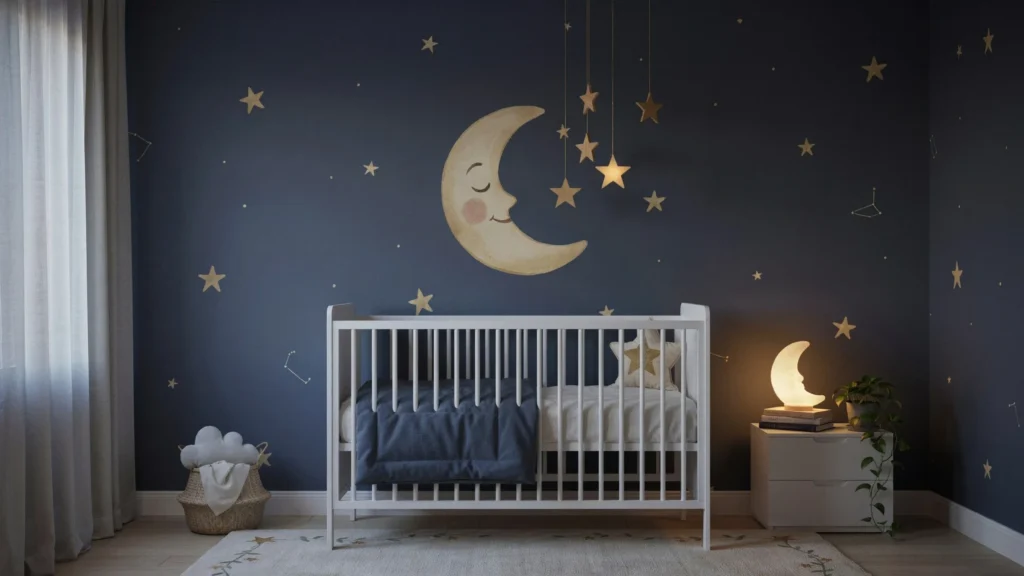
11. Whimsical Moon and Stars Illustration
A more illustrative take on celestial themes, featuring a whimsical moon character alongside scattered stars, adds a storybook quality that’s slightly more playful than a subtle cloud pattern. This design works well for parents who want a clear thematic anchor for the room’s overall styling, including bedding, mobiles, and wall art.
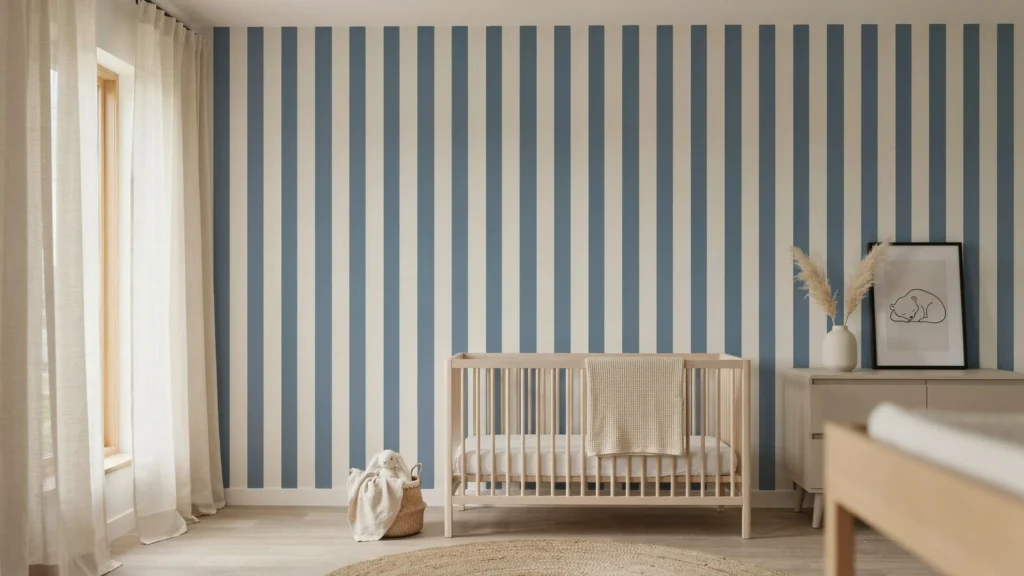
12. Soft Stripe in a Muted Colorway
A simple striped wallpaper in a soft, muted colorway offers timeless versatility and works particularly well for parents who want texture and visual interest on the walls without a literal pattern that the child might outgrow. Vertical stripes also have the practical benefit of making a smaller nursery feel taller and more spacious.
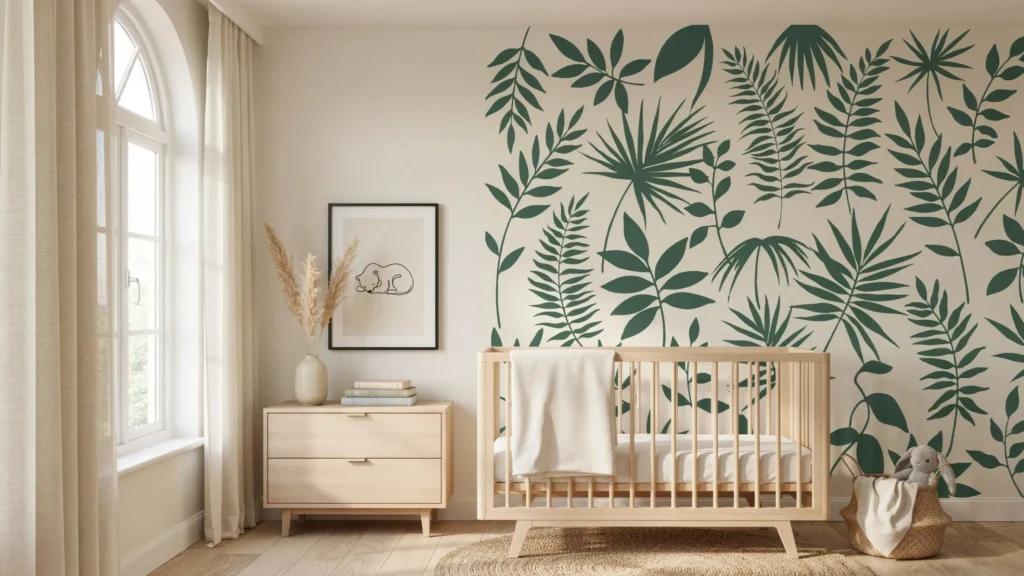
13. Botanical Fern and Palm Silhouettes
A more graphic, silhouette-style botanical print featuring ferns and palm leaves offers a bolder alternative to soft watercolor florals while still keeping the palette limited to greens and neutrals. This design suits a modern nursery aesthetic that leans slightly more graphic and structured than a traditional floral approach.
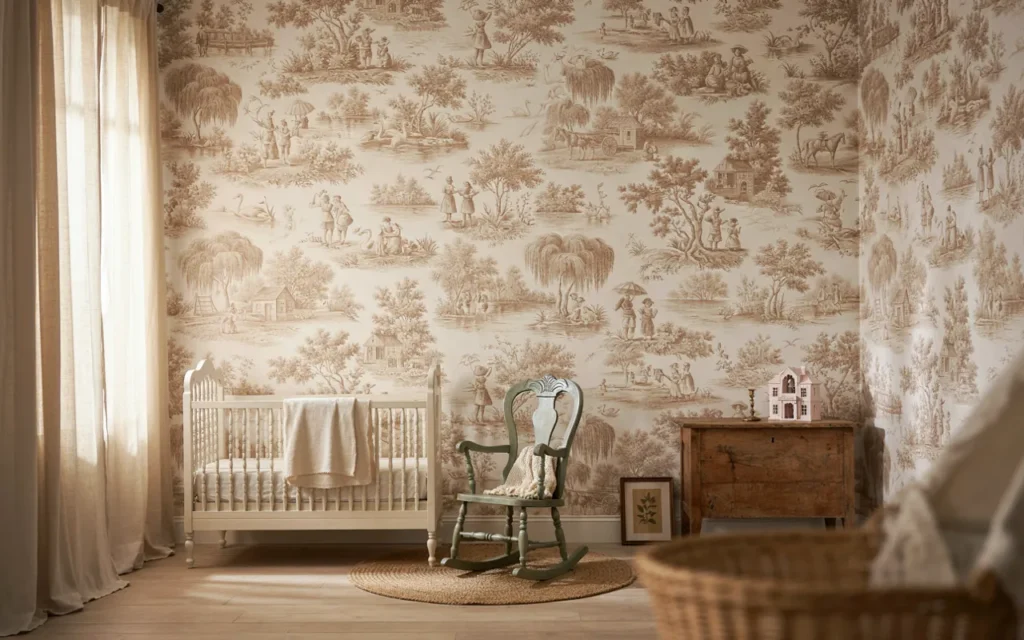
14. Nostalgic Toile Pattern
A classic toile pattern, traditionally featuring pastoral or storybook scenes in a single ink color against a neutral background, brings heirloom-style elegance to a nursery. This design works especially well in a traditional or vintage-inspired home and pairs beautifully with antique furniture pieces passed down through the family.
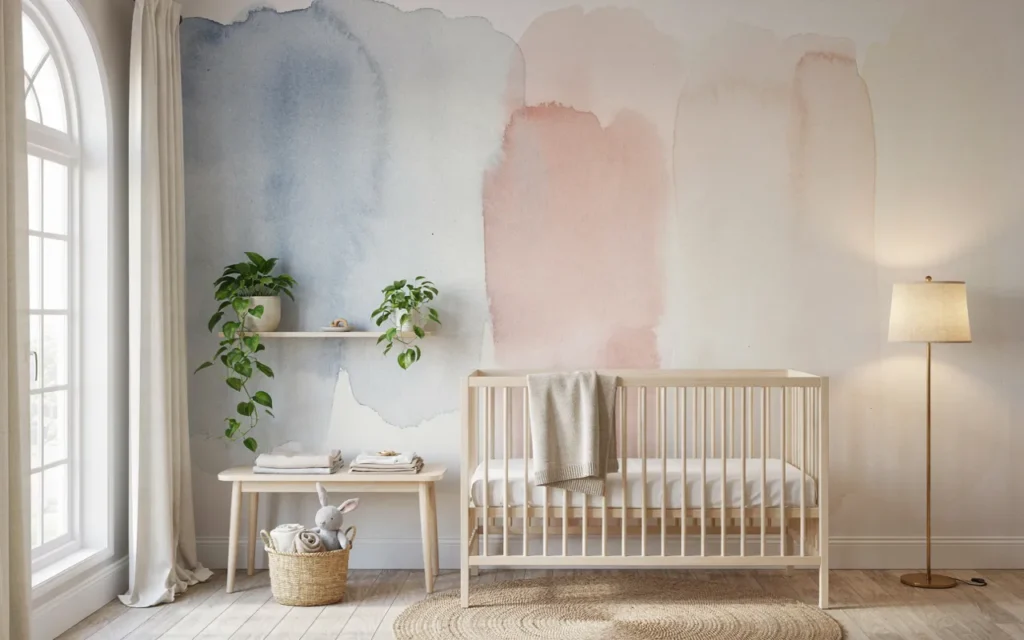
15. Abstract Watercolor Wash
Rather than a defined pattern, an abstract watercolor wash design creates soft, organic color blending across the wall, offering visual interest without any literal imagery to outgrow. This is one of the most flexible options on this list, since it works equally well for a newborn nursery and a room that will later transition into a toddler’s bedroom.
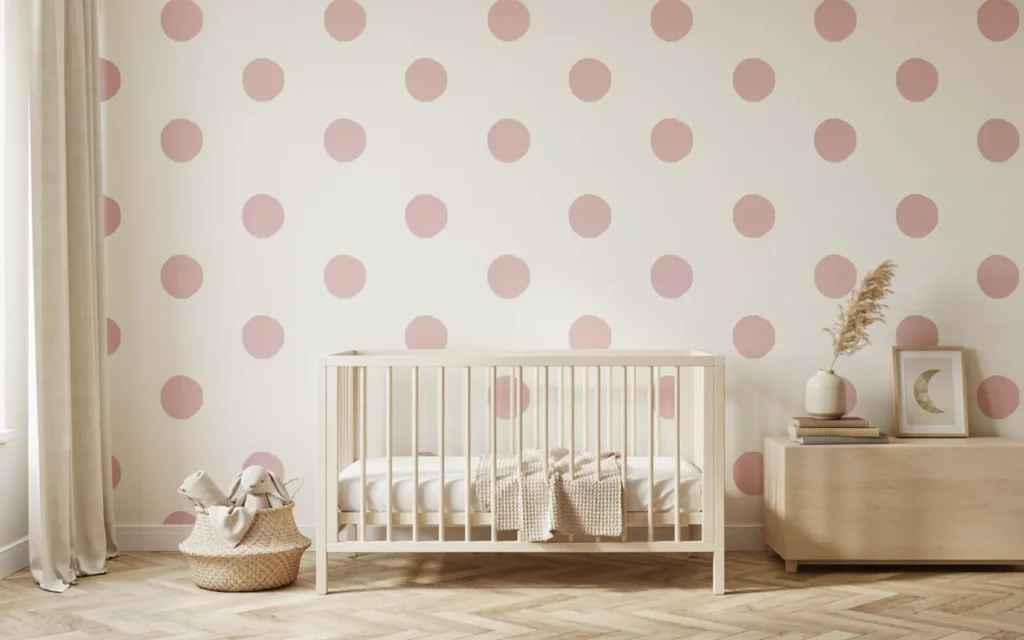
16. Playful Polka Dot Pattern
A soft, muted polka dot pattern offers a cheerful, timeless design that works across a wide range of nursery styles, from modern minimalist to classic and traditional. Choosing a tonal or two-color palette rather than a multicolor dot pattern keeps the look sophisticated rather than overly bright or busy.
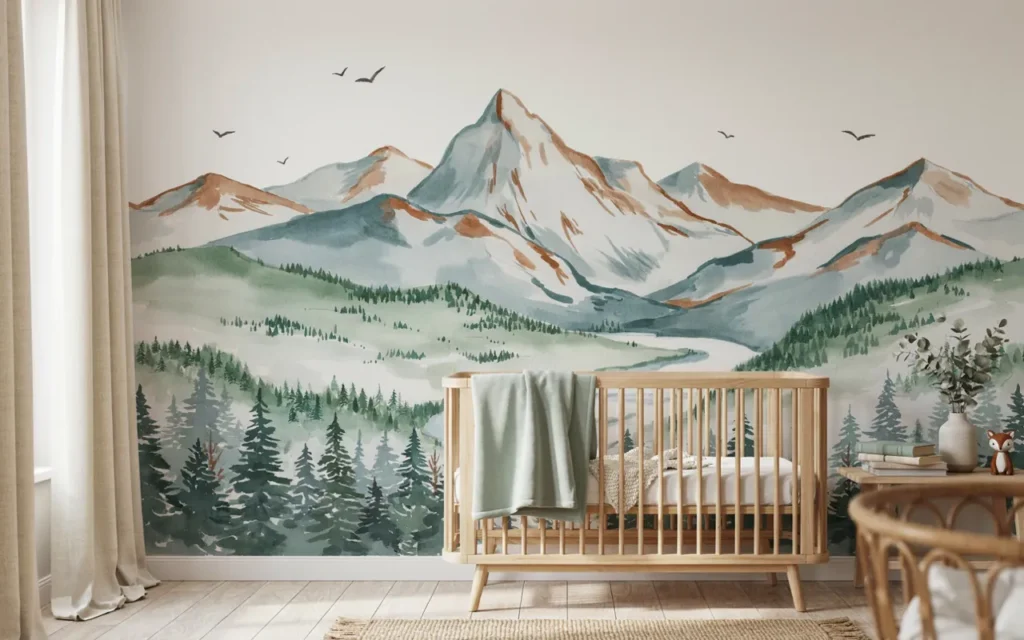
17. Nature-Inspired Mountain and Forest Scene
An illustrated mountain and forest landscape wallpaper brings an adventurous, outdoorsy quality to a nursery, particularly popular for parents drawn to a woodland or nature-exploration theme. This design typically works best as a mural-style feature wall, allowing the scene to unfold as a cohesive image behind the crib.
How to Choose the Right Wallpaper for a Small Nursery
Nursery rooms are often on the smaller side, which means pattern scale and color value have a significant impact on how spacious the room feels. For a nursery under 100 square feet, favor smaller-scale patterns or lighter background colors, since large, dark, or high-contrast designs can make a compact room feel more enclosed. Reserve bold, oversized patterns for a single accent wall rather than covering the entire room, which allows you to enjoy a dramatic design without sacrificing the sense of openness. If the room has limited natural light, lighter-toned wallpaper with subtle texture, such as grasscloth or a soft watercolor wash, will reflect more available light than a deep, saturated pattern.
Wallpaper Safety Considerations for a Nursery
Because a nursery houses a baby who will spend significant time in the room, a few safety considerations are worth factoring into your wallpaper choice. Look for wallpaper labeled low-VOC or formaldehyde-free, since these products release fewer airborne chemicals as they cure, which matters more in an enclosed nursery than in most other rooms of the house. Peel-and-stick wallpaper made from PVC-free materials is generally considered a safer choice for a baby’s room compared to traditional vinyl options. Always allow newly installed wallpaper, whether peel-and-stick or traditional paste, to fully cure and air out the room for at least 48 to 72 hours before bringing a newborn into the space, and keep the door open and windows ventilated during installation regardless of which type you choose.
Common Nursery Wallpaper Mistakes
Choosing a pattern too tied to a specific age. Overly babyish imagery can look out of place within a year or two. Timeless patterns like botanicals, stripes, or abstract designs tend to age better as your child grows.
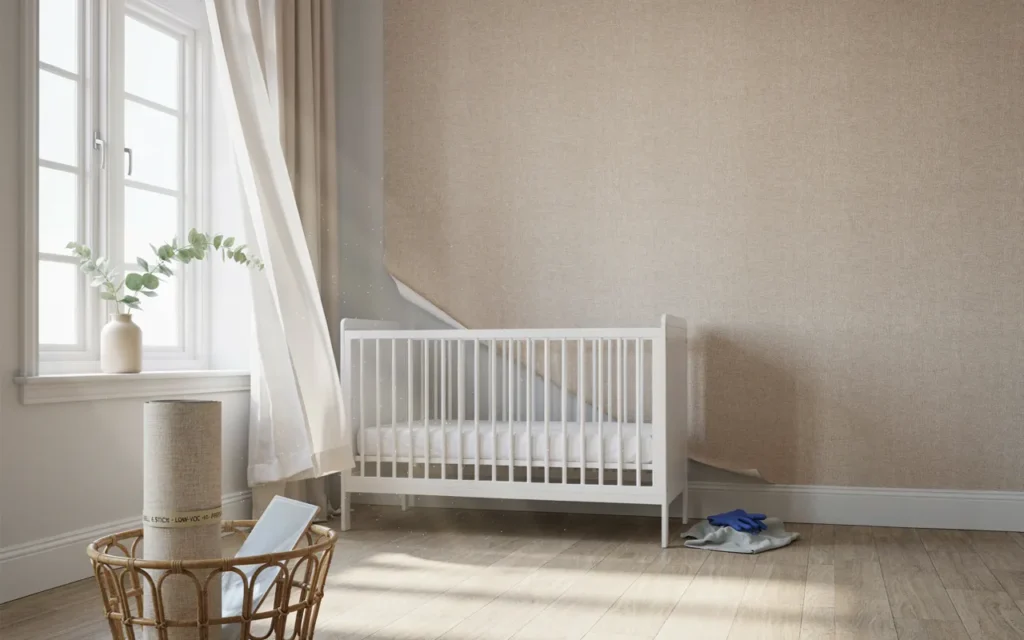
Skipping a sample before committing. Wallpaper can look different under a store’s lighting versus your nursery’s actual natural and artificial light. Always order a sample swatch and view it in the room at different times of day before purchasing the full roll.
Wallpapering all four walls with a bold, oversized pattern. This can overwhelm a smaller room and make it feel visually smaller. Reserve dramatic large-scale patterns for a single accent wall instead.
Ignoring humidity levels in the room. Nurseries often use humidifiers, and excess moisture can affect certain wallpaper adhesives over time. Choose a moisture-resistant option if your nursery regularly runs a humidifier.
Not considering how the pattern coordinates with furniture. A heavily patterned wallpaper paired with equally patterned bedding or curtains can compete rather than complement. Balance a bold wallpaper choice with simpler textiles, or vice versa.
Frequently Asked Questions
Is peel-and-stick wallpaper safe for a nursery? Generally yes, particularly PVC-free, low-VOC options designed for residential use. It’s a popular choice for nurseries specifically because it’s removable, making it easy to update as your child grows without permanent wall damage.
How much does it cost to wallpaper a nursery accent wall? Costs vary widely depending on the wallpaper brand and whether you install it yourself or hire a professional, but a single accent wall typically requires significantly less material and labor than wallpapering an entire room, making it a more budget-friendly way to incorporate a bold pattern.
Should I wallpaper the whole nursery or just one wall? A single accent wall, usually behind the crib, is generally the safer choice for bolder or more detailed patterns, while a subtle, small-scale pattern can work well across all four walls if you want a more immersive design.
What wallpaper pattern works best for a gender-neutral nursery? Botanical prints, soft cloud and star patterns, abstract watercolor washes, and muted stripes are all popular choices that don’t rely on traditionally gendered colors or imagery, making them versatile options before or after learning your baby’s gender.
How long does peel-and-stick wallpaper last in a nursery? With proper application, peel-and-stick wallpaper can last several years, though it’s generally less durable long-term than traditional pasted wallpaper. Many parents choose it specifically because they plan to update the room’s design as their child grows.
Can I remove wallpaper from a rented nursery? Removable peel-and-stick wallpaper is specifically designed for this purpose and can typically be taken down without damaging the wall or paint underneath, making it the safer choice for a rental property compared to traditional pasted wallpaper.
How do I clean wallpaper in a nursery? Most peel-and-stick and vinyl-coated wallpapers can be gently wiped with a damp cloth and mild soap, which is helpful given the inevitable spills and marks that happen in a baby’s room. Textured options like grasscloth are more delicate and generally can’t be wiped down, so it’s worth factoring cleanability into your choice if the wallpaper will be within a toddler’s reach.
Do I need to hire a professional to install nursery wallpaper? Peel-and-stick wallpaper is generally suited to a confident DIY installation, while traditional pasted wallpaper, especially on a large wall or in a room with tricky corners, often benefits from professional installation for the most seamless, long-lasting finish.


