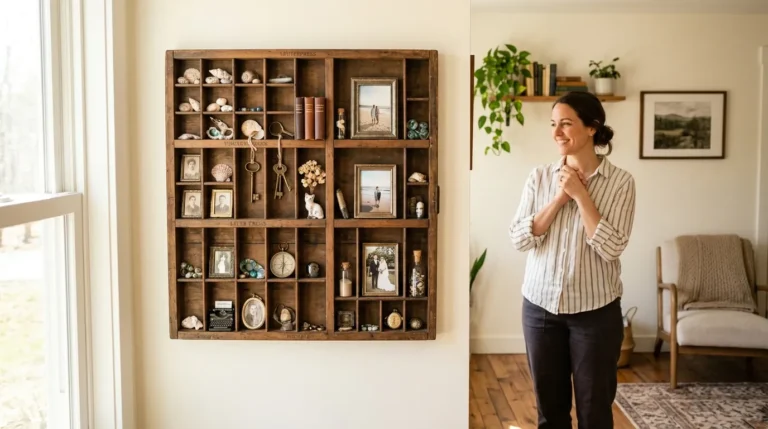
Printer’s trays are shallow, multi-compartment wooden frames originally used in print shops, now popular for vintage-style wall décor and small-item organization. Shadow boxes are deeper display cases with a glass front, designed to showcase and protect memorabilia, art, or sentimental items. Your best choice depends on whether you need functional storage or a polished, protected display.
Walk into any home décor store, or scroll through Pinterest for five minutes, and you’ll find both printer’s trays and shadow boxes having a moment. They’re both wall-mounted, both visually striking, and both capable of turning a blank wall into something meaningful. But they solve different problems, and picking the wrong one can leave you with a beautiful object that just doesn’t work for your space.
This Printer’s Tray vs Shadow Box Buying Guide breaks down what each option is, how they differ, and which one fits your needs whether you’re a collector, a crafter, a nostalgic decorator, or someone trying to preserve a cherished keepsake.
What Is a Printer’s Tray?
Historical Origins
Printer’s trays, sometimes called typesetters’ trays or Hamilton cabinets, date back to the era of movable type printing. Print shops used them to store individual metal or wooden letters (“type”) by character, size, and font, keeping the typesetter’s workflow organized. As offset printing replaced letterpress in the mid-20th century, these trays fell out of commercial use and collectors began repurposing them for display instead.
Physical Characteristics
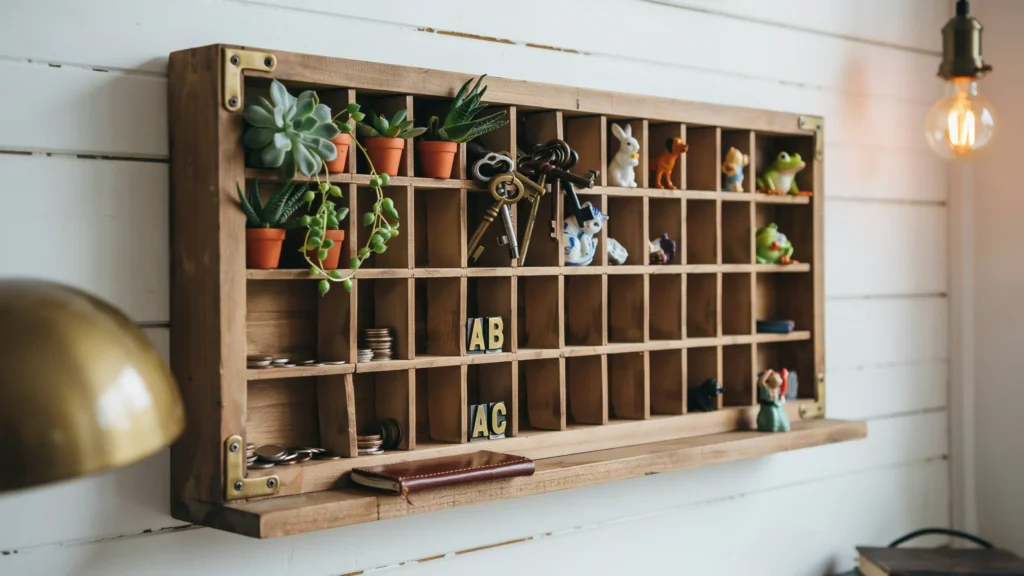
A typical printer’s tray is a shallow, flat wooden frame divided into dozens of small, irregularly sized compartments, usually 1–2 inches deep. Most trays measure between 18 x 24 inches and 24 x 36 inches, though vintage originals and modern reproductions vary. The wood is usually pine or oak, often with a worn, aged finish.
Modern Decorative Uses
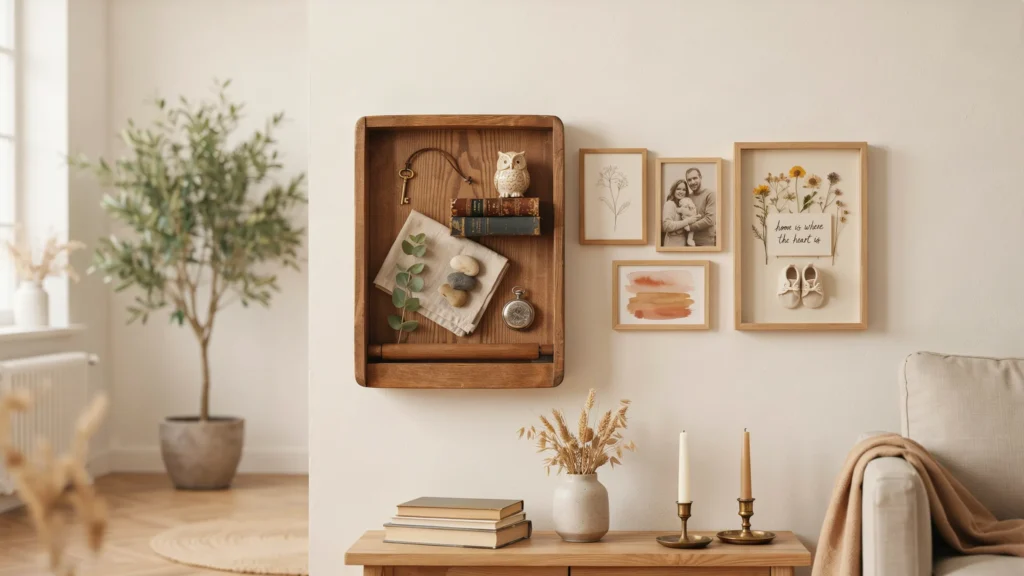
Today, printer’s trays serve as wall displays for small collectibles miniature figurines, thimbles, shells, coins, crystals, and more. They’re a favorite in farmhouse, cottagecore, and industrial-style interiors for creating a curated, handcrafted “gallery wall” moment.
What Is a Shadow Box?
Definition and Purpose
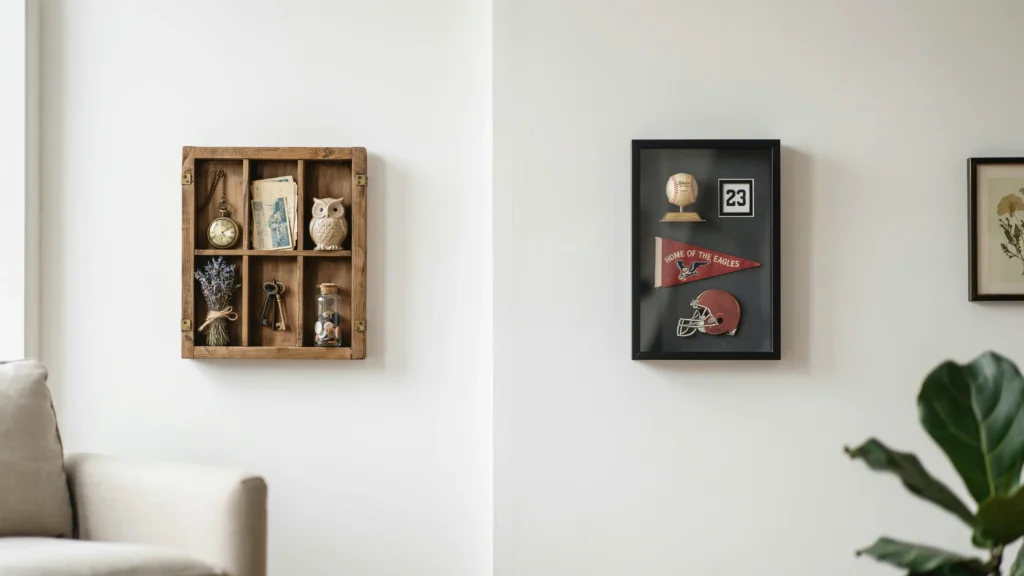
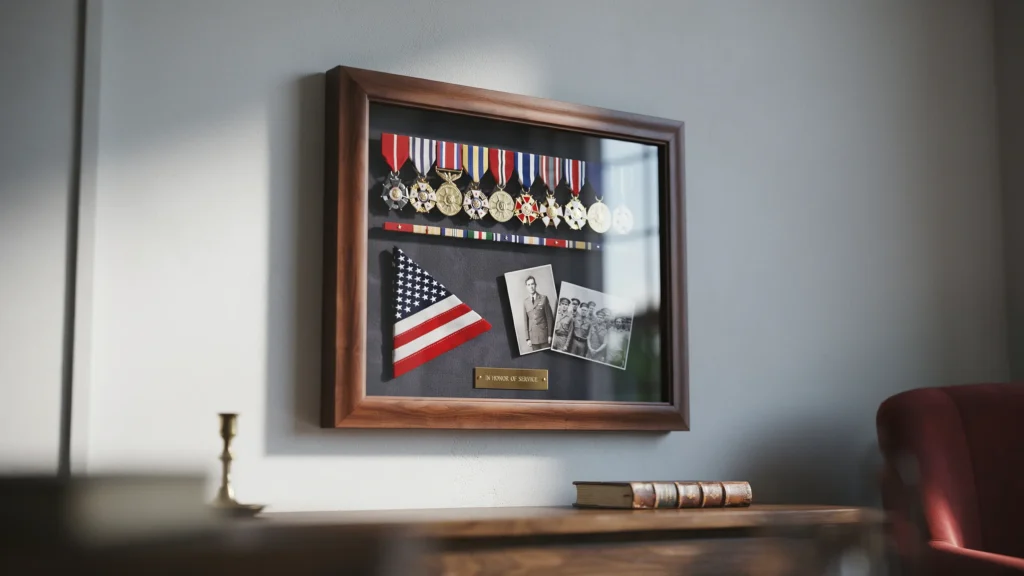
A shadow box is a framed display case with real depth typically 2 to 6 inches built to house and protect three-dimensional objects. A clear glass or acrylic front keeps contents dust-free while staying visible, and a fabric or paper backing adds contrast. The name comes from the subtle shadows deep-set objects cast against the backing, creating a layered, dimensional effect.
Physical Characteristics
Unlike a printer’s tray’s grid of compartments, a shadow box usually has one open interior space where items are arranged freely or mounted against the backing. Sizes range from small 5 x 7-inch frames to large custom installations several feet across. Materials range from basic MDF (common at craft stores) to solid hardwoods, metal, and archival-grade materials for long-term preservation. Glass options include standard glass, UV-protective glass, and shatter-resistant acrylic.
Common Uses
- Military medals, patches, and insignia
- Wedding invitations, pressed flowers, and anniversary mementos
- Baby keepsakes first shoes, hospital wristbands, ultrasound photos
- Sports jerseys, autographed items, and championship programs
- Art prints, embroidery, and textile pieces
The enclosed design makes shadow boxes the better choice for fragile or irreplaceable items that need protection from dust, humidity, and handling.
Key Differences at a Glance
| Printer’s Tray | Shadow Box | |
|---|---|---|
| Depth | 1–2 inches | 2–6 inches |
| Layout | Multiple small compartments | Single open space |
| Front | Open (no glass) | Glass or acrylic front |
| Best for | Small, flat, lightweight items | Bulky, fragile, or valuable items |
| Access to contents | Easy swap items anytime | Limited meant to stay sealed |
| Style fit | Vintage, farmhouse, eclectic | Modern, minimalist, traditional |
| Typical price | $20–$200+ | $15–$500+ |
The core distinction: a printer’s tray is built for ongoing organization and display, while a shadow box is built for permanent protection and presentation. If an item doesn’t fit flat against a surface, a printer’s tray won’t work for it that’s a job for a shadow box.
Printers Tray: Best Use Cases
Vintage décor and curated collections. Antique buttons, miniature porcelain figurines, and vintage toy cars look striking in the compartmentalized grid format. The tray itself is a historical object, which adds authenticity to the display.
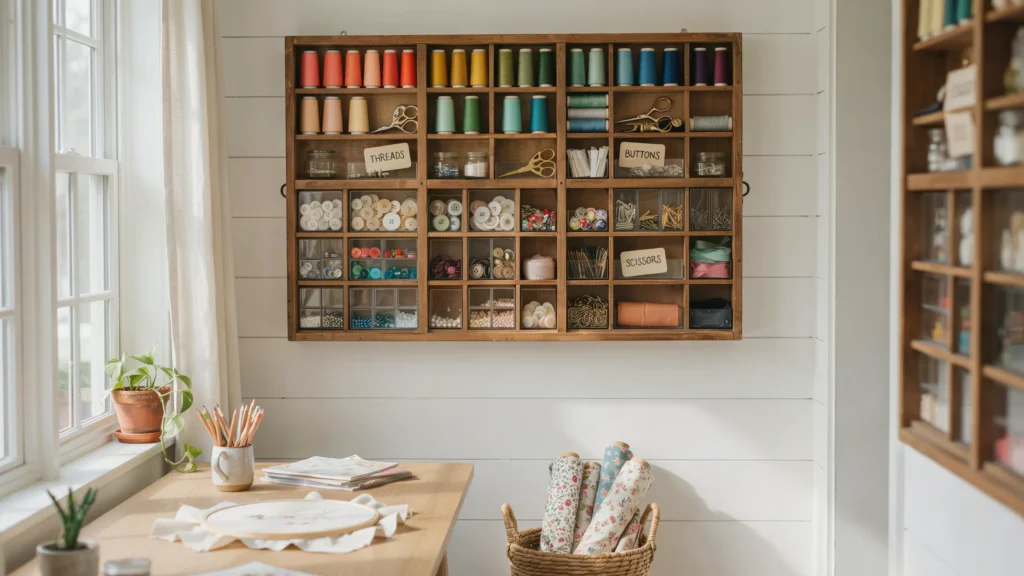
Organizing craft supplies and jewelry. Mounted near a craft table or vanity, a printer’s tray becomes a practical organizer earrings, rings, bobbins, thimbles, and beads each get their own compartment.
Home office organization. Paper clips, stamps, USB drives, and other small tools stay accessible without cluttering a desk.
Best rooms: living rooms with gallery walls, craft rooms and studios, entryways, and farmhouse-style kitchens.
Shadow Box: Best Use Cases
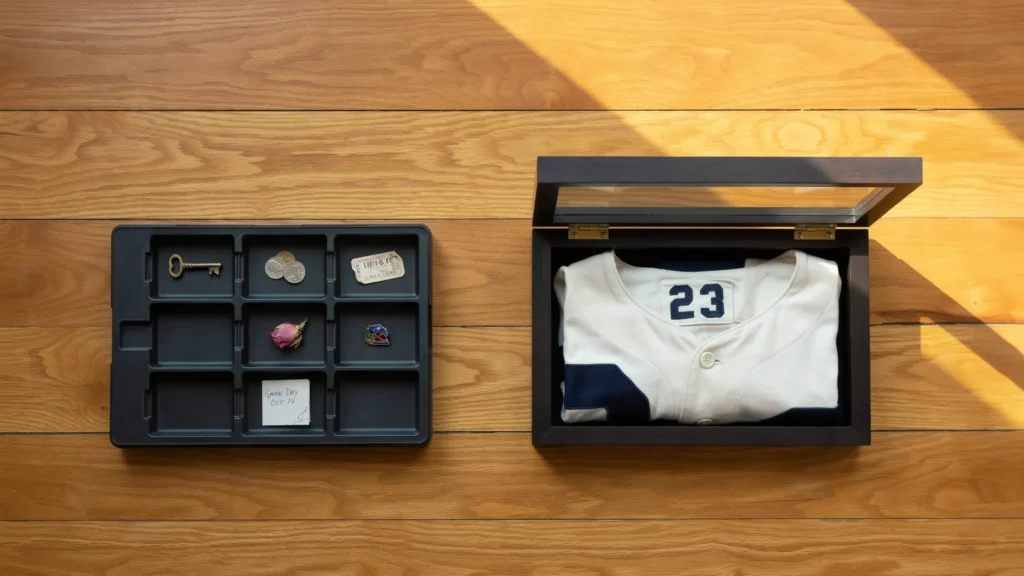
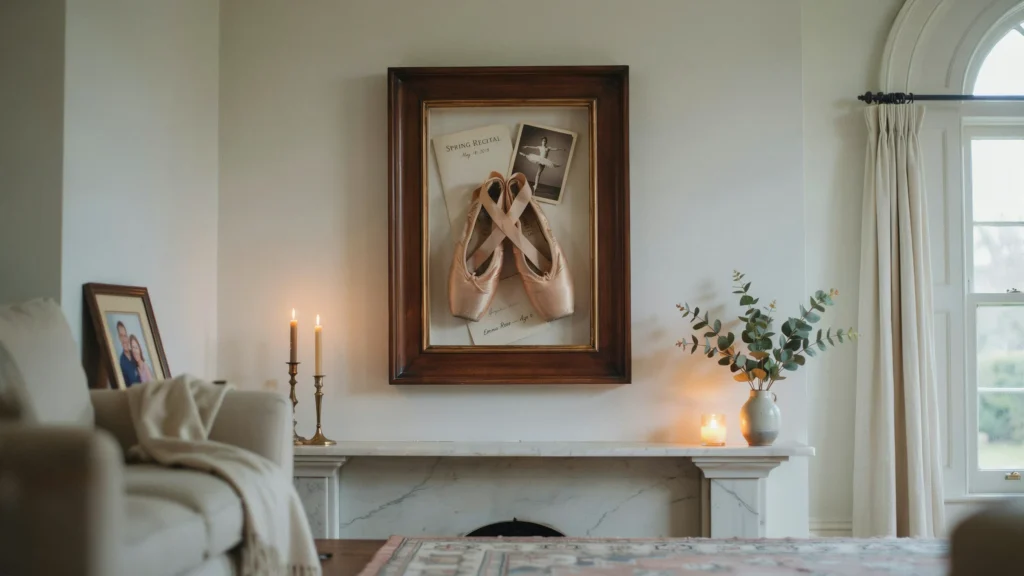
Family memories and layered photo displays. Combine a photo with a physical memento a birthday card next to a party photo, or a travel snapshot with a ticket stub and a local coin for a result that feels more personal than a standard picture frame.
Preserving sentimental or fragile items. UV-protective glass slows the fading of fabrics, paper, and photographs, which matters if you’re preserving something meant to last decades.
Sports memorabilia. A signed baseball on a shelf is easy to overlook. The same ball mounted with a photo and a game ticket in a shadow box becomes a real display piece.
Professional and artistic presentation. Artists and designers use larger shadow boxes for layered textile work, dimensional paper art, or mixed-media pieces that need room to breathe.
How to Decide
1. What’s your primary need storage or display? If you want to organize small items with easy access, go with a printer’s tray. If you want a permanent, protected display of a specific memory or collection, go with a shadow box.
2. How much wall space do you have? Printer’s trays tend to run wide and shallow, suiting horizontal spaces. Shadow boxes come in more size variations and work well in vertical clusters or groupings.
3. What’s your budget? A solid printer’s tray reproduction or a basic shadow box is achievable under $50. Archival-quality preservation or a statement shadow box piece usually starts around $150 and can exceed $300 for custom work.
4. How long do you plan to keep the display as-is? Printer’s trays are flexible rearrange or refresh them anytime. Shadow boxes are better suited to a permanent, set-it-and-forget-it display.
Where to Buy
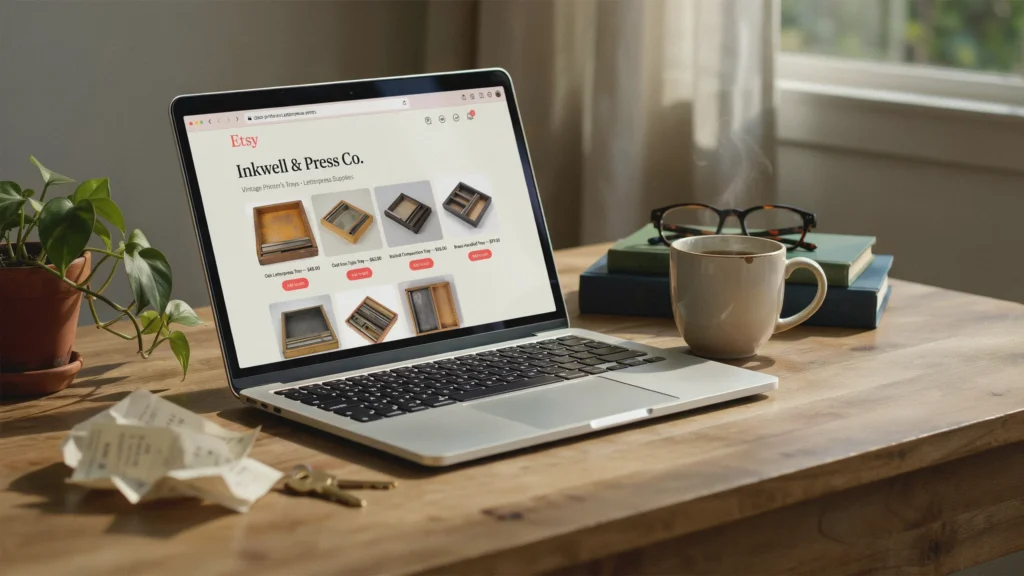
- Etsy strongest option for handmade and vintage printer’s trays, plus custom shadow boxes with personalized dimensions, frame finishes, and backing fabric.
- Amazon / Wayfair reliable for budget-friendly shadow boxes with fast shipping and wide selection.
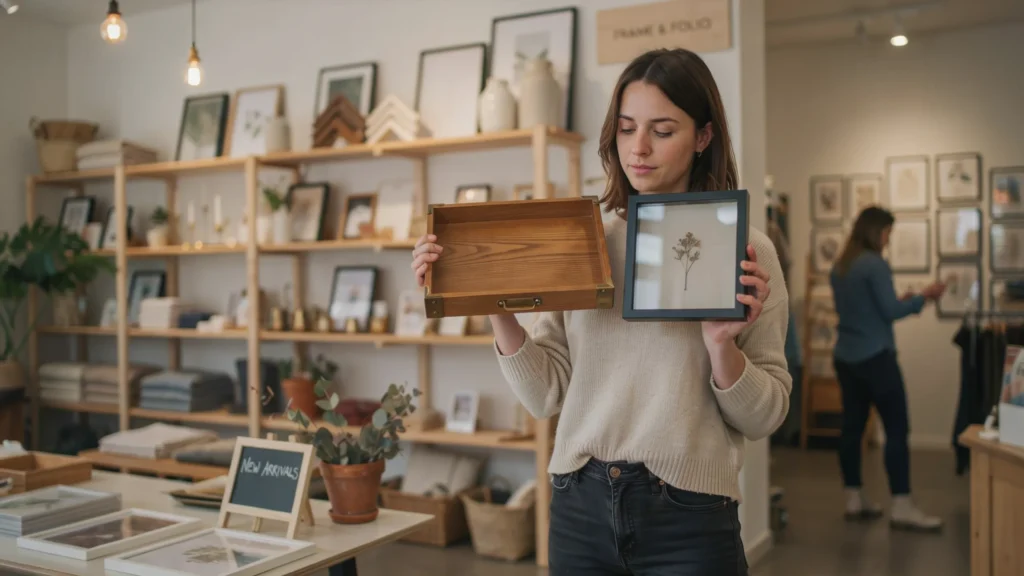
- Local antique stores and estate sales often the best source for vintage printer’s trays, and worth visiting in person so you can assess wood condition before buying.
- Local frame shops a strong choice for archival-grade or museum-quality shadow boxes, especially if UV-protective glass matters to you.
A few practical tips: large frames can cost $20–$40 to ship, so factor that into any online purchase. Check current retailer promotions before buying arts and crafts chains regularly run frame discounts, though exact percentages change often, so confirm the offer at checkout rather than relying on a fixed number.
Final Thoughts
Printer’s trays and shadow boxes occupy different niches, and once you see the distinction, the buying decision gets a lot easier. A printer’s tray is a functional display tool with a vintage soul ideal if you like to curate, rearrange, and interact with what’s on your wall. A shadow box is a preservation-first frame, built to protect and present items that deserve a permanent home.
Neither is universally better. If you’re still undecided: buy a printer’s tray for the things you want to live with daily and change often. Buy a shadow box for the things you want to honor and protect for years to come. Both can coexist beautifully on the same wall.
Frequently Asked Questions
What is the main difference between a printer’s tray and a shadow box? A printer’s tray is a shallow, open wooden frame with multiple small compartments, historically used to store movable type. A shadow box is a deeper, enclosed display case with a glass front, designed to protect and showcase three-dimensional objects. The key differences are depth, accessibility, and purpose.
Can a printer’s tray be used as a shadow box? Not effectively. Printer’s trays lack the depth, backing, and glass front that define a shadow box, so they can’t protect fragile or valuable items from dust, handling, or light the way a proper shadow box can.
What items are best displayed in a printer’s tray? Small, lightweight objects miniature figurines, coins, crystals, jewelry, thimbles, vintage buttons, tiny succulents, and craft supplies. The open compartments make them easy to rearrange.
How deep should a shadow box be for a folded jersey? Generally at least 3–4 inches for a folded jersey, and 4–6 inches if you want to display it partially spread out. Many sports-memorabilia shadow boxes are built with this in mind.
Are vintage printer’s trays worth buying over new reproductions? Vintage originals offer authenticity and solid wood construction, but condition varies significantly piece to piece. New reproductions are more consistent in quality and finish. Choose vintage if the aged look matters to you; choose a reproduction if you want a predictable result.
Where’s the best place to buy a custom shadow box? Etsy is the strongest platform for personalized dimensions, frame finishes, and backing fabric. Local frame shops are a solid alternative for archival-grade or museum-quality options.